

Protein sequence design by conformational landscape optimization
Open accessThe DOI matches its Crossref record; 40 of the 40 references it cites were found in a registry or an index.
Abstract
Significance: Almost all proteins fold to their lowest free energy state, which is determined by their amino acid sequence. Computational protein design has primarily focused on finding sequences that have very low energy in the target designed structure. However, what is most relevant during folding is not the absolute energy of the folded state but the energy difference between the folded state and the lowest-lying alternative states. We describe a deep learning approach that captures aspects of the folding landscape, in particular the presence of structures in alternative energy minima, and show that it can enhance current protein design methods.
Overview
The claims and statistics of this paper haven’t been checked yet.
Free: it reads the open-access text and checks the first 5 claims that cite a source we can check. Create a free account to check every claim.
Integrity signals
Registry
Cites
Statistics
Figures
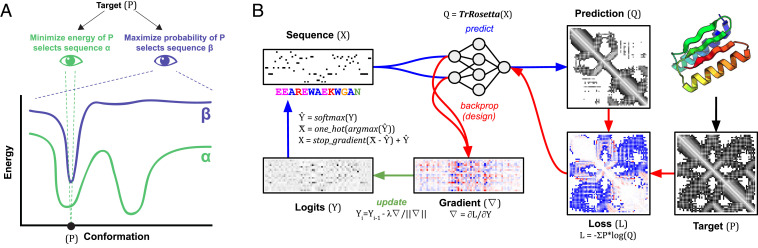
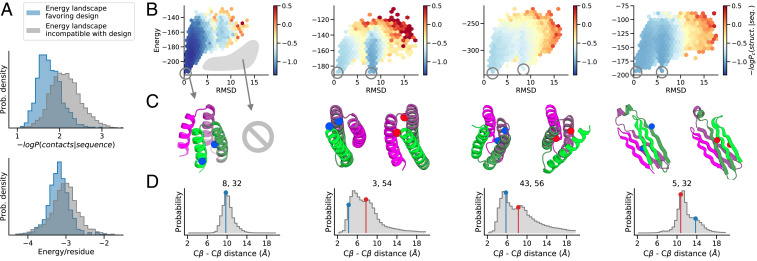
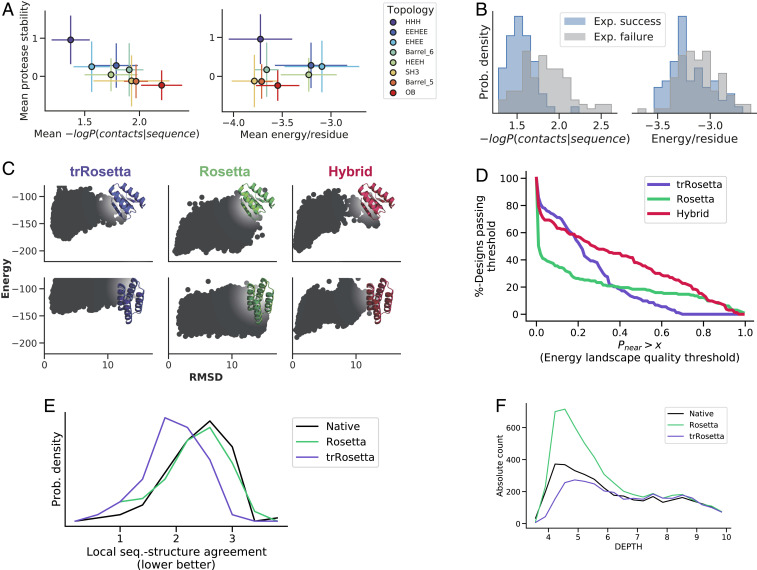
Verification
Claims the paper makes
The claims and statistics of this paper haven’t been checked yet.
Free: it reads the open-access text and checks the first 5 claims that cite a source we can check. Create a free account to check every claim.
Claims other papers make about this one
Each is checked against this paper’s own text: does it say what the citing paper says it does?
The cited source says what the claim attributes to it.
In the citing paper
“trRosetta can also be used to design sequences that fold into a target backbone structure by carrying out sequence optimization using a structure recapitulation loss function that rewards similarity of the predicted structure to the target structure (13).”
From Scaffolding protein functional sites using deep learning (2022) · cites this paper as [13]
The check wasn’t confident either way, so it gives no verdict — never disputed.
In the citing paper
“We determined a 2.5 Å resolution crystal of L056 (see Methods, Figure 3e). The global fold was similar to predictions, with a Cα RMSD of 2.9 Å from the backbone structure predicted by trRosetta and 2.3 Å RMSD from a WT T4 Lysozyme structure59,60.”
From Large language models generate functional protein sequences across diverse families (2023) · cites this paper as [59]
Experimental — accuracy not yet measuredIn the citing paper
“RF and AF have different architectures and were trained independently, and hence AF predictions can be regarded as a partially orthogonal in silico test of whether RF-designed sequences fold into the intended structures, analogous to traditional ab initio folding (13, 24).”
From Scaffolding protein functional sites using deep learning (2022) · cites this paper as [13]
Self-check
Percentages, sums and reported differences re-computed from the paper’s own numbers.
The self-check needs the paper’s full text.
Citations
Cites
A Simplex Method for Function Minimization
Nelder, J. A., & Mead, R. (1965) · The Computer Journal · doi:10.1093/comjnl/7.4.308 · Cited by 28,905
Amino acid substitution matrices from protein blocks.
Henikoff, S., & Henikoff, J. G. (1992) · Proceedings of the National Academy of Sciences · doi:10.1073/pnas.89.22.10915 · Cited by 6,218
TM-align: a protein structure alignment algorithm based on the TM-score
Zhang, Y. (2005) · Nucleic Acids Research · doi:10.1093/nar/gki524 · Cited by 3,774
Categorical Reparameterization with Gumbel-Softmax
Jang, E., Gu, S., & Poole, B. (2016) · arXiv · doi:10.48550/arxiv.1611.01144 · Cited by 3,616 · cited 1×
“3 with respect to the auxiliary variable Y (24):”
BackgroundHow fast-folding proteins fold
Lindorff-Larsen, K., Piana, S., Dror, R. O., & Shaw, D. E. (2011) · Science · doi:10.1126/science.1208351 · Cited by 1,980 · cited 1×
“…folding energy landscape characterization using molecular dynamics methods even for small proteins is a resource-intensive computational task (18, 19), and even Rosetta ab initio folding simulations are extremely computationally intensive, requiring thousands of CPU hours to generate enough…”
BackgroundAtomic-level characterization of the structural dynamics of proteins
Shaw, D. E., Maragakis, P., Lindorff-Larsen, K., Piana, S., Dror, R. O., Eastwood, M. P., Bank, J. A., Jumper, J. M., Salmon, J. K., Shan, Y., et al. (2010) · Science · doi:10.1126/science.1187409 · Cited by 1,923
Protein Structure Prediction Using Rosetta
Rohl, C. A., Strauss, C. E. M., Misura, K. M. S., & Baker, D. (2004) · Methods in Enzymology · doi:10.1016/s0076-6879(04)83004-0 · Cited by 1,725 · cited 1×
“Energy landscapes of designs were mapped out using Rosetta de novo structure prediction (ab initio folding) (27).”
MethodSelf-citationDesign of a Novel Globular Protein Fold with Atomic-Level Accuracy
Kuhlman, B., Dantas, G., Ireton, G. C., Varani, G., Stoddard, B. L., & Baker, D. (2003) · Science · doi:10.1126/science.1089427 · Cited by 1,670
Self-citationThe Rosetta All-Atom Energy Function for Macromolecular Modeling and Design
Alford, R. F., Leaver-Fay, A., Jeliazkov, J. R., O’Meara, M. J., DiMaio, F. P., Park, H., Shapovalov, M. V., Renfrew, P. D., Mulligan, V. K., Kappel, K., et al. (2017) · Journal of Chemical Theory and Computation · doi:10.1021/acs.jctc.7b00125 · Cited by 1,532
Self-citationImproved protein structure prediction using predicted interresidue orientations
Yang, J., Anishchenko, I., Park, H., Peng, Z., Ovchinnikov, S., & Baker, D. (2020) · Proceedings of the National Academy of Sciences · doi:10.1073/pnas.1914677117 · Cited by 1,421 · cited 2×
“Combining these predictions with Rosetta energy minimization yielded excellent predictions of structures in benchmark cases, as well as recent blind Continous Automated Model EvalutiOn (CAMEO) structure modeling evaluations (13).”
BackgroundMethodSelf-citation
Cited by
Large language models generate functional protein sequences across diverse families
Madani, A., Krause, B., Greene, E. R., Subramanian, S., Mohr, B. P., Holton, J. M., Olmos, J. L., Xiong, C., Sun, Z. Z., Socher, R., et al. (2023) · Nature Biotechnology · doi:10.1038/s41587-022-01618-2 · Cited by 1,078
De novo protein design by deep network hallucination
Anishchenko, I., Chidyausiku, T. M., Ovchinnikov, S., Pellock, S. J., & Baker, D. (2020) · doi:10.1101/2020.07.22.211482 · Cited by 629
“On the sampling side, the Monte Carlo approach can be made more efficient by direct gradient-based minimization by tracing the gradients back to the inputs 25 .”
MethodSelf-citationAlphaFold2 and its applications in the fields of biology and medicine
Yang, Z., Zeng, X., Zhao, Y., & Chen, R. (2023) · Signal Transduction and Targeted Therapy · doi:10.1038/s41392-023-01381-z · Cited by 577
“111,112 The integrity of the structures predicted is validated and con fi rmed by standard ab initio folding, protein structure analysis methods, and rigorous all-atom molecular dynamics simulations.”
MethodScaffolding protein functional sites using deep learning
Wang, J., Lisanza, S., Juergens, D., Tischer, D., Watson, J. L., Castro, K. M., Ragotte, R., Saragovi, A., Milles, L. F., Baek, M., et al. (2022) · Science · doi:10.1126/science.abn2100 · Cited by 487
“…fold to the hallucinated structures (12). trRosetta can also be used to design sequences that fold into a target backbone structure by carrying out sequence optimization using a structure recapitulation loss function that rewards similarity of the predicted structure to the target structure (13).”
BackgroundMethodSelf-citationDe novo design of luciferases using deep learning
Yeh, A. H.-W., Norn, C., Kipnis, Y., Tischer, D., Pellock, S. J., Evans, D., Ma, P., Lee, G. R., Zhang, J. Z., Anishchenko, I., et al. (2023) · Nature · doi:10.1038/s41586-023-05696-3 · Cited by 441
“…of ideal NTF2-like structures, we developed a deep-learning-based ‘family-wide hallu-cination’ approach that integrates unconstrained de novo design 17,18 and Rosetta sequence-design approaches 19 to enable the generation of an essentially unlimited number of proteins that have a desired fold (Fig.”
MethodSelf-citationLearning inverse folding from millions of predicted structures
Hsu, C., Verkuil, R., Liu, J., Lin, Z., Hie, B., Sercu, T., Lerer, A., & Rives, A. (2022) · bioRxiv (Cold Spring Harbor Laboratory) · doi:10.1101/2022.04.10.487779 · Cited by 416
Improving de novo protein binder design with deep learning
Bennett, N. R., Coventry, B., Goreshnik, I., Huang, B., Allen, A., Vafeados, D., Peng, Y. P., Dauparas, J., Baek, M., Stewart, L., et al. (2023) · Nature Communications · doi:10.1038/s41467-023-38328-5 · Cited by 402
“As observed previously 32 , such consideration of the overall folding landscape enables considerably more accurate assessment of the likelihood a design will fold and bind as intended compared to evaluation of only thedepth of the designed energy well.”
Self-citationMega-scale experimental analysis of protein folding stability in biology and protein design
Tsuboyama, K., Dauparas, J., Chen, J., Laine, E., Mohseni Behbahani, Y., Weinstein, J. J., Mangan, N. M., Ovchinnikov, S., & Rocklin, G. J. (2022) · doi:10.1101/2022.12.06.519132 · Cited by 352
Self-citationMega-scale experimental analysis of protein folding stability in biology and design
Tsuboyama, K., Dauparas, J., Chen, J., Laine, E., Mohseni Behbahani, Y., Weinstein, J. J., Mangan, N. M., Ovchinnikov, S., & Rocklin, G. J. (2023) · Nature · doi:10.1038/s41586-023-06328-6 · Cited by 350
“Beyond studying stability, cDNA display proteolysis will have other applications, including assaying designed proteins on a massive scale to systematically improve design methods 18,30,31,49 and to dissect the relationships between folding stability and function 50 .”
BackgroundMethodInfluentialSelf-citationFast, accurate antibody structure prediction from deep learning on massive set of natural antibodies
Ruffolo, J. A., Chu, L.-S., Mahajan, S. P., & Gray, J. J. (2023) · Nature Communications · doi:10.1038/s41467-023-38063-x · Cited by 316
“Meanwhile, methods like AlphaFold and RoseTTAFold have been adapted for 343 gradient-based design of novel protein structures and even sca olding binding loops (52, 53).”
MethodState-of-the-Art Estimation of Protein Model Accuracy Using AlphaFold
Roney, J. P., & Ovchinnikov, S. (2022) · Physical Review Letters · doi:10.1103/physrevlett.129.238101 · Cited by 281
Self-citationOpportunities and Challenges for Machine Learning-Assisted Enzyme Engineering
Yang, J., Li, F.-Z., & Arnold, F. H. (2024) · ACS Central Science · doi:10.1021/acscentsci.3c01275 · Cited by 246
Hallucinating symmetric protein assemblies
Wicky, B. I. M., Milles, L. F., Courbet, A., Ragotte, R. J., Dauparas, J., Kinfu, E., Tipps, S., Kibler, R. D., Baek, M., DiMaio, F., et al. (2022) · Science · doi:10.1126/science.add1964 · Cited by 240
Self-citationDeep Learning in Protein Structural Modeling and Design
Gao, W., Mahajan, S. P., Sulam, J., & Gray, J. J. (2020) · Patterns · doi:10.1016/j.patter.2020.100142 · Cited by 227
Recent advances in de novo protein design: Principles, methods, and applications
Pan, X., & Kortemme, T. (2021) · Journal of Biological Chemistry · doi:10.1016/j.jbc.2021.100558 · Cited by 228
Antibody structure prediction using interpretable deep learning
Ruffolo, J. A., Sulam, J., & Gray, J. J. (2022) · Patterns · doi:10.1016/j.patter.2021.100406 · Cited by 216
Opportunities and challenges in design and optimization of protein function
Listov, D., Goverde, C. A., Correia, B. E., & Fleishman, S. J. (2024) · Nature Reviews Molecular Cell Biology · doi:10.1038/s41580-024-00718-y · Cited by 180
“…what the precise methodological aspects that have led to these achievements are, one possibility is that deep learning strategies optimize the probability of a sequence to fold into the desired conformation relative to alternatives, thereby implicitly capturing some negative design principles 147 .”
How directed evolution reshapes the energy landscape in an enzyme to boost catalysis
Otten, R., Pádua, R. A. P., Bunzel, H. A., Nguyen, V., Pitsawong, W., Patterson, M., Sui, S., Perry, S. L., Cohen, A. E., Hilvert, D., et al. (2020) · Science · doi:10.1126/science.abd3623 · Cited by 177
Protein sequence design with a learned potential
Anand, N., Eguchi, R., Mathews, I. I., Perez, C. P., Derry, A., Altman, R. B., & Huang, P.-S. (2022) · Nature Communications · doi:10.1038/s41467-022-28313-9 · Cited by 171
“…learning methods for design thus far have focused on mutation prediction 25 – 30 , rotamer repacking of native sequences 31 , or amino acid sequence design without modeling side-chain conformers 32 – 35 , with some experimental validation including circular dichroism data 33 and fl uorescence 26 .”
MethodComputational design of soluble and functional membrane protein analogues
Goverde, C. A., Pacesa, M., Goldbach, N., Dornfeld, L. J., Balbi, P. E. M., Georgeon, S., Rosset, S., Kapoor, S., Choudhury, J., Dauparas, J., et al. (2024) · Nature · doi:10.1038/s41586-024-07601-y · Cited by 137
“Interest to the broader readership of Nature would be increased by better describing potential applications of this technology in particular with regards to generating soluble membrane proteins.”
Self-citationDeep learning techniques have significantly impacted protein structure prediction and protein design
Pearce, R., & Zhang, Y. (2021) · Current Opinion in Structural Biology · doi:10.1016/j.sbi.2021.01.007 · Cited by 127
From sequence to function through structure: Deep learning for protein design
(2022) · doi:10.1016/j.csbj.2022.11.014 · Cited by 124
“Norn [105] Distance map Sequence CNN no N/A N/A 20/ 07 GVP-GNN [72] 3D structures Sequence GVP yes CATH 4.”
BackgroundMethodSparks of function by de novo protein design
Chu, A. E., Lu, T., & Huang, P.-S. (2024) · Nature Biotechnology · doi:10.1038/s41587-024-02133-2 · Cited by 114
“…and even intrinsic disorder have been achieved by design 128–132 , and some consideration has been given to multiple states in sequence design 100,103,127,133 , but this area remains underexplored, in part due to the paucity of ensemble and dynamics data and the difficulty of in silico…”
BackgroundMethodDeep generative modeling for protein design
Strokach, A., & Kim, P. M. (2022) · Current Opinion in Structural Biology · doi:10.1016/j.sbi.2021.11.008 · Cited by 115
A new age in protein design empowered by deep learning
Khakzad, H., Igashov, I., Schneuing, A., Goverde, C., Bronstein, M., & Correia, B. (2023) · Cell Systems · doi:10.1016/j.cels.2023.10.006 · Cited by 109
Masked inverse folding with sequence transfer for protein representation learning
(2022) · doi:10.1093/protein/gzad015 · Cited by 110
Masked Inverse Folding with Sequence Transfer for Protein Representation Learning
Yang, K. K., Yeh, H., & Zanichelli, N. (2022) · doi:10.1101/2022.05.25.493516 · Cited by 110
Efficient generative modeling of protein sequences using simple autoregressive models
Trinquier, J., Uguzzoni, G., Pagnani, A., Zamponi, F., & Weigt, M. (2021) · Nature Communications · doi:10.1038/s41467-021-25756-4 · Cited by 92
“via a VAE [26] or a Graph Neural Network [51], or by inverting structural prediction models [4, 21, 37, 40].”
MethodMachine learning to navigate fitness landscapes for protein engineering
Freschlin, C. R., Fahlberg, S. A., & Romero, P. A. (2022) · Current Opinion in Biotechnology · doi:10.1016/j.copbio.2022.102713 · Cited by 107
De novo protein design by inversion of the AlphaFold structure prediction network
Goverde, C. A., Wolf, B., Khakzad, H., Rosset, S., & Correia, B. E. (2023) · Protein Science · doi:10.1002/pro.4653 · Cited by 103
Structure-based protein design with deep learning
Ovchinnikov, S., & Huang, P.-S. (2021) · Current Opinion in Chemical Biology · doi:10.1016/j.cbpa.2021.08.004 · Cited by 93
Self-citationUnlocking the potential of enzyme engineering via rational computational design strategies
Zhou, L., Tao, C., Shen, X., Sun, X., Wang, J., & Yuan, Q. (2024) · Biotechnology Advances · doi:10.1016/j.biotechadv.2024.108376 · Cited by 102
NanoNet: Rapid and accurate end-to-end nanobody modeling by deep learning
Cohen, T., Halfon, M., & Schneidman-Duhovny, D. (2022) · Frontiers in Immunology · doi:10.3389/fimmu.2022.958584 · Cited by 88
“In the future, the network can be extended towards design of novel sequences with high stability and speci fi city for antigens of interest (46).”
BackgroundProtein-Based Hydrogels and Their Biomedical Applications
Lee, K. Z., Jeon, J., Jiang, B., Subramani, S. V., Li, J., & Zhang, F. (2023) · Molecules · doi:10.3390/molecules28134988 · Cited by 98
Designing better enzymes: Insights from directed evolution
Bunzel, H. A., Anderson, J. L. R., & Mulholland, A. J. (2021) · Current Opinion in Structural Biology · doi:10.1016/j.sbi.2020.12.015 · Cited by 82
Scalable protein design using optimization in a relaxed sequence space
Frank, C., Khoshouei, A., Fuβ, L., Schiwietz, D., Putz, D., Weber, L., Zhao, Z., Hattori, M., Feng, S., de Stigter, Y., et al. (2024) · Science · doi:10.1126/science.adq1741 · Cited by 82
Self-citationKoo, P. K., & Ploenzke, M. (2021) · Nature Machine Intelligence · doi:10.1038/s42256-020-00291-x · Cited by 85
Accurate protein structure prediction: what comes next?
Seok, C., Baek, M., Steinegger, M., Park, H., Lee, G. R., & Won, J. (2021) · Korean Society for Structural Biology · doi:10.34184/kssb.2021.9.3.47 · Cited by 87
Fast activation maximization for molecular sequence design
Linder, J., & Seelig, G. (2021) · BMC Bioinformatics · doi:10.1186/s12859-021-04437-5 · Cited by 54
“Similar design methods were published in parallel with (or shortly after) this work, including an editing method based on the Gumbel-Softmax distribution [45] and other algorithms based on discretized activation maximization [46, 65].”
BackgroundMethodSelf-play reinforcement learning guides protein engineering
Wang, Y., Tang, H., Huang, L., Pan, L., Yang, L., Yang, H., Mu, F., & Yang, M. (2023) · Nature Machine Intelligence · doi:10.1038/s42256-023-00691-9 · Cited by 104
“Self-supervised learning approaches such as MutCompute2 68 , ProteinBiRNN 69 and ESM-IF 70 can be introduced to provide evolutionary or structural constraints and thus reduce the search space.”
BackgroundCasadevall, G., Duran, C., & Osuna, S. (2023) · JACS Au · doi:10.1021/jacsau.3c00188 · Cited by 65
Transformer-based protein generation with regularized latent space optimization
Castro, E., Godavarthi, A., Rubinfien, J., Givechian, K. B., Bhaskar, D., & Krishnaswamy, S. (2022) · Nature Machine Intelligence · doi:10.1038/s42256-022-00532-1 · Cited by 93
AlphaDesign: A de novo protein design framework based on AlphaFold
Jendrusch, M., Korbel, J. O., & Sadiq, S. K. (2021) · doi:10.1101/2021.10.11.463937 · Cited by 65
“[71, 72] use both Markov-Chain Monte Carlo and gradient descent as their means for optimisation.”
BackgroundMethodInfluentialDesign principles of protein switches
Alberstein, R. G., Guo, A. B., & Kortemme, T. (2022) · Current Opinion in Structural Biology · doi:10.1016/j.sbi.2021.08.004 · Cited by 54
The Epigenetic Dimension of Protein Structure Is an Intrinsic Weakness of the AlphaFold Program
Azzaz, F., Yahi, N., Chahinian, H., & Fantini, J. (2022) · Biomolecules · doi:10.3390/biom12101527 · Cited by 53
“We compare the results obtained by AlphaFold [6] with those of Robetta [7,8], another 3D structure prediction algorithm.”
ResultDesign of Cyclic Peptides Targeting Protein–Protein Interactions Using AlphaFold
(2023) · doi:10.3390/ijms241713257 · Cited by 51
Ma, B., Liu, D., Wang, Z., Zhang, D., Jian, Y., Zhang, K., Zhou, T., Gao, Y., Fan, Y., Ma, J., et al. (2024) · Journal of Medicinal Chemistry · doi:10.1021/acs.jmedchem.4c00828 · Cited by 53
Wu, X., Lin, H., Bai, R., & Duan, H. (2024) · European Journal of Medicinal Chemistry · doi:10.1016/j.ejmech.2024.116262 · Cited by 59
Protein sequence‐to‐structure learning: Is this the end(‐to‐end revolution)?
Laine, E., Eismann, S., Elofsson, A., & Grudinin, S. (2021) · Proteins: Structure, Function, and Bioinformatics · doi:10.1002/prot.26235 · Cited by 44
“features takes place on the GPU and is tightly coupled to the network was implemented into trRosetta,(51) allowing for backpropagating gradients all the way to the input sequences.(56)”
MethodProtein Design with Deep Learning
Defresne, M., Barbe, S., & Schiex, T. (2021) · International Journal of Molecular Sciences · doi:10.3390/ijms222111741 · Cited by 44
Malhotra, Y., John, J., Yadav, D., Sharma, D., Vanshika, Rawal, K., Mishra, V., & Chaturvedi, N. (2025) · Computers in Biology and Medicine · doi:10.1016/j.compbiomed.2025.109842 · Cited by 44
Design and discovery of metamorphic proteins
Dishman, A. F., & Volkman, B. F. (2022) · Current Opinion in Structural Biology · doi:10.1016/j.sbi.2022.102380 · Cited by 36
Meng, Q., Guo, F., & Tang, J. (2023) · Briefings in Bioinformatics · doi:10.1093/bib/bbad217 · Cited by 41
AlphaDesign: a de novo protein design framework based on AlphaFold
(2025) · doi:10.1038/s44320-025-00119-z · Cited by 36
“Most current studies on machine-learning-based protein design methods focus mostly on de novo protein design tasks, such as de novo monomer design (Norn et al, 2021; Frank et al, 2024; Yim et al, 2023; Lin and AlQuraishi, 2023; Lisanza et al, 2024) or homooligomer design (Wicky et al, 2022).”
Design of proteins presenting discontinuous functional sites using deep learning
Tischer, D., Lisanza, S., Wang, J., Dong, R., Anishchenko, I., Milles, L. F., Ovchinnikov, S., & Baker, D. (2020) · bioRxiv (Cold Spring Harbor Laboratory) · doi:10.1101/2020.11.29.402743 · Cited by 36
Self-citationWang, J., Watson, J. L., & Lisanza, S. L. (2024) · Cold Spring Harbor Perspectives in Biology · doi:10.1101/cshperspect.a041472 · Cited by 48
Generative AAV capsid diversification by latent interpolation
Sinai, S., Jain, N., Church, G. M., & Kelsic, E. D. (2021) · bioRxiv (Cold Spring Harbor Laboratory) · doi:10.1101/2021.04.16.440236 · Cited by 33
“However, more recently, data-driven machine learning efforts for protein engineering have seen a rapid uptick, targeting protein structure and (to a lesser degree) function prediction (Alley et al., 2019; AlQuraishi, 2019; Hiranuma et al., 2021; Hopf et al., 2017; Marks et al., 2011; Norn et al., 2021; Rao et al., 201…”
BackgroundExpert-guided protein language models enable accurate and blazingly fast fitness prediction
Marquet, C., Schlensok, J., Abakarova, M., Rost, B., & Laine, E. (2024) · Bioinformatics · doi:10.1093/bioinformatics/btae621 · Cited by 33
“…the test set StabilityDeNovo146 with 123k variants across 146 unique proteins designed using TrRosetta (Yang et al. 2020) with the hallucination protocol described in (Anishchenko et al. 2021; Norn et al. 2021) or the blueprint-based approach described in (Huang et al. 2011; Kim et al. 2022).”
MethodSolubility-Aware Protein Binding Peptide Design Using AlphaFold
Kosugi, T., & Ohue, M. (2022) · Biomedicines · doi:10.3390/biomedicines10071626 · Cited by 31
“AfDesign is a public module created by Dr. Sergey Ovchinnikov [36], and it is a tool for designing protein-binding peptides based on Dr. Sergey’s previous work with trRosetta [33,50].”
MethodDe novo design of small beta barrel proteins
Kim, D. E., Jensen, D. R., Feldman, D., Tischer, D., Saleem, A., Chow, C. M., Li, X., Carter, L. P., Milles, L. F., Nguyen, H., et al. (2023) · Proceedings of the National Academy of Sciences · doi:10.1073/pnas.2207974120 · Cited by 38
“We used gradient descent with a constant learning rate to optimize the MSA tensor, as previously described (26).”
InfluentialSelf-citationUsing AlphaFold for Rapid and Accurate Fixed Backbone Protein Design
Moffat, L., Greener, J. G., & Jones, D. T. (2021) · doi:10.1101/2021.08.24.457549 · Cited by 33
“A gradient descent approach is likely to also be susceptible to becoming trapped in local minima but it would hopefully reduce the the number of design iterations currently required down to a handful of forward passes (Norn et al., 2021).”
BackgroundMethodInfluentialPeptides of a Feather: How Computation Is Taking Peptide Therapeutics under Its Wing
Kazmirchuk, T. D. D., Bradbury-Jost, C., Withey, T. A., Gessese, T., Azad, T., Samanfar, B., Dehne, F., & Golshani, A. (2023) · Genes · doi:10.3390/genes14061194 · Cited by 37
“This method has shown high accuracy in predicting protein structures and has outperformed other state-of-the-art methods in terms of accuracy [46].”
MethodPairing interacting protein sequences using masked language modeling
Lupo, U., Sgarbossa, D., & Bitbol, A.-F. (2024) · Proceedings of the National Academy of Sciences · doi:10.1073/pnas.2311887121 · Cited by 31
Computational design of conformation-biasing mutations to alter protein functions
Cavanagh, P. E., Xue, A. G., Dai, S. A., Qiang, A., Matsui, T., & Ting, A. Y. (2026) · Science · doi:10.1126/science.adv7953 · Cited by 41
Beyond sequence: Structure-based machine learning
Durairaj, J., de Ridder, D., & van Dijk, A. D. J. (2023) · Computational and Structural Biotechnology Journal · doi:10.1016/j.csbj.2022.12.039 · Cited by 33
Liu, Y., Tang, S., Wang, X., Wang, X., Tang, X., Wu, Q., Huang, Z., & Ding, J. (2023) · Journal of Hazardous Materials · doi:10.1016/j.jhazmat.2023.131128 · Cited by 31
Zhou, X., Chen, G., Ye, J., Wang, E., Zhang, J., Mao, C., Li, Z., Hao, J., Huang, X., Tang, J., et al. (2023) · Nature Communications · doi:10.1038/s41467-023-43166-6 · Cited by 33
Decoding biology with massively parallel reporter assays and machine learning
Fleur, A. L., Shi, Y., & Seelig, G. (2024) · Genes & Development · doi:10.1101/gad.351800.124 · Cited by 31
“Initially introduced for sequence visualization (Lan-chantin et al. 2016), a variety of improvements have been made to this approach to enable fast design of DNA and protein sequences (Killoran et al. 2017; Bogard et al. 2019; Linder and Seelig 2021; Norn et al. 2021).”
BackgroundInterpreting neural networks for biological sequences by learning stochastic masks
Linder, J., Fleur, A. L., Chen, Z., Ljubetič, A., Baker, D. A., Kannan, S., & Seelig, G. (2022) · Nature Machine Intelligence · doi:10.1038/s42256-021-00428-6 · Cited by 31
“01) X̂s = σ ( log B̃ + X × max [ Ṡ(X) − s, 0 ]) (16)”
MethodSelf-citation(2022) · doi:10.1002/pro.4554 · Cited by 25
“Norn et al. (2021) demonstrated backpropagation of gradients through trRosetta to generate designed sequences for target backbones that were predicted to have high specificity for the intended structure.”
BackgroundDesign in the DARK: Learning Deep Generative Models for De Novo Protein Design
Moffat, L., Kandathil, S. M., & Jones, D. T. (2022) · doi:10.1101/2022.01.27.478087 · Cited by 25
“There have been a variety of machine learning approaches (Killoran et al., 2017; Wang et al., 2018; Norn et al., 2021) including generative modelling (Anand & Huang, 2018; Sabban & Markovsky, 2020; Linder et al., 2020) and protein engineering (Yang et al., 2018; Sinai & Kelsic, 2020).”
BackgroundMethodEfficient and scalable de novo protein design using a relaxed sequence space
Frank, C., Khoshouei, A., de Stigter, Y., Schiewitz, D., Feng, S., Ovchinnikov, S., & Dietz, H. (2023) · bioRxiv (Cold Spring Harbor Laboratory) · doi:10.1101/2023.02.24.529906 · Cited by 26
Self-citationPossibilities of Using De Novo Design for Generating Diverse Functional Food Enzymes
Wang, X., Xu, K., Tan, Y., Liu, S., & Zhou, J. (2023) · International Journal of Molecular Sciences · doi:10.3390/ijms24043827 · Cited by 23
Self-citationExtracellular vesicles for developing targeted hearing loss therapy
Pan, X., Li, Y., Huang, P., Staecker, H., & He, M. (2024) · Journal of Controlled Release · doi:10.1016/j.jconrel.2023.12.050 · Cited by 25
Hutchinson, M., Ruffolo, J. A., Haskins, N., Iannotti, M., Vozza, G., Pham, T., Mehzabeen, N., Shandilya, H., Rickert, K., Croasdale-Wood, R., et al. (2024) · mAbs · doi:10.1080/19420862.2024.2362775 · Cited by 22
“13 Subsequent methods have utilized structure predictors as differentiable protein designers, 14 directly optimizing the input sequence according to an objective function, e.g., adopting a particular fold, hosting a scaffold, or binding another protein.”
MethodComputational modeling and prediction of deletion mutants
Woods, H., Schiano, D. L., Aguirre, J. I., Ledwitch, K. V., McDonald, E. F., Voehler, M., Meiler, J., & Schoeder, C. T. (2023) · Structure · doi:10.1016/j.str.2023.04.005 · Cited by 22
Hallucinating structure-conditioned antibody libraries for target-specific binders
Mahajan, S. P., Ruffolo, J. A., Frick, R., & Gray, J. J. (2022) · Frontiers in Immunology · doi:10.3389/fimmu.2022.999034 · Cited by 20
“We adapt the trDesign (26) approach where the problem of predicting sequence given structure has been reframed as the problem of maximizing the conditional probability of a sequence given structure.”
BackgroundMethodInfluentialPrinciples and Methods in Computational Membrane Protein Design
Vorobieva, A. A. (2021) · Journal of Molecular Biology · doi:10.1016/j.jmb.2021.167154 · Cited by 20
Machine Learning at the Interface of Polymer Science and Biology: How Far Can We Go?
Gianti, E., & Percec, S. (2022) · Biomacromolecules · doi:10.1021/acs.biomac.1c01436 · Cited by 21
What Have We Learned from Design of Function in Large Proteins?
Khersonsky, O., & Fleishman, S. J. (2022) · BioDesign Research · doi:10.34133/2022/9787581 · Cited by 22
In Silico Protein Folding Prediction of COVID-19 Mutations and Variants
Bhowmick, S., Jing, T., Wang, W., Zhang, E. Y., Zhang, F., & Yang, Y. (2022) · Biomolecules · doi:10.3390/biom12111665 · Cited by 18
“It has been reported that sequence design using trRosetta has a remarkable ability to capture properties of the energy landscape and consider alternative states that can reduce the occupancy of the desired target structure [24,26].”
BackgroundFannjiang, C., & Listgarten, J. (2023) · Cold Spring Harbor Perspectives in Biology · doi:10.1101/cshperspect.a041469 · Cited by 25
“Such structure-based design has traditionally been performed using biophysics-based modeling (Kuhlman and Bradley 2019), but is now increasingly performed with deep generative models (Norn et al. 2021; Dauparas et al. 2022; Hsu et al. 2022b; Watson et al. 2022); we refer the reader to (Ovchinnikov and Huang 2021; Pan…”
MethodDesigned miniproteins potently inhibit and protect against MERS-CoV
Ragotte, R. J., Tortorici, M. A., Catanzaro, N., Addetia, A., Coventry, B., Froggatt, H. M., Lee, J., Stewart, C., Brown, J. T., Goreshnik, I., et al. (2025) · Cell Reports · doi:10.1016/j.celrep.2025.115760 · Cited by 23
“…followed by sequence design using the Rosetta Fast Design function using a position specific scoring matrix generated from 9-mer fragments extracted from the PDB 53,54 , and layer design limiting amino acids on surface exposed loops and strands to the following amino acids: DEGHKNPRQST.”
Self-citationBioinspired design of a tissue-engineered ray with machine learning
Zimmerman, J. F., Drennan, D. J., Ikeda, J., Jin, Q., Ardoña, H. A. M., Kim, S. L., Ishii, R., & Parker, K. K. (2025) · Science Robotics · doi:10.1126/scirobotics.adr6472 · Cited by 19
How artificial intelligence is reengineering protein engineering
Listgarten, J., & Jiang, H. (2026) · Science · doi:10.1126/science.aec8444 · Cited by 31
Fang, M., Wang, C., Shi, J., Lian, F., Jin, Q., Wang, Z., Zhang, Y., Chen, P., Cui, Z., Wang, Y., et al. (2025) · bioRxiv (Cold Spring Harbor Laboratory) · doi:10.1101/2025.11.08.686881 · Cited by 20
Rational design of small‐molecule responsive protein switches
Shui, S., Buckley, S., Scheller, L., & Correia, B. E. (2023) · Protein Science · doi:10.1002/pro.4774 · Cited by 19
“While some progress has been made (Norn et al., 2021; Sala et al., 2022), future protein design will model conformational changes in response to small molecules through approaches such as newly developed Rosetta methods, incorporation of MD simulations, and fine-tuning the weights of protein…”
Toward deep learning sequence–structure co-generation for protein design
Wang, C., Alamdari, S., Domingo-Enrich, C., Amini, A. P., & Yang, K. (2025) · Current Opinion in Structural Biology · doi:10.1016/j.sbi.2025.103018 · Cited by 24
Niitsu, A., & Sugita, Y. (2023) · Physical Chemistry Chemical Physics · doi:10.1039/d2cp03972a · Cited by 15
Computational design of transmembrane proteins
Zhu, J., & Lu, P. (2022) · Current Opinion in Structural Biology · doi:10.1016/j.sbi.2022.102381 · Cited by 18
Illuminating enzyme design using deep learning
Dallago, C., & Yang, K. (2023) · Nature Chemistry · doi:10.1038/s41557-023-01218-w · Cited by 14
Modulation of Allosteric Control and Evolution of Hemoglobin
Brunori, M., & Miele, A. E. (2023) · Biomolecules · doi:10.3390/biom13030572 · Cited by 13
Artificial intelligence in de novo protein design
Yao, J., & Wang, X. (2025) · Medicine in Novel Technology and Devices · doi:10.1016/j.medntd.2025.100366 · Cited by 16
Exploring “dark-matter” protein folds using deep learning
Harteveld, Z., Van Hall-Beauvais, A., Morozova, I., Southern, J., Goverde, C., Georgeon, S., Rosset, S., Defferrard, M., Loukas, A., Vandergheynst, P., et al. (2024) · Cell Systems · doi:10.1016/j.cels.2024.09.006 · Cited by 13
Biosynthesis of β-lactam nuclei in yeast
Yang, D., Su, W., Jiang, Y., Gao, S., Li, X., Qu, G., & Sun, Z. (2022) · Metabolic Engineering · doi:10.1016/j.ymben.2022.02.005 · Cited by 12
Liao, M., Feng, S., Liu, X., Xu, G., Li, S., Bai, Y., Luo, H., Yao, B., Wang, H., & Tu, T. (2024) · Advanced Science · doi:10.1002/advs.202402441 · Cited by 12
Mulligan, V. K. (2021) · Expert Opinion on Drug Discovery · doi:10.1080/17460441.2021.1918097 · Cited by 13
“This suggests that trRosetta is able to consider the whole conformational ensemble implicitly during design [125].”
BackgroundDeep learning approaches for conformational flexibility and switching properties in protein design
Rudden, L. S. P., Hijazi, M., & Barth, P. (2022) · Frontiers in Molecular Biosciences · doi:10.3389/fmolb.2022.928534 · Cited by 14
“Norn et al. (2021) demonstrated that they could backpropagate gradients through trRosetta to generate sequences, exploring the sequence and structure space via optimisation of the conformational energy landscape towards one smooth funnelled state, thereby considering the global fold state and…”
Construction of a Deep Neural Network Energy Function for Protein Physics
Yang, H., Xiong, Z., & Zonta, F. (2022) · Journal of Chemical Theory and Computation · doi:10.1021/acs.jctc.2c00069 · Cited by 16
Mimetic Neural Networks: A Unified Framework for Protein Design and Folding
Eliasof, M., Boesen, T., Haber, E., Keasar, C., & Treister, E. (2022) · Frontiers in Bioinformatics · doi:10.3389/fbinf.2022.715006 · Cited by 12
“Employing deep learning for protein design task is a relatively new idea (O’Connell et al., 2018; Ingraham et al., 2019; AnandAchim et al., 2021; Norn et al., 2021).”
Background
Metadata
- Authors
- Norn, C., Wicky, B. I. M., Juergens, D., Liu, S., Kim, D., Tischer, D., Koepnick, B., Anishchenko, I., Players, F., Baker, D., Ovchinnikov, S., Coral, A., Bubar, A. J., Boykov, A., Valle Pérez, A. U., MacMillan, A., Lubow, A., Mussini, A., Cai, A., Ardill, A. J., Seal, A., Kalantarian, A., Failer, B., Lackersteen, B., Chagot, B., Haight, B. R., Taştan, B., Uitham, B., Roy, B. G., de Melo Cruz, B. R., Echols, B., Lorenz, B. E., Blair, B., Kestemont, B., Eastlake, C. D., Bragdon, C. J., Vardeman, C., Salerno, C., Comisky, C., Hayman, C. L., Landers, C. R., Zimov, C., Coleman, C. D., Painter, C. R., Ince, C., Lynagh, C., Malaniia, D., Wheeler, D. C., Robertson, D., Simon, V., Chisari, E., Kai, E. L. J., Rezae, F., Lengyel, F., Tabotta, F., Padelletti, F., Boström, F., Gross, G. O., McIlvaine, G., Beecher, G., Hansen, G. T., de Jong, G., Feldmann, H., Borman, J. L., Quinn, J., Norrgard, J., Truong, J., Diderich, J. A., Canfield, J. M., Photakis, J., Slone, J. D., Madzio, J., Mitchell, J., Stomieroski, J. C., Mitch, J. H., Altenbeck, J. R., Schinkler, J., Weinberg, J. B., Burbach, J. D., Sequeira da Costa, J. C., Bada Juarez, J. F., Gunnarsson, J. P., Harper, K. D., Joo, K., Clayton, K. T., DeFord, K. E., Scully, K. F., Gildea, K. M., Abbey, K. J., Kohli, K. L., Stenner, K., Takács, K., Poussaint, L. L., Manalo, L. C., Withers, L. C., Carlson, L., Wei, L., Fisher, L. R., Carpenter, L., Ji-hwan, M., Ricci, M., Belcastro, M. A., Leniec, M., Hohmann, M., Thompson, M., Thayer, M. A., Gaebel, M., Cassidy, M. D., Fagiola, M., Lewis, M., Pfützenreuter, M., Simon, M., Elmassry, M. M., Benevides, N., Kerr, N. K., Verma, N., Shannon, O., Yin, O., Wolfteich, P., Gummersall, P., Tłuścik, P., Gajar, P., Triggiani, P. J., Guha, R., Mathew Innes, R. B., Buchanan, R., Gamble, R., Leduc, R., Spearing, R., dos Santos Gomes, R. L. C., Estep, R. D., DeWitt, R., Moore, R., Shnider, S. G., Zaccanelli, S. J., Kuznetsov, S., Burillo-Sanz, S., Mooney, S., Vasiliy, S., Butkovich, S. S., Hudson, S. B., Pote, S. L., Denne, S. P., Schwegmann, S. A., Ratna, S., Kleinfelter, S. C., Bausewein, T., George, T. J., de Almeida, T. S., Yeginer, U., Barmettler, W., Pulley, W. R., Wright, W. S., Willyanto, Lansford, W., Hochart, X., Gaiji, Y. A. S., Lagodich, Y., & Christian, V.
- Affiliations
- University of Washington (US)
- Harvard University (US)
- Howard Hughes Medical Institute (US)
- Corresponding author
- Baker, David
- Ovchinnikov, Sergey
- ORCID
- Norn, Christoffer
- Wicky, Basile I. M.
- Juergens, David
- Liu, Sirui
- Kim, David
- Tischer, Doug
- Koepnick, Brian
- Anishchenko, Ivan
- Baker, David
- Ovchinnikov, Sergey
- Seal, Aniruddha
- Chagot, Benjamin
- Roy, Brandon G.
- Kestemont, Bruno
- Coleman, Charles David
- Chisari, Emanuele
- Truong, Jason
- Diderich, Jasper A.
- Slone, Jesse David
- Madzio, Joanna
- Joo, Keehyoung
- Wei, Linda
- Elmassry, Moamen M.
- Guha, Rajarshi
- Kuznetsov, Sergey
- Butkovich, Slava S.
- Pote, Spencer Len
- George, Thomas J.
- Venue
- Proceedings of the National Academy of Sciences
- Publisher
- National Academy of Sciences
- Published
- 2021-03-12
- Volume
- 118
- Issue
- 11
- ISSN
- 0027-8424 (ISSN-L)
- 1091-6490
- PMC
- PMC7980421
- OpenAlex
- W3134186384
- Cited by
- 144
- References
- 34
- Citations by year
- 2026: 19 · 2025: 15 · 2024: 26 · 2023: 33 · 2022: 30 · 2021: 21
- FWCI
- 8.62
- Type
- journal article
- Language
- en
- Open access
- hybrid
- doi.org
- Licence
- Locations
- Proceedings of the National Academy of Sciences (publishedVersion, cc-by-nc-nd)
- PubMed Central (publishedVersion, cc-by-nc-nd)
- PubMed (publishedVersion)
- Funders
- Novo Nordisk Foundation (NNF17OC0030446)
- European Molecular Biology Organization (ALTF 139-2018)
- HHS | NIH | NIH Office of the Director (DP5OD026389)
- Howard Hughes Medical Institute (N/A)
- Audacious Project at the Institute for Protein Design (N/A)
- HHS | NIH | National Institute of Allergy and Infectious Diseases (HHSN272201700059C)
- Schmidt Futures program (N/A)
- Topics
- Life Sciences › Biochemistry, Genetics and Molecular Biology › Molecular Biology › Protein Structure and Dynamics
- Life Sciences › Biochemistry, Genetics and Molecular Biology › Molecular Biology › RNA and protein synthesis mechanisms
- Physical Sciences › Chemistry › Organic Chemistry › Chemical Synthesis and Analysis
- Keywords
- protein design, backpropagation, de novo protein design, energy landscape, folding stability
- MeSH terms
- Models, Molecular, Protein Conformation, Proteins, Thermodynamics, Neural Networks, Computer, Protein Folding
About these checks
Registry, retraction, Cites and statistics results are computed, not judged, with one exception: a printed reference that no index lists is read once by a model before it counts as a citation error. Claims are extracted by a model and kept only when their quote appears verbatim in the text; each cited source is then checked, with a model’s help, for whether it says what the claim relies on. Those verdicts can be wrong — read the claim’s quote and the cited source before relying on one.
Statistics and arithmetic are recomputed, not judged.
Confidence bands are shown only for fields calibrated on our annotated test set. None is calibrated yet, so no band is shown.
What counts as a claim ›How we measure confidence ›How we check this ›
Are you an author, or do you see a problem with this page? Request a review
Data sources
Bibliographic data: Semantic Scholar, OpenAlex, Crossref.
Contains information from the Semantic Scholar Academic Graph Datasets, made available under the ODC Attribution License (ODC-BY 1.0).
Semantic Scholar’s data is described in: Kinney, R., et al. (2023). The Semantic Scholar Open Data Platform. arXiv:2301.10140.
