

The DOI matches its Crossref record; 53 of the 54 references it cites were found in a registry or an index.
Deep learning for early warning signals of tipping points
Open accessAbstract
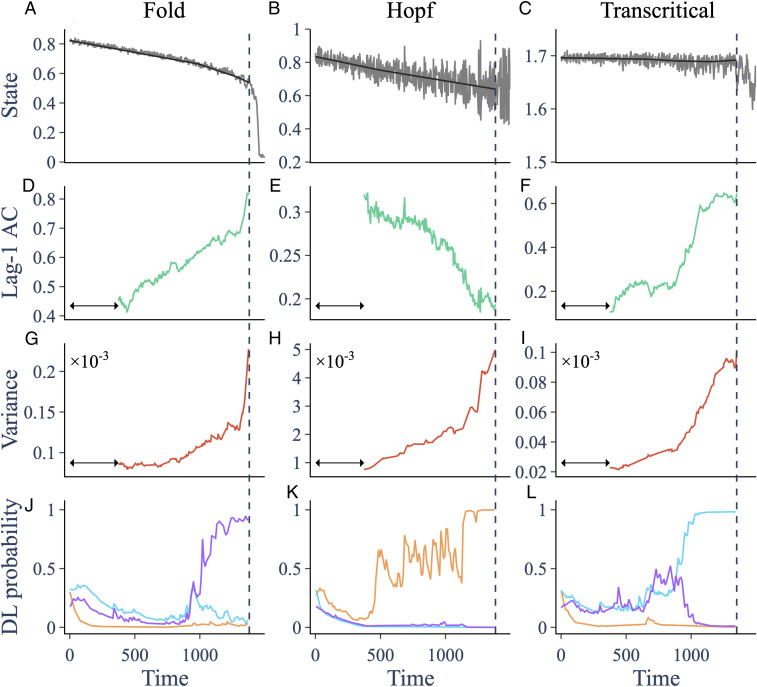
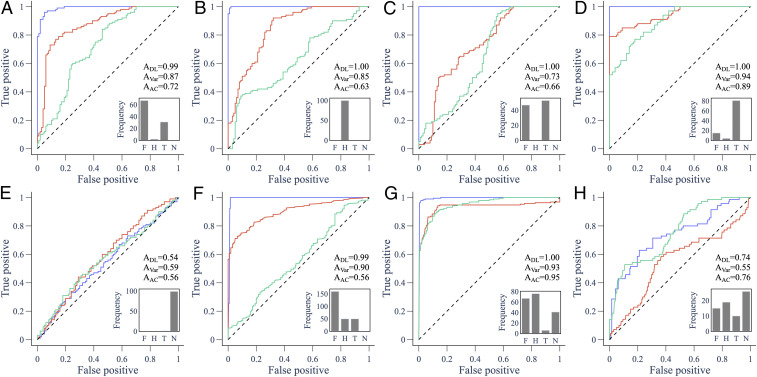
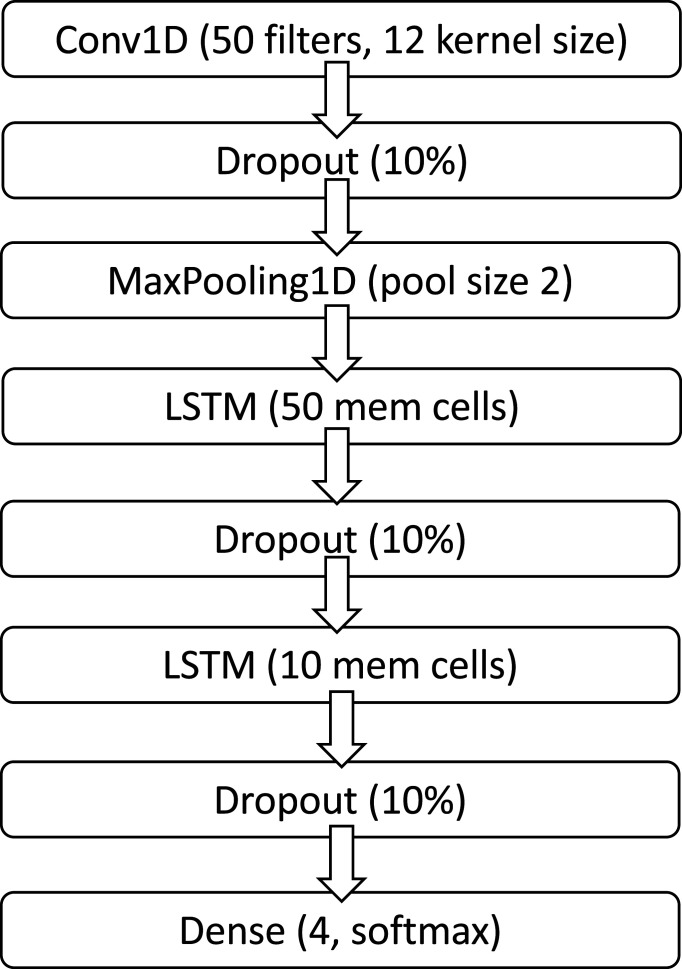
Significance: Early warning signals (EWS) of tipping points are vital to anticipate system collapse or other sudden shifts. However, existing generic early warning indicators designed to work across all systems do not provide information on the state that lies beyond the tipping point. Our results show how deep learning algorithms (artificial intelligence) can provide EWS of tipping points in real-world systems. The algorithm predicts certain qualitative aspects of the new state, and is also more sensitive and generates fewer false positives than generic indicators. We use theory about system behavior near tipping points so that the algorithm does not require data from the study system but instead learns from a universe of possible models.
Overview
The claims and statistics of this paper haven’t been checked yet.
Run the check — free, no account needed. It reads the open-access text and checks the sources it cites.
Integrity signals
Registry
Cites
Statistics
Figures
Verification
Claims the paper makes
The claims and statistics of this paper haven’t been checked yet.
Run the check — free, no account needed. It reads the open-access text and checks the sources it cites.
Claims other papers make about this one
Each is checked against this paper’s own text: does it say what the citing paper says it does?
In the citing paper
“Combine that with long-term soundscapes and mechanistic ecological models, and you get early-warning indicators that could outperform abundance-only monitoring (Bury et al. 2021; Rasmussen et al. 2024; Stowell and Sueur 2020).”
From Listening forward: emerging roles of bioacoustics in ecology, evolution, and conservation (2026) · cites this paper as Bury et al. 2021
Self-check
Percentages, sums and reported differences re-computed from the paper’s own numbers.
The self-check needs the paper’s full text.
Citations
Cites
SciPy 1.0: fundamental algorithms for scientific computing in Python
Virtanen, P., Gommers, R., Oliphant, T. E., Haberland, M., Reddy, T., Cournapeau, D., Burovski, E., Peterson, P., Weckesser, W., Bright, J., et al. (2020) · Nature Methods · doi:10.1038/s41592-019-0686-2 · Cited by 38,430 · cited 1×
“The simulation uses the odeint function from the Python package Scipy (42) with a step size of 0.01.”
MethodInfluentialRobust Locally Weighted Regression and Smoothing Scatterplots
Cleveland, W. S. (1979) · Journal of the American Statistical Association · doi:10.1080/01621459.1979.10481038 · Cited by 11,594 · cited 1×
“This is done using Lowess smoothing (52) with span 0.”
MethodSciPy 1.0: fundamental algorithms for scientific computing in Python
Virtanen, P., Gommers, R., Oliphant, T. E., Haberland, M., Reddy, T., Cournapeau, D., Burovski, E., Peterson, P., Weckesser, W., Bright, J., et al. (2019) · Apollo - University of Cambridge Repository · doi:10.17863/cam.64134 · Cited by 10,460
Elements of Applied Bifurcation Theory
Kuznetsov, Y. A. (2004) · Applied mathematical sciences · doi:10.1007/978-1-4757-3978-7 · Cited by 5,729
Nonlinear Dynamics and Chaos: With Applications to Physics, Biology, Chemistry, and Engineering
Strogatz, S. H., Friedman, M. J., Mallinckrodt, A. J., & McKay, S. R. (1994) · Computers in Physics · doi:10.1063/1.4823332 · Cited by 4,654
Deep learning for time series classification: a review
Ismail Fawaz, H., Forestier, G., Weber, J., Idoumghar, L., & Muller, P.-A. (2019) · Data Mining and Knowledge Discovery · doi:10.1007/s10618-019-00619-1 · Cited by 3,342 · cited 1×
“Supervised DL algorithms can also detect patterns (features) in time series, and have achieved state of the art in time series classification (23)—the ability to classify time series based on characteristic features in the data.”
BackgroundNonlinear Dynamics and Chaos: With Applications to Physics, Biology, Chemistry and Engineering
Strogatz, S. H., & Fox, R. F. (1995) · Physics Today · doi:10.1063/1.2807947 · Cited by 2,584
Anticipating Critical Transitions
Scheffer, M., Carpenter, S. R., Lenton, T. M., Bascompte, J., Brock, W., Dakos, V., van de Koppel, J., van de Leemput, I. A., Levin, S. A., van Nes, E. H., et al. (2012) · Science · doi:10.1126/science.1225244 · Cited by 2,208 · cited 1×
“This information is important to know for both theoretical and practical purposes, since tipping points in many systems can lead to undesirable collapse (14).”
BackgroundSelf-citationGraphical Representation and Stability Conditions of Predator-Prey Interactions
Rosenzweig, M. L., & MacArthur, R. H. (1963) · The American Naturalist · doi:10.1086/282272 · Cited by 2,057 · cited 2×
“To test the Hopf and transcritical bifurcations, we use the Rozenzweig−MacArthur consumer−resource model (29) with additive white noise.”
MethodThresholds and breakpoints in ecosystems with a multiplicity of stable states
May, R. M. (1977) · Nature · doi:10.1038/269471a0 · Cited by 1,743 · cited 2×
“The model systems included a simple harvesting model consisting of a single equation that exhibits a fold bifurcation (28); a system of two equations representing a consumer−resource (predator−prey) system exhibiting both Hopf and transcritical bifurcations (29); and a system of five equations representing the coupled…”
Method
Cited by
Sorted by citations
Exceeding 1.5°C global warming could trigger multiple climate tipping points
Armstrong McKay, D. I., Staal, A., Abrams, J. F., Winkelmann, R., Sakschewski, B., Loriani, S., Fetzer, I., Cornell, S. E., Rockström, J., & Lenton, T. M. (2022) · Science · doi:10.1126/science.abn7950 · Cited by 1,931
“These could be augmented with deep learning techniques (99).”
Self-citationCheng, S. L., Quilodrán-Casas, C., Ouala, S., Farchi, A., Liu, C., Tandeo, P., Fablet, R., Lucor, D., Iooss, B., Brajard, J., et al. (2023) · IEEE/CAA Journal of Automatica Sinica · doi:10.1109/jas.2023.123537 · Cited by 351
“finding canonical bifurcations of dynamical systems from toy examples [301].”
BackgroundA 1 km daily soil moisture dataset over China using in situ measurement and machine learning
Li, Q., Shi, G., Shangguan, W., Nourani, V., Li, J., Li, L., Huang, F., Zhang, Y., Wang, C., Wang, D., et al. (2022) · Earth system science data · doi:10.5194/essd-14-5267-2022 · Cited by 292
Earlier collapse of Anthropocene ecosystems driven by multiple faster and noisier drivers
Willcock, S., Cooper, G. S., Addy, J., & Dearing, J. A. (2023) · Nature Sustainability · doi:10.1038/s41893-023-01157-x · Cited by 150
“…useful simplification for theoretical understanding, risks https://doi.org/10.1038/s41893-023-01157-x creating a false sense of security by overestimating the distance remaining before critical thresholds are breached in the real world where multiple drivers and noise are abundant 27,52 .”
InfluentialImpacts of climate change on vegetation pattern: Mathematical modeling and data analysis
Sun, G., Li, L., Li, J., Liu, C., Wu, Y.-P., Gao, S., Wang, Z., & Feng, G. (2022) · Physics of Life Reviews · doi:10.1016/j.plrev.2022.09.005 · Cited by 115
Metadata
- Authors
- Bury, T. M., Sujith, R. I., Pavithran, I., Scheffer, M., Lenton, T. M., Anand, M., & Bauch, C. T.
- Affiliations
- University of Waterloo (CA)
- Indian Institute of Technology Madras (IN)
- Wageningen University & Research (NL)
- University of Exeter (GB)
- University of Guelph (CA)
- Corresponding author
- Bauch, Chris T.
- ORCID
- Venue
- Proceedings of the National Academy of Sciences
- Publisher
- National Academy of Sciences
- Published
- 2021-09-20
- Volume
- 118
- Issue
- 39
- ISSN
- 0027-8424 (ISSN-L)
- 1091-6490
- PMC
- PMC8488604
- OpenAlex
- W3200303296
- Semantic Scholar
- 91c6031240527a1cdba25aef61bdf5a3cf767498
- Cited by
- 284
- References
- 54
- Citations by year
- 2026: 61 · 2025: 59 · 2024: 67 · 2023: 51 · 2022: 44 · 2021: 2
- FWCI
- 16.80
- Type
- journal article
- Language
- en
- Open access
- hybrid
- doi.org
- Licence
- Locations
- Proceedings of the National Academy of Sciences (publishedVersion, cc-by-nc-nd)
- Europe PMC (PubMed Central) (publishedVersion, other-oa)
- PubMed Central (publishedVersion, cc-by-nc-nd)
- PubMed (publishedVersion)
- Socio-Environmental Systems Modeling (submittedVersion, cc-by-nc-nd)
- Data Archiving and Networked Services (DANS) (submittedVersion, cc-by-nc-nd)
- Funders
- Gouvernement du Canada | Natural Sciences and Engineering Research Council of Canada (RGPIN 2019, RGPIN 2020)
- Topics
- Physical Sciences › Environmental Science › Global and Planetary Change › Ecosystem dynamics and resilience
- Physical Sciences › Physics and Astronomy › Statistical and Nonlinear Physics › Chaos control and synchronization
- Physical Sciences › Mathematics › Applied Mathematics › Mathematical and Theoretical Epidemiology and Ecology Models
- Keywords
- tipping points, early warning indicators, normal forms, dynamical systems, deep learning, state transitions, lag-1 autocorrelation, variance, scaling behavior, model-free prediction, ecological tipping points, thermoacoustics, climate tipping points
About these checks
Registry, retraction, Cites and statistics results are computed, not judged, with one exception: a printed reference that no index lists is read once by a model before it counts as a citation error. Claims are extracted by a model and kept only when their quote appears verbatim in the text; each cited source is then checked, with a model’s help, for whether it says what the claim relies on. Those verdicts can be wrong — read the claim’s quote and the cited source before relying on one.
Statistics and arithmetic are recomputed, not judged.
Confidence bands are shown only for fields calibrated on our annotated test set. None is calibrated yet, so no band is shown.
What counts as a claim ›How we measure confidence ›How we check this ›
Are you an author, or do you see a problem with this page? Request a review
