

The DOI matches its Crossref record; 53 of the 54 references it cites were found in a registry or an index.
Deep learning for early warning signals of tipping points
Open accessAbstract
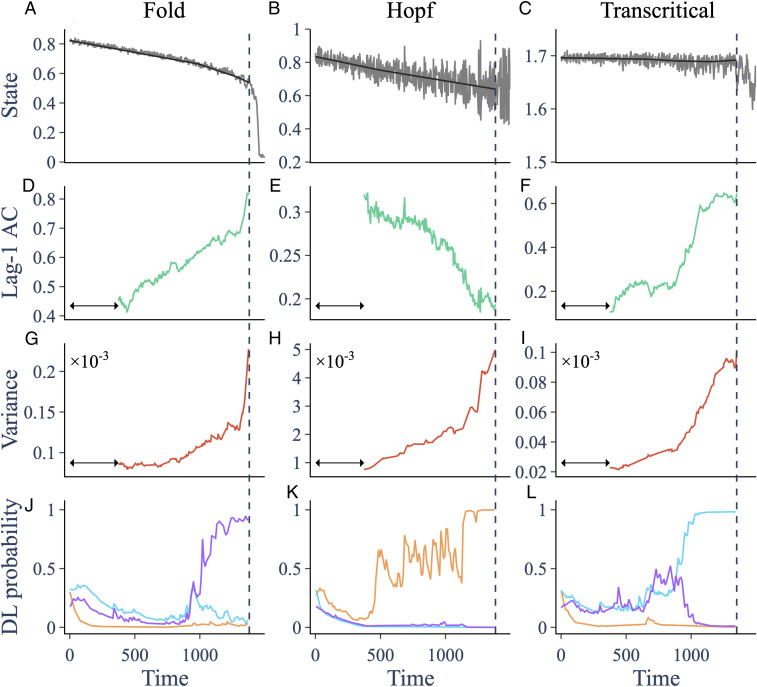
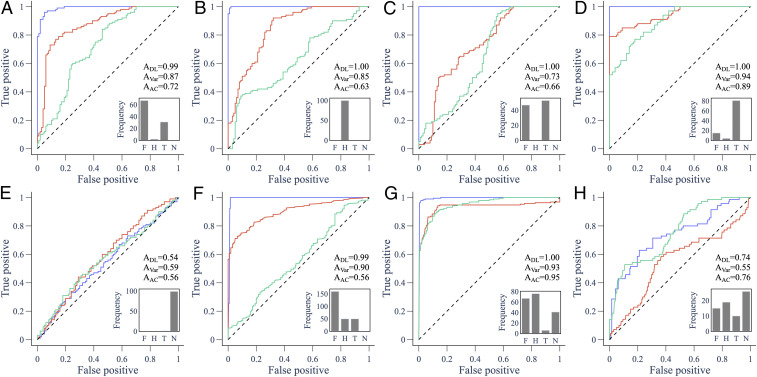
Significance: Early warning signals (EWS) of tipping points are vital to anticipate system collapse or other sudden shifts. However, existing generic early warning indicators designed to work across all systems do not provide information on the state that lies beyond the tipping point. Our results show how deep learning algorithms (artificial intelligence) can provide EWS of tipping points in real-world systems. The algorithm predicts certain qualitative aspects of the new state, and is also more sensitive and generates fewer false positives than generic indicators. We use theory about system behavior near tipping points so that the algorithm does not require data from the study system but instead learns from a universe of possible models.
Overview
The claims and statistics of this paper haven’t been checked yet.
Run the check — free, no account needed. It reads the open-access text and checks the sources it cites.
Integrity signals
Registry
Cites
Statistics
Figures
Verification
Claims the paper makes
The claims and statistics of this paper haven’t been checked yet.
Run the check — free, no account needed. It reads the open-access text and checks the sources it cites.
Claims other papers make about this one
Each is checked against this paper’s own text: does it say what the citing paper says it does?
In the citing paper
“Combine that with long-term soundscapes and mechanistic ecological models, and you get early-warning indicators that could outperform abundance-only monitoring (Bury et al. 2021; Rasmussen et al. 2024; Stowell and Sueur 2020).”
From Listening forward: emerging roles of bioacoustics in ecology, evolution, and conservation (2026) · cites this paper as Bury et al. 2021
Self-check
Percentages, sums and reported differences re-computed from the paper’s own numbers.
The self-check needs the paper’s full text.
Citations
Cites
SciPy 1.0: fundamental algorithms for scientific computing in Python
Virtanen, P., Gommers, R., Oliphant, T. E., Haberland, M., Reddy, T., Cournapeau, D., Burovski, E., Peterson, P., Weckesser, W., Bright, J., et al. (2020) · Nature Methods · doi:10.1038/s41592-019-0686-2 · Cited by 38,430 · cited 1×
“The simulation uses the odeint function from the Python package Scipy (42) with a step size of 0.01.”
MethodInfluentialRobust Locally Weighted Regression and Smoothing Scatterplots
Cleveland, W. S. (1979) · Journal of the American Statistical Association · doi:10.1080/01621459.1979.10481038 · Cited by 11,594 · cited 1×
“This is done using Lowess smoothing (52) with span 0.”
MethodSciPy 1.0: fundamental algorithms for scientific computing in Python
Virtanen, P., Gommers, R., Oliphant, T. E., Haberland, M., Reddy, T., Cournapeau, D., Burovski, E., Peterson, P., Weckesser, W., Bright, J., et al. (2019) · Apollo - University of Cambridge Repository · doi:10.17863/cam.64134 · Cited by 10,460
Elements of Applied Bifurcation Theory
Kuznetsov, Y. A. (2004) · Applied mathematical sciences · doi:10.1007/978-1-4757-3978-7 · Cited by 5,729
Nonlinear Dynamics and Chaos: With Applications to Physics, Biology, Chemistry, and Engineering
Strogatz, S. H., Friedman, M. J., Mallinckrodt, A. J., & McKay, S. R. (1994) · Computers in Physics · doi:10.1063/1.4823332 · Cited by 4,654
Deep learning for time series classification: a review
Ismail Fawaz, H., Forestier, G., Weber, J., Idoumghar, L., & Muller, P.-A. (2019) · Data Mining and Knowledge Discovery · doi:10.1007/s10618-019-00619-1 · Cited by 3,342 · cited 1×
“Supervised DL algorithms can also detect patterns (features) in time series, and have achieved state of the art in time series classification (23)—the ability to classify time series based on characteristic features in the data.”
BackgroundNonlinear Dynamics and Chaos: With Applications to Physics, Biology, Chemistry and Engineering
Strogatz, S. H., & Fox, R. F. (1995) · Physics Today · doi:10.1063/1.2807947 · Cited by 2,584
Anticipating Critical Transitions
Scheffer, M., Carpenter, S. R., Lenton, T. M., Bascompte, J., Brock, W., Dakos, V., van de Koppel, J., van de Leemput, I. A., Levin, S. A., van Nes, E. H., et al. (2012) · Science · doi:10.1126/science.1225244 · Cited by 2,208 · cited 1×
“This information is important to know for both theoretical and practical purposes, since tipping points in many systems can lead to undesirable collapse (14).”
BackgroundSelf-citationGraphical Representation and Stability Conditions of Predator-Prey Interactions
Rosenzweig, M. L., & MacArthur, R. H. (1963) · The American Naturalist · doi:10.1086/282272 · Cited by 2,057 · cited 2×
“To test the Hopf and transcritical bifurcations, we use the Rozenzweig−MacArthur consumer−resource model (29) with additive white noise.”
MethodThresholds and breakpoints in ecosystems with a multiplicity of stable states
May, R. M. (1977) · Nature · doi:10.1038/269471a0 · Cited by 1,743 · cited 2×
“The model systems included a simple harvesting model consisting of a single equation that exhibits a fold bifurcation (28); a system of two equations representing a consumer−resource (predator−prey) system exhibiting both Hopf and transcritical bifurcations (29); and a system of five equations representing the coupled…”
Method
Cited by
Sorted by citations
Exceeding 1.5°C global warming could trigger multiple climate tipping points
Armstrong McKay, D. I., Staal, A., Abrams, J. F., Winkelmann, R., Sakschewski, B., Loriani, S., Fetzer, I., Cornell, S. E., Rockström, J., & Lenton, T. M. (2022) · Science · doi:10.1126/science.abn7950 · Cited by 1,931
“These could be augmented with deep learning techniques (99).”
Self-citationCheng, S. L., Quilodrán-Casas, C., Ouala, S., Farchi, A., Liu, C., Tandeo, P., Fablet, R., Lucor, D., Iooss, B., Brajard, J., et al. (2023) · IEEE/CAA Journal of Automatica Sinica · doi:10.1109/jas.2023.123537 · Cited by 351
“finding canonical bifurcations of dynamical systems from toy examples [301].”
BackgroundA 1 km daily soil moisture dataset over China using in situ measurement and machine learning
Li, Q., Shi, G., Shangguan, W., Nourani, V., Li, J., Li, L., Huang, F., Zhang, Y., Wang, C., Wang, D., et al. (2022) · Earth system science data · doi:10.5194/essd-14-5267-2022 · Cited by 292
Earlier collapse of Anthropocene ecosystems driven by multiple faster and noisier drivers
Willcock, S., Cooper, G. S., Addy, J., & Dearing, J. A. (2023) · Nature Sustainability · doi:10.1038/s41893-023-01157-x · Cited by 150
“…useful simplification for theoretical understanding, risks https://doi.org/10.1038/s41893-023-01157-x creating a false sense of security by overestimating the distance remaining before critical thresholds are breached in the real world where multiple drivers and noise are abundant 27,52 .”
InfluentialImpacts of climate change on vegetation pattern: Mathematical modeling and data analysis
Sun, G., Li, L., Li, J., Liu, C., Wu, Y.-P., Gao, S., Wang, Z., & Feng, G. (2022) · Physics of Life Reviews · doi:10.1016/j.plrev.2022.09.005 · Cited by 115
Remotely sensing potential climate change tipping points across scales
Lenton, T. M., Abrams, J. F., Bartsch, A., Bathiany, S., Boulton, C. A., Buxton, J. E., Conversi, A., Cunliffe, A. M., Hebden, S. R., Lavergne, T., et al. (2024) · Nature Communications · doi:10.1038/s41467-023-44609-w · Cited by 136
Self-citationKhatib, I. A., Shamayleh, A., & Ndiaye, M. (2024) · Informatics · doi:10.3390/informatics11030047 · Cited by 101
“Additionally, we discuss user-centric design principles and strategies to enhance user engagement.”
BackgroundReconceptualizing urban heat island: Beyond the urban-rural dichotomy
Wang, Z. (2021) · Sustainable Cities and Society · doi:10.1016/j.scs.2021.103581 · Cited by 90
A predictive timeline of wildlife population collapse
Cerini, F., Childs, D. Z., & Clements, C. F. (2023) · Nature Ecology & Evolution · doi:10.1038/s41559-023-01985-2 · Cited by 96
A Dynamical Systems View of Psychiatric Disorders—Practical Implications
Scheffer, M., Bockting, C., Borsboom, D., Cools, R., Delecroix, C., Hartmann, J., Kendler, K. S., van de Leemput, I. A., van der Maas, H. L. J., van Nes, E. H., et al. (2024) · JAMA Psychiatry · doi:10.1001/jamapsychiatry.2024.0228 · Cited by 85
Self-citationDeb, S., Sidheekh, S., Clements, C. F., Krishnan, N. C., & Dutta, P. S. (2022) · Royal Society Open Science · doi:10.1098/rsos.211475 · Cited by 74
“[63] take a step forward by classifying bifurcations using deep learning models.”
Scientific novelty beyond the experiment
Hallsworth, J. E., Udaondo, Z., Pedrós‐Alió, C., Höfer, J., Benison, K. C., Lloyd, K. G., Cordero, R. J. B., de Campos, C. B. L., Yakimov, M. M., & Amils, R. (2023) · Microbial Biotechnology · doi:10.1111/1751-7915.14222 · Cited by 62
Anticipating the occurrence and type of critical transitions
Grziwotz, F., Chang, C., Dakos, V., van Nes, E. H., Schwarzländer, M., Kamps, O., Heßler, M., Tokuda, I. T., Telschow, A., & Hsieh, C. (2023) · Science Advances · doi:10.1126/sciadv.abq4558 · Cited by 76
“The existing EWSs are developed for anticipating the critical transitions in fold bifurcation ( 14 ) [i.e., catastrophe shift ( 1 )], but it is still difficult to distinguish fold bifurcation from more complex types of bifurcations ( 14 , 15 ) (e.g., Hopf or Neimark-Sacker bifurcation).”
Early warning signals have limited applicability to empirical lake data
O’Brien, D. A., Deb, S., Gal, G., Thackeray, S. J., Dutta, P. S., Matsuzaki, S. S., May, L., & Clements, C. F. (2023) · Nature Communications · doi:10.1038/s41467-023-43744-8 · Cited by 57
“These include new computation techniques 37 , exploitation of information from multiple time series 38 and machine learning 39,40 .”
InfluentialClassification performance assessment for imbalanced multiclass data
Aguilar–Ruiz, J. S., & Michalak, M. (2024) · Scientific Reports · doi:10.1038/s41598-024-61365-z · Cited by 67
Patel, D., & Ott, E. (2023) · Chaos An Interdisciplinary Journal of Nonlinear Science · doi:10.1063/5.0131787 · Cited by 48
“For example, in one work of this type [32] a deep learning technique was developed by training on a library of mathematical models to recognize dynamical response to noise that characterizes a system as it approaches a tipping point.”
BackgroundEcological complexity and the biosphere: the next 30 years
Solé, R. V., & Levin, S. A. (2022) · Philosophical Transactions of the Royal Society B Biological Sciences · doi:10.1098/rstb.2021.0376 · Cited by 52
“Some of these methods might soon allow us to tackle warning signals in very accurate ways while helping to identify the proper class of mathematical model describing the transition [74].”
BackgroundBathiany, S., Bastiaansen, R., Bastos, A., Blaschke, L. L., Lever, J. J., Loriani, S., Keersmaecker, W. D., Dorigo, W. A., Milenković, M., Senf, C., et al. (2024) · Surveys in Geophysics · doi:10.1007/s10712-024-09833-z · Cited by 58
“A particularly promising approach in this direction is to apply machine learning methods in order to identify optimal indicators (Bury et al., 2021).”
Farahbakhsh, I., Bauch, C. T., & Anand, M. (2022) · Philosophical Transactions of the Royal Society B Biological Sciences · doi:10.1098/rstb.2021.0382 · Cited by 57
Self-citationDeep learning for predicting rate-induced tipping
Huang, Y., Bathiany, S., Ashwin, P., & Boers, N. (2024) · Nature Machine Intelligence · doi:10.1038/s42256-024-00937-0 · Cited by 53
“We also experimented with multilayer perceptron 33 , long short-term memory 14,46 and self-attention 47 architectures for the DL model.”
Early warning signals for critical transitions in complex systems
George, S. V., Kachhara, S., & Ambika, G. (2023) · Physica Scripta · doi:10.1088/1402-4896/acde20 · Cited by 37
Predicting discrete-time bifurcations with deep learning
Bury, T. M., Dylewsky, D., Bauch, C. T., et al. (2023) · Nature Communications · doi:10.1038/s41467-023-42020-z · Cited by 36
Self-citationUniversal early warning signals of phase transitions in climate systems
Dylewsky, D., Lenton, T. M., Scheffer, M., Bury, T. M., Fletcher, C. G., Anand, M., & Bauch, C. T. (2023) · Journal of The Royal Society Interface · doi:10.1098/rsif.2022.0562 · Cited by 36
“Recent results in deep learning methods for EWS detection have supported this claim, demonstrating that models trained on simple synthetic dynamics can be successfully transferred to empirical climate data from various sources [25, 26].”
BackgroundMethodResultInfluentialSelf-citationA resilience sensing system for the biosphere
Lenton, T. M., Buxton, J. E., McKay, D. I. A., Abrams, J. F., Boulton, C. A., Lees, K. J., Powell, T. W. R., Boers, N., Cunliffe, A. M., & Dakos, V. (2022) · Philosophical Transactions of the Royal Society B Biological Sciences · doi:10.1098/rstb.2021.0383 · Cited by 36
“Deep learning can use these to distinguish the type of tipping point being approached and provide improved early warning [48].”
BackgroundSelf-citationJudge, M., Bouman, T., Steg, L., & Bolderdijk, J. W. (2024) · One Earth · doi:10.1016/j.oneear.2024.04.004 · Cited by 37
Panahi, S., & Lai, Y. (2024) · Chaos An Interdisciplinary Journal of Nonlinear Science · doi:10.1063/5.0200898 · Cited by 35
Panarchy theory for convergence
Sundstrom, S. M., Angeler, D. G., Bell, J. E., Hayes, M. J., Hodbod, J., Fard, B. J., Mahmood, R., VanWormer, E., & Allen, C. R. (2023) · Sustainability Science · doi:10.1007/s11625-023-01299-z · Cited by 35
Bridging adaptive management and reinforcement learning for more robust decisions
Chapman, M., Xu, L., Lapeyrolerie, M., & Boettiger, C. (2023) · Philosophical Transactions of the Royal Society B Biological Sciences · doi:10.1098/rstb.2022.0195 · Cited by 37
“[15] use machine learning to classify critical transitions into four possible classes but do not suggest action strategies given a belief state in the system dynamics.”
BackgroundWesselkamp, M., Moser, N., Kalweit, G., Boedecker, J., & Dormann, C. F. (2024) · Ecology Letters · doi:10.1111/ele.70012 · Cited by 38
Feng, T., Milne, R., & Hao Wang, A. (2023) · Mathematical Biosciences · doi:10.1016/j.mbs.2023.109075 · Cited by 29
“Recently, ecological tipping points, where the state of an ecosystem abruptly transitions from a steady state to an alternate dynamic regime, have been increasingly observed in the field [1,2].”
BackgroundWhy topological data analysis detects financial bubbles?
Akingbade, S. W., Gidea, M., Manzi, M., & Nateghi, V. (2023) · Communications in Nonlinear Science and Numerical Simulation · doi:10.1016/j.cnsns.2023.107665 · Cited by 27
Machine learning prediction of tipping in complex dynamical systems
Panahi, S., Kong, L.-W., Moradi, M., Zhai, Z.-M., Glaz, B. J., Haile, M., & Lai, Y. (2024) · Physical Review Research · doi:10.1103/physrevresearch.6.043194 · Cited by 28
“In a recent work, a deep-learning based time-series classification scheme was introduced to determine if a tipping event is about to occur and the bifurcation [49].”
Rijke tube: A nonlinear oscillator.
Manoj, K., Pawar, S. A., Kurths, J., & Sujith, R. (2022) · Chaos · doi:10.1063/5.0091826 · Cited by 24
Self-citationAmbiguity of early warning signals for climate tipping points
Rietkerk, M., Skiba, V., Weinans, E., Hébert, R., & Laepple, T. (2025) · Nature Climate Change · doi:10.1038/s41558-025-02328-8 · Cited by 27
“47,48).”
Thermodynamic and dynamical predictions for bifurcations and non-equilibrium phase transitions
Yan, H., Zhang, F., & Wang, J. (2023) · Communications Physics · doi:10.1038/s42005-023-01210-3 · Cited by 26
Detection of Approaching Critical Transitions in Natural Systems Driven by Red Noise
Morr, A., & Boers, N. (2024) · Physical Review X · doi:10.1103/physrevx.14.021037 · Cited by 26
Data-driven control of agent-based models: An Equation/Variable-free machine learning approach
Patsatzis, D. G., Russo, L., Kevrekidis, I. G., & Siettos, C. I. (2023) · Journal of Computational Physics · doi:10.1016/j.jcp.2023.111953 · Cited by 25
“…multiscale/complex systems with applications ranging from complex fluids and materials [20, 72–76] and process control [77–83] to the biological and biomedical sciences [84, 85] and from environmental engineering and climate change [86, 87] to sustainable mobility and robotics [88, 89].”
BackgroundConnecting distinct realms along multiple dimensions: A meta-ecosystem resilience perspective
Angeler, D. G., Heino, J., Rubio, J. L., & Casas, J. J. (2023) · The Science of The Total Environment · doi:10.1016/j.scitotenv.2023.164169 · Cited by 25
Early Predictor for the Onset of Critical Transitions in Networked Dynamical Systems
Liu, Z., Zhang, X., Ru, X., Gao, T.-T., Moore, J. M., & Yan, G. F. (2024) · Physical Review X · doi:10.1103/physrevx.14.031009 · Cited by 28
“A different approach leverages deep learning to identify, in addition, whether the approaching transition is fold, Hopf, or transcritical bifurcation [33].”
BackgroundOverlapping timescales obscure early warning signals of the second COVID-19 wave
Dablander, F., Heesterbeek, H., Borsboom, D., & Drake, J. M. (2022) · Proceedings of the Royal Society B Biological Sciences · doi:10.1098/rspb.2021.1809 · Cited by 24
“Boettiger & Hastings [46] have shown that statistically comparing two models, one that includes the bifurcation and one that does not, can outperform nonparametric testing using null models (see also [47]).”
BackgroundProverbio, D., Skupin, A., & Gonçalves, J. M. (2023) · iScience · doi:10.1016/j.isci.2023.107156 · Cited by 26
“The optimization of composite indicators further points to the use of machine learning methods when abundant data are available, 95 but also opens important caveats for their application in real life: feature combinations may be optimized for certain settings (e.g., noise intensity or type) but may…”
BackgroundNie, E., He, P., Peng, W., Zhang, H., & Lü, F. (2023) · Biotechnology Advances · doi:10.1016/j.biotechadv.2023.108204 · Cited by 24
Detecting the critical states during disease development based on temporal network flow entropy
Gao, R. B., Yan, J., Li, P., et al. (2022) · Briefings in Bioinformatics · doi:10.1093/bib/bbac164 · Cited by 23
Limits to ecological forecasting: Estimating uncertainty for critical transitions with deep learning
Lapeyrolerie, M., & Boettiger, C. (2022) · Methods in Ecology and Evolution · doi:10.1111/2041-210x.14013 · Cited by 23
“…developed for classification rather than the ML methods used in regression and forecasting models considered here have demonstrated a more nuanced ability to reliably detect different classes of critical transitions in time- series data (Bury et al., 2021; Lapeyrolerie & Boettiger, 2021).”
MethodLaybourn‐Langton, L., Evans, J., & Dyke, J. G. (2023) · Earth System Dynamics · doi:10.5194/esd-14-1171-2023 · Cited by 24
Extreme events in biological, societal, and earth sciences: A systematic review of the literature
Stewart, M., Carleton, W. C., & Groucutt, H. S. (2022) · Frontiers in Earth Science · doi:10.3389/feart.2022.786829 · Cited by 23
“varied as epileptic seizures and the Earth’s climate (Bury et al., 2021), based largely on studying rates of change over time in one or more variables.”
BackgroundTime-series-analysis-based detection of critical transitions in real-world non-autonomous systems
Lehnertz, K. (2024) · Chaos An Interdisciplinary Journal of Nonlinear Science · doi:10.1063/5.0214733 · Cited by 21
“High AUC values for various detection methods continue to be reported from different disciplines 138,153,162,232,243–251 .”
BackgroundMulticlass Classification Performance Curve
Aguilar–Ruiz, J. S., & Michalak, M. (2022) · IEEE Access · doi:10.1109/access.2022.3186444 · Cited by 19
Negative social tipping dynamics resulting from and reinforcing Earth system destabilization
Spaiser, V., Juhola, S. K., Constantino, S. M., Guo, W., Watson, T., Sillmann, J., Craparo, A., Basel, A. M., Bruun, J. T., Krishnamurthy, P. K., et al. (2024) · Earth System Dynamics · doi:10.5194/esd-15-1179-2024 · Cited by 28
The Current Landscape of Early Warning Systems and Traditional Approaches to Disaster Detection
Chavula, P., Kayusi, F., Lungu, G., et al. (2025) · LatIA · doi:10.62486/latia202577 · Cited by 18
Yang, C., Fan, J., Yue, M., et al. (2025) · Engineering Geology · doi:10.1016/j.enggeo.2025.108261 · Cited by 17
Vegetation dynamics: Modeling, mechanisms, and emergent properties
Hou, L.-F., Li, L., Chen, R., Wu, Y., Feng, G., & Sun, G. (2025) · Physics Reports · doi:10.1016/j.physrep.2025.09.003 · Cited by 18
ewstools: A Python package for early warning signals of bifurcations in time series data
Bury, T. M. (2023) · The Journal of Open Source Software · doi:10.21105/joss.05038 · Cited by 17
“…the recent surge in popularity of the Python programming language (PYPL, 2022), a Python-based implementation of EWS should be useful. ewstools also implements novel deep learning methods for EWS, which have outperformed conventional EWS in several model and empirical systems (Bury et al., 2021).”
BackgroundMethodInfluentialSelf-citationO’Brien, D. A., Deb, S., Sidheekh, S., Krishnan, N. C., Dutta, P. S., & Clements, C. F. (2023) · Ecography · doi:10.1111/ecog.06674 · Cited by 16
Destabilization of Earth system tipping elements
Boers, N., Liu, T., Bathiany, S., Ben‐Yami, M., Blaschke, L. L., Bochow, N., Boulton, C. A., Lenton, T. M., Morr, A., Nian, D., et al. (2025) · Nature Geoscience · doi:10.1038/s41561-025-01787-0 · Cited by 16
“Promising advances include transfer operator approaches 128 and emerging machine learning techniques that can detect informative changes in time-series data beyond CSD-based indicators 129–131 .”
Self-citationArumugam, R., Guichard, F., & Lutscher, F. (2024) · Ecology · doi:10.1002/ecy.4240 · Cited by 15
Atsumi, K., Nishida, Y., Ushio, M., Nishi, H., Genroku, T., & Fujiki, S. (2024) · eLife · doi:10.7554/elife.93694 · Cited by 16
Long-living transients in ecological models: Recent progress, new challenges, and open questions
Morozov, A. Y., Feudel, U., Hastings, A., et al. (2024) · Physics of Life Reviews · doi:10.1016/j.plrev.2024.11.004 · Cited by 15
Non-Normal Interactions Create Socio-Economic Bubbles
Sornette, D., Lera, S. C., Lin, J., & Wu, K. (2022) · Communications Physics · doi:10.1038/s42005-023-01379-7 · Cited by 16
Improved GRU prediction of paper pulp press variables using different pre-processing methods
Mateus, B. C., Mendes, M., Farinha, J. T., Cardoso, A. J. M., Assis, R., & Soltanali, H. (2022) · Production & Manufacturing Research · doi:10.1080/21693277.2022.2155263 · Cited by 14
“Recent research has used the LOWESS smoothing technique in order to optimize the process of training and testing deep neural networks (Bury et al., 2021; Kulkarni et al., 2021).”
MethodMixtures Recomposition by Neural Nets: A Multidisciplinary Overview
Nicolle, A., Deng, S., Ihme, M., Kuzhagaliyeva, N., Ibrahim, E. A., & Farooq, A. (2024) · Journal of Chemical Information and Modeling · doi:10.1021/acs.jcim.3c01633 · Cited by 14
Early warnings for multi-stage transitions in dynamics on networks
MacLaren, N. G., Kundu, P., & Masuda, N. (2023) · Journal of The Royal Society Interface · doi:10.1098/rsif.2022.0743 · Cited by 14
Artificial Intelligence for Earth System Predictability (AI4ESP) (2021 Workshop Report)
Hickmon, N. L., Varadharajan, C., Hoffman, F. M., Wainwright, H. M., & Collis, S. (2022) · OSTI OAI (U.S. Department of Energy Office of Scientific and Technical Information) · doi:10.2172/1888810 · Cited by 16
Tipping points in coupled human–environment system models: a review
Farahbakhsh, I., Bauch, C. T., & Anand, M. (2024) · Earth System Dynamics · doi:10.5194/esd-15-947-2024 · Cited by 15
“Much research has been done in the past few decades to develop tools for EWSs using both empirical and synthetic time series data (Bury et al., 2021; Dakos et al., 2012, 2015, 2008; Kéfi et al., 2014; Lapeyrolerie and Boettiger, 2021).”
MethodSelf-citationEarly warning for spatial ecological system: Fractal dimension and deep learning
Bian, J., Ma, Z., Wang, C., Huang, T., & Zeng, C. (2023) · Physica A Statistical Mechanics and its Applications · doi:10.1016/j.physa.2023.129401 · Cited by 14
Morr, A., Boers, N., & Ashwin, P. (2024) · SIAM Journal on Applied Dynamical Systems · doi:10.1137/24m1669104 · Cited by 13
“There has been an increased interest in the analysis and detection of bifurcation-induced transitions [7, 5, 9, 10, 34, 14].”
BackgroundAn, S., Gao, X., An, F., et al. (2025) · iScience · doi:10.1016/j.isci.2025.111924 · Cited by 13
“Furthermore, spillovers were more prominent during turmoil or crisis episodes, especially the global financial crisis and the COVID-19 pandemic.”
Delecroix, C., van Nes, E. H., van de Leemput, I. A., et al. (2023) · PLOS Global Public Health · doi:10.1371/journal.pgph.0002253 · Cited by 12
Self-citationYONEZAWA, S., Haruki, T., Koizumi, K., Taketani, A., Oshima, Y., Oku, M., Wada, A., Sato, T., Masuda, N., Tahara, J., et al. (2024) · International Journal of Molecular Sciences · doi:10.3390/ijms25031570 · Cited by 12
“The DNB theory [15] detects the early warning signals [16–23] of state transitions, specifically the unstable states, in complex networks of biological systems.”
BackgroundModelling induced innovation for the low-carbon energy transition: a menu of options
Pasqualino, R., Peñasco, C., Barbrook-Johnson, P., de Moura, F. S., Kolesnikov, S. A., Hafner, S., Nijsse, F. J. M. M., Lamperti, F., Hinder, B., Melekh, Y., et al. (2024) · Environmental Research Letters · doi:10.1088/1748-9326/ad4c79 · Cited by 12
“Depending on the internal dynamic assumptions included in a model, DSMs can be suitable for addressing non-linear change and the outcomes of passing thresholds and tipping points [16, 17, 136].”
BackgroundSelf-citationGao, S., Chakraborty, A. K., Greiner, R., Lewis, M. A., & Hao Wang, A. (2025) · PLoS Computational Biology · doi:10.1371/journal.pcbi.1012782 · Cited by 11
An early warning indicator trained on stochastic disease-spreading models with different noises
Chakraborty, A. K., Gao, S., Miry, R., Ramazi, P., Greiner, R., Lewis, M. A., & Hao Wang, A. (2024) · Journal of The Royal Society Interface · doi:10.1098/rsif.2024.0199 · Cited by 11
“[20].”
InfluentialB-tipping points in plankton dynamics: Stochasticity and early warning signals
Chattopadhyay, S. N., & Gupta, A. K. (2024) · Physical review. E · doi:10.1103/physreve.110.064218 · Cited by 11
Deep learning for tipping points: Preprocessing matters
Dablander, F., & Bury, T. M. (2022) · Proceedings of the National Academy of Sciences · doi:10.1073/pnas.2207720119 · Cited by 11
“(1) present a powerful approach to anticipating tipping points based on deep learning that not only substantially outperforms traditional early warning indicators but also classifies the type of bifurcation that may lie ahead.”
BackgroundMethodInfluentialSelf-citationEffect of homophily on coupled behavior-disease dynamics near a tipping point
He, Z., & Bauch, C. T. (2024) · Mathematical Biosciences · doi:10.1016/j.mbs.2024.109264 · Cited by 11
Self-citationFateNet: an integration of dynamical systems and deep learning for cell fate prediction
Sadria, M., & Bury, T. M. (2024) · Bioinformatics · doi:10.1093/bioinformatics/btae525 · Cited by 13
“In particular, a neural network can learn to predict bifurcations by training it on a massive corpus of simulation data from dynamical systems with noise (Bury et al. 2021).”
BackgroundSelf-citationPang, Y.-Z., Li, L., & Jin, Z. (2025) · Nonlinear Dynamics · doi:10.1007/s11071-025-10877-y · Cited by 10
Kröger, M. (2022) · Globalizations · doi:10.1080/14747731.2022.2117500 · Cited by 10
“Natural science knowledge on tipping points is expanding quickly, due to new algorithms predicting tipping point and post-tipping point states (Bury et al., 2021).”
BackgroundHe, Z., Zhang, S., Hu, J., & Dai, F. (2024) · Physica A Statistical Mechanics and its Applications · doi:10.1016/j.physa.2024.129563 · Cited by 12
Franović, I., Eydam, S., & Eroglu, D. (2024) · Chaos An Interdisciplinary Journal of Nonlinear Science · doi:10.1063/5.0247498 · Cited by 9
Nie, E., He, P., Zhang, H., et al. (2025) · Environmental Science & Technology · doi:10.1021/acs.est.5c00758 · Cited by 9
Accelerating transformations for a just, sustainable future: 10 ‘Must Haves’
Schlosser, P. F., Rockström, J., Edwards, C. M., Mirazo, P., Heilemann, A., Kitzmann, N. H., & Krobjinski, S. L. (2023) · Global Sustainability · doi:10.1017/sus.2023.14 · Cited by 9
“From that foundation, the capacities to detect, prevent, and respond to potential crises must be developed and invested in (Bauch et al., 2016; Bury et al., 2021; Lenton, 2020); protocols to recognize the spillover effects of strife and collapse across scales must be institutionalized; social…”
BackgroundBudd, C. J., & Kuske, R. (2023) · Physica D Nonlinear Phenomena · doi:10.1016/j.physd.2023.133949 · Cited by 9
Phylogenomic early warning signals for SARS-CoV-2 epidemic waves
Drake, K. O., Boyd, O., Franceschi, V. B., Colquhoun, R., Ellaby, N. A. F., & Volz, E. (2024) · EBioMedicine · doi:10.1016/j.ebiom.2023.104939 · Cited by 8
AI-Powered Satellite Imagery Processing for Global Air Traffic Surveillance
Kayusi, F., Chavula, P., Juma, L., & Mishra, R. (2025) · LatIA · doi:10.62486/latia202580 · Cited by 9
Early warnings are too late when parameters change rapidly
Radhakrishnan, R., Pavithran, I., Livina, V., Kurths, J., & Sujith, R. I. (2025) · Scientific Reports · doi:10.1038/s41598-025-06525-5 · Cited by 8
Self-citationCritical Transitions and Short-Term Warning Signals of Seismic Rockfall Systems
Fan, J., Lian, J., Yang, C., et al. (2025) · Rock Mechanics and Rock Engineering · doi:10.1007/s00603-025-04728-w · Cited by 8
“The previous research has commonly employed variance and AC to characterize this slowdown (Bury et al. 2021), which has been widely applied as a warning method in fields, such as ecosystems (Dakos, et al. 2015; van Belzen et al. 2017), climate change (Dakos et al. 2008; Lenton et al. 2012), and…”
Relaxation time as early warning signal of avalanches in self-organizing systems
Ma, Z., Zeng, C., & Liu, W. (2024) · Physical Review Research · doi:10.1103/physrevresearch.6.013013 · Cited by 8
Perspectives on the timing of ecosystem collapse in a changing climate
Alaniz, A. J., Marquet, P. A., Carvajal, M. A., Vergara, P. M., Moreira‐Arce, D., Muzzio, M. A., & Keith, D. A. (2024) · Conservation Biology · doi:10.1111/cobi.14247 · Cited by 8
“…original state could occur in different ways: fold bifurcation, which corresponds to an abrupt change; transcritical bifurcation, which usually causes a smooth transition; or Holpf bifurcation, which is an oscillatory behavior of the ecosystem between different alternate states (Bury et al., 2021).”
Teaching machines to anticipate catastrophes
Lapeyrolerie, M., & Boettiger, C. (2021) · Proceedings of the National Academy of Sciences · doi:10.1073/pnas.2115605118 · Cited by 7
Catalini, L., del Pino, J., Kumar, S. S., et al. (2025) · Physical Review Research · doi:10.1103/y9gq-yjxy · Cited by 7
“Such networks have important implications for society as model systems to study tipping points in early-warning theories [26, 32–34] that pertain, for example, to climate models, avalanches, and economy.”
Predicting critical transitions with machine learning trained on surrogates of historical data
Ma, Z., Zeng, C., Zhang, Y., & Bury, T. M. (2025) · Communications Physics · doi:10.1038/s42005-025-02172-4 · Cited by 10
“In recent years, deep learning classi fi ers have been employed for early warningsignals 37,53 – 57 .”
InfluentialSelf-citationDeep learning for predicting the occurrence of tipping points
Zhuge, C., Li, J., & Chen, W. (2025) · Royal Society Open Science · doi:10.1098/rsos.242240 · Cited by 8
“Therefore, several methods such as DEV [12] or some DL classifiers [18,22–24] should be used to determine whether a system is approaching a tipping point first.”
InfluentialMoghadam, N. N., Ramamoorthy, R., Nazarimehr, F., et al. (2023) · The European Physical Journal Plus · doi:10.1140/epjp/s13360-023-03939-w · Cited by 7
“8] and to period one in interval A ∈ [28 .”
BackgroundInfluentialMoving beyond the panarchy heuristic
Angeler, D. G., Garmestani, A. S., Allen, C. R., et al. (2023) · Advances in ecological research/Advances in Ecological Research · doi:10.1016/bs.aecr.2023.10.005 · Cited by 7
Unveiling critical transition in a transport network model: stochasticity and early warning signals
Chattopadhyay, S. N., & Gupta, A. K. (2025) · Nonlinear Dynamics · doi:10.1007/s11071-025-10977-9 · Cited by 7
Tipping point for pulsatile oscillations in dynamical networks
Qin, B.-W., & Lin, W. J. (2023) · Physical Review Research · doi:10.1103/physrevresearch.5.043209 · Cited by 6
Do early warning signals of tipping points lead to better decisions?
Diekert, F., Heyen, D., Nesje, F., & Shayegh, S. (2025) · Journal of The Royal Society Interface · doi:10.1098/rsif.2024.0864 · Cited by 6
Deep learning for disease outbreak prediction: a parallel LSTM-CNN model
Chakraborty, A. K., Miry, R., Greiner, R., Lewis, M. A., Hao Wang, A., Guan, T., & Ramazi, P. (2025) · Journal of The Royal Society Interface · doi:10.1098/rsif.2025.0046 · Cited by 6
Early warning signals for bifurcations embedded in high dimensions
Dylewsky, D., Anand, M., & Bauch, C. T. (2024) · Scientific Reports · doi:10.1038/s41598-024-68177-1 · Cited by 6
“The neural EWS detection model used in this work is based on that of Bury et al. 11 , code for which is available at https:// github. com/ Thoma sMBury/ deep- early-warni ngs-pnas.”
BackgroundMethodInfluentialSelf-citation
Metadata
- Authors
- Bury, T. M., Sujith, R. I., Pavithran, I., Scheffer, M., Lenton, T. M., Anand, M., & Bauch, C. T.
- Affiliations
- University of Waterloo (CA)
- Indian Institute of Technology Madras (IN)
- Wageningen University & Research (NL)
- University of Exeter (GB)
- University of Guelph (CA)
- Corresponding author
- Bauch, Chris T.
- ORCID
- Venue
- Proceedings of the National Academy of Sciences
- Publisher
- National Academy of Sciences
- Published
- 2021-09-20
- Volume
- 118
- Issue
- 39
- ISSN
- 0027-8424 (ISSN-L)
- 1091-6490
- PMC
- PMC8488604
- OpenAlex
- W3200303296
- Semantic Scholar
- 91c6031240527a1cdba25aef61bdf5a3cf767498
- Cited by
- 284
- References
- 54
- Citations by year
- 2026: 61 · 2025: 59 · 2024: 67 · 2023: 51 · 2022: 44 · 2021: 2
- FWCI
- 16.80
- Type
- journal article
- Language
- en
- Open access
- hybrid
- doi.org
- Licence
- Locations
- Proceedings of the National Academy of Sciences (publishedVersion, cc-by-nc-nd)
- Europe PMC (PubMed Central) (publishedVersion, other-oa)
- PubMed Central (publishedVersion, cc-by-nc-nd)
- PubMed (publishedVersion)
- Socio-Environmental Systems Modeling (submittedVersion, cc-by-nc-nd)
- Data Archiving and Networked Services (DANS) (submittedVersion, cc-by-nc-nd)
- Funders
- Gouvernement du Canada | Natural Sciences and Engineering Research Council of Canada (RGPIN 2019, RGPIN 2020)
- Topics
- Physical Sciences › Environmental Science › Global and Planetary Change › Ecosystem dynamics and resilience
- Physical Sciences › Physics and Astronomy › Statistical and Nonlinear Physics › Chaos control and synchronization
- Physical Sciences › Mathematics › Applied Mathematics › Mathematical and Theoretical Epidemiology and Ecology Models
- Keywords
- tipping points, early warning indicators, normal forms, dynamical systems, deep learning, state transitions, lag-1 autocorrelation, variance, scaling behavior, model-free prediction, ecological tipping points, thermoacoustics, climate tipping points
About these checks
Registry, retraction, Cites and statistics results are computed, not judged, with one exception: a printed reference that no index lists is read once by a model before it counts as a citation error. Claims are extracted by a model and kept only when their quote appears verbatim in the text; each cited source is then checked, with a model’s help, for whether it says what the claim relies on. Those verdicts can be wrong — read the claim’s quote and the cited source before relying on one.
Statistics and arithmetic are recomputed, not judged.
Confidence bands are shown only for fields calibrated on our annotated test set. None is calibrated yet, so no band is shown.
What counts as a claim ›How we measure confidence ›How we check this ›
Are you an author, or do you see a problem with this page? Request a review
