

A neural network solves, explains, and generates university math problems by program synthesis and few-shot learning at human level
Open accessThe DOI matches its Crossref record; 21 of the 21 references it cites were found in a registry or an index.
Abstract
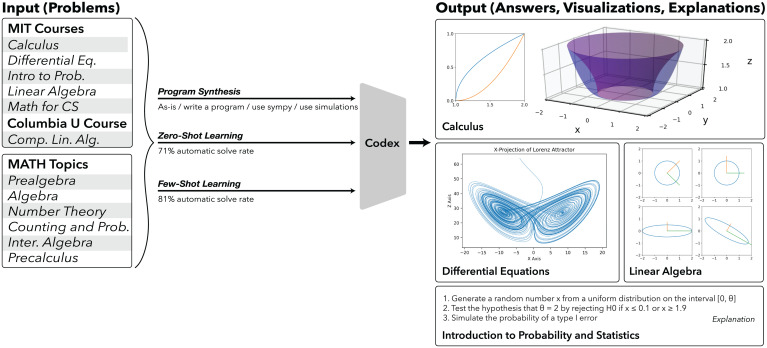
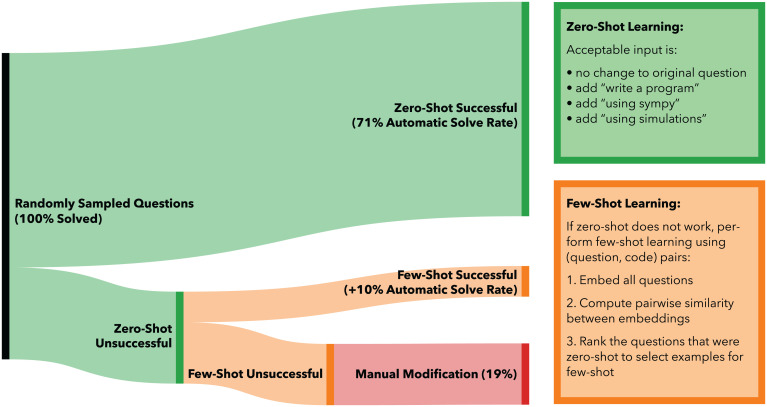
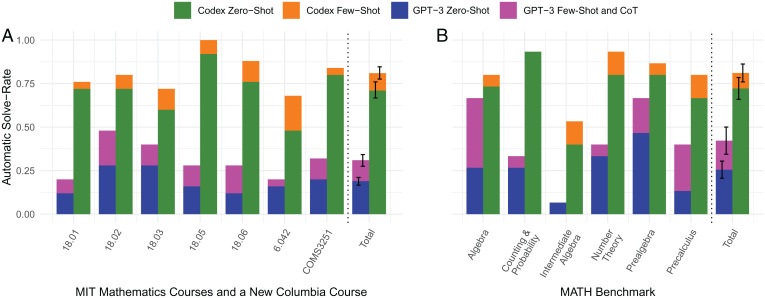
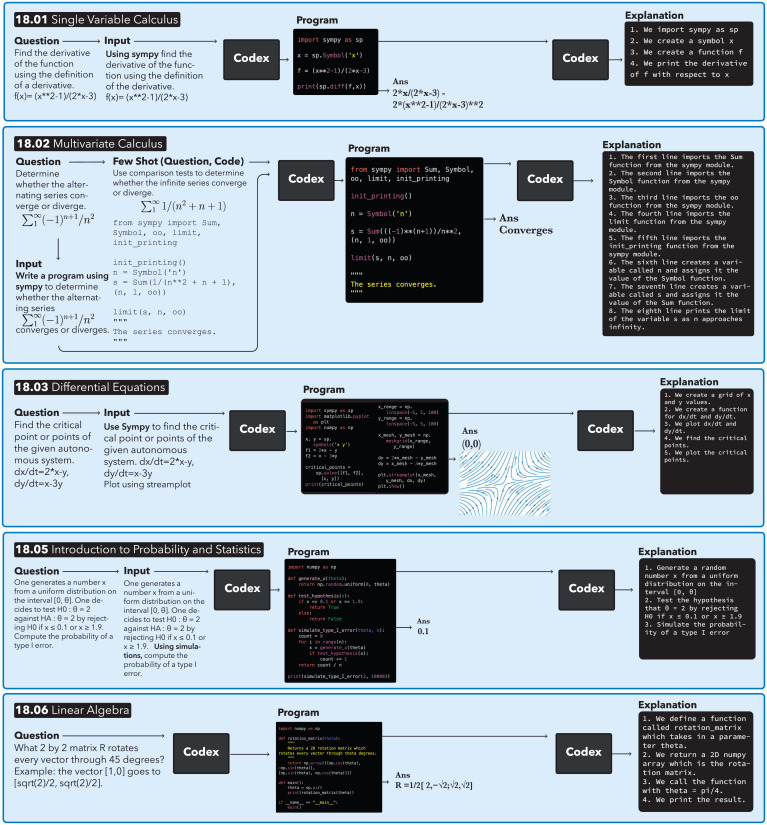
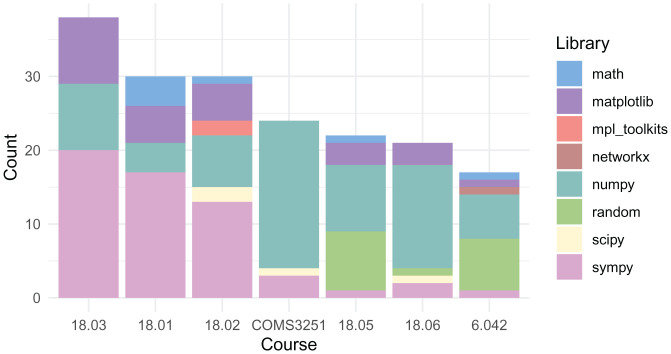
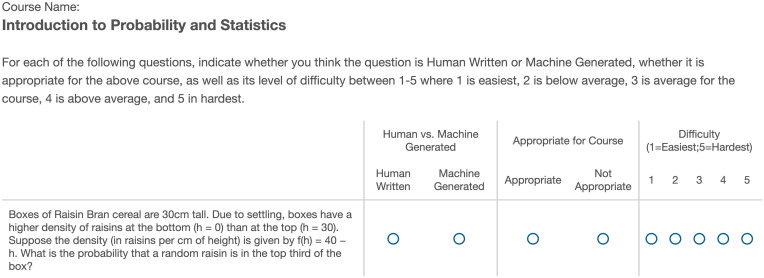
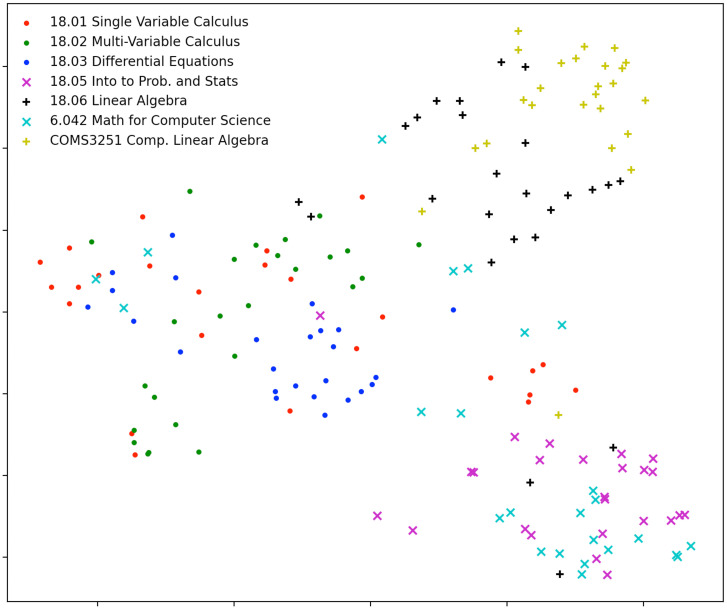
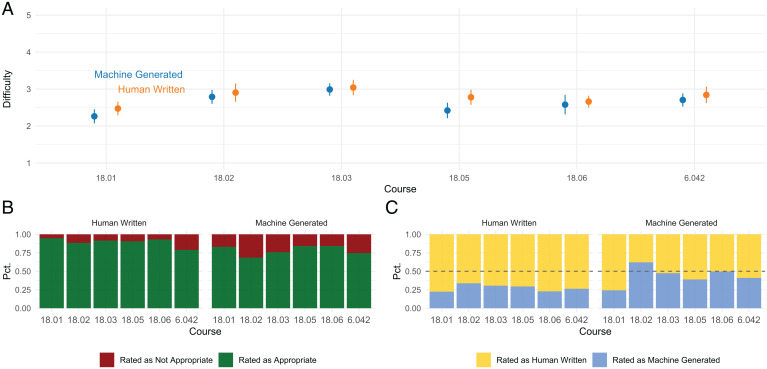
We demonstrate that a neural network pretrained on text and fine-tuned on code solves mathematics course problems, explains solutions, and generates questions at a human level. We automatically synthesize programs using few-shot learning and OpenAI’s Codex transformer and execute them to solve course problems at 81% automatic accuracy. We curate a dataset of questions from Massachusetts Institute of Technology (MIT)’s largest mathematics courses (Single Variable and Multivariable Calculus, Differential Equations, Introduction to Probability and Statistics, Linear Algebra, and Mathematics for Computer Science) and Columbia University’s Computational Linear Algebra. We solve questions from a MATH dataset (on Prealgebra, Algebra, Counting and Probability, Intermediate Algebra, Number Theory, and Precalculus), the latest benchmark of advanced mathematics problems designed to assess mathematical reasoning. We randomly sample questions and generate solutions with multiple modalities, including numbers, equations, and plots. The latest GPT-3 language model pretrained on text automatically solves only 18.8% of these university questions using zero-shot learning and 30.8% using few-shot learning and the most recent chain of thought prompting. In contrast, program synthesis with few-shot learning using Codex fine-tuned on code generates programs that automatically solve 81% of these questions. Our approach improves the previous state-of-the-art automatic solution accuracy on the benchmark topics from 8.8 to 81.1%. We perform a survey to evaluate the quality and difficulty of generated questions. This work automatically solves university-level mathematics course questions at a human level and explains and generates university-level mathematics course questions at scale, a milestone for higher education.
Overview
The claims and statistics of this paper haven’t been checked yet.
Free: it reads the open-access text and checks the first 5 claims that cite a source we can check. Create a free account to check every claim.
Integrity signals
Registry
Cites
Statistics
Figures
Verification
Claims the paper makes
The claims and statistics of this paper haven’t been checked yet.
Free: it reads the open-access text and checks the first 5 claims that cite a source we can check. Create a free account to check every claim.
Claims other papers make about this one
Each is checked against this paper’s own text: does it say what the citing paper says it does?
The cited source doesn’t support the claim as written.
In the citing paper
“Specifically, GPT-2 and GPT-3 have performed better than BERT-based models in content generation and evaluation tasks, such as generating university math problems (Drori et al., 2022) and evaluating the quality of student-generated short answer questions (Moore et al., 2022).”
From Practical and ethical challenges of large language models in education: A systematic scoping review (2024) · cites this paper as Drori et al., 2022
Checked by a reasoning model — may be wrong.
Experimental — accuracy not yet measuredThe source backs part of the claim, not all of it — or backs it for a different population, condition or comparison.
In the citing paper
“Natural science education: LLM-based agents can communicate with humans fluently, often being utilized to develop agent-based educational tools [115,117-119].”
From A survey on large language model based autonomous agents (2024) · cites this paper as [118]
Experimental — accuracy not yet measuredThe source backs part of the claim, not all of it — or backs it for a different population, condition or comparison.
In the citing paper
“Educational technologies developed by fine-tuning Codex also demonstrated the capability of resolving 81% of the advanced mathematics problems (Drori et al., 2022).”
From Practical and ethical challenges of large language models in education: A systematic scoping review (2024) · cites this paper as Drori et al., 2022
Experimental — accuracy not yet measuredThe cited source says what the claim attributes to it.
In the citing paper
“Large language models (LLMs) have demonstrated astounding capabilities in educational assessments (e.g., Drori et al. 2022, Terwiesch 2023).”
From AI Meets the Classroom: When Do Large Language Models Harm Learning? (2024) · cites this paper as Drori et al. 2022
Self-check
Percentages, sums and reported differences re-computed from the paper’s own numbers.
The self-check needs the paper’s full text.
Citations
Cites
Language Models are Few-Shot Learners
Brown, T. B., Mann, B., Ryder, N., Subbiah, M., Kaplan, J., Dhariwal, P., Neelakantan, A., Shyam, P., Sastry, G., Askell, A., et al. (2020) · arXiv · doi:10.48550/arxiv.2005.14165 · Cited by 23,372
UMAP: Uniform Manifold Approximation and Projection
McInnes, L., Healy, J., Saul, N., & Großberger, L. (2018) · Journal of Open Source Software · doi:10.21105/joss.00861 · Cited by 9,826
UMAP: Uniform Manifold Approximation and Projection for Dimension Reduction
McInnes, L., Healy, J., & Melville, J. (2018) · arXiv · doi:10.48550/arxiv.1802.03426 · Cited by 7,101
Large Language Models are Zero-Shot Reasoners
Kojima, T., Gu, S. S., Reid, M., Matsuo, Y., & Iwasawa, Y. (2022) · arXiv · doi:10.48550/arxiv.2205.11916 · Cited by 2,013
Large language models are zero-shot reasoners
Kojima, T., Gu, S. (., Reid, M., Matsuo, Y., & Iwasawa, Y. (2022) · Advances in Neural Information Processing Systems 35 · doi:10.52202/068431-1613 · Cited by 2,013
Evaluating Large Language Models Trained on Code
Chen, M., Tworek, J., Jun, H., Yuan, Q., Pinto, H. P. D. O., Kaplan, J., Edwards, H., Burda, Y., Joseph, N., Brockman, G., et al. (2021) · arXiv · doi:10.48550/arxiv.2107.03374 · Cited by 1,436
Training Verifiers to Solve Math Word Problems
Cobbe, K., Kosaraju, V., Bavarian, M., Chen, M., Jun, H., Kaiser, L., Plappert, M., Tworek, J., Hilton, J., Nakano, R., et al. (2021) · arXiv · doi:10.48550/arxiv.2110.14168 · Cited by 575
Socratic guiding questions in synthetic arithmetic data: matched LoRA runs (revision v2)
O'Grady, J., Gürhan, A. I., Chee, F. T., & Ramlan, E. I. (2026) · Zenodo (CERN European Organization for Nuclear Research) · doi:10.5281/zenodo.23236017 · Cited by 462
Measuring Mathematical Problem Solving With the MATH Dataset
Hendrycks, D., Burns, C., Kadavath, S., Arora, A., Basart, S., Tang, E., Song, D., & Steinhardt, J. (2021) · arXiv · doi:10.48550/arxiv.2103.03874 · Cited by 306
Measuring Massive Multitask Language Understanding
Hendrycks, D., Burns, C., Basart, S., Zou, A., Mazeika, M., Song, D., & Steinhardt, J. (2020) · arXiv · doi:10.48550/arxiv.2009.03300 · Cited by 291
Research works printed but not linked: 3
- A. Vaswani, “Attention is all you need” in Proceedings of Advances in Neural Information Processing Systems (2017), eds. I Guyon, et al. (Curran Associates, Inc., Long Beach, CA), vol. 30.
- I. Drori et al., Github repository for A neural network solves, explains, and generates university math problems by program synthesis and few-shot learning at human level (2022) https://github.com/idrori/mathQ. PMC9371704 35917350
- I. Drori, A neural network solves, explains, and generates university math problems by program synthesis and few-shot learning at human level. arXiv e-prints (2022) https://arxiv.org/abs/2112.15594 (accessed: May 30, 2022). PMC9371704 35917350 · arXiv
Cited by
A survey on large language model based autonomous agents
Wang, L., Ma, C., Feng, X., Zhang, Z., Yang, H., Zhang, J., Chen, Z., Tang, J., Chen, X., Lin, Y., et al. (2024) · Frontiers of Computer Science · doi:10.1007/s11704-024-40231-1 · Cited by 1,941
“Natural Science Education: LLM-based agents can communicate with humans fluently, often being utilized to develop agent-based educational tools [9, 145, 34, 19].”
BackgroundMethodA Survey on Large Language Model based Autonomous Agents
Wang, L., Ma, C., Feng, X., Zhang, Z., Yang, H., Zhang, J., Chen, Z., Tang, J., Chen, X., Lin, Y., et al. (2023) · arXiv · doi:10.48550/arxiv.2308.11432 · Cited by 1,925
“Natural Science Education: LLM-based agents can communicate with humans fluently, often being utilized to develop agent-based educational tools [9, 145, 34, 19].”
BackgroundMethodPractical and ethical challenges of large language models in education: A systematic scoping review
Yan, L., Sha, L., Zhao, L., Li, Y., Martinez‐Maldonado, R., Chen, G., Li, X., Jin, Y., & Gašević, D. (2024) · British Journal of Educational Technology · doi:10.1111/bjet.13370 · Cited by 1,435
“Surveys have been used to evaluate students’ experience with LLMs-based innovations from multiple perspectives, such as the quality and difficulty of AI-generated questions (Drori et al., 2022; Li and Xing, 2021) and potential learning benefits of the systems (Jayaraman and Black, 2022).”
BackgroundMethodInfluentialCode as Policies: Language Model Programs for Embodied Control
Liang, J., Huang, W., Xia, F., Xu, P., Hausman, K., Ichter, B., Florence, P., & Zeng, A. (2023) · 2023 IEEE International Conference on Robotics and Automation (ICRA) · doi:10.1109/icra48891.2023.10160591 · Cited by 767
“Large language models exhibit impressive zero-shot reasoning capabilities: from planning [14] to writing math programs [43]; from solving science problems [44] to using trained verifiers [45] for math word problems.”
BackgroundCode as Policies: Language Model Programs for Embodied Control
Liang, J., Huang, W., Xia, F., Xu, P., Hausman, K., Ichter, B., Florence, P., & Zeng, A. (2022) · arXiv · doi:10.48550/arxiv.2209.07753 · Cited by 767
“Large language models exhibit impressive zero-shot reasoning capabilities: from planning [14] to writing math programs [43]; from solving science problems [44] to using trained verifiers [45] for math word problems.”
BackgroundUsing cognitive psychology to understand GPT-3
Binz, M., & Schulz, E. (2023) · Proceedings of the National Academy of Sciences · doi:10.1073/pnas.2218523120 · Cited by 559
Graph of Thoughts: Solving Elaborate Problems with Large Language Models
Besta, M., Blach, N., Kubicek, A., Gerstenberger, R., Podstawski, M., Gianinazzi, L., Gajda, J., Lehmann, T., Niewiadomski, H., Nyczyk, P., et al. (2024) · Proceedings of the AAAI Conference on Artificial Intelligence · doi:10.1609/aaai.v38i16.29720 · Cited by 556
Automatic Generation of Programming Exercises and Code Explanations Using Large Language Models
Sarsa, S., Denny, P., Hellas, A., & Leinonen, J. (2022) · Proceedings of the 2022 ACM Conference on International Computing Education Research - Volume 1 · doi:10.1145/3501385.3543957 · Cited by 497
“Continuing deliberate practice is sustained with grit Duckworth and Eskreis-Winkler (2013), i.e. passion and perseverance for long-term goals, even when pursuing those goals feels difficult. Motivation towards assignments is influenced by the design of assignments; while very easy assignments have a high expectancy fo…”
BackgroundInfluentialMultiPL-E: A Scalable and Polyglot Approach to Benchmarking Neural Code Generation
Cassano, F., Gouwar, J., Nguyen, D., Nguyen, S., Phipps-Costin, L., Pinckney, D., Yee, M.-H., Zi, Y., Anderson, C. J., Feldman, M. Q., et al. (2023) · IEEE Transactions on Software Engineering · doi:10.1109/tse.2023.3267446 · Cited by 394
“Code generation models have been applied to a variety of tasks, including test generation [18], docstring generation [19], code search [16], [20], type inference [21], [22], [23], and more [24].”
BackgroundExploring Large Language Model‐Based Intelligent Agents: Definitions, Methods, and Prospects
Cheng, Y., Zhang, C., Zhang, Z., Meng, X., Hong, S., Li, W., Wang, Z., Wang, Z., Yin, F., Zhao, J., et al. (2026) · Wiley Interdisciplinary Reviews Data Mining and Knowledge Discovery · doi:10.1002/widm.70111 · Cited by 343
The Rise of Artificial Intelligence in Educational Measurement: Opportunities and Ethical Challenges
Bulut, O., & Beiting-Parrish, M. (2024) · Chinese/English Journal of Educational Measurement and Evaluation · doi:10.59863/miql7785 · Cited by 126
Prather, J., Reeves, B. N., Denny, P., Becker, B. A., Leinonen, J., Luxton-Reilly, A., Powell, G., Finnie-Ansley, J., & Santos, E. A. (2024) · ACM Transactions on Computer-Human Interaction · doi:10.1145/3617367 · Cited by 256
“LLMs trained with source code are also good at solving other problems, such as solving university-level math [36], probability and statistics [100], and machine learning [109].”
MethodLarge Language Models Meet NL2Code: A Survey
Zan, D., Chen, B., Zhang, F., Lu, D., Wu, B., Guan, B., Yongji, W., & Lou, J.-G. (2023) · Proceedings of the 61st Annual Meeting of the Association for Computational Linguistics (Volume 1: Long Papers) · doi:10.18653/v1/2023.acl-long.411 · Cited by 114
“…Prenner and Robbes, 2021), code search (Neelakantan et al., 2022), and code review (Li et al., 2022c) as well as non-code tasks that can be formatted in a code-like manner, such as mathematics (Drori and Verma, 2021; Drori et al., 2021) and chemistry (Krenn et al., 2022; Hocky and White, 2022).”
BackgroundFan, H., Liu, X., Fuh, J. Y. H., Lu, W. F., & Li, B. (2025) · Journal of Intelligent Manufacturing · doi:10.1007/s10845-023-02294-y · Cited by 173
“Thisledtotheir application in diverse areas such as code generation (Chen et al., 2021; Drori et al., 2022), and action planning (Huang et al., 2022).”
Are Large Language Models Really Good Logical Reasoners? A Comprehensive Evaluation and Beyond
Xu, F., Lin, Q., Han, J., Zhao, T., Liu, J., & Cambria, E. (2025) · IEEE Transactions on Knowledge and Data Engineering · doi:10.1109/tkde.2025.3536008 · Cited by 242
“For instance, using LLMs to solve mathematical problems and provide precise intelligent Q&A services in the education field remains a significant challenge [51].”
The emergence of economic rationality of GPT
Chen, Y., Liu, T. X., Shan, Y., & Zhong, S. (2023) · Proceedings of the National Academy of Sciences · doi:10.1073/pnas.2316205120 · Cited by 164
“…computer code (Chen et al., 2021), engage in human-like conversations on various topics (Lin et al., 2020), solve university-level math problems (Drori et al., 2022), exhibit theory of mind ability (Kosinski, 2023), and possess psychological characteristics similar to humans (Binz and Schulz,…”
BackgroundLogic-LM: Empowering Large Language Models with Symbolic Solvers for Faithful Logical Reasoning
Pan, L., Albalak, A., Wang, X., & Wang, W. Y. (2023) · arXiv · doi:10.48550/arxiv.2305.12295 · Cited by 859
Repair Is Nearly Generation: Multilingual Program Repair with LLMs
Joshi, H., Cambronero Sanchez, J., Gulwani, S., Le, V., Verbruggen, G., & Radiček, I. (2023) · Proceedings of the AAAI Conference on Artificial Intelligence · doi:10.1609/aaai.v37i4.25642 · Cited by 126
Large Language Models and Simple, Stupid Bugs
Jesse, K., Ahmed, T., Dévanbu, P., & Morgan, E. (2023) · International Conference on Mining Software Repositories (MSR) · doi:10.1109/msr59073.2023.00082 · Cited by 147
Mathematics, word problems, common sense, and artificial intelligence
Davis, E. (2024) · Bulletin of the American Mathematical Society · doi:10.1090/bull/1828 · Cited by 127
AI Meets the Classroom: When Does ChatGPT Harm Learning?Preprint
Lehmann, M., Cornelius, P. B., & Sting, F. J. (2024) · SSRN Electronic Journal · doi:10.2139/ssrn.4941259 · Cited by 138
Exploring the potential of using ChatGPT in physics education
Liang, Y., Zou, D., Xie, H., & Wang, F. L. (2023) · Smart Learning Environments · doi:10.1186/s40561-023-00273-7 · Cited by 98
“Drori et al. (2022) demonstrate that few-show learning and program synthesis using OpenAI Codex, a neural network that is pretrained on the text and fine-tuned on code, can automatically answer 81% MIT mathematics course questions.”
BackgroundMethodSchorcht, S., Buchholtz, N. F., & Baumanns, L. (2024) · Frontiers in Education · doi:10.3389/feduc.2024.1386075 · Cited by 105
Is Education Losing the Race with Technology? AI's Progress in Maths and Reading
OECD (2023) · Educational research and innovation · doi:10.1787/73105f99-en · Cited by 98
Can ChatGPT be used to generate scientific hypotheses?
Park, Y. J., Kaplan, D., Ren, Z., Hsu, C.-W., Li, C., Xu, H., Li, S., & Li, J. (2024) · Journal of Materiomics · doi:10.1016/j.jmat.2023.08.007 · Cited by 63
Learnersourcing in the age of AI: Student, educator and machine partnerships for content creation
Khosravi, H., Denny, P., Moore, S., & Stamper, J. (2023) · Computers and Education: Artificial Intelligence · doi:10.1016/j.caeai.2023.100151 · Cited by 53
How should the advancement of large language models affect the practice of science?
Binz, M., Alaniz, S., Roskies, A., Aczel, B., Bergstrom, C. T., Allen, C., Schad, D., Wulff, D., West, J. D., Zhang, Q., et al. (2025) · Proceedings of the National Academy of Sciences · doi:10.1073/pnas.2401227121 · Cited by 74
How Machine Learning (ML) is Transforming Higher Education: A Systematic Literature Review
Pinto, A. S., Abreu, A., Costa, E., & Paiva, J. (2023) · Journal of Information Systems Engineering and Management · doi:10.55267/iadt.07.13227 · Cited by 49
Can ChatGPT be used to generate scientific hypotheses?
Park, Y. J., Kaplan, D., Ren, Z., Hsu, C.-W., Li, C., Xu, H., Li, S., & Li, J. (2023) · arXiv · doi:10.48550/arxiv.2304.12208 · Cited by 65
Dilling, F., & Herrmann, M. (2024) · Frontiers in Artificial Intelligence · doi:10.3389/frai.2024.1460337 · Cited by 63
Hocky, G. M., & White, A. D. (2022) · Digital Discovery · doi:10.1039/d1dd00009h · Cited by 59
Olausson, T., Gu, A., Lipkin, B., Zhang, C., Solar-Lezama, A., Tenenbaum, J., & Levy, R. (2023) · Proceedings of the 2023 Conference on Empirical Methods in Natural Language Processing · doi:10.18653/v1/2023.emnlp-main.313 · Cited by 397
“For example, Gao et al. (2023) and Drori et al. (2022) solve mathematical reasoning tasks by generating Python programs and using the Python interpreter as the tool, Liu et al. (2023) approach physical reasoning tasks with a physical simulator as the tool, and Wong et al. (2023) tackle…”
MethodBevilacqua, M., Oketch, K., Qin, R., Stamey, W., Zhang, X., Gan, Y., Yang, K., & Abbasi, A. (2025) · ACM Transactions on Information Systems · doi:10.1145/3702639 · Cited by 56
“Emerging literature explores the effectiveness of ML-generated content directly against a human gold standard [38, 101].”
InfluentialA review of automatic item generation techniques leveraging large language models
Tan, B., Armoush, N., Mazzullo, E., Bulut, O., & Gierl, M. J. (2025) · International Journal of Assessment Tools in Education · doi:10.21449/ijate.1602294 · Cited by 66
Neuromorphic Photonics Circuits: Contemporary Review
Kutluyarov, R. V., Zakoyan, A. G., Voronkov, G. S., Grakhova, E. P., & Butt, M. A. (2023) · Nanomaterials · doi:10.3390/nano13243139 · Cited by 54
“…from last year, deep reinforcement learning uncovered a more efficient algorithm for performing matrix multiplication [45], while fine-tuning a pre-trained language model on computer code enabled the resolution of university-level mathematical problems at a level comparable to human expertise [46].”
BackgroundMathematical Language Models: A Survey
Liu, W., Hu, H., Zhou, J., Ding, Y., Li, J., Zeng, J., He, M., Chen, Q., Jiang, B., Zhou, A., et al. (2025) · ACM Computing Surveys · doi:10.1145/3773985 · Cited by 57
Are Deep Neural Networks SMARTer Than Second Graders?
Cherian, A., Peng, K.-C., Lohit, S., Smith, K. A., & Tenenbaum, J. B. (2023) · 2023 IEEE/CVF Conference on Computer Vision and Pattern Recognition (CVPR) · doi:10.1109/cvpr52729.2023.01043 · Cited by 33
“, using GPT-3 [10]), solving university level math problems [17], algorithmic inference [20], and general question-answering/dialog (e.”
MethodAI and the Future of Skills, Volume 2: Methods for Evaluating AI Capabilities
OECD (2023) · Educational research and innovation · doi:10.1787/a9fe53cb-en · Cited by 57
A comprehensive taxonomy of prompt engineering techniques for large language models
Liu, Y.-Y., Zheng, Z., Zhang, F., Feng, J.-C., Fu, Y.-Y., Zhai, J.-D., He, B.-S., Zhang, X., & Du, X.-Y. (2026) · Frontiers of Computer Science · doi:10.1007/s11704-025-50058-z · Cited by 37
How to Prompt Your Robot: A PromptBook for Manipulation Skills with Code as Policies
Arenas, M. G., Xiao, T. G., Singh, S., Jain, V., Ren, A. Z., Vuong, Q., Varley, J., Herzog, A., Leal, I. M. P., Kirmani, S., et al. (2024) · Proceedings - IEEE International Conference on Robotics and Automation/Proceedings · doi:10.1109/icra57147.2024.10610784 · Cited by 65
“Large language models have shown capabilities in various reasoning and robotics tasks, ranging from writing math programs [18], thinking step-by-step [19], zero-shot generation of high-level task plans [1, 2, 20, 21], designing reward functions [15, 22, 23], and even reasoning about multimodal…”
BackgroundFooling MOSS Detection with Pretrained Language Models
Biderman, S., & Raff, E. (2022) · Proceedings of the 31st ACM International Conference on Information & Knowledge Management · doi:10.1145/3511808.3557079 · Cited by 37
ToolkenGPT: Augmenting Frozen Language Models with Massive Tools via Tool Embeddings
Hao, S., Liu, T., Wang, Z., & Hu, Z. (2023) · arXiv · doi:10.48550/arxiv.2305.11554 · Cited by 35
“These include updating the latest world knowledge [43], reducing their hallucinations [52, 55], and executing symbolic operations [12, 17, 45], etc.”
BackgroundAutoVFX: Physically Realistic Video Editing from Natural Language Instructions
Hsu, H.-Y., Lin, C., Zhai, A. J., Xia, H., & Wang, S. (2025) · International Conference on 3D Vision (3DV) · doi:10.1109/3dv66043.2025.00076 · Cited by 40
Mirea, C.-M., Bologa, R., Toma, A., Clim, A., Plăcintă, D.-D., & Bobocea, A. (2025) · Applied Sciences · doi:10.3390/app15105785 · Cited by 37
NaturalProver: Grounded Mathematical Proof Generation with Language Models
Welleck, S., Liu, J., Lu, X., Hajishirzi, H., & Choi, Y. (2022) · neural information processing systems · doi:10.52202/068431-0355 · Cited by 134
Complex QA and language models hybrid architectures, SurveyPreprint
Daull, X., Bellot, P., Bruno, E., Martin, V., & Murisasco, É. (2023) · arXiv (Cornell University) · doi:10.48550/arxiv.2302.09051 · Cited by 44
REAL: Resilience and Adaptation using Large Language Models on Autonomous Aerial Robots
Tagliabue, A., Kondo, K., Zhao, T., Peterson, M. B., Tewari, C. T., & How, J. P. (2024) · IEEE Conference on Decision and Control (CDC) · doi:10.1109/cdc56724.2024.10885890 · Cited by 49
“Recently, foundational models, and especially Large Language Models (LLMs) pre-trained on internet-scale datasets [16]–[18], have demonstrated impressive performance on a variety of reasoning problems, including natural language [19], [20] and mathematics [21].”
A survey on mathematical reasoning and optimization with large language models
Forootani, A., Aliabadi, D. E., & Thrän, D. (2026) · Intelligent Systems with Applications · doi:10.1016/j.iswa.2026.200712 · Cited by 32
Democratizing Knowledge Creation Through Human-AI Collaboration in Academic Peer Review
Sarker, S., University of Virginia, Susarla, A., Michigan State University, Gopal, R., University of Warwick, Thatcher, J. B., & University of Colorado / University of Manchester (2024) · Journal of the Association for Information Systems · doi:10.17705/1jais.00872 · Cited by 25
Testolin, A. (2024) · Applied Sciences · doi:10.3390/app14020744 · Cited by 24
“Last year, deep reinforcement learning discovered a more efficient algorithm to perform matrix multiplication (Fawzi et al., 2022), while fine-tuning a pre-trained language model on computer code allowed to solve university-level math questions at a human level (Drori et al., 2022).”
MethodXie, H., Gu, C., Zhang, W., Zhu, J., He, J., Huang, Z., Zhu, J., & Xu, Z. (2024) · Journal of International Medical Research · doi:10.1177/03000605241274576 · Cited by 29
“35 Generally, FSL is a K-way, N-shot task, where K represents the number of novel classes and N is the number of support set images for each class.”
Out-of-Distribution Generalization in Natural Language Processing: Past, Present, and Future
Yang, L., Song, Y., Ren, X., Lyu, C., Wang, Y., Zhuo, J., Liu, L., Wang, J., Foster, J., & Zhang, Y. (2023) · Conference on Empirical Methods in Natural Language Processing (EMNLP) · doi:10.18653/v1/2023.emnlp-main.276 · Cited by 54
Codex Hacks HackerRank: Memorization Issues and a Framework for Code Synthesis EvaluationPreprint
Karmakar, A., Prenner, J. A., D’Ambros, M., & Robbes, R. (2022) · arXiv (Cornell University) · doi:10.48550/arxiv.2212.02684 · Cited by 31
Drori, I., Zhang, S. J., Shuttleworth, R., Zhang, S., Tyser, K., Chin, Z., Lantigua, P., Surbehera, S., Hunter, G., Austin, D., et al. (2023) · ACM SIGKDD Conference on Knowledge Discovery and Data Mining (KDD) · doi:10.1145/3580305.3599827 · Cited by 33
Self-citationKnowledge-prompted ChatGPT: Enhancing drug trafficking detection on social media
Hu, C., Liu, B., Li, X., Ye, Y., & Yin, M. (2024) · Information & Management · doi:10.1016/j.im.2024.104010 · Cited by 28
Conversational AI Threads for Visualizing Multidimensional DatasetsPreprint
Hong, M.-H., & Crisan, A. (2023) · arXiv.org · doi:10.48550/arxiv.2311.05590 · Cited by 20
“5 would produce comments to document its data transformations and visualization processes, which is a useful exposition of its chain-of-thought reasoning [11] that we could leverage in the future.”
BackgroundORFS-agent: Tool-Using Agents for Chip Design Optimization
Ghose, A., Kahng, A. B., Kundu, S., & Wang, Z. (2025) · ACM/IEEE Workshop on Machine Learning for CAD (MLCAD) · doi:10.1109/mlcad65511.2025.11189204 · Cited by 35
“Their emergent reasoning spans mathematical problem solving, code generation, and multi-step orchestration via agent frameworks [12].”
Watson, E. ‘., Viana, T., & Zhang, S. (2023) · AI · doi:10.3390/ai4010007 · Cited by 24
“Few ‐ shot Few-shot classification enables a model to learn new classes with few examples [341]. classification ables a model to learn new classes with few examples [341].”
BackgroundSelf-citationPretrained Language Models are Symbolic Mathematics Solvers too!Preprint
Noorbakhsh, K., Sulaiman, M., Sharifi, M., Roy, K., & Jamshidi, P. (2021) · arXiv (Cornell University) · doi:10.48550/arxiv.2110.03501 · Cited by 22
“The era of deep neural networks ushers a new hope of solving the symbolic tasks by representing (encoding) the algebraic expressions in a feature space [2, 3, 14, 18, 22, 26, 27, 31, 33, 37, 44, 45, 47, 48, 52, 56–58].”
BackgroundDesign of Chain-of-Thought in Math Problem SolvingPreprint
Jie, Z., Luong, T. Q., Zhang, X., Jin, X., & Li, H. (2023) · arXiv (Cornell University) · doi:10.48550/arxiv.2309.11054 · Cited by 21
“Concurrently, research by Drori et al. (2022) and Li et al. (2022) demonstrated the effectiveness of generating purely symbolic Python programs to address MATH questions (Hendrycks et al., 2021) in programming competitions.”
BackgroundInternational AI Safety Report
Bengio, Y., Mindermann, S., Privitera, D., Besiroglu, T., Bommasani, R., Casper, S., Choi, Y., Fox, P., Garfinkel, B., Goldfarb, D., et al. (2025) · arXiv · doi:10.48550/arxiv.2501.17805 · Cited by 16
How should the advent of large language models affect the practice of science?Preprint
Binz, M., Alaniz, S., Roskies, A. L., Aczél, B., Bergstrom, C. T., Allen, C., Schad, D. J., Wulff, D. U., West, J. D., Zhang, Q., et al. (2023) · OSF Preprints (OSF Preprints) · doi:10.31219/osf.io/yr9xb · Cited by 20
Progressive transfer learning for advancing machine learning-based reduced-order modeling
Kadeethum, T., O’Malley, D., Choi, Y., Viswanathan, H., & Yoon, H. (2024) · Scientific Reports · doi:10.1038/s41598-024-64778-y · Cited by 18
“Our work aims to demonstrate that the proposed framework effectively mitigates the data scarcity challenge, often associated with approaches like few-shot learning 41 , within data-driven methodologies.”
BackgroundLeveraging Training Data in Few-Shot Prompting for Numerical Reasoning
Jie, Z., & Lu, W. (2023) · Findings of the Association for Computational Linguistics: ACL 2023 · doi:10.18653/v1/2023.findings-acl.668 · Cited by 6
Dual-process theories of thought as potential architectures for developing neuro-symbolic AI models
Gronchi, G., & Perini, A. (2024) · Frontiers in Cognition · doi:10.3389/fcogn.2024.1356941 · Cited by 15
Generative AI in Terms of Its Ethical Problems for Both Teachers and Learners: Striking a Balance
Le-Nguyen, H.-T., & Tran, T. T. (2023) · Advances in educational technologies and instructional design book series · doi:10.4018/979-8-3693-0074-9.ch006 · Cited by 24
Fine-Tuning Large Language Models in Education
Chen, Y., Chen, H., & Su, S. (2023) · International Conference on Information Technology in Medicine and Education · doi:10.1109/itme60234.2023.00148 · Cited by 17
ChatGPT in Higher Education: Perceptions of Computer Science-Related Students
Hammer, S., Ottinger, S., Zönnchen, B., Hohendanner, M., Hobelsberger, M., & Thurner, V. (2024) · IEEE Global Engineering Education Conference (EDUCON) · doi:10.1109/educon60312.2024.10578742 · Cited by 15
“Drori et al. [25] report that the largest GPT-3 model solves 18.8% of university mathematical questions using zero-shot learning and 30.8% using few-shot learning.”
BackgroundInfluentialVisual enumeration remains challenging for multimodal generative AI
Testolin, A., Hou, K., & Zorzi, M. (2025) · PLoS ONE · doi:10.1371/journal.pone.0331566 · Cited by 17
“…most recent AI systems can exploit the self-generation of code snippets to fulfill a user request, as in the case of mathematical problem solving [69], therefore models like GPT or Gemini could in principle also exploit external tools (e.g., based on object detection and a symbolic counting…”
Symbolic equation solving via reinforcement learning
Dabelow, L., & Ueda, M. (2024) · Neurocomputing · doi:10.1016/j.neucom.2024.128732 · Cited by 16
“This type of problem has been tackled most successfully with language models (Wei et al., 2022; Drori et al., 2022; Lewkowycz et al., 2022; Bubeck et al., 2023; Wolfram, 2023a), i.e., neural networks specialized in natural language processing.”
BackgroundSvicevic, M. R., Milenković, A., Vučićević, N., & Stanković, M. (2025) · Computer Applications in Engineering Education · doi:10.1002/cae.70063 · Cited by 12
“Drori et al. [56] used the OpenAI Codex model, initially trained on text and further fine ‐ tuned for working with code, to automatically generate programs that solve mathematical problems with 81% accuracy.”
Demonstrating Large Language Models on Robots
DeepMind, G. (2023) · Robotics: Science and Systems · doi:10.15607/rss.2023.xix.024 · Cited by 13
“Large language models exhibit impressive zero-shot reasoning capabilities: from planning [18] to writing math programs [13]; from solving science problems [26] to using trained verifiers [11] for math word problems.”
BackgroundAI Meets the Classroom: When Do Large Language Models Harm Learning?
Lehmann, M., Cornelius, P. B., & Sting, F. J. (2024) · arXiv · doi:10.48550/arxiv.2409.09047 · Cited by 11
“Large language models (LLMs) have demonstrated astounding capabilities in educational assessments (e.g., Drori et al. 2022, Terwiesch 2023).”
Designing Personalized Multimodal Mnemonics With AI: A Medical Student’s Implementation Tutorial
Elabd, N., Rahman, Z. M., Alinnin, S. I. A., Jahan, S., Campos, L. A., & Baltatu, O. C. (2025) · JMIR Medical Education · doi:10.2196/67926 · Cited by 11
“Few-shot prompting (including 1 to 2 successful examples before the target prompt) helps guide the AI by demonstrating desired outputs [13,14].”
Остроградського, П. А. Н. О. І. М. В. (2025) · doi:10.33272/conf.pano.2025.27.11 · Cited by 11
Tapia-Mandiola, S., & Araya, R. (2024) · AI · doi:10.3390/ai5040093 · Cited by 13
History Compression via Language Models in Reinforcement LearningPreprint
Paischer, F., Adler, T., Patil, V., Bitto-Nemling, A., Holzleitner, M., Lehner, S., Eghbalzadeh, H., & Hochreiter, S. (2022) · International Conference on Machine Learning · doi:10.48550/arxiv.2205.12258 · Cited by 54
Galinsky, V. L., & Frank, L. R. (2023) · Scientific Reports · doi:10.1038/s41598-023-31365-6 · Cited by 10
Hong, M.-H., & Crisan, A. (2025) · ACM Transactions on Interactive Intelligent Systems · doi:10.1145/3744750 · Cited by 10
“5 would produce comments to document its data transformations and visualization processes, which is a useful exposition of its chain-of-thought reasoning [14] that we could leverage in the future.”
Zhang, W., Xie, C., Jiang, L., Li, Y., Hu, Z., & Hao, N. (2025) · Social Cognitive and Affective Neuroscience · doi:10.1093/scan/nsaf071 · Cited by 10
Mapping the landscape: generative AI in higher education assessment (2020-2024) - a scoping review
Ng, S. H. S., Chan, H. Y., Wong, J. H. K., Sam, L. C. F., & Privitera, A. J. (2026) · Interactive Learning Environments · doi:10.1080/10494820.2026.2614079 · Cited by 9
“The studies by Drori et al. (2022) and Drori et al. (2023) also used Codex and Open Pre-trained Transformer models (OPT) in addition to ChatGPT and GPT.”
Edson, A. J., Fabry, A., Kohar, A. W., Bondaryk, L. G., & Phillips, E. D. (2024) · Digital Experiences in Mathematics Education · doi:10.1007/s40751-024-00163-8 · Cited by 9
“…case, mathematics, the most successful of these systems rely on pattern matching of content with human supervisory training by either tagging the input data to define it for the machine or by generating examples that demonstrate a particular pattern (Drori et al., 2022; Lewkowycz et al., 2022).”
Sun, J., Shi, W., Shen, X., Liu, S., Wei, L., & Wan, Q. (2025) · Information Fusion · doi:10.1016/j.inffus.2025.103037 · Cited by 12
Out-of-Distribution Generalization in Text Classification: Past, Present, and FuturePreprint
Yang, L., Song, Y., Ren, X., Lyu, C., Wang, Y., Liu, L., Wang, J., Foster, J., & Zhang, Y. (2023) · arXiv (Cornell University) · doi:10.48550/arxiv.2305.14104 · Cited by 11
FGeo-TP: A Language Model-Enhanced Solver for Euclidean Geometry Problems
He, Y., Zou, J., Zhang, X., Zhu, N., & Leng, T. (2024) · Symmetry · doi:10.3390/sym16040421 · Cited by 13
Oh, S., Yoon, J., Chung, Y., Cho, Y., Shim, H., & Kwon, O. N. (2024) · The Mathematical Education · doi:10.63311/mathedu.2024.63.3.549 · Cited by 8
Wang, X., Liu, X., Zhou, P., Liu, Q., Liu, J., Wu, H., & Cui, X. (2022) · IEEE/ACM International Conference on Automated Software Engineering (ASE) · doi:10.1145/3551349.3559549 · Cited by 14
von Davier, M. (2023) · Routledge eBooks · doi:10.4324/9781003278658-8 · Cited by 8
Zhao, W. X., Zhou, K., Zhang, B., Gong, Z., Chen, Z., Zhou, Y., Wen, J.-R., Sha, J. J., Wang, S., Liu, C., et al. (2023) · ACM SIGKDD Conference on Knowledge Discovery and Data Mining (KDD) · doi:10.1145/3580305.3599850 · Cited by 13
Cross-Problem Solving for Network Optimization: Is Problem-Aware Learning the Key?
Liang, R., Yang, B., Chen, P., Cao, X., Yu, Z., Poor, H. V., & Yuen, C. (2025) · IEEE Journal on Selected Areas in Communications · doi:10.1109/jsac.2025.3642838 · Cited by 7
“Inspired by recent advances in using large language models (LLMs) for mathematical reasoning [23], math question similarity calculation [24], and optimization problem modeling [25], we argue that the mathematical formulations of network optimization problems also contain instructive information…”
The Failure of Plagiarism Detection in Competitive ProgrammingPreprint
Dickey, E. (2025) · arXiv (Cornell University) · doi:10.48550/arxiv.2505.08244 · Cited by 10
“This was noticed before the public release of ChatGPT by Biderman and Raff [28], among others [29], [30], [31], [32], who showed that students using GPT-J [33] could evade MOSS detection.”
The Liouville Generator for Producing Integrable Expressions
Barket, R., England, M., & Gerhard, J. (2024) · Lecture notes in computer science · doi:10.1007/978-3-031-69070-9_4 · Cited by 6
“Going a step further, there are now general-purpose ML models built to undertake various mathematics tasks at a university level which include definite and indefinite integration [8,10].”
BackgroundRamamonjison, R., Yu, T. T., Xing, L., Mostajabdaveh, M., Li, X., Fu, X., Han, X., Chen, Y., Li, R., Mao, K., et al. (2023) · Proceedings of the conference - Association for Computational Linguistics. Meeting · doi:10.18653/v1/2023.acl-demo.45 · Cited by 8
“These models have also been used to generate programs that solve math problems (Drori et al., 2022).”
MethodTwinStar: A Novel Design for Enhanced Test Question Generation Using Dual-LLM Engine
Zhuge, Q., Wang, H., & Chen, X. (2025) · Applied Sciences · doi:10.3390/app15063055 · Cited by 11
Stochastic Separation Theorems: How Geometry May Help to Correct AI Errors
Gorban, A. N., Grechuk, B., & Tyukin, I. (2022) · Notices of the American Mathematical Society · doi:10.1090/noti2599 · Cited by 6
“These systems show great promise in cancer diagnostics [MSG + 20], they are a part of autonomous cars [22], automated face recognition and biometrics [KE21], image segmentation [SBKV + 20], language processing and translation tools [DZS + 22], and as such become our new reality.”
BackgroundGenerating Symbolic Reasoning Problems with Transformer GANsPreprint
Kreber, J. U., & Hahn, C. (2021) · arXiv (Cornell University) · doi:10.48550/arxiv.2110.10054 · Cited by 10
Self-Programming Artificial Intelligence Using Code-Generating Language ModelsPreprint
Sheng, A., & Padmanabhan, S. (2022) · arXiv (Cornell University) · doi:10.48550/arxiv.2205.00167 · Cited by 7
Towards Constituting Mathematical Structures for Learning to Optimize
Liu, J., Chen, X., Wang, Z., Yin, W., & Cai, H. (2023) · International Conference on Machine Learning · doi:10.48550/arxiv.2305.18577 · Cited by 8
ToolNet: Connecting Large Language Models with Massive Tools via Tool Graph
Liu, X., Peng, Z., Yi, X., Xie, X., Xiang, L., Liu, Y., & Xu, D. (2024) · arXiv · doi:10.48550/arxiv.2403.00839 · Cited by 6
“Additionally, we exclude geometry-related questions, aligning with prior research (Drori et al., 2022; Wu et al., 2023).”
ResultZero-shot attack detection in UAV networks using foundation models
Alshamrani, A., & Alghamdi, A. M. (2026) · Alexandria Engineering Journal · doi:10.1016/j.aej.2025.12.065 · Cited by 7
Metadata
- Authors
- Drori, I., Zhang, S., Shuttleworth, R., Tang, L., Lu, A., Ke, E., Liu, K., Chen, L., Tran, S., Cheng, N., Wang, R., Singh, N., Patti, T. L., Lynch, J., Shporer, A., Verma, N., Wu, E., & Strang, G.
- Affiliations
- Massachusetts Institute of Technology (US)
- Harvard University (US)
- Columbia University (US)
- MIT Media Lab (US)
- University of Waterloo (CA)
- Corresponding author
- Drori, Iddo
- ORCID
- Venue
- Proceedings of the National Academy of Sciences
- Publisher
- National Academy of Sciences
- Published
- 2022-08-02
- Volume
- 119
- Issue
- 32
- Pages
- e2123433119-e2123433119
- ISSN
- 0027-8424 (ISSN-L)
- 1091-6490
- PMC
- PMC9371704
- OpenAlex
- W4289523162
- Semantic Scholar
- 257aee73d83a87921fd2d56b524de394dcf6a264
- Cited by
- 187
- References
- 19
- Citations by year
- 2026: 17 · 2025: 27 · 2024: 35 · 2023: 104 · 2022: 4
- FWCI
- 13.99
- Type
- journal article
- Language
- en
- Open access
- hybrid
- doi.org
- Licence
- Locations
- Proceedings of the National Academy of Sciences (publishedVersion, cc-by)
- PubMed Central (publishedVersion, cc-by)
- PubMed (publishedVersion)
- arXiv (Cornell University) (submittedVersion)
- arXiv (Cornell University) (cc-by)
- Topics
- Physical Sciences › Computer Science › Artificial Intelligence › Topic Modeling
- Social Sciences › Education › Artificial Intelligence in Education
- Physical Sciences › Computer Science › Computational Theory and Mathematics › Mathematics, Computing, and Information Processing
- Keywords
- program synthesis, few-shot learning, codices, automated problem solving, mathematics education, question generation, MATH benchmark, university mathematics courses, code generation, mathematical reasoning
- MeSH terms
- Humans, Massachusetts, Mathematics, Problem Solving, Universities, Neural Networks, Computer
About these checks
Registry, retraction, Cites and statistics results are computed, not judged, with one exception: a printed reference that no index lists is read once by a model before it counts as a citation error. Claims are extracted by a model and kept only when their quote appears verbatim in the text; each cited source is then checked, with a model’s help, for whether it says what the claim relies on. Those verdicts can be wrong — read the claim’s quote and the cited source before relying on one.
Statistics and arithmetic are recomputed, not judged.
Confidence bands are shown only for fields calibrated on our annotated test set. None is calibrated yet, so no band is shown.
What counts as a claim ›How we measure confidence ›How we check this ›
Are you an author, or do you see a problem with this page? Request a review
Data sources
Bibliographic data: Semantic Scholar, OpenAlex, Crossref.
Contains information from the Semantic Scholar Academic Graph Datasets, made available under the ODC Attribution License (ODC-BY 1.0).
Semantic Scholar’s data is described in: Kinney, R., et al. (2023). The Semantic Scholar Open Data Platform. arXiv:2301.10140.
