

Metastasis from the tumor interior and necrotic core formation are regulated by breast cancer-derived angiopoietin-like 7
Open accessThe DOI matches its Crossref record; 79 of the 79 references it cites were found in a registry or an index.
Abstract
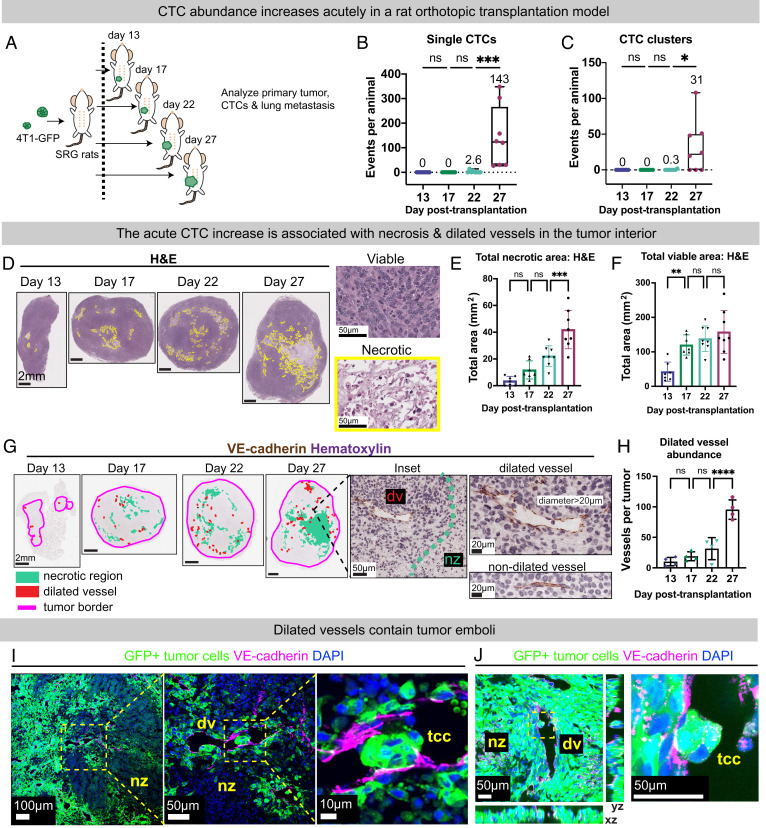
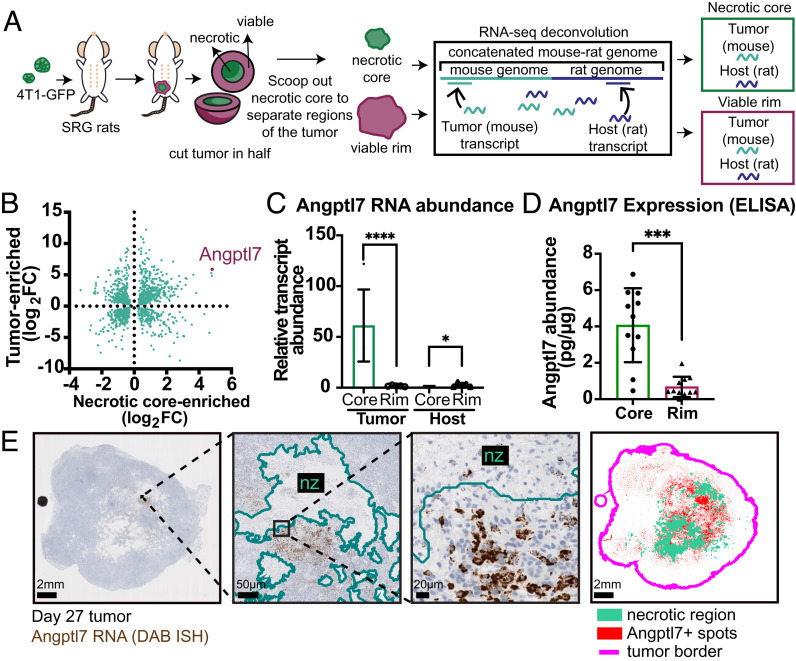
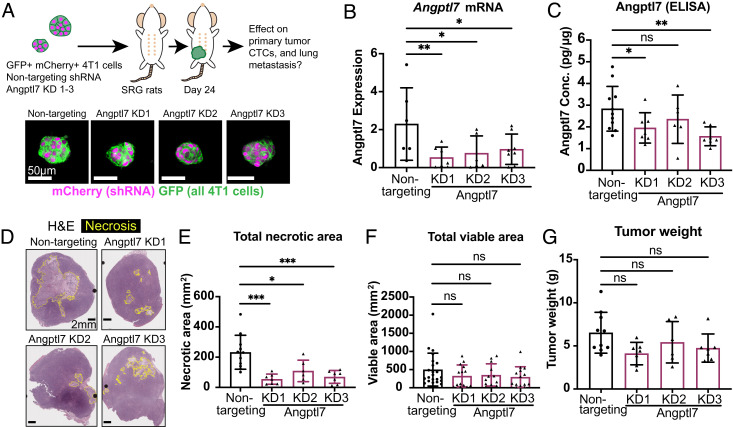
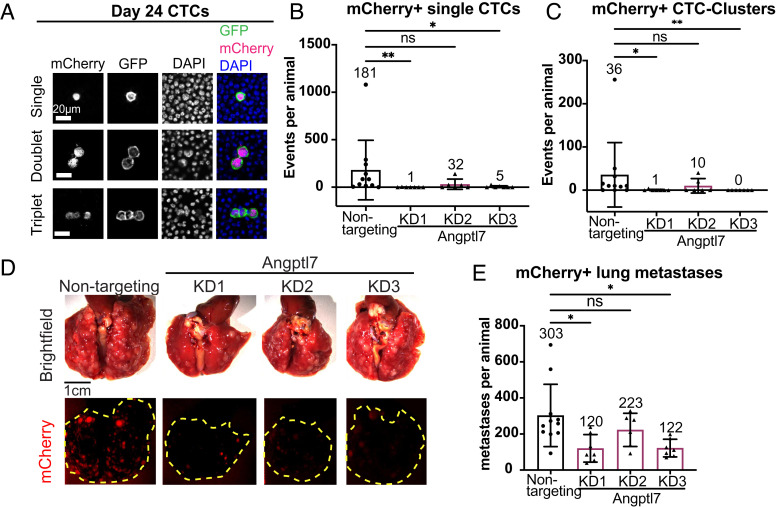
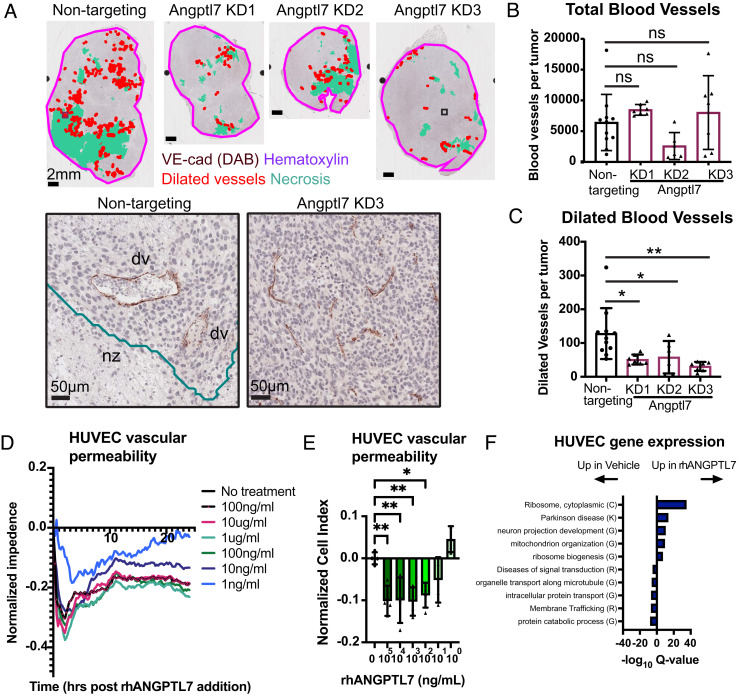
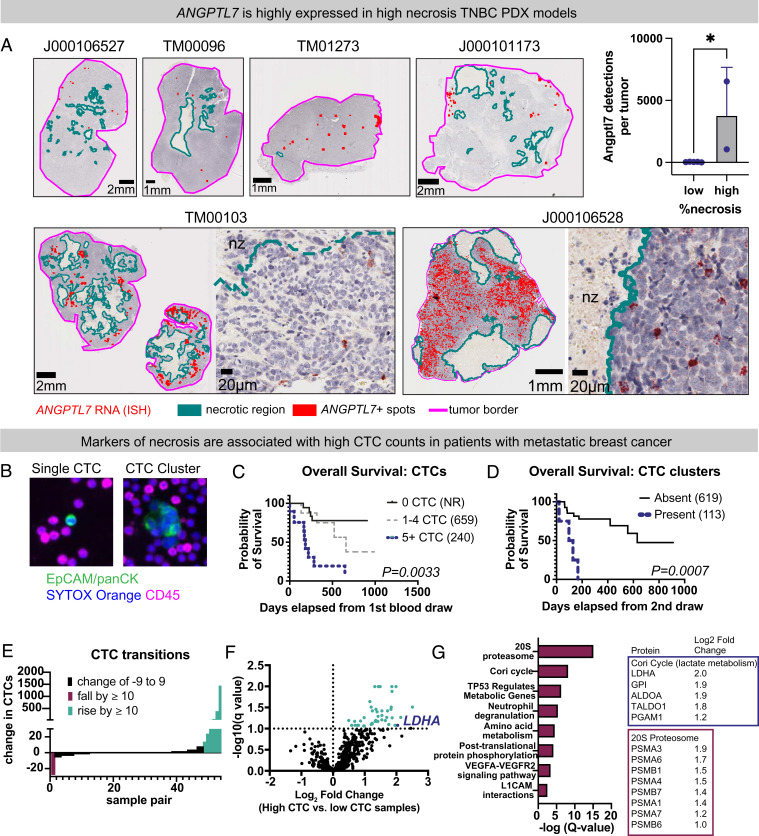
Necrosis in the tumor interior is a common feature of aggressive cancers that is associated with poor clinical prognosis and the development of metastasis. How the necrotic core promotes metastasis remains unclear. Here, we report that emergence of necrosis inside the tumor is correlated temporally with increased tumor dissemination in a rat breast cancer model and in human breast cancer patients. By performing spatially focused transcriptional profiling, we identified angiopoietin-like 7 (Angptl7) as a tumor-specific factor localized to the perinecrotic zone. Functional studies showed that Angptl7 loss normalizes central necrosis, perinecrotic dilated vessels, metastasis, and reduces circulating tumor cell counts to nearly zero. Mechanistically, Angptl7 promotes vascular permeability and supports vascular remodeling in the perinecrotic zone. Taken together, these findings show that breast tumors actively produce factors controlling central necrosis formation and metastatic dissemination from the tumor core.
Overview
The claims and statistics of this paper haven’t been checked yet.
Free: it reads the open-access text and checks the first 5 claims that cite a source we can check. Create a free account to check every claim.
Integrity signals
Registry
Cites
Statistics
Figures
Verification
Claims the paper makes
The claims and statistics of this paper haven’t been checked yet.
Free: it reads the open-access text and checks the first 5 claims that cite a source we can check. Create a free account to check every claim.
Claims other papers make about this one
Each is checked against this paper’s own text: does it say what the citing paper says it does?
The cited source says what the claim attributes to it.
In the citing paper
“Necrosis is a common feature of many tumors and is associated with poor prognosis and increased risk of metastasis [28].”
From The HIF Axes in Cancer - Angiogenesis, Metabolism and Immune-Modulation (2025) · cites this paper as [28]
The cited source says what the claim attributes to it.
In the citing paper
“Indeed, recent studies suggest that metastatic tumor subclones preferentially originate from the tumor interior due in part to changes in vascular permeability associated with necrosis that promotes tumor cell dissemination [28, 29].”
From The HIF Axes in Cancer - Angiogenesis, Metabolism and Immune-Modulation (2025) · cites this paper as [28]
Self-check
Percentages, sums and reported differences re-computed from the paper’s own numbers.
The self-check needs the paper’s full text.
Citations
Cites
Angiogenesis in cancer and other diseases
Carmeliet, P., & Jain, R. K. (2000) · Nature · doi:10.1038/35025220 · Cited by 9,070
QuPath: Open source software for digital pathology image analysis
Bankhead, P., Loughrey, M. B., Fernández, J. A., Dombrowski, Y., McArt, D. G., Dunne, P. D., McQuaid, S., Gray, R. T., Murray, L. J., Coleman, H. G., et al. (2017) · Scientific Reports · doi:10.1038/s41598-017-17204-5 · Cited by 8,908 · cited 3×
“QuPath quantification of RNA ISH.”
InfluentialMolecular Mechanisms of Stress-Responsive Changes in Collagen and Elastin Networks in Skin
Aziz, J., Shezali, H., Radzi, Z., Yahya, N. A., Abu Kassim, N. H., Czernuszka, J., & Rahman, M. T. (2016) · Skin Pharmacology and Physiology · doi:10.1159/000447017 · Cited by 7,323
Foulkes, W. D., Smith, I. E., & Reis-Filho, J. S. (2010) · New England Journal of Medicine · doi:10.1056/nejmra1001389 · Cited by 4,157
Tumour-cell invasion and migration: diversity and escape mechanisms
Friedl, P., & Wolf, K. (2003) · Nature Reviews Cancer · doi:10.1038/nrc1075 · Cited by 3,222
Emerging Biological Principles of Metastasis
Lambert, A. W., Pattabiraman, D. R., & Weinberg, R. A. (2017) · Cell · doi:10.1016/j.cell.2016.11.037 · Cited by 3,067 · cited 1×
“A major focal point of investigation is the tumor-stromal border where cancer cells are directly observed to invade singly or collectively into surrounding tissues and disseminate into local blood vessels (4–7).”
Vascular Channel Formation by Human Melanoma Cells in Vivo and in Vitro: Vasculogenic Mimicry
Maniotis, A. J., Folberg, R., Hess, A., Seftor, E. A., Gardner, L. M. G., Pe'er, J., Trent, J. M., Meltzer, P. S., & Hendrix, M. J. C. (1999) · The American Journal of Pathology · doi:10.1016/s0002-9440(10)65173-5 · Cited by 2,043
Gaggioli, C., Hooper, S., Hidalgo-Carcedo, C., Grosse, R., Marshall, J. F., Harrington, K., & Sahai, E. (2007) · Nature Cell Biology · doi:10.1038/ncb1658 · Cited by 1,589 · cited 1×
“In addition, organotypic culture models have proven useful in modeling invasion in vitro that have morphologic correlates in vivo (61, 62, 67, 68).”
Rankin, E. B., & Giaccia, A. J. (2016) · Science · doi:10.1126/science.aaf4405 · Cited by 1,340
Phenotypic evaluation of the basal-like subtype of invasive breast carcinoma
Livasy, C. A., Karaca, G., Nanda, R., Tretiakova, M. S., Olopade, O. I., Moore, D. T., & Perou, C. M. (2006) · Modern Pathology · doi:10.1038/modpathol.3800528 · Cited by 1,063 · cited 1×
“A challenge of between-tumor/between-patient association studies is that it is not possible to disentangle if necrosis is a regulator of metastasis or a by-product of other more aggressive features such as tumor grade or tumor subtype (23, 24).”
Direct Visualization of Macrophage-Assisted Tumor Cell Intravasation in Mammary Tumors
Wyckoff, J. B., Wang, Y., Lin, E. Y., Li, J.-F., Goswami, S., Stanley, E. R., Segall, J. E., Pollard, J. W., & Condeelis, J. (2007) · Cancer Research · doi:10.1158/0008-5472.can-06-1823 · Cited by 1,053
Ganesh, K., & Massagué, J. (2021) · Nature Medicine · doi:10.1038/s41591-020-01195-4 · Cited by 1,051 · cited 1×
“The development of metastasis is the pivotal determinant of long-term survival in most human cancers (1).”
TGFβ Primes Breast Tumors for Lung Metastasis Seeding through Angiopoietin-like 4
Padua, D., Zhang, X. H.-F., Wang, Q., Nadal, C., Gerald, W. L., Gomis, R. R., & Massagué, J. (2008) · Cell · doi:10.1016/j.cell.2008.01.046 · Cited by 952
Genetic and Pharmacologic Inactivation of ANGPTL3 and Cardiovascular Disease
Dewey, F. E., Gusarova, V., Dunbar, R. L., O’Dushlaine, C., Schurmann, C., Gottesman, O., McCarthy, S., Van Hout, C. V., Bruse, S., Dansky, H. M., et al. (2017) · New England Journal of Medicine · doi:10.1056/nejmoa1612790 · Cited by 885 · cited 1×
“Therapeutic blocking antibodies and anti-sense oligonucleotides targeting ANGPTL3 reduce atherogenic lipoprotein levels and decrease the odds of developing cardiovascular disease in humans (38, 39), supporting ANGPTL family of proteins as druggable targets.”
Nia, H. T., Munn, L. L., & Jain, R. K. (2020) · Science · doi:10.1126/science.aaz0868 · Cited by 855
Metabolic Interactions in the Tumor Microenvironment
Lyssiotis, C. A., & Kimmelman, A. C. (2017) · Trends in Cell Biology · doi:10.1016/j.tcb.2017.06.003 · Cited by 853 · cited 2×
“…is a particularly challenging chicken-and-egg problem because the tumor core is composed of regions that are hypoxic, deficient in nutrients, and abnormally perfused (12, 54, 55), each of which could influence and in turn be influenced by adaptive responses from tumor cells in the core (12).”
Collective Invasion in Breast Cancer Requires a Conserved Basal Epithelial Program
Cheung, K. J., Gabrielson, E., Werb, Z., & Ewald, A. J. (2013) · Cell · doi:10.1016/j.cell.2013.11.029 · Cited by 833
Self-citationCirculating Tumor Cell Clustering Shapes DNA Methylation to Enable Metastasis Seeding
Gkountela, S., Castro-Giner, F., Szczerba, B. M., Vetter, M., Landin, J., Scherrer, R., Krol, I., Scheidmann, M. C., Beisel, C., Stirnimann, C. U., et al. (2019) · Cell · doi:10.1016/j.cell.2018.11.046 · Cited by 801
Cheung, K. J., Padmanaban, V., Silvestri, V., Schipper, K., Cohen, J. D., Fairchild, A. N., Gorin, M. A., Verdone, J. E., Pienta, K. J., Bader, J. S., et al. (2016) · Proceedings of the National Academy of Sciences · doi:10.1073/pnas.1508541113 · Cited by 735 · cited 1×
“In addition, organotypic culture models have proven useful in modeling invasion in vitro that have morphologic correlates in vivo (61, 62, 67, 68).”
Self-citationA microenvironmental model of carcinogenesis
Gatenby, R. A., & Gillies, R. J. (2008) · Nature Reviews Cancer · doi:10.1038/nrc2255 · Cited by 721
Mosaic blood vessels in tumors: Frequency of cancer cells in contact with flowing blood
Chang, Y. S., di Tomaso, E., McDonald, D. M., Jones, R., Jain, R. K., & Munn, L. L. (2000) · Proceedings of the National Academy of Sciences · doi:10.1073/pnas.97.26.14608 · Cited by 671
Harney, A. S., Arwert, E. N., Entenberg, D., Wang, Y., Guo, P., Qian, B.-Z., Oktay, M. H., Pollard, J. W., Jones, J. G., & Condeelis, J. S. (2015) · Cancer Discovery · doi:10.1158/2159-8290.cd-15-0012 · Cited by 618
Breast Cancer Mortality After a Diagnosis of Ductal Carcinoma In Situ
Narod, S. A., Iqbal, J., Giannakeas, V., Sopik, V., & Sun, P. (2015) · JAMA Oncology · doi:10.1001/jamaoncol.2015.2510 · Cited by 613 · cited 1×
“Consistent with our experimental observations, comedonecrosis is associated with increased risk of death from in situ, preinvasive cancers (73).”
Cardiovascular and Metabolic Effects of ANGPTL3 Antisense Oligonucleotides
Graham, M. J., Lee, R. G., Brandt, T. A., Tai, L.-J., Fu, W., Peralta, R., Yu, R., Hurh, E., Paz, E., McEvoy, B. W., et al. (2017) · New England Journal of Medicine · doi:10.1056/nejmoa1701329 · Cited by 573 · cited 1×
“Therapeutic blocking antibodies and anti-sense oligonucleotides targeting ANGPTL3 reduce atherogenic lipoprotein levels and decrease the odds of developing cardiovascular disease in humans (38, 39), supporting ANGPTL family of proteins as druggable targets.”
Leek, R. D., Landers, R. J., Harris, A. L., & Lewis, C. E. (1999) · British Journal of Cancer · doi:10.1038/sj.bjc.6690158 · Cited by 451
A model of breast cancer heterogeneity reveals vascular mimicry as a driver of metastasis
Wagenblast, E., Soto, M., Gutiérrez-Ángel, S., Hartl, C. A., Gable, A. L., Maceli, A. R., Erard, N., Williams, A. M., Kim, S. Y., Dickopf, S., et al. (2015) · Nature · doi:10.1038/nature14403 · Cited by 433
Tumor Cell Dissemination: Emerging Biological Insights from Animal Models and Cancer Patients
Kang, Y., & Pantel, K. (2013) · Cancer Cell · doi:10.1016/j.ccr.2013.04.017 · Cited by 421 · cited 1×
“A key step in this process is the dissemination of tumor cells into the systemic circulation (2, 3).”
Liu, X., Taftaf, R., Kawaguchi, M., Chang, Y.-F., Chen, W., Entenberg, D., Zhang, Y., Gerratana, L., Huang, S., Patel, D. B., et al. (2019) · Cancer Discovery · doi:10.1158/2159-8290.cd-18-0065 · Cited by 390 · cited 1×
“Previous studies have shown that tumor dissemination can depend on macrophage-led migration, vascular mimicry, EMT, and collective migration (6, 7, 56–64).”
Cancer progression and the invisible phase of metastatic colonization
Klein, C. A. (2020) · Nature Reviews Cancer · doi:10.1038/s41568-020-00300-6 · Cited by 375 · cited 1×
“Finally, previous clinical and experimental studies have shown that tumors can disseminate early preceding the detection of frank invasive cancer (69, 70), while at the same time, that very large tumors are more likely to develop metastatic cancer (71, 72).”
Angiopoietin-like proteins stimulate ex vivo expansion of hematopoietic stem cells
Zhang, C. C., Kaba, M., Ge, G., Xie, K., Tong, W., Hug, C., & Lodish, H. F. (2006) · Nature Medicine · doi:10.1038/nm1342 · Cited by 368 · cited 1×
“ANGPTL7 belongs to a family of secreted proteins structurally related to the angiopoietins and that have been implicated in lipid metabolism, cardiovascular disease, stem cell renewal, and cancer (37–44).”
Beerling, E., Seinstra, D., de Wit, E., Kester, L., van der Velden, D., Maynard, C., Schäfer, R., van Diest, P., Voest, E., van Oudenaarden, A., et al. (2016) · Cell Reports · doi:10.1016/j.celrep.2016.02.034 · Cited by 357 · cited 1×
“Previous studies have shown that tumor dissemination can depend on macrophage-led migration, vascular mimicry, EMT, and collective migration (6, 7, 56–64).”
Metabolic origins of spatial organization in the tumor microenvironment
Carmona-Fontaine, C., Deforet, M., Akkari, L., Thompson, C. B., Joyce, J. A., & Xavier, J. B. (2017) · Proceedings of the National Academy of Sciences · doi:10.1073/pnas.1700600114 · Cited by 323
Angiopoietin-Like Proteins: A Comprehensive Look
Santulli, G. (2014) · Frontiers in Endocrinology · doi:10.3389/fendo.2014.00004 · Cited by 320
Zhu, P., Tan, M. J., Huang, R.-L., Tan, C. K., Chong, H. C., Pal, M., Lam, C. R. I., Boukamp, P., Pan, J. Y., Tan, S. H., et al. (2011) · Cancer Cell · doi:10.1016/j.ccr.2011.01.018 · Cited by 283
Collaborating NSABP Investigators, Fisher, E. R., Sass, R., & Fisher, B. (1984) · Cancer · doi:10.1002/1097-0142(19840201)53:3+<712::aid-cncr2820531320>3.0.co;2-i · Cited by 250 · cited 1×
“Necrosis is a pervasive feature of many aggressive fast-growing tumors, associated with poor prognosis and markedly increased risk of metastasis (18–22).”
Hypoxia Triggers the Intravasation of Clustered Circulating Tumor Cells
Donato, C., Kunz, L., Castro-Giner, F., Paasinen-Sohns, A., Strittmatter, K., Szczerba, B. M., Scherrer, R., Di Maggio, N., Heusermann, W., Biehlmaier, O., et al. (2020) · Cell Reports · doi:10.1016/j.celrep.2020.108105 · Cited by 224
Macrophage contact induces RhoA GTPase signaling to trigger tumor cell intravasation
Roh-Johnson, M., Bravo-Cordero, J. J., Patsialou, A., Sharma, V. P., Guo, P., Liu, H., Hodgson, L., & Condeelis, J. (2014) · Oncogene · doi:10.1038/onc.2013.377 · Cited by 209
Angiopoietin-Like Proteins in Angiogenesis, Inflammation and Cancer
Carbone, C., Piro, G., Merz, V., Simionato, F., Santoro, R., Zecchetto, C., Tortora, G., & Melisi, D. (2018) · International Journal of Molecular Sciences · doi:10.3390/ijms19020431 · Cited by 200 · cited 1×
“ANGPTL proteins have three conserved domains including an N-terminal coiled-coil domain that mediates homo-oligomerization, a linker peptide, and a C-terminal fibrinogen-like domain (74).”
Stem cell–driven lymphatic remodeling coordinates tissue regeneration
Gur-Cohen, S., Yang, H., Baksh, S. C., Miao, Y., Levorse, J., Kataru, R. P., Liu, X., de la Cruz-Racelis, J., Mehrara, B. J., & Fuchs, E. (2019) · Science · doi:10.1126/science.aay4509 · Cited by 167 · cited 1×
“Because Angptl7 is also reported to regulate lymphangiogenesis (40), we also stained lymphatics for podoplanin.”
Xiong, Q., Valero, V., Kau, V., Kau, S.-W., Taylor, S., Smith, T. L., Buzdar, A. U., Hortobagyi, G. N., & Theriault, R. L. (2001) · Cancer · doi:10.1002/1097-0142(20011115)92:10<2523::aid-cncr1603>3.0.co;2-6 · Cited by 166
Bredholt, G., Mannelqvist, M., Stefansson, I. M., Birkeland, E., Bø, T. H., Øyan, A. M., Trovik, J., Kalland, K.-H., Jonassen, I., Salvesen, H. B., et al. (2015) · Oncotarget · doi:10.18632/oncotarget.5344 · Cited by 164
Schwartz, R. S., Mackintosh, F. R., Schrier, S. L., & Greenberg, P. L. (1984) · Cancer · doi:10.1002/1097-0142(19840201)53:3<411::aid-cncr2820530308>3.0.co;2-e · Cited by 151
Tumoural activation of TLR3–SLIT2 axis in endothelium drives metastasis
Tavora, B., Mederer, T., Wessel, K. J., Ruffing, S., Sadjadi, M., Missmahl, M., Ostendorf, B. N., Liu, X., Kim, J.-Y., Olsen, O., et al. (2020) · Nature · doi:10.1038/s41586-020-2774-y · Cited by 145
Eco-evolutionary causes and consequences of temporal changes in intratumoural blood flow
Gillies, R. J., Brown, J. S., Anderson, A. R. A., & Gatenby, R. A. (2018) · Nature Reviews Cancer · doi:10.1038/s41568-018-0030-7 · Cited by 144 · cited 3×
“…is a particularly challenging chicken-and-egg problem because the tumor core is composed of regions that are hypoxic, deficient in nutrients, and abnormally perfused (12, 54, 55), each of which could influence and in turn be influenced by adaptive responses from tumor cells in the core (12).”
Silvestri, V. L., Henriet, E., Linville, R. M., Wong, A. D., Searson, P. C., & Ewald, A. J. (2020) · Cancer Research · doi:10.1158/0008-5472.can-19-1564 · Cited by 125
Lavabre‐Bertrand, T., Henry, L., Carillo, S., Guiraud, I., Ouali, A., Dutaud, D., Aubry, L., Rossi, J.-F., & Bureau, J. P. (2001) · Cancer · doi:10.1002/1097-0142(20011115)92:10<2493::aid-cncr1599>3.0.co;2-f · Cited by 111 · cited 1×
“6 G ) including: 1) Cori cycle, the major pathway for lactate metabolism, 2) the 20S proteosome which has been associated with necrosis, and 3) neutrophil degranulation, which we also identified as a top gene set in our core/rim RNA-seq analyses (52, 53).”
Mohammed, R. A., Martin, S. G., Mahmmod, A. M., Macmillan, R. D., Green, A. R., Paish, E. C., & Ellis, I. O. (2010) · The Journal of Pathology · doi:10.1002/path.2810 · Cited by 110
Fast and precise targeting of single tumor cells in vivo by multimodal correlative microscopy
Karreman, M. A., Mercier, L., Schieber, N. L., Solecki, G., Allio, G., Winkler, F., Ruthensteiner, B., Goetz, J. G., & Schwab, Y. (2015) · Journal of Cell Science · doi:10.1242/jcs.181842 · Cited by 106
Clinical Progression of Breast Cancer Malignant Behavior: What to Expect and When to Expect it
Heimann, R., & Hellman, S. (2000) · Journal of Clinical Oncology · doi:10.1200/jco.2000.18.3.591 · Cited by 105 · cited 1×
“Finally, previous clinical and experimental studies have shown that tumors can disseminate early preceding the detection of frank invasive cancer (69, 70), while at the same time, that very large tumors are more likely to develop metastatic cancer (71, 72).”
Engellau, J., Bendahl, P., PERSSON, A., Domanski, H. A., Åkerman, M., Gustafson, P., Alvegård, T. A., Nilbert, M. C., & Rydholm, A. (2005) · Human Pathology · doi:10.1016/j.humpath.2005.07.008 · Cited by 104
Intratumoral Cancer Cell Intravasation Can Occur Independent of Invasion into the Adjacent Stroma
Deryugina, E. I., & Kiosses, W. B. (2017) · Cell Reports · doi:10.1016/j.celrep.2017.03.064 · Cited by 95 · cited 3×
“Tumor dissemination is a dynamic process that is difficult to capture (17, 30–35), and occurring in the context of spatially heterogeneous ecosystems varying in their nutrient availability, perfusion, oxygenation, and host contributions (12, 54, 55).”
Selection of metastasis competent subclones in the tumour interior
Zhao, Y., Fu, X., Lopez, J. I., Rowan, A., Au, L., Fendler, A., Hazell, S., Xu, H., Horswell, S., Shepherd, S. T. C., et al. (2021) · Nature Ecology & Evolution · doi:10.1038/s41559-021-01456-6 · Cited by 95 · cited 2×
“Our findings in breast cancer models, in conjunction with recent clinical observations (25, 29), provide strong evidence for tumor dissemination from the tumor interior.”
Jiménez, R. E., Wallis, T., & Visscher, D. W. (2001) · The American Journal of Surgical Pathology · doi:10.1097/00000478-200103000-00007 · Cited by 95
Angiopoietins and Angiopoietin-Like Proteins in Angiogenesis
Morisada, T., Kubota, Y., Urano, T., Suda, T., & Oike, Y. (2006) · Endothelium · doi:10.1080/10623320600697989 · Cited by 90 · cited 1×
“ANGPTL7 belongs to a family of secreted proteins structurally related to the angiopoietins and that have been implicated in lipid metabolism, cardiovascular disease, stem cell renewal, and cancer (37–44).”
Cooperation between melanoma cell states promotes metastasis through heterotypic cluster formation
Campbell, N. R., Rao, A., Hunter, M. V., Sznurkowska, M. K., Briker, L., Zhang, M., Baron, M., Heilmann, S., Deforet, M., Kenny, C., et al. (2021) · Developmental Cell · doi:10.1016/j.devcel.2021.08.018 · Cited by 89
Looking backward in time to define the chronology of metastasis
Hu, Z., & Curtis, C. N. (2020) · Nature Communications · doi:10.1038/s41467-020-16995-y · Cited by 88 · cited 1×
“Finally, previous clinical and experimental studies have shown that tumors can disseminate early preceding the detection of frank invasive cancer (69, 70), while at the same time, that very large tumors are more likely to develop metastatic cancer (71, 72).”
Multiphoton intravital microscopy of rodents
Scheele, C. L. G. J., Herrmann, D., Yamashita, E., Celso, C. L., Jenne, C. N., Oktay, M. H., Entenberg, D. R., Friedl, P., Weigert, R., Meijboom, F. L. B., et al. (2022) · Nature Reviews Methods Primers · doi:10.1038/s43586-022-00168-w · Cited by 82
The gate to metastasis: key players in cancer cell intravasation
Sznurkowska, M. K., & Aceto, N. (2022) · The FEBS Journal · doi:10.1111/febs.16046 · Cited by 80 · cited 1×
“A key step in this process is the dissemination of tumor cells into the systemic circulation (2, 3).”
Regulation of Collective Metastasis by Nanolumenal Signaling
Wrenn, E. D., Yamamoto, A., Moore, B. M., Huang, Y., McBirney, M., Thomas, A. J., Greenwood, E., Rabena, Y. F., Rahbar, H., Partridge, S. C., et al. (2020) · Cell · doi:10.1016/j.cell.2020.08.045 · Cited by 78 · cited 1×
“In addition, organotypic culture models have proven useful in modeling invasion in vitro that have morphologic correlates in vivo (61, 62, 67, 68).”
Self-citationZhang, L., Zha, Z., Qu, W., Zhao, H., Yuan, J., Feng, Y., & Wu, B. Y. (2018) · BMC Cancer · doi:10.1186/s12885-018-4773-z · Cited by 77 · cited 1×
“Necrosis is a pervasive feature of many aggressive fast-growing tumors, associated with poor prognosis and markedly increased risk of metastasis (18–22).”
Orchestration of Collective Migration and Metastasis by Tumor Cell Clusters
Yamamoto, A., Doak, A. E., & Cheung, K. J. (2022) · Annual Review of Pathology Mechanisms of Disease · doi:10.1146/annurev-pathmechdis-031521-023557 · Cited by 76
Self-citationIntravital deep-tumor single-beam 3-photon, 4-photon, and harmonic microscopy
Bakker, G., Weischer, S., Ortas, J. F., Heidelin, J., Andresen, V., Beutler, M., Beaurepaire, E., & Friedl, P. (2022) · eLife · doi:10.7554/elife.63776 · Cited by 71 · cited 1×
“Given the great distance of the central necrotic zone to the tumor-stromal interface, advances in intravital imaging in deep tissues (65, 66) will be essential to evaluate which of these cellular dissemination mechanisms predominates in the necrotic zone.”
The RareCyte® platform for next‐generation analysis of circulating tumor cells
Kaldjian, E. P., Ramirez, A. B., Sun, Y., Campton, D. E., Werbin, J. L., Varshavskaya, P., Quarre, S., George, T., Madan, A., Blau, C. A., et al. (2018) · Cytometry Part A · doi:10.1002/cyto.a.23619 · Cited by 69 · cited 1×
“CTCs and CTC-clusters were enumerated in these fluid samples using a RareCyte assay (75).”
Transcriptomic Hallmarks of Tumor Plasticity and Stromal Interactions in Brain Metastasis
Wingrove, E., Liu, Z. Z., Patel, K. D., Estape, A. A., Cai, W. L., Melnick, M., Politi, K. A., Monteiro, C., Zhu, L., Valiente, M., et al. (2019) · Cell Reports · doi:10.1016/j.celrep.2019.03.085 · Cited by 69 · cited 2×
“Finally, previous clinical and experimental studies have shown that tumors can disseminate early preceding the detection of frank invasive cancer (69, 70), while at the same time, that very large tumors are more likely to develop metastatic cancer (71, 72).”
Prognostic Value and Prediction of Extratumoral Microvascular Invasion for Hepatocellular Carcinoma
Nitta, H., Allard, M., Sebagh, M., Ciacio, O., Pittau, G., Vibert, É., Cunha, A. S., Cherqui, D., Castaing, D., Bismuth, H., et al. (2019) · Annals of Surgical Oncology · doi:10.1245/s10434-019-07365-0 · Cited by 69 · cited 1×
“Spatial analyses of blood vessel invasion in lung cancers, sarcomas, hepatocellular carcinoma, and breast cancers have observed that between 25 to 50% of all blood vessel invasion events occur intratumorally in the tumor core (25–28).”
Dissemination from a Solid Tumor: Examining the Multiple Parallel Pathways
Katt, M. E., Wong, A. D., & Searson, P. C. (2018) · Trends in Cancer · doi:10.1016/j.trecan.2017.12.002 · Cited by 58 · cited 1×
“Consistent with this hypothesis, the tumor core harbors abnormal biomechanics, increased interstitial pressure, and vascular leakiness thought conducive to dissemination (13–15).”
Kuchtey, J., Ka¨llberg, M. E., Gelatt, K. N., Rinkoski, T., Koma`romy, A. M., & Kuchtey, R. W. (2008) · Investigative Opthalmology & Visual Science · doi:10.1167/iovs.07-1347 · Cited by 55 · cited 1×
“Compared with other ANGPTL proteins, ANGPTL7 is among the least characterized, being predominantly expressed in the human cornea, and elevated in the aqueous humor of the eye in patients with glaucoma, a disease of increased intraocular pressure (45–49).”
Multiscale Imaging of Metastasis in Zebrafish
Osmani, N., & Goetz, J. G. (2019) · Trends in cancer · doi:10.1016/j.trecan.2019.10.003 · Cited by 55 · cited 2×
“Tumor dissemination is a dynamic process that is difficult to capture (17, 30–35), and occurring in the context of spatially heterogeneous ecosystems varying in their nutrient availability, perfusion, oxygenation, and host contributions (12, 54, 55).”
The Angiopoietin-like Factor Cornea-derived Transcript 6 Is a Putative Morphogen for Human Cornea
Peek, R., Kammerer, R. A., Frank, S., Otte-Höller, I., & Westphal, J. R. (2002) · Journal of Biological Chemistry · doi:10.1074/jbc.m105746200 · Cited by 49
Rare protein-altering variants in ANGPTL7 lower intraocular pressure and protect against glaucoma
Tanigawa, Y., Wainberg, M., Karjalainen, J., Kiiskinen, T., Venkataraman, G., Lemmelä, S., Turunen, J. A., Graham, R. R., Havulinna, A. S., Perola, M., et al. (2020) · PLOS Genetics · doi:10.1371/journal.pgen.1008682 · Cited by 49
Cancer cells in the tumor core exhibit spatially coordinated migration patterns
Staneva, R., El Marjou, F., Barbazan, J., Krndija, D., Richon, S., Clark, A. G., & Vignjevic, D. M. (2019) · Journal of Cell Science · doi:10.1242/jcs.220277 · Cited by 47 · cited 1×
“Further, tumor cells in the interior are actively migratory and spatially coordinated (16) and tumor cell intravasation was determined to occur almost exclusively in the tumor core in an avian model system (17).”
Measuring kinetics and metastatic propensity of CTCs by blood exchange between mice
Hamza, B., Miller, A. B., Meier, L., Stockslager, M., Ng, S. R., King, E. M., Lin, L., DeGouveia, K. L., Mulugeta, N., Calistri, N. L., et al. (2021) · Nature Communications · doi:10.1038/s41467-021-25917-5 · Cited by 45 · cited 2×
“Tumor dissemination is a dynamic process that is difficult to capture (17, 30–35), and occurring in the context of spatially heterogeneous ecosystems varying in their nutrient availability, perfusion, oxygenation, and host contributions (12, 54, 55).”
Collective metastasis: coordinating the multicellular voyage
Wrenn, E. D., Huang, Y. C., & Cheung, K. (2021) · Clinical & Experimental Metastasis · doi:10.1007/s10585-021-10111-0 · Cited by 44
Self-citationde Martino, M., Höetzenecker, K., Ankersmit, H. J., Roth, G. A., Haitel, A., Waldert, M., & Klatte, T. (2012) · British Journal of Cancer · doi:10.1038/bjc.2012.20 · Cited by 43 · cited 1×
“6 G ) including: 1) Cori cycle, the major pathway for lactate metabolism, 2) the 20S proteosome which has been associated with necrosis, and 3) neutrophil degranulation, which we also identified as a top gene set in our core/rim RNA-seq analyses (52, 53).”
Angiopoietin-Like 7 Is an Anti-Angiogenic Protein Required to Prevent Vascularization of the Cornea
Toyono, T., Usui, T., Yokoo, S., Taketani, Y., Nakagawa, S., Kuroda, M., Yamagami, S., & Amano, S. (2015) · PLoS ONE · doi:10.1371/journal.pone.0116838 · Cited by 39
The SRG rat, a Sprague-Dawley Rag2/Il2rg double-knockout validated for human tumor oncology studies
Noto, F. K., Sangodkar, J., Adedeji, B. T., Moody, S., McClain, C. B., Tong, M., Ostertag, E. M., Crawford, J. M., Gao, X., Hurst, L., et al. (2020) · PLoS ONE · doi:10.1371/journal.pone.0240169 · Cited by 28 · cited 11×
“For both CTCs and CTC-clusters, morphologic appearance and relative proportions in blood were identical between SRG rats and NSG mice ( SI Appendix , Fig.”
InfluentialThomlinson, R. H. (1977) · Journal of Clinical Pathology · doi:10.1136/jcp.s3-11.1.105 · Cited by 25 · cited 2×
“…is a particularly challenging chicken-and-egg problem because the tumor core is composed of regions that are hypoxic, deficient in nutrients, and abnormally perfused (12, 54, 55), each of which could influence and in turn be influenced by adaptive responses from tumor cells in the core (12).”
ANGPTL7, a therapeutic target for increased intraocular pressure and glaucoma
Praveen, K., Patel, G. C., Gurski, L., Ayer, A. H., Persaud, T., Still, M. D., Miloscio, L., van Zyl, T. A., Gioia, S. A. D., Brumpton, B. M., et al. (2022) · Communications Biology · doi:10.1038/s42003-022-03932-6 · Cited by 25 · cited 1×
“Compared with other ANGPTL proteins, ANGPTL7 is among the least characterized, being predominantly expressed in the human cornea, and elevated in the aqueous humor of the eye in patients with glaucoma, a disease of increased intraocular pressure (45–49).”
Lee, G., Yoon, S., Ahn, B., Kim, H.-R., Jang, S. J., & Hwang, H. S. (2021) · Annals of Surgical Oncology · doi:10.1245/s10434-021-10122-x · Cited by 22 · cited 2×
“Our findings in breast cancer models, in conjunction with recent clinical observations (25, 29), provide strong evidence for tumor dissemination from the tumor interior.”
Research works printed but not linked: 4
- 10.1002/1097-0142(19840201)53:3 · doi:10.1002/1097-0142(19840201)53:3
- 77. B. Krajina, RNA sequencing of necrotic core and non-necrotic rim of tumors from 4T1 cell xenografts into rat. National Center for Biotechnology Information Sequence Read Archive. https://www.ncbi.nlm.nih.gov/bioproject/PRJNA925873. Deposited 27 January 2023.
- 78. B. Krajina, Angptl-7 knockdown RNA sequencing of 4T1 orthotopic transplants into rat mammary fat pads. National Center for Biotechnology Information Sequence Read Archive. https://www.ncbi.nlm.nih.gov/bioproject/PRJNA925929. Deposited 27 January 2023.
- 79. B. Krajina, RNA-sequencing of HUVEC cells treated with Angiopoietin-like 7. National Center for Biotechnology Information Sequence Read Archive. https://www.ncbi.nlm.nih.gov/bioproject/PRJNA928719. Deposited 27 January 2023.
Cited by
Neutrophils drive vascular occlusion, tumour necrosis and metastasis
Adrover, J. M., Han, X., Sun, L., Fujii, T., Sivetz, N., Daßler‐Plenker, J., Evans, C., Peters, J., He, X., Cannon, C. D., et al. (2025) · Nature · doi:10.1038/s41586-025-09278-3 · Cited by 111
The HIF Axes in Cancer - Angiogenesis, Metabolism and Immune-Modulation
Acuña-Pilarte, K., & Koh, M. Y. (2025) · Trends in Biochemical Sciences · doi:10.1016/j.tibs.2025.06.005 · Cited by 64
Collective cell migration modes in development, tissue repair and cancer
Cheung, K. J., & Horne‐Badovinac, S. (2025) · Nature Reviews Molecular Cell Biology · doi:10.1038/s41580-025-00858-9 · Cited by 54
Self-citationDeng, Z., Mei, S., Ouyang, Z., Wang, R., Wang, L., Zou, B., Dai, J., Mao, K., Li, Q., Guo, Q., et al. (2025) · Gut Microbes · doi:10.1080/19490976.2025.2476561 · Cited by 47
“20 Our findings confirmed that excessive stimulation of NETs promotes high expression of the vascular growth factors, CD31, VEGF, and MMP9.”
Rodrigues, J., Amin, A., Chandra, S., Mulla, N. J., Nayak, S. G., Rai, S., Ray, S., & Mahato, K. K. (2024) · ACS Sensors · doi:10.1021/acssensors.3c01085 · Cited by 36
Metadata
- Authors
- Yamamoto, A., Huang, Y., Krajina, B. A., McBirney, M., Doak, A. E., Qu, S., Wang, C. L., Haffner, M. C., & Cheung, K. J.
- Affiliations
- University of Washington (US)
- Fred Hutch Cancer Center (US)
- Corresponding author
- Cheung, Kevin J.
- Venue
- Proceedings of the National Academy of Sciences
- Publisher
- National Academy of Sciences
- Published
- 2023-02-28
- Volume
- 120
- Issue
- 10
- Pages
- e2214888120-e2214888120
- ISSN
- 0027-8424 (ISSN-L)
- 1091-6490
- PMC
- PMC10013750
- OpenAlex
- W4322618161
- Cited by
- 69
- References
- 77
- Citations by year
- 2026: 17 · 2025: 24 · 2024: 25 · 2023: 3
- FWCI
- 6.13
- Type
- journal article
- Language
- en
- Open access
- hybrid
- doi.org
- Licence
- Locations
- Proceedings of the National Academy of Sciences (publishedVersion, cc-by)
- PubMed Central (publishedVersion, cc-by)
- PubMed (publishedVersion)
- Funders
- U.S. Department of Defense (BCRP; W81XWH-18-1-0098)
- Susan G. Komen (CCR18548236)
- HHS | NIH | National Cancer Institute (R37CA234488, 1F31CA260932-01A1, T32CA080416)
- Burroughs Wellcome (Burroughs Wellcome Fund Career Award for Medical Scientists)
- V Foundation for Cancer Research (V Foundation Scholar Award)
- Seattle Translational Tumor Research (N/A)
- Doris Duke Charitable Foundation (N/A)
- GE | GE Healthcare (N/A)
- HHS | NIH | National Institute of General Medical Sciences (T32GM007270)
- Topics
- Life Sciences › Biochemistry, Genetics and Molecular Biology › Molecular Biology › Angiogenesis and VEGF in Cancer
- Health Sciences › Medicine › Oncology › Cancer Cells and Metastasis
- Life Sciences › Biochemistry, Genetics and Molecular Biology › Cancer Research › Cancer, Hypoxia, and Metabolism
- Keywords
- ANGPTL7, breast cancer, tumor necrosis, necrotic core, metastasis, vascular permeability, vascular remodeling, circulating tumor cells, tumor microenvironment
- MeSH terms
- Angiopoietin-like Proteins, Angiopoietin-Like Protein 7, Animals, Breast Neoplasms, Female, Humans, Necrosis, Neoplastic Cells, Circulating, Mammary Neoplasms, Animal, Angiopoietins, Rats
About these checks
Registry, retraction, Cites and statistics results are computed, not judged, with one exception: a printed reference that no index lists is read once by a model before it counts as a citation error. Claims are extracted by a model and kept only when their quote appears verbatim in the text; each cited source is then checked, with a model’s help, for whether it says what the claim relies on. Those verdicts can be wrong — read the claim’s quote and the cited source before relying on one.
Statistics and arithmetic are recomputed, not judged.
Confidence bands are shown only for fields calibrated on our annotated test set. None is calibrated yet, so no band is shown.
What counts as a claim ›How we measure confidence ›How we check this ›
Are you an author, or do you see a problem with this page? Request a review
Data sources
Bibliographic data: Semantic Scholar, OpenAlex, Crossref.
Contains information from the Semantic Scholar Academic Graph Datasets, made available under the ODC Attribution License (ODC-BY 1.0).
Semantic Scholar’s data is described in: Kinney, R., et al. (2023). The Semantic Scholar Open Data Platform. arXiv:2301.10140.
