

The epigenetic impacts of pubertal acceleration following early caregiver disruptions
Open accessThe DOI matches its Crossref record; 50 of the 57 references it cites were found in a registry or an index.
Abstract
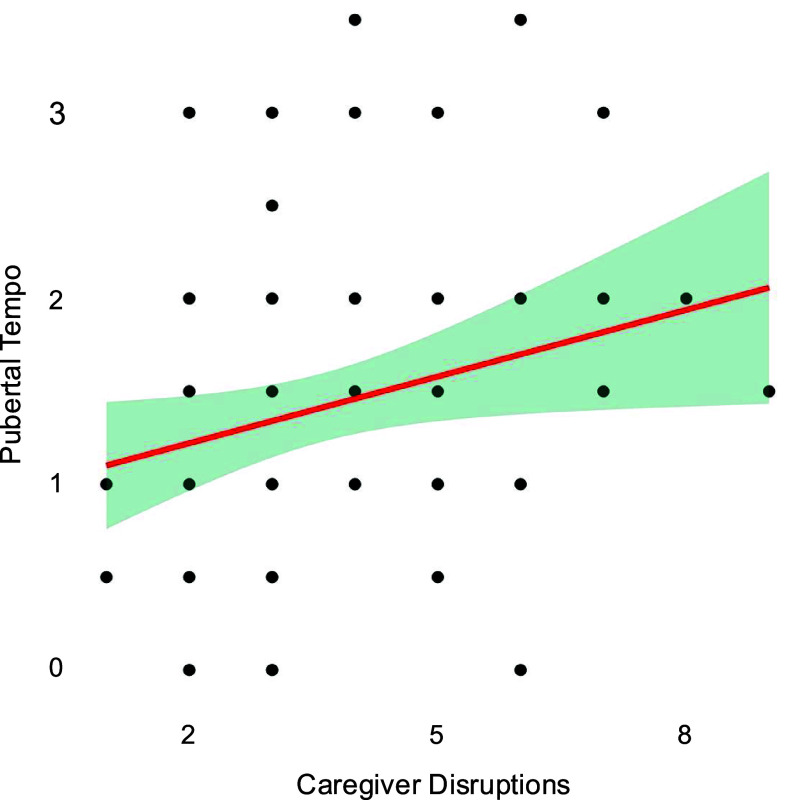
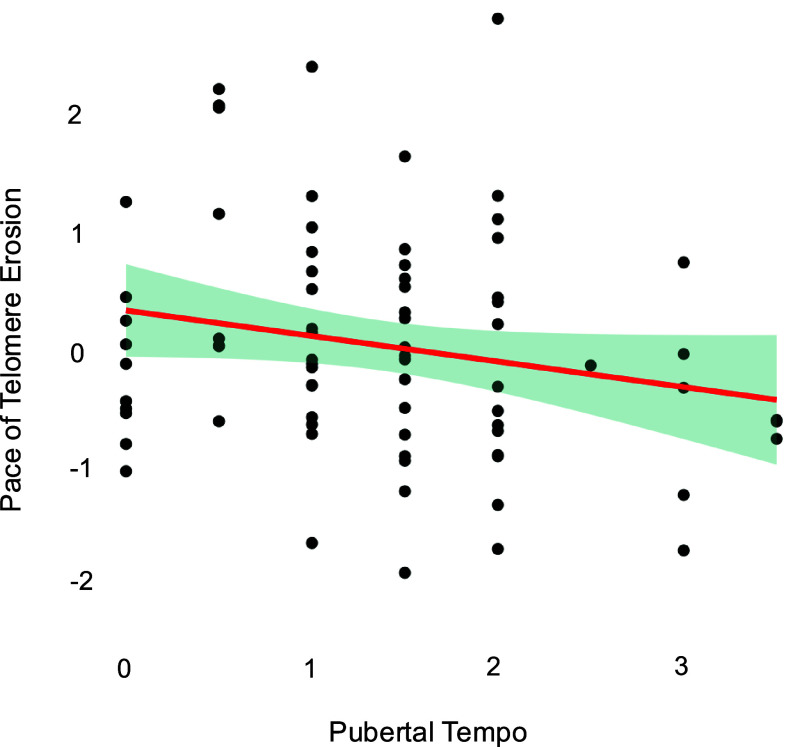
A stable caregiving environment early in life is essential for children’s development, and disruptions have the potential to impact biological processes. Using data from the Bucharest Early Intervention Project, we examined a developmental cascade model in which shifts in pubertal tempo following early caregiving disruptions come at an epigenetic cost. Among 115 individuals, all of whom experienced severe deprivation early in life, we tracked caregiving disruptions across childhood; assessed pubertal timing and tempo across adolescence; and quantified the pace of cellular aging via telomere erosion across the second decade of life. We demonstrate that a greater number of caregiving disruptions is associated with delayed pubertal timing and an acceleration of pubertal tempo. In turn, accelerations in pubertal tempo are associated with significantly greater telomere erosion across time. A formal mediation model indicated that greater caregiving disruptions during childhood predicted greater telomere erosion through an acceleration of pubertal tempo. By documenting the impact of caregiving disruptions on pubertal development and ultimately biological aging, these findings highlight the importance of the stability of the caregiving context and the critical need to ensure that organizations caring for vulnerable children establish programs and policies to minimize unnecessary disruptions.
Overview
The claims and statistics of this paper haven’t been checked yet.
Free: it reads the open-access text and checks the first 5 claims that cite a source we can check. Create a free account to check every claim.
Integrity signals
Registry
Cites
Statistics
Figures
Verification
Claims the paper makes
The claims and statistics of this paper haven’t been checked yet.
Free: it reads the open-access text and checks the first 5 claims that cite a source we can check. Create a free account to check every claim.
Claims other papers make about this one
Each is checked against this paper’s own text: does it say what the citing paper says it does?
The cited source says what the claim attributes to it.
In the citing paper
“In a more recent study with the cohort, frequent disruptions in caregiving during childhood, often higher among those receiving institutional care, also predicted greater telomere attrition, partly through accelerated pubertal development (Jopling et al., 2025).”
From Telomere trajectories from early adolescence to adulthood following early institutionalization: Protective effects of foster care in the Bucharest Early Intervention Project (2026) · cites this paper as Jopling et al., 2025
The cited source says what the claim attributes to it.
In the citing paper
“Jopling et al. (2025), using the same BEIP cohort, demonstrated a developmental cascade whereby early caregiving disruptions predicted delayed pubertal timing, accelerated pubertal tempo, and, in turn, greater telomere erosion.”
From Telomere trajectories from early adolescence to adulthood following early institutionalization: Protective effects of foster care in the Bucharest Early Intervention Project (2026) · cites this paper as Jopling et al., 2025
Self-check
Percentages, sums and reported differences re-computed from the paper’s own numbers.
The self-check needs the paper’s full text.
Citations
Cites
lavaan : An R Package for Structural Equation Modeling
Rosseel, Y. (2012) · Journal of Statistical Software · doi:10.18637/jss.v048.i02 · Cited by 27,955
mice: Multivariate Imputation by Chained Equations in R
Buuren, S. V., & Groothuis-Oudshoorn, K. (2011) · Journal of Statistical Software · doi:10.18637/jss.v045.i03 · Cited by 13,870
Enders, C., & Bandalos, D. (2001) · Structural Equation Modeling: A Multidisciplinary Journal · doi:10.1207/s15328007sem0803_5 · Cited by 4,978 · cited 1×
“Under the assumption that data are MCAR, this algorithm finds the parameter value that maximizes the total likelihood across all individuals, leading to unbiased and efficient parameter estimates while avoiding case - wise deletion (49).”
Bootstrap confidence intervals
DiCiccio, T. J., & Efron, B. (1996) · Statistical Science · doi:10.1214/ss/1032280214 · Cited by 2,286
Attachment and development: A prospective, longitudinal study from birth to adulthood
Sroufe, L. A. (2005) · Attachment & Human Development · doi:10.1080/14616730500365928 · Cited by 1,685
Ellis (2009) · doi:10.1007/s12110-009-9063-7 · Cited by 1,592
Telomeres and human disease: ageing, cancer and beyond
Blasco, M. A. (2005) · Nature Reviews Genetics · doi:10.1038/nrg1656 · Cited by 1,434 · cited 1×
“Beyond this, meta - analytic data link shorter telomere length to a range of psychopathology and physical health conditions known to be associated with early life stress ( 20 – 22 ).”
Catch-up growth in childhood and death from coronary heart disease: longitudinal study
Eriksson, J. G., Forsen, T., Tuomilehto, J., Winter, P. D., Osmond, C., & Barker, D. J. P. (1999) · BMJ · doi:10.1136/bmj.318.7181.427 · Cited by 1,148 · cited 2×
“…may contribute to caregiver disruptions (e.g., older age at foster care placement, children’s externalizing behaviors, low caregiver support; 34 , 36 , 37 ), these findings contribute to previous work indicating that there is reason to be deeply concerned about the impacts of these disruptions…”
Validation of a self-administered instrument to assess stage of adolescent development
Morris, N. M., & Udry, J. R. (1980) · Journal of Youth and Adolescence · doi:10.1007/bf02088471 · Cited by 963 · cited 1×
“…y assessments, in which they viewed a series of pictures depicting different Tanner stages of secondary sex characteristic development, characterized in a manner that corresponds to specific hormonal signals and were asked to select the picture that best resembled their current appearance (7, 47).”
Cognitive Recovery in Socially Deprived Young Children: The Bucharest Early Intervention Project
Nelson, C. A., Zeanah, C. H., Fox, N. A., Marshall, P. J., Smyke, A. T., & Guthrie, D. (2007) · Science · doi:10.1126/science.1143921 · Cited by 951 · cited 1×
“In contrast, many participants in the current study experienced continued disruptions across childhood, which may help explain differences in pubertal outcomes. trial (RCT) of foster care compared to care as usual among children in Romanian institutions ( 27 , 28 ).”
Self-citationProtection of mammalian telomeres
de Lange, T. (2002) · Oncogene · doi:10.1038/sj.onc.1205080 · Cited by 942
Dorn, L. D., Dahl, R. E., Woodward, H. R., & Biro, F. (2006) · Applied Developmental Science · doi:10.1207/s1532480xads1001_3 · Cited by 477 · cited 1×
“In line with previous work both in this sample and in the field more broadly, pubertal timing was conceptualized as individual differences in average Tanner score at 12 y of age (51) while pubertal tempo was modeled as the change in average Tanner score from 12 to 16 y of age.”
Karapanou, O., & Papadimitriou, A. (2010) · Reproductive Biology and Endocrinology · doi:10.1186/1477-7827-8-115 · Cited by 459 · cited 1×
“Further, age at menarche is a relatively late - occurring event in the context of puberty, occurring approximately 6 mo after peak height velocity is achieved, which indicates the closing of a window of opportunity for recalibration ( 26 ).”
ZEANAH, C. H., NELSON, C. A., FOX, N. A., SMYKE, A. T., MARSHALL, P., PARKER, S. W., & KOGA, S. (2003) · Development and Psychopathology · doi:10.1017/s0954579403000452 · Cited by 447 · cited 11×
“Information on children’s caregiving context was tracked both prior to and since the onset of the BEIP via multiple sources, including the Romanian National Authority for Child Protection.”
InfluentialSelf-citationPuberty and the human brain: insights into adolescent development
Vijayakumar, N., Op de Macks, Z., Shirtcliff, E. A., & Pfeifer, J. H. (2018) · Neuroscience & Biobehavioral Reviews · doi:10.1016/j.neubiorev.2018.06.004 · Cited by 437
Boersma, B., & Wit, J. M. (1997) · Endocrine Reviews · doi:10.1210/edrv.18.5.0313 · Cited by 430
Attachment theory and its therapeutic implications.
Bowlby, J. (1978) · PubMed · Cited by 393
Ellis, B. J., Sheridan, M. A., Belsky, J., & McLaughlin, K. A. (2022) · Development and Psychopathology · doi:10.1017/s0954579421001838 · Cited by 339 · cited 5×
“It is therefore possible that such complex developmental adaptations, reflecting a combination of both delayed and accelerated maturation, are the outcome of resource allocation trade - offs ( 4 ).”
InfluentialJames, S. (2004) · Social Service Review · doi:10.1086/424546 · Cited by 292 · cited 1×
“Estimates suggest that 85 to 95% of children in foster care experience at least one placement disruption while in care ( 39 – 41 ).”
Growth and Physiological Development During Adolescence
Marshall, W. A., & Tanner, J. M. (1968) · Annual Review of Medicine · doi:10.1146/annurev.me.19.020168.001435 · Cited by 285 · cited 2×
“…y assessments, in which they viewed a series of pictures depicting different Tanner stages of secondary sex characteristic development, characterized in a manner that corresponds to specific hormonal signals and were asked to select the picture that best resembled their current appearance (7, 47).”
Abbassi, V. (1998) · Pediatrics · doi:10.1542/peds.102.s3.507 · Cited by 282
Early life adversity and telomere length: a meta-analysis
Ridout, K. K., Levandowski, M., Ridout, S. J., Gantz, L., Goonan, K., Palermo, D., Price, L. H., & Tyrka, A. R. (2018) · Molecular Psychiatry · doi:10.1038/mp.2017.26 · Cited by 273
Long-Term Adverse Effects of Early Growth Acceleration or Catch-Up Growth
Singhal, A. (2017) · Annals of Nutrition and Metabolism · doi:10.1159/000464302 · Cited by 240 · cited 2×
“…contribute to caregiver disruptions (e.g., older age at foster care placement, children’s externalizing behaviors, low caregiver support; 34 , 36 , 37 ), these findings contribute to previous work indicating that there is reason to be deeply concerned about the impacts of these disruptions on…”
Strijker, J., Knorth, E. J., & Knot‐Dickscheit, J. (2008) · PubMed · Cited by 184
Byrne, M. L., Whittle, S., Vijayakumar, N., Dennison, M., Simmons, J. G., & Allen, N. B. (2017) · Developmental Cognitive Neuroscience · doi:10.1016/j.dcn.2016.12.004 · Cited by 150
Balancing sampling and specialization: an adaptationist model of incremental development
Frankenhuis, W. E., & Panchanathan, K. (2011) · Proceedings of the Royal Society B: Biological Sciences · doi:10.1098/rspb.2011.0055 · Cited by 140 · cited 2×
“Life history theories suggest that a pattern of gradual development can be beneficial in stable contexts in which children benefit from protracted opportunities for growth and maturation ( 11 ).”
Leathers, S. J., Spielfogel, J. E., Geiger, J. M., Barnett, J., & Voort, B. L. V. (2019) · Child Abuse & Neglect · doi:10.1016/j.chiabu.2019.03.012 · Cited by 135 · cited 1×
“Estimates suggest that 85 to 95% of children in foster care experience at least one placement disruption while in care ( 39 – 41 ).”
Gee, D. G., & Cohodes, E. M. (2021) · Current Directions in Psychological Science · doi:10.1177/09637214211015673 · Cited by 119 · cited 3×
“Therefore, disruptions of caregiving relationships represent a potent form of adversity that has the potential to impact biological processes that influence development ( 3 ).”
Early Adversity and the Neotenous Human Brain
Tottenham, N. (2020) · Biological Psychiatry · doi:10.1016/j.biopsych.2019.06.018 · Cited by 114
IV. Growth failure in institutionalized children
Johnson, D. E., & Gunnar, M. R. (2011) · Monographs of the Society for Research in Child Development · doi:10.1111/j.1540-5834.2011.00629.x · Cited by 110
Developmental processes in early adolescence
Nottelmann, E. D., Susman, E. J., Dorn, L. D., Inoff-Germain, G., Loriaux, D. L., Cutler, G. B., & Chrousos, G. P. (1987) · Journal of Adolescent Health Care · doi:10.1016/0197-0070(87)90428-1 · Cited by 110
Castellanos-Ryan, N., Parent, S., Vitaro, F., Tremblay, R. E., & Séguin, J. R. (2013) · Journal of Abnormal Psychology · doi:10.1037/a0033133 · Cited by 94
Puberty, Developmental Processes, and Health Interventions
Viner, R., Allen, N. B., & Patton, G. C. (2017) · World Bank, Washington, DC eBooks · doi:10.1596/978-1-4648-0423-6_ch9 · Cited by 91 · cited 1×
“The significant interindividual variability seen in both pubertal timing and tempo has marked consequences, with individual differences programming changes in lifelong health ( 10 ).”
Pubertal Timing and Tempo: Associations With Childhood Maltreatment
Negriff, S., Blankson, A. N., & Trickett, P. K. (2015) · Journal of Research on Adolescence · doi:10.1111/jora.12128 · Cited by 84 · cited 1×
“Indeed, among neglected children, prior work has documented a pattern of pubertal development marked by delayed pubertal onset and a subsequent acceleration in pubertal tempo ( 14 ).”
Maturational tempo differences in relation to the timing of the onset of puberty in girls
Pantsiotou, S., Papadimitriou, A., Douros, K., Priftis, K., Nicolaidou, P., & Fretzayas, A. (2008) · Acta Paediatrica · doi:10.1111/j.1651-2227.2007.00598.x · Cited by 77 · cited 1×
“…pubertal timing followed by accelerated pubertal tempo) can be linked to work demonstrating the existence of biological “catch - up” mechanisms that are apparent for late - maturing youth ( 16 ) and highlights adolescence as an important opportunity for the recalibration of biological systems.”
The Ethics of International Research with Abandoned Children
Millum, J., & Emanuel, E. J. (2007) · Science · doi:10.1126/science.1153822 · Cited by 75 · cited 1×
“Details regarding the sample, inclusion and exclusion criteria, historical background, and ethical considerations have been detailed elsewhere (45, 46).”
The Bucharest Early Intervention Project: Case Study in the Ethics of Mental Health Research
Zeanah, C. H., Fox, N. A., & Nelson, C. A. (2012) · Journal of Nervous & Mental Disease · doi:10.1097/nmd.0b013e318247d275 · Cited by 74 · cited 1×
“Details regarding the sample, inclusion and exclusion criteria, historical background, and ethical considerations have been detailed elsewhere (45, 46).”
Self-citationCooke, R. J., Goulet, O., Huysentruyt, K., Joosten, K., Khadilkar, A. V., Mao, M., Meyer, R. W., Prentice, A. M., & Singhal, A. (2023) · Journal of Pediatric Gastroenterology and Nutrition · doi:10.1097/mpg.0000000000003784 · Cited by 73 · cited 1×
“…growth, after the amelioration of early experiences such as malnutrition and growth - delaying illnesses (e.g., hypothyroidism, growth hormone deficiency), exaggerated accelerations in both height and weight can occur, which allows children to effectively catch up to same - aged peers ( 34 , 35 ).”
Telomere Shortening and Psychiatric Disorders: A Systematic Review
Pousa, P. A., de Souza, R. M., Melo, P. H. M., Correa, B. H. M., Mendonça, T. S. C., Silva, A. C. S. E., & de Miranda, D. M. (2021) · Cells · doi:10.3390/cells10061423 · Cited by 72 · cited 1×
“Beyond this, meta - analytic data link shorter telomere length to a range of psychopathology and physical health conditions known to be associated with early life stress ( 20 – 22 ).”
Cheung, S. F., & Cheung, S. H. (2023) · Behavior Research Methods · doi:10.3758/s13428-023-02224-z · Cited by 71 · cited 1×
“Next, to formally test the theoretically grounded developmental cascade model, we conducted a mediation analysis using the manymome package to examine whether disruptions in the caregiving environment lead to greater telomere erosion through an acceleration in pubertal tempo (56).”
Rapid growth accelerates telomere attrition in a transgenic fish
Pauliny, A., Devlin, R. H., Johnsson, J. I., & Blomqvist, D. (2015) · BMC Evolutionary Biology · doi:10.1186/s12862-015-0436-8 · Cited by 62 · cited 1×
“As indicated by the current findings, vulnerabilities resulting from adaptive developmental mechanisms can also include accelerated biological aging, which is consistent with animal models demonstrating greater telomere erosion across times of accelerated growth ( 38 ).”
Li, L., Denholm, R., & Power, C. (2014) · International Journal of Epidemiology · doi:10.1093/ije/dyu071 · Cited by 56
Catch-Up Growth: Cellular and Molecular Mechanisms
Finkielstain, G. P., Lui, J. C. K., & Baron, J. (2013) · World review of nutrition and dietetics · doi:10.1159/000342535 · Cited by 46 · cited 1×
“However, an individual must ultimately undergo puberty and it is possible for initial delays in development to trigger catch - up mechanisms that result in accelerated maturation, sacrificing phenotypic specialization to maximize opportunity for reproduction ( 33 ).”
The pubertal stress recalibration hypothesis: Potential neural and behavioral consequences
DePasquale, C. E., Herzberg, M. P., & Gunnar, M. R. (2021) · Child Development Perspectives · doi:10.1111/cdep.12429 · Cited by 44 · cited 1×
“…tempo following delayed pubertal onset may have short - term benefits by allowing an individual to catch - up to same - aged peers, a small but growing literature suggests that the recalibration of developing systems during the pubertal period may have cascading impacts on other systems ( 17 ).”
Hamlat, E. J., Neilands, T. B., Laraia, B. A., Zhang, J., Lu, A. T.-H., Lin, J., Horvath, S., & Epel, E. S. (2023) · Psychological Medicine · doi:10.1017/s0033291723001629 · Cited by 35 · cited 1×
“This proposed cascade model is supported by recent work documenting an indirect effect of early adversity on accelerated biological age through earlier age at menarche, though this cross - sectional study did not model either pubertal tempo nor trajectories of cellular aging ( 25 ).”
Development of Tanner Stage–Age Adjusted CDC Height Curves for Research and Clinical Applications
Miller, B., Sarafoglou, K., & Addo, O. (2020) · Journal of the Endocrine Society · doi:10.1210/jendso/bvaa098 · Cited by 34
An evolutionary model of sensitive periods when the reliability of cues varies across ontogeny
Walasek, N., Frankenhuis, W. E., & Panchanathan, K. (2021) · Behavioral Ecology · doi:10.1093/beheco/arab113 · Cited by 33 · cited 1×
“Doing so prioritizes survival of the individual, avoids the possibility of reproduction within an environment that has inadequate resources, and delays phenotypic specialization given uncertainty around what one’s future environment will hold ( 13 ).”
Multimodal Measurement of Pubertal Development: Stage, Timing, Tempo, and Hormones
Omary, A., Curtis, M., Cheng, T. W., Mair, P., Flournoy, J. C., Shirtcliff, E. A., Barch, D. M., & Somerville, L. H. (2025) · Child Development · doi:10.1111/cdev.14220 · Cited by 32 · cited 1×
“All analyses incorporating indices of pubertal development included sex as a covariate given well - documented differences in pubertal timing and tempo between males and females (52).”
Psychosocial and energetic factors on human female pubertal timing: a systematized review
Glass, D. J., Geerkens, J. T., & Martin, M. A. (2022) · Evolutionary Human Sciences · doi:10.1017/ehs.2022.24 · Cited by 26 · cited 1×
“There is also evidence to suggest that when the early environment involves experiences of deprivation, the optimal strategy may be to delay reproductive milestones (such as pubertal onset; 12 ).”
Early Puberty and Telomere Length in Preadolescent Girls and Mothers
Koss, K. J., Schneper, L. M., Brooks-Gunn, J., McLanahan, S., Mitchell, C. M., & Notterman, D. A. (2020) · The Journal of Pediatrics · doi:10.1016/j.jpeds.2020.02.075 · Cited by 18 · cited 1×
“Further, accelerated rates of erosion have been linked to early adversity ( 23 ), and there is evidence to suggest that disrupted patterns of pubertal maturation are associated with shorter telomere length ( 24 ), though work in this area has focused on pubertal timing rather than tempo.”
Goldberg, M., Jones, A. J. C., McGrath, J. A., Barker‐Cummings, C., Cousins, D. S., Kipling, L. M., Meadows, J. W., Kesner, J. S., Marcus, M., Monteilh, C. P., et al. (2021) · PLoS ONE · doi:10.1371/journal.pone.0251598 · Cited by 17
Henriques, C. M., & Ferreira, M. G. (2024) · Disease Models & Mechanisms · doi:10.1242/dmm.050581 · Cited by 15 · cited 1×
“However, accelerated rates of telomere erosion may influence cellular differentiation, tissue inflammation, and impact tissue repair and function, thereby prematurely “speeding up” the aging process ( 19 ).”
Monochrome Multiplex Quantitative PCR Telomere Length Measurement
Martin, N. A., McLester‐Davis, L. W. Y., Roy, T. R., Magruder, M. G., Hastings, W. J., & Drury, S. S. (2024) · Journal of Visualized Experiments · doi:10.3791/66545 · Cited by 9
Self-citationEarlier pubertal timing, not tempo, links time-limited early adversity with psychopathology
Howland, M. A., Reid, B. M., Donzella, B., & Gunnar, M. R. (2024) · Neurotoxicology and Teratology · doi:10.1016/j.ntt.2024.107420 · Cited by 3 · cited 1×
“A notable exception is recent work by Howland et al. ( 15 ), which found that previously institutionalized internationally adopted children exhibited earlier pubertal timing compared to never - institutionalized children during early puberty (Tanner stages 1 to 3).”
Epigenetic impacts of pubertal acceleration following early caregiver disruptions (Data)
Jopling, E. N. (2025) · Harvard Dataverse · doi:10.7910/dvn/daksoy · Cited by 1
Self-citationDolan, M., Casanueva, C., Amith, C., & Ringeisen, H. (2013) · PsycEXTRA Dataset · doi:10.1037/e537812013-001
Research works printed but not linked: 1
- Hallmarks of aging: An expanding universe: Cell. https://www.cell.com/cell/fulltext/S0092-8674%2822%2901377-0?_returnURL%3Dhttps%3A//linkinghub.elsevier.com/retrieve/pii/S0092867422013770%3Fshowall%3Dtrue [Accessed 7 February 2025].
Cited by
Early psychosocial deprivation alters the refinement of neural dynamics across adolescence
Andujar, M., Liuzzi, L., Pine, D. S., Nelson, C. A., Zeanah, C. H., Fox, N. A., & Averbeck, B. B. (2026) · Proceedings of the National Academy of Sciences · doi:10.1073/pnas.2514979123 · Cited by 3
“…whether variability in placement stability and quality of the caregiving environment could moderate the developmental trajectory of neural dynamics, as these factors have been shown to associate with both biological maturation and cognitive–emotional functioning during adolescence (48, 49).”
Self-citationMens, M. M. J., Harriman, N. W., Jopling, E., Hare, M., Drury, S. S., Roy, T. R., Hastings, W. J., Nelson, C. A., Zeanah, C. H., Fox, N. A., et al. (2026) · Psychoneuroendocrinology · doi:10.1016/j.psyneuen.2026.107867
Self-citation
Metadata
- Authors
- Jopling, E., Drury, S. S., Fox, N. A., Zeanah, C. H., & Nelson, C. A.
- Affiliations
- Boston Children's Hospital (US)
- University of Maryland, College Park (US)
- Tulane University (US)
- Venue
- Proceedings of the National Academy of Sciences
- Publisher
- National Academy of Sciences
- Published
- 2025-06-30
- Volume
- 122
- Issue
- 27
- Pages
- 106616-106616
- ISSN
- 0889-1591 (ISSN-L)
- 0027-8424
- 1091-6490
- PMC
- PMC12260577
- OpenAlex
- W4411789543
- Cited by
- 2
- References
- 56
- Citations by year
- 2026: 2
- FWCI
- 2.35
- Type
- journal article
- Language
- en
- Open access
- hybrid
- doi.org
- Licence
- Locations
- Brain Behavior and Immunity (publishedVersion)
- Proceedings of the National Academy of Sciences (publishedVersion, cc-by-nc-nd)
- PubMed (publishedVersion)
- PubMed Central (publishedVersion, cc-by-nc-nd)
- Funders
- HHS | NIH | National Institute of Mental Health (R01MH091363)
- Binder Family Foundation (N/A)
- John D. and Catherine T. MacArthur Foundation (N/A)
- Topics
- Social Sciences › Psychology › Clinical Psychology › Child Abuse and Trauma
- Social Sciences › Sociology and Political Science › Child Welfare and Adoption
- Life Sciences › Neuroscience › Behavioral Neuroscience › Stress Responses and Cortisol
- Keywords
- pubertal timing, early childhood deprivation, epigenetics, telomere shortening, cellular aging, developmental cascade model, Bucharest Early Intervention Project, child development
- MeSH terms
- Adolescent, Child, Female, Humans, Male, Puberty, Telomere, Caregivers, Epigenesis, Genetic
About these checks
Registry, retraction, Cites and statistics results are computed, not judged, with one exception: a printed reference that no index lists is read once by a model before it counts as a citation error. Claims are extracted by a model and kept only when their quote appears verbatim in the text; each cited source is then checked, with a model’s help, for whether it says what the claim relies on. Those verdicts can be wrong — read the claim’s quote and the cited source before relying on one.
Statistics and arithmetic are recomputed, not judged.
Confidence bands are shown only for fields calibrated on our annotated test set. None is calibrated yet, so no band is shown.
What counts as a claim ›How we measure confidence ›How we check this ›
Are you an author, or do you see a problem with this page? Request a review
Data sources
Bibliographic data: Semantic Scholar, OpenAlex, Crossref.
Contains information from the Semantic Scholar Academic Graph Datasets, made available under the ODC Attribution License (ODC-BY 1.0).
Semantic Scholar’s data is described in: Kinney, R., et al. (2023). The Semantic Scholar Open Data Platform. arXiv:2301.10140.
