

A New First Step in Activation of Steroid Receptors
Open accessThe DOI matches its Crossref record; 23 of the 23 references it cites were found in a registry or an index.
Abstract
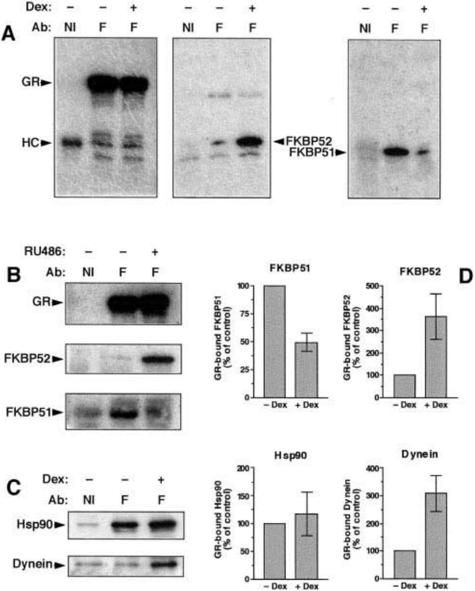
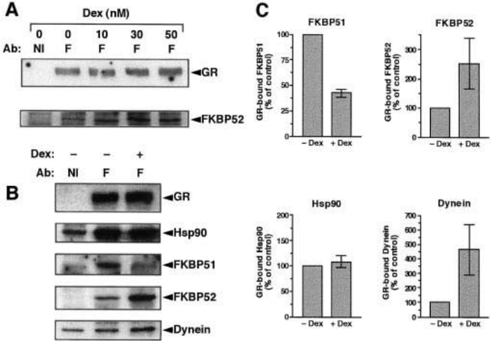
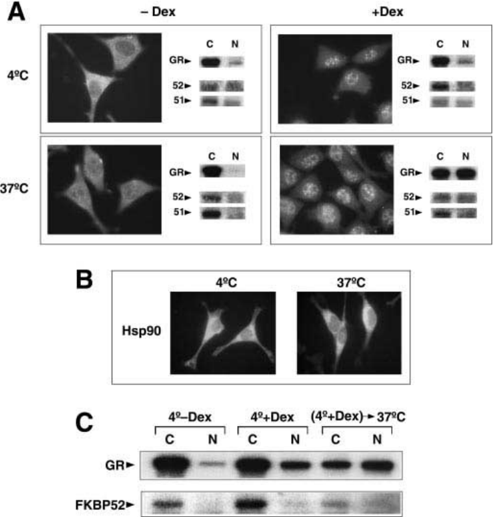
We have identified a new first step in the hormonal activation of the glucocorticoid receptor (GR). Rather than causing immediate dissociation of the cytoplasmic GR heterocomplex, binding of hormone-induced substitution of one immunophilin (FKBP51) for another (FKBP52), and concomitant recruitment of the transport protein dynein while leaving Hsp90 unchanged. Immunofluorescence and fractionation revealed hormone-induced translocation of the hormone-generated GR-Hsp90-FKBP52-dynein complex from cytoplasm to nucleus, a step that precedes dissociation of the complex within the nucleus and conversion of GR to the DNA-binding form. Taken as a whole, these studies identify immunophilin interchange as the earliest known event in steroid receptor signaling and provide the first evidence of differential roles for FKBP51 and FKBP52 immunophilins in the control of steroid receptor subcellular localization and transport.
Overview
The claims and statistics of this paper haven’t been checked yet.
Free: it reads the open-access text and checks the first 5 claims that cite a source we can check. Create a free account to check every claim.
Integrity signals
Registry
Cites
Statistics
Figures
Verification
Claims the paper makes
The claims and statistics of this paper haven’t been checked yet.
Free: it reads the open-access text and checks the first 5 claims that cite a source we can check. Create a free account to check every claim.
Claims other papers make about this one
Each is checked against this paper’s own text: does it say what the citing paper says it does?
The source backs part of the claim, not all of it — or backs it for a different population, condition or comparison.
In the citing paper
“Because the FKBPs and hsp90 are part of the same functional complex, it can be envisage that the disruption of the interaction between the FKBPs and the motor proteins should yield similar levels of inhibition of SHR retrotransport as that measured in the presence of hsp90 inhibitors. This was demonstrated when the receptor was “disconnected” from the transport machinery by overexpression of the P”
From FKBP51 and FKBP52 in signaling and disease (2011) · cites this paper as [19]
Experimental — accuracy not yet measuredThe source backs part of the claim, not all of it — or backs it for a different population, condition or comparison.
In the citing paper
“Secondly, in an in vivo study in which the Hsp90 complex was suspended on ice to decrease Hsp90’s dissociation rate, addition of hormone caused FKBP51 to be replaced with FKBP52 in complexes with GR [19].”
From FKBP51 and FKBP52 in signaling and disease (2011) · cites this paper as [19]
Experimental — accuracy not yet measuredThe cited source says what the claim attributes to it.
In the citing paper
“In vivo, ligand addition dissociates GR:Hsp90:FKBP51/52 complexes49 probably due to the rapid ligand-dependent nuclear translocation of GR22,58.”
From Cryo-EM reveals how Hsp90 and FKBP immunophilins co-regulate the glucocorticoid receptor (2023) · cites this paper as [58]
The cited source says what the claim attributes to it.
In the citing paper
“However, the observation that proteins of the dynein/dynactin complex co-immunoprecipitate with the hsp90•FKBP52 complex and also with GR [18–20] and MR [21–23], suggests that these motor proteins could power the retrograde movement of these steroid receptors.”
From FKBP51 and FKBP52 in signaling and disease (2011) · cites this paper as [19]
The check wasn’t confident either way, so it gives no verdict — never disputed.
In the citing paper
“With the exception of AR, FKBP51 has the overall effect of reducing receptor transcriptional activity.”
From FKBP51 – a selective modulator of glucocorticoid and androgen sensitivity (2011) · cites this paper as [19]
Experimental — accuracy not yet measured
Self-check
Percentages, sums and reported differences re-computed from the paper’s own numbers.
The self-check needs the paper’s full text.
Citations
Cites
Steroid Receptor Interactions with Heat Shock Protein and Immunophilin Chaperones*
Pratt, W. B., & Toft, D. O. (1997) · Endocrine Reviews · doi:10.1210/edrv.18.3.0303 · Cited by 1,791
Zou, J., Guo, Y., Guettouche, T., Smith, D. F., & Voellmy, R. (1998) · Cell · doi:10.1016/s0092-8674(00)81588-3 · Cited by 1,232
King, S. M. (2000) · Biochimica et Biophysica Acta (BBA) - Molecular Cell Research · doi:10.1016/s0167-4889(00)00009-4 · Cited by 338
Association of a 59-kilodalton immunophilin with the glucocorticoid receptor complex
Tai, P.-K. K., Albers, M. W., Chang, H., Faber, L. E., & Schreiber, S. L. (1992) · Science · doi:10.1126/science.1376003 · Cited by 304
Stancato, L. F., Chow, Y. H., Hutchison, K. A., Perdew, G. H., Jove, R., & Pratt, W. B. (1993) · Journal of Biological Chemistry · doi:10.1016/s0021-9258(20)80600-0 · Cited by 300
Nucleocytoplasmic shuttling of the progesterone receptor.
Guiochon-Mantel, A., Lescop, P., Christin-Maitre, S., Loosfelt, H., Perrot-Applanat, M., & Milgrom, E. (1991) · The EMBO Journal · doi:10.1002/j.1460-2075.1991.tb04954.x · Cited by 290
Sanchez, E. R., Meshinchi, S., Tienrungroj, W., Schlesinger, M. J., Toft, D. O., & Pratt, W. B. (1987) · Journal of Biological Chemistry · doi:10.1016/s0021-9258(18)48191-4 · Cited by 263
Self-citationMendel, D. B., Bodwell, J. E., Gametchu, B., Harrison, R. W., & Munck, A. (1986) · Journal of Biological Chemistry · doi:10.1016/s0021-9258(17)35712-5 · Cited by 229
Identification of phosphorylated sites in the mouse glucocorticoid receptor.
Bodwell, J. E., Ortí, E., Coull, J. M., Pappin, D. J., Smith, L. I., & Swift, F. (1991) · Journal of Biological Chemistry · doi:10.1016/s0021-9258(20)89482-4 · Cited by 202
Nair, S. C., Rimerman, R. A., Toran, E. J., Chen, S., Prapapanich, V., Butts, R. N., & Smith, D. F. (1997) · Molecular and Cellular Biology · doi:10.1128/mcb.17.2.594 · Cited by 196
Research works printed but not linked: 3
- Pratt, W. B., and Toft, D. O. (1997) Endocr. Rev. 18, 306 -360
- Wadekar, S. A., Li, D., Periyasamy, S., and Sanchez, E. R. (2001) Mol. Endo- crinol. 15, 1396 -1410 · doi:10.1210/mend.15.8.0674 · Paper page
- Galigniana, M. D., Scruggs, J. L., Herrington, J., Welsh, M. J., Carter-Su, C., Housley, P. R., and Pratt, W. B. (1998) Mol. Endocrinol. 12, 1903-1913 · doi:10.1210/mend.12.12.0204 · Paper page
Cited by
Items 301–400 of 428
Adipogenesis is under surveillance of Hsp90 and the high molecular weight Immunophilin FKBP51
Toneatto, J., Charó, N. L., Galigniana, N. M., & Piwien‐Pilipuk, G. (2015) · Adipocyte · doi:10.1080/21623945.2015.1049401 · Cited by 12
Zillich, E., Belschner, H., Avetyan, D., Andrade-Brito, D., Martínez‐Magaña, J. J., Frank, J., Mechawar, N., Turecki, G., Cabana‐Domínguez, J., Fernàndez‐Castillo, N., et al. (2024) · Translational Psychiatry · doi:10.1038/s41398-024-03139-9 · Cited by 14
The Emerging Role of TPR-Domain Immunophilins in the Mechanism of Action of Steroid Receptors
Mazaira, G. I., Lagadari, M., Erlejman, A. G., & Galigniana, M. D. (2014) · Nuclear Receptor Research · doi:10.11131/2014/101094 · Cited by 12
“Importantly, it was demonstrated that the intermediate chain of the motor protein dynein coimmunoprecipitates with the Hsp90•FKBP52 complex bound to the GR [21, 61, 63] and MR [36] suggesting that the motor protein powers the retrograde movement of the receptor.”
BackgroundRole of FAP48 in HIV‐associated lipodystrophy
Esposito, V., Manente, L., Lucariello, A., Perna, A., Viglietti, R., Gargiulo, M., Parrella, R., Parrella, G., Baldi, A., Luca, A. D., et al. (2012) · Journal of Cellular Biochemistry · doi:10.1002/jcb.24221 · Cited by 10
Chronic cocaine administration upregulates FKBP5 in the extended amygdala of male and female rats
Connelly, K. L., & Unterwald, E. M. (2019) · Drug and Alcohol Dependence · doi:10.1016/j.drugalcdep.2019.02.019 · Cited by 13
“However, when cortisol does bind, FKBP5 is exchanged for FKBP4 which promotes nuclear translocation, allowing GR transcriptional activity (Davies et al., 2002; Wochnik et al., 2005).”
BackgroundPPT1 regulation of HSP90α depalmitoylation participates in the pathogenesis of hyperandrogenism
Xue, T., Zhao, S., Zhang, H., Tang, T. F., Zheng, L., Jing, J., Ge, X., Ma, R., Ma, J., Ren, X., et al. (2023) · iScience · doi:10.1016/j.isci.2023.106131 · Cited by 9
Debs, S. R., Rothmond, D. A., Zhu, Y., Weickert, C. S., & Purves-Tyson, T. D. (2024) · Journal of Psychiatric Research · doi:10.1016/j.jpsychires.2024.07.004 · Cited by 10
Cytoskeletal elements and intracellular transport
Bhaskar, L., Krishnan, V. S., & Thampan, R. V. (2007) · Journal of Cellular Biochemistry · doi:10.1002/jcb.21347 · Cited by 12
“Certain immunophilin binding proteins such as FKBP-51 and FKBP52 have been shown to differentially regulate dynein interaction and nuclear translocation of the glucocorticoid receptor in mammalian cells [Todd et al., 2002; Gabriela et al., 2005].”
BackgroundButtgereit, F., Seibel, M. J., & Bijlsma, J. W. J. (2008) · Elsevier eBooks · doi:10.1016/b978-0-323-04404-2.10087-9 · Cited by 9
Nikolić, T., Velimirović, M., Stojković, T., Kanazir, S., Lončarević‐Vasiljković, N., Radonjić, N. V., Popić, J., & Petronijević, N. (2024) · Cells · doi:10.3390/cells13171425 · Cited by 9
“In its inactive form, GR resides in the cytoplasm bound to several heat shock proteins (HSP90 and HSP70) and co-chaperone binding (FKBP51, CyP40, p23, and Hop) proteins [27–29].”
BackgroundHuang, K., Ran, L., Wang, W., Zhou, R., Cai, X., Li, Y., Li, Y., Zhou, C., He, W., & Wang, R. (2018) · Journal of Dermatological Science · doi:10.1016/j.jdermsci.2018.11.010 · Cited by 9
Valdez, M. C., Freeborn, D. L., Vulimiri, P., Valdez, J. M., Kodavanti, U. P., & Kodavanti, P. R. S. (2023) · International Journal of Molecular Sciences · doi:10.3390/ijms24076404 · Cited by 10
“In turn, Fkbp5 rapidly binds to the cytosolic receptor complex and regulates glucocorticoid activity through a feedback loop [74].”
BackgroundImpact of FKBP52 on cell proliferation and hormone‐dependent cancers
Hanaki, S., & Shimada, M. (2023) · Cancer Science · doi:10.1111/cas.15811 · Cited by 7
Baptista, M. J., Muntañola, A., Calpe, E., Abrisqueta, P., Salamero, O., Fernández, E., Codony, C., Giné, E., Kalko, S. G., Crespo, M., et al. (2012) · Clinical Cancer Research · doi:10.1158/1078-0432.ccr-11-2771 · Cited by 8
“After glucocorticoid binding, FKBP5 is replaced by FKBP4 which allows for the nuclear translocation of the glucocorticoid receptor complex (24).”
BackgroundInfluentialFrew, A. J. (2019) · Elsevier eBooks · doi:10.1016/b978-0-7020-6896-6.00086-7 · Cited by 11
Dibas, A., Jiang, M. H., Fudala, R., Gryczyński, I., Gryczynski, Z. K., Clark, A. F., & Yorio, T. (2012) · Investigative Ophthalmology & Visual Science · doi:10.1167/iovs.11-8331 · Cited by 8
Long-term intermittent feeding restores impaired GR signaling in the hippocampus of aged rat
Tešić, V., Perović, M., Lazić, D., Kojić, S., Smiljanić, K., Ruždijić, S., Rakić, L., & Kanazir, S. (2015) · The Journal of Steroid Biochemistry and Molecular Biology · doi:10.1016/j.jsbmb.2015.01.013 · Cited by 8
Bock, O., Neusch, M., Büsche, G., Mengel, M., & Kreipe, H. H. (2004) · European Journal Of Haematology · doi:10.1046/j.0902-4441.2003.00204.x · Cited by 8
“suggested that during activation of the glucocorticoid receptor, both immunophilins FKBP51 and-52 have important roles in the control of steroid receptor subcellular localization and its transport from cytoplasm into the nucleus (14).”
BackgroundNemoto, T., & Kakinuma, Y. (2021) · International Journal of Molecular Sciences · doi:10.3390/ijms22189767 · Cited by 7
“However, when the ligand binds, Fkbp5 is replaced by Fkbp4, a co-chaperone that recruits dynein to the GR complex and promotes nuclear translocation and transcriptional regulation [33].”
BackgroundFunctions of the Hsp90-Binding FKBP Immunophilins
Cox, M. B., & Smith, D. F. (2007) · Springer eBooks · doi:10.1007/978-0-387-49310-7_2 · Cited by 8
The glucocorticoid receptor in skeletal health and disease: insights from targeted knockout mice
Macfarlane, E., Zhou, H., & Seibel, M. J. (2024) · Journal of Endocrinology · doi:10.1530/joe-23-0399 · Cited by 7
Nucleus–cytoplasm cross‐talk in the aging brain
Benvegnù, S. (2019) · Journal of Neuroscience Research · doi:10.1002/jnr.24446 · Cited by 8
Bernadotte, A., Kumar, R., Winblad, B. G., & Pavlov, P. F. (2018) · FEBS Open Bio · doi:10.1002/2211-5463.12521 · Cited by 7
PROGESTERONE RECEPTORS: A REPRODUCTIVE ROLE
Dovzhikova, I. V., Анатольевна, А. И., Andrievskaya, I. A., Константиновна, П. К., & Petrova, K. (2018) · Bulletin physiology and pathology of respiration · doi:10.12737/article_5c1278d242a333.68376622 · Cited by 9
SUMO conjugation as regulator of the glucocorticoid receptor-FKBP51 cellular response to stress
Liberman, A. C., Budziñski, M. L., Sokn, C., Gobbini, R. P., Ugo, M. B., & ARZT, E. S. (2019) · Steroids · doi:10.1016/j.steroids.2019.108520 · Cited by 8
The role of FKBP51 in the prognosis of ulcerative colitis-associated colorectal cancer
Xia, Z., Zhang, G., Wang, C., & Feng, Y. (2021) · Advances in Medical Sciences · doi:10.1016/j.advms.2021.01.003 · Cited by 7
Chronic adolescent stress alters GR-FKBP5 interactions in the hippocampus of adult female rats
Rowson, S. A., Bekhbat, M., Kelly, S. D., Hyer, M. M., Dyer, S. K., Weinshenker, D., & Neigh, G. N. (2024) · Stress · doi:10.1080/10253890.2024.2312467 · Cited by 7
“Interactions between these proteins have been previously reported in vitro (Davies et al., 2002; Wochnik et al., 2005) or with co-immunoprecipitation in the whole mouse brain (Li et al., 2020).”
Sannes, A., Christensen, J. O., Nielsen, M. B., & Gjerstad, J. (2020) · Journal of Psychosomatic Research · doi:10.1016/j.jpsychores.2020.110264 · Cited by 6
Hsp90: From Dispensable Heat Shock Protein to Global Player
Richter, K., Meinlschmidt, B., & Büchner, J. (2005) · Wiley eBooks · doi:10.1002/9783527619498.ch56 · Cited by 8
Molecular mechanism of PINK1 regulation by the Hsp90 machinery
Tian, X., Su, J., Wang, Z., Liu, T., Xiong, H., Sun, S., Mei, K., & Sui, S. (2025) · Nature Communications · doi:10.1038/s41467-025-65859-w · Cited by 6
Tešić, V., Ciric, J., Macura, I. J., Zogovic, N. S., Milanović, D., Kanazir, S., & Perović, M. (2021) · Nutrients · doi:10.3390/nu13124526 · Cited by 5
“Unaltered pGR level was in line with no changes in CDK5 level, together with the decrease in the level of Hsp90 and an increase in a negative regulator of GR function, FKBP51.”
BackgroundInfluential[Molecular mechanisms of action of some immunosuppressive drugs].
Liberman, A. C., Druker, J., Refojo, D., & ARZT, E. S. (2008) · PubMed · Cited by 7
Arabi, Y. M., & Al‐Dorzi, H. M. (2010) · Clinical Pulmonary Medicine · doi:10.1097/cpm.0b013e3181ef9ede · Cited by 5
Levinger, I., Brennan‐Speranza, T. C., Stepto, N. K., Jerums, G., Parker, L., McConell, G. K., Anderson, M. J., GARNHAM, A. P., Hare, D. L., Ebeling, P. R., et al. (2016) · JMIR Research Protocols · doi:10.2196/resprot.5119 · Cited by 7
“The regulation of GC-target genes, glucocorticoid-induced leucine zipper (Gilz) [18] and FK506-binding protein 5 (Fkbp5) [19] will be analyzed by polymerase chain reaction (PCR) and Western blot from muscle biopsies of humans with and without an acute dose of prednisolone.”
A novel role for the immunophilin FKBP52 in motor coordination
Young, M. J., Geiszler, P. C., & Pardon, M. (2016) · Behavioural Brain Research · doi:10.1016/j.bbr.2016.07.015 · Cited by 5
Jiugang, Z., Long, X., Yang, Y., Pan, H., Zhang, L., Guo, Z., Wang, J., & Lan, J. Q. (2019) · Animal Biotechnology · doi:10.1080/10495398.2018.1487305 · Cited by 5
Chaperone proteins and peroxisomal protein import
de Jonge, W. J., Tabak, H. F., & Braakman, I. (2005) · Topics in current genetics · doi:10.1007/b136669 · Cited by 4
“Upon ligand binding to GR, FKBP52 is recruited to the Hsp90-GR complex, and mediates transport of this complex along the cytoskeleton towards the nucleus (Davies et al. 2002).”
BackgroundMerkulov, V. M., Klimova, N. V., & Merkulova, T. I. (2016) · Russian Journal of Genetics Applied Research · doi:10.1134/s2079059716030096 · Cited by 6
Role of the Hsp90-Immunophilin Heterocomplex in Cancer Biology
Leo, S. A. D., Zgajnar, N. R., Mazaira, G. I., Erlejman, A. G., & Galigniana, M. D. (2019) · Current Cancer Therapy Reviews · doi:10.2174/1573394715666190102120801 · Cited by 4
Role of Mitochondrial Heat-shock Proteins and Immunophilins in Neuro Degenerative Diseases
Daneri-Becerra, C., Ciucci, S. M., Mazaira, G. I., & Galigniana, M. D. (2021) · Current Drug Targets · doi:10.2174/1389450121999201230204320 · Cited by 5
Intrinsically Disordered Chaperones and Neurodegeneration
Uversky, V. N. (2011) · Wiley eBooks · doi:10.1002/9781118063903.ch1 · Cited by 4
Defining the Differential Corticosteroid Response Basis from Multiple Omics Approaches
Ramirez-Falcon, M., Suarez-Pajes, E., & Flores, C. (2024) · International Journal of Molecular Sciences · doi:10.3390/ijms252413611 · Cited by 5
Glucocorticoid receptor signaling: crosstalk with inflammation
Zhan, X., Song, B., Xu, S., & Zhou, H. (2026) · Immunopharmacology and Immunotoxicology · doi:10.1080/08923973.2025.2605579 · Cited by 5
“…flexibility for the conformational changes of GR, as well as for dimerization and interactions with transcription cofactors, the essential transcription apparatus, and DNA [31]. this region also supports the two-way signal transduction between the receptor domains, enhancing DNA binding [32].”
Im, J., Oh, G., Fu, X., Lim, J.-S., Choi, S., & Lee, O. (2024) · Food Science and Biotechnology · doi:10.1007/s10068-024-01723-9 · Cited by 4
“However, after hormone-ligand binding, GR-HSP90 is replaced by FKBP52, which translocates to the nucleus (Davies et al., 2002).”
Androgen-Regulated Genes in the Prostate
Clegg, N. J., & Nelson, P. S. (2009) · Springer eBooks · doi:10.1007/978-0-387-69179-4_27 · Cited by 3
The Hsp90 Chaperone Machinery: An Important Hub in Protein Interaction Networks
Radons, J. (2016) · Journal of Advances in Medicine and Medical Research · doi:10.9734/bjmmr/2016/24631 · Cited by 5
“It has been suggested that hormonedirected recruitment of dynein to FKBP52 might cause transport of the mature SHR complex to the nuclear compartment [68].”
BackgroundRuiz‐Conca, M., Gardela, J., Olvera‐Maneu, S., López‐Béjar, M., & Álvarez‐Rodríguez, M. (2022) · Research in Veterinary Science · doi:10.1016/j.rvsc.2022.09.018 · Cited by 4
Functions of the Hsp90-Binding FKBP Immunophilins
Ortiz, N. R., Guy, N. C., Garcia, Y. A., Sivils, J. C., Galigniana, M. D., & Cox, M. B. (2022) · Sub-cellular biochemistry/Subcellular biochemistry · doi:10.1007/978-3-031-14740-1_2 · Cited by 3
The transportosome system as a model for the retrotransport of soluble proteins
Mazaira, G. I., Erlejman, A. G., Zgajnar, N. R., Piwien‐Pilipuk, G., & Galigniana, M. D. (2023) · Molecular and Cellular Endocrinology · doi:10.1016/j.mce.2023.112047 · Cited by 3
Role of FKBP51 and FKBP52 in glucocorticoid receptor regulated metabolism
Warrier, M. (2008) · OhioLink ETD Center (Ohio Library and Information Network) · Cited by 4
SUMO regulation of FKBP51 activity and the stress response
Gobbini, R. P., Velardo, V. G., Sokn, C., Liberman, A. C., & ARZT, E. S. (2023) · Journal of Cellular Biochemistry · doi:10.1002/jcb.30411 · Cited by 3
Choi, M., Cook, A., Mungikar, K., Eachus, H., Tochwin, A., Linke, M., Gerber, S., & Ryu, S. (2024) · iScience · doi:10.1016/j.isci.2024.110160 · Cited by 5
The Epigenetic Landscape of Borderline Personality Disorder: Insights from a Systematic Review
Dawidowski, B., Franczak, Ł., Podwalski, P., Michalczyk, A., Łupkowska-Grygorcewicz, A., Piotrowska, O., & Samochowiec, J. (2025) · Journal of Clinical Medicine · doi:10.3390/jcm14228182 · Cited by 3
“FKBP5 encodes a cochaperone protein for heat shock protein 90 (Hsp 90) [40–42].”
Potapova, S., Isakov, Y., Tyulkova, E. I., & Vetrovoy, O. V. (2026) · International Journal of Molecular Sciences · doi:10.3390/ijms27062873 · Cited by 2
Chudakova, D. A., Trubetskoy, D., Baida, G. E., Bhalla, P., Readhead, B., & Budunova, I. V. (2023) · Experimental Dermatology · doi:10.1111/exd.14887 · Cited by 5
Targeting FKBP51 prevents stress-induced preterm birth
Guzeloglu‐Kayisli, O., Özmen, A., Cetinkaya-Un, B., Ün, B., Blas, J., Johnson, I., Thurman, A. R., Walters, M., Friend, D., Kayisli, U. A., et al. (2025) · EMBO Molecular Medicine · doi:10.1038/s44321-025-00211-9 · Cited by 4
FKBP Co-Chaperones in Steroid Receptor Complexes
Cheung‐Flynn, J., Place, S. P., Cox, M. B., Prapapanich, V., & Smith, D. F. (2007) · Springer eBooks · doi:10.1007/978-0-387-39717-7_12 · Cited by 3
“When cells expressing GR were maintained on ice to retard Hsp90 dissociation, hormone addition similarly resulted in loss of FKBP51 and concomitant gain of FKBP52 in GR complexes (Davies et al., 2002).”
BackgroundAntunica-Noguerol, M., Aprile-Garcia, F., Budziñski, M. L., Proto-Cassina, L., Liberman, A. C., & ARZT, E. S. (2014) · Advances in Neuroimmune Biology · doi:10.3233/nib-140083 · Cited by 2
“On this matter, it was recently reported that immunophilin composition of the GR chaperone complex can either enhance or repress GR translocation, since FKBP51 delays GR nuclear transport while FKBP52 binding to dynein appears to be responsible for FKBP52 mediated enhancement of GR nuclear translocation [26, 27].”
BackgroundMacromolecular synthesis inhibitors perturb glucocorticoid receptor trafficking
Dezitter, X., Masselot, B., Tardivel, M., Méreau-Richard, C., Formstecher, P., & Idziorek, T. (2011) · The Journal of Steroid Biochemistry and Molecular Biology · doi:10.1016/j.jsbmb.2011.04.008 · Cited by 2
Ducruet, A. F., DeRosa, P., Zacharia, B. E., Sosunov, S. A., Connolly, E. S., & Weinstein, D. E. (2012) · Journal of Neuroscience Research · doi:10.1002/jnr.23033 · Cited by 2
Weston, F. I., Sforzini, L., Cattaneo, A., & Pariante, C. M. (2023) · Masterclass in neuroendocrinology · doi:10.1007/978-3-031-21358-8_6 · Cited by 2
Zhang, S., Jeon, Y.-J., Han, J., Park, H.-Y., & Chung, C. (2025) · Progress in Neurobiology · doi:10.1016/j.pneurobio.2025.102801 · Cited by 2
Sánchez, M. M., Panagiotakopoulos, L., Hayes, T., Howell, B., Ethun, K. F., Easley, K. A., Silvestri, G., Carnathan, D. G., McCandless, J., Meyer, J. S., et al. (2025) · Biomolecules · doi:10.3390/biom15121701 · Cited by 1
Cai, M., Wang, S., Liu, M., Lai, B., Chen, C., Ding, J., & Wang, X. (2026) · Brain Research · doi:10.1016/j.brainres.2026.150157 · Cited by 2
Genomic relationship between polyendocrine metabolic ovarian syndrome and bipolar disorder
Jaholkowski, P. P., Tesfaye, M., Fominykh, V., Parekh, P., Wiström, E. D., Parker, N., Koch, E. M., Bauer, A. E., Trzaskoma, P., Rokicki, J., et al. (2026) · European Neuropsychopharmacology · doi:10.1016/j.euroneuro.2026.112903 · Cited by 2
The Clinical Role of Glucocorticoids in the Management of Rheumatoid Arthritis
Al‐Mossawi, H., & John, R. (2012) · InTech eBooks · doi:10.5772/27481 · Cited by 1
“…associated with various heat shock proteins (HSPs) including HSP40, HSP56, HSP 70 and HSP90 (McLaughlin & Jackson, 2002) which are released when the receptor binds to GC After binding, the complex translocates to the neucleus where it exerts its effects on gene transcription (Davies et al., 2002).”
BackgroundRauch, A., Baschant, U., & Tuckermann, J. P. (2012) · Springer eBooks · doi:10.1007/978-1-4614-5366-6_5 · Cited by 1
HSP90 Co-Chaperones in Saccharomyces Cerevisiae
Tesic, M., & Gaber, R. F. (2007) · Springer eBooks · doi:10.1007/978-1-4020-5963-6_6 · Cited by 1
Posttraumatic Stress Disorder: From Neurobiology to Cycles of Violence
McCullough, K. M., & Ressler, K. J. (2018) · Springer eBooks · doi:10.1007/978-3-030-00503-0_3 · Cited by 1
[Research progress on the effect of glucocorticoid receptor signaling pathways in bladder cancer].
Feng, S., Chen, J., & Zheng, Y. (2016) · PubMed Central · doi:10.3785/j.issn.1008-9292.2016.11.16 · Cited by 1
Vitamin D Utilization in Subhuman Primates
Adams, J. S., Chen, H., Chun, R. F., Lisse, T. S., Garcia, A. J., & Hewison, M. (2014) · Springer eBooks · doi:10.1007/978-1-4939-2001-3_28 · Cited by 1
Functional Protein Interactions in Steroid Receptor-Chaperone Complexes
Ratajczak, T., Rudi, K., Cluning, C., & Bryan, K. R. (2012) · InTech eBooks · doi:10.5772/38339 · Cited by 1
“…hormone-induced interchange of FKBP51 by FKBP52 in GR-Hsp90 complexes, resulting in the favoured nuclear translocation of receptor complexes (Davies et al. , 2002), might be initiated by a change in GR LBD conformation elicited by the transfer of receptor interaction from Hsp90 helix 2 to…”
BackgroundCorticosteroid Receptors, Their Chaperones and Cochaperones: How Do They Modulate Adipogenesis?
Toneatto, J., Charó, N. L., Naselli, A., Muñoz-Bernart, M., Lombardi, A., & Piwien‐Pilipuk, G. (2014) · Nuclear Receptor Research · doi:10.11131/2014/101092 · Cited by 1
Kumar, R., Winblad, B. G., & Pavlov, P. F. (2019) · Heat shock proteins · doi:10.1007/978-3-030-23158-3_14 · Cited by 1
Mechanism of glucocorticoid action in immunology—Basic concepts
Wood, M., & Whirledge, S. (2021) · Elsevier eBooks · doi:10.1016/b978-0-12-818508-7.00020-8 · Cited by 2
Galigniana, M. D., Ciucci, S. M., & Mazaira, G. I. (2022) · Current Clinical Pharmacology · doi:10.2174/2772432817666220428135138 · Cited by 3
Regulation of heat shock factor 1 (HSF1) DNA-binding and transcription
Mercier, P. A. (2003) · University Library - University of Saskatchewan (University of Saskatchewan) · Cited by 1
Androgen Receptor Coregulators and Their Role in Prostate Cancer
Wafa, L. A., Snoek, R., & Rennie, P. S. (2009) · Springer eBooks · doi:10.1007/978-0-387-69179-4_15 · Cited by 1
Wehmeyer, L. (2010) · Open University of Cape Town (University of Cape Town) · Cited by 1
Glucocorticoid receptor cross-talk with NF-kappaB and AP-1 : Functional role and mechanisms
Bladh, L.-G. (2005) · Figshare · Cited by 1
Africander, D. (2010) · SUNScholar (Stellenbosch University) · Cited by 7
THE ROLE OF LIGAND IN THE INTERACTION OF ANDROGEN RECEPTOR WITH DNA AND COACTIVATORS
Karvonen, U. (2003) · Helda - University of Helsinki Institutional Repository · Cited by 1
Modelling the glucocorticoid receptor dimerisation cycle
Barry, C. J. (2017) · SUNScholar (Stellenbosch University) · Cited by 2
Hadley, K. (2010) · Open University of Cape Town (University of Cape Town) · Cited by 2
Receptor concentration affects glucocorticoid action
Robertson, S. E. (2011) · SUNScholar (Stellenbosch University) · Cited by 1
Molecular mechanisms of apoptosis induced by dexamethasone in chronic lymphocytic leukemia
Baptista, G. M. L., & João, M. (2012) · Dipòsit Digital de la Universitat de Barcelona (Universitat de Barcelona)
The Hsp 90 Family of Molecular Chaperones
Richter, K., Meinlschmidt, B., & Büchner, J. (2008) · Wiley eBooks · doi:10.1002/9783527610754.sf22
Glucocorticoid receptor activation by long acting steroids and its modification by inflammation
Yang, J. (2007) · edoc (University of Basel) · doi:10.5451/unibas-004365943
Vitamin D Utilization in Subhuman Primates
Adams, J. S., Chun, R. F., Wu, S., Ren, S., Gacad, M. A., & Chen, H. (2004) · Humana Press eBooks · doi:10.1007/978-1-59259-740-6_26
Targeting the Protein Quality Control (PQC) Machinery
Seneci, P. (2015) · Elsevier eBooks · doi:10.1016/b978-0-12-801944-3.00002-3
Tatro, E. T. (2008) · D-Scholarship@Pitt (University of Pittsburgh) · Cited by 1
Downstream effects of master regulators in two brain diseases.
Braun, S. B. (2012) · Lund University Publications (Lund University)
Transcriptional Regulation of The Porcine GnRH Receptor Gene by Glucocorticoids
Lee, C. (2013) · Lincoln (University of Nebraska)
Molecular mechanisms of glucocorticoid resistance in childhood acute lymphoblastic leukemia
Tissing, W. J. E. (2006) · RePub (Erasmus University Rotterdam)
Wochnik, G. M. (2004) · Electronic Theses of LMU Munich (Ludwig-Maximilians-Universität München) · doi:10.5282/edoc.2498 · Cited by 1
Effects of immunosuppressive drugs on human adipose tissue metabolism
Pereira, M. J. (2012) · Gothenburg University Publications Electronic Archive (Gothenburg University)
Functions of the coregulator protein SNURF (RNF4) in transcription and cell growth
Häkli, M. (2005) · Helda - University of Helsinki Institutional Repository
Review Immunophilins: for the love of proteins
Barik, S. (2006)
The Co-chaperones FKBP51 and PP5 Control Nuclear Receptor Phosphorylation and Adipogenesis
Stechschulte, L. A. (2013) · OhioLink ETD Center (Ohio Library and Information Network)
Metadata
- Authors
- Davies, T. H., Ning, Y.-M., & Sánchez, E. R.
- Affiliations
- University of Toledo Medical Center (US)
- Corresponding author
- Sánchez, Edwin R.
- ORCID
- Sánchez, Edwin R.
- Venue
- Journal of Biological Chemistry
- Publisher
- Elsevier BV
- Published
- 2002-02
- Volume
- 277
- Issue
- 7
- Pages
- 4597-4600
- ISSN
- 0021-9258 (ISSN-L)
- OpenAlex
- W2065295359
- Cited by
- 427
- References
- 23
- Citations by year
- 2026: 7 · 2025: 8 · 2024: 15 · 2023: 20 · 2022: 11 · 2021: 14 · 2020: 12 · 2019: 17 · 2018: 12 · 2017: 21 · 2016: 22 · 2015: 27 · 2014: 21 · 2013: 18 · 2012: 22
- FWCI
- 11.71
- Type
- journal article
- Language
- en
- Open access
- hybrid
- doi.org
- Licence
- cc-by
- www.elsevier.com/tdm/userlicense/1.0/ (tdm)
- creativecommons.org/licenses/by/4.0/ (vor, 6901 d)
- Locations
- Journal of Biological Chemistry (publishedVersion, cc-by)
- PubMed (publishedVersion)
- Funders
- National Institutes of Health
- National Institute of Diabetes and Digestive and Kidney Diseases (DK43867, R01DK043867)
- Topics
- Life Sciences › Biochemistry, Genetics and Molecular Biology › Endocrinology › Estrogen and related hormone effects
- Life Sciences › Biochemistry, Genetics and Molecular Biology › Molecular Biology › Signaling Pathways in Disease
- Life Sciences › Biochemistry, Genetics and Molecular Biology › Molecular Biology › Heat shock proteins research
- Keywords
- glucocorticoid receptor, immunophilins, FKBP51, FKBP52, HSP90, dynein, nuclear translocation, receptor subcellular localization, steroid receptor signaling
- MeSH terms
- Tacrolimus Binding Protein 5, Animals, Cytoplasm, Cytosol, Dyneins, Electrophoresis, Polyacrylamide Gel, Fibroblasts, Microscopy, Fluorescence, Models, Biological, Protein Binding, Receptors, Glucocorticoid, Subcellular Fractions, Blotting, Western, Signal Transduction, HSP90 Heat-Shock Proteins, Active Transport, Cell Nucleus, Tacrolimus Binding Proteins, Mice
About these checks
Registry, retraction, Cites and statistics results are computed, not judged, with one exception: a printed reference that no index lists is read once by a model before it counts as a citation error. Claims are extracted by a model and kept only when their quote appears verbatim in the text; each cited source is then checked, with a model’s help, for whether it says what the claim relies on. Those verdicts can be wrong — read the claim’s quote and the cited source before relying on one.
Statistics and arithmetic are recomputed, not judged.
Confidence bands are shown only for fields calibrated on our annotated test set. None is calibrated yet, so no band is shown.
What counts as a claim ›How we measure confidence ›How we check this ›
Are you an author, or do you see a problem with this page? Request a review
Data sources
Bibliographic data: Semantic Scholar, OpenAlex, Crossref.
Contains information from the Semantic Scholar Academic Graph Datasets, made available under the ODC Attribution License (ODC-BY 1.0).
Semantic Scholar’s data is described in: Kinney, R., et al. (2023). The Semantic Scholar Open Data Platform. arXiv:2301.10140.
