

A New First Step in Activation of Steroid Receptors
Open accessThe DOI matches its Crossref record; 23 of the 23 references it cites were found in a registry or an index.
Abstract
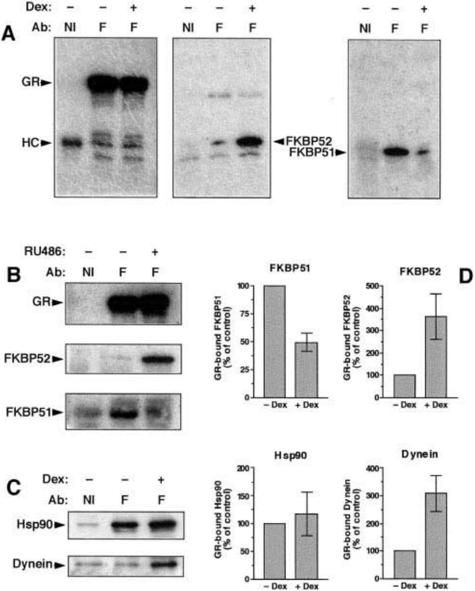
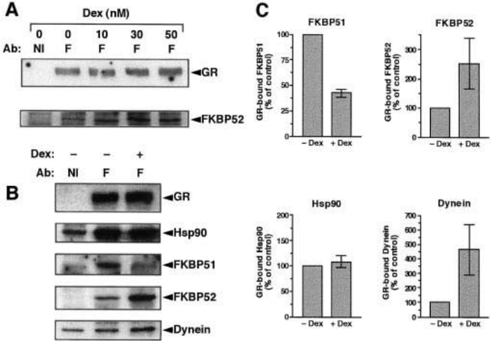
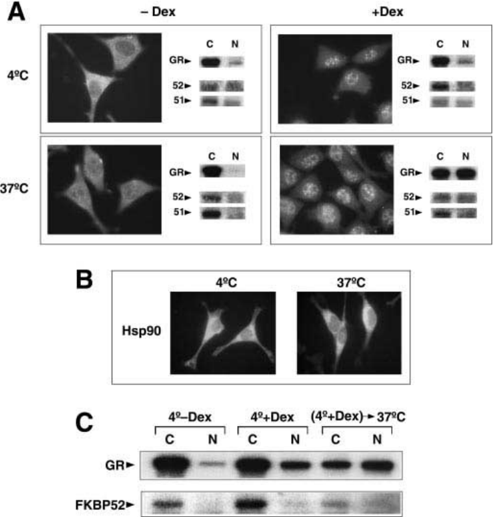
We have identified a new first step in the hormonal activation of the glucocorticoid receptor (GR). Rather than causing immediate dissociation of the cytoplasmic GR heterocomplex, binding of hormone-induced substitution of one immunophilin (FKBP51) for another (FKBP52), and concomitant recruitment of the transport protein dynein while leaving Hsp90 unchanged. Immunofluorescence and fractionation revealed hormone-induced translocation of the hormone-generated GR-Hsp90-FKBP52-dynein complex from cytoplasm to nucleus, a step that precedes dissociation of the complex within the nucleus and conversion of GR to the DNA-binding form. Taken as a whole, these studies identify immunophilin interchange as the earliest known event in steroid receptor signaling and provide the first evidence of differential roles for FKBP51 and FKBP52 immunophilins in the control of steroid receptor subcellular localization and transport.
Overview
The claims and statistics of this paper haven’t been checked yet.
Free: it reads the open-access text and checks the first 5 claims that cite a source we can check. Create a free account to check every claim.
Integrity signals
Registry
Cites
Statistics
Figures
Verification
Claims the paper makes
The claims and statistics of this paper haven’t been checked yet.
Free: it reads the open-access text and checks the first 5 claims that cite a source we can check. Create a free account to check every claim.
Claims other papers make about this one
Each is checked against this paper’s own text: does it say what the citing paper says it does?
The source backs part of the claim, not all of it — or backs it for a different population, condition or comparison.
In the citing paper
“Because the FKBPs and hsp90 are part of the same functional complex, it can be envisage that the disruption of the interaction between the FKBPs and the motor proteins should yield similar levels of inhibition of SHR retrotransport as that measured in the presence of hsp90 inhibitors. This was demonstrated when the receptor was “disconnected” from the transport machinery by overexpression of the P”
From FKBP51 and FKBP52 in signaling and disease (2011) · cites this paper as [19]
Experimental — accuracy not yet measuredThe source backs part of the claim, not all of it — or backs it for a different population, condition or comparison.
In the citing paper
“Secondly, in an in vivo study in which the Hsp90 complex was suspended on ice to decrease Hsp90’s dissociation rate, addition of hormone caused FKBP51 to be replaced with FKBP52 in complexes with GR [19].”
From FKBP51 and FKBP52 in signaling and disease (2011) · cites this paper as [19]
Experimental — accuracy not yet measuredThe cited source says what the claim attributes to it.
In the citing paper
“In vivo, ligand addition dissociates GR:Hsp90:FKBP51/52 complexes49 probably due to the rapid ligand-dependent nuclear translocation of GR22,58.”
From Cryo-EM reveals how Hsp90 and FKBP immunophilins co-regulate the glucocorticoid receptor (2023) · cites this paper as [58]
The cited source says what the claim attributes to it.
In the citing paper
“However, the observation that proteins of the dynein/dynactin complex co-immunoprecipitate with the hsp90•FKBP52 complex and also with GR [18–20] and MR [21–23], suggests that these motor proteins could power the retrograde movement of these steroid receptors.”
From FKBP51 and FKBP52 in signaling and disease (2011) · cites this paper as [19]
The check wasn’t confident either way, so it gives no verdict — never disputed.
In the citing paper
“With the exception of AR, FKBP51 has the overall effect of reducing receptor transcriptional activity.”
From FKBP51 – a selective modulator of glucocorticoid and androgen sensitivity (2011) · cites this paper as [19]
Experimental — accuracy not yet measured
Self-check
Percentages, sums and reported differences re-computed from the paper’s own numbers.
The self-check needs the paper’s full text.
Citations
Cites
Steroid Receptor Interactions with Heat Shock Protein and Immunophilin Chaperones*
Pratt, W. B., & Toft, D. O. (1997) · Endocrine Reviews · doi:10.1210/edrv.18.3.0303 · Cited by 1,791
Zou, J., Guo, Y., Guettouche, T., Smith, D. F., & Voellmy, R. (1998) · Cell · doi:10.1016/s0092-8674(00)81588-3 · Cited by 1,232
King, S. M. (2000) · Biochimica et Biophysica Acta (BBA) - Molecular Cell Research · doi:10.1016/s0167-4889(00)00009-4 · Cited by 338
Association of a 59-kilodalton immunophilin with the glucocorticoid receptor complex
Tai, P.-K. K., Albers, M. W., Chang, H., Faber, L. E., & Schreiber, S. L. (1992) · Science · doi:10.1126/science.1376003 · Cited by 304
Stancato, L. F., Chow, Y. H., Hutchison, K. A., Perdew, G. H., Jove, R., & Pratt, W. B. (1993) · Journal of Biological Chemistry · doi:10.1016/s0021-9258(20)80600-0 · Cited by 300
Nucleocytoplasmic shuttling of the progesterone receptor.
Guiochon-Mantel, A., Lescop, P., Christin-Maitre, S., Loosfelt, H., Perrot-Applanat, M., & Milgrom, E. (1991) · The EMBO Journal · doi:10.1002/j.1460-2075.1991.tb04954.x · Cited by 290
Sanchez, E. R., Meshinchi, S., Tienrungroj, W., Schlesinger, M. J., Toft, D. O., & Pratt, W. B. (1987) · Journal of Biological Chemistry · doi:10.1016/s0021-9258(18)48191-4 · Cited by 263
Self-citationMendel, D. B., Bodwell, J. E., Gametchu, B., Harrison, R. W., & Munck, A. (1986) · Journal of Biological Chemistry · doi:10.1016/s0021-9258(17)35712-5 · Cited by 229
Identification of phosphorylated sites in the mouse glucocorticoid receptor.
Bodwell, J. E., Ortí, E., Coull, J. M., Pappin, D. J., Smith, L. I., & Swift, F. (1991) · Journal of Biological Chemistry · doi:10.1016/s0021-9258(20)89482-4 · Cited by 202
Nair, S. C., Rimerman, R. A., Toran, E. J., Chen, S., Prapapanich, V., Butts, R. N., & Smith, D. F. (1997) · Molecular and Cellular Biology · doi:10.1128/mcb.17.2.594 · Cited by 196
Research works printed but not linked: 3
- Pratt, W. B., and Toft, D. O. (1997) Endocr. Rev. 18, 306 -360
- Wadekar, S. A., Li, D., Periyasamy, S., and Sanchez, E. R. (2001) Mol. Endo- crinol. 15, 1396 -1410 · doi:10.1210/mend.15.8.0674 · Paper page
- Galigniana, M. D., Scruggs, J. L., Herrington, J., Welsh, M. J., Carter-Su, C., Housley, P. R., and Pratt, W. B. (1998) Mol. Endocrinol. 12, 1903-1913 · doi:10.1210/mend.12.12.0204 · Paper page
Cited by
Items 201–300 of 428
Soontornniyomkij, V., Risbrough, V. B., Young, J. W., Wallace, C. K., Soontornniyomkij, B., Jeste, D. V., & Achim, C. L. (2010) · AGE · doi:10.1007/s11357-010-9145-9 · Cited by 34
“Upon GR binding to its hormone ligands in the cytoplasm, FKBP51 (known to inhibit nuclear translocation of the GR heterocomplex by disrupting the attachment of the GR heterocomplex to the transport protein dynein) is competitively replaced by FKBP52 (Davies et al. 2002; Wochnik et al. 2005).”
BackgroundAnalysis of Hsp90 Cochaperone Interactions Reveals a Novel Mechanism for TPR Protein Recognition
Chadli, A., Bruinsma, E. S., Stensgard, B. A., & Toft, D. O. (2008) · Biochemistry · doi:10.1021/bi7023332 · Cited by 40
Jones, T. J., Li, D., Wolf, I. M., Wadekar, S. A., Periyasamy, S., & Sánchez, E. R. (2003) · Molecular Endocrinology · doi:10.1210/me.2003-0366 · Cited by 37
“In the case of FK506-binding protein-52, this protein appears to play a role in the targeting of GR to the nucleus after the hormonebinding event (27, 28).”
BackgroundSelf-citationLovallo, W. R., Enoch, M., Acheson, A., Cohoon, A. J., Sorocco, K. H., Hodgkinson, C. A., Vincent, A. S., & Goldman, D. A. (2015) · Neuropsychopharmacology · doi:10.1038/npp.2015.347 · Cited by 33
“…reserved 0893-133X/16 www.neuropsychopharmacology.org The FKBP5 protein is a molecular cochaperone that contributes to the functional status of the GR (Zannas and Binder, 2014), thereby influencing how cortisol (CORT) interacts with neurons of the central nervous system (CNS) (Davies et al, 2002).”
BackgroundGeneralized and tissue specific glucocorticoid resistance
Martins, C. S., & de Castro, M. (2021) · Molecular and Cellular Endocrinology · doi:10.1016/j.mce.2021.111277 · Cited by 32
Sriram, K., Rodriguez-Fernández, M., & Doyle, F. J. (2012) · PLoS ONE · doi:10.1371/journal.pone.0042958 · Cited by 36
“GR sensitivity is also related to FK506-binding protein (FKBP), a co-chaperone of HSP90 that helps to translocate the cortisol-bound GR to the nucleus to regulate the expression of GR-sensitive genes [20].”
FKBP5: A Key Mediator of How Vertebrates Flexibly Cope with Adversity
Zimmer, C., Hanson, H. E., Wildman, D. E., Uddin, M., & Martin, L. B. (2020) · BioScience · doi:10.1093/biosci/biaa114 · Cited by 30
Nestin Modulates Glucocorticoid Receptor Function by Cytoplasmic Anchoring
Reimer, R., Helmbold, H., Szalay, B., Hagel, C., Hohenberg, H., Deppert, W., & Bohn, W. (2009) · PLoS ONE · doi:10.1371/journal.pone.0006084 · Cited by 34
“FKBP 52, a chaperone which associates with GR, has an affinity for dynein, a microtubule dependent cytoplasmic motor protein [20,21].”
BackgroundYoung, D. A., Inslicht, S. S., Metzler, T. J., Neylan, T. C., & Ross, J. A. (2018) · Psychiatry Research · doi:10.1016/j.psychres.2018.03.037 · Cited by 30
Binder, E. B. (2017) · European Journal of Psychotraumatology · doi:10.1080/20008198.2017.1412745 · Cited by 29
Jeon, H., Choi, Y., Brännström, M., Akin, J. W., Curry, T. E., & Jo, M. (2023) · Human Reproduction · doi:10.1093/humrep/dead017 · Cited by 34
In silico analysis of differential gene expressions in biliary stricture and hepatic carcinoma
Gupta, M. K., Behera, S. K., & Vadde, R. (2016) · Gene · doi:10.1016/j.gene.2016.10.032 · Cited by 34
Mazaira, G. I., Echeverría, P. C., & Galigniana, M. D. (2020) · Journal of Cell Science · doi:10.1242/jcs.238873 · Cited by 31
“While the preferred TPR protein bound to Hsp90 in unliganded receptors is the immunophilin FKBP51, it is replaced by its homologous partner FKBP52 upon hormone binding (Davies et al., 2002; Gallo et al., 2007).”
BackgroundDimerization of the Glucocorticoid Receptor and Its Importance in (Patho)physiology: A Primer
Timmermans, S., Vandewalle, J., & Libert, C. (2022) · Cells · doi:10.3390/cells11040683 · Cited by 31
“When a ligand binds, the complex changes and recruits other factors [36,37], ultimately resulting in the import of GR into the nucleus through the nuclear pores, where it will exert its regulatory functions [38].”
BackgroundMolecular Biology of Glucocorticoid Signaling
Arango-Lievano, M., Lambert, W. M., & Jeanneteau, F. D. (2015) · Advances in experimental medicine and biology · doi:10.1007/978-1-4939-2895-8_2 · Cited by 29
The activity of the glucocorticoid receptor is regulated by SUMO conjugation to FKBP51
Antunica-Noguerol, M., Budziñski, M. L., Druker, J., Gassen, N. C., Sokn, C., Senin, S. A., Aprile-Garcia, F., Holsboer, F., Rein, T., Liberman, A. C., et al. (2016) · Cell Death and Differentiation · doi:10.1038/cdd.2016.44 · Cited by 34
“Upon hormone stimulation, there is a switch from FKBP51 to the closely related TPR protein, FKBP52, which positively regulates GR activity.(5,7,8) Therefore, we analyzed whether impairment of SUMO conjugation to FKBP51 alters the cochaperone composition of this complex.”
BackgroundDynamic expression of FKBP5 in the medial prefrontal cortex regulates resiliency to conditioned fear
Criado‐Marrero, M., Silva, R. J. M., Velázquez, B., Hernández, A., Colon, M., Cruz, E., Soler‐Cedeño, O., & Porter, J. T. (2017) · Learning & Memory · doi:10.1101/lm.043000.116 · Cited by 33
“FKBP4 increases the affinity of GR for glucocorticoids, while FKBP5 serves as a negative intracellular regulator of GR signaling that binds to GR and decreases its affinity for glucocorticoids and impedes GR nuclear translocation (Davies et al. 2002; Tatro et al. 2009; Cioffi et al. 2011).”
BackgroundFlasbeck, V., & Brüne, M. (2021) · PLoS ONE · doi:10.1371/journal.pone.0248514 · Cited by 34
Human immune deficiency virus (HIV) infection and the hypothalamic pituitary adrenal axis
George, M. M., & Bhangoo, A. (2013) · Reviews in Endocrine and Metabolic Disorders · doi:10.1007/s11154-013-9244-x · Cited by 30
Chun, E., Lee, H. S., Bang, B., Kim, T., Lee, S.-H., Kim, J. H., Cho, S., Min, K., Kim, Y. Y., & Park, H. (2010) · Journal of Clinical Immunology · doi:10.1007/s10875-010-9463-9 · Cited by 28
“The 51-kDa FK506 binding protein coded by FKBP51 is a chaperone protein of the glucocorticoid receptor (GR) complex, which stabilizes GR in the cytoplasm before it combines with hormones [13].”
BackgroundBreen, M. E., Seifuddin, F., Zandi, P. P., Potash, J. B., & Willour, V. L. (2015) · Psychiatric Genetics · doi:10.1097/ypg.0000000000000082 · Cited by 29
“…and Holsboer, 2002) 18 FK506 binding protein 4, 59 kDa FKBP4 Replaces FKBP5 in the GR/HSP90 complex causing receptor activation and translocation (Davies et al., 2002) 1 FK506 binding protein 5 FKBP5 Co-chaperone that inactivates GR by decreasing cortisol affinity and translocation (Binder,…”
BackgroundBaida, G. E., Bhalla, P., Yemelyanov, A. Y., Stechschulte, L. A., Shou, W., Readhead, B., Dudley, J. T., Sánchez, E. R., & Budunova, I. V. (2018) · Oncotarget · doi:10.18632/oncotarget.26194 · Cited by 30
“Binding of ligand to GR favors replacement of FKBP51 with FKBP52, which then increases GR affinity to glucocorticoids, dimerization and nuclear transport [19].”
BackgroundSelf-citationThe helix 1–3 loop in the glucocorticoid receptor LBD is a regulatory element for FKBP cochaperones
Cluning, C., Ward, B. K., Rea, S. L., Arulpragasam, A., Fuller, P. J., & Ratajczak, T. (2013) · Molecular Endocrinology · doi:10.1210/me.2012-1023 · Cited by 26
Park, J., Kim, M., Na, G., Jeon, I., Kwon, Y.-K., Kim, J.-H., Youn, H., & Koo, Y. (2007) · Molecular and Cellular Endocrinology · doi:10.1016/j.mce.2007.08.002 · Cited by 26
Albaghdadi, A. J. H., & Kan, F. W. K. (2021) · International Journal of Molecular Sciences · doi:10.3390/ijms22062872 · Cited by 29
Hori, H., Yoshida, F., Ishida, I., Matsuo, J., Ogawa, S., Hattori, K., Kim, Y., & Kunugi, H. (2024) · Journal of Affective Disorders · doi:10.1016/j.jad.2024.01.080 · Cited by 30
Byun, K., Kim, T., Oh, J., Bayarsaikhan, E., Kim, D., Lee, M. Y., Pack, C., Hwang, D., & Lee, B. (2013) · Stem Cell Research · doi:10.1016/j.scr.2013.08.014 · Cited by 26
Lukić, I., Mitić, M., Soldatović, I., Jovicic, M. J., Marić, N. P., Radulović, J., & Adžić, M. (2014) · Journal of Molecular Neuroscience · doi:10.1007/s12031-014-0451-z · Cited by 28
“As it is already mentioned, elevation of FKBP5 could mediate reduced GR import to the nucleus (Davies et al. 2002; Wochnik et al. 2005), while, on the other hand, elevated GR phosphorylation at S226 could contribute to enhanced nuclear export of the GR (Itoh et al.”
BackgroundMustafi, S. M., LeMaster, D. M., & Hernández, G. (2014) · Biochemical Journal · doi:10.1042/bj20140232 · Cited by 25
Chebotaev, D. V., Yemelyanov, A. Y., Zhu, L., Lavker, R. M., & Budunova, I. V. (2006) · Oncogene · doi:10.1038/sj.onc.1210108 · Cited by 26
“Chaperons including Fkbp51 play an important role in GR-mediated signaling: they affect GR/hormone-binding affinity, and are involved in GR shuttling between the nucleus and cytoplasm (Davies et al., 2002).”
BackgroundPeeters, P. J., Fierens, F. L. P., den Wyngaert, I. V., Göhlmann, H. W. H., Swagemakers, S. M. A., Kass, S. U., Langlois, X., Pullan, S., Stenzel‐Poore, M. P., & Steckler, T. (2004) · Molecular Brain Research · doi:10.1016/j.molbrainres.2004.06.038 · Cited by 31
Stechschulte, L. A., Ge, C., Hinds, T. D., Sánchez, E. R., Franceschi, R. T., & Lecka‐Czernik, B. (2016) · Journal of Biological Chemistry · doi:10.1074/jbc.m116.752493 · Cited by 24
Self-citationRetractedDilworth, D., Gudavicius, G., Leung, A., & Nelson, C. J. (2012) · Biochemistry and Cell Biology · doi:10.1139/o11-045 · Cited by 26
Hult, M., Ortsäter, H., Schuster, G. U., Graedler, F., Beckers, J., Adamski, J., Ploner, A., Jörnvall, H., Bergsten, P., & Oppermann, U. C. T. (2008) · Molecular and Cellular Endocrinology · doi:10.1016/j.mce.2008.09.038 · Cited by 30
“…levels of 11 b -HSD1 in islets, as noted earlier in adipocytes or liver (Berger et al., 2001, Stulnig et al., 2002). ed Fkbp5 regulates GC response (Davies et al., 2002) by binding to the GC receptor and is likely to cause GC resistance in response to high doses of GCs (Denny et al., 2000), and…”
BackgroundCaldwell, K. K., Goggin, S. L., Steadman, C. R., & Allan, A. M. (2013) · Alcoholism Clinical and Experimental Research · doi:10.1111/acer.12236 · Cited by 28
“, 2012), which compete with each other for binding to the steroid heterocomplex (Davies et al., 2002; Galigniana et al., 2010).”
BackgroundGlucocorticoid Genes and the Developmental Origins of Asthma Susceptibility and Treatment Response
Sharma, S., Kho, A. T., Chhabra, D., Qiu, W., Gaedigk, R., Vyhlidal, C. A., Leeder, J. S., Barraza‐Villarreal, A., London, S. J., Gilliland, F. D., et al. (2014) · American Journal of Respiratory Cell and Molecular Biology · doi:10.1165/rcmb.2014-0109oc · Cited by 24
“Davies and colleagues identified that a substitution of FKBP5 for another immunophilin is one of the earliest events in steroid receptor signaling and controls subcellular localization and transport of the steroid receptor (43).”
BackgroundThe Biologist’s Guide to the Glucocorticoid Receptor’s Structure
Deploey, N., Moortel, L. V., Rogatsky, I., Peelman, F., & Bosscher, K. D. (2023) · Cells · doi:10.3390/cells12121636 · Cited by 32
“Upon hormone binding to GR, FKBP51 is replaced by FKBP52 [187].”
BackgroundAgam, G., Atawna, B., Damri, O., & Azab, A. N. (2024) · Cells · doi:10.3390/cells13100801 · Cited by 27
Tatro, E. T., Nguyen, T. B., Bousman, C., Masliah, E., Grant, I., Atkinson, J. H., & Everall, I. (2010) · Journal of NeuroVirology · doi:10.3109/13550284.2010.504248 · Cited by 24
“The proteins that are products of FKBP4 and FKBP5 associate physically with hormone receptors in many tissues, including peripheral blood mononuclear cells and the brain (Tatro et al, 2009b; Davies et al, 2002).”
BackgroundKelly, M. M., Jensen, K. P., & Sofuoglu, M. (2015) · The American Journal on Addictions · doi:10.1111/ajad.12304 · Cited by 23
Loss of FKBP5 impedes adipocyte differentiation under both normoxia and hypoxic stress
Zhang, L., Qiu, B., Wang, T., Wang, J., Liu, M. R., Xu, Y., Wang, C., Deng, R., Williams, K. E., Yang, Z., et al. (2017) · Biochemical and Biophysical Research Communications · doi:10.1016/j.bbrc.2017.02.126 · Cited by 22
Regulation of FKBP51 and FKBP52 functions by post-translational modifications
Daneri-Becerra, C., Zgajnar, N. R., Lotufo, C. M., Ramos-Hryb, A. B., Piwien‐Pilipuk, G., & Galigniana, M. D. (2019) · Biochemical Society Transactions · doi:10.1042/bst20190334 · Cited by 24
Baischew, A., Engel, S., Taubert, M. C., Geiger, T. M., & Hausch, F. (2023) · Nature Structural & Molecular Biology · doi:10.1038/s41594-023-01098-1 · Cited by 22
“29 ,40).”
Rotoli, D., Morales, M., Maeso, M. D. C., García, M. D. P., Morales, A., Ávila, J., & Martín-Vasallo, P. (2016) · Oncology Letters · doi:10.3892/ol.2016.4772 · Cited by 24
“However, the fact that proteins of the HSP90-FKBP52 complex co-immunoprecipitate with the glucocorticoid and mineralocorticoid receptors, and with the dynein-dynactin complex (22-24), suggests that these motor proteins could power the retrograde movement of these steroid receptors.”
Sharif-Khatibi, L., Kariminia, A., Khoei, S., & Goliaei, B. (2007) · International Journal of Hyperthermia · doi:10.1080/02656730701769833 · Cited by 24
“It has been shown that heat shock proteins (HSP70 and HSP90) can interact with multiple key component of signaling pathway that regulates growth, differentiation and cell death [45], including nuclear hormone receptors [46, 47], tyrosine-and serine/threonine kinases [48, 49] and cell death regulators [50, 51].”
BackgroundImmunohistochemical analysis of FKBP51 in human cancers
Staibano, S., Mascolo, M., Ilardi, G., Siano, M., & Rosa, G. D. (2011) · Current Opinion in Pharmacology · doi:10.1016/j.coph.2011.04.001 · Cited by 23
Robertson, S., Hapgood, J. P., & Louw, A. (2012) · Steroids · doi:10.1016/j.steroids.2012.10.016 · Cited by 27
“Nuclear import of the GR occurs quickly [39] and relies on the association with Hsp90 [10,57], the TPR FK506-binding protein 52 (FKBP52) [23] and importin-a [77].”
FKBP51 regulates cell motility and invasion via RhoA signaling
Takaoka, M., Ito, S., Miki, Y., & Nakanishi, A. (2017) · Cancer Science · doi:10.1111/cas.13153 · Cited by 23
HIV and symptoms of depression are independently associated with impaired glucocorticoid signaling
Bekhbat, M., Mehta, C. C., Kelly, S. D., Vester, A. I., Ofotokun, I., Felger, J. C., Wingood, G. M., Anastos, K., Gustafson, D., Kassaye, S., et al. (2018) · Psychoneuroendocrinology · doi:10.1016/j.psyneuen.2018.06.013 · Cited by 24
Hinds, T. D., Stechschulte, L. A., Elkhairi, F., & Sanchez, E. R. (2014) · Pharmacology Research & Perspectives · doi:10.1002/prp2.76 · Cited by 20
“Interestingly, hormone-free GR has a higher affinity for FKBP51 and exchange for FKBP52 occurs upon glucocorticoid binding (Davies et al. 2002, 2005).”
BackgroundSelf-citationA ligand-specific kinetic switch regulates glucocorticoid receptor trafficking and function
Trebble, P., Woolven, J. M., Saunders, K. A., Simpson, K. D., Farrow, S. N., Matthews, L. C., & Ray, D. W. (2013) · Journal of Cell Science · doi:10.1242/jcs.124784 · Cited by 25
“This is accompanied by replacement of the immunophilin FKBP51 with FKBP52 (Davies et al., 2002) which associates with dynein to drive GR along microtubules (Czar et al., 1994; Harrell et al., 2004).”
BackgroundHamann, A., Broad, K., Nguyen, A., & Pannier, A. K. (2018) · Biotechnology and Bioengineering · doi:10.1002/bit.26870 · Cited by 20
“…mechanisms (Strehl et al., 2011), are known to utilize similar cytoplasmic transport mechanisms (i.e., dynein motor protein on microtubules; Davies et al., 2002; Dhanoya et al., 2013; Echeverria et al., 2009; Galigniana et al., 2004; Harrell et al., 2004; Lachish‐Zalait et al., 2009) and…”
BackgroundSubdomain structure of the co-chaperone SGTA and activity of its androgen receptor client
Trotta, A. P., Need, E. F., Butler, L. M., Selth, L. A., O'Loughlin, M. A., Coetzee, G. A., Tilley, W. D., & Buchanan, G. (2012) · Journal of Molecular Endocrinology · doi:10.1530/jme-11-0152 · Cited by 20
“The exchange of FKBP5 for FKBP4 or PP5 in the dynein complex facilitates active transport of the holo-AR to the nucleus (Davies et al. 2002).”
BackgroundRotoli, D., Morales, M., Ávila, J., Maeso, M. D. C., García, M. Á., Mobasheri, A., & Martín-Vasallo, P. (2017) · International Journal of Molecular Sciences · doi:10.3390/ijms18040891 · Cited by 19
“The HSP90-FKBP52 complex co-immunoprecipitate with the glucocorticoid (GR) and the mineralocorticoid receptors and with the dynein–dynactin complex [16,55,56], indicating a retrograde movement of steroid receptors.”
BackgroundKe, X., Fu, Q., Sterrett, J., Hillard, C. J., Lane, R. H., & Majnik, A. V. (2020) · Physiological Reports · doi:10.14814/phy2.14407 · Cited by 23
Ruiz‐Conca, M., Gardela, J., Martinez-Serrano, C. A., Wright, D., López‐Béjar, M., Rodríguez‐Martínez, H., & Álvarez‐Rodríguez, M. (2020) · International Journal of Molecular Sciences · doi:10.3390/ijms21124437 · Cited by 20
“After GC binding, FKBP51 is interchanged with FKBP52 (FKBP4) [59,60].”
BackgroundRCAN1 Is an Important Mediator of Glucocorticoid-Induced Apoptosis in Human Leukemic Cells
Nagao, K., Iwai, Y., & Miyashita, T. (2012) · PLoS ONE · doi:10.1371/journal.pone.0049926 · Cited by 19
“In addition, some tetratricopeptide repeat (TRP) domain-containing members of the FKBP family, such as FKBP52 and FKBP51, interact with GR through an Hsp90 dimer and modulate nuclear translocation of GR [14].”
BackgroundWomersley, J. S., Martin, L. I., van der Merwe, L., Seedat, S., & Hemmings, S. M. J. (2017) · Metabolic Brain Disease · doi:10.1007/s11011-017-0138-6 · Cited by 20
“Briefly, when FKBP5 is bound to glucocorticoid receptors, it reduces the binding capacity of the receptor and therefore its ability to effect change via the stress response signalling system (Schiene-Fischer and Yu 2001; Pirkl and Buchner 2001; Davies et al. 2002, 2005).”
BackgroundTricyclic antidepressants target FKBP51 SUMOylation to restore glucocorticoid receptor activity
Budziñski, M. L., Sokn, C., Gobbini, R., Ugo, B., Antunica-Noguerol, M., Senin, S., Bajaj, T., Gassen, N. C., Rein, T., Schmidt, M. V., et al. (2022) · Molecular Psychiatry · doi:10.1038/s41380-022-01491-0 · Cited by 17
“Upon GC stimulation, FKBP51 is exchanged for FKBP52, which positively regulates GR activity [22, 71, 72].”
BackgroundLeMaster, D. M., Mustafi, S. M., Brecher, M. B., Zhang, J., Heroux, A., Li, H., & Hernández, G. (2015) · Journal of Biological Chemistry · doi:10.1074/jbc.m115.650655 · Cited by 22
“Steroid hormone binding to the FKBP51-bound glucocorticoid receptor is believed to induce the release of FKBP51 and the subsequent binding of FKBP52 (7).”
BackgroundIversen, M., Mulugeta, T. D., Blikeng, B. G., West, A. C., Jørgensen, E. H., Sandven, S. R., & Hazlerigg, D. G. (2020) · PLoS ONE · doi:10.1371/journal.pone.0227496 · Cited by 17
Corticosteroid receptors as a model for the Hsp90•immunophilin-based transport machinery
Mazaira, G. I., Pilipuk, G. P., & Galigniana, M. D. (2021) · Trends in Endocrinology and Metabolism · doi:10.1016/j.tem.2021.07.005 · Cited by 20
Stressful Newborn Memories: Pre-Conceptual, In Utero, and Postnatal Events
Papadopoulou, Z. L., Vlaikou, A., Theodoridou, D., Markopoulos, G. S., Tsoni, K., Agakidou, E., Drosou‐Agakidou, V., Turck, C. W., Filiou, M. D., & Syrrou, M. (2019) · Frontiers in Psychiatry · doi:10.3389/fpsyt.2019.00220 · Cited by 20
“FKBP5 slows down the translocation of GR to the nucleus (65, 66).”
BackgroundRuffaner‐Hanson, C. D., Fernandez-Oropeza, A. K., Sun, M. S., Caldwell, K. K., Allan, A. M., Savage, D. D., Valenzuela, C. F., Noor, S., & Milligan, E. D. (2023) · Frontiers in Neuroscience · doi:10.3389/fnins.2023.1203557 · Cited by 17
“The current study additionally examined the transcriptional expression of FKBP52, encoded by the FKBP4 gene, as it promotes high affinity binding of glucocorticoid receptors with glucocorticoids through interactions with microtubule proteins and thus facilitates the nuclear translocation of this complex (Schiene-Fisch…”
BackgroundCato, L., Neeb, A., Brown, M. A., & Cato, A. C. B. (2014) · Nuclear Receptor Signaling · doi:10.1621/nrs.12005 · Cited by 18
“Once in the nucleus, the steroid receptor/molecular chaperone complex dissociates and the steroid receptor is converted into a DNA-binding form as has been shown by Davies et al. (2002) [42].”
BackgroundLiraglutide Treatment Ameliorates Neurotoxicity Induced by Stable Silencing of Pin1
Bianchi, M., Doria, V., Braghini, M. R., Petrini, S., & Manco, M. (2019) · International Journal of Molecular Sciences · doi:10.3390/ijms20205064 · Cited by 17
“The PPIases modulate their stability, enzyme activities and subcellular localization by catalyzing conformational changes of their substrates [3,5,6].”
BackgroundHinds, T. D., John, K., McBeth, L., Trabbic, C. J., & Sánchez, E. R. (2016) · PPAR Research · doi:10.1155/2016/6218637 · Cited by 21
Self-citationBhowal, A., Majumder, S., Ghosh, S., Basu, S., Sen, D., Roychowdhury, S., Sengupta, S., & Chatterji, U. (2017) · Scientific Reports · doi:10.1038/s41598-017-10068-9 · Cited by 16
Demetriou, C., Chanudet, E., GOSgene, Joseph, A. P., Topf, M., Thomas, A. C., Bitner-Glindzicz, M. A. K., Regan, L., Stanier, P., & Moore, G. E. (2019) · Human Molecular Genetics · doi:10.1093/hmg/ddz203 · Cited by 21
Mining Microarrays for Metabolic Meaning: Nutritional Regulation of Hypothalamic Gene Expression
Mobbs, C. V., Yen, K., Mastaitis, J. W., Nguyen, H., Watson, E., Wurmbach, E., Sealfon, S. C., Brooks, A. I., & Salton, S. R. (2004) · Neurochemical Research · doi:10.1023/b:nere.0000023596.49140.e0 · Cited by 17
HIV-1 proteins accelerate HPA axis habituation in female rats
Panagiotakopoulos, L., Kelly, S. D., & Neigh, G. N. (2015) · Physiology & Behavior · doi:10.1016/j.physbeh.2015.02.011 · Cited by 15
Potential role of FKBP5 single‐nucleotide polymorphisms in functional seizures
Asadi‐Pooya, A. A., Simani, L., Asadollahi, M., Rashidi, F. S., Ahmadipour, E., Alavi, A., Roozbeh, M., Akbari, N., & Firouzabadi, N. (2023) · Epilepsia Open · doi:10.1002/epi4.12716 · Cited by 16
Hartmann, J., Klengel, C., Dillmann, L. J., Hisey, E. E., Hafner, K., Shukla, R., Estruch, M. S., Bajaj, T., Ebert, T., Mabbott, K. G., et al. (2024) · Proceedings of the National Academy of Sciences · doi:10.1073/pnas.2417728121 · Cited by 19
Glucocorticoid Receptor and Heat Shock Factor 1: Novel Mechanism of Reciprocal Regulation
Li, D., & Sánchez, E. R. (2005) · Vitamins and hormones · doi:10.1016/s0083-6729(05)71008-6 · Cited by 19
Self-citationThe Potential Role of Glucocorticoids and the HPA Axis in Alcohol Dependence
Stephens, M. A. C., McCaul, M. E., & Wand, G. S. (2014) · Elsevier eBooks · doi:10.1016/b978-0-12-405941-2.00021-3 · Cited by 22
Lee, C. H., Sinclair, D., O׳Donnell, M., Galletly, C. A., Liu, D., Weickert, C. S., & Weickert, T. W. (2019) · Schizophrenia Research · doi:10.1016/j.schres.2019.06.026 · Cited by 16
Ortsäter, H., Sjöholm, Å., & Rafacho, A. (2012) · InTech eBooks · doi:10.5772/51759 · Cited by 21
“Before stimulation with a GC hormone, the majority of Hsp90–GR complexes coprecipitates with FKBP51 but upon ligand binding there is a rapid shift of FKBP51 in favour of FKBP52 (Davies et al., 2002).”
BackgroundInduction of FKBP51 by aldosterone in intestinal epithelium
Petrovich, E., Asher, C., & Garty, H. (2013) · The Journal of Steroid Biochemistry and Molecular Biology · doi:10.1016/j.jsbmb.2013.10.006 · Cited by 18
Genes involved in glucocorticoid receptor signalling affect susceptibility to mood disorders
Szczepankiewicz, D., Narożna, B., Celichowski, P., Sakrajda, K., Kolodziejski, P. A., Banach, E., Zakowicz, P. T., Pruszyńska‐Oszmałek, E., Pawlak, J., Wiłkość-Dębczyńska, M., et al. (2020) · The World Journal of Biological Psychiatry · doi:10.1080/15622975.2020.1766109 · Cited by 15
“…binding of GR receptor with its ligand (corticosteroid), co-chaperone protein, Fkbp52 (encoded by the FKBP4), replaces Fkpb51 protein (encoded by the FKBP5) thus activating the GR complex by its binding to dynein that enables translocation to the nucleus (Davies et al. 2002; Wochnik et al. 2005).”
BackgroundTran, C. H., Weickert, C. S., Weickert, T. W., & Sinclair, D. (2022) · International Journal of Molecular Sciences · doi:10.3390/ijms23105333 · Cited by 15
Le, Q., Wen, S., Chen, C., Huang, C., & Kuo, W. (2022) · International Journal of Biological Sciences · doi:10.7150/ijbs.73915 · Cited by 18
“pathways, such as Akt and mTOR, which play a vital role in cell progression [28].”
BackgroundVenkatesan, A., Fan, J.-Y., Nauman, C., & Price, J. L. (2015) · Journal of Biological Rhythms · doi:10.1177/0748730415588189 · Cited by 15
“This suggestion is also intriguing because FK506-binding proteins are involved in HSP-90–dependent nuclear localization of the glucocorticoid receptor in response to glucocorticoids (Davies et al., 2002).”
Intratympanic dexamethasone up-regulatesFkbp5in the cochleae of mice in vivo
Maeda, Y., Fukushima, K., Kariya, S., Orita, Y., & Nishizaki, K. (2011) · Acta Oto-Laryngologica · doi:10.3109/00016489.2011.619571 · Cited by 14
“Binding of glucocorticoid to GR transfers FKBP5 to FKBP52 in the super-chaperone complex and converts GR to its DNA-binding form [9].”
BackgroundModulation of the Glucocorticoid Receptor Activity by Post-Translational Modifications
Liberman, A. C., Antunica-Noguerol, M., & ARZT, E. S. (2014) · Nuclear Receptor Research · doi:10.11131/2014/101086 · Cited by 18
Haas, J., Weber, J., Gonzalez, O., Zimmer, R., & Griffiths, S. J. (2018) · Scientific Reports · doi:10.1038/s41598-018-34241-w · Cited by 18
DNA methylation patterns of FKBP5 regulatory regions in brain and blood of humanized mice and humans
Yusupov, N., Roeh, S., Elliott, L. S., Chang, S., Loganathan, S., Urbina-Treviño, L., Fröhlich, A. S., Sauer, S., Ködel, M., Matosin, N., et al. (2024) · Molecular Psychiatry · doi:10.1038/s41380-024-02430-x · Cited by 14
Mazaira, G. I., Echeverría, P. C., Ciucci, S. M., Monte, M., Gallo, L. I., Erlejman, A. G., & Galigniana, M. D. (2021) · Biochimica et Biophysica Acta (BBA) - Molecular Cell Research · doi:10.1016/j.bbamcr.2021.119000 · Cited by 15
FKBP4 regulates 5-fluorouracil sensitivity in colon cancer by controlling mitochondrial respiration
Zhu, Z., Hou, Q., Wang, B., Li, C., Liu, L., Gong, W., Chai, J., Guo, H., & Jia, Y. (2022) · Life Science Alliance · doi:10.26508/lsa.202201413 · Cited by 13
“Accordantly, FKBP5 that acts antag-onistically to the function of FKBP4 (Barent et al, 1998; Davies et al, 2002; Galigniana et al, 2010) was found to confer chemosensitization via negatively regulating AKT in several types of cancer cells (Pei et al, 2009; Li et al, 2011).”
Structural and biochemical insights into FKBP51 as a Hsp90 co‐chaperone
Baischew, A., Engel, S., Geiger, T. M., Taubert, M. C., & Hausch, F. (2023) · Journal of Cellular Biochemistry · doi:10.1002/jcb.30384 · Cited by 15
Soto, O. B., Ramirez, C. S., Koyani, R. D., Rodriguez‐Palomares, I. A., Dirmeyer, J. R., Grajeda, B. I., Roy, S., & Cox, M. B. (2023) · Journal of Cellular Biochemistry · doi:10.1002/jcb.30406 · Cited by 16
“63 Interestingly, swapping the N ‐ terminal PPIase domains of FKBP51 and FKBP52 reverses their activity in a way that FKBP52 exhibits GR inhibitory effects with reduced dynein association, as is expected for FKBP51.”
Conformational Dynamics in FKBP Domains: Relevance to Molecular Signaling and Drug Design
LeMaster, D. M., & Hernández, G. (2015) · Current Molecular Pharmacology · doi:10.2174/1874467208666150519113146 · Cited by 15
“Sanchez and colleagues have provided strong evidence that an initial effect of glucocorticoid binding to the FKBP51bound receptor is to induce the release of FKBP51 and the subsequent binding of FKBP52 [37].”
BackgroundDifferential modulation of glucocorticoid action by FK506 in A549 cells
Croxtall, J. D., Paul‐Clark, M. J., & van Hal, P. T. W. (2003) · Biochemical Journal · doi:10.1042/bj20030821 · Cited by 13
Borin, C., Pieters, T., Serafin, V., & Ntziachristos, P. (2023) · HemaSphere · doi:10.1097/hs9.0000000000000916 · Cited by 14
Stress Molecular Signaling in Interaction With Cognition
Lugenbühl, J. F., Viho, E. M. G., Binder, E. B., & Daskalakis, N. P. (2024) · Biological Psychiatry · doi:10.1016/j.biopsych.2024.09.023 · Cited by 13
Steroid receptors and coregulators: Dissemination of sex differences and emerging technologies
Pauss, S. N., Bates, E. A., Martinez, G. J., Bates, Z. T., Kipp, Z. A., Gipson, C. D., & Hinds, T. D. (2025) · Journal of Biological Chemistry · doi:10.1016/j.jbc.2025.108363 · Cited by 15
The evolution and diversification of the Hsp90 co-chaperone system
Engler, S., & Büchner, J. (2025) · Biological Chemistry · doi:10.1515/hsz-2025-0112 · Cited by 15
Bianchi, M., & Manco, M. (2018) · International Journal of Molecular Sciences · doi:10.3390/ijms19082319 · Cited by 13
Advances in Molecular Pathophysiology and Targeted Therapy for Cushing’s Disease
Takayasu, S., Kageyama, K., & Daimon, M. (2023) · Cancers · doi:10.3390/cancers15020496 · Cited by 15
“However, it has also been reported that GR remains in the HSP90 complex and is transported into the nucleus after glucocorticoid binding-induced substitution of FK506-binding immunophilin 5 (FKBP5) for FKBP4, and recruitment of the transport protein dynein, resulting in GR converting to the DNA-binding form in the nuc…”
BackgroundZielińska, K. A., Cauwer, L. D., Knoops, S., der Molen, K. V., Sneyers, A., Thommis, J., de Souza, J. B., Opdenakker, G., Bosscher, K. D., & den Steen, P. E. V. (2017) · Frontiers in Immunology · doi:10.3389/fimmu.2017.01199 · Cited by 11
“Moreover, IFN-γ and PbNK65 extract did not affect mRNA levels of FKBP51 (Figure S1 in Supplementary Material), which sequesters GR in the cytoplasm and has been implicated in GC resistance (69, 70).”
BackgroundCellular and cytoskeletal alterations of scleral fibroblasts in response to glucocorticoid steroids
Bogarin, T., Saraswathy, S., Akiyama, G., Xie, X., Weinreb, R. N., Zheng, J., & Huang, A. S. (2019) · Experimental Eye Research · doi:10.1016/j.exer.2019.107774 · Cited by 12
“FKBP-51 is a well known steroid-response element for many cell-types (Davies et al., 2002; Exp Eye Res.”
Background
Metadata
- Authors
- Davies, T. H., Ning, Y.-M., & Sánchez, E. R.
- Affiliations
- University of Toledo Medical Center (US)
- Corresponding author
- Sánchez, Edwin R.
- ORCID
- Sánchez, Edwin R.
- Venue
- Journal of Biological Chemistry
- Publisher
- Elsevier BV
- Published
- 2002-02
- Volume
- 277
- Issue
- 7
- Pages
- 4597-4600
- ISSN
- 0021-9258 (ISSN-L)
- OpenAlex
- W2065295359
- Cited by
- 427
- References
- 23
- Citations by year
- 2026: 7 · 2025: 8 · 2024: 15 · 2023: 20 · 2022: 11 · 2021: 14 · 2020: 12 · 2019: 17 · 2018: 12 · 2017: 21 · 2016: 22 · 2015: 27 · 2014: 21 · 2013: 18 · 2012: 22
- FWCI
- 11.71
- Type
- journal article
- Language
- en
- Open access
- hybrid
- doi.org
- Licence
- cc-by
- www.elsevier.com/tdm/userlicense/1.0/ (tdm)
- creativecommons.org/licenses/by/4.0/ (vor, 6901 d)
- Locations
- Journal of Biological Chemistry (publishedVersion, cc-by)
- PubMed (publishedVersion)
- Funders
- National Institutes of Health
- National Institute of Diabetes and Digestive and Kidney Diseases (DK43867, R01DK043867)
- Topics
- Life Sciences › Biochemistry, Genetics and Molecular Biology › Endocrinology › Estrogen and related hormone effects
- Life Sciences › Biochemistry, Genetics and Molecular Biology › Molecular Biology › Signaling Pathways in Disease
- Life Sciences › Biochemistry, Genetics and Molecular Biology › Molecular Biology › Heat shock proteins research
- Keywords
- glucocorticoid receptor, immunophilins, FKBP51, FKBP52, HSP90, dynein, nuclear translocation, receptor subcellular localization, steroid receptor signaling
- MeSH terms
- Tacrolimus Binding Protein 5, Animals, Cytoplasm, Cytosol, Dyneins, Electrophoresis, Polyacrylamide Gel, Fibroblasts, Microscopy, Fluorescence, Models, Biological, Protein Binding, Receptors, Glucocorticoid, Subcellular Fractions, Blotting, Western, Signal Transduction, HSP90 Heat-Shock Proteins, Active Transport, Cell Nucleus, Tacrolimus Binding Proteins, Mice
About these checks
Registry, retraction, Cites and statistics results are computed, not judged, with one exception: a printed reference that no index lists is read once by a model before it counts as a citation error. Claims are extracted by a model and kept only when their quote appears verbatim in the text; each cited source is then checked, with a model’s help, for whether it says what the claim relies on. Those verdicts can be wrong — read the claim’s quote and the cited source before relying on one.
Statistics and arithmetic are recomputed, not judged.
Confidence bands are shown only for fields calibrated on our annotated test set. None is calibrated yet, so no band is shown.
What counts as a claim ›How we measure confidence ›How we check this ›
Are you an author, or do you see a problem with this page? Request a review
Data sources
Bibliographic data: Semantic Scholar, OpenAlex, Crossref.
Contains information from the Semantic Scholar Academic Graph Datasets, made available under the ODC Attribution License (ODC-BY 1.0).
Semantic Scholar’s data is described in: Kinney, R., et al. (2023). The Semantic Scholar Open Data Platform. arXiv:2301.10140.
