

A New First Step in Activation of Steroid Receptors
Open accessThe DOI matches its Crossref record; 23 of the 23 references it cites were found in a registry or an index.
Abstract
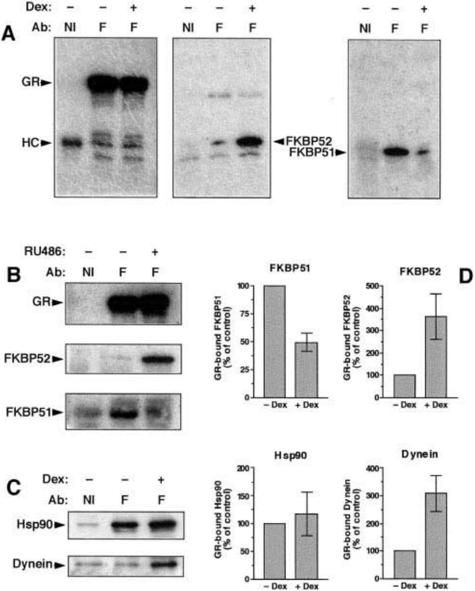
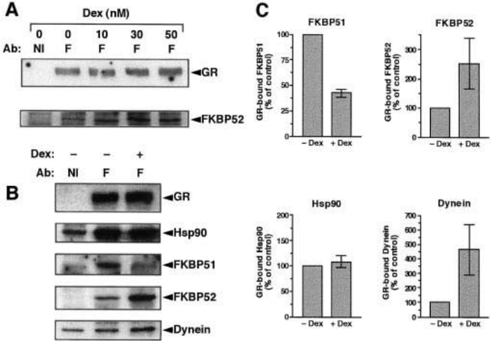
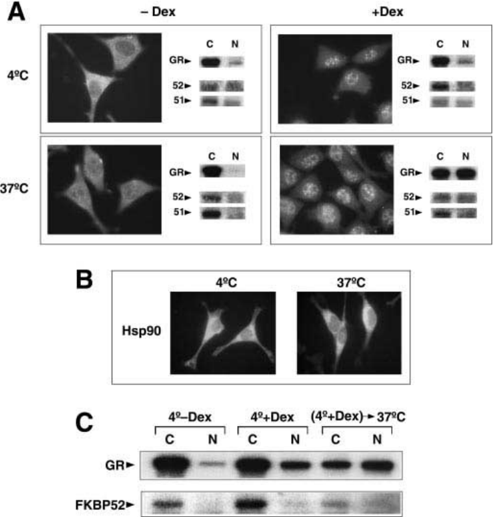
We have identified a new first step in the hormonal activation of the glucocorticoid receptor (GR). Rather than causing immediate dissociation of the cytoplasmic GR heterocomplex, binding of hormone-induced substitution of one immunophilin (FKBP51) for another (FKBP52), and concomitant recruitment of the transport protein dynein while leaving Hsp90 unchanged. Immunofluorescence and fractionation revealed hormone-induced translocation of the hormone-generated GR-Hsp90-FKBP52-dynein complex from cytoplasm to nucleus, a step that precedes dissociation of the complex within the nucleus and conversion of GR to the DNA-binding form. Taken as a whole, these studies identify immunophilin interchange as the earliest known event in steroid receptor signaling and provide the first evidence of differential roles for FKBP51 and FKBP52 immunophilins in the control of steroid receptor subcellular localization and transport.
Overview
The claims and statistics of this paper haven’t been checked yet.
Free: it reads the open-access text and checks the first 5 claims that cite a source we can check. Create a free account to check every claim.
Integrity signals
Registry
Cites
Statistics
Figures
Verification
Claims the paper makes
The claims and statistics of this paper haven’t been checked yet.
Free: it reads the open-access text and checks the first 5 claims that cite a source we can check. Create a free account to check every claim.
Claims other papers make about this one
Each is checked against this paper’s own text: does it say what the citing paper says it does?
The source backs part of the claim, not all of it — or backs it for a different population, condition or comparison.
In the citing paper
“Because the FKBPs and hsp90 are part of the same functional complex, it can be envisage that the disruption of the interaction between the FKBPs and the motor proteins should yield similar levels of inhibition of SHR retrotransport as that measured in the presence of hsp90 inhibitors. This was demonstrated when the receptor was “disconnected” from the transport machinery by overexpression of the P”
From FKBP51 and FKBP52 in signaling and disease (2011) · cites this paper as [19]
Experimental — accuracy not yet measuredThe source backs part of the claim, not all of it — or backs it for a different population, condition or comparison.
In the citing paper
“Secondly, in an in vivo study in which the Hsp90 complex was suspended on ice to decrease Hsp90’s dissociation rate, addition of hormone caused FKBP51 to be replaced with FKBP52 in complexes with GR [19].”
From FKBP51 and FKBP52 in signaling and disease (2011) · cites this paper as [19]
Experimental — accuracy not yet measuredThe cited source says what the claim attributes to it.
In the citing paper
“In vivo, ligand addition dissociates GR:Hsp90:FKBP51/52 complexes49 probably due to the rapid ligand-dependent nuclear translocation of GR22,58.”
From Cryo-EM reveals how Hsp90 and FKBP immunophilins co-regulate the glucocorticoid receptor (2023) · cites this paper as [58]
The cited source says what the claim attributes to it.
In the citing paper
“However, the observation that proteins of the dynein/dynactin complex co-immunoprecipitate with the hsp90•FKBP52 complex and also with GR [18–20] and MR [21–23], suggests that these motor proteins could power the retrograde movement of these steroid receptors.”
From FKBP51 and FKBP52 in signaling and disease (2011) · cites this paper as [19]
The check wasn’t confident either way, so it gives no verdict — never disputed.
In the citing paper
“With the exception of AR, FKBP51 has the overall effect of reducing receptor transcriptional activity.”
From FKBP51 – a selective modulator of glucocorticoid and androgen sensitivity (2011) · cites this paper as [19]
Experimental — accuracy not yet measured
Self-check
Percentages, sums and reported differences re-computed from the paper’s own numbers.
The self-check needs the paper’s full text.
Citations
Cites
Steroid Receptor Interactions with Heat Shock Protein and Immunophilin Chaperones*
Pratt, W. B., & Toft, D. O. (1997) · Endocrine Reviews · doi:10.1210/edrv.18.3.0303 · Cited by 1,791
Zou, J., Guo, Y., Guettouche, T., Smith, D. F., & Voellmy, R. (1998) · Cell · doi:10.1016/s0092-8674(00)81588-3 · Cited by 1,232
King, S. M. (2000) · Biochimica et Biophysica Acta (BBA) - Molecular Cell Research · doi:10.1016/s0167-4889(00)00009-4 · Cited by 338
Association of a 59-kilodalton immunophilin with the glucocorticoid receptor complex
Tai, P.-K. K., Albers, M. W., Chang, H., Faber, L. E., & Schreiber, S. L. (1992) · Science · doi:10.1126/science.1376003 · Cited by 304
Stancato, L. F., Chow, Y. H., Hutchison, K. A., Perdew, G. H., Jove, R., & Pratt, W. B. (1993) · Journal of Biological Chemistry · doi:10.1016/s0021-9258(20)80600-0 · Cited by 300
Nucleocytoplasmic shuttling of the progesterone receptor.
Guiochon-Mantel, A., Lescop, P., Christin-Maitre, S., Loosfelt, H., Perrot-Applanat, M., & Milgrom, E. (1991) · The EMBO Journal · doi:10.1002/j.1460-2075.1991.tb04954.x · Cited by 290
Sanchez, E. R., Meshinchi, S., Tienrungroj, W., Schlesinger, M. J., Toft, D. O., & Pratt, W. B. (1987) · Journal of Biological Chemistry · doi:10.1016/s0021-9258(18)48191-4 · Cited by 263
Self-citationMendel, D. B., Bodwell, J. E., Gametchu, B., Harrison, R. W., & Munck, A. (1986) · Journal of Biological Chemistry · doi:10.1016/s0021-9258(17)35712-5 · Cited by 229
Identification of phosphorylated sites in the mouse glucocorticoid receptor.
Bodwell, J. E., Ortí, E., Coull, J. M., Pappin, D. J., Smith, L. I., & Swift, F. (1991) · Journal of Biological Chemistry · doi:10.1016/s0021-9258(20)89482-4 · Cited by 202
Nair, S. C., Rimerman, R. A., Toran, E. J., Chen, S., Prapapanich, V., Butts, R. N., & Smith, D. F. (1997) · Molecular and Cellular Biology · doi:10.1128/mcb.17.2.594 · Cited by 196
Research works printed but not linked: 3
- Pratt, W. B., and Toft, D. O. (1997) Endocr. Rev. 18, 306 -360
- Wadekar, S. A., Li, D., Periyasamy, S., and Sanchez, E. R. (2001) Mol. Endo- crinol. 15, 1396 -1410 · doi:10.1210/mend.15.8.0674 · Paper page
- Galigniana, M. D., Scruggs, J. L., Herrington, J., Welsh, M. J., Carter-Su, C., Housley, P. R., and Pratt, W. B. (1998) Mol. Endocrinol. 12, 1903-1913 · doi:10.1210/mend.12.12.0204 · Paper page
Cited by
Items 101–200 of 428
Biological Actions of the Hsp90-binding Immunophilins FKBP51 and FKBP52
Zgajnar, N., De Leo, S., Lotufo, C., Erlejman, A., Piwien-Pilipuk, G., & Galigniana, M. (2019) · Biomolecules · doi:10.3390/biom9020052 · Cited by 94
“When the steroid binds, FKBP51 is exchanged by FKBP52 due to a ligand-induced conformational change of the receptor [52].”
BackgroundDynamics of nuclear receptor movement and transcription
Hager, G. L., Nagaich, A. K., Johnson, T. A., Walker, D. A., & John, S. (2003) · Biochimica et Biophysica Acta (BBA) - Gene Structure and Expression · doi:10.1016/j.bbaexp.2003.09.016 · Cited by 104
Tumor suppressor protein (p)53, is a regulator of NF-κB repression by the glucocorticoid receptor
Murphy, S. H., Suzuki, K., Downes, M., Welch, G. L., De Jesus, P., Miraglia, L. J., Orth, A. P., Chanda, S. K., Evans, R. M., & Verma, I. M. (2011) · Proceedings of the National Academy of Sciences · doi:10.1073/pnas.1114420108 · Cited by 93
“Upon passive diffusion and subsequent binding by glucocorticoids, GR can dissociate from its inhibitory complex and translocate to the nucleus via active transport by dynein (13).”
BackgroundGolden, T. A., Swingle, M. R., & Honkanen, R. E. (2008) · Cancer and Metastasis Reviews · doi:10.1007/s10555-008-9125-z · Cited by 101
“The binding of hormone to the GR was then shown to induce the substitution of one immunophilin (FKBP51) for another (FKBP52), with GR-Hsp90-FKBP52 heterocomplex binding with dynein and then moving from the cytoplasm to nucleus [45].”
BackgroundFKBP51 – a selective modulator of glucocorticoid and androgen sensitivity
Stechschulte, L. A., & Sanchez, E. R. (2011) · Current Opinion in Pharmacology · doi:10.1016/j.coph.2011.04.012 · Cited by 92
Self-citationFranke, J., Eichner, S., Zeilinger, C., & Kirschning, A. (2013) · Natural Product Reports · doi:10.1039/c3np70012g · Cited by 101
Prolyl isomerases in gene transcription
Hanes, S. D. (2014) · Biochimica et Biophysica Acta (BBA) - General Subjects · doi:10.1016/j.bbagen.2014.10.028 · Cited by 105
Buchanan, G., Ricciardelli, C., Harris, J. M., Prescott, J., Yu, Z. C.-L., Li, J., Butler, L. M., Marshall, V. R., Scher, H. I., Gerald, W. L., et al. (2007) · Cancer Research · doi:10.1158/0008-5472.can-07-1646 · Cited by 94
“Indeed, the earliest event in steroid receptor activation and cellular redistribution is thought to be ligand-induced exchange of TPR proteins in the mature receptor/ Hsp90 heterocomplex ( 12 ).”
BackgroundInfluentialThe proteome of the chloroplast lumen of higher plants
Kieselbach, T., & Schröder, W. P. (2003) · Photosynthesis Research · doi:10.1023/b:pres.0000006913.86689.f1 · Cited by 88
“The immunophilin FKBP52 plays an important role in mammalian cells in the transport of the glucocorticoid receptor from the cytoplasm to the nucleus (Pratt et al. 1999; Davies et al. 2002).”
BackgroundKelly, M., King, E., Rider, C., Gwozd, C., Holden, N., Eddleston, J., Zuraw, B., Leigh, R., O'Byrne, P., & Newton, R. (2012) · British Journal of Pharmacology · doi:10.1111/j.1476-5381.2011.01620.x · Cited by 82
“, 2007), are consistent with antiinflammatory efficacy (Ayroldi and Riccardi, 2009), FKBP51 function is less well defined and may involve negative regulation of GR activity (Davies et al., 2002; Stechschulte and Sanchez, 2011).”
BackgroundInfluentialReview: HPA‐axis activity in alcoholism: examples for a gene–environment interaction
Clarke, T., Treutlein, J., Zimmermann, U. S., Kiefer, F., Skowronek, M. H., Rietschel, M., Mann, K., & Schumann, G. (2008) · Addiction Biology · doi:10.1111/j.1369-1600.2007.00084.x · Cited by 80
Periyasamy, S., Warrier, M., Tillekeratne, M. P. M., Shou, W., & Sanchez, E. R. (2007) · Endocrinology · doi:10.1210/en.2007-0145 · Cited by 78
“3 through concomitant recruitment of the motor protein dynein (38).”
BackgroundSelf-citationGaligniana, N. M., Ballmer, L. T., Toneatto, J., Erlejman, A. G., Lagadari, M., & Galigniana, M. D. (2012) · Journal of Neurochemistry · doi:10.1111/j.1471-4159.2012.07775.x · Cited by 77
Saporita, A. J., Ai, J., & Wang, Z. (2007) · The Prostate · doi:10.1002/pros.20541 · Cited by 77
Sex dependence and temporal dependence of the left ventricular genomic response to pressure overload
Weinberg, E. O., Mirotsou, M., Gannon, J., Dzau, V. J., Lee, R. T., & Pratt, R. E. (2003) · Physiological Genomics · doi:10.1152/physiolgenomics.00046.2002 · Cited by 87
“This protein is a potent inhibitor of the glucocorticoid receptor (7) and is involved in controlling steroid receptor localization and transport (6).”
BackgroundMangé, A., Coyaud, É., Desmetz, C., Laurent, E. M. N., Béganton, B., Coopman, P. J., Raught, B., & Solassol, J. (2019) · Theranostics · doi:10.7150/thno.35561 · Cited by 79
“Mechanistically, many studies have reported that FKBP4 and FKBP5 exhibit an antagonistic role in the functions and activities of the steroid receptors GR, PR or mineralocorticoid receptors [52, 53, 54 ].”
BackgroundHNRC, Tatro, E. T., Everall, I. P., Masliah, E., Hult, B. J., Lucero, G., Chana, G., Soontornniyomkij, V., & Achim, C. L. (2009) · Journal of Neuroimmune Pharmacology · doi:10.1007/s11481-009-9146-6 · Cited by 75
“1), combined with previous reports that FKBP5 is responsive to cortisol (Davies et al. 2002), likely indicates increased expression in response to hypercortisolemia in MDD.”
Cryo-EM reveals how Hsp90 and FKBP immunophilins co-regulate the glucocorticoid receptor
Noddings, C. M., Johnson, J. L., & Agard, D. A. (2023) · Nature Structural & Molecular Biology · doi:10.1038/s41594-023-01128-y · Cited by 75
“In vivo, ligand addition dissociates GR:Hsp90:FKBP51/52 complexes 49 probably due to the rapid ligand-dependent nuclear translocation of GR 22,58 .”
BackgroundUversky, V. N. (2010) · Chemical Reviews · doi:10.1021/cr100186d · Cited by 77
Shen, Q., & Schulze‐Lefert, P. (2007) · The EMBO Journal · doi:10.1038/sj.emboj.7601854 · Cited by 82
“Recent data suggest that steroid-binding may regulate a chaperone-dependent step that occurs after recognition of the NLS in these receptors (Davies et al, 2002; Freedman and Yamamoto, 2004).”
BackgroundDiverse structures, functions and uses of FK506 binding proteins
Bonner, J. M., & Boulianne, G. L. (2017) · Cellular Signalling · doi:10.1016/j.cellsig.2017.06.013 · Cited by 85
Xu, J., Wang, R., Liu, Y., Liu, D., Jiang, H., & Pan, F. (2017) · Journal of Psychiatric Research · doi:10.1016/j.jpsychires.2017.08.010 · Cited by 79
“Under the induction of glucocorticoids, FKBP5 is replaced by FKBP4 and the steroid receptor is activated, thus allowing the nuclear translocation of GR-mature and further genetic transcription (Davies et al., 2002).”
FKBP51 and the molecular chaperoning of metabolism
Smedlund, K., Sánchez, E. R., & Hinds, T. D. (2021) · Trends in Endocrinology and Metabolism · doi:10.1016/j.tem.2021.08.003 · Cited by 81
Self-citationBanerjee, A., Periyasamy, S., Wolf, I. M., Hinds, T. D., Yong, W., Shou, W., & Sanchez, E. R. (2008) · Biochemistry · doi:10.1021/bi8011862 · Cited by 73
“Because HSP90 is the mediator for TPR protein binding, and because FKBP52 is known to bind the motor protein dynein (12, 28), the involvement of the HSP90-FKBP52 complex in SR trafficking has been proposed, with most reports showing a role for FKBP52 in hormone-induced nuclear translocation of GR (29-32).”
BackgroundResultFocus on FKBP51: A molecular link between stress and metabolic disorders
Häusl, A. S., Balsevich, G., Gassen, N. C., & Schmidt, M. V. (2019) · Molecular Metabolism · doi:10.1016/j.molmet.2019.09.003 · Cited by 82
Lesovaya, E. A., Yemelyanov, A. Y., Swart, A. C., Swart, P., Haegeman, G., & Budunova, I. V. (2015) · Oncotarget · doi:10.18632/oncotarget.5078 · Cited by 78
Zhang, X., Clark, A. F., & Yorio, T. (2005) · Investigative Opthalmology & Visual Science · doi:10.1167/iovs.05-0571 · Cited by 71
“On binding GC, GR and Hsp90 are translocated to the nucleus along microtubules through dynein motor proteins.(52) GR expression is downregulated after several days of exposure to GC.”
BackgroundInterplay between diet-induced obesity and chronic stress in mice: potential role of FKBP51
Balsevich, G., Uribe, A., Wagner, K. V., Hartmann, J., Santarelli, S., Labermaier, C., & Schmidt, M. V. (2014) · Journal of Endocrinology · doi:10.1530/joe-14-0129 · Cited by 71
“Most notably, FKBP51 acts as a negative regulator of GR by reducing nuclear translocation of the GR complex and ligand-binding sensitivity (Davies et al. 2002, Wochnik et al. 2005, Binder 2009).”
Dackis, M. N., Rogosch, F. A., Oshri, A., & Cicchetti, D. (2012) · Development and Psychopathology · doi:10.1017/s0954579412000673 · Cited by 71
Mini-review: Foldosome regulation of androgen receptor action in prostate cancer
Cano, L. Q., Lavery, D. N., & Bevan, C. L. (2013) · Molecular and Cellular Endocrinology · doi:10.1016/j.mce.2013.01.023 · Cited by 82
Prinsloo, E., Setati, M. M., Longshaw, V. M., & Blatch, G. L. (2009) · BioEssays · doi:10.1002/bies.200800158 · Cited by 70
“3, Step 5b) via a pathway similar to that of the GR/Hsp90/Hop-mediated nuclear translocation.((28)) In the nucleus the complex dissociates (Fig.”
BackgroundMeijer, O. C., Buurstede, J. C., & Schaaf, M. J. M. (2018) · Cellular and Molecular Neurobiology · doi:10.1007/s10571-018-0625-2 · Cited by 79
Denny, W. B., Prapapanich, V., Smith, D. F., & Scammell, J. G. (2005) · Endocrinology · doi:10.1210/en.2005-0027 · Cited by 66
“The mature GR heterocomplex may contain either FKBP52 or FKBP51, but ligand binding appears to foster selective association of FKBP52 with the complex (24, 25).”
BackgroundIkeda, K., Emoto, N., Matsuo, M., & Yokoyama, M. (2003) · Journal of Biological Chemistry · doi:10.1074/jbc.m204563200 · Cited by 70
Mechanisms of brain glucocorticoid resistance in stress-induced psychopathologies
Merkulov, V. M., Merkulova, T. I., & Bondar, N. P. (2017) · Biochemistry (Moscow) · doi:10.1134/s0006297917030142 · Cited by 65
“After GR binds the hormone, FKBP5 in the complex is rapidly replaced by another immunophilin – FKBP4 (FKBP52); the complex is then translocated into the nucleus [70] due to direct interaction between FKBP4 and the motor protein dynein that can move along the microtubules toward the nucleus [71].”
BackgroundGaligniana, M. D., Harrell, J. M., Housley, P. R., Patterson, C., Fisher, S. K., & Pratt, W. B. (2004) · Molecular Brain Research · doi:10.1016/j.molbrainres.2003.12.015 · Cited by 64
Arthritis and the role of endogenous glucocorticoids
Macfarlane, E., Seibel, M. J., & Zhou, H. (2020) · Bone Research · doi:10.1038/s41413-020-00112-2 · Cited by 64
Yang, W. S., Moon, H., Kim, H. S., Choi, E., Yu, M., Noh, D., & Lee, C. (2011) · Journal of Proteome Research · doi:10.1021/pr2008187 · Cited by 74
Smyczynski, C., Roudier, F., Gissot, L., Vaillant, E., Grandjean, O., Morin, H., Masson, T., Bellec, Y., Geelen, D., & Faure, J. (2006) · Journal of Biological Chemistry · doi:10.1074/jbc.m601815200 · Cited by 75
Kohrt, B. A., Jordans, M. J. D., Koirala, S., & Worthman, C. M. (2015) · American Journal of Human Biology · doi:10.1002/ajhb.22651 · Cited by 62
“From intracellular ultrashort feedback loops such as FKBP5 to feedback loops at synaptic signaling junctures, one of the keys of biological systems is measuring activity at each step in a pathway (Davies et al., 2002; Sapolsky et al., 2000).”
BackgroundGaligniana, M. D., Morishima, Y., Gallay, P. A., & Pratt, W. B. (2004) · Journal of Biological Chemistry · doi:10.1074/jbc.m406259200 · Cited by 62
Fang, L., Ricketson, D., Getubig, L., & Darimont, B. (2006) · Proceedings of the National Academy of Sciences · doi:10.1073/pnas.0609163103 · Cited by 61
Ward, B. K., Allan, R. K., Mok, D., Temple, S. E. L., Taylor, P., Dornan, J., Mark, P. J., Shaw, D. J., Kumar, P., Walkinshaw, M. D., et al. (2002) · Journal of Biological Chemistry · doi:10.1074/jbc.m207097200 · Cited by 69
Malone, M. H., Wang, Z., & Distelhorst, C. (2004) · Journal of Biological Chemistry · doi:10.1074/jbc.m408040200 · Cited by 62
Zong, S., Jiao, Y., Liu, X., Mu, W., Yuan, X., Qu, Y., Xia, Y., Liu, S., Sun, H., Wang, L., et al. (2021) · Cell Death and Disease · doi:10.1038/s41419-021-03857-8 · Cited by 71
Glucocorticoid receptor regulates accurate chromosome segregation and is associated with malignancy
Matthews, L. C., Berry, A. A., Morgan, D. J., Poolman, T. M., Bauer, K., Kramer, F., Spiller, D. G., Richardson, R. V., Chapman, K. E., Farrow, S. N., et al. (2015) · Proceedings of the National Academy of Sciences · doi:10.1073/pnas.1411356112 · Cited by 68
“The quiescent GR resides in the cytoplasm in a complex with heat shock proteins and immunophilins, attached to the microtubule architecture of the cell in a heat shock protein 90dependent manner (5).”
BackgroundFKBP51 Reciprocally Regulates GRα and PPARγ Activation via the Akt-p38 Pathway
Stechschulte, L. A., Hinds, T. D., Ghanem, S. S., Shou, W., Najjar, S. M., & Sánchez, E. R. (2014) · Molecular Endocrinology · doi:10.1210/me.2014-1023 · Cited by 69
Self-citationJochems, J., Teegarden, S. L., Chen, Y., Boulden, J., Challis, C., Ben-Dor, G. A., Kim, S. F., & Berton, O. (2015) · Biological Psychiatry · doi:10.1016/j.biopsych.2014.07.036 · Cited by 58
Glucocorticoid receptor signaling and prostate cancer
Kassi, E. N., & Moutsatsou, P. (2010) · Cancer Letters · doi:10.1016/j.canlet.2010.10.020 · Cited by 70
“hGRa, in the absence of GCs, resides in the cytoplasm in an inactive state bound to heat-shock proteins (HSPs) 90, 70, 50 and immunophilins FKBP51 and the related protein FKBP52 [26–28].”
BackgroundKatz, E. R., Stowe, Z. N., Newport, D. J., Kelley, M. E., Pace, T. W. W., Cubells, J. F., & Binder, E. B. (2011) · Psychological Medicine · doi:10.1017/s0033291711002121 · Cited by 64
“In our dataset, we did not observe a correlation of the expression levels of FKBP5, NCOA1, PPID or BAG1 in the third trimester on estimated gestational age at delivery, baby weight, APGAR at 1 and 5 min after delivery of days spent in the neonatal intensive care unit (data not shown, n=52).”
BackgroundInfluentialGlucocorticoids for Human Skin: New Aspects of the Mechanism of Action
Schäfer-Korting, M., Kleuser, B., Ahmed, M., Höltje, H.-D., & Korting, H. C. (2005) · Skin Pharmacology and Physiology · doi:10.1159/000084907 · Cited by 56
“RU486 also induces immunophilin exchange, dynein recruitment and nuclear translocation [”
BackgroundPemberton, T. J., & Kay, J. E. (2005) · Comparative and Functional Genomics · doi:10.1002/cfg.482 · Cited by 67
Kfir‐Erenfeld, S., Sionov, R. V., Spokoini, R., Cohen, O., & Yefenof, E. (2010) · Leukemia & lymphoma/Leukemia and lymphoma · doi:10.3109/10428194.2010.506570 · Cited by 61
“The GR is then phosphorylated at multiple sites and becomes homodimerized, a structure that promotes its nuclear localization [20,21].”
BackgroundIntestinal hormones and growth factors: Effects on the small intestine
Drozdowski, L. A., & Thomson, A. B. (2009) · World Journal of Gastroenterology · doi:10.3748/wjg.15.385 · Cited by 65
Toneatto, J., Guber, S., Charó, N. L., Susperreguy, S., Schwartz, J., Galigniana, M., & Piwien-Pilipuk, G. (2013) · Journal of Cell Science · doi:10.1242/jcs.125799 · Cited by 55
“…share 60% identity and 70% similarity; however, the former has, so far, been mainly reported to be a negative regulator of steroid hormone receptors while the latter is a positive regulator (Davies et al., 2002; Gallo et al., 2007; Riggs et al., 2003; Storer et al., 2011; Wochnik et al., 2005).”
BackgroundRobertson, S., Rohwer, J. M., Hapgood, J. P., & Louw, A. (2013) · PLoS ONE · doi:10.1371/journal.pone.0064831 · Cited by 63
“GR levels [10] are amongst the factors [11–19] shown to influence the”
BackgroundRuffaner‐Hanson, C. D., Noor, S., Sun, M. S., Solomon, E. R., Marquez, L. E., Rodriguez, D. E., Allan, A. M., Caldwell, K. K., Bakhireva, L. N., & Milligan, E. D. (2022) · Experimental Neurology · doi:10.1016/j.expneurol.2022.114121 · Cited by 64
“Following GR-glucocorticoid binding, a conformational change is induced leading to an exchange of FKBP51 for FKBP52, that promotes GR interactions with the motor protein, dynein, to facilitate translocation to the nucleus by way of microtubules (Davies et al., 2002).”
BackgroundProgesterone receptor requires a co-chaperone for signalling in uterine biology and implantation
Tranguch, S. L., Smith, D. F., & Dey, S. K. (2006) · Reproductive BioMedicine Online · doi:10.1016/s1472-6483(10)60655-4 · Cited by 60
Macedo, J. A., Hesse, J., Turner, J. D., Meyer, J., Hellhammer, D. H., & Muller, C. P. (2008) · Psychoneuroendocrinology · doi:10.1016/j.psyneuen.2008.03.012 · Cited by 62
“nuclear distribution of steroid hormone receptors (Barent et al., 1998; Davies et al., 2002).”
A proteomic investigation into etoposide chemo‐resistance of neuroblastoma cell lines
Urbani, A., Poland, J., Bernardini, S., Bellincampi, L., Biroccio, A., Schnölzer, M., Sinha, P. K., & Federici, G. (2005) · PROTEOMICS · doi:10.1002/pmic.200401147 · Cited by 52
Patel, N. S., Crider, A., Pandya, C. D., Ahmed, A. O., & Pillai, A. (2015) · Molecular Neurobiology · doi:10.1007/s12035-015-9178-2 · Cited by 54
“After hormone binding, FKBP5 is exchanged against FKBP4 (the FK506 binding protein 52), which allows the nuclear translocation and transcriptional activity [25, 47].”
Bustamante, A. C., Aiello, A. E., Guffanti, G., Galea, S., Wildman, D. E., & Uddin, M. (2018) · Journal of Psychiatric Research · doi:10.1016/j.jpsychires.2017.09.016 · Cited by 50
“…occurs when high levels of cortisol in the blood stream are detected by the hypothalamus, resulting in decreased excretion of corticotropin releasing hormone (CRH) and subsequent tamping down of the stress response (Binder, 2009; Binder et al., 2008; Davies et al., 2002; Yang et al., 2012).”
BackgroundTesic, M., Marsh, J. A., Cullinan, S. B., & Gaber, R. F. (2003) · Journal of Biological Chemistry · doi:10.1074/jbc.m304315200 · Cited by 50
Effects of 2,4-D and DCP on the DHT-Induced Androgenic Action in Human Prostate Cancer Cells
Kim, H.-J., Park, Y. I., & Dong, M. (2005) · Toxicological Sciences · doi:10.1093/toxsci/kfi287 · Cited by 51
Nakatsu, Y., Matsunaga, Y., Yamamotoya, T., Ueda, K., Inoue, Y., Mori, K., Sakoda, H., Fujishiro, M., Ono, H., Kushiyama, A., et al. (2016) · International Journal of Molecular Sciences · doi:10.3390/ijms17091495 · Cited by 51
“Conformational changes of the substrate mediated by PPIase have significant impacts on enzyme activity, protein stability and localization [2–4,12].”
BackgroundBasta‐Kaim, A., Budziszewska, B., Leśkiewicz, M., Fijał, K., Regulska, M., Kubera, M., Wędzony, K., & Lasoń, W. (2010) · European Journal of Pharmacology · doi:10.1016/j.ejphar.2010.09.083 · Cited by 51
Molecular mechanisms of repeated social defeat-induced glucocorticoid resistance: Role of microRNA
Jung, S. H., Wang, Y., Kim, T., Tarr, A., Reader, B., Powell, N., & Sheridan, J. F. (2015) · Brain, Behavior, and Immunity · doi:10.1016/j.bbi.2014.09.015 · Cited by 47
“Because FKBP51 blocks the translocation of the complex to the nucleus while FKBP52 facilitates the nuclear translocation, a lower ratio of FKBP51 to FKBP52 predicts the successful nuclear translocation of GC-receptor complex (Davies et al., 2002; Sivils et al., 2011).”
Albu, S., Romanowski, C. P. N., Letizia Curzi, M., Jakubcakova, V., Flachskamm, C., Gassen, N. C., Hartmann, J., Schmidt, M. V., Schmidt, U., Rein, T., et al. (2014) · Journal of Sleep Research · doi:10.1111/jsr.12112 · Cited by 46
“However, once cortisol is bound, FKBP51 is replaced by FKBP52 (encoded by the Fkbp4 gene), which enhances binding affinity and promotes nuclear translocation of GR (Davies et al., 2002) and subsequently increases Fkbp5 transcription (Binder, 2009).”
BackgroundEbong, I.-O., Beilsten-Edmands, V., Patel, N. A., Morgner, N., & Robinson, C. V. (2016) · Cell Discovery · doi:10.1038/celldisc.2016.2 · Cited by 47
Olsavsky Goyak, K. M., Laurenzana, E. M., & Omiecinski, C. J. (2010) · Methods in Molecular Biology · doi:10.1007/978-1-60761-688-7_6 · Cited by 46
Millson, S. H., Truman, A. W., Wolfram, F., King, V., Panaretou, B., Prodromou, C., Pearl, L. H., & Piper, P. W. (2004) · Cell Stress and Chaperones · doi:10.1379/csc-29r1.1 · Cited by 51
“Cochaperones also alter several of the properties of Hsp90, including its ATPase activity, its conformation, and its interaction with substrates (Prodromou et al 1999; Young and Hartl, 2000; Barral et al 2002; Davies et al 2002; Panaretou et al 2002; Pratt and Toft 2003).”
BackgroundPaul, S. N., Wingenfeld, K., Otte, C., & Meijer, O. C. (2022) · British Journal of Pharmacology · doi:10.1111/bph.15835 · Cited by 49
FKBP5 and early life stress affect the hippocampus by an age-dependent mechanism
Criado‐Marrero, M., Smith, T. M., Gould, L. A., Kim, S., Penny, H. J., Sun, Z., Gulick, D., Dickey, C. A., & Blair, L. J. (2020) · Brain Behavior & Immunity - Health · doi:10.1016/j.bbih.2020.100143 · Cited by 54
Hartmann, J., Wagner, K. V., Dedic, N., Marinescu, D., Scharf, S. H., Wang, X., Deussing, J. M., Hausch, F., Rein, T., Schmidt, U., et al. (2012) · Psychoneuroendocrinology · doi:10.1016/j.psyneuen.2012.04.017 · Cited by 48
“This promotes the translocation of the receptorcomplex into the nucleus and enhances subsequent DNAbinding (Davies et al., 2002; Wochnik et al., 2005; Gallo et al., 2007; Galigniana et al., 2010; Schülke et al., 2010).”
BackgroundRees‐Unwin, K. S., Craven, R. A., Davenport, E. L., Hanrahan, S. J., Totty, N. F., Dring, A. M., Banks, R. E., Morgan, G. J., & Davies, F. E. (2007) · British Journal of Haematology · doi:10.1111/j.1365-2141.2007.06837.x · Cited by 50
“A second immunophilin, FKBP4 is also associated with dexamethasone signalling through the steroid receptor (Davies et al, 2002) (Fig 3A).”
BackgroundDecidual cell FKBP51–progesterone receptor binding mediates maternal stress–induced preterm birth
Guzeloglu‐Kayisli, O., Semerci, N., Guo, X., Larsen, K. A., Özmen, A., Arlıer, S., Mutluay, D., Nwabuobi, C. K., Sipe, B. H., Buhimschi, I. A., et al. (2021) · Proceedings of the National Academy of Sciences · doi:10.1073/pnas.2010282118 · Cited by 46
“Furthermore, these findings are supported by reports indicating that in the absence of P4, FKBP51 exhibits higher PR affinity and that P4 switches FKBP51 binding in favor of FKBP52 to PR (67 – 70).”
Taguwa, S., Kambara, H., Omori, H., Tani, H., Abe, T., Mori, Y., Suzuki, T., Yoshimori, T., Moriishi, K., & Matsuura, Y. (2009) · Journal of Virology · doi:10.1128/jvi.01035-09 · Cited by 44
“The tetratricopeptide repeat domain of immunophilin family members, such as FKBP8, has been shown to interact with Hsp90 (12, 45) and the GR-Hsp90 complex that leads to association with dynein for retrograde transport, along with microtubules (12).”
BackgroundSong, Q.-Q., Xie, W.-Y., Tang, Y.-J., Zhang, J., & Liu, J. (2017) · Pharmacogenomics · doi:10.2217/pgs-2016-0151 · Cited by 40
Stress circuitry: mechanisms behind nervous and immune system communication that influence behavior
Tong, R. L., Kahn, U. N., Grafe, L. A., Hitti, F. L., Fried, N. T., & Corbett, B. F. (2023) · Frontiers in Psychiatry · doi:10.3389/fpsyt.2023.1240783 · Cited by 53
“This allows for the translocation of the GR-bound complex toward the nucleus along microtubules (160, 161).”
BackgroundTissing, W. J. E., Meijerink, J. P. P., den Boer, M. L., Brinkhof, B., & Pieters, R. (2005) · Leukemia · doi:10.1038/sj.leu.2403681 · Cited by 41
“7 FKBP-51 has an opposite effect, keeping the complex in the cytoplasm”
BackgroundEdlich, F., & Fischer, G. S. (2005) · Handbook of experimental pharmacology · doi:10.1007/3-540-29717-0_15 · Cited by 43
“subsequently releases affinity to dynein and receptor trafficking only in the FKBP52-bound state (Davies et al. 2002).”
BackgroundLovallo, W. R., Enoch, M.-A., Sorocco, K. H., Vincent, A. S., Acheson, A., Cohoon, A. J., Hodgkinson, C. A., & Goldman, D. (2017) · Psychosomatic Medicine · doi:10.1097/psy.0000000000000481 · Cited by 39
Wolf, I. M., Periyasamy, S., Hinds, T., Yong, W., Shou, W., & Sanchez, E. R. (2009) · The Journal of Steroid Biochemistry and Molecular Biology · doi:10.1016/j.jsbmb.2008.11.006 · Cited by 38
“Moreover, the FKBP52 signal has been shown to increase in response to hormone-binding at both the GR [20,33] and mineralocorticoid receptor [47].”
BackgroundMethodInfluentialSelf-citationLagadari, M., Zgajnar, N. R., Gallo, L. I., & Galigniana, M. D. (2016) · Molecular Oncology · doi:10.1016/j.molonc.2016.05.002 · Cited by 38
“In other systems such as receptors (Davies et al., 2002; Gallo et al., 2007) and NF-kB (Erlejman et al., 2014a), both immunophilins FKBP51 and FKBP52 are functionally exchanged.”
BackgroundRetractedLong-term Treatment of Steroid-dependent Myasthenia Gravis Patients with Low-dose Tacrolimus
Nagaishi, A., Yukitake, M., & Kuroda, Y. (2008) · Internal Medicine · doi:10.2169/internalmedicine.47.0513 · Cited by 38
“Thus, in addition to its immunosuppressive action, other biological effects, such as enhancing the transport of glucocorticoids to the nucleus and direct action on sarcoplasmic Ca release from skeletal muscles, seem to contribute to the improvement of MG (14-16).”
BackgroundResultVermeer, H., Hendriks-Stegeman, B. I., van Suylekom, D., Rijkers, G. T., van Buul-Offers, S. C., & Jansen, M. (2004) · Molecular and Cellular Endocrinology · doi:10.1016/j.mce.2003.12.011 · Cited by 45
Zhang, X., Clark, A. F., & Yorio, T. (2006) · Investigative Ophthalmology & Visual Science · doi:10.1167/iovs.05-0697 · Cited by 45
Prenatal Exposure to Maternal Obesity Alters Anxiety and Stress Coping Behaviors in Aged Mice
Balsevich, G., Baumann, V., Uribe, A., Chen, A., & Schmidt, M. V. (2015) · Neuroendocrinology · doi:10.1159/000439087 · Cited by 44
SGTA: A New Player in the Molecular Co-Chaperone Game
Philp, L., Butler, M. S., Hickey, T. E., Butler, L. M., Tilley, W. D., & Day, T. K. (2013) · Hormones and Cancer · doi:10.1007/s12672-013-0151-0 · Cited by 38
“FKBP52 is a TPR-containing protein with structural similarities to SGTA.”
BackgroundInfluentialPossible roles for glucocorticoid signalling in breast cancer
McNamara, K. M., Kanai, A., & Sasano, H. (2017) · Molecular and Cellular Endocrinology · doi:10.1016/j.mce.2017.07.004 · Cited by 38
Herbelet, S., Rodenbach, A., Paepe, B. D., & Bleecker, J. D. (2020) · International Journal of Molecular Sciences · doi:10.3390/ijms21134596 · Cited by 39
Functions of the Hsp90-Binding FKBP Immunophilins
Guy, N. C., Garcia, Y. A., Sivils, J. C., Galigniana, M. D., & Cox, M. B. (2015) · Subcellular Biochemistry · doi:10.1007/978-3-319-11731-7_2 · Cited by 35
“Therefore, it is not surprising that upon ligand binding FKBP51 is released from steroid receptor complexes and replaced by FKBP52 (Davies et al. 2002), which in turn recruits the dynein/dynactin motor complex (Fig.”
BackgroundShaping of interphase chromosomes by the microtubule network
Maizels, Y., & Gerlitz, G. (2015) · FEBS Journal · doi:10.1111/febs.13334 · Cited by 37
Green, M. R., Nottrodt, R. E., Simone, J. J., & McCormick, C. M. (2016) · Psychoneuroendocrinology · doi:10.1016/j.psyneuen.2016.07.210 · Cited by 39
Kumar, R. (2008) · Biologics: Targets & Therapy · doi:10.2147/btt.s3820 · Cited by 34
“…as part of a large heteromeric complex consisting of several proteins including HSP90, HSP70, Immunophilins, FKBPs, CyP-40, P23, and possibly others (Housley et al 1985; Sanchez et al 1987; Pratt et al 1997, 2003; Silverstein et al 1999; Shikama et al 2000; Davies et al 2002; Morishima et al 2003).”
Steroid Receptor-Associated Immunophilins: A Gateway to Steroid Signalling.
Ratajczak, T., Cluning, C., & Ward, B. K. (2015) · Europe PMC (PubMed Central) · Cited by 41
Association between FKBP5 and CRHR1 genes with suicidal behavior: A systematic review
la Cruz-Cano, E. D. (2016) · Behavioural Brain Research · doi:10.1016/j.bbr.2016.09.032 · Cited by 41
Molecular Derangements and the Diagnosis of ACTH-Dependent Cushing’s Syndrome
Nieman, L. K. (2022) · Endocrine Reviews · doi:10.1210/endrev/bnab046 · Cited by 33
“Evidence has accumulated over the last 20 years that the activated GR remains in the HSP90 complex and is transported into the nucleus after FK506binding protein 4 (FKBP4) substitutes for FK506-binding protein 5 (FKBP5) in the cytoplasmic GR heterocomplex and recruits the transport protein dynein (23).”
BackgroundMaiti, A. K., Kim-Howard, X., Motghare, P. N., Pradhan, V., Chua, K. H., Sun, C., Arango-Guerrero, M. T., Ghosh, K., Niewold, T. B., Harley, J. B., et al. (2014) · Human Molecular Genetics · doi:10.1093/hmg/ddu106 · Cited by 36
Immediate early genes of glucocorticoid action on the developing intestine
Agbemafle, B. M., Oesterreicher, T. J., Shaw, C. A., & Henning, S. (2005) · American Journal of Physiology-Gastrointestinal and Liver Physiology · doi:10.1152/ajpgi.00454.2004 · Cited by 33
“More recently, Fkbp4 and Fkbp5 have been shown to be associated with glucocorticoid receptor complexes and to regulate nuclear translocation of the glucocorticoid receptor (9).”
Background
Metadata
- Authors
- Davies, T. H., Ning, Y.-M., & Sánchez, E. R.
- Affiliations
- University of Toledo Medical Center (US)
- Corresponding author
- Sánchez, Edwin R.
- ORCID
- Sánchez, Edwin R.
- Venue
- Journal of Biological Chemistry
- Publisher
- Elsevier BV
- Published
- 2002-02
- Volume
- 277
- Issue
- 7
- Pages
- 4597-4600
- ISSN
- 0021-9258 (ISSN-L)
- OpenAlex
- W2065295359
- Cited by
- 427
- References
- 23
- Citations by year
- 2026: 7 · 2025: 8 · 2024: 15 · 2023: 20 · 2022: 11 · 2021: 14 · 2020: 12 · 2019: 17 · 2018: 12 · 2017: 21 · 2016: 22 · 2015: 27 · 2014: 21 · 2013: 18 · 2012: 22
- FWCI
- 11.71
- Type
- journal article
- Language
- en
- Open access
- hybrid
- doi.org
- Licence
- cc-by
- www.elsevier.com/tdm/userlicense/1.0/ (tdm)
- creativecommons.org/licenses/by/4.0/ (vor, 6901 d)
- Locations
- Journal of Biological Chemistry (publishedVersion, cc-by)
- PubMed (publishedVersion)
- Funders
- National Institutes of Health
- National Institute of Diabetes and Digestive and Kidney Diseases (DK43867, R01DK043867)
- Topics
- Life Sciences › Biochemistry, Genetics and Molecular Biology › Endocrinology › Estrogen and related hormone effects
- Life Sciences › Biochemistry, Genetics and Molecular Biology › Molecular Biology › Signaling Pathways in Disease
- Life Sciences › Biochemistry, Genetics and Molecular Biology › Molecular Biology › Heat shock proteins research
- Keywords
- glucocorticoid receptor, immunophilins, FKBP51, FKBP52, HSP90, dynein, nuclear translocation, receptor subcellular localization, steroid receptor signaling
- MeSH terms
- Tacrolimus Binding Protein 5, Animals, Cytoplasm, Cytosol, Dyneins, Electrophoresis, Polyacrylamide Gel, Fibroblasts, Microscopy, Fluorescence, Models, Biological, Protein Binding, Receptors, Glucocorticoid, Subcellular Fractions, Blotting, Western, Signal Transduction, HSP90 Heat-Shock Proteins, Active Transport, Cell Nucleus, Tacrolimus Binding Proteins, Mice
About these checks
Registry, retraction, Cites and statistics results are computed, not judged, with one exception: a printed reference that no index lists is read once by a model before it counts as a citation error. Claims are extracted by a model and kept only when their quote appears verbatim in the text; each cited source is then checked, with a model’s help, for whether it says what the claim relies on. Those verdicts can be wrong — read the claim’s quote and the cited source before relying on one.
Statistics and arithmetic are recomputed, not judged.
Confidence bands are shown only for fields calibrated on our annotated test set. None is calibrated yet, so no band is shown.
What counts as a claim ›How we measure confidence ›How we check this ›
Are you an author, or do you see a problem with this page? Request a review
Data sources
Bibliographic data: Semantic Scholar, OpenAlex, Crossref.
Contains information from the Semantic Scholar Academic Graph Datasets, made available under the ODC Attribution License (ODC-BY 1.0).
Semantic Scholar’s data is described in: Kinney, R., et al. (2023). The Semantic Scholar Open Data Platform. arXiv:2301.10140.
