

A New First Step in Activation of Steroid Receptors
Open accessThe DOI matches its Crossref record; 23 of the 23 references it cites were found in a registry or an index.
Abstract
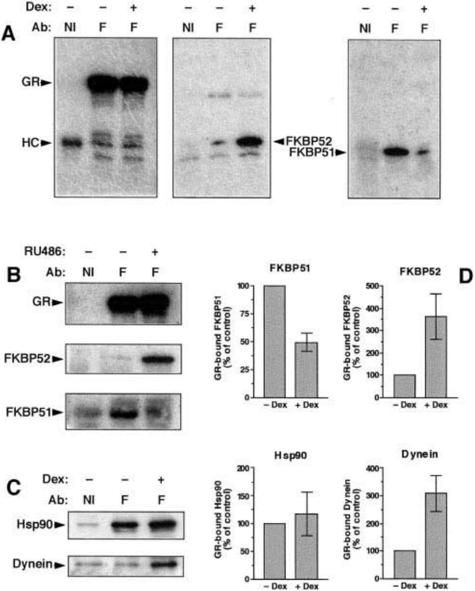
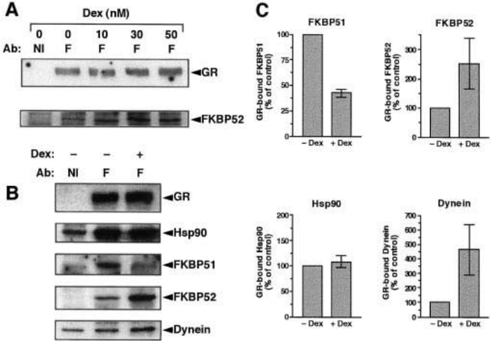
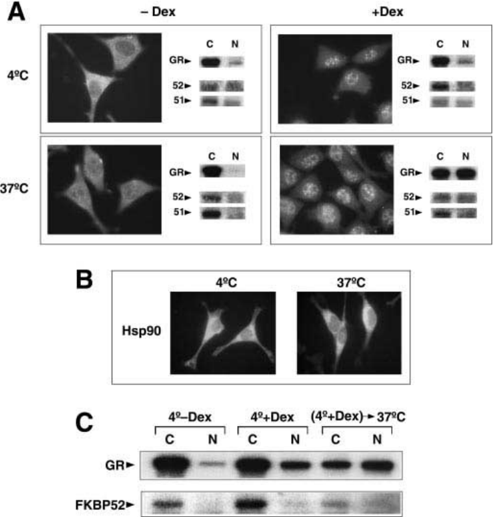
We have identified a new first step in the hormonal activation of the glucocorticoid receptor (GR). Rather than causing immediate dissociation of the cytoplasmic GR heterocomplex, binding of hormone-induced substitution of one immunophilin (FKBP51) for another (FKBP52), and concomitant recruitment of the transport protein dynein while leaving Hsp90 unchanged. Immunofluorescence and fractionation revealed hormone-induced translocation of the hormone-generated GR-Hsp90-FKBP52-dynein complex from cytoplasm to nucleus, a step that precedes dissociation of the complex within the nucleus and conversion of GR to the DNA-binding form. Taken as a whole, these studies identify immunophilin interchange as the earliest known event in steroid receptor signaling and provide the first evidence of differential roles for FKBP51 and FKBP52 immunophilins in the control of steroid receptor subcellular localization and transport.
Overview
The claims and statistics of this paper haven’t been checked yet.
Free: it reads the open-access text and checks the first 5 claims that cite a source we can check. Create a free account to check every claim.
Integrity signals
Registry
Cites
Statistics
Figures
Verification
Claims the paper makes
The claims and statistics of this paper haven’t been checked yet.
Free: it reads the open-access text and checks the first 5 claims that cite a source we can check. Create a free account to check every claim.
Claims other papers make about this one
Each is checked against this paper’s own text: does it say what the citing paper says it does?
The source backs part of the claim, not all of it — or backs it for a different population, condition or comparison.
In the citing paper
“Because the FKBPs and hsp90 are part of the same functional complex, it can be envisage that the disruption of the interaction between the FKBPs and the motor proteins should yield similar levels of inhibition of SHR retrotransport as that measured in the presence of hsp90 inhibitors. This was demonstrated when the receptor was “disconnected” from the transport machinery by overexpression of the P”
From FKBP51 and FKBP52 in signaling and disease (2011) · cites this paper as [19]
Experimental — accuracy not yet measuredThe source backs part of the claim, not all of it — or backs it for a different population, condition or comparison.
In the citing paper
“Secondly, in an in vivo study in which the Hsp90 complex was suspended on ice to decrease Hsp90’s dissociation rate, addition of hormone caused FKBP51 to be replaced with FKBP52 in complexes with GR [19].”
From FKBP51 and FKBP52 in signaling and disease (2011) · cites this paper as [19]
Experimental — accuracy not yet measuredThe cited source says what the claim attributes to it.
In the citing paper
“In vivo, ligand addition dissociates GR:Hsp90:FKBP51/52 complexes49 probably due to the rapid ligand-dependent nuclear translocation of GR22,58.”
From Cryo-EM reveals how Hsp90 and FKBP immunophilins co-regulate the glucocorticoid receptor (2023) · cites this paper as [58]
The cited source says what the claim attributes to it.
In the citing paper
“However, the observation that proteins of the dynein/dynactin complex co-immunoprecipitate with the hsp90•FKBP52 complex and also with GR [18–20] and MR [21–23], suggests that these motor proteins could power the retrograde movement of these steroid receptors.”
From FKBP51 and FKBP52 in signaling and disease (2011) · cites this paper as [19]
The check wasn’t confident either way, so it gives no verdict — never disputed.
In the citing paper
“With the exception of AR, FKBP51 has the overall effect of reducing receptor transcriptional activity.”
From FKBP51 – a selective modulator of glucocorticoid and androgen sensitivity (2011) · cites this paper as [19]
Experimental — accuracy not yet measured
Self-check
Percentages, sums and reported differences re-computed from the paper’s own numbers.
The self-check needs the paper’s full text.
Citations
Cites
Steroid Receptor Interactions with Heat Shock Protein and Immunophilin Chaperones*
Pratt, W. B., & Toft, D. O. (1997) · Endocrine Reviews · doi:10.1210/edrv.18.3.0303 · Cited by 1,791
Zou, J., Guo, Y., Guettouche, T., Smith, D. F., & Voellmy, R. (1998) · Cell · doi:10.1016/s0092-8674(00)81588-3 · Cited by 1,232
King, S. M. (2000) · Biochimica et Biophysica Acta (BBA) - Molecular Cell Research · doi:10.1016/s0167-4889(00)00009-4 · Cited by 338
Association of a 59-kilodalton immunophilin with the glucocorticoid receptor complex
Tai, P.-K. K., Albers, M. W., Chang, H., Faber, L. E., & Schreiber, S. L. (1992) · Science · doi:10.1126/science.1376003 · Cited by 304
Stancato, L. F., Chow, Y. H., Hutchison, K. A., Perdew, G. H., Jove, R., & Pratt, W. B. (1993) · Journal of Biological Chemistry · doi:10.1016/s0021-9258(20)80600-0 · Cited by 300
Nucleocytoplasmic shuttling of the progesterone receptor.
Guiochon-Mantel, A., Lescop, P., Christin-Maitre, S., Loosfelt, H., Perrot-Applanat, M., & Milgrom, E. (1991) · The EMBO Journal · doi:10.1002/j.1460-2075.1991.tb04954.x · Cited by 290
Sanchez, E. R., Meshinchi, S., Tienrungroj, W., Schlesinger, M. J., Toft, D. O., & Pratt, W. B. (1987) · Journal of Biological Chemistry · doi:10.1016/s0021-9258(18)48191-4 · Cited by 263
Self-citationMendel, D. B., Bodwell, J. E., Gametchu, B., Harrison, R. W., & Munck, A. (1986) · Journal of Biological Chemistry · doi:10.1016/s0021-9258(17)35712-5 · Cited by 229
Identification of phosphorylated sites in the mouse glucocorticoid receptor.
Bodwell, J. E., Ortí, E., Coull, J. M., Pappin, D. J., Smith, L. I., & Swift, F. (1991) · Journal of Biological Chemistry · doi:10.1016/s0021-9258(20)89482-4 · Cited by 202
Nair, S. C., Rimerman, R. A., Toran, E. J., Chen, S., Prapapanich, V., Butts, R. N., & Smith, D. F. (1997) · Molecular and Cellular Biology · doi:10.1128/mcb.17.2.594 · Cited by 196
Research works printed but not linked: 3
- Pratt, W. B., and Toft, D. O. (1997) Endocr. Rev. 18, 306 -360
- Wadekar, S. A., Li, D., Periyasamy, S., and Sanchez, E. R. (2001) Mol. Endo- crinol. 15, 1396 -1410 · doi:10.1210/mend.15.8.0674 · Paper page
- Galigniana, M. D., Scruggs, J. L., Herrington, J., Welsh, M. J., Carter-Su, C., Housley, P. R., and Pratt, W. B. (1998) Mol. Endocrinol. 12, 1903-1913 · doi:10.1210/mend.12.12.0204 · Paper page
Cited by
Items 401–428 of 428
Füchsl, A. M. (2015) · University of Regensburg Publication Server (University of Regensburg)
Banerjee, A. T. (2007) · OhioLink ETD Center (Ohio Library and Information Network)
Hynne, M. S. (2008) · NVA (Nasjonalt vitenarkiv)
Jones, T. J. (2004) · OhioLink ETD Center (Ohio Library and Information Network)
Wehmeyer, L. (2015) · Open University of Cape Town (University of Cape Town) · Cited by 1
Hsp90 molecular chaperone: structure, functions and participation in the cardio-vascular pathologies
Kroupskaya, I. V. (2009) · Biopolymers and Cell · doi:10.7124/bc.0007ef
Merkulov, V. M., Klimova, N. V., & Merkulova, T. I. (2015) · Vavilov Journal of Genetics and Breeding · doi:10.18699/vj15.032 · Cited by 1
Merkulov, V. M., Klimova, N. V., & Merkulova, T. I. (2015)
Targeting the Protein Quality Control (PQC) Machinery
Seneci, P. (2015) · Elsevier eBooks · doi:10.1016/b978-0-12-800186-8.00002-x
Epigenetics of Glucocorticoid Action
Mifsud, K. R., Carter, S. D., Linthorst, A. C. E., & Reul, J. M. H. M. (2016) · Elsevier eBooks · doi:10.1016/b978-0-12-803592-4.00046-8 · Cited by 1
Shah, S. (2016) · Libraries and Cultural Resources (University of Calgary) · doi:10.11575/prism/26991
FKBP52-Progesterone Receptor Signaling During Pregnancy
Tranguch, S. L. (2007)
Bustamante, A. C. (2017) · Illinois Digital Environment for Access to Learning and Scholarship (University of Illinois at Urbana-Champaign)
The Role of Stress in the Etiology of PTSD
Pace-Schott, E. F., & Gazecki, S. (2018) · Oxford University Press eBooks · doi:10.1093/med/9780190457136.003.0012
Carrigan, A. (2011) · Library and Archives Canada (Government of Canada) · doi:10.20381/ruor-4388
Ruiz‐Conca, M., Gardela, J., Olvera‐Maneu, S., López‐Béjar, M., & Álvarez‐Rodríguez, M. (2022) · SSRN Electronic Journal · doi:10.2139/ssrn.4071389
Buttgereit, F., Seibel, M. J., & Bijlsma, J. W. J. (2013) · Elsevier eBooks · doi:10.1016/b978-0-7234-3691-1.00100-8
Involvement of FKBP5, but not of stress, in alcohol memory reconsolidationPreprint
Rahamim, N., Aronovici, C., Liran, M., Goltseker, K., Levin-Greenwald, M., Heymann, T., Hausch, F., & Barak, S. (2023) · bioRxiv (Cold Spring Harbor Laboratory) · doi:10.1101/2023.12.12.570934
Genomic relationship between polycystic ovary syndrome and bipolar disorderPreprint
Jaholkowski, P. P., Tesfaye, M., Fominykh, V., Parekh, P., Wiström, E. D., Parker, N., Koch, E. M., Bauer, A. E., Trzaskoma, P., Rokicki, J., et al. (2025) · Research Square · doi:10.21203/rs.3.rs-7629869/v1
Dual proximity-based interactome mapping of FKBP51 and FKBP52 uncovers shared metabolic networks
Hill, S. E., Parikh, P., Gebru, N. T., Banjade, S., Guergues, J., Wohlfahrt, J., Stevens, S. M., & Blair, L. J. (2026) · Biochemical and Biophysical Research Communications · doi:10.1016/j.bbrc.2026.153968 · Cited by 1
Grimes, T. F., Pope, J., Stenning, J., Smith, T. E., Kent, D. G., Baker, S. C., Brackenbury, W. J., Willems, L. I., & Holding, A. N. (2026) · Biochemical Journal · doi:10.1042/bcj20253216
“Regardless, once in the nucleus, SHR dimers dissociate from their chaperone heterocomplexes [151,152] and bind to HREs upstream of target genes, with each SHR monomer recognising one HRE half-site (Figure 3B) [46–48,62 ,64 SHRs can also undergo ligand-independent activation through phosphorylation,…”
InfluentialRang social, système dopaminergique et réponse au stress
Battivelli, D. (2019) · theses.fr (ABES) · doi:10.70675/b11d29f4z1bf3z4003z81f9z8c69988b277b
Nemoto, T., Yoshizaki, H., & Kakinuma, Y. (2026) · Journal of Developmental Origins of Health and Disease · doi:10.1017/s2040174426100531
“Consistent with this, pituitary expression of Fkbp5 , a marker of GR activation, 32,33 was blunted after hydrocortisone injection.”
Mparmpakas, D. (2011) · Brunel University Research Archive (BURA) (Brunel University London)
Metadata
- Authors
- Davies, T. H., Ning, Y.-M., & Sánchez, E. R.
- Affiliations
- University of Toledo Medical Center (US)
- Corresponding author
- Sánchez, Edwin R.
- ORCID
- Sánchez, Edwin R.
- Venue
- Journal of Biological Chemistry
- Publisher
- Elsevier BV
- Published
- 2002-02
- Volume
- 277
- Issue
- 7
- Pages
- 4597-4600
- ISSN
- 0021-9258 (ISSN-L)
- OpenAlex
- W2065295359
- Cited by
- 427
- References
- 23
- Citations by year
- 2026: 7 · 2025: 8 · 2024: 15 · 2023: 20 · 2022: 11 · 2021: 14 · 2020: 12 · 2019: 17 · 2018: 12 · 2017: 21 · 2016: 22 · 2015: 27 · 2014: 21 · 2013: 18 · 2012: 22
- FWCI
- 11.71
- Type
- journal article
- Language
- en
- Open access
- hybrid
- doi.org
- Licence
- cc-by
- www.elsevier.com/tdm/userlicense/1.0/ (tdm)
- creativecommons.org/licenses/by/4.0/ (vor, 6901 d)
- Locations
- Journal of Biological Chemistry (publishedVersion, cc-by)
- PubMed (publishedVersion)
- Funders
- National Institutes of Health
- National Institute of Diabetes and Digestive and Kidney Diseases (DK43867, R01DK043867)
- Topics
- Life Sciences › Biochemistry, Genetics and Molecular Biology › Endocrinology › Estrogen and related hormone effects
- Life Sciences › Biochemistry, Genetics and Molecular Biology › Molecular Biology › Signaling Pathways in Disease
- Life Sciences › Biochemistry, Genetics and Molecular Biology › Molecular Biology › Heat shock proteins research
- Keywords
- glucocorticoid receptor, immunophilins, FKBP51, FKBP52, HSP90, dynein, nuclear translocation, receptor subcellular localization, steroid receptor signaling
- MeSH terms
- Tacrolimus Binding Protein 5, Animals, Cytoplasm, Cytosol, Dyneins, Electrophoresis, Polyacrylamide Gel, Fibroblasts, Microscopy, Fluorescence, Models, Biological, Protein Binding, Receptors, Glucocorticoid, Subcellular Fractions, Blotting, Western, Signal Transduction, HSP90 Heat-Shock Proteins, Active Transport, Cell Nucleus, Tacrolimus Binding Proteins, Mice
About these checks
Registry, retraction, Cites and statistics results are computed, not judged, with one exception: a printed reference that no index lists is read once by a model before it counts as a citation error. Claims are extracted by a model and kept only when their quote appears verbatim in the text; each cited source is then checked, with a model’s help, for whether it says what the claim relies on. Those verdicts can be wrong — read the claim’s quote and the cited source before relying on one.
Statistics and arithmetic are recomputed, not judged.
Confidence bands are shown only for fields calibrated on our annotated test set. None is calibrated yet, so no band is shown.
What counts as a claim ›How we measure confidence ›How we check this ›
Are you an author, or do you see a problem with this page? Request a review
Data sources
Bibliographic data: Semantic Scholar, OpenAlex, Crossref.
Contains information from the Semantic Scholar Academic Graph Datasets, made available under the ODC Attribution License (ODC-BY 1.0).
Semantic Scholar’s data is described in: Kinney, R., et al. (2023). The Semantic Scholar Open Data Platform. arXiv:2301.10140.
