

A New First Step in Activation of Steroid Receptors
Open accessThe DOI matches its Crossref record; 23 of the 23 references it cites were found in a registry or an index.
Abstract
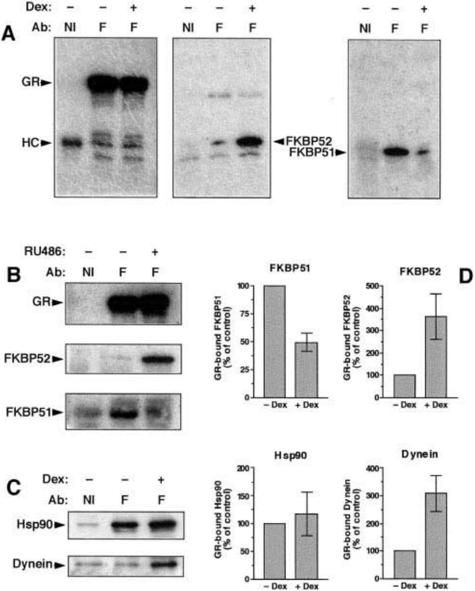
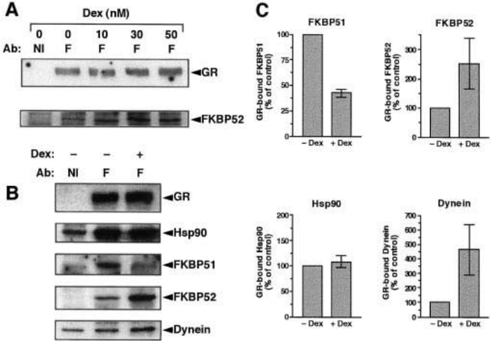
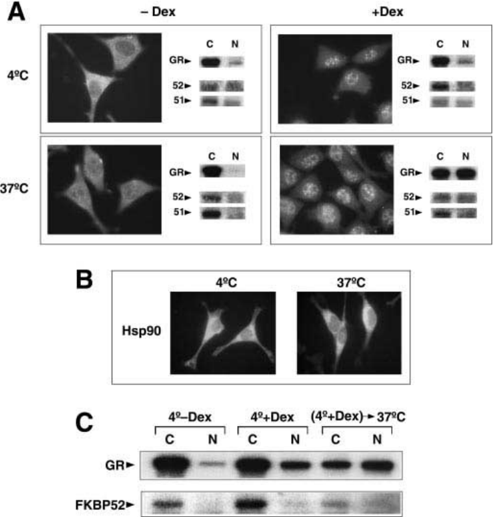
We have identified a new first step in the hormonal activation of the glucocorticoid receptor (GR). Rather than causing immediate dissociation of the cytoplasmic GR heterocomplex, binding of hormone-induced substitution of one immunophilin (FKBP51) for another (FKBP52), and concomitant recruitment of the transport protein dynein while leaving Hsp90 unchanged. Immunofluorescence and fractionation revealed hormone-induced translocation of the hormone-generated GR-Hsp90-FKBP52-dynein complex from cytoplasm to nucleus, a step that precedes dissociation of the complex within the nucleus and conversion of GR to the DNA-binding form. Taken as a whole, these studies identify immunophilin interchange as the earliest known event in steroid receptor signaling and provide the first evidence of differential roles for FKBP51 and FKBP52 immunophilins in the control of steroid receptor subcellular localization and transport.
Overview
The claims and statistics of this paper haven’t been checked yet.
Free: it reads the open-access text and checks the first 5 claims that cite a source we can check. Create a free account to check every claim.
Integrity signals
Registry
Cites
Statistics
Figures
Verification
Claims the paper makes
The claims and statistics of this paper haven’t been checked yet.
Free: it reads the open-access text and checks the first 5 claims that cite a source we can check. Create a free account to check every claim.
Claims other papers make about this one
Each is checked against this paper’s own text: does it say what the citing paper says it does?
The source backs part of the claim, not all of it — or backs it for a different population, condition or comparison.
In the citing paper
“Because the FKBPs and hsp90 are part of the same functional complex, it can be envisage that the disruption of the interaction between the FKBPs and the motor proteins should yield similar levels of inhibition of SHR retrotransport as that measured in the presence of hsp90 inhibitors. This was demonstrated when the receptor was “disconnected” from the transport machinery by overexpression of the P”
From FKBP51 and FKBP52 in signaling and disease (2011) · cites this paper as [19]
Experimental — accuracy not yet measuredThe source backs part of the claim, not all of it — or backs it for a different population, condition or comparison.
In the citing paper
“Secondly, in an in vivo study in which the Hsp90 complex was suspended on ice to decrease Hsp90’s dissociation rate, addition of hormone caused FKBP51 to be replaced with FKBP52 in complexes with GR [19].”
From FKBP51 and FKBP52 in signaling and disease (2011) · cites this paper as [19]
Experimental — accuracy not yet measuredThe cited source says what the claim attributes to it.
In the citing paper
“In vivo, ligand addition dissociates GR:Hsp90:FKBP51/52 complexes49 probably due to the rapid ligand-dependent nuclear translocation of GR22,58.”
From Cryo-EM reveals how Hsp90 and FKBP immunophilins co-regulate the glucocorticoid receptor (2023) · cites this paper as [58]
The cited source says what the claim attributes to it.
In the citing paper
“However, the observation that proteins of the dynein/dynactin complex co-immunoprecipitate with the hsp90•FKBP52 complex and also with GR [18–20] and MR [21–23], suggests that these motor proteins could power the retrograde movement of these steroid receptors.”
From FKBP51 and FKBP52 in signaling and disease (2011) · cites this paper as [19]
The check wasn’t confident either way, so it gives no verdict — never disputed.
In the citing paper
“With the exception of AR, FKBP51 has the overall effect of reducing receptor transcriptional activity.”
From FKBP51 – a selective modulator of glucocorticoid and androgen sensitivity (2011) · cites this paper as [19]
Experimental — accuracy not yet measured
Self-check
Percentages, sums and reported differences re-computed from the paper’s own numbers.
The self-check needs the paper’s full text.
Citations
Cites
Steroid Receptor Interactions with Heat Shock Protein and Immunophilin Chaperones*
Pratt, W. B., & Toft, D. O. (1997) · Endocrine Reviews · doi:10.1210/edrv.18.3.0303 · Cited by 1,791
Zou, J., Guo, Y., Guettouche, T., Smith, D. F., & Voellmy, R. (1998) · Cell · doi:10.1016/s0092-8674(00)81588-3 · Cited by 1,232
King, S. M. (2000) · Biochimica et Biophysica Acta (BBA) - Molecular Cell Research · doi:10.1016/s0167-4889(00)00009-4 · Cited by 338
Association of a 59-kilodalton immunophilin with the glucocorticoid receptor complex
Tai, P.-K. K., Albers, M. W., Chang, H., Faber, L. E., & Schreiber, S. L. (1992) · Science · doi:10.1126/science.1376003 · Cited by 304
Stancato, L. F., Chow, Y. H., Hutchison, K. A., Perdew, G. H., Jove, R., & Pratt, W. B. (1993) · Journal of Biological Chemistry · doi:10.1016/s0021-9258(20)80600-0 · Cited by 300
Nucleocytoplasmic shuttling of the progesterone receptor.
Guiochon-Mantel, A., Lescop, P., Christin-Maitre, S., Loosfelt, H., Perrot-Applanat, M., & Milgrom, E. (1991) · The EMBO Journal · doi:10.1002/j.1460-2075.1991.tb04954.x · Cited by 290
Sanchez, E. R., Meshinchi, S., Tienrungroj, W., Schlesinger, M. J., Toft, D. O., & Pratt, W. B. (1987) · Journal of Biological Chemistry · doi:10.1016/s0021-9258(18)48191-4 · Cited by 263
Self-citationMendel, D. B., Bodwell, J. E., Gametchu, B., Harrison, R. W., & Munck, A. (1986) · Journal of Biological Chemistry · doi:10.1016/s0021-9258(17)35712-5 · Cited by 229
Identification of phosphorylated sites in the mouse glucocorticoid receptor.
Bodwell, J. E., Ortí, E., Coull, J. M., Pappin, D. J., Smith, L. I., & Swift, F. (1991) · Journal of Biological Chemistry · doi:10.1016/s0021-9258(20)89482-4 · Cited by 202
Nair, S. C., Rimerman, R. A., Toran, E. J., Chen, S., Prapapanich, V., Butts, R. N., & Smith, D. F. (1997) · Molecular and Cellular Biology · doi:10.1128/mcb.17.2.594 · Cited by 196
Research works printed but not linked: 3
- Pratt, W. B., and Toft, D. O. (1997) Endocr. Rev. 18, 306 -360
- Wadekar, S. A., Li, D., Periyasamy, S., and Sanchez, E. R. (2001) Mol. Endo- crinol. 15, 1396 -1410 · doi:10.1210/mend.15.8.0674 · Paper page
- Galigniana, M. D., Scruggs, J. L., Herrington, J., Welsh, M. J., Carter-Su, C., Housley, P. R., and Pratt, W. B. (1998) Mol. Endocrinol. 12, 1903-1913 · doi:10.1210/mend.12.12.0204 · Paper page
Cited by
Pratt, W. B., & Toft, D. O. (2003) · Experimental Biology and Medicine · doi:10.1177/153537020322800201 · Cited by 1,483
Binder, E. B. (2008) · JAMA · doi:10.1001/jama.299.11.1291 · Cited by 1,362
Cis−Trans Isomerization of Organic Molecules and Biomolecules: Implications and Applications
Dugave, C., & Demange, L. (2003) · Chemical Reviews · doi:10.1021/cr0104375 · Cited by 1,032
Binder, E. B., Salyakina, D., Lichtner, P., Wochnik, G. M., Ising, M., Pütz, B., Papiol, S., Seaman, S., Lucae, S., Kohli, M. A., et al. (2004) · Nature Genetics · doi:10.1038/ng1479 · Cited by 977
Binder, E. B. (2009) · Psychoneuroendocrinology · doi:10.1016/j.psyneuen.2009.05.021 · Cited by 968
“In contrast to FKBP5, FKBP4 can then recruits dynein into the complex, allowing its nuclear translocation and transcriptional activity (Davies et al., 2002; Wochnik et al., 2005).”
BackgroundDe Bosscher, K., Vanden Berghe, W., & Haegeman, G. (2003) · Endocrine Reviews · doi:10.1210/er.2002-0006 · Cited by 898
Woodruff, P. G., Boushey, H. A., Dolganov, G. M., Barker, C. S., Yang, Y. H., Donnelly, S., Ellwanger, A., Sidhu, S. S., Dao-Pick, T. P., Pantoja, C., et al. (2007) · Proceedings of the National Academy of Sciences · doi:10.1073/pnas.0707413104 · Cited by 828
The Aryl Hydrocarbon Receptor Complex and the Control of Gene Expression
Beischlag, T. V., Morales, J. L., Hollingshead, B. D., & Perdew, G. H. (2008) · Critical Reviews™ in Eukaryotic Gene Expression · doi:10.1615/critreveukargeneexpr.v18.i3.20 · Cited by 727
“Also, it has been suggested that hormone binding to the GR stimulates the switching of the binding status of receptor from an FKBP51-bound form to an FKBP52-bound form, thereby enhancing nuclear uptake of the GR.(167) The recent creation of the Fkbp52 mouse for the first time has demonstrated that the immunophilin cla…”
BackgroundInfluentialMechanisms of Receptor‐Mediated Nuclear Import and Nuclear Export
Pemberton, L. F., & Paschal, B. M. (2005) · Traffic · doi:10.1111/j.1600-0854.2005.00270.x · Cited by 689
Wochnik, G. M., Rüegg, J., Abel, G. A., Schmidt, U., Holsboer, F., & Rein, T. (2005) · Journal of Biological Chemistry · doi:10.1074/jbc.m407498200 · Cited by 638
Chaperoning signaling pathways: molecular chaperones as stress-sensing`heat shock' proteins
Nollen, E. A. A., & Morimoto, R. I. (2002) · Journal of Cell Science · doi:10.1242/jcs.115.14.2809 · Cited by 653
Gene–Stress–Epigenetic regulation of FKBP5: clinical and translational implications
Zannas, A. S., Wiechmann, T., Gassen, N. C., & Binder, E. B. (2016) · Neuropsychopharmacology · doi:10.1038/npp.2015.235 · Cited by 622
“Upon glucocorticoid binding, however, FKBP5 is exchanged for FK506-binding protein 52 (FKBP52/FKBP4), a co-chaperone that recruits dynein to the GR complex and promotes nuclear translocation and transcriptional regulation (Davies et al, 2002; Wochnik et al, 2005).”
BackgroundHsp70 and Hsp90—a relay team for protein folding
Wegele, H., Müller, L., & Buchner, J. (2004) · Reviews of Physiology, Biochemistry and Pharmacology · doi:10.1007/s10254-003-0021-1 · Cited by 605
The Neurobiology of Anxiety Disorders: Brain Imaging, Genetics, and Psychoneuroendocrinology
Martin, E. I., Ressler, K. J., Binder, E., & Nemeroff, C. B. (2009) · Psychiatric Clinics of North America · doi:10.1016/j.psc.2009.05.004 · Cited by 557
The human glucocorticoid receptor: molecular basis of biologic function
Nicolaides, N. C., Galata, Z., Kino, T., Chrousos, G. P., & Charmandari, E. (2010) · Steroids · doi:10.1016/j.steroids.2009.09.002 · Cited by 436
“FKBP51 acts as a competitive inhibitor to its genetic relative FKBP52 (gene ID FKBP4) (Davies et al., 2002) and may account for the generalized glucocorticoid resisistance observed in species of New World primates (Brown et al., 1970) Expression of FKBP51 is 13-fold higher in these primates, and…”
BackgroundInfluentialThe glucocorticoid responses are shaped by molecular chaperones
Grad, I., & Picard, D. (2007) · Molecular and Cellular Endocrinology · doi:10.1016/j.mce.2007.05.018 · Cited by 423
CAR and PXR: The xenobiotic-sensing receptors☆
Timsit, Y. E., & Negishi, M. (2007) · Steroids · doi:10.1016/j.steroids.2006.12.006 · Cited by 423
Neurobiology of BDNF in fear memory, sensitivity to stress, and stress-related disorders
Notaras, M., & van den Buuse, M. (2020) · Molecular Psychiatry · doi:10.1038/s41380-019-0639-2 · Cited by 392
Glucocorticoids in the treatment of rheumatic diseases: An update on the mechanisms of action
Buttgereit, F., Straub, R. H., Wehling, M., & Burmester, G. (2004) · Arthritis & Rheumatism · doi:10.1002/art.20583 · Cited by 367
Interaction of FKBP5 with childhood adversity on risk for post-traumatic stress disorder
Xie, P., Kranzler, H. R., Poling, J., Stein, M. B., Anton, R. F., Farrer, L. A., & Gelernter, J. (2010) · Neuropsychopharmacology · doi:10.1038/npp.2010.37 · Cited by 327
“…studies showed that overexpression of human FKBP5 reduced cortisol binding affinity and nuclear translocation of the glucocorticoid receptor, and thus influenced the transcriptional activity of the genes regulated by the steroid hormone signaling pathway (Davies et al , 2002; Wochnik et al , 2005).”
Repeated Social Defeat, Neuroinflammation, and Behavior: Monocytes Carry the Signal
Weber, M. D., Godbout, J. P., & Sheridan, J. F. (2017) · Neuropsychopharmacology · doi:10.1038/npp.2016.102 · Cited by 283
“Binding of the GC receptor by FKBP51 prevents nuclear translocation, whereas binding by FKBP52 facilitates nuclear translocation (Davies et al, 2002).”
BackgroundRole of hsp90 and the hsp90-binding immunophilins in signalling protein movement
Pratt, W. B., Galigniana, M. D., Harrell, J. M., & DeFranco, D. B. (2004) · Cellular Signalling · doi:10.1016/j.cellsig.2004.02.004 · Cited by 285
Gene–environment interactions at the FKBP5 locus: sensitive periods, mechanisms and pleiotropism
Zannas, A. S., & Binder, E. B. (2014) · Genes, Brain and Behavior · doi:10.1111/gbb.12104 · Cited by 268
“Upon glucocorticoid binding, however, FKBP5 is exchanged against other TPR-containing immunophilins that have higher binding affinity for glucocorticoids and promote nuclear translocation and transcriptional activity of the GR (Davies et al. 2002; Wochnik et al. 2005).”
BackgroundFKBP51 and FKBP52 in signaling and disease
Storer, C. L., Dickey, C. A., Galigniana, M. D., Rein, T., & Cox, M. B. (2011) · Trends in Endocrinology & Metabolism · doi:10.1016/j.tem.2011.08.001 · Cited by 266
“Secondly, in an in vivo study in which the Hsp90 complex was suspended on ice to decrease Hsp90’s dissociation rate, addition of hormone caused FKBP51 to be replaced with FKBP52 in complexes with GR [19].”
Chmelar, R., Buchanan, G., Need, E. F., Tilley, W., & Greenberg, N. M. (2007) · International Journal of Cancer · doi:10.1002/ijc.22365 · Cited by 255
The Stress of Protein Misfolding: From Single Cells to Multicellular Organisms
Gidalevitz, T., Prahlad, V., & Morimoto, R. I. (2011) · Cold Spring Harbor Perspectives in Biology · doi:10.1101/cshperspect.a009704 · Cited by 253
“Activation is coupled with chaperone release, although dynamic interactions with chaperones remain for intracellular movement, nuclear translocation, and binding to chromatin (Davies et al. 2002; Freeman and Yamamoto 2002; Elbi et al. 2004).”
BackgroundHartmann, K., Koenen, M., Schauer, S., Wittig-Blaich, S., Ahmad, M., Baschant, U., & Tuckermann, J. P. (2016) · Physiological Reviews · doi:10.1152/physrev.00011.2015 · Cited by 247
“FKBP51 inhibits the translocation of the GR into the nucleus, whereas FKBP52 enhances the nuclear translocation of the GR via enhanced binding to dynein (74, 415).”
Versatile TPR domains accommodate different modes of target protein recognition and function
Allan, R. K., & Ratajczak, T. (2011) · Cell Stress and Chaperones · doi:10.1007/s12192-010-0248-0 · Cited by 247
Chaperoning of Glucocorticoid Receptors
Pratt, W. B., Morishima, Y., Murphy, M., & Harrell, M. (2005) · Handbook of Experimental Pharmacology · doi:10.1007/3-540-29717-0_5 · Cited by 245
“Davies et al. (2002) have shown that binding of steroid to the GR in intact cells at 0 °–4 °C causes a hormone-induced loss of the immunophilin FKBP51 from receptor complexes and a corresponding increase in FKBP52.”
BackgroundNucleocytoplasmic transport of proteins
Sorokin, A. V., Kim, E. R., & Ovchinnikov, L. P. (2007) · Biochemistry (Moscow) · doi:10.1134/s0006297907130032 · Cited by 238
Glucocorticoid receptor physiology
Heitzer, M. D., Wolf, I. M., Sanchez, E. R., Witchel, S. F., & DeFranco, D. B. (2007) · Reviews in Endocrine and Metabolic Disorders · doi:10.1007/s11154-007-9059-8 · Cited by 235
“hormone bound) the associated TPR protein can differ [29].”
BackgroundSelf-citationMolecular chaperones, essential partners of steroid hormone receptors for activity and mobility
Echeverria, P. C., & Picard, D. (2010) · Biochimica et Biophysica Acta (BBA) - Molecular Cell Research · doi:10.1016/j.bbamcr.2009.11.012 · Cited by 227
“1), whereas after hormone treatment, FKBP52 rapidly replaces FKBP51 such that these complexes are now able to translocate to the nucleus with an accelerated rate [43] (Fig.”
BackgroundHartmann, J., Wagner, K. V., Liebl, C., Scharf, S. H., Wang, X.-D., Wolf, M., Hausch, F., Rein, T., Schmidt, U., Touma, C., et al. (2012) · Neuropharmacology · doi:10.1016/j.neuropharm.2011.07.041 · Cited by 224
“This promotes the translocation of the GR complex into the nucleus and subsequent DNA binding (Binder, 2009; Davies et al., 2002; Wochnik et al., 2005).”
BackgroundOn the Trail of the Glucocorticoid Receptor: Into the Nucleus and Back
Vandevyver, S., Dejager, L., & Libert, C. (2012) · Traffic · doi:10.1111/j.1600-0854.2011.01288.x · Cited by 219
“These authors also confirmed that FKBP51 is replaced by FKBP52 upon ligand binding and thereby identified this immunophilin interchange as the earliest event in initiation of GR activity (53).”
BackgroundPhysiological role for the cochaperone FKBP52 in androgen receptor signaling
Cheung-Flynn, J., Prapapanich, V., Cox, M. B., Riggs, D. L., Suarez-Quian, C., & Smith, D. F. (2005) · Molecular Endocrinology · doi:10.1210/me.2005-0071 · Cited by 212
The hepatoadrenal syndrome: A common yet unrecognized clinical condition*
Marik, P. E., Gayowski, T., & Starzl, T. E. (2005) · Critical Care Medicine · doi:10.1097/01.ccm.0000164541.12106.57 · Cited by 213
Immunophilins: for the love of proteins
Barik, S. (2006) · Cellular and Molecular Life Sciences · doi:10.1007/s00018-006-6215-3 · Cited by 209
Kobayashi, K., Sueyoshi, T., Inoue, K., Moore, R., & Negishi, M. (2003) · Molecular Pharmacology · doi:10.1124/mol.64.5.1069 · Cited by 190
“The GR-hsp90 complex is colocalized with microtubules; apparently, the replacement of FKBP52 with FKBP51 recruits dynein to the GR-hsp90 complex, initiating nuclear translocation (Davies et al., 2002).”
BackgroundGene × Environment Interactions: From Molecular Mechanisms to Behavior
Halldorsdottir, T., & Binder, E. B. (2017) · Annual Review of Psychology · doi:10.1146/annurev-psych-010416-044053 · Cited by 188
Osteoblasts mediate the adverse effects of glucocorticoids on fuel metabolism
Brennan-Speranza, T. C., Henneicke, H., Gasparini, S. J., Blankenstein, K. I., Heinevetter, U., Cogger, V. C., Svistounov, D., Zhang, Y., Cooney, G. J., Buttgereit, F., et al. (2012) · Journal of Clinical Investigation · doi:10.1172/jci63377 · Cited by 187
“…treatment, as used in our study, glucocorticoid signaling is reduced or absent in the osteoblasts of Tg mice, we analyzed the expression of 2 genes known to be induced in WT mice by glucocorticoids: glucocorticoid-induced leucine zipper ( Gilz ) (29) and FK506-binding protein 5 ( Fkbp5 ) (30).”
Davies, T. H., Ning, Y.-M., & Sánchez, E. R. (2005) · Biochemistry · doi:10.1021/bi048503v · Cited by 180
Self-citationMolecular mechanisms regulating glucocorticoid sensitivity and resistance
Gross, K. L., Lu, N. Z., & Cidlowski, J. A. (2009) · Molecular and Cellular Endocrinology · doi:10.1016/j.mce.2008.10.001 · Cited by 180
“[PubMed: 15017388] Rivers C, Levy A, Hancock J, Lightman S, Norman M. Insertion of an amino acid in the DNA-binding domain of the glucocorticoid receptor as a result of alternative splicing.”
BackgroundInfluentialHSP90AB1: Helping the good and the bad
Haase, M., & Fitze, G. (2016) · Gene · doi:10.1016/j.gene.2015.08.063 · Cited by 179
“Nuclear transport of GR occurs after hormone binding and exchange of FKBP51 for FKBP52, generating a GR-HSP90-FKBP52-dynein complex that travels to the nucleus (Davies et al. 2002).”
BackgroundDynamic Remodeling of Transcription Complexes by Molecular Chaperones
Morimoto, R. I. (2002) · Cell · doi:10.1016/s0092-8674(02)00860-7 · Cited by 177
Direct, Androgen Receptor-Mediated Regulation of the FKBP5 Gene via a Distal Enhancer Element
Magee, J. A., Chang, L.-W., Stormo, G. D., & Milbrandt, J. (2006) · Endocrinology · doi:10.1210/en.2005-1001 · Cited by 174
The Neurobiology of Anxiety Disorders: Brain Imaging, Genetics, and Psychoneuroendocrinology
Martin, E. I., Ressler, K. J., Binder, E., & Nemeroff, C. B. (2010) · Clinics in Laboratory Medicine · doi:10.1016/j.cll.2010.07.006 · Cited by 166
“FKBP5, a co-chaperone of heat shock protein 90, plays a role in regulating the expression of glucocorticoid-responsive genes.(97) Increased expression of FKBP5 has been shown to reduce glucocorticoid binding affinity(98) and to reduce nuclear translocation of the GR,(99) resulting in resistance to glucocorticoid activ…”
Spörl, F., Korge, S., Jürchott, K., Wunderskirchner, M., Schellenberg, K., Heins, S., Specht, A., Stoll, C., Klemz, R., Maier, B., et al. (2012) · Proceedings of the National Academy of Sciences · doi:10.1073/pnas.1118641109 · Cited by 164
“In fact, putativeKLF9 target genes include proliferation/differentiation markers [such as Ell3 (29)], as well as genes implicated in glucocorticoid signaling [such asFkbp5 (30)].”
BackgroundCyclophilin 40 facilitates HSP90‐mediated RISC assembly in plants
Iki, T., Yoshikawa, M., Meshi, T., & Ishikawa, M. (2012) · The EMBO Journal · doi:10.1038/emboj.2011.395 · Cited by 162
“The latter observation is reminiscent of the hormone-induced enhancement of FKBP52 copurification with glucocorticoid and mineralocorticoid receptors in animals (Davies et al , 2002; Galigniana et al , 2010).”
Allan, R. K., Mok, D., Ward, B. K., & Ratajczak, T. (2006) · Journal of Biological Chemistry · doi:10.1074/jbc.m512406200 · Cited by 159
Yong, W., Yang, Z., Periyasamy, S., Chen, H., Yucel, S., Li, W., Lin, L. Y., Wolf, I. M., Cohn, M. J., Baskin, L. S., et al. (2007) · Journal of Biological Chemistry · doi:10.1074/jbc.m609360200 · Cited by 156
New Insights in Glucocorticoid Receptor Signaling—More Than Just a Ligand-Binding Receptor
Scheschowitsch, K., Leite, J. A., & Assreuy, J. (2017) · Frontiers in Endocrinology · doi:10.3389/fendo.2017.00016 · Cited by 152
Galigniana, M. D., Erlejman, A. G., Monte, M., Gomez-Sanchez, C., & Piwien-Pilipuk, G. (2010) · Molecular and Cellular Biology · doi:10.1128/mcb.01190-09 · Cited by 152
“The interchange of IMMs is one of the earliest events described for receptor activation upon hormone binding and was first reported for the GR (8).”
BackgroundRiggs, D. L., Cox, M. B., Tardif, H. L., Hessling, M., Buchner, J., & Smith, D. F. (2007) · Molecular and Cellular Biology · doi:10.1128/mcb.00985-07 · Cited by 150
“Observations that FKBP52, but not FKBP51, binds to the microtubular motor protein dynein have been made (6, 26, 34), and a model has been proposed in which FKBP52 assists in directing GR to the nucleus subsequent to hormone binding (reviewed in reference 22).”
BackgroundRohleder, N., Wolf, J. M., & Wolf, O. T. (2010) · Neuroscience & Biobehavioral Reviews · doi:10.1016/j.neubiorev.2009.12.003 · Cited by 150
“However, on hormone binding, FKBP5 is replaced by FKBP4, allowing nuclear translocation and transcriptional activity (Davies et al., 2002; Wochnik et al., 2005).”
BackgroundHsp90-binding immunophilins link p53 to dynein during p53 transport to the nucleus
Galigniana, M. D., Harrell, J. M., O'Hagen, H. M., Ljungman, M., & Pratt, W. B. (2004) · Journal of Biological Chemistry · doi:10.1074/jbc.m402223200 · Cited by 150
Tetratricopeptide repeat cochaperones in steroid receptor complexes
Smith, D. F. (2004) · Cell Stress and Chaperones · doi:10.1379/csc-31.1 · Cited by 166
“Pratt’s group and others have published observations (Davies et al 2002; Galigniana et al 2002) that FKBP52, CyP40, and PP5 can bind dynein, one of the major microtubule-associated motor proteins.”
BackgroundIdentification of glucocorticoid-response genes in children with acute lymphoblastic leukemia
Schmidt, S., Rainer, J., Riml, S., Ploner, C., Jesacher, S., Achmüller, C., Presul, E., Skvortsov, S., Crazzolara, R., Fiegl, M., et al. (2006) · Blood · doi:10.1182/blood-2005-07-2853 · Cited by 149
Hubler, T. R., Denny, W. B., Valentine, D. L., Cheung-Flynn, J., Smith, D. F., & Scammell, J. G. (2003) · Endocrinology · doi:10.1210/en.2003-0092 · Cited by 145
“tor (GR) complex (8, 9), although the presence of squirrel”
BackgroundCharacterization of the MM.1 human multiple myeloma (MM) cell lines
Greenstein, S., Krett, N. L., Kurosawa, Y., Ma, C., Chauhan, D., Hideshima, T., Anderson, K. C., & Rosen, S. T. (2003) · Experimental Hematology · doi:10.1016/s0301-472x(03)00023-7 · Cited by 169
Echeverría, P. C., Mazaira, G., Erlejman, A., Gomez-Sanchez, C., Pilipuk, G. P., & Galigniana, M. D. (2009) · Molecular and Cellular Biology · doi:10.1128/mcb.00649-09 · Cited by 144
“The most efficient mechanism is rapid (half-life, 5 min) and depends on the hsp90-FKBP52-based heterocomplex (10, 16, 21, 26, 40).”
BackgroundGlucocorticoid-Induced Apoptosis of Healthy and Malignant Lymphocytes
Smith, L. K., & Cidlowski, J. A. (2010) · Progress in Brain Research · doi:10.1016/s0079-6123(10)82001-1 · Cited by 144
“…the GR heterocomplex undergoes a conformational change, releasing the GR from cytoplasmic sequestration, promoting receptor homodimerization and nuclear translocation of the GR homodimer (Davies et al., 2002; Elbi et al., 2004; Freedman and Yamamoto, 2004; Hager et al., 2004; Nagaich et al., 2004).”
BackgroundDevelopment of the HPA axis: Where and when do sex differences manifest?
Panagiotakopoulos, L., & Neigh, G. N. (2014) · Frontiers in Neuroendocrinology · doi:10.1016/j.yfrne.2014.03.002 · Cited by 166
“The recruitment of FKBP52 allows for the tertiary interaction of the GR-Hsp90-FKBP52 complex with dynein, the cell’s major motor protein, and subsequent translocation of the complex to the nucleus (Wochnik et al., 2005; Davies et al., 2002) (Fig.”
InfluentialLavebratt, C., Åberg, E., Sjöholm, L. K., & Forsell, Y. (2010) · Journal of Affective Disorders · doi:10.1016/j.jad.2010.02.113 · Cited by 160
“FKBP5 expression is regulated by the androgen receptor through AR binding site in intron 5, and FKBP5 interacts functionally with progesterone receptor complexes (Davies et al., 2002; Magee et al., 2006).”
BackgroundGlucocorticoids, genes and brain function
Juszczak, G. R., & Stankiewicz, A. M. (2017) · Progress in Neuro-Psychopharmacology and Biological Psychiatry · doi:10.1016/j.pnpbp.2017.11.020 · Cited by 161
“Negative feedback loops inhibit the translocation of activated glucocorticoid receptors from the cytoplasm to the nucleus (Davies et al., 2002), reduce the transcriptional activity of GRs due to changes in their phosphorylation (Stechschulte et al.”
BackgroundSwales, K., & Negishi, M. (2004) · Molecular Endocrinology · doi:10.1210/me.2003-0397 · Cited by 137
The Glucocorticoid Receptor: Isoforms, Functions, and Contribution to Glucocorticoid Sensitivity
Lockett, J., Inder, W. J., & Clifton, V. L. (2024) · Endocrine Reviews · doi:10.1210/endrev/bnae008 · Cited by 135
Checks and balances: The glucocorticoid receptor and NFĸB in good times and bad
Bekhbat, M., Rowson, S. A., & Neigh, G. N. (2017) · Frontiers in Neuroendocrinology · doi:10.1016/j.yfrne.2017.05.001 · Cited by 131
Functional Specificity of Co-Chaperone Interactions with Hsp90 Client Proteins
Riggs, D. L., Cox, M. B., Cheung-Flynn, J., Prapapanich, V., Carrigan, P. E., & Smith, D. F. (2004) · Critical Reviews in Biochemistry and Molecular Biology · doi:10.1080/10409230490892513 · Cited by 131
“, 1990a), and hormone binding stimulates a rapid exchange of FKBP51 for FKBP52 in GR complexes (Davies et al., 2002).”
BackgroundFK506-binding proteins and their diverse functions
Tong, M., & Jiang, Y. (2015) · Current Molecular Pharmacology · doi:10.2174/1874467208666150519113541 · Cited by 130
Evidence for glucocorticoid receptor transport on microtubules by dynein
Harrell, J. M., Murphy, P. J. M., Morishima, Y., Chen, H., Mansfield, J. F., Galigniana, M. D., & Pratt, W. B. (2004) · Journal of Biological Chemistry · doi:10.1074/jbc.m406863200 · Cited by 129
The role of FKBP5 in cancer aetiology and chemoresistance
Li, L., Lou, Z., & Wang, L. (2010) · British Journal of Cancer · doi:10.1038/sj.bjc.6606014 · Cited by 144
“Davies et al (2002) have used both in vitro and in vivo models to show the hormone-induced loss of FKBP5 and gain of FKBP4, providing evidence that the hormone-binding event causes an interchange of FKBP5 and FKBP4 immunophilins within the GR heterocomplex.”
BackgroundDunyak, B. M., & Gestwicki, J. E. (2016) · Journal of Medicinal Chemistry · doi:10.1021/acs.jmedchem.6b00411 · Cited by 139
“144 The highest scoring ligand (40) was synthesized and found to bind to CypD with KD = 149 nM.”
BackgroundLi, X.-J., Luo, X.-Q., Han, B.-W., Duan, F.-T., Wei, P.-P., & Chen, Y.-Q. (2013) · British Journal of Cancer · doi:10.1038/bjc.2013.562 · Cited by 127
“Davies and colleagues revealed that the Dex-binding event causes a dissociation of FKBP51 and GR-complex that, in turn, control the intracellular trafficking of GR (Davies et al, 2002).”
BackgroundGlucocorticoid Signaling in Health and Disease: Insights From Tissue-Specific GR Knockout Mice
Whirledge, S., & DeFranco, D. B. (2018) · Endocrinology · doi:10.1210/en.2017-00728 · Cited by 126
“This occurs in part through ligand-induced conformational changes that expose nuclear localization sequences and alter the association of GR-interacting proteins that influence its subcellular trafficking (9,10).”
BackgroundTatro, E. T., Everall, I. P., Kaul, M., & Achim, C. L. (2009) · Brain Research · doi:10.1016/j.brainres.2009.06.036 · Cited by 125
“Differentiated SH-SY5Y cells on glass ted against the FKBP4 (A) gene or against FKBP5 gene (B) and a h; protein was isolated for Western blot.”
BackgroundInfluentialButtgereit, F., Saag, K. G., Cutolo, M., da Silva, J. A. P., & Bijlsma, J. W. J. (2005) · Scandinavian Journal of Rheumatology · doi:10.1080/03009740510017706 · Cited by 124
“In the case of the GCR these functions are realized by chaperones such as hsp90, hsp70, hsp56, or hsp40 and co-chaperones such as imunophilins or several kinases of the mitogen-activated protein kinase (MAPK) signalling system, including Src, to name just a few (21, 54, 55).”
BackgroundYang, Z., Wolf, I. M., Chen, H., Periyasamy, S., Chen, Z., Yong, W., Shi, S., Zhao, W., Xu, J., Srivastava, A., et al. (2006) · Molecular Endocrinology · doi:10.1210/me.2006-0024 · Cited by 119
“Additional evidence for a role in translocation has been provided by a switching mechanism in which hormone causes displacement of FKBP51 by FKBP52 in GR complexes, leading to corecruitment of dynein and movement of the newly formed GR/Hsp90/ FKBP52 complex to the nucleus of intact cells (27).”
BackgroundSelf-citationPharmacogenomics of antidepressant drugs
Horstmann, S., & Binder, E. B. (2009) · Pharmacology & Therapeutics · doi:10.1016/j.pharmthera.2009.06.007 · Cited by 131
“For high affinity hormone binding FKBP5 is replaced by FKBP4, which then also recruits dynein into the complex, allowing its nuclear translocation and transcriptional activity (Davies et al., 2002).”
BackgroundZhang, X., Clark, A. F., & Yorio, T. (2008) · Investigative Opthalmology & Visual Science · doi:10.1167/iovs.07-1279 · Cited by 118
Gene expression profiling of glucocorticoid-inhibited osteoblasts
Leclerc, N., Luppen, C., Ho, V., Nagpal, S., Hacia, J., Smith, E., & Frenkel, B. (2004) · Journal of Molecular Endocrinology · doi:10.1677/jme.0.0330175 · Cited by 115
“member of the immunophilin protein family and is involved in protein folding and trafficking, including the nuclear transport of the GC receptor following ligand binding (Davies et al. 2002).”
BackgroundGaligniana, M. D., Echeverría, P. C., Erlejman, A. G., & Piwien-Pilipuk, G. (2010) · Nucleus · doi:10.4161/nucl.1.4.11743 · Cited by 114
Newton, R., Leigh, R., & Giembycz, M. A. (2009) · Pharmacology & Therapeutics · doi:10.1016/j.pharmthera.2009.11.003 · Cited by 132
“Heat shock protein (hsp) 90, FKBP52 and dynein then dissociate from anscriptional activation of target genes.”
InfluentialAssimon, V. A., Southworth, D. R., & Gestwicki, J. E. (2015) · Biochemistry · doi:10.1021/acs.biochem.5b00801 · Cited by 112
Szymańska, M., Budziszewska, B., Jaworska-Feil, L., Basta‐Kaim, A., Kubera, M., Leśkiewicz, M., Regulska, M., & Lasoń, W. (2009) · Psychoneuroendocrinology · doi:10.1016/j.psyneuen.2008.12.012 · Cited by 125
“Following hormone binding, FKBP51 is exchanged by another immunophilin–— FKBP52, which binds to dynein and starts translocation of the GR-Hsp90-FKBP52-dynein complex from the cytoplasm to the nucleus before its final dissociation (Davies et al., 2002).”
InfluentialGallo, L. I., Lagadari, M., Piwien-Pilipuk, G., & Galigniana, M. D. (2011) · Journal of Biological Chemistry · doi:10.1074/jbc.m111.256610 · Cited by 109
Davies, T. H., & Sánchez, E. R. (2004) · The International Journal of Biochemistry & Cell Biology · doi:10.1016/j.biocel.2004.03.013 · Cited by 139
Self-citationYan, H., Frost, P., Shi, Y., Hoang, B., Sharma, S., Fisher, M., Gera, J., & Lichtenstein, A. (2006) · Cancer Research · doi:10.1158/0008-5472.can-05-2447 · Cited by 108
Differential Impact of Tetratricopeptide Repeat Proteins on the Steroid Hormone Receptors
Schülke, J.-P., Wochnik, G. M., Lang-Rollin, I., Gassen, N. C., Knapp, R. T., Berning, B., Yassouridis, A., & Rein, T. (2010) · PLoS ONE · doi:10.1371/journal.pone.0011717 · Cited by 105
“Consistent with a previous report on GR [84], we also observed a stronger incorporation of FKBP51 in SR heterocomplexes than of FKBP52.”
Martinez, G. J., Appleton, M., Kipp, Z. A., Loria, A. S., Min, B., & Hinds, T. D. (2023) · Physiological Reviews · doi:10.1152/physrev.00021.2023 · Cited by 118
Molecular chaperones throughout the life cycle of the androgen receptor
Prescott, J., & Coetzee, G. A. (2005) · Cancer Letters · doi:10.1016/j.canlet.2004.12.037 · Cited by 133
Defining the Role for XAP2 in Stabilization of the Dioxin Receptor
Lees, M. J., Peet, D. J., & Whitelaw, M. L. (2003) · Journal of Biological Chemistry · doi:10.1074/jbc.m302430200 · Cited by 102
Genetics of anxiety and trauma-related disorders
Norrholm, S. D., & Ressler, K. J. (2009) · Neuroscience · doi:10.1016/j.neuroscience.2009.06.036 · Cited by 100
Pharmacogenomics and antidepressant drugs
Binder, E. B., & Holsboer, F. (2006) · Annals of Medicine · doi:10.1080/07853890600551045 · Cited by 100
“Upon hormone binding, FKBP5 is replaced by FKBP4, which then recruits dynein into the complex, allowing its nuclear translocation and transcriptional activity (89).”
BackgroundThe prospect of FKBP51 as a drug target
Schmidt, M. V., Paez‐Pereda, M., Holsboer, F., & Hausch, F. (2012) · ChemMedChem · doi:10.1002/cmdc.201200137 · Cited by 99
Gallo, L. I., Ghini, A. A., Piwien Pilipuk, G., & Galigniana, M. D. (2007) · Biochemistry · doi:10.1021/bi701372c · Cited by 99
Annett, S., Moore, G., & Robson, T. (2020) · Pharmacology & Therapeutics · doi:10.1016/j.pharmthera.2020.107623 · Cited by 112
Involvement of Arabidopsis ROF2 (FKBP65) in thermotolerance
Meiri, D., Tazat, K., Cohen-Peer, R., Pisanty, O., Aviezer-Hagai, K., Avni, A., & Breiman, A. (2009) · Plant Molecular Biology · doi:10.1007/s11103-009-9561-3 · Cited by 112
“It has been shown that the rapid replacement of FKBP51 by FKBP52 stimulates the binding of glucocorticoid hormone to the steroid receptor (Davies et al. 2002).”
NF-κB Transcriptional Activity Is Modulated by FK506-binding Proteins FKBP51 and FKBP52
Erlejman, A. G., De Leo, S. A., Mazaira, G. I., Molinari, A. M., Camisay, M. F., Fontana, V., Cox, M. B., Piwien-Pilipuk, G., & Galigniana, M. D. (2014) · Journal of Biological Chemistry · doi:10.1074/jbc.m114.582882 · Cited by 97
“In previous studies our laboratory and others have reported that the 51- and 52-kDa FK506-binding proteins FKBP51 and FKBP52 are responsible in a mutually exclusive fashion for the retrotransport mechanism of GR (15, 16) and mineralocorticoid receptor (17, 18).”
BackgroundCheung-Flynn, J., Roberts, P. J., Riggs, D. L., & Smith, D. F. (2003) · Journal of Biological Chemistry · doi:10.1074/jbc.m300955200 · Cited by 96
Hinds, T. D., Stechschulte, L. A., Cash, H. A., Whisler, D., Banerjee, A., Yong, W., Khuder, S. S., Kaw, M. K., Shou, W., Najjar, S. M., et al. (2011) · Journal of Biological Chemistry · doi:10.1074/jbc.m111.311662 · Cited by 95
Self-citation
Metadata
- Authors
- Davies, T. H., Ning, Y.-M., & Sánchez, E. R.
- Affiliations
- University of Toledo Medical Center (US)
- Corresponding author
- Sánchez, Edwin R.
- ORCID
- Sánchez, Edwin R.
- Venue
- Journal of Biological Chemistry
- Publisher
- Elsevier BV
- Published
- 2002-02
- Volume
- 277
- Issue
- 7
- Pages
- 4597-4600
- ISSN
- 0021-9258 (ISSN-L)
- OpenAlex
- W2065295359
- Cited by
- 427
- References
- 23
- Citations by year
- 2026: 7 · 2025: 8 · 2024: 15 · 2023: 20 · 2022: 11 · 2021: 14 · 2020: 12 · 2019: 17 · 2018: 12 · 2017: 21 · 2016: 22 · 2015: 27 · 2014: 21 · 2013: 18 · 2012: 22
- FWCI
- 11.71
- Type
- journal article
- Language
- en
- Open access
- hybrid
- doi.org
- Licence
- cc-by
- www.elsevier.com/tdm/userlicense/1.0/ (tdm)
- creativecommons.org/licenses/by/4.0/ (vor, 6901 d)
- Locations
- Journal of Biological Chemistry (publishedVersion, cc-by)
- PubMed (publishedVersion)
- Funders
- National Institutes of Health
- National Institute of Diabetes and Digestive and Kidney Diseases (DK43867, R01DK043867)
- Topics
- Life Sciences › Biochemistry, Genetics and Molecular Biology › Endocrinology › Estrogen and related hormone effects
- Life Sciences › Biochemistry, Genetics and Molecular Biology › Molecular Biology › Signaling Pathways in Disease
- Life Sciences › Biochemistry, Genetics and Molecular Biology › Molecular Biology › Heat shock proteins research
- Keywords
- glucocorticoid receptor, immunophilins, FKBP51, FKBP52, HSP90, dynein, nuclear translocation, receptor subcellular localization, steroid receptor signaling
- MeSH terms
- Tacrolimus Binding Protein 5, Animals, Cytoplasm, Cytosol, Dyneins, Electrophoresis, Polyacrylamide Gel, Fibroblasts, Microscopy, Fluorescence, Models, Biological, Protein Binding, Receptors, Glucocorticoid, Subcellular Fractions, Blotting, Western, Signal Transduction, HSP90 Heat-Shock Proteins, Active Transport, Cell Nucleus, Tacrolimus Binding Proteins, Mice
About these checks
Registry, retraction, Cites and statistics results are computed, not judged, with one exception: a printed reference that no index lists is read once by a model before it counts as a citation error. Claims are extracted by a model and kept only when their quote appears verbatim in the text; each cited source is then checked, with a model’s help, for whether it says what the claim relies on. Those verdicts can be wrong — read the claim’s quote and the cited source before relying on one.
Statistics and arithmetic are recomputed, not judged.
Confidence bands are shown only for fields calibrated on our annotated test set. None is calibrated yet, so no band is shown.
What counts as a claim ›How we measure confidence ›How we check this ›
Are you an author, or do you see a problem with this page? Request a review
Data sources
Bibliographic data: Semantic Scholar, OpenAlex, Crossref.
Contains information from the Semantic Scholar Academic Graph Datasets, made available under the ODC Attribution License (ODC-BY 1.0).
Semantic Scholar’s data is described in: Kinney, R., et al. (2023). The Semantic Scholar Open Data Platform. arXiv:2301.10140.
