

Receptor Number and Caveolar Co-localization Determine Receptor Coupling Efficiency to Adenylyl Cyclase
Open accessThe DOI matches its Crossref record; 35 of the 35 references it cites were found in a registry or an index.
Abstract
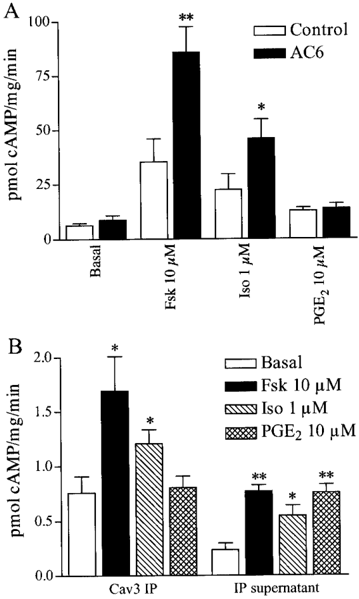
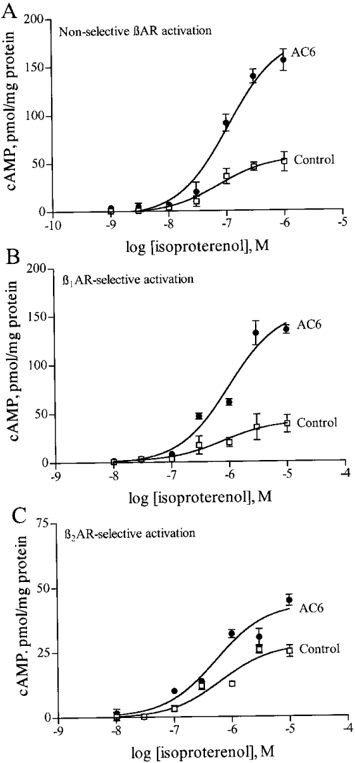
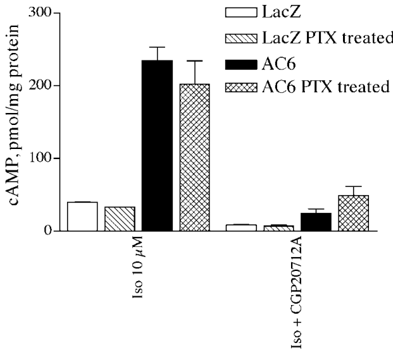
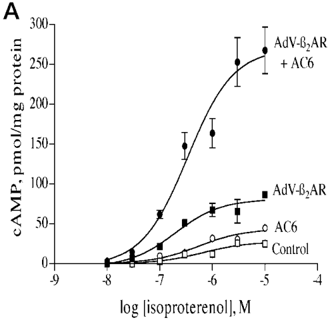
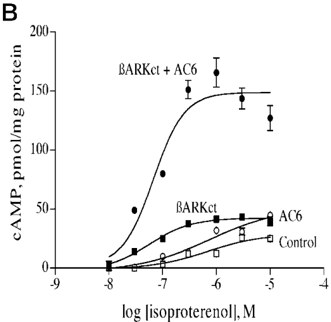
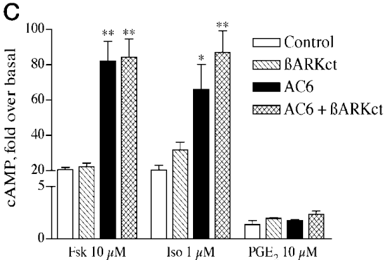
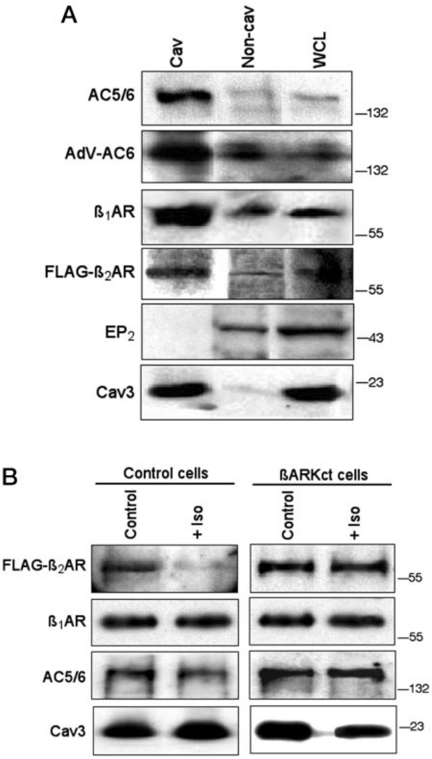
Recent evidence suggests that many signaling molecules localize in microdomains of the plasma membrane, particularly caveolae. In this study, overexpression of adenylyl cyclase was used as a functional probe of G protein-coupled receptor (GPCR) compartmentation. We found that three endogenous receptors in neonatal rat cardiomyocytes couple with different levels of efficiency to the activation of adenylyl cyclase type 6 (AC6), which localizes to caveolin-rich membrane fractions. Overexpression of AC6 enhanced the maximal cAMP response to beta(1)-adrenergic receptor (beta(1)AR)-selective activation 3.7-fold, to beta(2)AR-selective activation only 1.6-fold and to prostaglandin E(2) (PGE(2)) not at all. Therefore, the rank order of efficacy in coupling to AC6 is beta(1)AR > beta(2)AR > prostaglandin E(2) receptor (EP(2)R). beta(2)AR coupling efficiency was greater when we overexpressed the receptor or blocked its desensitization by expressing betaARKct, an inhibitor of G protein-coupled receptor kinase activation, but was not significantly greater when cells were treated with pertussis toxin. Assessment of receptor and AC expression indicated co-localization of AC5/6, beta(1)AR, and beta(2)AR, but not EP(2)R, in caveolin-rich membranes and caveolin-3 immunoprecipitates, likely explaining the observed activation of AC6 by betaAR subtypes but lack thereof by PGE(2). When cardiomyocytes were stimulated with a betaAR agonist, beta(2)AR were no longer found in caveolin-3 immunoprecipitates; an effect that was blocked by expression of betaARKct. Thus, agonist-induced translocation of beta(2)AR out of caveolae causes a sequestration of receptor from effector and likely contributes to the lower efficacy of beta(2)AR coupling to AC6 as compared with beta(1)AR, which do not similarly translocate. Therefore, spatial co-localization is a key determinant of efficiency of coupling by particular extracellular signals to activation of GPCR-linked effectors.
Overview
The claims and statistics of this paper haven’t been checked yet.
Free: it reads the open-access text and checks the first 5 claims that cite a source we can check. Create a free account to check every claim.
Integrity signals
Registry
Cites
Statistics
Figures
Verification
Claims the paper makes
The claims and statistics of this paper haven’t been checked yet.
Free: it reads the open-access text and checks the first 5 claims that cite a source we can check. Create a free account to check every claim.
Claims other papers make about this one
Each is checked against this paper’s own text: does it say what the citing paper says it does?
The cited source says what the claim attributes to it.
In the citing paper
“Of the many Gαs-coupled GPCRs in a given cell, certain receptors will preferentially couple to a specific AC isoform based on colocalization or preassembly (108–113).”
From Physiological roles of mammalian transmembrane adenylyl cyclase isoforms (2022) · cites this paper as [111]
Self-check
Percentages, sums and reported differences re-computed from the paper’s own numbers.
The self-check needs the paper’s full text.
Citations
Cites
Anderson, R. G. W. (1998) · Annual Review of Biochemistry · doi:10.1146/annurev.biochem.67.1.199 · Cited by 1,942
β-Arrestin acts as a clathrin adaptor in endocytosis of the β2-adrenergic receptor
Goodman, O. B., Krupnick, J. G., Santini, F., Gurevich, V. V., Penn, R. B., Gagnon, A. W., Keen, J. H., & Benovic, J. L. (1996) · Nature · doi:10.1038/383447a0 · Cited by 1,384
Song, K. S., Li, S., Okamoto, T., Quilliam, L. A., Sargiacomo, M., & Lisanti, M. P. (1996) · Journal of Biological Chemistry · doi:10.1074/jbc.271.16.9690 · Cited by 1,000
Role of β-Arrestin in Mediating Agonist-Promoted G Protein-Coupled Receptor Internalization
Ferguson, S. S. G., Downey, W. E., Colapietro, A.-M., Barak, L. S., Ménard, L., & Caron, M. G. (1996) · Science · doi:10.1126/science.271.5247.363 · Cited by 972
Acylation Targets Endothelial Nitric-oxide Synthase to Plasmalemmal Caveolae
Shaul, P. W., Smart, E. J., Robinson, L. J., German, Z., Yuhanna, I. S., Ying, Y., Anderson, R. G. W., & Michel, T. (1996) · Journal of Biological Chemistry · doi:10.1074/jbc.271.11.6518 · Cited by 800
Cardiac Function in Mice Overexpressing the β-Adrenergic Receptor Kinase or a βARK Inhibitor
Koch, W. J., Rockman, H. A., Samama, P., Hamilton, R., Bond, R. A., Milano, C. A., & Lefkowitz, R. J. (1995) · Science · doi:10.1126/science.7761854 · Cited by 719
Endothelial Nitric Oxide Synthase Targeting to Caveolae
Feron, O., Belhassen, L., Kobzik, L., Smith, T. W., Kelly, R. A., & Michel, T. (1996) · Journal of Biological Chemistry · doi:10.1074/jbc.271.37.22810 · Cited by 675
Rybin, V. O., Xu, X., Lisanti, M. P., & Steinberg, S. F. (2000) · Journal of Biological Chemistry · doi:10.1074/jbc.m006951200 · Cited by 520
A β 2 Adrenergic Receptor Signaling Complex Assembled with the Ca 2+ Channel Ca v 1.2
Davare, M. A., Avdonin, V., Hall, D. D., Peden, E. M., Burette, A., Weinberg, R. J., Horne, M. C., Hoshi, T., & Hell, J. W. (2001) · Science · doi:10.1126/science.293.5527.98 · Cited by 512
Coupling of β2-Adrenoceptor to GiProteins and Its Physiological Relevance in Murine Cardiac Myocytes
Xiao, R.-P., Avdonin, P., Zhou, Y.-Y., Cheng, H., Akhter, S. A., Eschenhagen, T., Lefkowitz, R. J., Koch, W. J., & Lakatta, E. G. (1999) · Circulation Research · doi:10.1161/01.res.84.1.43 · Cited by 387
Research works printed but not linked: 4
- Schwencke, C., Yamamoto, M., Okumura, S., Toya, Y., Kim, S. J., and Ishikawa, Y. (1999) Mol. Endocrinol. 13, 1061-1070
- Ostrom, R. S., Violin, J. D., Coleman, S., and Insel, P. A. (2000) Mol. Pharma- col. 57, 1075-1079
- Ostrom, R. S., Post, S. R., and Insel, P. A. (2000) J. Pharmacol. Exp. Ther. 294, 407-412
- Xiao, R. P., Ji, X., and Lakatta, E. G. (1995) Mol. Pharmacol. 47, 322-329
Cited by
Lipid rafts: bringing order to chaos
Pike, L. J. (2003) · Journal of Lipid Research · doi:10.1194/jlr.r200021-jlr200 · Cited by 1,138
Caveolae: From Cell Biology to Animal Physiology
Razani, B., Woodman, S. E., & Lisanti, M. P. (2002) · Pharmacological Reviews · doi:10.1124/pr.54.3.431 · Cited by 987
“Why obvious hypercellularity is not observed in other Cav-1 null tissues remains to be examined, although there are several possible explanations.”
BackgroundInfluentialHanson, M. A., Cherezov, V., Griffith, M. T., Roth, C. B., Jaakola, V.-P., Chien, E. Y. T., Velasquez, J., Kuhn, P., & Stevens, R. C. (2008) · Structure · doi:10.1016/j.str.2008.05.001 · Cited by 933
Lipid raft microdomains and neurotransmitter signalling
Allen, J. A., Halverson-Tamboli, R. A., & Rasenick, M. M. (2007) · Nature Reviews Neuroscience · doi:10.1038/nrn2059 · Cited by 852
What Is the Role of β-Adrenergic Signaling in Heart Failure?
Lohse, M. J., Engelhardt, S., & Eschenhagen, T. (2003) · Circulation Research · doi:10.1161/01.res.0000102042.83024.ca · Cited by 764
Woodward, D. F., Jones, R. L., & Narumiya, S. (2011) · Pharmacological Reviews · doi:10.1124/pr.110.003517 · Cited by 443
“The nature of the cellular responses to cAMP is also dependent on compartmentalization; in fact, the EP2 receptor seems to be excluded from caveolin-rich membrane fractions (Ostrom et al., 2001).”
BackgroundCaveolae as Organizers of Pharmacologically Relevant Signal Transduction Molecules
Patel, H. H., Murray, F., & Insel, P. A. (2008) · Annual Review of Pharmacology and Toxicology · doi:10.1146/annurev.pharmtox.48.121506.124841 · Cited by 439
Self-citationZhu, W.-Z., Wang, S.-Q., Chakir, K., Yang, D., Zhang, T., Brown, J. H., Devic, E., Kobilka, B. K., Cheng, H., & Xiao, R.-P. (2003) · Journal of Clinical Investigation · doi:10.1172/jci16326 · Cited by 424
Ostrom, R. S., & Insel, P. A. (2004) · British Journal of Pharmacology · doi:10.1038/sj.bjp.0705930 · Cited by 398
“Caveolae can be preferentially isolated from lipid rafts using immunological approaches to trap caveolin-rich membrane domains (Oh & Schnitzer, 1999; Ostrom et al ., 2001).”
InfluentialSelf-citationFischmeister, R., Castro, L. R. V., Abi-Gerges, A., Rochais, F., Jurevičius, J., Leroy, J., & Vandecasteele, G. (2006) · Circulation Research · doi:10.1161/01.res.0000246118.98832.04 · Cited by 367
G-protein coupled receptors in lipid rafts and caveolae: how, when and why do they go there?
Chini, B., & Parenti, M. (2004) · Journal of Molecular Endocrinology · doi:10.1677/jme.0.0320325 · Cited by 357
“Lipid rafts are also enriched in specific adenyl cyclases, and receptor localisation in lipid rafts is a means of regulating the coupling efficacy of (cid:2) 1-and (cid:2) 2-ARs to their effectors (Ostrom et al. 2001, 2002).”
BackgroundRegulation of actin-based cell migration by cAMP/PKA
Howe, A. K. (2004) · Biochimica et Biophysica Acta (BBA) - Molecular Cell Research · doi:10.1016/j.bbamcr.2004.03.005 · Cited by 322
“Localization or spatial restriction of cAMP/PKA signaling can also occur through interaction of components of the pathway, including PKA itself, with caveolin-rich microdomains [52–55].”
BackgroundCaveolae and Caveolins in the Cardiovascular System
Gratton, J.-P., Bernatchez, P., & Sessa, W. C. (2004) · Circulation Research · doi:10.1161/01.res.0000129178.56294.17 · Cited by 317
Long‐lasting target binding and rebinding as mechanisms to prolong in vivo drug action
Vauquelin, G., & Charlton, S. J. (2010) · British Journal of Pharmacology · doi:10.1111/j.1476-5381.2010.00936.x · Cited by 298
“b2-adrenoceptors in cardiomyocytes constitute a typical example thereof (Okamoto et al., 1998; Ostrom et al., 2001; Steinberg, 2004).”
BackgroundRole of cholesterol in the function and organization of G-protein coupled receptors
Pucadyil, T. J., & Chattopadhyay, A. (2006) · Progress in Lipid Research · doi:10.1016/j.plipres.2006.02.002 · Cited by 296
“[210] Ostrom RS, Gregorian C, Drenan RM, Xiang Y, Regan JW, Insel PA.”
BackgroundSignaling and regulation of G protein-coupled receptors in airway smooth muscle
Billington, C. K., & Penn, R. B. (2003) · Respiratory Research · doi:10.1186/1465-9921-4-2 · Cited by 284
“Adenylyl cyclase (as well as other elements and regulators of Gs-coupled receptor signaling) and its activity appear to be concentrated in lipid rafts or caveolae, suggesting that compartmentalization serves to facilitate initiation or quenching of GPCR signaling [141,142].”
BackgroundThe Prostanoid EP4 Receptor and Its Signaling Pathway
Yokoyama, U., Iwatsubo, K., Umemura, M., Fujita, T., & Ishikawa, Y. (2013) · Pharmacological Reviews · doi:10.1124/pr.112.007195 · Cited by 264
“Another report, however, demonstrated that EP2 was also found in the noncaveolar fraction in rat cardiac myocytes (Ostrom et al., 2001), suggesting that the distribution of EP2 receptor differs among cell types.”
BackgroundXiang, Y., Rybin, V. O., Steinberg, S. F., & Kobilka, B. (2002) · Journal of Biological Chemistry · doi:10.1074/jbc.m201644200 · Cited by 235
Self-citationLavoie, C., Mercier, J.-F., Salahpour, A., Umapathy, D., Breit, A., Villeneuve, L.-R., Zhu, W.-Z., Xiao, R.-P., Lakatta, E. G., Bouvier, M., et al. (2002) · Journal of Biological Chemistry · doi:10.1074/jbc.m204163200 · Cited by 214
Head, B. P., Patel, H. H., Roth, D. M., Lai, N. C., Niesman, I. R., Farquhar, M. G., & Insel, P. A. (2005) · Journal of Biological Chemistry · doi:10.1074/jbc.m502540200 · Cited by 213
Self-citationRole of caveolae in signal-transducing function of cardiac Na+/K+-ATPase
Liu, L., Mohammadi, K., Aynafshar, B., Wang, H., Li, D., Liu, J., Ivanov, A. V., Xie, Z., & Askari, A. (2003) · American Journal of Physiology-Cell Physiology · doi:10.1152/ajpcell.00555.2002 · Cited by 186
“4) indicates cell-specific differences in caveolar contents of Na /K -ATPase and suggests that the abundance of a membrane protein may be a significant factor in its relative distribution between the caveolae/ raft microdomains, the bulk plasma membrane, and the internal membranes (27).”
BackgroundRochais, F., Abi-Gerges, A., Horner, K., Lefebvre, F., Cooper, D. M. F., Conti, M., Fischmeister, R., & Vandecasteele, G. (2006) · Circulation Research · doi:10.1161/01.res.0000218493.09370.8e · Cited by 178
Neuregulin 1 regulates excitability of fast-spiking neurons through Kv1.1 and acts in epilepsy
Li, K.-X., Lu, Y.-M., Xu, Z.-H., Zhang, J., Zhu, J.-M., Zhang, J.-M., Cao, S.-X., Chen, X.-J., Chen, Z., Luo, J.-H., et al. (2012) · Nature Neuroscience · doi:10.1038/nn.3006 · Cited by 173
“Brain slices were incubated with NRG1 (10 nM) for 5, 10 or 20 min, and membrane fractionation from brain slices was performed as described previousl”
MethodG-Protein-Coupled Receptor-Signaling Components in Membrane Raft and Caveolae Microdomains
Patel, H. H., Murray, F., & Insel, P. A. (2008) · Handbook of Experimental Pharmacology · doi:10.1007/978-3-540-72843-6_7 · Cited by 165
Self-citationPDEs create local domains of cAMP signaling
Mika, D., Leroy, J., Vandecasteele, G., & Fischmeister, R. (2011) · Journal of Molecular and Cellular Cardiology · doi:10.1016/j.yjmcc.2011.08.016 · Cited by 181
“Other microdomains of high interest for cAMP signal transduction are caveolae, where a number of components of the cAMP pathway were shown to be localized [40].”
BackgroundRapacciuolo, A., Suvarna, S., Barki-Harrington, L., Luttrell, L. M., Cong, M., Lefkowitz, R. J., & Rockman, H. A. (2003) · Journal of Biological Chemistry · doi:10.1074/jbc.m305675200 · Cited by 153
Zaccolo, M. (2009) · British Journal of Pharmacology · doi:10.1111/j.1476-5381.2009.00185.x · Cited by 177
Ostrom, R. S., Liu, X., Head, B. P., Gregorian, C., Seasholtz, T. M., & Insel, P. A. (2002) · Molecular Pharmacology · doi:10.1124/mol.62.5.983 · Cited by 172
“Because high-level AC6 overexpression in cardiomyocytes localizes in caveolin-rich fractions (Ostrom et al., 2000b; 2001; Rybin et al., 2000), cardiomyocytes and RASMC must differ in their capacity to appropriately localize overexpressed AC6.”
BackgroundMethodInfluentialSelf-citationSubtype-specific α1- and β-adrenoceptor signaling in the heart
Xiao, R.-P., Zhu, W., Zheng, M., Cao, C., Zhang, Y., Lakatta, E. G., & Han, Q. (2006) · Trends in Pharmacological Sciences · doi:10.1016/j.tips.2006.04.009 · Cited by 173
Phasic Dopamine Release Drives Rapid Activation of Striatal D2-Receptors
Marcott, P. F., Mamaligas, A. A., & Ford, C. P. (2014) · Neuron · doi:10.1016/j.neuron.2014.08.058 · Cited by 148
G protein-coupled receptor kinases as therapeutic targets in the heart
Pfleger, J. M., Gresham, K. S., & Koch, W. J. (2019) · Nature Reviews Cardiology · doi:10.1038/s41569-019-0220-3 · Cited by 165
Recent advances in the understanding of the role of nitric oxide in cardiovascular homeostasis
Schulz, R., Rassaf, T., Massion, P. B., Kelm, M., & Balligand, J. (2005) · Pharmacology & Therapeutics · doi:10.1016/j.pharmthera.2005.04.005 · Cited by 171
Systems analysis of PKA-mediated phosphorylation gradients in live cardiac myocytes
Saucerman, J. J., Zhang, J., Martin, J., Peng, L., Stenbit, A. E., Tsien, R. Y., & McCulloch, A. D. (2006) · Proceedings of the National Academy of Sciences · doi:10.1073/pnas.0600137103 · Cited by 166
Higher-order organization and regulation of adenylyl cyclases
Cooper, D. M. F., & Crossthwaite, A. J. (2006) · Trends in Pharmacological Sciences · doi:10.1016/j.tips.2006.06.002 · Cited by 163
Molecular Mechanisms for Heterologous Sensitization of Adenylate Cyclase
Watts, V. J. (2002) · Journal of Pharmacology and Experimental Therapeutics · doi:10.1124/jpet.302.1.1 · Cited by 142
“In contrast, colocalization of both G s-coupled receptors and AC6 to caveolin-enriched domains enhances coupling efficiency and drug-stimulated cAMP accumulation (Ostrom et al., 2001).”
BackgroundSensitization of adenylate cyclase by Gαi/o-coupled receptors
Watts, V. J., & Neve, K. A. (2005) · Pharmacology & Therapeutics · doi:10.1016/j.pharmthera.2004.12.005 · Cited by 163
D2 Dopamine Receptors Modulate Gα-Subunit Coupling of the CB1 Cannabinoid Receptor
Jarrahian, A., Watts, V. J., & Barker, E. L. (2004) · Journal of Pharmacology and Experimental Therapeutics · doi:10.1124/jpet.103.057620 · Cited by 160
“Alternatively, chronic drug treatment may alter the membrane microdomain localization of Gαs that influences receptor modulated adenylate cyclase activity (Ammer and Schulz, 1997; Ostrom et al., 2001) Is there a physiological relevance for the coupling of the CB1 receptor to Gαs?”
BackgroundPhysiological roles of mammalian transmembrane adenylyl cyclase isoforms
Ostrom, K. F., LaVigne, J. E., Brust, T. F., Seifert, R., Dessauer, C. W., Watts, V. J., & Ostrom, R. S. (2022) · Physiological Reviews · doi:10.1152/physrev.00013.2021 · Cited by 131
Self-citationPontier, S. M., Percherancier, Y., Galandrin, S., Breit, A., Galès, C., & Bouvier, M. (2008) · Journal of Biological Chemistry · doi:10.1074/jbc.m800778200 · Cited by 144
Function of Caveolae in Ca2+ Entry and Ca2+‐Dependent Signal Transduction
Isshiki, M., & Anderson, R. G. W. (2003) · Traffic · doi:10.1034/j.1600-0854.2003.00130.x · Cited by 131
“Ca2þ influx through caveolae may be cooperatively regulated by NCX channels (70), the Naþ/Kþ-ATPase (71), and b-adrenergic receptor/cAMP signaling (72,73).”
BackgroundWeiss, S., Oz, S., Benmocha, A., & Dascal, N. (2013) · Circulation Research · doi:10.1161/circresaha.113.301781 · Cited by 148
Phosphodiesterase 4D is required for β 2 adrenoceptor subtype-specific signaling in cardiac myocytes
Xiang, Y. K., Naro, F., Zoudilova, M., Jin, S.-L. C., Conti, M., & Kobilka, B. K. (2005) · Proceedings of the National Academy of Sciences · doi:10.1073/pnas.0405263102 · Cited by 121
Self-citationDaple is a novel non-receptor GEF required for trimeric G protein activation in Wnt signaling
Aznar, N., Midde, K., Dunkel, Y., López-Sánchez, I., Pavlova, Y., Marivin, A., Barbazán, J., Murray, F., Nitsche, U., Janssen, K., et al. (2015) · eLife · doi:10.7554/elife.07091 · Cited by 125
“cAMP content in TCA extracts was determined by radioimmunoassay and normalized to the amount of protein (determined using a dyebinding protein assay [Bio-Rad]) per sample as previously described (Ostrom et al., 2001).”
MethodInfluentialEpidermal LysM receptor ensures robust symbiotic signalling in Lotus japonicus
Murakami, E., Cheng, J., Gysel, K., Bozsóki, Z., Kawaharada, Y., Hjuler, C. T., Sørensen, K. K., Tao, K., Kelly, S. J., Venice, F., et al. (2018) · eLife · doi:10.7554/elife.33506 · Cited by 116
Liu, X., Ostrom, R. S., & Insel, P. A. (2004) · American Journal of Physiology-Cell Physiology · doi:10.1152/ajpcell.00461.2003 · Cited by 117
“cAMP content in TCA extracts was determined by radioimmunoassay as described previously (35).”
MethodSelf-citationXiao, R.-P., Zhang, S.-J., Chakir, K., Avdonin, P. V., Zhu, W., Bond, R. A., Balke, C. W., Lakatta, E. G., & Cheng, H. (2003) · Circulation · doi:10.1161/01.cir.0000087595.17277.73 · Cited by 116
Busija, A. R., Patel, H. H., & Insel, P. A. (2017) · American Journal of Physiology-Cell Physiology · doi:10.1152/ajpcell.00355.2016 · Cited by 130
“, adrenergic, adenosine, angiotensin-1, opioid, serotonin) Transmembrane (TM), fatty acylation (FA), Cav association (Cav) (47, 49, 71, 139, 226)”
Self-citationAllen, J., Yu, J. Z., Donati, R. J., & Rasenick, M. M. (2005) · Molecular Pharmacology · doi:10.1124/mol.104.008342 · Cited by 110
“5D), data that are consistent with reports shown in the cardiomyocyte (Rybin et al., 2000; Ostrom et al., 2001).”
ResultAngiotensin II Enhances Adenylyl Cyclase Signaling via Ca2+/Calmodulin
Ostrom, R. S., Naugle, J. E., Hase, M., Gregorian, C., Swaney, J. S., Insel, P. A., Brunton, L. L., & Meszaros, J. G. (2003) · Journal of Biological Chemistry · doi:10.1074/jbc.m212659200 · Cited by 109
Self-citationcAMP Signaling Compartmentation: Adenylyl Cyclases as Anchors of Dynamic Signaling Complexes
Johnstone, T. B., Agarwal, S. R., Harvey, R. D., & Ostrom, R. S. (2018) · Molecular Pharmacology · doi:10.1124/mol.117.110825 · Cited by 110
“availability of Gas appears to be in excess of both GPCR and AC and relatively uniform in its distribution acrossmembrane microdomains (Post et al., 1995; Ostrom et al., 2001).”
Self-citationThe role of membrane microdomains in shaping β2-adrenergic receptor-mediated cAMP dynamics
DiPilato, L. M., & Zhang, J. (2009) · Molecular BioSystems · doi:10.1039/b823243a · Cited by 119
Compartmentalization of β-Adrenergic Signals in Cardiomyocytes
Xiang, Y. K. (2011) · Circulation Research · doi:10.1161/circresaha.110.231340 · Cited by 123
Self-citationDisruption of Lipid Rafts Inhibits P2X1 Receptor-mediated Currents and Arterial Vasoconstriction
Vial, C., & Evans, R. J. (2005) · Journal of Biological Chemistry · doi:10.1074/jbc.m504256200 · Cited by 104
Cyclic nucleotide phosphodiesterases as therapeutic targets in cardiac hypertrophy and heart failure
Kamel, R., Leroy, J., Vandecasteele, G., & Fischmeister, R. (2022) · Nature Reviews Cardiology · doi:10.1038/s41569-022-00756-z · Cited by 110
Imaging nanometer domains of β-adrenergic receptor complexes on the surface of cardiac myocytes
Ianoul, A. I., Grant, D. D., Rouleau, Y., Bani‐Yaghoub, M., Johnston, L. J., & Pezacki, J. P. (2005) · Nature Chemical Biology · doi:10.1038/nchembio726 · Cited by 101
“Several key components of β 2 AR signalosomes can be found in membrane fractions that are rich in caveolin proteins (β 2 AR, G i 2α, G i 3α, adenylate cyclase subunits 5/6, components of PKA and domains of elevated cAMP”
BackgroundOstrom, R. S., Bundey, R. A., & Insel, P. A. (2004) · Journal of Biological Chemistry · doi:10.1074/jbc.m313440200 · Cited by 101
Self-citationPatel, H. H., Head, B. P., Petersen, H. N., Niesman, I. R., Huang, D., Gross, G. J., Insel, P. A., & Roth, D. M. (2006) · American Journal of Physiology-Heart and Circulatory Physiology · doi:10.1152/ajpheart.01100.2005 · Cited by 111
Self-citationHarvey, R. D., & Calaghan, S. C. (2011) · Journal of Molecular and Cellular Cardiology · doi:10.1016/j.yjmcc.2011.07.007 · Cited by 104
“These complexes can be dynamically regulated on an acute timescale to allow, for example, agonist stimulated access of receptors to their effectors [5, 6].”
BackgroundAndrogen receptor-mediated non-genomic regulation of prostate cancer cell proliferation.
Liao, R. S., Ma, S., Lu, M., Li, R., Yin, Y., & Raj, G. V. (2013) · PubMed · doi:10.3978/j.issn.2223-4683.2013.09.07 · Cited by 97
“Finally, DHT-induced signaling cascades namely the Ras-Raf (67,68), MAPK/ERK (69,70), adenylyl cyclase (71), and PI3K(72), pathways have been shown to be enriched in lipid rafts.”
BackgroundKarlsson, M., Thorn, H., Danielsson, A., Stenkula, K. G., Öst, A., Gustavsson, J., Nyström, F. H., & Strålfors, P. (2004) · European Journal of Biochemistry · doi:10.1111/j.1432-1033.2004.04177.x · Cited by 106
Phenotype and Functional Plasticity of Airway Smooth Muscle: Role of Caveolae and Caveolins
Halayko, A. J., Tran, T., & Gosens, R. (2007) · Proceedings of the American Thoracic Society · doi:10.1513/pats.200705-057vs · Cited by 108
GIV/Girdin is a central hub for profibrogenic signalling networks during liver fibrosis
Lopez-Sanchez, I., Dunkel, Y., Roh, Y.-S., Mittal, Y., De Minicis, S., Muranyi, A., Singh, S., Shanmugam, K., Aroonsakool, N., Murray, F., et al. (2014) · Nature Communications · doi:10.1038/ncomms5451 · Cited by 94
Xiang, Y. K., & Kobilka, B. K. (2003) · Proceedings of the National Academy of Sciences · doi:10.1073/pnas.1831718100 · Cited by 95
Self-citationLombardi, D., Cuenoud, B. M., & Krämer, S. D. (2009) · European Journal of Pharmaceutical Sciences · doi:10.1016/j.ejps.2009.10.001 · Cited by 99
MacDougall, D. A., Agarwal, S. R., Stopford, E. A., Chu, H., Collins, J. A., Longster, A. L., Colyer, J., Harvey, R. D., & Calaghan, S. C. (2011) · Journal of Molecular and Cellular Cardiology · doi:10.1016/j.yjmcc.2011.06.014 · Cited by 89
“In the last decade, studies of the role of caveolae in cAMP signalling in the ventricular myocyte have been conducted primarily in neonatal cells [22,35–37].”
BackgroundThe Role of Cyclic AMP Signaling in Cardiac Fibrosis
Delaunay, M., Osman, H., Kaiser, S., & Diviani, D. (2019) · Cells · doi:10.3390/cells9010069 · Cited by 97
Agonist-selective signaling is determined by the receptor location within the membrane domains
Zheng, H., Chu, J., Qiu, Y. L., Loh, H. H., & Law, P. (2008) · Proceedings of the National Academy of Sciences · doi:10.1073/pnas.0802253105 · Cited by 87
Zhao, H., Loh, H. H., & Law, P. (2006) · Molecular Pharmacology · doi:10.1124/mol.105.020024 · Cited by 86
“G protein-coupled receptors (GPCRs) (Dupree et al., 1993; Ostrom et al., 2001), G protein and subunits, adenylyl cyclase, nitric-oxide synthase, and several protein kinases, such as protein kinase A, PKC , Src tyrosine kinase, and phosphoinositide-3 kinase, are a few examples of signaling molecules…”
BackgroundInfluentialTimofeyev, V., Myers, R. E., Kim, H. J., Woltz, R. L., Sirish, P., Heiserman, J. P., Li, N., Singapuri, A., Tang, T., Yarov-Yarovoy, V., et al. (2013) · Circulation Research · doi:10.1161/circresaha.112.300370 · Cited by 85
Allen, J., Yu, J. Z., Davé, R. H., Bhatnagar, A., Roth, B. L., & Rasenick, M. M. (2009) · Molecular Pharmacology · doi:10.1124/mol.109.060160 · Cited by 90
“ARs are removed from lipid raft/caveolae domains, whereas G s significantly increases its localization in these domains (approximately 25% of total G s is in rafts/caveolae after agonist), suggesting that rafts/caveolae separate pools of the receptor and G protein during signaling (Rybin et al., 2000; Ostrom et al., 2…”
Role of Membrane Microdomains in Compartmentation of cAMP Signaling
Agarwal, S. R., Yang, P.-C., Rice, M., Singer, C. A., Nikolaev, V. O., Lohse, M. J., Clancy, C. E., & Harvey, R. D. (2014) · PLoS ONE · doi:10.1371/journal.pone.0095835 · Cited by 82
“Both are capable of stimulating cAMP production, yet bARs are often associated with the cholesterol-rich, buoyant fractions of the plasma membrane, as identified by sucrose density centrifugation, while EPRs are only found in non-raft fractions [8,16,22–27].”
BackgroundGrünberger, C., Obermayer, B., Klar, J., Kurtz, A., & Schweda, F. (2006) · Circulation Research · doi:10.1161/01.res.0000251057.35537.d3 · Cited by 81
Ostrom, R. S. (2002) · Molecular Pharmacology · doi:10.1124/mol.61.3.473 · Cited by 79
“Recent data obtained with cardiac myocytes demonstrate that the coupling of three different endogenous receptors to a particular effector enzyme is determined primarily by the colocalization of the receptor and effector (Ostrom et al., 2001).”
Self-citation?2-Adrenergic receptor signaling complexes in cardiomyocyte caveolae/lipid rafts*1
STEINBERG, S. (2004) · Journal of Molecular and Cellular Cardiology · doi:10.1016/j.yjmcc.2004.04.018 · Cited by 78
D1 dopamine receptor signaling involves caveolin-2 in HEK-293 cells
Yu, P., Yang, Z., Jones, J. E., Wang, Z., Owens, S. A., Mueller, S. C., Felder, R. A., & José, P. A. (2004) · Kidney International · doi:10.1111/j.1523-1755.2004.66007.x · Cited by 77
“Several GPCRs are regulated in caveolae and noncaveolar lipid rafts [6, 19–30].”
BackgroundBreit, A., Büch, T., Boekhoff, I., Solinski, H. J., Damm, E., & Gudermann, T. W. (2010) · Molecular and Cellular Endocrinology · doi:10.1016/j.mce.2010.07.007 · Cited by 85
“Considering in particular cAMP signalling, it has been shown that chemically induced cholesterol depletion of the plasma membrane (resulting in the disruption of lipid rafts) increases cAMP levels, because lipid rafts separate various components of the Gs/AC-pathway from each other and, thus, exert a tonic inhibition…”
InfluentialFriedman, J. E., Babu, B. S., & Clark, R. B. (2002) · Molecular Pharmacology · doi:10.1124/mol.62.5.1094 · Cited by 72
“, 2000) express such factors as reduced levels of Gi-specific RGS proteins and different levels of receptor binding proteins that alter localization to microdomains in the plasma membrane thus diminishing the coupling efficiency of 2AR activation of Gi (Hall et al., 1998; Ostrom et al., 2001).”
BackgroundEffects of cholesterol depletion on compartmentalized cAMP responses in adult cardiac myocytes
Agarwal, S. R., MacDougall, D. A., Tyser, R. C. V., Pugh, S. D., Calaghan, S. C., & Harvey, R. D. (2010) · Journal of Molecular and Cellular Cardiology · doi:10.1016/j.yjmcc.2010.11.015 · Cited by 74
Rybin, V. O., Pak, E. S., Alcott, S., & Steinberg, S. F. (2003) · Molecular Pharmacology · doi:10.1124/mol.63.6.1338 · Cited by 70
“(Rybin et al., 2000; Ostrom et al., 2001; Steinberg and Brunton, 2001).”
Rybin, V. O., Grabham, P. W., Elouardighi, H., & Steinberg, S. F. (2003) · American Journal of Physiology-Heart and Circulatory Physiology · doi:10.1152/ajpheart.00946.2002 · Cited by 74
“Recent studies implicate caveolae as nucleation centers for signaling by G protein-coupled receptors and receptor tyrosine kinases in cardiomyocytes (14, 20, 31).”
BackgroundRegulation of cAMP homeostasis by the efflux protein MRP4 in cardiac myocytes
Sassi, Y., Abi‐Gerges, A., Fauconnier, J., Mougenot, N., Reiken, S. R., Haghighi, K., Kranias, E. G., Marks, A. R., Lacampagne, A., Engelhardt, S. H., et al. (2011) · The FASEB Journal · doi:10.1096/fj.11-194027 · Cited by 76
“To date, several underlying mechanisms have been identified, including restricted synthesis of cAMP by specific localization of adenylyl cyclases in cells (7, 8); localization of PKA in specific subcellular regions via A-kinase anchor-”
BackgroundMembrane Organization and Function of the Serotonin1A Receptor
Kalipatnapu, S., & Chattopadhyay, A. (2007) · Cellular and Molecular Neurobiology · doi:10.1007/s10571-007-9189-2 · Cited by 67
“For example, coupling efficacy of b1 and b2–adrenergic receptors (b1AR and b2AR) and prostaglandin E2 receptors to adenylate cyclase (AC6) correlates with their colocalization or lack of it with AC6 in caveolae (Ostrom et al. 2001).”
BackgroundMechanisms of cyclic AMP compartmentation revealed by computational models
Saucerman, J. J., Greenwald, E. C., & Polanowska-Grabowska, R. (2014) · Journal of General Physiology · doi:10.1085/jgp.201311044 · Cited by 65
Nelson, C. P., & Challiss, R. A. J. (2006) · Biochemical Pharmacology · doi:10.1016/j.bcp.2006.09.005 · Cited by 67
Whitaker, G. M., Lynn, F. C., McIntosh, C. H. S., & Accili, E. A. (2012) · PLoS ONE · doi:10.1371/journal.pone.0032675 · Cited by 64
“Such a relationship between EC50 and cell surface number has been reported for the b2-adrenergic receptor, but the mechanism underlying this association remains unknown [35,36].”
Gosens, R., Stelmack, G. L., Dueck, G., Mutawe, M. M., Hinton, M., McNeill, K. D., Paulson, A., Dakshinamurti, S., Gerthoffer, W. T., Thliveris, J. A., et al. (2007) · American Journal of Physiology-Lung Cellular and Molecular Physiology · doi:10.1152/ajplung.00312.2007 · Cited by 63
Cardiac cAMP: production, hydrolysis, modulation and detection
Boularan, C., & Galès, C. (2015) · Frontiers in Pharmacology · doi:10.3389/fphar.2015.00203 · Cited by 83
Allosteric modulation of the adenosine A2A receptor by cholesterol
Huang, S. K., Almurad, O., Pejana, R. J., Morrison, Z. A., Pandey, A. N., Picard, L.-P., Nitz, M., Sljoka, A., & Prosser, R. S. (2021) · eLife · doi:10.7554/elife.73901 · Cited by 59
“Nevertheless, both the stimulatory G protein and many isoforms of adenylyl cyclase were shown to partition into raft-like domains (Kamata et al., 2008; Oh and Schnitzer, 2001; Ostrom et al., 2001; Ostrom and Insel, 2004).”
BackgroundCardiac β‐Adrenergic Signaling
Saucerman, J. J., & McCulloch, A. D. (2006) · Annals of the New York Academy of Sciences · doi:10.1196/annals.1380.026 · Cited by 62
Dina, O. A., Hucho, T. B., Yeh, J. J., Malik‐Hall, M., Reichling, D. B., & Levine, J. D. (2005) · Pain · doi:10.1016/j.pain.2005.02.028 · Cited by 60
Leblais, V., Jo, S., Chakir, K., Maltsev, V. A., Zheng, M., Crow, M. T., Wang, W., Lakatta, E. G., & Xiao, R.-P. (2004) · Circulation Research · doi:10.1161/01.res.0000150049.74539.8a · Cited by 73
Ca2+ currents in cardiac myocytes: Old story, new insights
Brette, F., Leroy, J., Guennec, J. L., & Sallé, L. (2005) · Progress in Biophysics and Molecular Biology · doi:10.1016/j.pbiomolbio.2005.01.001 · Cited by 69
“On the contrary, β1-adrenergic receptors are more evenly distributed (Ostrom et al., 2001).”
Choreographing the adenylyl cyclase signalosome: sorting out the partners and the steps
Ostrom, R. S., Bogard, A. S., Gros, R., & Feldman, R. D. (2011) · Naunyn-Schmiedeberg s Archives of Pharmacology · doi:10.1007/s00210-011-0696-9 · Cited by 62
“AC6 more efficiently couples to ß1AR than ß2AR in these cells, likely due to fourfold higher expression of ß1AR and movement of ß2AR out of caveolae following activation (Ostrom et al. 2001).”
BackgroundSelf-citationLipid Raft Association and Cholesterol Sensitivity of P2X1-4 Receptors for ATP
Allsopp, R. C., Lalo, U., & Evans, R. J. (2010) · Journal of Biological Chemistry · doi:10.1074/jbc.m110.148940 · Cited by 58
Creighton, J. R., Zhu, B., ALEXEYEV, M. F., & Stevens, T. (2007) · Journal of Cell Science · doi:10.1242/jcs.011692 · Cited by 59
“…colocalization of receptors, signaling intermediates, modulatory proteins and effectors to specialized microdomains, such as caveolae-enriched lipid rafts, is necessary for appropriate signal transduction (Head et al., 2005; Jurevicius et al., 2003; Ostrom et al., 2001; Rybin et al., 2000).”
BackgroundThy-1 interaction with Fas in lipid rafts regulates fibroblast apoptosis and lung injury resolution
Liu, X., Wong, S. S., Taype, C. A., Kim, J., Shentu, T., Espinoza, C. R., Finley, J. C., Bradley, J., Head, B. P., Patel, H. H., et al. (2017) · Laboratory Investigation · doi:10.1038/labinvest.2016.145 · Cited by 60
Urs, N. M., Jones, K. T., Salo, P. D., Severin, J. E., Trejo, J., & Radhakrishna, H. (2005) · Journal of Cell Science · doi:10.1242/jcs.02634 · Cited by 56
“2ARs localize to caveolae in cardiomyocytes in the absence of agonist but move out of caveolae and into clathrin-coated pits upon ligand binding (Ostrom et al., 2001; Rybin et al., 2000).”
BackgroundLingemann, M., McCarty, T. C., Liu, X., Buchholz, U. J., Surman, S. R., Martin, S. E., Collins, P. L., & Munir, S. (2019) · PLoS Pathogens · doi:10.1371/journal.ppat.1007963 · Cited by 57
“Many proteins associated with signaling functions are present in the caveolae, including ATP1A1, EGFR and c-Src [17, 50, 51] .”
BackgroundRose, R. H., Briddon, S. J., & Hill, S. J. (2012) · British Journal of Pharmacology · doi:10.1111/j.1476-5381.2011.01640.x · Cited by 53
“…increasing evidence that ligand binding to GPCRs and the subsequent intracellular response is not homogeneous for all cells of a given population (Cordeaux et al., 2008) or even within different membrane regions of the same cell (Ostrom et al., 2001; Ostrom and Insel, 2004; Briddon and Hill, 2007).”
BackgroundInfluentialLin, C., Ear, J., Midde, K., López-Sánchez, I., Aznar, N., Garcia‐Marcos, M., Kufareva, I., Abagyan, R. A., & Ghosh, P. (2014) · Molecular Biology of the Cell · doi:10.1091/mbc.e14-05-0978 · Cited by 54
“Production of cAMP was normalized to the amount of protein (determined using a dye-binding protein assay [Bio-Rad]) per sample (Ostrom et al., 2001).”
Method
Metadata
- Authors
- Ostrom, R. S., Gregorian, C., Drenan, R. M., Xiang, Y., Regan, J. W., & Insel, P. A.
- Affiliations
- University of California San Diego (US)
- Howard Hughes Medical Institute (US)
- University of Arizona (US)
- Corresponding author
- Insel, Paul A.
- Venue
- Journal of Biological Chemistry
- Publisher
- Elsevier BV
- Published
- 2001-11
- Volume
- 276
- Issue
- 45
- Pages
- 42063-42069
- ISSN
- 0021-9258 (ISSN-L)
- OpenAlex
- W1972870617
- Cited by
- 250
- References
- 34
- Citations by year
- 2026: 1 · 2025: 1 · 2024: 1 · 2023: 3 · 2022: 3 · 2021: 6 · 2020: 2 · 2019: 8 · 2018: 6 · 2017: 7 · 2016: 6 · 2015: 8 · 2014: 15 · 2013: 10 · 2012: 10
- FWCI
- 5.78
- Type
- journal article
- Language
- en
- Open access
- hybrid
- doi.org
- Licence
- cc-by
- www.elsevier.com/tdm/userlicense/1.0/ (tdm)
- creativecommons.org/licenses/by/4.0/ (vor, 6922 d)
- Locations
- Journal of Biological Chemistry (publishedVersion, cc-by)
- PubMed (publishedVersion)
- Chapman University Digital Commons (Chapman University) (submittedVersion)
- Funders
- National Institutes of Health
- National Heart, Lung, and Blood Institute (HL53773, HL 63885, R01HL063885, P50HL053773, HL 0-7444, T32HL007444)
- Topics
- Life Sciences › Biochemistry, Genetics and Molecular Biology › Cell Biology › Caveolin-1 and cellular processes
- Life Sciences › Biochemistry, Genetics and Molecular Biology › Molecular Biology › Receptor Mechanisms and Signaling
- Life Sciences › Biochemistry, Genetics and Molecular Biology › Molecular Biology › Protein Kinase Regulation and GTPase Signaling
- Keywords
- caveolae, adenylyl cyclase type 5, beta1-adrenergic receptor, beta2-adrenergic receptor, prostaglandin E2 receptor, caveolin-3, receptor compartmentalization, receptor translocation, receptor desensitization, cAMP signaling, cardiomyocytes, pertussis toxin
- MeSH terms
- Cyclic AMP, Adenylyl Cyclases, Animals, Calcium, Enzyme Activation, Dinoprostone, Signal Transduction, Receptors, Adrenergic, beta-1, Receptors, Adrenergic, beta-2, Caveolae, Rats
About these checks
Registry, retraction, Cites and statistics results are computed, not judged, with one exception: a printed reference that no index lists is read once by a model before it counts as a citation error. Claims are extracted by a model and kept only when their quote appears verbatim in the text; each cited source is then checked, with a model’s help, for whether it says what the claim relies on. Those verdicts can be wrong — read the claim’s quote and the cited source before relying on one.
Statistics and arithmetic are recomputed, not judged.
Confidence bands are shown only for fields calibrated on our annotated test set. None is calibrated yet, so no band is shown.
What counts as a claim ›How we measure confidence ›How we check this ›
Are you an author, or do you see a problem with this page? Request a review
Data sources
Bibliographic data: Semantic Scholar, OpenAlex, Crossref.
Contains information from the Semantic Scholar Academic Graph Datasets, made available under the ODC Attribution License (ODC-BY 1.0).
Semantic Scholar’s data is described in: Kinney, R., et al. (2023). The Semantic Scholar Open Data Platform. arXiv:2301.10140.
