

The DOI matches its Crossref record; 3 of the 3 references it cites were found in a registry or an index.
The Lipoprotein Lipase Inhibitor ANGPTL3 Is Negatively Regulated by Thyroid Hormone
Overview
The claims and statistics of this paper haven’t been checked yet.
Run the check — free, no account needed. It reads the open-access text and checks the sources it cites.
Integrity signals
Registry
Cites
Statistics
Figures
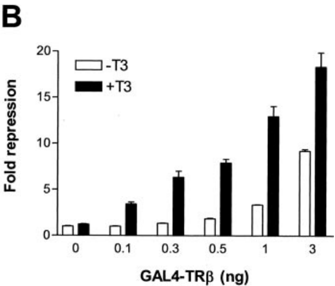
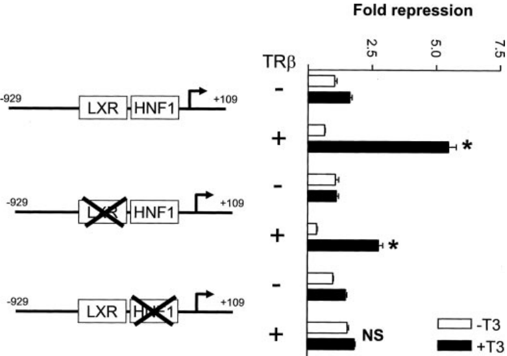
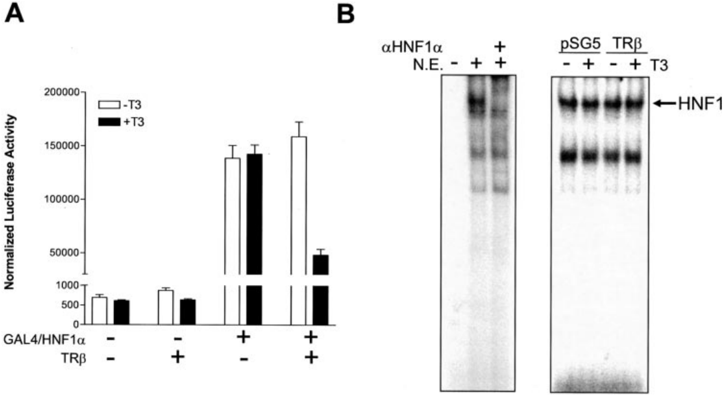
Verification
Claims the paper makes
The claims and statistics of this paper haven’t been checked yet.
Run the check — free, no account needed. It reads the open-access text and checks the sources it cites.
Claims other papers make about this one
Each is checked against this paper’s own text: does it say what the citing paper says it does?
In the citing paper
“Curiously, although ANGPTL3 expression is regulated by LXR, insulin, leptin, and thyroid hormone (111–114),”
From Regulation of lipoprotein metabolism by ANGPTL3, ANGPTL4, and ANGPTL8 (2021) · cites this paper as [114]
Self-check
Percentages, sums and reported differences re-computed from the paper’s own numbers.
The self-check needs the paper’s full text.
Citations
Cites
Roberts, C. G., & Ladenson, P. W. (2004) · The Lancet · doi:10.1016/s0140-6736(04)15696-1 · Cited by 567
Köster, A., Chao, Y. B., Mosior, M., Ford, A., Gonzalez-DeWhitt, P. A., Hale, J. E., Li, D., Qiu, Y., Fraser, C. C., Yang, D. D., et al. (2005) · Endocrinology · doi:10.1210/en.2005-0476 · Cited by 427
Identification of a mammalian angiopoietin-related protein expressed specifically in liver
Conklin, D., Gilbertson, D., Taft, D. W., Maurer, M. F., Whitmore, T. E., Smith, D. L., Walker, K. M., Chen, L. H., Wattler, S., Nehls, M., et al. (1999) · Genomics · doi:10.1006/geno.1999.6041 · Cited by 169
Research works printed but not linked: 50
- Mangelsdorf, 1995, Cell, 83, 835, 10.1016/0092-8674(95)90199-X · DOI · Paper page
- Lazar, 1993, Endocr. Rev., 14, 184
- Moore, 2005, Mol. Cell Proteomics, 4, 475, 10.1074/mcp.R500001-MCP200 · DOI
- Wu, 2000, Trends Endocrinol. Metab., 11, 207, 10.1016/S1043-2760(00)00263-0 · DOI
- Flamant, 2003, Trends Endocrinol. Metab., 14, 85, 10.1016/S1043-2760(02)00043-7 · DOI · Paper page
- Duntas, 2002, Thyroid, 12, 287, 10.1089/10507250252949405 · DOI · Paper page
- Hansson, 1983, Horm. Metab. Res., 15, 449, 10.1055/s-2007-1018751 · DOI
- Aviram, 1982, Clin. Biochem., 15, 62, 10.1016/S0009-9120(82)90529-X · DOI
- Engelken, 1981, Atherosclerosis, 38, 177, 10.1016/0021-9150(81)90114-3 · DOI
- Gullberg, 2002, Mol. Endocrinol., 16, 1767, 10.1210/me.2002-0009 · DOI
- Gullberg, 2000, Mol. Endocrinol., 14, 1739
- Johansson, 2005, Proc. Natl. Acad. Sci. U. S. A., 102, 10297, 10.1073/pnas.0504379102 · DOI
- Ness, 1998, Biochem. Pharmacol., 56, 121, 10.1016/S0006-2952(98)00119-1 · DOI
- Taylor, 1997, Mol. Pharmacol., 52, 542, 10.1124/mol.52.3.542 · DOI
- Trost, 2000, Endocrinology, 141, 3057, 10.1210/endo.141.9.7681 · DOI
- Abrams, 1981, J. Lipid Res., 22, 307, 10.1016/S0022-2275(20)35374-8 · DOI
- Ito, 2003, Clin. Endocrinol. (Oxf), 58, 621, 10.1046/j.1365-2265.2003.01762.x · DOI
- Nikkila, 1972, J. Clin. Invest., 51, 2103, 10.1172/JCI107017 · DOI
- Oike, 2005, Trends Mol. Med.
- Koishi, 2002, Nat. Genet., 30, 151, 10.1038/ng814 · DOI · Paper page
- Shimizugawa, 2002, J. Biol. Chem., 277, 33742, 10.1074/jbc.M203215200 · DOI · Paper page
- Shimamura, 2003, Biochem. Biophys. Res. Commun., 301, 604, 10.1016/S0006-291X(02)03058-9 · DOI
- Korstanje, 2004, Atherosclerosis, 177, 443, 10.1016/j.atherosclerosis.2004.08.006 · DOI
- Yoshida, 2002, J. Lipid Res., 43, 1770, 10.1194/jlr.C200010-JLR200 · DOI · Paper page
- Kersten, 2000, J. Biol. Chem., 275, 28488, 10.1074/jbc.M004029200 · DOI · Paper page
- Yu, 2005, Proc. Natl. Acad. Sci. U. S. A., 102, 1767, 10.1073/pnas.0409564102 · DOI · Paper page
- Chiellini, 1998, Chem. Biol., 5, 299, 10.1016/S1074-5521(98)90168-5 · DOI
- Gauthier, 2001, Mol. Cell. Biol., 21, 4748, 10.1128/MCB.21.14.4748-4760.2001 · DOI
- Gauthier, 1999, EMBO J., 18, 623, 10.1093/emboj/18.3.623 · DOI
- Delerive, 2004, Mol. Endocrinol., 18, 2378, 10.1210/me.2004-0132 · DOI
- Dignam, 1983, Methods Enzymol., 101, 582, 10.1016/0076-6879(83)01039-3 · DOI
- Dignam, 1983, Healthc. Financ. Manage., 37, 38
- Flores-Morales, 2002, Mol. Endocrinol., 16, 1257
- Shin, 2003, J. Biol. Chem., 278, 34114, 10.1074/jbc.M305417200 · DOI
- Xiong, 1998, Proc. Natl. Acad. Sci. U. S. A., 95, 12260, 10.1073/pnas.95.21.12260 · DOI
- Staton, 1998, Endocrinology, 139, 1093, 10.1210/endo.139.3.5799 · DOI
- Kaplan, 2003, J. Lipid Res., 44, 136, 10.1194/jlr.M200367-JLR200 · DOI · Paper page
- Weiss, 1998, Endocrinology, 139, 4945, 10.1210/endo.139.12.6412 · DOI
- Chawla, 2001, Science, 294, 1866, 10.1126/science.294.5548.1866 · DOI · Paper page
- Hashimoto, 2005, J. Biol. Chem., 281, 295, 10.1074/jbc.M507877200 · DOI
- Kawai, 2004, Endocrinology, 145, 5515, 10.1210/en.2004-0382 · DOI
- Caturla, 1997, Mol. Cell. Endocrinol., 135, 139, 10.1016/S0303-7207(97)00196-2 · DOI
- Pfahl, 1993, Endocr. Rev., 14, 651
- Rogatsky, 2001, EMBO J., 20, 6071, 10.1093/emboj/20.21.6071 · DOI
- Sasaki, 1999, EMBO J., 18, 5389, 10.1093/emboj/18.19.5389 · DOI
- Kamei, 1996, Cell, 85, 403, 10.1016/S0092-8674(00)81118-6 · DOI · Paper page
- Tagami, 1997, Mol. Cell. Biol., 17, 2642, 10.1128/MCB.17.5.2642 · DOI
- Fruchart-Najib, 2004, Biochem. Biophys. Res. Commun., 319, 397, 10.1016/j.bbrc.2004.05.003 · DOI
- Merkel, 2005, J. Biol. Chem., 280, 21553, 10.1074/jbc.M411412200 · DOI
- Prieur, 2005, J. Biol. Chem., 280, 27533, 10.1074/jbc.M503139200 · DOI
Cited by
Sorted by citations
The Role of Angiopoietin-Like Proteins in Angiogenesis and Metabolism
Hato, T., Tabata, M., & Oike, Y. (2008) · Trends in Cardiovascular Medicine · doi:10.1016/j.tcm.2007.10.003 · Cited by 351
Angiopoietin-Like Proteins: A Comprehensive Look
Santulli, G. (2014) · Frontiers in Endocrinology · doi:10.3389/fendo.2014.00004 · Cited by 320
Shimamura, M., Matsuda, M., Yasumo, H., Okazaki, M., Fujimoto, K., Kono, K., Shimizugawa, T., Ando, Y., Koishi, R., Kohama, T., et al. (2007) · Arteriosclerosis, Thrombosis, and Vascular Biology · doi:10.1161/01.atv.0000252827.51626.89 · Cited by 297
Hepatokines and metabolism: Deciphering communication from the liver
Jensen-Cody, S. O., & Potthoff, M. J. (2021) · Molecular Metabolism · doi:10.1016/j.molmet.2020.101138 · Cited by 252
Angiopoietin-like 3 in lipoprotein metabolism
Kersten, S. (2017) · Nature Reviews Endocrinology · doi:10.1038/nrendo.2017.119 · Cited by 220
Regulation of lipoprotein metabolism by ANGPTL3, ANGPTL4, and ANGPTL8
Sylvers-Davie, K. L., & Davies, B. S. J. (2021) · American Journal of Physiology-Endocrinology and Metabolism · doi:10.1152/ajpendo.00195.2021 · Cited by 154
Ke, Y., Liu, S., Zhang, Z., & Hu, J. (2021) · Lipids in Health and Disease · doi:10.1186/s12944-021-01481-1 · Cited by 28
Metadata
- Authors
- Fugier, C., Tousaint, J.-J., Prieur, X., Plateroti, M., Samarut, J., & Delerive, P.
- Venue
- Journal of Biological Chemistry
- Publisher
- Elsevier BV
- Published
- 2006-04
- Volume
- 281
- Issue
- 17
- Pages
- 11553-11559
- ISSN
- 0021-9258
- Cited by
- 60
- References
- 3
- Language
- en
About these checks
Registry, retraction, Cites and statistics results are computed, not judged, with one exception: a printed reference that no index lists is read once by a model before it counts as a citation error. Claims are extracted by a model and kept only when their quote appears verbatim in the text; each cited source is then checked, with a model’s help, for whether it says what the claim relies on. Those verdicts can be wrong — read the claim’s quote and the cited source before relying on one.
Statistics and arithmetic are recomputed, not judged.
Confidence bands are shown only for fields calibrated on our annotated test set. None is calibrated yet, so no band is shown.
What counts as a claim ›How we measure confidence ›How we check this ›
Are you an author, or do you see a problem with this page? Request a review
