

The DOI matches its Crossref record; 40 of the 40 references it cites were found in a registry or an index.
Nickel-based Enzyme Systems
Open accessAbstract
Of the eight known nickel enzymes, all but glyoxylase I catalyze the use and/or production of gases central to the global carbon, nitrogen, and oxygen cycles. Nickel appears to have been selected for its plasticity in coordination and redox chemistry and is able to cycle through three redox states (1+, 2+, 3+) and to catalyze reactions spanning approximately 1.5 V. This minireview focuses on the catalytic mechanisms of nickel enzymes, with an emphasis on the role(s) of the metal center. The metal centers vary from mononuclear to complex metal clusters and catalyze simple hydrolytic to multistep redox reactions.
Overview
The claims and statistics of this paper haven’t been checked yet.
Run the check — free, no account needed. It reads the open-access text and checks the sources it cites.
Integrity signals
Registry
Cites
Statistics
Figures
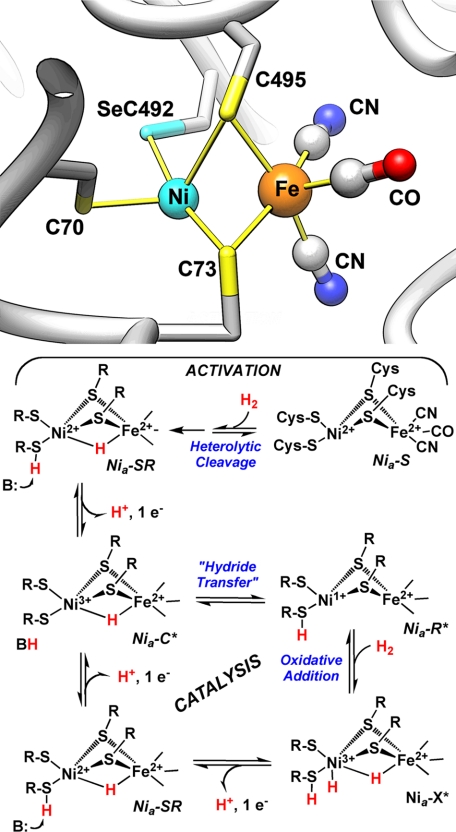
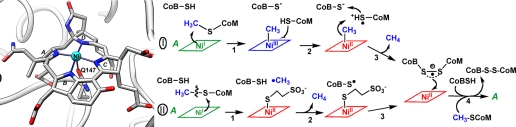
Verification
Claims the paper makes
The claims and statistics of this paper haven’t been checked yet.
Run the check — free, no account needed. It reads the open-access text and checks the sources it cites.
Claims other papers make about this one
Each is checked against this paper’s own text: does it say what the citing paper says it does?
The source backs part of the claim, not all of it — or backs it for a different population, condition or comparison.
In the citing paper
“This is an important similarity to modern anaerobic autotrophs, whose enzymes of core carbon and energy pathways are replete with FeS, FeNiS and MoS (WS) centres, FeS and NiS usually being incorporated into proteins via cysteine residues [54–58], Mo and W usually being complexed by thiols of the molybdopterin cofactor MoCo [59].”
From Early bioenergetic evolution (2013) · cites this paper as [56]
Experimental — accuracy not yet measuredThe source backs part of the claim, not all of it — or backs it for a different population, condition or comparison.
In the citing paper
“In the enzymatic mechanism [56], electrons from a low-potential Fd are used by the enzyme to reduce one molecule of CO2 to CO at an FeNiS cluster called the C cluster; that CO migrates to a second FeNiS cluster in the enzyme (the A cluster), where it binds one of two Ni atoms at the Nip site to form a Ni-bound carbonyl group, where the two-electron donating property of Ni is important in the”
From Early bioenergetic evolution (2013) · cites this paper as [56]
Experimental — accuracy not yet measuredThe cited source says what the claim attributes to it.
In the citing paper
“The catalysis in CODH/ACS is performed by transition metals (Fe and Ni) coordinated as sulfide clusters [50,56,73].”
From Early bioenergetic evolution (2013) · cites this paper as [56]
Self-check
Percentages, sums and reported differences re-computed from the paper’s own numbers.
The self-check needs the paper’s full text.
Citations
Cites
Superoxide radical and superoxide dismutases
Fridovich, I. (1995) · Annual Review of Biochemistry · doi:10.1146/annurev.bi.64.070195.000525 · Cited by 3,455
Kadish, K. M., Smith, K. M., & Guilard, R. (2003) · Elsevier eBooks · doi:10.1016/c2009-0-22714-0 · Cited by 2,594
Zelko, I. N., Mariani, T. J., & Folz, R. J. (2002) · Free Radical Biology and Medicine · doi:10.1016/s0891-5849(02)00905-x · Cited by 2,212
Occurrence, Classification, and Biological Function of Hydrogenases: An Overview
Vignais, P. M., & Billoud, B. (2007) · Chemical Reviews · doi:10.1021/cr050196r · Cited by 1,617
Acetogenesis and the Wood–Ljungdahl pathway of CO2 fixation
Ragsdale, S. W., & Pierce, E. (2008) · Biochimica et Biophysica Acta (BBA) - Proteins and Proteomics · doi:10.1016/j.bbapap.2008.08.012 · Cited by 1,409
Self-citationNickel essentiality, toxicity, and carcinogenicity
Denkhaus, E., & Salnikow, K. (2002) · Critical Reviews in Oncology/Hematology · doi:10.1016/s1040-8428(01)00214-1 · Cited by 1,134
Jack bean urease (EC 3.5.1.5). Metalloenzyme. Simple biological role for nickel
Dixon, N. E., Gazzola, C., Blakeley, R. L., & Zerner, B. (1975) · Journal of the American Chemical Society · doi:10.1021/ja00847a045 · Cited by 833
On the origin of biochemistry at an alkaline hydrothermal vent
Martin, W., & Russell, M. J. (2007) · Philosophical Transactions of the Royal Society B: Biological Sciences · doi:10.1098/rstb.2006.1881 · Cited by 771
Moore, G. R. (2002) · Journal of Organometallic Chemistry · doi:10.1016/s0022-328x(02)01715-1 · Cited by 701
Crystal Structure of Methyl-Coenzyme M Reductase: The Key Enzyme of Biological Methane Formation
Ermler, U., Grabarse, W., Shima, S., Goubeaud, M., & Thauer, R. K. (1997) · Science · doi:10.1126/science.278.5342.1457 · Cited by 615
Cited by
Sorted by citations
Fluorescent Sensors for Measuring Metal Ions in Living Systems
Carter, K. P., Young, A. M., & Palmer, A. E. (2014) · Chemical Reviews · doi:10.1021/cr400546e · Cited by 2,470
Nickel: Human Health and Environmental Toxicology
Genchi, G., Carocci, A., Lauria, G., Sinicropi, M. S., & Catalano, A. (2020) · International Journal of Environmental Research and Public Health · doi:10.3390/ijerph17030679 · Cited by 1,602
The physiology and habitat of the last universal common ancestor
Weiss, M. C., Sousa, F. L., Mrnjavac, N., Neukirchen, S., Roettger, M., Nelson-Sathi, S., & Martin, W. F. (2016) · Nature Microbiology · doi:10.1038/nmicrobiol.2016.116 · Cited by 1,049
You, B., Liu, X., Jiang, N., & Sun, Y. (2016) · Journal of the American Chemical Society · doi:10.1021/jacs.6b07127 · Cited by 1,007
Hartmann, J., West, A. J., Renforth, P., Köhler, P., De La Rocha, C. L., Wolf‐Gladrow, D. A., Dürr, H. H., & Scheffran, J. (2013) · Reviews of Geophysics · doi:10.1002/rog.20004 · Cited by 717
Quantum Chemical Studies of Mechanisms for Metalloenzymes
Blomberg, M. R. A., Borowski, T., Himo, F., Liao, R., & Siegbahn, P. E. M. (2014) · Chemical Reviews · doi:10.1021/cr400388t · Cited by 606
Colorimetric metal ion sensors – A comprehensive review of the years 2011–2016
Kaur, B., Kaur, N., & Kumar, S. (2017) · Coordination Chemistry Reviews · doi:10.1016/j.ccr.2017.12.002 · Cited by 534
Hristov, A. N., Oh, J., Giallongo, F., Frederick, T. W., Harper, M. T., Weeks, H. L., Branco, A. F., Moate, P. J., Deighton, M. H., Williams, S. R. O., et al. (2015) · Proceedings of the National Academy of Sciences · doi:10.1073/pnas.1504124112 · Cited by 496
Commercial Biomass Syngas Fermentation.
Daniell, J., Köpke, M., & Simpson, S. (2012) · Energies · doi:10.3390/en5125372 · Cited by 444
Fluorescent, MRI, and colorimetric chemical sensors for the first-row d-block metal ions
Zhu, H., Fan, J., Wang, B., & Peng, X. (2014) · Chemical Society Reviews · doi:10.1039/c4cs00285g · Cited by 438
Pathways of lignocellulosic biomass conversion to renewable fuels
Nanda, S., Mohammad, J., Reddy, S. N., Koziński, J. A., & Dalai, A. K. (2013) · Biomass Conversion and Biorefinery · doi:10.1007/s13399-013-0097-z · Cited by 423
Antioxidants: a comprehensive review
Gülçın, İ. (2025) · Archives of Toxicology · doi:10.1007/s00204-025-03997-2 · Cited by 490
Microbial metalloproteomes are largely uncharacterized
Cvetkovic, A., Menon, A. L., Thorgersen, M. P., Scott, J. W., Poole, F. L., Jenney, F. E., Lancaster, W. A., Praissman, J. L., Shanmukh, S., Vaccaro, B. J., et al. (2010) · Nature · doi:10.1038/nature09265 · Cited by 370
Mechanisms of nickel toxicity in microorganisms
Macomber, L., & Hausinger, R. P. (2011) · Metallomics · doi:10.1039/c1mt00063b · Cited by 369
New Antimicrobial Strategies Based on Metal Complexes
Claudel, M., Schwarte, J. V., & Fromm, K. M. (2020) · Chemistry · doi:10.3390/chemistry2040056 · Cited by 346
Nickel-dependent metalloenzymes
Boer, J. L., Mulrooney, S. B., & Hausinger, R. P. (2013) · Archives of Biochemistry and Biophysics · doi:10.1016/j.abb.2013.09.002 · Cited by 345
Bacterial Urease and its Role in Long-Lasting Human Diseases
Konieczna, I. M., Żarnowiec, P., Kwinkowski, M., Kolesińska, B., Frączyk, J., Kaminski, Z. J., & Kaca, W. (2012) · Current Protein and Peptide Science · doi:10.2174/138920312804871094 · Cited by 303
Sousa, F. L., Thiergart, T., Landan, G., Nelson-Sathi, S., Pereira, I. A. C., Allen, J. F., Lane, N., & Martin, W. F. (2013) · Philosophical Transactions of the Royal Society B: Biological Sciences · doi:10.1098/rstb.2013.0088 · Cited by 286
“A methyl group, donated by the corrinoid iron–sulfur protein CoFeSP, binds the same Ni atom [56] in an unusual metal-to-metal methyl transfer reaction [88], and the carbonyl group inserts the Ni–CH3 bond to generate a Ni-bound acetyl group, which is then removed from the enzyme via thiolysis by CoASH to generate the t…”
BackgroundEssential Roles and Hazardous Effects of Nickel in Plants
Ahmad, M. S. A., & Ashraf, M. (2011) · Reviews of Environmental Contamination and Toxicology · doi:10.1007/978-1-4614-0668-6_6 · Cited by 268
Merchant, S. S., & Helmann, J. D. (2012) · Advances in Microbial Physiology · doi:10.1016/b978-0-12-398264-3.00002-4 · Cited by 246
A Turn-On Fluorescent Sensor for Detecting Nickel in Living Cells
Dodani, S. C., He, Q., & Chang, C. J. (2009) · Journal of the American Chemical Society · doi:10.1021/ja906500m · Cited by 238
Complexes of Ni( i ): a “rare” oxidation state of growing importance
Lin, C., & Power, P. P. (2017) · Chemical Society Reviews · doi:10.1039/c7cs00216e · Cited by 245
Zheng, B., Tang, F., Luo, J., Schultz, J. W., Rath, N. P., & Mirica, L. M. (2014) · Journal of the American Chemical Society · doi:10.1021/ja5024749 · Cited by 218
Nickel Homeostasis and Nickel Regulation: An Overview
Li, Y., & Zamble, D. B. (2009) · Chemical Reviews · doi:10.1021/cr900010n · Cited by 217
Transition Metal Sequestration by the Host-Defense Protein Calprotectin
Zygiel, E. M., & Nolan, E. M. (2018) · Annual Review of Biochemistry · doi:10.1146/annurev-biochem-062917-012312 · Cited by 193
Metalloproteomics, metalloproteomes, and the annotation of metalloproteins
Maret, W. (2010) · Metallomics · doi:10.1039/b915804a · Cited by 172
Methanogenic burst in the end-Permian carbon cycle
Rothman, D. H., Fournier, G. P., French, K. L., Alm, E. J., Boyle, E. A., Cao, C., & Summons, R. E. (2014) · Proceedings of the National Academy of Sciences · doi:10.1073/pnas.1318106111 · Cited by 169
Apak, R., Calokerinos, A. C., Gorinstein, S., Segundo, M. A., Hibbert, D. B., Gülçın, İ., Çekiç, S. D., Güçlü, K., Özyürek, M., Çelik, S. E., et al. (2021) · Pure and Applied Chemistry · doi:10.1515/pac-2020-0902 · Cited by 173
Heavy nickel isotope compositions in rivers and the oceans
Cameron, V., & Vance, D. (2013) · Geochimica et Cosmochimica Acta · doi:10.1016/j.gca.2013.12.007 · Cited by 166
Metals in Cyanobacteria: Analysis of the Copper, Nickel, Cobalt and Arsenic Homeostasis Mechanisms
Huertas, M. J., López‐Maury, L., Giner‐Lamia, J., Sánchez-Riego, A. M., & Florencio, F. J. (2014) · Life · doi:10.3390/life4040865 · Cited by 177
Tokarz, P., Kaarniranta, K., & Błasiak, J. (2013) · Biogerontology · doi:10.1007/s10522-013-9463-2 · Cited by 164
Schönheit, P., Buckel, W., & Martin, W. F. (2016) · Trends in Microbiology · doi:10.1016/j.tim.2015.10.003 · Cited by 156
Sinicropi, M. S., Amantea, D., Caruso, A., & Saturnino, C. (2010) · Archives of Toxicology · doi:10.1007/s00204-010-0544-6 · Cited by 154
Methodologies for “Wiring” Redox Proteins/Enzymes to Electrode Surfaces
Yates, N. D. J., Fascione, M. A., & Parkin, A. (2018) · Chemistry - A European Journal · doi:10.1002/chem.201800750 · Cited by 145
Fernández‐Naveira, Á., Veiga, M. C., & Kennes, C. (2017) · Journal of Chemical Technology & Biotechnology · doi:10.1002/jctb.5194 · Cited by 143
Zambelli, B., & Ciurli, S. (2013) · Metal ions in life sciences · doi:10.1007/978-94-007-7500-8_10 · Cited by 145
The Compositional and Evolutionary Logic of Metabolism
Braakman, R., & Smith, E. (2012) · Physical Biology · doi:10.1088/1478-3975/10/1/011001 · Cited by 158
Older than genes: the acetyl CoA pathway and origins
Martin, W. F. (2020) · Frontiers in Microbiology · doi:10.3389/fmicb.2020.00817 · Cited by 132
Dawson, G. A., Spielvogel, E. H., & Diao, T. (2023) · Accounts of Chemical Research · doi:10.1021/acs.accounts.3c00588 · Cited by 126
Nickel Sequestration by the Host-Defense Protein Human Calprotectin
Nakashige, T. G., Zygiel, E. M., Drennan, C. L., & Nolan, E. M. (2017) · Journal of the American Chemical Society · doi:10.1021/jacs.7b01212 · Cited by 125
Afrin, A., Jayaraj, A., Gayathri, M. S. L., & Chinna Ayya Swamy, P. (2023) · Sensors & Diagnostics · doi:10.1039/d3sd00110e · Cited by 127
Ugya, A. Y., Imam, T. S., Li, A., Ma, J., & Hua, X. (2019) · Chemistry and Ecology · doi:10.1080/02757540.2019.1688308 · Cited by 128
Synthesis and in vitro urease inhibitory activity of N,N′-disubstituted thioureas
Khan, K. M., Naz, F., Taha, M., Khan, A., Perveen, S., Choudhary, M. I., & Voelter, W. (2014) · European Journal of Medicinal Chemistry · doi:10.1016/j.ejmech.2014.01.001 · Cited by 118
Horner, T. J., Little, S., Conway, T. M., Farmer, J. R., Hertzberg, J. E., Lough, A., McKay, J. L., Tessin, A. C., Galer, S. J. G., Jaccard, S. L., et al. (2021) · Global Biogeochemical Cycles · doi:10.1029/2020gb006814 · Cited by 120
Sule, K., Umbsaar, J., & Prenner, E. J. (2020) · Biochimica et Biophysica Acta (BBA) - Biomembranes · doi:10.1016/j.bbamem.2020.183250 · Cited by 115
A highly selective colorimetric chemosensor for detection of nickel ions in aqueous solution
Liu, X., Lin, Q., Wei, T., & Zhang, Y. (2014) · New Journal of Chemistry · doi:10.1039/c3nj01403g · Cited by 105
Kaluarachchi, H., Chung, K. C. C., & Zamble, D. B. (2010) · Natural Product Reports · doi:10.1039/b906688h · Cited by 102
Effect of nickel-containing activated carbon on food waste anaerobic digestion
Ko, J. H., Wang, N., Yuan, T., Lü, F., He, P., & Xu, Q. (2018) · Bioresource Technology · doi:10.1016/j.biortech.2018.07.015 · Cited by 98
Serpentinization: connecting geochemistry, ancient metabolism and industrial hydrogenation
Preiner, M., Xavier, J. C., Sousa, F. L., Zimorski, V., Neubeck, A., Lang, S. Q., Greenwell, H. C., Kleinermanns, K., Tüysüz, H., McCollom, T. M., et al. (2018) · Life · doi:10.3390/life8040041 · Cited by 97
Dolara, P. (2014) · International Journal of Food Sciences and Nutrition · doi:10.3109/09637486.2014.937801 · Cited by 96
He, D., Xiao, J., Wang, D., Liu, X., Fu, Q., Li, Y., Du, M., Yang, Q. X., Liu, Y., Wang, Q., et al. (2021) · Water Research · doi:10.1016/j.watres.2021.117198 · Cited by 95
Archer, C., Vance, D., Milne, A., & Lohan, M. C. (2020) · Earth and Planetary Science Letters · doi:10.1016/j.epsl.2020.116118 · Cited by 92
Shearer, J. (2014) · Accounts of Chemical Research · doi:10.1021/ar500060s · Cited by 86
Role of diatoms in nickel biogeochemistry in the ocean
Twining, B. S., Baines, S. B., Vogt, S., & Nelson, D. M. (2012) · Global Biogeochemical Cycles · doi:10.1029/2011gb004233 · Cited by 84
Ciscato, E. R., Bontognali, T. R. R., & Vance, D. (2018) · Earth and Planetary Science Letters · doi:10.1016/j.epsl.2018.04.061 · Cited by 79
Towards balancing the oceanic Ni budget
Little, S., Archer, C., McManus, J., Najorka, J., Wegorzewski, A. V., & Vance, D. (2020) · Earth and Planetary Science Letters · doi:10.1016/j.epsl.2020.116461 · Cited by 75
A simple pyrazine based ratiometric fluorescent sensor for Ni2+ ion detection
Mohanasundaram, D., Kumar, G. G. V., Balachandar, B. K., Sarveswari, S., Sivaraman, G., & Rajesh, J. (2019) · Dyes and Pigments · doi:10.1016/j.dyepig.2019.107897 · Cited by 75
Shawish, H. B., Wong, W. Y., Wong, Y. L., Loh, S. W., Looi, C. Y., Hassandarvish, P., Phan, A. Y. L., Wong, W. F., Wang, H., Paterson, I. C., et al. (2014) · PLoS ONE · doi:10.1371/journal.pone.0100933 · Cited by 74
Dong, T., Duan, C., Wang, S., Gao, X., Yang, Q., Yang, W., & Deng, Y. (2020) · ACS Applied Materials & Interfaces · doi:10.1021/acsami.0c02304 · Cited by 70
Manna, A. K., Rout, K., Chowdhury, S., & Patra, G. K. (2019) · Photochemical & Photobiological Sciences · doi:10.1039/c9pp00114j · Cited by 70
Early evolution without a tree of life
Martin, W. F. (2011) · Biology Direct · doi:10.1186/1745-6150-6-36 · Cited by 70
The elements of life: A biocentric tour of the periodic table
(2023) · Advances in Microbial Physiology · doi:10.1016/bs.ampbs.2022.11.001 · Cited by 71
Recent developments in Schiff base centered optical and chemical sensors for metal ion recognition
Taha, A., Farooq, N., Singh, N., & Hashmi, A. A. (2024) · Journal of Molecular Liquids · doi:10.1016/j.molliq.2024.124678 · Cited by 66
Mathrubootham, V., Thomas, J. M., Staples, R. J., McCraken, J., Shearer, J., & Hegg, E. L. (2010) · Inorganic Chemistry · doi:10.1021/ic9023053 · Cited by 66
Duan, P., Manz, D.-H., Sebastian Dechert, B., Demeshko, S., & Meyer, F. (2018) · Journal of the American Chemical Society · doi:10.1021/jacs.8b01468 · Cited by 68
Synthetic Analogues of Nickel Superoxide Dismutase: A New Role for Nickel in Biology
Broering, E. P., Truong, P. T., Gale, E. M., & Harrop, T. C. (2012) · Biochemistry · doi:10.1021/bi3014533 · Cited by 65
Specific Metal Recognition in Nickel Trafficking
Higgins, K. A., Carr, C. E., & Maroney, M. J. (2012) · Biochemistry · doi:10.1021/bi300981m · Cited by 64
Tian, Y., Zhang, H., Yang, C., Wang, L., Mi, X., Zhang, L., & Ware, M. A. (2016) · Biodegradation · doi:10.1007/s10532-016-9774-5 · Cited by 59
One step beyond a ribosome: The ancient anaerobic core
Sousa, F. L., Nelson-Sathi, S., & Martin, W. F. (2016) · Biochimica et Biophysica Acta (BBA) - Bioenergetics · doi:10.1016/j.bbabio.2016.04.284 · Cited by 58
The essential bioactive role of nickel in the oceans: Evidence from nickel isotopes
Lemaitre, N., Du, J., de Souza, G. F., Archer, C., & Vance, D. (2022) · Earth and Planetary Science Letters · doi:10.1016/j.epsl.2022.117513 · Cited by 57
Bacterial Metallostasis: Metal Sensing, Metalloproteome Remodeling, and Metal Trafficking
Capdevila, D. A., Rondón, J. J., Edmonds, K. A., Rocchio, J. S., Dujovne, M. V., & Giedroc, D. P. (2024) · Chemical Reviews · doi:10.1021/acs.chemrev.4c00264 · Cited by 64
Chowdhury, B., Karar, M., Paul, S., Joshi, M., Choudhury, A. R., & Biswas, B. (2018) · Sensors and Actuators B Chemical · doi:10.1016/j.snb.2018.08.141 · Cited by 56
Ejiah, F. N., Rofiu, M. O., Oloba‐Whenu, O. A., & Fasina, T. M. (2023) · Materials Advances · doi:10.1039/d3ma00097d · Cited by 58
Synthesis and Reactivities of New NCN-Type Pincer Complexes of Nickel
Cloutier, J.-P., Vabre, B., Mougang‐Soumé, B., & Zargarian, D. (2014) · Organometallics · doi:10.1021/om5010176 · Cited by 54
Pungut, N. A. S., Heng, M. P., Saad, H. M., Sim, K. S., Lee, V. S., & Tan, K. W. (2021) · Journal of Molecular Structure · doi:10.1016/j.molstruc.2021.130453 · Cited by 54
Sahu, M., Manna, A. K., Chowdhury, S., & Patra, G. K. (2020) · RSC Advances · doi:10.1039/d0ra09023a · Cited by 53
A Review on Metal Ion Sensors Derived from Chalcone Precursor
Mahesha, P., Shetty, N. S., & Kulkarni, S. D. (2022) · Journal of Fluorescence · doi:10.1007/s10895-022-02900-x · Cited by 52
He, Z., Archer, C., Yang, S., & Vance, D. (2022) · Geochimica et Cosmochimica Acta · doi:10.1016/j.gca.2022.12.026 · Cited by 52
Maganas, D., Grigoropoulos, A., Staniland, S. S., Chatziefthimiou, S. D., Harrison, A., Robertson, N., Kyritsis, P., & Neese, F. (2010) · Inorganic Chemistry · doi:10.1021/ic100163g · Cited by 52
Haider, S., Roldán, A., & de Leeuw, N. H. (2013) · The Journal of Physical Chemistry C · doi:10.1021/jp409522q · Cited by 52
Manna, A. K., Chowdhury, S., & Patra, G. K. (2019) · Dalton Transactions · doi:10.1039/c9dt02448d · Cited by 52
Chen, S., Blomberg, M. R. A., & Siegbahn, P. E. M. (2012) · Chemistry - A European Journal · doi:10.1002/chem.201200274 · Cited by 51
Promiscuity in the Enzymatic Catalysis of Phosphate and Sulfate Transfer
Pabis, A., Duarte, F., & Kamerlin, S. C. L. (2016) · Biochemistry · doi:10.1021/acs.biochem.6b00297 · Cited by 50
Maganas, D., Krzystek, J., Ferentinos, E., Whyte, A. M., Robertson, N., Psycharis, V., Terzis, A., Neese, F., & Kyritsis, P. (2012) · Inorganic Chemistry · doi:10.1021/ic300453y · Cited by 48
Distinct Metal Isoforms Underlie Promiscuous Activity Profiles of Metalloenzymes
Baier, F., Chen, J. Z., Solomonson, M., Strynadka, N. C. J., & Tokuriki, N. (2015) · ACS Chemical Biology · doi:10.1021/acschembio.5b00068 · Cited by 43
The Ni(II)-Binding Properties of the Metallochaperone SlyD
Kaluarachchi, H., Sutherland, D. E. K., Young, A., Pickering, I. J., Stillman, M. J., & Zamble, D. B. (2009) · Journal of the American Chemical Society · doi:10.1021/ja9081765 · Cited by 45
Accelerated H2 Evolution during Microbial Electrosynthesis with Sporomusa ovata
Tremblay, P., Faraghiparapari, N., & Zhang, T. (2019) · Catalysts · doi:10.3390/catal9020166 · Cited by 46
Bender, G., Stich, T. A., Yan, L., Britt, R. D., Cramer, S. P., & Ragsdale, S. W. (2010) · Biochemistry · doi:10.1021/bi1010128 · Cited by 44
Self-citationFleischmann, S., Du, J., Chatterjee, A., McManus, J., Iyer, S. D., Amonkar, A., & Vance, D. (2023) · Earth and Planetary Science Letters · doi:10.1016/j.epsl.2023.118301 · Cited by 43
Henriques Pereira, D. P., Leethaus, J., Beyazay, T., do Nascimento Vieira, A., Kleinermanns, K., Tüysüz, H., Martin, W. F., & Preiner, M. (2022) · The FEBS Journal · doi:10.1111/febs.16329 · Cited by 42
Ram, N. R., & Nikhil, G. N. (2022) · Bioresource Technology Reports · doi:10.1016/j.biteb.2022.101170 · Cited by 44
Synthesis, Characterization, and Oxidation of New POCNimine-Type Pincer Complexes of Nickel
Mougang‐Soumé, B., Bélanger-Gariépy, F., & Zargarian, D. (2014) · Organometallics · doi:10.1021/om500529e · Cited by 42
Matraszek, R., Hawrylak-Nowak, B., Chwil, S., & Chwil, M. (2015) · Environmental Science and Pollution Research · doi:10.1007/s11356-015-5823-6 · Cited by 41
Grime, G. W., Zeldin, O. B., Snell, M. E., Lowe, E. D., Hunt, J. F., Montelione, G. T., Tong, L., Snell, E. H., & Garman, E. F. (2019) · Journal of the American Chemical Society · doi:10.1021/jacs.9b09186 · Cited by 42
Nielsen, F. H. (2020) · Advances in Nutrition · doi:10.1093/advances/nmaa154 · Cited by 40
Equilibrium nickel isotope fractionation in nickel sulfide minerals
Liu, S., Li, Y., Ju, Y., Liu, J., Liu, J., & Shi, Y. (2017) · Geochimica et Cosmochimica Acta · doi:10.1016/j.gca.2017.10.018 · Cited by 40
Is There a Ni-Methyl Intermediate in the Mechanism of Methyl-Coenzyme M Reductase?
Chen, S., Pelmenschikov, V., Blomberg, M. R. A., & Siegbahn, P. E. M. (2009) · Journal of the American Chemical Society · doi:10.1021/ja904301f · Cited by 40
A prebiotic Krebs cycle analog generates amino acids with H2 and NH3 over nickel
Kaur, H., Rauscher, S. A., Werner, E., Song, Y., Yi, J., Kazöne, W., Martin, W. F., Tüysüz, H., & Moran, J. (2024) · Chem · doi:10.1016/j.chempr.2024.02.001 · Cited by 39
An Intimate Link: Two-Component Signal Transduction Systems and Metal Transport Systems in Bacteria
Singh, K., Senadheera, D. B., & Cvitkovitch, D. G. (2014) · Future Microbiology · doi:10.2217/fmb.14.87 · Cited by 39
Subashini, G., Shankar, R., Arasakumar, T., & Mohan, P. S. (2016) · Sensors and Actuators B Chemical · doi:10.1016/j.snb.2016.12.004 · Cited by 39
Metadata
- Authors
- Ragsdale, S. W.
- Affiliations
- University of Michigan (US)
- Corresponding author
- Ragsdale, Stephen W.
- ORCID
- Ragsdale, Stephen W.
- Venue
- Journal of Biological Chemistry
- Publisher
- Elsevier BV
- Published
- 2009-07
- Volume
- 284
- Issue
- 28
- Pages
- 18571-18575
- ISSN
- 0021-9258 (ISSN-L)
- PMC
- PMC2707248
- OpenAlex
- W1996983125
- Cited by
- 400
- References
- 40
- Citations by year
- 2026: 24 · 2025: 32 · 2024: 39 · 2023: 26 · 2022: 30 · 2021: 24 · 2020: 24 · 2019: 26 · 2018: 26 · 2017: 20 · 2016: 11 · 2015: 15 · 2014: 26 · 2013: 22 · 2012: 23
- FWCI
- 0.95
- Type
- journal article
- Language
- en
- Open access
- hybrid
- doi.org
- Licence
- Locations
- Journal of Biological Chemistry (publishedVersion, cc-by)
- PubMed Central (publishedVersion, cc-by-nc)
- PubMed (publishedVersion)
- Funders
- National Institute of General Medical Sciences (R01GM039451)
- Topics
- Life Sciences › Biochemistry, Genetics and Molecular Biology › Biochemistry › Metalloenzymes and iron-sulfur proteins
- Physical Sciences › Chemistry › Inorganic Chemistry › Metal-Catalyzed Oxygenation Mechanisms
- Life Sciences › Biochemistry, Genetics and Molecular Biology › Structural Biology › Enzyme Structure and Function
- Keywords
- nickel enzymes, nickel coordination chemistry, redox state, catalytic mechanism, metal centers, metal clusters, carbon cycle, nitrogen cycling, oxygen cycle, hydrolysis
- MeSH terms
- Acetate-CoA Ligase, Biochemistry, Carbon, Catalysis, Enzymes, Hydrogenase, Hydrolysis, Metals, Models, Molecular, Molecular Conformation, Nickel, Nitrogen, Oxidation-Reduction, Oxygen, Urease
About these checks
Registry, retraction, Cites and statistics results are computed, not judged, with one exception: a printed reference that no index lists is read once by a model before it counts as a citation error. Claims are extracted by a model and kept only when their quote appears verbatim in the text; each cited source is then checked, with a model’s help, for whether it says what the claim relies on. Those verdicts can be wrong — read the claim’s quote and the cited source before relying on one.
Statistics and arithmetic are recomputed, not judged.
Confidence bands are shown only for fields calibrated on our annotated test set. None is calibrated yet, so no band is shown.
What counts as a claim ›How we measure confidence ›How we check this ›
Are you an author, or do you see a problem with this page? Request a review
