

Delayed Correlation of mRNA and Protein Expression in Rapamycin-treated Cells and a Role for Ggc1 in Cellular Sensitivity to Rapamycin
Open accessThe DOI matches its Crossref record; 48 of the 48 references it cites were found in a registry or an index.
Abstract
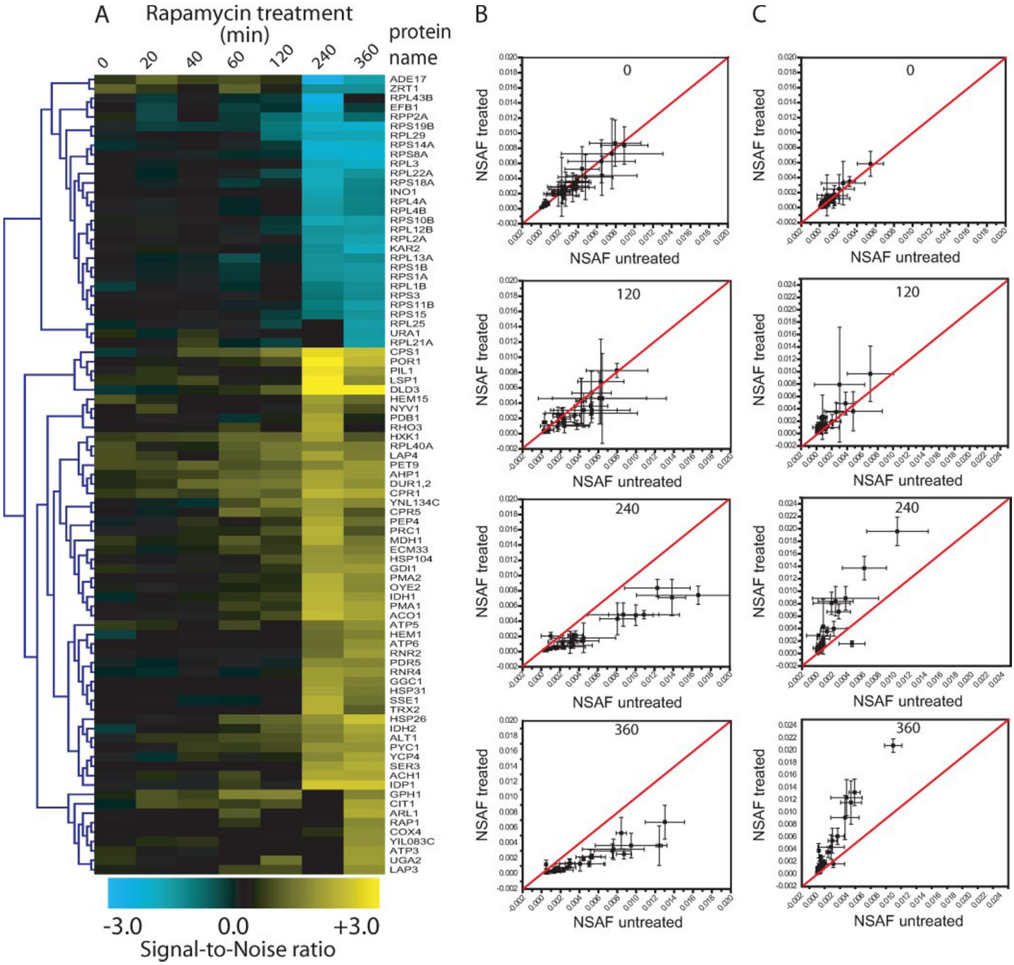
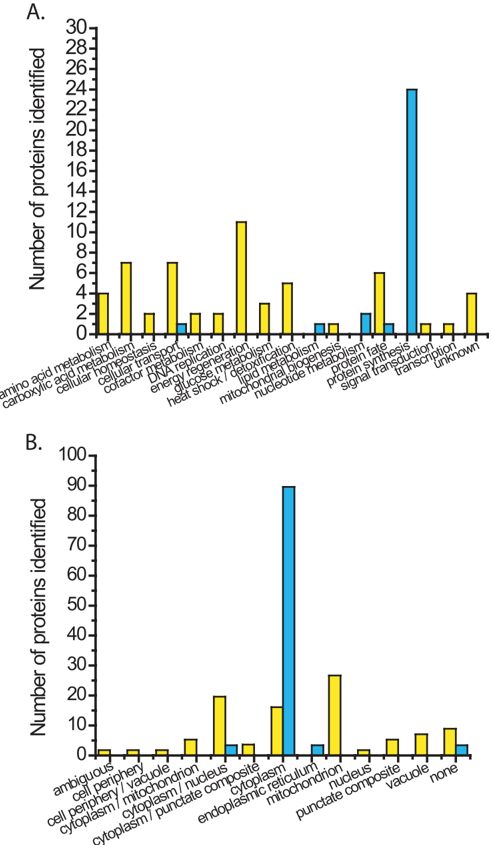
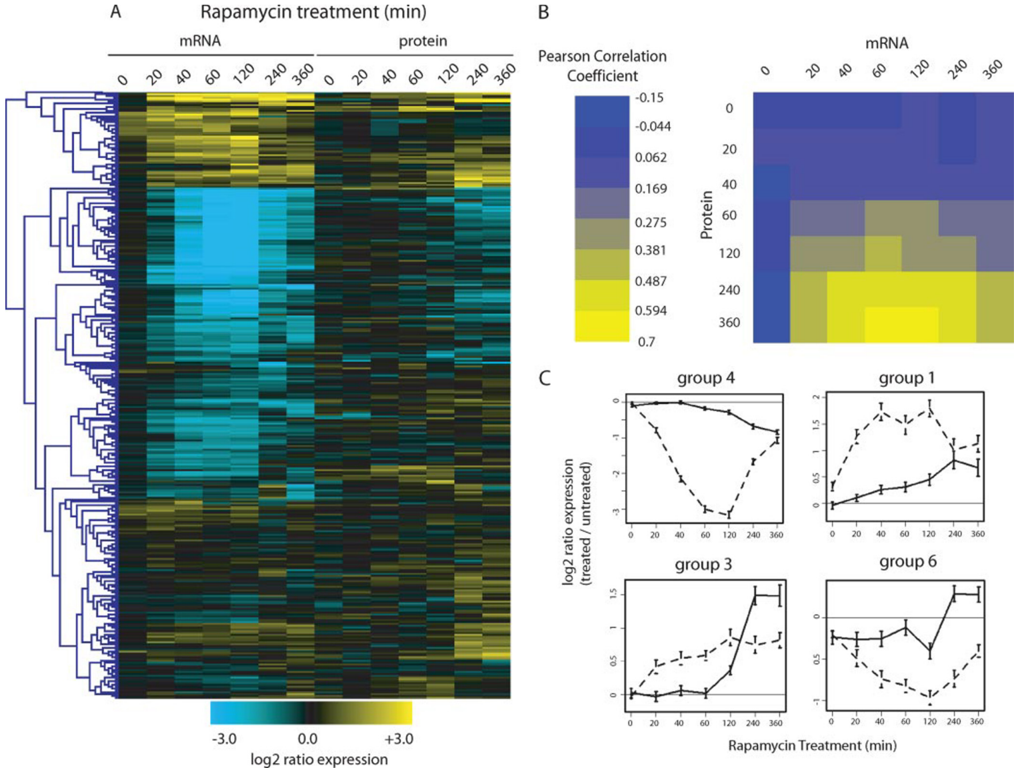
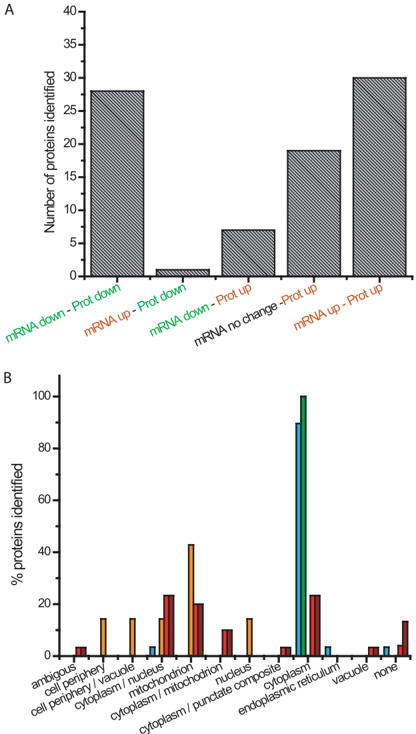
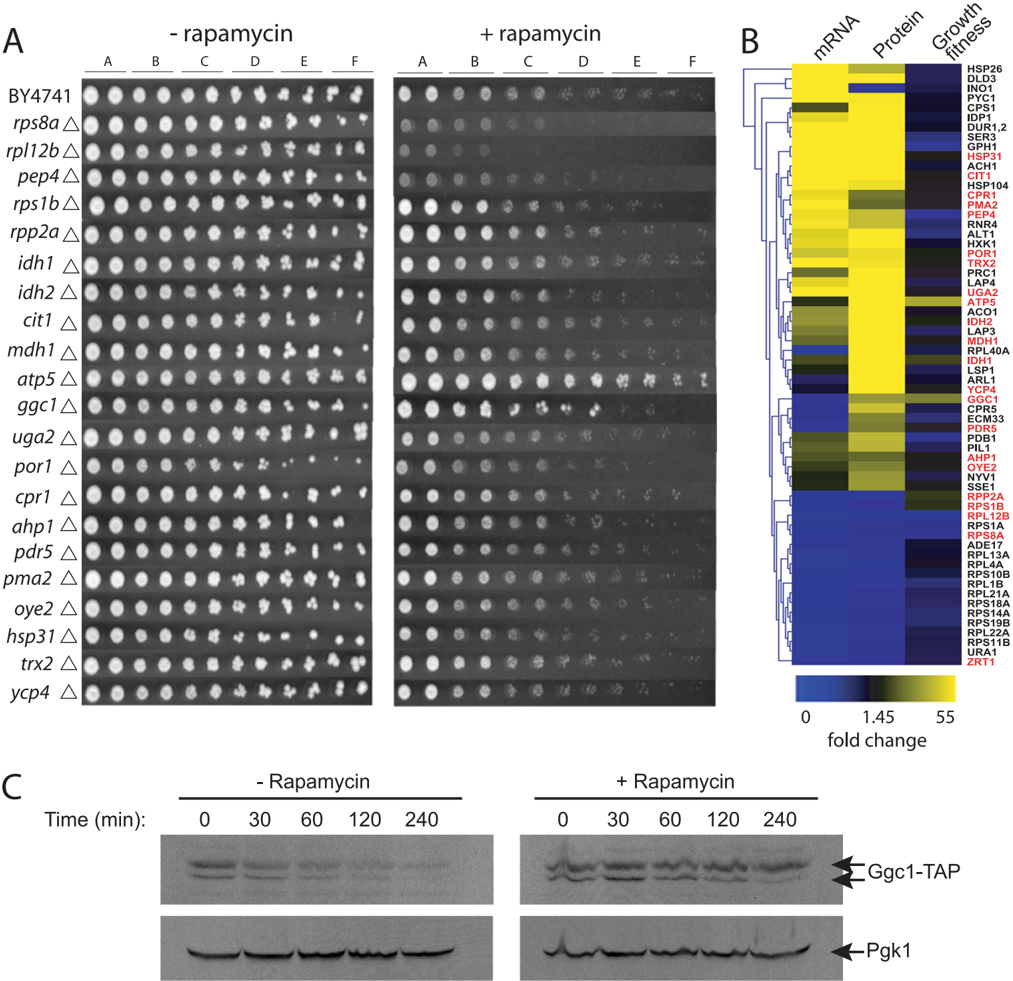
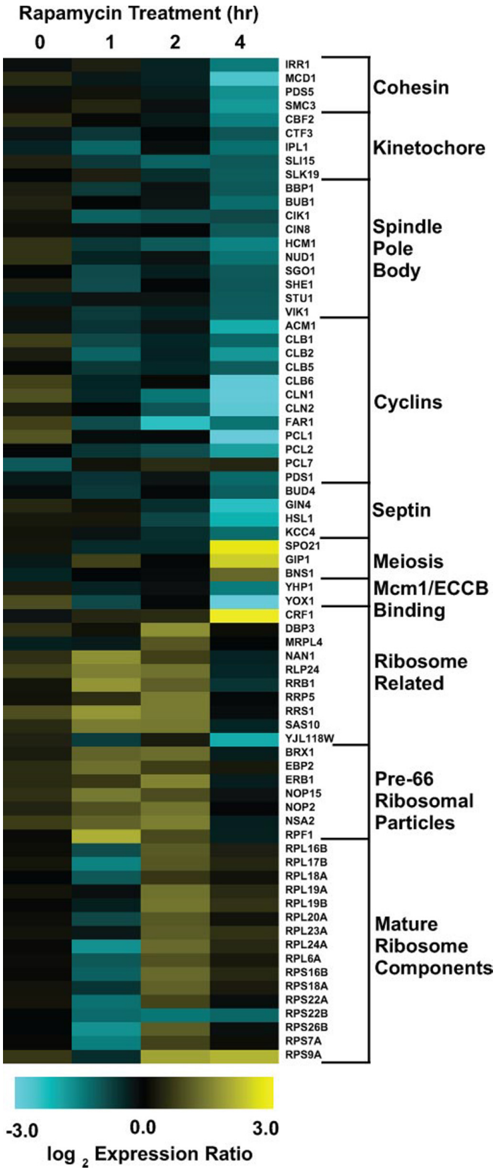
To identify new molecular targets of rapamycin, an anticancer and immunosuppressive drug, we analyzed temporal changes in yeast over 6 h in response to rapamycin at the transcriptome and proteome levels and integrated the expression patterns with functional profiling. We show that the integration of transcriptomics, proteomics, and functional data sets provides novel insights into the molecular mechanisms of rapamycin action. We first observed a temporal delay in the correlation of mRNA and protein expression where mRNA expression at 1 and 2 h correlated best with protein expression changes after 6 h of rapamycin treatment. This was especially the case for the inhibition of ribosome biogenesis and induction of heat shock and autophagy essential to promote the cellular sensitivity to rapamycin. However, increased levels of vacuolar protease could enhance resistance to rapamycin. Of the 85 proteins identified as statistically significantly changing in abundance, most of the proteins that decreased in abundance were correlated with a decrease in mRNA expression. However, of the 56 proteins increasing in abundance, 26 were not correlated with an increase in mRNA expression. These protein changes were correlated with unchanged or down-regulated mRNA expression. These proteins, involved in mitochondrial genome maintenance, endocytosis, or drug export, represent new candidates effecting rapamycin action whose expression might be post-transcriptionally or post-translationally regulated. We identified GGC1, a mitochondrial GTP/GDP carrier, as a new component of the rapamycin/target of rapamycin (TOR) signaling pathway. We determined that the protein product of GGC1 was stabilized in the presence of rapamycin, and the deletion of the GGC1 enhanced growth fitness in the presence of rapamycin. A dynamic mRNA expression analysis of Deltaggc1 and wild-type cells treated with rapamycin revealed a key role for Ggc1p in the regulation of ribosome biogenesis and cell cycle progression under TOR control.
Overview
The claims and statistics of this paper haven’t been checked yet.
Free: it reads the open-access text and checks the first 5 claims that cite a source we can check. Create a free account to check every claim.
Integrity signals
Registry
Cites
Statistics
Figures
Verification
Claims the paper makes
The claims and statistics of this paper haven’t been checked yet.
Free: it reads the open-access text and checks the first 5 claims that cite a source we can check. Create a free account to check every claim.
Claims other papers make about this one
Each is checked against this paper’s own text: does it say what the citing paper says it does?
The source backs part of the claim, not all of it — or backs it for a different population, condition or comparison.
In the citing paper
“In comparison, in yeast responding to various treatments, protein and mRNA expression often disagree substantially (Berry & Gasch, 2008; Fournier et al, 2010; Lee et al, 2011; Vogel et al, 2011; Lackner et al, 2012).”
From Differential dynamics of the mammalian mRNA and protein expression response to misfolding stress (2016) · cites this paper as Fournier et al, 2010
Experimental — accuracy not yet measured
Self-check
Percentages, sums and reported differences re-computed from the paper’s own numbers.
The self-check needs the paper’s full text.
Citations
Cites
Smyth, G. K. (2004) · Statistical Applications in Genetics and Molecular Biology · doi:10.2202/1544-6115.1027 · Cited by 11,829
R: A Language for Data Analysis and Graphics
Ihaka, R., & Gentleman, R. (1996) · Journal of Computational and Graphical Statistics · doi:10.1080/10618600.1996.10474713 · Cited by 11,220
Exploration, normalization, and summaries of high density oligonucleotide array probe level data
Irizarry, R. A. (2003) · Biostatistics · doi:10.1093/biostatistics/4.2.249 · Cited by 10,603
Eng, J. K., McCormack, A. L., & Yates, J. R. (1994) · Journal of the American Society for Mass Spectrometry · doi:10.1016/1044-0305(94)80016-2 · Cited by 6,484 · cited 1×
“Proteins were identified by database searching using SEQUEST software (25).”
MethodTM4: a free, open-source system for microarray data management and analysis
Saeed, A. I., Sharov, V., White, J., Li, J., Liang, W., Bhagabati, N., Braisted, J., Klapa, M., Currier, T., Thiagarajan, M., et al. (2003) · BioTechniques · doi:10.2144/03342mt01 · Cited by 4,837 · cited 1×
“0 (32), and gene ontology (GO) enrichment term analyses were performed using the FATIGO function in babelomics (33).”
MethodLarge-scale analysis of the yeast proteome by multidimensional protein identification technology
Washburn, M. P., Wolters, D., & Yates, J. R. (2001) · Nature Biotechnology · doi:10.1038/85686 · Cited by 4,752
Self-citationControlling the false discovery rate in behavior genetics research
Benjamini, Y., Drai, D., Elmer, G., Kafkafi, N., & Golani, I. (2001) · Behavioural Brain Research · doi:10.1016/s0166-4328(01)00297-2 · Cited by 4,146 · cited 1×
“The Benjamini-Yuketiele multitest correction method (31) was applied to control the false discovery rate.”
MethodElias, J. E., & Gygi, S. P. (2007) · Nature Methods · doi:10.1038/nmeth1019 · Cited by 3,925 · cited 1×
“The false discovery rate was calculated as the number of spectra matching randomized peptides multiplied by 2 and divided by the total number of spectra as described before (28, 29); it ranged between 0.”
MethodBaker Brachmann, C., Davies, A., Cost, G. J., Caputo, E., Li, J., Hieter, P., & Boeke, J. D. (1998) · Yeast · doi:10.1002/(sici)1097-0061(19980130)14:2<115::aid-yea204>3.0.co;2-2 · Cited by 3,401 · cited 1×
“cerevisiae strain BY4741 (MATa his3 1 leu2 0 met15 0 ura3 0) (16) was grown to middle log-phase (optical density at 600 nm, 0.”
Quantification of mRNA using real-time RT-PCR
Nolan, T., Hands, R. E., & Bustin, S. A. (2006) · Nature Protocols · doi:10.1038/nprot.2006.236 · Cited by 2,247 · cited 1×
“GGC1 mRNA was then analyzed by real time RT-PCR after 6 h of treatment according to previously published protocols (35).”
Method
Cited by
Insights into the regulation of protein abundance from proteomic and transcriptomic analyses
Vogel, C., & Marcotte, E. M. (2012) · Nature Reviews Genetics · doi:10.1038/nrg3185 · Cited by 4,195
“In a different time-series study, yeast that had been subjected to oxidative stress did not display this behaviour but indicated substantial post-transcriptional regulation of a large fraction of the genes independently of their up- or downregulatio”
On the Dependency of Cellular Protein Levels on mRNA Abundance
Liu, Y., Beyer, A., & Aebersold, R. (2016) · Cell · doi:10.1016/j.cell.2016.03.014 · Cited by 3,221
Koussounadis, A., Langdon, S. P., Um, I. H., Harrison, D. J., & Smith, V. A. (2015) · Scientific Reports · doi:10.1038/srep10775 · Cited by 643
Tkach, J. M., Yimit, A., Lee, A. Y., Riffle, M., Costanzo, M., Jaschob, D., Hendry, J. A., Ou, J., Moffat, J., Boone, C., et al. (2012) · Nature Cell Biology · doi:10.1038/ncb2549 · Cited by 492
“This contrasts with the response to osmotic shock 50 and rapamycin treatment 51 in yeast where 80% and 36% of the protein abundance changes could be explained by cognate changes in mRNA abundance.”
Challenges and emergent solutions for LC‐MS/MS based untargeted metabolomics in diseases
Cui, L., Lu, H., & Lee, Y. H. (2018) · Mass Spectrometry Reviews · doi:10.1002/mas.21562 · Cited by 415
Dyhrman, S. T., Jenkins, B. D., Rynearson, T. A., Saito, M. A., Mercier, M. L., Alexander, H., Whitney, L. P., Drzewianowski, A., Bulygin, V. V., Bertrand, E. M., et al. (2012) · PLoS ONE · doi:10.1371/journal.pone.0033768 · Cited by 337
“were also statistically upregulated by rampamycin exposure [28].”
BackgroundA dynamic model of proteome changes reveals new roles for transcript alteration in yeast
Lee, M. V., Topper, S. E., Hubler, S. L., Hose, J., Wenger, C. D., Coon, J. J., & Gasch, A. P. (2011) · Molecular Systems Biology · doi:10.1038/msb.2011.48 · Cited by 290
Yeast Proteome Dynamics from Single Cell Imaging and Automated Analysis
Chong, Y. T., Koh, J. L. Y., Friesen, H., Kaluarachchi Duffy, S., Cox, M. J., Moses, A., Moffat, J., Boone, C., & Andrews, B. J. (2015) · Cell · doi:10.1016/j.cell.2015.04.051 · Cited by 274
AMPK improves gut epithelial differentiation and barrier function via regulating Cdx2 expression
Sun, X., Yang, Q., Rogers, C. J., Du, M., & Zhu, M.-J. (2017) · Cell Death & Differentiation · doi:10.1038/cdd.2017.14 · Cited by 232
“to its mRNA expression could be due to the time needed for protein synthesis and post-translational modifications.(18) Immunofluorescence staining revealed a lower level of”
BackgroundDifferential dynamics of the mammalian mRNA and protein expression response to misfolding stress
Cheng, Z., Teo, G., Krueger, S., Rock, T. M., Koh, H. W., Choi, H., & Vogel, C. (2016) · Molecular Systems Biology · doi:10.15252/msb.20156423 · Cited by 227
“In comparison, in yeast responding to various treatments, protein and mRNA expression often disagree substantially (Berry & Gasch, 2008; Fournier et al , 2010; Lee et al , 2011; Vogel et al , 2011; Lackner et al , 2012).”
Protein synthesis rate is the predominant regulator of protein expression during differentiation
Kristensen, A. R., Gsponer, J., & Foster, L. J. (2013) · Molecular Systems Biology · doi:10.1038/msb.2013.47 · Cited by 217
Network Medicine in the Age of Biomedical Big Data
Sonawane, A. R., Weiss, S. T., Glass, K., & Sharma, A. (2019) · Frontiers in Genetics · doi:10.3389/fgene.2019.00294 · Cited by 186
“High resolution mass spectrometry has also allowed for the collection of longitudinal proteome data, for example to test the effect of drugs (Fournier et al., 2010) or oxidative stress (Vogel et al.”
BackgroundSystems-wide temporal proteomic profiling in glucose-starved Bacillus subtilis
Otto, A., Bernhardt, J., Meyer, H., Schaffer, M., Herbst, F.-A., Siebourg, J., Mäder, U., Lalk, M., Hecker, M., & Becher, D. (2010) · Nature Communications · doi:10.1038/ncomms1137 · Cited by 181
Functional Metabolomics Describes the Yeast Biosynthetic Regulome
Mülleder, M., Calvani, E., Alam, M. T., Wang, R. K., Eckerstorfer, F., Zelezniak, A., & Ralser, M. (2016) · Cell · doi:10.1016/j.cell.2016.09.007 · Cited by 178
Transcriptomic responses to environmental temperature in eurythermal and stenothermal fishes
Logan, C. A., & Buckley, B. A. (2015) · Journal of Experimental Biology · doi:10.1242/jeb.114397 · Cited by 171
“…for >60% of all genes in mice and humans (Ghazalpour et al., 2011; Vogel et al., 2010); however, other studies have demonstrated lower levels of correlation (reviewed in Taniguchi et al., 2010) or a delayed response between mRNA and protein expression (Buckley et al., 2006; Fournier et al., 2010).”
BackgroundThe developmental proteome of Drosophila melanogaster
Casas-Vila, N., Bluhm, A., Sayols, S., Dinges, N., Dejung, M., Altenhein, T., Kappei, D., Altenhein, B., Roignant, J.-Y., & Butter, F. (2017) · Genome Research · doi:10.1101/gr.213694.116 · Cited by 161
“Similar to a previous study in yeast (Fournier et al. 2010), we found only amoderate correlation (maximum R = 0.5) between transcriptome and proteome and noted that the best correlation is nonsynchronous, showing a 4- to 5-h proteome delay (Fig.”
BackgroundResultInfluentialFoth, B. J., Zhang, N., Chaal, B. K., Sze, S. K., Preiser, P. R., & Bozdech, Z. (2011) · Molecular & Cellular Proteomics · doi:10.1074/mcp.m110.006411 · Cited by 182
“spective protein levels with a delay of several hours (41).”
BackgroundLackner, D. H., Schmidt, M. W., Wu, S., Wolf, D. A., & Bähler, J. (2012) · Genome Biology · doi:10.1186/gb-2012-13-4-r25 · Cited by 155
Dephoure, N., & Gygi, S. P. (2012) · Science Signaling · doi:10.1126/scisignal.2002548 · Cited by 153
“Although several papers have reported hundreds of genes with changes at the transcriptional level in response to rapamycin (9–12), our observation of a much smaller number of changes at the protein level (121) after a 60-min treatment is consistent with an earlier proteomic analysis of rapamycin-treated yeast (16).”
BackgroundResultNing, K., Fermin, D., & Nesvizhskii, A. I. (2012) · Journal of Proteome Research · doi:10.1021/pr201052x · Cited by 145
Protein Expression Regulation under Oxidative Stress
Vogel, C., Silva, G. M., & Marcotte, E. M. (2011) · Molecular & Cellular Proteomics · doi:10.1074/mcp.m111.009217 · Cited by 144
“Because we did not continue our measurements beyond 2 h, we cannot directly compare the expression changes with those from a previous study using rapamycin (28).”
ResultAdvances in shotgun proteomics and the analysis of membrane proteomes
Gilmore, J. M., & Washburn, M. P. (2010) · Journal of Proteomics · doi:10.1016/j.jprot.2010.08.005 · Cited by 140
Self-citationMcManus, J., Cheng, Z., & Vogel, C. (2015) · Molecular BioSystems · doi:10.1039/c5mb00310e · Cited by 101
Dissection of DNA Damage Responses Using Multiconditional Genetic Interaction Maps
Guénolé, A., Srivas, R., Vreeken, K., Wang, Z. Z., Wang, S., Krogan, N. J., Ideker, T., & van Attikum, H. (2012) · Molecular Cell · doi:10.1016/j.molcel.2012.11.023 · Cited by 113
“Interestingly, we found that irc21D strains are hypersensitive to MMS when combined with the TOR inhibitor rapamycin (Figure S5H), a compound that can affect the abundance of proteins including DDR factors (Dyavaiah et al., 2011; Fournier et al., 2010).”
BackgroundLeveraging the complementary nature of RNA‐Seq and shotgun proteomics data
Wang, X., Liu, Q., & Zhang, B. (2014) · PROTEOMICS · doi:10.1002/pmic.201400184 · Cited by 110
“Fournier et al. [61] found that most down-regulated proteins correlated with mRNA under-expression, while up-regulated proteins were not associated with mRNA overexpression.”
BackgroundWang, J., Mei, H., Cao, Z., Qian, H., Cui, C., Fu, Y., Su, J., Liu, Z., Yu, Z., & He, J. (2013) · Molecular & Cellular Proteomics · doi:10.1074/mcp.m112.023986 · Cited by 104
The metabolic background is a global player in Saccharomyces gene expression epistasis
Alam, M. T., Zelezniak, A., Mülleder, M., Shliaha, P., Schwarz, R., Capuano, F., Vowinckel, J., Radmaneshfar, E., Krüger, A., Calvani, E., et al. (2016) · Nature Microbiology · doi:10.1038/nmicrobiol.2015.30 · Cited by 87
Xiong, Y. B., Coradetti, S. T., Li, X., Gritsenko, M. A., Clauss, T. R., Petyuk, V., Camp, D., Smith, R. D., Cate, J. H. D., Yang, F., et al. (2014) · Fungal Genetics and Biology · doi:10.1016/j.fgb.2014.05.005 · Cited by 94
“cerevisiae following responses to perturbation to different stimuli (Fournier et al., 2010; Lee et al., 2011; Vogel et al., 2011).”
BackgroundThe Role of Autophagy in Genome Stability through Suppression of Abnormal Mitosis under Starvation
Matsui, A., Kamada, Y., & Matsuura, A. (2013) · PLoS Genetics · doi:10.1371/journal.pgen.1003245 · Cited by 91
“Although TORC1 activity is involved in translation [19], previous studies have shown that the synthesis of specific proteins continues under TORC1inhibited conditions [44].”
BackgroundAntagonism of Sigma-1 Receptors Blocks Compulsive-Like Eating
Cottone, P., Wang, X., Park, J. W., Valenza, M., Blasio, A., Kwak, J., Iyer, M. R., Steardo, L., Rice, K. C., Hayashi, T., et al. (2012) · Neuropsychopharmacology · doi:10.1038/npp.2012.89 · Cited by 89
Srivastava, V., Obudulu, O., Bygdell, J., Löfstedt, T., Rydén, P., Nilsson, R., Ahnlund, M., Johansson, A., Jonsson, P., Freyhult, E., et al. (2013) · BMC Genomics · doi:10.1186/1471-2164-14-893 · Cited by 78
Nadella, R., Voutilainen, M. H., Saarma, M., Gonzalez-Barrios, J. A., Leon-Chavez, B. A., Jiménez, J. M. D., Jiménez, S. H. D., Escobedo, L., & Martinez-Fong, D. (2014) · Journal of Neuroinflammation · doi:10.1186/s12974-014-0209-0 · Cited by 71
Wurch, L. L., Bertrand, E. M., Saito, M. A., Mooy, B. A. S. V., & Dyhrman, S. T. (2011) · PLoS ONE · doi:10.1371/journal.pone.0028949 · Cited by 79
“In yeast it has recently been shown that transcriptional patterns 1–2 hours after treatment were best correlated with protein abundances 4–6 hours after treatment with the antibiotic rapamycin, supporting the idea of a lag between induction of transcripts and translation of proteins [57].”
BackgroundModeling Phenotypic Metabolic Adaptations of Mycobacterium tuberculosis H37Rv under Hypoxia
Fang, X. D., Wallqvist, A., & Reifman, J. (2012) · PLoS Computational Biology · doi:10.1371/journal.pcbi.1002688 · Cited by 68
“7 [65–67].”
Toward a Genome-Wide Landscape of Translational Control
Larsson, O. S., Tian, B., & Sonenberg, N. (2012) · Cold Spring Harbor Perspectives in Biology · doi:10.1101/cshperspect.a012302 · Cited by 70
“A study using yeast monitored the mRNA and protein levels in untreated cells and at six time points following treatment with rapamycin (Fournier et al. 2010).”
BackgroundUncovering the abilities of A garicus bisporus to degrade plant biomass throughout its life cycle
Patyshakuliyeva, A., Post, H., Zhou, M., Jurak, E., Heck, A. J. R., Hildén, K., Kabel, M. A., Mäkelä, M., Altelaar, M. A. F., & de Vries, R. P. (2015) · Environmental Microbiology · doi:10.1111/1462-2920.12967 · Cited by 69
Srivastava, A. K., Sengupta, J., Kriplani, A., Roy, K. K., & Ghosh, D. (2013) · Reproductive Biology and Endocrinology · doi:10.1186/1477-7827-11-116 · Cited by 58
Uncovering Hidden Layers of Cell Cycle Regulation through Integrative Multi-omic Analysis
Aviner, R., Shenoy, A., Elroy-Stein, O., & Geiger, T. (2015) · PLOS Genetics · doi:10.1371/journal.pgen.1005554 · Cited by 57
Graf, A., Coman, D., Uhrig, R. G., Walsh, S., Flis, A., Stitt, M., & Gruissem, W. (2017) · Open Biology · doi:10.1098/rsob.160333 · Cited by 55
Valledor, L., Jorrín-Novo, J. V., Rodriguez, J. L., Lenz, C., Meijón, M., Rodríguez, R., & Cañal, M. J. (2010) · Journal of Proteome Research · doi:10.1021/pr1001669 · Cited by 53
Antimicrobial peptide β-defensin-1 expression is upregulated in Alzheimer’s brain
Williams, W. M., Torres, S. L., Siedlak, S. L., Castellani, R. J., Perry, G. L., Smith, M. A., & Zhu, X. (2013) · Journal of Neuroinflammation · doi:10.1186/1742-2094-10-127 · Cited by 65
Hu, Y., Yu, C. W., Yao, M., Wang, L., Liang, B., Zhang, B., Huang, X., & Zhang, A. (2018) · Environmental Toxicology and Pharmacology · doi:10.1016/j.etap.2018.05.012 · Cited by 53
When One and One Gives More than Two: Challenges and Opportunities of Integrative Omics
Choi, H., & Pavelka, N. (2012) · Frontiers in Genetics · doi:10.3389/fgene.2011.00105 · Cited by 58
Self-citationIs it useful to use several “omics” for obtaining valuable results?
Zapalska-Sozoniuk, M., Chrobak, L., Kowalczyk, K., & Kankofer, M. (2019) · Molecular Biology Reports · doi:10.1007/s11033-019-04793-9 · Cited by 49
Guo, Z., Zhang, P., Luo, Y., Xie, H. Q., Chakraborty, S., Monikh, F. A., Bu, L., Liu, Y., Ma, Y. C., Zhang, Z., et al. (2020) · Nano Today · doi:10.1016/j.nantod.2020.100977 · Cited by 54
A multilevel investigation to discover why Kandelia candel thrives in high salinity
Wang, L., Pan, D., Lv, X., Cheng, C., Li, J., Liang, W., Xing, J., & Chen, W. (2016) · Plant Cell & Environment · doi:10.1111/pce.12804 · Cited by 50
Kang, X., Wang, L., Guo, Y., Arifeen, M. Z. U., Cai, X., Xue, Y., Bu, Y., Wang, G., & Liu, C. (2019) · Molecular Plant-Microbe Interactions · doi:10.1094/mpmi-03-19-0066-r · Cited by 52
Paulo, J. A., & Gygi, S. P. (2014) · PROTEOMICS · doi:10.1002/pmic.201400155 · Cited by 46
“Rapamycin has been shown previously in MS-based analyses to alter the yeast proteome [15,16].”
BackgroundCortes, T., Schubert, O. T., Banaei‐Esfahani, A., Collins, B. C., Aebersold, R. H., & Young, D. B. (2017) · Scientific Reports · doi:10.1038/s41598-017-08306-1 · Cited by 51
A concert of RNA-binding proteins coordinates mitochondrial function
Schatton, D., & Rugarli, E. I. (2018) · Critical Reviews in Biochemistry and Molecular Biology · doi:10.1080/10409238.2018.1553927 · Cited by 48
“…al. 2003; Tian et al. 2004; CONTACT Elena I. Rugarli elena.rugarli@uni-koeln.de CECAD Research Center, University of Cologne, Joseph-Stelzmann Str. 26, Cologne 50931, Germany 2019 Informa UK Limited, trading as Taylor & Francis Group Margineantu et al. 2007; Fournier et al. 2010; Liu et al. 2016).”
BackgroundWang, L.-F., Liu, Y.-S., Yang, B., Li, P., Cheng, X.-S., Xiao, C.-X., Liu, J.-J., Li, S., Ren, J.-L., & Guleng, B. (2017) · Oncogene · doi:10.1038/onc.2017.359 · Cited by 47
Spedale, G., Mischerikow, N., Heck, A. J. R., Timmers, H. T. M., & Pijnappel, W. W. M. P. (2010) · Journal of Biological Chemistry · doi:10.1074/jbc.m110.108787 · Cited by 43
An, E., Narayanan, M., Manes, N. P., & Nita‐Lazar, A. (2014) · Molecular & Cellular Proteomics · doi:10.1074/mcp.m113.034371 · Cited by 46
Quantitative proteomics reveals the central changes of wheat in response to powdery mildew
Fu, Y., Zhang, H., Mandal, S. N., Wang, C., Chen, C., & Ji, W. (2015) · Journal of Proteomics · doi:10.1016/j.jprot.2015.09.006 · Cited by 47
Ahmed, S., Riegsecker, S., Beamer, M. A., Rahman, A., Bellini, J. V., Bhansali, P. R., & Tillekeratne, L. M. V. (2013) · Toxicology and Applied Pharmacology · doi:10.1016/j.taap.2013.04.014 · Cited by 42
“While it is open to interpretation, such discordant or delayed correlation of mRNA and protein expression is common in the diseased samples or their stimulation with the treatment, and has been a subject of extensive research in the area of proteomics (Chen et al., 2002; Fournier et al., 2010).”
BackgroundThe proteome under translational control
Fijałkowska, D., Gevaert, K., & Damme, P. V. (2014) · PROTEOMICS · doi:10.1002/pmic.201400165 · Cited by 46
“[31], in response to rapamycin, yeast cells engage the TOR pathway to induce translation arrest by repressing ribosome biogenesis and reducing the activity of eIFs (especially eIF4E), inducing cell cycle arrest at G1/G0 transition and enhanced autophagy.”
BackgroundProfiling Cysteine Reactivity and Oxidation in the Endoplasmic Reticulum
Bechtel, T. J., Li, C., Kisty, E. A., Maurais, A. J., & Weerapana, E. (2020) · ACS Chemical Biology · doi:10.1021/acschembio.9b01014 · Cited by 36
Launay, H., Huang, W., MABERLY, S. C., & Gontero, B. (2020) · Frontiers in Plant Science · doi:10.3389/fpls.2020.01033 · Cited by 43
Radzi, R., Osaki, T., Tsuka, T., Imagawa, T., Minami, S., NAKAYAMA, Y., & Okamoto, Y. (2011) · Journal of Veterinary Medical Science · doi:10.1292/jvms.11-0464 · Cited by 37
“[7] had observed a temporal delay in the correlation of the mRNA and protein expression, where the mRNA expression at 1 and 2 hr correlated best with the protein expression changes after 6 hr of rapamycin treatment.”
BackgroundThe interdependence of transcript and protein abundance: new data–new complexities
Liu, Y., & Aebersold, R. (2016) · Molecular Systems Biology · doi:10.15252/msb.20156720 · Cited by 34
“Time-resolved measurement of protein and transcript levels following stress induction can reveal concordant and discordant changes between mRNA and protein profiles for each transcript/protein pair (Fournier et al , 2010; Jovanovic et al , 2015).”
Is central dogma a global property of cellular information flow?
Piras, V., Tomita, M., & Selvarajoo, K. (2012) · Frontiers in Physiology · doi:10.3389/fphys.2012.00439 · Cited by 40
Characterization of In vitro Generated Human Polarized Macrophages
Iqbal, S., & Kumar, A. (2015) · Journal of Clinical & Cellular Immunology · doi:10.4172/2155-9899.1000380 · Cited by 40
“Recent developments in mRNA/protein analysis techniques have demonstrated the correlation between mRNA and protein expression is rather poor [30,31].”
BackgroundDiscordant skeletal muscle gene and protein responses to exercise
Bishop, D. J., Hoffman, N. J., Taylor, D. F., Saner, N. J., Lee, M. J.-C., & Hawley, J. A. (2023) · Trends in Biochemical Sciences · doi:10.1016/j.tibs.2023.08.005 · Cited by 39
Gene expression and protein abundance: Just how associated are these molecular traits?
Samih, A., Ferreira, M. A. D. M., & Nikoloski, Z. (2025) · Biotechnology Advances · doi:10.1016/j.biotechadv.2025.108720 · Cited by 43
Reassessing the relationship between mRNA levels and protein abundance in exercised skeletal muscles
Bishop, D. J., & Hawley, J. A. (2022) · Nature Reviews Molecular Cell Biology · doi:10.1038/s41580-022-00541-3 · Cited by 33
Quantitative proteomics for the analysis of spatio-temporal protein dynamics during autophagy
Zimmermann, A. C., Zarei, M., Eiselein, S., & Dengjel, J. (2010) · Autophagy · doi:10.4161/auto.6.8.12786 · Cited by 28
PECA: A Novel Statistical Tool for Deconvoluting Time-Dependent Gene Expression Regulation
Teo, G., Vogel, C., Ghosh, D., Kim, S., & Choi, H. (2014) · Journal of Proteome Research · doi:10.1021/pr400855q · Cited by 30
Wang, J., Mei, H., Qian, H., Tang, Q., Liu, X., Yu, Z., & He, J. (2013) · Journal of Proteome Research · doi:10.1021/pr4003728 · Cited by 36
Systems Biology Approaches to a Rational Drug Discovery Paradigm
Prathipati, P., & Mizuguchi, K. (2015) · Current Topics in Medicinal Chemistry · doi:10.2174/1568026615666150826114524 · Cited by 36
Losacco, M. C., de Almeida, C. F. T., Hijo, A. H. T., Bargi‐Souza, P., Gama, P., Nunes, M. T., & Goulart-Silva, F. (2018) · Life Sciences · doi:10.1016/j.lfs.2018.03.053 · Cited by 33
SILAC-Based Proteome Analysis of Starmerella bombicola Sophorolipid Production
Ciesielska, K., Li, B., Groeneboer, S., Bogaert, I. V., Lin, Y., Soetaert, W., de Peer, Y. V., & Devreese, B. V. (2013) · Journal of Proteome Research · doi:10.1021/pr400392a · Cited by 30
Bridging the gap between gene expression and metabolic phenotype via kinetic models
Vital-Lopez, F. G., Wallqvist, A., & Reifman, J. (2013) · BMC Systems Biology · doi:10.1186/1752-0509-7-63 · Cited by 28
“This approximation is supported by experimental evidence that shows a moderate correlation between protein and mRNA expression ratios for S. cerevisiae [26,27].”
ResultA role for tricellulin in the regulation of gill epithelium permeability
Kolosov, D., & Kelly, S. P. (2013) · American Journal of Physiology-Regulatory, Integrative and Comparative Physiology · doi:10.1152/ajpregu.00086.2013 · Cited by 26
One third of dynamic protein expression profiles can be predicted by a simple rate equation
Tchourine, K., Poultney, C. S., Wang, L., Silva, G. M., Manohar, S., Müller, C. L., Bonneau, R., & Vogel, C. (2014) · Molecular BioSystems · doi:10.1039/c4mb00358f · Cited by 34
Hu, Y., Song, S., Weng, X., You, A., & Xing, Y. (2020) · The Crop Journal · doi:10.1016/j.cj.2020.09.004 · Cited by 26
Gao, X., Li, R., Yourick, J. J., & Sprando, R. L. (2021) · Toxicology in Vitro · doi:10.1016/j.tiv.2021.105274 · Cited by 26
Understanding the effect of carrier proteomes in single cell proteomic studies - key lessons
Dwivedi, P., & Rose, C. M. (2022) · Expert Review of Proteomics · doi:10.1080/14789450.2022.2036126 · Cited by 22
Murine macrophages response to iron
Polati, R., Castagna, A., Bossi, A., Alberio, T., Domenico, I. D., Kaplan, J., Timperio, A. M., Zolla, L., Gevi, F., D’Alessandro, A., et al. (2012) · Journal of Proteomics · doi:10.1016/j.jprot.2012.07.018 · Cited by 25
Posttranscriptional Regulation in Adenovirus Infected Cells
Zhao, H., Konzer, A., Mi, J., Chen, M., Pettersson, U., & Lind, S. B. (2016) · Journal of Proteome Research · doi:10.1021/acs.jproteome.6b00834 · Cited by 22
Lucas, L., Dragisic, T., Duwaerts, C. C., Swiatkowski, M., & Suzuki, H. (2011) · Physiology & Behavior · doi:10.1016/j.physbeh.2011.06.017 · Cited by 25
“However, it has to be noted that any increases in mRNA levels are not necessarily correlated with increased protein expression [73] and therefore these results have to be interpreted with a degree of caution.”
ResultWang, Z., Wang, J., Liu, J., Chen, H., Li, M., & Li, L. (2017) · Scientific Reports · doi:10.1038/s41598-017-01552-3 · Cited by 19
Wan, M. L. Y., Chen, Z., Shah, N. P., & El-Nezami, H. S. (2018) · Journal of Food Science · doi:10.1111/1750-3841.14168 · Cited by 23
Feng, Y., Tang, K. L., Lai, Q., Liang, J., Feng, M. H., Zhou, Z., Cui, H., Du, X., Zhang, H., & Sun, L. (2022) · Frontiers in Physiology · doi:10.3389/fphys.2021.818297 · Cited by 21
Rivera-Cervantes, M. C., Jarero-Basulto, J. J., Feria‐Velasco, A., Beas‐Zárate, C., Navarro-Meza, M., González-López, M. B., Gudiño‐Cabrera, G., & García-Rodríguez, J. C. (2017) · Neuroscience · doi:10.1016/j.neuroscience.2017.09.029 · Cited by 20
“…for these results, including the differential regulation of mRNA expression, stability and degradation compared with protein expression, stability and degradation, which affects the activity of the functional protein and its localization into the proper cellular compartment (Fournier et al., 2010).”
Hongyan, X., Wan, L., Han, J., Huang, C., Li, J., Yao, Q., Yang, P., Zhang, Y., Gong, Z., & Yu, H. (2023) · Scientia Horticulturae · doi:10.1016/j.scienta.2023.112542 · Cited by 17
Parabucki, A., Bozic, I. D., Bjelobaba, I. M., Lavrnja, I. C., Brkić, P., Jovanović, T., Savić, D. Z., Stojiljković, M., & Peković, S. (2012) · Croatian Medical Journal · doi:10.3325/cmj.2012.53.586 · Cited by 20
Klopfleisch, R., Meyer, A., Schlieben, P., Bondzio, A., Weise, C., Lenze, D., Hummel, M., Einspanier, R., & Gruber, A. D. (2012) · BMC Veterinary Research · doi:10.1186/1746-6148-8-96 · Cited by 21
Jonusaite, S., Kelly, S. P., & Donini, A. (2016) · Journal of Comparative Physiology B · doi:10.1007/s00360-016-0979-z · Cited by 19
Daghino, S., Vietro, L. D., Petiti, L., Martino, E. M. D., Dallabona, C., Lodi, T., & Perotto, S. (2019) · Scientific Reports · doi:10.1038/s41598-019-43136-3 · Cited by 18
Impact of acute undernutrition on growth, ileal morphology and nutrient transport in a murine model
Sampaio, I. C., Medeiros, P. H. Q. S., Rodrigues, F. A. P., Cavalcante, P. A., Ribeiro, S. A., de Oliveira, J. S., Prata, M. D. M. G., Costa, D. V. D. S., Fonseca, S. G. C., Guedes, M. M., et al. (2016) · Brazilian Journal of Medical and Biological Research · doi:10.1590/1414-431x20165340 · Cited by 17
“Furthermore, this study evaluated these parameters in parallel, and it is well known that mRNA and protein production rates of a gene may occur at different time-points (38,39).”
BackgroundWang, H., Yang, F., Baoqi, Y., Shuwei, D., Ruihua, X., Jiongjie, H., Dongan, C., Yan, S., Shidong, Z., & Zuoting, Y. (2020) · Pharmaceutical Biology · doi:10.1080/13880209.2020.1784961 · Cited by 14
“Although protein expression was not closely correlated with changes in the corresponding mRNA levels (Fournier et al. 2010; Lan et al. 2012), here, palmatine downregulated CDH5, NECT1 and JAM1 at both the gene and protein levels.”
BackgroundJonusaite, S., Kelly, S. P., & Donini, A. (2017) · Journal of Experimental Biology · doi:10.1242/jeb.156125 · Cited by 13
“Lack of correlation between mRNA transcript and protein abundance has been recently reported for A. aegypti Kune (Jonusaite et al., 2016b), and such a phenomenon may occur as a result of mRNAregulatory mechanisms or differences in protein degradation rate (Fournier et al., 2010).”
BackgroundAnastrozole Regulates Fatty Acid Synthase in Breast Cancer
Cairns, J., Ingle, J. N., Kalari, K. R., Goetz, M. P., Weinshilboum, R. M., Gao, H., Li, H., Bari, M. G., & Wang, L. (2022) · Molecular Cancer Therapeutics · doi:10.1158/1535-7163.mct-21-0509 · Cited by 14
Self-citationThomas, J. A., Chovanec, P., Stolz, J. F., & Basu, P. (2014) · Metallomics · doi:10.1039/c4mt00185k · Cited by 13
Tricellular tight junction-associated angulins in the gill epithelium of rainbow trout
Kolosov, D., & Kelly, S. P. (2018) · American Journal of Physiology-Regulatory, Integrative and Comparative Physiology · doi:10.1152/ajpregu.00431.2017 · Cited by 13
“In the case of the former, it was suggested that this divergent response might occur as a result of extensively studied mRNAregulatory mechanisms (2, 12), and it could be speculated that the same might apply to lsr/Lsr following cortisol treatment.”
BackgroundSchleiss, C., Carapito, R., Fornecker, L., Muller, L., Paul, N., Tahar, O., Pichot, A., Tavian, M., Nicolae, A., Miguet, L., et al. (2021) · Leukemia · doi:10.1038/s41375-021-01221-5 · Cited by 14
“In addition, we observed a similar median delay of 3–6 h between gene and protein expression as in yeast [29, 31].”
BackgroundLiu, Q., & Zhang, B. (2015) · Journal of Proteome Research · doi:10.1021/acs.jproteome.5b00847 · Cited by 15
Discrete Biochemical Systems Theory
Voit, E. O., & Olivença, D. V. (2022) · Frontiers in Molecular Biosciences · doi:10.3389/fmolb.2022.874669 · Cited by 13
“In yeast and mouse, this type of delay was found to be at the order of 3 – 6 h (Fournier et al., 2010) (Liu et al., 2016).”
BackgroundPineda, R., Nedumaran, B., HYPOLITE, J. A., Pan, X.-Q., Wilson, S., Meacham, R. B., & Malykhina, A. P. (2017) · American Journal of Physiology-Renal Physiology · doi:10.1152/ajprenal.00638.2016 · Cited by 11
“The inverse correlation observed in our study is consistent with the previous reports showing that 46% of upregulated proteins correlated with unchanged or downregulated mRNA expression (24).”
ResultTng, T. J. W., Wong, B. W. Y., Sim, E. H. Y., Tan, E., Goh, W. W. B., & Lim, K. (2024) · Translational Medicine Communications · doi:10.1186/s41231-024-00169-9 · Cited by 11
“However, not all mRNA expression is positively correlated with protein expression [118].”
Background
Metadata
- Authors
- Fournier, M. L., Paulson, A., Pavelka, N., Mosley, A. L., Gaudenz, K., Bradford, W. D., Glynn, E., Li, H., Sardiu, M. E., Fleharty, B., Seidel, C., Florens, L., & Washburn, M. P.
- Affiliations
- Stowers Institute for Medical Research (US)
- Corresponding author
- Washburn, Michael P.
- ORCID
- Venue
- Molecular & Cellular Proteomics
- Publisher
- Elsevier BV
- Published
- 2010-02
- Volume
- 9
- Issue
- 2
- Pages
- 271-284
- ISSN
- 1535-9476 (ISSN-L)
- PMC
- PMC2830839
- OpenAlex
- W2132945458
- Cited by
- 161
- References
- 48
- Citations by year
- 2026: 3 · 2025: 8 · 2024: 9 · 2023: 9 · 2022: 9 · 2021: 5 · 2020: 10 · 2019: 7 · 2018: 9 · 2017: 9 · 2016: 11 · 2015: 12 · 2014: 11 · 2013: 16 · 2012: 16
- FWCI
- 4.42
- Type
- journal article
- Language
- en
- Open access
- hybrid
- doi.org
- Licence
- cc-by
- www.elsevier.com/tdm/userlicense/1.0/ (tdm)
- www.elsevier.com/legal/tdmrep-license (tdm)
- creativecommons.org/licenses/by/4.0/ (vor, 3880 d)
- Locations
- Molecular & Cellular Proteomics (publishedVersion, cc-by)
- PubMed Central (publishedVersion)
- PubMed (publishedVersion)
- Funders
- Stowers Institute for Medical Research
- Topics
- Life Sciences › Biochemistry, Genetics and Molecular Biology › Molecular Biology › PI3K/AKT/mTOR signaling in cancer
- Life Sciences › Biochemistry, Genetics and Molecular Biology › Molecular Biology › Fungal and yeast genetics research
- Life Sciences › Biochemistry, Genetics and Molecular Biology › Cell Biology › Autophagy in Disease and Therapy
- Keywords
- rapamycin, TOR signaling, mRNA-protein expression correlation, ribosome biogenesis, heat shock, autophagy, vacuolar proteases, drug resistance, post-transcriptional regulation, post-translational regulation, cell cycle progression, yeast
- MeSH terms
- Membrane Proteins, Repressor Proteins, RNA, Messenger, Saccharomyces cerevisiae, Time Factors, Gene Expression Regulation, Fungal, Gene Deletion, Sirolimus, Gene Expression Profiling, Saccharomyces cerevisiae Proteins, Proteomics, Protein Stability
About these checks
Registry, retraction, Cites and statistics results are computed, not judged, with one exception: a printed reference that no index lists is read once by a model before it counts as a citation error. Claims are extracted by a model and kept only when their quote appears verbatim in the text; each cited source is then checked, with a model’s help, for whether it says what the claim relies on. Those verdicts can be wrong — read the claim’s quote and the cited source before relying on one.
Statistics and arithmetic are recomputed, not judged.
Confidence bands are shown only for fields calibrated on our annotated test set. None is calibrated yet, so no band is shown.
What counts as a claim ›How we measure confidence ›How we check this ›
Are you an author, or do you see a problem with this page? Request a review
Data sources
Bibliographic data: Semantic Scholar, OpenAlex, Crossref.
Contains information from the Semantic Scholar Academic Graph Datasets, made available under the ODC Attribution License (ODC-BY 1.0).
Semantic Scholar’s data is described in: Kinney, R., et al. (2023). The Semantic Scholar Open Data Platform. arXiv:2301.10140.
