

“Viewed as Equals”: The Impacts of Library Organizational Cultures and Management on Library Staff Morale
Open accessThe DOI matches its Crossref record; 49 of the 49 references it cites were found in a registry or an index; 6 of the 27 sources its claims cite were checked for support.
Abstract
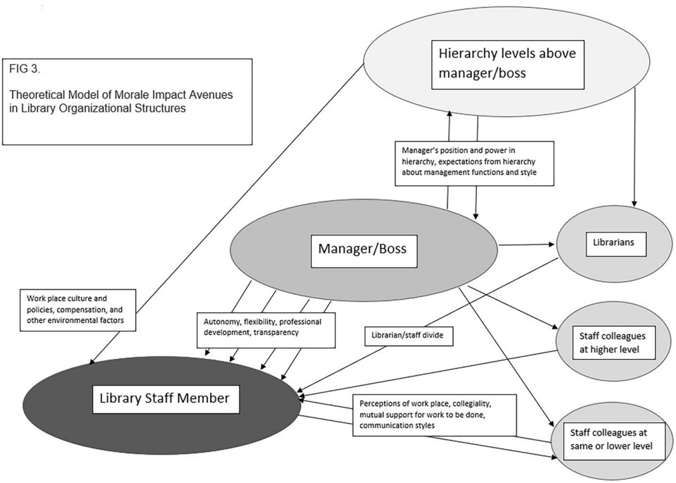
The literature on academic librarian morale is burgeoning, yet less attention has been paid to the workplace experiences of staff. This research team, which included library staff and librarians, conducted 34 structured online interviews with academic library staff across the United States. A theoretical model and interview findings are presented, which reveal the ways in which organizational culture, library hierarchies, and management style affect staff morale. Recommendations are offered, suggesting that, while change can present substantial challenges, efforts to address equity in compensation, provide professional growth opportunities, and create more collegial work environments are essential to improving staff morale.
Overview
CoChat Summary
TL;DR
This qualitative grounded-theory study interviewed 34 U.S. academic library staff to examine how organizational culture, hierarchies, and management affect morale. It finds that direct managers and equitable treatment—especially bridging the librarian/staff divide—are central, while hierarchy level itself was not a clear morale driver.
Key findings
- Of 34 staff, about two-thirds (21 of 34) self-reported morale from “pretty good” to “fabulous”; low morale was tied more to organizational factors such as ability to progress, workload, respect, and funding than to position in the hierarchy.
- A supportive direct manager was one of the most direct connections to high morale; unsupportive or micromanaging bosses, toxic settings, and lack of autonomy/flexibility lowered morale.
- The librarian/staff divide was by far the most powerful morale impact besides direct managers; staff reported being treated as “less than,” blocked by librarians, and excluded from decision-making and communication.
- Of 21 interviewees reporting on faculty status, 18 (90%) said librarians were faculty, an overrepresentation versus ALA’s roughly 20%; of 27 with calculable organizational distance, 19 were two or three levels below the library director/dean, and distance was not identified as a morale factor.
Methods
- Qualitative grounded theory; 34 structured online interviews with U.S. academic library staff in non-librarian positions, recruited via library listservs and state library associations, with UC Berkeley staff excluded. Interviews were conducted by phone or Google Meet over a 3-week period in May–June 2020, yielding a convenience sample from 23 colleges or universities in 16 states.
- Semi-structured interviews followed a defined protocol, were audio recorded and transcribed, then coded in MAXQDA using open coding, axial coding, and core-category/theory extraction; the first author created a theoretical model of morale impact avenues.
Limitations
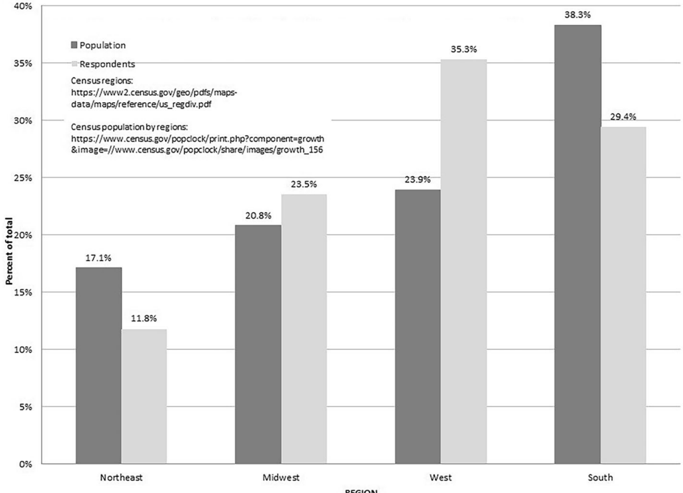
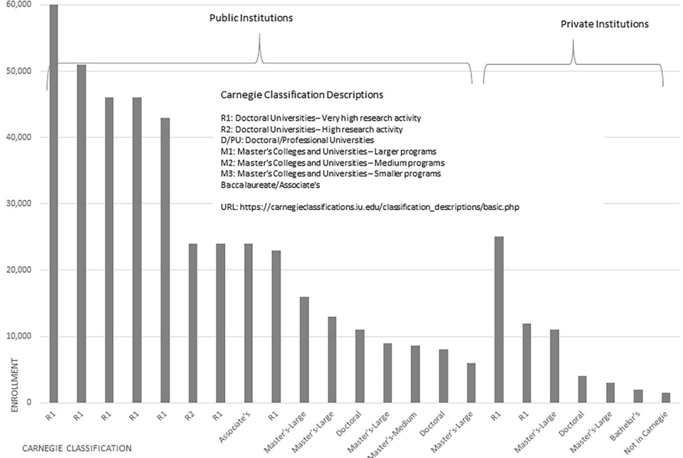
- Stated: imbalanced distribution of respondents from public vs. private institutions (7 of 34 were from private institutions), a dearth of BIPOC staff members included (5 staff of color), and timing relative to pre-/post-COVID; also regional overrepresentation of the West and Midwest and underrepresentation of the Northeast and South, plus overrepresentation of larger institutions.
- Stated: classic grounded theory calls for an additional round of data collection, not done due to time and financial constraints; the team also lacked permission to re-interview participants.
- Evident: the convenience sample and lack of pre-selection for low morale limit generalizability and comparison with studies that explicitly select for low morale; the authors note the sample was not representative in other ways.
Model-written summary. Check it against the paper before relying on it.
Integrity signals
Registry
Cites
Statistics
Figures

Verification
Claims the paper makes
5 Valid · 13 Not valid · 17 Not checked · 157 Own results and interpretations
The cited sources support only part of this claim — read each source’s verdict below.
In the paper
“However, for library staff, in particular, change is long overdue, and librarians have not to date been strong advocates for staff.”
What the sources say
- Supportedcites Oberg et al., 1992 matched to “The Role, Status, and Working Conditions of Paraprofessionals: A National Survey of Academic Libraries” (1992) source
The paper’s Abstract (page not provided) says the profession’s response to staff-utilization and role-definition problems has been weak and that librarians have shown little inclination to lead on those issues. This supports the citing sentence’s characterization of librarians’ advocacy for library staff. (LLM, conf=0.87)
- Not matchedcites Murray, 1999
An author–year citation the paper’s reference list doesn’t settle. We don’t search these by name.
- Partly supportedcites Kendrick & Damasco, 2019 matched to “Low Morale in Ethnic and Racial Minority Academic Librarians: An Experiential Study” (2019) sourceExperimental — accuracy not yet measured
Our copy documents a support/advocacy deficit inside academic libraries, but it is framed differently from the claim: the 'Collegiality' subsection under 'Politics' reports 'Issues of work-share, lack of professional support, and credit-stealing' with a librarian refused help by fellow librarians and a supervisor claiming a subordinate's idea, and 'Types of Abuse'/'Human Resources limitations' report staff getting no 'back up ... from my superiors' and HR's 'reluctance ... to enforce accountability measures.' The direction of the failure in these passages is institutional (administration, HR, library leaders) toward minority academic librarians, the study's subjects; no passage asserts that librarians as a group have not been strong advocates for (support/paraprofessional) staff. The only support-staff wording is a participant quote in 'Perceptions of LIS' describing a remark as 'a slight on support staff,' which is about hierarchy and elitism rather than librarians' advocacy record, so the generalization the citing sentence attributes to this source is not stated in it. (LLM, conf=0.62)
boosted- Asserted: passes — The authors put it forward as true.
- Checkable: passes — It can be checked against evidence.
- Load-bearing: passes — The paper’s conclusions depend on it.
- Based: passes — The paper gives a reason why it holds.
- Supported
The cited sources support only part of this claim — read each source’s verdict below.
In the paper
“However, hierarchies in academic libraries do not appear to be flattening substantially.”
What the sources say
- Partly supportedcites Schonfeld, 2016 matched to “Organizing the Work of the Research Library” (2016) sourceExperimental — accuracy not yet measured
Our copy discusses hierarchy and structural change at length and supports the persistence half of the claim: the 'High Level Structure' section catalogues five reporting models all built on unit heads/AULs, 'Unit Heads and Middle Managers' reports that several directors see middle managers as 'the key obstacles towards widespread organizational change', 'Undertaking a Restructuring' notes that 'large-scale reorganizations impose stress... and are sometimes avoided by leaders more than they are embraced', and footnote 18 records that 'Academic libraries tend to be more hierarchical'. But the report never states the overall conclusion that hierarchies are not flattening substantially; the 'Reflections' and 'Leaders throughout the organization' sections instead document directors 'attempting to dis-establish the notion of purely hierarchical management', building 'more flat organization', and 'implementing new and more agile models that upset the hierarchical assumptions', with hierarchy being remade around shadow structures rather than simply retained. The 'Introduction and Executive Summary' also states the study is a narrative of nearly 20 directors' views with 'no statistics or percentages', so it cannot substantiate the magnitude term 'substantially' across academic libraries. (LLM, conf=0.65)
hedged- Asserted: passes — The authors put it forward as true.
- Checkable: passes — It can be checked against evidence.
- Load-bearing: unclear — It is unclear whether the paper’s conclusions depend on it.
- Based: passes — The paper gives a reason why it holds.
- Partly supported
A result the paper reports from its own data — it cites no other source for it, so there is none to check. The quote shows it is in the paper.
In the paper
“A theoretical model and interview findings are presented, which reveal the ways in which organizational culture, library hierarchies, and management style affect staff morale.”
plainstates a cause- Asserted: passes — The authors put it forward as true.
- Checkable: passes — It can be checked against evidence.
- Load-bearing: passes — The paper’s conclusions depend on it.
- Based: passes — The paper gives a reason why it holds.
A result the paper reports from its own data — it cites no other source for it, so there is none to check. The quote shows it is in the paper.
In the paper
“The number of avenues that flow from the direct manager/boss to the staff member; these are central aspects of reported morale, incorporating autonomy, flexibility, professional development, and transparency”
plainstates an association- Asserted: passes — The authors put it forward as true.
- Checkable: passes — It can be checked against evidence.
- Load-bearing: passes — The paper’s conclusions depend on it.
- Based: passes — The paper gives a reason why it holds.
A result the paper states — it cites no source for it, so there is none to check. The quote shows it is in the paper.
In the paper
“Staff members ' relationships with their direct manager, on a continuum from actively harmful, to actively supportive.”
plain- Asserted: passes — The authors put it forward as true.
- Checkable: passes — It can be checked against evidence.
- Load-bearing: unclear — It is unclear whether the paper’s conclusions depend on it.
- Based: passes — The paper gives a reason why it holds.
65 more claims
Create a free account to see all 192 claims and to verify the 6 references still open.
- Probably not a substantial claim. 74
- It may state two separate claims as one. 82
- Borderline: one of the tests for a substantial claim is unclear. 1
- The quote only partly states this claim. 3
Self-check
Percentages, sums and reported differences re-computed from the paper’s own numbers.
Each contradiction between two passages listed here was confirmed by an independent check.
Rated minor: it would not touch a result — a value no result rests on, a p-value that stays on the same side of the significance level, or a conflict that is clerical, resolved elsewhere in the paper, or outside its own findings.
In the paper
§ Copyright Information
“This work is made available under the terms of a Creative Commons Attribution License, available at https://creativecommons.org/licenses/by/4.0/”
§ Introduction
“This is an Open Access article distributed under the terms of the Creative Commons Attribution-NonCommercial-NoDerivatives License (http://creativecommons.org/licenses/by-nc-nd/4.0/)”
Rated minor: it would not touch a result — a value no result rests on, a p-value that stays on the same side of the significance level, or a conflict that is clerical, resolved elsewhere in the paper, or outside its own findings.
In the paper
“Of the 21 interviewees who reported on whether librarians were faculty, 18 (90%) said yes.”
Reported 90 · recomputed 85.714286
Rated minor: it would not touch a result — a value no result rests on, a p-value that stays on the same side of the significance level, or a conflict that is clerical, resolved elsewhere in the paper, or outside its own findings.
In the paper
§ ABSTRACT
“conducted 34 structured online interviews with academic library staff across the United States.”
§ Recruitment, interviewing, analysis
“Semi-structured interviews were conducted, based on a defined set of questions (see Appendix D), but flexible to allow for staff interests.”
Citations
Cites
Noble, H., & Mitchell, G. (2016) · Evidence Based Nursing · doi:10.1136/eb-2016-102306 · Cited by 292 · cited 1×
“…in order to identify common themes, categories, and sub-categories, (2) axial coding, in which relationships between categories are identified and re-identified, and (3) identifying a core category and extracting a grounded theory that applies to the information collected (Noble & Mitchell, 2016).”
BackgroundImpossible Burdens: White Institutions, Emotional Labor, and Micro-Resistance
Evans, L., & Moore, W. L. (2015) · Social Problems · doi:10.1093/socpro/spv009 · Cited by 255 · cited 2×
“Not only do BIPOC people have to manage up the hierarchy (performing emotional labor to keep supervisors happy), but they also perform emotional labor toward their White colleagues (Evans & Moore, 2015).”
BackgroundHierarchical microaggressions in higher education.
Young, K. S., Anderson, M. R., & Stewart, S. (2014) · Journal of Diversity in Higher Education · doi:10.1037/a0038464 · Cited by 163 · cited 3×
“Researchers have identified the following “negative” behaviors (in quotes because even labeling behaviors is a potentially biased judgment) as endemic in libraries, and potentially contributing to low morale: incivility, microaggressions, bullying, mobbing, sabotage, and toxicity (Dohe et al., 2019; Freedman & Vreven,…”
Background(2018) · DOAJ (DOAJ: Directory of Open Access Journals) · Cited by 163
Morale and Workplace Performance
Weakliem, D. L., & Frenkel, S. J. (2006) · Work and Occupations · doi:10.1177/0730888406290054 · Cited by 117 · cited 1×
“Other studies examine engagement, productivity, workplace conflict, organizational justice (Henry et al., 2018; Martin, 2020a; Matteson et al., 2021; Weakliem & Frenkel, 2006), and additional aspects of work in general and library work in particular.”
BackgroundBoss Competence and Worker Well-Being
Artz, B., Goodall, A. H., & Oswald, A. J. (2016) · Industrial and Labor Relations Review · doi:10.1177/0019793916650451 · Cited by 108
Alabi, J. (2015) · The Journal of Academic Librarianship · doi:10.1016/j.acalib.2014.10.008 · Cited by 99 · cited 1×
“Being BIPOC predisposes library staff to be bullied (Freedman & Vreven, 2016), and to endure a range of racist microaggressions (Alabi, 2015; Evans & Moore, 2015; Lee & Morfitt, 2020; Young et al., 2015).”
BackgroundThe Low Morale Experience of Academic Librarians: A Phenomenological Study
Kendrick, K. D. (2017) · Journal of Library Administration · doi:10.1080/01930826.2017.1368325 · Cited by 87 · cited 7×
“Workplace morale is an area best explored using qualitative methods (Murray, 1999), which can show the morale continuum and its nuances more powerfully (Kendrick, 2017).”
BackgroundMethodInfluentialKreitz, P. A. (2009) · College & Research Libraries · doi:10.5860/0700531 · Cited by 86
Creating a Just and Democratic Workplace: More Engagement, Less Hierarchy
Rothschild, J. (2000) · Contemporary Sociology · doi:10.2307/2654944 · Cited by 72 · cited 1×
“Rothschild posits that hierarchies are flattening in the corporate world, with rigid stratified structures giving way to team-based networks (Rothschild, 2000).”
BackgroundLow Morale in Ethnic and Racial Minority Academic Librarians: An Experiential Study
Kendrick, K. D., & Damasco, I. T. (2019) · Library Trends · doi:10.1353/lib.2019.0036 · Cited by 53 · cited 6×
“In 2019, Kendrick and Damasco similarly called out “White librarians’ tacit acceptance of LIS workforce marginalization” (Kendrick & Damasco, 2019), and the authors of this paper have identified the dearth of research on library staff morale.”
BackgroundResultInfluentialStaffing trends in college and university libraries
Gremmels, G. S. (2013) · Reference Services Review · doi:10.1108/00907321311326165 · Cited by 44 · cited 1×
“…between library staff and librarians is another area that may have morale impacts, as the staff takes on librarians’ traditional roles and job tasks, without additional compensation or recognition (Gremmels, 2013; Kreitz & Ogden, 1990; Martin, 2020b; Oberg et al., 1992; Owen, 1997; Zhu, 2012).”
BackgroundOberg, L. R., Mentges, M. E., McDermott, P. N., & Harusadangkul, V. (1992) · College & Research Libraries · doi:10.5860/crl_53_03_215 · Cited by 43 · cited 4×
“…between library staff and librarians is another area that may have morale impacts, as the staff takes on librarians’ traditional roles and job tasks, without additional compensation or recognition (Gremmels, 2013; Kreitz & Ogden, 1990; Martin, 2020b; Oberg et al., 1992; Owen, 1997; Zhu, 2012).”
BackgroundInfluentialLibrary Leadership and Management
Kaufman, P. T. (2011) · Illinois Digital Environment for Access to Learning and Scholarship (University of Illinois at Urbana-Champaign) · Cited by 41
Job Satisfaction of Professional Librarians and Library Staff
Martin, J. (2020) · Journal of Library Administration · doi:10.1080/01930826.2020.1721941 · Cited by 40 · cited 9×
“…methods with a range of social preferences in mind (Sorondo, 2017; Weyant et al., 2021b), setting and implementing inclusive organizational values (Martin, 2020a), empowering staff and giving them autonomy (Kennedy & Garewal, 2020; Matteson et al., 2021), involving workers in decisions that…”
BackgroundMethodInfluentialMatteson, M. L., Ming, Y., & Silva, D. E. (2021) · Library & Information Science Research · doi:10.1016/j.lisr.2021.101093 · Cited by 36 · cited 5×
“…academic libraries include emotional intelligence and a focus on relationships and communication (Martin, 2020a), civility, and mindful speech (Doucette & Tolley, 2017), and giving feedback, appreciation, and recognition (Hosoi, 2005; Kennedy & Garewal, 2020; Matteson et al., 2021; Murray, 1999).”
BackgroundInfluentialMartin, J. (2018) · College & Research Libraries · doi:10.5860/crl.79.6.799 · Cited by 33 · cited 2×
“In contrast, quantitative methods do not tend to generate new understandings the way that qualitative methods do (Martin, 2018).”
BackgroundWorkplace engagement of librarians and library staff
Martin, J. (2020) · Journal of Library Administration · doi:10.1080/01930826.2019.1671037 · Cited by 32 · cited 2×
“Organizations need to be vigilant about confronting and dealing with harmful management practices and toxic leaders, whose negative impacts on staff can have deleterious effects on the entire organization (Martin, 2019; Ortega, 2019).”
BackgroundWorkplace Incivility and Bullying in the Library: Perception or Reality?
Freedman, S., & Vreven, D. (2016) · College & Research Libraries · doi:10.5860/crl.77.6.727 · Cited by 31 · cited 2×
“Being BIPOC predisposes library staff to be bullied (Freedman & Vreven, 2016), and to endure a range of racist microaggressions (Alabi, 2015; Evans & Moore, 2015; Lee & Morfitt, 2020; Young et al., 2015).”
BackgroundKennedy, S. P., & Garewal, K. R. (2020) · The Journal of Academic Librarianship · doi:10.1016/j.acalib.2020.102191 · Cited by 25 · cited 4×
“While academic library work still operates within hierarchies and bureaucracies, many of the factors that impact morale are under the control of a library staff member’s direct supervisor (Kennedy & Garewal, 2020, Matteson et al., 2021).”
BackgroundMethodInfluentialJob Responsibilities and Job Satisfaction at the University of California Libraries
Kreitz, P. A., & Ogden, A. (1990) · College & Research Libraries · doi:10.5860/crl_51_04_297 · Cited by 24 · cited 1×
“…between library staff and librarians is another area that may have morale impacts, as the staff takes on librarians’ traditional roles and job tasks, without additional compensation or recognition (Gremmels, 2013; Kreitz & Ogden, 1990; Martin, 2020b; Oberg et al., 1992; Owen, 1997; Zhu, 2012).”
BackgroundAn Investigation of Factors Impacting the Wellness of Academic Library Employees
Lo, L., & Herman, B. (2017) · College & Research Libraries · doi:10.5860/crl.78.6.789 · Cited by 22 · cited 1×
“Results of a survey conducted by Lo and Herman reveal that working in a library is more stressful than being a fireman or policeman (Lo & Herman, 2017).”
BackgroundThe Role of Paraprofessionals in Technical Services in Academic Libraries
Zhu, L. (2012) · Library Resources and Technical Services · doi:10.5860/lrts.56n3.127 · Cited by 21 · cited 2×
“Role-blurring and task overlap in responsibilities between library staff and librarians is another area that may have morale impacts, as the staff takes on librarians’ traditional roles and job tasks, without additional compensation or recognition (Gremmels, 2013; Kreitz & Ogden, 1990; Martin, 2020b; Oberg et al., 199…”
BackgroundIncivility and Dysfunction in the Library Workplace: Perceptions and Feedback from the Field
Henry, J., Eshleman, J., Croxton, R., & Moniz, R. (2018) · Journal of Library Administration · doi:10.1080/01930826.2017.1412708 · Cited by 19
(2017) · College & Research Libraries · doi:10.5860/crl · Cited by 19
Lee, E., & Morfitt, P. (2020) · Technical Services Quarterly · doi:10.1080/07317131.2020.1728125 · Cited by 18 · cited 1×
“Being BIPOC predisposes library staff to be bullied (Freedman & Vreven, 2016), and to endure a range of racist microaggressions (Alabi, 2015; Evans & Moore, 2015; Lee & Morfitt, 2020; Young et al., 2015).”
BackgroundHill, C. A. (2014) · The Australian Library Journal · doi:10.1080/00049670.2014.890020 · Cited by 17 · cited 1×
“Employees want their managers to have technical competence, and to understand their subordinates’ jobs (Artz et al., 2017; Johannessen, 2018; Martin, 2020b); in fact, Hill notes that having been a library technician can improve their managerial performance (Hill, 2014).”
BackgroundKnowledge Management, Diversity, and Professional Hierarchies in Libraries
Vela, S. (2018) · Journal of Library Administration · doi:10.1080/01930826.2018.1516950 · Cited by 16 · cited 2×
“Staff should be encouraged to be part of and/or create new communities of practice for themselves, to combat isolation and imposter syndrome (Johannessen, 2018; Owen, 1997; Vela, 2018; Wilkes & Ward, 2016).”
BackgroundThe Psychodynamics of Bullying in Libraries
Staninger, S. W. (2016) · Library Leadership & Management · doi:10.5860/llm.v30i4.7170 · Cited by 15 · cited 3×
“Researchers have identified the following “negative” behaviors (in quotes because even labeling behaviors is a potentially biased judgment) as endemic in libraries, and potentially contributing to low morale: incivility, microaggressions, bullying, mobbing, sabotage, and toxicity (Dohe et al., 2019; Freedman & Vreven,…”
BackgroundJohannessen, H. T. D. (2018) · LIBER Quarterly The Journal of the Association of European Research Libraries · doi:10.18352/lq.10238 · Cited by 12 · cited 2×
“Staff should be encouraged to be part of and/or create new communities of practice for themselves, to combat isolation and imposter syndrome (Johannessen, 2018; Owen, 1997; Vela, 2018; Wilkes & Ward, 2016).”
BackgroundEmotional Intelligence, Emotional Culture, and Library Leadership
Martin, J. (2019) · Library Leadership & Management · doi:10.5860/llm.v33i2.7329 · Cited by 12 · cited 2×
“Organizations need to be vigilant about confronting and dealing with harmful management practices and toxic leaders, whose negative impacts on staff can have deleterious effects on the entire organization (Martin, 2019; Ortega, 2019).”
BackgroundOrganizing the Work of the Research Library
Schonfeld, R. (2016) · doi:10.18665/sr.283717 · Cited by 12
Academic Libraries and Toxic Leadership
Ortega, A. (2019) · doi:10.22371/05.2019.001 · Cited by 12 · cited 2×
“Organizations need to be vigilant about confronting and dealing with harmful management practices and toxic leaders, whose negative impacts on staff can have deleterious effects on the entire organization (Martin, 2019; Ortega, 2019).”
BackgroundThe Paraprofessional and the Professional Job Structure
Mugnier, C. (1980) · Cited by 11
Good Fences Make Bad Libraries: Rethinking Binary Constructions of Employment in Academic Libraries
Jones, P. J., & Stivers, J. (2004) · portal Libraries and the Academy · doi:10.1353/pla.2004.0011 · Cited by 10 · cited 3×
“Some researchers, and others in the field, question why the MLIS degree is presented as the only avenue for library staff advancement (Jones & Stivers, 2004; Litwin, 2010; Oberg et al., 1992; Owen, 1997) much as moving into managerial roles is seen as the way for librarians to gain career…”
BackgroundSupervisor's attitude and employee's performance
Topper, E. F. (2007) · Global Knowledge, Memory and Communication · doi:10.1108/03074800710823999 · Cited by 8 · cited 2×
“All managers should be engaging in regular self-evaluation and reflection, to confirm that they are treating all employees fairly, and are offering support and coaching that will ensure that every employee has the chance to succeed in their job, no matter their starting place (Harris, 2011; Topper, 2007).”
BackgroundWeyant, E. C., Wallace, R. L., & Woodward, N. J. (2021) · Journal of Library Administration · doi:10.1080/01930826.2021.1972732 · Cited by 8 · cited 7×
“Each library work setting has its individual culture (Weyant et al., 2021a), and most are the locus of vocational awe, which Fobazi Ettarh defines as “[the notion] that libraries as institutions are inherently good, sacred notions, and therefore beyond critique.”
BackgroundInfluentialDeconstructing service in libraries: intersections of identities and expectations
DeVito, J. A. (2021) · Public & Access Services Quarterly · doi:10.1080/15228959.2021.1976990 · Cited by 8
Shadows of Leadership: The Lived Experiences of Oppressed Followers of Toxic Leaders
Walker, S., & Watkins, D. V. (2020) · Journal of Leadership Accountability and Ethics · doi:10.33423/jlae.v17i2.2872 · Cited by 7
Sorondo, B. M. (2017) · Emerald Group Publishing Limited eBooks · doi:10.1108/s0732-067120170000037003 · Cited by 6 · cited 2×
“…organizational communication (Weyant et al., 2021b), planning employee programs, and appreciation methods with a range of social preferences in mind (Sorondo, 2017; Weyant et al., 2021b), setting and implementing inclusive organizational values (Martin, 2020a), empowering staff and giving them…”
BackgroundEfficiencies and responsible staff stewardship: a library manager's critical self‐reflection
Harris, C. S. (2011) · The Bottom Line Managing Library Finances · doi:10.1108/08880451111169197 · Cited by 5 · cited 2×
“…should be engaging in regular self-evaluation and reflection, to confirm that they are treating all employees fairly, and are offering support and coaching that will ensure that every employee has the chance to succeed in their job, no matter their starting place (Harris, 2011; Topper, 2007).”
BackgroundWords matter: interpretations and implications of “para” in paraprofessional
Schilperoort, H., Quezada, A., & Lezcano, F. (2021) · Journal of the Medical Library Association · doi:10.5195/jmla.2021.933 · Cited by 5 · cited 1×
“The term “library staff” refers to library employees who are in positions that do not have the title “librarian” and which do not require the MLIS (Master of Library and Information Science) degree, in line with the definition established by Schilperoort and colleagues (Schilperoort et al., 2021).”
ResultWeyant, E. C., Wallace, R. L., & Woodward, N. J. (2021) · Journal of Library Administration · doi:10.1080/01930826.2021.1984142 · Cited by 5 · cited 7×
“Each library work setting has its individual culture (Weyant et al., 2021a), and most are the locus of vocational awe, which Fobazi Ettarh defines as “[the notion] that libraries as institutions are inherently good, sacred notions, and therefore beyond critique.”
BackgroundInfluentialIt's Not Imposter Syndrome: Resisting Self-Doubt as Normal for Library Workers
Andrews, N. (2020) · USF Scholarship Repository (University of San Francisco) · Cited by 5
Using Civility in the Form of Mindful Speech and Action to Cultivate Empathy Among Library Employees
Doucette, W., & Tolley-Stokes, R. (2017) · Emerald Group Publishing Limited eBooks · doi:10.1108/s0732-067120170000037009 · Cited by 4
Decision-Making and Library Staff Morale
Nitecki, J. Z. (1984) · Journal of Library Administration · doi:10.1300/j111v05n02_04 · Cited by 3 · cited 2×
“…& Garewal, 2020; Matteson et al., 2021), involving workers in decisions that affect them, especially related to committee membership (Murray, 1999; Nitecki, 1984), supporting the professional development of staff (Murray, 1999; Owen, 1997), and striving for organizational justice: distributive,…”
BackgroundDelay, Distract, Defer: Addressing Sabotage in the Academic Library
Dohe, K., Pappas, E., & Emmelhainz, C. (2019) · University Libraries (University of Maryland) · doi:10.13016/q4rs-zis9 · Cited by 2 · cited 1×
“…as endemic in libraries, and potentially contributing to low morale: incivility, microaggressions, bullying, mobbing, sabotage, and toxicity (Dohe et al., 2019; Freedman & Vreven, 2016; Henry et al., 2018; Kendrick, 2017; Kendrick & Damasco, 2019; Motin, 2009; Ortega, 2019; Staninger,…”
Self-citationAdvances in Library Administration and Organization
Garten, E., & Williams, D. E. (2000) · Advances in library administration and organization · doi:10.1016/s0732-0671(2000)17 · Cited by 2
Access Services: Not Waving, but Drowning
Bowman, M., & Samsky, M. (2020) · Digital Commons - Colby (Colby College) · doi:10.17615/74f0-hx32 · Cited by 1
Research works printed but not linked: 6
- Hosoi, M. (2005). Motivating employees in academic libraries in tough times [Paper presentation]. ACRL 12th National Conference, Minneapolis, MN, USA.
- Mackenzie, M. L., & Smith, J. P. (2009). Management education for library directors: Are graduate library programs providing future library directors with the skills and knowledge they will need? Journal of Education for Library and Information Science , 50 (3), 129 -142.
- Murray, R. A. (1999). Job satisfaction of professional and paraprofessional library staff at the University of North Carolina at Chapel Hill [Unpublished master ' s thesis]. University of North Carolina at Chapel Hill.
- Owen, L. (1997). Paraprofessional groups and associations. Library Trends , 46 (2), 348 -373.
- Thapisa, A. N. (1989). The burden of mundane tasks: Library assistants ' perceptions of work. British Journal of Academic Librarianship , 4 (3), 137 -160.
- Wilkes, B., & Ward, J. (2016). Building community: Synergy and empowerment through staff development and marketing in a small rural academic library. Collaborative Librarianship , 8 (4), 180 -190. https://digitalcommons.du.edu/collaborativelibrarianship/vol8/iss4/6
Cited by
2026 Top Trends in Academic Libraries: A Review of the Trends and Issues
2021–22 ACRL Research Planning and Review Committee (2022) · College & Research Libraries News · doi:10.5860/crln.83.6.243 · Cited by 42
2024 Top Trends in Academic Libraries: A Review of the Trends and Issues
ACRL Research Planning and Review Committee (2024) · College & Research Libraries News · doi:10.5860/crln.85.6.231 · Cited by 45
Incivility and Dysfunction in the Library Workplace: A Five-Year Comparison
Henry, J., Croxton, R. A., & Moniz, R. (2022) · Journal of Library Administration · doi:10.1080/01930826.2022.2146440 · Cited by 17
“More recently, Glusker et al. (2022) found uncivil behavior was a contributor to low morale in the library workplace among 38% of study participants.”
BackgroundThe Cornered Office: A Qualitative Study of Low-Morale Experiences in Formal Library Leaders
Kendrick, K. D. (2023) · Journal of Library Administration · doi:10.1080/01930826.2023.2177924 · Cited by 14
“Studies exploring qualitative and quantitative aspects of leaders’ roles in or direct impact on employee morale offer insight into what an administrator can do to improve morale in their organizations (Glusker et al., 2022; Kennedy & Garewal, 2020).”
BackgroundReilly, P. J. (2022) · New Review of Academic Librarianship · doi:10.1080/13614533.2022.2112716 · Cited by 22
“Although there are some studies conducted on academic library teams (Glusker et al., 2022; Wilkinson, 2015), the field requires further exploration.”
Background
Metadata
- Authors
- Glusker, A., Emmelhainz, C., Estrada, N., & Dyess, B.
- Affiliations
- University of California, Berkeley (US)
- Political Science & Public Policy Librarian, University Library, University of California, Berkeley, CA, USA
- Corresponding author
- Glusker, Ann
- Venue
- Journal of Library Administration
- Publisher
- Informa UK Limited
- Published
- 2022-02-10
- Volume
- 62
- Issue
- 2
- Pages
- 153-189
- ISSN
- 0193-0826 (ISSN-L)
- 1540-3564
- OpenAlex
- W4211016787
- Semantic Scholar
- b2d40f98eb28cc0358338614a0f0dfc4a3846eed
- Cited by
- 39
- References
- 44
- Citations by year
- 2026: 9 · 2025: 5 · 2024: 8 · 2023: 8 · 2022: 9
- FWCI
- 7.09
- Type
- journal article
- Language
- en
- Open access
- hybrid
- doi.org
- Licence
- Locations
- Journal of Library Administration (publishedVersion, cc-by-nc-nd)
- eScholarship (California Digital Library) (submittedVersion, cc-by)
- Funders
- Librarians Association of the University of California (FY 2019-2020)
- Topics
- Social Sciences › Business, Management and Accounting › Organizational Behavior and Human Resource Management › Job Satisfaction and Organizational Behavior
- Social Sciences › Business, Management and Accounting › Organizational Behavior and Human Resource Management › Employee Performance and Management
- Social Sciences › Library and Information Sciences › Library Science and Information
- Keywords
- academic library staff, employee morale, organizational culture, library management, management style, workplace equity, pay equity, professional development, collegiality, academic libraries
About these checks
Registry, retraction, Cites and statistics results are computed, not judged, with one exception: a printed reference that no index lists is read once by a model before it counts as a citation error. Claims are extracted by a model and kept only when their quote appears verbatim in the text; each cited source is then checked, with a model’s help, for whether it says what the claim relies on. Those verdicts can be wrong — read the claim’s quote and the cited source before relying on one.
The claim verdicts this report counts are experimental: their accuracy is not yet measured.
A language model drew the claims from the paper on 2026-10-11, under version 3 of the claim definition (model deepseek-v4.1-flash, prompt extract-v3).
A second model labelled each claim on 2026-10-11 (model jev-1.13-20260917, definition revision gold-guideline-v0.2).
Cited sources are checked with a language model’s help (gpt-6-sol and qwen3.8-omni-flash).
Statistics and arithmetic are recomputed, not judged.
Confidence bands are shown only for fields calibrated on our annotated test set. None is calibrated yet, so no band is shown.
What counts as a claim ›How we measure confidence ›How we check this ›
Are you an author, or do you see a problem with this page? Request a review
Data sources
Bibliographic data: Semantic Scholar, OpenAlex, Crossref.
Contains information from the Semantic Scholar Academic Graph Datasets, made available under the ODC Attribution License (ODC-BY 1.0).
Semantic Scholar’s data is described in: Kinney, R., et al. (2023). The Semantic Scholar Open Data Platform. arXiv:2301.10140.
