

Modulation of inflammation by autophagy: Consequences for human disease
Open accessThe DOI matches its Crossref record; 196 of the 196 references it cites were found in a registry or an index.
Abstract
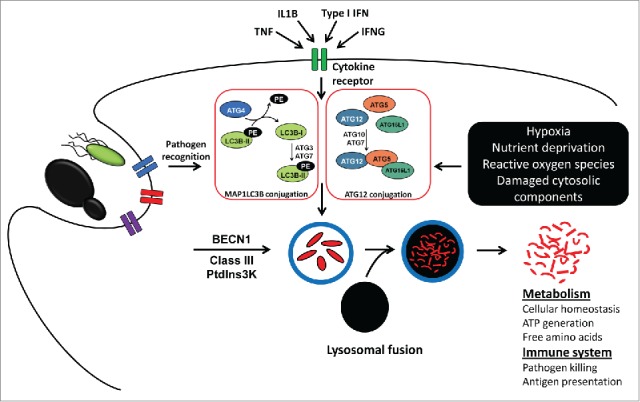
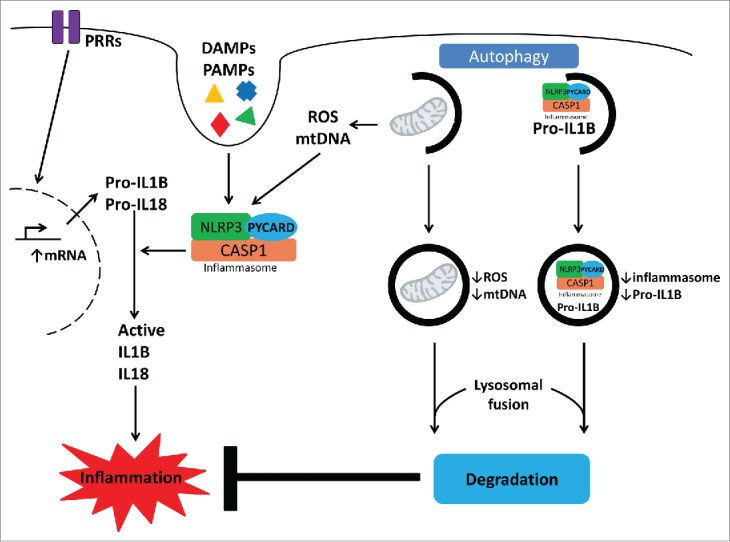
Autophagy and inflammation are 2 fundamental biological processes involved in both physiological and pathological conditions. Through its crucial role in maintaining cellular homeostasis, autophagy is involved in modulation of cell metabolism, cell survival, and host defense. Defective autophagy is associated with pathological conditions such as cancer, autoimmune disease, neurodegenerative disease, and senescence. Inflammation represents a crucial line of defense against microorganisms and other pathogens, and there is increasing evidence that autophagy has important effects on the induction and modulation of the inflammatory reaction; understanding the balance between these 2 processes may point to important possibilities for therapeutic targeting. This review focuses on the crosstalk between autophagy and inflammation as an emerging field with major implications for understanding the host defense on the one hand, and for the pathogenesis and treatment of immune-mediated diseases on the other hand.
Overview
The claims and statistics of this paper haven’t been checked yet.
Free: it reads the open-access text and checks the first 5 claims that cite a source we can check. Create a free account to check every claim.
Integrity signals
Registry
Cites
Statistics
Figures
Verification
Claims the paper makes
The claims and statistics of this paper haven’t been checked yet.
Free: it reads the open-access text and checks the first 5 claims that cite a source we can check. Create a free account to check every claim.
Claims other papers make about this one
Each is checked against this paper’s own text: does it say what the citing paper says it does?
In the citing paper
“Reduced glycolysis and autophagy are known to attenuate inflammation”
From TREM2 Maintains Microglial Metabolic Fitness in Alzheimer’s Disease (2017) · cites this paper as Netea-Maier et al., 2016
Self-check
Percentages, sums and reported differences re-computed from the paper’s own numbers.
The self-check needs the paper’s full text.
Citations
Cites
1 retracted
Martinez, J., Almendinger, J., Oberst, A., Ness, R., Dillon, C. P., Fitzgerald, P., Hengartner, M. O., & Green, D. R. (2011) · Proceedings of the National Academy of Sciences · doi:10.1073/pnas.1113421108 · Cited by 655
RetractedRepertoires of Autophagy in the Pathogenesis of Ocular Diseases
Li, Y.-J., Jiang, Q., Cao, G.-F., Yao, J., & Yan, B. (2015) · Cellular Physiology and Biochemistry · doi:10.1159/000373980 · Cited by 16,304
Warburg, O. (1956) · Science · doi:10.1126/science.123.3191.309 · Cited by 13,425 · cited 1×
“protein production (historically known as the Warburg effect).(178,179) This mode of growth, however, requires an”
BackgroundThe phosphatidylinositol 3-Kinase–AKT pathway in human cancer
Vivanco, I., & Sawyers, C. L. (2002) · Nature Reviews Cancer · doi:10.1038/nrc839 · Cited by 6,056
A role for mitochondria in nlrp3 inflammasome activation
Zhou, R., Yazdi, A. S., Menu, P., & Tschopp, J. (2011) · Nature · doi:10.1038/nature09663 · Cited by 5,602
Association of NOD2 leucine-rich repeat variants with susceptibility to Crohn's disease
Hugot, J.-P., Chamaillard, M., Zouali, H., Lesage, S., Cézard, J.-P., Belaiche, J., Almer, S., Tysk, C., O'Morain, C. A., Gassull, M., et al. (2001) · Nature · doi:10.1038/35079107 · Cited by 5,591
Cui, C., Cui, J., Jin, F., Cui, Y., Li, R., Jiang, X., Tian, Y., Wang, K., Jiang, P., & Gao, J. (2017) · Cellular Physiology and Biochemistry · doi:10.1159/000479571 · Cited by 5,203
A frameshift mutation in NOD2 associated with susceptibility to Crohn's disease
Ogura, Y., Bonen, D. K., Inohara, N., Nicolae, D. L., Chen, F. F., Ramos, R., Britton, H., Moran, T., Karaliuskas, R., Duerr, R. H., et al. (2001) · Nature · doi:10.1038/35079114 · Cited by 5,030
Pankiv, S., Clausen, T. H., Lamark, T., Brech, A., Bruun, J.-A., Outzen, H., Øvervatn, A., Bjørkøy, G., & Johansen, T. (2007) · Journal of Biological Chemistry · doi:10.1074/jbc.m702824200 · Cited by 4,578 · cited 1×
“Autophagy is also important in host defense against other intracellular pathogens such as Toxoplasma gondii,(113,114) Salmonella spp.(115,116) and Listeria monocytogenes.”
BackgroundAutophagy and Viruses: Adversaries or Allies?
Dong, X., & Levine, B. (2013) · Journal of Innate Immunity · doi:10.1159/000346388 · Cited by 4,430
Research works printed but not linked: 9
- Saitoh T, Fujita N, Jang MH, Uematsu S, Yang BG, Satoh T, Omori H, Noda T, Yamamoto N, Komatsu M, et al. Loss of the autophagy protein Atg16L1 enhances endotoxin-induced IL-1beta production. Nature 2008; 456: 264- 8; PMID:18849965 18849965 · DOI · Paper page
- Crisan TO, Plantinga TS, van de Veerdonk FL, Farcaş MF, Stoffels M, Kullberg BJ, van der Meer JW, Joosten LA, Netea MG. Inflammasome-independent modulation of cytokine response by autophagy in human cells. PLoS One 2011; 6: e18666; PMID:21490934; http://dx.doi.org/ 10.1371/journal.pone.0018666 21490934 PMC3072416 · DOI · Paper page
- Travassos LH, Carneiro LAM, Ramjeet M, Hussey S, Kim YG, Magalhães JG, Yuan L, Soares F, Chea E, Le Bourhis L, et al. Nod1 and Nod2 direct autophagy by recruiting ATG16L1 to the plasma membrane at the site of bacterial entry. Nat Immunol 2010; 11: 55- 62; PMID:19898471; http://dx.doi.org/ 10.1038/ni.1823 19898471 · DOI · Paper page
- Zhou XJ, Lu XL, Lv JC, Yang HZ, Qin LX, Zhao MH, Su Y, Li ZG, Zhang H. Genetic association of PRDM1-ATG5 intergenic region and autophagy with systemic lupus erythematosus in a Chinese population. Ann Rheum Dis 2011; 70: 1330- 7; PMID:21622776; http://dx.doi.org/ 10.1136/ard.2010.140111 21622776 · DOI · Paper page
- Baumann I, Kolowos W, Voll RE, Manger B, Gaipl U, Neuhuber WL, Kirchner T, Kalden JR, Herrmann M. Impaired uptake of apoptotic cells into tingible body macrophages in germinal centers of patients with systemic lupus erythematosus. Arthritis Rheum 2002; 46: 191- 201; PMID:11817590; http://dx.doi.org/ 10.1002/1529-0131(200201)46:1%3c191::AID-ART10027%3e3.0.CO;2-K 11817590 · DOI
- Mostowy S, Sancho-Shimizu V, Hamon MA, Simeone R, Brosch R, Johansen T, Cossart P. p62 and NDP52 proteins target intracytosolic Shigella and Listeria to different autophagy pathways. J Biol Chem 2011; 286: 26987- 95; PMID:21646350; http://dx.doi.org/ 10.1074/jbc.M111.223610 21646350 PMC3143657 · DOI · Paper page
- Rosentul DC, Plantinga TS, Farcas M, Oosting M, Hamza OJ, Scott WK, Alexander BD, Yang JC, Laird GM, Joosten LA, et al. Role of autophagy genetic variants for the risk of Candida infections. Med Mycol 2014; 52: 333- 41; PMID:24713404; http://dx.doi.org/ 10.1093/mmy/myt035 24713404 PMC4687479 · DOI
- Smeekens SP, Malireddi RK, Plantinga TS, Buffen K, Oosting M, Joosten LA, Kullberg BJ, Perfect JR, Scott WK, van de Veerdonk FL, et al. Autophagy is redundant for the host defense against systemic Candida albicans infections. Eur J Clin Microbiol Infect Dis 2014; 33: 711- 22; PMID:24202731; http://dx.doi.org/ 10.1007/s10096-013-2002-x 24202731 · DOI
- 10.1007/s10555-01 · doi:10.1007/s10555-01
Cited by
Items 101–200 of 349
Autophagy Enhancing Contributes to the Organ Protective Effect of Alpha-Lipoic Acid in Septic Rats
Jia, J., Gong, X., Zhao, Y., Yang, Z., Ji, K., Luan, T., Zang, B., & Li, G. (2019) · Frontiers in Immunology · doi:10.3389/fimmu.2019.01491 · Cited by 51
A lysosomal regulatory circuit essential for the development and function of microglia
Iyer, H., Shen, K., Meireles, A. M., & Talbot, W. S. (2022) · Science Advances · doi:10.1126/sciadv.abp8321 · Cited by 49
“As professional phagocytic cells, nearly all these activities of microglia require lysosomes for either degradation of engulfed material or mounting immune responses ( 11 – 13 ).”
Li, X., Du, J., Yang, L., & Lin, X. (2019) · Neural Regeneration Research · doi:10.4103/1673-5374.247476 · Cited by 51
Pyrroloquinoline Quinone Inhibits Rotenone-Induced Microglia Inflammation by Enhancing Autophagy
Zhang, Q., Zhou, J., Shen, M., Xu, H., Yu, S., Cheng, Q., & Ding, F. (2020) · Molecules · doi:10.3390/molecules25194359 · Cited by 48
“The modulation of autophagy is responsible for inflammatory processes in many diseases through regulating pro-inflammatory factors production [21].”
BackgroundChen, D., Xu, R., Zhou, J., Chen, J., Wang, L., Liu, X., Liang, C.-L., Liu, B., Lu, R., Wu, J., et al. (2019) · Food & Function · doi:10.1039/c9fo00957d · Cited by 47
Yi, Y., Sun, C.-B., Zhang, S., Chen, B., Yu, J., Liu, F., Wen, J., Hou, J., Han, S.-S., Yan, J., et al. (2021) · Biomedicine & Pharmacotherapy · doi:10.1016/j.biopha.2021.111271 · Cited by 58
Spermidine reduces cancer-related mortality in humans
Pietrocola, F., Castoldi, F., Kepp, O., Carmona‐Gutiérrez, D., Madeo, F., & Kroemer, G. (2018) · Autophagy · doi:10.1080/15548627.2018.1539592 · Cited by 47
Qin, Y., Zheng, B., Yang, G., Yang, H., Zhou, J., Yang, Z., Zhang, X., Zhao, H., Shi, J., & Wen, J. (2020) · Molecular Therapy — Nucleic Acids · doi:10.1016/j.omtn.2020.06.015 · Cited by 50
“Activation of inflammation has been shown to promote the recruitment of immune cells and secretion of cytokines and chemokines, which in turn help recruit other immune cells for activation of adaptive immune responses, thus playing defense against microorganisms and other pathogens.(1) However, chronic inflammation is…”
BackgroundLi, X., Ke, X., Li, Z., & Li, B. (2019) · Biochemical and Biophysical Research Communications · doi:10.1016/j.bbrc.2019.04.110 · Cited by 47
Zhang, W. K., Zhuang, N., Liu, X., He, L., He, Y., Mahinthichaichan, P., Zhang, H., Kang, Y., Lu, Y., Wu, Q., et al. (2019) · Cellular and Molecular Immunology · doi:10.1038/s41423-019-0281-6 · Cited by 46
Mokhtari, T. (2022) · Phytotherapy Research · doi:10.1002/ptr.7551 · Cited by 49
Design of Small Molecule Autophagy Modulators: A Promising Druggable Strategy
He, S., Li, Q., Jiang, X., Lü, X., Feng, F., Qu, W., Chen, Y., & Sun, H. (2017) · Journal of Medicinal Chemistry · doi:10.1021/acs.jmedchem.7b01019 · Cited by 48
Li, L., Chen, J., Zhou, Y., Zhang, J., & Chen, L. (2021) · Archives of Physiology and Biochemistry · doi:10.1080/13813455.2021.1887266 · Cited by 50
Zuo, Q., Liao, L., Yao, Z.-T., Liu, Y.-P., Wang, D.-K., Li, S., Yin, X., He, Q., & Xu, W. (2021) · Cancer Letters · doi:10.1016/j.canlet.2021.09.010 · Cited by 43
Babalola, J. A., Lang, M., George, M., Stracke, A., Tam‐Amersdorfer, C., Itxaso, I., Lucija, D., Tadić, J., Schilcher, I., Loeffler, T., et al. (2023) · Brain Research · doi:10.1016/j.brainres.2023.148518 · Cited by 47
“Autophagy is known to regulate inflammation and oxidative stress response (Netea-Maier et al., 2016; Zhong et al., 2016).”
Modulatory Properties of Food and Nutraceutical Components Targeting NLRP3 Inflammasome Activation
Spano, M., Matteo, G. D., Ingallina, C., Ambroselli, D., Carradori, S., Gallorini, M., Giusti, A. M., Salvo, A., Grosso, M., & Mannina, L. (2022) · Nutrients · doi:10.3390/nu14030490 · Cited by 48
IL-17 in osteoarthritis: A narrative review
Xiao, J., Zhang, P., Cai, F.-L., Luo, C., Pu, T., Pan, X.-L., & Tian, M. (2023) · Open Life Sciences · doi:10.1515/biol-2022-0747 · Cited by 61
Autophagic Mechanism in Anti-Cancer Immunity: Its Pros and Cons for Cancer Therapy
Li, Y.-Y., Feun, L. G., Thongkum, A., Tu, C.-H., Chen, S.-M., Wangpaichitr, M., Wu, C., Kuo, M. T., & Savaraj, N. (2017) · International Journal of Molecular Sciences · doi:10.3390/ijms18061297 · Cited by 45
“Overall, these inflammatory mediators are important in tumor development and progression through maintaining malignant features such as cell proliferation, angiogenesis, and metastasis and hence are associated with poor prognosis [94].”
BackgroundYu, Y., Li, Y., Qi, K., Xu, W., & Wei, Y. (2022) · Behavioural Brain Research · doi:10.1016/j.bbr.2022.114006 · Cited by 44
Assessing Autophagy in Mouse Models and Patients with Systemic Autoimmune Diseases
Wang, F., Li, B., Schall, N., Wilhelm, M., & Muller, S. (2017) · Cells · doi:10.3390/cells6030016 · Cited by 45
“(2) Autophagy controls inflammation, notably by affecting TLR signaling and suppressing inflammasome activation [19].”
BackgroundZhi, L., Yao, S., Liu, H., Li, M., Duan, N., & Ma, J. (2017) · Molecular Medicine Reports · doi:10.3892/mmr.2017.8353 · Cited by 42
“Furthermore, it has been demonstrated that autophagy is involved in inflammatory reactions and downregulation of autophagy in macrophages leads to inflammation (7).”
Bae, H. R., Leung, P. S. C., Hodge, D. L., Fenimore, J. M., Jeon, S.-M., Thovarai, V., Dzutsev, A., Welcher, A. A., Boedigheimer, M., Damore, M. A., et al. (2020) · Journal of Autoimmunity · doi:10.1016/j.jaut.2020.102436 · Cited by 39
“Autophagy, a conserved bulkdegradation process of intracellular or extracellular components, centrally regulates antigen presentation and inflammation [64, 65], and polymorphisms of autophagy-related genes have been associated with major autoimmune diseases such as SLE and RA [66, 67] and inflammatory bowel disease, c…”
BackgroundKim, W. J., Park, S. Y., Kim, O. S., Park, H. S., & Jung, J. Y. (2021) · Journal of Periodontology · doi:10.1002/jper.21-0178 · Cited by 41
Ellagic acid induces apoptosis and autophagy in colon cancer through the AMPK/mTOR pathway
Ni, X., Shang, F.-S., Wang, T.-F., Wu, D., Chen, D., & Zhuang, B. (2023) · Tissue and Cell · doi:10.1016/j.tice.2023.102032 · Cited by 44
Wang, P., Feng, Y.-B., Wang, L., Li, Y., Fan, C., Song, Q., & Yu, S. Y. (2019) · Brain, Behavior, and Immunity · doi:10.1016/j.bbi.2019.08.002 · Cited by 38
Chen, R.-J., Lee, Y. H., Yeh, Y.-L., Wu, W.-S., Ho, C. T., Li, C.-Y., Wang, B.-J., & Wang, Y. (2016) · Journal of Food and Drug Analysis · doi:10.1016/j.jfda.2016.10.022 · Cited by 38
“[44] Rossi M, Caruso F, Antonioletti R, Viglianti A, Traversi G, Leone S, Basso E, Cozzi R. Scavenging of hydroxyl radical by resveratrol and related natural stilbenes after hydrogen peroxide attack on DNA.”
BackgroundInfluentialWu, F., Wei, X., Wu, Y., Kong, X., Hu, A., Tong, S., Liu, Y., Gong, F., Xie, L., Zhang, J., et al. (2018) · Journal of Neurotrauma · doi:10.1089/neu.2017.5414 · Cited by 40
Zhang, J., Ma, C., Hua, Y., Li, L., Ni, J., Huang, Y., Duncan, S. E., Li, S., Gao, S., & Fan, G. (2021) · Life Sciences · doi:10.1016/j.lfs.2020.118957 · Cited by 65
Sung, J. Y., Kim, S. G., Kim, J.-R., & Choi, H. C. (2021) · Experimental Gerontology · doi:10.1016/j.exger.2021.111394 · Cited by 44
Wang, W., Jing, T., Yang, X., He, Y., Wang, B., Xiao, Y., Shang, C., Zhang, J., & Lin, R. (2017) · Canadian Journal of Physiology and Pharmacology · doi:10.1139/cjpp-2016-0676 · Cited by 37
Hou, W., Hao, Y., Sun, L., Yang, Z., Zheng, X., & Song, L. (2022) · Molecular Brain · doi:10.1186/s13041-022-00899-7 · Cited by 41
“Neuroinflammation Autophagy plays important roles in modulating the excessive inflammatory response [161].”
BackgroundLi, Y., Fu, S., Li, E., Sun, X., Xu, H., Meng, Y., Wang, X., Chen, Y., Xie, C., Geng, S., et al. (2018) · Phytotherapy Research · doi:10.1002/ptr.6187 · Cited by 38
MicroRNA signatures in the pathogenesis and therapy of inflammatory bowel disease
Ramadan, Y. N., Kamel, A. M., Medhat, M. A., & Hetta, H. F. (2024) · Clinical and Experimental Medicine · doi:10.1007/s10238-024-01476-z · Cited by 41
“The autophagy process is well known for maintaining cellular homeostasis [64] and for being crucial to host defense, particularly in controlling inflammation [65, 66].”
BackgroundMETase promotes cell autophagy via promoting SNHG5 and suppressing miR-20a in gastric cancer
Lin, X., Zhou, L., Liu, L., Yuan, Y., Zhang, H., & Zeng, F. (2018) · International Journal of Biological Macromolecules · doi:10.1016/j.ijbiomac.2018.09.051 · Cited by 40
Carvajal, L., Gutiérrez, J., Morselli, E., & Leiva, A. (2021) · Frontiers in Oncology · doi:10.3389/fonc.2021.637594 · Cited by 44
“The tumor microenvironment contains different factors that promote autophagy, such as hypoxia or inflammation (166, 175).”
BackgroundRoscioli, E., Tran, H. B., Jersmann, H. P. A., Nguyen, P., Hopkins, E., Lester, S. E., Farrow, N., Zalewski, P. D., Reynolds, P. N., & Hodge, S. J. (2017) · American Journal of Physiology-Lung Cellular and Molecular Physiology · doi:10.1152/ajplung.00083.2017 · Cited by 37
“Indeed, the interaction of autophagy signaling pathways with the inflammatory response is a primary antiinflammatory mechanism against COPD-related exposures including metabolic insufficiency, ROS, cytokines/chemokines, and damage- and pathogen-associated molecular pattern-Tolllike receptor engagement (33, 48).”
Duan, J., Deng, T., Kang, J. M., & Chen, M. (2018) · Environmental Pollution · doi:10.1016/j.envpol.2018.10.108 · Cited by 216
HMGB1/autophagy pathway mediates the atrophic effect of TGF-β1 in denervated skeletal muscle
Yang, X., Xue, P., Liu, X., Xu, X., & Chen, Z. (2018) · Cell Communication and Signaling · doi:10.1186/s12964-018-0310-6 · Cited by 40
Xu, J., Kong, L., Oliver, B. A., Li, B., Creasey, E. A., Guzman, G., Schenone, M., Carey, K. L., Carr, S. A., Graham, D. B., et al. (2023) · Cell Reports · doi:10.1016/j.celrep.2023.112708 · Cited by 36
BOTEON, Y. L., Laing, R. W., Mergental, H., Reynolds, G. M., Mirza, D. F., Afford, S. C., & Bhogal, R. H. (2017) · World Journal of Gastroenterology · doi:10.3748/wjg.v23.i48.8443 · Cited by 34
Salem, G. A., Mohamed, A. A.-R., Khater, S. I., Noreldin, A. E., Alosaimi, M. E., Alansari, W. S., Shamlan, G. H., Eskandrani, A. A., Awad, M. M., El‐Shaer, R. A. A., et al. (2023) · Gene · doi:10.1016/j.gene.2023.147670 · Cited by 39
Transcriptomic analysis of CFTR-impaired endothelial cells reveals a pro-inflammatory phenotype
Declercq, M., de Zeeuw, P., Conchinha, N. V., Geldhof, V., Ramalho, A. S., García‐Caballero, M., Brepoels, K., Ensinck, M. M., Carlon, M. S., Bird, M., et al. (2020) · European Respiratory Journal · doi:10.1183/13993003.00261-2020 · Cited by 39
Autophagy and lysosomal pathways in nervous system disorders
Bingol, B. (2018) · Molecular and Cellular Neuroscience · doi:10.1016/j.mcn.2018.04.009 · Cited by 35
Xuan, H., Yuan, W., Chang, H., Liu, M., & Hu, F. (2018) · Inflammopharmacology · doi:10.1007/s10787-018-0533-6 · Cited by 32
The Remedial Potential of Lycopene in Pancreatitis through Regulation of Autophagy
Choi, S., & Kim, H. (2020) · International Journal of Molecular Sciences · doi:10.3390/ijms21165775 · Cited by 33
“Autophagy assists in the inflammation-mediated defense against pathogens through the recruitment of immune cells and by pathogen clearance via autophagosome-mediated engulfment and autophagolysosome-mediated degradation [101].”
BackgroundPhytochemicals Mediate Autophagy Against Osteoarthritis by Maintaining Cartilage Homeostasis
Zheng, T., Zhang, X., & Sun, M. (2021) · Frontiers in Pharmacology · doi:10.3389/fphar.2021.795058 · Cited by 32
iNOS Interacts with Autophagy Receptor p62 and is Degraded by Autophagy in Macrophages
Wang, J., Wu, M.-Y., Su, H., Lu, J., Chen, X., Tan, J., & Lu, J. (2019) · Cells · doi:10.3390/cells8101255 · Cited by 32
“Autophagy is involved in inflammation regulation by multiple mechanisms including: degradation of inflammasome, clearance of pathogens, cytokine secretion and antigen presentation [13].”
BackgroundHan, X. B., Kou, J., Zheng, Y., Liu, Z., Jiang, Y., Gao, Z., Lin, C., & Yang, L. M. (2019) · Cellular Physiology and Biochemistry · doi:10.33594/000000093 · Cited by 30
Ke, X., Huang, Y., Li, L., Xin, F., Xu, L., Zhang, Y., Zeng, Z., Lin, F., & Song, Y. (2020) · Drug Design Development and Therapy · doi:10.2147/dddt.s250524 · Cited by 28
Roles of autophagy in orthodontic tooth movement
Li, Y., Jacox, L. A., Coats, S., Kwon, J., Xue, P., Tang, N., Zou, R., Wang, X., Kim, Y., Wu, T. J., et al. (2021) · American Journal of Orthodontics and Dentofacial Orthopedics · doi:10.1016/j.ajodo.2020.01.027 · Cited by 28
A new way for punicalagin to alleviate insulin resistance: regulating gut microbiota and autophagy
Cao, Y., Ren, G., Zhang, Y., Qin, H., An, X., Yi, L., Chen, J., & Yang, L. (2021) · Food & Nutrition Research · doi:10.29219/fnr.v65.5689 · Cited by 29
“It was reported that autophagy decreases pro-inflammatory signaling, such as IKKβ/NF-κB pathway, by eliminating damaged organelles, degrading pro-inflammatory signaling molecules, and controlling the production and release of inflammatory cytokines (46).”
BackgroundNephropathic Cystinosis: Pathogenic Roles of Inflammation and Potential for New Therapies
Elmonem, M. A., Veys, K. R. P., & Prencipe, G. (2022) · Cells · doi:10.3390/cells11020190 · Cited by 30
“…of the mitochondrial ROS/G α 12/Src signaling by this pharmacologic agent prevented the abnormal phosphorylation of ZO-1 and its lysosomal accumulation, which increased its abundance at cell boundaries and restored the differentiation and endocytic uptake of albumin in cystinotic cells [58].”
Ma, T., Lv, L., Yu, Y., Jia, L., Song, X., Xu, X., Li, T., Sheng, X., Wang, H., Zhang, J., et al. (2022) · Frontiers in Pharmacology · doi:10.3389/fphar.2022.783506 · Cited by 35
“During the development of OA, decreased chondrocyte autophagy leads to impaired cellular function, resulting in joint aging and dysfunction (Netea-Maier et al., 2016), indicating that autophagy plays an important role in the development of OA and is expected to be an important target for OA treatment.”
BackgroundHu, C., Yang, J., He, Q., Luo, Y., Chen, Z., Lü, Y., Yi, H., Li, H., Xia, H., Ran, D., et al. (2018) · Molecular Pharmaceutics · doi:10.1021/acs.molpharmaceut.8b00121 · Cited by 27
Oxidation and Inflammation in the Immune and Nervous Systems, a Link Between Aging and Anxiety
la Fuente, M. D. (2018) · Springer eBooks · doi:10.1007/978-3-319-64597-1_115-1 · Cited by 37
Bermúdez, V., Tenconi, P. E., Giusto, N. M., & Mateos, M. V. (2019) · Frontiers in Cellular Neuroscience · doi:10.3389/fncel.2019.00154 · Cited by 30
“Recently, evidences relating autophagy and inflammation have been described that may lead to therapeutic targeting (Netea-Maier et al., 2016), also in the RPE (Liu et al.”
BackgroundHuang, L., Yin, P., Liu, F., Liu, Y., Liu, Y., & Xia, Z. (2019) · Journal of Animal Physiology and Animal Nutrition · doi:10.1111/jpn.13246 · Cited by 29
Myristoylated TMEM39AS41, a cell-permeable peptide, causes lung cancer cell death
Park, S., Kim, M., Hong, Y., Lee, H., Tran, Q., Kim, C., Kwon, S. H., Park, J., Park, J., & Kim, S. (2020) · Toxicological Research · doi:10.1007/s43188-020-00038-1 · Cited by 29
Lübow, C., Bockstiegel, J., & Weindl, G. (2020) · Biochemical Pharmacology · doi:10.1016/j.bcp.2020.113864 · Cited by 29
Wang, S., Song, X.-T., Zhang, K., Deng, S., Jiao, P., Qi, M.-Y., Lian, Z., & Yao, Y. (2020) · Frontiers in Cell and Developmental Biology · doi:10.3389/fcell.2020.00248 · Cited by 30
Ma, Z., Wang, D., Weng, J., Zhang, S., & Zhang, Y. (2020) · Journal of Orthopaedic Surgery and Research · doi:10.1186/s13018-020-01791-7 · Cited by 29
Zheng, J., Pang, Y., Zhang, Y., Hu, W., Yang, P., Liu, Q., Ning, J., Du, Z., Jin, X., Tang, J., et al. (2022) · Journal of Hazardous Materials · doi:10.1016/j.jhazmat.2022.129818 · Cited by 28
Dong, G., Si, C., Zhang, Q., Yan, F., Li, C., Zhang, H., Ma, Q., Dai, J., Li, Z.-H., Shi, H., et al. (2017) · Biochimica et Biophysica Acta (BBA) - Molecular Basis of Disease · doi:10.1016/j.bbadis.2017.08.005 · Cited by 27
Tian, Q., Fan, X., Ma, J., Han, Y., Li, D., Jiang, S., Zhang, F., Guang, H., Shan, X., Chen, R., et al. (2020) · Toxicology and Applied Pharmacology · doi:10.1016/j.taap.2020.115261 · Cited by 29
Particulate Matter-Induced Aryl Hydrocarbon Receptor Regulates Autophagy in Keratinocytes
Jang, H. S., Lee, J. E., Myung, C. H., Park, J., Jo, C. S., & Hwang, J. S. (2019) · Biomolecules & Therapeutics · doi:10.4062/biomolther.2019.025 · Cited by 29
“In turn, phosphatidylethanolamine conjugation promotes incorporation of LC3-ІІ into the autophagosome (Netea-Maier et al., 2016). p62/SQSTM1, which is an autophagic effector protein, interacts with LC3 by serving as a cargo protein that facilitates autophagy-mediated protein degradation (Bjorkoy et…”
BackgroundMhatre‐Winters, I., Eid, A., Han, Y., Tieu, K., & Richardson, J. R. (2022) · International Journal of Molecular Sciences · doi:10.3390/ijms23179829 · Cited by 26
“Altered autophagic processes modulate immune functions and are linked to inflammation [104,105], which may also contribute to the higher inflammatory state of APOE4 microglia.”
BackgroundMao, Y., Huang, Y., Zhang, Y., Wang, C., Wu, H., Tian, X., Liu, Y., Hou, B., Liang, Y., Rong, H., et al. (2019) · Molecular Medicine Reports · doi:10.3892/mmr.2019.10772 · Cited by 29
Al-Awad, D., Al-Emadi, N., Abu-Madi, M. A., Thani, A. A. A., & Zughaier, S. M. (2020) · Biomedicines · doi:10.3390/biomedicines8120598 · Cited by 28
“Controlling the activation of the NLRP3 inflammasome and the subsequent release of IL-1β is perhaps the most prominent of these mechanism [20].”
BackgroundZhang, Z., Li, H., Su, Y., Ma, J., Yuan, Y., Yu, Z., Shi, M., Shao, S., Zhang, Z., & Hölscher, C. (2022) · Frontiers in Neuroscience · doi:10.3389/fnins.2022.814430 · Cited by 31
Rosa, F. L., Zoia, C., Bazzini, C., Bolognini, A., Saresella, M., Conti, E., Ferrarese, C., Piancone, F., Marventano, I., Fenoglio, C., et al. (2022) · Cells · doi:10.3390/cells11142180 · Cited by 25
Zhu, Q.-T., Wang, H., Wang, H., Luo, Y., Yu, Y., Du, Q., Fei, A., & Pan, S. (2017) · Molecular Medicine Reports · doi:10.3892/mmr.2017.6118 · Cited by 27
“Autophagy has been demonstrated to be important for bacterial infection and inflammation (16-18), for example, autophagy in macrophages is important for the maturation, activation, polarization and regulation of cytokine production (19-23).”
Roles of Specialized Pro-Resolving Lipid Mediators in Autophagy and Inflammation
Recchiuti, A., Isopi, E., Romano, M., & Mattoscio, D. (2020) · International Journal of Molecular Sciences · doi:10.3390/ijms21186637 · Cited by 27
“Therefore, modulation of autophagy may represent a promising strategy to combat a wide array of inflammatory disorders [4,5].”
BackgroundZhou, J. P., Wang, F., Jia, L., Chai, R., Wang, H., Wang, X., Li, J., Wang, K., Zhang, P., & Yang, H. (2022) · Environmental Toxicology · doi:10.1002/tox.23471 · Cited by 28
Immunomodulatory role of azithromycin: Potential applications to radiation-induced lung injury
Yan, Y., Wu, L., Li, X., Zhao, L., & Xu, Y. (2023) · Frontiers in Oncology · doi:10.3389/fonc.2023.966060 · Cited by 24
Yao, X., Lu, B., Lü, C., Bai, Q., Yan, D., Wu, Y., Hong, Z., & Xu, H. (2016) · Food & Function · doi:10.1039/c6fo01073c · Cited by 25
Into, T., Horie, T., Inomata, M., Gohda, J., Inoue, J., Murakami, Y., & Niida, S. (2017) · Scientific Reports · doi:10.1038/s41598-017-01246-w · Cited by 25
Shao, Q.-H., Zhang, X., Chen, Y., Zhu, C., Shi, J., Yuan, Y., & Chen, N. (2018) · Molecular Immunology · doi:10.1016/j.molimm.2018.04.014 · Cited by 26
Li, Y., Qian, W., Wang, D., Meng, Y., Wang, X., Chen, Y., Li, X., Xie, C., Zhong, C., & Fu, S. (2018) · Journal of Applied Toxicology · doi:10.1002/jat.3636 · Cited by 25
Wang, Y., Wang, J., Ma, H., Tang, Z.-T., Ding, H., & Shi, X. (2018) · Biochemical and Biophysical Research Communications · doi:10.1016/j.bbrc.2018.11.146 · Cited by 28
Autophagy and LAP in the Fight against Fungal Infections: Regulation and Therapeutics
Oikonomou, V., Renga, G., LUCA, A. D., Borghi, M., Pariano, M., Puccetti, M., Paolicelli, G., Stincardini, C., Costantini, C., Bartoli, A., et al. (2018) · Mediators of Inflammation · doi:10.1155/2018/6195958 · Cited by 27
“Thus, defects in autophagy can worsen or directly contribute to aberrant host defense, inflammatory disease, and autoimmunity [7, 11].”
BackgroundZhang, X., Chen, X., Zhang, L., Sun, Y., Liang, Y., Li, H., & Zhang, Y. (2023) · Neurochemistry International · doi:10.1016/j.neuint.2023.105639 · Cited by 23
Nitrative DNA damage induced by carbon-black nanoparticles in macrophages and lung epithelial cells
Hiraku, Y., Nishikawa, Y., Ma, N., Afroz, T., Mizobuchi, K., Ishiyama, R., Matsunaga, Y., Ichinose, T., Kawanishi, S., & Murata, M. (2017) · Mutation Research/Genetic Toxicology and Environmental Mutagenesis · doi:10.1016/j.mrgentox.2017.04.002 · Cited by 26
Chao, C.-H., Chen, H., Chuang, Y., & Yeh, T. (2017) · Shock · doi:10.1097/shk.0000000000000976 · Cited by 23
Yan, Z., Wang, Y., Song, Y., Ma, Y., An, Y., Wen, R., Wang, N., Huang, Y. H., & Wu, X. (2023) · BMC Complementary Medicine and Therapies · doi:10.1186/s12906-023-04234-y · Cited by 22
“Pathologic inflammation is associated with many diseases, and thus controlling inflammation is an important goal of preventing and treating inflammatory diseases [3].”
BackgroundWu, Z., Shu, Y., Jiang, Z., Zhu, Y., Liang, H., Shi, Y., Li, S., Zhang, S., Xu, Y., Hong, C., et al. (2025) · Autophagy · doi:10.1080/15548627.2025.2544287 · Cited by 32
“Autophagy, which is essential for maintaining intracellular protein balance, responding to cellular stress, and ensuring cell survival in ALP, has three primary types: chaperone-mediated autophagy (CMA), microautophagy, and macroau-tophagy [24–26].”
Gorostieta-Salas, E., Moreno-Blas, D., Gerónimo‐Olvera, C., Cisneros, B., Court, F. A., & Castro‐Obregón, S. (2021) · Oxidative Medicine and Cellular Longevity · doi:10.1155/2021/6682336 · Cited by 21
“Since autophagy is involved in the regulation of di ff erent cellular process including protein turnover and energy metabolism, it is considered as a quality control mechanism of the cell [9].”
Shrestha, S., Lee, J. M., & Hong, C.-W. (2020) · Korean Journal of Physiology and Pharmacology · doi:10.4196/kjpp.2020.24.1.1 · Cited by 26
Feng, G., Chen, Y., & Li, K. (2020) · Journal of Cellular Physiology · doi:10.1002/jcp.29826 · Cited by 24
McCormick, J. J., Côté, M. D., King, K. E., McManus, M. K., Goulet, N., Dokładny, K., Moseley, P. L., & Kenny, G. P. (2022) · American Journal of Physiology-Regulatory, Integrative and Comparative Physiology · doi:10.1152/ajpregu.00110.2022 · Cited by 23
Niu, G., Zhu, D., Zhang, X., Wang, J., Zhao, Y., & Wang, X. (2018) · Medical Science Monitor · doi:10.12659/msm.905140 · Cited by 23
“It has been demonstrated that autophagy is involved in multiple physiological processes and in disease pathogenesis [11,12].”
BackgroundEpigenetic Regulation of Autophagy: A Path to the Control of Autoimmunity
Hargarten, J. C., & Williamson, P. R. (2018) · Frontiers in Immunology · doi:10.3389/fimmu.2018.01864 · Cited by 23
Jin, Y., Yao, G., Wang, Y., Teng, L., Wang, Y., Chen, H., Gao, R., Lin, W., Wang, Z., & Chen, J. (2020) · Microbial Pathogenesis · doi:10.1016/j.micpath.2019.103959 · Cited by 23
A Review on Inflammatory Bowel Diseases: Recent Molecular Pathophysiology Advances
Abdulla, M., & Mohammed, N. (2022) · Biologics · doi:10.2147/btt.s380027 · Cited by 28
Yue, C., Li, J., Jin, H., Hua, K., Zhou, W. J., Wang, Y., Cheng, G., Liu, D., Xu, L., Chen, Y., et al. (2019) · Frontiers in Cellular and Infection Microbiology · doi:10.3389/fcimb.2019.00093 · Cited by 21
Zhang, X., Liang, T., Yang, W., Zhang, L., Wu, S., Yan, C., & Li, Q. (2020) · Oxidative Medicine and Cellular Longevity · doi:10.1155/2020/1364147 · Cited by 33
“Moreover, defective autophagy has been linked to several pathological conditions, such as infections, inflammation, and tumors [45, 46].”
BackgroundOrthodontic loading activates cell-specific autophagy in a force-dependent manner
Jacox, L. A., Tang, N., Li, Y., Bocklage, C., Graves, C. L., Coats, S., Miao, M. Z., Glesener, T., Kwon, J., Giduz, N., et al. (2022) · American Journal of Orthodontics and Dentofacial Orthopedics · doi:10.1016/j.ajodo.2020.09.034 · Cited by 20
Jayashankar, L., & Hafner, R. (2016) · Frontiers in Immunology · doi:10.3389/fimmu.2016.00577 · Cited by 21
C89 Induces Autophagy of Female Germline Stem Cells via Inhibition of the PI3K-Akt Pathway In Vitro
Li, X., Hu, X., Tian, G. G., Cheng, P., Li, Z., Zhu, M., Zhou, H., & Wu, J. (2019) · Cells · doi:10.3390/cells8060606 · Cited by 24
Zhong, L., Fang, S., Wang, A.-Q., Zhang, Z., Wang, T., Huang, W. H., Zhou, H., Zhang, H., & Yin, Z. (2021) · International Immunopharmacology · doi:10.1016/j.intimp.2021.108492 · Cited by 20
Xiong, H., Pang, J., Min, X., Ye, Y., Lai, L., & Zheng, Y. (2022) · Neuroscience · doi:10.1016/j.neuroscience.2022.03.033 · Cited by 18
Metadata
- Authors
- Netea-Maier, R. T., Plantinga, T. S., van de Veerdonk, F. L., Smit, J. W., & Netea, M. G.
- Affiliations
- Radboud University Medical Center (NL)
- Department of Internal Medicine, Radboud University Medical Center, Nijmegen, The Netherlands
- Corresponding author
- Netea, Mihai G.
- Venue
- Autophagy
- Publisher
- Informa UK Limited
- Published
- 2016-01-26
- Volume
- 12
- Issue
- 2
- Pages
- 245-260
- ISSN
- 1554-8627 (ISSN-L)
- 1554-8635
- PMC
- PMC4836004
- OpenAlex
- W1884934928
- Cited by
- 349
- References
- 196
- Citations by year
- 2026: 8 · 2025: 22 · 2024: 27 · 2023: 29 · 2022: 38 · 2021: 35 · 2020: 46 · 2019: 40 · 2018: 42 · 2017: 40 · 2016: 18
- FWCI
- 4.42
- Type
- journal article
- Language
- en
- Open access
- hybrid
- doi.org
- Licence
- Locations
- Autophagy (publishedVersion, cc-by)
- Europe PMC (PubMed Central) (publishedVersion, cc-by)
- PubMed Central (publishedVersion, cc-by)
- PubMed (publishedVersion)
- Radboud Repository (Radboud University) (submittedVersion)
- Radboud Repository (Radboud University) (submittedVersion, other-oa)
- Funders
- KWF Kankerbestrijding (KUN2014-6728)
- FP7 Ideas: European Research Council (310372)
- Topics
- Life Sciences › Biochemistry, Genetics and Molecular Biology › Cell Biology › Autophagy in Disease and Therapy
- Life Sciences › Immunology and Microbiology › Immunology › Immune Response and Inflammation
- Life Sciences › Immunology and Microbiology › Immunology › Phagocytosis and Immune Regulation
- Keywords
- inflammation, host defense, immune-mediated diseases, cancer, autoimmune disease, neurodegenerative diseases, cellular homeostasis, therapeutic targeting
- MeSH terms
- Animals, Autophagy, Disease, Humans, Immunity, Inflammation, Interleukin-1beta, Inflammasomes
About these checks
Registry, retraction, Cites and statistics results are computed, not judged, with one exception: a printed reference that no index lists is read once by a model before it counts as a citation error. Claims are extracted by a model and kept only when their quote appears verbatim in the text; each cited source is then checked, with a model’s help, for whether it says what the claim relies on. Those verdicts can be wrong — read the claim’s quote and the cited source before relying on one.
Statistics and arithmetic are recomputed, not judged.
Confidence bands are shown only for fields calibrated on our annotated test set. None is calibrated yet, so no band is shown.
What counts as a claim ›How we measure confidence ›How we check this ›
Are you an author, or do you see a problem with this page? Request a review
Data sources
Bibliographic data: Semantic Scholar, OpenAlex, Crossref.
Contains information from the Semantic Scholar Academic Graph Datasets, made available under the ODC Attribution License (ODC-BY 1.0).
Semantic Scholar’s data is described in: Kinney, R., et al. (2023). The Semantic Scholar Open Data Platform. arXiv:2301.10140.
