

Modulation of inflammation by autophagy: Consequences for human disease
Open accessThe DOI matches its Crossref record; 196 of the 196 references it cites were found in a registry or an index.
Abstract
Autophagy and inflammation are 2 fundamental biological processes involved in both physiological and pathological conditions. Through its crucial role in maintaining cellular homeostasis, autophagy is involved in modulation of cell metabolism, cell survival, and host defense. Defective autophagy is associated with pathological conditions such as cancer, autoimmune disease, neurodegenerative disease, and senescence. Inflammation represents a crucial line of defense against microorganisms and other pathogens, and there is increasing evidence that autophagy has important effects on the induction and modulation of the inflammatory reaction; understanding the balance between these 2 processes may point to important possibilities for therapeutic targeting. This review focuses on the crosstalk between autophagy and inflammation as an emerging field with major implications for understanding the host defense on the one hand, and for the pathogenesis and treatment of immune-mediated diseases on the other hand.
Overview
The claims and statistics of this paper haven’t been checked yet.
Free: it reads the open-access text and checks the first 5 claims that cite a source we can check. Create a free account to check every claim.
Integrity signals
Registry
Cites
Statistics
Figures
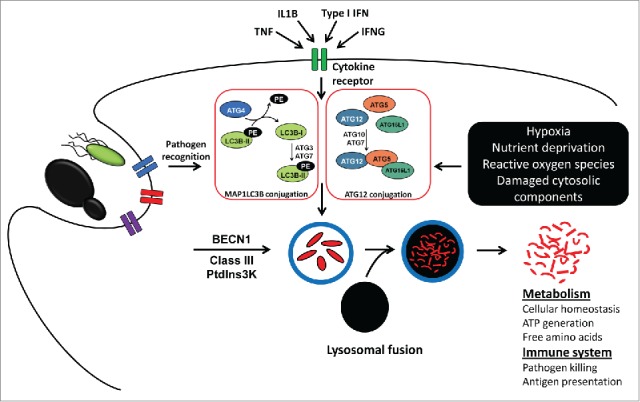
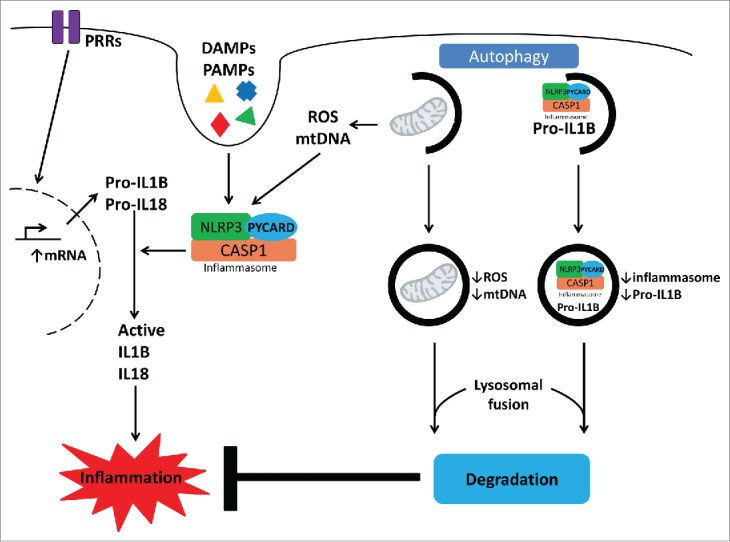
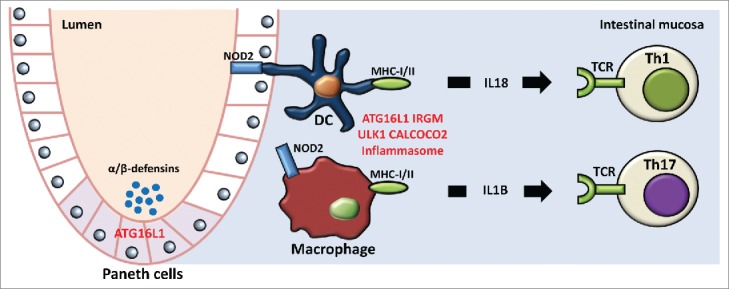
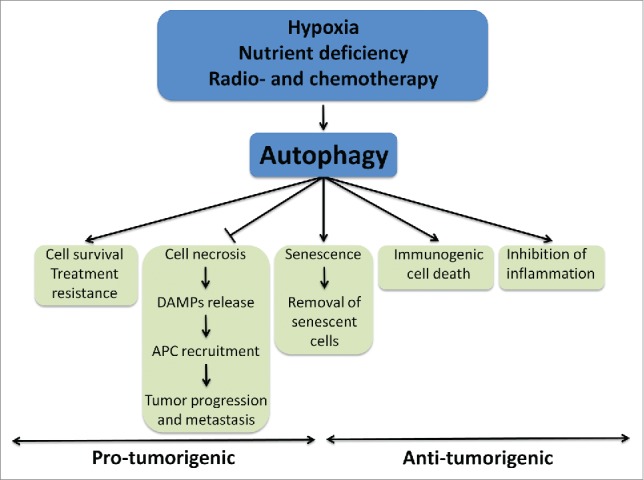
Verification
Claims the paper makes
The claims and statistics of this paper haven’t been checked yet.
Free: it reads the open-access text and checks the first 5 claims that cite a source we can check. Create a free account to check every claim.
Claims other papers make about this one
Each is checked against this paper’s own text: does it say what the citing paper says it does?
In the citing paper
“Reduced glycolysis and autophagy are known to attenuate inflammation”
From TREM2 Maintains Microglial Metabolic Fitness in Alzheimer’s Disease (2017) · cites this paper as Netea-Maier et al., 2016
Self-check
Percentages, sums and reported differences re-computed from the paper’s own numbers.
The self-check needs the paper’s full text.
Citations
Cites
1 retracted
Martinez, J., Almendinger, J., Oberst, A., Ness, R., Dillon, C. P., Fitzgerald, P., Hengartner, M. O., & Green, D. R. (2011) · Proceedings of the National Academy of Sciences · doi:10.1073/pnas.1113421108 · Cited by 655
RetractedRepertoires of Autophagy in the Pathogenesis of Ocular Diseases
Li, Y.-J., Jiang, Q., Cao, G.-F., Yao, J., & Yan, B. (2015) · Cellular Physiology and Biochemistry · doi:10.1159/000373980 · Cited by 16,304
Warburg, O. (1956) · Science · doi:10.1126/science.123.3191.309 · Cited by 13,425 · cited 1×
“protein production (historically known as the Warburg effect).(178,179) This mode of growth, however, requires an”
BackgroundThe phosphatidylinositol 3-Kinase–AKT pathway in human cancer
Vivanco, I., & Sawyers, C. L. (2002) · Nature Reviews Cancer · doi:10.1038/nrc839 · Cited by 6,056
A role for mitochondria in nlrp3 inflammasome activation
Zhou, R., Yazdi, A. S., Menu, P., & Tschopp, J. (2011) · Nature · doi:10.1038/nature09663 · Cited by 5,602
Association of NOD2 leucine-rich repeat variants with susceptibility to Crohn's disease
Hugot, J.-P., Chamaillard, M., Zouali, H., Lesage, S., Cézard, J.-P., Belaiche, J., Almer, S., Tysk, C., O'Morain, C. A., Gassull, M., et al. (2001) · Nature · doi:10.1038/35079107 · Cited by 5,591
Cui, C., Cui, J., Jin, F., Cui, Y., Li, R., Jiang, X., Tian, Y., Wang, K., Jiang, P., & Gao, J. (2017) · Cellular Physiology and Biochemistry · doi:10.1159/000479571 · Cited by 5,203
A frameshift mutation in NOD2 associated with susceptibility to Crohn's disease
Ogura, Y., Bonen, D. K., Inohara, N., Nicolae, D. L., Chen, F. F., Ramos, R., Britton, H., Moran, T., Karaliuskas, R., Duerr, R. H., et al. (2001) · Nature · doi:10.1038/35079114 · Cited by 5,030
Pankiv, S., Clausen, T. H., Lamark, T., Brech, A., Bruun, J.-A., Outzen, H., Øvervatn, A., Bjørkøy, G., & Johansen, T. (2007) · Journal of Biological Chemistry · doi:10.1074/jbc.m702824200 · Cited by 4,578 · cited 1×
“Autophagy is also important in host defense against other intracellular pathogens such as Toxoplasma gondii,(113,114) Salmonella spp.(115,116) and Listeria monocytogenes.”
BackgroundAutophagy and Viruses: Adversaries or Allies?
Dong, X., & Levine, B. (2013) · Journal of Innate Immunity · doi:10.1159/000346388 · Cited by 4,430
Research works printed but not linked: 9
- Saitoh T, Fujita N, Jang MH, Uematsu S, Yang BG, Satoh T, Omori H, Noda T, Yamamoto N, Komatsu M, et al. Loss of the autophagy protein Atg16L1 enhances endotoxin-induced IL-1beta production. Nature 2008; 456: 264- 8; PMID:18849965 18849965 · DOI · Paper page
- Crisan TO, Plantinga TS, van de Veerdonk FL, Farcaş MF, Stoffels M, Kullberg BJ, van der Meer JW, Joosten LA, Netea MG. Inflammasome-independent modulation of cytokine response by autophagy in human cells. PLoS One 2011; 6: e18666; PMID:21490934; http://dx.doi.org/ 10.1371/journal.pone.0018666 21490934 PMC3072416 · DOI · Paper page
- Travassos LH, Carneiro LAM, Ramjeet M, Hussey S, Kim YG, Magalhães JG, Yuan L, Soares F, Chea E, Le Bourhis L, et al. Nod1 and Nod2 direct autophagy by recruiting ATG16L1 to the plasma membrane at the site of bacterial entry. Nat Immunol 2010; 11: 55- 62; PMID:19898471; http://dx.doi.org/ 10.1038/ni.1823 19898471 · DOI · Paper page
- Zhou XJ, Lu XL, Lv JC, Yang HZ, Qin LX, Zhao MH, Su Y, Li ZG, Zhang H. Genetic association of PRDM1-ATG5 intergenic region and autophagy with systemic lupus erythematosus in a Chinese population. Ann Rheum Dis 2011; 70: 1330- 7; PMID:21622776; http://dx.doi.org/ 10.1136/ard.2010.140111 21622776 · DOI · Paper page
- Baumann I, Kolowos W, Voll RE, Manger B, Gaipl U, Neuhuber WL, Kirchner T, Kalden JR, Herrmann M. Impaired uptake of apoptotic cells into tingible body macrophages in germinal centers of patients with systemic lupus erythematosus. Arthritis Rheum 2002; 46: 191- 201; PMID:11817590; http://dx.doi.org/ 10.1002/1529-0131(200201)46:1%3c191::AID-ART10027%3e3.0.CO;2-K 11817590 · DOI
- Mostowy S, Sancho-Shimizu V, Hamon MA, Simeone R, Brosch R, Johansen T, Cossart P. p62 and NDP52 proteins target intracytosolic Shigella and Listeria to different autophagy pathways. J Biol Chem 2011; 286: 26987- 95; PMID:21646350; http://dx.doi.org/ 10.1074/jbc.M111.223610 21646350 PMC3143657 · DOI · Paper page
- Rosentul DC, Plantinga TS, Farcas M, Oosting M, Hamza OJ, Scott WK, Alexander BD, Yang JC, Laird GM, Joosten LA, et al. Role of autophagy genetic variants for the risk of Candida infections. Med Mycol 2014; 52: 333- 41; PMID:24713404; http://dx.doi.org/ 10.1093/mmy/myt035 24713404 PMC4687479 · DOI
- Smeekens SP, Malireddi RK, Plantinga TS, Buffen K, Oosting M, Joosten LA, Kullberg BJ, Perfect JR, Scott WK, van de Veerdonk FL, et al. Autophagy is redundant for the host defense against systemic Candida albicans infections. Eur J Clin Microbiol Infect Dis 2014; 33: 711- 22; PMID:24202731; http://dx.doi.org/ 10.1007/s10096-013-2002-x 24202731 · DOI
- 10.1007/s10555-01 · doi:10.1007/s10555-01
Cited by
Items 301–349 of 349
Gynecopathology in the Diagnosis and Assessment of Chronic Endometritis
Ge, Y., Yang, S., Yang, Y., Liu, Y., & Li, R. (2023) · Clinical and Experimental Obstetrics & Gynecology · doi:10.31083/j.ceog5005093 · Cited by 1
“It has also been proven that autophagy plays a key role in the regulation of inflammation in that it improves host defense through the direct elimination of invading pathogens and the upregulation of innate adaptive immunity, which includes leukocyte recruitment and cytokine secretion [51].”
BackgroundReyne, E., Arrindell, J., Bestion, E., Mezouar, S., & Desnues, B. (2025) · Autophagy Reports · doi:10.1080/27694127.2025.2475527 · Cited by 2
“Because of its important crosstalk with the inflammasome and apoptosis, autophagy is as well central to the immune response [1,2], particularly in phagocytic and antigen-presenting cells such as macrophages and dendritic cells [3].”
Yatsu, T., Nagata, A., Chiba, T., & Miyata, Y. (2025) · Biochemistry and Biophysics Reports · doi:10.1016/j.bbrep.2025.102195 · Cited by 2
“Generally, the inhibition of autophagic flux increases the accumulation of insoluble proteins and induces inflammation [16,21].”
The role of autophagy in chronic pain
Zhu, F.-Q., Zhang, W., & Guan, B.-Z. (2025) · Journal of Neuroimmunology · doi:10.1016/j.jneuroim.2025.578757 · Cited by 1
Ding, N., He, Z., & Yang, Q. (2026) · Annals of Medicine · doi:10.1080/07853890.2026.2638000 · Cited by 1
“This is a critical factor that causes inflammation [34] (Figure 3).”
Autophagy, NET formation, and inflammation crosstalk in thrombotic autoimmune diseases
Muralt, T., Buonomo, S. M., Tschan, M. P., & Schaller, M. M. (2026) · Frontiers in Immunology · doi:10.3389/fimmu.2026.1844170 · Cited by 2
“…by pattern recognition receptor activation and pro-in fl ammatory cytokines such as TNF, IL-1 b , IL-6, and type I and type II IFN, autophagy also regulates pro-in fl ammatory signaling pathways, including the in fl ammasome and the secretion of in fl ammatory immune mediators (13, 81, 88 – 90).”
Crosstalk between Autophagy and Apoptosis in Intervertebral Disc Degeneration
Saciloto, B., Nicoletti, N. F., Peletti-Figueiró, M., & Falavigna, A. (2021) · Journal of Biosciences and Medicines · doi:10.4236/jbm.2021.912003 · Cited by 1
“Degenerative disc disease (DDD) has been considered the commonest cause of low back pain (LBP) symptoms, with a heavy social and economic burden [1] [2] How to cite this paper: Saciloto, B., Nicoletti, N.F., Peletti-Figueiró, M. and Falavigna, A. (2021) Crosstalk between Autophagy and Apoptosis in Intervertebral Disc…”
BackgroundInfluentialZeng, X., Chen, L., Zhou, P., Tang, T., Chen, X., Hu, D., Wang, C., & Chen, L. (2023) · PubMed Central · doi:10.12122/j.issn.1673-4254.2023.02.19 · Cited by 1
Li, L., Jia, L., Hou, S., Zhang, T., Zhou, M., Chen, T., & Song, J. (2023) · Journal of Periodontology · doi:10.1002/jper.22-0529 · Cited by 1
Melatonin reduces lung injury in type 1 diabetic mice by the modulation of autophagy
Rezaie, J., Jahanghiri, M., Mosaddeghi-Heris, R., Hassannezhad, S., Abdyazdani, N., Rahbarghazi, A., & Ahmadi, M. (2024) · BMC Molecular and Cell Biology · doi:10.1186/s12860-024-00505-9 · Cited by 2
“…that, under diabetic conditions, metabolic inflammation is correlated with autophagy induced by oxidative stress [32], in addition, during inflammatory lung diseases, the level of autophagy is increased, thus lessening autophagy flux helps diseases improvement and reducing complications [33, 34].”
BackgroundPark, J.-E., Yun, J.-H., Lee, W., & Lee, J. S. (2024) · PLoS Pathogens · doi:10.1371/journal.ppat.1012474 · Cited by 1
Valesini, G., Colasanti, T., Alessandri, C., Bombardieri, M., Conti, F., & Sorice, M. (2017) · Springer eBooks · doi:10.1007/978-3-319-58244-3_9 · Cited by 1
“A crosstalk between autophagy and inflammatory mechanisms has been recently suggested (Netea-Maier et al. 2016), in part since autophagy 9 Citrullination and Autophagy”
BackgroundThe Role of Autophagy in Rotenone-Induced Neurotoxicity in Mice
Abdel-Razik, E. A., El-Bakary, A., Shaaban, S., Salama, M., Hassan, A., El-Desouky, S., & EL-Mansoury, A. (2019) · Mansoura Journal of Forensic Medicine and Clinical Toxicology · doi:10.21608/mjfmct.2019.17909.1001 · Cited by 1
“Autophagy may be dys-regulated in several disorders, as metabolic, infectious and neurodegenerative illnesses as well as cancer (Feng et al., 2014; Netea-Maier et al., 2016).”
BackgroundAutophagy and the potential linkage with the human oral diseases
Deniz, Y., Verdi, H., & Fatma, A. B. (2020) · Journal of Dental Problems and Solutions · doi:10.17352/2394-8418.000078 · Cited by 1
“With the help of these chemical agents, previous studies have demonstrated that autophagy is an endogenous defense mechanism for cells to regulate multiple cellular pathways involved in anti-aging, tumor suppression and promotion, inflammation, and immune response [24-26].”
BackgroundPopli, P., Oestreich, A. K., Maurya, V. K., Rowen, M. N., Masand, R. P., Holtzman, M. J., Zhang, Y., Lydon, J. P., Akira, S., Moley, K. H., et al. (2024) · eLife · doi:10.7554/elife.97325.1 · Cited by 1
Tarraf, A. A. (2021) · theses.fr (ABES) · doi:10.70675/545bd347z20bcz444cza534z622ac595baf9 · Cited by 3
Molecular Genetics of Ankylosing Spondylitis
Smith, J. A. (2016) · Wiley eBooks · doi:10.1002/9780470015902.a0023591
Autophagy inMycobacterium abscessusInfection
Subhadra, B., & Choi, C. H. (2017) · Journal of Bacteriology and Virology · doi:10.4167/jbv.2017.47.3.122
The role of autophagy in Parkinson's disease etiopathogenesis
Candeias, E., Magalhães, J. D., Santos, D., Costa, H. N., Silva, D. F., Esteves, A. R., & Cardoso, S. M. (2020) · Elsevier eBooks · doi:10.1016/b978-0-12-815950-7.00007-2 · Cited by 1
Cai, Q.-Y., Yulin, L. I., Fan, L. Y. U., Mingming, Z. H. O. U., Lu, K., Tang, X., Ren, D., Bao, Q., Wang, D., & Li, Y. (2020) · Journal of Nutritional Science and Vitaminology · doi:10.3177/jnsv.66.300
Los protagonistas de nuestro sistema tributario
Hernández, F. J. R. (1999) · Universidad de Córdoba Insitutional Repository (Universidad de Córdoba)
Modulation of RAS and PI3-AKT pathway by Stavudine (d4T) in PBMC of Alzheimer’s Disease PatientsPreprint
Rosa, F. L., Zoia, C., Bazzini, C., Bolognini, A., Saresella, M., Conti, E., Ferrarese, C., Piancone, F., Marventano, I., Fenoglio, C., et al. (2020) · doi:10.21203/rs.3.rs-23119/v1
Interplay between gut microbiota and autophagy in human health
Rastogi, S., Mohanty, S., & Tripathi, P. (2022) · Elsevier eBooks · doi:10.1016/b978-0-323-99879-6.00007-9
Wang, D., Shao, S., Zhang, Y., Zhao, D., & Wang, M. (2024) · Authorea · doi:10.22541/au.170664551.15172811/v1
Popli, P., Oestreich, A. K., Maurya, V. K., Rowen, M. N., Zhang, Y., Holtzman, M. J., Masand, R. P., Lydon, J. P., Akira, S., Moley, K. H., et al. (2025) · eLife · doi:10.7554/elife.97325.4
Popli, P., Oestreich, A. K., Maurya, V. K., Rowen, M. N., Zhang, Y., Holtzman, M. J., Masand, R. P., Lydon, J. P., Akira, S., Moley, K. H., et al. (2025) · eLife · doi:10.7554/elife.97325 · Cited by 2
Du, L., Cen, M., Cheng, F., & Dai, N. (2024) · Arab Journal of Gastroenterology · doi:10.1016/j.ajg.2024.07.002
Autophagy in Mononuclear Cells from Patients with Autoimmune Thyroiditis
Burtseva, A. V., Smirnova, E. V., Abramov, S. N., Tikhomirova, M. V., Afanasyeva, Z. A., & Abramova, Z. I. (2024) · Učënye zapiski Kazanskogo universiteta. Seriâ Estestvennye nauki/Učënye zapiski Kazanskogo universiteta. Seriâ Estestvennye nauki/Učenye zapiski Kazanskogo gosudarstvennogo universiteta. Seriâ Estestvennye nauki · doi:10.26907/2542-064x.2024.4.658-682 · Cited by 1
Popli, P., Oestreich, A. K., Maurya, V. K., Rowen, M. N., Zhang, Y., Holtzman, M. J., Masand, R. P., Lydon, J. P., Akira, S., Moley, K. H., et al. (2024) · eLife · doi:10.7554/elife.97325.2 · Cited by 1
Lu, J., Lu, X., & Chen, B. (2025) · Endocrine Metabolic & Immune Disorders - Drug Targets · doi:10.2174/0118715303355042241208171133
Popli, P., Oestreich, A. K., Maurya, V. K., Rowen, M. N., Zhang, Y., Holtzman, M. J., Masand, R. P., Lydon, J. P., Akira, S., Moley, K. H., et al. (2025) · eLife · doi:10.7554/elife.97325.3
Mokhtari, T., Majidi, F., Sheikhbahaei, F., Shahreza, P. B., & Poorhassan, M. (2025) · IGI Global eBooks · doi:10.4018/979-8-3693-5908-2.ch005
Milošević, S., & Trajković, V. (2025) · Medicinski podmladak · doi:10.5937/mp76-47896
Hexavalent chromium induced autophagy-dependent mTOR expression mediated by upregulation of HMGA2
Li, L., Dan, M., Li, S., Cui, X., Bao, S., Luo, S., & Cao, J. (2025) · Toxicology · doi:10.1016/j.tox.2025.154368
Yan, Z., Wang, Y., Song, Y., Ma, Y., An, Y., Wen, R., Wang, N., Huang, Y., & Wu, X. (2023) · Figshare · doi:10.6084/m9.figshare.24522586
Tian, Z., Yao, N., Wu, Y., Wang, F., & 赵英仁 (2022) · Figshare · doi:10.6084/m9.figshare.19746433
Dutta, D., Hoque, A. A., Paul, B., Park, J. H., Chowdhury, C., Quadir, M., Banerjee, S., Choudhury, A., Laha, S., Sepay, N., et al. (2024) · Figshare · doi:10.6084/m9.figshare.26798754
Kim, J. H., Lee, M., & Oh, M. S. (2026) · Molecular Biology Reports · doi:10.1007/s11033-026-11776-0
Zalpoor, H., Teow, J. Y., Ferdousmakan, S., Golestani, N., Nabi‐Afjadi, M., & Ramasamy, T. S. (2026) · Cell Communication and Signaling · doi:10.1186/s12964-026-02853-9
“Collectively, these findings implicate autophagy as an integrated stress response tightly linked to inflammation, in part through NF-κB modulation of ABCG2 [136].”
Rezaie, N., Ashrafian, F., Shidvash, F., Aghamohammad, S., & Rohani, M. (2026) · Molecular Nutrition & Food Research · doi:10.1002/mnfr.70525
GS ‐9620 alleviates psoriasis‐like inflammation by regulating autophagy in keratinocytes
Lyu, Y., Zhou, W., Zhang, P., Lin, C., Wen, X., Zhao, Z., Zhang, G., Zhang, Q., & Chen, S. (2026) · Animal Models and Experimental Medicine · doi:10.1002/ame2.70222
“6,7 The ATG12–ATG5–ATG16L1 complex is essential for autophagosome elongation, while NLRP3 inflammasome assembly drives IL-1 β /IL-18 release.”
Wang, Y., Zh, L., Ji, H., & Zhu, L. C. (2026) · Immunological Investigations · doi:10.1080/08820139.2026.2697466
“…viewed as a driver of hyperinflammation, since autophagy facilitates pathogen clearance while simultaneously exerting negative feedback on inflammatory pathways (Keller et al., 2020; Mohsin et al., 2021; Montava-Garriga & Ganley, 2020; Netea-Maier et al., 2016; Qin et al., 2024; Wu & Li, 2019).”
Jouriani, F. H., Torkamaneh, M., Torfeh, M., Sepehr, A., Ashrafian, F., Aghamohammad, S., & Rohani, M. (2026) · Journal of Nutritional Science · doi:10.1017/jns.2026.10130
“(28,29) Figure 2.”
BindingDB (2021) · UC San Diego · doi:10.7270/q2rr22gw
Metadata
- Authors
- Netea-Maier, R. T., Plantinga, T. S., van de Veerdonk, F. L., Smit, J. W., & Netea, M. G.
- Affiliations
- Radboud University Medical Center (NL)
- Department of Internal Medicine, Radboud University Medical Center, Nijmegen, The Netherlands
- Corresponding author
- Netea, Mihai G.
- Venue
- Autophagy
- Publisher
- Informa UK Limited
- Published
- 2016-01-26
- Volume
- 12
- Issue
- 2
- Pages
- 245-260
- ISSN
- 1554-8627 (ISSN-L)
- 1554-8635
- PMC
- PMC4836004
- OpenAlex
- W1884934928
- Cited by
- 349
- References
- 196
- Citations by year
- 2026: 8 · 2025: 22 · 2024: 27 · 2023: 29 · 2022: 38 · 2021: 35 · 2020: 46 · 2019: 40 · 2018: 42 · 2017: 40 · 2016: 18
- FWCI
- 4.42
- Type
- journal article
- Language
- en
- Open access
- hybrid
- doi.org
- Licence
- Locations
- Autophagy (publishedVersion, cc-by)
- Europe PMC (PubMed Central) (publishedVersion, cc-by)
- PubMed Central (publishedVersion, cc-by)
- PubMed (publishedVersion)
- Radboud Repository (Radboud University) (submittedVersion)
- Radboud Repository (Radboud University) (submittedVersion, other-oa)
- Funders
- KWF Kankerbestrijding (KUN2014-6728)
- FP7 Ideas: European Research Council (310372)
- Topics
- Life Sciences › Biochemistry, Genetics and Molecular Biology › Cell Biology › Autophagy in Disease and Therapy
- Life Sciences › Immunology and Microbiology › Immunology › Immune Response and Inflammation
- Life Sciences › Immunology and Microbiology › Immunology › Phagocytosis and Immune Regulation
- Keywords
- inflammation, host defense, immune-mediated diseases, cancer, autoimmune disease, neurodegenerative diseases, cellular homeostasis, therapeutic targeting
- MeSH terms
- Animals, Autophagy, Disease, Humans, Immunity, Inflammation, Interleukin-1beta, Inflammasomes
About these checks
Registry, retraction, Cites and statistics results are computed, not judged, with one exception: a printed reference that no index lists is read once by a model before it counts as a citation error. Claims are extracted by a model and kept only when their quote appears verbatim in the text; each cited source is then checked, with a model’s help, for whether it says what the claim relies on. Those verdicts can be wrong — read the claim’s quote and the cited source before relying on one.
Statistics and arithmetic are recomputed, not judged.
Confidence bands are shown only for fields calibrated on our annotated test set. None is calibrated yet, so no band is shown.
What counts as a claim ›How we measure confidence ›How we check this ›
Are you an author, or do you see a problem with this page? Request a review
Data sources
Bibliographic data: Semantic Scholar, OpenAlex, Crossref.
Contains information from the Semantic Scholar Academic Graph Datasets, made available under the ODC Attribution License (ODC-BY 1.0).
Semantic Scholar’s data is described in: Kinney, R., et al. (2023). The Semantic Scholar Open Data Platform. arXiv:2301.10140.
