

The effects of fasting on drug metabolism
Open accessThe DOI matches its Crossref record; 60 of the 61 references it cites were found in a registry or an index.
Abstract
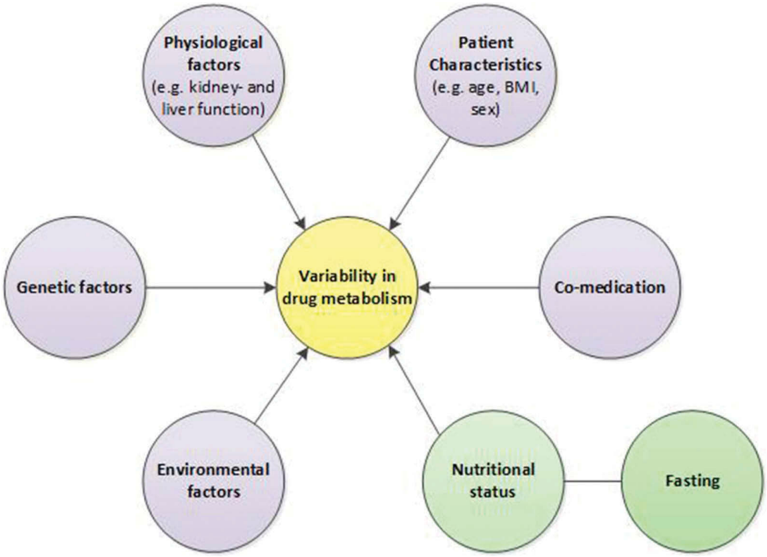
Introduction: There is considerable variability in the rates and extent of drug metabolism between patients due to physiological, genetic, pharmacologic, environmental and nutritional factors such as fasting. This variability in drug metabolism may result in treatment failure or, conversely, in increased side effects or toxicity. Preclinical studies have shown that fasting alters drug metabolism by modulating the activity of drug metabolizing enzymes involved. However, until recently little was known about the effects of fasting on drug metabolism in humans.Areas covered: This review describes the effects of fasting on drug metabolism based on both preclinical studies and studies performed in humans.Expert opinion: A better understanding of the effects of fasting may improve the efficacy and safety of pharmacotherapy for individual patients. Fasting contributes to variability in human drug metabolism by differentially affecting drug metabolizing enzymes. Although the effects of fasting on drug metabolism appear to be small (between 10-20%), fasting may be relevant for drugs with a small therapeutic range and/or in combination with other factors that contribute to variability in drug metabolism such as physiological, genetic or pharmacological factors. Therefore, additional research on this topic is warranted.
Overview
The claims and statistics of this paper haven’t been checked yet.
Free: it reads the open-access text and checks the first 5 claims that cite a source we can check. Create a free account to check every claim.
Integrity signals
Registry
Cites
Statistics
Figures


Verification
Claims the paper makes
The claims and statistics of this paper haven’t been checked yet.
Free: it reads the open-access text and checks the first 5 claims that cite a source we can check. Create a free account to check every claim.
Claims other papers make about this one
Each is checked against this paper’s own text: does it say what the citing paper says it does?
The source backs part of the claim, not all of it — or backs it for a different population, condition or comparison.
In the citing paper
“Tobacco smoking [43], alcohol consumption [44], fasting [55], and concomitant drug use [56, 57] may influence antidepressant metabolization and thus the bioavailability of the drugs”
From The relationship between dose and serotonin transporter occupancy of antidepressants—a systematic review (2022) · cites this paper as [55]
Experimental — accuracy not yet measured
Self-check
Percentages, sums and reported differences re-computed from the paper’s own numbers.
The self-check needs the paper’s full text.
Citations
Cites
Zanger, U. M., & Schwab, M. (2013) · Pharmacology & Therapeutics · doi:10.1016/j.pharmthera.2012.12.007 · Cited by 4,169 · cited 2×
“introduced into drug substrates by oxidation, reduction or hydrolysis [8].”
BackgroundMartignoni, M., Groothuis, G. M. M., & de Kanter, R. (2006) · Expert Opinion on Drug Metabolism & Toxicology · doi:10.1517/17425255.2.6.875 · Cited by 1,478
Induction of phase I, II and III drug metabolism/transport by xenobiotics
Xu, C., Li, C. Y.-T., & Kong, A.-N. T. (2005) · Archives of Pharmacal Research · doi:10.1007/bf02977789 · Cited by 1,279 · cited 2×
“gastrointestinal tract, kidney and lungs [9].”
BackgroundWilliams, J. A., Hyland, R., Jones, B. C., Smith, D. A., Hurst, S., Goosen, T. C., Peterkin, V., Koup, J. R., & Ball, S. E. (2004) · Drug Metabolism and Disposition · doi:10.1124/dmd.104.000794 · Cited by 928 · cited 3×
“UGTs represent the majority of phase II metabolizing enzymes.”
BackgroundClinical pharmacokinetics and metabolism of irinotecan (CPT-11).
Mathijssen, R. H. J., van Alphen, R. J., Verweij, J., Loos, W. J., Nooter, K., Stoter, G., & Sparreboom, A. (2001) · EUR Research Repository (Erasmus University Rotterdam) · Cited by 911
Brandhorst, S., Choi, I. Y., Wei, M., Cheng, C. W., Sedrakyan, S., Navarrete, G., Dubeau, L., Yap, L. P., Park, R., Vinciguerra, M., et al. (2015) · Cell Metabolism · doi:10.1016/j.cmet.2015.05.012 · Cited by 850 · cited 1×
“of oncology with low protein fasting mimicking diets to ease the burden of prolonged fasting [58,60].”
BackgroundNomenclature update for the mammalian UDP glycosyltransferase (UGT) gene superfamily
Mackenzie, P. I., Walter Bock, K., Burchell, B., Guillemette, C., Ikushiro, S.-I., Iyanagi, T., Miners, J. O., Owens, I. S., & Nebert, D. W. (2005) · Pharmacogenetics and Genomics · doi:10.1097/01.fpc.0000173483.13689.56 · Cited by 821 · cited 1×
“These enzymes represent two families (UGT1 and UGT2) including 9 human family UGT1 enzymes, 3 subfamily UGT2A and 8 UGT2B enzymes [13].”
BackgroundThe Human Nuclear Xenobiotic Receptor PXR: Structural Determinants of Directed Promiscuity
Watkins, R. E., Wisely, G. B., Moore, L. B., Collins, J. L., Lambert, M. H., Williams, S. P., Willson, T. M., Kliewer, S. A., & Redinbo, M. R. (2001) · Science · doi:10.1126/science.1060762 · Cited by 760 · cited 1×
“rifampicin), antimycotics, bile acids and many herbal compounds [33,34].”
BackgroundMcGill, M. R., & Jaeschke, H. (2013) · Pharmaceutical Research · doi:10.1007/s11095-013-1007-6 · Cited by 704 · cited 1×
“UGT1A1 is also involved in acetaminophen (paracetamol) metabolism [15].”
BackgroundOverview of Therapeutic Drug Monitoring
Kang, J.-S., & Lee, M.-H. (2009) · The Korean journal of internal medicine · doi:10.3904/kjim.2009.24.1.1 · Cited by 669 · cited 1×
“levels within an established therapeutic range [64].”
Acetaminophen Poisoning and Toxicity
Rumack, B. H., & Matthew, H. (1975) · Pediatrics · doi:10.1542/peds.55.6.871 · Cited by 640 · cited 5×
“%) of acetaminophen is converted by CYP enzymes to the reactive and hepatotoxic metabolite N-acetyl-p-benzoquinone-imine (NAPQI) [20].”
BackgroundInfluentialPHASE II DRUG METABOLIZING ENZYMES
Jancova, P., Anzenbacher, P., & Anzenbacherova, E. (2010) · Biomedical Papers · doi:10.5507/bp.2010.017 · Cited by 603 · cited 2×
“The most important biological function of glutathioneS-transferases (GSTs) is defense against reactive and toxic electrophiles such as reactive oxygen species (ROS) that arise through normal metabolic processes [10,19].”
BackgroundRaffaghello, L., Lee, C., Safdie, F. M., Wei, M., Madia, F., Bianchi, G., & Longo, V. D. (2008) · Proceedings of the National Academy of Sciences · doi:10.1073/pnas.0708100105 · Cited by 587 · cited 1×
“a phenomenon called differential stress resistance [57].”
Wei, M., Brandhorst, S., Shelehchi, M., Mirzaei, H., Cheng, C. W., Budniak, J., Groshen, S., Mack, W. J., Guen, E., Di Biase, S., et al. (2017) · Science Translational Medicine · doi:10.1126/scitranslmed.aai8700 · Cited by 553 · cited 2×
“Although many diets are not evidence based and often replaced by others shortly after introduction, a promising fasting based diet developed by Longo et al. was recently discussed in one of the leading medical journals JAMA [55,56].”
BackgroundCachexia as a major underestimated and unmet medical need: facts and numbers
von Haehling, S., & Anker, S. D. (2010) · Journal of Cachexia, Sarcopenia and Muscle · doi:10.1007/s13539-010-0002-6 · Cited by 533 · cited 1×
“COPD to approximately 70% in patients with advanced cancer [40].”
BackgroundNutrition, frailty, and sarcopenia
Cruz-Jentoft, A. J., Kiesswetter, E., Drey, M., & Sieber, C. C. (2017) · Aging Clinical and Experimental Research · doi:10.1007/s40520-016-0709-0 · Cited by 488 · cited 1×
“This latter condition is often seen in geriatric or oncological patients [2,3].”
BackgroundEffects of St. John's wort on irinotecan metabolism.
Mathijssen, R. H. J. (2002) · CancerSpectrum Knowledge Environment · doi:10.1093/jnci/94.16.1247 · Cited by 457
Kato, R., & Gillette, J. R. (1965) · The Journal of Pharmacology and Experimental Therapeutics · doi:10.1016/s0022-3565(25)27183-x · Cited by 262 · cited 1×
“‘almost all’ drug metabolizing enzymes in liver microsomes in female rats [22].”
Backgroundde Groot, S., Vreeswijk, M. P., Welters, M. J., Gravesteijn, G., Boei, J. J., Jochems, A., Houtsma, D., Putter, H., van der Hoeven, J. J., Nortier, J. W., et al. (2015) · BMC Cancer · doi:10.1186/s12885-015-1663-5 · Cited by 257 · cited 1×
“of oncology with low protein fasting mimicking diets to ease the burden of prolonged fasting [58,60].”
BackgroundPharmacogenetics: an opportunity for a safer and more efficient pharmacotherapy
Ingelman‐Sundberg, M. (2001) · Journal of Internal Medicine · doi:10.1046/j.1365-2796.2001.00879.x · Cited by 242 · cited 13×
“phase I dependent metabolism of drugs [6].”
BackgroundInfluentialGlutathione conjugation as a bioactivation reaction
van Bladeren, P. J. (2000) · Chemico-Biological Interactions · doi:10.1016/s0009-2797(00)00214-3 · Cited by 226 · cited 1×
“The most important biological function of glutathioneS-transferases (GSTs) is defense against reactive and toxic electrophiles such as reactive oxygen species (ROS) that arise through normal metabolic processes [10,19].”
BackgroundO'Shea, D., Davis, S. N., Kim, R. B., & Wilkinson, G. R. (1994) · Clinical Pharmacology and Therapeutics · doi:10.1038/clpt.1994.150 · Cited by 209 · cited 2×
“studied the effect of short-term (36 hours) fasting on CYP2E1 probe chlorzoxazone [41].”
BackgroundResultCaillet, P., Liuu, E., Raynaud Simon, A., Bonnefoy, M., Guerin, O., Berrut, G., Lesourd, B., Jeandel, C., Ferry, M., Rolland, Y., et al. (2017) · Clinical Nutrition · doi:10.1016/j.clnu.2016.12.003 · Cited by 207 · cited 1×
“This latter condition is often seen in geriatric or oncological patients [2,3].”
BackgroundNakamura, K., Moore, R., Negishi, M., & Sueyoshi, T. (2007) · Journal of Biological Chemistry · doi:10.1074/jbc.m610072200 · Cited by 203 · cited 1×
“Experimental studies have also demonstrated that fasting activates PXR in mice liver [35].”
BackgroundDrug metabolism alterations in nonalcoholic fatty liver disease
Merrell, M. D., & Cherrington, N. J. (2011) · Drug Metabolism Reviews · doi:10.3109/03602532.2011.577781 · Cited by 181 · cited 1×
“that fasting may contribute to both intra- and inter-individual variations in human drug metabolism as well [21,39].”
BackgroundDiversity and functions of glycosaminoglycan sulfotransferases
Habuchi, O. (2000) · Biochimica et Biophysica Acta (BBA) - General Subjects · doi:10.1016/s0304-4165(00)00016-7 · Cited by 173 · cited 1×
“Sulfotransferases (SULTs) enable the transfer of a sulfonate group (-SO) from the cofactor 3ʹ-phosphoadenosine-5ʹphosphosulfate to a substrate [17].”
BackgroundCaldwell, J., Gardner, I., & Swales, N. (1995) · Toxicologic Pathology · doi:10.1177/019262339502300202 · Cited by 160 · cited 2×
“centration exceeds this range, toxicity may occur [5].”
BackgroundHernandez, J., Mota, L., & Baldwin, W. (2009) · Current Pharmacogenomics and Personalized Medicine · doi:10.2174/187569209788654005 · Cited by 158 · cited 16×
“activation of nuclear receptors such as the pregnane X receptor (PXR) and the constitutive androstane receptor (CAR) [28,33].”
BackgroundInfluentialDing, X., Lichti, K., Kim, I., Gonzalez, F. J., & Staudinger, J. L. (2006) · Journal of Biological Chemistry · doi:10.1074/jbc.m600931200 · Cited by 151
Pharmacokinetic assessment of a five‐probe cocktail for CYPs 1A2, 2C9, 2C19, 2D6 and 3A
Turpault, S., Brian, W. R., Horn, R. V., Santoni, A., Poitiers, F., Donazzolo, Y., & Boulenc, X. (2009) · British Journal of Clinical Pharmacology · doi:10.1111/j.1365-2125.2009.03548.x · Cited by 146 · cited 9×
“The cocktail was administered orally and intravenously after an overnight fast (control intervention) and after 36 hours of fasting administered and consisted of caffeine (CYP1A2), metoprolol (CYP2D6), midazolam (CYP3A4), omeprazole (CYP2C19) and warfarin (CYP2C9) [37,43].”
MethodInfluentialMurray, M. (2006) · Current Drug Metabolism · doi:10.2174/138920006774832569 · Cited by 144 · cited 2×
“that fasting may contribute to both intra- and inter-individual variations in human drug metabolism as well [21,39].”
BackgroundFunction and organization of the human cytosolic sulfotransferase (SULT) family
Coughtrie, M. W. H. (2016) · Chemico-Biological Interactions · doi:10.1016/j.cbi.2016.05.005 · Cited by 142 · cited 1×
“acetaminophen) but also with endogenous substrates such as steroids, catecholamines, and thyroid hormones [18].”
BackgroundEffects of short-term fasting on cancer treatment
de Groot, S., Pijl, H., van der Hoeven, J. J. M., & Kroep, J. R. (2019) · Journal of Experimental & Clinical Cancer Research · doi:10.1186/s13046-019-1189-9 · Cited by 128 · cited 1×
“In addition to considering short-term fasting as a factor that contributes to variability in drug response, there is growing evidence for short-term fasting applied as therapy [53].”
BackgroundChanges in the amount of cytochrome P450s in rat hepatic microsomes with starvation
Imaoka, S., Terano, Y., & Funae, Y. (1990) · Archives of Biochemistry and Biophysics · doi:10.1016/0003-9861(90)90245-t · Cited by 121 · cited 1×
“Similarly, Cyp2C13 and b2 levels were down-regulated by fasting [25,26].”
BackgroundProgressive alterations in lipid and glucose metabolism during short-term fasting in young adult men
Klein, S., Sakurai, Y., Romijn, J. A., & Carroll, R. M. (1993) · American Journal of Physiology-Endocrinology and Metabolism · doi:10.1152/ajpendo.1993.265.5.e801 · Cited by 104 · cited 2×
“drug metabolizing enzymes in animals [32,33].”
BackgroundSelf-citationXu, J., Kulkarni, S. R., Li, L., & Slitt, A. L. (2011) · Drug Metabolism and Disposition · doi:10.1124/dmd.111.039925 · Cited by 103 · cited 1×
“have shown that fasting increased hepatic UGT isoforms Ugt1a1, −1a6, −1a7, −1a9, −2b1, −2b5, −2a3, −3a1, and −3a2 mRNA expression in mouse liver [27].”
Unsaturated fatty acid regulation of cytochrome P450 expression via a CAR-dependent pathway
Finn, R. D., Henderson, C. J., Scott, C. L., & Wolf, C. R. (2008) · Biochemical Journal · doi:10.1042/bj20080740 · Cited by 98 · cited 7×
“Although most of the preclinical studies suggest that shortterm fasting increases the activity of nuclear receptors CAR and PXR, thereby increasing the activity of drug metabolizing enzymes, the clinical studies described above demonstrate that short-term fasting differentially affects enzymes which are important in h…”
BackgroundInfluentialSystems biology of personalized nutrition
van Ommen, B., van den Broek, T., de Hoogh, I., van Erk, M., van Someren, E., Rouhani-Rankouhi, T., Anthony, J. C., Hogenelst, K., Pasman, W., Boorsma, A., et al. (2017) · Nutrition Reviews · doi:10.1093/nutrit/nux029 · Cited by 95 · cited 1×
“For example by organizations such as the Dutch organization for applied scientific research (TNO) which collaborates with different parties such as food producers and universities to implement personalized nutrition at large scale because this improves people’s health behavior to prevent diseases such as obesity and d…”
BackgroundMiller, K. W., & Yang, C. S. (1984) · Archives of Biochemistry and Biophysics · doi:10.1016/0003-9861(84)90179-6 · Cited by 93 · cited 2×
“Later studies have shown that starvation of rats increased demethylation of dimethylnitrosamine which is mediated by hepatic Cyp2e1 [23].”
BackgroundParsing interindividual drug variability: an emerging role for systems pharmacology
Turner, R. M., Park, B. K., & Pirmohamed, M. (2015) · WIREs Systems Biology and Medicine · doi:10.1002/wsbm.1302 · Cited by 90 · cited 4×
“age and gender), does not adequately describe all variability in drug responses [63].”
BackgroundInfluentialKlieber, S., Hugla, S., Ngo, R., Arabeyre‐Fabre, C., Meunier, V., Sadoun, F., Fedeli, O., Rival, M., Bourrié, M., Guillou, F., et al. (2008) · Drug Metabolism and Disposition · doi:10.1124/dmd.107.019539 · Cited by 64 · cited 11×
“The cocktail was administered orally and intravenously after an overnight fast (control intervention) and after 36 hours of fasting administered and consisted of caffeine (CYP1A2), metoprolol (CYP2D6), midazolam (CYP3A4), omeprazole (CYP2C19) and warfarin (CYP2C9) [37,43].”
InfluentialThe AGNP-TDM Expert Group Consensus Guidelines: focus on therapeutic monitoring of antidepressants
Baumann, P., Ulrich, S., Eckermann, G., Gerlach, M., Kuss, H.-J., Laux, G., Müller-Oerlinghausen, B., Rao, M. L., Riederer, P., Zernig, G., et al. (2005) · Dialogues in Clinical Neuroscience · doi:10.31887/dcns.2005.7.3/pbaumann · Cited by 64
Vossen, M., Sevestre, M., Niederalt, C., Jang, I.-J., Willmann, S., & Edginton, A. N. (2007) · Theoretical Biology and Medical Modelling · doi:10.1186/1742-4682-4-13 · Cited by 63
Bock, K. W. (2012) · Biochemical Pharmacology · doi:10.1016/j.bcp.2012.07.009 · Cited by 58 · cited 3×
“UGT catalyzes the transfer of glucuronic acid from UDP-glucuronic acid to various acceptor substrates including bile acids, bilirubin, steroid hormones and drugs [11].”
BackgroundInfluentialMa, Q., Dannan, G. A., Guengerich, F. P., & Yang, C. S. (1989) · Biochemical Pharmacology · doi:10.1016/0006-2952(89)90611-4 · Cited by 56 · cited 1×
“Similarly, Cyp2C13 and b2 levels were down-regulated by fasting [25,26].”
BackgroundCharacterization of 1′-Hydroxymidazolam Glucuronidation in Human Liver Microsomes
Zhu, B. Y., Bush, D. R., Doss, G. A., Vincent, S. H., Franklin, R. B., & Xu, S. S. (2007) · Drug Metabolism and Disposition · doi:10.1124/dmd.107.017962 · Cited by 55 · cited 2×
“(phase II drug metabolism) to enable urinary excretion [16].”
BackgroundHuisman, S. A., Bijman-Lagcher, W., IJzermans, J. N., Smits, R., & de Bruin, R. W. (2015) · Cell Cycle · doi:10.1080/15384101.2015.1044170 · Cited by 42
Imaoka, S., Yamaguchi, Y., & Funae, Y. (1990) · Biochimica et Biophysica Acta (BBA) - General Subjects · doi:10.1016/0304-4165(90)90208-e · Cited by 38 · cited 1×
“Starvation of rats for 3 days also resulted in a doubling of total CYP levels in the kidney [24].”
BackgroundShort-Term Fasting Alters Cytochrome P450–Mediated Drug Metabolism in Humans
Lammers, L. A., Achterbergh, R., de Vries, E. M., van Nierop, F. S., Klümpen, H., Soeters, M. R., Boelen, A., Romijn, J. A., & Mathôt, R. A. A. (2015) · Drug Metabolism and Disposition · doi:10.1124/dmd.114.062299 · Cited by 37 · cited 1×
“Short-term fasting increases the activity of phase I drug metabolizing enzymes CYP1A2, CYP2D6 and CYP3A4 (reflected by increased systemic clearances of caffeine, metoprolol and midazolam, respectively) whereas it decreases the activity of CYP2C9 (reflected by decreased S-warfarin clearance) [43,44,47].”
BackgroundSelf-citationAndrés, F., & LLerena, A. (2016) · Current Pharmaceutical Biotechnology · doi:10.2174/1389201017666160926150117 · Cited by 31 · cited 1×
“Therefore, probes are commonly used as phenotyping strategy in drug development to study drug-drug interactions but probes are also used as well-established method to study enzyme activity in humans [42].”
MethodPharmacokinetic interactions and dosing rationale for antiepileptic drugs in adults and children
van Dijkman, S. C., Rauwé, W. M., Danhof, M., & Pasqua, O. E. D. (2017) · British Journal of Clinical Pharmacology · doi:10.1111/bcp.13400 · Cited by 31
Lammers, L. A., Achterbergh, R., van Schaik, R. H. N., Romijn, J. A., & Mathôt, R. A. A. (2017) · Clinical Pharmacokinetics · doi:10.1007/s40262-017-0515-7 · Cited by 30 · cited 2×
“which indicates decreased activity of CYP2C9, considering that S-warfarin is a probe of CYP2C9 activity (Table 1) [43].”
BackgroundSelf-citationTsuchiya, Y., Sakai, H., Hirata, A., & Yanai, T. (2018) · Journal of Toxicologic Pathology · doi:10.1293/tox.2018-0009 · Cited by 19 · cited 7×
“In contrast, the gene expression of UDP-glucuronosyltransferase 1A6 (Ugt1a6), sulfotransferase 1A1 (Sult1a1), and glutathione S-transferase M1 (Gstm1) was not affected by fasting [29].”
BackgroundInfluentialBadowski, M. E., Burton, B. L., Shaeer, K. M., & Dicristofano, J. (2019) · Drugs in Context · doi:10.7573/dic.212550 · Cited by 19 · cited 1×
“Many of these cytotoxic agents are approved to be administered at fixed doses [52].”
BackgroundOptimal sampling of antipsychotic medicines: a pharmacometric approach for clinical practice
Perera, V., Bies, R. R., Mo, G., Dolton, M. J., Carr, V. J., McLachlan, A. J., Day, R. O., Polasek, T. M., & Forrest, A. (2014) · British Journal of Clinical Pharmacology · doi:10.1111/bcp.12410 · Cited by 18
de Vries, E. M., Lammers, L. A., Achterbergh, R., Klümpen, H., Mathôt, R. A. A., Boelen, A., & Romijn, J. A. (2016) · PLoS ONE · doi:10.1371/journal.pone.0159552 · Cited by 18
Self-citationQuantitative Method for Simultaneous Analysis of a 5-Probe Cocktail for Cytochrome P450 Enzymes
Lammers, L. A., Achterbergh, R., Pistorius, M. C. M., Bijleveld, Y. A., de Vries, E. M., Boelen, A., Klümpen, H., Romijn, J. A., & Mathôt, R. A. A. (2016) · Therapeutic Drug Monitoring · doi:10.1097/ftd.0000000000000338 · Cited by 14 · cited 1×
“Furthermore hepatic mRNA expression of orthologous P450 enzymes (Cyp1a2, Cyp2d22, Cyp3a11, Cyp2c37, Cyp2c38 and Cyp2c65) were measured [30,38].”
BackgroundSelf-citationLammers, L. A., Achterbergh, R., Romijn, J. A., & Mathôt, R. A. A. (2018) · European Journal of Drug Metabolism and Pharmacokinetics · doi:10.1007/s13318-018-0487-5 · Cited by 12 · cited 5×
“We also studied the effect of fasting on midazolam and its metabolites [44].”
BackgroundSelf-citationCan a Diet That Mimics Fasting Turn Back the Clock?
Abbasi, J. (2017) · JAMA · doi:10.1001/jama.2017.6648 · Cited by 6 · cited 2×
“Although many diets are not evidence based and often replaced by others shortly after introduction, a promising fasting based diet developed by Longo et al. was recently discussed in one of the leading medical journals JAMA [55,56].”
BackgroundNutritional conditioning: The effect of fasting on drug metabolism
Lammers, L. A. (2018) · UvA-DARE (University of Amsterdam) · Cited by 3
Self-citation
Research works printed but not linked: 2
- 4. Berg JMTJ, Stryer L. Biochemistry. 5th ed. New York: W H Freeman; 2002.
- 14. Pratt V, McLeod H, Dean L, et al., editors Medical genetics summaries [Internet]. Bethesda (MD): National Center for Biotechnology Information (US). 2012.
Cited by
The Gut Microbiota (Microbiome) in Cardiovascular Disease and Its Therapeutic Regulation
Rahman, M. M., Islam, F., -Or-Rashid, M. H., Mamun, A. A., Rahaman, M. S., Islam, M. M., Meem, A. F. K., Sutradhar, P. R., Mitra, S., Mimi, A. A., et al. (2022) · Frontiers in Cellular and Infection Microbiology · doi:10.3389/fcimb.2022.903570 · Cited by 253
“Individual therapeutic responses and drug-related side effects differ based on various factors such as gender, age, BMI, disease state, environmental factors, and genetic polymorphisms (Lammers et al., 2020).”
BackgroundA cross-talk between gut microbiome, salt and hypertension
Naqvi, S., Asar, T. O., Kumar, V., Al-Abbasi, F. A., Alhayyani, S., Kamal, M. A., & Anwar, F. (2021) · Biomedicine & Pharmacotherapy · doi:10.1016/j.biopha.2020.111156 · Cited by 99
Sørensen, A., Ruhé, H. G., & Munkholm, K. (2022) · Molecular Psychiatry · doi:10.1038/s41380-021-01285-w · Cited by 65
Veldscholte, K., Cramer, A. B. G., Joosten, K., & Verbruggen, S. C. A. T. (2021) · Clinical Nutrition · doi:10.1016/j.clnu.2021.07.030 · Cited by 20
“Additionally, fasting might contribute to variability in drug metabolism, and thus drug levels, by its effects on metabolizing enzyme activity [158].”
Hasan, M. S. A., Bhuia, M. S., Chowdhury, R., Husain, Z., Saifuzzaman, M., Mia, E., Akbor, M. S., Yana, N. T., Islam, M. A., Ansari, S. A., et al. (2025) · Neuroscience · doi:10.1016/j.neuroscience.2025.03.004 · Cited by 21
Metadata
- Authors
- Lammers, L. A., Achterbergh, R., Mathôt, R. A. A., & Romijn, J. A.
- Affiliations
- Amsterdam UMC Location University of Amsterdam (NL)
- Corresponding author
- Lammers, Laureen A.
- Venue
- Expert Opinion on Drug Metabolism & Toxicology
- Publisher
- Informa UK Limited
- Published
- 2019-12-24
- Volume
- 16
- Issue
- 1
- Pages
- 79-85
- ISSN
- 1742-5255 (ISSN-L)
- 1744-7607
- OpenAlex
- W2994971940
- Cited by
- 32
- References
- 61
- Citations by year
- 2026: 3 · 2025: 4 · 2024: 2 · 2023: 6 · 2022: 10 · 2021: 7
- FWCI
- 0.67
- Type
- journal article
- Language
- en
- Open access
- hybrid
- doi.org
- Licence
- Locations
- Expert Opinion on Drug Metabolism & Toxicology (publishedVersion, cc-by-nc-nd)
- PubMed (publishedVersion)
- Pure Amsterdam UMC (submittedVersion, cc-by)
- Data Archiving and Networked Services (DANS) (submittedVersion, other-oa)
- Utrecht University Repository (Utrecht University) (submittedVersion, other-oa)
- Topics
- Life Sciences › Pharmacology, Toxicology and Pharmaceutics › Pharmacology › Pharmacogenetics and Drug Metabolism
- Health Sciences › Medicine › Physiology (medical) › Dietary Effects on Health
- Health Sciences › Medicine › Oncology › Drug Transport and Resistance Mechanisms
- Keywords
- fasting, drug metabolism, interindividual variability, drug-metabolizing enzymes, pharmacokinetics, drug therapy safety, therapeutic window, dietary factors
- MeSH terms
- Animals, Pharmaceutical Preparations, Fasting, Humans, Treatment Outcome, Treatment Failure, Drug-Related Side Effects and Adverse Reactions
About these checks
Registry, retraction, Cites and statistics results are computed, not judged, with one exception: a printed reference that no index lists is read once by a model before it counts as a citation error. Claims are extracted by a model and kept only when their quote appears verbatim in the text; each cited source is then checked, with a model’s help, for whether it says what the claim relies on. Those verdicts can be wrong — read the claim’s quote and the cited source before relying on one.
Statistics and arithmetic are recomputed, not judged.
Confidence bands are shown only for fields calibrated on our annotated test set. None is calibrated yet, so no band is shown.
What counts as a claim ›How we measure confidence ›How we check this ›
Are you an author, or do you see a problem with this page? Request a review
Data sources
Bibliographic data: Semantic Scholar, OpenAlex, Crossref.
Contains information from the Semantic Scholar Academic Graph Datasets, made available under the ODC Attribution License (ODC-BY 1.0).
Semantic Scholar’s data is described in: Kinney, R., et al. (2023). The Semantic Scholar Open Data Platform. arXiv:2301.10140.
