

Antibody-mediated phagocytosis contributes to the anti-tumor activity of the therapeutic antibody daratumumab in lymphoma and multiple myeloma
Open accessThe DOI matches its Crossref record; 48 of the 48 references it cites were found in a registry or an index.
Abstract
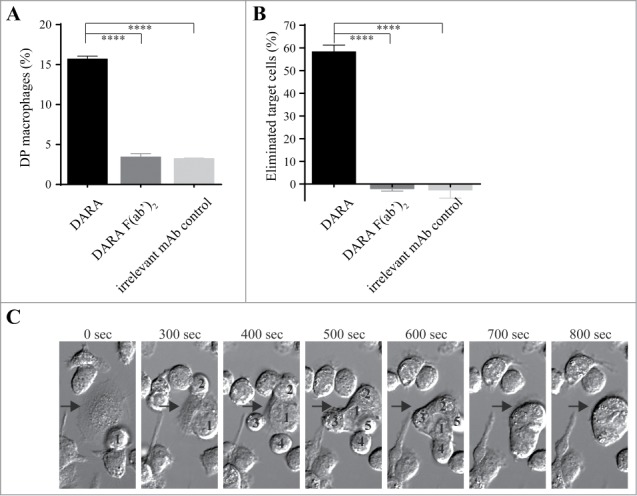
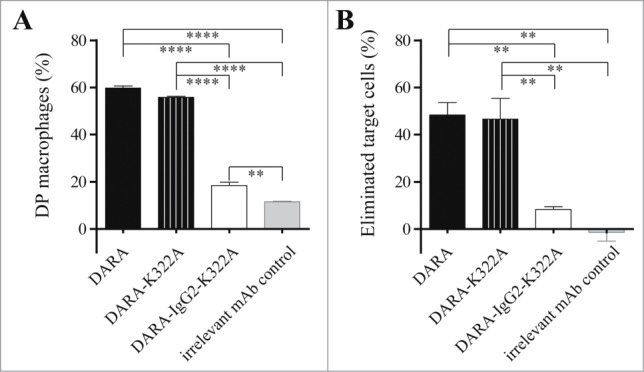
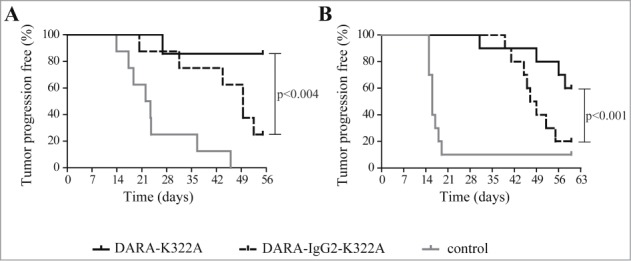
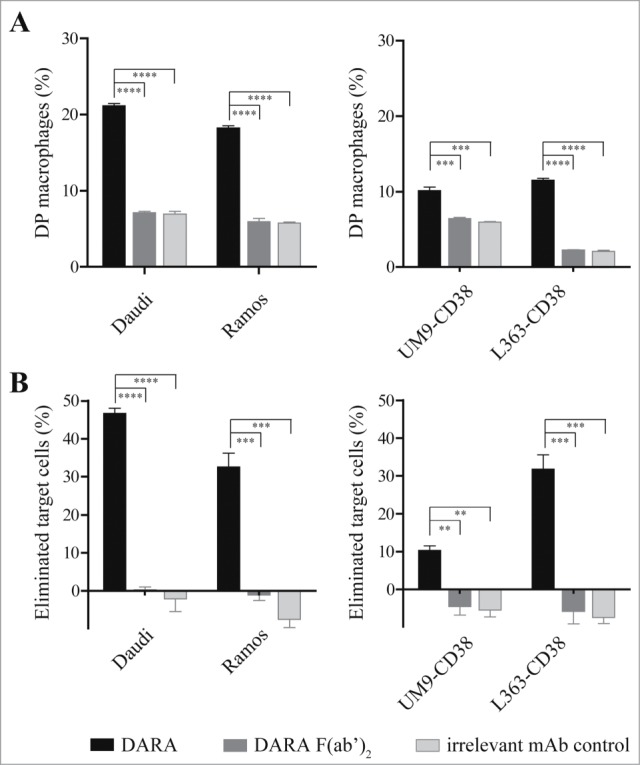
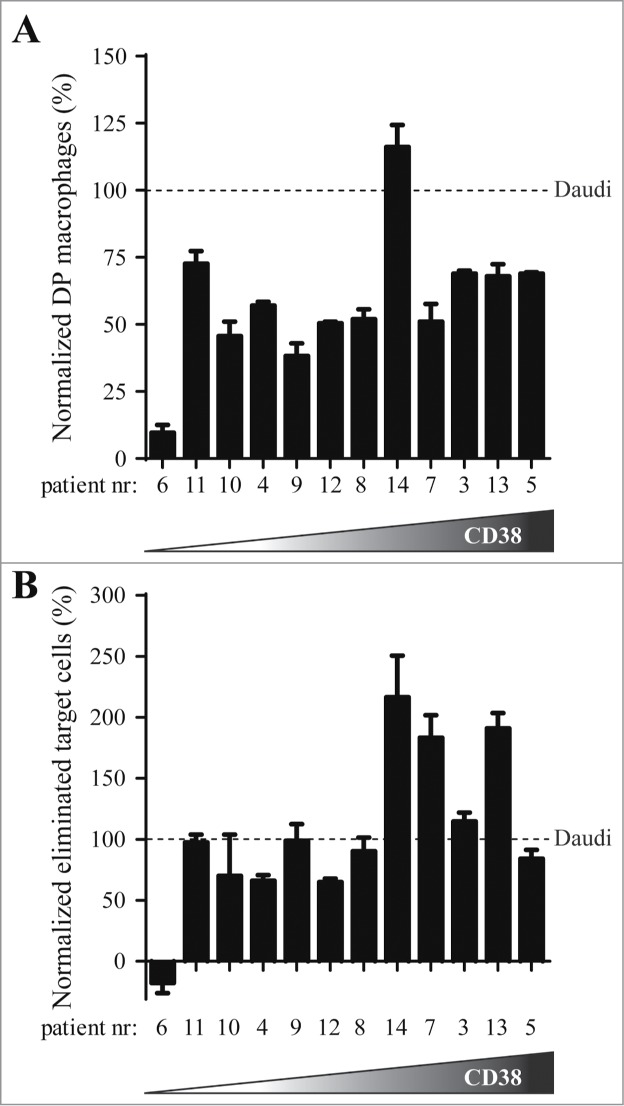
Daratumumab (DARA) is a human CD38-specific IgG1 antibody that is in clinical development for the treatment of multiple myeloma (MM). The potential for IgG1 antibodies to induce macrophage-mediated phagocytosis, in combination with the known presence of macrophages in the tumor microenvironment in MM and other hematological tumors, led us to investigate the contribution of antibody-dependent, macrophage-mediated phagocytosis to DARA's mechanism of action. Live cell imaging revealed that DARA efficiently induced macrophage-mediated phagocytosis, in which individual macrophages rapidly and sequentially engulfed multiple tumor cells. DARA-dependent phagocytosis by mouse and human macrophages was also observed in an in vitro flow cytometry assay, using a range of MM and Burkitt's lymphoma cell lines. Phagocytosis contributed to DARA's anti-tumor activity in vivo, in both a subcutaneous and an intravenous leukemic xenograft mouse model. Finally, DARA was shown to induce macrophage-mediated phagocytosis of MM cells isolated from 11 of 12 MM patients that showed variable levels of CD38 expression. In summary, we demonstrate that phagocytosis is a fast, potent and clinically relevant mechanism of action that may contribute to the therapeutic activity of DARA in multiple myeloma and potentially other hematological tumors.
Overview
The claims and statistics of this paper haven’t been checked yet.
Free: it reads the open-access text and checks the first 5 claims that cite a source we can check. Create a free account to check every claim.
Integrity signals
Registry
Cites
Statistics
Figures
Verification
Claims the paper makes
The claims and statistics of this paper haven’t been checked yet.
Free: it reads the open-access text and checks the first 5 claims that cite a source we can check. Create a free account to check every claim.
Claims other papers make about this one
Each is checked against this paper’s own text: does it say what the citing paper says it does?
The source backs part of the claim, not all of it — or backs it for a different population, condition or comparison.
In the citing paper
“Daratumumab is an IgG1 monoclonal antibody that targeting CD38 and induces cell death through complement-dependent cytotoxicity (CDC), antibody-dependent cellular cytotoxicity (ADCC), antibody-dependent cellular phagocytosis (ADCP), and regulation of CD38 enzyme activity [157, 158].”
From Multiple myeloma: signaling pathways and targeted therapy (2024) · cites this paper as [158]
Experimental — accuracy not yet measured
Self-check
Percentages, sums and reported differences re-computed from the paper’s own numbers.
The self-check needs the paper’s full text.
Citations
Cites
CD47 Is Upregulated on Circulating Hematopoietic Stem Cells and Leukemia Cells to Avoid Phagocytosis
Jaiswal, S., Jamieson, C. H. M., Pang, W. W., Park, C. Y., Chao, M. P., Majeti, R., Traver, D., van Rooijen, N., & Weissman, I. L. (2009) · Cell · doi:10.1016/j.cell.2009.05.046 · Cited by 1,581
Efficient Neutralization of Primary Isolates of HIV-1 by a Recombinant Human Monoclonal Antibody
Burton, D. R., Pyati, J., Koduri, R., Sharp, S. J., Thornton, G. B., Parren, P. W. H. I., Sawyer, L. S. W., Hendry, R. M., Dunlop, N., Nara, P. L., et al. (1994) · Science · doi:10.1126/science.7973652 · Cited by 1,100
Self-citationChao, M. P., Alizadeh, A. A., Tang, C., Myklebust, J. H., Varghese, B., Gill, S., Jan, M., Cha, A. C., Chan, C. K., Tan, B. T., et al. (2010) · Cell · doi:10.1016/j.cell.2010.07.044 · Cited by 1,087 · cited 1×
“Anti-CD47 mAb has been shown to synergize with rituximab in the treatment of non-Hodgkin lymphoma.(41) Moreover, targeting the CD47-SIRP a axis has now been shown to increase efficacy of several therapeutic antibodies.”
Backgroundde Weers, M., Tai, Y.-T., van der Veer, M. S., Bakker, J. M., Vink, T., Jacobs, D. C. H., Oomen, L. A., Peipp, M., Valerius, T., Slootstra, J. W., et al. (2011) · The Journal of Immunology · doi:10.4049/jimmunol.1003032 · Cited by 1,037 · cited 2×
“Antibodies Human IgG1 CD38 mAb DARA was generated by immunization in a HuMAb mouse and produced as recombinant protein as described previously.(12) DARA F(ab’)2 fragments were prepared via pepsin digestion (Sigma-Aldrich, P7012).”
BackgroundMethodSelf-citationRole of tumor-associated macrophages in tumor progression and invasion
Mantovani, A., Schioppa, T., Porta, C., Allavena, P., & Sica, A. (2006) · Cancer and Metastasis Reviews · doi:10.1007/s10555-006-9001-7 · Cited by 888
Chao, M. P., Jaiswal, S., Weissman-Tsukamoto, R., Alizadeh, A. A., Gentles, A. J., Volkmer, J., Weiskopf, K., Willingham, S. B., Raveh, T., Park, C. Y., et al. (2010) · Science Translational Medicine · doi:10.1126/scitranslmed.3001375 · Cited by 776 · cited 1×
“CD47 is described to be upregulated on leukemic cells to avoid phagocytosis,(26) which can be counterbalanced by the expression of calreticulin that gives a pro-phagocytic signal upon receptor binding.(27,28) Human CD47 is not able to bind to mouse SIRPa,(29,30) and therefore CD47 cannot account for the difference in…”
BackgroundUchida, J., Hamaguchi, Y., Oliver, J. A., Ravetch, J. V., Poe, J. C., Haas, K. M., & Tedder, T. F. (2004) · The Journal of Experimental Medicine · doi:10.1084/jem.20040119 · Cited by 642 · cited 1×
“By using mouse strains deficient in specific leukocyte subpopulations or by depleting specific effector cell subsets, mw were shown to represent the main effector cells in the anti-tumor activity of CD20-targeting monoclonal Ab (mAb) in vivo.(6,7) Furthermore, for SGN-30 (chimeric IgG1 CD30 mAb), SGN-40 (humanized IgG…”
BackgroundMechanism of action of immunomodulatory drugs (IMiDS) in multiple myeloma
Quach, H., Ritchie, D., Stewart, A. K., Neeson, P., Harrison, S., Smyth, M. J., & Prince, H. M. (2010) · Leukemia · doi:10.1038/leu.2009.236 · Cited by 600 · cited 3×
“However, we previously showed that monocytes and NK-cells from peripheral blood mononuclear cells of a healthy donor were not killed by DARA.34 For MM patient therapy, the current focus is on combination therapy of mAb with immunomodulatory drugs (IMiDs).37,38 IMiDs currently used, e.g., lenalidomide and pomalidomide,…”
BackgroundThe binding site for C1q on IgG
Duncan, A. R., & Winter, G. (1988) · Nature · doi:10.1038/332738a0 · Cited by 569
Polymorphism in Sirpa modulates engraftment of human hematopoietic stem cells
Takenaka, K., Prasolava, T. K., Wang, J. C. Y., Mortin-Toth, S. M., Khalouei, S., Gan, O. I., Dick, J. E., & Danska, J. S. (2007) · Nature Immunology · doi:10.1038/ni1527 · Cited by 509
Cited by
Items 201–300 of 534
CAR-T cell therapy for treatment of acute myeloid leukemia, advances and outcomes
Khalifeh, M., Hopewell, E. L., & Salman, H. (2025) · Molecular Therapy · doi:10.1016/j.ymthe.2025.03.052 · Cited by 29
Schriewer, L., Schütze, K., Petry, K., Hambach, J., Fumey, W., Koenigsdorf, J., Baum, N., Menzel, S., Rissiek, B., Riecken, K., et al. (2020) · Theranostics · doi:10.7150/thno.38533 · Cited by 29
“Previous studies have shown that CD38-targeting conventional monoclonal antibodies can mediate cytotoxicity against CD38-expressing hematological cancer cells via CDC, ADCC, antibody-dependent cellular phagocytosis (ADCP), direct induction of apoptosis, and modulation of CD38 ectoenzyme function [12, 42-44].”
BackgroundA Journey Through Myeloma Evolution: From the Normal Plasma Cell to Disease Complexity
Vià, M. D., Ziccheddu, B., Maeda, A., Bagnoli, F., Perrone, G., & Bolli, N. (2020) · HemaSphere · doi:10.1097/hs9.0000000000000502 · Cited by 30
Therapeutic antibodies in oncology: an immunopharmacological overview
Toledo‐Stuardo, K., Ribeiro, C. H., González‐Herrera, F., Matthies, D. J., Roy, M. S. L., Dietz-Vargas, C., Latorre, Y., Campos, I., Guerra, Y., Tello, S., et al. (2024) · Cancer Immunology Immunotherapy · doi:10.1007/s00262-024-03814-2 · Cited by 30
“ADCP may also be relevant for other hematological tumors [125].”
BackgroundTargeting phagocytosis checkpoints for cancer immunotherapy
Veillette, A., Li, J., Galindo, C. C., Davidson, D., & Tang, Z.-H. (2025) · Nature reviews. Cancer · doi:10.1038/s41568-025-00893-w · Cited by 32
“The same is true for newer anticancer monoclonal antibodies such as epidermal growth factor receptor (EGFR) monoclonal antibody cetuximab for head and neck cancer, and CD38 monoclonal antibody dara-tumumab for multiple myeloma 91,92 .”
Kastritis, E., Palladini, G. O., Minnema, M. C., Wechalekar, A. D., Jaccard, A., Lee, H. C., Sanchorawala, V., Mollee, P. N., Lu, J., Schönland, S. O., et al. (2026) · Blood · doi:10.1182/blood.2025032099 · Cited by 28
Ochoa, M. C., Pérez-Ruiz, E., Minute, L., Oñate, C., Pérez, G., Rodríguez, I., Zabaleta, A., Alignani, D., Fernández-Sendin, M., López, A., et al. (2019) · OncoImmunology · doi:10.1080/2162402x.2019.1599636 · Cited by 32
“Complement-mediated cytotoxicity and reductions of myeloid-derived suppressor cells in the myeloma microenvironment have also been observed.(4,7) CD137 (4-1BB) is a TNFR family surface glycoprotein expressed on activated T and NK cells.”
BackgroundNovel targets for the treatment of relapsing multiple myeloma
Giuliani, N., Accardi, F., Marchica, V., Palma, B. D., Storti, P., Toscani, D., Vicario, E., & Malavasi, F. (2019) · Expert Review of Hematology · doi:10.1080/17474086.2019.1624158 · Cited by 29
“The ratio between monocytes and MM cells may influence DARAmediated ADCP [27].”
BackgroundInfluentialDaratumumab: A review of current indications and future directions
Hill, E., Morrison, C., & Kazandjian, D. G. (2022) · Seminars in Oncology · doi:10.1053/j.seminoncol.2022.01.008 · Cited by 28
Bahlis, N. J., Siegel, D. S. D., Schiller, G. J., Samaras, C. J., Sébag, M., Berdeja, J. G., Ganguly, S., Matous, J., Song, K., Seet, C. S., et al. (2022) · Leukemia & lymphoma/Leukemia and lymphoma · doi:10.1080/10428194.2022.2030477 · Cited by 28
Targeting CD38 for acute leukemia
Zhong, X., & Ma, H. (2022) · Frontiers in Oncology · doi:10.3389/fonc.2022.1007783 · Cited by 31
“DARA is a humanized IgG1k monoclonal antibody(mAb) that specifically binds to the epitopes of the cell surface of CD38, directly killing tumor cells through immune-mediated cytotoxicity, such as ADCC, CDC, and ADCP, and inducing apoptosis via FCg receptor-mediated cross-linking (45–50).”
BackgroundInfluentialLakshman, A., Abeykoon, J. P., Kumar, S. K., Rajkumar, S. V., Dingli, D., Buadi, F. K., Gonsalves, W. I., Leung, N., Dispenzieri, A. A., Kourelis, T., et al. (2017) · American Journal of Hematology · doi:10.1002/ajh.24883 · Cited by 29
“eGFR <30 mL/min, n (%) 6 (5) 4 (8) 0 (0) 2 (9) 0 (0) .”
Novel Agents in Multiple Myeloma
Szalat, R. E., & Munshi, N. C. (2019) · The Cancer Journal · doi:10.1097/ppo.0000000000000355 · Cited by 29
Regulation of Cancer and Cancer-Related Genes via NAD +
Sharif, T., Martell, E., Dai, C., Ghassemi-Rad, M. S., Kennedy, B. E., Lee, P. W. K., & Gujar, S. A. (2018) · Antioxidants and Redox Signaling · doi:10.1089/ars.2017.7478 · Cited by 28
“Anti-CD38 antibodies have been demonstrated to induce cell death of MM cells through several mechanisms, including complement-dependent cytotoxicity, antibody-dependent cell-mediated cytotoxicity, antibody-dependent cellular phagocytosis, and apoptosis (40, 134).”
Antibody‐drug therapeutic conjugates: Potential of antibody‐siRNAs in cancer therapy
Yarian, F., Alibakhshi, A., Eyvazi, S., Arezumand, R., & Ahangarzadeh, S. (2019) · Journal of Cellular Physiology · doi:10.1002/jcp.28490 · Cited by 29
“A similar phenomenon was observed in vivo using xenografted leukemic cells in mice (Overdijk et al., 2015).”
BackgroundSalomon‐Perzyński, A., Walter‐Croneck, A., Usnarska‐Zubkiewicz, L., Dytfeld, D., Zielińska, P., Wojciechowska, M., Hołojda, J., Robak, P. J., Pasternak, A., Knopińska‐Posłuszny, W., et al. (2019) · Advances in Medical Sciences · doi:10.1016/j.advms.2019.05.001 · Cited by 26
Storti, P., Vescovini, R., Costa, F., Marchica, V., Toscani, D., Palma, B. D., Craviotto, L., Malavasi, F., & Giuliani, N. (2020) · British Journal of Haematology · doi:10.1111/bjh.16548 · Cited by 26
“, 2015); conversely the contribution of monocytes or macrophages in DARA-mediated ADCP of MM cells is still unclear, even if some evidence of the involvement of macrophages has been shown in heterologous systems (Overdijk et al., 2015).”
BackgroundMoradinasab, S., Pourbagheri‐Sigaroodi, A., Ghaffari, S. H., & Bashash, D. (2021) · International Immunopharmacology · doi:10.1016/j.intimp.2021.108499 · Cited by 28
Daratumumab Improves Bone Turnover in Relapsed/Refractory Multiple Myeloma; Phase 2 Study “REBUILD”
Terpos, E., Ntanasis‐Stathopoulos, I., Kastritis, E., Hatjiharissi, E., Katodritou, E., Eleutherakis‐Papaiakovou, E., Verrou, E., Gavriatopoulou, M., Leonidakis, A., Manousou, K., et al. (2022) · Cancers · doi:10.3390/cancers14112768 · Cited by 26
“Daratumumab leads myeloma cells to death via both Fc-dependent immune effector pathways and direct effects [17,19,20].”
BackgroundMechanisms of Action of the New Antibodies in Use in Multiple Myeloma
Romano, A., Storti, P., Marchica, V., Scandura, G., Notarfranchi, L., Craviotto, L., Raimondo, F. D., & Giuliani, N. (2021) · Frontiers in Oncology · doi:10.3389/fonc.2021.684561 · Cited by 26
“DARA-coated MM cells are rapidly engulfed by tumor-associated macrophages (53).”
BackgroundSAR442085, a novel anti-CD38 antibody with enhanced antitumor activity against multiple myeloma
Kassem, S., Diallo, B., El-Murr, N., Carrié, N., Tang, A., Fournier, A., Bonnevaux, H., Nicolazzi, C., Cuisinier, M., Reguigne-Arnould, I., et al. (2022) · Blood · doi:10.1182/blood.2021012448 · Cited by 26
Mayer, K. A., Budde, K., Halloran, P. F., Doberer, K., Rostaing, L. P. E., Eskandary, F. A., Christamentl, A., Wahrmann, M., Regele, H. M., Schranz, S., et al. (2022) · Trials · doi:10.1186/s13063-022-06198-9 · Cited by 25
Sborov, D. W., Baljević, M., Reeves, B., Laubach, J. P., Efebera, Y. A., Rodriguez, C., Costa, L. J., Chari, A., Silbermann, R. W., Holstein, S. A., et al. (2022) · British Journal of Haematology · doi:10.1111/bjh.18432 · Cited by 26
Miguel, J. F. S., Einsele, H., & Moreau, P. (2016) · Advances in Therapy · doi:10.1007/s12325-016-0413-7 · Cited by 25
Landgren, O., Chari, A., Cohen, Y. C., Spencer, A. G., Voorhees, P. M., Sandhu, I., Jenner, M. W., Smith, D., Cavo, M., van de Donk, N. W. C. J., et al. (2024) · Blood · doi:10.1182/blood.2024025897 · Cited by 24
Yohannan, B., Rees, M. J., Gertz, M. A., Dispenzieri, A. A., Kapoor, P., Buadi, F. K., Dingli, D., Leung, N., Lacy, M. Q., Hayman, S. R., et al. (2025) · Blood Neoplasia · doi:10.1016/j.bneo.2025.100092 · Cited by 27
“11,12 13-15 The phase 3 ANDROMEDA study was a practice-changing regis-trational study that showed that the addition of Dara to CyBorD (Dara-CyBorD) for patients with AL amyloidosis improved the hematological response, organ response, and event-free survival (EFS), leading to the accelerated US Food…”
Rapid Progress in Immunotherapies for Multiple Myeloma: An Updated Comprehensive Review
Nishida, H. (2021) · Cancers · doi:10.3390/cancers13112712 · Cited by 25
NMAAP1 Expressed in BCG-Activated Macrophage Promotes M1 Macrophage Polarization
Liu, Q., Tian, Y., Zhao, X., Jing, H., Xie, Q., Li, P., Li, D., Yan, D., & Zhu, X. (2015) · Molecules and Cells · doi:10.14348/molcells.2015.0125 · Cited by 25
“Activated macrophages engulf tumor cells via antibody-mediated phagocytosis (Overdijk et al., 2015).”
BackgroundWalker, Z. J., VanWyngarden, M. J., Stevens, B. M., Abbott, D., Hammes, A., Langouët-Astrié, C. J., Smith, C. A., Palmer, B. E., Forsberg, P. A., Mark, T. M., et al. (2020) · Blood Advances · doi:10.1182/bloodadvances.2019000122 · Cited by 25
“The mechanisms of action for Dara are multifactorial, inducing ADCC, complementdependent cytotoxicity, and induction of apoptosis, possibly from blockade of CD38 function.(33-36) Thus, measuring Dara activity ex vivo requires the presence of immune cells.”
BackgroundRyu, Y. K., Ricker, E., Soderquist, C. R., Francescone, M. A., Lipsky, A. H., & Amengual, J. E. (2022) · Journal of Clinical Medicine · doi:10.3390/jcm11164928 · Cited by 24
“Daratumumab works via several mechanisms, including antibody-dependent cellular cytotoxicity (ATCC), antibody-dependent cellular phagocytosis (ADCP), complement-dependent cytotoxicity (CDC), direct apoptosis and immunomodulation [17,18].”
BackgroundTherapeutic tactics for targeting B lymphocytes in autoimmunity and cancer
Wemlinger, S. M., & Cambier, J. C. (2023) · European Journal of Immunology · doi:10.1002/eji.202249947 · Cited by 24
“Mechanisms of action for daratumumab and isatuximab include CDC, ADCC, ADCP, and direct apoptosis [45, 46].”
BackgroundAdvances and challenges of immunotherapies in NK/T cell lymphomas
He, L., Chen, N., Dai, L., & Peng, X. (2023) · iScience · doi:10.1016/j.isci.2023.108192 · Cited by 24
Role of FcγRs in Antibody-Based Cancer Therapy
Graziano, R. F., & Engelhardt, J. (2019) · Current topics in microbiology and immunology · doi:10.1007/82_2019_150 · Cited by 26
Cytotoxic IgG: Mechanisms, functions, and applications
Wöhner, M., & Nimmerjahn, F. (2025) · Immunity · doi:10.1016/j.immuni.2025.05.008 · Cited by 22
Anti-CD38 and anti-SLAMF7: the future of myeloma immunotherapy
Zamagni, E., Tacchetti, P., Pantani, L., & Cavo, M. (2018) · Expert Review of Hematology · doi:10.1080/17474086.2018.1456331 · Cited by 22
“ADCC, ADCP, and induction of apoptosis via cross-linking [9].”
BackgroundTargeted Therapies for Multiple Myeloma
Leow, C. C.-Y., & Low, M. S. Y. (2021) · Journal of Personalized Medicine · doi:10.3390/jpm11050334 · Cited by 23
“anisms including antibody-dependent cellular cytotoxicity (ADCC) and phagocytosis, complement-dependent cytotoxicity (CDC), apoptosis and inhibition of the enzymatic effects of CD38 [36].”
BackgroundInsights into Modern Therapeutic Approaches in Pediatric Acute Leukemias
Panuciak, K., Margas, M., Makowska, K., & Lejman, M. (2022) · Cells · doi:10.3390/cells11010139 · Cited by 24
Monoclonal Antibodies: The Greatest Resource to Treat Multiple Myeloma
Luca, F. D., Allegra, A., Chio, C. D., Previti, S., Zappalà, M., & Ettari, R. (2023) · International Journal of Molecular Sciences · doi:10.3390/ijms24043136 · Cited by 25
Plesner, T., van de Donk, N. W. C. J., & Richardson, P. G. G. (2020) · Cells · doi:10.3390/cells9020378 · Cited by 22
“…antibody-dependent cellular cytotoxicity (ADCC) and antibody-dependent cellular phagocytosis (ADCP) when the level of CD38 expression is high [8,11], it has been suggested that retreatment with daratumumab could be a reasonable strategy after a “wash-out” period of 3–6 months to allow for…”
Switching to daratumumab SC from IV is safe and preferred by patients with multiple myeloma
Mateos, M., Rigaudeau, S., Basu, S., Špıčka, I., Schots, R., Wróbel, T., Cook, G., Beksaç, M., Gries, K. S., Kudva, A., et al. (2022) · Journal of Oncology Pharmacy Practice · doi:10.1177/10781552221103551 · Cited by 21
Fu, W., Li, W., Hu, J., An, G., Wang, Y., Fu, C., Chen, L., Jin, J., Cen, X., Ge, Z., et al. (2022) · Clinical Lymphoma Myeloma & Leukemia · doi:10.1016/j.clml.2022.10.007 · Cited by 23
Brennan, K., Iversen, K. F., Blanco, A., Lund, T., Plesner, T., & Gee, M. M. M. (2022) · Cells · doi:10.3390/cells11213365 · Cited by 21
“DARA induces direct killing of tumour cells via complement-dependent cytotoxicity (CDC), Cells 2022, 11, 3365. https://doi.org/10.3390/cells11213365 https://www.mdpi.com/journal/cells Cells 2022, 11, 3365 2 of 19 antibody-dependent cell mediated cytotoxicity (ADCC) and antibody-dependent cellular phagocytosis (ADCP) […”
BackgroundInfluentialElias, S., Kahlon, S., Kotzur, R., Kaynan, N., & Mandelboim, O. (2018) · OncoImmunology · doi:10.1080/2162402x.2018.1428158 · Cited by 21
Syed, Y. Y. (2019) · Drugs · doi:10.1007/s40265-019-01080-6 · Cited by 21
Stocker, N., Gaugler, B., Ricard, L., de Vassoigne, F., Marjanovic, Z., Mohty, M., & Malard, F. (2020) · Cancer Medicine · doi:10.1002/cam4.2827 · Cited by 22
The multi-faceted potential of CD38 antibody targeting in multiple myeloma
Shallis, R. M., Terry, C. M., & Lim, S. H. (2017) · Cancer Immunology, Immunotherapy · doi:10.1007/s00262-017-1990-2 · Cited by 20
Magic year for multiple myeloma therapeutics: Key takeaways from the ASH 2015 annual meeting
Zhang, K., Desai, A. P., Zeng, D., Gong, T., Lu, P., & Wang, M. L. (2016) · Oncotarget · doi:10.18632/oncotarget.13314 · Cited by 21
Role of daratumumab in the frontline management of multiple myeloma: a narrative review
Yadav, S., Gundeti, S., Bhave, A. A., Deb, U., Dixit, J., & Mishra, K. (2023) · Expert Review of Hematology · doi:10.1080/17474086.2023.2246651 · Cited by 21
“2015 ● DARA-dependent phagocytosis of MM cell lines was explored in vitro using live cell imaging and flow cytometry ● DARA induced macrophage-mediated phagocytosis, indicated by an increase in the number of double positive (DP) mφ [31]”
Hulbert, A. L., Pavlisko, E. N., & Palmer, S. M. (2018) · Current Opinion in Organ Transplantation · doi:10.1097/mot.0000000000000537 · Cited by 20
Targeting CD38 with daratumumab is lethal to Waldenström macroglobulinaemia cells
Paulus, A., Manna, A., Akhtar, S., Paulus, S. M., Sharma, M., Coignet, M. V., Jiang, L., Roy, V., Witzig, T. E., Ansell, S. M., et al. (2018) · British Journal of Haematology · doi:10.1111/bjh.15515 · Cited by 20
Jiang, X. Y., Luider, J. M., & Shameli, A. (2019) · Cytometry Part B Clinical Cytometry · doi:10.1002/cyto.b.21837 · Cited by 20
Flow cytometry-based assessment of direct-targeting anti-cancer antibody immune effector functions
Miller, M. L., & Finn, O. J. (2019) · Methods in enzymology on CD-ROM/Methods in enzymology · doi:10.1016/bs.mie.2019.07.026 · Cited by 21
“, 2004) and an important therapeutic mechanism for trastuzumab, daratumumab (anti-CD38) and elotuzumab (anti-SLAMF7) (Kurdi et al., 2018; Overdijk et al., 2015; Shi et al., 2015; Yin et al., 2018).”
BackgroundEvolving Role of Daratumumab: From Backbencher to Frontline Agent
Jain, A., & Ramasamy, K. (2020) · Clinical Lymphoma Myeloma & Leukemia · doi:10.1016/j.clml.2020.03.010 · Cited by 20
Luo, M., Usmani, S. Z., Mateos, M., Nahi, H., Chari, A., Miguel, J. F. S., Touzeau, C., Suzuki, K., Kaiser, M., Carson, R. L., et al. (2020) · The Journal of Clinical Pharmacology · doi:10.1002/jcph.1771 · Cited by 20
“The Journal of Clinical Pharmacology 2021, 61(5) 614–627 © 2020 Janssen Pharmaceuticals.”
BackgroundKaufman, J. L., Dimopoulos, M. A., White, D. J., Benboubker, L., Cook, G., Leiba, M., Morton, J., Ho, P. J., Kım, K., Takezako, N., et al. (2020) · Blood Cancer Journal · doi:10.1038/s41408-020-00375-2 · Cited by 20
Soefje, S. A., Carpenter, C. L., Carlson, K., Awasthi, S., Lin, T. S., Kaila, S., Tarjan, D., Kayal, N., Kirkup, C., Wagner, T. E., et al. (2023) · JCO Oncology Practice · doi:10.1200/op.22.00421 · Cited by 19
Usmani, S. Z., Khan, I., Chiu, C. W., Foureau, D., Druhan, L. J., Rigby, K., Casneuf, T., & Sasser, A. K. (2018) · Experimental Hematology and Oncology · doi:10.1186/s40164-018-0096-7 · Cited by 19
Plesner, T., Dimopoulos, M. A., Oriol, A., Miguel, J. F. S., Bahlis, N. J., Rabin, N. K., Suzuki, K., Yoon, S., Ben‐Yehuda, D., Cook, G., et al. (2021) · British Journal of Haematology · doi:10.1111/bjh.17435 · Cited by 20
The evolving status of immunotherapies in multiple myeloma: the future role of bispecific antibodies
Swan, D., Routledge, D. J. M., & Harrison, S. J. (2021) · British Journal of Haematology · doi:10.1111/bjh.17805 · Cited by 20
“It is a humanised IgG kappa MoAb that kills MM cells through antibodydependent T-cellular cytotoxicity (ADCC), antibodydependent T-cellular phagocytosis (ADCP) and complementdependent cytotoxicity (CDC).(76,77) In the relapse setting, daratumumab enhanced responses to bortezomib/dexamethasone and lenalidomide/dexameth…”
BackgroundGirmenia, C., Cavo, M., Corso, A., Raimondo, F. D., Musto, P., Offidani, M., Petrucci, M. T., Rosato, A., & Barosi, G. (2022) · Critical Reviews in Oncology/Hematology · doi:10.1016/j.critrevonc.2022.103623 · Cited by 19
Shi, L., Chen, B., Liu, T., Li, L., Hu, B., Li, C., Jia, B., & Wang, F. (2022) · Molecular Pharmaceutics · doi:10.1021/acs.molpharmaceut.2c00279 · Cited by 19
Baum, N., Fliegert, R., Bauche, A., Hambach, J., Menzel, S., Haag, F., Bannas, P., & Koch‐Nolte, F. (2020) · Cancers · doi:10.3390/cancers13010076 · Cited by 18
Fu, W., Bang, S., Huang, H., Kım, K., Li, W., An, G., Lee, J., Cai, Z., Jin, J., Wang, Y., et al. (2024) · Annals of Hematology · doi:10.1007/s00277-024-05958-8 · Cited by 19
How to Integrate Elotuzumab and Daratumumab Into Therapy for Multiple Myeloma
Hofmeister, C. C., & Lonial, S. (2016) · Journal of Clinical Oncology · doi:10.1200/jco.2016.69.5908 · Cited by 19
Advances in immunotherapy in multiple myeloma
Boussi, L. S., & Niesvizky, R. (2017) · Current Opinion in Oncology · doi:10.1097/cco.0000000000000407 · Cited by 20
Immunotherapy in Multiple Myeloma: Accelerating on the Path to the Patient
Ghobrial, I., Cruz, C. H., Garfall, A. L., Shah, N. D., Munshi, N. C., Kaufman, J. L., Boise, L., Morgan, G. J., Adalsteinsson, V. A., Manier, S., et al. (2019) · Clinical Lymphoma Myeloma & Leukemia · doi:10.1016/j.clml.2019.02.004 · Cited by 19
Suzuki, K., Nishiwaki, K., & Yano, S. (2021) · Cancers · doi:10.3390/cancers13194867 · Cited by 19
Arnall, J. R., Maples, K. T., Harvey, R. D., & Moore, D. C. (2021) · Annals of Pharmacotherapy · doi:10.1177/10600280211058754 · Cited by 20
Yimer, H. A., Melear, J. M., Faber, E. A., Bensinger, W., Burke, J. M., Narang, M., Stevens, D. A., Gray, K. S., Lutska, Y., Bobba, P., et al. (2022) · Leukemia & lymphoma/Leukemia and lymphoma · doi:10.1080/10428194.2022.2076847 · Cited by 18
Daratumumab: Therapeutic asset, biological trap!
Deneys, V., Thiry, C., Frelik, A., Debry, C., Martin, B., & Doyen, C. (2018) · Transfusion Clinique et Biologique · doi:10.1016/j.tracli.2017.12.001 · Cited by 19
Moreau, P., Facon, T. T. F., Usmani, S. Z., Bahlis, N. J., Raje, N. S., Plesner, T., Orlowski, R. Z., Basu, S., Nahi, H., Hulin, C., et al. (2025) · Leukemia · doi:10.1038/s41375-024-02506-1 · Cited by 18
Cohen, Y. C., Oriol, A., Wu, K. L., Lavi, N., Vlummens, P., Jackson, C. C., Garvin, W., Carson, R. L., Crist, W. A., Fu, J., et al. (2020) · Clinical Lymphoma Myeloma & Leukemia · doi:10.1016/j.clml.2020.08.008 · Cited by 17
“Daratumumab-induced on-tumor activity occurs through several CD38 immune-mediated actions (complement-dependent cytotoxicity, antibody-dependent cellular cytotoxicity, antibodydependent cellular phagocytosis), apoptosis, and modulation of CD38 enzymatic activity.(6-9) Daratumumab induces an immunomodulatory effect tha…”
BackgroundDeligne, C., Milcent, B., Josseaume, N., Teillaud, J., & Sibéril, S. (2017) · Frontiers in Immunology · doi:10.3389/fimmu.2017.00950 · Cited by 16
“It has also been demonstrated that macrophage-mediated phagocytosis contributes to the therapeutic activity of anti-CD38 antibody in multiple myeloma and potentially other hematological tumors (73).”
BackgroundReprint of “Immunomodulatory effects of CD38-targeting antibodies”
van de Donk, N. W. C. J. (2019) · Immunology Letters · doi:10.1016/j.imlet.2019.02.002 · Cited by 17
Liu, L., Wertz, W. J., Kondisko, A., Shurin, M. R., & Wheeler, S. (2019) · The Journal of Applied Laboratory Medicine · doi:10.1373/jalm.2019.029009 · Cited by 16
Plasma Cell Directed Therapy for Immune Thrombotic Thrombocytopenic Purpura (iTTP)
Chen, M., & Shortt, J. (2022) · Transfusion Medicine Reviews · doi:10.1016/j.tmrv.2022.09.001 · Cited by 17
Abdallah, A.-O. A., Mahmoudjafari, Z., Ahmed, N., Cui, W., Shune, L. O., McGuirk, J. P., Mohan, M., Mohyuddin, G. R., Afrough, A., Alkharabsheh, O. A., et al. (2023) · European Journal Of Haematology · doi:10.1111/ejh.13942 · Cited by 17
Antibody mimicry, receptors and clinical applications
Horenstein, A. L., Chillemi, A., Quarona, V., Zito, A., Mariani, V., Faini, A. C., Morandi, F., Schiavoni, I., Ausiello, C. M., & Malavasi, F. (2016) · Human Antibodies · doi:10.3233/hab-160305 · Cited by 16
“Other trials in vivo indicate that effects on regulatory T cells (Treg) and myeloid-derived suppressor cells (MDSC) are combined therapeutic elements [35,58].”
New monoclonal antibodies on the horizon in multiple myeloma
O’Donnell, E., & Raje, N. S. (2016) · Therapeutic Advances in Hematology · doi:10.1177/2040620716682490 · Cited by 17
Emerging small molecule approaches to enhance the antimyeloma benefit of proteasome inhibitors
Driscoll, J. J., & Brailey, M. (2017) · Cancer and Metastasis Reviews · doi:10.1007/s10555-017-9698-5 · Cited by 16
Monoclonal Antibody: A New Treatment Strategy against Multiple Myeloma
Cho, S., Lin, L., Xing, L., Yu, T., Wen, K., Anderson, K. C., & Tai, Y. (2017) · Antibodies · doi:10.3390/antib6040018 · Cited by 16
“In preclinical studies, it was found that daratumumab (formerly named HumaxCD38) kills CD38-expressing lymphoma and myeloma cells by various mechanisms including CDC, ADCC, ADCP, and induction of apoptosis after Fcγ receptor-mediated crosslinking with anti-human IgG1 secondary antibody [36,52,53].”
BackgroundFlexibly coupled multiprocessors for image processing
Sunwoo, M. H., & Aggarwal, J. K. (1990) · Journal of Parallel and Distributed Computing · doi:10.1016/0743-7315(90)90021-g · Cited by 16
Rifkin, R. M., Singer, D., Aguilar, K. M., Baidoo, B., & Maiese, E. M. (2019) · Clinical Therapeutics · doi:10.1016/j.clinthera.2019.03.013 · Cited by 15
Cha, E. B., Shin, K. K., Seo, J., & Oh, D. (2020) · BMB Reports · doi:10.5483/bmbrep.2020.53.8.024 · Cited by 15
Monoclonal antibodies in multiple myeloma
Vozella, F., Fazio, F., Lapietra, G., Petrucci, M. T., Martinelli, G., & Cerchione, C. (2021) · Panminerva Medica · doi:10.23736/s0031-0808.20.04149-x · Cited by 15
Diagnosis and Management of Monoclonal Gammopathy and Smoldering Multiple Myeloma
Schmidt, T. M., & Callander, N. S. (2020) · Journal of the National Comprehensive Cancer Network · doi:10.6004/jnccn.2020.7660 · Cited by 15
Which therapies will move to the front line for multiple myeloma?
Cejalvo, M. J., & de la Rubia, J. (2017) · Expert Review of Hematology · doi:10.1080/17474086.2017.1317589 · Cited by 20
Golay, J. (2017) · Journal of Autoimmunity · doi:10.1016/j.jaut.2017.06.002 · Cited by 16
Jelínek, T., Maisnar, V., Pour, L., Špıčka, I., Minařík, J., Gregora, E., Kessler, P., Sýkora, M., Fraňková, H., Adamová, D., et al. (2018) · Current Medical Research and Opinion · doi:10.1080/03007995.2017.1410121 · Cited by 15
Sanden, S. V., Ito, T., Diels, J., Vogel, M., Belch, A. R., & Oriol, A. (2017) · The Oncologist · doi:10.1634/theoncologist.2017-0103 · Cited by 15
Spencer, A. G., Moreau, P., Mateos, M., Goldschmidt, H., Suzuki, K., Levin, M., Sonneveld, P., Orlowski, R. Z., Yoon, S., Usmani, S. Z., et al. (2024) · Blood Advances · doi:10.1182/bloodadvances.2023010579 · Cited by 15
Evaluation of the safety and efficacy of daratumumab outside of clinical trials
Kobayashi, H., Tsushima, T., Terao, T., Abe, Y., Miura, D., Narita, K., Kitadate, A., Takeuchi, M., & Matsue, K. (2019) · International Journal of Hematology · doi:10.1007/s12185-019-02648-4 · Cited by 14
“These include antibody-dependent cell-mediated cytotoxicity, complement-dependent cytotoxicity, and antibody-dependent cellular phagocytosis [5, 6]; daratumumab is also accompanied by a favorable side effect profile [7].”
BackgroundZhang, Y., Cheung, Y.-K., Ng, D. K. P., & Fong, W. (2021) · Cancer Immunology Immunotherapy · doi:10.1007/s00262-021-02917-4 · Cited by 15
“This may help to inhibit tumor recurrence as macrophage-mediated phagocytosis can effectively eliminate the tumor cells after being recognized by the antibody [35].”
BackgroundResearch progress on treatment of extramedullary multiple myeloma
Chen, Y., Tao, S., Zheng, X., Shi, Y., Zhang, L., Chen, K., He, Z., Wang, C., & Yu, L. (2021) · Hematology · doi:10.1080/16078454.2021.2005310 · Cited by 14
Suzuki, K., Wechalekar, A. D., Kım, K., Shimazaki, C., Kim, J. S., Ikezoe, T., Min, C., Zhou, F., Cai, Z., Chen, X., et al. (2023) · Annals of Hematology · doi:10.1007/s00277-023-05090-z · Cited by 15
Tumour cell surface antigen targeted therapies in B-cell lymphomas: Beyond rituximab
Ku, M., Chong, G., & Hawkes, E. A. (2016) · Blood Reviews · doi:10.1016/j.blre.2016.08.001 · Cited by 15
“The most developed is daratumumab, a humanised IgG1κ MoAb with activity via CDC, ADCC, ADCP and apoptosis in CD38-positive cells(83, 84).”
BackgroundKriegsmann, K., Dittrich, T., Neuber, B., Awwad, M. H. S., Hegenbart, U., Goldschmidt, H., Hillengaß, J., Hose, D., Seckinger, A., Müller‐Tidow, C., et al. (2018) · Cytometry Part B Clinical Cytometry · doi:10.1002/cyto.b.21636 · Cited by 14
“To the best of our knowledge, this study is one of the few studies that reports on CD38-NOS quantification on aberrant PCs (24), while other reports refer to determination of CD38 expression levels on MM cells by FI measurement only (11).”
BackgroundResultImpact of Novel Monoclonal Antibody Therapeutics on Blood Bank Pretransfusion Testing
Mei, Z. W., & Wool, G. D. (2019) · Hematology/Oncology Clinics of North America · doi:10.1016/j.hoc.2019.05.007 · Cited by 14
Emerging drugs for the treatment of light chain amyloidosis
Chakraborty, R., & Lentzsch, S. (2020) · Expert Opinion on Emerging Drugs · doi:10.1080/14728214.2020.1803829 · Cited by 14
Drug resistance and minimal residual disease in multiple myeloma
Gozzetti, A., Ciofini, S., Sicuranza, A., Pacelli, P., Raspadori, D., Cencini, E., Tocci, D., & Bocchia, M. (2022) · Cancer Drug Resistance · doi:10.20517/cdr.2021.116 · Cited by 16
Metadata
- Authors
- Overdijk, M. B., Verploegen, S., Bögels, M., van Egmond, M., van Bueren, J. J. L., Mutis, T., Groen, R. W., Breij, E., Martens, A. C., Bleeker, W. K., & Parren, P. W.
- Affiliations
- Genmab (United States) (US)
- Amsterdam UMC Location Vrije Universiteit Amsterdam (NL)
- University Medical Center Utrecht (NL)
- University of Southern Denmark (DK)
- Corresponding author
- Parren, Paul WHI
- ORCID
- Venue
- mAbs
- Publisher
- Informa UK Limited
- Published
- 2015-03-04
- Volume
- 7
- Issue
- 2
- Pages
- 311-320
- ISSN
- 1942-0862 (ISSN-L)
- 1942-0870
- PMC
- PMC4622648
- OpenAlex
- W1585625390
- Cited by
- 521
- References
- 48
- Citations by year
- 2026: 28 · 2025: 32 · 2024: 38 · 2023: 49 · 2022: 50 · 2021: 65 · 2020: 76 · 2019: 51 · 2018: 43 · 2017: 42 · 2016: 36 · 2015: 8
- FWCI
- 33.75
- Type
- journal article
- Language
- en
- Open access
- gold
- doi.org
- Licence
- cc-by
- Locations
- mAbs (publishedVersion, cc-by)
- PubMed Central (publishedVersion, cc-by)
- PubMed (publishedVersion)
- Amsterdam UMC (VU Amsterdam) - Institutional Repository (publishedVersion)
- Pure Amsterdam UMC (submittedVersion, other-oa)
- Data Archiving and Networked Services (DANS) (submittedVersion)
- Leiden Repository (Leiden University) (submittedVersion)
- University of Southern Denmark Research Portal (University of Southern Denmark) (submittedVersion)
- Topics
- Health Sciences › Medicine › Hematology › Multiple Myeloma Research and Treatments
- Life Sciences › Immunology and Microbiology › Immunology › Monoclonal and Polyclonal Antibodies Research
- Life Sciences › Immunology and Microbiology › Immunology › Phagocytosis and Immune Regulation
- Keywords
- daratumumab, antibody-mediated phagocytosis, macrophage phagocytosis, CD38, multiple myeloma, Burkitt lymphoma, tumor microenvironment, anticancer activity, CD38 expression
- MeSH terms
- Animals, Antibodies, Monoclonal, Antibodies, Neoplasm, Humans, Lymphoma, Macrophages, Multiple Myeloma, Xenograft Model Antitumor Assays, Cell Line, Tumor, Mice, Cytophagocytosis
About these checks
Registry, retraction, Cites and statistics results are computed, not judged, with one exception: a printed reference that no index lists is read once by a model before it counts as a citation error. Claims are extracted by a model and kept only when their quote appears verbatim in the text; each cited source is then checked, with a model’s help, for whether it says what the claim relies on. Those verdicts can be wrong — read the claim’s quote and the cited source before relying on one.
Statistics and arithmetic are recomputed, not judged.
Confidence bands are shown only for fields calibrated on our annotated test set. None is calibrated yet, so no band is shown.
What counts as a claim ›How we measure confidence ›How we check this ›
Are you an author, or do you see a problem with this page? Request a review
Data sources
Bibliographic data: Semantic Scholar, OpenAlex, Crossref.
Contains information from the Semantic Scholar Academic Graph Datasets, made available under the ODC Attribution License (ODC-BY 1.0).
Semantic Scholar’s data is described in: Kinney, R., et al. (2023). The Semantic Scholar Open Data Platform. arXiv:2301.10140.
