

Antibody-mediated phagocytosis contributes to the anti-tumor activity of the therapeutic antibody daratumumab in lymphoma and multiple myeloma
Open accessThe DOI matches its Crossref record; 48 of the 48 references it cites were found in a registry or an index.
Abstract
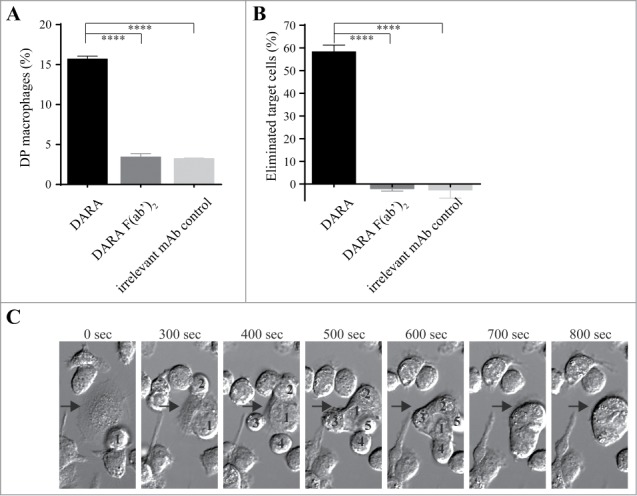
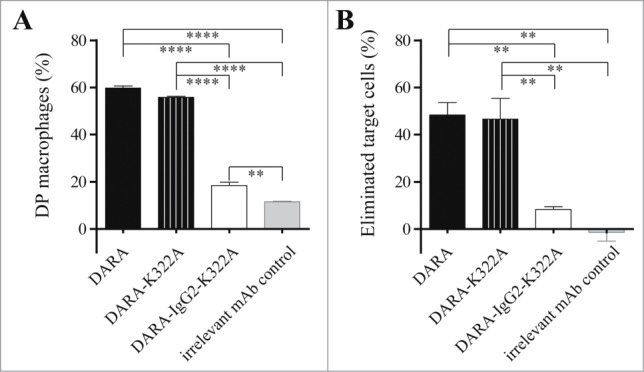
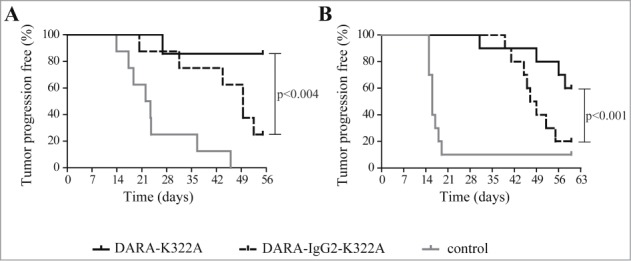
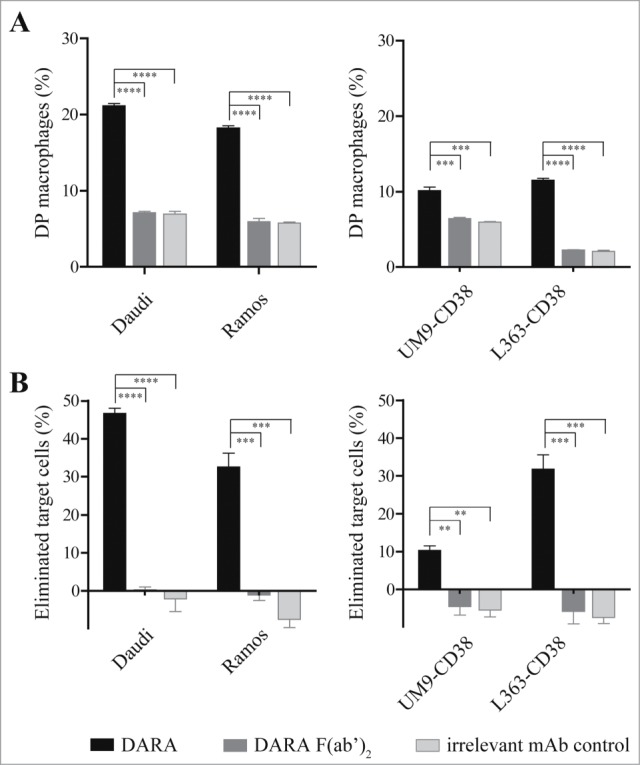
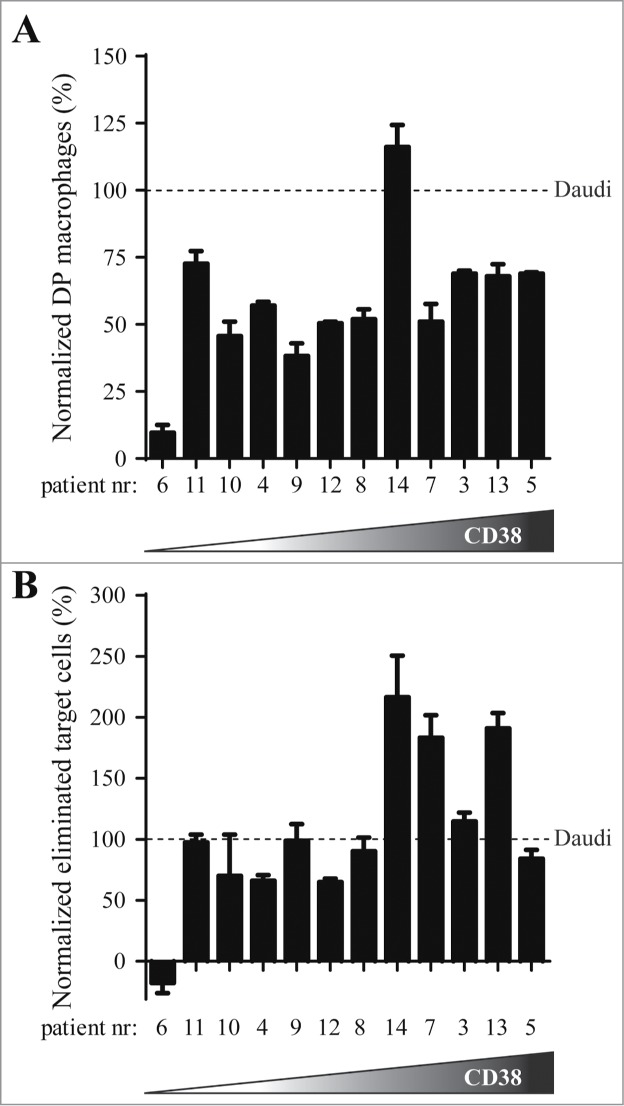
Daratumumab (DARA) is a human CD38-specific IgG1 antibody that is in clinical development for the treatment of multiple myeloma (MM). The potential for IgG1 antibodies to induce macrophage-mediated phagocytosis, in combination with the known presence of macrophages in the tumor microenvironment in MM and other hematological tumors, led us to investigate the contribution of antibody-dependent, macrophage-mediated phagocytosis to DARA's mechanism of action. Live cell imaging revealed that DARA efficiently induced macrophage-mediated phagocytosis, in which individual macrophages rapidly and sequentially engulfed multiple tumor cells. DARA-dependent phagocytosis by mouse and human macrophages was also observed in an in vitro flow cytometry assay, using a range of MM and Burkitt's lymphoma cell lines. Phagocytosis contributed to DARA's anti-tumor activity in vivo, in both a subcutaneous and an intravenous leukemic xenograft mouse model. Finally, DARA was shown to induce macrophage-mediated phagocytosis of MM cells isolated from 11 of 12 MM patients that showed variable levels of CD38 expression. In summary, we demonstrate that phagocytosis is a fast, potent and clinically relevant mechanism of action that may contribute to the therapeutic activity of DARA in multiple myeloma and potentially other hematological tumors.
Overview
The claims and statistics of this paper haven’t been checked yet.
Free: it reads the open-access text and checks the first 5 claims that cite a source we can check. Create a free account to check every claim.
Integrity signals
Registry
Cites
Statistics
Figures
Verification
Claims the paper makes
The claims and statistics of this paper haven’t been checked yet.
Free: it reads the open-access text and checks the first 5 claims that cite a source we can check. Create a free account to check every claim.
Claims other papers make about this one
Each is checked against this paper’s own text: does it say what the citing paper says it does?
The source backs part of the claim, not all of it — or backs it for a different population, condition or comparison.
In the citing paper
“Daratumumab is an IgG1 monoclonal antibody that targeting CD38 and induces cell death through complement-dependent cytotoxicity (CDC), antibody-dependent cellular cytotoxicity (ADCC), antibody-dependent cellular phagocytosis (ADCP), and regulation of CD38 enzyme activity [157, 158].”
From Multiple myeloma: signaling pathways and targeted therapy (2024) · cites this paper as [158]
Experimental — accuracy not yet measured
Self-check
Percentages, sums and reported differences re-computed from the paper’s own numbers.
The self-check needs the paper’s full text.
Citations
Cites
CD47 Is Upregulated on Circulating Hematopoietic Stem Cells and Leukemia Cells to Avoid Phagocytosis
Jaiswal, S., Jamieson, C. H. M., Pang, W. W., Park, C. Y., Chao, M. P., Majeti, R., Traver, D., van Rooijen, N., & Weissman, I. L. (2009) · Cell · doi:10.1016/j.cell.2009.05.046 · Cited by 1,581
Efficient Neutralization of Primary Isolates of HIV-1 by a Recombinant Human Monoclonal Antibody
Burton, D. R., Pyati, J., Koduri, R., Sharp, S. J., Thornton, G. B., Parren, P. W. H. I., Sawyer, L. S. W., Hendry, R. M., Dunlop, N., Nara, P. L., et al. (1994) · Science · doi:10.1126/science.7973652 · Cited by 1,100
Self-citationChao, M. P., Alizadeh, A. A., Tang, C., Myklebust, J. H., Varghese, B., Gill, S., Jan, M., Cha, A. C., Chan, C. K., Tan, B. T., et al. (2010) · Cell · doi:10.1016/j.cell.2010.07.044 · Cited by 1,087 · cited 1×
“Anti-CD47 mAb has been shown to synergize with rituximab in the treatment of non-Hodgkin lymphoma.(41) Moreover, targeting the CD47-SIRP a axis has now been shown to increase efficacy of several therapeutic antibodies.”
Backgroundde Weers, M., Tai, Y.-T., van der Veer, M. S., Bakker, J. M., Vink, T., Jacobs, D. C. H., Oomen, L. A., Peipp, M., Valerius, T., Slootstra, J. W., et al. (2011) · The Journal of Immunology · doi:10.4049/jimmunol.1003032 · Cited by 1,037 · cited 2×
“Antibodies Human IgG1 CD38 mAb DARA was generated by immunization in a HuMAb mouse and produced as recombinant protein as described previously.(12) DARA F(ab’)2 fragments were prepared via pepsin digestion (Sigma-Aldrich, P7012).”
BackgroundMethodSelf-citationRole of tumor-associated macrophages in tumor progression and invasion
Mantovani, A., Schioppa, T., Porta, C., Allavena, P., & Sica, A. (2006) · Cancer and Metastasis Reviews · doi:10.1007/s10555-006-9001-7 · Cited by 888
Chao, M. P., Jaiswal, S., Weissman-Tsukamoto, R., Alizadeh, A. A., Gentles, A. J., Volkmer, J., Weiskopf, K., Willingham, S. B., Raveh, T., Park, C. Y., et al. (2010) · Science Translational Medicine · doi:10.1126/scitranslmed.3001375 · Cited by 776 · cited 1×
“CD47 is described to be upregulated on leukemic cells to avoid phagocytosis,(26) which can be counterbalanced by the expression of calreticulin that gives a pro-phagocytic signal upon receptor binding.(27,28) Human CD47 is not able to bind to mouse SIRPa,(29,30) and therefore CD47 cannot account for the difference in…”
BackgroundUchida, J., Hamaguchi, Y., Oliver, J. A., Ravetch, J. V., Poe, J. C., Haas, K. M., & Tedder, T. F. (2004) · The Journal of Experimental Medicine · doi:10.1084/jem.20040119 · Cited by 642 · cited 1×
“By using mouse strains deficient in specific leukocyte subpopulations or by depleting specific effector cell subsets, mw were shown to represent the main effector cells in the anti-tumor activity of CD20-targeting monoclonal Ab (mAb) in vivo.(6,7) Furthermore, for SGN-30 (chimeric IgG1 CD30 mAb), SGN-40 (humanized IgG…”
BackgroundMechanism of action of immunomodulatory drugs (IMiDS) in multiple myeloma
Quach, H., Ritchie, D., Stewart, A. K., Neeson, P., Harrison, S., Smyth, M. J., & Prince, H. M. (2010) · Leukemia · doi:10.1038/leu.2009.236 · Cited by 600 · cited 3×
“However, we previously showed that monocytes and NK-cells from peripheral blood mononuclear cells of a healthy donor were not killed by DARA.34 For MM patient therapy, the current focus is on combination therapy of mAb with immunomodulatory drugs (IMiDs).37,38 IMiDs currently used, e.g., lenalidomide and pomalidomide,…”
BackgroundThe binding site for C1q on IgG
Duncan, A. R., & Winter, G. (1988) · Nature · doi:10.1038/332738a0 · Cited by 569
Polymorphism in Sirpa modulates engraftment of human hematopoietic stem cells
Takenaka, K., Prasolava, T. K., Wang, J. C. Y., Mortin-Toth, S. M., Khalouei, S., Gan, O. I., Dick, J. E., & Danska, J. S. (2007) · Nature Immunology · doi:10.1038/ni1527 · Cited by 509
Cited by
Items 301–400 of 534
Motais, B., Charvátová, S., Walek, Z., Hrdinka, M., Smolarczyk, R., Cichoń, T., Czapla, J., Giebel, S., Šimíček, M., Jelínek, T., et al. (2021) · Cells · doi:10.3390/cells10050967 · Cited by 14
Application of CD38 monoclonal antibody in kidney disease
Chen, Z., Xu, Q., & Shou, Z. (2024) · Frontiers in Immunology · doi:10.3389/fimmu.2024.1382977 · Cited by 16
“Another antibody, isatuximab, also induces ADCC, ADCP, and CDC (9).”
BackgroundKrishnamoorthy, M., Seelige, R., Brown, C. R., Chau, N., Viller, N. N., Johnson, L. D. S., Linderoth, E., Wang, J. C. Y., Dillon, C. P., Abayasiriwardana, K. S., et al. (2025) · Frontiers in Immunology · doi:10.3389/fimmu.2025.1518787 · Cited by 13
Antonioli, E., Staderini, M., Pilerci, S., Perfetto, F., Cappelli, F., Allinovi, M., Nozzoli, C., Attucci, I., Buzzichelli, A., Messeri, M., et al. (2020) · Leukemia & lymphoma/Leukemia and lymphoma · doi:10.1080/10428194.2020.1802452 · Cited by 13
Shrestha, P., Astter, Y., Davis, D. A., Zhou, T., Yuan, C. M., Ramaswami, R., Wang, H., Lurain, K. A., & Yarchoan, R. (2023) · OncoImmunology · doi:10.1080/2162402x.2022.2163784 · Cited by 13
Practical Considerations for Antibodies in Myeloma
Laubach, J. P., van de Donk, N. W. C. J., Davies, F. E., & Mikhael, J. R. (2018) · American Society of Clinical Oncology Educational Book · doi:10.1200/edbk_205443 · Cited by 14
Therapeutic antibodies for multiple myeloma
Ishida, T. (2018) · Japanese Journal of Clinical Oncology · doi:10.1093/jjco/hyy133 · Cited by 15
Xu, X. S., Moreau, P., Usmani, S. Z., Lonial, S., Jakubowiak, A. J., Oriol, A., Krishnan, A. Y., Bladé, J., Luo, M., Sun, Y., et al. (2020) · Advances in Therapy · doi:10.1007/s12325-020-01247-8 · Cited by 14
Staudacher, A. H., Liapis, V., Tieu, W., Wittwer, N. L., & Brown, M. P. (2020) · Journal of Controlled Release · doi:10.1016/j.jconrel.2020.09.027 · Cited by 13
Hungria, V., Beksaç, M., Weisel, K. C., Nooka, A. K., Masszi, T., Špıčka, I., Munder, M., Mateos, M., Mark, T. M., Qi, M., et al. (2021) · British Journal of Haematology · doi:10.1111/bjh.17321 · Cited by 18
Markovic, U., Romano, A., Fabro, V. D., Bellofiore, C., Bulla, A., Parisi, M. S., Leotta, S., Gentile, M., Cangialosi, C., Vincelli, I. D., et al. (2021) · Frontiers in Oncology · doi:10.3389/fonc.2021.624405 · Cited by 13
“[Cytogenetic high risk was defined as the presence of t(4;14), t(14;16) or del17p”
BackgroundInfluentialVočková, P., Svatoň, M., Karolová, J., Pokorna, E., Vokurka, M., & Klener, P. (2020) · Folia Biologica · doi:10.14712/fb2020066010017 · Cited by 13
The next generation of novel therapies for the management of relapsed multiple myeloma
Gonsalves, W. I., Milani, P., Derudas, D., & Buadi, F. K. (2016) · Future Oncology · doi:10.2217/fon-2016-0200 · Cited by 12
Iida, S., Ishikawa, T., Min, C., Kım, K., Yeh, S. P., Usmani, S. Z., Mateos, M., Nahi, H., Heuck, C. J., Qin, X., et al. (2021) · Annals of Hematology · doi:10.1007/s00277-021-04405-2 · Cited by 13
Preclinical and clinical development of an anti-kappa free light chain mAb for multiple myeloma
Hutchinson, A. T., Jones, D. R., & Raison, R. L. (2015) · Molecular Immunology · doi:10.1016/j.molimm.2015.04.013 · Cited by 12
Lu, Y., Zhou, F., Cheng, D., Xie, M., Yan, X., Xue, Y., Yang, Q., Jia, R., Zhong, L., Yang, L., et al. (2023) · Frontiers in Oncology · doi:10.3389/fonc.2023.1240318 · Cited by 13
Daratumumab and its Use in the Treatment of Relapsed and/or Refractory Multiple Myeloma
Chehab, S., Panjic, E. H., Gleason, C. L., Lonial, S., & Nooka, A. K. (2018) · Future Oncology · doi:10.2217/fon-2018-0275 · Cited by 12
Yan, X., Xu, X. S., Weisel, K. C., Mateos, M., Sonneveld, P., Dimopoulos, M. A., Usmani, S. Z., Bahlis, N. J., Puchalski, T. A., Ukropec, J., et al. (2020) · Clinical and Translational Science · doi:10.1111/cts.12836 · Cited by 12
CD38 targeted treatment for multiple myeloma
Jelínek, T., Mihályová, J., & Hájek, R. (2018) · Vnitřní lékařství · doi:10.36290/vnl.2018.131 · Cited by 13
Why Immunotherapy Fails in Multiple Myeloma
Rodríguez‐Lobato, L. G., Oliver‐Caldés, A., Moreno, D. F., de Larrea, C. F., & Bladé, J. (2020) · Hemato · doi:10.3390/hemato2010001 · Cited by 13
“• Complement-dependent cytotoxicity (CDC): Binding between the Fc tail of the antibody and C1q activates the complement cascade to end with the formation of the membrane attack complex (MAC) [72]; • Antibody-dependent cell-mediated cytotoxicity (ADCC): Binding between FC-gamma receptors on effector cells (T and NK cel…”
BackgroundJakubowiak, A. J., Usmani, S. Z., Krishnan, A. Y., Lonial, S., Comenzo, R. L., Wang, J., de Boer, C., Deraedt, W. M., Weiss, B. M., Schecter, J. M., et al. (2021) · Clinical Lymphoma Myeloma & Leukemia · doi:10.1016/j.clml.2021.05.017 · Cited by 12
Terpos, E., Dimopoulos, M. A., Boccadoro, M., Delimpasi, S., Beksaç, M., Katodritou, E., Moreau, P., Pompa, A., Symeonidis, A. S., Bila, J., et al. (2022) · American Journal of Hematology · doi:10.1002/ajh.26480 · Cited by 12
Gao, Y., Li, L., Zheng, Y., Zhang, W., Niu, B., & Li, Y. (2022) · Molecular and Cellular Biochemistry · doi:10.1007/s11010-022-04390-8 · Cited by 11
Vermariën-Wang, J., Doeleman, T., van Doorn, R., Mooyaart, A. L., Blokx, W. A. M., & Schrader, A. M. R. (2022) · Journal of the American Academy of Dermatology · doi:10.1016/j.jaad.2022.11.019 · Cited by 11
Prejzner, W., Piekoś, O., Bełdzińska, K., Sadowska‐Klasa, A., Zarzycka, E., Bieniaszewska, M., Lewandowski, K. C., & Zaucha, J. M. (2023) · Frontiers in Oncology · doi:10.3389/fonc.2023.1228481 · Cited by 11
Plasmablastic Lymphoma. A State-of-the-Art Review: Part 2-Focus on therapy
Bibas, M. (2024) · Mediterranean Journal of Hematology and Infectious Diseases · doi:10.4084/mjhid.2024.015 · Cited by 11
“75-79 Plasmablastic lymphomas are often CD38+ and share some biological and phenotypic features with multiple myeloma.”
BackgroundSafety issues and management of toxicities associated with new treatments for multiple myeloma
Brioli, A., Mügge, L., Hochhaus, A., & von Lilienfeld‐Toal, M. (2017) · Expert Review of Hematology · doi:10.1080/17474086.2017.1284584 · Cited by 11
Richard, S., Jagannath, S., Cho, H. J., Parekh, S. S., Madduri, D., Richter, J. R., & Chari, A. (2020) · Expert Review of Hematology · doi:10.1080/17474086.2021.1858790 · Cited by 11
Boosting Immunity against Multiple Myeloma
Lopes, R., Ferreira, B. V., Caetano, J., Barahona, F., Carneiro, E. A., & Joao, C. M. (2021) · Cancers · doi:10.3390/cancers13061221 · Cited by 13
Non-coding RNAs and exosomal ncRNAs in multiple myeloma: An emphasis on molecular pathways
Hashemi, M., Roshanzamir, S. M., Paskeh, M. D. A., Karimian, S. S., Mahdavi, M. S., Kheirabad, S. K., Naeemi, S., Taheriazam, A., Salimimoghadam, S., Entezari, M., et al. (2023) · European Journal of Pharmacology · doi:10.1016/j.ejphar.2022.175380 · Cited by 11
Daratumumab in multiple myeloma: a guide to its use as monotherapy in the EU
McKeage, K., & Lyseng-Williamson, K. A. (2016) · Drugs & Therapy Perspectives · doi:10.1007/s40267-016-0346-x · Cited by 11
Velmurugan, R., Ramakrishnan, S., Kim, M., Ober, R. J., & Ward, E. S. (2018) · Traffic · doi:10.1111/tra.12552 · Cited by 10
Luo, M., Zhu, P., Nnane, I. P., Xiong, Y., Merlini, G., Comenzo, R. L., Kastritis, E., Wechalekar, A. D., Weiss, B. M., Tran, N., et al. (2021) · The Journal of Clinical Pharmacology · doi:10.1002/jcph.1994 · Cited by 10
Dosne, A., Li, X., Luo, M., Nnane, I. P., Dimopoulos, M. A., Terpos, E., Sonneveld, P., Kampfenkel, T., Carson, R. L., Amin, H., et al. (2022) · British Journal of Clinical Pharmacology · doi:10.1111/bcp.15628 · Cited by 10
Takamatsu, H., Iida, S., Shibayama, H., Shibayama, K., Yamazaki, H., & Suzuki, K. (2020) · International Journal of Hematology · doi:10.1007/s12185-020-02825-w · Cited by 10
Cavo, M., Dimopoulos, M. A., Miguel, J. F. S., Mateos, M., Jakubowiak, A. J., Deraedt, W. M., Lam, A., Kampfenkel, T., Qi, M., & He, J. (2020) · Clinical Lymphoma Myeloma & Leukemia · doi:10.1016/j.clml.2020.02.018 · Cited by 10
Monoclonal antibodies as an addition to current myeloma therapy strategies
Jullien, M., Touzeau, C., & Moreau, P. (2020) · Expert Review of Anticancer Therapy · doi:10.1080/14737140.2021.1837627 · Cited by 10
Fujisaki, T., Ishikawa, T., Takamatsu, H., Suzuki, K., Min, C., Lee, J. H., Wang, J., Carson, R. L., Crist, W. A., Qi, M., et al. (2019) · Annals of Hematology · doi:10.1007/s00277-019-03794-9 · Cited by 12
Wang, L., Yang, W. C., Wang, Y., Niu, T., Fu, R., Zhong, Y., Qian, W., Ding, K., Sun, K., Liu, H., et al. (2025) · BMC Cancer · doi:10.1186/s12885-025-13925-3 · Cited by 10
Mehl, J., Akhoundova, D., Bacher, U., Jeker, B., Agocs, G. R., Ruefer, A., Soltermann, S., Soekler, M., Winkler, A., Daskalakis, M., et al. (2024) · Cancers · doi:10.3390/cancers16101854 · Cited by 9
Jiang, H., Li, L., Guo, M., Li, M., Wu, H., Chen, X., Gao, M., Xu, Q., Mi, J. D., Cui, C., et al. (2024) · Hematology · doi:10.1080/16078454.2024.2399430 · Cited by 9
Tso, A. C. Y., Chng, W. J., Goh, Y. T., Ooi, M. G. M., Chen, Y., Nagarajan, C., Tan, D. C. L., Acharyya, S., & Ong, K. H. (2024) · Clinical Hematology International · doi:10.46989/001c.124362 · Cited by 9
New developments in the treatment of multiple myeloma – clinical utility of daratumumab
McEllistrim, C., Krawczyk, J., & O'Dwyer, M. E. (2017) · Biologics · doi:10.2147/btt.s97633 · Cited by 13
Daratumumab subcutaneous formulation for the treatment of multiple myeloma
Paul, B. A., Hamadeh, I. S., Atrash, S., Bhutani, M., Voorhees, P. M., & Usmani, S. Z. (2020) · Expert Opinion on Biological Therapy · doi:10.1080/14712598.2020.1806231 · Cited by 10
Cook, G., Corso, A., Streetly, M. J., Менделеева, Л. П., Ptushkin, V. V., Chan, E. S., Ukropec, J., Iraqi, W., Al-Akabawi, A., Pei, H., et al. (2021) · Oncology and Therapy · doi:10.1007/s40487-020-00137-x · Cited by 9
Daratumumab plus CyBorD for patients with newly diagnosed light chain (AL) amyloidosis
Theodorakakou, F., Dimopoulos, M. A., & Kastritis, E. (2021) · Therapeutic Advances in Hematology · doi:10.1177/20406207211058334 · Cited by 10
Antibody therapies for multiple myeloma
Ntanasis‐Stathopoulos, I., Gavriatopoulou, M., & Terpos, E. (2020) · Expert Opinion on Biological Therapy · doi:10.1080/14712598.2020.1717464 · Cited by 9
Daratumumab in multiple myeloma: experience of the multiple myeloma GIMEMA Lazio group
Vozella, F., Siniscalchi, A., Rizzo, M., Zà, T., Antolino, G., Coppetelli, U., Piciocchi, A., Andriani, A., Annibali, O., Rosa, L. D., et al. (2021) · Annals of Hematology · doi:10.1007/s00277-020-04374-y · Cited by 9
Characterization of Therapeutic Proteins
Struble, E. B., Kirschbaum, N., Liu, J., Marszal, E., & Shapiro, M. (2016) · Topics in medicinal chemistry · doi:10.1007/7355_2015_5005 · Cited by 10
Anti-B Cell Strategy in Nephrotic Syndrome: Beyond Rituximab
Jin, Y., Xie, Y., Fu, H., Liu, F., & Mao, J. (2025) · Biomedicines · doi:10.3390/biomedicines13092063 · Cited by 8
Collier‐Bain, H. D., Brown, F. F., Causer, A. J., Emery, A., Oliver, R., Moore, S. E., Murray, J., Turner, J. E., & Campbell, J. P. (2023) · Frontiers in Oncology · doi:10.3389/fonc.2023.1244090 · Cited by 9
“Monocytes may also differentiate into haematological TAMs in the tumour microenvironment (105, 106), which might be capable of individually phagocytosing multiple haematological cancer cells during an ADCP response (31).”
BackgroundSchmidt, T. M., Gahvari, Z. J., & Callander, N. S. (2024) · Clinical Lymphoma Myeloma & Leukemia · doi:10.1016/j.clml.2024.03.008 · Cited by 8
Quantitative and functional alterations of 6-sulfo LacNac dendritic cells in multiple myeloma
Lamarthée, B., de Vassoigne, F., Malard, F., Stocker, N., Boussen, I., Mediavilla, C., Tang, R., Fava, F., Garderet, L., Marjanovic, Z., et al. (2018) · OncoImmunology · doi:10.1080/2162402x.2018.1444411 · Cited by 8
Youssef, M., Arnesen, C., Arledge, C., Langley, C., Sylvester, D., Sikora, J., Marques, M. B., Zheng, X. L., & Williams, L. A. (2019) · Transfusion and Apheresis Science · doi:10.1016/j.transci.2018.12.019 · Cited by 8
The safety of daratumumab for the treatment of multiple myeloma
Cejalvo, M. J., Ribas, P., & de la Rubia, J. (2017) · Expert Opinion on Drug Safety · doi:10.1080/14740338.2017.1328053 · Cited by 9
“Mechanism of action [3,8,9] The binding of daratumumab to CD38 on the surface of tumor cells leads to: –complement dependent cytotoxicity (CDC) –antibody-dependent cell-mediated cytotoxicity (ADCC) –antibody-dependent cell phagocytosis (ADCP) –cell apoptosis –modulation of CD38 enzymatic activity Dose and route of adm…”
BackgroundXu, W., Li, D., Sun, Y., Ran, X., Wang, B., Wu, W., Sheng, Z., & Liu, L. (2019) · European Journal Of Haematology · doi:10.1111/ejh.13317 · Cited by 10
“(1) progression free survival (PFS) analysis with DRd as reference; (2) overall survival (OS) analysis with DRd as reference; (3) progression free survival (PFS) analysis with DVMP as reference; (4) overall survival (OS) analysis with DVMP as reference.”
MethodLamb, Y. N. (2020) · Drugs · doi:10.1007/s40265-020-01385-x · Cited by 8
A bibliometric analysis of CD38-targeting antibody therapy in multiple myeloma from 1985 to 2021
Ding, H., Zhang, X., Gang, D., He, X., & Jiang, S. (2022) · Translational Cancer Research · doi:10.21037/tcr-21-1962 · Cited by 8
Du, C., Sui, W., Huang, H., Zhang, Y., Ding, X., Gao, C., & Wang, Y. (2022) · Leukemia Research · doi:10.1016/j.leukres.2022.106953 · Cited by 9
Garderet, L., Cook, G., Auner, H. W., Bruno, B., Lokhorst, H. M., Pérez‐Simón, J. A., Sahebi, F., Scheid, C., Morris, C., van Biezen, A., et al. (2016) · Leukemia & lymphoma/Leukemia and lymphoma · doi:10.1080/10428194.2016.1228926 · Cited by 8
Suzuki, K., Min, C., Kım, K., Lee, J., Shibayama, H., Ko, P., Huang, S., Li, S., Ding, B., Khurana, M., et al. (2021) · International Journal of Hematology · doi:10.1007/s12185-021-03204-9 · Cited by 8
Tailoring biomaterials and applications targeting tumor-associated macrophages in cancers
Jing, F., Liu, X., Chen, X., Wu, F., & Gao, Q. (2022) · Frontiers in Immunology · doi:10.3389/fimmu.2022.1049164 · Cited by 7
“MM Daratumumab Human IgG1 mcAbs CD38 hMDMs ADCP In vitro and vivo (64)”
BackgroundDimopoulos, M. A., Cavo, M., Mateos, M., Facon, T. T. F., Heeg, B. M. S., van Beekhuizen, S., Gebregergish, S. B., Nair, S. C., Pisini, M., Lam, A., et al. (2019) · Leukemia & lymphoma/Leukemia and lymphoma · doi:10.1080/10428194.2019.1682571 · Cited by 7
Novel Approaches to Improve Myeloma Cell Killing by Monoclonal Antibodies
Storti, P., Costa, F., Marchica, V., Burroughs-Garcìa, J., Palma, B. D., Toscani, D., Eufemiese, R. A., & Giuliani, N. (2020) · Journal of Clinical Medicine · doi:10.3390/jcm9092864 · Cited by 7
“In vitro studies have demonstrated that DARA-coated MM cells are rapidly engulfed by macrophages [10].”
BackgroundTauseef, A., Zafar, M., Silberstein, P. T., Nahas, J., Frederickson, T., Abodunrin, F., Abbas, A., Arshad, W., Lateef, N., Rangoonwala, H. I., et al. (2022) · Journal of Family Medicine and Primary Care · doi:10.4103/jfmpc.jfmpc_1987_21 · Cited by 8
“[7] Daratumumab is a human IgG1 monoclonal antibody targeting CD38, 46‐kDa type II transmembrane glycoprotein, expressed at high levels on malignant cells in MM.[5,8] CD38 is a transmembrane glycoprotein that is expressed on lymphoid and myeloid cells as well as on non‐hematopoietic tissues, with multiple functions, i…”
BackgroundInfluentialImmune profiling of patients with extranodal natural killer/T cell lymphoma treated with daratumumab
Qing, M., Zhou, T., Perova, T., Abraham, Y., Sweeney, C. M., Krevvata, M., Zhang, X., Qi, M., Gao, G., Kim, T. M., et al. (2024) · Annals of Hematology · doi:10.1007/s00277-023-05603-w · Cited by 8
Immune therapy in multiple myeloma.
Luptakova, K., & Avigan, D. (2015) · PubMed · Cited by 7
CD38: From Positive to Negative Expression after Daratumumab Treatment
Patiño-Escobar, B., Ramos, R., Linares, M., Mejía, A., & Alcalá, S. (2020) · Cureus · doi:10.7759/cureus.7627 · Cited by 7
A Fully Human IgE Specific for CD38 as a Potential Therapy for Multiple Myeloma
Candelaria, P. V., Nava, M., Daniels‐Wells, T. R., & Penichet, M. L. (2023) · Cancers · doi:10.3390/cancers15184533 · Cited by 7
Zhang, K., Zhao, Y., Zhang, Z., Zhang, M., Wu, X., Bian, H., Zhu, P., & Chen, Z. (2020) · Acta Pharmaceutica Sinica B · doi:10.1016/j.apsb.2020.06.011 · Cited by 7
Chen, W., Cai, Z., Chim, C. S., Chng, W. J., Du, J., Fu, C., Gao, W., Hanamura, I., Hou, J. M., Huang, J., et al. (2025) · Clinical Hematology International · doi:10.46989/001c.141401 · Cited by 6
Zayad, A., Magee, G., Mansour, R. A., Chang, M., Ahmed, N., Mushtaq, M. U., Paul, B. A., Green, K. M., Davis, J. A., Skikne, B., et al. (2025) · Clinical Lymphoma Myeloma & Leukemia · doi:10.1016/j.clml.2025.08.017 · Cited by 6
Loc108167440 suppressed myeloma cell growth by P53-mediated apoptosis
Zhai, B., Hou, C., Xu, R., Fang, Y., He, X., Chen, G., Wang, X., Ma, N., Han, G., & Wang, R. (2019) · Leukemia & lymphoma/Leukemia and lymphoma · doi:10.1080/10428194.2019.1590572 · Cited by 6
Crusoé, E. D. Q., Pimenta, F. C. F., Maiolino, Â., de Castro, N. S., Pei, H., Trufelli, D. C., Fernandez, M., & Herriot, L. B. (2020) · Hematology Transfusion and Cell Therapy · doi:10.1016/j.htct.2020.07.005 · Cited by 6
Therapeutic strategies to enhance immune response induced by multiple myeloma cells
Liu, Z., Yang, C., Liu, X., Xu, X., Zhao, X., & Fu, R. (2023) · Frontiers in Immunology · doi:10.3389/fimmu.2023.1169541 · Cited by 8
“In addition to directly inducing apoptosis, macrophage-mediated phagocytosis and FC-dependent immune regulation, Daratumumab can also promote the activation and expansion of NK and T cells, restoring their anti-tumor ability (26, 27).”
BackgroundRisk of Infections Secondary to the Use of Targeted Therapies in Hematological Malignancies
Andreescu, M. (2023) · Life · doi:10.3390/life13061272 · Cited by 7
“Daratumumab, an anti-CD38 antibody, has demonstrated efficacy in MM by inducing Fc-mediated cell lysis by cell-mediated toxicity and complement activation [73].”
BackgroundBibas, M. (2023) · Elsevier eBooks · doi:10.1016/b978-0-443-15717-2.00006-8 · Cited by 6
Li, S., Chen, D., Yang, Y., Guo, H., Liu, D., Sun, N., Bai, X., Wang, K., Li, T., Li, G., et al. (2024) · Frontiers in Immunology · doi:10.3389/fimmu.2024.1398508 · Cited by 8
Promoting macrophage phagocytosis of cancer cells for effective cancer immunotherapy
Wang, L., Hu, Z., Zhang, W., Wang, Z., Cao, M., & Cao, X. (2024) · Biochemical Pharmacology · doi:10.1016/j.bcp.2024.116712 · Cited by 7
Maximizing activity and selectivity of antibody-mediated effector functions using antibody mixtures
Wang, T., Desai, A. A., Thurber, G. M., & Tessier, P. M. (2025) · mAbs · doi:10.1080/19420862.2025.2480666 · Cited by 7
“7,8 Given the importance of such effector activity, substantial efforts have been made to enhance antibody-mediated effector functions.”
Monoclonal Antibody Therapy in Multiple Myeloma: Where do we Stand and Where Are We Going?
Thanendrarajan, S., Davies, F. E., Morgan, G. J., Schinke, C., Mathur, P., Heuck, C. J., Zangari, M., Epstein, J., Yaccoby, S., Weinhold, N., et al. (2016) · Immunotherapy · doi:10.2217/imt.15.118 · Cited by 7
Practical Approaches to the Management of Dual Refractory Multiple Myeloma
Lee, H. C., Mark, T. M., & Shah, J. J. (2016) · Current Hematologic Malignancy Reports · doi:10.1007/s11899-016-0312-7 · Cited by 6
Refractory IgD Multiple Myeloma Treated with Daratumumab: A Case Report and Literature Review
Husnain, M., Kurtin, S. E., Barkett, N., Riaz, I. B., & Agarwal, A. (2016) · Case Reports in Oncological Medicine · doi:10.1155/2016/2490168 · Cited by 6
Advances and practical use of monoclonal antibodies in multiple myeloma therapy
Lee, H. C., & Weber, D. M. (2016) · Hematology · doi:10.1182/asheducation-2016.1.512 · Cited by 10
Ferreira, L. M., Cerezer, J. L., & Gehrcke, M. (2020) · Hematology Transfusion and Cell Therapy · doi:10.1016/j.htct.2020.05.009 · Cited by 6
Current and prospective antibody-based therapies in multiple myeloma
Bryer, E. J., DeStefano, C. B., & Kazandjian, D. G. (2021) · Seminars in Oncology · doi:10.1053/j.seminoncol.2021.11.002 · Cited by 6
Jing, H., Li, Y., Qi, J., Qiu, L., Fu, C., Li, J., Yang, M., Qi, M., Fan, N., Ji, J., et al. (2022) · Annals of Hematology · doi:10.1007/s00277-022-04951-3 · Cited by 6
An, G., Ge, Z., Jing, H., Liu, J., Yang, G., Feng, R., Xu, Z., Qi, M., Wang, J., Song, J., et al. (2024) · Blood Science · doi:10.1097/bs9.0000000000000193 · Cited by 6
Mechanisms of resistance to daratumumab in patients with multiple myeloma
Iversen, K. F. (2024) · Basic & Clinical Pharmacology & Toxicology · doi:10.1111/bcpt.14054 · Cited by 6
“8,9 An in vitro comparison of DARA and three other CD38 mAbs indicates that DARA is the most efficient activator of CDC. 10 Besides these abilities to directly kill tumour cells, DARA affects the immune system through several different modes of action.”
Menon, T., Kataria, S., Adhikari, R., Khan, H., Khalid, M. Z., Saeeduddin, M. O., Taj, S., Rehman, U., Tekin, A., & Singh, R. (2021) · Cureus · doi:10.7759/cureus.15098 · Cited by 8
“Dara has both direct and indirect antitumor responses, and anti-myeloma activity is based on apoptosis, complement-dependent cytotoxicity, antibodydependent cellular phagocytosis, and antibody-dependent cell-mediated cytotoxicity [7].”
BackgroundManagement of relapsed refractory multiple myeloma: Evidence-based guide to community oncologists
Mushtaq, A. H., Cheema, A. Y., Ali, H. M., Shatnawi, Y., Ashruf, O. S., Ahmad, E. N., Lytvynova, O., Munir, M., Asif, M. A., Ahmad, M., et al. (2025) · Blood Reviews · doi:10.1016/j.blre.2025.101339 · Cited by 5
Huang, Z.-Y., Liu, X.-L., Li, T., & Luo, C.-H. (2026) · Frontiers in Oncology · doi:10.3389/fonc.2025.1729177 · Cited by 6
The Role of Imaging and Systemic Treatments in Myeloma: A Primer for Radiologists
Marshall, C., Frantz, N., Kikano, E. G., Smith, D. A., Güler, E., Tirumani, S. H., & Ramaiya, N. H. (2020) · American Journal of Roentgenology · doi:10.2214/ajr.19.21725 · Cited by 6
Advancements and future trends of immunotherapy in light-chain amyloidosis
Mahadevia, H. J., Ponvilawan, B., Sharma, P., Al‐Obaidi, A., Qasim, H., Koyi, J., Anwer, F., & Raza, S. (2023) · Critical Reviews in Oncology/Hematology · doi:10.1016/j.critrevonc.2023.103917 · Cited by 6
Meta-analysis of the efficacy and safety of daratumumab in the treatment of multiple myeloma
Wang, P., & Jin, S. (2023) · World Journal of Clinical Cases · doi:10.12998/wjcc.v11.i29.7091 · Cited by 5
“…antibody, is capable of inducing apoptosis in MM cells through an Fc-dependent immune response mechanism, including complement-dependent cytotoxicity, antibody-dependent phagocytosis, antibody-dependent cell-mediated cytotoxicity, and direct apoptosis triggered by cross-linking reaction[23-25].”
Krohn, S., Boje, A. S., Gehlert, C. L., Lutz, S., Darzentas, N., Knecht, H., Herrmann, D., Brüggemann, M., Scheidig, A. J., Weisel, K. C., et al. (2022) · Frontiers in Immunology · doi:10.3389/fimmu.2022.908093 · Cited by 5
“In contrast, both CD38 antibodies efficiently recruit immune cells for ADCC and phagocytosis of myeloma cells (36, 42, 57).”
BackgroundSafety and Efficacy of Subcutaneous Daratumumab in Systemic AL Amyloidosis
Hughes, M., & Lentzsch, S. (2023) · Therapeutics and Clinical Risk Management · doi:10.2147/tcrm.s325859 · Cited by 5
Choudhry, P., Kasap, C., Patiño-Escobar, B., Gugliemini, O., Geng, H., Sarin, V., Kang, A. S., Kishishita, A., Rampersaud, S., Sarah, L., et al. (2024) · Blood Neoplasia · doi:10.1016/j.bneo.2024.100025 · Cited by 5
Liu, X., Feng, Y., Song, Z., Liu, J., Luo, Z., Yu, G., & Wang, J. (2025) · Cellular Immunology · doi:10.1016/j.cellimm.2025.104950 · Cited by 7
Daratumumab – Hope for Myeloma Patients, a Challenge for Clinical Laboratories
Jelínek, T., Kořístka, M., Čermáková, Z., & Hájek, R. (2017) · Klinicka onkologie · doi:10.14735/amko201713 · Cited by 5
“ADCP (an tibodydependent cellular phagocyto sis), tedy makrofágy zprostředkovaná fagocytóza, se zdá být velmi rychlý, po tentní a rovněž klinicky významný me chanizmus akce daratumumabu [17].”
Metadata
- Authors
- Overdijk, M. B., Verploegen, S., Bögels, M., van Egmond, M., van Bueren, J. J. L., Mutis, T., Groen, R. W., Breij, E., Martens, A. C., Bleeker, W. K., & Parren, P. W.
- Affiliations
- Genmab (United States) (US)
- Amsterdam UMC Location Vrije Universiteit Amsterdam (NL)
- University Medical Center Utrecht (NL)
- University of Southern Denmark (DK)
- Corresponding author
- Parren, Paul WHI
- ORCID
- Venue
- mAbs
- Publisher
- Informa UK Limited
- Published
- 2015-03-04
- Volume
- 7
- Issue
- 2
- Pages
- 311-320
- ISSN
- 1942-0862 (ISSN-L)
- 1942-0870
- PMC
- PMC4622648
- OpenAlex
- W1585625390
- Cited by
- 521
- References
- 48
- Citations by year
- 2026: 28 · 2025: 32 · 2024: 38 · 2023: 49 · 2022: 50 · 2021: 65 · 2020: 76 · 2019: 51 · 2018: 43 · 2017: 42 · 2016: 36 · 2015: 8
- FWCI
- 33.75
- Type
- journal article
- Language
- en
- Open access
- gold
- doi.org
- Licence
- cc-by
- Locations
- mAbs (publishedVersion, cc-by)
- PubMed Central (publishedVersion, cc-by)
- PubMed (publishedVersion)
- Amsterdam UMC (VU Amsterdam) - Institutional Repository (publishedVersion)
- Pure Amsterdam UMC (submittedVersion, other-oa)
- Data Archiving and Networked Services (DANS) (submittedVersion)
- Leiden Repository (Leiden University) (submittedVersion)
- University of Southern Denmark Research Portal (University of Southern Denmark) (submittedVersion)
- Topics
- Health Sciences › Medicine › Hematology › Multiple Myeloma Research and Treatments
- Life Sciences › Immunology and Microbiology › Immunology › Monoclonal and Polyclonal Antibodies Research
- Life Sciences › Immunology and Microbiology › Immunology › Phagocytosis and Immune Regulation
- Keywords
- daratumumab, antibody-mediated phagocytosis, macrophage phagocytosis, CD38, multiple myeloma, Burkitt lymphoma, tumor microenvironment, anticancer activity, CD38 expression
- MeSH terms
- Animals, Antibodies, Monoclonal, Antibodies, Neoplasm, Humans, Lymphoma, Macrophages, Multiple Myeloma, Xenograft Model Antitumor Assays, Cell Line, Tumor, Mice, Cytophagocytosis
About these checks
Registry, retraction, Cites and statistics results are computed, not judged, with one exception: a printed reference that no index lists is read once by a model before it counts as a citation error. Claims are extracted by a model and kept only when their quote appears verbatim in the text; each cited source is then checked, with a model’s help, for whether it says what the claim relies on. Those verdicts can be wrong — read the claim’s quote and the cited source before relying on one.
Statistics and arithmetic are recomputed, not judged.
Confidence bands are shown only for fields calibrated on our annotated test set. None is calibrated yet, so no band is shown.
What counts as a claim ›How we measure confidence ›How we check this ›
Are you an author, or do you see a problem with this page? Request a review
Data sources
Bibliographic data: Semantic Scholar, OpenAlex, Crossref.
Contains information from the Semantic Scholar Academic Graph Datasets, made available under the ODC Attribution License (ODC-BY 1.0).
Semantic Scholar’s data is described in: Kinney, R., et al. (2023). The Semantic Scholar Open Data Platform. arXiv:2301.10140.
