

Comprehensive characterization of monoclonal antibody by Fourier transform ion cyclotron resonance mass spectrometry
Open accessThe DOI matches its Crossref record; 49 of the 49 references it cites were found in a registry or an index.
Abstract
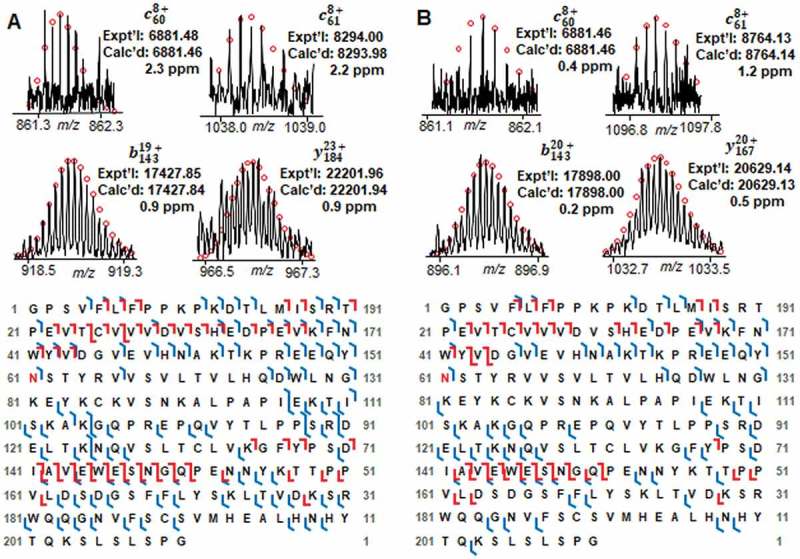
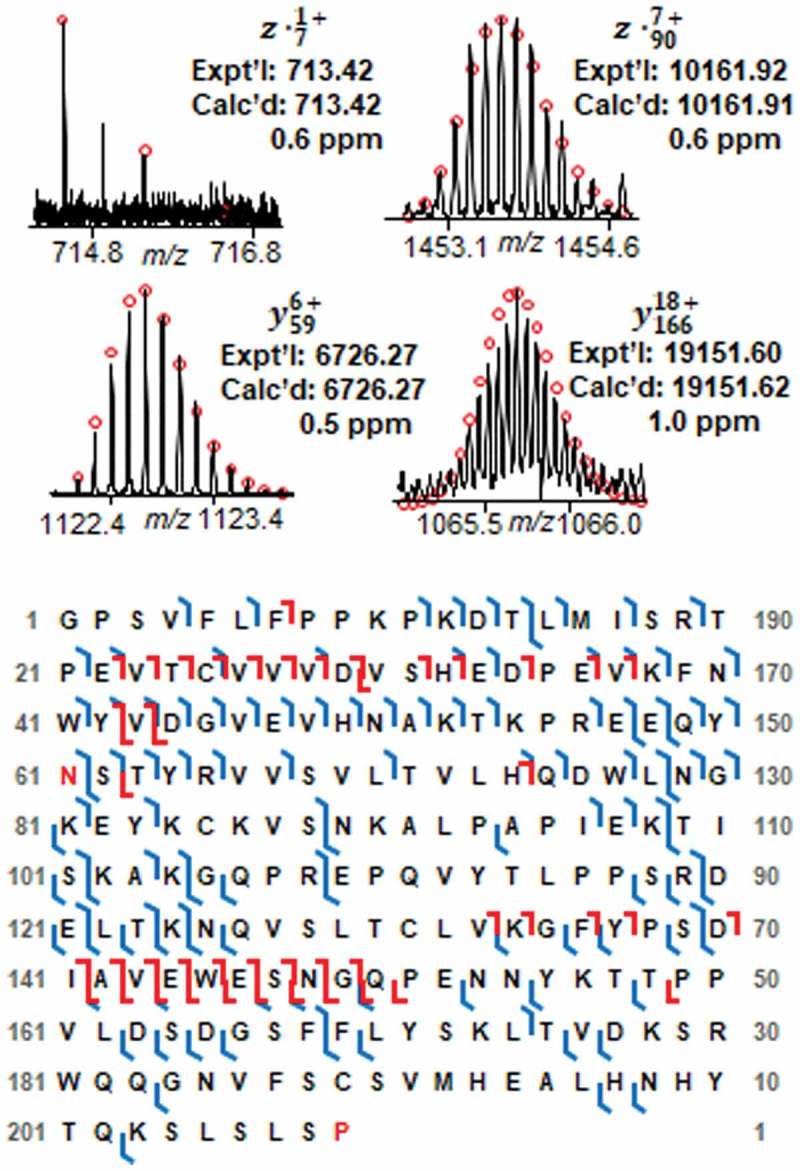
The pharmaceutical industry's interest in monoclonal antibodies (mAbs) and their derivatives has spurred rapid growth in the commercial and clinical pipeline of these effective therapeutics. The complex micro-heterogeneity of mAbs requires in-depth structural characterization for critical quality attribute assessment and quality assurance. Currently, mass spectrometry (MS)-based methods are the gold standard in mAb analysis, primarily with a bottom-up approach in which immunoglobulins G (IgGs) and their variants are digested into peptides to facilitate the analysis. Comprehensive characterization of IgGs and the micro-variants remains challenging at the proteoform level. Here, we used both top-down and middle-down MS for in-depth characterization of a human IgG1 using ultra-high resolution Fourier transform MS. Our top-down MS analysis provided characteristic fingerprinting of the IgG1 proteoforms at unit mass resolution. Subsequently, the tandem MS analysis of intact IgG1 enabled the detailed sequence characterization of a representative IgG1 proteoform at the intact protein level. Moreover, we used the middle-down MS analysis to characterize the primary glycoforms and micro-variants. Micro-variants such as low-abundance glycoforms, C-terminal glycine clipping, and C-terminal proline amidation were characterized with bond cleavages higher than 44% at the subunit level. By combining top-down and middle-down analysis, 76% of bond cleavage (509/666 amino acid bond cleaved) of IgG1 was achieved. Taken together, we demonstrated the combination of top-down and middle-down MS as powerful tools in the comprehensive characterization of mAbs.
Overview
The claims and statistics of this paper haven’t been checked yet.
Free: it reads the open-access text and checks the first 5 claims that cite a source we can check. Create a free account to check every claim.
Integrity signals
Registry
Cites
Statistics
Figures
Verification
Claims the paper makes
The claims and statistics of this paper haven’t been checked yet.
Free: it reads the open-access text and checks the first 5 claims that cite a source we can check. Create a free account to check every claim.
Claims other papers make about this one
Each is checked against this paper’s own text: does it say what the citing paper says it does?
The source backs part of the claim, not all of it — or backs it for a different population, condition or comparison.
In the citing paper
“Undoubtedly, the advancement of top-down proteomics is stimulated by the commercial growth of large molecule therapeutics such as monoclonal antibodies and antibody-drug-conjugates as detailed and high-throughput methods for their characterization and quality control are required [81,159,160].”
From Top-down proteomics: challenges, innovations, and applications in basic and clinical research (2020) · cites this paper as [160]
Experimental — accuracy not yet measured
Self-check
Percentages, sums and reported differences re-computed from the paper’s own numbers.
The self-check needs the paper’s full text.
Citations
Cites
Proteoform: a single term describing protein complexity
The Consortium for Top Down Proteomics, Smith, L. M., & Kelleher, N. L. (2013) · Nature Methods · doi:10.1038/nmeth.2369 · Cited by 1,528
Therapeutic antibodies: successes, limitations and hopes for the future
Chames, P., Van Regenmortel, M., Weiss, E., & Baty, D. (2009) · British Journal of Pharmacology · doi:10.1111/j.1476-5381.2009.00190.x · Cited by 1,382
The therapeutic monoclonal antibody market
Ecker, D. M., Jones, S. D., & Levine, H. L. (2015) · mAbs · doi:10.4161/19420862.2015.989042 · Cited by 1,286
Antibody Structure, Instability, and Formulation
Wang, W., Singh, S., Zeng, D. L., King, K., & Nema, S. (2007) · Journal of Pharmaceutical Sciences · doi:10.1002/jps.20727 · Cited by 941
Next generation antibody drugs: pursuit of the 'high-hanging fruit'
Carter, P. J., & Lazar, G. A. (2018) · Nature Reviews Drug Discovery · doi:10.1038/nrd.2017.227 · Cited by 754 · cited 3×
“Currently, over 550 mAb candidates and their derivatives are in the clinical development stage.(1) The high selectivity and specificity towards given targets led to the success of antibody-based drugs in the treatment of a variety of diseases including cardiovascular, infectious, immunological diseases and cancer.”
BackgroundBuilding better monoclonal antibody-based therapeutics
Weiner, G. J. (2015) · Nature Reviews Cancer · doi:10.1038/nrc3930 · Cited by 712
Characterization of Therapeutic Antibodies and Related Products
Beck, A., Wagner-Rousset, E., Ayoub, D., Van Dorsselaer, A., & Sanglier-Cianférani, S. (2013) · Analytical Chemistry · doi:10.1021/ac3032355 · Cited by 587 · cited 2×
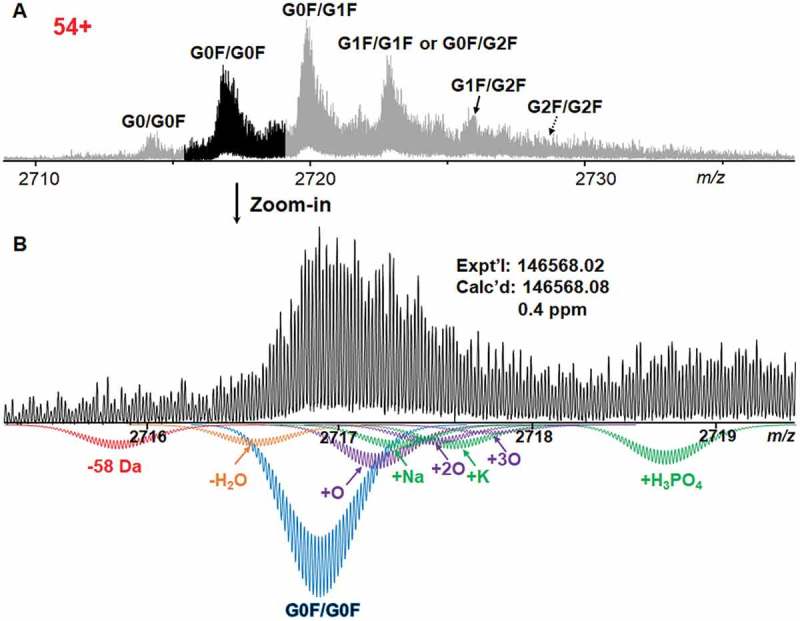
“A unit mass resolution was achieved in our top-down MS analysis of intact IgG1, allowing the identification of six different IgG1 glycoforms at one specific charge state and clearly shows the glycosylation pattern of IgG1, which is consistent with the reported information in previous studies.(36) The comprehensive ana…”
BackgroundResultDecoding protein modifications using top-down mass spectrometry
Siuti, N., & Kelleher, N. L. (2007) · Nature Methods · doi:10.1038/nmeth1097 · Cited by 503
Heterogeneity of Monoclonal Antibodies
Liu, H., Gaza-Bulseco, G., Faldu, D., Chumsae, C., & Sun, J. (2008) · Journal of Pharmaceutical Sciences · doi:10.1002/jps.21180 · Cited by 481
Precision proteomics: The case for high resolution and high mass accuracy
Mann, M., & Kelleher, N. L. (2008) · Proceedings of the National Academy of Sciences · doi:10.1073/pnas.0800788105 · Cited by 450 · cited 1×
“High mass accuracy from isotopically resolved high-resolution MS data could be used to increase the confidence level of protein identification with detection of PTMs and variations in sequence.(35) The glycosylation pattern of an intact mAb including other low-abundance glycoforms has never been isotopically resolved…”
BackgroundMass Spectrometry: Bottom-Up or Top-Down?
Chait, B. T. (2006) · Science · doi:10.1126/science.1133987 · Cited by 441
Marketed therapeutic antibodies compendium
Reichert, J. M. (2012) · mAbs · doi:10.4161/mabs.19931 · Cited by 368
Therapeutic monoclonal antibodies
Breedveld, F. (2000) · The Lancet · doi:10.1016/s0140-6736(00)01034-5 · Cited by 359 · cited 1×
“The integration of primary structures and various sequence modifications on Lcs and Hcs regulates the interactions between mAbs and the targets.(7) Moreover, the molecular heterogeneity resulting from posttranslational modifications (PTMs), C-terminal processing on Hc, and sequence mutations, may affect the quality an…”
BackgroundMass spectrometry for structural characterization of therapeutic antibodies
Zhang, Z., Pan, H., & Chen, X. (2009) · Mass Spectrometry Reviews · doi:10.1002/mas.20190 · Cited by 316
Self-citationBiosimilar, Biobetter, and Next Generation Antibody Characterization by Mass Spectrometry
Beck, A., Sanglier-Cianférani, S., & Van Dorsselaer, A. (2012) · Analytical Chemistry · doi:10.1021/ac3002885 · Cited by 247
Kaplon, H., & Reichert, J. M. (2018) · mAbs · doi:10.1080/19420862.2018.1415671 · Cited by 244
Rogers, R. S., Nightlinger, N. S., Livingston, B., Campbell, P., Bailey, R., & Balland, A. (2015) · mAbs · doi:10.1080/19420862.2015.1069454 · Cited by 231
An improved trypsin digestion method minimizes digestion-induced modifications on proteins
Ren, D., Pipes, G. D., Liu, D., Shih, L.-Y., Nichols, A. C., Treuheit, M. J., Brems, D. N., & Bondarenko, P. V. (2009) · Analytical Biochemistry · doi:10.1016/j.ab.2009.05.018 · Cited by 194
Fornelli, L., Ayoub, D., Aizikov, K., Beck, A., & Tsybin, Y. O. (2014) · Analytical Chemistry · doi:10.1021/ac4036857 · Cited by 177
Analysis of Intact Monoclonal Antibody IgG1 by Electron Transfer Dissociation Orbitrap FTMS
Fornelli, L., Damoc, E., Thomas, P. M., Kelleher, N. L., Aizikov, K., Denisov, E., Makarov, A., & Tsybin, Y. O. (2012) · Molecular & Cellular Proteomics · doi:10.1074/mcp.m112.019620 · Cited by 161
Mass spectrometry for the biophysical characterization of therapeutic monoclonal antibodies
Zhang, H., Cui, W., & Gross, M. L. (2014) · FEBS Letters · doi:10.1016/j.febslet.2013.11.027 · Cited by 152 · cited 1×
“Although a variety of MS approaches have been established for the characterization of therapeutic mAbs,(32) most of them focused on the high-abundance N-linked glycoforms.(33,34) High mass accuracy from isotopically resolved high-resolution MS data could be used to increase the confidence level of protein identificati…”
BackgroundFornelli, L., Srzentić, K., Huguet, R., Mullen, C., Sharma, S., Zabrouskov, V., Fellers, R. T., Durbin, K. R., Compton, P. D., & Kelleher, N. L. (2018) · Analytical Chemistry · doi:10.1021/acs.analchem.8b00984 · Cited by 150 · cited 3×
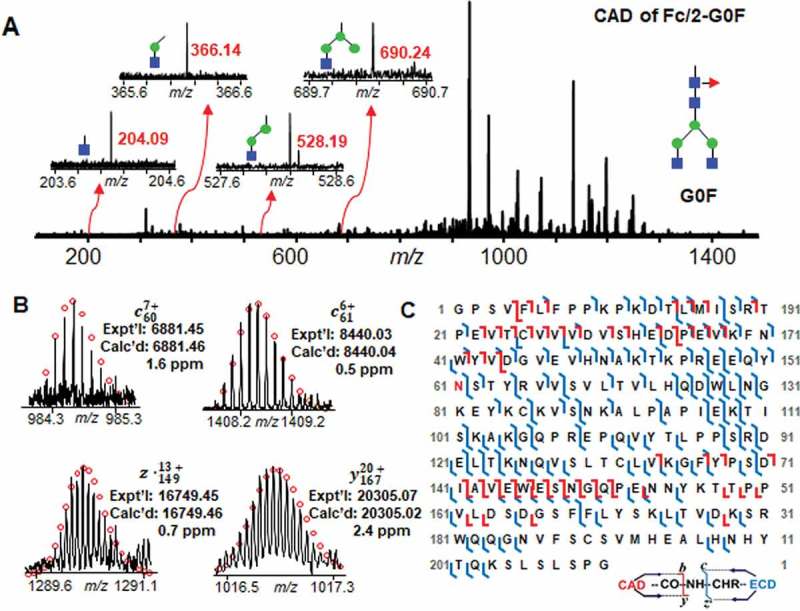
“We anticipate the application of this integrated strategy in comprehensive analysis of more mAbs and other biotherapeutics such as antibody-drug conjugates.44 More bond cleavages can be achieved by combining other MS/MS techniques such as UVPD.27 Multiple-attribute method (MAM), which combines high-end MS and dedicate…”
BackgroundMethodInfluentialRogers, R. S., Abernathy, M., Richardson, D. D., Rouse, J. C., Sperry, J. B., Swann, P., Wypych, J., Yu, C., Zang, L., & Deshpande, R. (2018) · The AAPS Journal · doi:10.1208/s12248-017-0168-3 · Cited by 150
Kaltashov, I. A., Bobst, C. E., Abzalimov, R. R., Wang, G., Baykal, B., & Wang, S. (2012) · Biotechnology Advances · doi:10.1016/j.biotechadv.2011.05.006 · Cited by 148
Tsybin, Y. O., Fornelli, L., Stoermer, C., Luebeck, M., Parra, J., Nallet, S., Wurm, F. M., & Hartmer, R. (2011) · Analytical Chemistry · doi:10.1021/ac201293m · Cited by 138
MASH Suite Pro: A Comprehensive Software Tool for Top-Down Proteomics
Cai, W., Guner, H., Gregorich, Z. R., Chen, A. J., Ayaz-Guner, S., Peng, Y., Valeja, S. G., Liu, X., & Ge, Y. (2016) · Molecular & Cellular Proteomics · doi:10.1074/mcp.o115.054387 · Cited by 132 · cited 1×
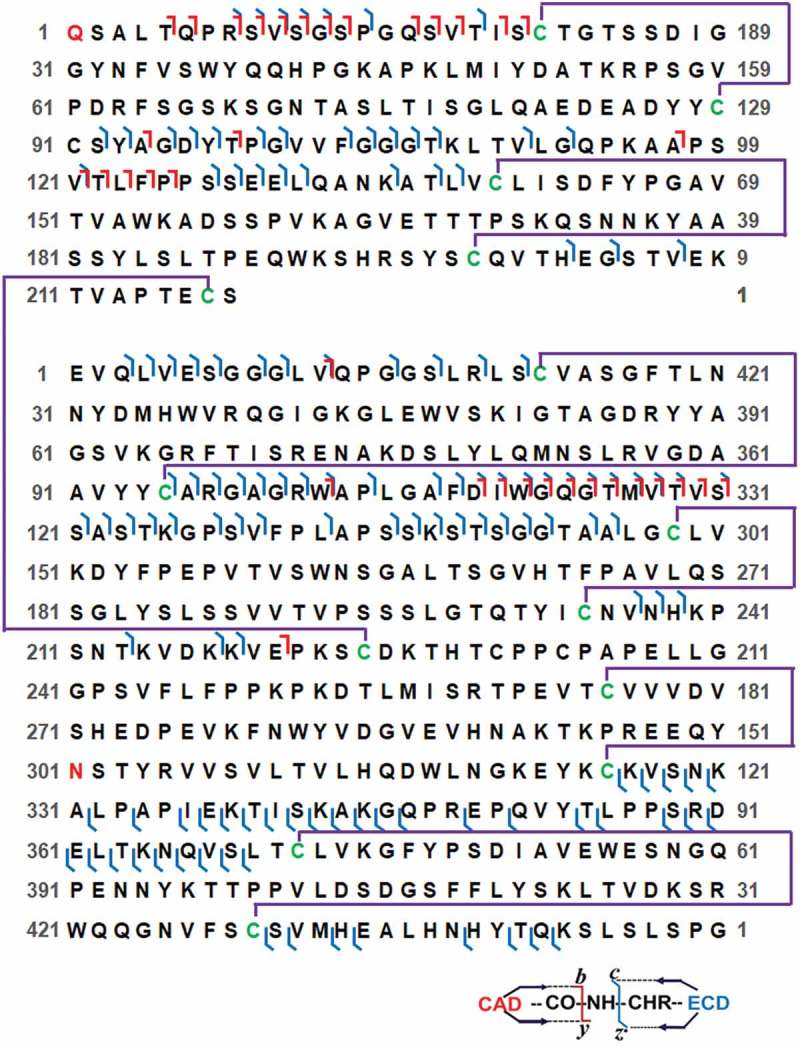
“Our in-house developed software MASH Suite Pro further guarantees accurate molecular mass measurements by allowing manually validation of the peak assignments.(38) The subsequent top-down MS/MS analysis on intact IgG1 at a single charge state provides 23% bond cleavage, which is comparable to the bond cleavage of 25%…”
ResultSelf-citationMao, Y., Valeja, S. G., Rouse, J. C., Hendrickson, C. L., & Marshall, A. G. (2013) · Analytical Chemistry · doi:10.1021/ac303525n · Cited by 129
Cation exchange–HPLC and mass spectrometry reveal C-terminal amidation of an IgG1 heavy chain
Johnson, K. A., Paisley-Flango, K., Tangarone, B. S., Porter, T. J., & Rouse, J. C. (2006) · Analytical Biochemistry · doi:10.1016/j.ab.2006.10.012 · Cited by 127 · cited 2×
“Previously, Johnson et al.(39) used weak cation exchangehigh performance LC separation and bottom-up MS to detect the C-terminal amidation in an IgG1 heavy chain.”
BackgroundCutting‐edge mass spectrometry characterization of originator, biosimilar and biobetter antibodies
Beck, A., Debaene, F., Diemer, H., Wagner‐Rousset, E., Colas, O., Dorsselaer, A. V., & Cianférani, S. (2015) · Journal of Mass Spectrometry · doi:10.1002/jms.3554 · Cited by 123
A Retrospective Evaluation of the Use of Mass Spectrometry in FDA Biologics License Applications
Rogstad, S., Faustino, A., Ruth, A., Keire, D., Boyne, M., & Park, J. (2017) · Journal of the American Society for Mass Spectrometry · doi:10.1007/s13361-016-1531-9 · Cited by 115
Cutting‐edge mass spectrometry characterization of originator, biosimilar and biobetter antibodies
Beck, A., Debaene, F., Diemer, H., Wagner‐Rousset, E., Colas, O., Van Dorsselaer, A., & Cianférani, S. (2015) · Journal of Mass Spectrometry · doi:10.1002/jms.3479 · Cited by 102
Kaschak, T., Boyd, D., Lu, F., Derfus, G., Kluck, B., Nogal, B., Emery, C., Summers, C., Zheng, K., Bayer, R., et al. (2011) · mAbs · doi:10.4161/mabs.3.6.17959 · Cited by 96
Ladwig, P. M., Barnidge, D. R., & Willrich, M. A. V. (2017) · Clinical and Vaccine Immunology · doi:10.1128/cvi.00545-16 · Cited by 85
High-Throughput Middle-Down Analysis Using an Orbitrap
Cannon, J., Lohnes, K., Wynne, C., Wang, Y., Edwards, N., & Fenselau, C. (2010) · Journal of Proteome Research · doi:10.1021/pr1000994 · Cited by 79
Luo, J., Zhang, J., Ren, D., Tsai, W., Feng, L., Amanullah, A., & Hudson, T. (2012) · Biotechnology and Bioengineering · doi:10.1002/bit.24510 · Cited by 76
Cotham, V. C., & Brodbelt, J. S. (2016) · Analytical Chemistry · doi:10.1021/acs.analchem.6b00302 · Cited by 73 · cited 7×
“The observed glycoform population contains ~ 4% G0, ~ 48% G0F, ~ 42% G1F, and ~ 6% G2F based on their signal intensity on deconvoluted mass spectrum, which is consistent with our results in top-down MS.”
BackgroundInfluentialXu, W., Jimenez, R. B., Mowery, R., Luo, H., Cao, M., Agarwal, N., Ramos, I., Wang, X., & Wang, J. (2017) · mAbs · doi:10.1080/19420862.2017.1364326 · Cited by 71
Valeja, S. G., Kaiser, N. K., Xian, F., Hendrickson, C. L., Rouse, J. C., & Marshall, A. G. (2011) · Analytical Chemistry · doi:10.1021/ac202429c · Cited by 67 · cited 4×
“Even though the unit mass resolution of intact mAb was achieved by Valeja et al.37 and Nicolardi et al.23 previously Figure 3.”
BackgroundResultInfluentialHe, L., Anderson, L. C., Barnidge, D. R., Murray, D. L., Hendrickson, C. L., & Marshall, A. G. (2017) · Journal of the American Society for Mass Spectrometry · doi:10.1007/s13361-017-1602-6 · Cited by 55
Nicolardi, S., Deelder, A. M., Palmblad, M., & van der Burgt, Y. E. M. (2014) · Analytical Chemistry · doi:10.1021/ac500383c · Cited by 55 · cited 3×
“Even though the unit mass resolution of intact mAb was achieved by Valeja et al.37 and Nicolardi et al.23 previously Figure 3.”
InfluentialTran, B. Q., Barton, C., Feng, J., Sandjong, A., Yoon, S. H., Awasthi, S., Liang, T., Khan, M. M., Kilgour, D. P. A., Goodlett, D. R., et al. (2015) · Journal of Proteomics · doi:10.1016/j.jprot.2015.10.021 · Cited by 46 · cited 4×
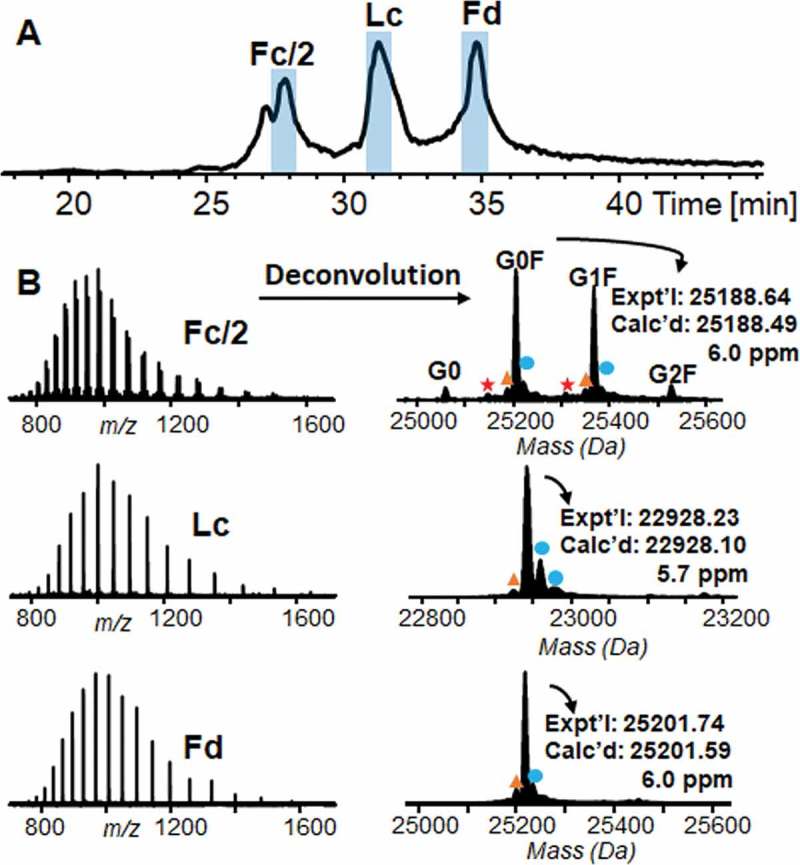
“Besides the highly abundant Fc/2-G0F, Fc/2-G1F, Fd and Lc, we also characterized the micro proteoforms including Fc/ 2-G0, Fc/2-G2F, and the −58 Da proteoform next to Fc/2-G0F and Fc/2-G1F.”
BackgroundInfluentialTsubaki, M., Terashima, I., Kamata, K., & Koga, A. (2012) · International Journal of Biological Macromolecules · doi:10.1016/j.ijbiomac.2012.09.016 · Cited by 45
Campuzano, I. D. G., Netirojjanakul, C., Nshanian, M., Lippens, J. L., Kilgour, D. P. A., Van Orden, S., & Loo, J. A. (2018) · Analytical Chemistry · doi:10.1021/acs.analchem.7b03021 · Cited by 45 · cited 1×
“We anticipate the application of this integrated strategy in comprehensive analysis of more mAbs and other biotherapeutics such as antibody-drug conjugates.(44) More bond cleavages can be achieved by combining other MS/MS techniques such as UVPD.”
MethodDada, O. O., Jaya, N., Valliere‐Douglass, J., & Salas‐Solano, O. (2015) · ELECTROPHORESIS · doi:10.1002/elps.201500219 · Cited by 43 · cited 1×
“However, no effect of C-terminal amidation on activity of therapeutic mAbs was observed so far.(43) Overall, an integrated strategy combining top-down and middle-down MS was developed for comprehensive characterization of a human mAb IgG1.”
BackgroundMazur, M. T., Seipert, R., Mahon, D., Zhou, Q., & Liu, T. (2012) · The AAPS Journal · doi:10.1208/s12248-012-9361-6 · Cited by 39
Comprehensive analysis of tropomyosin isoforms in skeletal muscles by top-down proteomics
Jin, Y., Peng, Y., Lin, Z., Chen, Y.-C., Wei, L., Hacker, T. A., Larsson, L., & Ge, Y. (2016) · Journal of Muscle Research and Cell Motility · doi:10.1007/s10974-016-9443-7 · Cited by 36 · cited 1×
“and minimizes sample artifacts.(20) However, the large size of mAbs (~ 150 kDa) together with intra- and inter-chain disulfide bonds restrict efficient fragmentation of intact proteins, and therefore only ~ 15–35% bond cleavage can be achieved in top-down MS/MS analysis.”
BackgroundSelf-citationJin, Y., Wei, L., Cai, W., Lin, Z., Wu, Z., Peng, Y., Kohmoto, T., Moss, R. L., & Ge, Y. (2017) · Analytical Chemistry · doi:10.1021/acs.analchem.7b00113 · Cited by 35
Self-citationMukherjee, R., Adhikary, L., Khedkar, A., & Iyer, H. (2010) · Rapid Communications in Mass Spectrometry · doi:10.1002/rcm.4464 · Cited by 32
He, L., Anderson, L. C., Barnidge, D. R., Murray, D. L., Hendrickson, C. L., & Marshall, A. G. (2017) · Journal of the American Society for Mass Spectrometry · doi:10.1007/s13361-017-1652-9 · Cited by 3
Cited by
Top-down proteomics: challenges, innovations, and applications in basic and clinical research
Brown, K. A., Melby, J. A., Roberts, D. S., & Ge, Y. (2020) · Expert Review of Proteomics · doi:10.1080/14789450.2020.1855982 · Cited by 152
Self-citationSrzentić, K., Fornelli, L., Tsybin, Y. O., Loo, J. A., Seckler, H., Agar, J. N., Anderson, L. C., Bai, D. L., Beck, A., Brodbelt, J. S., et al. (2020) · Journal of the American Society for Mass Spectrometry · doi:10.1021/jasms.0c00036 · Cited by 116
Self-citationIon Activation Methods for Peptides and Proteins
Macias, L. A., Santos, I. C., & Brodbelt, J. S. (2020) · Analytical Chemistry · doi:10.1021/acs.analchem.9b04859 · Cited by 107
Grassi, L., & Cabrele, C. (2019) · Amino Acids · doi:10.1007/s00726-019-02787-2 · Cited by 115
Middle-down approach: a choice to sequence and characterize proteins/proteomes by mass spectrometry
Pandeswari, P. B., & Sabareesh, V. (2019) · RSC Advances · doi:10.1039/c8ra07200k · Cited by 100
Metadata
- Authors
- Jin, Y., Lin, Z., Xu, Q., Fu, C., Zhang, Z., Zhang, Q., Pritts, W. A., & Ge, Y.
- Affiliations
- University of Wisconsin–Madison (US)
- AbbVie (United States) (US)
- Corresponding author
- Ge, Ying
- Venue
- mAbs
- Publisher
- Informa UK Limited
- Published
- 2018-12-22
- Volume
- 11
- Issue
- 1
- Pages
- 106-115
- ISSN
- 1942-0862 (ISSN-L)
- 1942-0870
- PMC
- PMC6343775
- OpenAlex
- W2890820905
- Cited by
- 68
- References
- 49
- Citations by year
- 2026: 1 · 2025: 11 · 2024: 9 · 2023: 12 · 2022: 13 · 2021: 5 · 2020: 10 · 2019: 7
- FWCI
- 2.37
- Type
- journal article
- Language
- en
- Open access
- gold
- doi.org
- Licence
- Locations
- mAbs (publishedVersion, cc-by-nc-nd)
- Europe PMC (PubMed Central) (publishedVersion, cc-by-nc-nd)
- PubMed Central (publishedVersion, cc-by-nc-nd)
- PubMed (publishedVersion)
- Funders
- National Institutes of Health (1R01GM117058-01, 5R01HL096971-05, 5R01HL109810-03, 1S10OD018475-01)
- Topics
- Physical Sciences › Chemistry › Spectroscopy › Mass Spectrometry Techniques and Applications
- Life Sciences › Immunology and Microbiology › Immunology › Monoclonal and Polyclonal Antibodies Research
- Life Sciences › Biochemistry, Genetics and Molecular Biology › Molecular Biology › Protein purification and stability
- Keywords
- monoclonal antibodies, IgG1, top-down mass spectrometry, middle-down mass spectrometry, proteoforms, glycoforms, bond cleavage, critical quality attributes
- MeSH terms
- Antibodies, Monoclonal, Fourier Analysis, Humans, Cyclotrons, Tandem Mass Spectrometry
About these checks
Registry, retraction, Cites and statistics results are computed, not judged, with one exception: a printed reference that no index lists is read once by a model before it counts as a citation error. Claims are extracted by a model and kept only when their quote appears verbatim in the text; each cited source is then checked, with a model’s help, for whether it says what the claim relies on. Those verdicts can be wrong — read the claim’s quote and the cited source before relying on one.
Statistics and arithmetic are recomputed, not judged.
Confidence bands are shown only for fields calibrated on our annotated test set. None is calibrated yet, so no band is shown.
What counts as a claim ›How we measure confidence ›How we check this ›
Are you an author, or do you see a problem with this page? Request a review
Data sources
Bibliographic data: Semantic Scholar, OpenAlex, Crossref.
Contains information from the Semantic Scholar Academic Graph Datasets, made available under the ODC Attribution License (ODC-BY 1.0).
Semantic Scholar’s data is described in: Kinney, R., et al. (2023). The Semantic Scholar Open Data Platform. arXiv:2301.10140.
