

The DOI matches its Crossref record; 58 of the 58 references it cites were found in a registry or an index.
Intestinal permeability, microbial translocation, changes in duodenal and fecal microbiota, and their associations with alcoholic liver disease progression in humans
Open accessAbstract
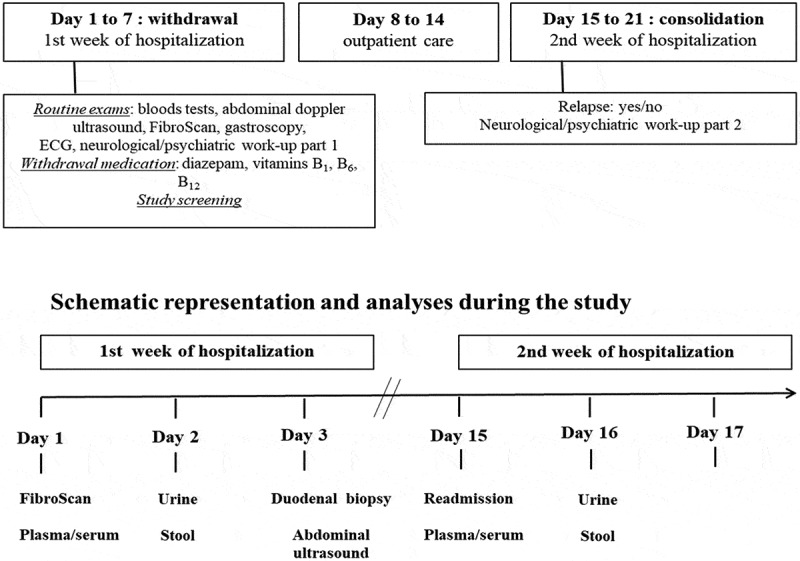
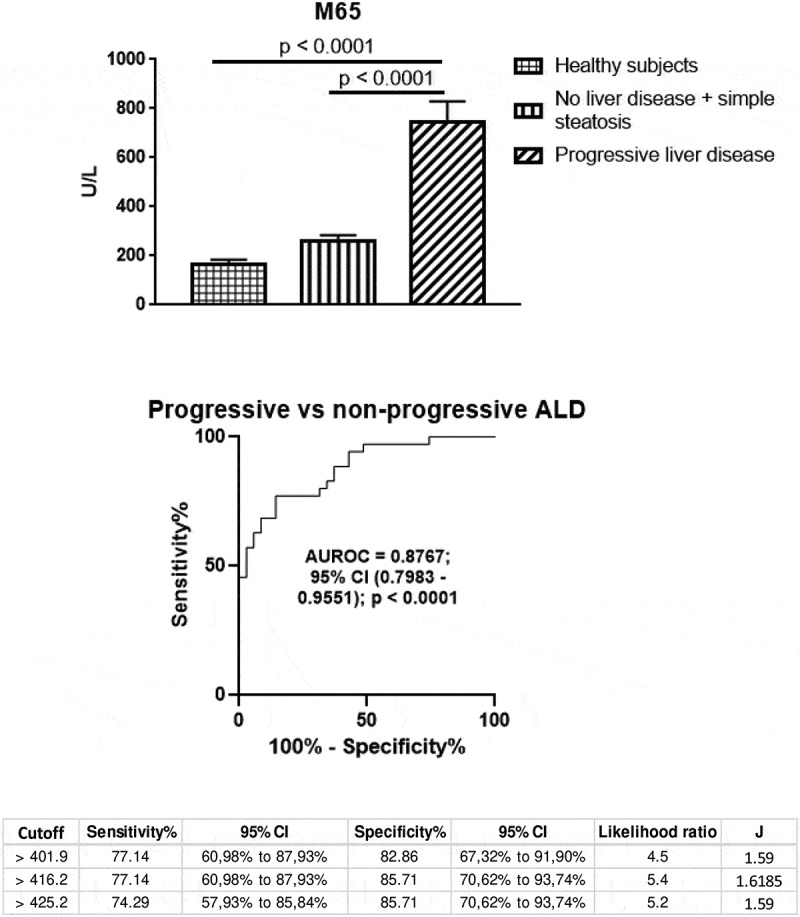
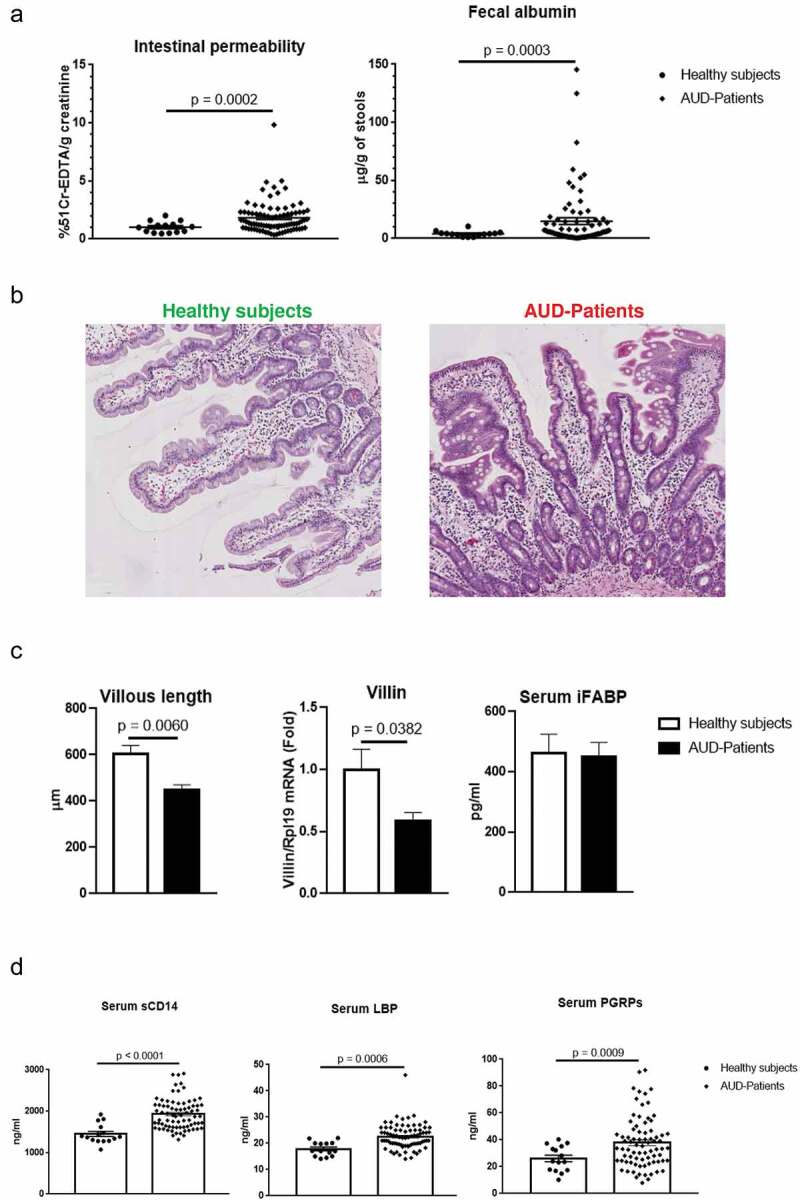
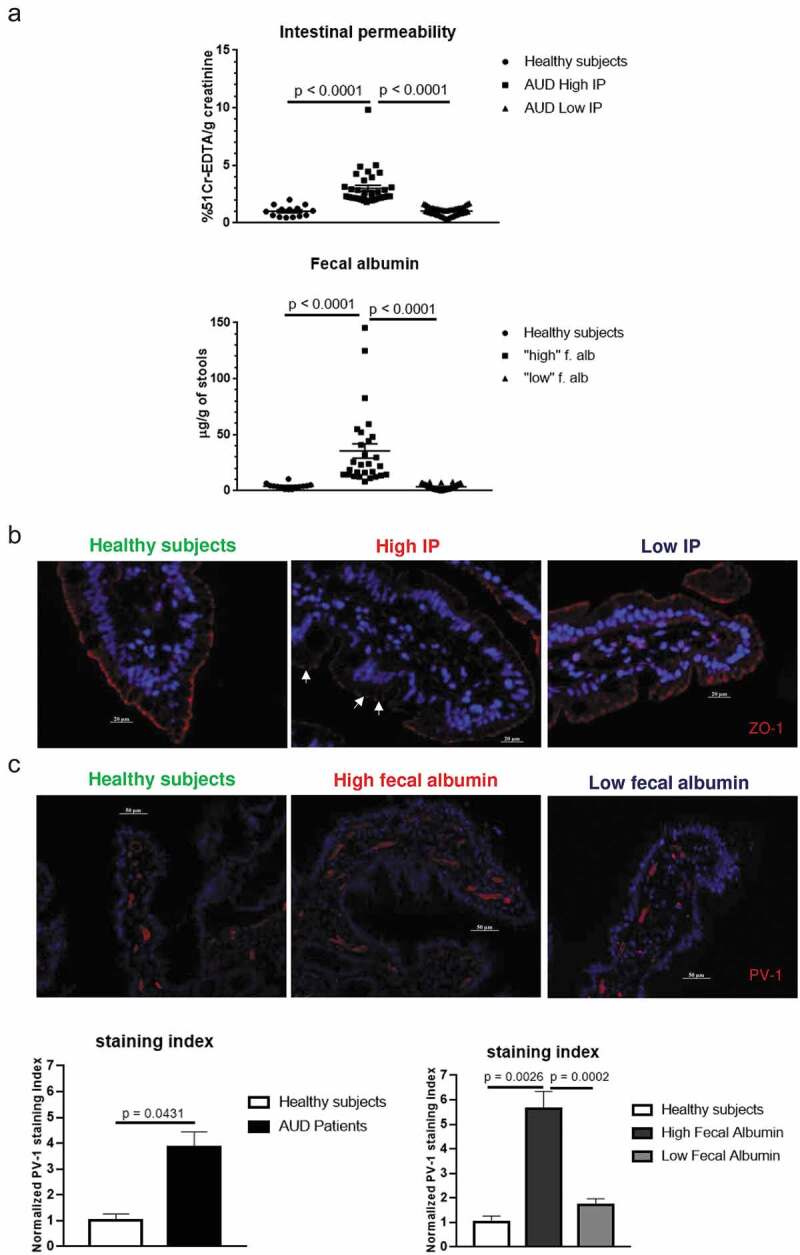
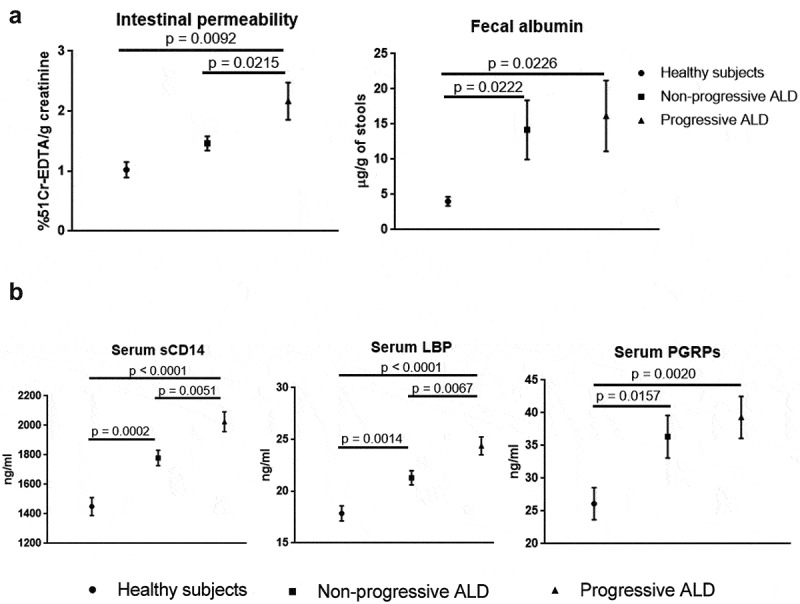
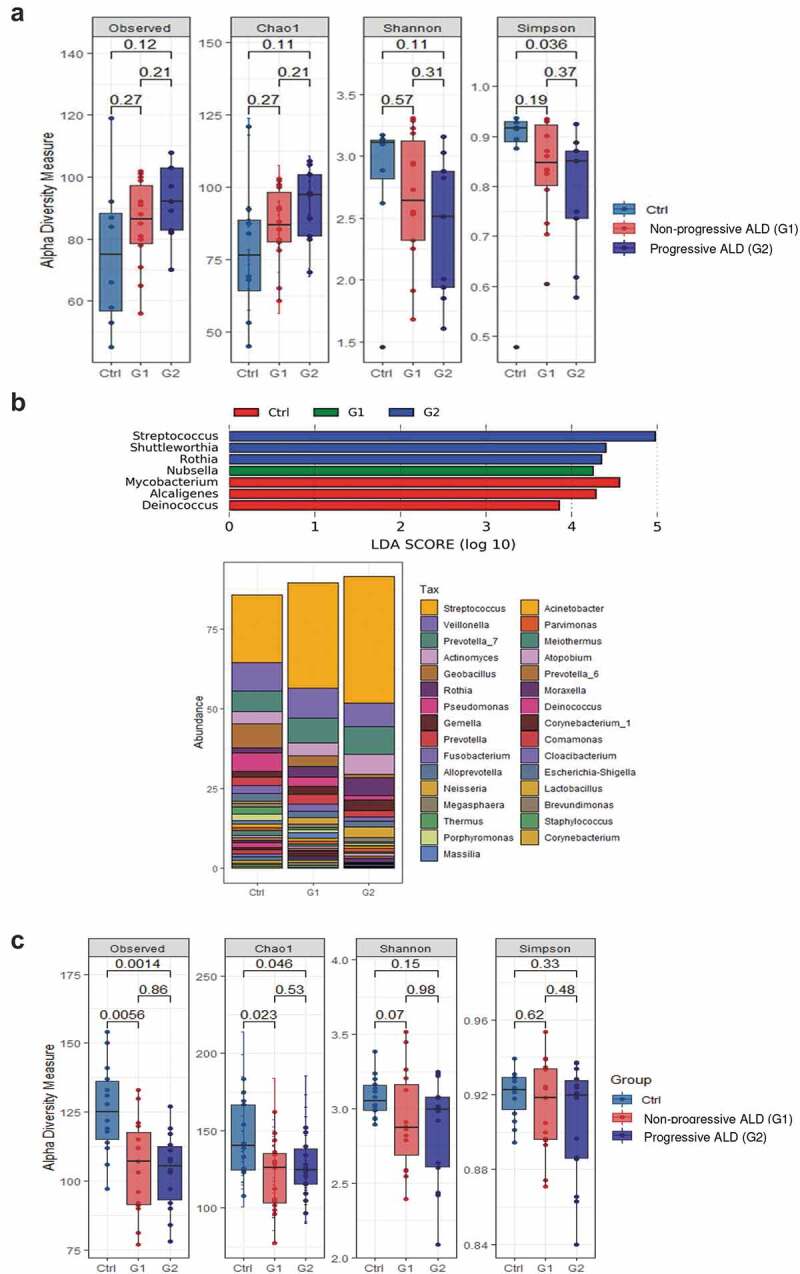
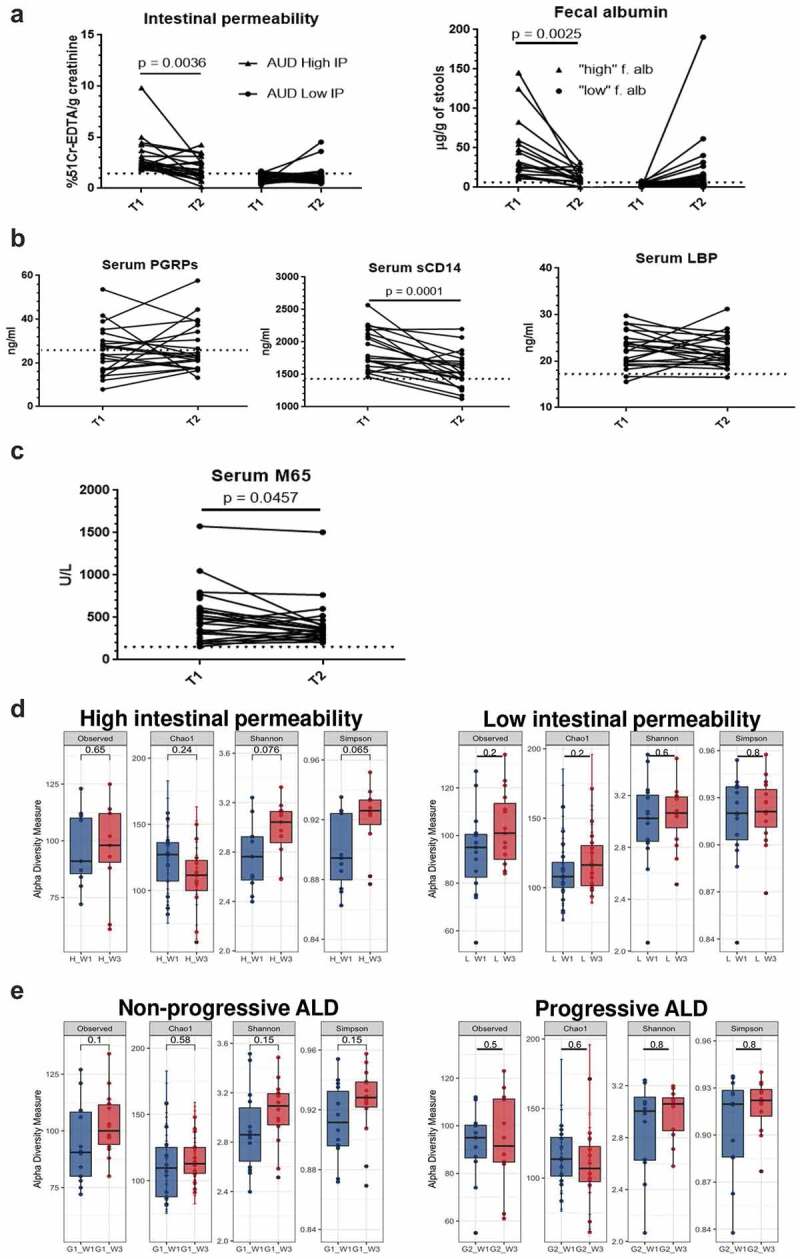
Background Animal data suggest a role of the gut-liver axis in progression of alcoholic liver disease (ALD), but human data are scarce especially for early disease stages.Methods We included patients with alcohol use disorder (AUD) who follow a rehabilitation program and matched healthy controls. We determined intestinal epithelial and vascular permeability (IP) (using urinary excretion of 51Cr-EDTA, fecal albumin content, and immunohistochemistry in distal duodenal biopsies), epithelial damage (histology, serum iFABP, and intestinal gene expression), and microbial translocation (Gram – and Gram + serum markers by ELISA). Duodenal mucosa-associated microbiota and fecal microbiota were analyzed by 16 S rRNA sequencing. ALD was staged by Fibroscan® (liver stiffness, controlled attenuation parameter) in combination with serum AST, ALT, and CK18-M65.Results Only a subset of AUD patients had increased 51Cr-EDTA and fecal albumin together with disrupted tight junctions and vasculature expression of plasmalemma Vesicle-Associated Protein-1. The so-defined increased intestinal permeability was not related to changes of the duodenal microbiota or alterations of the intestinal epithelium but associated with compositional changes of the fecal microbiota. Leaky gut alone did not explain increased microbial translocation in AUD patients. By contrast, duodenal dysbiosis with a dominance shift toward specific potential pathogenic bacteria genera (Streptococcus, Shuttleworthia, Rothia), increased IP and elevated markers of microbial translocation characterized AUD patients with progressive ALD (steato-hepatitis, steato-fibrosis).Conclusion Progressive ALD already at early disease stages is associated with duodenal mucosa-associated dysbiosis and elevated microbial translocation. Surprisingly, such modifications were not linked with increased IP. Rather, increased IP appears related to fecal microbiota dysbiosis.
Overview
The claims and statistics of this paper haven’t been checked yet.
Run the check — free, no account needed. It reads the open-access text and checks the sources it cites.
Integrity signals
Registry
Cites
Statistics
Figures
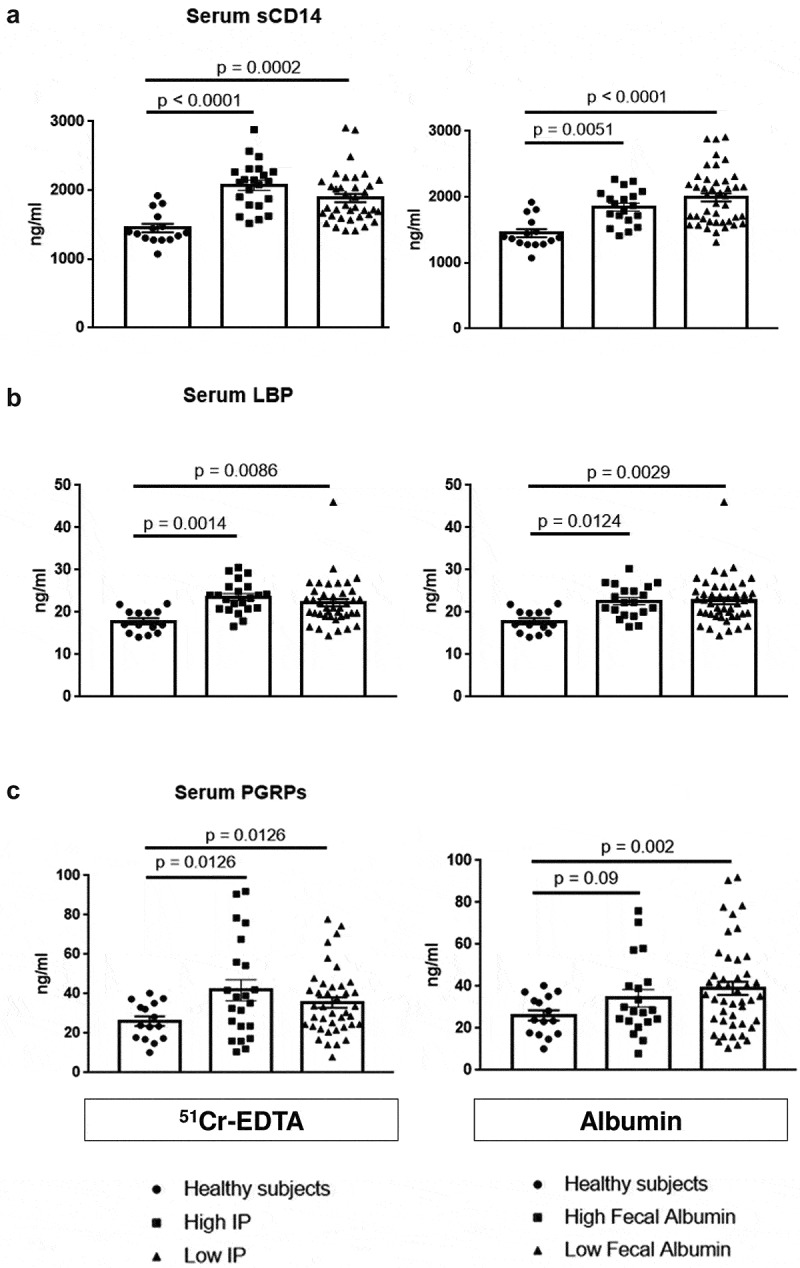
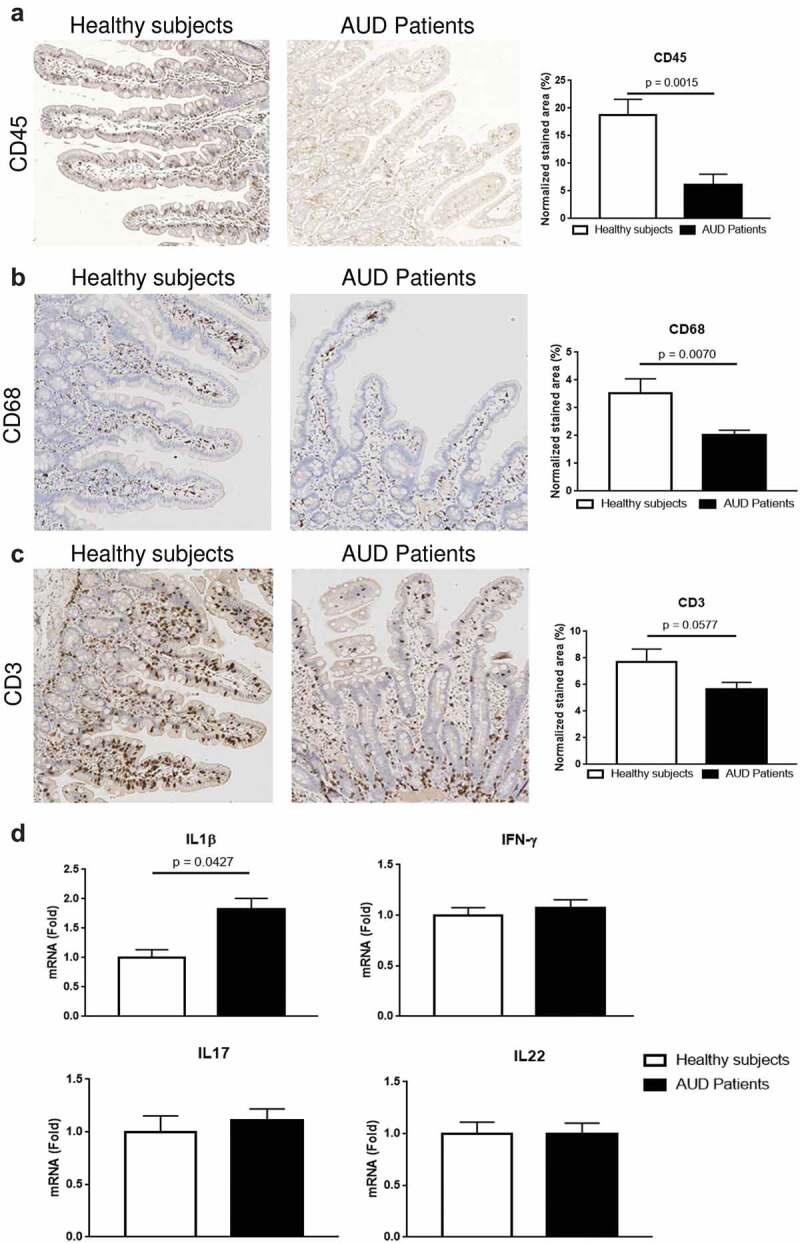
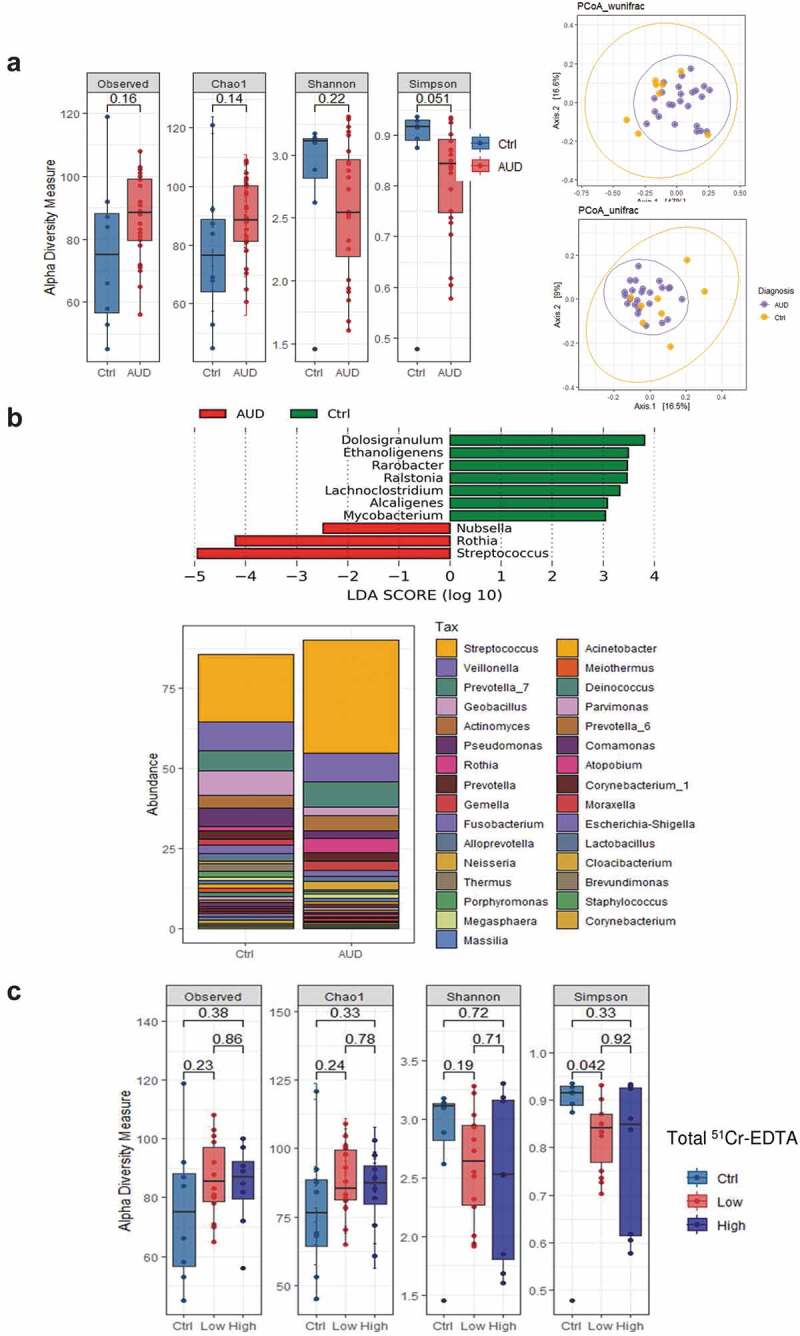
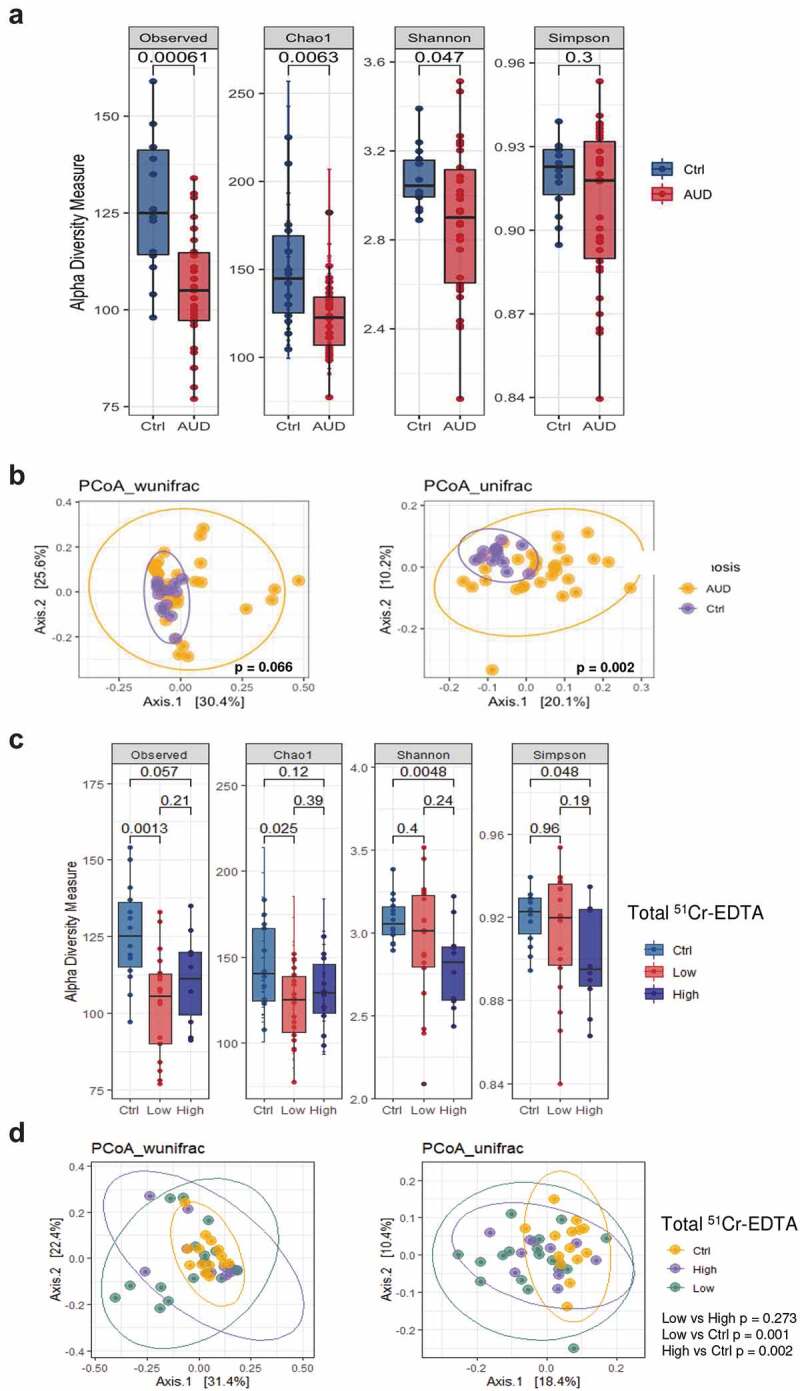
Verification
Claims the paper makes
The claims and statistics of this paper haven’t been checked yet.
Run the check — free, no account needed. It reads the open-access text and checks the sources it cites.
Claims other papers make about this one
Each is checked against this paper’s own text: does it say what the citing paper says it does?
In the citing paper
“Alcoholic liver disease (ALD) is associated with gut microbial dysbiosis,113, 114, 115”
From Regulation of Intestinal Barrier Function by Microbial Metabolites (2021) · cites this paper as [113]
Self-check
Percentages, sums and reported differences re-computed from the paper’s own numbers.
The self-check needs the paper’s full text.
Citations
Cites
phyloseq: An R Package for Reproducible Interactive Analysis and Graphics of Microbiome Census Data
McMurdie, P. J., & Holmes, S. (2013) · PLoS ONE · doi:10.1371/journal.pone.0061217 · Cited by 21,942
Metagenomic biomarker discovery and explanation
Segata, N., Izard, J., Waldron, L., Gevers, D., Miropolsky, L., Garrett, W. S., & Huttenhower, C. (2011) · Genome Biology · doi:10.1186/gb-2011-12-6-r60 · Cited by 16,192
Of Mice and Not Men: Differences between Mouse and Human Immunology
Mestas, J., & Hughes, C. C. W. (2004) · The Journal of Immunology · doi:10.4049/jimmunol.172.5.2731 · Cited by 3,822
Microbial translocation is a cause of systemic immune activation in chronic HIV infection
Brenchley, J. M., Price, D. A., Schacker, T. W., Asher, T. E., Silvestri, G., Rao, S., Kazzaz, Z., Bornstein, E., Lambotte, O., Altmann, D., et al. (2006) · Nature Medicine · doi:10.1038/nm1511 · Cited by 3,559
Alterations of the human gut microbiome in liver cirrhosis
Qin, N., Yang, F., Li, A., Prifti, E., Chen, Y., Shao, L., Guo, J., Le Chatelier, E., Yao, J., Wu, L., et al. (2014) · Nature · doi:10.1038/nature13568 · Cited by 2,177
How informative is the mouse for human gut microbiota research?
Nguyen, T. L. A., Vieira-Silva, S., Liston, A., & Raes, J. (2015) · Disease Models & Mechanisms · doi:10.1242/dmm.017400 · Cited by 1,334
Characterization of fecal microbial communities in patients with liver cirrhosis
Chen, Y., Yang, F., Lu, H., Wang, B., Chen, Y., Lei, D., Wang, Y., Zhu, B., & Li, L. (2011) · Hepatology · doi:10.1002/hep.24423 · Cited by 1,038
Leclercq, S., Matamoros, S., Cani, P. D., Neyrinck, A. M., Jamar, F., Stärkel, P., Windey, K., Tremaroli, V., Bäckhed, F., Verbeke, K., et al. (2014) · Proceedings of the National Academy of Sciences · doi:10.1073/pnas.1415174111 · Cited by 972
Self-citationProton pump inhibitors alter the composition of the gut microbiota
Jackson, M. A., Goodrich, J. K., Maxan, M.-E., Freedberg, D. E., Abrams, J. A., Poole, A. C., Sutter, J. L., Welter, D., Ley, R. E., Bell, J. T., et al. (2016) · Gut · doi:10.1136/gutjnl-2015-310861 · Cited by 895
Bacteriophage targeting of gut bacterium attenuates alcoholic liver disease
Duan, Y., Llorente, C., Lang, S., Brandl, K., Chu, H., Jiang, L., White, R. C., Clarke, T. H., Nguyen, K., Torralba, M., et al. (2019) · Nature · doi:10.1038/s41586-019-1742-x · Cited by 850
Self-citation
Research works printed but not linked: 2
- Tabakoff B, 2000, Alcohol Res Heal, 24, 77
- 10.1016/j.cld.2012.08.002.ALCOHOL · DOI
Cited by
Sorted by citations
Items 101–174 of 174
Lipidomics for the Prediction of Progressive Liver Disease in Patients with Alcohol Use Disorder
Gao, B., Zeng, S.-L., Maccioni, L., Shi, X., Armando, A. M., Quehenberger, O., Zhang, X., Stärkel, P., & Schnabl, B. (2022) · Metabolites · doi:10.3390/metabo12050433 · Cited by 9
“AUD patients were split into non-progressive liver disease and progressive liver disease based on clinical parameters as described in our previous publication [21].”
BackgroundMethodInfluentialSelf-citationEditorial: The Microbiome in Hepatobiliary and Intestinal Disease
Hartmann, P. (2022) · Frontiers in Physiology · doi:10.3389/fphys.2022.893074 · Cited by 9
“, 2020) are increased, whereas Faecalibacterium (prausnitzii) (Gao et al., 2020a; Gao et al., 2020b; Maccioni et al., 2020) and Bacteroides (Puri et al.”
BackgroundInfluentialKuang, J., Zheng, X., & Jia, W. P. (2024) · Protein & Cell · doi:10.1093/procel/pwae058 · Cited by 10
“…that the oral normal microflora like Shuttleworthia and Rothia are overrepresented at the distal duodenum in patients with alcoholic liver disease, implying that some microbes shifting down into the duodenum was implicated in the progression of alcoholic liver disease (Maccioni et al., 2020).”
Effect of aging on the development and progression of alcohol‐associated liver disease
Bellamkonda, R., Mahalingam, S., Ethiraj, O., Perumal, S. K., Arumugam, M. K., Knoell, D. L., Fisher, K. W., Casey, C. A., Kharbanda, K. K., & Rasineni, K. (2025) · Alcoholism Clinical and Experimental Research · doi:10.1111/acer.70086 · Cited by 8
“It is well-documented that the alcohol-induced loss of mucosal barrier allows for the increased paracellular translocation of gut luminal pathogenic molecules into the portal circulation to reach the liver and initiate an inflammatory cascade (Bishehsari et al., 2017; Maccioni et al., 2020 ).”
Li, P., Yan, Z., Shi, P., Wang, D., Liu, Z., Lu, M., Li, C., Yin, Y., & Huang, P. (2023) · Antioxidants · doi:10.3390/antiox12122084 · Cited by 7
“Megamonas is typically exclusive to cachexia groups [41], Sellimonas [42] is known to be pro-inflammatory, and Shuttleworthia is considered potentially pathogenic [43].”
Composition, function, and detection methods of the intestinal barrier
Sun, N., Liu, W., Li, J., Zhang, D., Liu, J., Liu, J., & Hu, H. (2025) · The Journal of Nutritional Biochemistry · doi:10.1016/j.jnutbio.2025.110179 · Cited by 10
Li, Q., & Liu, Y. (2025) · Frontiers in Microbiology · doi:10.3389/fmicb.2025.1701101 · Cited by 7
Grodin, E. N., Burnette, E. M., Rodriguez, C., Fulcher, J. A., & Ray, L. A. (2024) · Alcoholism Clinical and Experimental Research · doi:10.1111/acer.15338 · Cited by 7
Sun, L., Yue, Z., & Wang, L. (2024) · Life Medicine · doi:10.1093/lifemedi/lnae030 · Cited by 7
Liver as a key organ for systemic antimicrobial defense
Yao, T., Maccioni, L., Guan, Y., Rodrigues, R. M., & Gao, B. (2025) · Hepatology Communications · doi:10.1097/hc9.0000000000000814 · Cited by 6
Self-citationRen, M., Pan, H., Zhou, X., Yu, M., & Ji, F. (2024) · Scientific Reports · doi:10.1038/s41598-024-59605-3 · Cited by 6
“Previous studies have described dysbiosis of the duodenal microbiota in liver diseases including cirrhosis 15–17 , alcoholic liver disease 18 , and chronic liver disease 19 .”
Pathogenetic and clinical significance of the gut-liver microbiota axis
Dicheva, D. T., & Андреев, Д. Н. (2022) · Meditsinskiy sovet = Medical Council · doi:10.21518/2079-701x-2022-16-7-69-75 · Cited by 7
Intestinal Microbiotas and Alcoholic Hepatitis: Pathogenesis and Therapeutic Value
Zheng, J., Li, Z., & Xu, H. (2023) · International Journal of Molecular Sciences · doi:10.3390/ijms241914809 · Cited by 9
Barkus, A., Baltrūnienė, V., Barkienė, L., Baušienė, J., Baltrūnas, T., Brazys, M., Rauduvytė, K., Kazlauskaitė, P., & Baušys, A. (2025) · Journal of Neurochemistry · doi:10.1111/jnc.70165 · Cited by 7
“While short-term abstinence (e.g., 2–3 weeks) appears insufficient to drive notable microbial recovery (Leclercq et al. 2014; Maccioni et al. 2020; Yang, Yu, Yang, et al. 2021), extended abstinence intervals (e.g., 2 months after methamphetamine cessation) are linked to partial restoration of…”
InfluentialWang, Y., Mu, W., Guan, J., Ma, P., Li, Y., Zhang, Y., Zhu, W., Zhou, Y., Zou, Y., Zeng, T.-X., et al. (2025) · Cell Reports · doi:10.1016/j.celrep.2025.116374 · Cited by 5
Fondevila, M. F., Kreimeyer, H., Hsu, C. L., Tamargo‐Azpilicueta, J., Day, L. Z., Gritsenko, M., Attah, K., Cabré, N., Harberts, A., Tonetti, F. R., et al. (2026) · Journal of Hepatology · doi:10.1016/j.jhep.2026.01.013 · Cited by 5
Self-citationCyclic Nucleotide Phosphodiesterases in Alcohol Use Disorders: Involving Gut Microbiota
Hou, X., Rong, C., Zhang, Q., Song, S., Cong, Y.-F., & Zhang, H. (2022) · The International Journal of Neuropsychopharmacology · doi:10.1093/ijnp/pyac060 · Cited by 5
“In Streptomyces albus, inactivation of rmdB positively correlates with c-di-GMP and moenomycin A accumulation (Makitrynskyy et al., 2020).”
BackgroundManithody, C., Denton, C., Mehta, S., Carter, J., Kurashima, K., Bagwe, A., Swiderska‐Syn, M., Guzmán, M. A., Besmer, S., Jain, S., et al. (2024) · American Journal of Physiology-Gastrointestinal and Liver Physiology · doi:10.1152/ajpgi.00012.2024 · Cited by 4
Si, C., Qiao, R., Liu, Y., Kasimu, A., Chen, D., Xie, L., Sun, P., & Li, B. (2025) · Brain and Behavior · doi:10.1002/brb3.71136 · Cited by 4
Urolithin A regulates gut: liver axis to ameliorate alcohol-associated liver disease
Ghosh, S., Singh, R., Vanwinkle, Z. M., McClain, C. J., Vatsalya, V., Haribabu, B., Vemula, P. K., & Jala, V. R. (2026) · Frontiers in Pharmacology · doi:10.3389/fphar.2025.1706111 · Cited by 4
Rodiño‐Janeiro, B. K., Khannous‐Lleiffe, O., Pigrau, M., Willis, J. R., Salvo‐Romero, E., Nieto, A., Expósito, E., Fortea, M., Pardo‐Camacho, C., Albert-Bayo, M., et al. (2025) · Frontiers in Microbiology · doi:10.3389/fmicb.2024.1441126 · Cited by 4
Dysbiosis and Metabolic Dysregulation of Salivary Microbiota in Schizophrenia
Wang, J., Lü, L., Ren, L., Zhu, R., Jiang, Y., Qiao, Y., & Li, Y. (2025) · Journal of Multidisciplinary Healthcare · doi:10.2147/jmdh.s504325 · Cited by 4
From Gut to Glory: Unveiling the Microbiome’s Impact on Human Health
Raval, Y., Shaikh, M., & Dudhat, K. R. (2025) · Regenerative Engineering and Translational Medicine · doi:10.1007/s40883-025-00412-1 · Cited by 4
“The transferring of the gut microbiomes into the systemic circulation is known as the gut microbial translocation or simply gut translocation [95].”
Hasan, R., Kumar, A., Bose, S. K., Roy, R., Arora, A., Sharma, P., Nagumantri, S. P., Paul, D., & Choudhury, S. (2023) · The Open Microbiology Journal · doi:10.2174/18742858-v17-e230803-2023-7 · Cited by 4
Pyroptotic MAITs link microbial translocation with severity of alcohol-associated liver disease
Zhang, L., Wang, H.-F., Zhai, X., Zhou, C., Yuan, J., Ma, Y.-N., Yao, Z.-T., Huang, S., Li, W.-Z., Jiao, Y., et al. (2023) · Hepatology Communications · doi:10.1097/hc9.0000000000000159 · Cited by 4
Minchenberg, S. B., Ribera, M. O., Gutierrez, A. H., Datta, A. A., Brezáni, V., Santos, B., Hong, S. M., Kulkarni, S., Nagesh, P. T., & Szabó, G. (2025) · Alcoholism Clinical and Experimental Research · doi:10.1111/acer.70196 · Cited by 3
Martínez‐Castillo, M., Altamirano-Mendoza, I., Sánchez-Valle, S., García-Islas, L., Sánchez-Barragán, M., Hernandez-Santillan, M., Hernández-Barragán, A., Pérez-Hernández, J. L., la Tijera, F. H., & Gutiérrez‐Reyes, G. (2023) · Revista de Gastroenterología de México · doi:10.1016/j.rgmx.2023.01.002 · Cited by 6
Leclercq, S. (2024) · Alcohol and Alcoholism · doi:10.1093/alcalc/agae050 · Cited by 3
Self-citationWang, N., Wang, C., Cao, X., Chang, J., & Zhang, Z. (2024) · Food Bioscience · doi:10.1016/j.fbio.2024.105816 · Cited by 3
Mak, K. M., Ding, S. Y., & Jain, C. L. (2025) · The Anatomical Record · doi:10.1002/ar.70084 · Cited by 3
“” In a study involving 106 patients with AUD and 24 healthy social drinkers as controls, Maccioni et al. (2020) found that 36% – 40% of the drinking alcoholics demonstrated duodenal and jejunal hyperpermeability and exhibited disruption of duodenal epithelial cell ZO-1 protein that regulates…”
Gut microbiome in alcohol-associated liver disease: interactions and therapeutic strategies
Liang, X., He, J., Wu, Q., Fu, L., & Liu, Y. (2026) · Frontiers in Pharmacology · doi:10.3389/fphar.2026.1770833 · Cited by 2
“Research supports using a panel that includes high LBP levels, low EndoCAb concentrations, and elevated antifungal antibodies to predict alcoholic hepatitis risk, though no specific validated panel exists yet (Maccioni et al., 2020).”
InfluentialGut–liver axis molecular mechanisms in alcohol-associated liver disease
Jiang, Y., & Llorente, C. (2026) · Alcohol · doi:10.1016/j.alcohol.2026.04.001 · Cited by 2
682: INTESTINAL VIROME IN PATIENTS WITH ALCOHOL USE DISORDER AND AFTER ABSTINENCE
Hsu, C. L., Zhang, X., Jiang, L., Lang, S., Hartmann, P., Pride, D. T., Fouts, D. E., Stärkel, P., & Schnabl, B. (2022) · Gastroenterology · doi:10.1016/s0016-5085(22)63411-5 · Cited by 2
Self-citationWenlin, C., Fang, L., Yuncheng, Z., Jinzhen, L. V., & Daguo, Y. (2023) · PubMed Central · doi:10.19852/j.cnki.jtcm.20230208.002 · Cited by 2
Role of Neutrophils in the Development of Steatotic Liver Disease
Choi, Y., Kim, Y. S., & Hwang, S. (2024) · Seminars in Liver Disease · doi:10.1055/s-0044-1789207 · Cited by 2
“142 145 Concurrently, DAMPs from injured hepatocytes aggravate liver injuries with mediators, such as CXCL1, LCN2, and IL-33, contributing to neutrophil in fi ltration ( ► Fig.”
Wang, X., Yao, D.-S., Xu, L., Yan, D.-M., Zhao, Y. X., Peng, J., Fu, Q., Hu, Y., & Feng, Q. (2024) · Current Medical Science · doi:10.1007/s11596-024-2955-2 · Cited by 2
“Studies suggest that intestinal barrier dysfunction is a main driver of ALD [27] .”
Hu, Y., Schnabl, B., & Stärkel, P. (2025) · Cells · doi:10.3390/cells14030207 · Cited by 3
“By contrast, the number of intestinal macrophages in AUD patients is reduced [9].”
Self-citationCommentary on the gut microbiome in alcohol use disorder and alcohol‐associated liver disease
Llorente, C. (2024) · Alcoholism Clinical and Experimental Research · doi:10.1111/acer.15382 · Cited by 2
Jung, F., Brandt, A., & Bergheim, I. (2023) · Springer eBooks · doi:10.1007/978-3-031-32483-3_61 · Cited by 1
Singh, L. S., Singha, L. S., Singh, W. S., Singh, Y. R., & Marak, G. K. (2025) · Antonie van Leeuwenhoek · doi:10.1007/s10482-025-02196-4 · Cited by 1
“(Maccioni et al. 2020) Animal models consistently demonstrate alcohol-induced gut dysbiosis, increased intestinal permeability, and microbial translocation.”
InfluentialNiu, X., Ma, L., Zhou, Z., Li, Y., Shi, A., Weng, L., & Xing, H. (2025) · Drug and Alcohol Dependence · doi:10.1016/j.drugalcdep.2025.112988 · Cited by 1
Shared signatures of alcohol-associated dysbiosis in humans and non-human primates
Chen, T., Huang, R., Huang, Y., Wang, J., Wang, Z., & Zhang, X. (2025) · Current Research in Microbial Sciences · doi:10.1016/j.crmicr.2025.100534 · Cited by 1
“AUD patients often exhibit "leaky gut," facilitating the translocation of gut endotoxins (e.g., LPS) into the bloodstream and triggering systemic inflammation, which is closely associated with liver injury and neuro-inflammation (Maccioni et al., 2020).”
Fecal microbiota transplantation in chronic liver disease: Current and future state of the art
Bloom, P. P., & Khanna, S. (2026) · Hepatology Communications · doi:10.1097/hc9.0000000000000927 · Cited by 1
“[30] Given this association, microbiome manipulation via FMT has been considered and has been successful in preclinical models.”
Rethinking “Safe” Drinking: A Review of the Carcinogenic Risks of Alcohol Consumption
Daniel, P. C.-Y. N., Nah, B. K. Y., & Huang, D. Q. (2026) · Current Hepatology Reports · doi:10.1007/s11901-026-00722-0 · Cited by 1
Abdulla, A. H., Sheikhnoor, A., Ferrao, K., Stiles, L. I., & Mehta, K. J. (2026) · Clinical and Experimental Medicine · doi:10.1007/s10238-026-02102-w · Cited by 1
“As such, alcohol induced intestinal immune dysfunction and increased intestinal permeability have chiefly been characterised in the duodenum [ 154 , 155 , 162 ], although alcohol can disrupt barrier function along multiple regions of the gut.”
Lu, T., Zou, S.-Y., Dong, C., Jiang, S.-Y., Luo, J., Liu, X.-Y., Yang, Q.-X., Fu-xing, L., Han, N., Lu, C.-N., et al. (2026) · Biochimica et Biophysica Acta (BBA) - Reviews on Cancer · doi:10.1016/j.bbcan.2026.189657 · Cited by 1
Li, S.-L., Zheng, S., Tang, Y., Liu, H.-M., & Mao, Q. (2022) · World Chinese Journal of Digestology · doi:10.11569/wcjd.v30.i24.1074 · Cited by 1
Translocation of health-promoting enzymes across the gut barrier
Su, X., Hao, Z., & Yao, B. (2023) · Trends in Endocrinology and Metabolism · doi:10.1016/j.tem.2023.02.006 · Cited by 1
Fedorin, M. M., Livzan, M. A., & Gaus, O. V. (2023) · Russian Medical Inquiry · doi:10.32364/2587-6821-2023-7-7-4 · Cited by 1
Støy, S. H., & Schnabl, B. (2025) · Gastroenterology Clinics of North America · doi:10.1016/j.gtc.2024.12.001 · Cited by 1
Self-citationDÍAZ-OROZCO, L. E., & MÉNDEZ-SÁNCHEZ, N. (2021) · Minerva Gastroenterology · doi:10.23736/s2724-5985.21.02914-4 · Cited by 1
Wang, X., Yao, D., Xu, L., Yan, D., Zhao, Y., Peng, J., Fu, Q., Hu, Y., & Feng, Q. (2021) · Research Square · doi:10.21203/rs.3.rs-745661/v1
d’Humières, C., Cassard, A., Ciocan, D. M., Chicard, M., Trainel, N., Lamara, F., Cervantes-Gonzalez, M., Gueye, S., Visseaux, B., Wicky, P.-H., et al. (2024) · SSRN Electronic Journal · doi:10.2139/ssrn.4877567
Puhakka, E., Ahmed, H., Haikonen, R., Leclercq, S., Hanhineva, K., Maccioni, L., Amadieu, C., Lehtonen, M., Männistö, V., Rysä, J., et al. (2024) · medRxiv · doi:10.1101/2024.12.10.24318756
Self-citationCancer and microbiome-targeted therapies
Meena, A. S., Singh, P., & Shukla, P. K. (2025) · International review of cytology · doi:10.1016/bs.ircmb.2024.12.006
Features of gut microbiota in diseases of the biliary tract
Kotlyarov, S. N., Shelukhina, S. V., MARKOVA, E. V., Butov, M. A., & Станиславовна, В. А. (2025) · Medical alphabet · doi:10.33667/2078-5631-2025-6-13-20
Perumalsamy, H., Park, S., Kim, J. E., Xiao, X., Kim, H. Y., Jun, D. W., & Yoon, T. H. (2025) · MedComm · doi:10.1002/mco2.70448
Tao, X., Li, H., Zeng, J., Peng, M., Liu, Q., Luo, L., Wang, Y., Yang, J., Yang, X., & Liangqun, L. I. (2026) · Fermentation · doi:10.3390/fermentation12010028
Zaļizko, P., Isaks, R., Pahirko, L., Fedulovs, A., Krustiņš, E., Nazarovs, J., Dubencovs, S., Salmenkari, H., Lehto, M. J., Jēkabsons, K., et al. (2026) · Journal of Diabetes Investigation · doi:10.1111/jdi.70248
“CD68 + macrophages/histiocyte numbers in the gut mucosa and fecal albumin, a potential marker of intestinal permeability 54,55 , our study supports previous data on associations between mucosal permeability and in fl ammation 56 .”
Khafaga, A., Rudayni, H., Khalifa, N. E., Alawam, A. S., Allam, A. A., Taha, A., Naiel, M., & El-Hack, M. A. A. (2026) · Tissue & Cell · doi:10.1016/j.tice.2026.103456
Cirrhosis-associated immune dysfunction reflects impaired intestinal CD8αβ⁺ IEL compartmentalizationPreprint
Akkaya, C., van Sligtenhorst, M., Shaukat, S., Modave, E., Dumarey, A., Caxali, G. H., Verbiest, A., Meyere, L. D., Vrancken, S., Meerbeeck, L. V., et al. (2026) · bioRxiv (Cold Spring Harbor Laboratory) · doi:10.64898/2026.03.26.713594
Sun, T., Pu, X., Fang, H., Dong, F., Fu, H., Yang, W., Zhang, C., Cao, F., Ding, Q., Song, Q., et al. (2026) · Free Radical Biology and Medicine · doi:10.1016/j.freeradbiomed.2026.04.002
Liping, Y., Xingzhi, Y., Jie, T., & Xiaohua, D. (2026) · BMC Complementary Medicine and Therapies · doi:10.1186/s12906-026-05421-3
“Excessive alcohol consumption disrupts the tight junctions of the intestinal epithelium and the protective barrier of the mucosa, resulting in increased intestinal permeability [26, 27].”
Toulehohoun, A. G., Ambroise, J., Illiyas, B., Maccioni, L., Lupianez, J., Manco, R., Clerbaux, L., Bouzin, C., Schnabl, B., & Starkel, P. (2026) · World Journal of Gastroenterology · doi:10.3748/wjg.118458
Self-citationMehta, S., Kurashima, K., Manithody, C., Ohkura, T., Morfin, S., Bagwe, A., Syn, M., Sims, A., Kolli, S., Whalen, C., et al. (2026) · Gastroenterology · doi:10.1053/j.gastro.2026.05.024
Microbiota-fibroblasts interactions in multi-organ fibrosis
Qi, C., Lin, Z., Gan, Y., Liang, P., Chen, L., Luo, Y., Sweren, E., Alphonse, M. P., Yang, L., Garza, L. A., et al. (2026) · Microbiological Research · doi:10.1016/j.micres.2026.128602
Sysonov, F. A., Gorshkova, E. A., Menshikov, K. E., Drutskaya, M. S., Nedospasov, S. A., & Gubernatorova, E. O. (2026) · Biochemistry (Moscow) · doi:10.1134/s000629792660239x
“Increased intestinal permeability is a common feature of ALF regardless of etiology, observed in the clinical cases caused by alcohol intoxication [18, 19], acetaminophen poisoning [20], or viral infection [21].”
Ye, L., Wang, Z., Zhu, S., Ding, X., Han, J., Hao, Y., He, C., Jiang, Y., Liu, Z., & Zuo, Z. (2026) · Molecular Nutrition & Food Research · doi:10.1002/mnfr.70586
“Among the many factors contributing to ALD progression, gut microbiota dysbiosis and impaired intestinal barrier function have been identified as critical drivers of disease development [ 17, 18 ].”
Therapeutic modulation of the gut-brain axis in alcohol use disorder: A systematic review
Bhandari, P., Sideeg, A., Elfeki, M. A., Xie, C., & Singal, A. K. (2026) · Metabolism Open · doi:10.1016/j.metop.2026.100495
“Two studies on Veterans exclusively recruited men [4,22].”
InfluentialSimbrunner, B., Sorribas, M., Schaerer, J., Felber, M., Codinach, J., Rodrigues, S. G., Mandorfer, M., Berzigotti, A., Trauner, M., Reiberger, T., et al. (2026) · JHEP Reports · doi:10.1016/j.jhepr.2026.102037
Xu, Z.-X., Yao, J., Yan, K.-P., & Xu, J. (2026) · Frontiers in Medicine · doi:10.3389/fmed.2026.1882266
“Alcohol-related alterations in the gut microbiota and intestinal barrier may further facilitate microbial translocation and amplify systemic inflammatory responses (45, 46).”
Zhao, X., Cao, L., Feng, S., Li, J., Zhou, J., Lv, Z., & Song, J. (2026) · Natural Product Communications · doi:10.1177/1934578x261492502
“10,11 Collectively, gut dysbiosis, endotoxin translocation, intrahepatic immune responses, and metabolic imbalances constitute a central network driving ALD progression, ultimately leading to irreversible end-stage liver injury.”
Zhi, F., Ding, N., Cai, Y., Lei, C., Li, C., Zhang, H., Lin, P., Wen, J., Liu, W., Zhang, B., et al. (2026) · Chemical Engineering Journal · doi:10.1016/j.cej.2026.182362
Liang, X., Shan, T., Gao, J., Wen, H., Wang, J., Zhang, Z., Zhang, H., & Liang, H. (2026) · Nutrients · doi:10.3390/nu18213487
Metadata
- Authors
- Maccioni, L., Gao, B., Leclercq, S., Pirlot, B., Horsmans, Y., De Timary, P., Leclercq, I., Fouts, D., Schnabl, B., & Stärkel, P.
- Affiliations
- UCLouvain (BE)
- University of California San Diego (US)
- Cliniques Universitaires Saint-Luc (BE)
- Department of Adult Psychiatry, Cliniques Universitaires Saint-Luc, Brussels, Belgium
- J. Craig Venter Institute (US)
- Corresponding author
- Stärkel, Peter
- ORCID
- Venue
- Gut Microbes
- Publisher
- Informa UK Limited
- Published
- 2020-06-26
- Volume
- 12
- Issue
- 1
- Pages
- 1782157
- ISSN
- 1949-0976 (ISSN-L)
- 1949-0984
- PMC
- PMC7524402
- OpenAlex
- W3037663071
- Cited by
- 174
- References
- 58
- Citations by year
- 2026: 25 · 2025: 33 · 2024: 31 · 2023: 29 · 2022: 27 · 2021: 22 · 2020: 7
- FWCI
- 6.86
- Type
- journal article
- Language
- en
- Open access
- gold
- doi.org
- Licence
- Locations
- Gut Microbes (publishedVersion, cc-by-nc-nd)
- PubMed Central (publishedVersion, cc-by-nc-nd)
- PubMed (publishedVersion)
- Digital Access to Libraries (Université catholique de Louvain (UCL), l'Université de Namur (UNamur) and the Université Saint-Louis (USL-B)) (submittedVersion)
- Digital Access to Libraries (Université catholique de Louvain (UCL), l'Université de Namur (UNamur) and the Université Saint-Louis (USL-B)) (submittedVersion, other-oa)
- DOAJ (DOAJ: Directory of Open Access Journals) (submittedVersion, cc-by-sa)
- Funders
- Fonds De La Recherche Scientifique - FNRS (J.0146.17, T.0217.18)
- National Institutes of Health (U01 AA026939, R01 AA24726)
- Université Catholique de Louvain (ARC 2018)
- Topics
- Life Sciences › Biochemistry, Genetics and Molecular Biology › Molecular Biology › Gut microbiota and health
- Health Sciences › Medicine › Pathology and Forensic Medicine › Alcohol Consumption and Health Effects
- Health Sciences › Medicine › Gastroenterology › Gastrointestinal motility and disorders
- Keywords
- alcoholic liver disease, alcoholism, intestinal permeability, leaky gut, microbial translocation, gut-liver axis, duodenal microbiota, duodenal mucosa, tight junctions, intestinal epithelial damage, Streptococcus, Shuttleworthia, Rothia, liver fibrosis, steatohepatitis
- MeSH terms
- Gastrointestinal Microbiome, Adult, Alcoholism, Bacteria, Capillary Permeability, Duodenum, Feces, Female, Humans, Intestinal Mucosa, Liver, Liver Diseases, Alcoholic, Male, Middle Aged, RNA, Ribosomal, 16S, Dysbiosis
About these checks
Registry, retraction, Cites and statistics results are computed, not judged, with one exception: a printed reference that no index lists is read once by a model before it counts as a citation error. Claims are extracted by a model and kept only when their quote appears verbatim in the text; each cited source is then checked, with a model’s help, for whether it says what the claim relies on. Those verdicts can be wrong — read the claim’s quote and the cited source before relying on one.
Statistics and arithmetic are recomputed, not judged.
Confidence bands are shown only for fields calibrated on our annotated test set. None is calibrated yet, so no band is shown.
What counts as a claim ›How we measure confidence ›How we check this ›
Are you an author, or do you see a problem with this page? Request a review
