

Higher sense of coherence is associated with better mental and physical health in emergency medical services: results from investigations on the revised sense of coherence scale (SOC-R) in rescue workers
Open accessThe DOI matches its Crossref record; 68 of the 68 references it cites were found in a registry or an index.
Abstract
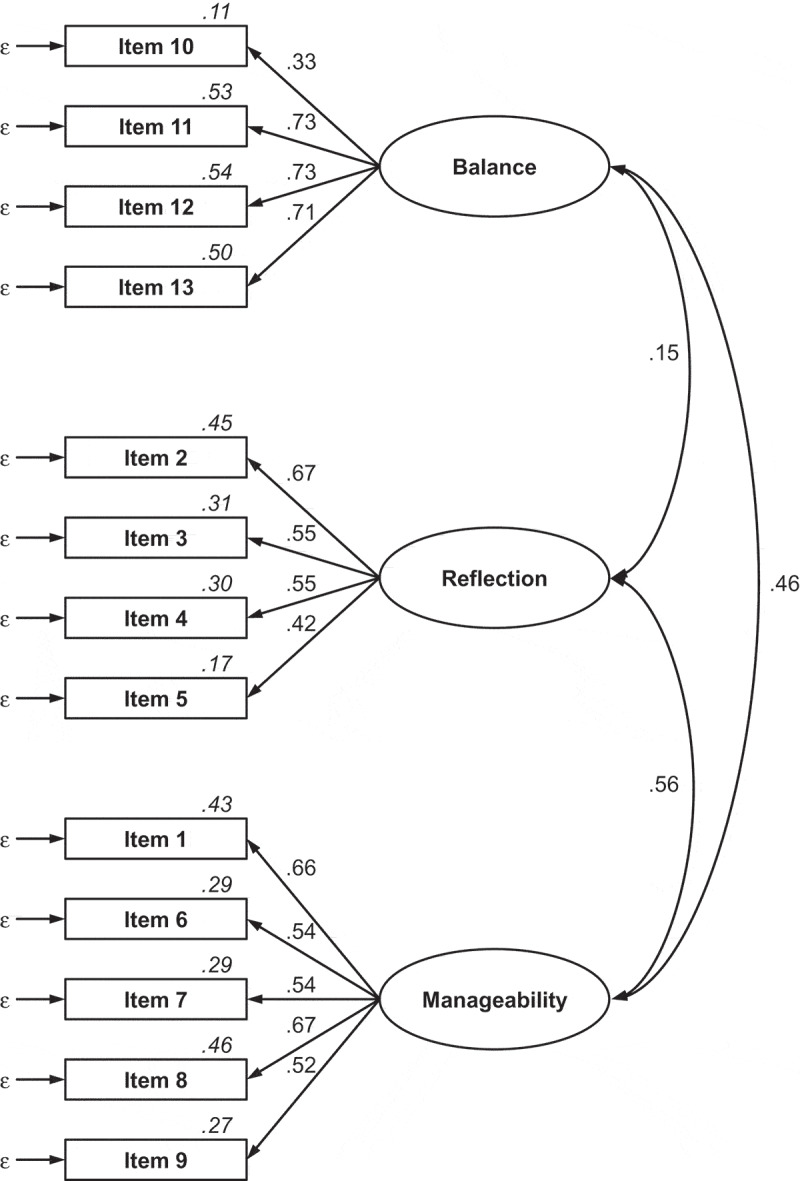
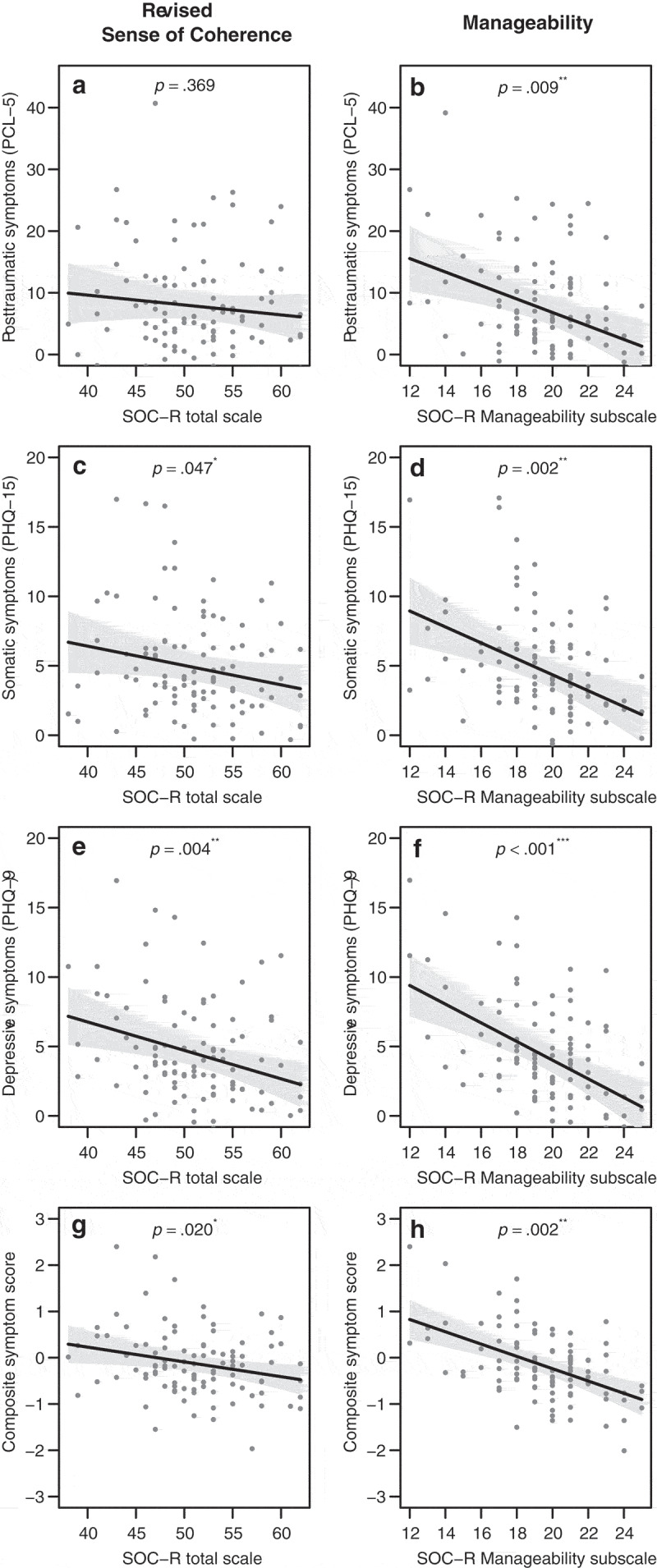
As rescue workers are regularly confronted with potentially traumatising on-duty events, they have an increased risk to develop trauma-related mental and physical health impairments, including post-traumatic, depressive, and somatic symptoms. For this high-risk group, it could be of particular importance to experience their occupational burden as manageable, meaningful, and coherent. This mindset – called sense of coherence – may be a potential resilience factor against the development of mental and physical health problems. In a cross-sectional cohort of 102 rescue workers (Mdn(QD)age = 26.0 (8.5), age range: 18−61), including 36 women, we investigated whether higher values on the Revised Sense of Coherence Scale (SOC-R) predicted lower post-traumatic, depressive, and somatic symptoms. In addition, we evaluated the factor structure of the SOC-R using confirmatory factor analyses. Linear regressions indicated that higher SOC-R, but particularly manageability scores were associated with less post-traumatic (β = −.31, p = .009), depressive (β = −.44, p < .001), and somatic symptoms (β = −.36, p = .002). Furthermore, we found that all symptom scores significantly increased with occupational and private-life trauma exposure. The SOC-R’s factor structure was replicated, comprising the three subscales manageability, reflection, and balance. However, the SOC-R’s convergent factor validity was rather low in the present sample. Taken together, a high sense of coherence, and in particular a high manageability conviction, was observed as resilience factors for high-risk groups that are frequently exposed to potentially traumatic events. Future studies might investigate whether strengthening the sense of coherence could be one building block in an effective prevention program for maintaining long-term health in risk groups.
Overview
The claims and statistics of this paper haven’t been checked yet.
Free: it reads the open-access text and checks the first 5 claims that cite a source we can check. Create a free account to check every claim.
Integrity signals
Registry
Cites
Statistics
Figures
Verification
Claims the paper makes
The claims and statistics of this paper haven’t been checked yet.
Free: it reads the open-access text and checks the first 5 claims that cite a source we can check. Create a free account to check every claim.
Claims other papers make about this one
Each is checked against this paper’s own text: does it say what the citing paper says it does?
The source backs part of the claim, not all of it — or backs it for a different population, condition or comparison.
In the citing paper
“studies have shown that people with a high SOC have a protective factor against PTSD (Pham et al., 2010; Kaźmierczak et al., 2011; Behnke et al., 2019; Streb et al., 2014; Schäfer et al., 2019), but not in the context of natural disasters such as earthquakes.”
From Post-traumatic stress, sense of coherence, and growth after the February earthquake: Evidence from teacher training institute students in Syria (2025) · cites this paper as Behnke et al., 2019
Experimental — accuracy not yet measured
Self-check
Percentages, sums and reported differences re-computed from the paper’s own numbers.
The self-check needs the paper’s full text.
Citations
Cites
R: A Language and Environment for Statistical Computing
R Core Team (2025) · doi:10.32614/r.manuals · Cited by 352,181
Evaluating structural equation models with unobservable variables and measurement error
Fornell, C., & Larcker, D. F. (1981) · Journal of Marketing Research · doi:10.1177/002224378101800104 · Cited by 109,190 · cited 1×
“According to the FornellLarcker criteria (Fornell & Larcker, 1981), satisfying factor convergence is indicated by an average variance extracted (AVE) larger than .50 and a composite reliability (CR) larger than .70.”
MethodHu, L., & Bentler, P. M. (1999) · Structural Equation Modeling A Multidisciplinary Journal · doi:10.1080/10705519909540118 · Cited by 108,788 · cited 1×
“…and the according p-value (p > .05), the relative χ2 statistic (χ2/df < 3), the root mean square error of approximation (RMSEA; ≤ .08), the standardised root mean square residual (SRMR; ≤ .08), and the comparative fit index (CFI; ≥ .95) were used as model fit criteria (Hu & Bentler, 1999).”
Methodlavaan : An R Package for Structural Equation Modeling
Rosseel, Y. (2012) · Journal of Statistical Software · doi:10.18637/jss.v048.i02 · Cited by 27,955
Multivariate Data Analysis, 6th ed
Tatham, R. L., Anderson, R. E., Babin, B. J., Black, W. C., & Hair, J. F. (2006) · Cited by 9,807
EQS : structural equations program manual
Bentler, P. M. (1989) · Medical Entomology and Zoology · Cited by 9,669
Kroenke, K., Spitzer, R. L., Williams, J. B. W., & Löwe, B. (2010) · General Hospital Psychiatry · doi:10.1016/j.genhosppsych.2010.03.006 · Cited by 4,057 · cited 2×
“were assessed with 15 items according to the German version of the Patient Health Questionnaire (PHQ15) (Kroenke et al., 2010; Löwe et al., 2002).”
MethodHealth, stress and coping: (530902004-001)
(1990) · PsycEXTRA Dataset · doi:10.1037/e530902004-001 · Cited by 3,691 · cited 1×
“In addition, Antonovsky proposed a sense of coherence as an important psychological resilience factor (Antonovsky, 1979).”
The structure and properties of the sense of coherence scale
Antonovsky, A. (1993) · Social Science & Medicine · doi:10.1016/0277-9536(93)90033-z · Cited by 3,515 · cited 1×
“Different versions of Antonovsky’s Sense of Coherence Scale (SOC) exist (Antonovsky, 1993).”
BackgroundPerkonigg, A., Kessler, R. C., Storz, S., & Wittchen, H. (2000) · Acta Psychiatrica Scandinavica · doi:10.1034/j.1600-0447.2000.101001046.x · Cited by 970
CREAMER, M., BURGESS, P., & MCFARLANE, A. C. (2001) · Psychological Medicine · doi:10.1017/s0033291701004287 · Cited by 755
Berger, W., Coutinho, E. S. F., Figueira, I., Marques-Portella, C., Luz, M. P., Neylan, T. C., Marmar, C. R., & Mendlowicz, M. V. (2012) · Social Psychiatry and Psychiatric Epidemiology · doi:10.1007/s00127-011-0408-2 · Cited by 712 · cited 11×
“Not surprisingly, PTSD prevalence in rescue workers is much higher than in the general population, and ranges between 5% and 22% (Bennett, Williams, Page, Hood, & Woollard, 2004; Berger et al., 2011, 2007; Clohessy & Ehlers, 1999; Grevin, 1996; Jonsson, Segesten, & Mattson, 2003; Lowery & Stokes, 2005; Skeffington et…”
BackgroundMethodInfluentialGoldstein, R. B., Smith, S. M., Chou, S. P., Saha, T. D., Jung, J., Zhang, H., Pickering, R. P., Ruan, W. J., Huang, B., & Grant, B. F. (2016) · Social Psychiatry and Psychiatric Epidemiology · doi:10.1007/s00127-016-1208-5 · Cited by 651
PTSD symptoms, response to intrusive memories and coping in ambulance service workers
Clohessy, S., & Ehlers, A. (1999) · British Journal of Clinical Psychology · doi:10.1348/014466599162836 · Cited by 597 · cited 4×
“…the number of traumatic events on duty (Aasa, Brulin, Ängquist, & Barnekow-Bergkvist, 2005; Benedek, Fullerton, & Ursano, 2007; Berger et al., 2011; Clohessy & Ehlers, 1999; Donnelly, 2012; Fjeldheim et al., 2014; Fullerton, Ursano, & Wang, 2004; Häller, Michael, & Balmer Koechlin, 2009;…”
BackgroundInfluentialAlexander, D. A., & Klein, S. (2001) · British Journal of Psychiatry · doi:10.1192/bjp.178.1.76 · Cited by 528 · cited 1×
“…injured or dying children, family members, friends, colleagues or acquaintances or being themselves attacked or injured during rescue operations (Alexander & Klein, 2001; Declercq, Meganck, Deheegher, & Van Hoorde, 2011; Donnelly & Bennett, 2014; Halpern, Maunder, Schwartz, & Gurevich, 2012;…”
BackgroundAcute stress disorder, posttraumatic stress disorder, and depression in disaster or rescue workers
Fullerton, C. S., Ursano, R. J., & Wang, L. (2004) · American Journal of Psychiatry · doi:10.1176/appi.ajp.161.8.1370 · Cited by 515 · cited 1×
“…experiences on duty (Aasa et al., 2005; Benedek et al., 2007; Berger et al., 2011; Clohessy & Ehlers, 1999; Donnelly, 2012; Fjeldheim et al., 2014; Fullerton et al., 2004; Häller et al., 2009; Hegg-Deloye et al., 2014; Razik et al., 2013; Skeffington et al., 2017; Teegen & Yasui, 2000; Wild et…”
BackgroundBenedek, D. M., Fullerton, C., & Ursano, R. J. (2007) · Annual Review of Public Health · doi:10.1146/annurev.publhealth.28.021406.144037 · Cited by 462 · cited 1×
“…as well as physical health complaints as a reaction to frequent exposure to severely stressful or traumatic experiences on duty (Aasa et al., 2005; Benedek et al., 2007; Berger et al., 2011; Clohessy & Ehlers, 1999; Donnelly, 2012; Fjeldheim et al., 2014; Fullerton et al., 2004; Häller et al.,…”
BackgroundMollica, R. F., McInnes, K., Pool, C., & Tor, S. (1998) · British Journal of Psychiatry · doi:10.1192/bjp.173.6.482 · Cited by 425
Teicher, M. H., & Parigger, A. (2015) · PLOS ONE · doi:10.1371/journal.pone.0117423 · Cited by 421 · cited 1×
“Second, childhood maltreatment experiences were assessed with the German 20-item short-version of the Maltreatment and Abuse Chronology of Exposure scale (Teicher & Parigger, 2015) applied as a self-report measure (KERF-20) (Isele, Schauer, Ruf-Leuschner, & Elbert, 2011; Isele et al., 2014).”
MethodHeene, M., Hilbert, S., Draxler, C., Ziegler, M., & Bühner, M. (2011) · Psychological Methods · doi:10.1037/a0024917 · Cited by 406 · cited 1×
“Inflated model-fit indices may thus erroneously identify unsuitable or unjustifiably complex factor solutions as appropriate (Beierl et al., 2018; Heene et al., 2011).”
BackgroundAcute and chronic job stressors among ambulance personnel: Predictors of health symptoms
van der Ploeg, E., & Kleber, R. J. (2003) · Occupational and Environmental Medicine · doi:10.1136/oem.60.suppl_1.i40 · Cited by 396 · cited 1×
“…than in the general population, and ranges between 5% and 22% (Bennett, Williams, Page, Hood, & Woollard, 2004; Berger et al., 2011, 2007; Clohessy & Ehlers, 1999; Grevin, 1996; Jonsson, Segesten, & Mattson, 2003; Lowery & Stokes, 2005; Skeffington et al., 2017; van der Ploeg & Kleber, 2003).”
The lifetime prevalence of traumatic events and posttraumatic stress disorder in the Netherlands
de Vries, G., & Olff, M. (2009) · Journal of Traumatic Stress · doi:10.1002/jts.20429 · Cited by 390 · cited 1×
“Although this finding is in line with the well-established epidemiological observation that women have a generally increased risk to develop stressrelated disorder symptoms (Creamer, Burgess, & Mcfarlane, 2001; de Vries & Olff, 2009; Goldstein et al.,Ta bl e 3.”
ResultExposure to human tragedy, empathy, and trauma in ambulance paramedics.
Regehr, C., Goldberg, G., & Hughes, J. (2002) · American Journal of Orthopsychiatry · doi:10.1037/0002-9432.72.4.505 · Cited by 382
Acute Stress Disorder, Posttraumatic Stress Disorder, and Depression in Disaster or Rescue Workers
Talbott, J. A. (2006) · Yearbook of Psychiatry and Applied Mental Health · doi:10.1016/s0084-3970(08)70138-5 · Cited by 347
Heinrichs, M., Wagner, D., Schoch, W., Soravia, L. M., Hellhammer, D. H., & Ehlert, U. (2005) · American Journal of Psychiatry · doi:10.1176/appi.ajp.162.12.2276 · Cited by 337 · cited 2×
“…of mental health problems after trauma in first responders have been identified, among themhigh levels of perceived (coping) self-efficiency (Heinrichs et al., 2005; Regehr, Hill, Knott, & Sault, 2003), social support (Fjeldheim et al., 2014; Prati & Pietrantoni, 2010; Regehr et al., 2003;…”
BackgroundPrati, G., & Pietrantoni, L. (2010) · Journal of Community Psychology · doi:10.1002/jcop.20371 · Cited by 331 · cited 1×
“…levels of perceived (coping) self-efficiency (Heinrichs et al., 2005; Regehr, Hill, Knott, & Sault, 2003), social support (Fjeldheim et al., 2014; Prati & Pietrantoni, 2010; Regehr et al., 2003; Shakespeare-Finch, Rees, & Armstrong, 2015), or the emotion regulation strategy acceptance (Gärtner,…”
Krüger-Gottschalk, A., Knaevelsrud, C., Rau, H., Dyer, A., Schäfer, I., Schellong, J., & Ehring, T. (2017) · BMC Psychiatry · doi:10.1186/s12888-017-1541-6 · Cited by 305 · cited 3×
“The German version of the PTSD Checklist for DSM-5 (PCL-5) (Krüger-Gottschalk, Knaevelsrud, Rau et al., 2017; Weathers et al., 2013) was applied.”
MethodHealth status in the ambulance services: a systematic review
Sterud, T., Ekeberg, Ø., & Hem, E. (2006) · BMC Health Services Research · doi:10.1186/1472-6963-6-82 · Cited by 271
Kolassa, I.-T., Kolassa, S., Ertl, V., Papassotiropoulos, A., & De Quervain, D. J.-F. (2010) · Biological Psychiatry · doi:10.1016/j.biopsych.2009.10.009 · Cited by 245 · cited 1×
“…with the number of traumatic events experienced across lifetime, up to a maximum of 100% under extreme trauma exposure (Comellas et al., 2015; Conrad et al., 2017; Kolassa et al., 2010; Kolassa, Kolassa, Ertl, Papassotiropoulos, & De Quervain, 2010; Mollica, McInnes, Pool, & Tor, 1998).”
BackgroundSelf-citationSpontaneous remission from PTSD depends on the number of traumatic event types experienced.
Kolassa, I.-T., Ertl, V., Eckart, C., Kolassa, S., Onyut, L. P., & Elbert, T. (2010) · Psychological Trauma: Theory, Research, Practice, and Policy · doi:10.1037/a0019362 · Cited by 230 · cited 1×
“…with the number of traumatic events experienced across lifetime, up to a maximum of 100% under extreme trauma exposure (Comellas et al., 2015; Conrad et al., 2017; Kolassa et al., 2010; Kolassa, Kolassa, Ertl, Papassotiropoulos, & De Quervain, 2010; Mollica, McInnes, Pool, & Tor, 1998).”
BackgroundSelf-citationPost-traumatic stress among Swedish ambulance personnel
Jonsson, A., Segesten, K., & Mattsson, B. (2003) · Emergency Medicine Journal · doi:10.1136/emj.20.1.79 · Cited by 224
Levels of mental health problems among UK emergency ambulance workers
Bennett, P. (2004) · Emergency Medicine Journal · doi:10.1136/emj.2003.005645 · Cited by 217
A prospective study of pre-trauma risk factors for post-traumatic stress disorder and depression
Wild, J., Smith, K. V., Thompson, E., Béar, F., Lommen, M. J. J., & Ehlers, A. (2016) · Psychological Medicine · doi:10.1017/s0033291716000532 · Cited by 196 · cited 3×
“…Berger et al., 2011; Clohessy & Ehlers, 1999; Donnelly, 2012; Fjeldheim et al., 2014; Fullerton, Ursano, & Wang, 2004; Häller, Michael, & Balmer Koechlin, 2009; Hegg-Deloye et al., 2014; Razik, Ehring, & Emmelkamp, 2013; Skeffington, Rees, &Mazzucchelli, 2017; Teegen&Yasui, 2000;Wild et al., 2016).”
BackgroundSocial support, self‐efficacy and trauma in new recruits and experienced firefighters
Regehr, C., Hill, J., Knott, T., & Sault, B. (2003) · Stress and Health · doi:10.1002/smi.974 · Cited by 182
Factors influencing health of workers and tolerance to shift work
Costa, G. (2003) · Theoretical Issues in Ergonomics Science · doi:10.1080/14639220210158880 · Cited by 156 · cited 2×
“This ‘healthy-worker effect’ might have led to an underestimation of effects (Costa, 2003).”
BackgroundSocial Support, Self-efficacy, Trauma and Well-Being in Emergency Medical Dispatchers
Shakespeare‐Finch, J., Rees, A., & Armstrong, D. (2014) · Social Indicators Research · doi:10.1007/s11205-014-0749-9 · Cited by 149 · cited 1×
“Longitudinal studies on Antonovsky’s SOC conception found a decrease with negative life events (Volanen, Suominen, Lahelma, Koskenvuo, & Silventoinen, 2007), but particularly in older adults as a reaction to deficits in health and social resources (Silverstein & Heap, 2015).”
BackgroundLevy-Gigi, E., Bonanno, G. A., Shapiro, A. R., Richter-Levin, G., Kéri, S., & Sheppes, G. (2016) · Clinical Psychological Science · doi:10.1177/2167702615577783 · Cited by 146 · cited 3×
“…psychosocial stress or trauma events and particularly adverse childhood experiences could also compromise the health of emergency medical service, fire brigade or police personnel or increase their vulnerability to onduty traumatisation (Levy-Gigi et al., 2015; Maunder et al., 2012; Richter, 2014).”
BackgroundWork-Related Stress and Posttraumatic Stress in Emergency Medical Services
Donnelly, E. (2012) · Prehospital Emergency Care · doi:10.3109/10903127.2011.621044 · Cited by 146 · cited 4×
“…on duty (Aasa, Brulin, Ängquist, & Barnekow-Bergkvist, 2005; Benedek, Fullerton, & Ursano, 2007; Berger et al., 2011; Clohessy & Ehlers, 1999; Donnelly, 2012; Fjeldheim et al., 2014; Fullerton, Ursano, & Wang, 2004; Häller, Michael, & Balmer Koechlin, 2009; Hegg-Deloye et al., 2014; Razik,…”
BackgroundInfluentialVOLANEN, S. ‐., SUOMINEN, S., LAHELMA, E., KOSKENVUO, M., & SILVENTOINEN, K. (2007) · Scandinavian Journal of Psychology · doi:10.1111/j.1467-9450.2007.00598.x · Cited by 146
Wilker, S., Pfeiffer, A., Kolassa, S., Koslowski, D., Elbert, T., & Kolassa, I.-T. (2015) · European Journal of Psychotraumatology · doi:10.3402/ejpt.v6.28306 · Cited by 144 · cited 1×
“LEC-5 and KERF-20 sum scores were summarised to represent the individual’s total private-life trauma exposure (cf. Conrad et al., 2017; Wilker et al., 2015).”
BackgroundSelf-citationFjeldheim, C. B., Nöthling, J., Pretorius, K., Basson, M., Ganasen, K., Heneke, R., Cloete, K. J., & Seedat, S. (2014) · BMC Emergency Medicine · doi:10.1186/1471-227x-14-11 · Cited by 142 · cited 3×
“…Brulin, Ängquist, & Barnekow-Bergkvist, 2005; Benedek, Fullerton, & Ursano, 2007; Berger et al., 2011; Clohessy & Ehlers, 1999; Donnelly, 2012; Fjeldheim et al., 2014; Fullerton, Ursano, & Wang, 2004; Häller, Michael, & Balmer Koechlin, 2009; Hegg-Deloye et al., 2014; Razik, Ehring, &…”
BackgroundInfluentialRohner, S. L., Höltge, J., Maercker, A., & Thoma, M. V. (2018) · Frontiers in Psychiatry · doi:10.3389/fpsyt.2018.00378 · Cited by 132 · cited 3×
“In general, our results replicate previous findings indicating a protective effect of the revised sense of coherence and, primarily, its manageability facet against the development of mental diseases (Bachem & Maercker, 2016; Mc Gee et al., 2017, 2018).”
BackgroundResultInfluentialBerger, W., Figueira, I., Maurat, A. M., Bucassio, É. P., Vieira, I., Jardim, S. R., Coutinho, E. S. F., Mari, J. J., & Mendlowicz, M. V. (2007) · Journal of Traumatic Stress · doi:10.1002/jts.20242 · Cited by 125 · cited 1×
“…in rescue workers is much higher than in the general population, and ranges between 5% and 22% (Bennett, Williams, Page, Hood, & Woollard, 2004; Berger et al., 2011, 2007; Clohessy & Ehlers, 1999; Grevin, 1996; Jonsson, Segesten, & Mattson, 2003; Lowery & Stokes, 2005; Skeffington et al.,…”
BackgroundHalpern, J., Gurevich, M., Schwartz, B., & Brazeau, P. (2009) · Work & Stress · doi:10.1080/02678370903057317 · Cited by 124
Hegg-Deloye, S., Brassard, P., Jauvin, N., Prairie, J., Larouche, D., Poirier, P., Tremblay, A., & Corbeil, P. (2014) · Emergency Medicine Journal · doi:10.1136/emermed-2012-201672 · Cited by 121 · cited 2×
“There is ample evidence for an increasing prevalence of clinically relevant (often comorbid) post-traumatic and depressive symptoms as well as accompanying somatic complaints with the number of traumatic events on duty (Aasa, Brulin, Ängquist, & Barnekow-Bergkvist, 2005; Benedek, Fullerton, & Ursano, 2007; Berger et a…”
BackgroundAasa, U., Brulin, C., Ängquist, K., & Barnekow‐Bergkvist, M. (2005) · Scandinavian Journal of Caring Sciences · doi:10.1111/j.1471-6712.2005.00333.x · Cited by 116 · cited 1×
“…PTSD and depression as well as physical health complaints as a reaction to frequent exposure to severely stressful or traumatic experiences on duty (Aasa et al., 2005; Benedek et al., 2007; Berger et al., 2011; Clohessy & Ehlers, 1999; Donnelly, 2012; Fjeldheim et al., 2014; Fullerton et al.,…”
BackgroundIsele, D., Teicher, M. H., Ruf-Leuschner, M., Elbert, T., Kolassa, I.-T., Schury, K., & Schauer, M. (2014) · Zeitschrift für Klinische Psychologie und Psychotherapie · doi:10.1026/1616-3443/a000257 · Cited by 110 · cited 1×
“Second, childhood maltreatment experiences were assessed with the German 20-item short-version of the Maltreatment and Abuse Chronology of Exposure scale (Teicher & Parigger, 2015) applied as a self-report measure (KERF-20) (Isele, Schauer, Ruf-Leuschner, & Elbert, 2011; Isele et al., 2014).”
MethodSelf-citationPosttraumatic Stress Disorder, Ego Defense Mechanisms, and Empathy among Urban Paramedics
Grevin, F. (1996) · Psychological Reports · doi:10.2466/pr0.1996.79.2.483 · Cited by 107 · cited 1×
“…than in the general population, and ranges between 5% and 22% (Bennett, Williams, Page, Hood, & Woollard, 2004; Berger et al., 2011, 2007; Clohessy & Ehlers, 1999; Grevin, 1996; Jonsson, Segesten, & Mattson, 2003; Lowery & Stokes, 2005; Skeffington et al., 2017; van der Ploeg & Kleber, 2003).”
Wang, Q., Hay, M., Clarke, D., & Menahem, S. (2013) · Cardiology in the Young · doi:10.1017/s1047951113000012 · Cited by 100
Role of peer support and emotional expression on posttraumatic stress disorder in student paramedics
Lowery, K., & Stokes, M. A. (2005) · Journal of Traumatic Stress · doi:10.1002/jts.20016 · Cited by 91 · cited 1×
“…than in the general population, and ranges between 5% and 22% (Bennett, Williams, Page, Hood, & Woollard, 2004; Berger et al., 2011, 2007; Clohessy & Ehlers, 1999; Grevin, 1996; Jonsson, Segesten, & Mattson, 2003; Lowery & Stokes, 2005; Skeffington et al., 2017; van der Ploeg & Kleber, 2003).”
Development and Psychometric Evaluation of a Revised Sense of Coherence Scale
Bachem, R., & Maercker, A. (2018) · European Journal of Psychological Assessment · doi:10.1027/1015-5759/a000323 · Cited by 88
Paramedics’ Experiences and Coping Strategies When Encountering Critical Incidents
Avraham, N., Goldblatt, H., & Yafe, E. (2014) · Qualitative Health Research · doi:10.1177/1049732313519867 · Cited by 78
Development of a critical incident stress inventory for the emergency medical services.
Donnelly, E. A., & Bennett, M. (2014) · Traumatology: An International Journal · doi:10.1177/1534765613496646 · Cited by 73 · cited 1×
“…colleagues or acquaintances or being themselves attacked or injured during rescue operations (Alexander & Klein, 2001; Declercq, Meganck, Deheegher, & Van Hoorde, 2011; Donnelly & Bennett, 2014; Halpern, Maunder, Schwartz, & Gurevich, 2012; Regehr, Goldberg, & Hughes, 2002; Teegen & Yasui, 2000).”
Declercq, F., Meganck, R., Deheegher, J., & Van Hoorde, H. (2011) · Journal of Traumatic Stress · doi:10.1002/jts.20609 · Cited by 70
Razik, S., Ehring, T. W., & Emmelkamp, P. M. G. (2012) · Psychiatry Research · doi:10.1016/j.psychres.2012.09.031 · Cited by 67
Skeffington, P. M., Rees, C. S., & Mazzucchelli, T. (2017) · Australian Journal of Psychology · doi:10.1111/ajpy.12120 · Cited by 64 · cited 2×
“…than in the general population, and ranges between 5% and 22% (Bennett, Williams, Page, Hood, & Woollard, 2004; Berger et al., 2011, 2007; Clohessy & Ehlers, 1999; Grevin, 1996; Jonsson, Segesten, & Mattson, 2003; Lowery & Stokes, 2005; Skeffington et al., 2017; van der Ploeg & Kleber, 2003).”
BackgroundHalpern, J., Maunder, R., Schwartz, B., & Gurevich, M. (2012) · BMC Emergency Medicine · doi:10.1186/1471-227x-12-10 · Cited by 61 · cited 2×
“Believing that there are no solutions or strategies for dealing with stressors can trigger negative selfreflective emotions such as despair, hopelessness, shame or even guilt, which have been reported to be linked to an intensification of symptomatology in rescue workers (Avraham, Goldblatt, & Yafe, 2014; Halpern, Gur…”
BackgroundDoes trauma event type matter in the assessment of traumatic load?
Conrad, D., Wilker, S., Pfeiffer, A., Lingenfelder, B., Ebalu, T. I., Lanzinger, H., Elbert, T. R., Kolassa, I., & Kolassa, S. (2017) · European Journal of Psychotraumatology · doi:10.1080/20008198.2017.1344079 · Cited by 49 · cited 2×
“LEC-5 and KERF-20 sum scores were summarised to represent the individual’s total private-life trauma exposure (cf. Conrad et al., 2017; Wilker et al., 2015).”
BackgroundSelf-citationLeonhart, R., Tang, L., Pang, Y. K., Li, J., Lili, S., Fischer, I., Koch, M., Wünsch, A., Fritzsche, K., & Schaefert, R. (2016) · Psycho-Oncology · doi:10.1002/pon.4203 · Cited by 48
Patterns of somatic distress among conflict-affected persons in the Republic of Georgia
Comellas, R. M., Makhashvili, N., Chikovani, I., Patel, V., McKee, M., Bisson, J., & Roberts, B. (2015) · Journal of Psychosomatic Research · doi:10.1016/j.jpsychores.2015.01.015 · Cited by 43 · cited 1×
“…a dose–response relationship with the number of traumatic events experienced across lifetime, up to a maximum of 100% under extreme trauma exposure (Comellas et al., 2015; Conrad et al., 2017; Kolassa et al., 2010; Kolassa, Kolassa, Ertl, Papassotiropoulos, & De Quervain, 2010; Mollica, McInnes,…”
BackgroundSense of coherence changes with aging over the second half of life
Silverstein, M. D., & Heap, J. (2015) · Advances in Life Course Research · doi:10.1016/j.alcr.2014.12.002 · Cited by 42 · cited 1×
“Longitudinal studies on Antonovsky’s SOC conception found a decrease with negative life events (Volanen, Suominen, Lahelma, Koskenvuo, & Silventoinen, 2007), but particularly in older adults as a reaction to deficits in health and social resources (Silverstein & Heap, 2015).”
BackgroundGärtner, A., Behnke, A., Conrad, D., Kolassa, I.-T., & Rojas, R. (2019) · Frontiers in Psychology · doi:10.3389/fpsyg.2018.02744 · Cited by 40
Self-citationMaunder, R. G., Halpern, J., Schwartz, B., & Gurevich, M. (2012) · Emergency Medicine Journal · doi:10.1136/emj.2010.099838 · Cited by 38
Rohner, S. L., Höltge, J., Maercker, A., & Thoma, M. V. (2017) · Aging & Mental Health · doi:10.1080/13607863.2017.1364348 · Cited by 38
Staneva, A., Morawska, A., Bogossian, F. E., & Wittkowski, A. (2015) · Journal of Mental Health · doi:10.3109/09638237.2015.1101425 · Cited by 35
Beierl, E. T., Bühner, M., & Heene, M. (2018) · Methodology · doi:10.1027/1614-2241/a000158 · Cited by 27 · cited 1×
“Inflated model-fit indices may thus erroneously identify unsuitable or unjustifiably complex factor solutions as appropriate (Beierl et al., 2018; Heene et al., 2011).”
BackgroundThe overlap of sense of coherence and the Big Five personality traits: A confirmatory study
Kase, T., Ueno, Y., & Oishi, K. (2018) · Health Psychology Open · doi:10.1177/2055102918810654 · Cited by 23
Gruszczyńska, E. (2014) · Psychological Reports · doi:10.2466/09.02.pr0.115c15z6 · Cited by 5 · cited 1×
“Due to the concept’s high correlation with broad personality traits, particularly neuroticism (Gruszczyńska, 2014; Kase, Ueno, & Oishi, 2018), its discriminant validity was debated.”
Background
Research works printed but not linked: 9
- Antonovsky A. (1979). Health, stress, and coping. Jossey-Bass social and behavioral science series. San Francisco, CA: Jossey-Bass Inc.
- Häller P., Michael T., & Balmer Koechlin K. (2009). PTBS und komorbide Beschwerden bei Rettungssanitätern. Verhaltenstherapie and Verhaltensmedizin, 30, 403– 417.
- IBM Corp (2011). IBM SPSS statistics for windows. Armonk, NY: IBM Corp.
- Isele D., Schauer M., Ruf-Leuschner M., & Elbert T (2011). Belastende Kindheitserfahrungen (KERF-20-I) – eine komprimierte Interviewversion In M. Schauer, M.Schauer, F.Neuner, & T. Elbert (Eds (Eds), Narrative exposure therapy (net): a short-term treatment for traumatic stress disorders (2nd ed.). Göttingen/Camebridge: Hogrefe & Huber Publishers.
- LimeSurvey G. (2017). LimeSurvey: An open source survey tool. Hamburg, Germany. Retrieved from http://www.limesurvey.org.
- Löwe B., Spitzer R., Zipfel S., & Herzog W (2002). Gesundheitsfragebogen für Patienten (PHQ-D). Komplettversion und Kurzform. Testmappe mit Manual. Germany, Pfizer: Fragebögen, Schablonen. Karlsruhe.
- Richter S. (2014). Stressbelastung und Stressbewältigung bei haupt- und ehrenamtlichen Einsatzkräften in Rheinland-Pfalz (Doctoral Dissertation). Universität der Bundeswehr, Munich, Germany. Retrieved from https://d-nb.info/1069557307/34.
- Schoch E(2008). Berufliche Belastung und ihre psychischen Folgen bei Einsatzkräften im Rettungsdienst [Occupational stress and its psychological consequences in emergency service employees] (unpublished diploma thesis). Dep. Clinical Psychology, University of Konstanz. Germany: Konstanz.
- Teegen F., & Yasui Y. (2000). Traumaexposition und posttraumatische Belastungsstörungen bei dem Personal von Rettungsdiensten. Verhaltenstherapie and Verhaltensmedizin, 21, 65– 83.
Cited by
Behnke, A., Rojas, R., Karrasch, S., Hitzler, M., & Kolassa, I.-T. (2019) · Frontiers in Psychology · doi:10.3389/fpsyg.2019.02305 · Cited by 40
“Related concepts such as the sense of coherence were found to promote resilience and positive psychological adaptation processes such as post-traumatic growth in EMS personnel after critical experiences (Streb et al., 2014; Behnke et al., 2019; Ragger et al., 2019).”
BackgroundSelf-citationDaneshvar, S., Shafiei, M., & Basharpoor, S. (2022) · Journal of Interpersonal Violence · doi:10.1177/0886260520958660 · Cited by 34
“Thus, SoC can be considered as a possible persistence agent against psychological and physical health issues in trauma-exposed individuals (Behnke et al., 2019).”
BackgroundMarques, A., Ihle, A., Souza, A., Peralta, M., & de Matos, M. G. (2022) · Journal of Affective Disorders · doi:10.1016/j.jad.2022.04.126 · Cited by 43
Sex and gender in psychotrauma research
Langeland, W., & Olff, M. (2024) · European Journal of Psychotraumatology · doi:10.1080/20008066.2024.2358702 · Cited by 33
“Behnke et al. (2019) aimed to examine whether the revised sense of coherence is a potential resilience factor against PTSD, depressive, and somatic symptoms in rescue workers.”
BackgroundZhao, Y., An, Y., Sun, X., & Liu, J. (2019) · Journal of Loss and Trauma · doi:10.1080/15325024.2019.1672935 · Cited by 28
Metadata
- Authors
- Behnke, A., Conrad, D., Kolassa, I.-T., & Rojas, R.
- Affiliations
- Universität Ulm (DE)
- University of Konstanz (DE)
- Corresponding author
- Behnke, Alexander
- Venue
- European Journal of Psychotraumatology
- Publisher
- Informa UK Limited
- Published
- 2019-05-20
- Volume
- 10
- Issue
- 1
- Pages
- 1606628-1606628
- ISSN
- 2000-8066 (ISSN-L)
- PMC
- PMC6534248
- OpenAlex
- W2945297114
- Semantic Scholar
- 63b134ebe0414cc97f29fde741c31ac900374a6f
- Cited by
- 26
- References
- 68
- Citations by year
- 2025: 4 · 2024: 4 · 2023: 4 · 2022: 4 · 2021: 6 · 2020: 2 · 2019: 2
- FWCI
- 4.77
- Type
- journal article
- Language
- en
- Open access
- gold
- doi.org
- Licence
- Locations
- European Journal of Psychotraumatology (publishedVersion, cc-by-nc)
- PubMed Central (publishedVersion, cc-by-nc)
- PubMed (publishedVersion)
- DOAJ (DOAJ: Directory of Open Access Journals) (submittedVersion, cc-by-sa)
- KOPS (University of Konstanz) (submittedVersion, cc-by-nc)
- OPen Access Repositorium der Universität Ulm (OPARU) (Ulm University) (submittedVersion, other-oa)
- Universität Ulm, Kommunikations- und Informationszentrum (kiz)
- Funders
- Hector Fellow Academy (Ph.D. scholarship)
- Deutsches Rote Kreuz (Not applicable)
- Studienstiftung des Deutschen Volkes (Ph.D. scholarship)
- Topics
- Health Sciences › Health Professions › General Health Professions › Health, psychology, and well-being
- Social Sciences › Psychology › Clinical Psychology › Resilience and Mental Health
- Social Sciences › Psychology › Social Psychology › Stress and Burnout Research
- Keywords
- sense of coherence, emergency medical services, rescue workers, occupational trauma exposure, post-traumatic symptoms, depressive symptoms, somatic symptoms, resilience, factor structure, convergent validity, occupational health
About these checks
Registry, retraction, Cites and statistics results are computed, not judged, with one exception: a printed reference that no index lists is read once by a model before it counts as a citation error. Claims are extracted by a model and kept only when their quote appears verbatim in the text; each cited source is then checked, with a model’s help, for whether it says what the claim relies on. Those verdicts can be wrong — read the claim’s quote and the cited source before relying on one.
Statistics and arithmetic are recomputed, not judged.
Confidence bands are shown only for fields calibrated on our annotated test set. None is calibrated yet, so no band is shown.
What counts as a claim ›How we measure confidence ›How we check this ›
Are you an author, or do you see a problem with this page? Request a review
Data sources
Bibliographic data: Semantic Scholar, OpenAlex, Crossref.
Contains information from the Semantic Scholar Academic Graph Datasets, made available under the ODC Attribution License (ODC-BY 1.0).
Semantic Scholar’s data is described in: Kinney, R., et al. (2023). The Semantic Scholar Open Data Platform. arXiv:2301.10140.
