

Psychological therapies for post-traumatic stress disorder in adults: systematic review and meta-analysis
Open accessThe DOI matches its Crossref record; 141 of the 148 references it cites were found in a registry or an index, and 1 are not checked yet; 5 of the 17 sources its claims cite were checked for support.
Abstract
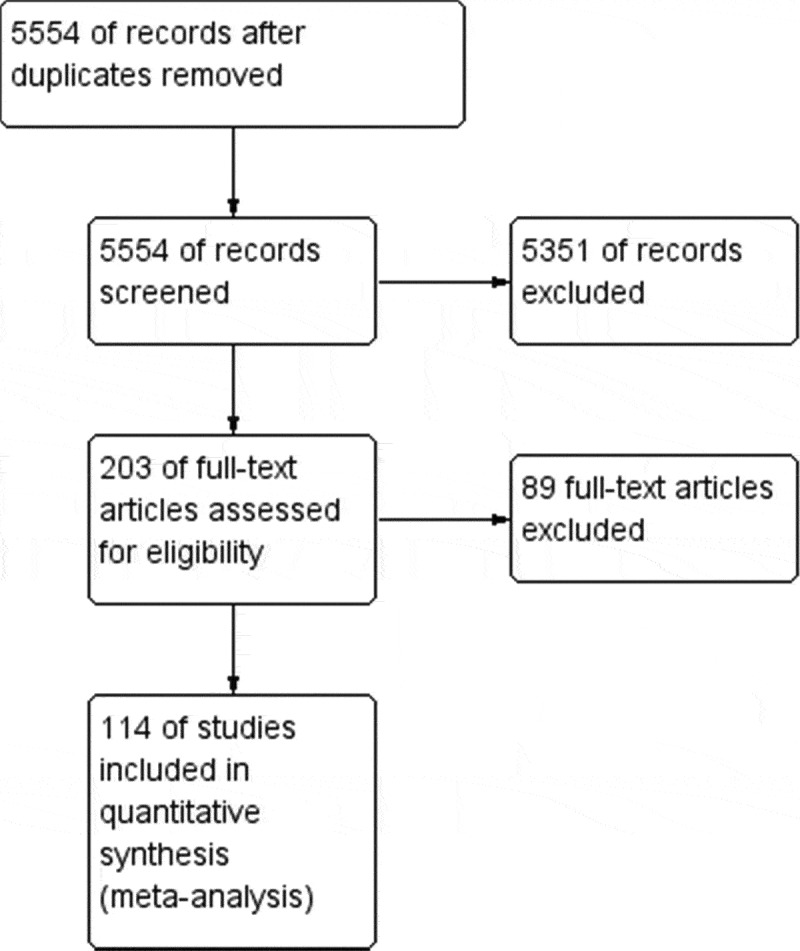
Background: Psychological therapies are the recommended first-line treatment for post-traumatic stress disorder (PTSD). Previous systematic reviews have grouped theoretically similar interventions to determine differences between broadly distinct approaches. Consequently, we know little regarding the relative efficacy of the specific manualized therapies commonly applied to the treatment of PTSD. Objective: To determine the effect sizes of manualized therapies for PTSD. Methods: We undertook a systematic review following Cochrane Collaboration guidelines. A pre-determined definition of clinical importance was applied to the results and the quality of evidence was appraised using the Grading of Recommendations, Assessment, Development and Evaluations (GRADE) approach. Results: 114 randomized-controlled trials (RCTs) of 8171 participants were included. There was robust evidence that the therapies broadly defined as CBT with a trauma focus (CBT-T), as well as Eye Movement Desensitization and Reprocessing (EMDR), had a clinically important effect. The manualized CBT-Ts with the strongest evidence of effect were Cognitive Processing Therapy (CPT); Cognitive Therapy (CT); and Prolonged Exposure (PE). There was also some evidence supporting CBT without a trauma focus; group CBT with a trauma focus; guided internet-based CBT; and Present Centred Therapy (PCT). There was emerging evidence for a number of other therapies. Conclusions: A recent increase in RCTs of psychological therapies for PTSD, results in a more confident recommendation of CBT-T and EMDR as the first-line treatments. Among the CBT-Ts considered by the review CPT, CT and PE should be the treatments of choice. The findings should guide evidence informed shared decision-making between patient and clinician.
Verified 2026-11-22 · 1 reference not checked yet
Overview
CoChat Summary
TL;DR
This systematic review and meta-analysis of 114 RCTs (8171 participants) found robust evidence that trauma-focused CBT and EMDR have clinically important effects for adult PTSD, with CPT, CT, and PE strongest among manualized CBT-Ts. It concludes these should be first-line treatments and guide shared decision-making.
Key findings
- Across 114 RCTs of 8171 participants, CBT with a trauma focus (CBT-T) versus waitlist/TAU showed a positive effect (k = 51; N = 1380; SMD −1.32, 95% CI −1.57 to −1.08; moderate quality), and EMDR versus waitlist/TAU showed a positive effect (k = 11; N = 415; SMD −1.23, CI −1.69 to −0.76; low quality).
- Among specific manualized CBT-Ts, the strongest evidence was for Prolonged Exposure (k = 12; N = 772; SMD −1.59, CI −2.05 to −1.13), Cognitive Therapy (k = 4; N = 189; SMD −1.33, CI −1.80 to −0.86), and Cognitive Processing Therapy (k = 4; N = 298; SMD −1.03, CI −1.45 to −0.61); Narrative Exposure Therapy also showed a positive effect (k = 8; N = 241; SMD −1.06, CI −1.61 to −0.52).
- Some evidence supported CBT without a trauma focus (k = 7; N = 318; SMD −1.06, CI −1.39 to −0.73), Present Centred Therapy (k = 2; N = 138; SMD −0.97, CI −1.33 to −0.62), group CBT-T (k = 7; N = 313; SMD −1.02, CI −1.26 to −0.78), and guided internet-based CBT (k = 3; N = 145; SMD −1.08, CI −1.80 to −0.37). There was insufficient evidence for BEP, supportive counselling, group interpersonal therapy, group stabilizing treatment, group supportive counselling, OEI, psychodynamic therapy, relaxation training, or psychoeducation.
- Head-to-head comparisons found no evidence of a difference between CBT-T and EMDR (k = 10; N = 387; SMD −0.17, CI −0.55 to 0.21), while CBT-T showed positive effects versus Present Centred Therapy (k = 4; N = 433; SMD −0.45, CI −0.81 to −0.09) and supportive counselling (k = 8; N = 434; SMD −0.63, CI −1.04 to −0.21).
Methods
- Systematic review following Cochrane Collaboration guidelines, updating a prior Cochrane review; searches covered PubMed, PsycINFO, Embase, the Cochrane database, PILOTS, WHO and NIH trial portals, reference lists, and expert contacts, identifying RCTs published January 2008 to 31 May 2018.
- Included RCTs of adults aged 18 or over, with at least 70% of participants diagnosed with PTSD of 3 months or more, comparing any defined psychological therapy with control, other psychological therapy, or psychosocial intervention; excluded secondary analyses and studies without a continuous post-treatment PTSD severity measure. The final set comprised 114 RCTs of 8171 participants.
- Two reviewers extracted data; risk of bias was assessed with Cochrane criteria; quality of evidence was appraised using GRADE; continuous outcomes were analyzed as standardized mean differences with 95% confidence intervals using fixed-effect models except where heterogeneity required random-effects models. A pre-determined clinical importance definition was applied (e.g., >0.80 for waitlist comparisons, >0.5 for attention control, >0.4 for placebo control, >0.2 for active treatment control), with sensitivity analyses and a funnel plot.
Limitations
- The paper states: few studies evaluated group or couples therapies, precluding meta-analyses of these formats; all included studies were published and a funnel plot for CBT-T versus waitlist/usual care showed some publication bias, suggesting the evidence may overestimate CBT-T effects; incomplete data and missing information led to exclusion of otherwise eligible studies; most studies excluded substance dependence, psychosis, and severe depression, so conclusions apply only to relatively simple PTSD presentations; waitlist and treatment as usual were combined as a single comparison group; usual care may have included evidence-based therapies; methodological quality varied and risk of bias was high/unclear in several domains; most trials used DSM-IV PTSD, so effects on the DSM-5 mood/cognition symptom cluster are unknown; therapist competence and number of therapy sessions were not extracted; sample sizes were often small.
- Evident from the text: there was substantial clinical and statistical heterogeneity across studies, many comparisons had few studies and very low GRADE quality, and researcher allegiance could not be ruled out because treatment originators were involved in evaluating their own interventions in many included studies.
Model-written summary. Check it against the paper before relying on it.
Integrity signals
Registry
Cites
Statistics
Figures
Verification
Claims the paper makes
5 Valid · 0 Not valid · 4 Not checked · 144 Own results and interpretations
The sources with a verdict support this claim; the rest weren’t checked yet, have no full text we could read, or their verdicts aren’t rated yet.
In the paper
“PTSD is a highly heterogeneous condition (DiMauro, Carter, Folk, & Kashdan, 2014, Murphy, Ross, Busuttil, Greenberg, & Armour, 2019)”
§ Psychological therapies for post-traumatic stress disorder in adults: systematic review and meta-analysis > Discussion > Research implications
What the sources say
- Not checked — no full text of the sourcecites DiMauro, Carter, Folk, & Kashdan, 2014 matched to “A historical review of trauma-related diagnoses to reconsider the heterogeneity of PTSD” (2014) source
- Supportedcites Murphy, Ross, Busuttil, Greenberg, & Armour, 2019 matched to “A latent profile analysis of PTSD symptoms among UK treatment seeking veterans” (2019) source
The Discussion reports that six distinct profiles best captured heterogeneity in PTSD symptom presentation among treatment-seeking UK veterans. The Conclusions also describe diversity in PTSD symptoms and co-morbidities, supporting the citing sentence’s broad characterization. (LLM, conf=0.90)
plain- Asserted: passes — The authors put it forward as true.
- Checkable: passes — It can be checked against evidence.
- Load-bearing: passes — The paper’s conclusions depend on it.
- Based: passes — The paper gives a reason why it holds.
The sources with a verdict support this claim; the rest weren’t checked yet, have no full text we could read, or their verdicts aren’t rated yet.
In the paper
“Previous systematic reviews have converged on the general finding that psychological therapies are effective for the treatment of PTSD (Bisson, Roberts, Andrew, Cooper, & Lewis, 2013; Bradley, Greene, Russ, Dutra, & Westen, 2005, Cusack, Grubaugh, Knapp, & Frueh, 2006; Jonas et al., 2013, Watts et al., 2013).”
§ Psychological therapies for post-traumatic stress disorder in adults: systematic review and meta-analysis > Introduction
What the sources say
- Supportedcites Bisson et al., 2013 matched to “Psychological therapies for chronic post-traumatic stress disorder (PTSD) in adults” (2013) source
The 'Agreements and disagreements with other studies or reviews' section says this review supports the efficacy of psychological therapy for chronic PTSD and that its finding is consistent with many other reviews. The authors' conclusions likewise find psychological therapies more effective than waitlist or usual care for adults with chronic PTSD. (LLM, conf=0.94)
- Not checked — no full text of the sourcecites Bradley et al., 2005 matched to “A Multidimensional Meta-Analysis of Psychotherapy for PTSD” (2005) source
- Not checked — no full text of the sourcecites Cusack et al., 2006 matched to “Unrecognized Trauma and PTSD among Public Mental Health Consumers with Chronic and Severe Mental Illness” (2006) source
plainstates a cause- Asserted: passes — The authors put it forward as true.
- Checkable: passes — It can be checked against evidence.
- Load-bearing: passes — The paper’s conclusions depend on it.
- Based: passes — The paper gives a reason why it holds.
- Supported
The sources with a verdict support this claim; the rest weren’t checked yet, have no full text we could read, or their verdicts aren’t rated yet.
In the paper
“Reviews to date have grouped psychological therapies together based on similar theoretical underpinnings and overlapping techniques.”
§ Psychological therapies for post-traumatic stress disorder in adults: systematic review and meta-analysis > Introduction
What the sources say
- Supportedcites Bisson et al., 2013 matched to “Psychological therapies for chronic post-traumatic stress disorder (PTSD) in adults” (2013) source
The Interventions section says the review pooled therapies using a similar theoretical methodology. The Experimental interventions section defines several groups by the cognitive, behavioural, or trauma-focused techniques they use, supporting the described basis for grouping. (LLM, conf=0.90)
- Not checked — no full text of the sourcecites Bradley et al., 2005 matched to “A Multidimensional Meta-Analysis of Psychotherapy for PTSD” (2005) source
- Not checked — no full text of the sourcecites Cusack et al., 2006 matched to “Unrecognized Trauma and PTSD among Public Mental Health Consumers with Chronic and Severe Mental Illness” (2006) source
plainstates an association- Asserted: passes — The authors put it forward as true.
- Checkable: passes — It can be checked against evidence.
- Load-bearing: passes — The paper’s conclusions depend on it.
- Based: passes — The paper gives a reason why it holds.
- Supported
A result the paper states — it cites no source for it, so there is none to check. The quote shows it is in the paper.
In the paper
“We could not rule out potential researcher allegiance, since treatment originators were involved in the evaluation of their own intervention in many of the included studies.”
§ Psychological therapies for post-traumatic stress disorder in adults: systematic review and meta-analysis > Results > Risk of bias
hedged- Asserted: passes — The authors put it forward as true.
- Checkable: passes — It can be checked against evidence.
- Load-bearing: unclear — It is unclear whether the paper’s conclusions depend on it.
- Based: passes — The paper gives a reason why it holds.
A result the paper states — it cites no source for it, so there is none to check. The quote shows it is in the paper.
In the paper
“In many studies, it was unclear what constituted usual care and what intervention, if any, was permitted in wait-list control groups.”
§ Psychological therapies for post-traumatic stress disorder in adults: systematic review and meta-analysis > Discussion > Research implications
plain- Asserted: passes — The authors put it forward as true.
- Checkable: passes — It can be checked against evidence.
- Load-bearing: unclear — It is unclear whether the paper’s conclusions depend on it.
- Based: passes — The paper gives a reason why it holds.
85 more claims
Create a free account to see all 153 claims and every source verdict.
- Probably not a substantial claim. 42
- It may state two separate claims as one. 35
Claims other papers make about this one
Each is checked against this paper’s own text: does it say what the citing paper says it does?
The check wasn’t confident either way, so it gives no verdict — never disputed.
In the citing paper
“Conversely, upon reviewing available practice guidelines for the assessment and treatment of PTSD or complex PTSD, the treatment of EDs is never addressed (44–54).”
From The integrated treatment of eating disorders, posttraumatic stress disorder, and psychiatric comorbidity: a commentary on the evolution of principles and guidelines (2023) · cites this paper as [50]
Experimental — accuracy not yet measured
Self-check
Percentages, sums and reported differences re-computed from the paper’s own numbers.
Each contradiction between two passages listed here was confirmed by an independent check.
Rated minor: it would not touch a result — a value no result rests on, a p-value that stays on the same side of the significance level, or a conflict that is clerical, resolved elsewhere in the paper, or outside its own findings.
In the paper
§ Psychological therapies for post-traumatic stress disorder in adults: systematic review and meta-analysis > Results > Efficacy
“SMD 0.40”
§ Psychological therapies for post-traumatic stress disorder in adults: systematic review and meta-analysis > Results > Efficacy
“CI −1.12 to 0.31”
Citations
Cites
Diagnostic and Statistical Manual of Mental Disorders
American Psychiatric Association (2013) · doi:10.1176/appi.books.9780890425596 · Cited by 116,369
The Cochrane Collaboration's tool for assessing risk of bias in randomised trials
Higgins, J. P. T., Altman, D. G., Gotzsche, P. C., Juni, P., Moher, D., Oxman, A. D., Savovic, J., Schulz, K. F., Weeks, L., Sterne, J. A. C., et al. (2011) · BMJ · doi:10.1136/bmj.d5928 · Cited by 33,817
Cochrane Handbook for Systematic Reviews of Interventions: Cochrane Book Series
(2008) · doi:10.1002/9780470712184 · Cited by 25,048
Dermyshi, E., Wang, Y., Yan, C., Hong, W., Qiu, G., Gong, X., & Zhang, T. (2017) · Neonatology · doi:10.1159/000454668 · Cited by 24,451
Journal of Clinical Psychiatry
(2018) · Journal of Clinical Psychiatry · doi:10.5505/kpd · Cited by 13,651
Posttraumatic Stress Disorder in the National Comorbidity Survey
Kessler, R. C. (1995) · Archives of General Psychiatry · doi:10.1001/archpsyc.1995.03950240066012 · Cited by 10,379 · cited 1×
“PTSD is a debilitating disorder, which is commonly comorbid with other conditions such as depression, substance use and anxiety disorders [3, 4].”
BackgroundCochrane Handbook for Systematic Reviews of Interventions
Tarsilla, M. (2010) · Journal of MultiDisciplinary Evaluation · doi:10.56645/jmde.v6i14.284 · Cited by 5,178
The development of a Clinician-Administered PTSD Scale
Blake, D. D., Weathers, F. W., Nagy, L. M., Kaloupek, D. G., Gusman, F. D., Charney, D. S., & Keane, T. M. (1995) · Journal of Traumatic Stress · doi:10.1002/jts.2490080106 · Cited by 5,024 · cited 2×
“When available, clinician-rated measures were included in meta-analyses (e.g., the ClinicianAdministered PTSD Scale (CAPS); Blake et al., 1995).”
MethodCochrane Database of Systematic Reviews
(2011) · Progress in Neurology and Psychiatry · doi:10.1002/pnp.208 · Cited by 4,667
Diagnostic and Statistical Manual of Mental Disorders, 5th Edition
(2013) · American Psychiatric Association Publishing eBooks · doi:10.1176/appi.books.9780890425596.893619 · Cited by 4,383
Research works printed but not linked: 3
- National Institute for Health and Care Excellence (NICE). (2018). Post-traumatic stress disorder (NICE guideline NG116). Retrieved from https://www.nice.org.uk/guidance/ng116. 31211536
- RevMan. (2014). Review manager 5 (RevMan 5) [ Computer Program]. Version 5.3. Copenhagen: The Nordic Cochrane Centre, The Cochrane Collaboration.
- Weathers, F. W., Litz, B. T., Keane, T. M., Palmieri, P. A., Marx, B. P., & Schnurr, P. P. (2013). The PTSD checklist for DSM-5 (PCL-5). The National Center for PTSD.
Cited by
Items 201–300 of 453
Gausemel, Å., & Filkuková, P. (2024) · Frontiers in Psychology · doi:10.3389/fpsyg.2024.1291961 · Cited by 7
Pieper, A., Bermpohl, F., Meyer, K., Bathe-Peters, R., Trobisch, V., Schulte, A., Grummt, M., Wolfarth, B., Ströhle, A., Schoofs, N., et al. (2024) · Journal of Sleep Research · doi:10.1111/jsr.14299 · Cited by 5
Effectiveness in routine care: trauma-focused treatment for PTSD
Krüger-Gottschalk, A., Kuck, S., Dyer, A., Alpers, G. W., Pittig, A., Morina, N., & Ehring, T. W. (2025) · European Journal of Psychotraumatology · doi:10.1080/20008066.2025.2452680 · Cited by 7
“Controlled treatment studies for PTSD show a generally high efficacy for psychological treatments with the strongest support for trauma-focused cognitive behaviour therapy (tf-CBT) (Lewis, Roberts, Andrew, et al., 2020; Watts et al., 2013), and stable long-term effects (Weber et al., 2021).”
FEATURES OF COMPREHENSIVE REHABILITATION OF WAR VETERANS
Puchyna, O. V., Zadorozhna-Kniahnytska, L., Черепєхіна, О. А., Netreba, М., & Gershanov, A. M. (2025) · Clinical and Preventive Medicine · doi:10.31612/2616-4868.3.2025.12 · Cited by 5
Lortye, S. A., Will, J. P., Marquenie, L. A., Lommerse, N. M., Faber, N., Goudriaan, A. E., Arntz, A. R., & de Waal, M. M. (2025) · Addiction · doi:10.1111/add.70097 · Cited by 11
Adalı, S., Yavuz, B. A., Demir, M., & Öztürk, C. Ş. (2025) · Afet ve Risk Dergisi · doi:10.35341/afet.1422407 · Cited by 6
Lewis, C., & Bisson, J. I. (2022) · Acta Psychiatrica Scandinavica · doi:10.1111/acps.13392 · Cited by 5
“However, there is a growing evidence in support of group and internet-based therapies 12 , which have scope to widen access to low-cost treatment and facilitate efficient dissemination at scale.”
Self-citationNtlantsana, V., Molebatsi, K., Mashaphu, S., Chiliza, B., & Akena, D. H. (2022) · BMJ Open · doi:10.1136/bmjopen-2021-052903 · Cited by 6
Held, P., Splaine, C. C., Smith, D. L., & Kaysen, D. L. (2023) · European Journal of Psychotraumatology · doi:10.1080/20008066.2023.2237361 · Cited by 4
“…PTSD 治疗反应不佳个体的 NPC 变化轨迹。 方法:使用为期 3 周基于认知加工疗法的强化 PTSD 治疗样本(ITP;N = 243),本研究通 过基于组别的轨迹模型考查了非最佳反应者中不同 NPC 变化轨迹的数量,并评估了非最佳 反应者 NPC 变化轨迹组别的预测因素。在单独的 2 周 ITP 样本中重复分析 (N = 215)。 结果:在两个非最佳反应者样本中,出现了两条轨迹;无 NPC改变组代表在整个治疗过程 中总体上没有 NPC变化的组,以及 NPC改变组代表主要在治疗后期出现的 NPC总体减少的 组。 治疗期间 PTSD 症状严重程度的改变是 ITP 治疗非最佳反应者中…”
Rewind for Posttraumatic Stress Disorder: A Randomised Controlled Trial
Wright, L. A., Barawi, K., Kitchiner, N., Kitney, D., Lewis, C., Roberts, A., Roberts, N. P., Simon, N. A., Ariti, C. A., Nussey, I., et al. (2023) · Depression and Anxiety · doi:10.1155/2023/6279649 · Cited by 7
Self-citationSchoofs, N., Pieper, A., Meyer, K., Herrmann, S., Jäger, A., Wülfing, F., Grummt, M., Wolfarth, B., Ströhle, A., & Priebe, K. (2024) · Mental health and physical activity · doi:10.1016/j.mhpa.2024.100579 · Cited by 4
Stein, J., El‐Haj‐Mohamad, R., Stammel, N., Vöhringer, M., Wagner, B., Nesterko, Y., Böttche, M., & Knaevelsrud, C. (2024) · European Journal of Psychotraumatology · doi:10.1080/20008066.2024.2324631 · Cited by 7
“Research shows that trauma-focused exposure and cognitive methods are both efficacious in the treatment of PTSD (Lewis, Roberts, Andrew, et al., 2020), with no differences between the two approaches in terms of changes in PTSD symptoms (Horesh et al., 2017).”
BackgroundTreating Posttraumatic Stress Disorder: The Complexities of the Clinical Realm
Schnyder, U. (2024) · Psychotherapy and Psychosomatics · doi:10.1159/000538954 · Cited by 4
Research progress on non-biological mechanisms of depression
Li, G., Chen, W. M., Ma, Y., Mi, Y., & Liu, W. (2024) · Biomarkers in Neuropsychiatry · doi:10.1016/j.bionps.2024.100099 · Cited by 6
Rentmeesters, N., Wynsberghe, D., & Hermans, D. (2024) · European Journal of Psychotraumatology · doi:10.1080/20008066.2024.2349448 · Cited by 6
“However, non-participation in, and drop-out from evidence-based treatments for PTSD are reason for concern (Lewis et al., 2020; McLean et al., 2022).”
BackgroundPTSD biomarkers: Neuroendocrine signaling to epigenetic variants
Sbisa, A. M., Graham, K., Lawrence‐Wood, E., McFARLANE, A. C., & Toben, C. G. (2024) · Advances in clinical chemistry · doi:10.1016/bs.acc.2024.06.004 · Cited by 4
Primasari, I., Hoeboer, C. M., Sijbrandij, M., & Olff, M. (2024) · European Journal of Psychotraumatology · doi:10.1080/20008066.2024.2426338 · Cited by 5
Lancaster, S. L., Renno, S., & Linkh, D. J. (2025) · Journal of Traumatic Stress · doi:10.1002/jts.70008 · Cited by 5
“…(EMDR; Shapiro, 2018), are widely recommended for PTSD treatment, supported by clinical trial data and systematic reviews (American Psychological Association, 2025; Haagen et al., 2015; Lewis et al., 2020; U.S. Department of Veterans Affairs [VA]/U.S. Department of Defense [DoD], 2023).”
Hannigan, B., Deursen, R. W. M. V., Barawi, K., Kitchiner, N., & Bisson, J. I. (2023) · PLoS ONE · doi:10.1371/journal.pone.0285763 · Cited by 6
“In the UK, specific interventions recommended by the National Institute for Health and Care Excellence (NICE) include cognitive processing therapy, cognitive behavioural therapy with a trauma focus and narrative exposure therapy, with EMDR indicated in some circumstances but not for adults with combat-related trauma d…”
BackgroundInfluentialSelf-citationLewis, C., Bailey, L., Ariti, C. A., Kitchiner, N., Roberts, N. P., Simon, N. A., & Bisson, J. I. (2023) · Journal of Traumatic Stress · doi:10.1002/jts.22947 · Cited by 7
“…evidence base supports the efficacy of psychological therapies for posttraumatic stress disorder (PTSD), with the strongest evidence for cognitive behavioral therapy with a trauma focus (CBT-TF) and eye movement desensitization and reprocessing (EMDR; Lewis, Roberts, Andrew, et al., 2020).”
BackgroundSelf-citationScheer, J. R., Behari, K., Schwarz, A. A., Cascalheira, C. J., Helminen, E. C., Pirog, S., Jaipuriyar, V., Sullivan, T. P., Batchelder, A., & Jackson, S. D. (2023) · Contemporary Clinical Trials Communications · doi:10.1016/j.conctc.2023.101197 · Cited by 7
“Despite the promise of culturally adapted PTSD treatments for sexual and gender minority people [18], recent systematic reviews and meta-analyses of psychological treatments for PTSD determined that no studies have been adapted for trauma-exposed SMW or TNB individuals [21].”
Backgroundvan Geusau, V. A., de Jongh, A., Nuijs, M. D., Brouwers, T. C., Moerbeek, M., & Matthijssen, S. J. M. A. (2023) · Frontiers in Psychiatry · doi:10.3389/fpsyt.2023.1278052 · Cited by 9
An internet based virtual reality intervention for preventing posttraumatic stress disorder
Freedman, S., Dayan, E., & Eitan, R. (2022) · Frontiers in Virtual Reality · doi:10.3389/frvir.2022.831051 · Cited by 5
“Recommended treatments for PTSD include EMDR, cognitive processing therapy and exposurebased therapy (Lewis et al., 2020).”
Villegas-Ortega, J., Gálvez-Arévalo, R. A., Castilla-Encinas, A. M., Gutiérrez-González, B., Apolitano-Cárdenas, C., Alvarez-Arias, P. M. A., Paredes-Ángeles, R., & Taype-Rondán, Á. (2025) · Journal of Affective Disorders · doi:10.1016/j.jad.2025.120134 · Cited by 7
Cogan, N., Kirk, A. F., & Graf, C. (2026) · JMIR Research Protocols · doi:10.2196/72250 · Cited by 8
Earleywine, M., & Kamilar-Britt, P. (2022) · Journal of Psychedelic Studies · doi:10.1556/2054.2022.00219 · Cited by 4
Şimşek, M. K. (2023) · Psikiyatride Guncel Yaklasimlar - Current Approaches in Psychiatry · doi:10.18863/pgy.1209460 · Cited by 7
IJdema, T., Laceulle, O. M., Dibbets, P., & Korrelboom, K. (2023) · Computers in Human Behavior Reports · doi:10.1016/j.chbr.2023.100311 · Cited by 4
Syroishko, M., & Kostiuk, T. (2023) · Reports of Vinnytsia National Medical University · doi:10.31393/reports-vnmedical-2023-27(2)-12 · Cited by 3
Khomiak, K., Kostiuk, T., & Proshchenko, N. S. (2023) · Ukrainian Scientific Medical Youth Journal · doi:10.32345/usmyj.4(142).2023.7-12 · Cited by 3
Drožđek, B., & Rodenburg, J. (2024) · Frontiers in Psychiatry · doi:10.3389/fpsyt.2024.1356862 · Cited by 3
Introduction to In Session special issue: Psychotherapy for complex PTSD
Horesh, D., & Lahav, Y. (2024) · Journal of Clinical Psychology · doi:10.1002/jclp.23739 · Cited by 3
Otis, N. P., Kline, A. C., Glassman, L. H., Hunt, W. M., & Walter, K. H. (2025) · Behaviour Research and Therapy · doi:10.1016/j.brat.2025.104753 · Cited by 4
Hedvall, H., Andersson, E., Ivanov, V. Z., & Bragesjö, M. (2025) · European Journal of Psychotraumatology · doi:10.1080/20008066.2025.2545048 · Cited by 3
“The large reductions in PTSD and depressive symptoms observed in this study, while lower than those typically reported for first line treatment in clinical trials (Lewis, Roberts, Andrew, et al., 2020), are comparable to the outcomes achieved in real-world clinical settings (Maguen et al., 2023).”
Ford, J. D., Tennen, H. A., Grasso, D. J., & Chan, G. (2021) · Behavior Therapy · doi:10.1016/j.beth.2021.05.005 · Cited by 4
Phillips, R., Pinto, C., McSherry, P., & Maguire, T. (2022) · Journal of EMDR Practice and Research · doi:10.1891/emdr-d-21-2021-00022 · Cited by 6
“The intervention has also been demonstrated as effective for PTSD in multiple meta-analyses (Chen et al., 2018; Khan et al., 2018; Lewis et al., 2020; Mavranezouli et al., 2020).”
BackgroundTakagishi, Y., Ito, M., Kanie, A., Morita, N., Makino, M., Katayanagi, A., Sato, T., Imamura, F., Nakajima, S., Oe, Y., et al. (2022) · Journal of Traumatic Stress · doi:10.1002/jts.22901 · Cited by 6
Rani, S., Saleem, S., & Zahra, S. T. (2022) · Pakistan Journal of Psychological Research · doi:10.33824/pjpr.2022.37.4.41 · Cited by 4
Steil, R., Weiss, J., Müller‐Engelmann, M., Dittmann, C., Priebe, K., Kleindienst, N., Fydrich, T., & Stangier, U. (2023) · European Journal of Psychotraumatology · doi:10.1080/20008066.2023.2257434 · Cited by 4
Guzick, A. G., Tendler, A., Brown, L. A., Onyeka, O. “., & Storch, E. A. (2024) · Journal of Traumatic Stress · doi:10.1002/jts.23010 · Cited by 3
Oh, H.-K., Ko, M.-S., & Lim, J. (2024) · Journal of Health Informatics and Statistics · doi:10.21032/jhis.2024.49.2.97 · Cited by 4
Schwartz, P. J. (2024) · Frontiers in Psychology · doi:10.3389/fpsyg.2024.1427816 · Cited by 4
Holder, N. D., Ranney, R. M., Delgado, A. K., Purcell, N., Iwamasa, G. Y., Batten, A. J., Neylan, T. C., Shiner, B. R., & Maguen, S. (2024) · Cognitive Behaviour Therapy · doi:10.1080/16506073.2024.2408386 · Cited by 4
“In meta-analyses (Haagen et al., 2015; Lewis et al., 2020) and clinical practice guidelines (CPGs; Departments of Veterans Affairs and Defense [VA/DoD], 2023; Hamblen et al., 2019) trauma-focused evidence-based psychotherapy (TF-EBP) has been identified as the most effective treatment for PTSD on…”
Real-world evaluation of an evidence-based telemental health program for PTSD symptoms
Owusu, J. T., Wang, L., Chen, S.-Y., Wickham, R. E., Michael, S. T., Bahrassa, N. F., Varra, A. A., Lee, J. L., Chen, C., & Lungu, A. (2025) · Scientific Reports · doi:10.1038/s41598-024-83144-6 · Cited by 6
Patel, A., Jayawickreme, N., Visquerra, V., Dixon, K. E., & Patel, V. (2025) · Behaviour Research and Therapy · doi:10.1016/j.brat.2025.104757 · Cited by 3
McInnes, L. A., Berman, R., Worley, M. J., & Shih, E. (2025) · Psychiatry Research · doi:10.1016/j.psychres.2025.116689 · Cited by 7
Management of post-traumatic stress disorder symptoms by yoga: an overviewPreprint
Laplaud, N., Perrochon, A., Gallou‐Guyot, M., Moens, M., Goudman, L., David, R., Rigoard, P., & Billot, M. (2022) · Research Square · doi:10.21203/rs.3.rs-1834126/v1 · Cited by 3
Celebrating 15 years of Psychotraumatology – a future with generative AI?
Olff, M. (2024) · European Journal of Psychotraumatology · doi:10.1080/20008066.2024.2429921 · Cited by 4
Postpartum Posttraumatic Stress Disorder
Milosavljević, M., Lečić‐Toševski, D., Rakić, S., & Vranes, T. (2024) · Obstetrics and gynecology. · doi:10.5772/intechopen.114052 · Cited by 2
Somohano, V. C., Cameron, D., Lewis, M. M., O’Neill, A. C., Phillips, R., Kaplan, J. S., & O'Neil, M. E. (2024) · Frontiers in Psychiatry · doi:10.3389/fpsyt.2024.1432361 · Cited by 3
Trauma Focused Therapy in Bipolar Disorder: Adapting CBT and EMDR
Richardson, T. H., & Amann, B. L. (2024) · Springer eBooks · doi:10.1007/978-3-031-63349-2_21 · Cited by 4
Muschner, P., Goldschmidt, L., Gröning, L. S., Willmund, G., & Piefke, M. (2025) · Frontiers in Psychology · doi:10.3389/fpsyg.2025.1577026 · Cited by 3
Comparing treatment outcomes of prolonged exposure therapy across trauma type and veteran status
Nacasch, N., Aloni, R., Avni, C., Rachamim, L., Foa, E. B., & Toren, P. (2025) · Journal of Traumatic Stress · doi:10.1002/jts.23190 · Cited by 2
Toprak, T. B., Özçelik, H. N., & Işık, H. R. (2025) · BMC Psychiatry · doi:10.1186/s12888-025-07447-2 · Cited by 2
“A review of the literature on trauma-related psychological treatments shows that research on PTSD dominates the field (e.g., [11, 43, 45–47]).”
Harder, M. S., Seefeld, L., Schellong, J., & Garthus‐Niegel, S. (2025) · BMC Pregnancy and Childbirth · doi:10.1186/s12884-025-07933-1 · Cited by 4
“In the general population, cognitive behavioral therapy has been identified as an effective intervention for individuals with PTSD [24].”
Romance Fraud: Its Repercussions on Victims’ Wellbeing
Gauci, C., & Vella, M. G. (2025) · Women & Criminal Justice · doi:10.1080/08974454.2025.2600304 · Cited by 2
Lee, J., Barr, S. M., Gloria, A. M., Roberts, T. J., & Budge, S. L. (2026) · Journal of Traumatic Stress · doi:10.1002/jts.70044 · Cited by 2
“Consistent with research on trauma-focused psychotherapy (Lewis et al., 2020), participants described therapy as an important site of healing.”
State of the Science: MDMA‐assisted psychotherapy for the treatment of posttraumatic stress disorder
Morland, L. A., Rothbaum, B. O., Sippel, L. M., Maples‐Keller, J. L., & Schnurr, P. P. (2026) · Journal of Traumatic Stress · doi:10.1002/jts.70060 · Cited by 2
Tell me all about it: Narrated memories are less emotional than imagined memories
Andrade, J., IJdema, T., Vadasz, N., & May, J. (2022) · Quarterly Journal of Experimental Psychology · doi:10.1177/17470218221126720 · Cited by 2
“, Hassabis & Maguire, 2007; Schachter et al., 2012; Szpunar & Schacter, 2013). These studies suggest that autobiographical or episodic recollection is consistently image-based. However, outside the laboratory, individuals often focus on verbal recall rather than imagery, as when someone narrates an experience during c…”
BackgroundCasey, M. F., Yates, K. M., Tulchinsky, M., Zheng, A., Perera, D. N., Miller, C., & Nixon, R. D. V. (2022) · Clinical Psychologist · doi:10.1080/13284207.2022.2128642 · Cited by 2
Rakitzi, S. (2023) · Springer eBooks · doi:10.1007/978-3-031-27837-2_2 · Cited by 3
Cannabis update: Anxiety disorders and post-traumatic stress disorder
Haycraft, A. L. (2023) · Journal of the American Association of Nurse Practitioners · doi:10.1097/jxx.0000000000000864 · Cited by 4
“First-line PTSD treatment recommendations for adults include trauma-focused CBT and eye movement desensitization and reprocessing (Lewis et al., 2020).”
BackgroundMethodKummar, A. S., Correia, H., Tan, J., & Fujiyama, H. (2023) · Clinical Psychology & Psychotherapy · doi:10.1002/cpp.2929 · Cited by 6
Викторович, В. И., Viryasova, E. I., Мелентьева, О. С., & Aleksandrovna, P. M. (2024) · Clinical Psychology and Special Education · doi:10.17759/cpse.2024130110 · Cited by 2
Evidenzbasierte Psychotherapie posttraumatischer Belastungsstörungen – ein Update
Steil, R., Maercker, A., Jaworski, L., Bachem, R., & Eberle, D. J. (2024) · Der Nervenarzt · doi:10.1007/s00115-024-01694-6 · Cited by 4
Kay, S. J., Keefe, J. R., Milrod, B. L., & Barber, J. P. (2024) · American Journal of Psychotherapy · doi:10.1176/appi.psychotherapy.20230060 · Cited by 5
Chen, D., Yang, Y., Shi, D., Zhang, Z., Wang, M., Pan, Q., Su, J., & Wang, Z. (2024) · Journal of Bioinformatics and Computational Biology · doi:10.1142/s0219720024500252 · Cited by 2
Shkreli, L., Woud, M. L., Bergunde, L., Schindler‐Gmelch, L., Blackwell, S. E., Kirschbaum, C., Kessler, H., & Steudte‐Schmiedgen, S. (2025) · European Journal of Psychotraumatology · doi:10.1080/20008066.2025.2457295 · Cited by 3
“…therapy (CBT) and eye movement desensitisation and reprocessing (EMDR) are considered the most effective treatments for PTSD (Bisson et al., 2013; Lewis et al., 2020), only around half of patients achieve long-term remission, with even lower rates in comorbid depression (Springer et al., 2018).”
Mackoff, J., Lennox, K., & Torchalla, I. (2025) · Clinical Case Studies · doi:10.1177/15346501251324531 · Cited by 2
“This experience is well documented in other PTSD studies and has been related to treatment dropout (Lewis et al., 2020b).”
Tait, J., Kellett, S., & Delgadillo, J. (2025) · Journal of Anxiety Disorders · doi:10.1016/j.janxdis.2025.103003 · Cited by 4
Shkreli, L., Nettekoven, C., Boessenkool, S., Martens, M., Filippini, N., Capitão, L. P., Cowen, P. J., & Reinecke, A. (2025) · Psychiatry Research · doi:10.1016/j.psychres.2025.116458 · Cited by 2
“In addition, ARBs facilitated human fear extinction (Zhou et al., 2019), which is the core mechanism underlying exposure-based therapies – one of the most effective treatments for PTSD (Lewis et al., 2020).”
Lao, C. K., Xi, W., Li, X., Wang, Z., & Zhou, G. (2025) · Internet Interventions · doi:10.1016/j.invent.2025.100862 · Cited by 2
“The 20-item PTSD Checklist for DSM-5 (PCL-5) was used at T0 and T4 to assess participants' post-traumatic stress symptoms over the past month in response to hepatitis B virus infection (Blevins et al., 2015).”
Gahnfelt, H., Weineland, S., Carlsson, P. F. G., & Blomdahl, C. (2025) · European Journal of Psychotraumatology · doi:10.1080/20008066.2025.2553422 · Cited by 3
“There are several effective and recommended treatments for posttraumatic stress disorder (PTSD) (Lewis et al., 2020; NICE, 2018).”
Treating Post Traumatic Stress Disorder with Cognitive Behavior Therapy: A Case Study
Bukhari, S. R., & Afzal, F. (2020) · DOAJ (DOAJ: Directory of Open Access Journals) · Cited by 2
Supporting Women to Heal from Trauma and Post-Traumatic Stress Disorder
ElBarazi, A. S., & Ahmed, S. (2022) · Illness Crisis & Loss · doi:10.1177/10541373221113138 · Cited by 5
“According to randomized clinical trials, the (CPT) is effective in the treatment of PTSD, having the high impact and effect size of PTSD therapy (Bohus et al., 2020; Lewis et al., 2020).”
MethodFowers, B. J., Novak, L. F., Calder, A. J., & Sommer, R. K. (2022) · Theory & Psychology · doi:10.1177/09593543221115372 · Cited by 2
“…research that followed provided many insights, and many treatment approaches have garnered empirical support, indicating that clients benefit “on average,” but no treatment comes near to approximating universal effectiveness for any category of clients (e.g., Khan et al., 2012; Lewis et al., 2020).”
BackgroundPrevention and Treatment of Post-Traumatic Stress Disorder (PTSD)
Gasyuk, M., Tverdokhlib, N., Широбоков, Ю., Mahanova, T. V., & Щербакова, О. (2023) · Revista de Cercetare si Interventie Sociala · doi:10.33788/rcis.81.5 · Cited by 2
ЛІКУВАННЯ ПОСТТРАВМАТИЧНОГО СТРЕСОВОГО РОЗЛАДУ: ОГЛЯД КПТ ВТРУЧАНЬ НА ОСНОВІ ДОКАЗОВОЇ МЕДИЦИНИ
Mazur, O. V., Лемещук, М., Коваленко, І., Ордатій, Н. М., & Мацько, Н. (2023) · Наукові перспективи (Naukovì perspektivi) · doi:10.52058/2708-7530-2023-9(39)-600-612 · Cited by 2
Rozanov, V. A., Караваева, Т. А., Vasileva, A. V., & Radionov, D. S. (2024) · Psikhiatriya · doi:10.30629/2618-6667-2023-21-6-58-74 · Cited by 5
Meyer, K., Schoofs, N., Hildebrandt, A., Bermpohl, F., & Priebe, K. (2024) · Psychotherapy Research · doi:10.1080/10503307.2024.2316009 · Cited by 3
Hoeboer, C. M., Bakker, A., Wijn, R., Kallen, V., & Olff, M. (2024) · European Journal on Criminal Policy and Research · doi:10.1007/s10610-024-09575-z · Cited by 3
“Mental health complaints resulting from IPV such as (Complex) PTSD and depression can also be effectively treated (Bisson & Olff, 2021 ; Cui-1 jpers et al., 2013 ; Lewis et al., 2020 ; Mavranezouli et al., 2020 ; Saito et al., 2024).”
Virgilio, E., Solara, V., Sarnelli, M. F., Vecchio, D., & Comi, C. (2022) · Reports — Medical Cases Images and Videos · doi:10.3390/reports5020017 · Cited by 3
“Several randomized controlled clinical trials and meta-analyses have demonstrated the effectiveness of EMDR in PTSD and AD alone or compared to other treatments [16,17,21,22].”
BackgroundGame Over, Trauma! Empowering Trauma Healing Through Gaming
Ammannato, G., & Chiesi, F. (2023) · Lecture notes in computer science · doi:10.1007/978-3-031-43404-4_31 · Cited by 1
Hollenbaugh, K. M. H., Uzondu, A. C., Salazar, A. M., Okoye-Ezeoke, E., & Heil, L. (2024) · Counseling Outcome Research and Evaluation · doi:10.1080/21501378.2024.2443151 · Cited by 1
“Most of the interventions in this study were CBT-based, and therefore, counselors may consider using a trauma-focused CBT approach with sexual violence survivors (Lewis et al., 2020).”
Schlünzen, J., Kulla, P., & Kruse, J. (2025) · Journal of Experimental Psychopathology · doi:10.1177/20438087241311075 · Cited by 1
“Research has shown that exposure-based treatments effectively improve post-traumatic stress disorder (PTSD, Bradley et al., 2005; Lewis et al., 2020; Watkins et al., 2018).”
Teoh, K., Lishman, E., Page, A., & Donnelly, O. (2025) · Journal of Work-Applied Management · doi:10.1108/jwam-01-2025-0014 · Cited by 1
Benjamin, L., Gillard, S., Nielsen, J. J., Munoz, C. G., & Sin, J. (2025) · SSM - Mental Health · doi:10.1016/j.ssmmh.2025.100498 · Cited by 3
Dare, H., Kitchiner, N., & O'Connor, G. (2025) · BMJ Military Health · doi:10.1136/military-2025-002999 · Cited by 1
Compassion-focused therapy enhances outcomes of PTSD pharmacotherapy: A randomized controlled trial
Gonabadi-Nezhad, L., Moeini, F. R., Moghaddam, S. G. R., Golmohamadi, O., Nazemi, M., Khojastehmottaghi, M., & Roostaee, M. (2025) · Military Psychology · doi:10.1080/08995605.2025.2561313 · Cited by 1
“…interventions, such as cognitive processing therapy (CPT), pharmacotherapy, prolonged exposure therapy, and eye movement desensitization and reproces-sing have demonstrated efficacy in reducing PTSD symptoms (Foa et al., 2018; Hoppen et al., 2023; Lewis et al., 2020; McLean & Foa, 2011).”
Rosen, C. S., Peterson, A. L., Riggs, D. S., Haddock, C. K., Fong, C., Young‐McCaughan, S., Cook, J. H., Comtois, K. A., Borah, E. V., Davis, C. A., et al. (2025) · Journal of Anxiety Disorders · doi:10.1016/j.janxdis.2025.103080 · Cited by 4
Post-traumatic stress disorder in inpatient psychiatry staff: a narrative review
Merritt, C., Agyapong, V. I. O., & Nkire, N. (2025) · Frontiers in Psychiatry · doi:10.3389/fpsyt.2025.1680477 · Cited by 1
Bragesjö, M., Arnberg, F. K., & Andersson, E. (2025) · Internet Interventions · doi:10.1016/j.invent.2025.100886 · Cited by 2
“One important next step for future research could therefore to be use controlled long-term follow-ups and to investigate if CIPE has a preventive effect against the build-up of full PTSD, and if this in turn can lead to a reduced societal burden.”
InfluentialGlad, K. A., Ekroll, V. B., Egeland, K. M., & Bækkelund, H. (2025) · European Journal of Psychotraumatology · doi:10.1080/20008066.2025.2555044 · Cited by 2
“In another recent systematic review and meta-analysis, examining dropout rates from RCTs of psychological therapies for PTSD in adults, Lewis et al. (2020) also chose to take the number of participants who had left the study at the point of post-treatment assessment as a proxy-indicator of dropout.”
InfluentialRefining a Single Session Thinking Approach for Trauma-Affected Families: A Delphi Study
Cloud, Z. C. G., Welsh, E. T., Hepworth, D., McIntosh, J. E., & Barrington, N. (2026) · Contemporary Family Therapy · doi:10.1007/s10591-026-09776-0 · Cited by 1
“Although treatment for the effects of trauma have histori - cally focused on the individual (Cusack et al., 2016; Jericho et al., 2022; Lewis et al., 2020 ; Roberts et al., 2019; Watts et al., 2013 ), trauma experiences always contain an inter - personal and systemic component in origin and/or in…”
Post-traumatic stress disorder
Petrova, N. (2026) · Современная терапия в психиатрии и неврологии · doi:10.32416/2304-9707-2026-1-6-12 · Cited by 4
Effectiveness of hypnosis in adults with posttraumatic stress disorder (PTSD)
Thellier-Francois, J., Binda, D., Nicolier, M., Haffen, É., Maillot, M.-C., Pretalli, J., Martin, É., & Bennabi, D. (2026) · L Encéphale · doi:10.1016/j.encep.2025.12.002 · Cited by 3
From research to routine care: implementation of guided digital therapy with Spring PTSD
Lewis, C., Kitchiner, N., Roberts, N. P., & Bisson, J. I. (2026) · European Journal of Psychotraumatology · doi:10.1080/20008066.2026.2665893 · Cited by 1
Self-citationPosttraumatic Stress Disorder among Patients at an Anxiety Clinic in Puerto Rico
Torres-Valentín, M. L., Martínez, K., & Martínez‐Taboas, A. (2021) · Revista Caribeña de Psicología · doi:10.37226/rcp.v5i1.5527 · Cited by 1
Schnyder, U., & Cloître, M. (2022) · Springer eBooks · doi:10.1007/978-3-030-97802-0_1 · Cited by 1
Bachrach, N., Giesen, S., & Arntz, A. R. (2022) · Clinical Psychology in Europe · doi:10.32872/cpe.7815 · Cited by 2
“Meta-analytic reviews and practice guidelines recommend Trauma-Focused Cognitive Behavior Therapy (TF-CBT) and Eye Movement Desensitization and Reprocessing (EMDR) as first-line treatments for PTSD (Lewis et al., 2020).”
Method
Metadata
- Authors
- Lewis, C., Roberts, N. P., Andrew, M., Starling, E., & Bisson, J. I.
- Affiliations
- Cardiff University (GB)
- Cardiff and Vale University Health Board (GB)
- Corresponding author
- Lewis, Catrin
- Venue
- European Journal of Psychotraumatology
- Publisher
- Informa UK Limited
- Published
- 2020-03-10
- Volume
- 11
- Issue
- 1
- Pages
- 1729633-1729633
- ISSN
- 2000-8066 (ISSN-L)
- PMC
- PMC7144187
- OpenAlex
- W3008102555
- Semantic Scholar
- bcbebf2ce561616f88abc8ae0c5d9175ea219f45
- Cited by
- 460
- References
- 148
- Citations by year
- 2026: 48 · 2025: 96 · 2024: 79 · 2023: 76 · 2022: 100 · 2021: 43 · 2020: 18
- FWCI
- 4.63
- Type
- journal article
- Language
- en
- Open access
- gold
- doi.org
- Licence
- Locations
- European Journal of Psychotraumatology (publishedVersion, cc-by-nc)
- PubMed Central (publishedVersion, cc-by-nc)
- PubMed (publishedVersion)
- ORCA Online Research @Cardiff (Cardiff University) (acceptedVersion)
- DOAJ (DOAJ: Directory of Open Access Journals) (submittedVersion, cc-by-sa)
- Funders
- unfunded
- Topics
- Social Sciences › Psychology › Clinical Psychology › Posttraumatic Stress Disorder Research
- Social Sciences › Psychology › Clinical Psychology › Psychotherapy Techniques and Applications
- Social Sciences › Psychology › Experimental and Cognitive Psychology › Sleep and related disorders
- Keywords
- post-traumatic stress disorder, psychotherapy, manualized psychotherapy, trauma-focused cognitive behavioral therapy, EMDR, cognitive processing therapy, prolonged exposure therapy, cognitive therapy, internet-based CBT, group cognitive behavioral therapy, treatment efficacy, first-line therapy
About these checks
Registry, retraction, Cites and statistics results are computed, not judged, with one exception: a printed reference that no index lists is read once by a model before it counts as a citation error. Claims are extracted by a model and kept only when their quote appears verbatim in the text; each cited source is then checked, with a model’s help, for whether it says what the claim relies on. Those verdicts can be wrong — read the claim’s quote and the cited source before relying on one.
A language model drew the claims from the paper on 2026-10-10, under version 3 of the claim definition (model deepseek-v4.1-flash, prompt extract-v3).
A second model labelled each claim on 2026-10-10 (model jev-1.13-20260917, definition revision gold-guideline-v0.2).
Cited sources are checked with a language model’s help (gpt-6-sol).
Statistics and arithmetic are recomputed, not judged.
Confidence bands are shown only for fields calibrated on our annotated test set. None is calibrated yet, so no band is shown.
What counts as a claim ›How we measure confidence ›How we check this ›
Are you an author, or do you see a problem with this page? Request a review
Data sources
Bibliographic data: Semantic Scholar, OpenAlex, Crossref.
Contains information from the Semantic Scholar Academic Graph Datasets, made available under the ODC Attribution License (ODC-BY 1.0).
Semantic Scholar’s data is described in: Kinney, R., et al. (2023). The Semantic Scholar Open Data Platform. arXiv:2301.10140.
