

Psychological therapies for post-traumatic stress disorder in adults: systematic review and meta-analysis
Open accessThe DOI matches its Crossref record; 141 of the 148 references it cites were found in a registry or an index, and 1 are not checked yet; 5 of the 17 sources its claims cite were checked for support.
Abstract
Background: Psychological therapies are the recommended first-line treatment for post-traumatic stress disorder (PTSD). Previous systematic reviews have grouped theoretically similar interventions to determine differences between broadly distinct approaches. Consequently, we know little regarding the relative efficacy of the specific manualized therapies commonly applied to the treatment of PTSD. Objective: To determine the effect sizes of manualized therapies for PTSD. Methods: We undertook a systematic review following Cochrane Collaboration guidelines. A pre-determined definition of clinical importance was applied to the results and the quality of evidence was appraised using the Grading of Recommendations, Assessment, Development and Evaluations (GRADE) approach. Results: 114 randomized-controlled trials (RCTs) of 8171 participants were included. There was robust evidence that the therapies broadly defined as CBT with a trauma focus (CBT-T), as well as Eye Movement Desensitization and Reprocessing (EMDR), had a clinically important effect. The manualized CBT-Ts with the strongest evidence of effect were Cognitive Processing Therapy (CPT); Cognitive Therapy (CT); and Prolonged Exposure (PE). There was also some evidence supporting CBT without a trauma focus; group CBT with a trauma focus; guided internet-based CBT; and Present Centred Therapy (PCT). There was emerging evidence for a number of other therapies. Conclusions: A recent increase in RCTs of psychological therapies for PTSD, results in a more confident recommendation of CBT-T and EMDR as the first-line treatments. Among the CBT-Ts considered by the review CPT, CT and PE should be the treatments of choice. The findings should guide evidence informed shared decision-making between patient and clinician.
Verified 2026-11-22 · 1 reference not checked yet
Overview
CoChat Summary
TL;DR
This systematic review and meta-analysis of 114 RCTs (8171 participants) found robust evidence that trauma-focused CBT and EMDR have clinically important effects for adult PTSD, with CPT, CT, and PE strongest among manualized CBT-Ts. It concludes these should be first-line treatments and guide shared decision-making.
Key findings
- Across 114 RCTs of 8171 participants, CBT with a trauma focus (CBT-T) versus waitlist/TAU showed a positive effect (k = 51; N = 1380; SMD −1.32, 95% CI −1.57 to −1.08; moderate quality), and EMDR versus waitlist/TAU showed a positive effect (k = 11; N = 415; SMD −1.23, CI −1.69 to −0.76; low quality).
- Among specific manualized CBT-Ts, the strongest evidence was for Prolonged Exposure (k = 12; N = 772; SMD −1.59, CI −2.05 to −1.13), Cognitive Therapy (k = 4; N = 189; SMD −1.33, CI −1.80 to −0.86), and Cognitive Processing Therapy (k = 4; N = 298; SMD −1.03, CI −1.45 to −0.61); Narrative Exposure Therapy also showed a positive effect (k = 8; N = 241; SMD −1.06, CI −1.61 to −0.52).
- Some evidence supported CBT without a trauma focus (k = 7; N = 318; SMD −1.06, CI −1.39 to −0.73), Present Centred Therapy (k = 2; N = 138; SMD −0.97, CI −1.33 to −0.62), group CBT-T (k = 7; N = 313; SMD −1.02, CI −1.26 to −0.78), and guided internet-based CBT (k = 3; N = 145; SMD −1.08, CI −1.80 to −0.37). There was insufficient evidence for BEP, supportive counselling, group interpersonal therapy, group stabilizing treatment, group supportive counselling, OEI, psychodynamic therapy, relaxation training, or psychoeducation.
- Head-to-head comparisons found no evidence of a difference between CBT-T and EMDR (k = 10; N = 387; SMD −0.17, CI −0.55 to 0.21), while CBT-T showed positive effects versus Present Centred Therapy (k = 4; N = 433; SMD −0.45, CI −0.81 to −0.09) and supportive counselling (k = 8; N = 434; SMD −0.63, CI −1.04 to −0.21).
Methods
- Systematic review following Cochrane Collaboration guidelines, updating a prior Cochrane review; searches covered PubMed, PsycINFO, Embase, the Cochrane database, PILOTS, WHO and NIH trial portals, reference lists, and expert contacts, identifying RCTs published January 2008 to 31 May 2018.
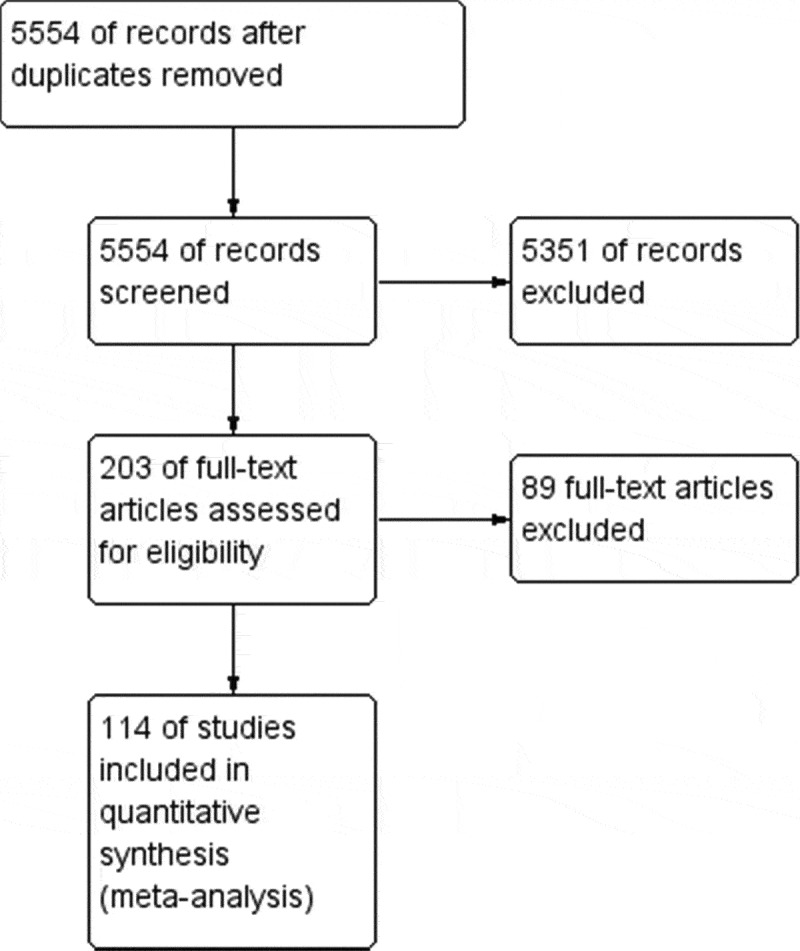
- Included RCTs of adults aged 18 or over, with at least 70% of participants diagnosed with PTSD of 3 months or more, comparing any defined psychological therapy with control, other psychological therapy, or psychosocial intervention; excluded secondary analyses and studies without a continuous post-treatment PTSD severity measure. The final set comprised 114 RCTs of 8171 participants.
- Two reviewers extracted data; risk of bias was assessed with Cochrane criteria; quality of evidence was appraised using GRADE; continuous outcomes were analyzed as standardized mean differences with 95% confidence intervals using fixed-effect models except where heterogeneity required random-effects models. A pre-determined clinical importance definition was applied (e.g., >0.80 for waitlist comparisons, >0.5 for attention control, >0.4 for placebo control, >0.2 for active treatment control), with sensitivity analyses and a funnel plot.
Limitations
- The paper states: few studies evaluated group or couples therapies, precluding meta-analyses of these formats; all included studies were published and a funnel plot for CBT-T versus waitlist/usual care showed some publication bias, suggesting the evidence may overestimate CBT-T effects; incomplete data and missing information led to exclusion of otherwise eligible studies; most studies excluded substance dependence, psychosis, and severe depression, so conclusions apply only to relatively simple PTSD presentations; waitlist and treatment as usual were combined as a single comparison group; usual care may have included evidence-based therapies; methodological quality varied and risk of bias was high/unclear in several domains; most trials used DSM-IV PTSD, so effects on the DSM-5 mood/cognition symptom cluster are unknown; therapist competence and number of therapy sessions were not extracted; sample sizes were often small.
- Evident from the text: there was substantial clinical and statistical heterogeneity across studies, many comparisons had few studies and very low GRADE quality, and researcher allegiance could not be ruled out because treatment originators were involved in evaluating their own interventions in many included studies.
Model-written summary. Check it against the paper before relying on it.
Integrity signals
Registry
Cites
Statistics
Figures
Verification
Claims the paper makes
5 Valid · 0 Not valid · 4 Not checked · 144 Own results and interpretations
The sources with a verdict support this claim; the rest weren’t checked yet, have no full text we could read, or their verdicts aren’t rated yet.
In the paper
“PTSD is a highly heterogeneous condition (DiMauro, Carter, Folk, & Kashdan, 2014, Murphy, Ross, Busuttil, Greenberg, & Armour, 2019)”
§ Psychological therapies for post-traumatic stress disorder in adults: systematic review and meta-analysis > Discussion > Research implications
What the sources say
- Not checked — no full text of the sourcecites DiMauro, Carter, Folk, & Kashdan, 2014 matched to “A historical review of trauma-related diagnoses to reconsider the heterogeneity of PTSD” (2014) source
- Supportedcites Murphy, Ross, Busuttil, Greenberg, & Armour, 2019 matched to “A latent profile analysis of PTSD symptoms among UK treatment seeking veterans” (2019) source
The Discussion reports that six distinct profiles best captured heterogeneity in PTSD symptom presentation among treatment-seeking UK veterans. The Conclusions also describe diversity in PTSD symptoms and co-morbidities, supporting the citing sentence’s broad characterization. (LLM, conf=0.90)
plain- Asserted: passes — The authors put it forward as true.
- Checkable: passes — It can be checked against evidence.
- Load-bearing: passes — The paper’s conclusions depend on it.
- Based: passes — The paper gives a reason why it holds.
The sources with a verdict support this claim; the rest weren’t checked yet, have no full text we could read, or their verdicts aren’t rated yet.
In the paper
“Previous systematic reviews have converged on the general finding that psychological therapies are effective for the treatment of PTSD (Bisson, Roberts, Andrew, Cooper, & Lewis, 2013; Bradley, Greene, Russ, Dutra, & Westen, 2005, Cusack, Grubaugh, Knapp, & Frueh, 2006; Jonas et al., 2013, Watts et al., 2013).”
§ Psychological therapies for post-traumatic stress disorder in adults: systematic review and meta-analysis > Introduction
What the sources say
- Supportedcites Bisson et al., 2013 matched to “Psychological therapies for chronic post-traumatic stress disorder (PTSD) in adults” (2013) source
The 'Agreements and disagreements with other studies or reviews' section says this review supports the efficacy of psychological therapy for chronic PTSD and that its finding is consistent with many other reviews. The authors' conclusions likewise find psychological therapies more effective than waitlist or usual care for adults with chronic PTSD. (LLM, conf=0.94)
- Not checked — no full text of the sourcecites Bradley et al., 2005 matched to “A Multidimensional Meta-Analysis of Psychotherapy for PTSD” (2005) source
- Not checked — no full text of the sourcecites Cusack et al., 2006 matched to “Unrecognized Trauma and PTSD among Public Mental Health Consumers with Chronic and Severe Mental Illness” (2006) source
plainstates a cause- Asserted: passes — The authors put it forward as true.
- Checkable: passes — It can be checked against evidence.
- Load-bearing: passes — The paper’s conclusions depend on it.
- Based: passes — The paper gives a reason why it holds.
- Supported
The sources with a verdict support this claim; the rest weren’t checked yet, have no full text we could read, or their verdicts aren’t rated yet.
In the paper
“Reviews to date have grouped psychological therapies together based on similar theoretical underpinnings and overlapping techniques.”
§ Psychological therapies for post-traumatic stress disorder in adults: systematic review and meta-analysis > Introduction
What the sources say
- Supportedcites Bisson et al., 2013 matched to “Psychological therapies for chronic post-traumatic stress disorder (PTSD) in adults” (2013) source
The Interventions section says the review pooled therapies using a similar theoretical methodology. The Experimental interventions section defines several groups by the cognitive, behavioural, or trauma-focused techniques they use, supporting the described basis for grouping. (LLM, conf=0.90)
- Not checked — no full text of the sourcecites Bradley et al., 2005 matched to “A Multidimensional Meta-Analysis of Psychotherapy for PTSD” (2005) source
- Not checked — no full text of the sourcecites Cusack et al., 2006 matched to “Unrecognized Trauma and PTSD among Public Mental Health Consumers with Chronic and Severe Mental Illness” (2006) source
plainstates an association- Asserted: passes — The authors put it forward as true.
- Checkable: passes — It can be checked against evidence.
- Load-bearing: passes — The paper’s conclusions depend on it.
- Based: passes — The paper gives a reason why it holds.
- Supported
A result the paper states — it cites no source for it, so there is none to check. The quote shows it is in the paper.
In the paper
“We could not rule out potential researcher allegiance, since treatment originators were involved in the evaluation of their own intervention in many of the included studies.”
§ Psychological therapies for post-traumatic stress disorder in adults: systematic review and meta-analysis > Results > Risk of bias
hedged- Asserted: passes — The authors put it forward as true.
- Checkable: passes — It can be checked against evidence.
- Load-bearing: unclear — It is unclear whether the paper’s conclusions depend on it.
- Based: passes — The paper gives a reason why it holds.
A result the paper states — it cites no source for it, so there is none to check. The quote shows it is in the paper.
In the paper
“In many studies, it was unclear what constituted usual care and what intervention, if any, was permitted in wait-list control groups.”
§ Psychological therapies for post-traumatic stress disorder in adults: systematic review and meta-analysis > Discussion > Research implications
plain- Asserted: passes — The authors put it forward as true.
- Checkable: passes — It can be checked against evidence.
- Load-bearing: unclear — It is unclear whether the paper’s conclusions depend on it.
- Based: passes — The paper gives a reason why it holds.
85 more claims
Create a free account to see all 153 claims and every source verdict.
- Probably not a substantial claim. 42
- It may state two separate claims as one. 35
Claims other papers make about this one
Each is checked against this paper’s own text: does it say what the citing paper says it does?
The check wasn’t confident either way, so it gives no verdict — never disputed.
In the citing paper
“Conversely, upon reviewing available practice guidelines for the assessment and treatment of PTSD or complex PTSD, the treatment of EDs is never addressed (44–54).”
From The integrated treatment of eating disorders, posttraumatic stress disorder, and psychiatric comorbidity: a commentary on the evolution of principles and guidelines (2023) · cites this paper as [50]
Experimental — accuracy not yet measured
Self-check
Percentages, sums and reported differences re-computed from the paper’s own numbers.
Each contradiction between two passages listed here was confirmed by an independent check.
Rated minor: it would not touch a result — a value no result rests on, a p-value that stays on the same side of the significance level, or a conflict that is clerical, resolved elsewhere in the paper, or outside its own findings.
In the paper
§ Psychological therapies for post-traumatic stress disorder in adults: systematic review and meta-analysis > Results > Efficacy
“SMD 0.40”
§ Psychological therapies for post-traumatic stress disorder in adults: systematic review and meta-analysis > Results > Efficacy
“CI −1.12 to 0.31”
Citations
Cites
Diagnostic and Statistical Manual of Mental Disorders
American Psychiatric Association (2013) · doi:10.1176/appi.books.9780890425596 · Cited by 116,369
The Cochrane Collaboration's tool for assessing risk of bias in randomised trials
Higgins, J. P. T., Altman, D. G., Gotzsche, P. C., Juni, P., Moher, D., Oxman, A. D., Savovic, J., Schulz, K. F., Weeks, L., Sterne, J. A. C., et al. (2011) · BMJ · doi:10.1136/bmj.d5928 · Cited by 33,817
Cochrane Handbook for Systematic Reviews of Interventions: Cochrane Book Series
(2008) · doi:10.1002/9780470712184 · Cited by 25,048
Dermyshi, E., Wang, Y., Yan, C., Hong, W., Qiu, G., Gong, X., & Zhang, T. (2017) · Neonatology · doi:10.1159/000454668 · Cited by 24,451
Journal of Clinical Psychiatry
(2018) · Journal of Clinical Psychiatry · doi:10.5505/kpd · Cited by 13,651
Posttraumatic Stress Disorder in the National Comorbidity Survey
Kessler, R. C. (1995) · Archives of General Psychiatry · doi:10.1001/archpsyc.1995.03950240066012 · Cited by 10,379 · cited 1×
“PTSD is a debilitating disorder, which is commonly comorbid with other conditions such as depression, substance use and anxiety disorders [3, 4].”
BackgroundCochrane Handbook for Systematic Reviews of Interventions
Tarsilla, M. (2010) · Journal of MultiDisciplinary Evaluation · doi:10.56645/jmde.v6i14.284 · Cited by 5,178
The development of a Clinician-Administered PTSD Scale
Blake, D. D., Weathers, F. W., Nagy, L. M., Kaloupek, D. G., Gusman, F. D., Charney, D. S., & Keane, T. M. (1995) · Journal of Traumatic Stress · doi:10.1002/jts.2490080106 · Cited by 5,024 · cited 2×
“When available, clinician-rated measures were included in meta-analyses (e.g., the ClinicianAdministered PTSD Scale (CAPS); Blake et al., 1995).”
MethodCochrane Database of Systematic Reviews
(2011) · Progress in Neurology and Psychiatry · doi:10.1002/pnp.208 · Cited by 4,667
Diagnostic and Statistical Manual of Mental Disorders, 5th Edition
(2013) · American Psychiatric Association Publishing eBooks · doi:10.1176/appi.books.9780890425596.893619 · Cited by 4,383
Research works printed but not linked: 3
- National Institute for Health and Care Excellence (NICE). (2018). Post-traumatic stress disorder (NICE guideline NG116). Retrieved from https://www.nice.org.uk/guidance/ng116. 31211536
- RevMan. (2014). Review manager 5 (RevMan 5) [ Computer Program]. Version 5.3. Copenhagen: The Nordic Cochrane Centre, The Cochrane Collaboration.
- Weathers, F. W., Litz, B. T., Keane, T. M., Palmieri, P. A., Marx, B. P., & Schnurr, P. P. (2013). The PTSD checklist for DSM-5 (PCL-5). The National Center for PTSD.
Cited by
Items 301–400 of 453
Lüder, C. C., Michael, T., Lass‐Hennemann, J., Schanz, C. G., Venhorst, A., Meyer, T., & Equit, M. (2023) · European Journal of Psychotraumatology · doi:10.1080/20008066.2023.2251777 · Cited by 1
“Trauma-focused psychotherapy (TFP) is the gold standard for treating PTSD (e.g. Lewis et al., 2020).”
BackgroundLinden, M. (2023) · Psychotherapie · doi:10.30820/2364-1517-2023-2-23 · Cited by 1
VEDIC MEDITATION AS A TREATMENT FOR TRAUMA-RELATED MENTAL DISORDERS
Freytag, K. S., & Didukh, M. (2023) · Science and Education · doi:10.24195/2414-4665-2023-4-9 · Cited by 3
Кобець, О. (2024) · Вісник Національного університету оборони України · doi:10.33099/2617-6858-2024-77-1-53-61 · Cited by 2
van Minnen, A., Vos, L., Bet, P. M., de Jongh, A., Linsen, F., van Marle, H. J. F., Meijer, O. C., Otte, W. M., Russcher, M., & Vinkers, C. H. (2024) · Case Reports in Psychiatry · doi:10.1155/2024/4768647 · Cited by 5
Çocuk İstismarını Anlamak: Etkileri ve Mücadelede Hukukun Rolü
POLAT, O. (2024) · International Journal of Social Sciences · doi:10.52096/usbd.8.35.26 · Cited by 1
Rzepka, I., Kindermann, D., Friederich, H., & Nikendei, C. (2024) · Trials · doi:10.1186/s13063-024-08480-4 · Cited by 3
Crompton, D., Kohleis, P., Shakespeare‐Finch, J., FitzGerald, G., & Young, R. M. (2025) · Australian Journal of Rural Health · doi:10.1111/ajr.70002 · Cited by 1
Golden Snub-Nosed Monkeys: Potential Primate Paradigm in Post-Traumatic Stress Disorder Research
Zhao, H., Wang, Y., Li, J., Li, N., Zhou, W., Wang, C., & Li, B. (2025) · Biology · doi:10.3390/biology14020156 · Cited by 1
“Understanding how exposure to trauma manifests as PTSD—and whether individuals can recover naturally—has important implications for developing and improving exposure-based psychotherapeutic treatments [9].”
Pathological forgetting from a predictive processing perspective
Arulchelvan, E., & Vanneste, S. (2025) · Neuroscience & Biobehavioral Reviews · doi:10.1016/j.neubiorev.2025.106109 · Cited by 1
Wright, S. L., Furukawa, T. A., Macleod, M. R., Ouma, S., Elugbadebo, O. O., Chiocchia, V., Friedrich, C., Ostinelli, E. G., Potts, J., Ramage, F. J., et al. (2025) · Wellcome Open Research · doi:10.12688/wellcomeopenres.19903.3 · Cited by 1
Holder, N. D., Batten, A. J., Shiner, B. R., Neylan, T. C., & Maguen, S. (2025) · Journal of Affective Disorders · doi:10.1016/j.jad.2025.119472 · Cited by 2
(2025) · Journal of Psychology and Neuroscience · doi:10.47485/2693-2490.1113 · Cited by 5
Fi, B., Veltishchev, D. Y., Volel, B. A., Garganeeva, N. P., Kopylov, F. Y., Lareva, N. V., Medvedev, V. E., Mosolov, S. N., Petrova, M. M., Петрунько, О. В., et al. (2025) · Kardiologiia · doi:10.18087/cardio.2025.6.n2921 · Cited by 3
Theunissen, T. P. M., Pieterse, M. E., Cort, K. D., Matthijssen, S. J. M. A., & Schruers, K. R. J. (2025) · Memory · doi:10.1080/09658211.2025.2538713 · Cited by 1
“…and Reprocessing (EMDR) therapy is an effective and efficient evidence-based intervention for treating Post Traumatic Stress Disorder (PTSD) (International Society for Traumatic Stress Studies, 2018; Lewis et al., 2020; Mavranezouli et al., 2020; National Institute for Clinical Excellence, 2018).”
Posttraumatische Belastungsstörung und komplexe PTBS
Stromberg, C., & Zickenheiner, K. (2021) · Psychotherapie: Praxis · doi:10.1007/978-3-662-63469-1_9 · Cited by 1
Posttraumatische stressstoornis
van Schagen, A. M., & Vermetten, E. H. G. J. M. (2020) · Bohn Stafleu van Loghum eBooks · doi:10.1007/978-90-368-2524-5_13 · Cited by 1
Treatment of Violence and Aggression in Adults
Sturmey, P. (2022) · Springer eBooks · doi:10.1007/978-3-031-04386-4_19 · Cited by 1
COVID-19 pandemic-related trauma symptoms are associated with postpartum alcohol consumption
Doyle, O. J., Wood, E. K., Sullivan, E. L., Seghete, K. L. M., Graham, A. M., & Gustafsson, H. (2023) · General Hospital Psychiatry · doi:10.1016/j.genhosppsych.2023.09.001 · Cited by 1
Herzog, P., & Kaiser, T. (2022) · doi:10.31234/osf.io/u468b · Cited by 1
Walker, D. D., Walton, T. O., Jaffe, A. E., Graupensperger, S. A., Rhew, I. C., & Kaysen, D. L. (2022) · SSRN Electronic Journal · doi:10.2139/ssrn.4136965 · Cited by 1
Danböck, S. K., Hettegger, S., Anders, S., et al. (2023) · doi:10.31234/osf.io/b3deh · Cited by 1
Aarts, I. (2024) · doi:10.5463/thesis.835 · Cited by 2
Treating Posttraumatic Stress Disorder: A Timely Update on Therapeutic Strategies
Tucker, L. D., Li, Y., & Zhang, Q. (2020) · Journal of Psychology and Psychotherapy Research · doi:10.12974/2313-1047.2020.07.10
Suggestions for the Development of Internet-based Cognitive-Behavioral Therapy with a Trauma Focus
Yunkyeung, C. (2020) · Journal of the Korean Chemical Society · doi:10.15207/jkcs.2020.11.12.261
Zhdan, V. M., Голованова, І. А., Havlovskу, O. D., & Бєлікова, І. В. (2021) · Wiadomości Lekarskie · doi:10.36740/wlek202106107
Advances in Psychotherapy for Posttraumatic Stress Disorder
Krauss, A., Begović, E., Harper, K. L., & Teng, E. J. (2021) · Advances in Psychiatry and Behavioral Health · doi:10.1016/j.ypsc.2021.05.005
A Research Paradigm to Investigate Event-Related Shame and Guilt: Preliminary FindingsPreprint
Schlünzen, J., Kulla, P., & Kruse, J. (2021) · PsyArXiv (OSF Preprints) · doi:10.31234/osf.io/896qt
Posttraumatic Stress Disorders: Trauma and Mental Disorders
Knobler, H. Y., & Abramowitz, M. Z. (2022) · Elsevier eBooks · doi:10.1016/b978-0-12-820195-4.00217-x
Skilbeck, L., & Spanton, C. (2022) · The Cognitive Behaviour Therapist · doi:10.1017/s1754470x22000149
“Similarly, a meta-analysis by Lewis et al. (2020) suggested some evidence to support the efficacy of group trauma-focused CBT for the treatment of PTSD in adults.”
BackgroundSchlünzen, J., Kulla, P., & Kruse, J. (2022) · PsyArXiv (OSF Preprints) · doi:10.31234/osf.io/qhjeu
Dialektisch-Behaviorale Therapie der Posttraumatischen Belastungsstörung (DBT-PTBS)
Priebe, K. (2022) · Springer eBooks · doi:10.1007/978-3-662-64627-4_9
Kaysen, D. L., van Stolk‐Cooke, K., Kaminer, D., et al. (2022) · Cambridge Prisms Global Mental Health · doi:10.1017/gmh.2022.63.pr10
Kaysen, D. L. (2022) · Cambridge Prisms Global Mental Health · doi:10.1017/gmh.2022.63.pr8
Kaysen, D. L., van Stolk‐Cooke, K., Kaminer, D., et al. (2022) · Cambridge Prisms Global Mental Health · doi:10.1017/gmh.2022.63.pr9
Kaysen, D. L., van Stolk‐Cooke, K., Kaminer, D., et al. (2022) · Cambridge Prisms Global Mental Health · doi:10.1017/gmh.2022.63.pr11
Kaysen, D. L., van Stolk‐Cooke, K., Kaminer, D., et al. (2022) · Cambridge Prisms Global Mental Health · doi:10.1017/gmh.2022.63.pr7
Kaysen, D. L., van Stolk‐Cooke, K., Kaminer, D., et al. (2022) · Cambridge Prisms Global Mental Health · doi:10.1017/gmh.2022.63.pr12
Kaysen, D. L., van Stolk‐Cooke, K., Kaminer, D., et al. (2022) · Cambridge Prisms Global Mental Health · doi:10.1017/gmh.2022.63.pr6
Kaysen, D. L., van Stolk‐Cooke, K., Kaminer, D., et al. (2022) · Cambridge Prisms Global Mental Health · doi:10.1017/gmh.2022.63.pr5
Kaysen, D. L. (2022) · Cambridge Prisms Global Mental Health · doi:10.1017/gmh.2022.63.pr1
Kaysen, D. L., van Stolk‐Cooke, K., Kaminer, D., et al. (2022) · Cambridge Prisms Global Mental Health · doi:10.1017/gmh.2022.63.pr3
Kaysen, D. L., van Stolk‐Cooke, K., Kaminer, D., et al. (2022) · Cambridge Prisms Global Mental Health · doi:10.1017/gmh.2022.63.pr2
Kaysen, D. L., van Stolk‐Cooke, K., Kaminer, D., et al. (2022) · Cambridge Prisms Global Mental Health · doi:10.1017/gmh.2022.63.pr4
Kummar, A. S., Correia, H., Tan, J., & Fujiyama, H. (2023) · doi:10.31234/osf.io/8rgp3
Achtsamkeit und Metta im Kontext von Traumafolgestörungen
Kümmerle, S. (2022) · Publication Server of Goethe University Frankfurt am Main (Goethe University Frankfurt) · doi:10.21248/gups.71718
Böttche, M., Knaevelsrud, C., & Niemeyer, H. (2023) · Springer eBooks · doi:10.1007/978-3-662-65816-1_6
The Future for Psychedelic Agents in the Treatment of Posttraumatic Stress Disorder
Haycraft, A. L. (2023) · The Journal for Nurse Practitioners · doi:10.1016/j.nurpra.2023.104586 · Cited by 3
Pratique de la psychothérapie EMDR
Augeraud, E. (2022) · Dunod eBooks · doi:10.3917/dunod.tarqu.2022.03.0056
EMDR with a Military Population
Bradley-Scholey, S., McCauley, M., Whybrow, D., & Hurley, E. C. (2023) · Oxford University Press eBooks · doi:10.1093/oxfordhb/9780192898357.013.29
Rosendahl, J., Gawlytta, R., & Strauss, B. M. (2023) · Trauma und Gewalt · doi:10.21706/tg-17-2-92
Intimate Partner and Sexual Violence
Vigod, S. N., & Stewart, D. E. (2023) · Springer eBooks · doi:10.1007/978-3-030-42825-9_125-1
Psychological Interventions for Post-traumatic Stress Disorder in Adults
Emmelkamp, P. M. G. (2023) · Springer eBooks · doi:10.1007/978-3-031-34078-9_7
Ezawa, I. D., & Hollon, S. D. (2023) · Oxford University Press eBooks · doi:10.1093/oso/9780197611012.003.0022 · Cited by 1
علام, س., شقير, ز. م., & هلال, أ. ا. (2023) · Mağallaẗ Al-ʿ ulūm Al-Mutaqadimah Lil-Ṣiḥaẗ Al-Nafssiyyaẗ Wa Al-Tarbiyyaẗ Al-H̲āṣaẗ · doi:10.21608/jasps.2023.225826.1036
Visuospatial game in PTSD symptoms alleviation: intervention overview and clinical studies results
Czernecka, K. (2023) · Kwartalnik Naukowy Fides et Ratio · doi:10.34766/fetr.v55i3.1213 · Cited by 2
Bisson, J. I. (2024) · Cambridge University Press eBooks · doi:10.1017/9781009019330.031
Self-citationAmbulante und stationäre Versorgungslage für traumatisierte Menschen
Ruchti, C., & Lerch, S. P. (2023) · Swiss Archives of Neurology Psychiatry and Psychotherapy · doi:10.4414/sanp.2023.1189188975 · Cited by 1
Straud, C. L., Roache, J. D., Ginsburg, B. C., Baig, M. R., King, V. L., Barron, S., Blount, T. H., Young‐McCaughan, S., & Peterson, A. L. (2024) · Contemporary Clinical Trials Communications · doi:10.1016/j.conctc.2024.101270
“The ECS is comprised of two primary receptors (CB1 and CB2), two endogenous neurotransmitters (anandamide [AEA] and 2-arachidonylglycerol [2-AG]), and several metabolic enzymes (fatty acid amide hydrolase and monoacylglycerol lipase).”
BackgroundPost-traumatic Stress Disorder
Bisson, J. I. (2024) · Cambridge University Press eBooks · doi:10.1017/9781911623861.015 · Cited by 1
Self-citationShkreli, L., Woud, M. L., Bergunde, L., Schindler‐Gmelch, L., Blackwell, S. E., Kirschbaum, C., Kessler, H., & Steudte‐Schmiedgen, S. (2024) · doi:10.31234/osf.io/e7krc
EMDR: An Empirically Supported Therapy
McMullen, S., & Lee, C. W. (2024) · Oxford University Press eBooks · doi:10.1093/oxfordhb/9780192898357.013.47
Kirsch, J., & Lee, M. Y. (2024) · The British Journal of Social Work · doi:10.1093/bjsw/bcae077
Lebensrückblicktherapie bei Traumafolgestörungen
Böttche, M., Kuwert, P., & Knaevelsrud, C. (2024) · Psychotherapie: Praxis · doi:10.1007/978-3-662-68077-3_7
Balabanova, L., Власов, В., & Вольнова, Л. (2024) · Перспективи та інновації науки · doi:10.52058/2786-4952-2024-7(41)-588-600 · Cited by 1
Jatzko, A., & Müller‐Engelmann, M. (2024) · Trauma und Gewalt · doi:10.21706/tg-18-3-254
van Hemert, M. T. C., de Jong, P. M., Vanaerschot, G., Brouwer, T. R., Zoon, J. S., & Gunst, E. (2024) · European Journal of Psychotraumatology · doi:10.1080/20008066.2024.2358683
“There is a majority of evidence supporting individual trauma-focused cognitive behavioural therapy, like IE, and EMDR, to be superior to non-trauma focused psychological treatment (Lewis et al., 2020).”
Intimate Partner and Sexual Violence
Vigod, S. N., & Stewart, D. E. (2024) · Springer eBooks · doi:10.1007/978-3-030-51366-5_125 · Cited by 2
Strelnikova, Y. Y. (2024) · Вестник Санкт-Петербургского университета МВД России · doi:10.35750/2071-8284-2024-3-322-335
Longitudinal Links between PTSD and Physical Activity in 9/11 World Trade Center First Responders
Shteynberg, Y. A. (2024) · University of North Texas Digital Library (University of North Texas) · doi:10.12794/metadc2356127
Chronic stress increased intolerance of risk but decreased intolerance of ambiguityPreprint
Chen, W., Yu, X., Deng, L., Yi, W., & Wu, J. (2024) · Research Square · doi:10.21203/rs.3.rs-4987490/v1
Psychological trauma in the community: a call to improve access to evidence-based treatments
Rascol, T., Charretier, L., Brodin, L., Gosselin, P. A., Gaisnon, G., Chauvel, H., Lopes, B. G., Avrillon, D., Moulins, B., Laplante, N., et al. (2024) · International Journal of Mental Health · doi:10.1080/00207411.2024.2421070
“Emotion dysregulation among PTSD patients with comorbid conditions (e.g., Brodin et al., 2023; Lewis et al., 2020), might make it difficult for them to complete these therapies, either because of difficulties tolerating therapy sessions, or because of recurring hospital admissions that may…”
(2024) · Elsevier eBooks · doi:10.1016/b978-0-443-23565-8.09996-8
Anisman, H., Hayley, S. P., & Kusnecov, A. W. (2024) · Elsevier eBooks · doi:10.1016/b978-0-443-23565-8.00010-7
Kamstra, A. C., de Vries, S. O., Brilman, M. F., Vasilev, P., Alma, M., van Asselt, A. D. I., Wolf, M., Schoevers, R. A., & Jörg, F. (2024) · Research Square · doi:10.21203/rs.3.rs-5330950/v1
Rizzi, D., Gambini, G., Benzi, I. M. A., Annalisa, D. S., Anna, R., Francesca, B., Matteo, M., Giacomel, I., Perlini, S., Musella, V., et al. (2024) · Current Psychology · doi:10.1007/s12144-024-06907-4
“For example, Lewis et al. (2020) found that psychological therapies, including online interventions, significantly reduced PTSD symptoms in adults.”
Defining PTSD Both Behaviorally and Phenomenologically
Nair, D. S. (2024) · Advances in medical diagnosis, treatment, and care (AMDTC) book series · doi:10.4018/979-8-3693-2089-1.ch001 · Cited by 2
Thorp, S. R., Zell, C. S., Colón, K., Modzelewska, K., Allard, C. B., & Rice-Thorp, N. M. (2024) · CBT: science into practice · doi:10.1007/978-3-031-72720-7_7
McLean, C. P., & Rosenfeld, E. A. (2025) · Cambridge University Press eBooks · doi:10.1017/9781009086264.007
Steensma-Young, S., & Berle, D. (2025) · Journal of Police and Criminal Psychology · doi:10.1007/s11896-025-09730-0 · Cited by 2
10.1016/b978-3-437-21581-0.00026-8
(2000) · Time to knit · doi:10.1016/b978-3-437-21581-0.00026-8
Current Treatments for Anxiety and Trauma-Related Disorders
Szuhany, K. L., Feldman, B. H., Malgaroli, M., & Simon, N. M. (2025) · Oxford University Press eBooks · doi:10.1093/med/9780197640654.003.0042
Kamstra, A. C., de Vries, S. O., Brilman, M. F., Vasilev, P., Alma, M., van Asselt, A. D. I., Wolf, M., Schoevers, R. A., & Jörg, F. (2025) · Frontiers in Psychiatry · doi:10.3389/fpsyt.2025.1538267 · Cited by 5
“Growing evidence of effective treatments for this client group and knowledge of prognostic factors, gives both clients and involved clinicians the opportunity to choose the most appropriate treatment through shared decision-making (73).”
Treatment Outcomes of Cognitive Behavioural Therapy for Earthquake‐Related Distress
Woods, C. F., McIntosh, V. V. W., FRAMPTON, C. M. A., Carter, F. A., Colhoun, H. C., Jordan, J., Smith, R. A., & Bell, C. (2025) · Counselling and Psychotherapy Research · doi:10.1002/capr.70002
Lambert, A., Doherty, A. J., & Harrison, J. (2025) · Journal of family & child health. · doi:10.12968/jfch.2025.2.2.66
“…de Haan et al. (2024) also support previous research which demonstrates the effectiveness of CBTs-TF in adults with PTSD (Mavranezouli et al, 2020; Lewis et al, 2020; Bisson & Olff, 2021), and children and adolescents with PTSD (John-Baptiste Bastien et al. 2020; Leenarts et al. 2013;…”
Hanafi, H., Hidayah, N. E. F., Rusmana, N., ASROWİ, A., Apriani, R., Saputra, N. M. A., Ilmi, A. M., Kurniawan, N. A., & Fitriyah, F. K. (2025) · Child Education Journal · doi:10.33086/cej.v6i3.6838 · Cited by 2
“This condition corresponds to the stage of cognitive development of children who are not fully aware of their own mental and psychological symptoms (Hidayah et al., 2022; Koebach and Robjant, 2021; Lewis et al., 2020).”
Mental Health Disorders in Women
Michael, W. E., Atwell, K., & Svarverud, J. (2025) · Primary Care Clinics in Office Practice · doi:10.1016/j.pop.2025.01.007
Trastorno de Estrés Postraumático (TEPT) y su impacto en la salud mental.
Salas, T. J. B. (2025) · Revista Social Fronteriza · doi:10.59814/resofro.2025.5(1)624 · Cited by 2
C-METTA reduces PTSD-related guilt and shame following interpersonal violence
Schreiber, C., Kümmerle, S., & Müller‐Engelmann, M. (2025) · European Journal of Psychotraumatology · doi:10.1080/20008066.2025.2501823
“Although these well-established trauma-focused treatments (especially prolonged exposure and cognitive approaches) show moderate to high treatment effects (e.g. Watts et al., 2013), dropout rates (e.g. Lewis et al., 2020b) and non-response rates (Keyan et al., 2024) remain high.”
Mewes, L., Langhammer, T., Torbecke, J., Fendel, J. C., & Lueken, U. (2025) · BMJ Open · doi:10.1136/bmjopen-2024-090571 · Cited by 2
“20 21 Findings on dropout patterns vary: while Lewis et al. 14 found higher dropout rates for TFP (18”
Kemmere, B., van Pelt, Y. T., Lommen, M. J. J., Huntjens, R. J. C., Olff, M., Méndez, M. Z., Matthijssen, S. J. M. A., Roijen, L. H., Nijdam, M. J., & ter Heide, F. J. J. (2025) · BMJ Open · doi:10.1136/bmjopen-2025-102530
Grøtte, T., Laugen, N. J., Brattland, H., Skjervold, A. E., Iversen, V. R. C., & Holgersen, K. H. (2025) · European Journal of Trauma & Dissociation · doi:10.1016/j.ejtd.2025.100571 · Cited by 1
Behandlung von Gewalt und Aggression bei Erwachsenen
Sturmey, P. (2025) · Springer eBooks · doi:10.1007/978-3-031-78661-7_19
Stabilization interventions in the treatment of traumatized refugees: A scoping review
Rzepka, I., Gebhardt, N., Nowak, J., Bruns, B., Friederich, H., & Nikendei, C. (2025) · Cambridge Prisms Global Mental Health · doi:10.1017/gmh.2025.10028 · Cited by 2
Dao‐Tran, T., Townsend, K., Loudoun, R. J., Wilkinson, A. J., & Seib, C. A. (2025) · Mental Health Science · doi:10.1002/mhs2.70028 · Cited by 2
Evidenz der Psychodynamischen Traumatherapie
Dürich, C. (2025) · Psychotherapie: Praxis · doi:10.1007/978-3-662-70909-2_6
Yoga as a pre-treatment of EMDR to treat childhood abuse-related PTSD: feasibility and pilot study
Allène, C., Durand, F., Negre, G., Vallois-Moquet, M. D., Gerber, G.-I., Dupasquier, A., Roland, V., Hirou, L., Coupey-Bolloré, O., Vigne, S. P. L., et al. (2025) · European Journal of Psychotraumatology · doi:10.1080/20008066.2025.2530917 · Cited by 2
“The standard treatment for PTSD is trauma-focused therapy (TFT), in which patients are voluntarily exposed to their traumatic memories (Ehring et al., 2014; Hamblen et al., 2019; Lewis, Roberts, Andrew, et al., 2020; Mavranezouli et al., 2020).”
How being shot might affect Donald Trump’s mental health – and that of millions of others
McCarthy‐Jones, S. (2024) · The Conversation · doi:10.64628/ab.5mhtyrvde
Metadata
- Authors
- Lewis, C., Roberts, N. P., Andrew, M., Starling, E., & Bisson, J. I.
- Affiliations
- Cardiff University (GB)
- Cardiff and Vale University Health Board (GB)
- Corresponding author
- Lewis, Catrin
- Venue
- European Journal of Psychotraumatology
- Publisher
- Informa UK Limited
- Published
- 2020-03-10
- Volume
- 11
- Issue
- 1
- Pages
- 1729633-1729633
- ISSN
- 2000-8066 (ISSN-L)
- PMC
- PMC7144187
- OpenAlex
- W3008102555
- Semantic Scholar
- bcbebf2ce561616f88abc8ae0c5d9175ea219f45
- Cited by
- 460
- References
- 148
- Citations by year
- 2026: 48 · 2025: 96 · 2024: 79 · 2023: 76 · 2022: 100 · 2021: 43 · 2020: 18
- FWCI
- 4.63
- Type
- journal article
- Language
- en
- Open access
- gold
- doi.org
- Licence
- Locations
- European Journal of Psychotraumatology (publishedVersion, cc-by-nc)
- PubMed Central (publishedVersion, cc-by-nc)
- PubMed (publishedVersion)
- ORCA Online Research @Cardiff (Cardiff University) (acceptedVersion)
- DOAJ (DOAJ: Directory of Open Access Journals) (submittedVersion, cc-by-sa)
- Funders
- unfunded
- Topics
- Social Sciences › Psychology › Clinical Psychology › Posttraumatic Stress Disorder Research
- Social Sciences › Psychology › Clinical Psychology › Psychotherapy Techniques and Applications
- Social Sciences › Psychology › Experimental and Cognitive Psychology › Sleep and related disorders
- Keywords
- post-traumatic stress disorder, psychotherapy, manualized psychotherapy, trauma-focused cognitive behavioral therapy, EMDR, cognitive processing therapy, prolonged exposure therapy, cognitive therapy, internet-based CBT, group cognitive behavioral therapy, treatment efficacy, first-line therapy
About these checks
Registry, retraction, Cites and statistics results are computed, not judged, with one exception: a printed reference that no index lists is read once by a model before it counts as a citation error. Claims are extracted by a model and kept only when their quote appears verbatim in the text; each cited source is then checked, with a model’s help, for whether it says what the claim relies on. Those verdicts can be wrong — read the claim’s quote and the cited source before relying on one.
A language model drew the claims from the paper on 2026-10-10, under version 3 of the claim definition (model deepseek-v4.1-flash, prompt extract-v3).
A second model labelled each claim on 2026-10-10 (model jev-1.13-20260917, definition revision gold-guideline-v0.2).
Cited sources are checked with a language model’s help (gpt-6-sol).
Statistics and arithmetic are recomputed, not judged.
Confidence bands are shown only for fields calibrated on our annotated test set. None is calibrated yet, so no band is shown.
What counts as a claim ›How we measure confidence ›How we check this ›
Are you an author, or do you see a problem with this page? Request a review
Data sources
Bibliographic data: Semantic Scholar, OpenAlex, Crossref.
Contains information from the Semantic Scholar Academic Graph Datasets, made available under the ODC Attribution License (ODC-BY 1.0).
Semantic Scholar’s data is described in: Kinney, R., et al. (2023). The Semantic Scholar Open Data Platform. arXiv:2301.10140.
