

Psychological therapies for post-traumatic stress disorder in adults: systematic review and meta-analysis
Open accessThe DOI matches its Crossref record; 141 of the 148 references it cites were found in a registry or an index, and 1 are not checked yet; 5 of the 17 sources its claims cite were checked for support.
Abstract
Background: Psychological therapies are the recommended first-line treatment for post-traumatic stress disorder (PTSD). Previous systematic reviews have grouped theoretically similar interventions to determine differences between broadly distinct approaches. Consequently, we know little regarding the relative efficacy of the specific manualized therapies commonly applied to the treatment of PTSD. Objective: To determine the effect sizes of manualized therapies for PTSD. Methods: We undertook a systematic review following Cochrane Collaboration guidelines. A pre-determined definition of clinical importance was applied to the results and the quality of evidence was appraised using the Grading of Recommendations, Assessment, Development and Evaluations (GRADE) approach. Results: 114 randomized-controlled trials (RCTs) of 8171 participants were included. There was robust evidence that the therapies broadly defined as CBT with a trauma focus (CBT-T), as well as Eye Movement Desensitization and Reprocessing (EMDR), had a clinically important effect. The manualized CBT-Ts with the strongest evidence of effect were Cognitive Processing Therapy (CPT); Cognitive Therapy (CT); and Prolonged Exposure (PE). There was also some evidence supporting CBT without a trauma focus; group CBT with a trauma focus; guided internet-based CBT; and Present Centred Therapy (PCT). There was emerging evidence for a number of other therapies. Conclusions: A recent increase in RCTs of psychological therapies for PTSD, results in a more confident recommendation of CBT-T and EMDR as the first-line treatments. Among the CBT-Ts considered by the review CPT, CT and PE should be the treatments of choice. The findings should guide evidence informed shared decision-making between patient and clinician.
Verified 2026-11-22 · 1 reference not checked yet
Overview
CoChat Summary
TL;DR
This systematic review and meta-analysis of 114 RCTs (8171 participants) found robust evidence that trauma-focused CBT and EMDR have clinically important effects for adult PTSD, with CPT, CT, and PE strongest among manualized CBT-Ts. It concludes these should be first-line treatments and guide shared decision-making.
Key findings
- Across 114 RCTs of 8171 participants, CBT with a trauma focus (CBT-T) versus waitlist/TAU showed a positive effect (k = 51; N = 1380; SMD −1.32, 95% CI −1.57 to −1.08; moderate quality), and EMDR versus waitlist/TAU showed a positive effect (k = 11; N = 415; SMD −1.23, CI −1.69 to −0.76; low quality).
- Among specific manualized CBT-Ts, the strongest evidence was for Prolonged Exposure (k = 12; N = 772; SMD −1.59, CI −2.05 to −1.13), Cognitive Therapy (k = 4; N = 189; SMD −1.33, CI −1.80 to −0.86), and Cognitive Processing Therapy (k = 4; N = 298; SMD −1.03, CI −1.45 to −0.61); Narrative Exposure Therapy also showed a positive effect (k = 8; N = 241; SMD −1.06, CI −1.61 to −0.52).
- Some evidence supported CBT without a trauma focus (k = 7; N = 318; SMD −1.06, CI −1.39 to −0.73), Present Centred Therapy (k = 2; N = 138; SMD −0.97, CI −1.33 to −0.62), group CBT-T (k = 7; N = 313; SMD −1.02, CI −1.26 to −0.78), and guided internet-based CBT (k = 3; N = 145; SMD −1.08, CI −1.80 to −0.37). There was insufficient evidence for BEP, supportive counselling, group interpersonal therapy, group stabilizing treatment, group supportive counselling, OEI, psychodynamic therapy, relaxation training, or psychoeducation.
- Head-to-head comparisons found no evidence of a difference between CBT-T and EMDR (k = 10; N = 387; SMD −0.17, CI −0.55 to 0.21), while CBT-T showed positive effects versus Present Centred Therapy (k = 4; N = 433; SMD −0.45, CI −0.81 to −0.09) and supportive counselling (k = 8; N = 434; SMD −0.63, CI −1.04 to −0.21).
Methods
- Systematic review following Cochrane Collaboration guidelines, updating a prior Cochrane review; searches covered PubMed, PsycINFO, Embase, the Cochrane database, PILOTS, WHO and NIH trial portals, reference lists, and expert contacts, identifying RCTs published January 2008 to 31 May 2018.
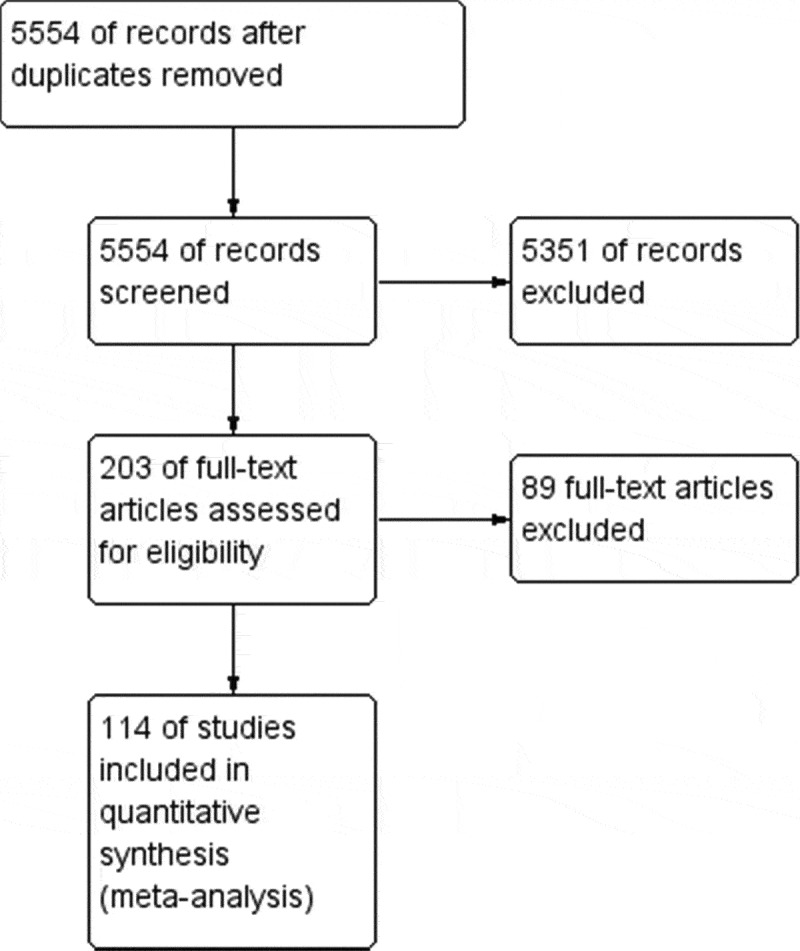
- Included RCTs of adults aged 18 or over, with at least 70% of participants diagnosed with PTSD of 3 months or more, comparing any defined psychological therapy with control, other psychological therapy, or psychosocial intervention; excluded secondary analyses and studies without a continuous post-treatment PTSD severity measure. The final set comprised 114 RCTs of 8171 participants.
- Two reviewers extracted data; risk of bias was assessed with Cochrane criteria; quality of evidence was appraised using GRADE; continuous outcomes were analyzed as standardized mean differences with 95% confidence intervals using fixed-effect models except where heterogeneity required random-effects models. A pre-determined clinical importance definition was applied (e.g., >0.80 for waitlist comparisons, >0.5 for attention control, >0.4 for placebo control, >0.2 for active treatment control), with sensitivity analyses and a funnel plot.
Limitations
- The paper states: few studies evaluated group or couples therapies, precluding meta-analyses of these formats; all included studies were published and a funnel plot for CBT-T versus waitlist/usual care showed some publication bias, suggesting the evidence may overestimate CBT-T effects; incomplete data and missing information led to exclusion of otherwise eligible studies; most studies excluded substance dependence, psychosis, and severe depression, so conclusions apply only to relatively simple PTSD presentations; waitlist and treatment as usual were combined as a single comparison group; usual care may have included evidence-based therapies; methodological quality varied and risk of bias was high/unclear in several domains; most trials used DSM-IV PTSD, so effects on the DSM-5 mood/cognition symptom cluster are unknown; therapist competence and number of therapy sessions were not extracted; sample sizes were often small.
- Evident from the text: there was substantial clinical and statistical heterogeneity across studies, many comparisons had few studies and very low GRADE quality, and researcher allegiance could not be ruled out because treatment originators were involved in evaluating their own interventions in many included studies.
Model-written summary. Check it against the paper before relying on it.
Integrity signals
Registry
Cites
Statistics
Figures
Verification
Claims the paper makes
5 Valid · 0 Not valid · 4 Not checked · 144 Own results and interpretations
The sources with a verdict support this claim; the rest weren’t checked yet, have no full text we could read, or their verdicts aren’t rated yet.
In the paper
“PTSD is a highly heterogeneous condition (DiMauro, Carter, Folk, & Kashdan, 2014, Murphy, Ross, Busuttil, Greenberg, & Armour, 2019)”
§ Psychological therapies for post-traumatic stress disorder in adults: systematic review and meta-analysis > Discussion > Research implications
What the sources say
- Not checked — no full text of the sourcecites DiMauro, Carter, Folk, & Kashdan, 2014 matched to “A historical review of trauma-related diagnoses to reconsider the heterogeneity of PTSD” (2014) source
- Supportedcites Murphy, Ross, Busuttil, Greenberg, & Armour, 2019 matched to “A latent profile analysis of PTSD symptoms among UK treatment seeking veterans” (2019) source
The Discussion reports that six distinct profiles best captured heterogeneity in PTSD symptom presentation among treatment-seeking UK veterans. The Conclusions also describe diversity in PTSD symptoms and co-morbidities, supporting the citing sentence’s broad characterization. (LLM, conf=0.90)
plain- Asserted: passes — The authors put it forward as true.
- Checkable: passes — It can be checked against evidence.
- Load-bearing: passes — The paper’s conclusions depend on it.
- Based: passes — The paper gives a reason why it holds.
The sources with a verdict support this claim; the rest weren’t checked yet, have no full text we could read, or their verdicts aren’t rated yet.
In the paper
“Previous systematic reviews have converged on the general finding that psychological therapies are effective for the treatment of PTSD (Bisson, Roberts, Andrew, Cooper, & Lewis, 2013; Bradley, Greene, Russ, Dutra, & Westen, 2005, Cusack, Grubaugh, Knapp, & Frueh, 2006; Jonas et al., 2013, Watts et al., 2013).”
§ Psychological therapies for post-traumatic stress disorder in adults: systematic review and meta-analysis > Introduction
What the sources say
- Supportedcites Bisson et al., 2013 matched to “Psychological therapies for chronic post-traumatic stress disorder (PTSD) in adults” (2013) source
The 'Agreements and disagreements with other studies or reviews' section says this review supports the efficacy of psychological therapy for chronic PTSD and that its finding is consistent with many other reviews. The authors' conclusions likewise find psychological therapies more effective than waitlist or usual care for adults with chronic PTSD. (LLM, conf=0.94)
- Not checked — no full text of the sourcecites Bradley et al., 2005 matched to “A Multidimensional Meta-Analysis of Psychotherapy for PTSD” (2005) source
- Not checked — no full text of the sourcecites Cusack et al., 2006 matched to “Unrecognized Trauma and PTSD among Public Mental Health Consumers with Chronic and Severe Mental Illness” (2006) source
plainstates a cause- Asserted: passes — The authors put it forward as true.
- Checkable: passes — It can be checked against evidence.
- Load-bearing: passes — The paper’s conclusions depend on it.
- Based: passes — The paper gives a reason why it holds.
- Supported
The sources with a verdict support this claim; the rest weren’t checked yet, have no full text we could read, or their verdicts aren’t rated yet.
In the paper
“Reviews to date have grouped psychological therapies together based on similar theoretical underpinnings and overlapping techniques.”
§ Psychological therapies for post-traumatic stress disorder in adults: systematic review and meta-analysis > Introduction
What the sources say
- Supportedcites Bisson et al., 2013 matched to “Psychological therapies for chronic post-traumatic stress disorder (PTSD) in adults” (2013) source
The Interventions section says the review pooled therapies using a similar theoretical methodology. The Experimental interventions section defines several groups by the cognitive, behavioural, or trauma-focused techniques they use, supporting the described basis for grouping. (LLM, conf=0.90)
- Not checked — no full text of the sourcecites Bradley et al., 2005 matched to “A Multidimensional Meta-Analysis of Psychotherapy for PTSD” (2005) source
- Not checked — no full text of the sourcecites Cusack et al., 2006 matched to “Unrecognized Trauma and PTSD among Public Mental Health Consumers with Chronic and Severe Mental Illness” (2006) source
plainstates an association- Asserted: passes — The authors put it forward as true.
- Checkable: passes — It can be checked against evidence.
- Load-bearing: passes — The paper’s conclusions depend on it.
- Based: passes — The paper gives a reason why it holds.
- Supported
A result the paper states — it cites no source for it, so there is none to check. The quote shows it is in the paper.
In the paper
“We could not rule out potential researcher allegiance, since treatment originators were involved in the evaluation of their own intervention in many of the included studies.”
§ Psychological therapies for post-traumatic stress disorder in adults: systematic review and meta-analysis > Results > Risk of bias
hedged- Asserted: passes — The authors put it forward as true.
- Checkable: passes — It can be checked against evidence.
- Load-bearing: unclear — It is unclear whether the paper’s conclusions depend on it.
- Based: passes — The paper gives a reason why it holds.
A result the paper states — it cites no source for it, so there is none to check. The quote shows it is in the paper.
In the paper
“In many studies, it was unclear what constituted usual care and what intervention, if any, was permitted in wait-list control groups.”
§ Psychological therapies for post-traumatic stress disorder in adults: systematic review and meta-analysis > Discussion > Research implications
plain- Asserted: passes — The authors put it forward as true.
- Checkable: passes — It can be checked against evidence.
- Load-bearing: unclear — It is unclear whether the paper’s conclusions depend on it.
- Based: passes — The paper gives a reason why it holds.
85 more claims
Create a free account to see all 153 claims and every source verdict.
- Probably not a substantial claim. 42
- It may state two separate claims as one. 35
Claims other papers make about this one
Each is checked against this paper’s own text: does it say what the citing paper says it does?
The check wasn’t confident either way, so it gives no verdict — never disputed.
In the citing paper
“Conversely, upon reviewing available practice guidelines for the assessment and treatment of PTSD or complex PTSD, the treatment of EDs is never addressed (44–54).”
From The integrated treatment of eating disorders, posttraumatic stress disorder, and psychiatric comorbidity: a commentary on the evolution of principles and guidelines (2023) · cites this paper as [50]
Experimental — accuracy not yet measured
Self-check
Percentages, sums and reported differences re-computed from the paper’s own numbers.
Each contradiction between two passages listed here was confirmed by an independent check.
Rated minor: it would not touch a result — a value no result rests on, a p-value that stays on the same side of the significance level, or a conflict that is clerical, resolved elsewhere in the paper, or outside its own findings.
In the paper
§ Psychological therapies for post-traumatic stress disorder in adults: systematic review and meta-analysis > Results > Efficacy
“SMD 0.40”
§ Psychological therapies for post-traumatic stress disorder in adults: systematic review and meta-analysis > Results > Efficacy
“CI −1.12 to 0.31”
Citations
Cites
Diagnostic and Statistical Manual of Mental Disorders
American Psychiatric Association (2013) · doi:10.1176/appi.books.9780890425596 · Cited by 116,369
The Cochrane Collaboration's tool for assessing risk of bias in randomised trials
Higgins, J. P. T., Altman, D. G., Gotzsche, P. C., Juni, P., Moher, D., Oxman, A. D., Savovic, J., Schulz, K. F., Weeks, L., Sterne, J. A. C., et al. (2011) · BMJ · doi:10.1136/bmj.d5928 · Cited by 33,817
Cochrane Handbook for Systematic Reviews of Interventions: Cochrane Book Series
(2008) · doi:10.1002/9780470712184 · Cited by 25,048
Dermyshi, E., Wang, Y., Yan, C., Hong, W., Qiu, G., Gong, X., & Zhang, T. (2017) · Neonatology · doi:10.1159/000454668 · Cited by 24,451
Journal of Clinical Psychiatry
(2018) · Journal of Clinical Psychiatry · doi:10.5505/kpd · Cited by 13,651
Posttraumatic Stress Disorder in the National Comorbidity Survey
Kessler, R. C. (1995) · Archives of General Psychiatry · doi:10.1001/archpsyc.1995.03950240066012 · Cited by 10,379 · cited 1×
“PTSD is a debilitating disorder, which is commonly comorbid with other conditions such as depression, substance use and anxiety disorders [3, 4].”
BackgroundCochrane Handbook for Systematic Reviews of Interventions
Tarsilla, M. (2010) · Journal of MultiDisciplinary Evaluation · doi:10.56645/jmde.v6i14.284 · Cited by 5,178
The development of a Clinician-Administered PTSD Scale
Blake, D. D., Weathers, F. W., Nagy, L. M., Kaloupek, D. G., Gusman, F. D., Charney, D. S., & Keane, T. M. (1995) · Journal of Traumatic Stress · doi:10.1002/jts.2490080106 · Cited by 5,024 · cited 2×
“When available, clinician-rated measures were included in meta-analyses (e.g., the ClinicianAdministered PTSD Scale (CAPS); Blake et al., 1995).”
MethodCochrane Database of Systematic Reviews
(2011) · Progress in Neurology and Psychiatry · doi:10.1002/pnp.208 · Cited by 4,667
Diagnostic and Statistical Manual of Mental Disorders, 5th Edition
(2013) · American Psychiatric Association Publishing eBooks · doi:10.1176/appi.books.9780890425596.893619 · Cited by 4,383
Research works printed but not linked: 3
- National Institute for Health and Care Excellence (NICE). (2018). Post-traumatic stress disorder (NICE guideline NG116). Retrieved from https://www.nice.org.uk/guidance/ng116. 31211536
- RevMan. (2014). Review manager 5 (RevMan 5) [ Computer Program]. Version 5.3. Copenhagen: The Nordic Cochrane Centre, The Cochrane Collaboration.
- Weathers, F. W., Litz, B. T., Keane, T. M., Palmieri, P. A., Marx, B. P., & Schnurr, P. P. (2013). The PTSD checklist for DSM-5 (PCL-5). The National Center for PTSD.
Cited by
Items 401–453 of 453
An exploration of factors affecting the fee people are willing to pay for psychological counselling
Hsu, C.-Y., Chao, S.-H., Yu, C. C., & Yen, C.-L. (2025) · British Journal of Guidance and Counselling · doi:10.1080/03069885.2025.2544202
“Numerous studies have shown that psychological counselling enables people to cope more effectively with difficulties in various aspects of life (e.g. Elliott et al., 2018; Lewis et al., 2020; Norcross & Lambert, 2019).”
Þórarinsdóttir, K., Holmes, E. A., Hardarson, J., Ágústsdóttir, F., Kanstrup, M., Singh, L., Hauksdóttir, A., Halldorsdottir, T., Guðmundsdóttir, B., Thordardottir, E. B., et al. (2026) · JMIR Formative Research · doi:10.2196/72748
“Existing evidence-based treatment options for PTSD [9, 10], while clearly important, also carry some limitations.”
Andersson, J., Bråhn, C., Zhai, H., Mattelin, E., Münger, A.-C., & Korhonen, L. (2025) · European Child & Adolescent Psychiatry · doi:10.1007/s00787-025-02858-8 · Cited by 1
Wesseling, G., Nispeling, E., Tholel, J., Teunissen, S., & Thomaes, K. (2025) · European Journal of Psychotraumatology · doi:10.1080/20008066.2025.2568266
“Trauma-focused therapies (TFT), such as Imagin-ary Exposure (IE), Eye Movement Desensitization and Reprocessing (EMDR) and cognitive therapy, show high effect sizes in treating PTSD (Cusack et al., 2016; Karatzias et al., 2019; Lewis et al., 2020).”
Lotzin, A., & Schäfer, I. (2025) · Trauma und Gewalt · doi:10.21706/tg-19-4-276
Gusler, S., Sprang, G., Eslinger, J. G., & Whitt‐Woosley, A. (2025) · Community Mental Health Journal · doi:10.1007/s10597-025-01553-x
Enning, F., Priebe, K., Steil, R., Görg, N., Müller‐Engelmann, M., Schmahl, C. G., & Kleindienst, N. (2025) · European Journal of Psychotraumatology · doi:10.1080/20008066.2025.2580208
“For example, meta-analytic findings indicate that comorbid major depression and substance-use disorders are associated with poorer outcomes, although effects are generally small (Lewis et al., 2020).”
Steenen, S. A., van Westrhenen, R., Steenen, C. C., Klausch, L. T., & de Jongh, A. (2025) · Psychotherapy and Psychosomatics · doi:10.1159/000549259 · Cited by 1
Piccardi, L., Russo, S., Lasaponara, S., Boccia, M., Riso, C., Tizzani, E., Burrai, J., Giannini, A. M., & Guariglia, P. (2025) · Frontiers in Psychiatry · doi:10.3389/fpsyt.2025.1605608
Traumafokussierte Psychotherapie der (komplexen) Posttraumatischen Belastungsstörung
Priebe, K. (2025) · Die Psychotherapie · doi:10.1007/s00278-025-00818-w
“Mit mittleren Effekt-stärken von 1 und größer haben sich trau-mafokussierte kognitive Verhaltensthera-pie(KVT)undEyeMovementDesensitizati-onandReprocessing(EMDR)amwirksams-ten erwiesen (Lewis et al. 2020a; Mavrane-zouli et al. 2020).”
Influentialvan Hemert, M. T. C., de Jong, P. M., Brouwer, T. R., Gunst, E., Claes, L., & Morrens, M. (2025) · European Journal of Psychotraumatology · doi:10.1080/20008066.2025.2600873 · Cited by 2
“…Therapy with a trauma focus (CBT-T) and Eye Movement Desensitization and Reprocessing (EMDR) are both evidence-based treatments for PTSD, and have been shown to be more effective than wait-list control conditions (Bis-son & Andrew, 2013) and non-trauma-focused interventions (Lewis et al., 2020a).”
Savaş, E., Gündoğmuş, İ., Kınık, Ç., Kubilay, D., Kavakçı, Ö., & Yaşar, A. B. (2025) · Current Psychology · doi:10.1007/s12144-025-08723-w
“Eye Movement Desensitization and Reprocessing (EMDR) is another therapeutic approach gaining recogni - tion for its efficacy in addressing traumatic stress, as evi - denced by a growing body of research (Lewis et al., 2020; Manfield et al., 2017; Maxfield, 2016 ; Murray, 2016 ).”
García, F. E., Vázquez, C., Félix Cova, S., Beyebach, M., Rincón, P., Demarzo, M., Aravena, V., Cerna, C., Bruna, B., Włodarczyk, A., et al. (2025) · Applied Psychology Health and Well-Being · doi:10.1111/aphw.70108 · Cited by 1
Krol, T., Smulska, B., Stefanik, A., Batko, K., & Pietras, T. L. (2025) · Emergency Medical Service · doi:10.36740/emems202504107
Yalim, A. C., Shaw, S. A., Dinç, Y., & Yalniz, A. (2026) · Research on Social Work Practice · doi:10.1177/10497315251410175 · Cited by 1
“Other evidence-based trauma treatments (Lewis et al., 2020), such as Prolonged Exposure, and Eye Movement Desensitization and Reprocessing, have strong empirical support but remain understudied in postearthquake settings.”
Trauma-Informed Approaches and Psychotherapy in Nursing Practice
Adıgüzel, V. (2026) · IGI Global eBooks · doi:10.4018/979-8-3373-6526-8.ch008
Mental health service users' pre‐ and post‐therapy hospitalization rates: A data linkage study
Jordan, J., Elliott, A., Hill, F., & Dyer, K. F. W. (2026) · British Journal of Clinical Psychology · doi:10.1111/bjc.70039
“Evidence for its effectiveness in psychological symptom reduction and health improvement is compelling (Konstantopoulou & Karaivazoglou, 2020; Lewis et al., 2020) with wider economic benefits for work-related productivity and increased employment levels (Ezawa et al., 2021).”
Child Maltreatment and Development
Sullivan, J. A., Frost-Helms, C. V., Basting, E. J., Kwak, J. E., Poole, E. J., Jensen, M. C., Son, S. W. J., Medenblik, A. M., & Stuart, G. L. (2026) · Springer eBooks · doi:10.1007/978-3-030-85493-5_1857-1
Schneider, K. M., LoDato, K. K., Hodge, V., Perez, L. M., Skeen, A. I., & Ohrt, J. (2026) · Journal for Specialists in Group Work · doi:10.1080/01933922.2025.2599763 · Cited by 1
Redding, L. (2026) · Studies in Clinical Social Work Transforming Practice Education and Research · doi:10.1080/28376811.2026.2638587
Cao-Noya, J. A., & Benuto, L. T. (2026) · Clinical Case Studies · doi:10.1177/15346501261433981
Reducing PTSD symptoms through unconscious intervention
Yang, Q., Wang, Y., Liu, C., Zhi, P., Chen, S., Lei, Y., Xue, F., & Zhu, Z. (2026) · Proceedings of the National Academy of Sciences · doi:10.1073/pnas.2521088123 · Cited by 1
“Over the past few decades, researchers have developed a range of effective therapeutic interventions, such as prolonged exposure therapy, cognitive reappraisal, and eye movement desensitization and reprocessing (EMDR), to mitigate the harm caused by trauma experiences (2).”
Complex Post-Traumatic Stress Disorder
Gregoire, A., Waters, C. S., & Richmond, L. (2026) · Cambridge University Press eBooks · doi:10.1017/9781911623496.018
Kim, D., Ryu, S., Min, J. Y., Lee, H., & Kim, E. (2026) · Yonsei Medical Journal · doi:10.3349/ymj.2025.0167
“8 Trauma-focused cognitive behavioral therapy (TF-CBT) and eye movement desensitization and reprocessing (EMDR) are the current first-line treatment options for PTSD. 9 However, there is considerable room for improvement in treatment effi-Randomized cacy and adherence (i.e., completion of intended sessions).”
InfluentialRoth, M. L. (2026) · Journal of Military Veteran and Family Health · doi:10.3138/jmvfh-2025-0032
Toward a precision medicine treatment model for posttraumatic stress disorder
Wielgosz, J., Norman, S. B., & Marx, B. P. (2026) · Journal of Traumatic Stress · doi:10.1002/jts.70058
“Many individuals who receive evidence-based treatments for posttraumatic stress disorder (PTSD) continue to experience clinically significant symptoms following treat-ment, and many who initiate these treatments never complete them (Lewis et al., 2020).”
Family Violence in Immigrant and Refugee Communities
Cao, J., Gonzalez-Guarda, R. M., & Mkandawire‐Valhmu, L. (2026) · Springer eBooks · doi:10.1007/978-3-032-06072-3_20
Федоренко, Ю. А., & Стасюк, В. В. (2026) · Psychiatry Neurology and Medical Psychology · doi:10.26565/2312-5675-2026-33-12
Muth, A. J., Clauss, K. E., Cheney, T. P., & O'Neil, M. E. (2026) · Cognitive Behaviour Therapy · doi:10.1080/16506073.2026.2658094
Bennett, M. (2026) · Springer eBooks · doi:10.1007/978-981-95-9594-5_7
Comparison of Psychotherapies, Pharmacotherapies and Neurotherapies for PTSD
Bennett, M. (2026) · Springer eBooks · doi:10.1007/978-981-95-9594-5_16
Treatment of posttraumatic stress disorder (PTSD)
Bandelow, B. (2026) · Dialogues in Clinical Neuroscience · doi:10.1080/19585969.2026.2680838
“…efficacy between the two interventions were insufficiently powered for non-inferiority analyses. in contrast to the present findings, some meta-analyses and clinical guidelines recommend eMDR (American Psychological Association 2017; Bisson et al. 2019; Roberts et al. 2019; lewis et al. 2020).”
Group Therapy Interventions Following Childhood Trauma Experiences: A Systematic Review
Atıcı, İ., Şahan, İ. B., & Soysal, F. S. Ö. (2026) · Buca eğitim fakültesi dergisi (Online)/Buca Eğitim Fakültesi dergisi · doi:10.53444/deubefd.1814996
Are We Avoiding a Major Public Health Concern?
Davis, J. (2026) · Boston Congress of Public Health Review (BCPHR Formerly HPHR) · doi:10.54111/001c.163411
Григорьева, М. А. (2026) · Rossijskij voenno-psihologičeskij žurnal. · doi:10.25629/rmpj.2026.02.02
Dietlinger, F. K., Kasparik, B., Unterhitzenberger, J., & Rosner, R. (2026) · Evidence-Based Practice in Child and Adolescent Mental Health · doi:10.1080/23794925.2026.2701042
Vonderlin, R., Senyüz, B., Claus, C., Mahalingam, S., Schulze, A., Koch, S., Voderholzer, U., Schmahl, C. G., Margraf, J., Teismann, T., et al. (2026) · Borderline Personality Disorder and Emotion Dysregulation · doi:10.1186/s40479-026-00356-0 · Cited by 1
Are We Avoiding a Major Public Health Concern?
Davis, J. (2026) · Boston Congress of Public Health Review (BCPHR Formerly HPHR) · doi:10.54111/001c.165233
Whelan, E., Griffin, S. M., Ahern, E., Lebedová, A., McMahon, G., Bradshaw, D., & Muldoon, O. T. (2026) · Campbell Systematic Reviews · doi:10.1177/18911803261471160
“This contrasts with previous work (Lewis et al., 2020; Resick et al., 2017) reporting strong outcomes for CPT, particularly in individual treatment formats.”
InfluentialCardiff University Traumatic Stress Research Group
Roberts, N. P. (2026) · Clinical Psychology Forum · doi:10.53841/bpscpf.2026.1.399.61
Self-citationAmini, A., Ahani, M., Beni, F. A., Nazari, E., & Aldaghi, T. (2026) · Journal of Psychiatric Research · doi:10.1016/j.jpsychires.2026.08.010
Díaz, A. G., & Álvarez-García, H. B. (2026) · Clínica Contemporánea · doi:10.5093/cc2026a10
Осадченко, І., Tverezovska, N., Демченко, І. І., Драчук, О., & Гриньова, Н. (2026) · The International Journal of Psychiatry in Medicine · doi:10.1177/00912174261482023
Cope, S. R., James, B., Vanzan, S., Smith, J. G., El‐Leithy, S., Edwards, M. J., Hogwood, P., Turner, K., Golder, D., & Billings, J. (2026) · BJPsych Open · doi:10.1192/bjo.2026.12060
Maksic, E., Klæth, J. R., Nordahl, H. M., & Hjemdal, O. (2026) · International Journal of Cognitive Behavioral Therapy · doi:10.1007/s41811-026-00290-7
“…were notably stronger than those typically observed in group-based PTSD treatments, which are associated with modest improvements ( d ≈ 0.25–0.45; Lewis et al., 2020; Sloan et al., 2013), and individual exposure-based PTSD treatments ( d ≈ 0.40–0.60; Cusack et al., 2016; Powers et al., 2010 ).”
InfluentialPidbutska, N. V., Knysh, A., Чебакова, Ю. Г., & Demidova, Y. (2026) · Physical rehabilitation and recreational health technologies · doi:10.15391/prrht.2026-11(4).07
Advances in Trauma-Informed Treatment for Insomnia: Evidence from Recent Clinical Trials
Carlson, G. E., Richards, A. L., Shankar, A., Parekh, N. J., Gold, A. I., & Goldstein, L. A. (2026) · Current Sleep Medicine Reports · doi:10.1007/s40675-026-00395-7
Murphy, T. J., Jung, M., Hsiao, A., Martin, N. M., Jimenez, A. J., Munoz, A., Lai-Trzebiatowski, J., Smith, T. C., & Hollifield, M. A. (2026) · International Journal of Environmental Research and Public Health · doi:10.3390/ijerph23091159
Faustino, B. (2026) · Psychological Reports · doi:10.1177/00332941261481769
Xu, B., Cai, Q., Basha, S. A. J., Anderson, S., Vannini, M. B. N., Malek, N., & Blais, R. K. (2026) · European Journal of Psychotraumatology · doi:10.1080/20008066.2026.2709751
“Overall, PTSD treatments demonstrated a large significant effect ( g = 1.67), consistent with prior reviews documenting the efficacy of trauma-focused therapies (Lewis et al., 2020a; Straud et al., 2019).”
InfluentialMatzek, T., Fortin, C. A., & Guay, S. (2026) · Journal of Interpersonal Violence · doi:10.1177/08862605261485220
Nijdam, M. J., Gersons, B. P. R., de Jongh, A., Jongedijk, R. A., van Minnen, A., & Wind, T. R. (2026) · Frontiers in Psychology · doi:10.3389/fpsyg.2026.1932004
Metadata
- Authors
- Lewis, C., Roberts, N. P., Andrew, M., Starling, E., & Bisson, J. I.
- Affiliations
- Cardiff University (GB)
- Cardiff and Vale University Health Board (GB)
- Corresponding author
- Lewis, Catrin
- Venue
- European Journal of Psychotraumatology
- Publisher
- Informa UK Limited
- Published
- 2020-03-10
- Volume
- 11
- Issue
- 1
- Pages
- 1729633-1729633
- ISSN
- 2000-8066 (ISSN-L)
- PMC
- PMC7144187
- OpenAlex
- W3008102555
- Semantic Scholar
- bcbebf2ce561616f88abc8ae0c5d9175ea219f45
- Cited by
- 460
- References
- 148
- Citations by year
- 2026: 48 · 2025: 96 · 2024: 79 · 2023: 76 · 2022: 100 · 2021: 43 · 2020: 18
- FWCI
- 4.63
- Type
- journal article
- Language
- en
- Open access
- gold
- doi.org
- Licence
- Locations
- European Journal of Psychotraumatology (publishedVersion, cc-by-nc)
- PubMed Central (publishedVersion, cc-by-nc)
- PubMed (publishedVersion)
- ORCA Online Research @Cardiff (Cardiff University) (acceptedVersion)
- DOAJ (DOAJ: Directory of Open Access Journals) (submittedVersion, cc-by-sa)
- Funders
- unfunded
- Topics
- Social Sciences › Psychology › Clinical Psychology › Posttraumatic Stress Disorder Research
- Social Sciences › Psychology › Clinical Psychology › Psychotherapy Techniques and Applications
- Social Sciences › Psychology › Experimental and Cognitive Psychology › Sleep and related disorders
- Keywords
- post-traumatic stress disorder, psychotherapy, manualized psychotherapy, trauma-focused cognitive behavioral therapy, EMDR, cognitive processing therapy, prolonged exposure therapy, cognitive therapy, internet-based CBT, group cognitive behavioral therapy, treatment efficacy, first-line therapy
About these checks
Registry, retraction, Cites and statistics results are computed, not judged, with one exception: a printed reference that no index lists is read once by a model before it counts as a citation error. Claims are extracted by a model and kept only when their quote appears verbatim in the text; each cited source is then checked, with a model’s help, for whether it says what the claim relies on. Those verdicts can be wrong — read the claim’s quote and the cited source before relying on one.
A language model drew the claims from the paper on 2026-10-10, under version 3 of the claim definition (model deepseek-v4.1-flash, prompt extract-v3).
A second model labelled each claim on 2026-10-10 (model jev-1.13-20260917, definition revision gold-guideline-v0.2).
Cited sources are checked with a language model’s help (gpt-6-sol).
Statistics and arithmetic are recomputed, not judged.
Confidence bands are shown only for fields calibrated on our annotated test set. None is calibrated yet, so no band is shown.
What counts as a claim ›How we measure confidence ›How we check this ›
Are you an author, or do you see a problem with this page? Request a review
Data sources
Bibliographic data: Semantic Scholar, OpenAlex, Crossref.
Contains information from the Semantic Scholar Academic Graph Datasets, made available under the ODC Attribution License (ODC-BY 1.0).
Semantic Scholar’s data is described in: Kinney, R., et al. (2023). The Semantic Scholar Open Data Platform. arXiv:2301.10140.
