

Maturation of tertiary lymphoid structures and recurrence of stage II and III colorectal cancer
Open accessThe DOI matches its Crossref record; 49 of the 49 references it cites were found in a registry or an index.
Abstract
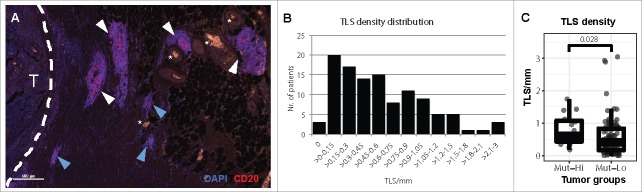
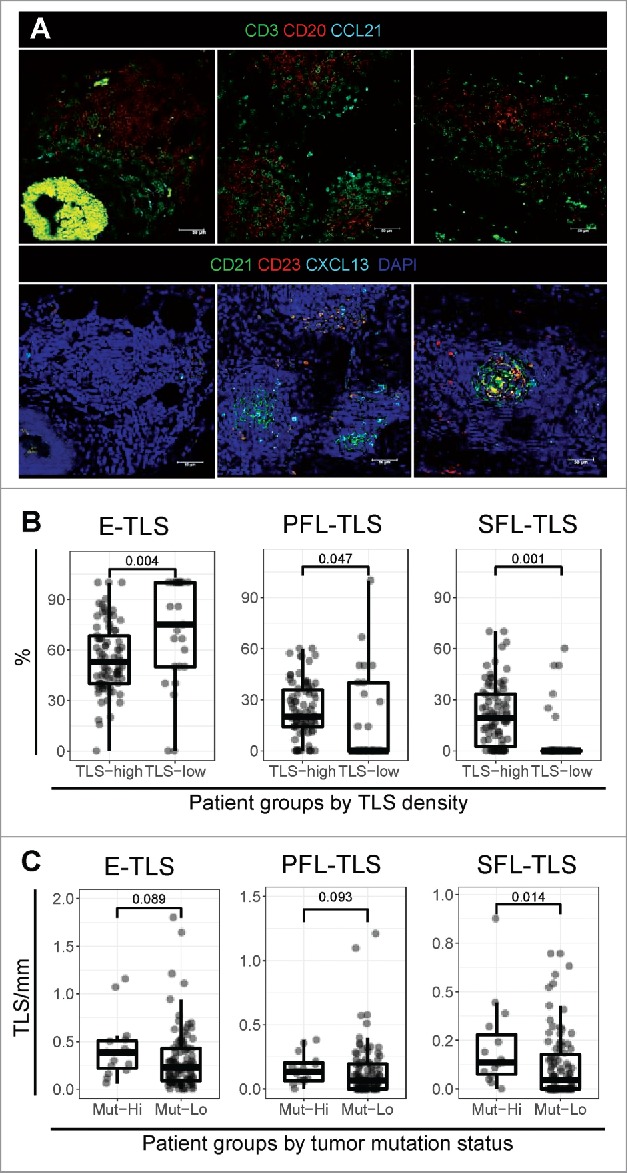
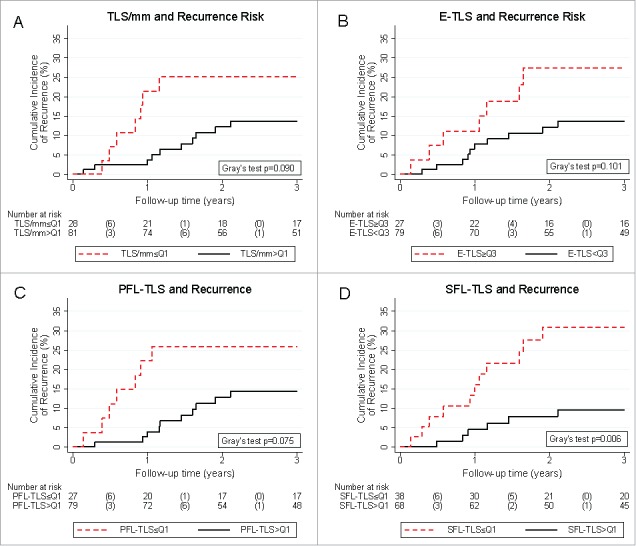
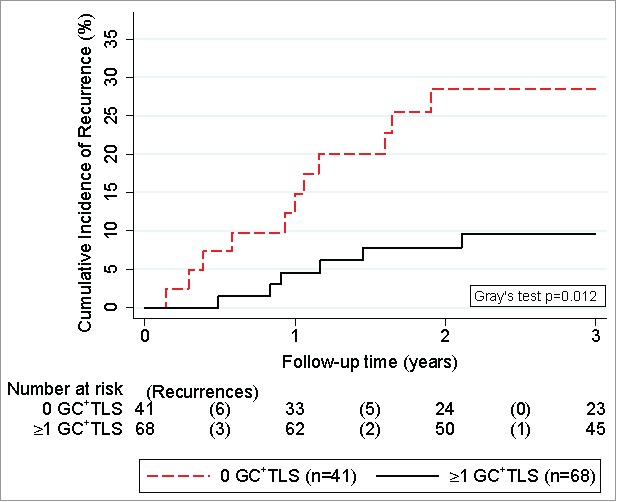
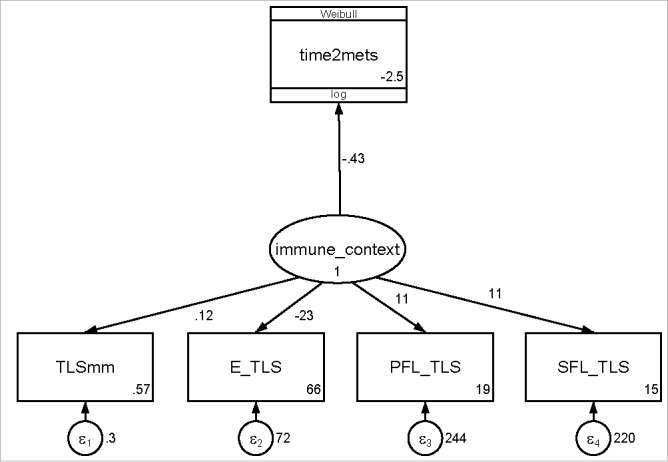
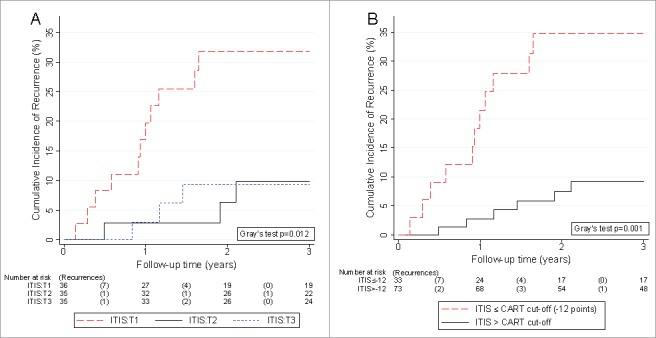
Tertiary lymphoid structures (TLS) are associated with favorable outcome in non-metastatic colorectal carcinoma (nmCRC), but the dynamics of TLS maturation and its association with effective anti-tumor immune surveillance in nmCRC are unclear. Here, we hypothesized that not only the number of TLS but also their composition harbors information on recurrence risk in nmCRC. In a comprehensive molecular, tissue, laboratory, and clinical analysis of 109 patients with stage II/III nmCRC, we assessed TLS numbers and degree of maturation in surgical specimens by multi-parameter immunofluorescence of follicular dendritic cell (FDC) and germinal center (GC) markers. TLS formed in most tumors and were significantly more prevalent in highly-microsatellite-instable (MSI-H) and/or BRAF-mutant nmCRC. We could distinguish three sequential TLS maturation stages which were characterized by increasing prevalence of FDCs and mature B-cells: [1] Early TLS, composed of dense lymphocytic aggregates without FDCs, [2] Primary follicle-like TLS, having FDCs but no GC reaction, and [3] Secondary follicle-like TLS, having an active GC reaction. A simple integrated TLS immunoscore reflecting these parameters identified a large subgroup of nmCRC patients with a very low risk of recurrence independently of clinical co-variables such as ECOG performance status, age, stage, and adjuvant chemotherapy. We conclude that (1) mismatch repair and BRAF mutation status are associated with the formation of TLS in nmCRC, (2) TLS formation in nmCRC follows sequential maturation steps, culminating in germinal center formation, and (3) this maturation process harbors important prognostic information on the risk of disease recurrence.
Overview
The claims and statistics of this paper haven’t been checked yet.
Free: it reads the open-access text and checks the first 5 claims that cite a source we can check. Create a free account to check every claim.
Integrity signals
Registry
Cites
Statistics
Figures
Verification
Claims the paper makes
The claims and statistics of this paper haven’t been checked yet.
Free: it reads the open-access text and checks the first 5 claims that cite a source we can check. Create a free account to check every claim.
Claims other papers make about this one
Each is checked against this paper’s own text: does it say what the citing paper says it does?
The source backs part of the claim, not all of it — or backs it for a different population, condition or comparison.
In the citing paper
“The vast majority of evaluated TLSs in these patients represented mature secondary-follicle-like TLSs, as indicated by the presence of both CD21+ follicular dendritic cells and CD23+ germinal centre B cells30”
From B cells and tertiary lymphoid structures promote immunotherapy response (2020) · cites this paper as [30]
Experimental — accuracy not yet measured
Self-check
Percentages, sums and reported differences re-computed from the paper’s own numbers.
The self-check needs the paper’s full text.
Citations
Cites
Siegel, R. L., Miller, K. D., & Jemal, A. (2017) · CA: A Cancer Journal for Clinicians · doi:10.3322/caac.21387 · Cited by 14,712 · cited 9×
“These data suggest further hypotheses: (1) TLS with a GC reaction represents the most “functional” subtype, (2) GC development indicates towards tumor-specific B cell and CD4 T cell priming, and (3) TLS maturation harbors additional information to mere TLS enumerations for the prognosis of CRC recurrence.”
BackgroundResultInfluentialA Proportional Hazards Model for the Subdistribution of a Competing Risk
Fine, J. P., & Gray, R. J. (1999) · Journal of the American Statistical Association · doi:10.1080/01621459.1999.10474144 · Cited by 14,290
PD-1 Blockade in Tumors with Mismatch-Repair Deficiency
Le, D. T., Uram, J. N., Wang, H., Bartlett, B. R., Kemberling, H., Eyring, A. D., Skora, A. D., Luber, B. S., Azad, N. S., Laheru, D., et al. (2015) · New England Journal of Medicine · doi:10.1056/nejmoa1500596 · Cited by 9,377
Mutational landscape determines sensitivity to PD-1 blockade in non–small cell lung cancer
Rizvi, N. A., Hellmann, M. D., Snyder, A., Kvistborg, P., Makarov, V., Havel, J. J., Lee, W., Yuan, J., Wong, P., Ho, T. S., et al. (2015) · Science · doi:10.1126/science.aaa1348 · Cited by 7,802
Cancer Immunoediting: Integrating Immunity’s Roles in Cancer Suppression and Promotion
Schreiber, R. D., Old, L. J., & Smyth, M. J. (2011) · Science · doi:10.1126/science.1203486 · Cited by 6,474
The immune contexture in human tumours: impact on clinical outcome
Fridman, W. H., Pagès, F., Sautès-Fridman, C., & Galon, J. (2012) · Nature reviews. Cancer · doi:10.1038/nrc3245 · Cited by 4,981
A Class of $K$-Sample Tests for Comparing the Cumulative Incidence of a Competing Risk
Gray, R. J. (1988) · The Annals of Statistics · doi:10.1214/aos/1176350951 · Cited by 4,960
Global Cancer Incidence and Mortality Rates and Trends—An Update
Torre, L. A., Siegel, R. L., Ward, E. M., & Jemal, A. (2016) · Cancer Epidemiology, Biomarkers & Prevention · doi:10.1158/1055-9965.epi-15-0578 · Cited by 3,692 · cited 10×
“In sensitivity analyses, we (1) performed a classification and regression tree analysis (CART, Stata routine cart) to explore the strength of recurrence risk predictors and potential ITIS cut-off points within a non-parametric fashion,(48) and (2) fitted interactions between the ITIS, tumor stage and adjuvant chemothe…”
BackgroundMethodResultInfluentialThe Three Es of Cancer Immunoediting
Dunn, G. P., Old, L. J., & Schreiber, R. D. (2004) · Annual Review of Immunology · doi:10.1146/annurev.immunol.22.012703.104803 · Cited by 3,072
Clonal neoantigens elicit T cell immunoreactivity and sensitivity to immune checkpoint blockade
McGranahan, N., Furness, A. J. S., Rosenthal, R., Ramskov, S., Lyngaa, R., Saini, S. K., Jamal-Hanjani, M., Wilson, G. A., Birkbak, N. J., Hiley, C. T., et al. (2016) · Science · doi:10.1126/science.aaf1490 · Cited by 3,065
Cited by
Items 201–300 of 410
Tertiary lymphoid structures in colorectal cancer - organization and immune cell interactions
Gulubova, M. V., Valkanov, S., Ignatova, M., & Minkov, G. (2024) · American journal of clinical and experimental immunology. · doi:10.62347/gryy2849 · Cited by 14
Gallois, C., Sroussi, M., André, T., Mouillet‐Richard, S., Agueeff, N., Mulot, C., Vernerey, D., Louvet, C., Bachet, J., Dourthe, L.-M., et al. (2025) · Journal of Clinical Oncology · doi:10.1200/jco.23.02262 · Cited by 14
“…of B cells, mediators of adaptive antitumor immunity, especially into mature TLS, is also associated with a better prognosis in localized CC. 17,25 The prognostic role of TAMs is complex, with a different prognostic impact depending on their types and locations, with M2-polarized TAM,…”
Tertiary lymphoid structures in gliomas: impact on tumour immunity and progression
Chen, J., Yang, Y., Luan, S., Xu, W., & Gao, Y. (2025) · Journal of Translational Medicine · doi:10.1186/s12967-025-06510-6 · Cited by 14
“With respect to the maturity of TLSs, Posch et al. [35] proposed that the development of tumour-associated TLSs involves three stages.”
Omotesho, Q. A., Escamilla, A., Pérez-Ruiz, E., Frecha, C. A., Rueda‐Domínguez, A., & Barragán, I. (2024) · Frontiers in Immunology · doi:10.3389/fimmu.2024.1348156 · Cited by 13
Quantification and molecular correlates of tertiary lymphoid structures in primary prostate cancer
Shahait, M., Hakansson, A. K., Daniel, R. E., Hosny, K. M., Davicioni, E., Liu, S. Y., Sandberg, A., Lee, D. I., & Lal, P. (2024) · The Prostate · doi:10.1002/pros.24684 · Cited by 13
“3,4,12 In our study of prostate cancer, we found that presence of TLS was associated with higher tumor grade, and PT ‐ TLS was associated with increased risk of BCR. Prostate cancer it would appear is more similar to observations reported in breast cancer where TLS levels were associated with…”
ResultLi, L., Guo, Y., Gong, B., Wang, S., Wang, M., Sun, P., Jiang, S., & Yang, L. (2024) · Frontiers in Immunology · doi:10.3389/fimmu.2024.1385802 · Cited by 14
“Various studies have adopted different criteria, with some categorizing TLSs as either high or low density (22 – 24), and others using the mere existence or non-existence of TLSs as a benchmark for evaluation (23, 25).”
BackgroundTertiary Lymphoid Structure in Tumor Microenvironment and Immunotherapy of Lung Cancer
Xie, M., Lin, X., Bao, X., Liang, Y., Deng, H., Song, J., Ma, X., Zhang, X., Yao, J., Pan, L., et al. (2024) · Archivos de Bronconeumología · doi:10.1016/j.arbres.2024.07.020 · Cited by 14
Wu, W., Xun, Z., Han, Y., Chen, Q., Yu, S., Luo, Y., Hao, Z., Chen, J., Xu, Y., Han, X., et al. (2025) · Cancer Research · doi:10.1158/0008-5472.can-25-1793 · Cited by 13
Zeng, L., Koh, V. C. Y., Chen, X., & Tan, P. H. (2023) · Histopathology · doi:10.1111/his.14865 · Cited by 13
“The GCs are considered important sites for antigen recognition.(41) In our study, the positive rates of TLSs (total with or without GC) are low.”
BackgroundZou, Y., Li, D., Yu, X., Zhou, C., Zhu, C., & Yuan, Y. (2023) · Neuroendocrinology · doi:10.1159/000534427 · Cited by 13
“In some previous studies, TLS maturity was even more signi fi cant than TLS presence or density on tumor recurrence [45] and patient survival [46].”
Tertiary lymphoid structures and their therapeutic implications in cancer
Chen, X., Wu, P., Liu, Z., Li, T., Wu, J., Zeng, Z., Guo, W., & Xiong, W. (2024) · Cellular Oncology · doi:10.1007/s13402-024-00975-1 · Cited by 13
“…and the tissue involved, ranging from early TLSs (E-TLSs) with only B and T cell aggregates to primary follicle-like TLSs (PFL-TLSs) characterized by the differentiation of a mature FDC network, as well as secondary follicle-like TLSs (SFL-TLSs) featuring Tfh cell-containing GCs [30, 31].”
Wu, F., Cao, H., Ren, S., Wu, J., Liu, X., Li, Q., Xu, Q., Chen, J., Wang, R., Chen, S., et al. (2024) · Frontiers in Immunology · doi:10.3389/fimmu.2024.1483497 · Cited by 12
“In particular, we found that the 23 TLSRGs were mainly expressed in TLS-positive group, especially in T and NK cells, myeloid cells, B cells, endothelial cells and plasma cells, which are main cell types composing of TLS, as prior research reported (29) (Figure 3D).”
ResultHe, M., Ye, H., Liu, L., Yao, S., Li, Z., Fan, X., Feng, L., Tong, T., Cui, Y., Yang, X., et al. (2024) · Precision Clinical Medicine · doi:10.1093/pcmedi/pbae030 · Cited by 12
Qiu, Z., Zhao, L., Liu, X., Zhang, R., Li, Y., Gao, C., Mao, X., Bao, Y., Zhang, M., & Guo, C. (2024) · Frontiers in Immunology · doi:10.3389/fimmu.2024.1478922 · Cited by 12
Teng, X., Chen, Z. B., Bai, Y., Cao, H., Zhang, J., Xu, L., Liu, K., Shi, Y., & Shao, Y. W. (2025) · Cancer Medicine · doi:10.1002/cam4.70978 · Cited by 12
“This is consistent with existing literature [18–20], which suggests that TLS predominantly exert their antitumor effects through B cells.”
Review: radiotherapy-mediated B cells within the TLS influence the tumor microenvironment
Yang, H., Chen, K., Meng, Y., Chen, Z., Xu, Y., Zhou, D., Zhou, S., & Zhang, X. (2025) · Journal for ImmunoTherapy of Cancer · doi:10.1136/jitc-2025-011617 · Cited by 12
B cells are major players in cancer immunity
Bouloudani, T., Pupier, G., Sautès‐Fridman, C., & Fridman, W. H. (2025) · Immunology Letters · doi:10.1016/j.imlet.2025.107064 · Cited by 12
Mahadevan, K. K., Maldonado, A. S., Li, B., Bickert, A. A., Perdyan, A., Kumbhar, S. V., Piya, S., Sockwell, A. M., Morse, S. J., Arian, K. A., et al. (2026) · Nature Communications · doi:10.1038/s41467-026-75960-3 · Cited by 12
“…different stages of maturation including immature (consisting of dense lymphocyte aggregates without markers of FDCs and B/T cell zones), primary follicle like TLS (presence ofFDCs but lacking germinalcenters) and secondary follicle like TLS (mature with active germinal centers) 80,112,113 .”
Saito, A., Kitayama, J., Horie, H., Koinuma, K., Kawashima, R., Ohzawa, H., Yamaguchi, H., Kawahira, H., Mimura, T., Lefor, A. K., et al. (2021) · Cancer Research Communications · doi:10.1158/2767-9764.crc-21-0042 · Cited by 14
“Given the fact that the number of TLS is associated with favorable outcomes of patients with colorectal cancer (52, 53), the impaired outcomes of patients treated with DPP-4i in this series may be partially dependent on the suppression of TLS formation through a direct effect on T lymphocytes.”
BackgroundZhao, Y., Wang, S., Lv, S., Liu, X., Li, W., Song, Y., Rong, D., Zheng, P., Huang, H., & Zheng, H. (2024) · Scientific Reports · doi:10.1038/s41598-024-64042-3 · Cited by 12
Perampalam, S., Wu, K., Gild, M. L., Tacon, L. J., Bullock, M., & Clifton-Bligh, R. J. (2024) · Thyroid · doi:10.1089/thy.2024.0142 · Cited by 11
“…lymphoid structure (TLS) signature is a recognized features of LT. TLS density has recently been recognized as an antitumor adaptive immune response, and TLS density has a bene fi cial effect on disease-free survival in some cancers, 62,63 but it has not been adequately explored in thyroid cancer.”
Zhang, Y. H., Cheng, R.-F., Ding, T., & Wu, J. (2024) · Translational Lung Cancer Research · doi:10.21037/tlcr-24-735 · Cited by 12
“TLS were categorized into two maturation stages, characterized by an increasing prevalence of CD21 + FDCs and mature B cells: (I) early TLS, consisting of dense CD20 + lymphocytic aggregates without CD21 + FDCs; and (II) mature TLS, featuring follicle-like germinal centers (GCs) with dense CD20 + lymphocytic aggregate…”
Syding, L. A., Plačková, K., Pavelková, L., Aquino-Perez, C., Santegoets, S. J. A. M., Laco, J., Grega, M., Dundr, P., Němejcová, K., Hodek, M., et al. (2025) · Journal for ImmunoTherapy of Cancer · doi:10.1136/jitc-2025-012613 · Cited by 12
Slingerland, N., Runderkamp, E., & Thommen, D. S. (2026) · Annual Review of Immunology · doi:10.1146/annurev-immunol-082724-123843 · Cited by 12
Tertiary lymphoid structures harbour stem-like tumour-specific T cells
Afeyan, A. B., Nagler, A., Tu, C. R., Oliveira, G. R. D., Şímșek, B., Seager, M. D., Ahmar, N. E., Sax, H. E., Lin, E. S., Sud, A., et al. (2026) · Nature · doi:10.1038/s41586-026-10808-w · Cited by 14
“While mature TLSs contain lymph-node-like T cell zones and germinal centres and show the strongest correlation with immune checkpoint blockade response, the role of immature TLSs is unresolved 5–7 .”
Ning, J., Hao, J., Guo, F., Hou, X., Li, L., Wang, J., Wang, S., Gao, Y., Zheng, X., & Gao, M. (2023) · Translational Oncology · doi:10.1016/j.tranon.2023.101747 · Cited by 11
Tertiary lymphoid structures, a historical reappraisal
Ribatti, D. (2023) · Tissue and Cell · doi:10.1016/j.tice.2023.102288 · Cited by 11
Li, S., Wang, Z., Huang, H., & Lee, T.-Y. (2024) · International Journal of Molecular Sciences · doi:10.3390/ijms25073887 · Cited by 12
Xu, Z., Wang, Q., Zhang, Y., Li, X., Wang, M., Zhang, Y., Pei, Y., Li, K., Yang, M., Luo, L., et al. (2024) · Frontiers in Oncology · doi:10.3389/fonc.2024.1383096 · Cited by 12
The soldiers needed to be awakened: Tumor-infiltrating immune cells
Yaping, W., Wang, Z., Zhuling, C., Li, R., Pengyu, F., Lili, G., Cheng, J., Bo, Z., Liu, L., Guangdong, H., et al. (2022) · Frontiers in Genetics · doi:10.3389/fgene.2022.988703 · Cited by 12
“The different degrees of maturation of TLS denoted inconsistent prognostic values in CRC, because early TLS without GCs had almost no impact on clinical outcome compared to mature TLS which signified a better outcome (Di Caro et al., 2014; Posch et al., 2018).”
MethodByers, C., Gill, M., Kurtansky, N. R., Alessi‐Fox, C., Harman, M., Cordova, M. A., González, S., Guitera, P., Rotemberg, V. M., Marghoob, A. A., et al. (2022) · Frontiers in Medicine · doi:10.3389/fmed.2022.981074 · Cited by 12
Merali, N., Jessel, M.-D., Arbe-Barnes, E. H., Lee, W., Gismondi, M., Chouari, T. A. M., O’Brien, J., Patel, B. Y., Osei‐Bordom, D., Rockall, T., et al. (2024) · HPB · doi:10.1016/j.hpb.2024.04.009 · Cited by 10
Zeng, L., Yan, H., Jiang, W., Qin, H., Dai, J., Zhang, Y., Wei, S. N., Chen, S., Liu, L., Xiong, Y., et al. (2025) · Med · doi:10.1016/j.medj.2025.100574 · Cited by 11
Age-associated B cells enhance tertiary lymphoid structures in the liver and promote HCC formation
Morsing, A., Green, K., Clausen, S., Benjaminsen, C. R., Blaavand, M. S., Demtröder, J. K., Skraep, J., Jensen, L., Breining, P., Kjølby, M., et al. (2025) · Hepatology Communications · doi:10.1097/hc9.0000000000000816 · Cited by 11
Emerging involvement of CXCL13 in cancer development and progression
Argyris, D. G., Johnson, L., Hägglöf, T., Filippou, P. S., & Karagiannis, G. S. (2025) · Cytokine & Growth Factor Reviews · doi:10.1016/j.cytogfr.2025.12.005 · Cited by 10
Matsumoto, K., Noda, Y., Hachiya, K., Muramatsu, F., Okamoto, N., Jia, W., Shiroyama, T., Mori, M., Tamiya, M., Kinehara, Y., et al. (2026) · Cancer Cell International · doi:10.1186/s12935-025-04161-7 · Cited by 11
“The presence and maturity of tertiary lymphoid structures (TLSs) within the tumor microenvironment have emerged as key prognostic and predictive elements across multiple solid tumors [8–10].”
McCabe, M., Penny, C. B., Magangane, P. S., Mirza, S., & Perner, Y. (2022) · BMC Cancer · doi:10.1186/s12885-022-10185-3 · Cited by 12
“95% CI [56-59] [49-62] [50–67] [55-60] [53-62] [42-57] [49-57]”
Regulation of follicular T helper cell differentiation in antitumor immunity
Hou, Y., Cao, Y., Dong, L., Huang, Y., Zhang, Z., Bi, Y., & Liu, G. (2022) · International Journal of Cancer · doi:10.1002/ijc.34368 · Cited by 11
“High CXCL13 expression plays an important role in the formation of TLSs. CD4+ Tfh tumor-infiltrating lymphocytes (TILs), CD8+TILs and TIL-B cells localized in TLSs express the CXCL13 receptor CXCR5.”
BackgroundInfluentialGalon, J., & Bruni, D. (2020) · Cancer treatment and research · doi:10.1007/978-3-030-38862-1_7 · Cited by 11
Klöckl, M.-C., Kasparek, A.-K., Riedl, J. M., Moik, F., Mollnar, S., Stotz, M., Szkandera, J., Terbuch, A., Gerger, A., Niedrist, T., et al. (2020) · Scientific Reports · doi:10.1038/s41598-020-68010-5 · Cited by 11
Self-citationXu, W., Yang, J., Ye, S., Liu, W., Lu, J., Anwaier, A., Zhang, H., & Ye, D. (2023) · Immunotherapy · doi:10.2217/imt-2023-0196 · Cited by 10
Castenmiller, S. M., Kanagasabesan, N., Guislain, A., Nicolet, B. P., van Loenen, M. M., Monkhorst, K., Veenhof, A. A. F. A., Smit, E. F., Hartemink, K. J., Haanen, J. B. A. G., et al. (2024) · OncoImmunology · doi:10.1080/2162402x.2024.2392898 · Cited by 9
“57 Only the presence of immature TLS correlated with improved progression free survival and overall survival in NSCLC patients.”
BackgroundZhao, Y., Wang, X., Lei, T. B., Lu, H., Zhao, Y., & Wang, G. (2026) · Chinese Medical Journal · doi:10.1097/cm9.0000000000004009 · Cited by 9
“[228,230] Current definitions of peritumoral TLSs often fail to distinguish between stromal-localized TLSs and those at the invasive tumor margin.”
CDK4/6i enhances the antitumor effect of PD1 antibody by promoting TLS formation in ovarian cancer
Feng, W., Jiang, D., Xu, Y., Li, Y., Chen, L., Zhao, M., Shen, Y., Liao, W., Yang, H., & Li, J. (2023) · Heliyon · doi:10.1016/j.heliyon.2023.e19760 · Cited by 9
“For instance, the absence of TLS-associated dendritic cells negates the benefit of a high CD8 T cell density within a tumor [43,44].”
BackgroundMaturation of Tertiary Lymphoid Structures
Shu, D. H., & Sidiropoulos, D. N. (2024) · Methods in molecular biology · doi:10.1007/978-1-0716-4184-2_3 · Cited by 11
Gao, Z., Azar, J. H., Zhu, H., Williams-Perez, S. M., Kang, S. W., Marginean, C. E., Rubinstein, M. P., Makawita, S., Lee, H., & Camp, E. R. (2024) · Frontiers in Immunology · doi:10.3389/fimmu.2024.1324093 · Cited by 10
“These maturity phenotypes were later validated in a colorectal cancer model from 109 patient-derived non-metastatic tumor specimens (64).”
BackgroundRochais, M. L., Morvan, M., Bouzeloc, S., Nousbaum, J., Guillard, M., Noach, P., Garaud, S., & Uguen, A. (2025) · Immunobiology · doi:10.1016/j.imbio.2025.152911 · Cited by 8
Hu, L., Xiao, Y., Jiang, N., Hu, Y., Qiu, L., & Geng, B. (2025) · Frontiers in Oncology · doi:10.3389/fonc.2025.1569947 · Cited by 8
Tertiary Lymphoid Structures: Allies of Cancer Immunotherapy
Li, X., Zhang, X., Cao, Z., Guan, J., Qiu, F., Zhang, Q., & Kang, N. (2025) · Immunology · doi:10.1111/imm.70020 · Cited by 10
Feng, H., Zhang, S., Zhou, Q., Han, F., Du, G., Wang, L., Yang, X., Zhang, X., Yu, W., Wei, F., et al. (2024) · Frontiers in Immunology · doi:10.3389/fimmu.2024.1302903 · Cited by 9
Cho, Y. J., Hwang, I., Park, S., Lee, S., Kang, S. Y., Kim, M., Ahn, S., & Kim, K.-M. (2024) · Laboratory Investigation · doi:10.1016/j.labinv.2024.102071 · Cited by 8
Tertiary Lymphoid Structures in Microorganism-Related Cancer
Deng, S., Yang, X., He, L., Hou, Y., & Meng, H. (2024) · Cancers · doi:10.3390/cancers16203464 · Cited by 8
“Finally, they develop into mature follicles containing follicular dendritic cells (FDCs) and GCs, namely mature TLS. Studies have shown that patients with mature TLS have lower recurrence rates [49,50] and longer survival [42] in certain tumors.”
BackgroundWu, T., Fang, L., Ruan, Y., Shi, M., Su, D., Ma, Y., Ma, M., Wang, B., Liao, Y., Han, S., et al. (2025) · Journal of Translational Medicine · doi:10.1186/s12967-025-06141-x · Cited by 8
Langheinrich, M. C., Siebenhüner, A. R., Baecker, J., Miragall, M. F., Wiesmueller, F., Schellerer, V. S., Merkel, S., Brunner, M., Krautz, C., Weber, K., et al. (2022) · Diagnostics · doi:10.3390/diagnostics13010116 · Cited by 8
“With the emergence of immunological treatment options, the status of the immune system and inflammation severity have become the subjects of increasing focus of many studies [26].”
BackgroundSelf-citationMa, L., Liao, S., Zhang, X., Zhou, F., Geng, Z., Hu, J. R., Zhang, Y., Zhang, C., Meng, T., Wang, S., et al. (2025) · Journal of Hepatocellular Carcinoma · doi:10.2147/jhc.s508357 · Cited by 7
“8,10 Therefore, it would be highly beneficial to develop a noninvasive and easily feasible method for determining the presence of TLSs. Medical imaging plays a significant role in the diagnosis of HCC. HCC can be diagnosed based on typical imaging features.”
Chen, Z., Hu, B., Cai, K., Gao, H., Xian, Z., Zhang, S., Fang, Z., Zhou, Q., Ren, D., & Zou, Q. (2025) · Cancer Immunology Immunotherapy · doi:10.1007/s00262-025-04027-x · Cited by 7
“Mature TLSs defined by the presence of a germinal center with B cells, follicular dendritic cells surrounding by a T cell zone, rather than immature TLSs, are associated with clinical benefits in various cancer type [36–39].”
Li, S., Zhou, P., Huang, Y. H., Chen, M., Yang, C., & Jiang, L. (2025) · Frontiers in Immunology · doi:10.3389/fimmu.2025.1579840 · Cited by 7
“In recent years, a large number of studies have shown that TLS has a positive anti-tumor effect in different cancers, especially when it is in the mature stage (10).”
Si-wei, Z., Liu, H., Li, X., Jiang, Y., Tang, L., Liu, T., Li, R., Liu, Z., Wei, M., Sun, J., et al. (2025) · Cell Death and Disease · doi:10.1038/s41419-025-08359-5 · Cited by 7
Huang, H., Chen, Z., Mao, X., Jiang, J., Xi, Y., Wan, Y., Wang, L., Chen, X., & Hu, Y. (2026) · Journal for ImmunoTherapy of Cancer · doi:10.1136/jitc-2025-012121 · Cited by 7
Spatial and phenotypic plasticity of B cells in remodeling the tumor microenvironment
Gao, Y., Peng, Y., Chen, Y., Zeng, S., Shen, H., Martin, A., Cai, C., & Han, Y. (2026) · Journal for ImmunoTherapy of Cancer · doi:10.1136/jitc-2025-014745 · Cited by 7
“29 Conversely, immature or disorganized TLSs often harbor B cells with extrafollicular (EF)- like transcriptional signatures, including AtM B cells that produce IL-10 and exhibit reduced co-stimulatory capacity.”
Yu, K., Chen, J., Chu, Y.-Y., Nair, S. K., Crupi, E., Hasanov, E., Mei, Y., Han, X., Liu, Y., Liu, Y., et al. (2026) · Cancer Discovery · doi:10.1158/2159-8290.cd-26-0099 · Cited by 7
“These features are characteristic of mature, well-organized TLSs and are consistent with prior description of functionally competent lymphoid structures (55, 56).”
Li, Y., Chen, Y., Wu, Z., Shi, Y., Li, M., Cai, P., Zhang, H., Liu, C., Chen, W., Li, Q., et al. (2025) · European Radiology · doi:10.1007/s00330-025-11902-9 · Cited by 7
“Based on immunohistochemistry, iTLSs were classi fi ed into three subtypes [7, 20 – 23]: (1) iTLSs-1 (lymphoid aggregates): > 100 lymphocytes in loose clusters with ill-de fi ned borders, composed of scattered CD3 ⁺ T cells, CD20 ⁺ B cells, and high endothelial venules, lacking follicular dendritic…”
Zhao, J., Li, J., Yao, J., Lin, G., Chen, C., Ye, H., He, X., Qu, S., Chen, Y., Wang, D., et al. (2024) · Computers in Biology and Medicine · doi:10.1016/j.compbiomed.2024.108437 · Cited by 8
Liu, Y., Zhao, K., Xie, M., Bao, X.-Y., Cai, W.-H., Jin, J., Xue, X., & Xue, Z. (2025) · Translational Lung Cancer Research · doi:10.21037/tlcr-2025-477 · Cited by 6
Anshu, Nair Shantikumar, V., & Sreeja, R. (2026) · Frontiers in Immunology · doi:10.3389/fimmu.2026.1693507 · Cited by 7
Niu, L. N., Chen, T., Yang, A., Yan, X., Jin, F., Zheng, A., & Song, X. (2024) · Biochimica et Biophysica Acta (BBA) - Reviews on Cancer · doi:10.1016/j.bbcan.2024.189125 · Cited by 7
Xu, H., Zhao, X., & Luo, J. (2024) · Cellular and Molecular Life Sciences · doi:10.1007/s00018-024-05300-5 · Cited by 7
“This observation aligns with the favorable role of TLSs in the prognosis of peripheral tumors in clinical settings [84], including lung [118], colorectal [119], and pancreatic cancer [120].”
ResultAhn, B., Kim, D., Kim, M.-J., Jeong, S., Song, I. H., Kim, J., Hong, S. A., Jun, S., Cho, H., Park, Y. S., et al. (2024) · Gastric Cancer · doi:10.1007/s10120-024-01557-8 · Cited by 6
“…maturity, which analyzed lymphoid aggregates, primary follicles, and secondary follicles in the order of maturation in various cancer types, revealed that follicle-like TLSs, which are the mature form, have more prognostic importance and therapeutic implications than the immature form [18, 22–24].”
Zhang, Y. H., Ju, B., Cheng, R.-F., Ding, T., & Wu, J. (2024) · Human Pathology · doi:10.1016/j.humpath.2024.105704 · Cited by 6
Lyu, X., Han, J., Chen, L., Zhou, Y., & Wang, W. (2025) · International Journal of Oncology · doi:10.3892/ijo.2025.5762 · Cited by 6
“Similarly, melanoma highlights B‑cell markers (activation‑induced cytidine deaminase and CD21) for mature TLSs and prognostic insights (143), while colorectal cancer emphasizes the significance of follicular dendritic cells and mature B cells (144).”
Karri, S., Aviel‐Ronen, S., & Firer, M. A. (2022) · Pathology - Research and Practice · doi:10.1016/j.prp.2022.154040 · Cited by 6
Yang, J., Xiong, X., Zheng, W., Xu, H., Liao, X., Wei, Q., & Yang, L. (2024) · International Journal of Surgery · doi:10.1097/js9.0000000000001939 · Cited by 6
“The maturation of TLSs has been categorized into three stages, [35,36] , including simple lymphoid aggregates, primary follicle-like TLSs, and secondary follicle-like TLSs, based on their structural similarity to SLOs [37] (Fig.”
BackgroundAn Introduction to Tertiary Lymphoid Structures in Cancer
Kim, H. M., & Bruno, T. C. (2024) · Methods in molecular biology · doi:10.1007/978-1-0716-4184-2_1 · Cited by 7
Yu, C., Xu, J., Xu, S., Tang, L., Han, Q., & Sun, Z. (2024) · Discover Oncology · doi:10.1007/s12672-024-01556-2 · Cited by 6
Mollnar, S., Pondorfer, P., Kasparek, A.-K., Reinisch, S., Moik, F., Stotz, M., Halm, M., Szkandera, J., Terbuch, A., Eisner, F., et al. (2020) · Clinical & Translational Oncology · doi:10.1007/s12094-020-02447-y · Cited by 6
Self-citationConstructing a prognostic model for colon cancer: insights from immunity-related genes
Li, A., Li, Q., Wang, C., Bao, X., Sun, F., Qian, X., & Sun, W. (2024) · BMC Cancer · doi:10.1186/s12885-024-12507-z · Cited by 6
“As reported, TLS maturation is an important parameter of tumor immune contexture and bears significant prognostic and potential predictive value in CRC [35].”
BackgroundEditorial: Tertiary lymphoid structures (TLS) in the tumor immune microenvironment
Gao, X., Zhao, X., Li, X., Zhang, J., Zhao, H., & Ma, Y. (2025) · Frontiers in Immunology · doi:10.3389/fimmu.2025.1555677 · Cited by 6
Colombo, A., Porretto, C. M., Gebbia, V., Sambataro, D., Scandurra, G., & Valerio, M. R. (2024) · In Vivo · doi:10.21873/invivo.13802 · Cited by 5
“(109).”
Li, S., Zhu, X., Liu, Y.-Y., & Chen, M. (2025) · Life Sciences · doi:10.1016/j.lfs.2025.123800 · Cited by 5
Shen, S., Sun, R., Wang, T., Zhang, D., Che, N., Wang, X., & Zhao, N. (2025) · Genes and Immunity · doi:10.1038/s41435-025-00346-2 · Cited by 5
Melaiu, O., Chierici, M., Gragera, P., Lazzaro, N., Petrilli, L. L., Wienke, J., Bergsma, F. J., Verhoeven, B. M., Stefanis, C. D., Doria, V., et al. (2025) · Journal for ImmunoTherapy of Cancer · doi:10.1136/jitc-2025-012860 · Cited by 7
Hu, L., Chen, C., Xiao, Y., Li, Z., Jiang, N., Du, C., Lv, G., Tang, J., & Zeng, B. (2025) · Scientific Reports · doi:10.1038/s41598-025-28296-9 · Cited by 5
“The presence of TLS has been correlated with favorable prognostic outcomes in various malignancies, including breast 18 , lung 19 , colorectal 20 , and pancreatic cancers 21 .”
Nakamura, M., Ogata, D., Kato, J., Ko, Y.-W., Hu, J., Yoshimitsu, M., Magara, T., Kano, S., Nakamura, R. M., Kato, H., et al. (2025) · British Journal of Dermatology · doi:10.1093/bjd/ljaf525 · Cited by 5
Zhang, Y., Xie, M., Gao, J., Ma, X., Yao, J. J., Lin, X., Bao, X., Zhang, X., Li, K., Du, A., et al. (2026) · BMC Cancer · doi:10.1186/s12885-025-15529-3 · Cited by 5
The formation and function of tertiary lymphoid structures
Zhang, C., Lv, P., Hou, Y., Yao, Z., Jiang, S., Chen, K., Liu, Z., & Liu, L. (2026) · Biomarker Research · doi:10.1186/s40364-026-00939-7 · Cited by 5
“The secondary follicle-like TLS (SFL-TLS) represents the most organized state in this framework, featuring a well-formed FDC network together with a GC reaction and often HEV-like vessels, and is frequently annotated as CD21 + CD23 + [23, 26, 27] (Fig.”
Newnes, H. V., Armitage, J. D., Audsley, K. M., Bosco, A., & Waithman, J. C. (2021) · Cancers · doi:10.3390/cancers13235911 · Cited by 5
Zhu, J. (2025) · Oncology Research Featuring Preclinical and Clinical Cancer Therapeutics · doi:10.32604/or.2025.058957 · Cited by 5
“These fi ndings provide strong support for TLSs as potential prognostic markers [32].”
InfluentialCharacteristics and clinical significance of tertiary lymphoid structures in OSCC
Yao, M., Yang, T., Li, Q., Zhang, X., Zheng, Z., Jiang, L., Huang, J., Sun, Y., Gao, X., & Fang, C. (2024) · Oral Diseases · doi:10.1111/odi.15080 · Cited by 5
Vaccaro, A., Yang, F., van de Walle, T., Franke, S., Lugano, R., Dénes, A., Magoulopoulou, A., Cid-Fariña, I., Smits, A., Uhrbom, L., et al. (2024) · bioRxiv (Cold Spring Harbor Laboratory) · doi:10.1101/2024.07.04.601824 · Cited by 5
Urological Tumor: A Narrative Review of Tertiary Lymphatic Structures
Shen, C., Zhang, D.-L., Cheng, X., Zhang, W., & Zhao, J. (2023) · Urologia Internationalis · doi:10.1159/000532127 · Cited by 4
“Secondary TLSs [8 – 10] Unlike SLOs, TLSs lack peripheral fi brous cystic structures, arise secondary to them, and are not usually localized [11 – 13].”
BackgroundImaging Mass Cytometry to Decipher the Maturation of Tertiary Lymphoid Structures
Rochais, M. L., Ghamry-Barrin, S., Panouillot, M., Hémon, P., & Garaud, S. (2024) · Methods in molecular biology · doi:10.1007/978-1-0716-4184-2_9 · Cited by 4
Zheng, L., Katyal, P., & Mauldin, I. S. (2025) · Methods in cell biology · doi:10.1016/bs.mcb.2025.03.008 · Cited by 4
Chen, K., Zhou, S., Zhou, P., Sun, Z., Xu, Y., Chen, Z., Zhang, L., Pi, W., Gan, M., & Yang, H. (2025) · Immunology · doi:10.1111/imm.70027 · Cited by 4
Li, J., Qi, W., Ma, L., Tang, Z., Yu, W., Wang, S., Li, R., & Tian, H. (2025) · BMC Cancer · doi:10.1186/s12885-025-15322-2 · Cited by 6
“For example, Posch et al. evaluated the predictive value of TLS maturity as a marker for adjuvant chemotherapy in colorectal cancer and found that compared with immature TLS, cancer patients with mature TLS containing germinal center have higher immune scores and better prognostic results [38].”
Migration of immune cells in tumors and inflammation: molecular mechanisms and therapeutic targets
Lu, Y., Shao, D., Xiao, Y., Jiang, Y., & Shao, Z. (2026) · Signal Transduction and Targeted Therapy · doi:10.1038/s41392-026-02851-w · Cited by 5
“21,23 High endothelial venules (HEVs) serve as critical structures for recruiting immune cells within mature TLSs.”
Yin, S., Zhang, C., & Gao, F. (2022) · Translational Cancer Research · doi:10.21037/tcr-22-1759 · Cited by 4
“TLSs are lymphocyte and tissue regeneration induced by inflammatory states such as tumors (10,11).”
InfluentialThe role of B cells in the development, progression, and treatment of lymphomas and solid tumors
Lue, J. K., Downs‐Canner, S., & Chaudhuri, J. (2022) · Advances in immunology · doi:10.1016/bs.ai.2022.07.002 · Cited by 4
Wang, Y., Chen, W., Li, W., Pan, X., & Cui, X. (2022) · Frontiers in Oncology · doi:10.3389/fonc.2022.995519 · Cited by 4
“In colorectal cancer, TLS are associated with favorable outcomes and harbor prognostic information of disease recurrence (90).”
BackgroundDeng, M., Liu, X., Jiang, Y., Luo, R., Xu, L., Zhang, X., Su, J., Chen, X., & Hou, Y. (2024) · World Journal of Surgical Oncology · doi:10.1186/s12957-024-03543-x · Cited by 3
“It is well known that TLS are associated with better clinical prognosis in various tumors, such as pancreatic neuroendocrine tumors, lung cancer, and breast cancer [28–30].”
BackgroundExploring the Role of Cellular Interactions in the Colorectal Cancer Microenvironment
Tang, J., Chen, L., Shen, X., Xia, T., Li, Z., Chai, X., Huang, Y., Yang, S., Peng, X., Lai, J., et al. (2025) · Journal of Immunology Research · doi:10.1155/jimr/4109934 · Cited by 3
“TIL-Bs can also promote antitumor immunity in T cells through their antigen-presenting function, maintaining an immune “ hot ” TME [52, 53].”
Metadata
- Authors
- Posch, F., Silina, K., Leibl, S., Mündlein, A., Moch, H., Siebenhüner, A., Samaras, P., Riedl, J., Stotz, M., Szkandera, J., Stöger, H., Pichler, M., Stupp, R., van den Broek, M., Schraml, P., Gerger, A., Petrausch, U., & Winder, T.
- Affiliations
- Medical University of Graz (AT)
- Tumor Immunology Research Unit, Institute of Experimental Immunology, University of Zurich, Winterthurerstrasse 190, Zurich, Switzerland
- University Hospital Zurich (CH)
- Vorarlberg Institute for Vascular Investigation and Treatment (VIVIT), Carinagasse 47, Feldkirch, Austria
- The University of Texas MD Anderson Cancer Center (US)
- Corresponding author
- Gerger, Armin
- ORCID
- Venue
- OncoImmunology
- Publisher
- Informa UK Limited
- Published
- 2017-12-18
- Volume
- 7
- Issue
- 2
- Pages
- e1378844-e1378844
- ISSN
- 2162-4011 (ISSN-L)
- 2162-402X
- PMC
- PMC5798199
- OpenAlex
- W2754092421
- Semantic Scholar
- b23d332bf1f947f639c068f6c05b4e8a548789d0
- Cited by
- 380
- References
- 49
- Citations by year
- 2026: 44 · 2025: 65 · 2024: 85 · 2023: 54 · 2022: 50 · 2021: 44 · 2020: 23 · 2019: 10 · 2018: 4 · 2017: 1
- FWCI
- 4.58
- Type
- journal article
- Language
- en
- Open access
- gold
- doi.org
- Licence
- Locations
- OncoImmunology (publishedVersion, cc-by-nc-nd)
- PubMed Central (publishedVersion, cc-by-nc-nd)
- PubMed (publishedVersion)
- Zurich Open Repository and Archive (University of Zurich) (acceptedVersion, cc-by-nc-nd)
- DOAJ (DOAJ: Directory of Open Access Journals) (submittedVersion, cc-by-sa)
- OPUS (Augsburg University) (submittedVersion, cc-by-nc-nd)
- Zurich Open Repository and Archive (University of Zurich) (submittedVersion, cc-by-nc-nd)
- Zurich Open Repository and Archive (University of Zurich)
- Funders
- Swiss Cancer League (F-87701-31-01)
- University of Zurich (K-84901-01-01)
- Topics
- Health Sciences › Medicine › Oncology › Cancer Immunotherapy and Biomarkers
- Health Sciences › Medicine › Oncology › Colorectal Cancer Treatments and Studies
- Health Sciences › Medicine › Oncology › Colorectal Cancer Surgical Treatments
- Keywords
- tertiary lymphoid structures, colorectal cancer, tumor recurrence, follicular dendritic cells, germinal center, microsatellite instability, BRAF mutation, DNA mismatch repair, prognostic factors, immune score
About these checks
Registry, retraction, Cites and statistics results are computed, not judged, with one exception: a printed reference that no index lists is read once by a model before it counts as a citation error. Claims are extracted by a model and kept only when their quote appears verbatim in the text; each cited source is then checked, with a model’s help, for whether it says what the claim relies on. Those verdicts can be wrong — read the claim’s quote and the cited source before relying on one.
Statistics and arithmetic are recomputed, not judged.
Confidence bands are shown only for fields calibrated on our annotated test set. None is calibrated yet, so no band is shown.
What counts as a claim ›How we measure confidence ›How we check this ›
Are you an author, or do you see a problem with this page? Request a review
Data sources
Bibliographic data: Semantic Scholar, OpenAlex, Crossref.
Contains information from the Semantic Scholar Academic Graph Datasets, made available under the ODC Attribution License (ODC-BY 1.0).
Semantic Scholar’s data is described in: Kinney, R., et al. (2023). The Semantic Scholar Open Data Platform. arXiv:2301.10140.
