

Maturation of tertiary lymphoid structures and recurrence of stage II and III colorectal cancer
Open accessThe DOI matches its Crossref record; 49 of the 49 references it cites were found in a registry or an index.
Abstract
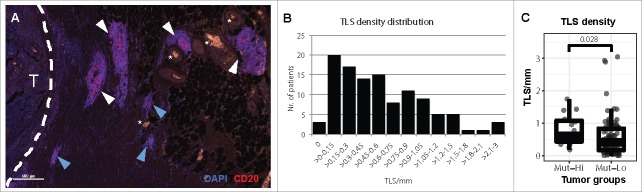
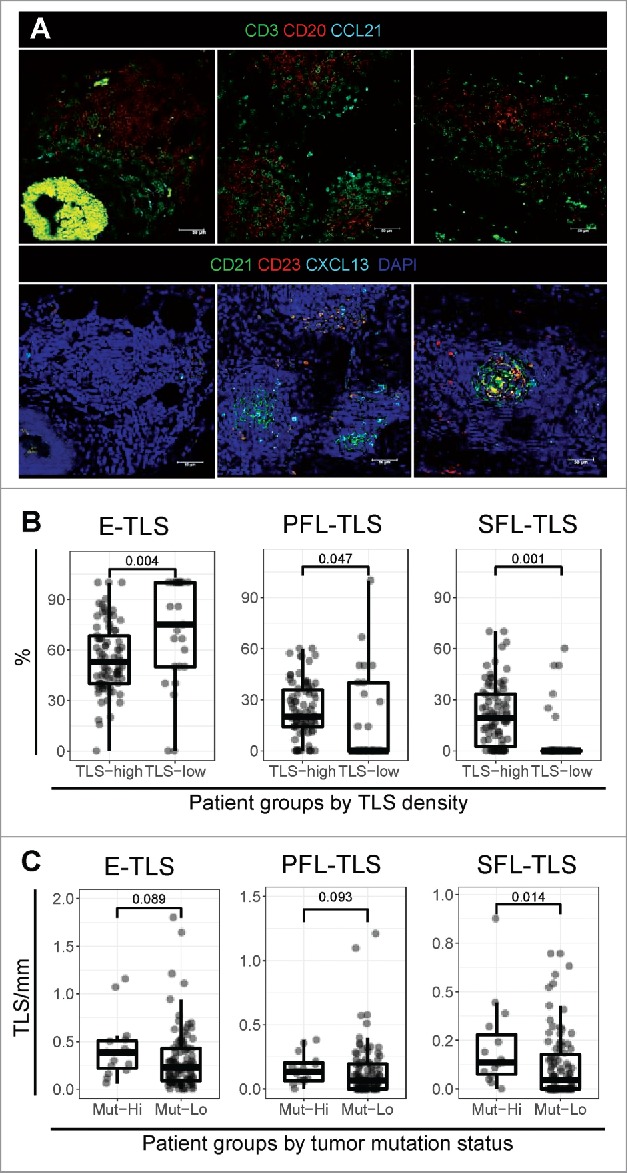
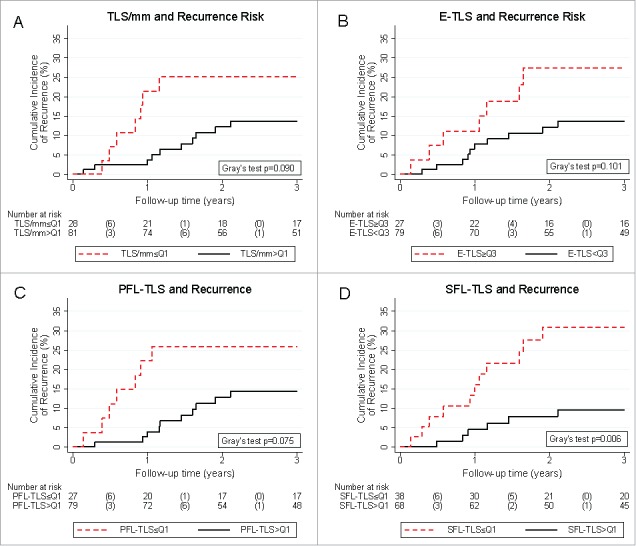
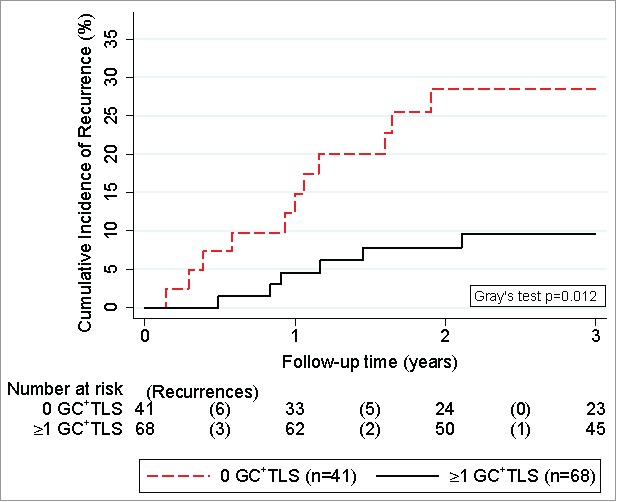
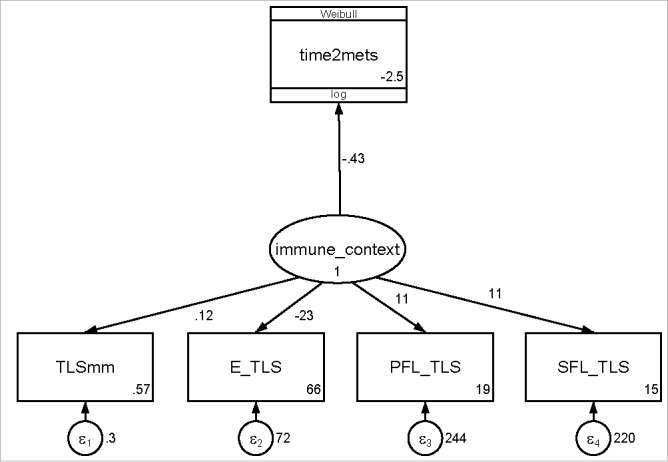
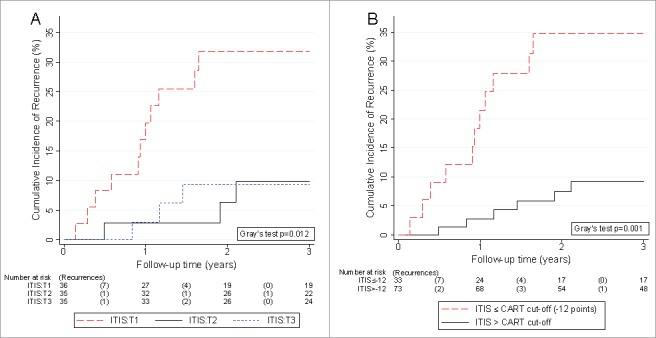
Tertiary lymphoid structures (TLS) are associated with favorable outcome in non-metastatic colorectal carcinoma (nmCRC), but the dynamics of TLS maturation and its association with effective anti-tumor immune surveillance in nmCRC are unclear. Here, we hypothesized that not only the number of TLS but also their composition harbors information on recurrence risk in nmCRC. In a comprehensive molecular, tissue, laboratory, and clinical analysis of 109 patients with stage II/III nmCRC, we assessed TLS numbers and degree of maturation in surgical specimens by multi-parameter immunofluorescence of follicular dendritic cell (FDC) and germinal center (GC) markers. TLS formed in most tumors and were significantly more prevalent in highly-microsatellite-instable (MSI-H) and/or BRAF-mutant nmCRC. We could distinguish three sequential TLS maturation stages which were characterized by increasing prevalence of FDCs and mature B-cells: [1] Early TLS, composed of dense lymphocytic aggregates without FDCs, [2] Primary follicle-like TLS, having FDCs but no GC reaction, and [3] Secondary follicle-like TLS, having an active GC reaction. A simple integrated TLS immunoscore reflecting these parameters identified a large subgroup of nmCRC patients with a very low risk of recurrence independently of clinical co-variables such as ECOG performance status, age, stage, and adjuvant chemotherapy. We conclude that (1) mismatch repair and BRAF mutation status are associated with the formation of TLS in nmCRC, (2) TLS formation in nmCRC follows sequential maturation steps, culminating in germinal center formation, and (3) this maturation process harbors important prognostic information on the risk of disease recurrence.
Overview
The claims and statistics of this paper haven’t been checked yet.
Free: it reads the open-access text and checks the first 5 claims that cite a source we can check. Create a free account to check every claim.
Integrity signals
Registry
Cites
Statistics
Figures
Verification
Claims the paper makes
The claims and statistics of this paper haven’t been checked yet.
Free: it reads the open-access text and checks the first 5 claims that cite a source we can check. Create a free account to check every claim.
Claims other papers make about this one
Each is checked against this paper’s own text: does it say what the citing paper says it does?
The source backs part of the claim, not all of it — or backs it for a different population, condition or comparison.
In the citing paper
“The vast majority of evaluated TLSs in these patients represented mature secondary-follicle-like TLSs, as indicated by the presence of both CD21+ follicular dendritic cells and CD23+ germinal centre B cells30”
From B cells and tertiary lymphoid structures promote immunotherapy response (2020) · cites this paper as [30]
Experimental — accuracy not yet measured
Self-check
Percentages, sums and reported differences re-computed from the paper’s own numbers.
The self-check needs the paper’s full text.
Citations
Cites
Siegel, R. L., Miller, K. D., & Jemal, A. (2017) · CA: A Cancer Journal for Clinicians · doi:10.3322/caac.21387 · Cited by 14,712 · cited 9×
“These data suggest further hypotheses: (1) TLS with a GC reaction represents the most “functional” subtype, (2) GC development indicates towards tumor-specific B cell and CD4 T cell priming, and (3) TLS maturation harbors additional information to mere TLS enumerations for the prognosis of CRC recurrence.”
BackgroundResultInfluentialA Proportional Hazards Model for the Subdistribution of a Competing Risk
Fine, J. P., & Gray, R. J. (1999) · Journal of the American Statistical Association · doi:10.1080/01621459.1999.10474144 · Cited by 14,290
PD-1 Blockade in Tumors with Mismatch-Repair Deficiency
Le, D. T., Uram, J. N., Wang, H., Bartlett, B. R., Kemberling, H., Eyring, A. D., Skora, A. D., Luber, B. S., Azad, N. S., Laheru, D., et al. (2015) · New England Journal of Medicine · doi:10.1056/nejmoa1500596 · Cited by 9,377
Mutational landscape determines sensitivity to PD-1 blockade in non–small cell lung cancer
Rizvi, N. A., Hellmann, M. D., Snyder, A., Kvistborg, P., Makarov, V., Havel, J. J., Lee, W., Yuan, J., Wong, P., Ho, T. S., et al. (2015) · Science · doi:10.1126/science.aaa1348 · Cited by 7,802
Cancer Immunoediting: Integrating Immunity’s Roles in Cancer Suppression and Promotion
Schreiber, R. D., Old, L. J., & Smyth, M. J. (2011) · Science · doi:10.1126/science.1203486 · Cited by 6,474
The immune contexture in human tumours: impact on clinical outcome
Fridman, W. H., Pagès, F., Sautès-Fridman, C., & Galon, J. (2012) · Nature reviews. Cancer · doi:10.1038/nrc3245 · Cited by 4,981
A Class of $K$-Sample Tests for Comparing the Cumulative Incidence of a Competing Risk
Gray, R. J. (1988) · The Annals of Statistics · doi:10.1214/aos/1176350951 · Cited by 4,960
Global Cancer Incidence and Mortality Rates and Trends—An Update
Torre, L. A., Siegel, R. L., Ward, E. M., & Jemal, A. (2016) · Cancer Epidemiology, Biomarkers & Prevention · doi:10.1158/1055-9965.epi-15-0578 · Cited by 3,692 · cited 10×
“In sensitivity analyses, we (1) performed a classification and regression tree analysis (CART, Stata routine cart) to explore the strength of recurrence risk predictors and potential ITIS cut-off points within a non-parametric fashion,(48) and (2) fitted interactions between the ITIS, tumor stage and adjuvant chemothe…”
BackgroundMethodResultInfluentialThe Three Es of Cancer Immunoediting
Dunn, G. P., Old, L. J., & Schreiber, R. D. (2004) · Annual Review of Immunology · doi:10.1146/annurev.immunol.22.012703.104803 · Cited by 3,072
Clonal neoantigens elicit T cell immunoreactivity and sensitivity to immune checkpoint blockade
McGranahan, N., Furness, A. J. S., Rosenthal, R., Ramskov, S., Lyngaa, R., Saini, S. K., Jamal-Hanjani, M., Wilson, G. A., Birkbak, N. J., Hiley, C. T., et al. (2016) · Science · doi:10.1126/science.aaf1490 · Cited by 3,065
Cited by
B cells and tertiary lymphoid structures promote immunotherapy response
Helmink, B. A., Reddy, S. M., Gao, J., Zhang, S., Basar, R., Thakur, R., Yizhak, K., Sade-Feldman, M., Blando, J., Han, G., et al. (2020) · Nature · doi:10.1038/s41586-019-1922-8 · Cited by 2,731
“The vast majority of evaluated TLS in these patients represented mature secondary-follicle like TLS, as indicated by the presence of both CD21+ follicular dendritic cells and CD23 + germinal center B-cells 29 ( Fig.”
B cells are associated with survival and immunotherapy response in sarcoma
Petitprez, F., de Reyniès, A., Keung, E. Z., Chen, T. W.-W., Sun, C.-M., Calderaro, J., Jeng, Y.-M., Hsiao, L.-P., Lacroix, L., Bougoüin, A., et al. (2020) · Nature · doi:10.1038/s41586-019-1906-8 · Cited by 1,942
Tertiary lymphoid structures in the era of cancer immunotherapy
Sautès-Fridman, C., Petitprez, F., Calderaro, J., & Fridman, W. H. (2019) · Nature reviews. Cancer · doi:10.1038/s41568-019-0144-6 · Cited by 1,884
The immune contexture and Immunoscore in cancer prognosis and therapeutic efficacy
Bruni, D., Angell, H. K., & Galon, J. (2020) · Nature reviews. Cancer · doi:10.1038/s41568-020-0285-7 · Cited by 1,586
Tertiary lymphoid structures in cancer
Schumacher, T. N., & Thommen, D. S. (2022) · Science · doi:10.1126/science.abf9419 · Cited by 1,142
“TLSs are associated with favorable prognosis in many cancer types (27), and the prognostic value of TLSs is often independent of TNM staging, as, for instance, documented in lung (110), colorectal (74), and pancreatic (111) cancer.”
BackgroundResultTumor-infiltrating lymphocytes in the immunotherapy era
Paijens, S. T., Vledder, A., de Bruyn, M., & Nijman, H. W. (2021) · Cellular & Molecular Immunology · doi:10.1038/s41423-020-00565-9 · Cited by 880
“Tumors with mature GCharboring TLSs (secondary TLSs) had significantly decreased risk of recurrence compared to tumors without GC-harboring TLSs (early/primary TLSs).(158) Similar results were found in chemotherapy-naive lung squamous cell carcinoma patients; only secondary TLSs, but not early or primary TLSs, were co…”
BackgroundResultInfluentialSpatially organized multicellular immune hubs in human colorectal cancer
Pelka, K., Hofree, M., Chen, J. H., Sarkizova, S., Pirl, J. D., Jorgji, V., Bejnood, A., Dionne, D., Ge, W. H., Xu, K. H., et al. (2021) · Cell · doi:10.1016/j.cell.2021.08.003 · Cited by 874
“We found abundant CXCL13+ T cells throughout MMRd tumors, outside of TLSs (Figure 2H), which are usually found at the invasive border (Posch et al., 2017).”
BackgroundMeylan, M., Petitprez, F., Becht, E., Bougoüin, A., Pupier, G., Calvez, A., Giglioli, I., Verkarre, V., Lacroix, G., Verneau, J., et al. (2022) · Immunity · doi:10.1016/j.immuni.2022.02.001 · Cited by 831
Fridman, W. H., Meylan, M., Petitprez, F., Sun, C.-M., Italiano, A., & Sautès-Fridman, C. (2022) · Nature Reviews Clinical Oncology · doi:10.1038/s41571-022-00619-z · Cited by 657
Tumour-infiltrating B cells: immunological mechanisms, clinical impact and therapeutic opportunities
Laumont, C. M., Banville, A. C., Gilardi, M., Hollern, D. P., & Nelson, B. H. (2022) · Nature Reviews Cancer · doi:10.1038/s41568-022-00466-1 · Cited by 524
Picard, E., Verschoor, C. P., Ma, G. W., & Pawelec, G. (2020) · Frontiers in Immunology · doi:10.3389/fimmu.2020.00369 · Cited by 522
“TLS share many similarities with lymph node structures where immune responses normally occur; high TLS densities were observed in CRC, particularly within MSI tumors (83, 84).”
BackgroundCalderaro, J., Petitprez, F., Becht, E., Laurent, A., Hirsch, T. Z., Rousseau, B., Luciani, A., Amaddeo, G., Derman, J., Charpy, C., et al. (2019) · Journal of Hepatology · doi:10.1016/j.jhep.2018.09.003 · Cited by 479
Speiser, D. E., Chijioke, O., Schaeuble, K., & Münz, C. (2023) · Nature Cancer · doi:10.1038/s43018-023-00521-2 · Cited by 479
Siliņa, K., Soltermann, A., Attar, F. M., Casanova, R., Uckeley, Z. M., Thut, H., Wandres, M., Isajevs, S., Cheng, P., Curioni-Fontecedro, A., et al. (2018) · Cancer Research · doi:10.1158/0008-5472.can-17-1987 · Cited by 448
Self-citationThe roles of tertiary lymphoid structures in chronic diseases
Sato, Y., Silina, K., van den Broek, M., Hirahara, K., & Yanagita, M. (2023) · Nature Reviews Nephrology · doi:10.1038/s41581-023-00706-z · Cited by 320
Tertiary lymphoid structures in anticancer immunity
Teillaud, J.-L., Houel, A., Panouillot, M., Riffard, C., & Dieu-Nosjean, M.-C. (2024) · Nature Reviews Cancer · doi:10.1038/s41568-024-00728-0 · Cited by 293
B Cell Function in the Tumor Microenvironment
Downs-Canner, S. M., Meier, J., Vincent, B. G., & Serody, J. S. (2022) · Annual Review of Immunology · doi:10.1146/annurev-immunol-101220-015603 · Cited by 287
Workel, H. H., Lubbers, J. M., Arnold, R., Prins, T. M., van der Vlies, P., de Lange, K., Bosse, T., van Gool, I. C., Eggink, F. A., Wouters, M. C. A., et al. (2019) · Cancer Immunology Research · doi:10.1158/2326-6066.cir-18-0517 · Cited by 262
A blueprint for tumor-infiltrating B cells across human cancers
Ma, J., Wu, Y., Ma, L., Yang, X., Zhang, T., Song, G., Li, T., Gao, K., Shen, X., Lin, J., et al. (2024) · Science · doi:10.1126/science.adj4857 · Cited by 255
“EF-dominant cancers such as LIHC and CHOL were dominated by immature TLSs, whereas GC-dominant cancerssuch as COAD, LC, and STAD contained more mature, GC-like TLSs ( 79 – 81 , 106 ).”
BackgroundLaumont, C. M., & Nelson, B. H. (2023) · Cancer Cell · doi:10.1016/j.ccell.2023.02.017 · Cited by 250
Hot and cold tumors: Immunological features and the therapeutic strategies
Wang, L., Geng, H., Liu, Y., Liu, L., Chen, Y., Wu, F., Liu, Z., Ling, S., Wang, Y., & Zhou, L. (2023) · MedComm · doi:10.1002/mco2.343 · Cited by 241
Tertiary lymphoid structures in cancer – considerations for patient prognosis
Munoz-Erazo, L., Rhodes, J. L., Marion, V. C., & Kemp, R. A. (2020) · Cellular & Molecular Immunology · doi:10.1038/s41423-020-0457-0 · Cited by 232
Tertiary lymphoid structures in diseases: immune mechanisms and therapeutic advances
Zhao, L., Jin, S., Wang, S., Zhang, Z., Wang, X., Chen, Z., Wang, X., Huang, S., Zhang, D., & Wu, H. (2024) · Signal Transduction and Targeted Therapy · doi:10.1038/s41392-024-01947-5 · Cited by 218
“384 Furthermore, the presence of mature TLSs is linked to a favorable prognosis in CRC patients, particularly those with nmCRC. 404 Additional research highlighted that CRC tissues with high levels of HEVs within TLSs demonstrated enhanced recruitment capabilities for CD3 T cells, CD8 T cells, and…”
BackgroundT follicular helper cells in cancer
Gutiérrez-Melo, N., & Baumjohann, D. (2023) · Trends in Cancer · doi:10.1016/j.trecan.2022.12.007 · Cited by 209
B cells and cancer: To B or not to B?
Fridman, W. H., Petitprez, F., Meylan, M., Chen, T. W.-W., Sun, C.-M., Roumenina, L. T., & Sautès-Fridman, C. (2021) · Journal of Experimental Medicine · doi:10.1084/jem.20200851 · Cited by 204
“In CRC, B cells were found associated with good outcome (Edin et al., 2019; Berntsson et al., 2018).”
BackgroundInfluentialBai, Z., Zhou, Y., Ye, Z., Xiong, J., Lan, H., & Wang, F. (2022) · Frontiers in Immunology · doi:10.3389/fimmu.2021.808964 · Cited by 189
“Posch et al. performed a comprehensive molecular, tissue, laboratory, and clinical analysis of 109 patients with stage II/III CRC (127).”
MethodSun, X., Liu, W., Sun, L., Mo, H., Feng, Y., Wu, X., Li, C., Chen, C., Li, J., Xin, Y., et al. (2022) · Journal for ImmunoTherapy of Cancer · doi:10.1136/jitc-2022-005531 · Cited by 181
Nagl, L., Horvath, L., Pircher, A., & Wolf, D. (2020) · Frontiers in Cell and Developmental Biology · doi:10.3389/fcell.2020.00766 · Cited by 180
Shu, D. H., Ho, W. J., Kagohara, L. T., Girgis, A. A., Shin, S. M., Danilova, L., Lee, J. W., Sidiropoulos, D. N., Mitchell, S., Munjal, K., et al. (2024) · Nature Immunology · doi:10.1038/s41590-024-01992-w · Cited by 182
Noël, G., Fontsa, M. L., Garaud, S., De Silva, P., de Wind, A., Van den Eynden, G. G., Salgado, R., Boisson, A., Locy, H., Thomas, N., et al. (2021) · Journal of Clinical Investigation · doi:10.1172/jci139905 · Cited by 174
“Previous work also revealed that TLS exist in different maturation states (7, 8, 13).”
BackgroundYan, Y., Sun, D., Hu, J., Chen, Y., Sun, L., Yu, H., Xiong, Y., Huang, Z., Xia, H., Zhu, X., et al. (2025) · Nature Genetics · doi:10.1038/s41588-024-01998-y · Cited by 170
“https://doi.org/10.1038/s41588-024-01998-y follicular-like TLSs (containing both follicular dendritic cells and germinal centers) 36,37 .”
InfluentialB Cell Orchestration of Anti-tumor Immune Responses: A Matter of Cell Localization and Communication
Kinker, G. S., Vitiello, G. A. F., Ferreira, W. A. S., Chaves, A. S., de Lima, V. C. C., & Medina, T. D. S. (2021) · Frontiers in Cell and Developmental Biology · doi:10.3389/fcell.2021.678127 · Cited by 177
“states of TLS maturation: (i) early TLS as dense lymphocytic aggregates; (ii) primary follicle-like TLS, composed of B cell clusters with FDC networks, but devoid of GCs; and (iii) the secondary follicle-like TLS, including active GCs with CD23 B cells (Posch et al., 2018).”
BackgroundSpatial landscapes of cancers: insights and opportunities
Chen, J., Larsson, L., Swarbrick, A., & Lundeberg, J. (2024) · Nature Reviews Clinical Oncology · doi:10.1038/s41571-024-00926-7 · Cited by 184
“TLS have established predictive and prognostic values, with multiple studies demonstrating their correlation with response to ICIs 118,119,121 and survival 119–121 , 123– 126 .”
Tailoring vascular phenotype through AAV therapy promotes anti-tumor immunity in glioma
Ramachandran, M., Vaccaro, A., van de Walle, T., Georganaki, M., Lugano, R., Vemuri, K., Kourougkiaouri, D., Vazaios, K., Hedlund, M., Tsaridou, G., et al. (2023) · Cancer Cell · doi:10.1016/j.ccell.2023.04.010 · Cited by 169
Zheng, S., Wang, W., Shen, L., Yao, Y., Xia, W., & Ni, C. (2024) · Experimental Hematology & Oncology · doi:10.1186/s40164-024-00543-1 · Cited by 163
“Indeed, high TLS densities are significantly associated with favorable clinical outcomes across a wide array of solid tumors, including gastrointestinal tumors [163], NSCLC [164], hepatocellular carcinoma (HCC) [165], melanoma [166], BC [167], and CRC [168].”
BackgroundThe prognostic significance of peritumoral tertiary lymphoid structures in breast cancer
Sofopoulos, M., Fortis, S. P., Vaxevanis, C. K., Sotiriadou, N. N., Arnogiannaki, N., Ardavanis, A., Vlachodimitropoulos, D., Perez, S. A., & Baxevanis, C. N. (2019) · Cancer Immunology, Immunotherapy · doi:10.1007/s00262-019-02407-8 · Cited by 160
Predictive biomarkers of colon cancer immunotherapy: Present and future
Hou, W., Cheng, Y., & Zhu, H. (2022) · Frontiers in Immunology · doi:10.3389/fimmu.2022.1032314 · Cited by 162
Tertiary lymphoid structures and B lymphocytes in cancer prognosis and response to immunotherapies
Jacquelot, N., Tellier, J., Nutt, S. L., & Belz, G. T. (2021) · OncoImmunology · doi:10.1080/2162402x.2021.1900508 · Cited by 158
“(2018) delineated that TLS in colorectal tumors exhibited different degrees of maturation which were associated with differential prognostic values.(47) In particular, mature TLS containing germinal centers had a more positive prognostic outcome compared with immature TLS.”
BackgroundInfluentialB Cells and Tertiary Lymphoid Structures: Friends or Foes in Cancer Immunotherapy?
Lauss, M., Donia, M., Svane, I. M., & Jönsson, G. B. (2021) · Clinical Cancer Research · doi:10.1158/1078-0432.ccr-21-1130 · Cited by 157
Kinker, G. S., Vitiello, G. A. F., Diniz, A. B., Cabral-Piccin, M. P., Pereira, P. H. B., Carvalho, M. L. R., Ferreira, W. A. S., Chaves, A. S., Rondinelli, A. J., Gusmão, A. F., et al. (2023) · Gut · doi:10.1136/gutjnl-2022-328697 · Cited by 154
IL-33-activated ILC2s induce tertiary lymphoid structures in pancreatic cancer
Amisaki, M., Zebboudj, A., Yano, H., Zhang, S. L., Payne, G., Chandra, A. K., Yu, R., Guasp, P., Sethna, Z. M., Ohmoto, A., et al. (2025) · Nature · doi:10.1038/s41586-024-08426-5 · Cited by 154
Federico, L., McGrail, D. J., Bentebibel, S.-E., Haymaker, C., Ravelli, A., Forget, M., Karpinets, T. V., Jiang, P., Reuben, A., Negrao, M. V., et al. (2021) · Annals of Oncology · doi:10.1016/j.annonc.2021.09.021 · Cited by 148
Meylan, M., Petitprez, F., Lacroix, L., Tommaso, L. D., Roncalli, M. G., Bougoüin, A., Laurent, A., Amaddeo, G., Sommacale, D., Regnault, H., et al. (2020) · Clinical Cancer Research · doi:10.1158/1078-0432.ccr-19-2929 · Cited by 137
Lv, J., Yuan, W., Yin, J., Chen, Y., Zhou, G., Chen, W., Liang, X., Zhang, Y., Zhang, C., He, S., et al. (2023) · Nature Medicine · doi:10.1038/s41591-023-02369-6 · Cited by 138
Lynch, K., Young, S. J., Meneveau, M. O., Wages, N. A., Engelhard, V. H., Slingluff, C. L., & Mauldin, I. S. (2021) · Journal for ImmunoTherapy of Cancer · doi:10.1136/jitc-2020-002273 · Cited by 177
The immune microenvironment of colorectal cancer
Kennel, K. B., & Greten, F. R. (2025) · Nature reviews. Cancer · doi:10.1038/s41568-025-00872-1 · Cited by 143
“Given that the same fibrosis markers also associate with response to ICB in patients with melanoma, it is likely that they could also be used to predict the efficacy of ICB in CRC 198 .”
Standardized Pathology Screening of Mature Tertiary Lymphoid Structures in Cancers
Vanhersecke, L., Bougoüin, A., Crombé, A., Brunet, M., Sofeu, C. L., Parrens, M., Pierron, H., Bonhomme, B., Lembege, N., Rey, C., et al. (2023) · Laboratory Investigation · doi:10.1016/j.labinv.2023.100063 · Cited by 137
Xu, W., Lu, J., Liu, W., Anwaier, A., Wu, Y., Tian, X., Su, J., Qu, Y.-Y., Yang, J., Zhang, H., et al. (2023) · Journal for ImmunoTherapy of Cancer · doi:10.1136/jitc-2023-006667 · Cited by 130
“Our analysis focused on assessing the infiltration ratio of adaptive immune responder cells within the ccRCC TME that are involved in recognizing, responding to, and eliminating tumor cells during tumor progression (online supplemental figure S3).”
Zhang, Y., Xu, M., Ren, Y., Ba, Y., Liu, S., Zuo, A., Xu, H., Weng, S., Han, X., & Liu, Z. (2024) · Molecular Cancer · doi:10.1186/s12943-024-01980-6 · Cited by 133
“The spatial structure of TLS (presence of GCs), its cellular composition (high-density TIL infiltration and differences in immune cell phenotypes), and its relationship to tumour location (peri-tumour or intra-tumour) affect the prognosis of tumour patients [3, 4, 25, 48, 175].”
BackgroundKašíková, L., Raková, J., Hensler, M., Láníčková, T., Tománková, J., Pasulka, J., Drozenová, J., Mojžíšová, K., Fialová, A., Vosahlikova, S., et al. (2024) · Nature Communications · doi:10.1038/s41467-024-46873-w · Cited by 129
“2B, C) 43 – 45 .”
Pancreatic Cancer Chemotherapy Is Potentiated by Induction of Tertiary Lymphoid Structures in Mice
Delvecchio, F. R., Fincham, R. E. A., Spear, S., Clear, A. J., Roy-Luzarraga, M., Balkwill, F. R., Gribben, J. G., Bombardieri, M., Hodivala‐Dilke, K., Capasso, M., et al. (2021) · Cellular and Molecular Gastroenterology and Hepatology · doi:10.1016/j.jcmgh.2021.06.023 · Cited by 123
“Recently, not only TLS density, but also TLS maturation, called TLS immunoscore, have been shown to prognosticate the risk of disease recurrence in untreated nonmetastatic colorectal cancer.(16) Mature TLSs are the ultimate stage of TLS formation, in which developed follicle-like structures show the presence of germin…”
BackgroundHayashi, Y., Makino, T., Sato, E., Ohshima, K., Nogi, Y., Kanemura, T., Honma, K., Yamashita, K., Saito, T., Tanaka, K., et al. (2023) · British Journal of Cancer · doi:10.1038/s41416-023-02235-9 · Cited by 123
“found that TLS maturation had prognostic value and was a predictive factor for colorectal cancer recurrence [34].”
BackgroundZhang, C., Wang, X., Zuo, J., Wang, X.-F., Feng, X., Zhang, B., Li, Y.-T., Yi, C., Zhang, P., Ma, X., et al. (2022) · Journal for ImmunoTherapy of Cancer · doi:10.1136/jitc-2022-006425 · Cited by 123
Li, H., Zhang, M.-J., Zhang, B., Lin, W., Li, S., Xiong, D., Wang, Q., Wang, W.-D., Yang, Q., Huang, C., et al. (2025) · Nature Communications · doi:10.1038/s41467-025-59341-w · Cited by 126
“Existing fi ndings suggest the propositionthatGC-containingmTLS,ratherthanimTLSwithoutaGC, are associated with clinical bene fi ts in lung cancer 12 , hepatocellular cancer 13 , colorectalcancer 14 , and pancreaticcancer 15 .”
Fibroblastic reticular cells at the nexus of innate and adaptive immune responses
Perez‐Shibayama, C., Gil‐Cruz, C., & Ludewig, B. (2019) · Immunological Reviews · doi:10.1111/imr.12748 · Cited by 111
Riedl, J. M., Barth, D. A., Brueckl, W. M., Zeitler, G., Foris, V., Mollnar, S., Stotz, M., Rossmann, C. H., Terbuch, A., Balić, M., et al. (2020) · Cancers · doi:10.3390/cancers12082319 · Cited by 115
Self-citationRodriguez, A. B., & Engelhard, V. H. (2020) · Cancer Immunology Research · doi:10.1158/2326-6066.cir-20-0432 · Cited by 114
T follicular helper and B cell crosstalk in tertiary lymphoid structures and cancer immunotherapy
Garaud, S., Dieu‐Nosjean, M., & Willard-Gallo, K. E. (2022) · Nature Communications · doi:10.1038/s41467-022-29753-z · Cited by 103
MacFawn, I., Magnon, G. C., Gorecki, G., Kunning, S. R., Rashid, R., Ernest, M., Atiya, H. I., Ruffin, A. T., Taylor, S., Soong, T. R., et al. (2024) · Cancer Cell · doi:10.1016/j.ccell.2024.09.007 · Cited by 106
He, M., He, Q., Cai, X., Liu, J., Deng, H., Li, F., Zhong, R., Lu, Y. H., Peng, H., Wu, X., et al. (2023) · Journal for ImmunoTherapy of Cancer · doi:10.1136/jitc-2022-005539 · Cited by 105
Li, H., Liu, H., Fu, H., Li, J., Xu, L., Wang, G., & Wu, H. M. (2021) · Frontiers in Immunology · doi:10.3389/fimmu.2021.648812 · Cited by 109
“org 7 which was similar to previous findings of breast cancer (25), lung cancer (9), colorectal cancer (26) and pancreatic cancer (11).”
ResultBarmpoutis, P., Capite, M. D., Kayhanian, H., Waddingham, W., Alexander, D. C., Jansen, M., & Kwong, F. N. K. (2021) · PLoS ONE · doi:10.1371/journal.pone.0256907 · Cited by 102
“Furthermore, in lung cancer, previous studies have identified three maturation stages of TLS culminating in germinal centre formation with significant relevance to patient survival [8].”
BackgroundKather, J. N., & Halama, N. (2019) · British Journal of Cancer · doi:10.1038/s41416-019-0441-6 · Cited by 101
Ling, Y., Zhong, J., Weng, Z., Lin, G., Liu, C., Pan, C., Yang, H., Wei, X., Xie, X., Wei, X., et al. (2022) · Clinical and Translational Medicine · doi:10.1002/ctm2.1074 · Cited by 97
Werner, F., Wagner, C., Simon, M., Glatz, K., Mertz, K. D., Laubli, H. P., Griss, J., & Wagner, S. N. (2021) · Frontiers in Immunology · doi:10.3389/fimmu.2021.675146 · Cited by 139
Kang, W., Feng, Z., Luo, J., He, Z., Liu, J., Wu, J., & Rong, P. (2021) · Frontiers in Immunology · doi:10.3389/fimmu.2021.689270 · Cited by 98
“Moreover, germinal centers (GCs) in TLSs may determine the prognostic value of TLSs (23, 24).”
BackgroundTertiary Lymphoid Structures and B cells: Clinical impact and therapeutic modulation in cancer
Sautès‐Fridman, C., Verneau, J., Sun, C., Moreira, M., Chen, T. W., Meylan, M., Petitprez, F., & Fridman, W. H. (2020) · Seminars in Immunology · doi:10.1016/j.smim.2020.101406 · Cited by 95
Tertiary lymphoid structures are critical for cancer prognosis and therapeutic response
Zhang, Q., & Wu, S. (2023) · Frontiers in Immunology · doi:10.3389/fimmu.2022.1063711 · Cited by 96
“It is noteworthy that the presence of Treg and regulatory B (Breg) cells has been observed in TLSs in breast tumors, prostate cancer, lung squamous cell carcinoma, and pulmonary metastases from CRC and bladder cancer (37, 51, 112, 122– Frontiers in Immunology 09 124), and their high densities have been related to adve…”
BackgroundInfluentialTertiary lymphoid structures in cancer: maturation and induction
Chen, Y., Wu, Y., Yan, G., & Zhang, G. (2024) · Frontiers in Immunology · doi:10.3389/fimmu.2024.1369626 · Cited by 103
Domblides, C., Rochefort, J., Riffard, C., Panouillot, M., Lescaille, G., Teillaud, J., Mateo, V., & Dieu‐Nosjean, M. (2021) · Frontiers in Immunology · doi:10.3389/fimmu.2021.698604 · Cited by 90
“In stages II/III CRC, TLS and especially mature TLS are increased in MSI positive tumors and correlate with a better outcome compared with immature TLS (22, 50).”
BackgroundInfluentialThe Immune Microenvironment in Prostate Cancer: A Comprehensive Review
Novysedlák, R., Guney, M., Khouri, M. A., Bartolini, R., Foley, L. K., Benešová, I., Ozaniak, A., Novák, V., Veselý, Š., Pacas, P., et al. (2024) · Oncology · doi:10.1159/000541881 · Cited by 91
“Importantly, this study further emphasized that the level of maturation of TLOs serves as a superior prognostic marker than their mere presence [206].”
van Rijthoven, M., Obahor, S., Pagliarulo, F., van den Broek, M. F., Schraml, P., Moch, H., van der Laak, J. A. W. M., Ciompi, F., & Siliņa, K. (2024) · Communications Medicine · doi:10.1038/s43856-023-00421-7 · Cited by 91
Self-citationYamaguchi, T., Ito, M., Ohmura, H., Hanamura, F., Nakano, M., Tsuchihashi, K., Nagai, S., Ariyama, H., Kusaba, H., Yamamoto, H., et al. (2020) · OncoImmunology · doi:10.1080/2162402x.2020.1724763 · Cited by 84
“Since there is no established TLS classification, previous studies adopted their own classifications.(12,25,26) One previous report of ovarian cancer classified lymphoid aggregates into four types based on size, cellular composition, and degree of GC organization.”
BackgroundMethodInfluentialMasuda, T., Tanaka, N., Takamatsu, K., Hakozaki, K., Takahashi, R., Anno, T., Kufukihara, R., Shojo, K., Mikami, S., Shinojima, T., et al. (2022) · Journal for ImmunoTherapy of Cancer · doi:10.1136/jitc-2021-003883 · Cited by 81
Tertiary lymphoid structures and cancer immunotherapy: From bench to bedside
Peyraud, F., Guégan, J., Vanhersecke, L., Brunet, M., Teyssonneau, D., Palmieri, L., Bessede, A., & Italiano, A. (2025) · Med · doi:10.1016/j.medj.2024.10.023 · Cited by 81
Wang, Q., Shen, X., An, R., Bai, J., Dong, J., Cai, H., Zhu, H., Zhong, W., Chen, W., Liu, A., et al. (2022) · Frontiers in Immunology · doi:10.3389/fimmu.2022.962056 · Cited by 85
“More and more evidence shows that high TLS density is associated with a good prognosis for lung cancer (7, 8), oral cancer (9), pancreatic cancer (10), breast cancer (11, 12), and colorectal cancer (13, 14) and this prognostic value is independent of tumor-node-metastasis (TNM) stage, such aslung cancer (7), pancreati…”
BackgroundResultCell and tissue engineering in lymph nodes for cancer immunotherapy
Najibi, A. J., & Mooney, D. J. (2020) · Advanced Drug Delivery Reviews · doi:10.1016/j.addr.2020.07.023 · Cited by 80
Oral cancer-associated tertiary lymphoid structures: gene expression profile and prognostic value
Li, K., Guo, Q., Zhang, X., Dong, X., Liu, W., Zhang, A., Li, Y., Yan, J., Jia, G., Zheng, Z., et al. (2019) · Clinical & Experimental Immunology · doi:10.1111/cei.13389 · Cited by 74
CD20+CD22+ADAM28+ B Cells in Tertiary Lymphoid Structures Promote Immunotherapy Response
Wu, Z., Zhou, J., Xiao, Y., Ming, J., Zhou, J., Dong, F., Zhou, X., Xu, Z., Zhao, X., Lei, P., et al. (2022) · Frontiers in Immunology · doi:10.3389/fimmu.2022.865596 · Cited by 73
“TLS neogenesis was divided into several sequential maturation stages, starting as dense lymphocytic aggregates and culminating in GC formation (7, 9).”
BackgroundActivation of B cells in Tertiary Lymphoid Structures in cancer: Anti-tumor or anti-self?
Fridman, W. H., Sibéril, S., Pupier, G., Soussan, S., & Sautès‐Fridman, C. (2022) · Seminars in Immunology · doi:10.1016/j.smim.2022.101703 · Cited by 70
Maoz, A., Dennis, M. J., & Greenson, J. K. (2019) · Frontiers in Immunology · doi:10.3389/fimmu.2019.01884 · Cited by 75
“Larger lymphocytic aggregates have varying numbers of CD8+ T-cells as well as CD20+ B-cells (33), which preferentially proliferate within GCs (12).”
BackgroundMethodInfluentialXu, W., Lu, J., Tian, X., Ye, S., Wei, S., Wang, J., Anwaier, A., Qu, Y., Liu, W., Chang, K. S., et al. (2024) · MedComm · doi:10.1002/mco2.461 · Cited by 67
“13,29,40,41 Since the intratumoral TLS that predict the better prognosis are predominantly mature TLS, investigating if TLS maturation could be the confounding reason for the difference in prognostic associations in ccRCC rather than the localization constitutes a possible goal for future research.”
BackgroundPetitprez, F., Sun, C., Lacroix, L., Sautès‐Fridman, C., de Reyniès, A., & Fridman, W. H. (2018) · Frontiers in Oncology · doi:10.3389/fonc.2018.00390 · Cited by 66
“In colorectal cancer, their prognostic impact was found to be dependent on their maturation level (21).”
BackgroundZhang, T., Lei, X., Jia, W., Li, J., Nie, Y., Mao, Z., Wang, Y., Tao, K., & Song, W. (2022) · Cancer Medicine · doi:10.1002/cam4.5227 · Cited by 61
LLT1-CD161 Interaction in Cancer: Promises and Challenges
Braud, V. M., Meghraoui, A., Elaldi, R., Petti, L., Germain, C., & Anjuère, F. (2022) · Frontiers in Immunology · doi:10.3389/fimmu.2022.847576 · Cited by 61
“The maturity of TLS is of importance, GC-containing TLS being the most mature and best predictors of lack of cancer recurrence (115).”
BackgroundWang, Q., Zhong, W., Shen, X., Hao, Z., Wan, M., Yang, X., An, R., Zhu, H., Cai, H., Li, T., et al. (2024) · npj Precision Oncology · doi:10.1038/s41698-024-00533-w · Cited by 62
“TLSs are predictors of positive prognosis in CRC 6,14,15 , while the biological function of TLS in RC remains poorly understood.”
InfluentialThe Tumor Microenvironment of Colorectal Cancer Metastases: Opportunities in Cancer Immunotherapy
Kamal, Y., Schmit, S. L., Frost, H. R., & Amos, C. I. (2020) · Immunotherapy · doi:10.2217/imt-2020-0026 · Cited by 61
“With regard to CRC, the presence of tertiary lymphoid structures has also been associated with reduced recurrence risk in nonmetastatic, stage II–III CRC [43].”
BackgroundZhou, L., Xu, B., Liu, Y., & Wang, Z. (2021) · OncoImmunology · doi:10.1080/2162402x.2021.1915574 · Cited by 59
Marie, P. K., Haymaker, C., Parra, E. R., Kim, Y. U., Lazcano, R., Gite, S., Lorenzini, D., Wistuba, I. I., Tidwell, R. S. S., Song, X., et al. (2021) · Clinical Cancer Research · doi:10.1158/1078-0432.ccr-21-0163 · Cited by 57
Qin, M., Hamanishi, J., Ukita, M., Yamanoi, K., Takamatsu, S., Abiko, K., Murakami, R., Miyamoto, T., Suzuki, H., Ueda, A., et al. (2021) · Cancer Immunology Immunotherapy · doi:10.1007/s00262-021-03093-1 · Cited by 55
Immunotherapy for SMARCB1-Deficient Sarcomas: Current Evidence and Future Developments
Ngo, C., & Postel-Vinay, S. C. (2022) · Biomedicines · doi:10.3390/biomedicines10030650 · Cited by 57
Cui, X., Gu, X., Li, D., Wu, P., Sun, N., Zhang, C., & He, J. (2025) · Cancer Letters · doi:10.1016/j.canlet.2025.217491 · Cited by 56
Saito, A., Kitayama, J., Horie, H., Koinuma, K., Ohzawa, H., Yamaguchi, H., Kawahira, H., Mimura, T., Lefor, A. K., & Sata, N. (2020) · Cancer Science · doi:10.1111/cas.14615 · Cited by 56
“01), whereas the number of CD163(+) M2 macrophages in metformin(+) tumors tended to be lower than in their counterparts (M = 56 [27-96]/HPF vs M = 67 [33-125]/HPF, P = .”
BackgroundLin, Q., Tao, P., Wang, J., Ma, L., Jiang, Q., Li, J., Zhang, G., Liu, J., Zhang, Y., Hou, Y., et al. (2020) · OncoImmunology · doi:10.1080/2162402x.2020.1747339 · Cited by 54
“In patients with stage II/III non-metastatic colorectal carcinoma (nmCRC), TLS has been shown to be significantly associated with highmicrosatellite-instability (MSI-H) and BRAF-mutant nmCRC, which may be through the production of immunogenic epitopes.(55) The presence of gene mutations is an important characteristic…”
BackgroundThe neglected brothers come of age: B cells and cancer
Shalapour, S., & Karin, M. (2021) · Seminars in Immunology · doi:10.1016/j.smim.2021.101479 · Cited by 54
Tertiary lymphoid structures in autoimmune diseases
Dong, Y., Wang, T., & Wu, H. (2024) · Frontiers in Immunology · doi:10.3389/fimmu.2023.1322035 · Cited by 52
Mi, Z., Chen, J., Zhang, Z., Liu, J., Lei, Y., Tan, H., Li, W., Chen, X. S., & Rong, P. (2025) · Science Translational Medicine · doi:10.1126/scitranslmed.ado8395 · Cited by 53
Preventive effect of tertiary lymphoid structures on lymph node metastasis of lung adenocarcinoma
Wakasu, S., Tagawa, T., Haratake, N., Kinoshita, F., Oku, Y., Ono, Y., Takenaka, T., Oda, Y., Shimokawa, M., & Mori, M. (2023) · Cancer Immunology Immunotherapy · doi:10.1007/s00262-022-03353-8 · Cited by 49
“In some previous studies, the maturation of TLSs—as defined by the type of B cells present—was associated with a better prognosis and efficacy of immunotherapy in comparison to the presence of TLSs [14, 16, 17, 29].”
BackgroundResultRochais, M. L., Hémon, P., Ben-guigui, D., Garaud, S., Dantec, C. L., Pers, J., Cornec, D., & Uguen, A. (2023) · Frontiers in Immunology · doi:10.3389/fimmu.2023.1147480 · Cited by 49
“Furthermore, regardless of patient characteristics, MSI status and TLS presence generally correlate with improved survival in CRC patients (7, 15, 16).”
BackgroundCorsiero, E., Delvecchio, F. R., Bombardieri, M., & Pitzalis, C. (2019) · Current Opinion in Immunology · doi:10.1016/j.coi.2019.01.004 · Cited by 51
Metadata
- Authors
- Posch, F., Silina, K., Leibl, S., Mündlein, A., Moch, H., Siebenhüner, A., Samaras, P., Riedl, J., Stotz, M., Szkandera, J., Stöger, H., Pichler, M., Stupp, R., van den Broek, M., Schraml, P., Gerger, A., Petrausch, U., & Winder, T.
- Affiliations
- Medical University of Graz (AT)
- Tumor Immunology Research Unit, Institute of Experimental Immunology, University of Zurich, Winterthurerstrasse 190, Zurich, Switzerland
- University Hospital Zurich (CH)
- Vorarlberg Institute for Vascular Investigation and Treatment (VIVIT), Carinagasse 47, Feldkirch, Austria
- The University of Texas MD Anderson Cancer Center (US)
- Corresponding author
- Gerger, Armin
- ORCID
- Venue
- OncoImmunology
- Publisher
- Informa UK Limited
- Published
- 2017-12-18
- Volume
- 7
- Issue
- 2
- Pages
- e1378844-e1378844
- ISSN
- 2162-4011 (ISSN-L)
- 2162-402X
- PMC
- PMC5798199
- OpenAlex
- W2754092421
- Semantic Scholar
- b23d332bf1f947f639c068f6c05b4e8a548789d0
- Cited by
- 380
- References
- 49
- Citations by year
- 2026: 44 · 2025: 65 · 2024: 85 · 2023: 54 · 2022: 50 · 2021: 44 · 2020: 23 · 2019: 10 · 2018: 4 · 2017: 1
- FWCI
- 4.58
- Type
- journal article
- Language
- en
- Open access
- gold
- doi.org
- Licence
- Locations
- OncoImmunology (publishedVersion, cc-by-nc-nd)
- PubMed Central (publishedVersion, cc-by-nc-nd)
- PubMed (publishedVersion)
- Zurich Open Repository and Archive (University of Zurich) (acceptedVersion, cc-by-nc-nd)
- DOAJ (DOAJ: Directory of Open Access Journals) (submittedVersion, cc-by-sa)
- OPUS (Augsburg University) (submittedVersion, cc-by-nc-nd)
- Zurich Open Repository and Archive (University of Zurich) (submittedVersion, cc-by-nc-nd)
- Zurich Open Repository and Archive (University of Zurich)
- Funders
- Swiss Cancer League (F-87701-31-01)
- University of Zurich (K-84901-01-01)
- Topics
- Health Sciences › Medicine › Oncology › Cancer Immunotherapy and Biomarkers
- Health Sciences › Medicine › Oncology › Colorectal Cancer Treatments and Studies
- Health Sciences › Medicine › Oncology › Colorectal Cancer Surgical Treatments
- Keywords
- tertiary lymphoid structures, colorectal cancer, tumor recurrence, follicular dendritic cells, germinal center, microsatellite instability, BRAF mutation, DNA mismatch repair, prognostic factors, immune score
About these checks
Registry, retraction, Cites and statistics results are computed, not judged, with one exception: a printed reference that no index lists is read once by a model before it counts as a citation error. Claims are extracted by a model and kept only when their quote appears verbatim in the text; each cited source is then checked, with a model’s help, for whether it says what the claim relies on. Those verdicts can be wrong — read the claim’s quote and the cited source before relying on one.
Statistics and arithmetic are recomputed, not judged.
Confidence bands are shown only for fields calibrated on our annotated test set. None is calibrated yet, so no band is shown.
What counts as a claim ›How we measure confidence ›How we check this ›
Are you an author, or do you see a problem with this page? Request a review
Data sources
Bibliographic data: Semantic Scholar, OpenAlex, Crossref.
Contains information from the Semantic Scholar Academic Graph Datasets, made available under the ODC Attribution License (ODC-BY 1.0).
Semantic Scholar’s data is described in: Kinney, R., et al. (2023). The Semantic Scholar Open Data Platform. arXiv:2301.10140.
