

Maturation of tertiary lymphoid structures and recurrence of stage II and III colorectal cancer
Open accessThe DOI matches its Crossref record; 49 of the 49 references it cites were found in a registry or an index.
Abstract
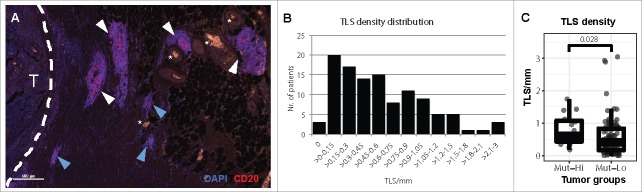
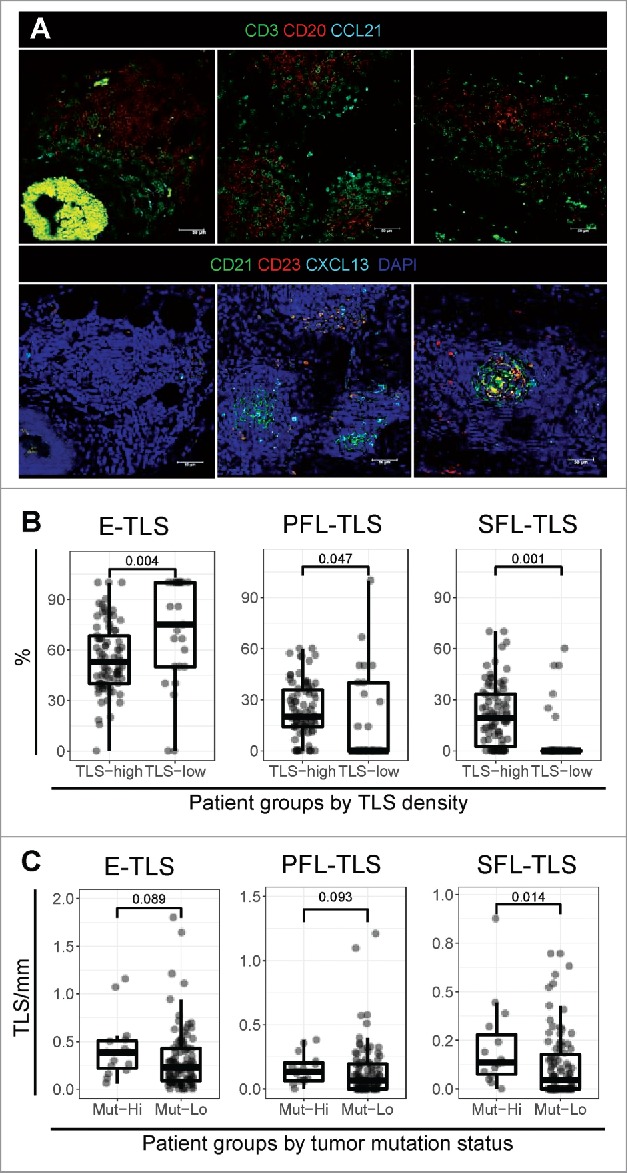
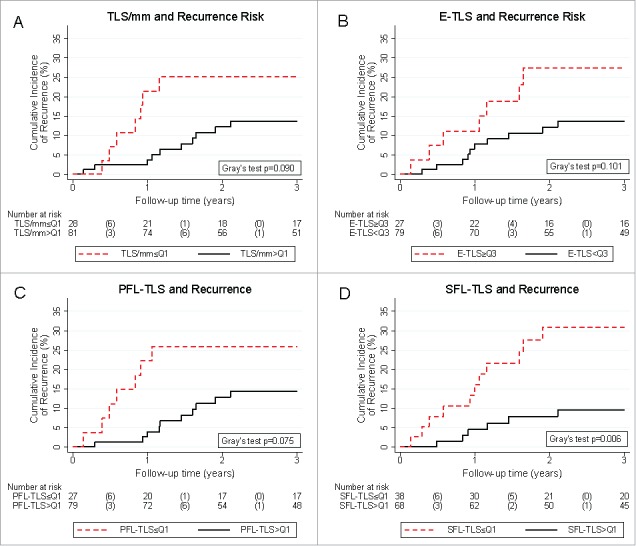
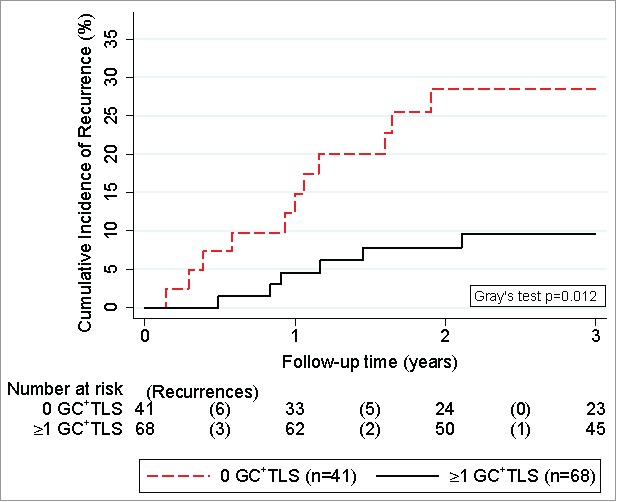
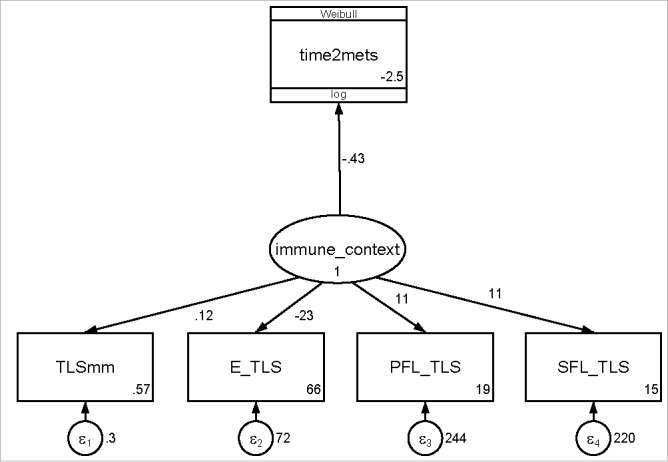
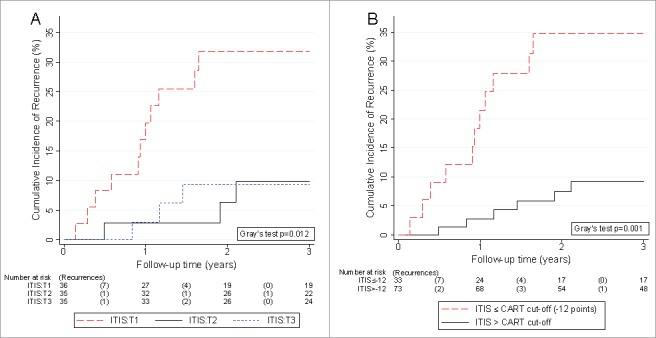
Tertiary lymphoid structures (TLS) are associated with favorable outcome in non-metastatic colorectal carcinoma (nmCRC), but the dynamics of TLS maturation and its association with effective anti-tumor immune surveillance in nmCRC are unclear. Here, we hypothesized that not only the number of TLS but also their composition harbors information on recurrence risk in nmCRC. In a comprehensive molecular, tissue, laboratory, and clinical analysis of 109 patients with stage II/III nmCRC, we assessed TLS numbers and degree of maturation in surgical specimens by multi-parameter immunofluorescence of follicular dendritic cell (FDC) and germinal center (GC) markers. TLS formed in most tumors and were significantly more prevalent in highly-microsatellite-instable (MSI-H) and/or BRAF-mutant nmCRC. We could distinguish three sequential TLS maturation stages which were characterized by increasing prevalence of FDCs and mature B-cells: [1] Early TLS, composed of dense lymphocytic aggregates without FDCs, [2] Primary follicle-like TLS, having FDCs but no GC reaction, and [3] Secondary follicle-like TLS, having an active GC reaction. A simple integrated TLS immunoscore reflecting these parameters identified a large subgroup of nmCRC patients with a very low risk of recurrence independently of clinical co-variables such as ECOG performance status, age, stage, and adjuvant chemotherapy. We conclude that (1) mismatch repair and BRAF mutation status are associated with the formation of TLS in nmCRC, (2) TLS formation in nmCRC follows sequential maturation steps, culminating in germinal center formation, and (3) this maturation process harbors important prognostic information on the risk of disease recurrence.
Overview
The claims and statistics of this paper haven’t been checked yet.
Free: it reads the open-access text and checks the first 5 claims that cite a source we can check. Create a free account to check every claim.
Integrity signals
Registry
Cites
Statistics
Figures
Verification
Claims the paper makes
The claims and statistics of this paper haven’t been checked yet.
Free: it reads the open-access text and checks the first 5 claims that cite a source we can check. Create a free account to check every claim.
Claims other papers make about this one
Each is checked against this paper’s own text: does it say what the citing paper says it does?
The source backs part of the claim, not all of it — or backs it for a different population, condition or comparison.
In the citing paper
“The vast majority of evaluated TLSs in these patients represented mature secondary-follicle-like TLSs, as indicated by the presence of both CD21+ follicular dendritic cells and CD23+ germinal centre B cells30”
From B cells and tertiary lymphoid structures promote immunotherapy response (2020) · cites this paper as [30]
Experimental — accuracy not yet measured
Self-check
Percentages, sums and reported differences re-computed from the paper’s own numbers.
The self-check needs the paper’s full text.
Citations
Cites
Siegel, R. L., Miller, K. D., & Jemal, A. (2017) · CA: A Cancer Journal for Clinicians · doi:10.3322/caac.21387 · Cited by 14,712 · cited 9×
“These data suggest further hypotheses: (1) TLS with a GC reaction represents the most “functional” subtype, (2) GC development indicates towards tumor-specific B cell and CD4 T cell priming, and (3) TLS maturation harbors additional information to mere TLS enumerations for the prognosis of CRC recurrence.”
BackgroundResultInfluentialA Proportional Hazards Model for the Subdistribution of a Competing Risk
Fine, J. P., & Gray, R. J. (1999) · Journal of the American Statistical Association · doi:10.1080/01621459.1999.10474144 · Cited by 14,290
PD-1 Blockade in Tumors with Mismatch-Repair Deficiency
Le, D. T., Uram, J. N., Wang, H., Bartlett, B. R., Kemberling, H., Eyring, A. D., Skora, A. D., Luber, B. S., Azad, N. S., Laheru, D., et al. (2015) · New England Journal of Medicine · doi:10.1056/nejmoa1500596 · Cited by 9,377
Mutational landscape determines sensitivity to PD-1 blockade in non–small cell lung cancer
Rizvi, N. A., Hellmann, M. D., Snyder, A., Kvistborg, P., Makarov, V., Havel, J. J., Lee, W., Yuan, J., Wong, P., Ho, T. S., et al. (2015) · Science · doi:10.1126/science.aaa1348 · Cited by 7,802
Cancer Immunoediting: Integrating Immunity’s Roles in Cancer Suppression and Promotion
Schreiber, R. D., Old, L. J., & Smyth, M. J. (2011) · Science · doi:10.1126/science.1203486 · Cited by 6,474
The immune contexture in human tumours: impact on clinical outcome
Fridman, W. H., Pagès, F., Sautès-Fridman, C., & Galon, J. (2012) · Nature reviews. Cancer · doi:10.1038/nrc3245 · Cited by 4,981
A Class of $K$-Sample Tests for Comparing the Cumulative Incidence of a Competing Risk
Gray, R. J. (1988) · The Annals of Statistics · doi:10.1214/aos/1176350951 · Cited by 4,960
Global Cancer Incidence and Mortality Rates and Trends—An Update
Torre, L. A., Siegel, R. L., Ward, E. M., & Jemal, A. (2016) · Cancer Epidemiology, Biomarkers & Prevention · doi:10.1158/1055-9965.epi-15-0578 · Cited by 3,692 · cited 10×
“In sensitivity analyses, we (1) performed a classification and regression tree analysis (CART, Stata routine cart) to explore the strength of recurrence risk predictors and potential ITIS cut-off points within a non-parametric fashion,(48) and (2) fitted interactions between the ITIS, tumor stage and adjuvant chemothe…”
BackgroundMethodResultInfluentialThe Three Es of Cancer Immunoediting
Dunn, G. P., Old, L. J., & Schreiber, R. D. (2004) · Annual Review of Immunology · doi:10.1146/annurev.immunol.22.012703.104803 · Cited by 3,072
Clonal neoantigens elicit T cell immunoreactivity and sensitivity to immune checkpoint blockade
McGranahan, N., Furness, A. J. S., Rosenthal, R., Ramskov, S., Lyngaa, R., Saini, S. K., Jamal-Hanjani, M., Wilson, G. A., Birkbak, N. J., Hiley, C. T., et al. (2016) · Science · doi:10.1126/science.aaf1490 · Cited by 3,065
Cited by
Items 101–200 of 410
Tertiary lymphoid structure patterns predicted anti-PD1 therapeutic responses in gastric cancer
Jiang, Q., Tian, C., Wu, H., Min, L., Chen, H., Chen, L., Liu, F., & Sun, Y. (2022) · Chinese Journal of Cancer Research · doi:10.21147/j.issn.1000-9604.2022.04.05 · Cited by 49
The Tumor Immune Landscape and Architecture of Tertiary Lymphoid Structures in Urothelial Cancer
van Dijk, N., Gil-Jimenez, A., Siliņa, K., van Montfoort, M. L., Einerhand, S. M. H., Jonkman, L., Voskuilen, C. S., Peters, D. D. G. C., Sanders, J., Lubeck, Y., et al. (2021) · Frontiers in Immunology · doi:10.3389/fimmu.2021.793964 · Cited by 55
Mature tertiary lymphoid structures: important contributors to anti-tumor immune efficacy
Bao, X., Lin, X., Xie, M., Yao, J., Song, J., Ma, X., Zhang, X., Zhang, Y., Liu, Y., Han, W., et al. (2024) · Frontiers in Immunology · doi:10.3389/fimmu.2024.1413067 · Cited by 48
Xu, W., Ma, C., Liu, W., Anwaier, A., Tian, X., Shi, G., Qu, Y., Wei, S., Zhang, H., & Ye, D. (2022) · Cancer Immunology Immunotherapy · doi:10.1007/s00262-021-03123-y · Cited by 48
Boisson, A., Noel, G. L., Saiselet, M., Vitória, J. R., Thomas, N., Fontsa, M. L., Sofronii, D., Naveaux, C., Duvillier, H., Craciun, L., et al. (2021) · Frontiers in Molecular Biosciences · doi:10.3389/fmolb.2021.673042 · Cited by 46
Tertiary lymphoid structures and B lymphocytes: a promising therapeutic strategy to fight cancer
Esparcia-Pinedo, L., Romero-Laorden, N., & Alfranca, A. (2023) · Frontiers in Immunology · doi:10.3389/fimmu.2023.1231315 · Cited by 46
“Depending on the nature of the tumor, TLSs can be found in different proportions ranging from 10-20% in ovarian, hepatic and oral cancers (24, 40, 56) to 50% in breast cancer (35), NSCLC (17), melanoma (6) and gastrointestinal tumors (24), and more than 80% in colorectal cancer (21) and lung squamous cell carcinoma (5…”
BackgroundSTINGing the Tumor Microenvironment to Promote Therapeutic Tertiary Lymphoid Structure Development
Filderman, J. N., Appleman, M., Chelvanambi, M., Taylor, J. L., & Storkus, W. J. (2021) · Frontiers in Immunology · doi:10.3389/fimmu.2021.690105 · Cited by 45
“Notably, TLS exhibit heterogeneity in their cellular composition and in the organization of their integrated cell subsets, which is believed to be reflective of their maturational status (2, 15).”
BackgroundLow-dose radiotherapy promotes the formation of tertiary lymphoid structures in lung adenocarcinoma
Wang, D., Huang, L., Qian, D., Cao, Y., Wu, X., Xu, P., Liang, M., Tang, J., Huang, Z., Yin, Y., et al. (2024) · Frontiers in Immunology · doi:10.3389/fimmu.2023.1334408 · Cited by 44
“TLSs have been linked to a positive prognosis in various types of cancer, including lung cancer (9), colorectal cancer (10), melanoma (11), and pancreatic cancer (12).”
BackgroundResultThe tumour immune landscape and its implications in cutaneous melanoma
Attrill, G. H., Ferguson, P. M., Palendira, U., Long, G. V., Wilmott, J. S., & Scolyer, R. A. (2020) · Pigment Cell & Melanoma Research · doi:10.1111/pcmr.12926 · Cited by 46
“TLSs are associated with favourable patient outcomes in the majority of cancers in which they are found, including ovarian cancer (Kroeger et al., 2016), colorectal cancer (Posch et al., 2018) and pancreatic cancer (Hiraoka et al., 2015).”
BackgroundAoyama, S., Nakagawa, R., Mulé, J. J., & Mailloux, A. W. (2021) · Frontiers in Immunology · doi:10.3389/fimmu.2021.675538 · Cited by 43
“In human cancers, TLS are associated with better disease outcomes across a broad spectrum of indications including ovarian (25, 26), metastatic melanoma (27, 28), breast (29, 30), colorectal (11, 31), and nonsmall cell lung cancers (7, 14), and can augment the efficacy of immunotherapies such as imune chackpoint inhib…”
BackgroundB cells in pancreatic cancer stroma
Delvecchio, F. R., Goulart, M. R., Fincham, R. E. A., Bombadieri, M., & Kocher, H. M. (2022) · World Journal of Gastroenterology · doi:10.3748/wjg.v28.i11.1088 · Cited by 48
Nakamura, S., Ohuchida, K., Hayashi, M., Katayama, N., Tsutsumi, C., Yamada, Y., Hisano, K., Okuda, S., Ohtsubo, Y., Iwamoto, C., et al. (2023) · British Journal of Cancer · doi:10.1038/s41416-023-02396-7 · Cited by 42
“The maturation of TLSs also correlates with a favorable prognosis in hepatocellular carcinoma [27] and colorectal cancer [43].”
Tanaka, T., Masuda, A., Inoue, J., Hamada, T., Ikegawa, T., Toyama, H., Sofue, K., Shiomi, H., Sakai, A., Kobayashi, T., et al. (2023) · Journal of Gastroenterology · doi:10.1007/s00535-022-01939-8 · Cited by 44
“In some cancers, such as breast [10, 11], lung [12, 13], and colorectal cancer [14, 15], TLS correlates with a favorable prognosis.”
BackgroundQin, M., Jin, Y., & Pan, L. (2021) · Oncology Letters · doi:10.3892/ol.2021.13097 · Cited by 43
“Posch et al (31) and Silina et al (32) showed that TLSs consist of CXCL13+ peripheral blood vessels, CXCL12+ LTβR‑expressing cells, and PD‑L1+ epithelial cells.”
BackgroundInfluentialTertiary lymphoid structures favor outcome in resected esophageal squamous cell carcinoma
Li, R., Huang, X., Yang, W., Wang, J., Liang, Y., Zhang, T., Mao, Q., Xia, W., Xu, L., Xu, X., et al. (2022) · The Journal of Pathology Clinical Research · doi:10.1002/cjp2.281 · Cited by 40
“Although it is not clear whether the maturity of TLSs affects patient outcomes, by analyzing the prognosis of colorectal cancer, Posch et al concluded that mature TLSs containing germinal centers had more prognostic value than immature TLSs, and believed that the determination of mature TLSs in colorectal cancer had m…”
BackgroundThe 12-CK Score: Global Measurement of Tertiary Lymphoid Structures
Li, R., Berglund, A., Zemp, L., Dhillon, J., Putney, R., Kim, Y., Jain, R. K., Grass, G. D., Conejo-Garcia, J., & Mulé, J. J. (2021) · Frontiers in Immunology · doi:10.3389/fimmu.2021.694079 · Cited by 39
“Several of these schemes have coalesced on three classes: early TLS composed of dense lymphocytic aggregates without follicular dendritic cells; primary follicle-like TLS having FDCs but no germinal center reaction; and secondary follicle-like TLS, having an active GC reaction (18, 21, 22).”
BackgroundZhao, H., Wang, H., Zhou, Q., & Ren, X. (2021) · Cancer Biology and Medicine · doi:10.20892/j.issn.2095-3941.2021.0029 · Cited by 39
Pagliarulo, F., Cheng, P. F., Brugger, L., van Dijk, N., Heijden, M. S. V. D., Levesque, M. P., Siliņa, K., & van den Broek, M. F. (2022) · Frontiers in Immunology · doi:10.3389/fimmu.2021.793992 · Cited by 40
“Similarly to our previous findings in untreated lung and colorectal cancer (42, 44) as well as the d-TLS assessment in TCGA MIBC cohort (Figures 2G, H), TLS were more mature in MIBC patients with high TLS density (Figure 7B), suggesting that TLS initiation and maturation in the TME are naturally linked.”
BackgroundResultMao, Y., Wang, X., Xi, L., Dong, M., Song, P. K., Miao, J., Lu, C., Sun, S., Li, Q., Yu, C., et al. (2023) · International Journal of Surgery · doi:10.1097/js9.0000000000000483 · Cited by 38
“Posch et al.[13] showed that although mismatch repair genes were associated with the formation of TLS in stage II and III colorectal cancer, TLS density was not correlated with tumor grade, stage, and age.”
BackgroundInfluentialDetection and quantitative analysis of tumor-associated tertiary lymphoid structures
Yang, M., Che, Y., Li, K., Fang, Z., Li, S., Wang, M., Zhang, Y., Zhu, X., Luo, L., Wu, C. K., et al. (2023) · Journal of Zhejiang University SCIENCE B · doi:10.1631/jzus.b2200605 · Cited by 38
Sustained innate interferon is an essential inducer of tertiary lymphoid structures
Calvanese, A. L., Cecconi, V., Stäheli, S., Schnepf, D., Nater, M., Pereira, P., Gschwend, J., Heikenwälder, M. F., Schneider, C., Ludewig, B., et al. (2024) · European Journal of Immunology · doi:10.1002/eji.202451207 · Cited by 39
“Like SLO, TLS have B-and T-cell zones, contain mesenchymal cells such as follicular dendritic cells (FDC), high endothelial venules (HEV) that allow the entry of naïve T-and B-cells [9–11], and can host germinal centers (GC) [12, 13].”
Hu, L., Tan, L., Deng, S., Gao, H., Jiang, Y., Chen, Q., Chen, H., Xiao, Z., Shuai, X., & Su, Z. (2024) · Biomaterials · doi:10.1016/j.biomaterials.2024.122846 · Cited by 37
Tertiary Lymphoid Structures as Mediators of Immunotherapy Response
Vaghjiani, R. G., & Skitzki, J. J. (2022) · Cancers · doi:10.3390/cancers14153748 · Cited by 37
“This led to the notion that TIL and TLS may play an exceedingly relevant role in non-metastatic colorectal disease, outperforming traditional disease recurrence prediction metrics [24].”
BackgroundReste, M., Ajazi, K., Sayi‐Yazgan, A., Janković, R., Bufan, B., Brandau, S., Bækkevold, E. S., Petitprez, F., Lindstedt, M., Adema, G. J., et al. (2024) · Frontiers in Immunology · doi:10.3389/fimmu.2024.1439413 · Cited by 38
“Finally, fully mature secondary follicle-like TLS (SFL-TLS) with a functional germinal center (GC) containing CD21 + CD23 + FDC, proliferating B cells (4, 5), follicular helper T cells and plasma cells, which evidence an active humoral immune response (3).”
Tertiary lymphoid structures: new immunotherapy biomarker
Yang, F., Yang, J., Wu, M., Chen, C. Y., & Chu, X. (2024) · Frontiers in Immunology · doi:10.3389/fimmu.2024.1394505 · Cited by 41
Tertiary Lymphoid Structures Across Organs: Context, Composition, and Clinical Levers
Guillaume, S. M., Beccaría, C. G., Iannacone, M., & Linterman, M. A. (2025) · Immunological Reviews · doi:10.1111/imr.70063 · Cited by 37
“Moreover, mature TLS with abundant HEVs enhances the recruitment of CD3 + and CD8 + T cells and macrophages, associating with better overall and disease-free survival and lower tumor staging [169, 170].”
Tertiary lymphoid structures and gastric cancer prognosis
Kemi, N., Ylitalo, O., Väyrynen, J. P., Helminen, O., Junttila, A., Mrena, J., Böhm, J., & Kauppila, J. H. (2022) · Apmis · doi:10.1111/apm.13277 · Cited by 34
“mous cell carcinoma and colorectal cancer [21,22].”
Recent research progress and clinical status of immunotherapy for colorectal cancer
Huo, Z., Liu, G., & Li, J. (2025) · Journal of Advanced Research · doi:10.1016/j.jare.2025.06.089 · Cited by 36
“TLSs are prevalent in non-metastatic CRC with MSI-H and are positively correlated with survival, irrespective of the TNM stage [ 51].”
Rossi, A., Belmonte, B., Carnevale, S., Liotti, A., Rosa, V. D., Jaillon, S., Piconese, S., & Tripodo, C. (2022) · Frontiers in Cell and Developmental Biology · doi:10.3389/fcell.2022.933113 · Cited by 37
“The prognostic value of TLS has been particularly wellexplored in colorectal cancer (Schweiger et al., 2016; Posch et al., 2018; Trajkovski et al., 2018).”
BackgroundD’Orsi, L., Capasso, B., Lamacchia, G., Pizzichini, P., Ferranti, S., Liverani, A., Fontana, C., Panunzi, S., Gaetano, A. D., & Presti, E. L. (2024) · International Journal of Molecular Sciences · doi:10.3390/ijms252111588 · Cited by 35
Zhao, H., Wang, H., Zhao, Y., Sun, Q., & Ren, X. (2022) · Frontiers in Immunology · doi:10.3389/fimmu.2022.877689 · Cited by 32
“This was consistent with the findings in colorectal cancer and lung squamous cell carcinoma that found that patients with GC reaction had a better prognosis (26, 27).”
MethodResultChallenges in validation of combination treatment strategies for CRC using patient-derived organoids
Benboubker, V., Ramzy, G. M., Jacobs, S., & Nowak-Sliwinska, P. M. (2024) · Journal of Experimental & Clinical Cancer Research · doi:10.1186/s13046-024-03173-x · Cited by 32
Zhao, Z., Ding, H., Lin, Z.-B., Qiu, S., Yi-ran, Z., Guo, Y., Chu, X., Sam, L. I., Pan, J., & Pan, Y.-L. (2021) · International Journal of Medical Sciences · doi:10.7150/ijms.56347 · Cited by 33
“The quality of the included studies in the current meta-analysis was high, with a score of not less than 6 per article (Table 1) [7-9, 12, 13, 15, 21-41].”
BackgroundRadandish, M., Mashhadi, N., Aghayan, A. H., Taghizadeh, M., Salehianfard, S., Yahyazadeh, S., Vakili, O., & Igder, S. (2025) · Experimental Hematology and Oncology · doi:10.1186/s40164-025-00695-8 · Cited by 30
“…supported antitumor adaptive immune responses in PDAC [316–318]; while the presence of low-maturity TLSs was associated with an increased rate of cancer recurrence in HCC and colorectal cancer and also causes tumor invasion, metastasis, and immunosuppression in laryngeal cancer [230, 319, 320].”
A histopathological classification scheme for abdominal aortic aneurysm disease
Bruijn, L. E., Gómez, C. G. V. S., Curci, J. A., Golledge, J., Hamming, J. F., Jones, G. T., Lee, R., Matic, L. P., van Rhijn, C., Vriens, P. W. H. E., et al. (2021) · JVS Vascular Science · doi:10.1016/j.jvssci.2021.09.001 · Cited by 30
“History of coronary atherosclerosis 46 (20) 46 (12)”
BackgroundArulraj, T., Wang, H., Emens, L. A., Santa-Maria, C. A., & Popel, A. S. (2023) · Science Advances · doi:10.1126/sciadv.adg0289 · Cited by 29
‘Persistent germinal center responses: slow-growing trees bear the best fruits’
Matz, H. C., McIntire, K. M., & Ellebedy, A. H. (2023) · Current Opinion in Immunology · doi:10.1016/j.coi.2023.102332 · Cited by 29
The Emerging Role of Tertiary Lymphoid Structures in Breast Cancer: A Narrative Review
Narvaez, D. P., Nadal, J. C., Nervo, A., Costanzo, M. V., Paletta, C., Petracci, F. E., Rivero, S. G., Ostinelli, A., Freile, B., Enrico, D. H., et al. (2024) · Cancers · doi:10.3390/cancers16020396 · Cited by 27
Ruffin, A. T., Casey, A. N., Kunning, S. R., MacFawn, I., Liu, Z., Arora, C., Rohatgi, A., Kemp, F., Lampenfeld, C., Somasundaram, A., et al. (2025) · Science Translational Medicine · doi:10.1126/scitranslmed.adh1315 · Cited by 28
Role of tertiary lymphoid structures and B cells in clinical immunotherapy of gastric cancer
Chen, W., Zhang, L., Gao, M., Zhang, N., Wang, R., Liu, Y., Niu, Y., & Jia, L. (2025) · Frontiers in Immunology · doi:10.3389/fimmu.2024.1519034 · Cited by 26
An, Y., Sun, J., Xu, M., Xu, J., Ma, S.-Y., Liu, C., Liu, Z., Wang, S., & Xia, Q. (2022) · Frontiers in Immunology · doi:10.3389/fimmu.2022.1049884 · Cited by 26
Tertiary Lymphoid Structures: A Potential Biomarker for Anti-Cancer Therapy
Zou, J. P., Zhang, Y., Zeng, Y., Peng, Y., Liu, J., Xiao, C., & Wu, F. (2022) · Cancers · doi:10.3390/cancers14235968 · Cited by 28
Posttransplant Tertiary Lymphoid Organs
Ruddle, N. H. (2023) · Transplantation · doi:10.1097/tp.0000000000004812 · Cited by 27
“Staging schema have been put forward in autoimmunity in the pancreas of the NOD mouse, 13 atherosclerosis, 50,61 colo-rectal cancer, 62 and other tumors.”
Liu, Y., Xiong, L., Chen, Y., Cai, R., Xu, X., Wang, T., Guo, Y., Ruan, L., Fang, Y., Zhang, Q., et al. (2023) · Human Vaccines & Immunotherapeutics · doi:10.1080/21645515.2023.2285902 · Cited by 26
“20 This classification used to be defined by immunohistochemistry, and in this study it was defined by HE, the rationality of which has been proved by specialized pathologists.”
MethodImmune Crosstalk Between Lymph Nodes and Breast Carcinomas, With a Focus on B Cells
Alberts, E., Wall, I., Calado, D. P., & Grigoriadis, A. E. (2021) · Frontiers in Molecular Biosciences · doi:10.3389/fmolb.2021.673051 · Cited by 27
The Impact of Programmed Cell Death on the Formation of Tertiary Lymphoid Structures
Dieudé, M., Kaci, I., & Hébert, M. (2021) · Frontiers in Immunology · doi:10.3389/fimmu.2021.696311 · Cited by 27
Tertiary lymphoid structures in colorectal cancer
Lv, J., Zhang, X., Zhou, M., Yan, J., Chao, G., & Zhang, S. (2024) · Annals of Medicine · doi:10.1080/07853890.2024.2400314 · Cited by 25
Ma, G., Jia, H., Zhang, G., Liang, Y., Dong, X., Fu, G., Wang, X., & Niu, H. (2023) · The Oncologist · doi:10.1093/oncolo/oyad283 · Cited by 25
“18 In this regard, lower recurrence rates have been reported in colorectal and hepatocellular carcinoma patients with mature TLSs. 19,20 Here, the presence of TLSs was defined based on the aggregation of CD3 + T cells and CD20 + B cells for the practicality of this clinicopathological…”
BackgroundInfluentialGan, X., Dong, W., You, W., Ding, D., Yang, Y., Sun, D., Li, W., Ding, W., Liang, Y., Yang, F., et al. (2023) · Cancer Letters · doi:10.1016/j.canlet.2023.216513 · Cited by 25
Choi, S.-W., Kim, J. H., Hong, J., & Kwon, M. (2025) · Frontiers in Immunology · doi:10.3389/fimmu.2025.1568590 · Cited by 25
“…TLS, contains more T and B cells with distinct zones, and a network of fDCs, but no GCs. Fully mature TLS, or secondary follicle-like TLS, exhibits active GCs, HEVs, and the ability to promote T and B cell activation, leading to TLS expansion through cell proliferation and recruitment (60, 61).”
Su, J., Li, J., Pan, L.-X., Ma, Y.-L., Tian, W., Jiang, Y.-M., Guo, P.-P., Li, L., Deng, Z., Li, Z., et al. (2025) · Hepatology · doi:10.1097/hep.0000000000001433 · Cited by 30
Wang, Z., Ge, Q., Mo, R., Lu, J., Tian, X., Anwaier, A., Ye, S., Zhou, S., Guo, W., Cai, C., et al. (2025) · Journal of the National Cancer Center · doi:10.1016/j.jncc.2025.06.003 · Cited by 30
“55 , 56 However, information regarding the role of TLS in PCa remains extremely limited.”
Heterogeneity of tertiary lymphoid structures in cancer
You, X., Koop, K., & Weigert, A. (2023) · Frontiers in Immunology · doi:10.3389/fimmu.2023.1286850 · Cited by 24
Hu, L., Li, X., Yang, C., Zhou, B., Du, C., & Jiang, N. (2024) · Frontiers in Immunology · doi:10.3389/fimmu.2024.1390938 · Cited by 23
Xu, S., Han, C., Zhou, J., Yang, D., Dong, H. F., Zhang, Y., Zhao, T., Tian, Y., & Wu, Y. (2025) · Cancer Immunology Immunotherapy · doi:10.1007/s00262-025-03952-1 · Cited by 26
“Compared with patients with E-TLSs, those with hepatocellular carcinoma (HCC) [15] or colorectal cancer [16] featuring TLSs that exhibit P-TLSs or S-TLSs have lower risks of recurrence.”
Li, X., Chu, X., Xu, W., Yang, Y., Wei, T., Bo, Y., Miao, Y., Zhang, Y., Wang, J., Wang, T., et al. (2025) · Cell Reports · doi:10.1016/j.celrep.2025.116250 · Cited by 25
Yu, J.-S., Huang, W., Zhang, Y., Chen, J., Li, J., Fu, H., Wei, Z.-W., & He, Y.-L. (2022) · Neoplasma · doi:10.4149/neo_2022_220128n123 · Cited by 24
Xin, S., Wen, S., He, P., Zhao, Y., & Zhao, H. (2024) · Frontiers in Immunology · doi:10.3389/fimmu.2024.1423775 · Cited by 23
Tertiary lymphoid structures in ovarian cancer
Sun, G., & Liu, Y. (2024) · Frontiers in Immunology · doi:10.3389/fimmu.2024.1465516 · Cited by 22
Cui, M., Zhou, M., Zhou, L., Zhou, G., & Liu, Y. (2025) · Biochimica et Biophysica Acta (BBA) - Reviews on Cancer · doi:10.1016/j.bbcan.2025.189312 · Cited by 24
Zhang, L., Ren, S., Lan, T., Marco, V. D., Liu, N., Wei, B., Chen, Y., Wu, J., Li, Q., Wu, F., et al. (2025) · OncoImmunology · doi:10.1080/2162402x.2025.2528109 · Cited by 22
“39 Germinal center B cells 40 and Tfh cells 41 located in the germinal center can also predict better outcomes.”
Chen, J., Chen, J., & Wang, L. (2022) · Journal of Zhejiang University SCIENCE B · doi:10.1631/jzus.b2200174 · Cited by 23
“Also, the prognostic value of TLSs was found to be independent of tumor stage as well as other survival factors (Hiraoka et al., 2015; Posch et al., 2018).”
BackgroundZhao, H., Zhao, Y., Zhang, S., Wang, Z., Yu, W., Dong, N., Yang, X., Zhang, X., Sun, Q., Hao, X., et al. (2024) · Frontiers in Immunology · doi:10.3389/fimmu.2024.1302751 · Cited by 25
Liu, X., Lv, W., Huang, D., & Cui, H. (2025) · BMC Cancer · doi:10.1186/s12885-025-13484-7 · Cited by 22
Tertiary Lymphatic Structures in Primary Hepatic Carcinoma: Controversy Cannot Overshadow Hope
Jia, W., Zhang, T., Yao, Q., Li, J., Nie, Y., Lei, X., Mao, Z., Wang, Y., Shi, W., & Song, W. (2022) · Frontiers in Immunology · doi:10.3389/fimmu.2022.870458 · Cited by 21
“Previous studies have proven that TLS has a prognostic benefit in metastatic melanoma (4), invasive bladder cancer (5), non-metastatic colorectal cancer (6), endometrial cancer (7), and pancreatic cancer (8).”
BackgroundTurning Tertiary Lymphoid Structures (TLS) into Hot Spots: Values of TLS in Gastrointestinal Tumors
Cai, D., Yu, H., Wang, X., Mao, Y., Liang, M., Lu, X., Shen, X., & Guan, W. (2023) · Cancers · doi:10.3390/cancers15020367 · Cited by 21
“The favorable effects of TLSs on patients’ overall survival and recurrence-free survival have been observed in colorectal cancer [52], gastric cancer [53], and gastrointestinal stromal tumors [11].”
BackgroundB cells and tertiary lymphoid structures are associated with survival in papillary thyroid cancer
Li, Y., Li, S., Liu, M.-C., Chen, Z., Li, L., Shen, F., Liu, Q.-Z., Xu, B., & Lian, Z.-X. (2023) · Journal of Endocrinological Investigation · doi:10.1007/s40618-023-02072-w · Cited by 22
“The E-TLS group had both low expression of CR2 and FCER2 , the PFL-TLS group had high expression of CR2 and low expression of FCER2 , and the SFL-TLS group had both high expression of CR2 and FCER2 .”
BackgroundInfluentialBarb, A. C., Fenesan, M. P., Pirtea, M., Margan, M.-M., Tomescu, L. C., Melnic, E., & Cîmpean, A. M. (2023) · Cells · doi:10.3390/cells12081176 · Cited by 21
Siliņa, K., Burkhardt, C., Casanova, R., Soltermann, A., & van den Broek, M. F. (2018) · Methods in molecular biology · doi:10.1007/978-1-4939-8709-2_5 · Cited by 21
Lyman, M. R., Mitchell, J. T., Raghavan, S., Kagohara, L. T., Huff, A. L., Haldar, S. D., Shin, S. M., Guinn, S. R., Barrett, B., Longway, G., et al. (2025) · JCI Insight · doi:10.1172/jci.insight.191595 · Cited by 21
Of mice and lymphoid aggregates: modeling tertiary lymphoid structures in cancer
Vaccaro, A., van de Walle, T., Ramachandran, M., Essand, M., & Dimberg, A. (2023) · Frontiers in Immunology · doi:10.3389/fimmu.2023.1275378 · Cited by 20
Interaction between gut microbiota and T cell immunity in colorectal cancer
Jing, Z., Wu, Y., Chu, J., Zhanbo, Q., Wu, X., & Han, S. (2025) · Autoimmunity Reviews · doi:10.1016/j.autrev.2025.103807 · Cited by 20
Fibroblasts in cancer: Defining target structures for therapeutic intervention
Boesch, M., Baty, F., Rumpold, H. F., Sopper, S., Wolf, D. G. F., & Brutsche, M. H. (2019) · Biochimica et Biophysica Acta (BBA) - Reviews on Cancer · doi:10.1016/j.bbcan.2019.06.003 · Cited by 20
Dynamic remodeling of tertiary lymphoid structures in response to cancer therapy: a recent review
Tan, C., Huang, J., Gao, N., Wu, B., Matsika, J., Xiao, J., Hu, J., Liu, P., & Chen, J. (2025) · Cancer Immunology Immunotherapy · doi:10.1007/s00262-025-04183-0 · Cited by 21
Cutaneous Melanoma: Mutational Status and Potential Links to Tertiary Lymphoid Structure Formation
Salem, D., Chelvanambi, M., Storkus, W. J., & Fecek, R. J. (2021) · Frontiers in Immunology · doi:10.3389/fimmu.2021.629519 · Cited by 21
“non-metastatic colorectal adenocarcinoma, reported that tumors with MSI-H and/or BRAF V600E mutation had higher numbers of TLS (defined as CXCL13CD21CD23) (71).”
BackgroundPinard, C. J., Lagree, A., Lu, F., Klein, J., Oblak, M. L., Salgado, R., Pinto‐Cardenas, J. C., Brunetti, B., Muscatello, L. V., Sarli, G., et al. (2022) · Cancers · doi:10.3390/cancers14205008 · Cited by 23
Zhang, K., Xie, X., Zou, L., & Guo, S. (2023) · Reproductive Sciences · doi:10.1007/s43032-023-01188-x · Cited by 18
“Moreover, in the research of lung [41] and colorectal [42] cancers, the favorable prognostic impact of TLSs was also independent of pathological tumor–node–metastasis (TNM) staging.”
BackgroundThe prognostic value of the tertiary lymphoid structure in gastrointestinal cancers
Yu, A., Cao, M., Zhang, K., Yang, Y., Ma, L., Zhang, X., Yang, Z., Ma, X., Fan, Z., Han, Z., et al. (2023) · Frontiers in Immunology · doi:10.3389/fimmu.2023.1256355 · Cited by 18
Sun, H., Shi, Y., Ran, H., Peng, J., Li, Q., Zheng, G., He, Y., Liu, S., Chang, W., & Xiao, Y. (2023) · BMC Cancer · doi:10.1186/s12885-023-11738-w · Cited by 18
“Finally, a total of 25 articles were included in the meta-analysis [20, 22,”
BackgroundB‐cell performance in chemotherapy: Unravelling the mystery of B‐cell therapeutic potential
Li, Z., Lin, A., Gao, Z., Jiang, A., Xiong, M., Song, J., Liu, Z., Cheng, Q., Zhang, J., & Luo, P. (2024) · Clinical and Translational Medicine · doi:10.1002/ctm2.1761 · Cited by 20
“135,136 Nevertheless, the precise roles of B cells within TLSs remain incompletely understood.”
BackgroundMori, N., Dorjkhorloo, G., Shiraishi, T., Erkhem‐Ochir, B., Okami, H., Yamaguchi, A., Shioi, I., Komine, C., Endo, M., Seki, T., et al. (2024) · Cancers · doi:10.3390/cancers16152684 · Cited by 18
“By focusing on the Ki-67 expression pattern, we identified two poor prognostic factors in advanced CRCs: high tumor Ki-67 expression and a lack of mature TLS with germinal center Ki-67 expression.”
BackgroundSun, H., Liu, Y., Cheng, W., Xiong, R., Gu, W., Zhang, X., Wang, X., Wang, X., Tan, C., Weng, W., et al. (2024) · Frontiers in Immunology · doi:10.3389/fimmu.2024.1396808 · Cited by 18
Rochais, M. L., Brahim, I., Zeghlache, R., Redoulez, G., Guillard, M., Noach, P., Castillon, M., Bourhis, A., & Uguen, A. (2025) · Scientific Reports · doi:10.1038/s41598-025-94664-0 · Cited by 19
Dissecting Tertiary Lymphoid Structures in Cancer: Maturation, Localization and Density
Su, G.-L., Zhang, M.-J., Li, H., & Sun, Z. (2025) · Theranostics · doi:10.7150/thno.113940 · Cited by 18
“Previous clinical trials and animal studies have demonstrated that beyond the mere presence of TLSs, differences in their maturation status significantly influence prognoses for tumor patients and their responses to anticancer treatments [10, 11, 42].”
InfluentialThe pivotal role of tertiary lymphoid structures in the tumor immune microenvironment
Liu, C., & Cao, J. (2025) · Frontiers in Oncology · doi:10.3389/fonc.2025.1616904 · Cited by 21
Mauldin, I. S., Mahmutovic, A., Young, S. J., & Slingluff, C. L. (2021) · Methods in molecular biology · doi:10.1007/978-1-0716-1205-7_40 · Cited by 18
Wang, C., Huang, Z., Zhang, M., Xiong, G., Chen, X., & Xie, N. (2021) · Journal of Oral Pathology and Medicine · doi:10.1111/jop.13215 · Cited by 17
Does the Microbiota Composition Influence the Efficacy of Colorectal Cancer Immunotherapy?
Lin, Y., Kong, D.-X., & Zhang, Y.-N. (2022) · Frontiers in Oncology · doi:10.3389/fonc.2022.852194 · Cited by 17
Zhang, F.-P., Zhu, K., Zhu, T., Liu, C., HONG-HUA, Z., Xu, L.-B., Xiao, G., & Liu, C. (2022) · Cancers · doi:10.3390/cancers14246107 · Cited by 17
“Compared with those tumors lacking GC-harboring TLSs (early/primary TLSs), tumors comprising mature GC-harboring TLSs (secondary TLSs) have a markedly reduced risk of recurrence [34].”
BackgroundFang, Q., Chen, S., Chen, X., Zou, W., Chen, D., Huang, Y., & Wu, C. (2025) · Frontiers in Oncology · doi:10.3389/fonc.2025.1480461 · Cited by 18
Dai, N.-N., Hu, M.-Y., Wang, J., Dai, Z.-H., Xu, L., & Ye, T. (2025) · Cancer Immunology Immunotherapy · doi:10.1007/s00262-025-04108-x · Cited by 17
“This classification distinguishes TLS based on the presence or absence of GC and follicular dendritic cell FDC components within the T/B cell regions [26, 27].”
Zhong, J., Sun, Z., Li, S., Liu, Y., Cao, Y., & Bao, J. (2023) · Discover Oncology · doi:10.1007/s12672-023-00718-y · Cited by 16
Lymphocyte Function in Tertiary Lymphoid Structures Predicts Hepatocellular Carcinoma Outcome
Li, J., Xu, H., Han, J., Sun, P., Zhang, X., Wang, H., Bian, T., Xu, Q., Ji, J., & Huang, J. (2024) · Laboratory Investigation · doi:10.1016/j.labinv.2024.102144 · Cited by 16
Early experience with PEF in the setting of recalcitrant stage IV lung cancer
Moore, W. H., Silk, M. T., Bhattacharji, P., Pua, B. B., Mammarappallil, J. G., Sterman, D. H., & Chachoua, A. (2025) · Lung Cancer · doi:10.1016/j.lungcan.2025.108575 · Cited by 16
Innate Immunity and Tertiary Lymphoid Structures
Zhao, R., & Gao, D. (2025) · Immunological Reviews · doi:10.1111/imr.70052 · Cited by 17
Benefit of Metastasectomy in Renal Cell Carcinoma: A Propensity Score Analysis
Maisel, F., Smolle, M. A., Mollnar, S., Riedl, J. M., Barth, D. A., Seles, M., Terbuch, A., Rossmann, C. H., Eisner, F., Mannweiler, S., et al. (2022) · Clinical Genitourinary Cancer · doi:10.1016/j.clgc.2022.03.010 · Cited by 16
Self-citationTertiary lymphoid structures as potential biomarkers for cancer prediction and prognosis
Zhang, X., Yao, J., Xie, M., Liang, Y., Lin, X., Song, J., Bao, X., Ma, X., Wang, Y., Zhang, Y., et al. (2024) · International Immunopharmacology · doi:10.1016/j.intimp.2024.112790 · Cited by 15
Zhang, Y., Yin, X., Wang, Q., Song, X., Xia, W., Mao, Q., Chen, B., Liang, Y., Zhang, T., Xu, L., et al. (2021) · BMC Cancer · doi:10.1186/s12885-021-08805-5 · Cited by 15
Zou, Y., Yu, X., Zhou, C., Zhu, C., & Yuan, Y. (2022) · Lipids in Health and Disease · doi:10.1186/s12944-022-01766-z · Cited by 15
“According to CD21 and CD23 staining, TLSs in a tumor were classified into three developmental stages: early (CD21-CD23-), primary (CD21 + CD23-), and secondary (CD21 + CD23+) stages [28].”
BackgroundZhao, Z., Chen, D., Wang, R., Zhang, X., WEN, X., Zheng, X., Liu, S., Chen, H., Zhang, Y., Huang, D., et al. (2026) · PLoS Medicine · doi:10.1371/journal.pmed.1004614 · Cited by 14
“The role of TLS maturity in prognosis was also highlighted, aligning with previous studies linking TLS maturity to reduced recurrence risk in early-stage CRC [48].”
Metadata
- Authors
- Posch, F., Silina, K., Leibl, S., Mündlein, A., Moch, H., Siebenhüner, A., Samaras, P., Riedl, J., Stotz, M., Szkandera, J., Stöger, H., Pichler, M., Stupp, R., van den Broek, M., Schraml, P., Gerger, A., Petrausch, U., & Winder, T.
- Affiliations
- Medical University of Graz (AT)
- Tumor Immunology Research Unit, Institute of Experimental Immunology, University of Zurich, Winterthurerstrasse 190, Zurich, Switzerland
- University Hospital Zurich (CH)
- Vorarlberg Institute for Vascular Investigation and Treatment (VIVIT), Carinagasse 47, Feldkirch, Austria
- The University of Texas MD Anderson Cancer Center (US)
- Corresponding author
- Gerger, Armin
- ORCID
- Venue
- OncoImmunology
- Publisher
- Informa UK Limited
- Published
- 2017-12-18
- Volume
- 7
- Issue
- 2
- Pages
- e1378844-e1378844
- ISSN
- 2162-4011 (ISSN-L)
- 2162-402X
- PMC
- PMC5798199
- OpenAlex
- W2754092421
- Semantic Scholar
- b23d332bf1f947f639c068f6c05b4e8a548789d0
- Cited by
- 380
- References
- 49
- Citations by year
- 2026: 44 · 2025: 65 · 2024: 85 · 2023: 54 · 2022: 50 · 2021: 44 · 2020: 23 · 2019: 10 · 2018: 4 · 2017: 1
- FWCI
- 4.58
- Type
- journal article
- Language
- en
- Open access
- gold
- doi.org
- Licence
- Locations
- OncoImmunology (publishedVersion, cc-by-nc-nd)
- PubMed Central (publishedVersion, cc-by-nc-nd)
- PubMed (publishedVersion)
- Zurich Open Repository and Archive (University of Zurich) (acceptedVersion, cc-by-nc-nd)
- DOAJ (DOAJ: Directory of Open Access Journals) (submittedVersion, cc-by-sa)
- OPUS (Augsburg University) (submittedVersion, cc-by-nc-nd)
- Zurich Open Repository and Archive (University of Zurich) (submittedVersion, cc-by-nc-nd)
- Zurich Open Repository and Archive (University of Zurich)
- Funders
- Swiss Cancer League (F-87701-31-01)
- University of Zurich (K-84901-01-01)
- Topics
- Health Sciences › Medicine › Oncology › Cancer Immunotherapy and Biomarkers
- Health Sciences › Medicine › Oncology › Colorectal Cancer Treatments and Studies
- Health Sciences › Medicine › Oncology › Colorectal Cancer Surgical Treatments
- Keywords
- tertiary lymphoid structures, colorectal cancer, tumor recurrence, follicular dendritic cells, germinal center, microsatellite instability, BRAF mutation, DNA mismatch repair, prognostic factors, immune score
About these checks
Registry, retraction, Cites and statistics results are computed, not judged, with one exception: a printed reference that no index lists is read once by a model before it counts as a citation error. Claims are extracted by a model and kept only when their quote appears verbatim in the text; each cited source is then checked, with a model’s help, for whether it says what the claim relies on. Those verdicts can be wrong — read the claim’s quote and the cited source before relying on one.
Statistics and arithmetic are recomputed, not judged.
Confidence bands are shown only for fields calibrated on our annotated test set. None is calibrated yet, so no band is shown.
What counts as a claim ›How we measure confidence ›How we check this ›
Are you an author, or do you see a problem with this page? Request a review
Data sources
Bibliographic data: Semantic Scholar, OpenAlex, Crossref.
Contains information from the Semantic Scholar Academic Graph Datasets, made available under the ODC Attribution License (ODC-BY 1.0).
Semantic Scholar’s data is described in: Kinney, R., et al. (2023). The Semantic Scholar Open Data Platform. arXiv:2301.10140.
