

Maturation of tertiary lymphoid structures and recurrence of stage II and III colorectal cancer
Open accessThe DOI matches its Crossref record; 49 of the 49 references it cites were found in a registry or an index.
Abstract
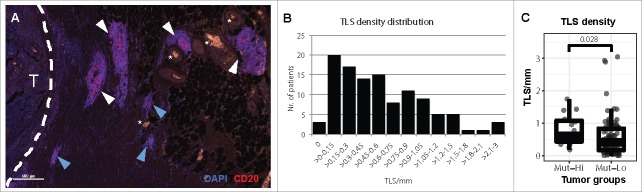
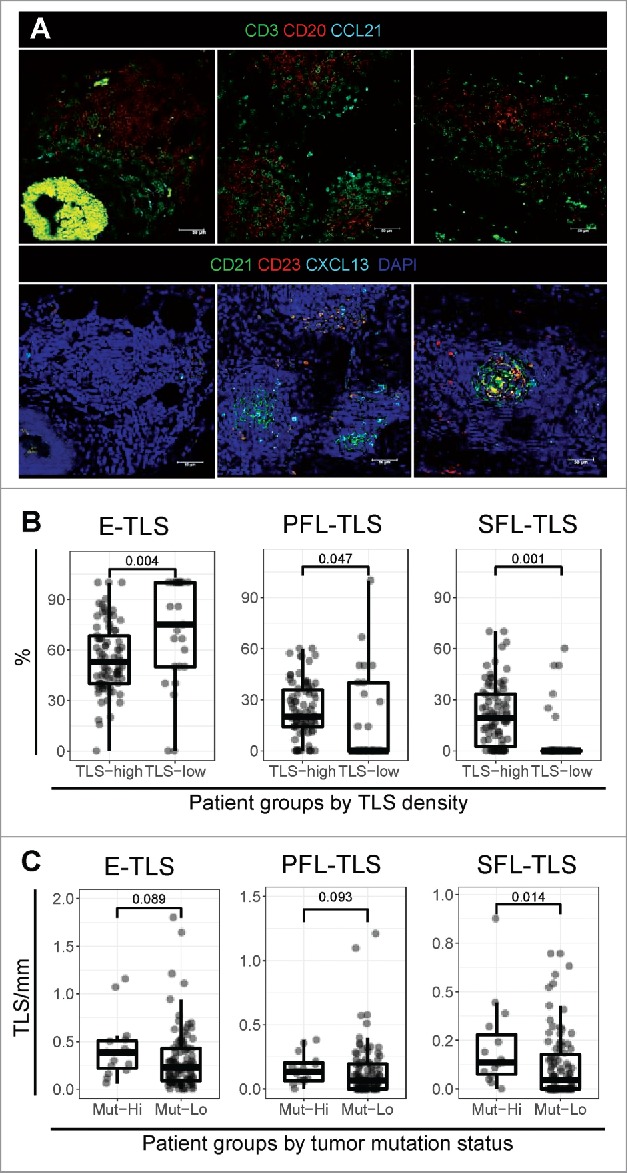
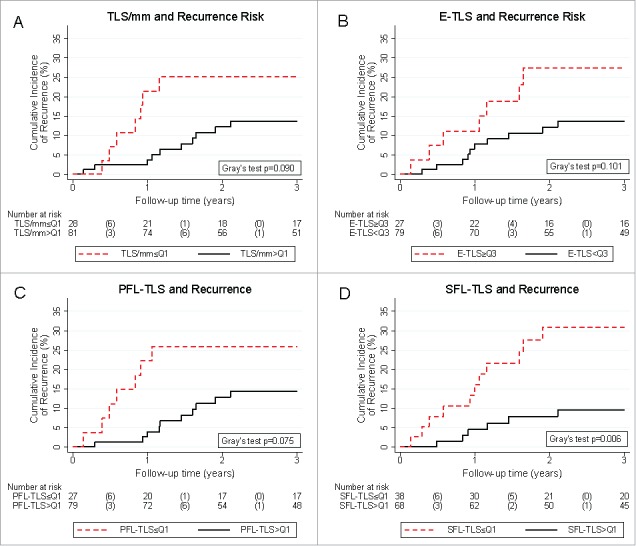
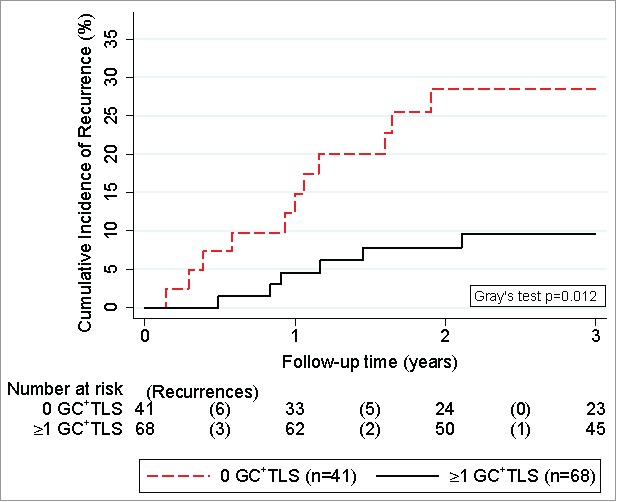
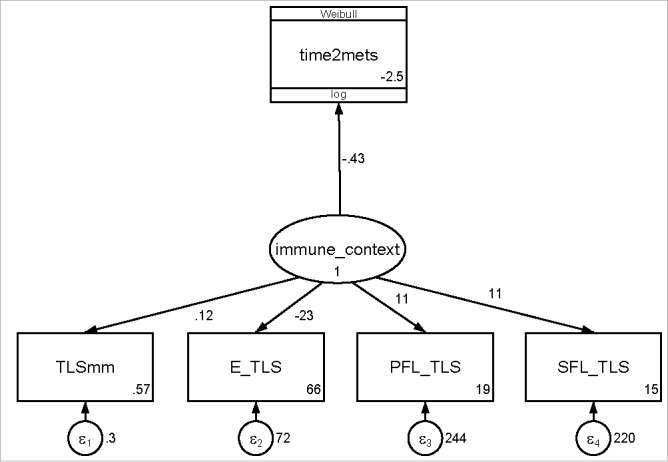
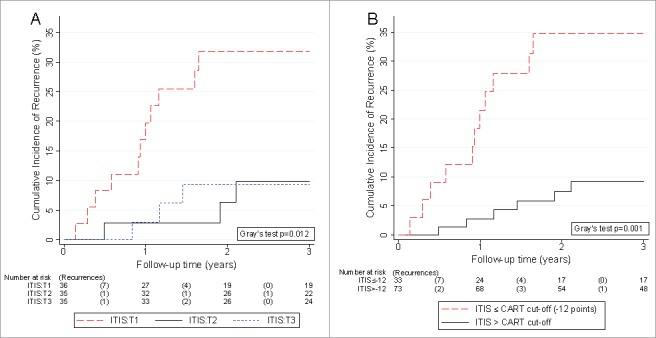
Tertiary lymphoid structures (TLS) are associated with favorable outcome in non-metastatic colorectal carcinoma (nmCRC), but the dynamics of TLS maturation and its association with effective anti-tumor immune surveillance in nmCRC are unclear. Here, we hypothesized that not only the number of TLS but also their composition harbors information on recurrence risk in nmCRC. In a comprehensive molecular, tissue, laboratory, and clinical analysis of 109 patients with stage II/III nmCRC, we assessed TLS numbers and degree of maturation in surgical specimens by multi-parameter immunofluorescence of follicular dendritic cell (FDC) and germinal center (GC) markers. TLS formed in most tumors and were significantly more prevalent in highly-microsatellite-instable (MSI-H) and/or BRAF-mutant nmCRC. We could distinguish three sequential TLS maturation stages which were characterized by increasing prevalence of FDCs and mature B-cells: [1] Early TLS, composed of dense lymphocytic aggregates without FDCs, [2] Primary follicle-like TLS, having FDCs but no GC reaction, and [3] Secondary follicle-like TLS, having an active GC reaction. A simple integrated TLS immunoscore reflecting these parameters identified a large subgroup of nmCRC patients with a very low risk of recurrence independently of clinical co-variables such as ECOG performance status, age, stage, and adjuvant chemotherapy. We conclude that (1) mismatch repair and BRAF mutation status are associated with the formation of TLS in nmCRC, (2) TLS formation in nmCRC follows sequential maturation steps, culminating in germinal center formation, and (3) this maturation process harbors important prognostic information on the risk of disease recurrence.
Overview
The claims and statistics of this paper haven’t been checked yet.
Free: it reads the open-access text and checks the first 5 claims that cite a source we can check. Create a free account to check every claim.
Integrity signals
Registry
Cites
Statistics
Figures
Verification
Claims the paper makes
The claims and statistics of this paper haven’t been checked yet.
Free: it reads the open-access text and checks the first 5 claims that cite a source we can check. Create a free account to check every claim.
Claims other papers make about this one
Each is checked against this paper’s own text: does it say what the citing paper says it does?
The source backs part of the claim, not all of it — or backs it for a different population, condition or comparison.
In the citing paper
“The vast majority of evaluated TLSs in these patients represented mature secondary-follicle-like TLSs, as indicated by the presence of both CD21+ follicular dendritic cells and CD23+ germinal centre B cells30”
From B cells and tertiary lymphoid structures promote immunotherapy response (2020) · cites this paper as [30]
Experimental — accuracy not yet measured
Self-check
Percentages, sums and reported differences re-computed from the paper’s own numbers.
The self-check needs the paper’s full text.
Citations
Cites
Siegel, R. L., Miller, K. D., & Jemal, A. (2017) · CA: A Cancer Journal for Clinicians · doi:10.3322/caac.21387 · Cited by 14,712 · cited 9×
“These data suggest further hypotheses: (1) TLS with a GC reaction represents the most “functional” subtype, (2) GC development indicates towards tumor-specific B cell and CD4 T cell priming, and (3) TLS maturation harbors additional information to mere TLS enumerations for the prognosis of CRC recurrence.”
BackgroundResultInfluentialA Proportional Hazards Model for the Subdistribution of a Competing Risk
Fine, J. P., & Gray, R. J. (1999) · Journal of the American Statistical Association · doi:10.1080/01621459.1999.10474144 · Cited by 14,290
PD-1 Blockade in Tumors with Mismatch-Repair Deficiency
Le, D. T., Uram, J. N., Wang, H., Bartlett, B. R., Kemberling, H., Eyring, A. D., Skora, A. D., Luber, B. S., Azad, N. S., Laheru, D., et al. (2015) · New England Journal of Medicine · doi:10.1056/nejmoa1500596 · Cited by 9,377
Mutational landscape determines sensitivity to PD-1 blockade in non–small cell lung cancer
Rizvi, N. A., Hellmann, M. D., Snyder, A., Kvistborg, P., Makarov, V., Havel, J. J., Lee, W., Yuan, J., Wong, P., Ho, T. S., et al. (2015) · Science · doi:10.1126/science.aaa1348 · Cited by 7,802
Cancer Immunoediting: Integrating Immunity’s Roles in Cancer Suppression and Promotion
Schreiber, R. D., Old, L. J., & Smyth, M. J. (2011) · Science · doi:10.1126/science.1203486 · Cited by 6,474
The immune contexture in human tumours: impact on clinical outcome
Fridman, W. H., Pagès, F., Sautès-Fridman, C., & Galon, J. (2012) · Nature reviews. Cancer · doi:10.1038/nrc3245 · Cited by 4,981
A Class of $K$-Sample Tests for Comparing the Cumulative Incidence of a Competing Risk
Gray, R. J. (1988) · The Annals of Statistics · doi:10.1214/aos/1176350951 · Cited by 4,960
Global Cancer Incidence and Mortality Rates and Trends—An Update
Torre, L. A., Siegel, R. L., Ward, E. M., & Jemal, A. (2016) · Cancer Epidemiology, Biomarkers & Prevention · doi:10.1158/1055-9965.epi-15-0578 · Cited by 3,692 · cited 10×
“In sensitivity analyses, we (1) performed a classification and regression tree analysis (CART, Stata routine cart) to explore the strength of recurrence risk predictors and potential ITIS cut-off points within a non-parametric fashion,(48) and (2) fitted interactions between the ITIS, tumor stage and adjuvant chemothe…”
BackgroundMethodResultInfluentialThe Three Es of Cancer Immunoediting
Dunn, G. P., Old, L. J., & Schreiber, R. D. (2004) · Annual Review of Immunology · doi:10.1146/annurev.immunol.22.012703.104803 · Cited by 3,072
Clonal neoantigens elicit T cell immunoreactivity and sensitivity to immune checkpoint blockade
McGranahan, N., Furness, A. J. S., Rosenthal, R., Ramskov, S., Lyngaa, R., Saini, S. K., Jamal-Hanjani, M., Wilson, G. A., Birkbak, N. J., Hiley, C. T., et al. (2016) · Science · doi:10.1126/science.aaf1490 · Cited by 3,065
Cited by
Items 301–400 of 410
Jafarlou, M., Jafarlou, V., Nouri, S., Alizadeh, N., Tabrizi, Z. A., Iravani, M., Ghorbaninezhad, F., Shakiba, D., & Baradaran, B. (2026) · Cancer Cell International · doi:10.1186/s12935-026-04385-1 · Cited by 5
“The immune-rich tumor microenvironment TME, with high expression of cytokines (CXCL9, CXCL10, IL-15, IFN-γ), tertiary lymphoid structures (TLS), and upregulated HLA class I/II genes, makes CMS1 tumors highly responsive to immunotherapy, such as anti-PD-1/PD-L1 antibodies [36, 38, 39].”
Zhang, Z., Xu, J., Wu, Y., Liu, T., Zhang, J., Zhou, M., Qiao, J., Pan, H., & Wang, X. (2026) · Cell Proliferation · doi:10.1111/cpr.70260 · Cited by 3
“In CRC, TLS is often found below the invasive margin of tumours [46].”
Global trends in tertiary lymphoid structures: a bibliometric analysis from 2014 to 2023
Bao, Y., Mo, Z., Wang, S., Long, J., Zhang, H., Xu, Y., Jiang, H., Qian, T., & Zeng, Z. (2024) · Frontiers in Immunology · doi:10.3389/fimmu.2024.1475062 · Cited by 3
Fully Human Antibodies for Malignant Pleural Mesothelioma Targeting
Nicolini, F., Bocchini, M., Angeli, D., Bronte, G., Delmonte, A., Crinò, L., & Mazza, M. (2020) · Cancers · doi:10.3390/cancers12040915 · Cited by 3
“A positive impact of TLS density on OS and disease‐free survival in lung cancer [71,76–78], colorectal cancer [79,80], pancreatic cancer [81,82], oral squamous cell carcinoma [83], and invasive breast cancer [70,84–86] has been documented.”
BackgroundCai, D., Wang, X., Yu, H., Bai, C., Mao, Y., Liang, M., Xia, X., Liu, S., Wang, M., Lu, X., et al. (2024) · Clinical & Translational Immunology · doi:10.1002/cti2.1489 · Cited by 3
Garcia-Vilarato, E., Bomstein, Z. S., Allred, K. F., Callaway, E. S., Safe, S. H., Chapkin, R. S., Jayaraman, A., & Allred, C. D. (2024) · International Journal of Molecular Sciences · doi:10.3390/ijms251810153 · Cited by 3
“Indeed, TLT formation during CRC is associated with a better prognosis and a lower likelihood of tumor recurrence in clinical cases [9–11].”
BackgroundA novel approach to digital characterisation of Tertiary Lymphoid Structures in colorectal cancer
Munoz‐Erazo, L., Park, S. M., Lin, S., Chen, C. J., Zhou, L. Y. Y., Rhodes, J. L., Jeon, T., Fenton, S., McCall, J. L., Kemp, R. A., et al. (2025) · Frontiers in Immunology · doi:10.3389/fimmu.2025.1500792 · Cited by 3
Jiang, Y., Zhang, C., Hou, Y., Zhao, B., & Cui, B. (2025) · World Journal of Surgical Oncology · doi:10.1186/s12957-025-03796-0 · Cited by 3
“…demonstrated that higher TLS density was associated with better OS in LARC patients compared to lower TLS density, which is consistent with the trends observed in most types of cancer, including lung cancer [32], pancreatic cancer [33], endometrial cancer [34], as well as colorectal cancer [7].”
Ghamry-Barrin, S., Dieu‐Nosjean, M., & Panouillot, M. (2024) · Methods in molecular biology · doi:10.1007/978-1-0716-4184-2_11 · Cited by 2
Okoshi, E. N., Fujita, S., Lami, K., Kitamura, Y., Matsuda, R., Bychkov, A., Miyazaki, T., Matsumoto, K., Nagayasu, T., & Fukuoka, J. (2025) · Pathology · doi:10.1016/j.pathol.2025.01.001 · Cited by 2
(2025) · PubMed Central · doi:10.3779/j.issn.1009-3419.2025.102.03 · Cited by 2
“/ 组织(脾脏、淋巴结和扁桃体等), TLS 是非生理条件 下非淋巴组织中继发产生的免疫细胞聚集体,与淋巴组 织具有相似的结构和功能 [5] ,一般出现于自身免疫性疾 病、慢性感染、癌症所致的慢性炎症病变中 [6] 。 TLS 的成熟依赖于先天性免疫细胞和适应性免疫 细胞 [7] ,与 SLO 类似,主要以通过高内皮微静脉( high endothelial venule, HEV )渗出的滤泡树突状细胞( follicular dendritic cell, FDC )和成熟 B 细胞的增多为特征 [8] ,成熟的 TLS 往往提示肿瘤患者有良好的预后。根据不同的研究 目的, TLS…”
Wang, R., Liu, S., Zhao, Y., Su, Y., Peng, Q., Zhu, L., Zheng, Y., Xin, Y., Li, J., Du, Y., et al. (2026) · Breast Cancer Research · doi:10.1186/s13058-026-02241-8 · Cited by 2
“This count-based approach emphasizes the spatial frequency of TLSs, which is more likely to reflect their biological relevance and immune function than total area alone [29, 35, 36].”
Zhou, H., Qian, X., Dai, Q., Zhu, Q., Li, P., Cui, W., & Zhao, Y. (2026) · Translational Cancer Research · doi:10.21037/tcr-2025-aw-2367 · Cited by 2
“…is a cell-cycle-regulated centriole-duplication factor required for faithful cell division (49) , consistent with the broader concept that TLS maturation (especially germinal-center-like reactions) is coupled to proliferative immune programs rather than being a purely structural phenomenon (60).”
Mi, Y., Lin, Z., Zhang, Q., Li, N., Zhang, Z., & Zhou, H. (2026) · Cancer Biome and Targeted Therapy · doi:10.66505/cbtt.v1i2.39 · Cited by 2
Kong, D., Feng, L., Sun, Y. X., Zhang, H., Fan, J., An, Y., Zhu, Y., Zhu, Y., Zhang, Q., Xiang, R., et al. (2026) · Signal Transduction and Targeted Therapy · doi:10.1038/s41392-026-02858-3 · Cited by 3
“The presence of TCF-1 + T cells in further supports this concept, as these cells can gradually differentiate into effector-like phenotypes under the in fl uence of IL-21 and IFN-γ secreted by CD4 + T cells within the TLS.”
Kim, Y., Kang, I., Kang, B. H., Park, W. H., Kim, C. W., Kim, H.-J., La, J., Kwon, M. S., Park, S. H., Im, S. H., et al. (2026) · Science Immunology · doi:10.1126/sciimmunol.adz2494 · Cited by 3
Nagano, H., Watanabe, T., Togawa, T., Ohnishi, K., Kimura, T., Iida, A., Sato, Y., & Goi, T. (2020) · OncoTargets and Therapy · doi:10.2147/ott.s234945 · Cited by 2
Structures lymphoïdes tertiaires : de la biogenèse à l’impact thérapeutique en cancérologie
Quesada, S., Lebreton, C., Caux, C., Italiano, A., & Dubois, B. (2023) · Bulletin du Cancer · doi:10.1016/j.bulcan.2023.04.010 · Cited by 2
Padonou, F., Vanhulst, T., & Fontsa, M. L. (2024) · Current Opinion in Oncology · doi:10.1097/cco.0000000000001015 · Cited by 2
“TLS vary between and within different diseases, where they appear at distinct maturation stages, ranging from lymphoid aggregates to highly organized & structures with germinal centers [2,41,42,43 ,44,45].”
BackgroundGarcia-Villatoro, E. L., Ufondu, A., Callaway, E. S., Allred, K. F., Safe, S. H., Chapkin, R. S., Jayaraman, A., & Allred, C. D. (2024) · American Journal of Physiology-Gastrointestinal and Liver Physiology · doi:10.1152/ajpgi.00274.2023 · Cited by 2
Immune check point inhibitors in BRAF mutated metastatic colorectal cancer: A review
Colombo, A., Cordio, S. S., & Porretto, C. M. (2024) · International Journal of Gastrointestinal Intervention · doi:10.18528/ijgii240030 · Cited by 2
“103,104 A higher degree of TLS density was associated with colorectal tumors with MSI-H and/or BRAF mutations (median: 0.61 vs. 0.45, rank-sum P = 0.03), according to Posch et al 105 TLS mostly exhibited in the peripheral region of CRC tumor tissues (97%).”
InfluentialSonntag, M., Stanojevic, S., Laban, S. A., Schuler, P. J., Hoffmann, T. K., & Brunner, C. (2024) · Cells · doi:10.3390/cells14010020 · Cited by 2
“In colorectal cancer (CRC), Posch et al. proposed three TLS subtypes based on FDC and mature B cell density, resulting in GC reactions [41].”
Koksoy, A. A., Salvatierra, M. E., MOSAIC Team, Soto, L. M. S., & Haymaker, C. (2024) · bioRxiv (Cold Spring Harbor Laboratory) · doi:10.1101/2024.12.26.630405 · Cited by 2
The role of STING agonist-induced interferon stimulated genes in the anti-melanoma immune response
Filderman, J. N. (2024) · D-Scholarship@Pitt (University of Pittsburgh) · Cited by 2
Yang, Y., Xie, M., Feng, Y., Lv, X., Song, J., Xue, X., & Zheng, J. (2024) · IEEE International Symposium on Biomedical Imaging (ISBI) · doi:10.1109/isbi56570.2024.10635596 · Cited by 4
Assessment of new pathological markers in early stage colon cancer: Insights and limitations
Erdoğan, B., Keskin, F. E. U., Özcan, E., Küçükarda, A., Güren, A. K., Köstek, O., Hacioglu, B. M., & Kodaz, H. (2025) · World Journal of Gastrointestinal Oncology · doi:10.4251/wjgo.v17.i3.101325 · Cited by 1
Shen, J., & Yang, X. (2025) · Molecular and Clinical Oncology · doi:10.3892/mco.2025.2916 · Cited by 1
“TLS has been proved to be an independent prognostic marker, which could predict the response rate of immunotherapy in different tumors (22,28‑33).”
InfluentialB-cell–directed Immunotherapy for Solid Tumors
Anderko, R. R., Tcharni, A., Zureikat, A. H., & Bruno, T. C. (2026) · Surgical Oncology Clinics of North America · doi:10.1016/j.soc.2025.10.009 · Cited by 1
Zhou, X., Zhao, Z., Huang, K., & Ma, G. (2026) · Human Mutation · doi:10.1155/humu/8446751 · Cited by 1
Michot, A., Vanhersecke, L., Dinart, D., Bourdon, A., Azmani, R., Velasco, V., Bonomo, I., Toureille, M., Toulmonde, M., Perret, R. E., et al. (2026) · Cancers · doi:10.3390/cancers18111685 · Cited by 1
“The presence of fmTLS was significantly associated with improved 5-year OS as well as cause-specific survival, consistent with previous studies reporting the positive prognostic impact of TLS in various malignancies [15,24,27,28].”
Li, Z., Jia, W., Guo, Z., Zheng, F., Huang, C., Zhang, T., Xu, Z., Feng, H., Cheng, X., & Zhao, R. (2026) · Cancer Drug Resistance · doi:10.20517/cdr.2026.35 · Cited by 2
Xi, N., Xu, X., Xu, M., Wu, N., Wu, Y., Chen, J., Liu, S., Jiang, L., Yan, G., Zhang, G., et al. (2024) · Frontiers in Immunology · doi:10.3389/fimmu.2024.1435629 · Cited by 1
The Immune System of Mesothelioma Patients: A Window of Opportunity for Novel Immunotherapies
Nicolini, F., & Mazza, M. (2021) · IntechOpen eBooks · doi:10.5772/intechopen.98617 · Cited by 1
In the literature: October 2021
Gambardella, V., Martínez‐Ciarpaglini, C., Fleitas, T., & Cervantes, A. M. R. (2021) · ESMO Open · doi:10.1016/j.esmoop.2021.100285 · Cited by 1
“In colon cancer, the presence of TLSs is associated to mismatch repair defective proteins and BRAF-mutated status and defines a very low-risk group of tumors.(6)”
Tumor Immune Microenvironment of Soft Tissue Sarcoma
Chen, T. W., Su, S., & Tseng, W. W. (2022) · Springer eBooks · doi:10.1007/978-3-030-93084-4_61 · Cited by 1
Kadota, H., Gono, T., Kunugi, S., Ota, Y., Takeno, M., Seike, M., Shimizu, A., & Kuwana, M. (2023) · Frontiers in Medicine · doi:10.3389/fmed.2022.1066858 · Cited by 1
“Interestingly, mutations of genes, such as mismatch repair genes and the B-Raf proto-oncogene, in cancer cells are reported to promote the formation of TLSs (41).”
BackgroundSingle-cell spatial atlas of tertiary lymphoid structures in ovarian cancerPreprint
Sarkkinen, J., Junquera, A., Anttila, E., Szabo, A., Pérez‐Villatoro, F., Launonen, I.-M. P., Laury, A. R., Casado, J., Kekäläinen, E., & Färkkilä, A. (2023) · bioRxiv (Cold Spring Harbor Laboratory) · doi:10.1101/2023.05.16.540946 · Cited by 1
“…TLSs from chemotherapy-exposed tumors across different molecular subgroups of HGSC. Previous studies have shown that mismatch repair-deficient colorectal cancers have an increased prevalence of TLSs with more mature phenotypes(20), but this was not observed in BRCA1 mut breast cancer patients(21).”
BackgroundLounici, Y. (2022) · theses.fr (ABES) · doi:10.70675/c6b122dez88bez431czb15az720a90e61462 · Cited by 1
Ogbonna, E. C., Talemi, S. R., Maliga, Z., Zhao, Z., Yapp, C., Pant, S. M., Lu, Y. D., Muhlich, J. L., Gagné, A., Martinot, A. J., et al. (2026) · bioRxiv (Cold Spring Harbor Laboratory) · doi:10.64898/2026.06.02.725201 · Cited by 1
Raffalla, N., Helal, S., El-Latif, A. A. E.-B. A., & Elsaka, R. O. (2019) · Asian Journal of Pharmaceutical and Clinical Research · doi:10.22159/ajpcr.2020.v13i1.35940
“From the wide variety of cells and factors constituting TME, collectively lymphoid neogenesis in the form of lymph node-like structures [8-10] or individually infiltrating immune cells are attracting great attention.”
Background[Induction and Anti-Tumor Function of Tertiary Lymphoid Organs].
Chen, H., Hu, X., Zhang, H., & Hu, H. (2022) · 四川大学学报:医学版 · doi:10.12182/20220160102
雷, 鑫. (2022) · Advances in Clinical Medicine · doi:10.12677/acm.2022.122157
Zhang, Y., Xuewen, Y., Wang, Q., Song, X., Wenjie, X., Mao, Q., Chen, B., Liang, Y., Zhang, T., Xu, L., et al. (2021) · Research Square · doi:10.21203/rs.3.rs-585268/v1
Lai, J., Cao, Y., Zhang, J. K., Wang, J., Du, Y., He, Y., Luo, Y., & Liao, N. (2023) · Advanced Therapeutics · doi:10.1002/adtp.202300003
Kim, Y., Song, J. S., Choi, S., Nam, S. Y., Kim, S. Y., & Cho, K. (2023) · Pathology - Research and Practice · doi:10.1016/j.prp.2023.154874 · Cited by 1
Tertiary Lymphoid Structures and Gastric Cancer Research Progress
米, 军. (2023) · Advances in Clinical Medicine · doi:10.12677/acm.2023.13122828
Caractérisation des lymphocytes T gamma delta et de l'expression de BTN3A dans le cancer colorectal
Buttard, B. (2021) · theses.fr (ABES) · doi:10.70675/e4918084zef7cz41d9zb1a9ze8fcd3280c7b
Zhang, Y., Yin, X., Wang, Q., Song, X., Xia, W., Mao, Q., Chen, B., Liang, Y., Zhang, T.-S., Xu, L., et al. (2021) · Figshare · doi:10.6084/m9.figshare.16800638
Zhang, Y., Yin, X., Wang, Q., Song, X., Xia, W., Mao, Q., Chen, B., Liang, Y., Zhang, T.-S., Xu, L., et al. (2021) · Figshare · doi:10.6084/m9.figshare.16800644
Zhang, Y., Yin, X., Wang, Q., Song, X., Xia, W., Mao, Q., Chen, B., Liang, Y., Zhang, T.-S., Xu, L., et al. (2021) · Figshare · doi:10.6084/m9.figshare.16800635
Virazels, M. (2023) · theses.fr (ABES) · doi:10.70675/1ffc7bb5z666fz49d3zb5b9z81ce3e4d33d5
Landscape of B lymphocytes and plasma cells in digestive tract carcinomas
Dimopoulou, K., TINIAKOS, D. G., Arkadopoulos, N. F., & Foukas, P. G. (2024) · Annals of Gastroenterology · doi:10.20524/aog.2024.0936
“Additionally, B cells are in close proximity to T cells, and particularly organized in TLS, mostly in the invasive margin, leading to a lower risk of disease relapse and prolonged survival [50-54].”
Requesens, M., Brummel, K., Bhattacharya, A., Somefun, F., van Rooij, N., Plat, A., van der Hall, D. M. X., Vledder, A., Wardenaar, R., Spierings, D. C. J., et al. (2025) · bioRxiv (Cold Spring Harbor Laboratory) · doi:10.1101/2025.08.20.671212
Los linfocitos B y su séquito: ¿una posible kriptonita del cáncer?
Sánchez, A., Montesinos, D. J. F., & Villodres, J. (2023) · The Conversation · doi:10.64628/aao.rjfd5ng9y
Yuan, C., Shu, X., Wang, X., Hu, Z., & Jie, Z. (2025) · Discover Oncology · doi:10.1007/s12672-025-04250-z
“Posch et al. [12] reported that a majority of CRC patient tumor tissues contained TLSs in a study involving 109 patients with CRC.”
Sun, H., Shi, Y., Ran, H., Peng, J., Li, Q., Zheng, G., He, Y., Liu, S., Chang, W., & Xiao, Y. (2023) · Figshare · doi:10.6084/m9.figshare.24864189
Zhang, Y., Yin, X., Wang, Q., Song, X., Xia, W., Mao, Q., Chen, B., Liang, Y., Zhang, T., Xu, L., et al. (2021) · Figshare · doi:10.6084/m9.figshare.16800629
Zou, Y., Yu, X., Zhou, C., Zhu, C., & Yuan, Y. (2023) · Figshare · doi:10.6084/m9.figshare.22615937
Zhang, Y., Yin, X., Wang, Q., Song, X., Xia, W., Mao, Q., Chen, B., Liang, Y., Zhang, T., Xu, L., et al. (2021) · Figshare · doi:10.6084/m9.figshare.16800626
Zhang, Y., Yin, X., Wang, Q., Song, X., Xia, W., Mao, Q., Chen, B., Liang, Y., Zhang, T., Xu, L., et al. (2021) · Figshare · doi:10.6084/m9.figshare.16800623
Zhang, Y., Yin, X., Wang, Q., Song, X., Xia, W., Mao, Q., Chen, B., Liang, Y., Zhang, T., Xu, L., et al. (2021) · Figshare · doi:10.6084/m9.figshare.16800641
Zhang, Y., Yin, X., Wang, Q., Song, X., Xia, W., Mao, Q., Chen, B., Liang, Y., Zhang, T., Xu, L., et al. (2021) · Figshare · doi:10.6084/m9.figshare.16800632
Tertiary lymphoid structures in glioblastoma : Discovery, Characterization and Therapeutic Induction
Vaccaro, A. (2024) · KTH Publication Database DiVA (KTH Royal Institute of Technology)
Xu, F., Zheng, S., Shao, Z.-Y., Qi, W.-X., Cao, L., Wang, C.-F., & Chen, J. (2026) · Breast Cancer Research · doi:10.1186/s13058-026-02226-7
Li, Z., Ruan, S., Yu, Y., Xiang, H., & Mi, W. (2026) · Frontiers in Immunology · doi:10.3389/fimmu.2025.1732056
“In most malignancies (e.g., lung cancer (64, 65), ovarian cancer (66), colorectal cancer (42, 57), and bladder cancer (67, 68)), TLS are associated with improved clinical outcomes and enhanced responses to immunotherapy.”
Qi, J., Zhang, H., Wang, G., Chen, H., Liang, T., Huang, X., Huang, S., Yin, Y., Lou, X., & Huang, Y. (2026) · Gastroenterology report · doi:10.1093/gastro/goag002
“In contrast, due to their incomplete maturation, E-TLSs fail to effectively activate immune responses and could even promote tumor immune evasion by secreting immunosuppressive factors [19].”
Biliary tract cancer treatment: Emerging trends and further prospects
Liu, Q., Zhang, H., Pang, L., Xu, X., & Liu, C. (2026) · Chinese Medical Journal BioMed · doi:10.65457/cmjbm-2026-0002
Karaman, A. P., Ivanović, T., Mustapić, K., Vukojević, K., Minarik, L., Durdov, M. G., & Đolonga, P. (2026) · Medical Sciences · doi:10.3390/medsci14010145
“Furthermore, Posh et al. showed that a high proportion of mature TLSs is a stronger prognostic indicator than the total number of TLSs in non-metastatic colon cancer, which highlights the importance of TLS composition/maturation stage [42].”
齋藤, 晶. (2022) · Institutional Repositories DataBase (IRDB)
Integrated analysis and clinical impact of immune and stromal microenvironments in solid tumors
Petitprez, F. (2018) · theses.fr (ABES) · doi:10.70675/cea357bazafbaz4eaaz94e5zc5f644de5018
Cardiac tertiary immune niches drive immune activation in immune checkpoint inhibitor myocarditis
Tymm, C. C., Paiola, M., Bukhari, S., Hu, X., WINCHESTER, R. J., & Mor, A. (2026) · Science Advances · doi:10.1126/sciadv.aed8359
Lucas, B. P.-D., Ortega, M., Camblor, D. G., Gimeno-Valiente, F., Bolea, A., Moro-Valdezate, D., González, J., Huerta, M., Roselló, S., Roda, D., et al. (2026) · Cancers · doi:10.3390/cancers18081288
“TLSs have been reported as significantly associated with MSI and better prognosis in CRC cases [91]; however, their prognostic significance specifically in MSS cases has not been previously explored.”
Zheng, J., Huang, H., Li, W., Li, S., Liu, J., Lu, Z., Yan, C., & Zhang, W. (2026) · The Innovation Oncology · doi:10.59717/j.xinn-oncol.2026.100011
Łapińska, J., Kasperczuk, K., Kańczugowska, K., Gałan, A., Pająk, W., Kleinrok, J., Sitarz, R., Baj, J., & Korolczuk, A. (2026) · International Journal of Molecular Sciences · doi:10.3390/ijms27104386
“Their presence in CRC, GICs, and pancreatic cancer correlates with a favorable clinical prognosis, which includes both prolonged OS and a reduced risk of disease recurrence [94–96].”
Wang, Q., & Chen, Y. (2026) · Tissue and Cell · doi:10.1016/j.tice.2026.103613
Emerging concepts, hot topics, and open questions in today’s pancreatic cancer research
Keber, C. U., Schmitt, M., Visekruna, A., Brichkina, A. I., von Strandmann, E. P., Bartsch, J. W., Huber, M., Bauer, U., Gress, T. M., & Lauth, M. (2026) · Biochimica et Biophysica Acta (BBA) - Reviews on Cancer · doi:10.1016/j.bbcan.2026.189614
Risom, T., Jesudason, R., Liu, E., Hill, A., Beig, N. G., Foo, C., Liu, O., Fuentes, E., Tai, L., Prasad, K., et al. (2026) · bioRxiv (Cold Spring Harbor Laboratory) · doi:10.64898/2026.05.14.723890
“…representing the apex of a developmental trajectory are vastly outnumbered by immature lymphoid structures in NSCLC 7,12,17 , sarcoma 9 , hepatocellular 14,18 , renal 19 and colorectal 16 carcinoma, and the question remains of whether these immature states similarly impact a patient’s prognosis.”
Han, R.-Y., Wei, Y.-K., Liu, W.-N., Wang, Y.-M., Song, T.-Q., Tian, X.-D., Xia, Y.-R., Chen, L., & Gong, W.-C. (2026) · World Journal of Gastroenterology · doi:10.3748/wjg.v32.i22.117417
Zhi-Hong, C. H. E. N., (65477), Y. W., & Jian, M. A. (2026) · Shengming kexue · doi:10.3724/cbls.2026072
Ding, Y., Ma, A., Ning, W., Liu, T., Chen, Z., Zhu, X., Qian, J., Jin, Y., Xu, K., Lu, J., et al. (2026) · Biomedical Signal Processing and Control · doi:10.1016/j.bspc.2026.110808
Bao, X., Xie, M., Lin, X., Liu, Y., Zhang, Y., Ma, X., Zhang, X., Liang, Y., Xue, X., & Zang, X. (2026) · BMC Cancer · doi:10.1186/s12885-026-16525-x
Yang, K., Li, H., Dong, X., Lin, J., Li, Z., Jiang, W., & Yan, J. (2026) · BMC Cancer · doi:10.1186/s12885-026-16542-w
“However, the prognostic value of TLS in CRC patients remains unclear according to previous studies [10, 11].”
Yin, H., Qiao, Y., Li, X., Zhang, J., & Dong, Q. (2026) · Annals of Medicine · doi:10.1080/07853890.2026.2659991
“The presence of iTLS in early-stage tumours, such as hepatocellular carcinoma (HCC) and CRC, has been linked to higher recurrence risk, likely due to increased expression of immunosuppressive molecules during early TLS development, which impairs effective antitumour immunity [71,72].”
Mechanisms of T cell-mediated antitumor immunity within tertiary lymphoid structures
Wang, Y., Cao, W., Wu, M., & Wang, H. N. (2026) · Frontiers in Immunology · doi:10.3389/fimmu.2026.1883563
Zhang, F., Li, R., Wang, L., Ma, F., Liu, F., Chen, D., Peng, L., ZHANG, X., Peng, J., Zhang, X., et al. (2026) · Academic Radiology · doi:10.1016/j.acra.2026.07.012
Beyond TLS Presence: A Functional Framework Integrating Maturity, Location, and Immune Context
Kleinrok, J., Rusztyn, K., Druszcz, M., Pająk, W., Gajewski, F. K., Badach, M., Korolczuk, A., & Mazur, M. (2026) · Cancers · doi:10.3390/cancers18152393
“This means that TLS-positive tumours that appear similar at first glance may in fact correspond to biologically distinct conditions [42,69,72].”
Lei, X., Cui, X., Ni, Y., Ding, Y., Miao, Y., Qian, C., & Shan, J. (2026) · Journal of Advanced Research · doi:10.1016/j.jare.2026.08.054
Dou, Z.-C., Shi, Y.-C., Meng, K., Wang, J.-R., Liang, X., & Tang, Y. (2026) · Molecular Biomedicine · doi:10.1186/s43556-026-00562-w
“…but rather a dynamic continuum in which different TLSs gradually acquire FDC networks, HEV features, plasma cell output, and more complete spatial compartmentalization, whereas some immature TLSs may deviate from this trajectory under specific metabolic or inflammatory conditions [61, 62].”
Wang, C., Liu, F., Li, J., & Zhan, Q. (2026) · Dental Research · doi:10.1016/j.dtrs.2026.100054
Role of Tertiary Lymphoid Structures in Autoimmune Diseases and Cancer
Yan, Z., Wen, B., Hu, Y., Wang, X., Duan, X., Li, H., Dong, S., Fan, Y., Wang, C., Yang, S., et al. (2026) · MedComm · doi:10.1002/mco2.70943
“The presence of mature, intra-tumoral TLSs consistently correlates with prolonged relapse-free survival (RFS) and OS, underscoring their role in sustaining a potent, localized anti-tumor response [ 170, 171 ].”
Metadata
- Authors
- Posch, F., Silina, K., Leibl, S., Mündlein, A., Moch, H., Siebenhüner, A., Samaras, P., Riedl, J., Stotz, M., Szkandera, J., Stöger, H., Pichler, M., Stupp, R., van den Broek, M., Schraml, P., Gerger, A., Petrausch, U., & Winder, T.
- Affiliations
- Medical University of Graz (AT)
- Tumor Immunology Research Unit, Institute of Experimental Immunology, University of Zurich, Winterthurerstrasse 190, Zurich, Switzerland
- University Hospital Zurich (CH)
- Vorarlberg Institute for Vascular Investigation and Treatment (VIVIT), Carinagasse 47, Feldkirch, Austria
- The University of Texas MD Anderson Cancer Center (US)
- Corresponding author
- Gerger, Armin
- ORCID
- Venue
- OncoImmunology
- Publisher
- Informa UK Limited
- Published
- 2017-12-18
- Volume
- 7
- Issue
- 2
- Pages
- e1378844-e1378844
- ISSN
- 2162-4011 (ISSN-L)
- 2162-402X
- PMC
- PMC5798199
- OpenAlex
- W2754092421
- Semantic Scholar
- b23d332bf1f947f639c068f6c05b4e8a548789d0
- Cited by
- 380
- References
- 49
- Citations by year
- 2026: 44 · 2025: 65 · 2024: 85 · 2023: 54 · 2022: 50 · 2021: 44 · 2020: 23 · 2019: 10 · 2018: 4 · 2017: 1
- FWCI
- 4.58
- Type
- journal article
- Language
- en
- Open access
- gold
- doi.org
- Licence
- Locations
- OncoImmunology (publishedVersion, cc-by-nc-nd)
- PubMed Central (publishedVersion, cc-by-nc-nd)
- PubMed (publishedVersion)
- Zurich Open Repository and Archive (University of Zurich) (acceptedVersion, cc-by-nc-nd)
- DOAJ (DOAJ: Directory of Open Access Journals) (submittedVersion, cc-by-sa)
- OPUS (Augsburg University) (submittedVersion, cc-by-nc-nd)
- Zurich Open Repository and Archive (University of Zurich) (submittedVersion, cc-by-nc-nd)
- Zurich Open Repository and Archive (University of Zurich)
- Funders
- Swiss Cancer League (F-87701-31-01)
- University of Zurich (K-84901-01-01)
- Topics
- Health Sciences › Medicine › Oncology › Cancer Immunotherapy and Biomarkers
- Health Sciences › Medicine › Oncology › Colorectal Cancer Treatments and Studies
- Health Sciences › Medicine › Oncology › Colorectal Cancer Surgical Treatments
- Keywords
- tertiary lymphoid structures, colorectal cancer, tumor recurrence, follicular dendritic cells, germinal center, microsatellite instability, BRAF mutation, DNA mismatch repair, prognostic factors, immune score
About these checks
Registry, retraction, Cites and statistics results are computed, not judged, with one exception: a printed reference that no index lists is read once by a model before it counts as a citation error. Claims are extracted by a model and kept only when their quote appears verbatim in the text; each cited source is then checked, with a model’s help, for whether it says what the claim relies on. Those verdicts can be wrong — read the claim’s quote and the cited source before relying on one.
Statistics and arithmetic are recomputed, not judged.
Confidence bands are shown only for fields calibrated on our annotated test set. None is calibrated yet, so no band is shown.
What counts as a claim ›How we measure confidence ›How we check this ›
Are you an author, or do you see a problem with this page? Request a review
Data sources
Bibliographic data: Semantic Scholar, OpenAlex, Crossref.
Contains information from the Semantic Scholar Academic Graph Datasets, made available under the ODC Attribution License (ODC-BY 1.0).
Semantic Scholar’s data is described in: Kinney, R., et al. (2023). The Semantic Scholar Open Data Platform. arXiv:2301.10140.
