

Fear appeals to promote better health behaviors: an investigation of potential mediators
Open accessThe DOI matches its Crossref record; 78 of the 78 references it cites were found in a registry or an index.
Abstract
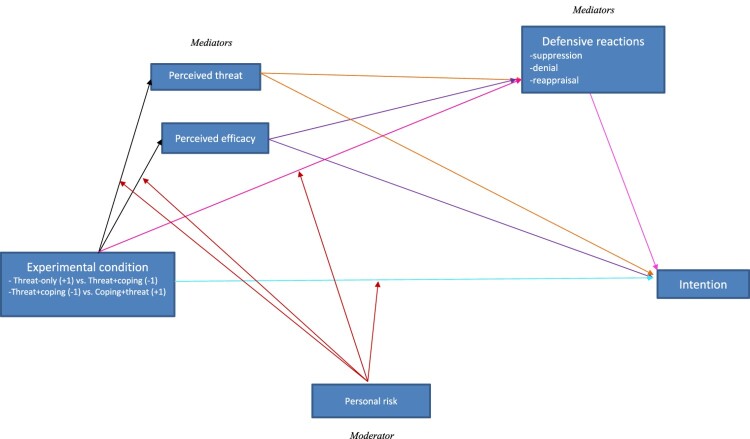
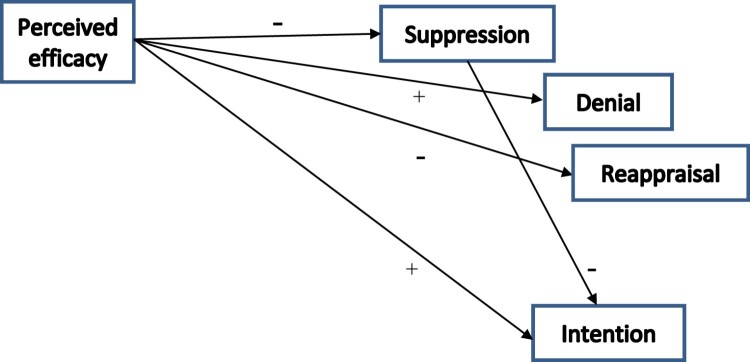
Background: Fear appeals are widely used in health communication, despite conflicting views on their effectiveness. Unresolved issues include possible mediation mechanisms and the effect of defensive reactions aimed at controlling a perceived danger.Methods: The present study compared the impact of three versions of an existing online course on how to prevent noncommunicable diseases. Participants, recruited in South America via a crowdsourcing platform, were divided randomly between three versions of the course – ‘threat only’/‘threat plus coping information’/‘coping information plus threat’ (reverse order). We then asked them to complete a questionnaire measuring perceived efficacy, perceived threat, defensive reactions, and intention to change unhealthy behaviors.Results: Using a serial parallel mediation model to test the course's impact on our dependent variables did not reveal any significant differences between the three versions. Perceived efficacy was positively associated with intention to change behavior, as well as with lower suppression, lower reappraisal, and greater denial. Suppression was the only defensive reaction to be associated with intention to change behavior: greater suppression was linked to less intention to change.Conclusions: Our results open interesting perspectives for research into defensive reactions.
Overview
The claims and statistics of this paper haven’t been checked yet.
Free: it reads the open-access text and checks the first 5 claims that cite a source we can check. Create a free account to check every claim.
Integrity signals
Registry
Cites
Statistics
Figures
Verification
Claims the paper makes
The claims and statistics of this paper haven’t been checked yet.
Free: it reads the open-access text and checks the first 5 claims that cite a source we can check. Create a free account to check every claim.
Claims other papers make about this one
Each is checked against this paper’s own text: does it say what the citing paper says it does?
In the citing paper
“Fear might promote better health behaviours, but on the other hand defensive reactions might also be linked to less intentions to change behaviour [23].”
From Public knowledge about dementia risk reduction in Norway (2022) · cites this paper as [23]
Self-check
Percentages, sums and reported differences re-computed from the paper’s own numbers.
The self-check needs the paper’s full text.
Citations
Cites
(2013) · Cited by 44,563
(1975) · PhilPapers (PhilPapers Foundation) · Cited by 36,737
The weirdest people in the world?
Henrich, J., Heine, S. J., & Norenzayan, A. (2010) · Behavioral and Brain Sciences · doi:10.1017/s0140525x0999152x · Cited by 12,641
Amazon's Mechanical Turk: A New Source of Inexpensive, Yet High-Quality, Data?
Buhrmester, M., Kwang, T., & Gosling, S. D. (2011) · Perspectives on Psychological Science · doi:10.1177/1745691610393980 · Cited by 9,996
‘Small Changes' to Diet and Physical Activity Behaviors for Weight Management
Hills, A. P., Byrne, N. M., Lindstrom, R., & Hill, J. O. (2013) · Obesity Facts · doi:10.1159/000345030 · Cited by 9,493
A Protection Motivation Theory of Fear Appeals and Attitude Change1
Rogers, R. W. (1975) · The Journal of Psychology · doi:10.1080/00223980.1975.9915803 · Cited by 6,805 · cited 3×
“For example, the Extended Parallel Process Model (EPPM, Witte, 1992), which drew on the Drive Reduction Model (Hovland, Janis, & Kelley, 1953), Leventhal’s Danger Control/Fear Control Framework (1970), Protection Motivation Theory (Rogers, 1975), and the Health Belief Model (Rosenstock, 1966), predicts that responses…”
BackgroundLippa, N. C., & Sanderson, S. C. (2013) · Human Heredity · doi:10.1159/000353712 · Cited by 6,078
The World Health Report 2002 - Reducing Risks, Promoting Healthy Life
Not Available, N. A. (2003) · Education for Health: Change in Learning & Practice · doi:10.1080/1357628031000116808 · Cited by 6,046
A review of correlates of physical activity of children and adolescents
SALLIS, J. F., PROCHASKA, J. J., & TAYLOR, W. C. (2000) · Medicine & Science in Sports & Exercise · doi:10.1097/00005768-200005000-00014 · Cited by 4,421
WEIRD languages have misled us, too
Majid, A., & Levinson, S. C. (2010) · Behavioral and Brain Sciences · doi:10.1017/s0140525x1000018x · Cited by 4,076
Putting the fear back into fear appeals: the extended parallel process model
Witte, K. (1992) · Communication Monographs · doi:10.1080/03637759209376276 · Cited by 3,880 · cited 2×
“For example, the Extended Parallel Process Model (EPPM, Witte, 1992), which drew on the Drive Reduction Model (Hovland, Janis, & Kelley, 1953), Leventhal’s Danger Control/Fear Control Framework (1970), Protection Motivation Theory (Rogers, 1975), and the Health Belief Model (Rosenstock, 1966),…”
BackgroundMethodIntention—Behavior Relations: A Conceptual and Empirical Review
Sheeran, P. (2002) · European Review of Social Psychology · doi:10.1080/14792772143000003 · Cited by 3,688 · cited 1×
“Although intention is considered the most proximal determinant of behavior (Fishbein & Ajzen, 1975), there is a large gap between intention and behavior (Sheeran, 2002), so creating intentions is not always enough to change behavior.”
BackgroundProlific.ac—A subject pool for online experiments
Palan, S., & Schitter, C. (2018) · Journal of Behavioral and Experimental Finance · doi:10.1016/j.jbef.2017.12.004 · Cited by 3,450 · cited 1×
“We recruited participants via the Prolific crowdsourcing platform (Palan & Schitter, 2018).”
MethodA Meta-Analysis of Fear Appeals: Implications for Effective Public Health Campaigns
Witte, K., & Allen, M. (2000) · Health Education & Behavior · doi:10.1177/109019810002700506 · Cited by 3,216 · cited 2×
“Meta-analysis have shown that response efficacy is a stronger predictor of intention to change than the emotion of fear (Floyd et al., 2000; Witte & Allen, 2000).”
BackgroundBeyond the Turk: Alternative platforms for crowdsourcing behavioral research
Peer, E., Brandimarte, L., Samat, S., & Acquisti, A. (2017) · Journal of Experimental Social Psychology · doi:10.1016/j.jesp.2017.01.006 · Cited by 2,957
A Meta‐Analysis of Research on Protection Motivation Theory
FLOYD, D. L., PRENTICE‐DUNN, S., & ROGERS, R. W. (2000) · Journal of Applied Social Psychology · doi:10.1111/j.1559-1816.2000.tb02323.x · Cited by 2,513
Why People Use Health Services
ROSENSTOCK, I. M. (2005) · The Milbank Quarterly · doi:10.1111/j.1468-0009.2005.00425.x · Cited by 2,325 · cited 2×
“…& Kelley, 1953), Leventhal’s Danger Control/Fear Control Framework (1970), Protection Motivation Theory (Rogers, 1975), and the Health Belief Model (Rosenstock, 1966), predicts that responses to a perceived threat will depend on the balance between perceived threat (severity and susceptibility)…”
BackgroundWhy People Use Health Services
Rosenstock, I. M. (1966) · The Milbank Memorial Fund Quarterly · doi:10.2307/3348967 · Cited by 2,305
Communication and Persuasion: Psychological Studies of Opinion Change.
Riley, M. W., Hovland, C. I., Janis, I. L., & Kelley, H. H. (1954) · American Sociological Review · doi:10.2307/2087772 · Cited by 2,038
Using Bayes to get the most out of non-significant results
Dienes, Z. (2014) · Frontiers in Psychology · doi:10.3389/fpsyg.2014.00781 · Cited by 1,998
Dane, A. V., & Schneider, B. H. (1998) · Clinical Psychology Review · doi:10.1016/s0272-7358(97)00043-3 · Cited by 1,557
MILNE, S., SHEERAN, P., & ORBELL, S. (2000) · Journal of Applied Social Psychology · doi:10.1111/j.1559-1816.2000.tb02308.x · Cited by 1,458
Findings and Theory in the Study of Fear Communications
Leventhal, H. (1970) · Advances in Experimental Social Psychology · doi:10.1016/s0065-2601(08)60091-x · Cited by 1,335
Appealing to fear: A meta-analysis of fear appeal effectiveness and theories
Tannenbaum, M. B., Hepler, J., Zimmerman, R. S., Saul, L., Jacobs, S., Wilson, K., & Albarracín, D. (2015) · Psychological Bulletin · doi:10.1037/a0039729 · Cited by 1,315 · cited 1×
“On the other hand, proponents argue that fear appeals positively affect attitudes, intentions, and behaviors, with one meta-analysis reporting an average effect size of d = 0.29 (Tannenbaum et al., 2015).”
BackgroundInfluentialMedicine and science in sports and exercise
(1994) · Journal of the American Dietetic Association · doi:10.1016/0002-8223(94)92400-7 · Cited by 813
Predicting Risk Behaviors: Development and Validation of a Diagnostic Scale
WITTE, K. (1996) · Journal of Health Communication · doi:10.1080/108107396127988 · Cited by 758
The SAGE Handbook of Persuasion: Developments in Theory and Practice
Dillard, J., & Shen, L. (2012) · Sage eBooks · doi:10.4135/9781452218410 · Cited by 650 · cited 4×
“Readiness to change has been mentioned in the literature as a moderator of fear appeals (Mongeau, 2013).”
BackgroundResultInfluentialMultiple health behavior change research: An introduction and overview
Prochaska, J. J., Spring, B., & Nigg, C. R. (2008) · Preventive Medicine · doi:10.1016/j.ypmed.2008.02.001 · Cited by 604
Sixty years of fear appeal research: Current state of the evidence
Ruiter, R. A. C., Kessels, L. T. E., Peters, G. Y., & Kok, G. (2014) · International Journal of Psychology · doi:10.1002/ijop.12042 · Cited by 583
Assessing Mediational Models: Testing and Interval Estimation for Indirect Effects
Biesanz, J. C., Falk, C. F., & Savalei, V. (2010) · Multivariate Behavioral Research · doi:10.1080/00273171.2010.498292 · Cited by 394
Fear Appeals and Persuasion: A Review and Update of the Extended Parallel Process Model
Maloney, E. K., Lapinski, M. K., & Witte, K. (2011) · Social and Personality Psychology Compass · doi:10.1111/j.1751-9004.2011.00341.x · Cited by 332
Fear as motivator, fear as inhibitor
Witte, K. (1996) · Handbook of Communication and Emotion · doi:10.1016/b978-012057770-5/50018-7 · Cited by 318
Fifteen years of fear arousal: Research on threat appeals: 1953-1968.
Higbee, K. L. (1969) · Psychological Bulletin · doi:10.1037/h0028430 · Cited by 293 · cited 2×
“One general principle frequently used in persuasive campaigns is highlighting the negative consequences of the behaviors (Higbee, 1969; Ruiter, Kessels, Peters, & Kok, 2014; Williams, 2012; Witte, 1996a), and has been applied independently to the four risk factors of NCDs (e.g. for diet: Bleakley…”
BackgroundMultiple Health Behavior Research represents the future of preventive medicine
Prochaska, J. O. (2008) · Preventive Medicine · doi:10.1016/j.ypmed.2008.01.015 · Cited by 264
Applying health behavior theory to multiple behavior change: Considerations and approaches
Noar, S. M., Chabot, M., & Zimmerman, R. S. (2008) · Preventive Medicine · doi:10.1016/j.ypmed.2007.08.001 · Cited by 241 · cited 1×
“Noar et al. (2008) mention that recipients of the intervention can learn behavior change principles that they can apply to several health behaviors.”
BackgroundIgnoring theory and misinterpreting evidence: the false belief in fear appeals
Kok, G., Peters, G.-J. Y., Kessels, L. T. E., ten Hoor, G. A., & Ruiter, R. A. C. (2018) · Health Psychology Review · doi:10.1080/17437199.2017.1415767 · Cited by 241 · cited 2×
“On the one hand, opponents of using fear appeals in persuasive messages argue that they trigger defensive reactions (Kessels, Ruiter, & Jansma, 2010; van ‘t Riet & Ruiter, 2013) and that they are effective only in very rare cases (Kok et al., 2018).”
Backgroundde Hoog, N., Stroebe, W., & de Wit, J. B. F. (2007) · Review of General Psychology · doi:10.1037/1089-2680.11.3.258 · Cited by 239
van ‘t Riet, J., & Ruiter, R. A. C. (2013) · Health Psychology Review · doi:10.1080/17437199.2011.606782 · Cited by 197 · cited 4×
“Theoretical arguments (Blondé & Girandola, 2016; van ‘t Riet & Ruiter, 2013) also support the idea that defensive reactions might not necessarily lead to the reduction in danger control suggested by the EPPM.”
BackgroundInfluentialLewis, I. M., Watson, B. C., & White, K. M. (2009) · Accident Analysis & Prevention · doi:10.1016/j.aap.2009.09.008 · Cited by 170
Kessels, L. T. E., Ruiter, R. A. C., & Jansma, B. M. (2010) · Health Psychology · doi:10.1037/a0019372 · Cited by 140
Subjective Knowledge and Fear Appeal Effectiveness: Implications for Message Design
Nabi, R. L., Roskos-Ewoldsen, D., & Dillman Carpentier, F. (2008) · Health Communication · doi:10.1080/10410230701808327 · Cited by 111
Affect arousal and positioning of recommendations in persuasive communications.
Leventhal, H., & Singer, R. P. (1966) · Journal of Personality and Social Psychology · doi:10.1037/h0023569 · Cited by 108 · cited 1×
“Leventhal and Singer (1966) examined the impact of the order of threat and coping information on increasing or reducing fear produced by stimuli of different intensities.”
BackgroundKeller, P. A. (1999) · Journal of Applied Psychology · doi:10.1037//0021-9010.84.3.403 · Cited by 105 · cited 2×
“Keller (1999) suggested that the reverse order –coping first, then threat– should be considered as an option for the ‘unconverted’, that is, for people who have not yet adopted recommendations.”
BackgroundAre You Scared Yet? Evaluating Fear Appeal Messages in Tweets About the Tips Campaign
Emery, S., Szczypka, G., Abril, E. P., Kim, Y., & Vera, L. E. (2014) · Journal of Communication · doi:10.1111/jcom.12083 · Cited by 98
Peters, G.-J., Ruiter, R. A. C., ten Hoor, G. A., Kessels, L. T. E., & Kok, G. (2018) · Health Psychology Review · doi:10.1080/17437199.2018.1454846 · Cited by 94
Cho, Y. J., Thrasher, J. F., Swayampakala, K., Yong, H., Mckeever, R. J., Hammond, D. G., Anshari, D., Cummings, K. M., & Borland, R. (2016) · PLoS ONE · doi:10.1371/journal.pone.0159245 · Cited by 90
Research in Business and Economics Journal
Baker, P. D. R. (2014) · ADVANCED SCIENCES INDEX · Cited by 89
Effects of Flexible Working Method on Employee Performance: An Empirical Study in Turkey
Altındağ, E., & Siller, F. (2014) · Business and Economics Journal · doi:10.4172/2151-6219.1000104 · Cited by 85
Cigarette smoking weakens exercise habits in healthy men
Nagaya, T., Yoshida, H., Takahashi, H., & Kawai, M. J. (2007) · Nicotine & Tobacco Research · doi:10.1080/14622200701591575 · Cited by 84
Bleakley, A., Jordan, A. B., Hennessy, M. H., Glanz, K., Strasser, A. A., & Vaala, S. E. (2015) · Journal of Health Communication · doi:10.1080/10810730.2015.1018593 · Cited by 83 · cited 1×
“…Kessels, Peters, & Kok, 2014; Williams, 2012; Witte, 1996a), and has been applied independently to the four risk factors of NCDs (e.g. for diet: Bleakley et al., 2015; tobacco: Emery, Szczypka, Abril, Kim, & Vera, 2014; alcohol use: Fritzen & Mazer, 1975; physical activity: Redmond, Dong, &…”
Ort, A., & Fahr, A. (2018) · British Journal of Health Psychology · doi:10.1111/bjhp.12310 · Cited by 72 · cited 1×
“…by three meta-analyses (Floyd, Prentice-Dunn, & Rogers, 2000; Milne, Sheeran, & Orbell, 2000; Witte & Allen, 2000) and recent individual studies (e.g. Ort & Fahr, 2018; Roberto, Mongeau, Liu, & Hashi, 2019) – that providing coping information, in other words, telling people how they can face a…”
White, B. X., & Albarracín, D. (2018) · Health Psychology Review · doi:10.1080/17437199.2018.1448292 · Cited by 70 · cited 1×
“This debate was recently rekindled by Kok et al. (2018), whose conclusions elicited numerous comments (Borland, 2018; Brewer, Hall, & Noar, 2018; Malouff, 2018; Niederdeppe & Kemp, 2018; Peters & Shoots-Reinhard, 2018; Roberto, Mongeau, & Liu, 2018; White & Albarracín, 2018).”
Effects of persuasive message order on coping with breast cancer information
Prentice-Dunn, S. (2001) · Health Education Research · doi:10.1093/her/16.1.81 · Cited by 64 · cited 1×
“Similarly, Prentice-Dunn, Floyd, and Flournoy (2001) found that varying the message order did not significantly affect behavior intentions, but participants in the conventional order, high-threat condition expressed less hopelessness than those in the high threat, reverse order condition.”
BackgroundA (Re)defining moment for fear appeals: a comment on Kok et al. (2018)
Roberto, A. J., Mongeau, P. A., & Liu, Y. (2018) · Health Psychology Review · doi:10.1080/17437199.2018.1445546 · Cited by 62
Borland, R. (2018) · Health Psychology Review · doi:10.1080/17437199.2018.1445545 · Cited by 60 · cited 1×
“This debate was recently rekindled by Kok et al. (2018), whose conclusions elicited numerous comments (Borland, 2018; Brewer, Hall, & Noar, 2018; Malouff, 2018; Niederdeppe & Kemp, 2018; Peters & Shoots-Reinhard, 2018; Roberto, Mongeau, & Liu, 2018; White & Albarracín, 2018).”
Pictorial cigarette pack warnings increase quitting: a comment on Kok et al.
Brewer, N. T., Hall, M. G., & Noar, S. M. (2018) · Health Psychology Review · doi:10.1080/17437199.2018.1445544 · Cited by 60
Stages of Change of Smoking Cessation: Relationships With Other Health Behaviors
Unger, J. B. (1996) · American Journal of Preventive Medicine · doi:10.1016/s0749-3797(18)30357-x · Cited by 57 · cited 1×
“…clusters of behaviors (Sallis, Prochaska, & Taylor, 1999), and the changes in one behavior being mirrored in another behavior, for example, physical exercise and tobacco consumption (Nagaya, Yoshida, Takahashi, & Kawai, 2007; Unger, 1996; but see also Sarma et al., 2019 for inconclusive evidence).”
BackgroundIgnoring theory and evidence: commentary on Kok et al. (2018)
Niederdeppe, J., & Kemp, D. (2018) · Health Psychology Review · doi:10.1080/17437199.2018.1445543 · Cited by 57 · cited 1×
“This debate was recently rekindled by Kok et al. (2018), whose conclusions elicited numerous comments (Borland, 2018; Brewer, Hall, & Noar, 2018; Malouff, 2018; Niederdeppe & Kemp, 2018; Peters & Shoots-Reinhard, 2018; Roberto, Mongeau, & Liu, 2018; White & Albarracín, 2018).”
Skilbeck, C., Tulips, J., & Ley, P. (1977) · European Journal of Social Psychology · doi:10.1002/ejsp.2420070208 · Cited by 55 · cited 1×
“Finally, Skilbeck, Tulips, and Ley (1977) found that the conventional order resulted in significantly better compliance with dietary instructions at two-week follow-up, but not at four-, eight-, or sixteen-week follow-up.”
BackgroundMalouff, J. M. (2018) · Health Psychology Review · doi:10.1080/17437199.2018.1445541 · Cited by 55
Peters, E. M., & Shoots‐Reinhard, B. L. (2018) · Health Psychology Review · doi:10.1080/17437199.2018.1445542 · Cited by 52 · cited 1×
“This debate was recently rekindled by Kok et al. (2018), whose conclusions elicited numerous comments (Borland, 2018; Brewer, Hall, & Noar, 2018; Malouff, 2018; Niederdeppe & Kemp, 2018; Peters & Shoots-Reinhard, 2018; Roberto, Mongeau, & Liu, 2018; White & Albarracín, 2018).”
Self-Evaluation and Motivation To Change: Social Cognitive Constructs In Smoking Cessation
Dijkstra, A., de Vries, H., Kok, G., & Rouackers, J. (1999) · Psychology and Health · doi:10.1080/08870449908410762 · Cited by 50
Changing behaviors to prevent noncommunicable diseases
Chokshi, D. A., & Farley, T. A. (2014) · Science · doi:10.1126/science.1259809 · Cited by 43
Examining Mechanisms Underlying Fear-Control in the Extended Parallel Process Model
Quick, B. L., LaVoie, N. R., Reynolds‐Tylus, T., Gonzalez, A. M., & Skurka, C. (2017) · Health Communication · doi:10.1080/10410236.2016.1266738 · Cited by 43
Faire « appel à la peur » pour persuader ? Revue de la littérature et perspectives de recherche
Blondé, J., & Girandola, F. (2016) · L’Année psychologique · doi:10.4074/s0003503316000282 · Cited by 38 · cited 1×
“Theoretical arguments (Blondé & Girandola, 2016; van ‘t Riet & Ruiter, 2013) also support the idea that defensive reactions might not necessarily lead to the reduction in danger control suggested by the EPPM.”
BackgroundDijkstra, A. (2008) · Psychology and Health · doi:10.1080/08870440801998962 · Cited by 36
“Fear the Flu, Not the Flu Shot”: A Test of the Extended Parallel Process Model
Roberto, A. J., Mongeau, P. A., Liu, Y., & Hashi, E. C. (2019) · Journal of Health Communication · doi:10.1080/10810730.2019.1673520 · Cited by 29
Effects of Flexible Working Method on Employee Performance: An Empirical Study in Turkey
Altındağ, E., & Siller, F. (2014) · Business and Economics Journal · doi:10.4303/2151-6219.1000104 · Cited by 28
The effects of repeated exposure to graphic fear appeals on cigarette packages: A field experiment.
Dijkstra, A., & Bos, C. (2015) · Psychology of Addictive Behaviors · doi:10.1037/adb0000049 · Cited by 27
The Effects of Fear Appeal and Communication upon Attitudes toward Alcohol Consumption
Fritzen, R. D., & Mazer, G. E. (1975) · Journal of Drug Education · doi:10.2190/ng73-ljga-6n6f-pf6t · Cited by 24 · cited 1×
“…Peters, & Kok, 2014; Williams, 2012; Witte, 1996a), and has been applied independently to the four risk factors of NCDs (e.g. for diet: Bleakley et al., 2015; tobacco: Emery, Szczypka, Abril, Kim, & Vera, 2014; alcohol use: Fritzen & Mazer, 1975; physical activity: Redmond, Dong, & Frazier, 2015).”
Schüz, N., Eid, M., Schüz, B., & Ferguson, S. G. (2016) · Psychology of Addictive Behaviors · doi:10.1037/adb0000146 · Cited by 24
Redmond, M. L., Dong, F., & Frazier, L. M. (2015) · Women s Health Issues · doi:10.1016/j.whi.2014.11.009 · Cited by 23
Reactions to tobacco warning labels: predictors and outcomes of adaptive and maladaptive responses
Owusu, D., So, J., & Popova, L. (2019) · Addiction Research & Theory · doi:10.1080/16066359.2018.1531127 · Cited by 21 · cited 1×
“For example, contrary to their predictions, Owusu, So, and Popova (2019) found higher levels of negative emotions among participants who reported adaptative responses to cigarette warning labels than among participants who reported maladaptive responses.”
ResultSarma, E. A., Moyer, A. E., Messina, C. R., Laroche, H. H., Snetselaar, L., Horn, L. V., & Lane, D. S. (2019) · Health Education & Behavior · doi:10.1177/1090198119831756 · Cited by 19
Intuition is not evidence: Prescriptions for behavioral interventions from social psychology
Wilson, T. D., & Juarez, L. (2015) · Behavioral Science & Policy · doi:10.1353/bsp.2015.0006 · Cited by 17
Brown, S. L., & West, C. (2014) · British Journal of Health Psychology · doi:10.1111/bjhp.12103 · Cited by 16 · cited 2×
“…in which coping information and threat are presented has been sometimes shown to have an effect, depending on characteristics such as the degree to which an individual already follows the advocated recommendations (Keller, 1999) or the level of distress the message elicits (Brown & West, 2015).”
BackgroundHall, S. L., Bishop, A. J., & Marteau, T. M. (2006) · British Journal of Health Psychology · doi:10.1348/135910705x52282 · Cited by 16 · cited 1×
“For example, Hall, Bishop, and Marteau (2006) did not find any order-related difference in the persuasive impact of an anti-smoking message (assessed as intention to stop smoking), but they did obtain a primacy-effect in that participants in the conventional order condition recalled more threat…”
BackgroundWhen Defensive Reactions Contribute to the Acceptance of Fear-Arousing Communications
Blondé, J., & Girandola, F. (2017) · Current Psychology · doi:10.1007/s12144-017-9590-z · Cited by 13 · cited 2×
“An attempt to explain why fear might increase persuasion in some studies but heighten defensive reactions in others led Blondé and Girandola (2019) to suggest that not enough is known about the relationship between persuasion, information processing, and defensiveness.”
Background
Research works printed but not linked: 2
- Conner, M., & Norman, P. (2005). Predicting health behaviour. Maidenhead: McGraw-Hill Education.
- Drug Free Action Alliance. (2013). Why scare tactics in drug messaging prevention don’t work. Colombus, OH: Drug Free Action Alliance.
Cited by
Yoon, H., You, M., & Shon, C. (2022) · PLoS ONE · doi:10.1371/journal.pone.0261132 · Cited by 35
“The EPPM, an integrated and comprehensive model of affective and cognitive processes, describes the behavioral change process as the relationship between the fear of a health message or health risk situation, and the individual’s sense of efficacy in coping strategies [14, 15].”
BackgroundPublic knowledge about dementia risk reduction in Norway
Kjelvik, G., Rokstad, A. M. M., Stuebs, J., Thingstad, P., Deckers, K., Köhler, S., & Selbæk, G. (2022) · BMC Public Health · doi:10.1186/s12889-022-14433-w · Cited by 29
“Fear might promote better health behaviours, but on the other hand defensive reactions might also be linked to less intentions to change behaviour [23].”
BackgroundWaring, S., Almond, L., & Halsall, L. (2024) · Transportation Research Part F Traffic Psychology and Behaviour · doi:10.1016/j.trf.2024.07.019 · Cited by 22
Zhu, B., Wu, H., Lv, S., & Xu, Y. (2024) · PLoS ONE · doi:10.1371/journal.pone.0301666 · Cited by 18
“…Primary school or below as reference; (2) Single as reference; (3) � 2000 as reference; (4) Chronic nephritis as reference; (5) 0 as reference; (6) < 1 as reference; (7) 2 as reference. https://doi.org/10.1371/journal.pone.0301666.t002 adopt healthy behaviors and positive treatment approaches [56].”
BackgroundInfluentialApproaches for Imparting Oral Health to Special Groups: A Literature Review
Mishra, P., Devi, K. D., Chaturvedi, A., Priyadarshini, S., & Chandra, S. (2025) · Saudi Journal of Oral and Dental Research · doi:10.36348/sjodr.2025.v10i01.011 · Cited by 11
Metadata
- Authors
- Moussaoui, L. S., Claxton, N., & Desrichard, O.
- Affiliations
- University of Geneva (CH)
- International Federation of Red Cross and Red Crescent Societies (CH)
- Corresponding author
- Moussaoui, Lisa Selma
- Venue
- Health Psychology and Behavioral Medicine
- Publisher
- Informa UK Limited
- Published
- 2021-01-01
- Volume
- 9
- Issue
- 1
- Pages
- 600-618
- ISSN
- 2164-2850 (ISSN-L)
- PMC
- PMC8266257
- OpenAlex
- W3180356875
- Cited by
- 30
- References
- 77
- Citations by year
- 2026: 5 · 2025: 7 · 2024: 8 · 2023: 4 · 2022: 5 · 2021: 1
- FWCI
- 4.04
- Type
- journal article
- Language
- en
- Open access
- gold
- doi.org
- Licence
- Locations
- Health Psychology and Behavioral Medicine (publishedVersion, cc-by)
- PubMed Central (publishedVersion, cc-by)
- PubMed (publishedVersion)
- Archive ouverte UNIGE (University of Geneva) (publishedVersion, other-oa)
- Archive ouverte UNIGE (University of Geneva) (submittedVersion, cc-by)
- DOAJ (DOAJ: Directory of Open Access Journals) (submittedVersion, cc-by-sa)
- Topics
- Social Sciences › Psychology › Applied Psychology › Behavioral Health and Interventions
- Social Sciences › Communication › Media Influence and Health
- Social Sciences › Sociology and Political Science › Risk Perception and Management
- Keywords
- fear appeals, defensive reactions, threat perception, perceived efficacy, behavioral intention, suppression, cognitive reappraisal, denial, non-communicable disease prevention, health communication, mediation
About these checks
Registry, retraction, Cites and statistics results are computed, not judged, with one exception: a printed reference that no index lists is read once by a model before it counts as a citation error. Claims are extracted by a model and kept only when their quote appears verbatim in the text; each cited source is then checked, with a model’s help, for whether it says what the claim relies on. Those verdicts can be wrong — read the claim’s quote and the cited source before relying on one.
Statistics and arithmetic are recomputed, not judged.
Confidence bands are shown only for fields calibrated on our annotated test set. None is calibrated yet, so no band is shown.
What counts as a claim ›How we measure confidence ›How we check this ›
Are you an author, or do you see a problem with this page? Request a review
Data sources
Bibliographic data: Semantic Scholar, OpenAlex, Crossref.
Contains information from the Semantic Scholar Academic Graph Datasets, made available under the ODC Attribution License (ODC-BY 1.0).
Semantic Scholar’s data is described in: Kinney, R., et al. (2023). The Semantic Scholar Open Data Platform. arXiv:2301.10140.
