

The global burden and epidemiology of invasive non-typhoidal Salmonella infections
Open accessThe DOI matches its Crossref record; 33 of the 35 references it cites were found in a registry or an index, and 2 are not checked yet.
Abstract
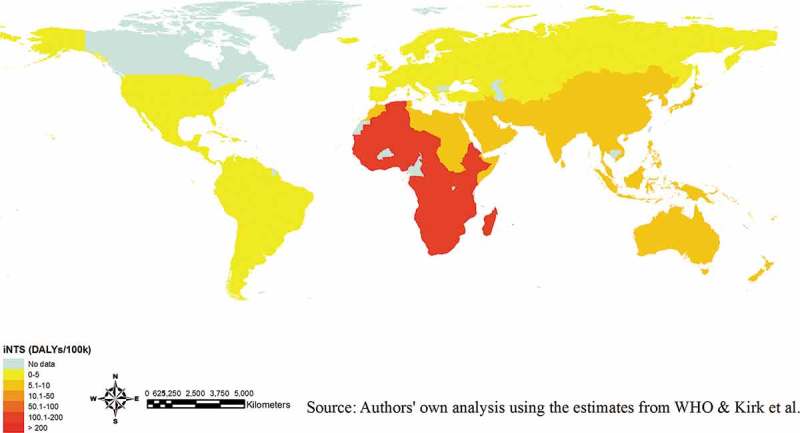
Invasive non-typhoidal Salmonella (iNTS) disease has emerged as a major public health concern. Yet, understanding of the global burden is incomplete, limited particularly by the breadth of blood culture-based surveillance systems that are able to accurately diagnose the etiology of bacteremia. The accessibility of whole genome sequencing has allowed for genetic characterization of pathogens, shedding light on its evolutionary history and sounding alerts for its future progression. iNTS disease is observed to be a particular threat in sub-Saharan Africa, with a case fatality rate greatly exceeding that of typhoid fever, and commonly affecting infants, young children and immunocompromised adults. While iNTS disease might also be a threat in Asia and Latin America, its burden is not well characterized, primarily owing to the lack of comprehensive reporting in these regions. Drug-resistant Salmonella enterica (S. enterica) serovars (e.g. Typhimurium sequence type 313 (ST313)) have emerged as a potential consequence of sustained antibiotic pressure. Genetic analyses have identified distinguished iNTS disease-causing strains that are particularly virulent in certain human host populations. Effective treatment strategies, including vaccination, are necessary; iNTS vaccines targeting the most common S. enterica serovars, Typhimurium, Enteritidis and Dublin, are currently in early developmental stages. Funding and political support is needed to promote vaccine development and implementation programs to ultimately reduce the threat of iNTS disease in high risk areas.
Overview
The claims and statistics of this paper haven’t been checked yet.
Free: it reads the open-access text and checks the first 5 claims that cite a source we can check. Create a free account to check every claim.
Integrity signals
Registry
Cites
Statistics
Figures
Verification
Claims the paper makes
The claims and statistics of this paper haven’t been checked yet.
Free: it reads the open-access text and checks the first 5 claims that cite a source we can check. Create a free account to check every claim.
Self-check
Percentages, sums and reported differences re-computed from the paper’s own numbers.
The self-check needs the paper’s full text.
Citations
Cites
The Global Burden of Nontyphoidal Salmonella Gastroenteritis
Majowicz, S. E., Musto, J., Scallan, E., Angulo, F. J., Kirk, M., O’Brien, S. J., Jones, T. F., Fazil, A., & Hoekstra, R. M. (2010) · Clinical Infectious Diseases · doi:10.1086/650733 · Cited by 2,442
Kirk, M. D., Pires, S. M., Black, R. E., Caipo, M., Crump, J. A., Devleesschauwer, B., Döpfer, D., Fazil, A., Fischer-Walker, C. L., Hald, T., et al. (2015) · PLoS Medicine · doi:10.1371/journal.pmed.1001921 · Cited by 1,625 · cited 10×
“However, as the isolation rate of iNTS disease-causing organisms was fairly low, it is likely that the burden of iNTS disease, while not insignificant, does not rival that of sub-Saharan Africa.”
BackgroundMethodInfluentialInvasive non-typhoidal salmonella disease: an emerging and neglected tropical disease in Africa
Feasey, N. A., Dougan, G., Kingsley, R. A., Heyderman, R. S., & Gordon, M. A. (2012) · The Lancet · doi:10.1016/s0140-6736(11)61752-2 · Cited by 1,014
Immunogenicity and Impact on Nasopharyngeal Carriage of a Nonavalent Pneumococcal Conjugate Vaccine
Mbelle, N., Huebner, R. E., Wasas, A. D., Kimura, A., Chang, I., & Klugman, K. P. (1999) · The Journal of Infectious Diseases · doi:10.1086/315009 · Cited by 515
Dagan, R., Melamed, R., Muallem, M., Piglansky, L., Greenberg, D., Abramson, O., Mendelman, P. M., Bohidar, N., & Yagupsky, P. (1996) · Journal of Infectious Diseases · doi:10.1093/infdis/174.6.1271 · Cited by 477
Global Burden of Invasive Nontyphoidal Salmonella Disease, 20101
Ao, T. T., Feasey, N. A., Gordon, M. A., Keddy, K. H., Angulo, F. J., & Crump, J. A. (2015) · Emerging Infectious Diseases · doi:10.3201/eid2106.140999 · Cited by 463 · cited 4×
“rising magnitude of iNTS disease has only become acutely apparent in recent decades, which may reflect a change in epidemiology or the parallel emergence of more precise reporting during this period.(5) A summary of recent studies reporting this disease can provide a better picture of the spread and magnitude of the b…”
BackgroundResultInfluentialCarriage of pneumococci after pneumococcal vaccination
Obaro, S. K., Adegbola, R., Banya, W., & Greenwood, B. (1996) · The Lancet · doi:10.1016/s0140-6736(05)65585-7 · Cited by 325
Marks, F., von Kalckreuth, V., Aaby, P., Adu-Sarkodie, Y., El Tayeb, M. A., Ali, M., Aseffa, A., Baker, S., Biggs, H. M., Bjerregaard-Andersen, M., et al. (2017) · The Lancet Global Health · doi:10.1016/s2214-109x(17)30022-0 · Cited by 306
Self-citationUche, I. V., MacLennan, C. A., & Saul, A. (2017) · PLOS Neglected Tropical Diseases · doi:10.1371/journal.pntd.0005118 · Cited by 232
Feasey, N. A., Hadfield, J., Keddy, K. H., Dallman, T. J., Jacobs, J., Deng, X., Wigley, P., Barquist, L., Langridge, G. C., Feltwell, T., et al. (2016) · Nature Genetics · doi:10.1038/ng.3644 · Cited by 217
Cited by
Items 101–200 of 261
Chen, W. H., Barnes, R. S., Sikorski, M. J., Datar, R. S., Sukhavasi, R. A., Liang, Y., Rapaka, R. R., Pasetti, M. F., Sztein, M. B., Wahid, R., et al. (2025) · Nature Medicine · doi:10.1038/s41591-025-04003-z · Cited by 15
“This raises the plausibility that the dose level of the two iNTS conjugates in future studies could be diminished by 50%, thereby diminishing the cost of goods and increasing the future supply of vaccine—parameters of immense importance for a vaccine targeting infants and toddlers in some of the world’s least-resource…”
InfluentialA c-di-GMP binding effector STM0435 modulates flagellar motility and pathogenicity in Salmonella
Dai, Y., Liu, R., Yue, Y., Song, N., Jia, H., Ma, Z., Gao, X., Zhang, M., Yuan, X., Liu, Q., et al. (2024) · Virulence · doi:10.1080/21505594.2024.2331265 · Cited by 10
“In the past decade, Salmonella has caused more than 650,000 deaths annually; making it a major public health threat worldwide [4,5].”
BackgroundMarzouk, E., & Alajaji, A. I. (2025) · Veterinary Sciences · doi:10.3390/vetsci12101014 · Cited by 26
“Campylobacter spp. and NTS contribute substantially to global diarrheal disease and DALYs, particularly among children [114,115].”
Zhao, W., Li, X., Shi, X., Li, K., Shi, B., Sun, J., Zhao, C., & Wang, J. (2022) · Frontiers in Microbiology · doi:10.3389/fmicb.2022.882647 · Cited by 8
“Keywords: nontyphoidal Salmonella, children, antimicrobial resistance, WGS, risk assessment INTRODUCTION For a few years, nontyphoidal Salmonella (NTS) infection has been among the most common etiological causes of diarrheal and foodborne diseases (Balasubramanian et al., 2019).”
Background(2022) · International Journal of Veterinary Science · doi:10.47278/journal.ijvs/2022.169 · Cited by 10
Hodges, L. M., Cooper, A. L., Koziol, A., & Carrillo, C. D. (2024) · Microbiology · doi:10.1099/mic.0.001456 · Cited by 7
“Salmonella enterica subsp. enterica Typhimurium and its monophasic variant I 1;4,[5],12:i:- (MVST) are responsible for thousands of reported cases of salmonellosis each year in Canada, the USA and many countries worldwide [1–4].”
BackgroundRelationship between non-typhoidal Salmonella dose and food poisoning in humans: A systematic review
Colin, O., Educational Unit on Food Hygiene and Industry, U. D. T., David, L., Bailly, J., Imazaki, P. H. D., IRSD, U. D. T., LCA, U. D. T., & INTHERES, U. D. T. (2025) · AIMS Microbiology · doi:10.3934/microbiol.2025014 · Cited by 13
“These include the specific serovar of Salmonella , each exhibiting different levels of virulence [6], the type of food in which Salmonella is present [7], and the susceptibility of the exposed population [3].”
Wilson, C. N., Musicha, P., Beale, M. A., Diness, Y., Kanjerwa, O., Salifu, C., Katuah, Z., Duncan, P., Nyangu, J., Mungu, A., et al. (2025) · Nature Communications · doi:10.1038/s41467-025-65266-1 · Cited by 9
“The most recent estimate states that invasive NTS accounts for 29.5% of cases of bloodstream infections in Africa, carrying an average case-fatality rate of 20.6% 21,22 .”
InfluentialAntiinflammatory and antiinfective effect of caffeine in a mouse model of disseminated salmonellosis
Dorvigny, B. M., Tavares, L. S., Almeida, I. D. A., Santana, L. N., da Silva, E. M., de Souza, J. K. U., Soares, A. F., da Silva, V. A., & Lima‐Filho, J. V. (2021) · Phytotherapy Research · doi:10.1002/ptr.7349 · Cited by 7
“including fluoroquinolone-resistant strains (Cuypers et al., 2018; Balasubramanian et al., 2019).”
Guo, F., Liu, H., Li, X., Hu, Z., Huang, J., Bi, R., Abbas, W., Guo, Y., & Wang, Z. (2023) · Antioxidants · doi:10.3390/antiox13010048 · Cited by 10
Wang, W., Liu, F., Li, H., Li, M., Hu, Y., Li, F., Xiao, J., & Dong, Y. (2024) · Microbial Genomics · doi:10.1099/mgen.0.001164 · Cited by 8
“Worryingly, the emergence of MDR, especially ESBL-producing Salmonella is increasing worldwide, including in China [19, 21, 38].”
Spiga, O., Visibelli, A., Pettini, F., Roncaglia, B., & Santucci, A. (2025) · Frontiers in Cellular and Infection Microbiology · doi:10.3389/fcimb.2025.1536156 · Cited by 8
Worldwide Population Dynamics of Salmonella Saintpaul: Outbreaks, Epidemiology, and Genome Structure
Panzenhagen, P., Shah, D. H., Rodrigues, D. D. P., & Conte‐Júnior, C. A. (2025) · Genes · doi:10.3390/genes16030254 · Cited by 7
“Non-typhoidal Salmonella (NTS) is a leading cause of bacterial foodborne illnesses worldwide [1].”
Okpalanwa, C. F., Anyanwu, M. U., Momoh, M. A., Nnamani, P. O., & Attama, A. A. (2019) · Notulae Scientia Biologicae · doi:10.15835/nsb11310436 · Cited by 8
“In addition, extra-intestinal focal infections such as bacteraemia, reactive arthritis and osteomyelitis associated with ABR salmonellae, are increasingly being reported (Crump and Heyderman, 2005; Kariuki et al., 2015; Balasubramanian et al., 2018; Whistler et al., 2018).”
BackgroundInfluentialAhmad, Y. (2020) · Pakistan Veterinary Journal · doi:10.29261/pakvetj/2020.044 · Cited by 7
Dey, T. K., Bose, P., Paul, S., Karmakar, B. C., Saha, R. N., Gope, A., Koley, H., Ghosh, A., Dutta, S., Dhar, P., et al. (2022) · Food & Function · doi:10.1039/d1fo04419b · Cited by 7
Khatib, K. E., Hadeer, R. A., Saad, A., Kalaydjian, A., Fayad, E., Mahfouz, Y., Dougnon, V. T., Daoud, Z., & Abdel‐Massih, R. M. (2022) · Microbial Pathogenesis · doi:10.1016/j.micpath.2022.105905 · Cited by 9
Zhou, J., Sheng, L., Lv, R., Liu, D., Ding, T., & Liao, X. (2021) · Frontiers in Microbiology · doi:10.3389/fmicb.2021.771770 · Cited by 7
“However, milk is also an ideal medium for the proliferation of pathogens, such as Escherichia coli, Salmonella Thyphimurium, and Staphylococcus aureus, making it a potential risk to food safety (Claeys et al., 2013; Zeinhom and Abdel-Latef, 2014; Rainard et al., 2018; Balasubramanian et al., 2019).”
BackgroundJitpeera, C., Kripattanapong, S., Klaytong, P., Rangsiwutisak, C., Wannapinij, P., Doungngern, P., Pinyopornpanish, P., Chamawan, P., Srisuphan, V., Tuamsuwan, K., et al. (2025) · PLOS Global Public Health · doi:10.1371/journal.pgph.0003995 · Cited by 6
“Persistence of virulent or drug-resistant strains among susceptible population including children and people with co-morbidities may be associated with the slow reduction of the NTS [45] and Vibrio spp. infections [46].”
Metal and metal oxide nanoparticle-assisted molecular assays for the detection of Salmonella
Zhuang, L., Gong, J., Zhang, D., Zhang, P., Zhao, Y., Yang, J., Sun, L., Zhang, Y., & Shen, Q. (2025) · Discover Nano · doi:10.1186/s11671-025-04237-3 · Cited by 7
Muturi, P., Mbae, C. K., Kibet, E., Njoroge, P., Kavai, S. M., Ideke, D. O., Jepchirchir, J., Gunn, J. S., & Kariuki, S. (2025) · Frontiers in Microbiology · doi:10.3389/fmicb.2025.1628784 · Cited by 8
Narimisa, N., Razavi, S., & Jazi, F. M. (2025) · Health Science Reports · doi:10.1002/hsr2.71158 · Cited by 7
Ozma, M. A., Moaddab, S. R., Asgharzadeh, M., Kamounah, F. S., Abbasi, A., Alileh, N. F., & Kafil, H. S. (2025) · Current Microbiology · doi:10.1007/s00284-025-04690-4 · Cited by 7
Petano-Duque, J. M., Rueda-García, V., & Rondón‐Barragán, I. S. (2023) · Veterinary World · doi:10.14202/vetworld.2023.2096-2103 · Cited by 13
“…deaths worldwide; 1.35 million infections, 26,500 hospitalizations, and 420 deaths in the USA result in an estimated $400 million in direct medical costs, 70%–80% of food poisoning incidents in China, and every 690 out of 100,000 Europe inhabitants have non-typhoidal salmonellosis [2, 10, 11].”
BackgroundInfluentialPrevalence and Antimicrobial Resistance Diversity of Salmonella Isolates in Jiaxing City, China
Li, P., Li, Z., Wang, H., Yan, Y., Jia, M., Gao, L., Sun, Y., Zhu, G., & Chen, Z. (2024) · Antibiotics · doi:10.3390/antibiotics13050443 · Cited by 6
“Nontyphoidal Salmonella (NTS), which is one of four causes of foodborne diarrheal diseases worldwide, usually causes self-limiting gastrointestinal infections in humans [1,2].”
Lee, S., & Oh, S. (2024) · Diagnostics · doi:10.3390/diagnostics14080831 · Cited by 6
“Salmonellosis affects approximately 93 million people worldwide and causes symptoms such as diarrhea, fever, abdominal pain, vomiting, and nausea, which can be fatal to immunocompromised patients [5].”
BackgroundKim, E., Nealon, N. J., Murray, K. A., Jardine, C., Magnuson, R. J., & Rao, S. (2024) · Animals · doi:10.3390/ani14233483 · Cited by 5
Effectiveness of iNTS vaccination in sub-Saharan Africa
Cassese, D., Dimitri, N., Breghi, G., & Spadafina, T. (2025) · Scientific Reports · doi:10.1038/s41598-025-87659-4 · Cited by 10
“As iNTS transmission is age-dependent [49, 9, 2, 3, 26, 6], we divide the population in 4 age groups: 0-6 mos, 7-9 mos, 10-59 mos, > 59 mos.”
Betancourt, D. M., Llana, M. N., Sarnacki, S. H., Cerquetti, M. C., Salazar-Monsalve, L., Pustovrh, M. C., & Giacomodonato, M. N. (2021) · Placenta · doi:10.1016/j.placenta.2021.04.004 · Cited by 7
The Uncommons: A Case of Pancreatitis and Hepatitis Complicating Salmonella Infection
Almohayya, T. S., Alhabshan, H., Alhouri, L., Hennawi, H. A., & Alshehri, A. (2022) · Cureus · doi:10.7759/cureus.26422 · Cited by 6
“Owing to the challenge in controlling severe infections, considering an efficacious vaccine that is the target of the vacc-iNTS research project would add tremendously to the efforts to limit invasive non-typhoidal infections in the future [16,17].”
BackgroundLiang, L., Huang, J., Cui, K., Li, P., Shi, W., Lin, F., Hao, G., & Sun, S. (2022) · International Journal of Molecular Sciences · doi:10.3390/ijms232112830 · Cited by 5
“In addition, multidrug resistant Salmonella isolates have been frequently identified from breeding farms, meat processing, and clinical trials in many countries [8–12], resulting in antibiotic treatment failure increasingly encountered for the emergence of pandrug-resistant isolates [13,14].”
BackgroundSalmonella infections: an Update, Detection and Control Strategies
Nirmal, K., Krishna, S. S., & Shukla, D. (2024) · IntechOpen eBooks · doi:10.5772/intechopen.1004835 · Cited by 18
Zhao, M., Wang, X., He, J., Zhou, K., Xie, M., & Ding, H. (2024) · Microbiology Spectrum · doi:10.1128/spectrum.03542-23 · Cited by 8
Calero‐Cáceres, W., Villacís, J., Ishida, M., Burnett, E., & Vinueza-Burgos, C. (2020) · Microbiology Resource Announcements · doi:10.1128/mra.00091-20 · Cited by 5
“Unfortunately, there is a lack of information about surveillance studies of NTS in Latin American countries, and reports on NTS outbreaks are scarce in this region (4).”
BackgroundMeng, X., Cui, W., Meng, X., Wang, J., Wang, J., & Zhu, G. (2021) · Journal of Visualized Experiments · doi:10.3791/61808 · Cited by 5
Lee, J.-S., Mogasale, V., Marks, F., & Kim, J. H. (2021) · BMC Infectious Diseases · doi:10.1186/s12879-021-06198-1 · Cited by 6
“Based on these studies, the geographical distribution of the global iNTS burden was roughly demonstrated [7].”
BackgroundSelf-citationEmergence and spread in Taiwan of multidrug-resistant serotypes of nontyphoidal Salmonella
Tiew, W.-T., Janapatla, R. P., Chang, Y.-J., Chen, Y.-C., Yang, H.-P., Su, L., Chen, C., & Chiu, C. (2022) · Infection · doi:10.1007/s15010-021-01736-0 · Cited by 5
dos Santos, F. S., Neves, R. A. F., Bernay, B., Krepsky, N., Teixeira, V. L., & Artigaud, S. (2023) · Fish & Shellfish Immunology · doi:10.1016/j.fsi.2023.108622 · Cited by 5
Rose, T. F. A., Kannan, P., Ruban, S. W., Srinivas, K., Milton, A. A. P., Ghatak, S., Elango, A., Rajalakshmi, S., & Sundaram, S. (2023) · 3 Biotech · doi:10.1007/s13205-023-03559-2 · Cited by 5
“A recent report on the epidemiology of invasive infection by NTS highlighted elevated risks for immuno-compromised individuals, infants and young adults (Balasubramanian et al. 2019).”
BackgroundInfluentialGlobal Burden and Trends of Invasive Non-Typhoidal Salmonella Infection from 1990 to 2021
Meng, Z., Song, T., Chen, J., Zhang, X., Zhao, X., Ling, J., Wen, H., Qiu, Y., Tian, X., Wu, J., et al. (2026) · Foodborne Pathogens and Disease · doi:10.1177/15353141251398051 · Cited by 8
Woh, P. Y., Chen, Y., Kwok, K. W. H., & Quiroga, J. (2025) · Microbiology Spectrum · doi:10.1128/spectrum.02292-24 · Cited by 4
“This finding is not consistent with the annual global estimation of salmonellosis, which was reported to be higher in countries with poor nutrition and limited healthcare access (3, 68–70).”
Cao, H., Shen, Y., Ma, K., Zheng, D., Xu, Y., & Qiao, X. (2025) · Frontiers in Microbiology · doi:10.3389/fmicb.2025.1587421 · Cited by 6
Yu, T., Chen, M., Cao, X., Pu, J., Pang, J., Wang, D., Ming, Y., Yang, F., & Deng, H. (2026) · International Journal of Food Microbiology · doi:10.1016/j.ijfoodmicro.2026.111690 · Cited by 4
Vargas, E., de Almeida, F. A., de Freitas, L. L., Pinto, U. M., & Vanetti, M. C. D. (2022) · Brazilian Journal of Microbiology · doi:10.1007/s42770-022-00809-y · Cited by 4
“In 2017, it was estimated that 535,000 diseases were caused by invasive non-typhoid Salmonella, leading to 77,500 deaths [3], with Salmonella enterica serovar Enteritidis the most commonly associated serotype [4].”
BackgroundVinueza-Burgos, C., Medina-Santana, J. L., Maldonado, A., Vásquez, Y., Lincango, L., Villagomez, E., Gómez, C., Ron-Garrido, L., & Cevallos-Almeida, M. (2023) · Foodborne Pathogens and Disease · doi:10.1089/fpd.2023.0060 · Cited by 5
Chopra, U., Sabu, M. K., Rajmani, R. S., Chaudhary, A. D., Gupta, S. K., & Chakravortty, D. (2025) · The Journal of Infectious Diseases · doi:10.1093/infdis/jiaf131 · Cited by 4
Duc, V. M., Kakiuchi, R., Muneyasu, H., Toyofuku, H., Obi, T., & CHUMA, T. (2022) · Veterinary and Animal Science · doi:10.1016/j.vas.2022.100248 · Cited by 4
Bashar, S., Das, A., Erdem, S., Hafeez, W., & Ismail, R. (2022) · Cureus · doi:10.7759/cureus.25288 · Cited by 4
“The hallmark of iNTS lies in causing bloodstream infection (bacteremia or sepsis), sterile site infections, and sometimes focal infections [14].”
BackgroundLiang, F., Li, Y., Cui, Y., & Zhang, J. (2025) · Microorganisms · doi:10.3390/microorganisms13081914 · Cited by 3
“Salmonella is a major global foodborne pathogen, causing over 93 million infections annually [1].”
Chowdhury, G., Bhattacharya, S., Goel, G., Chatterji, S., Kitahara, K., Ohno, A., Lewis, M. G., Miyoshi, S.-I., Ramamurthy, T., & Mukhopadhyay, A. K. (2025) · BMC Infectious Diseases · doi:10.1186/s12879-025-11679-8 · Cited by 4
“Additionally, different NTS serotypes are responsible for approximately 93 million infections and 155,000 deaths annually worldwide [4].”
Genomic characterization of Salmonella enterica isolates causing typhoid among Ghanaian patients
Sam, E. K., Daah, D. A., Akorwome, D., Agoha, R. K., Amoako, E. K., Morang’a, C. M., Amenga-Etego, L. N.-K., & Duodu, S. (2026) · PLoS ONE · doi:10.1371/journal.pone.0349142 · Cited by 3
“Typically, invasive NTS (iNTS) infection is not associated with diarrhea, but presents with symptoms of sustained fever (39– 40°C), respiratory defects and hepatosplenomegaly similar to other febrile illnesses such as malaria and typhoid fever making definite diagnosis more complicated [7].”
Xu, J., Chen, Y., Yu, J., Liu, S., Meng, Y., Li, C., Huang, Q., & Xiao, Y. (2024) · Infection and Drug Resistance · doi:10.2147/idr.s465979 · Cited by 3
“16,29 There appear to be regional differences in the prevalence of Salmonella serotypes, and differences in the distribution of serotypes in a region may be related to the presence of local animal hosts or food sources.”
BackgroundGarcía-Álvarez, M. I., Vidal, J. L., Donado-Godoy, P., Smith, J. C., Shariat, N. W., Valencia, M. F., Gómez-Osorio, L. M., López-Osorio, S., & Chaparro-Gutiérrez, J. J. (2025) · PLoS neglected tropical diseases · doi:10.1371/journal.pntd.0012830 · Cited by 7
Sabaka, P., Kachlíková, M., Bendžala, M., & Stankovič, I. (2020) · IDCases · doi:10.1016/j.idcr.2020.e00827 · Cited by 3
“In the last two decades there has been a substantial increase in the incidence of invasive NTS infections [1,2], therefore we can assume that the incidence of mycotic aneurysm may also rise.”
BackgroundInfluentialPriyadarsini, S., Pashupathi, M., Singh, R. K., Nikhil, K. C., Sahoo, P. R., Kesavan, M., Saxena, M., Sahoo, M., Saini, M., & Kumar, A. (2024) · World Journal of Microbiology and Biotechnology · doi:10.1007/s11274-024-04179-5 · Cited by 3
Roy, S., Majumdar, A. S., Nandy, S., Pal, J., Veeraraghavan, B., Walia, K., & Dutta, S. (2025) · Infection Genetics and Evolution · doi:10.1016/j.meegid.2025.105736 · Cited by 3
Stull-Lane, A. R., Lokken-Toyli, K. L., Diaz-Ochoa, V. E., Walker, G. T., Cevallos, S. A., Winter, A. L. N., Muñoz, A. D. H., Yang, G., Velazquez, E. M., Wu, C., et al. (2020) · PLoS neglected tropical diseases · doi:10.1371/journal.pntd.0008737 · Cited by 4
Schonfeld, J., Clark, C. G., Robertson, J. A., Arya, G., Eagle, S. H. C., Gurnik, S., Johnson, R. P., Labbé, G., Liu, K., Kernaghan, S., et al. (2021) · Microbiology Resource Announcements · doi:10.1128/mra.00734-20 · Cited by 3
Beresford-Jones, B. S., Suyama, S., Clare, S., Soderholm, A. T., Xia, W., Sardar, P., Harcourt, K., Lawley, T. D., & Pedicord, V. A. (2023) · bioRxiv (Cold Spring Harbor Laboratory) · doi:10.1101/2023.07.20.549886 · Cited by 3
Lee, M. (2024) · Journal of Bacteriology and Virology · doi:10.4167/jbv.2024.54.4.247 · Cited by 2
Non-typhoidal Salmonella in food animals in Paraguay: predominant serovars and resistance phenotypes
Irrazábal, R., Iriarte, M. V. L., & Álvarez, J. (2025) · Frontiers in Veterinary Science · doi:10.3389/fvets.2025.1521469 · Cited by 4
García, P., Rodríguez-Coello, A., García-Pose, A., Fernández-López, M. D. C., Muras, A., Moscoso, M., Beceiro, A., & Bou, G. (2025) · Vaccines · doi:10.3390/vaccines13060659 · Cited by 2
Milton, A. A. P., Srinivas, K., Hussain, Z., Bhargavi, D., Momin, A. G., Priya, G. B., Shilla, H., Das, S., Ghatak, S., & Shivanagowda, G. P. (2025) · World Journal of Microbiology and Biotechnology · doi:10.1007/s11274-025-04538-w · Cited by 2
Yang, L., Qiao, Y., Chen, R., Wang, M., Zhou, B., Zhang, X., Zhao, Y., Shi, H., Xia, L., & Fu, Q. (2025) · BMC Veterinary Research · doi:10.1186/s12917-025-04986-4 · Cited by 3
“Intestinal inflammation in poultry can lead to significant changes in growth performance [1].”
Duze, S. T., Marimani, M. D., & Patel, M. (2026) · Microbiology Resource Announcements · doi:10.1128/mra.00957-25 · Cited by 2
The invasive non-typhoidal Salmonella vaccine landscape: Innovations and challenges ahead
Revie, N. M., Guo, M. Y., Mullin, A. E., Excler, J., Wilder‐Smith, A., MacLennan, C. A., Kim, J. H., & Walkinshaw, D. R. (2026) · Vaccine · doi:10.1016/j.vaccine.2026.128339 · Cited by 4
Self-citationHabib, I., Lakshmi, G. B., Mohamed, F. A., Ghazawi, A., Al‐Rifai, R. H., & Khan, M. (2026) · Food Microbiology · doi:10.1016/j.fm.2026.105092 · Cited by 3
Oladeinde, A., Chung, T., Bradshaw, D., Diarra, M. S., Rehman, A., Cook, K. L., Carrillo, C., Abdo, Z., Bearson, S. M. D., Rothrock, M., et al. (2026) · ASM Animal Microbiology · doi:10.1128/asmam.00008-26 · Cited by 4
Bandsode, V., Qumar, S., Singh, A., Das, D., Quadriya, H., Nyambero, M., Gawai, V., Mahapatra, A., Semmler, T., Rani, P. S., et al. (2026) · mBio · doi:10.1128/mbio.01142-26 · Cited by 2
Glucose Starvation, Magnesium Ion Starvation, and Bile Stress Assays
Arunima, A., & Suar, M. (2021) · BIO-PROTOCOL · doi:10.21769/bioprotoc.4157 · Cited by 2
Biofilm Production and Antibiogram Profiles in Escherichia coli and Salmonella
Sharma, A., Kumar, Y., Kumar, G., & Tahlan, A. K. (2023) · Indian Journal of Microbiology · doi:10.1007/s12088-023-01149-7 · Cited by 3
“Biofilm production among Salmonella enterica serotype Typhimurium and Salmonella enterica serotype Enteritidis raises concerns, considering their significant role in non-typhoidal Salmonella infections worldwide [4].”
Loss of function of metabolic traits in typhoidal Salmonella without apparent genome degradation
Machado, L. F. M., & Galán, J. E. (2024) · mBio · doi:10.1128/mbio.00607-24 · Cited by 3
Dade, Y., Kannaiyan, M., Dedecha, W., Daka, D., Husen, O., Gemechu, T., Aliyo, A., & Boru, K. (2025) · BMC Infectious Diseases · doi:10.1186/s12879-025-10960-0 · Cited by 2
Taale, E., Ouadja, B., Ali, K. K., Souho, T., Kou’santa, E. A., & Atti, T. (2025) · African Journal of Food Science · doi:10.5897/ajfs2024.2316 · Cited by 2
Omar, M., Kassem, E., Abu-Jabal, R., Mwassi, B., Cohen, D., & Muhsen, K. (2024) · Antibiotics · doi:10.3390/antibiotics13010064 · Cited by 3
Lalhmangaihzuali, L., Upreti, S., Sahoo, R., Chauhan, T. K. S., & Mahawar, M. (2024) · bioRxiv (Cold Spring Harbor Laboratory) · doi:10.1101/2024.09.03.610964 · Cited by 2
“Multidrug resistance and resistance to third-generation cephalosporins, such as ceftriaxone (Balasubramanian et al., 2019) led NTS to be listed as high priority organism.”
BackgroundYusuf, M., Ajayi, A., Essiet, U. U., Oduyebo, O., Adeleye, A. I., & Smith, S. I. (2023) · Bioinformatics and Biology Insights · doi:10.1177/11779322231176131 · Cited by 1
Rodríguez, E. C., Saavedra, S. Y., Montaño, L. A., Sossa, D. P., Correa, F. P., Vaca, J. A., & Duarte, C. (2023) · Biomédica · doi:10.7705/biomedica.6891 · Cited by 3
“En el mundo, ocurren 93,8 millones de casos de salmonelosis y un estimado de 155.000 muertes cada año (2).”
BackgroundInfluentialAravena, C., Espinoza, R., Carrasco, N., Luna, R., Maturana, J., Alonso, M. P., Bastón-Paz, N., & del Campo, R. (2024) · The Microbe · doi:10.1016/j.microb.2024.100120 · Cited by 1
ALEMNEW, M., GELAW, A., Tsegaye, K. N., Getu, A., & Berhane, N. (2023) · Journal of Life Science and Biomedicine · doi:10.54203/jlsb.2023.4 · Cited by 1
“Non-typhoid Salmonella causes approximately 93 million intestinal infections and 155,000 related deaths each year [12].”
Ma, D., Tian, B., Hengbo, X., Tang, W., Li, M., Yang, L., Song, Y., Cao, K., Zhang, H., Liao, Y., et al. (2025) · Foodborne Pathogens and Disease · doi:10.1177/15353141251359514 · Cited by 3
Khadem, A. N., Akbari‐adergani, B., Shokri, E., Rahaie, M., & Asadi, G. (2025) · Journal of Consumer Protection and Food Safety · doi:10.1007/s00003-025-01576-2 · Cited by 1
“The world health organization (WHO) reports that salmonel-losis is one of the four etiological agents of gastroenteritis (diarrhea) resulting from the consumption of contaminated food (Balasubramanian et al. 2019).”
Aruta, M. G., Massai, L., Simone, D. D., Boretto, F., Benincasa, M., Iturriza‐Gómara, M., Carducci, M., Mancini, F., Canals, R., Rondini, S., et al. (2025) · Microorganisms · doi:10.3390/microorganisms13122757 · Cited by 1
“The burden of the disease is particularly relevant in low-and middle-income countries (LMICs), making it a global health concern [1–4].”
Sodagari, H. R., & Habib, I. (2025) · Frontiers in Cellular and Infection Microbiology · doi:10.3389/fcimb.2025.1724145 · Cited by 2
Garrido-Palazuelos, L. I., Khan, H. A., Ameer, T., Sarabia-Torres, D., Guerra-Meza, O., & Aguirre-Sánchez, J. R. (2025) · International Journal of Biological Macromolecules · doi:10.1016/j.ijbiomac.2025.149973 · Cited by 1
ALEMNEW, M., Gelaw, A., & Berhane, N. (2026) · Italian Journal of Food Safety · doi:10.4081/ijfs.2026.14586 · Cited by 1
“It causes about 93 million infections and 155,000 deaths annually (Balasubramanian et al. , 2019).”
Smaje, D., Zhu, X., Hinton, J. C. D., Raval, R., Goodacre, R., & Muhamadali, H. (2026) · Communications Biology · doi:10.1038/s42003-026-09655-2 · Cited by 2
“Typhimurium) causes invasive non-typhoidal Salmonella infections and readily forms bio fi lms on both abiotic and biotic surfaces 19,20 .”
Khan, A., Ahmad, A., Badshah, F., Ali, M., Khan, M. S., Naz, W., Ibáñez-Arancibia, E., Rios-Escalante, P. R. D. L., & Yassin, M. T. (2026) · PLoS ONE · doi:10.1371/journal.pone.0342426 · Cited by 1
“S. typhimurium infections are widespread globally, impacting both high-income and low-income countries [4].”
Riaz, J., Napoleoni, M., Schiavano, G. F., Fischer, J., Borowiak, M., Brandi, G., & Amagliani, G. (2026) · Journal of Microbiological Methods · doi:10.1016/j.mimet.2026.107471 · Cited by 1
Nath, S., Habib, M., Banerjee, J., Batabyal, S., Thomas, P., Dandapat, P., Nanda, P. K., Das, A. K., Samanta, I., Sen, A., et al. (2026) · Brazilian Journal of Microbiology · doi:10.1007/s42770-026-01913-z · Cited by 1
“Further, non-typhoidal Salmonella (NTS) is responsible for 93 million enteric infections, and 155,000 associated deaths every year 2.”
Diarrhea: Novel Advances and Future Perspectives in the Etiological Diagnosis and Management
Javed, Z., Asrar, M., Rasool, B., Batool, R., Mangat, M. A., Saleem, U., Imran, M., & Batool, A. (2022) · IntechOpen eBooks · doi:10.5772/intechopen.105030 · Cited by 2
Esfandiari, N., Farkhani, E. M., Sharifi, L., & Bokaie, S. (2023) · Iranian Journal of Public Health · doi:10.18502/ijph.v52i12.14329 · Cited by 5
Extraction and Characterizations of Viral Protein Particles: A Methodological Study
Manoswini, M., Mohanty, M., Majumdar, A. G., Sahu, B. R., & Mohanty, P. S. (2024) · BioNanoScience · doi:10.1007/s12668-023-01289-6 · Cited by 1
“S. typhimurium causes acute/chronic gastroenteritis leading to approximately 93 million cases of enteric infections and 155,000 deaths annually [9, 10].”
Situación epidemiológica de la salmonelosis en España en el periodo prepandémico (2013-2019)
Otero, A. C., Gómez, I. L., Maicas, M. D. P., & Martínez, M. D. C. V. (2024) · Revista Española de Nutrición Humana y Dietética · doi:10.14306/renhyd.28.2.2154
Antony, B., Shetty, A. K., & Kuruvilla, T. S. (2024) · Archives of Medicine and Health Sciences · doi:10.4103/amhs.amhs_124_23 · Cited by 1
Frequency, serotyping, antibiogram, and seasonality of Salmonella isolated from red meat markets
Almashhadany, D. A., Mohammed, S. H., Mala, S. F., Odhah, M. N., & Ahmood, A. A. J. (2024) · Italian Journal of Food Safety · doi:10.4081/ijfs.2024.12521 · Cited by 1
Huo, J., Huang, Y. S., & Rajagopal, R. K. (2021) · International Journal of Dairy Science · doi:10.3923/ijds.2021.90.97 · Cited by 1
Doble, A. C., Gollan, B. C., Clark-Corrigall, J., Bulmer, D. M., Daniel, R. A., Mastroeni, P., & Khan, C. M. A. (2024) · bioRxiv (Cold Spring Harbor Laboratory) · doi:10.1101/2024.07.01.601524 · Cited by 1
Salmonella enteritidis sepsis, a rare cause of splenic abscess: a case report
Cheo, S. W., Mow, W. C., & Low, Q. J. (2019) · European Journal of Medical Case Reports · doi:10.24911/ejmcr/173-1559316357
Development of in vitro models to study the rapid extraintestinal dissemination of salmonella.
Gopinath, A. (2020) · ThinkIR: The University of Louisville's Institutional Repository (University of Louisville) · doi:10.18297/etd/3381
Metadata
- Authors
- Balasubramanian, R., Im, J., Lee, J.-S., Jeon, H. J., Mogeni, O. D., Kim, J. H., Rakotozandrindrainy, R., Baker, S., & Marks, F.
- Affiliations
- Princeton University (US)
- International Vaccine Institute (KR)
- International Vaccine Institute, Seoul, Republic of Korea
- University of Antananarivo (MG)
- University of Cambridge (GB)
- Corresponding author
- Marks, Florian
- ORCID
- Venue
- Human Vaccines & Immunotherapeutics
- Publisher
- Informa UK Limited
- Published
- 2018-09-05
- Volume
- 15
- Issue
- 6
- Pages
- 1421-1426
- ISSN
- 2164-5515 (ISSN-L)
- 2164-554X
- PMC
- PMC6663144
- OpenAlex
- W2887144135
- Cited by
- 261
- References
- 33
- Citations by year
- 2026: 35 · 2025: 62 · 2024: 38 · 2023: 33 · 2022: 34 · 2021: 31 · 2020: 22 · 2019: 6
- FWCI
- 1.49
- Type
- journal article
- Language
- en
- Open access
- hybrid
- doi.org
- Locations
- Human Vaccines & Immunotherapeutics (publishedVersion, cc-by)
- Europe PMC (PubMed Central) (publishedVersion, cc-by)
- PubMed Central (publishedVersion, cc-by)
- PubMed (publishedVersion)
- DOAJ (DOAJ: Directory of Open Access Journals) (submittedVersion)
- Apollo (University of Cambridge) (submittedVersion, cc-by)
- Apollo (cc-by)
- Funders
- Bill & Melinda Gates Foundation (OPP1127988)
- Topics
- Life Sciences › Agricultural and Biological Sciences › Food Science › Salmonella and Campylobacter epidemiology
- Life Sciences › Immunology and Microbiology › Microbiology › Bacterial Infections and Vaccines
- Life Sciences › Immunology and Microbiology › Microbiology › Escherichia coli research studies
- Keywords
- invasive non-typhoidal Salmonella, Salmonella enterica, global burden, bacteremia, sub-Saharan Africa, case fatality rate, immunocompromised adults, children, antibiotic resistance, whole genome sequencing, vaccine development, Enteritidis, Dublin, typhoid fever
- MeSH terms
- Whole Genome Sequencing, Anti-Bacterial Agents, Humans, Salmonella Infections, Vaccination, Global Health, Bacteremia, Immunocompromised Host, Cost of Illness, Salmonella enterica, Salmonella Vaccines, Drug Resistance, Bacterial
About these checks
Registry, retraction, Cites and statistics results are computed, not judged, with one exception: a printed reference that no index lists is read once by a model before it counts as a citation error. Claims are extracted by a model and kept only when their quote appears verbatim in the text; each cited source is then checked, with a model’s help, for whether it says what the claim relies on. Those verdicts can be wrong — read the claim’s quote and the cited source before relying on one.
Statistics and arithmetic are recomputed, not judged.
Confidence bands are shown only for fields calibrated on our annotated test set. None is calibrated yet, so no band is shown.
What counts as a claim ›How we measure confidence ›How we check this ›
Are you an author, or do you see a problem with this page? Request a review
Data sources
Bibliographic data: Semantic Scholar, OpenAlex, Crossref.
Contains information from the Semantic Scholar Academic Graph Datasets, made available under the ODC Attribution License (ODC-BY 1.0).
Semantic Scholar’s data is described in: Kinney, R., et al. (2023). The Semantic Scholar Open Data Platform. arXiv:2301.10140.
