

The global burden and epidemiology of invasive non-typhoidal Salmonella infections
Open accessThe DOI matches its Crossref record; 33 of the 35 references it cites were found in a registry or an index, and 2 are not checked yet.
Abstract
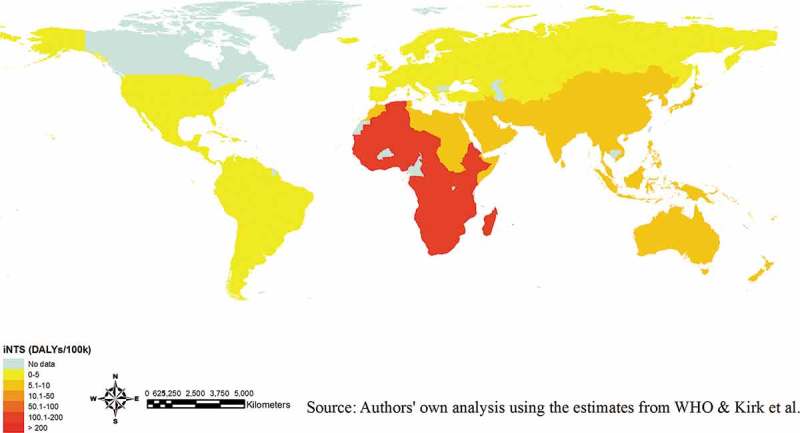
Invasive non-typhoidal Salmonella (iNTS) disease has emerged as a major public health concern. Yet, understanding of the global burden is incomplete, limited particularly by the breadth of blood culture-based surveillance systems that are able to accurately diagnose the etiology of bacteremia. The accessibility of whole genome sequencing has allowed for genetic characterization of pathogens, shedding light on its evolutionary history and sounding alerts for its future progression. iNTS disease is observed to be a particular threat in sub-Saharan Africa, with a case fatality rate greatly exceeding that of typhoid fever, and commonly affecting infants, young children and immunocompromised adults. While iNTS disease might also be a threat in Asia and Latin America, its burden is not well characterized, primarily owing to the lack of comprehensive reporting in these regions. Drug-resistant Salmonella enterica (S. enterica) serovars (e.g. Typhimurium sequence type 313 (ST313)) have emerged as a potential consequence of sustained antibiotic pressure. Genetic analyses have identified distinguished iNTS disease-causing strains that are particularly virulent in certain human host populations. Effective treatment strategies, including vaccination, are necessary; iNTS vaccines targeting the most common S. enterica serovars, Typhimurium, Enteritidis and Dublin, are currently in early developmental stages. Funding and political support is needed to promote vaccine development and implementation programs to ultimately reduce the threat of iNTS disease in high risk areas.
Overview
The claims and statistics of this paper haven’t been checked yet.
Free: it reads the open-access text and checks the first 5 claims that cite a source we can check. Create a free account to check every claim.
Integrity signals
Registry
Cites
Statistics
Figures
Verification
Claims the paper makes
The claims and statistics of this paper haven’t been checked yet.
Free: it reads the open-access text and checks the first 5 claims that cite a source we can check. Create a free account to check every claim.
Self-check
Percentages, sums and reported differences re-computed from the paper’s own numbers.
The self-check needs the paper’s full text.
Citations
Cites
The Global Burden of Nontyphoidal Salmonella Gastroenteritis
Majowicz, S. E., Musto, J., Scallan, E., Angulo, F. J., Kirk, M., O’Brien, S. J., Jones, T. F., Fazil, A., & Hoekstra, R. M. (2010) · Clinical Infectious Diseases · doi:10.1086/650733 · Cited by 2,442
Kirk, M. D., Pires, S. M., Black, R. E., Caipo, M., Crump, J. A., Devleesschauwer, B., Döpfer, D., Fazil, A., Fischer-Walker, C. L., Hald, T., et al. (2015) · PLoS Medicine · doi:10.1371/journal.pmed.1001921 · Cited by 1,625 · cited 10×
“However, as the isolation rate of iNTS disease-causing organisms was fairly low, it is likely that the burden of iNTS disease, while not insignificant, does not rival that of sub-Saharan Africa.”
BackgroundMethodInfluentialInvasive non-typhoidal salmonella disease: an emerging and neglected tropical disease in Africa
Feasey, N. A., Dougan, G., Kingsley, R. A., Heyderman, R. S., & Gordon, M. A. (2012) · The Lancet · doi:10.1016/s0140-6736(11)61752-2 · Cited by 1,014
Immunogenicity and Impact on Nasopharyngeal Carriage of a Nonavalent Pneumococcal Conjugate Vaccine
Mbelle, N., Huebner, R. E., Wasas, A. D., Kimura, A., Chang, I., & Klugman, K. P. (1999) · The Journal of Infectious Diseases · doi:10.1086/315009 · Cited by 515
Dagan, R., Melamed, R., Muallem, M., Piglansky, L., Greenberg, D., Abramson, O., Mendelman, P. M., Bohidar, N., & Yagupsky, P. (1996) · Journal of Infectious Diseases · doi:10.1093/infdis/174.6.1271 · Cited by 477
Global Burden of Invasive Nontyphoidal Salmonella Disease, 20101
Ao, T. T., Feasey, N. A., Gordon, M. A., Keddy, K. H., Angulo, F. J., & Crump, J. A. (2015) · Emerging Infectious Diseases · doi:10.3201/eid2106.140999 · Cited by 463 · cited 4×
“rising magnitude of iNTS disease has only become acutely apparent in recent decades, which may reflect a change in epidemiology or the parallel emergence of more precise reporting during this period.(5) A summary of recent studies reporting this disease can provide a better picture of the spread and magnitude of the b…”
BackgroundResultInfluentialCarriage of pneumococci after pneumococcal vaccination
Obaro, S. K., Adegbola, R., Banya, W., & Greenwood, B. (1996) · The Lancet · doi:10.1016/s0140-6736(05)65585-7 · Cited by 325
Marks, F., von Kalckreuth, V., Aaby, P., Adu-Sarkodie, Y., El Tayeb, M. A., Ali, M., Aseffa, A., Baker, S., Biggs, H. M., Bjerregaard-Andersen, M., et al. (2017) · The Lancet Global Health · doi:10.1016/s2214-109x(17)30022-0 · Cited by 306
Self-citationUche, I. V., MacLennan, C. A., & Saul, A. (2017) · PLOS Neglected Tropical Diseases · doi:10.1371/journal.pntd.0005118 · Cited by 232
Feasey, N. A., Hadfield, J., Keddy, K. H., Dallman, T. J., Jacobs, J., Deng, X., Wigley, P., Barquist, L., Langridge, G. C., Feltwell, T., et al. (2016) · Nature Genetics · doi:10.1038/ng.3644 · Cited by 217
Cited by
Items 201–261 of 261
Seribelli, A. A. (2021) · Digital Library of Theses and Dissertations (Universidade de São Paulo) · doi:10.11606/t.60.2021.tde-29092021-052421
Rutanga, J. P., de Block, T., Vandelannoote, K., Puyvelde, S. V., Cafmeyer, J., Hardy, L., Muvunyi, C. M., Jacobs, J. A., & Deborggraeve, S. (2020) · doi:10.21203/rs.2.22017/v1 · Cited by 1
“The dominant iNTS serovars are Salmonella Typhimurium and Salmonella Enteritidis [7].”
BackgroundBoichenko, M. N., Евгеньевич, Б. Р., Budanova, E. V., & Usatova, G. N. (2022) · Экспериментальная и клиническая гастроэнтерология · doi:10.31146/1682-8658-ecg-205-9-216-221
Pirathaba, K. J., Bador, M. K., & Hussin, N. S. C. (2023) · Asia-Pacific Journal of Molecular Biology and Biotechnology · doi:10.35118/apjmbb.2023.031.1.09 · Cited by 1
Chantharothaiphaichit, T. (2020) · Chula Digiverse · doi:10.58837/chula.the.2020.463
Khan, K. A. L., & Kader, Z. S. A. (2023) · Jurnal Teknologi · doi:10.11113/jurnalteknologi.v85.19827 · Cited by 1
Suwannachot, N., Ketphan, W., Jittimanee, S., & Phuektes, P. (2023) · Veterinary Integrative Sciences · doi:10.12982/vis.2023.042 · Cited by 2
Weakening of Virulence Factors and Biofilm in Salmonella Typhi by Medicinal Plants Extracts
Ahmed, A. A., Hassan, P. A., Ismaeil, A. S., & Ali, S. B. (2023) · Biomedical & Pharmacology Journal · doi:10.13005/bpj/2740 · Cited by 3
Hoppe-Elsholz, G., Piña-Iturbe, A., Vallejos, O. P., Suazo, I. D., Sepúlveda-Alfaro, J., Pereira-Sánchez, P., Martínez-Balboa, Y., Catalán, E. A., Reyes, P., Scaff, V., et al. (2023) · Frontiers in Microbiology · doi:10.3389/fmicb.2023.1236458
“This type of infection has higher lethality than NTS, causing 3.4 million infections and 681,316 deaths annually (Balasubramanian et al., 2018).”
BackgroundInfluentialSalmonella Bacteremia in an Older Patient With No Specific Entry: A Case Report
Kudo, K., Ohara, J., Sano, C., & Ohta, R. (2023) · Cureus · doi:10.7759/cureus.49194
“Salmonellosis can be classified into typhoidal Salmonella , caused by Salmonella Typhi and Salmonella Paratyphi A, and NTS, caused by other species [4,8].”
BackgroundAbousouh, E. K. S., Endharti, A. T., Santoso, S., & Santosaningsih, D. (2024) · Journal of Tropical Life Science · doi:10.11594/jtls.14.01.09
Development and Evaluation of a Multiplex Fluorescence PCR for Salmonella Virulence Genes Analysis
He, P., Yan, Y., Zhu, G., Zhu, Z., & Chen, Z. (2024) · Jundishapur Journal of Microbiology · doi:10.5812/jjm-144579
Huang, J., Alzahrani, K. O., Zhou, G., Alsalman, S. A., Almansour, A. M., Alhadlaq, M. A., Alhussain, S., Alajlan, A. A., Al-Akeel, S. I., Rashidy, M. S. A., et al. (2024) · medRxiv · doi:10.1101/2024.07.28.24311129
Unraveling the treasure trove of phytochemicals in mitigating the Salmonella enterica infection
Soni, S., Gambhir, L., Sharma, G., Sharma, A., & Kapoor, N. (2024) · Folia Microbiologica · doi:10.1007/s12223-024-01192-x
“As per Global Burden of Diseases, Injuries, and Risk Factors Study (GBD) 2017, it is estimated that 93.8 million people suffered by Salmonella infections and approximately 1.55 Lac deaths incurred every year worldwide (Balasubramanian et al. 2019).”
InfluentialChopra, U., Sabu, M. K., Rajmani, R. S., Chaudhary, A. D., Gupta, S. K., & Chakravortty, D. (2024) · bioRxiv (Cold Spring Harbor Laboratory) · doi:10.1101/2024.10.29.620790
“As per WHO reports, Salmonella is one of the four leading causes of diarrhoeal diseases in humans, with typhoid fever, caused by Salmonella Typhi, accounting for nearly 9 million infections and 110,000 deaths in 2019[2], [3], [4].”
BackgroundVân, T. T. B., Ánh, N. T., Thi, N., Vo, V.-T., & Dung, L. V. (2024) · Israeli Journal of Aquaculture - Bamidgeh · doi:10.46989/001c.124563 · Cited by 2
Fan, W., Wang, K., Tan, T., Wang, J., Lu, Y., & Li, Y. (2025) · SSRN Electronic Journal · doi:10.2139/ssrn.5083917
Jacob, J. J., Velmurugan, A., Solaimalai, D., Iyadurai, R., Gunasekaran, K., Malaiyappan, J. R., Yesudoss, M., Vasuki, M., Lal, B., John, J. K., et al. (2026) · PLoS neglected tropical diseases · doi:10.1371/journal.pntd.0013113
“These observations align with broader evidence indicating that host immune status rather than specific comorbidities plays a central role in predisposing individuals to iNTS disease [33,38].”
Garrido-Palazuelos, L. I., Mukhtar, M., Khan, S. A., Medrano‐Félix, J. A., Khan, H. A., Alshabrmi, F. M., López-Cuevas, O., González-Torres, B., Campo, N. C., Cháidez, C., et al. (2025) · Journal of Biomolecular Structure and Dynamics · doi:10.1080/07391102.2025.2500685
“Non-typhoidal Salmonella (NTS) infections are a major cause of diarrheal diseases, resulting in approximately 93 million cases and 155,000 fatalities annually (Balasubramanian et al., 2019).”
Ochoa, T. J., & Santisteban-Ponce, J. (2025) · Elsevier eBooks · doi:10.1016/b978-0-323-82763-8.00111-4 · Cited by 1
Cheng, X., Chen, X., Ma, L., Wei, J., Xu, Y., Li, Y., Ma, S., Li, J., & Sun, W. (2025) · Microbial Drug Resistance · doi:10.1089/mdr.2024.0211
“11,12 15 Moreover, certain S. Enteritidis isolates exhibit high-level resistance, posing a signi fi cant threat to global public health.”
Serchenya, T. S., Kasmach, A. A., Лапина, В. А., Bakayeva, T. N., & Sviridov, O. V. (2025) · Proceedings of the National Academy of Sciences of Belarus Chemical Series · doi:10.29235/1561-8331-2025-61-2-141-153
Sunmonu, G. T., Ogunleye, V. O., Ikhimiukor, O. O., Popoola, O. A., Osadebamwen, P. E., Kehinde, A. O., & Okeke, I. N. (2025) · PLOS Global Public Health · doi:10.1371/journal.pgph.0004745 · Cited by 2
“In sub-Saharan Africa, invasive non-typhoidal Salmonella (iNTS) disease has emerged as a major public health threat, particularly affecting children under five years of age and individuals with comorbidities such as malaria, HIV infection, and malnutrition [1,8].”
Rihane, R., Hecini-Hannachi, A., Hasnaoui, B., Bentchouala, C., Benlabed, K., Rolain, J., & Diene, S. M. (2025) · Microbial Pathogenesis · doi:10.1016/j.micpath.2025.107897
Cunningham, A. F. (2025) · Elsevier eBooks · doi:10.1016/b978-0-12-824465-4.00204-0
Food Safety Practices, Food-Borne Diseases, and Food Waste During Ramadan Fasting Month
Al‐Holy, M., & Olaimat, A. N. (2025) · Springer eBooks · doi:10.1007/978-981-96-6783-3_17 · Cited by 1
Chen, W. H., Barnes, R. S., Sikorski, M. J., Datar, R. S., Sukhavasi, R. A., Liang, Y., Rapaka, R. R., Pasetti, M. F., Sztein, M. B., Wahid, R., et al. (2025) · medRxiv · doi:10.1101/2025.09.15.25335795
Skin Adverse Reactions of Salmonella Infections
Gönülal, M. (2025) · IntechOpen eBooks · doi:10.5772/intechopen.1012201
Sun, Y., Yang, J., Zhao, Z., Liu, S., Li, M., & Yu, Q. (2025) · Asian Journal of Pharmaceutical Sciences · doi:10.1016/j.ajps.2025.101094
“Tm colonizes the intestinal tract, eliciting pronounced inflammatory responses that result in acute non-typhoidal salmonellosis, a condition aggravated by its antibiotic resistance [ 17,18 ].”
The novel Salmonella effector STM2610 promotes epithelial cell invasion and in vivo virulence
Ma, S., Guo, H., Wang, X., & Jiang, L. (2025) · Microbial Pathogenesis · doi:10.1016/j.micpath.2025.108100
Beyond Gastroenteritis: A Case of Salmonella Infection Leading to Adrenal Insufficiency
Htal, T. T. W., Hla, A. P. T., Paing, A. M. M., Thura, K., & Pollard, C. (2025) · Cureus · doi:10.7759/cureus.94443
“Non-typhoidal Salmonella , which includes the Saintpaul strain, is one of the most common sources of bacterial foodborne disease worldwide [1].”
Cevallos-Almeida, M., Gómez, C., Cajas, B., Almachi, A., Rose, V., Denis, M., & Kérouanton, A. (2025) · Veterinary and Animal Science · doi:10.1016/j.vas.2025.100548
Héma, A., Soulama, B. I., Sawadogo, J., Ouedraogo, A. Z., Hien, D., Nébié, I., Houard, S. A., Ouédraogo, A., Tiono, A. B., Sanou, M., et al. (2025) · BMC Microbiology · doi:10.1186/s12866-025-04515-1 · Cited by 3
“These strains have the potential to cause invasive disease and limit therapeutic options, especially in young children and immunocompromised populations [42].”
Arshad, S. (2025) · JAC-Antimicrobial Resistance · doi:10.1093/jacamr/dlaf230.029
Burduniuc, O., Sirbu, C., Antón, M., Perde, D., Tighinean, C., Cristian, I., Tapu, L., Curchi, D., & Groza, O. (2025) · International Journal of Agriculture Environment and Food Sciences · doi:10.31015/2025.4.8
Graziosi, G., Cirasella, L., Lupini, C., D’Annunzio, G., Catelli, E., Romboli, C., Siclari, C., Perulli, S., Fiorentini, L., Tosi, G., et al. (2025) · Animals · doi:10.3390/ani15243642
p62 limits Salmonella Typhimurium in macrophages through its role in cell signalling
Underwood, D. A., Balci, A., Solano-Collado, V., Wilson, H. M., Baldassarre, M., & Spanò, S. (2026) · Access Microbiology · doi:10.1099/acmi.0.001102.v3
Spasenoska, D., Kahn, A.-L., Wilder‐Smith, A., Bentsi-Enchill, A. D., Hwang, Y.-H., Gunarathna, S. P., Kim, J. H., & Lee, J.-S. (2026) · PLoS neglected tropical diseases · doi:10.1371/journal.pntd.0014012 · Cited by 1
Self-citationIn Vivo dynamic Evolution of Drug Resistance of fatal Salmonella infection in a Leukemia PatientPreprint
Han, J., Li, S., Xiao, Y., Gu, Y., Xu, J., Teng, X., Jia, H., & Yang, Q. (2026) · Research Square · doi:10.21203/rs.3.rs-8647214/v1
Su, Y., Gao, W., Yuan, C., & Wang, L. (2026) · World Journal of Microbiology and Biotechnology · doi:10.1007/s11274-026-04885-2
Liu, Z., Cao, S., Xu, L., Zhou, Q., Lou, P., Xiao, C., Bai, Q., Yan, S., & Chen, L. (2026) · Foodborne Pathogens and Disease · doi:10.1177/15353141261435243
Impaired acid stress resistance in Salmonella Typhi Ty2
Joshi, K., Fong, W. Y., Blanc, M.-P., Guerra, F. E., & Fang, F. C. (2026) · Journal of Bacteriology · doi:10.1128/jb.00197-26
Li, M., Chen, X., Cao, L., Lei, M., Yuan, H., Bian, X., Sun, H., Yan, Z., Li, K., Liu, Q., et al. (2026) · ACS Synthetic Biology · doi:10.1021/acssynbio.5c00952 · Cited by 1
Garrido-Palazuelos, L. I., Aguirre-Sánchez, J. R., Soto-Gamboa, M., & Guerra-Meza, O. (2026) · International Journal of Environmental Health Research · doi:10.1080/09603123.2026.2662518
“…to poultry production and international trade, poses a significant risk of treatment failure and limits therapeutic options available to patients affected by these infections (Franco et al. 2015; Balasubramanian et al. 2018; Fierer 2022; Piña-Iturbe et al. 2024; Kim et al. 2025; Monte et al. 2025).”
Phuphatrakun, P., Khantee, P., Sukkhum, S., & Laoprasopwattana, K. (2026) · Journal of Tropical Pediatrics · doi:10.1093/tropej/fmag041
Tierney, A. R. P., Fields, P. I., Salah, Z., Cowan, B., Chen, J. C., Bowen, N., Katz, L. S., & Carleton, H. A. (2026) · Microbiology Spectrum · doi:10.1128/spectrum.00504-26
“We conducted a sensitivity analysis excluding ST313 and ST302 due to the well-docu mented tendency of Typhimurium ST313 to cause bloodstream infections (4, 16, 63, 64), which may be due to other virulence factors in addition to the spv genes (65, 66).”
Okongwu-Ejike, C., Zakari, H., Ngene, A. C., Dangyang, S. E., & Dashen, M. M. (2026) · BMC Microbiology · doi:10.1186/s12866-026-05265-4
“Human infection commonly occurs through the consumption of contaminated poultry meat, eggs, and water, as well as through direct exposure to infected birds or contaminated environments [5, 6].”
Salmonella bacteremia: Serotypes, resistance, and outcomes in a tertiary care setting
Aljohani, A. M., Alfarhan, M., Alqahtani, N. N., Alsaedy, A., Alalwan, B., Aljohani, S., Almohaya, A. M., & Bosaeed, M. (2026) · International Journal of Infectious Diseases · doi:10.1016/j.ijid.2026.108884
Batool, R., Gamble, C., Murthy, S., Aung, T., Akinlabi, O. C., Baker, S., Basnyat, B., Bejide, O. S., Carey, M. E., Châu, N. V. V., et al. (2026) · doi:10.12688/verixiv.3426.1
Self-citationFan, W., Wang, K., Tan, T., Wang, J., & Li, Y. L. (2026) · Foodborne Pathogens and Disease · doi:10.1177/15353141261470593
Ma, S., Jiang, Z., Wang, G., Lu, X., Wang, Y., Cui, D., Zhu, L., & Yan, S. (2026) · Microbial Pathogenesis · doi:10.1016/j.micpath.2026.108740
Li, X., Wang, Y., Wang, Z., Deng, M., Zheng, J., Geng, H., Zhao, G., & Wang, Q. (2026) · Poultry Science · doi:10.1016/j.psj.2026.107550
“According to World Health Organization data, approximately 115 million people globally fall ill annually due to Salmonella infection, with about 370,000 dying from it (Balasubramanian et al., 2019; Chen, et al., 2024).”
Biswas, P., Sharma, R., Mondal, S., Lee, H., & Mallick, A. I. (2026) · Chemical Engineering Journal · doi:10.1016/j.cej.2026.180730
Sahoo, P. R., Kumar, A., Pashupathi, M., & Sahoo, J. R. (2026) · Molecular Biology Reports · doi:10.1007/s11033-026-12687-w
Maletić, J., Zdravković, N., Kureljušić, J., KURELJUSIC, B., Nardi, M. D., Radanović, O., Jezimirović, N., & Graziosi, G. (2026) · Veterinary Record Open · doi:10.1002/vro2.70049
Reshma, M., Aswathi, P. B., Jess, V., Stella, C., Surjith, K. P., Patki, H. S., Beena, J. C., Arun, K., & Bibin, M. (2024) · Indian Journal of Poultry Science · doi:10.5958/0974-8180.2024.00015.9
Pan, X., Maity, S., Kavunja, H. W., Murali, Y., Chen, T., Huo, C., Baliban, S. M., & Huang, X. (2026) · Advanced Science · doi:10.1002/advs.77776
Alterations in Salmonella diarizonae proteome after exposure to human serum
Krzyżewska, E., Kapczyńska, K., Pasikowski, P., Dudek, B., & Rybka, J. (2026) · Frontiers in Cellular and Infection Microbiology · doi:10.3389/fcimb.2026.1875815
Bahati, S. Y., & Maghembe, R. S. (2026) · Clinical Microbiology Reviews · doi:10.1128/cmr.00201-26
Metadata
- Authors
- Balasubramanian, R., Im, J., Lee, J.-S., Jeon, H. J., Mogeni, O. D., Kim, J. H., Rakotozandrindrainy, R., Baker, S., & Marks, F.
- Affiliations
- Princeton University (US)
- International Vaccine Institute (KR)
- International Vaccine Institute, Seoul, Republic of Korea
- University of Antananarivo (MG)
- University of Cambridge (GB)
- Corresponding author
- Marks, Florian
- ORCID
- Venue
- Human Vaccines & Immunotherapeutics
- Publisher
- Informa UK Limited
- Published
- 2018-09-05
- Volume
- 15
- Issue
- 6
- Pages
- 1421-1426
- ISSN
- 2164-5515 (ISSN-L)
- 2164-554X
- PMC
- PMC6663144
- OpenAlex
- W2887144135
- Cited by
- 261
- References
- 33
- Citations by year
- 2026: 35 · 2025: 62 · 2024: 38 · 2023: 33 · 2022: 34 · 2021: 31 · 2020: 22 · 2019: 6
- FWCI
- 1.49
- Type
- journal article
- Language
- en
- Open access
- hybrid
- doi.org
- Locations
- Human Vaccines & Immunotherapeutics (publishedVersion, cc-by)
- Europe PMC (PubMed Central) (publishedVersion, cc-by)
- PubMed Central (publishedVersion, cc-by)
- PubMed (publishedVersion)
- DOAJ (DOAJ: Directory of Open Access Journals) (submittedVersion)
- Apollo (University of Cambridge) (submittedVersion, cc-by)
- Apollo (cc-by)
- Funders
- Bill & Melinda Gates Foundation (OPP1127988)
- Topics
- Life Sciences › Agricultural and Biological Sciences › Food Science › Salmonella and Campylobacter epidemiology
- Life Sciences › Immunology and Microbiology › Microbiology › Bacterial Infections and Vaccines
- Life Sciences › Immunology and Microbiology › Microbiology › Escherichia coli research studies
- Keywords
- invasive non-typhoidal Salmonella, Salmonella enterica, global burden, bacteremia, sub-Saharan Africa, case fatality rate, immunocompromised adults, children, antibiotic resistance, whole genome sequencing, vaccine development, Enteritidis, Dublin, typhoid fever
- MeSH terms
- Whole Genome Sequencing, Anti-Bacterial Agents, Humans, Salmonella Infections, Vaccination, Global Health, Bacteremia, Immunocompromised Host, Cost of Illness, Salmonella enterica, Salmonella Vaccines, Drug Resistance, Bacterial
About these checks
Registry, retraction, Cites and statistics results are computed, not judged, with one exception: a printed reference that no index lists is read once by a model before it counts as a citation error. Claims are extracted by a model and kept only when their quote appears verbatim in the text; each cited source is then checked, with a model’s help, for whether it says what the claim relies on. Those verdicts can be wrong — read the claim’s quote and the cited source before relying on one.
Statistics and arithmetic are recomputed, not judged.
Confidence bands are shown only for fields calibrated on our annotated test set. None is calibrated yet, so no band is shown.
What counts as a claim ›How we measure confidence ›How we check this ›
Are you an author, or do you see a problem with this page? Request a review
Data sources
Bibliographic data: Semantic Scholar, OpenAlex, Crossref.
Contains information from the Semantic Scholar Academic Graph Datasets, made available under the ODC Attribution License (ODC-BY 1.0).
Semantic Scholar’s data is described in: Kinney, R., et al. (2023). The Semantic Scholar Open Data Platform. arXiv:2301.10140.
