

Selective bromodomain and extra-terminal bromodomain inhibitor inactivates macrophages and hepatic stellate cells to inhibit liver inflammation and fibrosis
Open accessThe DOI matches its Crossref record; 68 of the 68 references it cites were found in a registry or an index.
Abstract
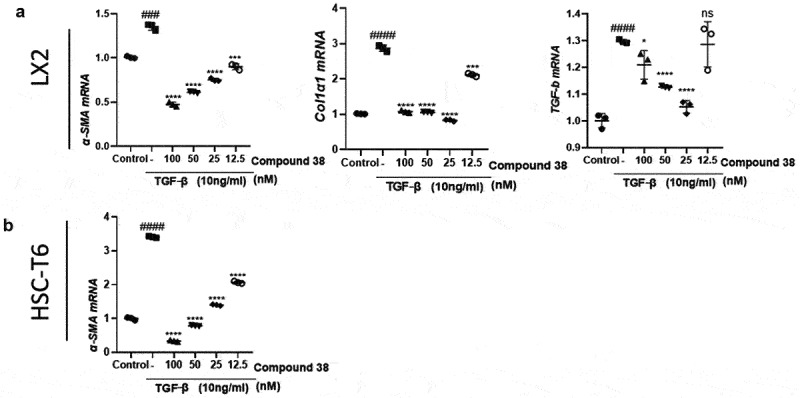
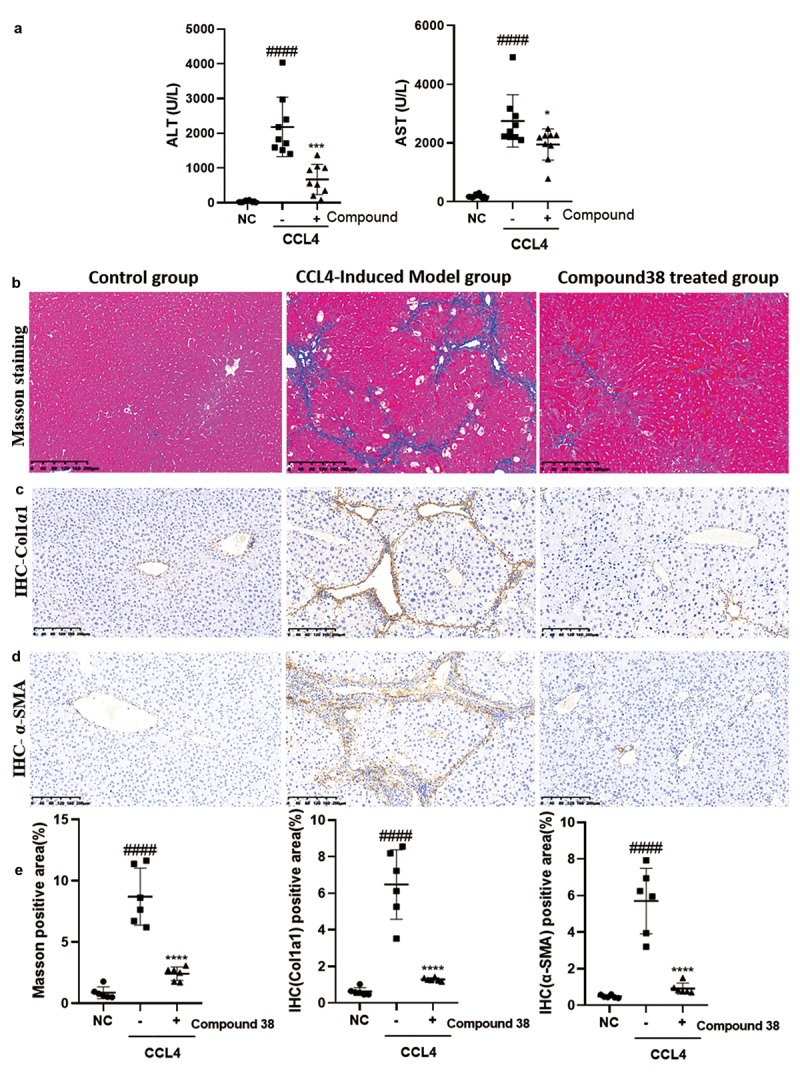
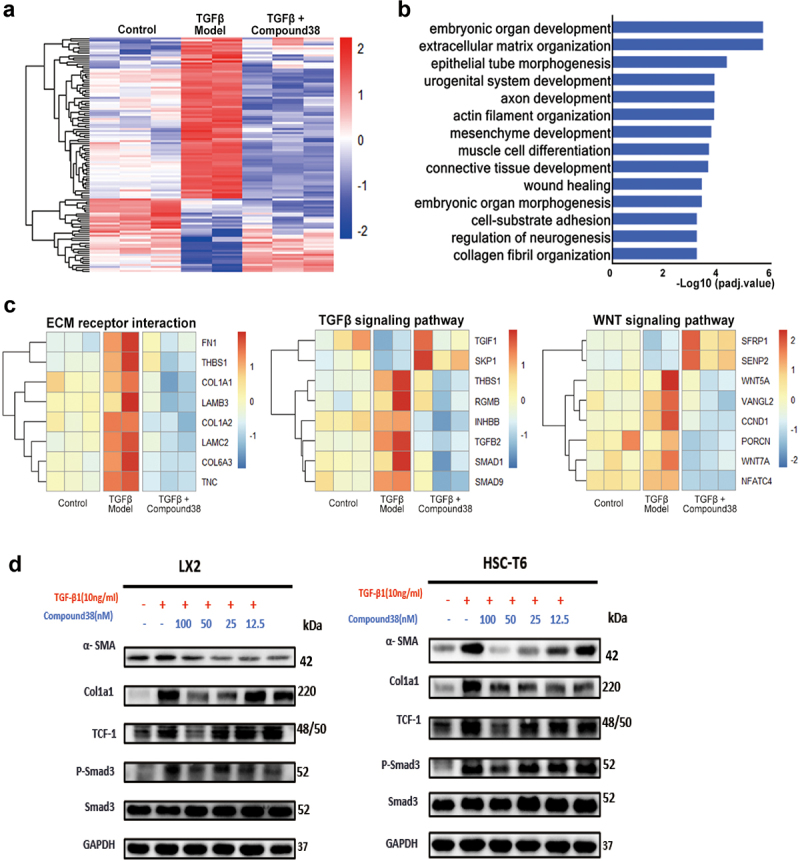
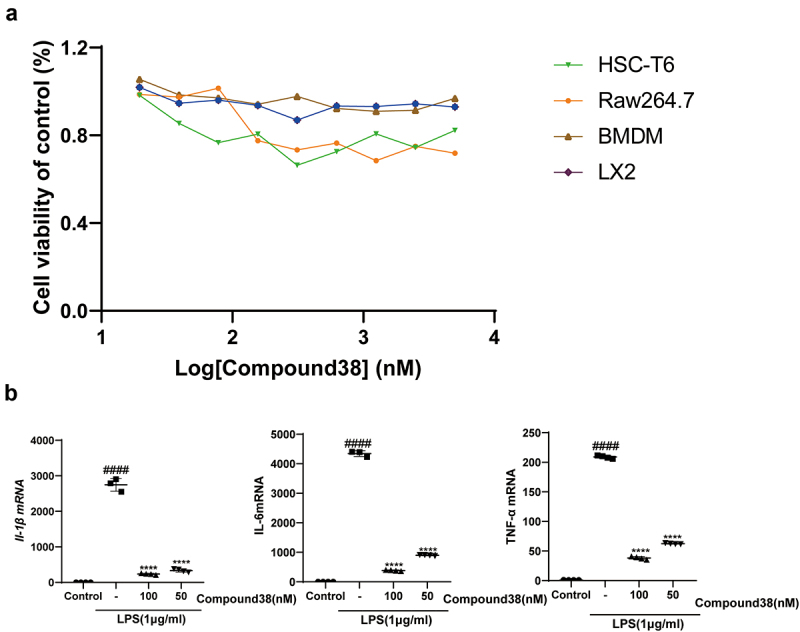
Liver fibrosis occurs following inflammation triggered by the integrated actions of activated liver-resident macrophages (Kupffer cells) and hepatic stellate cells (HSCs), and the multiplicity of these mechanisms complicates drug therapy. Here, we demonstrate that the selective bromodomain and extra-terminal (BET) bromodomain inhibitor compound38 can block both the Janus kinase-signal transducer and activator of transcription and mitogen-activated protein kinase signaling pathways in macrophages, which decreased their secretion of proinflammatory cytokines in a dose-dependent manner. The inactivation of macrophages attenuated lipopolysaccharide-induced injurious inflammation concurrent with a reduction in F4/80+ cells, proinflammatory cytokine levels, and neutrophil infiltration. Moreover, compound 38 inhibited the Wnt/β-catenin and transforming growth factor-beta/SMAD signaling pathways to abolish the activation of HSCs. In vivo, compound 38 significantly decreased the collagen deposition and fibrotic area of a CCl4-induced liver fibrosis model, and restored the deficiency of activated HSCs and the upregulation of liver inflammation. These results highlight the potential role of compound 38 in treating liver fibrosis considering its simultaneous inhibitory effects on liver inflammation and related fibrosis.
Overview
The claims and statistics of this paper haven’t been checked yet.
Free: it reads the open-access text and checks the first 5 claims that cite a source we can check. Create a free account to check every claim.
Integrity signals
Registry
Cites
Statistics
Figures
Verification
Claims the paper makes
The claims and statistics of this paper haven’t been checked yet.
Free: it reads the open-access text and checks the first 5 claims that cite a source we can check. Create a free account to check every claim.
Claims other papers make about this one
Each is checked against this paper’s own text: does it say what the citing paper says it does?
The source backs part of the claim, not all of it — or backs it for a different population, condition or comparison.
In the citing paper
“Moreover, inhibition of ERK/AKT, IRF5, JAK1/JAK2-STAT1, MAP kinase and Notch1 signaling pathways consistently promotes restorative macrophages polarization and attenuates fibrogenic responses (47–55).”
From Strategies to promote liver fibrosis amelioration with involvement of restorative macrophages (2026) · cites this paper as [55]
Experimental — accuracy not yet measured
Self-check
Percentages, sums and reported differences re-computed from the paper’s own numbers.
The self-check needs the paper’s full text.
Citations
Cites
Subramanian, A., Tamayo, P., Mootha, V. K., Mukherjee, S., Ebert, B. L., Gillette, M. A., Paulovich, A., Pomeroy, S. L., Golub, T. R., Lander, E. S., et al. (2005) · Proceedings of the National Academy of Sciences · doi:10.1073/pnas.0506580102 · Cited by 53,625 · cited 1×
“0 software to investigate the variance in specific gene sets [45].”
MethodCytoscape: A software Environment for integrated models of biomolecular interaction networks
Shannon, P., Markiel, A., Ozier, O., Baliga, N. S., Wang, J. T., Ramage, D., Amin, N., Schwikowski, B., & Ideker, T. (2003) · Genome Research · doi:10.1101/gr.1239303 · Cited by 51,888 · cited 1×
“0 and Cytoscape to determine the proteinprotein interactions (PPIs) [46,47].”
BackgroundSTAR: ultrafast universal RNA-seq aligner
Dobin, A., Davis, C. A., Schlesinger, F., Drenkow, J., Zaleski, C., Jha, S., Batut, P., Chaisson, M., & Gingeras, T. R. (2013) · Bioinformatics · doi:10.1093/bioinformatics/bts635 · Cited by 51,709
Robinson, M. D., McCarthy, D. J., & Smyth, G. K. (2010) · Bioinformatics · doi:10.1093/bioinformatics/btp616 · Cited by 41,364 · cited 1×
“The edgeR package was used to perform differential gene expression analysis [43].”
MethodclusterProfiler: an R Package for Comparing Biological Themes Among Gene Clusters
Yu, G., Wang, L.-G., Han, Y., & He, Q.-Y. (2012) · OMICS: A Journal of Integrative Biology · doi:10.1089/omi.2011.0118 · Cited by 36,259 · cited 1×
“8 bioinformatics platform and ClusterProfiler R package were further used to explore the biological functions associated with the differentially expressed genes [44].”
MethodfeatureCounts: an efficient general purpose program for assigning sequence reads to genomic features
Liao, Y., Smyth, G. K., & Shi, W. (2014) · Bioinformatics · doi:10.1093/bioinformatics/btt656 · Cited by 27,219 · cited 1×
“5 was used to map the sequencing reads to the mm10 reference, and featurecounts software was used to quantify the gene expression [41,42].”
MethodSzklarczyk, D., Gable, A. L., Lyon, D., Junge, A., Wyder, S., Huerta-Cepas, J., Simonovic, M., Doncheva, N. T., Morris, J. H., Bork, P., et al. (2019) · Nucleic Acids Research · doi:10.1093/nar/gky1131 · Cited by 17,749 · cited 1×
“0 and Cytoscape to determine the proteinprotein interactions (PPIs) [46,47].”
BackgroundThe role of pattern-recognition receptors in innate immunity: update on Toll-like receptors
Kawai, T., & Akira, S. (2010) · Nature Immunology · doi:10.1038/ni.1863 · Cited by 9,304 · cited 1×
“Kupffer cells are liver macrophages whose functions are highly specialized and different from those of other anatomical sites [49,50].”
BackgroundMyofibroblasts and mechano-regulation of connective tissue remodelling
Tomasek, J. J., Gabbiani, G., Hinz, B., Chaponnier, C., & Brown, R. A. (2002) · Nature Reviews Molecular Cell Biology · doi:10.1038/nrm809 · Cited by 4,290
Mechanisms of hepatic stellate cell activation
Tsuchida, T., & Friedman, S. L. (2017) · Nature Reviews Gastroenterology & Hepatology · doi:10.1038/nrgastro.2017.38 · Cited by 2,909 · cited 3×
“The activation of HSCs has been considered as the critical trigger of liver fibrosis in humans and in experimental liver injury models [7].”
BackgroundMolecular and cellular mechanisms of liver fibrosis and its regression
Kisseleva, T., & Brenner, D. (2021) · Nature Reviews Gastroenterology & Hepatology · doi:10.1038/s41575-020-00372-7 · Cited by 2,024 · cited 2×
“Liver fibrosis, triggered by injurious inflammation, is a common outcome of various liver diseases, including chronic virus infection, alcohol abuse, and nonalcoholic fatty liver, and different types of parenchymal and mesenchymal cells have recently been found to underlie liver fibrosis by means of their pathological…”
BackgroundPathogenesis of Liver Fibrosis
Hernandez-Gea, V., & Friedman, S. L. (2011) · Annual Review of Pathology: Mechanisms of Disease · doi:10.1146/annurev-pathol-011110-130246 · Cited by 1,809 · cited 1×
“Inflammation and fibrosis are inextricably linked during the process of liver disease, liver injury leading to inflammation, and the continuous liver inflammatory response promoting liver fibrosis [12].”
BackgroundHistone Recognition and Large-Scale Structural Analysis of the Human Bromodomain Family
Filippakopoulos, P., Picaud, S., Mangos, M., Keates, T., Lambert, J.-P., Barsyte-Lovejoy, D., Felletar, I., Volkmer, R., Müller, S., Pawson, T., et al. (2012) · Cell · doi:10.1016/j.cell.2012.02.013 · Cited by 1,694
Inhibition of BET recruitment to chromatin as an effective treatment for MLL-fusion leukaemia
Dawson, M. A., Prinjha, R. K., Dittmann, A., Giotopoulos, G., Bantscheff, M., Chan, W.-I., Robson, S. C., Chung, C.-W., Hopf, C., Savitski, M. M., et al. (2011) · Nature · doi:10.1038/nature10509 · Cited by 1,503
Liver Macrophages in Tissue Homeostasis and Disease
Krenkel, O., & Tacke, F. (2017) · Nature Reviews Immunology · doi:10.1038/nri.2017.11 · Cited by 1,424
NF-κB in the liver—linking injury, fibrosis and hepatocellular carcinoma
Luedde, T., & Schwabe, R. F. (2011) · Nature Reviews Gastroenterology & Hepatology · doi:10.1038/nrgastro.2010.213 · Cited by 1,345 · cited 1×
“Hepatic macrophages secrete pro-inflammatory cytokines, recruiting additional immune cells to aggravate hepatic injury; thus, they have been regarded as potential targets for treating liver injury and liver fibrosis [11,48].”
BackgroundLiver fibrosis and repair: Immune regulation of wound healing in a solid organ
Pellicoro, A., Ramachandran, P., Iredale, J. P., & Fallowfield, J. A. (2014) · Nature Reviews Immunology · doi:10.1038/nri3623 · Cited by 1,310
Jang, M. K., Mochizuki, K., Zhou, M., Jeong, H.-S., Brady, J. N., & Ozato, K. (2005) · Molecular Cell · doi:10.1016/j.molcel.2005.06.027 · Cited by 1,291
Liver fibrosis: Pathophysiology, pathogenetic targets and clinical issues
Parola, M., & Pinzani, M. (2019) · Molecular Aspects of Medicine · doi:10.1016/j.mam.2018.09.002 · Cited by 1,160 · cited 1×
“Liver fibrosis, triggered by injurious inflammation, is a common outcome of various liver diseases, including chronic virus infection, alcohol abuse, and nonalcoholic fatty liver, and different types of parenchymal and mesenchymal cells have recently been found to underlie liver fibrosis by means of their pathological…”
BackgroundLiver immunology and its role in inflammation and homeostasis
Robinson, M. W., Harmon, C., & O’Farrelly, C. (2016) · Cellular & Molecular Immunology · doi:10.1038/cmi.2016.3 · Cited by 1,151
Macrophage heterogeneity in liver injury and fibrosis
Tacke, F., & Zimmermann, H. W. (2014) · Journal of Hepatology · doi:10.1016/j.jhep.2013.12.025 · Cited by 1,061 · cited 1×
“Hepatic macrophages secrete pro-inflammatory cytokines, recruiting additional immune cells to aggravate hepatic injury; thus, they have been regarded as potential targets for treating liver injury and liver fibrosis [11,48].”
BackgroundTranscriptional control of the inflammatory response
Medzhitov, R., & Horng, T. (2009) · Nature Reviews Immunology · doi:10.1038/nri2634 · Cited by 1,035
Targeting hepatic macrophages to treat liver diseases
Tacke, F. (2017) · Journal of Hepatology · doi:10.1016/j.jhep.2017.02.026 · Cited by 1,003 · cited 2×
“Kupffer cells, which are self-renewing resident liver macrophages, release inflammatory cytokines after activation by liver injury to boost monocytes infiltrating the liver, which produces numerous exogenous macrophages [51].”
BackgroundThe Mechanisms behind the Therapeutic Activity of BET Bromodomain Inhibition
Shi, J., & Vakoc, C. R. (2014) · Molecular Cell · doi:10.1016/j.molcel.2014.05.016 · Cited by 878
Roles for chemokines in liver disease
Marra, F., & Tacke, F. (2014) · Gastroenterology · doi:10.1053/j.gastro.2014.06.043 · Cited by 829
Response and resistance to BET bromodomain inhibitors in triple-negative breast cancer
Shu, S., Lin, C. Y., He, H. H., Witwicki, R. M., Tabassum, D. P., Roberts, J. M., Janiszewska, M., Jin Huh, S., Liang, Y., Ryan, J., et al. (2016) · Nature · doi:10.1038/nature16508 · Cited by 632 · cited 1×
“Recently, dysfunction of BET-containing proteins has been observed in various diseases [18–22], including inflammation [23,24], fibrotic disease [23,25,26], metabolic disorders and obesity [27], acute kidney injury [28], heart failure [29,30], pituitary adenomas [31], acute myeloid leukemia [32], breast cancer [33,34]…”
BackgroundEvolving therapies for liver fibrosis
Schuppan, D., & Kim, Y. O. (2013) · Journal of Clinical Investigation · doi:10.1172/jci66028 · Cited by 595
Matrix as a Modulator of Hepatic Fibrogenesis
Schuppan, D., Ruehl, M., Somasundaram, R., & Hahn, E. G. (2001) · Seminars in Liver Disease · doi:10.1055/s-2001-17556 · Cited by 542
Transplantation of Bone Marrow Cells Reduces Ccl4–Induced Liver Fibrosis in Mice
Sakaida, I., Terai, S., Yamamoto, N., Aoyama, K., Ishikawa, T., Nishina, H., & Okita, K. (2004) · Hepatology · doi:10.1002/hep.20452 · Cited by 524 · cited 1×
“at 1 mL/kg twice a week for 8 weeks to induce liver fibrosis [39,40].”
BackgroundDeterminants of Fibrosis Progression and Regression in NASH
Schuppan, D., Surabattula, R., & Wang, X. Y. (2018) · Journal of Hepatology · doi:10.1016/j.jhep.2017.11.012 · Cited by 479
Matrix metalloproteinases in liver injury, repair and fibrosis
Duarte, S., Baber, J., Fujii, T., & Coito, A. J. (2015) · Matrix Biology · doi:10.1016/j.matbio.2015.01.004 · Cited by 476
Molecular basis of USP7 inhibition by selective small-molecule inhibitors.
Turnbull, A. P., Ioannidis, S., Krajewski, W. W., Pinto-Fernandez, A., Heride, C., Martin, A. C. L., Tonkin, L. M., Townsend, E. C., Buker, S. M., Lancia, D. R., et al. (2017) · Nature · doi:10.1038/nature24451 · Cited by 463
Liver fibrosis: Direct antifibrotic agents and targeted therapies
Schuppan, D., Ashfaq-Khan, M., Yang, A. T., & Kim, Y. O. (2018) · Matrix Biology · doi:10.1016/j.matbio.2018.04.006 · Cited by 435
Selective targeting of BD1 and BD2 of the BET proteins in cancer and immunoinflammation
Gilan, O., Rioja, I., Knezevic, K., Bell, M. J., Yeung, M. M., Harker, N. R., Lam, E. Y. N., Chung, C.-W., Bamborough, P., Petretich, M., et al. (2020) · Science · doi:10.1126/science.aaz8455 · Cited by 422 · cited 1×
“Recently, dysfunction of BET-containing proteins has been observed in various diseases [18–22], including inflammation [23,24], fibrotic disease [23,25,26], metabolic disorders and obesity [27], acute kidney injury [28], heart failure [29,30], pituitary adenomas [31], acute myeloid leukemia [32], breast cancer [33,34]…”
BackgroundBromodomains: a new target class for drug development
Cochran, A. G., Conery, A. R., & Sims, R. J. (2019) · Nature Reviews Drug Discovery · doi:10.1038/s41573-019-0030-7 · Cited by 412
Ruart, M., Chavarria, L., Campreciós, G., Suárez-Herrera, N., Montironi, C., Guixé-Muntet, S., Bosch, J., Friedman, S. L., Garcia-Pagán, J. C., & Hernández-Gea, V. (2019) · Journal of Hepatology · doi:10.1016/j.jhep.2018.10.015 · Cited by 283
Kleppe, M., Koche, R., Zou, L., van Galen, P., Hill, C. E., Dong, L., De Groote, S., Papalexi, E., Hanasoge Somasundara, A. V., Cordner, K., et al. (2018) · Cancer Cell · doi:10.1016/j.ccell.2017.11.009 · Cited by 279
Duan, Q., McMahon, S., Anand, P., Shah, H., Thomas, S., Salunga, H. T., Huang, Y., Zhang, R., Sahadevan, A., Lemieux, M. E., et al. (2017) · Science Translational Medicine · doi:10.1126/scitranslmed.aah5084 · Cited by 262 · cited 1×
“Recently, dysfunction of BET-containing proteins has been observed in various diseases [18–22], including inflammation [23,24], fibrotic disease [23,25,26], metabolic disorders and obesity [27], acute kidney injury [28], heart failure [29,30], pituitary adenomas [31], acute myeloid leukemia [32], breast cancer [33,34]…”
BackgroundBRD4 Sustains Melanoma Proliferation and Represents a New Target for Epigenetic Therapy
Segura, M. F., Fontanals-Cirera, B., Gaziel-Sovran, A., Guijarro, M. V., Hanniford, D., Zhang, G., González-Gomez, P., Morante, M., Jubierre, L., Zhang, W., et al. (2013) · Cancer Research · doi:10.1158/0008-5472.can-13-0122-t · Cited by 239
The balancing act of the liver: tissue regeneration versus fibrosis
Cordero-Espinoza, L., & Huch, M. (2018) · Journal of Clinical Investigation · doi:10.1172/jci93562 · Cited by 219
BRD4 is a novel therapeutic target for liver fibrosis
Ding, N., Hah, N., Yu, R. T., Sherman, M. H., Benner, C., Leblanc, M., He, M., Liddle, C., Downes, M., & Evans, R. M. (2015) · Proceedings of the National Academy of Sciences · doi:10.1073/pnas.1522163112 · Cited by 211 · cited 1×
“Recently, dysfunction of BET-containing proteins has been observed in various diseases [18–22], including inflammation [23,24], fibrotic disease [23,25,26], metabolic disorders and obesity [27], acute kidney injury [28], heart failure [29,30], pituitary adenomas [31], acute myeloid leukemia [32], breast cancer [33,34]…”
BackgroundOpposing Functions of BRD4 Isoforms in Breast Cancer
Wu, S.-Y., Lee, C.-F., Lai, H.-T., Yu, C.-T., Lee, J.-E., Zuo, H., Tsai, S. Y., Tsai, M.-J., Ge, K., Wan, Y., et al. (2020) · Molecular Cell · doi:10.1016/j.molcel.2020.04.034 · Cited by 192 · cited 1×
“Recently, dysfunction of BET-containing proteins has been observed in various diseases [18–22], including inflammation [23,24], fibrotic disease [23,25,26], metabolic disorders and obesity [27], acute kidney injury [28], heart failure [29,30], pituitary adenomas [31], acute myeloid leukemia [32], breast cancer [33,34]…”
BackgroundDynamic Chromatin Targeting of BRD4 Stimulates Cardiac Fibroblast Activation
Stratton, M. S., Bagchi, R. A., Felisbino, M. B., Hirsch, R. A., Smith, H. E., Riching, A. S., Enyart, B. Y., Koch, K. A., Cavasin, M. A., Alexanian, M., et al. (2019) · Circulation Research · doi:10.1161/circresaha.119.315125 · Cited by 179 · cited 1×
“Recently, dysfunction of BET-containing proteins has been observed in various diseases [18–22], including inflammation [23,24], fibrotic disease [23,25,26], metabolic disorders and obesity [27], acute kidney injury [28], heart failure [29,30], pituitary adenomas [31], acute myeloid leukemia [32], breast cancer [33,34]…”
BackgroundPotent BRD4 inhibitor suppresses cancer cell-macrophage interaction
Yin, M., Guo, Y., Hu, R., Cai, W. L., Li, Y., Pei, S., Sun, H., Peng, C., Li, J., Ye, R., et al. (2020) · Nature Communications · doi:10.1038/s41467-020-15290-0 · Cited by 171
Self-citationBET Epigenetic Reader Proteins in Cardiovascular Transcriptional Programs
Borck, P. C., Guo, L., & Plutzky, J. (2020) · Circulation Research · doi:10.1161/circresaha.120.315929 · Cited by 169 · cited 1×
“Recently, dysfunction of BET-containing proteins has been observed in various diseases [18–22], including inflammation [23,24], fibrotic disease [23,25,26], metabolic disorders and obesity [27], acute kidney injury [28], heart failure [29,30], pituitary adenomas [31], acute myeloid leukemia [32], breast cancer [33,34]…”
BackgroundJia, Y., Wang, F., Guo, Q., Li, M., Wang, L., Zhang, Z., Jiang, S., Jin, H., Chen, A., Tan, S., et al. (2018) · Redox Biology · doi:10.1016/j.redox.2018.09.007 · Cited by 163
Gehrke, N., Hövelmeyer, N., Waisman, A., Straub, B. K., Weinmann-Menke, J., Wörns, M. A., Galle, P. R., & Schattenberg, J. M. (2018) · Journal of Hepatology · doi:10.1016/j.jhep.2018.01.008 · Cited by 162 · cited 1×
“Pathophysiologically, macrophages are pivotal in maintaining tissue homeostasis and mediating injurybased immune responses due to a variety of factors [51,56].”
BackgroundEpigenetic drug discovery: breaking through the immune barrier
Tough, D. F., Tak, P. P., Tarakhovsky, A., & Prinjha, R. K. (2016) · Nature Reviews Drug Discovery · doi:10.1038/nrd.2016.185 · Cited by 158
Wells, A. D. (2009) · The Journal of Immunology · doi:10.4049/jimmunol.0803917 · Cited by 153
Sphingosine kinase 1 promotes liver fibrosis by preventing miR‐19b‐3p‐mediated inhibition of CCR2
Lan, T., Li, C., Yang, G., Sun, Y., Zhuang, L., Ou, Y., Li, H., Wang, G., Kisseleva, T., Brenner, D., et al. (2018) · Hepatology · doi:10.1002/hep.29885 · Cited by 153 · cited 1×
“at 1 mL/kg twice a week for 8 weeks to induce liver fibrosis [39,40].”
BackgroundThe Liver at the Nexus of Host-Microbial Interactions
Macpherson, A. J., Heikenwälder, M. F., & Ganal-Vonarburg, S. C. (2016) · Cell Host & Microbe · doi:10.1016/j.chom.2016.10.016 · Cited by 117
Peng, J., Li, J., Huang, J. L., Xu, P., Huang, H., Liu, Y., Liang, Y., Yang, Y., Zhou, B., Jiang, H., et al. (2019) · Theranostics · doi:10.7150/thno.30707 · Cited by 110
Self-citationInhibitors of bromodomain and extra‐terminal proteins for treating multiple human diseases
Kulikowski, E., Rakai, B. D., & Wong, N. C. W. (2021) · Medicinal Research Reviews · doi:10.1002/med.21730 · Cited by 102
Enhancer and super-enhancer dynamics in repair after ischemic acute kidney injury
Wilflingseder, J., Willi, M., Lee, H., Olauson, H., Jankowski, J., Ichimura, T., Erben, R. G., Valerius, M. T., Hennighausen, L. G., & Bonventre, J. V. (2020) · Nature Communications · doi:10.1038/s41467-020-17205-5 · Cited by 100 · cited 1×
“Recently, dysfunction of BET-containing proteins has been observed in various diseases [18–22], including inflammation [23,24], fibrotic disease [23,25,26], metabolic disorders and obesity [27], acute kidney injury [28], heart failure [29,30], pituitary adenomas [31], acute myeloid leukemia [32], breast cancer [33,34]…”
BackgroundExtra- and Intra-Cellular Mechanisms of Hepatic Stellate Cell Activation
Yan, Y., Zeng, J., Xing, L., & Li, C. (2021) · Biomedicines · doi:10.3390/biomedicines9081014 · Cited by 96
Movita, D., Kreefft, K., Biesta, P., van Oudenaren, A., Leenen, P. J. M., Janssen, H. L. A., & Boonstra, A. (2012) · Journal of Leukocyte Biology · doi:10.1189/jlb.1111566 · Cited by 95 · cited 1×
“Kupffer cells are liver macrophages whose functions are highly specialized and different from those of other anatomical sites [49,50].”
BackgroundKim, S. Y., Zhang, X., Schiattarella, G. G., Altamirano, F. J., Ramos, T. A. R., French, K. M., Jiang, N., Szweda, P. A., Evers, B. M., May, H. I., et al. (2020) · Circulation · doi:10.1161/circulationaha.120.047239 · Cited by 95 · cited 1×
“Recently, dysfunction of BET-containing proteins has been observed in various diseases [18–22], including inflammation [23,24], fibrotic disease [23,25,26], metabolic disorders and obesity [27], acute kidney injury [28], heart failure [29,30], pituitary adenomas [31], acute myeloid leukemia [32], breast cancer [33,34]…”
BackgroundThe novel BET‐CBP/p300 dual inhibitor NEO2734 is active in SPOP mutant and wild‐type prostate cancer
Yan, Y., Ma, J., Wang, D., Lin, D., Pang, X., Wang, S., Zhao, Y., Shi, L., Xue, H., Pan, Y., et al. (2019) · EMBO Molecular Medicine · doi:10.15252/emmm.201910659 · Cited by 92 · cited 1×
“Recently, dysfunction of BET-containing proteins has been observed in various diseases [18–22], including inflammation [23,24], fibrotic disease [23,25,26], metabolic disorders and obesity [27], acute kidney injury [28], heart failure [29,30], pituitary adenomas [31], acute myeloid leukemia [32], breast cancer [33,34]…”
BackgroundSelf-citationBRD4-mediated repression of p53 is a target for combination therapy in AML
Latif, A., Newcombe, A., Li, S., Gilroy, K. L., Robertson, N., Lei, X., Helen, S., Cole, J. J., Terradas-Terradas, M., Rishi, L., et al. (2021) · Nature Communications · doi:10.1038/s41467-020-20378-8 · Cited by 85 · cited 1×
“Recently, dysfunction of BET-containing proteins has been observed in various diseases [18–22], including inflammation [23,24], fibrotic disease [23,25,26], metabolic disorders and obesity [27], acute kidney injury [28], heart failure [29,30], pituitary adenomas [31], acute myeloid leukemia [32], breast cancer [33,34]…”
BackgroundA synthetic biology-based device prevents liver injury in mice
Bai, P., Ye, H., Xie, M., Saxena, P., Zulewski, H., Hamri, G. C., Djonov, V., & Fussenegger, M. (2016) · Journal of Hepatology · doi:10.1016/j.jhep.2016.03.020 · Cited by 81
Han, C. Y., Koo, J. H., Kim, S. H., Gardenghi, S., Rivella, S., Strnad, P., Hwang, S. J., & Kim, S. G. (2016) · Nature Communications · doi:10.1038/ncomms13817 · Cited by 74
Domain-selective targeting of BET proteins in cancer and immunological diseases
Petretich, M., Demont, E. H., & Grandi, P. (2020) · Current Opinion in Chemical Biology · doi:10.1016/j.cbpa.2020.02.003 · Cited by 69
Feng, L., Wang, G., Chen, Y., He, G., Liu, B., Liu, J., Chiang, C., & Ouyang, L. (2022) · Medicinal Research Reviews · doi:10.1002/med.21859 · Cited by 65
Segatto, M., Szokoll, R., Fittipaldi, R., Bottino, C., Nevi, L., Mamchaoui, K., Filippakopoulos, P., & Caretti, G. (2020) · Nature Communications · doi:10.1038/s41467-020-19839-x · Cited by 58
Tian, B., Liu, Z., Litvinov, J., Maroto, R., Jamaluddin, M., Rytting, E., Patrikeev, I., Ochoa, L., Vargas, G., Motamedi, M., et al. (2019) · American Journal of Respiratory Cell and Molecular Biology · doi:10.1165/rcmb.2017-0445oc · Cited by 56
Li, Z., Xiao, S.-H., Yang, Y., Chen, C., Lu, T., Chen, Z., Jiang, H., Chen, S., Luo, C., & Zhou, B. N. (2020) · Journal of Medicinal Chemistry · doi:10.1021/acs.jmedchem.9b01784 · Cited by 32 · cited 1×
“The derivative compound 38 demonstrated good properties with respect to druggability and oral pharmacokinetics, along with excellent affinity and selectivity binding to the BET bromodomain and good stability in microsomes [36].”
BackgroundSelf-citationBRD4 as a therapeutic target for nonfunctioning and growth hormone pituitary adenoma
Shi, C., Ye, Z., Han, J., Ye, X., Lu, W., Ji, C., Li, Z., Ma, Z., Zhang, Q., Zhang, Y., et al. (2020) · Neuro-Oncology · doi:10.1093/neuonc/noaa084 · Cited by 32 · cited 1×
“Recently, dysfunction of BET-containing proteins has been observed in various diseases [18–22], including inflammation [23,24], fibrotic disease [23,25,26], metabolic disorders and obesity [27], acute kidney injury [28], heart failure [29,30], pituitary adenomas [31], acute myeloid leukemia [32], breast cancer [33,34]…”
BackgroundSelf-citationBET bromodomain inhibition suppresses adipogenesis in mice
Duan, Q., Wu, P., Liu, Z., Xia, F., Zhu, L., Zheng, Z., Yang, T., & Qi, J. (2019) · Endocrine · doi:10.1007/s12020-019-02115-4 · Cited by 15 · cited 1×
“Recently, dysfunction of BET-containing proteins has been observed in various diseases [18–22], including inflammation [23,24], fibrotic disease [23,25,26], metabolic disorders and obesity [27], acute kidney injury [28], heart failure [29,30], pituitary adenomas [31], acute myeloid leukemia [32], breast cancer [33,34]…”
Background
Cited by
Signaling pathways that activate hepatic stellate cells during liver fibrosis
Zhang, Y., Ren, L., Tian, Y., Guo, X., Fengxian, W., & Zhang, Y. (2024) · Frontiers in Medicine · doi:10.3389/fmed.2024.1454980 · Cited by 94
Self-citationPharmacotherapy of Liver Fibrosis and Hepatitis: Recent Advances
Zhao, L., Tang, H., & Cheng, Z. (2024) · Pharmaceuticals · doi:10.3390/ph17121724 · Cited by 40
“Some, such as JQ1, I-BET151 (GSK1210151A), and Compound 38, have been studied and shown to improve liver fibrosis, demonstrating strong preclinical and clinical potential [67–69].”
BRD4: an effective target for organ fibrosis
Wei, Q., Gan, C., Sun, M., Xie, Y., Liu, H., Xue, T., Deng, C., Mo, C., & Ye, T. (2024) · Biomarker Research · doi:10.1186/s40364-024-00641-6 · Cited by 34
Type IV Collagen and SOX9 Are Molecular Targets of BET Inhibition in Experimental Glomerulosclerosis
Morgado‐Pascual, J. L., Suárez-Álvarez, B., Marchant, V. A., Basantes, P. E., Tharaux, P., Ortíz, A., López‐Larrea, C., Ruiz‐Ortega, M., & Rayego‐Mateos, S. (2022) · International Journal of Molecular Sciences · doi:10.3390/ijms24010486 · Cited by 20
“Indeed, in liver injury, iBET blocked TGFβ/SMAD signaling to inactivate hepatic stellate cells [82].”
BackgroundThe epigenetic regulator BRD4 is required for myofibroblast differentiation of knee fibroblasts
Dudakovic, A., Bayram, B., Bettencourt, J. W., Limberg, A. K., Galvan, M. L., Carrasco, M. E., Stans, B., Thaler, R., Morrey, M. E., Sánchez‐Sotelo, J., et al. (2023) · Journal of Cellular Biochemistry · doi:10.1002/jcb.30368 · Cited by 9
“Interestingly, it has been shown that targeting of BET proteins may also exert anti‐fibrotic activities by reducing the activation of the inflammatory cascade.(71,72) The connection between inflammation, fibrosis, and BET proteins is especially of interest to our group as our studies have previously shown that targeti…”
Background
Metadata
- Authors
- Fu, R., Zu, S.-J., Liu, Y.-J., Li, J.-C., Dang, W.-Z., Liao, L.-P., Liu, L.-P., Chen, P.-Y., Huang, H.-M., Wu, K.-H., Zhou, B., Pan, Q., Luo, C., Zhang, Y.-Y., & Li, G.-M.
- Affiliations
- Shanghai Jiao Tong University (CN)
- State Key Laboratory of Drug Research, Shanghai Institute of Materia Medica, Chinese Academy of Sciences, Shanghai, Zuchongzhi District, Shanghai, China
- Chinese Academy of Sciences (CN)
- Department of Gastroenterology, Xinhua Hospital, Xinhua Hospital, School of Medicine, Shanghai Jiaotong University, Shanghai, Yangpu District, China
- Venue
- Bioengineered
- Publisher
- Informa UK Limited
- Published
- 2022-04-01
- Volume
- 13
- Issue
- 4
- Pages
- 10914-10930
- ISSN
- 2165-5979 (ISSN-L)
- 2165-5987
- PMC
- PMC9278415
- OpenAlex
- W4225274129
- Cited by
- 12
- References
- 68
- Citations by year
- 2026: 3 · 2025: 2 · 2024: 3 · 2023: 2 · 2022: 2
- FWCI
- 1.34
- Type
- journal article
- Language
- en
- Open access
- gold
- doi.org
- Locations
- Bioengineered (publishedVersion, cc-by)
- PubMed Central (publishedVersion, cc-by)
- PubMed (publishedVersion)
- DOAJ (DOAJ: Directory of Open Access Journals) (submittedVersion, cc-by-sa)
- Funders
- National Natural Science Foundation of China (82170617)
- Topics
- Health Sciences › Medicine › Hepatology › Liver physiology and pathology
- Health Sciences › Medicine › Hepatology › Liver Disease Diagnosis and Treatment
- Life Sciences › Pharmacology, Toxicology and Pharmaceutics › Pharmacology › Drug-Induced Hepatotoxicity and Protection
- Keywords
- liver fibrosis, liver inflammation, Kupffer cells, hepatic stellate cells, BET bromodomain, JAK/STAT signaling, MAPK signaling, Wnt/β-catenin signaling, TGF-β/Smad signaling, inflammatory cytokines, neutrophil infiltration, collagen deposition, CCl4-induced fibrosis
- MeSH terms
- Humans, Inflammation, Liver Cirrhosis, Macrophages, Cytokines, Hepatic Stellate Cells
About these checks
Registry, retraction, Cites and statistics results are computed, not judged, with one exception: a printed reference that no index lists is read once by a model before it counts as a citation error. Claims are extracted by a model and kept only when their quote appears verbatim in the text; each cited source is then checked, with a model’s help, for whether it says what the claim relies on. Those verdicts can be wrong — read the claim’s quote and the cited source before relying on one.
Statistics and arithmetic are recomputed, not judged.
Confidence bands are shown only for fields calibrated on our annotated test set. None is calibrated yet, so no band is shown.
What counts as a claim ›How we measure confidence ›How we check this ›
Are you an author, or do you see a problem with this page? Request a review
Data sources
Bibliographic data: Semantic Scholar, OpenAlex, Crossref.
Contains information from the Semantic Scholar Academic Graph Datasets, made available under the ODC Attribution License (ODC-BY 1.0).
Semantic Scholar’s data is described in: Kinney, R., et al. (2023). The Semantic Scholar Open Data Platform. arXiv:2301.10140.
