

The DOI matches its Crossref record; 3 of the 3 references it cites were found in a registry or an index.
SARS-CoV-2 Omicron variant shows less efficient replication and fusion activity when compared with Delta variant in TMPRSS2-expressed cells
Open accessAbstract
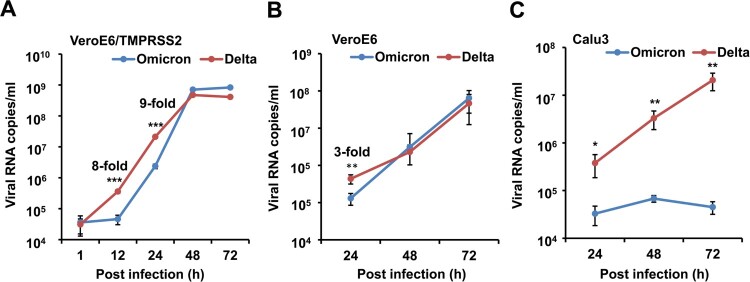
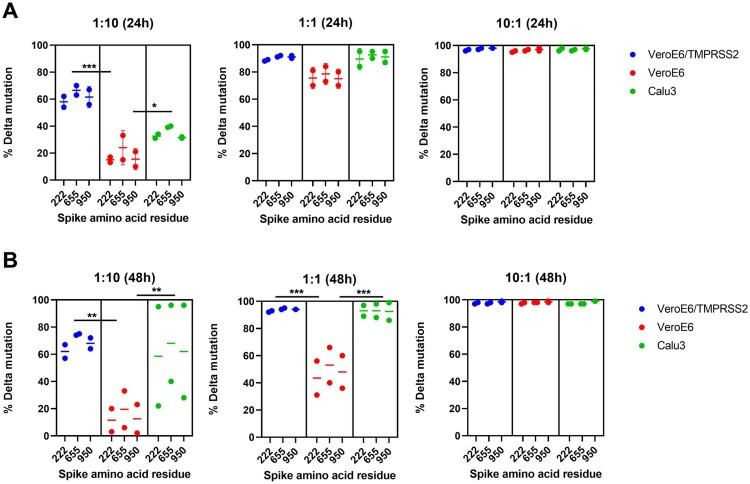
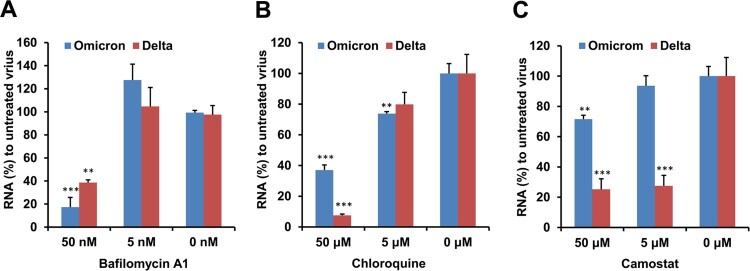
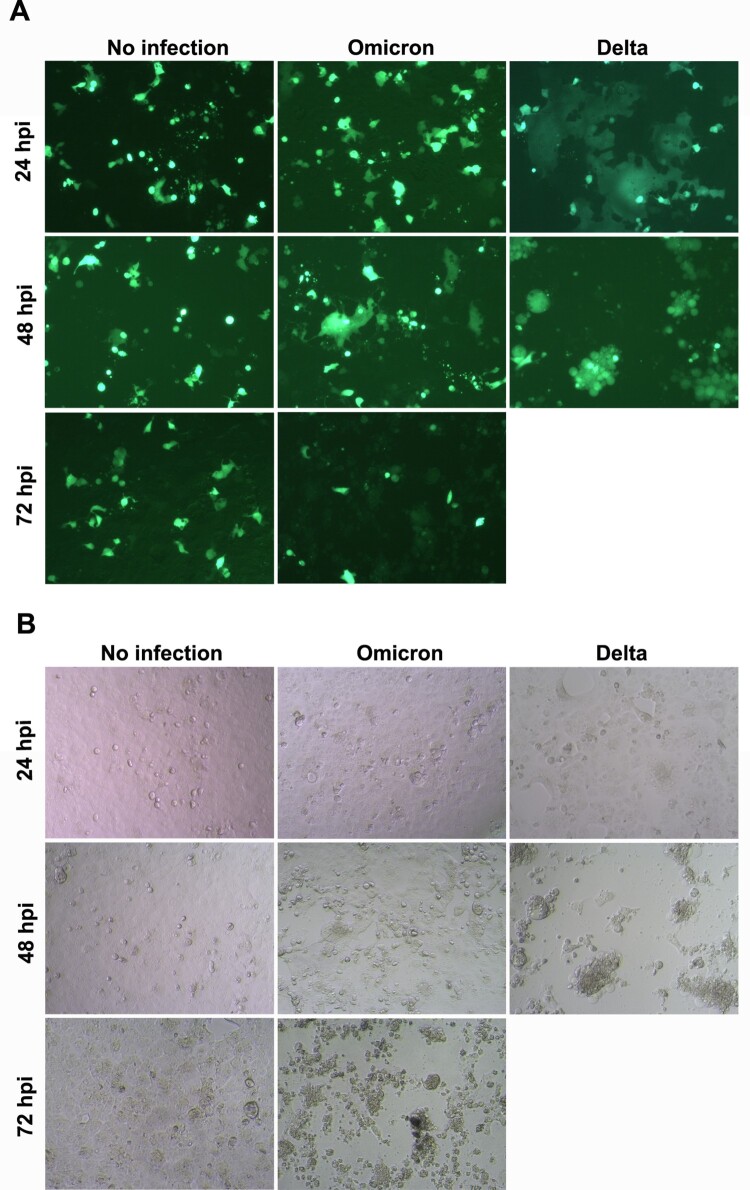
The novel SARS-CoV-2 Omicron variant (B.1.1.529), first found in early November 2021, has sparked considerable global concern and it has >50 mutations, many of which are known to affect transmissibility or cause immune escape. In this study, we sought to investigate the virological characteristics of the Omicron variant and compared it with the Delta variant which has dominated the world since mid-2021. Omicron variant replicated more slowly than the Delta variant in transmembrane serine protease 2 (TMPRSS2)-overexpressing VeroE6 (VeroE6/TMPRSS2) cells. Notably, the Delta variant replicated well in Calu3 cell line which has robust TMPRSS2 expression, while the Omicron variant replicated poorly in this cell line. Competition assay showed that Delta variant outcompeted Omicron variant in VeroE6/TMPRSS2 and Calu3 cells. To confirm the difference in entry pathway between the Omicron and Delta variants, we assessed the antiviral effect of bafilomycin A1, chloroquine (inhibiting endocytic pathway), and camostat (inhibiting TMPRSS2 pathway). Camostat potently inhibited the Delta variant but not the Omicron variant, while bafilomycin A1 and chloroquine could inhibit both Omicron and Delta variants. Moreover, the Omicron variant also showed weaker cell-cell fusion activity when compared with Delta variant in VeroE6/TMPRSS2 cells. Collectively, our results suggest that Omicron variant infection is not enhanced by TMPRSS2 but is largely mediated via the endocytic pathway. The difference in entry pathway between Omicron and Delta variants may have an implication on the clinical manifestations or disease severity.
Overview
The claims and statistics of this paper haven’t been checked yet.
Run the check — free, no account needed. It reads the open-access text and checks the sources it cites.
Integrity signals
Registry
Cites
Statistics
Figures
Verification
Claims the paper makes
The claims and statistics of this paper haven’t been checked yet.
Run the check — free, no account needed. It reads the open-access text and checks the sources it cites.
Claims other papers make about this one
Each is checked against this paper’s own text: does it say what the citing paper says it does?
The cited source says what the claim attributes to it.
In the citing paper
“suggesting entry selectivity of variants is associated with clinical manifestation [67].”
From Insights of Endocytosis Signaling in Health and Disease (2023) · cites this paper as [67]
The cited source says what the claim attributes to it.
In the citing paper
“Current evidence suggests that pharmacological inhibition of endocytic pathways potentially regressed replication of novel SARS-CoV-2 lineage B.1.1.529 (Omicron variant) in VeroE6/TMPRSS2 cell, suggesting entry selectivity of variants is associated with clinical manifestation [67].”
From Insights of Endocytosis Signaling in Health and Disease (2023) · cites this paper as [67]
Self-check
Percentages, sums and reported differences re-computed from the paper’s own numbers.
The self-check needs the paper’s full text.
Citations
Cites
Letko, M., Marzi, A., & Munster, V. (2020) · Nature Microbiology · doi:10.1038/s41564-020-0688-y · Cited by 3,109
HCA Lung Biological Network, Sungnak, W., Huang, N., Bécavin, C., Berg, M., Queen, R., Litvinukova, M., Talavera-López, C., Maatz, H., Reichart, D., et al. (2020) · Nature Medicine · doi:10.1038/s41591-020-0868-6 · Cited by 2,501
Increased risk of SARS-CoV-2 reinfection associated with emergence of Omicron in South Africa
Pulliam, J. R. C., van Schalkwyk, C., Govender, N., Gottberg, A. V., Cohen, C., Groome, M. J., Dushoff, J., Mlisana, K., & Moultrie, H. (2021) · doi:10.1101/2021.11.11.21266068 · Cited by 1,037
Research works printed but not linked: 23
- 10.1016/S1473-3099(20)30196-1 · DOI
- 10.1016/S0140-6736(20)30154-9 · DOI
- 10.1016/j.cell.2021.02.053 · DOI
- 10.1038/s41467-020-20457-w · DOI
- 10.1038/s41586-021-03925-1 · DOI
- 10.1016/j.cell.2020.02.052 · DOI · Paper page
- 10.1038/s41467-021-21825-w · DOI
- 10.1038/s42003-021-02640-x · DOI
- 10.1093/cid/ciaa1275 · DOI · Paper page
- 10.1016/j.ebiom.2021.103544 · DOI
- 10.1093/cid/ciab656 · DOI
- 10.1101/2021.11.11.21266068:2021.11.11.21266068 · DOI
- 10.1016/S0140-6736(21)02758-6 · DOI
- 10.1016/j.lanwpc.2021.100360 · DOI
- 10.1016/j.ebiom.2021.103643 · DOI
- 10.1038/s41580-021-00418-x · DOI · Paper page
- 10.1038/s41586-021-04266-9 · DOI
- 10.1038/s41564-021-00908-w · DOI
- 10.1016/j.celrep.2021.109825 · DOI
- 10.1126/science.abl9463 · DOI
- 10.1038/s41586-021-03491-6 · DOI
- 10.1371/journal.ppat.1009820 · DOI
- 10.1038/s41586-020-2575-3 · DOI
Cited by
Sorted by citations
SARS-CoV-2 Omicron is an immune escape variant with an altered cell entry pathway
Willett, B. J., Grove, J., MacLean, O. A., Wilkie, C., De Lorenzo, G., Furnon, W., Cantoni, D., Scott, S., Logan, N., Ashraf, S., et al. (2022) · Nature Microbiology · doi:10.1038/s41564-022-01143-7 · Cited by 785
Attenuated replication and pathogenicity of SARS-CoV-2 B.1.1.529 Omicron
Shuai, H., Chan, J. F.-W., Hu, B., Chai, Y., Yuen, T. T.-T., Yin, F., Huang, X., Yoon, C., Hu, J., Liu, H., et al. (2022) · Nature · doi:10.1038/s41586-022-04442-5 · Cited by 651
Self-citationSARS-CoV-2 Omicron variant: recent progress and future perspectives
Fan, Y., Li, X., Zhang, L., Wan, S., Zhang, L., & Zhou, F. (2022) · Signal Transduction and Targeted Therapy · doi:10.1038/s41392-022-00997-x · Cited by 599
Pathogenicity, transmissibility, and fitness of SARS-CoV-2 Omicron in Syrian hamsters
Yuan, S., Ye, Z.-W., Liang, R., Tang, K., Zhang, A. J., Lu, G., Ong, C. P., Man Poon, V. K., Chan, C. C.-S., Mok, B. W.-Y., et al. (2022) · Science · doi:10.1126/science.abn8939 · Cited by 191
Self-citationOrigin, virological features, immune evasion and intervention of SARS-CoV-2 Omicron sublineages
Xia, S., Wang, L., Zhu, Y., Lu, L., & Jiang, S. (2022) · Signal Transduction and Targeted Therapy · doi:10.1038/s41392-022-01105-9 · Cited by 167
Self-citationStructural and functional impact by SARS-CoV-2 Omicron spike mutations
Zhang, J., Cai, Y., Lavine, C. L., Peng, H., Zhu, H., Anand, K., Tong, P., Gautam, A. K., Mayer, M. L., Rits‐Volloch, S., et al. (2022) · Cell Reports · doi:10.1016/j.celrep.2022.110729 · Cited by 145
“, 2021), but it is puzzling why it consistently shows weaker membrane fusion activity and infectivity in the form of either authentic virus or pseudovirus (Meng et al., 2021; Zeng et al., 2021; Zhao et al., 2021).”
Coronavirus Disease 2019 Disease Severity in Children Infected With the Omicron Variant
Butt, A. A., Dargham, S. R., Loka, S., Shaik, R. M., Chemaitelly, H., Tang, P., Hasan, M. R., Coyle, P. V., Yassine, H. M., Al-Khatib, H. A., et al. (2022) · Clinical Infectious Diseases · doi:10.1093/cid/ciac275 · Cited by 129
“[1-5] A recent VOC is the Omicron 3 variant, which, at least in adults, appears to be more infectious, perhaps because of more 4 immune evasion, than the previous variants but less likely to be associated with more severe or 5 critical disease.[6-8] For reasons that are incompletely understood, children appear less li…”
BackgroundThe omicron (B.1.1.529) SARS-CoV-2 variant of concern does not readily infect Syrian hamsters
Abdelnabi, R., Foo, C., Zhang, X., Lemmens, V., Maes, P., Slechten, B., Raymenants, J., André, E., Weynand, B., Dallmeier, K., et al. (2021) · bioRxiv · doi:10.1016/j.antiviral.2022.105253 · Cited by 129
“Moreover, unlike the ancestral strains and other VoCs, omicron enters cells more efficiently via the endocytic cathepsin L pathway (Peacock et al., 2022; Zhao et al., 2021).”
Bojková, D., Widera, M., Ciesek, S., Wass, M. N., Michaelis, M., & Cinatl, J. (2022) · Cell Research · doi:10.1038/s41422-022-00619-9 · Cited by 123
Spike and nsp6 are key determinants of SARS-CoV-2 Omicron BA.1 attenuation
Chen, D. W., Chin, C. V., Kenney, D., Tavares, A. H., Khan, N., Conway, H. L., Liu, G., Choudhary, M. C., Gertje, H. P., O’Connell, A. K., et al. (2023) · Nature · doi:10.1038/s41586-023-05697-2 · Cited by 148
Molecular characteristics, immune evasion, and impact of SARS-CoV-2 variants
Sun, C., Xie, C., Bu, G., Zhong, L., & Zeng, M. (2022) · Signal Transduction and Targeted Therapy · doi:10.1038/s41392-022-01039-2 · Cited by 149
“The viral inhibitor developed for SARS-CoV-2 mostly manifested maintained efficacy against the VOCs, significantly different from the performance of currently approved antibodies or vaccines.(258,272,313) Although non-viral specific drugs such as Camostat could theoretically avoid the mutational impact of SARS-CoV-2 v…”
BackgroundSARS-CoV-2: Evolution and Emergence of New Viral Variants
Flores-Vega, V. R., Monroy-Molina, J. V., Jiménez-Hernández, L. E., Torres, A. G., Santos, J. I., & Rosales-Reyes, R. (2022) · Viruses · doi:10.3390/v14040653 · Cited by 127
Guo, Y., Han, J., Zhang, Y., He, J., Yu, W., Zhang, X., Wu, J., Zhang, S., Kong, Y., Guo, Y., et al. (2022) · Frontiers in Immunology · doi:10.3389/fimmu.2022.877101 · Cited by 118
Dhawan, M. K., Saied, A. A., Mitra, S., Alhumaydhi, F. A., Emran, T. B., & Wilairatana, P. (2022) · Biomedicine & Pharmacotherapy · doi:10.1016/j.biopha.2022.113522 · Cited by 130
“Interestingly, the Omicron variant prefers the endosomal entry route over the plasma membrane entry route, according to recent studies [66,88].”
RetractedEssential role of TMPRSS2 in SARS-CoV-2 infection in murine airways
Iwata‐Yoshikawa, N., Kakizaki, M., Shiwa-Sudo, N., Okura, T., Tahara, M., Fukushi, S., Maeda, K., Kawase, M., Asanuma, H., Tomita, Y., et al. (2022) · Nature Communications · doi:10.1038/s41467-022-33911-8 · Cited by 109
Replication kinetics and infectivity of SARS-CoV-2 variants of concern in common cell culture models
Mautner, L., Hoyos, M., Dangel, A., Berger, C., Ehrhardt, A., & Baiker, A. E. (2022) · Virology Journal · doi:10.1186/s12985-022-01802-5 · Cited by 107
“We hope that this data provides support for researchers worldwide in their experimental design for work on SARS-CoV-2 such as performing virus isolation and propagation on Vero E6 while conducting infection studies or drug screening and antibody-based assays rather on the human cell lines Caco-2 and Calu-3.”
BackgroundInfluentialAggarwal, A., Akerman, A., Milogiannakis, V., Silva, M., Walker, G., Stella, A., Kindinger, A., Angelovich, T., Waring, E., Amatayakul-Chantler, S., et al. (2022) · medRxiv · doi:10.1016/j.ebiom.2022.104270 · Cited by 98
Armando, F., Beythien, G., Kaiser, F. K., Allnoch, L., Heydemann, L., Rosiak, M., Becker, S., González-Hernández, M., Lamers, M. M., Haagmans, B. L., et al. (2022) · Nature Communications · doi:10.1038/s41467-022-31200-y · Cited by 118
SARS-CoV-2 requires acidic pH to infect cells
Kreutzberger, A. J. B., Sanyal, A., Saminathan, A., Bloyet, L.-M., Stumpf, S. D., Liu, Z., Ojha, R., Patjas, M. T., Geneid, A., Scanavachi, G., et al. (2022) · Proceedings of the National Academy of Sciences · doi:10.1073/pnas.2209514119 · Cited by 95
Fall, A., Eldesouki, R. E., Sachithanandham, J., Morris, C. P., Norton, J. M., Gaston, D. C., Forman, M., Abdullah, O. R., Gallagher, N., Li, M., et al. (2022) · EBioMedicine · doi:10.1016/j.ebiom.2022.104008 · Cited by 149
Schubert, M., Bertoglio, F., Steinke, S., Heine, P. A., Ynga-Durand, M. A., Maaß, H., Sammartino, J. C., Cassaniti, I., Zuo, F., Du, L., et al. (2022) · BMC Medicine · doi:10.1186/s12916-022-02312-5 · Cited by 92
“Omicron, it was shown that the cell binding is reduced (weaker cell-cell fusion activity) when comparing Omicron to Delta [33].”
ResultPastorio, C., Zech, F., Noettger, S., Jung, C., Jacob, T., Sanderson, T., Sparrer, K. M. J., & Kirchhoff, F. (2022) · Cell Host & Microbe · doi:10.1016/j.chom.2022.07.006 · Cited by 95
The puzzling mutational landscape of the SARS‐2‐variant Omicron
Fantini, J., Yahi, N., Colson, P., Chahinian, H., Scola, B. L., & Raoult, D. (2022) · Journal of Medical Virology · doi:10.1002/jmv.27577 · Cited by 80
“In some cells, the infectivity and replication of the omicron variant were higher than delta, whereas in other cells opposite results were obtained, with delta being clearly more performant than omicron.(14,15) Moreover, several reports suggest that the omicron variant spike confers impaired cell–cell fusion activity,…”
ResultSARS-CoV-2 and innate immunity: the good, the bad, and the “goldilocks”
Sievers, B. L., Cheng, M. T. K., Csiba, K., Meng, B., & Gupta, R. K. (2023) · Cellular and Molecular Immunology · doi:10.1038/s41423-023-01104-y · Cited by 91
“This suggests that different SARS-CoV-2 variants have different sensitivities to the TMPRSS2-mediated entry pathway; thus, they may have different susceptibility to antiviral IFITMs [73, 82, 83].”
BackgroundSpike mutations contributing to the altered entry preference of SARS-CoV-2 omicron BA.1 and BA.2
Hu, B., Chan, J. F., Liu, H., Liu, Y., Chai, Y., Shi, J., Shuai, H., Hou, Y., Huang, X., Yuen, T. T., et al. (2022) · Emerging Microbes & Infections · doi:10.1080/22221751.2022.2117098 · Cited by 77
“…(VOCs) [12–14], which is contributed by the unique virological features of Omicron BA.1 in com - parison to other SARS-CoV-2 strains, including less efficient transmembrane serine protease 2 (TMPRSS2) usage, less spike cleavage, lower fusogenicity, and an altered entry mechanism [12,14–18].”
Self-citationPinato, D. J., Ferrante, D., Hanbury, G., Bower, M., Salazar, R., Mirallas, O., Sureda, A. M., Plaja, A., Cucurull, M., Mesı́a, R., et al. (2022) · The Lancet Oncology · doi:10.1016/s1470-2045(22)00273-x · Cited by 81
Chiu, M. C., Li, C., Liu, X., Song, W., Wan, Z., Yu, Y., Huang, J., Xiao, D., Chu, H., Cai, J., et al. (2022) · mBio · doi:10.1128/mbio.01944-22 · Cited by 79
“S1A and B), which was repeatedly demonstrated in other studies using cell lines (43), highlighting the strength of biologically relevant nasal organoids.”
BackgroundSelf-citationPitts, J., Li, J., Perry, J. K., Pont, V. D., Riola, N. C., Rodriguez, L., Lu, X., Kurhade, C., Xie, X., Camus, G., et al. (2022) · Antimicrobial Agents and Chemotherapy · doi:10.1128/aac.00222-22 · Cited by 72
“Due to the low absorbance signal observed with the Omicron variant at the standard 48-h time point, likely stemming from the reduced in vitro replication efficiency of Omicron (34), the assay was also extended to 72 h and compared with WA1 assessed at the same time point.”
MethodLysosomal enzyme trafficking: from molecular mechanisms to human diseases
Braulke, T., Carette, J. E., & Palm, W. (2024) · Trends in Cell Biology · doi:10.1016/j.tcb.2023.06.005 · Cited by 76
Insights of Endocytosis Signaling in Health and Disease
Pathak, C., Vaidya, F. U., Waghela, B. N., Jaiswara, P. K., Gupta, V. K., Kumar, A., Rajendran, B. K., & Ranjan, K. (2023) · International Journal of Molecular Sciences · doi:10.3390/ijms24032971 · Cited by 59
“529 (Omicron variant) in VeroE6/TMPRSS2 cell, suggesting entry selectivity of variants is associated with clinical manifestation [67].”
BackgroundButt, A. A., Dargham, S. R., Tang, P., Chemaitelly, H. S., Hasan, M. R., Coyle, P. V., Kaleeckal, A. H., Latif, A. N., Loka, S., Shaik, R. M., et al. (2022) · Journal of Global Health · doi:10.7189/jogh.12.05032 · Cited by 59
Coronavirus Infection and Cholesterol Metabolism
Dai, J., Wang, H., Liao, Y., Tan, L., Sun, Y., Song, C., Liu, W., Qiu, X., & Ding, C. (2022) · Frontiers in Immunology · doi:10.3389/fimmu.2022.791267 · Cited by 68
Butowt, R., Bilińska, K., & von Bartheld, C. S. (2022) · The Journal of Infectious Diseases · doi:10.1093/infdis/jiac113 · Cited by 71
Spike protein mediated membrane fusion during SARS‐CoV‐2 infection
Li, X., Yuan, H., Li, X., & Wang, H. (2022) · Journal of Medical Virology · doi:10.1002/jmv.28212 · Cited by 76
“increased transmissibility, its S protein has been shown to have a reduced ability to induce the formation of syncytia.(111,112) On the”
BackgroundZhou, H., Møhlenberg, M., Thakor, J. C., Tuli, H. S., Wang, P., Assaraf, Y. G., Dhama, K., & Jiang, S. (2022) · Clinical Microbiology Reviews · doi:10.1128/cmr.00014-22 · Cited by 78
Medigeshi, G. R., Batra, G., Murugesan, D. R., Thiruvengadam, R., Chattopadhyay, S., Das, B., Gosain, M., Ayushi, A., Singh, J., Anantharaj, A., et al. (2022) · EBioMedicine · doi:10.1016/j.ebiom.2022.103938 · Cited by 51
Mykytyn, A. Z., Breugem, T. I., Geurts, M. H., Beumer, J., Schipper, D., van Acker, R., van den Doel, P. B., van Royen, M. E., Zhang, J., Clevers, H. C., et al. (2023) · Journal of Virology · doi:10.1128/jvi.00851-23 · Cited by 62
Tiecco, G., Storti, S., Antoni, M. D., Focà, E., Castelli, F., & Quirós-Roldán, E. (2022) · International Journal of Molecular Sciences · doi:10.3390/ijms23041987 · Cited by 59
“This observation supports the point that the Omicron variant infection is not enhanced by TMPRSS2 but is largely mediated by the endocytic pathway instead [14].”
BackgroundResultUnderstanding COVID-19 in children: immune determinants and post-infection conditions
Rotulo, G. A., & Palma, P. (2023) · Pediatric Research · doi:10.1038/s41390-023-02549-7 · Cited by 60
“In particular, Omicron’s spike protein requires the activity of endosomal cathepsins to be cleaved, while it is unable to efficiently use the cellular protease TMPRSS2.”
BackgroundArora, P., Zhang, L., Krüger, N., Rocha, C., Sidarovich, A., Schulz, S. R., Kempf, A. M., Graichen, L., Moldenhauer, A.-S., Cossmann, A., et al. (2022) · Cell Host & Microbe · doi:10.1016/j.chom.2022.04.017 · Cited by 45
“…fusion and syncytia formation was previously found to be reduced, whereas the S protein of the Delta variant (B.1.617.2) was reported to exhibit increased capacity to mediate cell-cell fusion (Arora et al., 2021;Meng et al., 2022; Saito et al., 2022; Suzuki et al., 2022; Zhao et al., 2022).”
InfluentialSARS-CoV-2 spike protein: structure, viral entry and variants
Chen, B., Farzan, M., & Choe, H. (2025) · Nature Reviews Microbiology · doi:10.1038/s41579-025-01185-8 · Cited by 57
“…Omicron subvariants (for example, BA.1) seem to use TMPRSS2 less and depend more on the endocytic entry than the pre-Omicron variants 73–75 , possibly leading to a change in cellular tropism away from TMPRSS2-expressing cells, and explaining the altered tissue tropism and pathogenesis 73,74,76,77 .”
Oral Pathology in COVID-19 and SARS-CoV-2 Infection—Molecular Aspects
Droździk, A., & Droździk, M. (2022) · International Journal of Molecular Sciences · doi:10.3390/ijms23031431 · Cited by 66
“As a consequence, the Omicron variant replicates more slowly than the Delta variant in cells overexpressing TMPRSS2 [50], with a possibly reduced cytopathic effect.”
BackgroundShi, G., Li, T., Lai, K. K., Johnson, R. F., Yewdell, J. W., & Compton, A. A. (2024) · Nature Communications · doi:10.1038/s41467-024-45075-8 · Cited by 49
Global impact of delta plus variant and vaccination
Chavda, V., & Apostolopoulos, V. (2022) · Expert Review of Vaccines · doi:10.1080/14760584.2022.2044800 · Cited by 46
“cell-cell fusion activity when compared with Delta variant in VeroE6/TMPRSS2 cells [28].”
Cheng, V. C., Lung, D. C., Wong, S., Au, A. K.-W., Wang, Q., Chen, H., Li, X., Chu, A. W., Ip, J. D., Chan, W.-M., et al. (2022) · Journal of Hazardous Materials · doi:10.1016/j.jhazmat.2022.128504 · Cited by 41
Self-citationRecent insights into SARS‐CoV‐2 omicron variant
da Silva, S. J. R., Kohl, A., Pena, L., & Pardee, K. (2022) · Reviews in Medical Virology · doi:10.1002/rmv.2373 · Cited by 56
“viral replication of the omicron variant and compared it with the delta variant.(22) This work showed that the omicron variant replicated more slowly than the delta variant in transmembrane serine protease 2 (TMPRSS2)‐overexpressing VeroE6 (VeroE6/TMPRSS2) cells, which provides an interesting way to evaluate the pathw…”
BackgroundResultSuryawanshi, R., Chen, I. P., Ma, T., Syed, A. M., Simoneau, C., Ciling, A., Khalid, M., Sreekumar, B., Chen, P.-Y., George, A. F., et al. (2022) · medRxiv · doi:10.1101/2022.01.13.22269243 · Cited by 45
Molecular insights into the adaptive evolution of SARS-CoV-2 spike protein
Yao, Z., Zhang, L., Duan, Y., Tang, X., & Lü, J. (2024) · Journal of Infection · doi:10.1016/j.jinf.2024.106121 · Cited by 49
Sohan, M., Hossain, M. J., & Islam, M. R. (2022) · Journal of Medical Virology · doi:10.1002/jmv.27574 · Cited by 44
“November 2021, has prompted worldwide fear due to its contagiousness and immunity escaping capacity.(1,2) Omicron has gotten a”
BackgroundLiterature Review of Omicron: A Grim Reality Amidst COVID-19
Arora, S., Grover, V., Saluja, P., Algarni, Y. A., Saquib, S. A., Asif, S. M., Batra, K., Alshahrani, M. Y., Das, G., Jain, R., et al. (2022) · Microorganisms · doi:10.3390/microorganisms10020451 · Cited by 56
“Recent studies have reported that Omicron has a different mechanism for entering the host, and is capable of gaining cell entry independent of the transmembrane serine protease 2 (TMPRSS2) [24].”
BackgroundIs Booster Dose Strategy Sufficient for Omicron Variant of SARS-CoV-2?
Chavda, V. P., & Apostolopoulos, V. (2022) · Vaccines · doi:10.3390/vaccines10030367 · Cited by 50
“As such, the Spike protein is used in most currently approved vaccines, however, significant concerns about Omicron’s enhanced transmissibility and immune escape have been raised [13].”
BackgroundSARS‐CoV‐2 Omicron and its current known unknowns: A narrative review
Le, T. T. B., Vasanthakumaran, T., Hau, N. T. H., Hung, I., Luu, M. N., Khan, Z. A., An, N. T., Tran, V. P., Lee, W. J., Aziz, J. M. A., et al. (2022) · Reviews in Medical Virology · doi:10.1002/rmv.2398 · Cited by 42
Fall, A., Eldesouki, R., Sachithanandham, J., Morris, C., Norton, J., Gaston, D. C., Forman, M., Abdullah, O., Gallagher, N., Li, M., et al. (2022) · medRxiv · doi:10.1101/2022.01.26.22269927 · Cited by 39
“The slower viral growth might indicate an 302 alternative entry pathway that is less dependent on TMPRSS2 (27).”
InfluentialOmicron subvariant BA.5 efficiently infects lung cells
Hoffmann, M., Wong, L.-Y. R., Arora, P., Zhang, L., Rocha, C., Odle, A. E., Nehlmeier, I., Kempf, A. M., Richter, A. M., Halwe, N. J., et al. (2023) · Nature Communications · doi:10.1038/s41467-023-39147-4 · Cited by 38
Mayr, F., Talisa, V. B., Castro, A. D., Shaikh, O. S., Omer, S. B., & Butt, A. A. (2022) · Nature Communications · doi:10.1038/s41467-022-31402-4 · Cited by 51
Evolution of nasal and olfactory infection characteristics of SARS-CoV-2 variants
Chen, M., Pekosz, A. S., Villano, J., Shen, W., Zhou, R., Kulaga, H. M., Li, Z., Smith, A. K., Gurung, A., Beck, S. E., et al. (2024) · Journal of Clinical Investigation · doi:10.1172/jci174439 · Cited by 52
“The decreased olfactory tropism in the Omicron variant is consistent with the recently reported endocytic entry pathway (26, 27).”
Yamamoto, M., Tomita, K., Hirayama, Y., Inoue, J.-I., Kawaguchi, Y., & Gohda, J. (2022) · doi:10.1101/2022.03.21.485084 · Cited by 36
“Omicron variant displays poor syncytium formation mediated by metalloproteinases without affecting the S1/S2 cleavage of its S protein Reduced syncytia formation through the TMPRSS2 pathway has been reported in Omicron, suggesting a correlation with lower pathogenicity [2, 10, 12, 13].”
InfluentialInfluence of immune escape and nasopharyngeal virus load on the spread of SARS-CoV-2 Omicron variant
Migueres, M., Diméglio, C., Trémeaux, P., Abravanel, F., Raymond, S., Lhomme, S., Mansuy, J., & Izopet, J. (2022) · Journal of Infection · doi:10.1016/j.jinf.2022.01.036 · Cited by 36
Functional properties of the spike glycoprotein of the emerging SARS-CoV-2 variant B.1.1.529
Wang, Q., Anang, S., Iketani, S., Guo, Y., Liu, L., Katsamba, P. S., Shapiro, L. S., Ho, D. D., & Sodroski, J. (2022) · Cell Reports · doi:10.1016/j.celrep.2022.110924 · Cited by 34
“529 S glycoprotein predominantly occurs through the use of endosomal cathepsins, consistent with other reports (Meng et al., 2022; Zhao et al., 2022).”
Hydroxychloroquine blocks SARS-CoV-2 entry into the endocytic pathway in mammalian cell culture
Yuan, Z., Pavel, M. A., Wang, H., Kwachukwu, J. C., Mediouni, S., Jablonski, J. A., Nettles, K. W., Reddy, C. B., Valente, S. T., & Hansen, S. B. (2022) · Communications Biology · doi:10.1038/s42003-022-03841-8 · Cited by 69
Covid-19: is omicron less lethal than delta?
Lorenzo-Redondo, R., Ozer, E. A., & Hultquist, J. F. (2022) · BMJ · doi:10.1136/bmj.o1806 · Cited by 36
SARS-CoV-2 Variants of Concern Hijack IFITM2 for Efficient Replication in Human Lung Cells
Nchioua, R., Schundner, A., Kmieć, D., Bozzo, C. P., Zech, F., Koepke, L., Graf, A., Krebs, S., Blum, H., Frick, M., et al. (2022) · Journal of Virology · doi:10.1128/jvi.00594-22 · Cited by 38
Antiviral Molecular Targets of Essential Oils against SARS-CoV-2: A Systematic Review
Iqhrammullah, M., Rizki, D., Purnama, A., Duta, T. F., Harapan, H., Idroes, R., & Ginting, B. (2023) · Scientia Pharmaceutica · doi:10.3390/scipharm91010015 · Cited by 33
“replication and fusion activities in TMPRSS2-expressing cells, such as in Omicron; the activities are lower compared to the Delta variant [60].”
BackgroundTang, C. Y., Boftsi, M., Staudt, L., McElroy, J. A., Li, T., Duong, S., Ohler, A., Ritter, D. G., Hammer, R., Hang, J., et al. (2022) · Virology · doi:10.1016/j.virol.2022.09.009 · Cited by 34
Revealing the mystery of persistent smell loss in long COVID patients
Park, J. W., Wang, X., & Xu, R. (2022) · International Journal of Biological Sciences · doi:10.7150/ijbs.73485 · Cited by 38
“Early estimation indicates that Omicron is less severe than the previous variants, possibly due to its less efficient viral replication [5, 6].”
BackgroundStrohl, W. R., Ku, Z., An, Z., Carroll, S. F., Keyt, B. A., & Strohl, L. M. (2022) · BioDrugs · doi:10.1007/s40259-022-00529-7 · Cited by 35
Deng, J., Ma, Y., Liu, Q., Du, M., Liu, M., & Liu, J. (2022) · International Journal of Environmental Research and Public Health · doi:10.3390/ijerph192315932 · Cited by 37
“In vitro experiments have also shown that Omicron has lower replication and fusion activity than Delta [42].”
BackgroundAntigenic evolution of SARS coronavirus 2
Mykytyn, A. Z., Fouchier, R. A. M., & Haagmans, B. L. (2023) · Current Opinion in Virology · doi:10.1016/j.coviro.2023.101349 · Cited by 36
Zhang, Y., Almazi, J. G., Ong, H. X., Johansen, M. D., Ledger, S., Traini, D., Hansbro, P. M., Kelleher, A. D., & Ahlenstiel, C. (2022) · International Journal of Molecular Sciences · doi:10.3390/ijms23052408 · Cited by 32
“Particularly, Paxlovid might have therapeutic potential in the newly emerging Omicron variant [10], which is fundamentally different from previous VOC, as it does not appear to use the TMPRSS2 protease co-receptor [11,12] or target the lung as effectively as previous ones [13–17].”
BackgroundSpike protein-independent attenuation of SARS-CoV-2 Omicron variant in laboratory mice
Liu, S., Selvaraj, P., Sangare, K., Luan, B., & Wang, T. T. (2022) · Cell Reports · doi:10.1016/j.celrep.2022.111359 · Cited by 29
“In support, the Omicron spike is less fusogenic compared with that of the Delta variant (Cong Zeng et al., 2021; Zhao et al., 2021).”
Wang, L., Wang, S., Wu, L., Li, W., Bray, W. A., Clark, A. E., Gonzalez, G. M., Wang, Y., Carlin, A. F., & Rana, T. M. (2023) · Proceedings of the National Academy of Sciences · doi:10.1073/pnas.2210361120 · Cited by 35
“Interestingly, a possible explanation for the latter observation comes from two recent studies suggesting that Omicron is less dependent than other SARS-CoV-2 strains on TMPRSS2 for cell infection (27, 28).”
ResultSARS-CoV-2 variants: Impact on biological and clinical outcome
Mahilkar, S., Agrawal, S. R., Chaudhary, S., Parikh, S., Sonkar, S. C., Verma, D. K., Chitalia, V., Mehta, D., Koner, B. C., Vijay, N., et al. (2022) · Frontiers in Medicine · doi:10.3389/fmed.2022.995960 · Cited by 36
“The difference in entry pathways between the Omicron and Delta variants may have an implication on the clinical manifestations or disease severity (95).”
BackgroundZhu, Y., Chew, K. Y., Wu, M., Karawita, A. C., McCallum, G., Steele, L. E., Yamamoto, A., Labzin, L. I., Yarlagadda, T., Khromykh, A. A., et al. (2022) · PLoS Biology · doi:10.1371/journal.pbio.3001728 · Cited by 41
“These data support suggestions that Omicron does not necessarily have a replicative advantage over Delta in the URT of adults [33], and the observed increase in transmission with Omicron in adults is more likely reflective of increased antibody evasion [34–37].”
Vardhan, S., & Sahoo, S. K. (2022) · Comput. Biol. Medicine · doi:10.1016/j.compbiomed.2022.105367 · Cited by 30
Stewart, R., Yan, K., Ellis, S. A., Bishop, C. R., Dumenil, T. D., Tang, B., Nguyen, W., Larcher, T., Parry, R. H., Sng, J. D. J., et al. (2023) · Frontiers in Microbiology · doi:10.3389/fmicb.2023.1320856 · Cited by 34
Endomembrane remodeling in SARS-CoV-2 infection
Chen, D., Zhao, Y. G., & Zhang, H. (2022) · Cell Insight · doi:10.1016/j.cellin.2022.100031 · Cited by 33
“The entry of Omicron mainly depends on the endocytic pathway, and compared to the Delta variant it thus exhibits lower infectivity in cells expressing high levels of TMPRSS2, and less sensitivity to the TMPRSS2 inhibitor Camostat (Meng et al., 2022; Zhao et al., 2022).”
Fantini, J., Chahinian, H., & Yahi, N. (2023) · International Journal of Molecular Sciences · doi:10.3390/ijms24031923 · Cited by 26
“infectio kinetics comparing the Delta and Omicron in Calu-3 cells, which have high level expressions of TMPRSS2 and in (TMPRSS2)-overexpressing VeroE6 cells [70].”
BackgroundInfluentialZhang, Z., Hao, M., Zhang, X., He, Y., Chen, X., Taylor, E. W., & Zhang, J. (2022) · Trends in Food Science & Technology · doi:10.1016/j.tifs.2022.12.012 · Cited by 37
Comparison of clinical characteristics of wild-type SARS-CoV-2 and Omicron
Kırca, F., Aydoğan, S., Gözalan, A., Kayıpmaz, A., Özdemir, F. A. E., Tekçe, Y., Beşer, İ. O., Gun, P., Ökten, R. S., & Dinç, B. (2022) · Revista da Associação Médica Brasileira · doi:10.1590/1806-9282.20220880 · Cited by 26
Alterations in SARS-CoV-2 Omicron and Delta peptides presentation by HLA molecules
Nersisyan, S. A., Zhiyanov, A., Zakharova, M., Ishina, I. A., Kurbatskaia, I. N., Mamedov, A. E., Galatenko, A. V., Shkurnikov, M. Y., Gabibov, A. G., & Tonevitsky, A. (2022) · PeerJ · doi:10.7717/peerj.13354 · Cited by 28
Yuan, S.-F., Ye, Z.-W., Liang, R., Tang, K., Zhang, A., Lu, G., Ong, C., Poon, V., Chan, C., Mok, B.-B. W., et al. (2022) · bioRxiv · doi:10.1101/2022.01.12.476031 · Cited by 26
“In human lung-derived Calu-3 cells, the Omicron variant shows 200 lower replication than the Delta variant and D614G strain in in pseudovirus and/or live virus 201 assays (21,27).”
BackgroundSelf-citationAlpha-1-antitrypsin and its variant-dependent role in COVID-19 pathogenesisPreprint
Stevens, C. S., Oguntuyo, K. Y., Kowdle, S., Brambilla, L., Haas, G. D., Gowlikar, A., Siddiquey, M. N. A., Schilke, R. M., Woolard, M. D., Zhang, H., et al. (2020) · bioRxiv (Cold Spring Harbor Laboratory) · doi:10.1101/2020.08.14.248880 · Cited by 33
“While many similarities exist between all variants of concern (VOCs), some 247 show distinct differences, particularly in viral entry and proteolytic processing of Spike 248 (4, 22, 25).”
SARS-CoV-2 Omicron (B.1.1.529) Variant: A Challenge with COVID-19
Afshar, Z. M., Pirzaman, A. T., Karim, B., Anaraki, S. R., Hosseinzadeh, R., Pireivatlou, E. S., Babazadeh, A., Hosseinzadeh, D., Miri, S. R., Sio, T. T. W., et al. (2023) · Diagnostics · doi:10.3390/diagnostics13030559 · Cited by 29
Performance of nasopharyngeal swab and saliva in detecting Delta and Omicron SARS‐CoV‐2 variants
Uršič, T., Kogoj, R., Šikonja, J., Roškarič, D., Virant, M. J., Bogovič, P., & Petrovec, M. (2022) · Journal of Medical Virology · doi:10.1002/jmv.27898 · Cited by 25
“These findings could also be explained by evidence of less efficient replication and fusion activity of Omicron when compared with Delta variant in TMPRSS2‐expressed cells, which could be the reason for less severe lung pathology.(26,31) Although the results between NPS and saliva in the Delta wave were highly concord…”
ResultTherapeutics to Tackle Omicron Outbreak
Chavda, V. P., Ghali, E. N. H. K., Yallapu, M. M., & Apostolopoulos, V. (2022) · Immunotherapy · doi:10.2217/imt-2022-0064 · Cited by 31
“The viral replication of the Omicron variant is through an endocytic pathway rather than the transmembrane serine protease 2 pathway as that of other variants of concern [22].”
BackgroundSub‐lineages of the SARS‐CoV‐2 Omicron variants: Characteristics and prevention
Xu, A., Hong, B., Lou, F., Wang, S., Li, W., Shafqat, A., An, X., Zhao, Y., Song, L., Tong, Y., et al. (2022) · MedComm · doi:10.1002/mco2.172 · Cited by 30
Zhao, H., Meng, X., Peng, Z., Lam, H., Zhang, C., Zhou, X., Chan, J. F., Kao, R. Y. T., To, K. K., & Yuen, K. (2022) · Emerging Microbes & Infections · doi:10.1080/22221751.2022.2051753 · Cited by 26
“not on TMPRSS2 for viral replication [30].”
Self-citationDergaa, I., Musa, S., Romdhani, M., Souissi, A., Abdulmalik, M., Chamari, K., & Saad, H. B. (2022) · Biology of Sport · doi:10.5114/biolsport.2022.113293 · Cited by 24
“If we take the example of the Omicron strain, the virus evolved in a way that it became highly contagious and less severe compared to previous variants [33].”
ResultPhenotypic evolution of SARS-CoV-2 spike during the COVID-19 pandemic
Furnon, W., Cowton, V. M., Lorenzo, G. D., Orton, R. J., Herder, V., Cantoni, D. M., Ilia, G., Mendonça, D. C., Kerr, K., Allan, J., et al. (2025) · Nature Microbiology · doi:10.1038/s41564-024-01878-5 · Cited by 23
Interferon‐inducible phospholipids govern IFITM3‐dependent endosomal antiviral immunity
Unali, G., Crivicich, G., Pagani, I., Alezz, M. A., Folchini, F., Valeri, E., Matafora, V., Reisz, J. A., Giordano, A. M. S., Cuccovillo, I., et al. (2023) · The EMBO Journal · doi:10.15252/embj.2022112234 · Cited by 26
“In agreement with a recently proposed endosomal entry mechanism for the recent SARS-CoV2 Omicron variant (Pia & Rowland-Jones, 2022; Zhao et al, 2022), Omicron Spike-gp-pseudotyped LV were susceptible to both IFITM1 and IFITM3 in Calu3 cells (Fig 7G), and replicating SARS-CoV2 Omicron was mostly…”
BackgroundShi, J., Zheng, J. H., Tai, W., Verma, A. K., Zhang, X., Geng, Q., Wang, G., Guan, X., Malisheni, M. M., Odle, A. E., et al. (2022) · Journal of Virology · doi:10.1128/jvi.00118-22 · Cited by 24
Islam, M. R., Nasreen, W., Anjum, R., Shahriar, M., Roy, A., Dhama, K., & Bhuiyan, M. A. (2022) · Clinical Pathology · doi:10.1177/2632010x221124908 · Cited by 22
Hu, C. (2024) · Natural Products and Bioprospecting · doi:10.1007/s13659-024-00432-4 · Cited by 24
“…[152], a combination of BRII-196/ BRII-198 [153], as well as healthy E(e)SEEDi lifestyle [70, 71] and better nutrient strategies [154–158], will help to combat the infection of SARS-CoV-2 and its major variants (Delta, Omicron, and XBB) [159–161], thus, combat finally the COVID-19 infection.”
BackgroundLeidi, F., Boari, G., Scarano, O., Mangili, B., Gorla, G., Corbani, A., Accordini, B., Napoli, F., Ghidelli, C., Archenti, G., et al. (2022) · Internal and Emergency Medicine · doi:10.1007/s11739-022-03034-5 · Cited by 21
“Therefore, such an impressive decrease in mortality in a non-vaccinated population may be fully explained not only by the factors reported above (i.e. early diagnosis and hospitalization and improvement of the hospital treatment and care) but maybe also by a progressive reduction of SARS-CoV-2 lethality, in line with…”
Omicron BA.2 Lineage, the “Stealth” Variant: Is It Truly a Silent Epidemic? A Literature Review
Tiecco, G., Storti, S., Arsuffi, S., Degli-Antoni, M., Focà, E., Castelli, F., & Quiros-Roldan, E. (2022) · International Journal of Molecular Sciences · doi:10.3390/ijms23137315 · Cited by 21
“However, in vitro entry assay studies state that Omicron variant infection is not enhanced by TMPRSS2, and no particular difference has been seen between Delta and Omicron entry that might explain the overtake of Delta by Omicron [35].”
BackgroundWang, S., Ran, W., Sun, L., Fan, Q., Zhao, Y., Wang, B., Yang, J., He, Y., Wu, Y. T., Wang, Y., et al. (2024) · Nature Communications · doi:10.1038/s41467-024-48503-x · Cited by 22
Self-citationBeaudoin, C. A., Pandurangan, A. P., Kim, S. Y., Hamaia, S. W., Huang, C. L.-H., Blundell, T. L., Vedithi, S. C., & Jackson, A. P. (2022) · Journal of Medical Virology · doi:10.1002/jmv.27845 · Cited by 19
Intra- vs. Interhost Evolution of SARS-CoV-2 Driven by Uncorrelated Selection—The Evolution Thwarted
Hou, M., Shi, J., Gong, Z., Wen, H., Lan, Y., Deng, X., Fan, Q., Li, J. J., Jiang, M., Tang, X., et al. (2023) · Molecular Biology and Evolution · doi:10.1093/molbev/msad204 · Cited by 35
“Also, Omicron is more infectious than Delta but has a lower viral load than Delta (Puhach et al. 2022), even in rhesus macaque (van Doremalen et al. 2022).”
BackgroundInfluentialGajula, S. N. R., Khairnar, A. S., Jock, P., Kumari, N., Pratima, K., Munjal, V., Kalan, P., & Sonti, R. (2023) · Expert Review of Proteomics · doi:10.1080/14789450.2023.2191845 · Cited by 23
“mainland China to achieve their Zero Covid strategy [4].”
BackgroundA trifunctional peptide broadly inhibits SARS-CoV-2 Delta and Omicron variants in hamsters
Zhao, H.-J., To, K., Lam, H.-Y., Zhang, C., Peng, Z., Meng, X.-J., Wang, X.-K., Zhang, A., Yan, B., Cai, J.-P., et al. (2022) · Cell Discovery · doi:10.1038/s41421-022-00428-9 · Cited by 19
Self-citation
Metadata
- Authors
- Zhao, H., Lu, L., Peng, Z., Chen, L.-L., Meng, X., Zhang, C., Ip, J. D., Chan, W.-M., Chu, A. W.-H., Chan, K.-H., Jin, D.-Y., Chen, H., Yuen, K.-Y., & To, K. K.-W.
- Affiliations
- University of Hong Kong (HK)
- Queen Mary Hospital (CN)
- Corresponding author
- Zhao, Hanjun
- To, Kelvin Kai-Wang
- ORCID
- Venue
- Emerging Microbes & Infections
- Publisher
- Informa UK Limited
- Published
- 2022-01-19
- Volume
- 11
- Issue
- 1
- Pages
- 277-283
- ISSN
- 2222-1751 (ISSN-L)
- PMC
- PMC8774049
- OpenAlex
- W4200625712
- Cited by
- 413
- References
- 25
- Citations by year
- 2026: 12 · 2025: 29 · 2024: 68 · 2023: 104 · 2022: 197
- FWCI
- 29.38
- Type
- journal article
- Language
- en
- Open access
- gold
- doi.org
- Licence
- Locations
- Emerging Microbes & Infections (publishedVersion, cc-by)
- PubMed Central (publishedVersion, cc-by)
- PubMed (publishedVersion)
- DOAJ (DOAJ: Directory of Open Access Journals) (submittedVersion, cc-by-sa)
- Funders
- Theme-Based Research Scheme (T11-709/21-N)
- Topics
- Health Sciences › Medicine › Infectious Diseases › SARS-CoV-2 and COVID-19 Research
- Health Sciences › Medicine › Infectious Diseases › COVID-19 Clinical Research Studies
- Physical Sciences › Mathematics › Modeling and Simulation › COVID-19 epidemiological studies
- Keywords
- Omicron variant, Delta variant, viral entry pathways, TMPRSS2, endocytic pathway, viral replication, cell-cell fusion, camostat, bafilomycin A1, chloroquine, competition assay
- MeSH terms
- Whole Genome Sequencing, COVID-19, SARS-CoV-2, Animals, Carcinoma, Non-Small-Cell Lung, Chlorocebus aethiops, Chloroquine, Endocytosis, Esters, Guanidines, Humans, Lung Neoplasms, Recombinant Proteins, Serine Endopeptidases, Vero Cells, Virus Cultivation, Virus Replication, Macrolides, Cell Line, Tumor, Virus Internalization, Immune Evasion
About these checks
Registry, retraction, Cites and statistics results are computed, not judged, with one exception: a printed reference that no index lists is read once by a model before it counts as a citation error. Claims are extracted by a model and kept only when their quote appears verbatim in the text; each cited source is then checked, with a model’s help, for whether it says what the claim relies on. Those verdicts can be wrong — read the claim’s quote and the cited source before relying on one.
Statistics and arithmetic are recomputed, not judged.
Confidence bands are shown only for fields calibrated on our annotated test set. None is calibrated yet, so no band is shown.
What counts as a claim ›How we measure confidence ›How we check this ›
Are you an author, or do you see a problem with this page? Request a review
