

The DOI matches its Crossref record; 3 of the 3 references it cites were found in a registry or an index.
SARS-CoV-2 Omicron variant shows less efficient replication and fusion activity when compared with Delta variant in TMPRSS2-expressed cells
Open accessAbstract
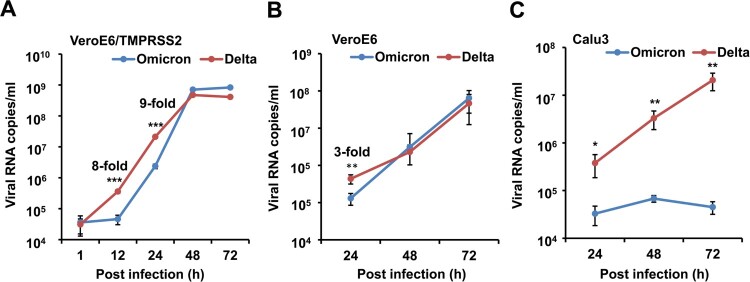
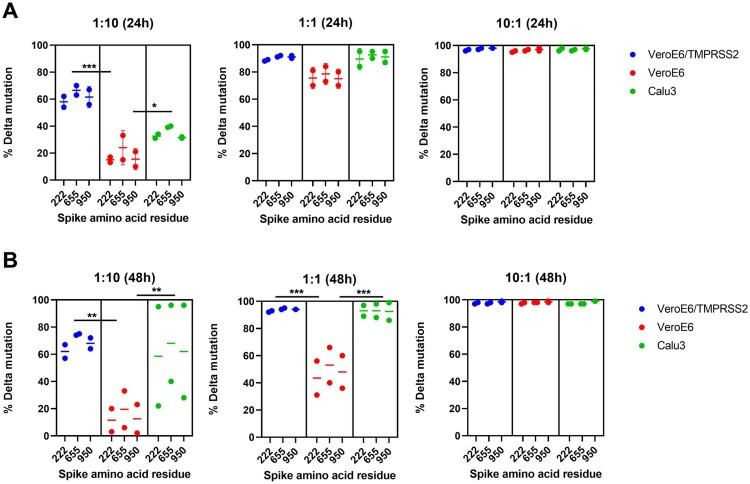
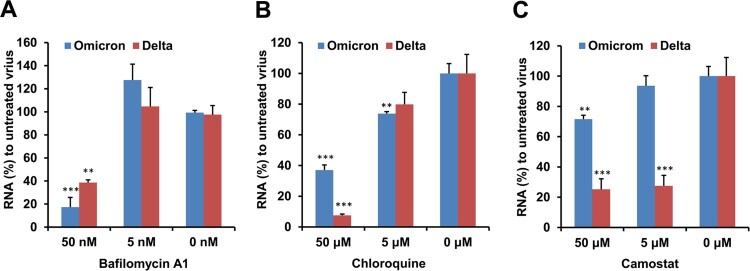
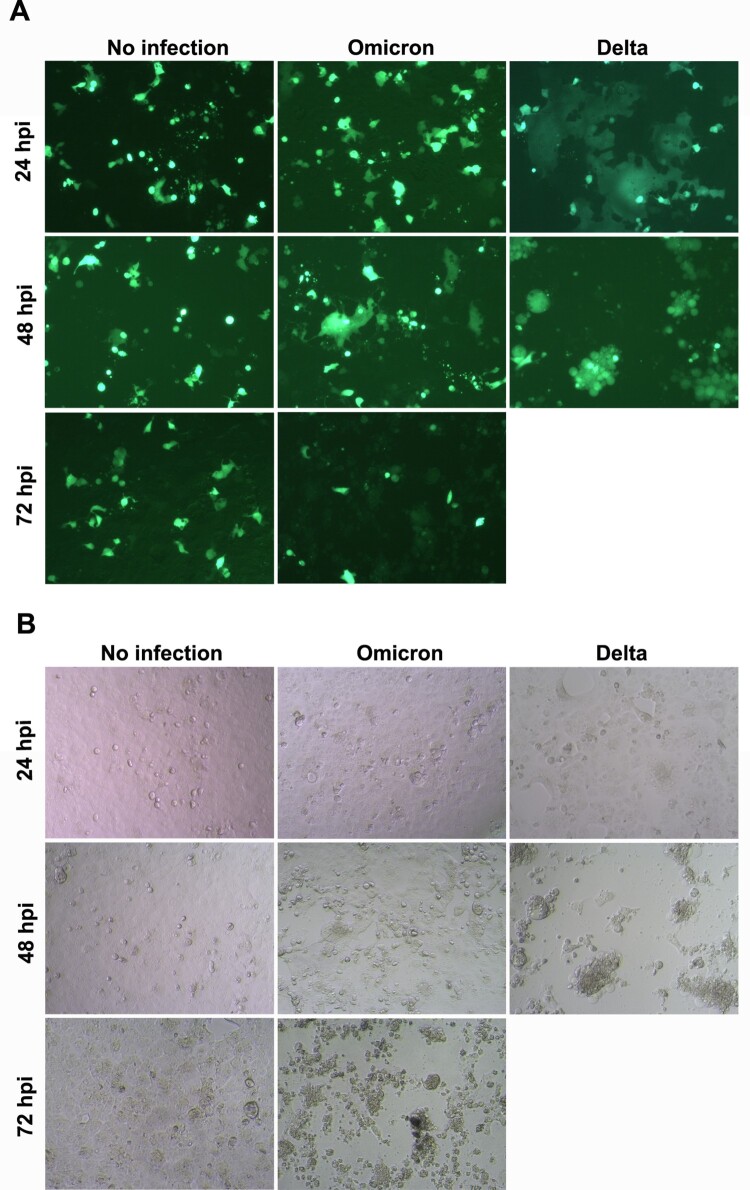
The novel SARS-CoV-2 Omicron variant (B.1.1.529), first found in early November 2021, has sparked considerable global concern and it has >50 mutations, many of which are known to affect transmissibility or cause immune escape. In this study, we sought to investigate the virological characteristics of the Omicron variant and compared it with the Delta variant which has dominated the world since mid-2021. Omicron variant replicated more slowly than the Delta variant in transmembrane serine protease 2 (TMPRSS2)-overexpressing VeroE6 (VeroE6/TMPRSS2) cells. Notably, the Delta variant replicated well in Calu3 cell line which has robust TMPRSS2 expression, while the Omicron variant replicated poorly in this cell line. Competition assay showed that Delta variant outcompeted Omicron variant in VeroE6/TMPRSS2 and Calu3 cells. To confirm the difference in entry pathway between the Omicron and Delta variants, we assessed the antiviral effect of bafilomycin A1, chloroquine (inhibiting endocytic pathway), and camostat (inhibiting TMPRSS2 pathway). Camostat potently inhibited the Delta variant but not the Omicron variant, while bafilomycin A1 and chloroquine could inhibit both Omicron and Delta variants. Moreover, the Omicron variant also showed weaker cell-cell fusion activity when compared with Delta variant in VeroE6/TMPRSS2 cells. Collectively, our results suggest that Omicron variant infection is not enhanced by TMPRSS2 but is largely mediated via the endocytic pathway. The difference in entry pathway between Omicron and Delta variants may have an implication on the clinical manifestations or disease severity.
Overview
The claims and statistics of this paper haven’t been checked yet.
Run the check — free, no account needed. It reads the open-access text and checks the sources it cites.
Integrity signals
Registry
Cites
Statistics
Figures
Verification
Claims the paper makes
The claims and statistics of this paper haven’t been checked yet.
Run the check — free, no account needed. It reads the open-access text and checks the sources it cites.
Claims other papers make about this one
Each is checked against this paper’s own text: does it say what the citing paper says it does?
The cited source says what the claim attributes to it.
In the citing paper
“suggesting entry selectivity of variants is associated with clinical manifestation [67].”
From Insights of Endocytosis Signaling in Health and Disease (2023) · cites this paper as [67]
The cited source says what the claim attributes to it.
In the citing paper
“Current evidence suggests that pharmacological inhibition of endocytic pathways potentially regressed replication of novel SARS-CoV-2 lineage B.1.1.529 (Omicron variant) in VeroE6/TMPRSS2 cell, suggesting entry selectivity of variants is associated with clinical manifestation [67].”
From Insights of Endocytosis Signaling in Health and Disease (2023) · cites this paper as [67]
Self-check
Percentages, sums and reported differences re-computed from the paper’s own numbers.
The self-check needs the paper’s full text.
Citations
Cites
Letko, M., Marzi, A., & Munster, V. (2020) · Nature Microbiology · doi:10.1038/s41564-020-0688-y · Cited by 3,109
HCA Lung Biological Network, Sungnak, W., Huang, N., Bécavin, C., Berg, M., Queen, R., Litvinukova, M., Talavera-López, C., Maatz, H., Reichart, D., et al. (2020) · Nature Medicine · doi:10.1038/s41591-020-0868-6 · Cited by 2,501
Increased risk of SARS-CoV-2 reinfection associated with emergence of Omicron in South Africa
Pulliam, J. R. C., van Schalkwyk, C., Govender, N., Gottberg, A. V., Cohen, C., Groome, M. J., Dushoff, J., Mlisana, K., & Moultrie, H. (2021) · doi:10.1101/2021.11.11.21266068 · Cited by 1,037
Research works printed but not linked: 23
- 10.1016/S1473-3099(20)30196-1 · DOI
- 10.1016/S0140-6736(20)30154-9 · DOI
- 10.1016/j.cell.2021.02.053 · DOI
- 10.1038/s41467-020-20457-w · DOI
- 10.1038/s41586-021-03925-1 · DOI
- 10.1016/j.cell.2020.02.052 · DOI · Paper page
- 10.1038/s41467-021-21825-w · DOI
- 10.1038/s42003-021-02640-x · DOI
- 10.1093/cid/ciaa1275 · DOI · Paper page
- 10.1016/j.ebiom.2021.103544 · DOI
- 10.1093/cid/ciab656 · DOI
- 10.1101/2021.11.11.21266068:2021.11.11.21266068 · DOI
- 10.1016/S0140-6736(21)02758-6 · DOI
- 10.1016/j.lanwpc.2021.100360 · DOI
- 10.1016/j.ebiom.2021.103643 · DOI
- 10.1038/s41580-021-00418-x · DOI · Paper page
- 10.1038/s41586-021-04266-9 · DOI
- 10.1038/s41564-021-00908-w · DOI
- 10.1016/j.celrep.2021.109825 · DOI
- 10.1126/science.abl9463 · DOI
- 10.1038/s41586-021-03491-6 · DOI
- 10.1371/journal.ppat.1009820 · DOI
- 10.1038/s41586-020-2575-3 · DOI
Cited by
Sorted by citations
Items 201–300 of 337
Yuan, S.-S., Li, T., Chu, C., Wang, X.-W., & Liu, L. (2023) · Frontiers in Public Health · doi:10.3389/fpubh.2023.1066694 · Cited by 7
Yogev, O., Weissbrod, O., Battistoni, G., Bressan, D., Naamati, A., Falciatori, I., Berkyurek, A. C., Rasnic, R., Izuagbe, R., Hosmillo, M. D. T., et al. (2023) · Communications Biology · doi:10.1038/s42003-023-04589-5 · Cited by 14
Effects of vaccination, new SARS-CoV-2 variants and reinfections on post-COVID-19 complications
Orendáčová, M., & Kvašňák, E. (2022) · Frontiers in Public Health · doi:10.3389/fpubh.2022.903568 · Cited by 7
Comparison of Cell Fusions Induced by Influenza Virus and SARS-CoV-2
Zhang, C., Meng, X., & Zhao, H. (2022) · International Journal of Molecular Sciences · doi:10.3390/ijms23137365 · Cited by 7
Self-citationVaccination and COVID-19: impact on long-COVID
Guimarães, G. N., Brunetti, N. S., de Lima, D. G., Proença-Módena, J. L., & Farias, A. S. (2025) · Frontiers in Immunology · doi:10.3389/fimmu.2025.1686572 · Cited by 6
The fatal contribution of serine protease-related genetic variants to COVID-19 outcomes
Martínez-Gómez, L., Martínez-Armenta, C., Tusié-Luna, T., Vázquez-Cárdenas, P., Vidal-Vázquez, R. P., Ramírez-Hinojosa, J. P., Gómez-Martín, D., Vargas-Alarcón, G., Posadas-Sánchez, R., Fragoso, J., et al. (2024) · Frontiers in Immunology · doi:10.3389/fimmu.2024.1335963 · Cited by 6
Virus-mediated cell fusion of SARS-CoV-2 variants.
Amidei, A., & Dobrovolny, H. (2024) · Mathematical Biosciences · doi:10.1016/j.mbs.2024.109144 · Cited by 6
Fang, Q., He, X., Zheng, X., Fu, Y., Fu, T., Luo, J., Du, Y., Lan, J., Yang, J., Luo, Y., et al. (2023) · Journal of Medical Virology · doi:10.1002/jmv.28953 · Cited by 9
“As shown in Figure 4A,B, the Delta group exhibited significantly enhanced GFP fluorescence and luciferase activity compared with the wild‐type (WT) S group, while the opposite was observed in the Omicron group, consistent with the variants' pathogenicity.(29) To further investigate the pathogenicity of the variants, we”
ResultSelf-citationCheng, Y., Zheng, D., Zhang, D., Guo, D., Wang, Y., Liu, W. Y., Liang, L., Hu, J., Shi, H., & Luo, T. (2023) · Journal of Molecular Modeling · doi:10.1007/s00894-023-05509-4 · Cited by 6
Molecular Determinants of the Early Life Immune Response to COVID-19 Infection and Immunization
Beijnen, E. M. S., Odumade, O. A., & van Haren, S. D. (2023) · Vaccines · doi:10.3390/vaccines11030509 · Cited by 5
“Other mutations in the RBD of the omicron strain are believed to be associated with decreased ACE2 bindi g affinity [47].”
BackgroundMondol, S. M., Hasib, M., Limon, M. B. H., & Alam, A. (2023) · Bioinformatics and Biology Insights · doi:10.1177/11779322231189371 · Cited by 6
Evolution of throat symptoms during the COVID-19 pandemic in the US
Nocini, R., Henry, B., Mattiuzzi, C., & Lippi, G. (2022) · Diagnosis · doi:10.1515/dx-2022-0084 · Cited by 6
The New SARS-CoV-2 Variants and Their Epidemiological Impact in Mexico
García-López, R., Laresgoiti-Servitje, E., Lemus-Martin, R., Sánchez-Flores, A., & Sanders‐Velez, C. (2022) · mBio · doi:10.1128/mbio.01060-21 · Cited by 6
Effect of combined use of ivermectin and colchicine in COVID-19 patients
Sayed, R. E. E., Hafez, A. F., Haggag, A. M. A. M., & Alhadidy, M. (2022) · Egyptian Journal of Anaesthesia · doi:10.1080/11101849.2022.2089518 · Cited by 6
“inhibitors might be less effective in the omicron variant which shows TMPRSS2-independent fusion [31].”
BackgroundMezger, M. C., Conzelmann, C., Weil, T., von Maltitz, P., Albers, D., Münch, J., Stamminger, T., & Schilling, E.-M. (2022) · Viruses · doi:10.3390/v14061308 · Cited by 6
“In accordance, the inefficient TMPRSS2-usage of omicron and decreased entry into cells with high TMPRSS2 expression (like Calu-3 and Caco-2) and lower airway organoids with high TMPRSS2 expression has been observed, while entry into cells with low TMPRSS2 expression was comparable to Wuhan and delta [64,80,81].”
ResultZhou, Z., Du, P. F., Li, N., Xiong, X., Tang, S., Dai, Q., Wang, T., Yu, M., Man, M., Lam, K., et al. (2022) · MedComm · doi:10.1002/mco2.143 · Cited by 12
Characteristic analysis of Omicron‐included SARS‐CoV‐2 variants of concern
Yang, H., Liu, P., Zhang, Y., Du, T., Zhou, Y., Lu, S., & Peng, X. (2022) · MedComm · doi:10.1002/mco2.129 · Cited by 6
Miao, M., Ma, Y.-H., Tan, J., Chen, R., & Men, K. (2024) · Scientific Reports · doi:10.1038/s41598-024-78493-1 · Cited by 5
“Studies based on epidemiological and clinical data suggest that the reduced ability of the Omicron variant to mediate membrane fusion via spike protein leads to decreased lung infectivity 22 .”
MethodErabi, G., Faridzadeh, A., Parvin, A., Deravi, N., Rahmanian, M., Fathi, M., Aleebrahim-Dehkordi, E., & Rezaei, N. (2024) · Health Science Reports · doi:10.1002/hsr2.1873 · Cited by 5
Dynamics of water-mediated interaction effects on the stability and transmission of Omicron
Zaman, N., Parvaiz, N., Gul, F., Yousaf, R., Gul, K., & Azam, S. S. (2023) · Scientific Reports · doi:10.1038/s41598-023-48186-2 · Cited by 5
“These water-mediated interactions may provide one of the reasons for the enhanced stability of Omicron compared to Delta as reported in multiple studies 11,70 .”
Panchali, M. J. L., Kim, C.-M., Lee, Y.-M., Seo, J.-W., Kim, D. Y., Yun, N.-R., & Kim, D.-M. (2023) · Microbiology spectrum · doi:10.1128/spectrum.03076-22 · Cited by 5
“Hence, these differences in infective pathways may have significant clinical implications for the omicron variant (19).”
BackgroundHuman early syncytiotrophoblasts are highly susceptible to SARS-CoV-2 infection
Ruan, D., Ye, Z., Yuan, S., Li, Z., Zhang, W., Ong, C. P., Tang, K., Tam, T. T. K. K., Guo, J., Xuan, Y., et al. (2022) · Cell Reports Medicine · doi:10.1016/j.xcrm.2022.100849 · Cited by 42
Self-citationMusa, S., Dergaa, I., & Tayebi, S. (2022) · Annals of Applied Sport Science · doi:10.52547/aassjournal.1114 · Cited by 5
“severe upper respiratory tract infection (7).”
Genome wide screen of RNAi molecules against SARS-CoV-2 creates a broadly potent prophylaxisPreprint
Yogev, O., Weissbrod, O., Battistoni, G., Bressan, D., Naamti, A., Falciatori, I., Berkyurek, A. C., Rasnic, R., Hosmillo, M. D. T., Ilan, S., et al. (2022) · bioRxiv (Cold Spring Harbor Laboratory) · doi:10.1101/2022.04.12.488010 · Cited by 5
“Similar to other reports 33 , the Omicron variant does not replicate as fast as other VoCs in vitro .”
Padmanabhan, P., & Dixit, N. M. (2022) · bioRxiv · doi:10.1101/2022.01.13.476267 · Cited by 4
SARS-CoV-2 evolution enhances endocytic uptake while preserving TMPRSS2-dependent fusion
Magnus, C. L., Jaber, Z. H., Hiergeist, A., Arnold, L., Marchel, H., Lamprecht, A., Hanses, F., Dienemann, T., Schneckenpointner, R., Lubnow, M., et al. (2026) · Frontiers in Immunology · doi:10.3389/fimmu.2025.1736891 · Cited by 3
Evolution of the SARS-CoV-2 spike protein in utilizing host transmembrane serine proteases
Milewska, A., Cofas‐Vargas, L. F., Poma, A. B., & Pyrć, K. (2025) · iScience · doi:10.1016/j.isci.2025.113318 · Cited by 5
“45 This aligns with our observations, where the Omicron BA.1 titer obtained in A549 ACE2/TMPRSS2 cells was ∼ 1–1.5 log lower than Wuhan.”
InfluentialSchwerdtner, M., Schmacke, L. C., Nave, J., Limburg, H., Steinmetzer, T., Stein, D. A., Moulton, H., & Böttcher-Friebertshäuser, E. (2024) · Viruses · doi:10.3390/v16111798 · Cited by 4
Aggarwal, A., Fichter, C., Milogiannakis, V., Ison, T., Silva, M. R., Esneau, C., Bartlett, N. W., Burrell, L. M., Patel, S. K., Churchill, M. J., et al. (2023) · bioRxiv (Cold Spring Harbor Laboratory) · doi:10.1101/2023.09.22.558930 · Cited by 5
“Whilst the latter approach was used successfully pre-Omicron, evidence rapidly emerged demonstrating that Omicron lineages no longer effectively utilized the ACE2-TMPRSS2 pathway in various cell lines and primary cell settings 14,16,25-27 .”
MethodProphylactic efficacy of an intranasal spray with 2 synergetic antibodies neutralizing Omicron
Zhang, X., Luo, F., Zhang, H., Guo, H., Zhou, J., Li, T., Chen, S., Song, S., Shen, M., Wu, Y., et al. (2024) · JCI Insight · doi:10.1172/jci.insight.171034 · Cited by 4
Stalin, A., Kumar, P. S., Kannan, B. S., Saravanan, R., Ignacimuthu, S., & Zou, Q. (2023) · Arabian Journal of Chemistry · doi:10.1016/j.arabjc.2023.105493 · Cited by 4
Wang, K., Pan, Y., Wang, D., Yuan, Y., Li, M., Chen, Y., Bi, L., & Zhang, X. (2023) · Virologica Sinica · doi:10.1016/j.virs.2023.06.005 · Cited by 4
Shi, G., Li, T.-S., Lai, K.-K., Johnson, R. F., Yewdell, J., & Compton, A. A. (2023) · bioRxiv · doi:10.1101/2023.05.06.539698 · Cited by 4
Gerardi, V., Rohaim, M. A., Naggar, R. F. E., Atasoy, M. O., & Munir, M. (2023) · Vaccines · doi:10.3390/vaccines11030668 · Cited by 4
He, W., Cui, H. Y., Wang, S., Liang, B., Zhang, C., Wang, W., Wang, Q. M., Li, W., Zhao, Y., Wang, T., et al. (2023) · Microorganisms · doi:10.3390/microorganisms11020431 · Cited by 4
“Furthermore, rVSV∆G-Sdel-eGFP induced increased cell-cell fusion and syncytia compared with the rVSV∆G-WH01-eGFP, which is consistent with a previous report [24].”
ResultSelf-citationXu, X., Hong, Y., Chen, E., Wang, Y., Ma, B., Li, J., Su, W., Zhou, Y., & Zhang, M. (2022) · Vaccines · doi:10.3390/vaccines10122110 · Cited by 5
Zhu, J., Li, Y., Liang, J., Mubareka, S., Slutsky, A. S., & Zhang, H. (2022) · Intensive Care Research · doi:10.1007/s44231-022-00021-4 · Cited by 6
Introduction, Spread and Impact of the SARS-CoV-2 Omicron Variants BA.1 and BA.2 in Cyprus
Richter, J., Koptides, D., Tryfonos, C., Alexandrou, D., & Christodoulou, C. (2022) · Microorganisms · doi:10.3390/microorganisms10091688 · Cited by 4
“Omicron appears to favor the endosomal entry route, which does not require spike cleavage and favors the infection of cells of the upper respiratory tract [38], resulting in a reduction in severity compared to Delta.”
ResultThe Potential of Purinergic Signaling to Thwart Viruses Including SARS-CoV-2
Ferrari, D., Rubini, M., & Burns, J. S. (2022) · Frontiers in Immunology · doi:10.3389/fimmu.2022.904419 · Cited by 7
Criscuolo, E., Giuliani, B., Ferrari, D., Ferrarese, R., Diotti, R. A., Clementi, M., Mancini, N., & Clementi, N. (2022) · Viruses · doi:10.3390/v14061232 · Cited by 4
“In contrast to what was previously reported [10,30], we observed that both compounds equally interfered with the entry process of the Omicron variant, whereas infection from all the other clinical isolates was differently hampered by camostat mesylate or BFLA-1.”
BackgroundResultInterpretable and Predictive Deep Modeling of the SARS-CoV-2 Spike Protein Sequence
Sokhansanj, B., Zhao, Z.-Q., & Rosen, G. (2021) · medRxiv · doi:10.1101/2021.12.26.21268414 · Cited by 4
“[178], [179] A decrease in severe disease is also consistent with preliminary clinical and epidemiological evidence that had emerged by the time of this manuscript’s preparation, suggesting that patients had less severe disease in South Africa.”
ResultAndrogens’ Role in Severity and Mortality Rates of COVID-19
Ataei, A., Derakhshan, M. M., Razmjooie, M., Zare, F., Amiresmaeili, H., Salehi, N., Namakkoobi, N., Mirhosseini, H., Karim, B., & Iravani, S. (2022) · Hormone and Metabolic Research · doi:10.1055/a-1954-5605 · Cited by 6
“The clinical symptoms or severity of the COVID-19 may be impacted by the difference in route of cell entry between the Omicron and Delta variants [37].”
BackgroundEvolutionary dynamics of heparan sulfate utilization by SARS-CoV-2
Higuchi, S., Liu, Y., Shimizu, J., Ono, C., Itoh, Y., Nakai, W., Jin, H., Kishida, K., Takayama, K., Okamoto, T., et al. (2025) · mBio · doi:10.1128/mbio.01303-25 · Cited by 2
Liu, F., Shang, C., Zhang, C., Jiang, X., Lin, Y., Wu, F., Li, J., Han, L., Jun-Jie, S., Xiao, Z., et al. (2025) · International Journal of Biological Macromolecules · doi:10.1016/j.ijbiomac.2025.142233 · Cited by 3
Self-citationSpatiotemporal prevalence of COVID-19 and SARS-CoV-2 variants in Africa
Gao, L.-P., Zheng, C.-J., Tian, T.-T., Tia, A. B., Abdulai, M. K., Xiao, K., Chen, C., Liang, D.-L., Shi, Q., Liu, Z.-G., et al. (2025) · Frontiers in Public Health · doi:10.3389/fpubh.2025.1526727 · Cited by 3
Aksenen, C. F., FERREIRA, D. V., Jerônimo, P. M. C., Costa, T. D. O., de Souza, T. C., Lino, B. M. N. S., de Farias, A. A., & Miyajima, F. (2024) · Analytical Chemistry · doi:10.1021/acs.analchem.4c04492 · Cited by 6
Calcagnile, M., Damiano, F., Lobreglio, G., Siculella, L., Bozzetti, M., Forgez, P., Malgoyre, A., Libert, N., Bucci, C., Alifano, M., et al. (2024) · Biochimie · doi:10.1016/j.biochi.2024.05.004 · Cited by 3
Takada, K., Orba, Y., Kida, Y., Wu, J.-Q., Ono, C., Matsuura, Y., Nakagawa, S., Sawa, H., & Watanabe, T. (2024) · Journal of Virology · doi:10.1128/jvi.01784-23 · Cited by 3
“It may be that the amino acid substitutions in the S protein of the Omicron strain reduce the efficiency of TMPRSS2 cleavage by the S protein, resulting in less efficient intracellular entry via TMPRSS2 and reducing the likelihood of infection of TMPRSS2-expressing lung cells (28, 38, 39).”
BackgroundLee, K., Na, Y., Kim, M., Lee, D., Choi, J., Kim, G., & Kim, M.-S. (2024) · Pharmacology Research & Perspectives · doi:10.1002/prp2.1194 · Cited by 3
Staroverov, V., Galatenko, A., Knyazev, E., & Tonevitsky, A. (2024) · PeerJ · doi:10.7717/peerj.16964 · Cited by 3
Liu, Q., Li, L., Zhao, J.-Z., Ren, G., Lu, T.-Y., Shao, Y., & Xu, L. (2023) · International Journal of Molecular Sciences · doi:10.3390/ijms25010308 · Cited by 3
RetractedOng, C. P., Tang, K., Cheung, P. H., Zhang, H., Tang, T., Xue, Y., Wang, J., To, K. K., Yuan, S., Ye, Z., et al. (2023) · npj Vaccines · doi:10.1038/s41541-023-00776-x · Cited by 3
Self-citationTian, D., Pan, Y., Ge, Z.-R., Kong, X.-J., Zhang, Y., Zhang, Q., Wang, A.-B., Yang, P., & Chen, Z.-H. (2023) · Infectious Diseases & Immunity · doi:10.1097/id9.0000000000000081 · Cited by 3
Liao, Y., Wang, J., Zou, J., Liu, Y., Liu, Z., & Huang, Z. (2023) · Frontiers in Immunology · doi:10.3389/fimmu.2023.1112704 · Cited by 4
Vanhulle, E., Doijen, J., Stroobants, J., Provinciael, B., Noppen, S., Schols, D., Stevaert, A., & Vermeire, K. (2022) · bioRxiv · doi:10.1016/j.antiviral.2023.105587 · Cited by 3
“In line with several reports (9, 10, 31), with 329 our CEI based cell-cell fusion assay we also measured a reduced fusion activity for the 330 spike protein of the Omicron BA.”
ResultZhao, H., Yu, X., Ye, W., Wang, R.-H., Sheng, J., & Shi, Y. (2022) · Frontiers in Psychology · doi:10.3389/fpsyg.2022.989952 · Cited by 3
“The pandemic of severe acute respiratory syndrome coronavirus - 2 (SARS-CoV-2) Omicron variant is a major burden of public health worldwide (Lazarus et al., 2021; Ledford, 2021; Cheung et al., 2022; Del Rio et al., 2022; Wong et al., 2022; Zhao et al., 2022).”
BackgroundSelf-citationPujol, F., Zambrano, J. L., Jaspe, R., Hidalgo, M., Loureiro, C., Sulbarán, Y., Moros, Z., Garzaro, D., Vizzi, E., Rangel, H., et al. (2022) · Investigación Clínica · doi:10.54817/ic.v63n3a05 · Cited by 3
“The Omicron also forms fewer syncytia than other lineages 20,21 .”
Yuan, J., Zhu, Y., Zhao, J., Li, L., Chengjie, Z., Chen, M., Zhang, Y., & Shang, Y. (2022) · Natural Product Communications · doi:10.1177/1934578x221116977 · Cited by 5
“The spike protein can bind to angiotensin-converting enzyme 2 (ACE2) on the cell membrane to allow the virus to enter the cell.5 According to some studies, the transmembrane spike (S) glycoprotein consists of two functional subunits, and the combination of the S1 subunit with ACE2 proven to be key in coronavirus entry…”
BackgroundInfluentialEvaluation of the ID NOW Among Symptomatic Individuals During the Omicron Wave
Stokes, W., Venner, A., Buss, E., Tipples, G., & Berenger, B. (2022) · medRxiv · doi:10.1101/2022.05.19.22275316 · Cited by 3
Wei, B., Du, C., Lv, Z., Fu, Y., Cheng, Y., Zhang, Z., Du, Z., Peng, Z., Xu, H., Shi, X., et al. (2026) · Environment International · doi:10.1016/j.envint.2026.110208 · Cited by 2
Self-citationKoylass, N., Sachithanandham, J., Osei‐Owusu, J., Chen, K. H., Cheng, Y., Pekosz, A. S., & Qiu, Z. (2025) · Journal of Cellular Physiology · doi:10.1002/jcp.70063 · Cited by 3
“Conversely, Omicron variants prefer to use the endosomal path to enter cells (Qu et al. 2023; Zhao et al. 2022; Meng et al. 2022).”
Koylass, N., Sachithanandham, J., Osei-Owusu, J., Chen, K., Cheng, H. Y., Pekosz, A., & Qiu, Z. (2025) · bioRxiv · doi:10.1101/2025.03.12.642872 · Cited by 2
Aksenen, C. F., Ferreira, D. M., Jeronimo, P. M. C., Costa, T. R. D., de Souza, T. C., Lino, B. M. N. S., de Farias, A. A., & Miyajima, F. (2024) · medRxiv · doi:10.1101/2024.08.09.24310239 · Cited by 2
From Alpha to Omicron and Beyond: Associations Between SARS-CoV-2 Variants and Surgical Outcomes
Verhagen, N. B., Geissler, T., SenthilKumar, G., Gehl, C. J., Shaik, T., Flitcroft, M. A., Yang, X., Taylor, B. W., Ghaferi, A. A., Gould, J. C., et al. (2024) · Journal of Surgical Research · doi:10.1016/j.jss.2024.05.034 · Cited by 3
Orel, E., Sobel, J., Zanella, M., Iten, A., Kaiser, L., Keiser, O., & Vetter, P. (2024) · CMI Communications · doi:10.1016/j.cmicom.2024.100005 · Cited by 2
Yan, Q., Xue-ying, L., Peng, C.-W., Zheng, W., Liu, X., Wen, W., Jiang, Y., Zhan, S., & Huang, X. (2023) · Biomedical Signal Processing and Control · doi:10.1016/j.bspc.2023.105502 · Cited by 4
Immunology of SARS-CoV-2 Infection
Gabdoulkhakova, A. G., Mingaleeva, R. N., Romozanova, A. M., Sagdeeva, A. R., Викторовна, Ф. Ю., Rizvanov, A. A., & Рифкатовна, М. Р. (2024) · Biochemistry (Moscow) · doi:10.1134/s0006297924010048 · Cited by 1
The effects of SARS-CoV-2 on susceptible human cells
Klestova, Z. (2023) · Acta Virologica · doi:10.3389/av.2023.11997 · Cited by 2
Endocytosis inhibitors block SARS-CoV-2 pseudoparticle infection of mink lung epithelium
Song, A., Phandthong, R., & Talbot, P. (2023) · Frontiers in Microbiology · doi:10.3389/fmicb.2023.1258975 · Cited by 2
Ren, M., Ma, Z., Zhao, L., Wang, Y., An, H., & Sun, F. (2023) · Journal of Chemical Information and Modeling · doi:10.1021/acs.jcim.3c00041 · Cited by 3
Bose, T., Wasimuddin, Acharya, V., Pinna, N. K., Kaur, H., Ranjan, M., Jhandylala, S., Nagabandi, T., Varma, B., Tallapaka, K. B., et al. (2023) · bioRxiv · doi:10.1101/2023.01.02.522449 · Cited by 2
“Given that subtle variations exist in the pathophysiology of different viral variants [3] [28], it was anticipated that the associated host microbiota would also exhibit certain changes in each of the three waves.”
BackgroundZhang, X., Luo, F., Zhang, H., Guo, H., Zhou, J., Li, T., Chen, S., Song, S., Shen, M., Wu, Y., et al. (2023) · medRxiv · doi:10.1101/2023.03.17.23287398 · Cited by 3
Zhang, P., Cai, Z., He, Z., Chen, P., Wu, W., Lin, Y., Feng, S., Peng, L., Li, J., Yuan, J., et al. (2022) · European journal of medical research · doi:10.1186/s40001-022-00927-1 · Cited by 3
“However, omicron variant displayed less fusion and replication in cells with TMPRSS2 protein [6].”
BackgroundGupta, A. K., Srinivasulu, A., Hiran, K. K., Sreenivasulu, G., Rajeyyagari, S., & Subramanyam, M. M. (2022) · Interdisciplinary Perspectives on Infectious Diseases · doi:10.1155/2022/1525615 · Cited by 13
“Various existing and related studies proposed a computer-based Omicron diagnosis architecture for infection prediction; however, these studies are not accurate and lead to huge errors due to common symptoms of distinct chest diseases, including the coronavirus disease 2019 [21].”
Bohlin, J., Page, C. M., Lee, Y., Pettersson, J. H. ‐., Jugessur, A., Magnus, P. M., & Håberg, S. E. (2022) · PLoS ONE · doi:10.1371/journal.pone.0269105 · Cited by 4
“These findings may suggest that age could potentially influence the mode of entry for SARS-CoV-2 [40].”
BackgroundThe genomic and clinical features of the COVID-19 Omicron variant: a narrative review
Hertanto, D. M., Sutanto, H., Lusida, M. I., Kuntaman, K., & Santoso, D. (2022) · F1000Research · doi:10.12688/f1000research.110647.1 · Cited by 2
Jiang, F., Zheng, M., Gao, L., Zhuo, Y., Liang, X.-Q., Chen, Z.-W., Huang, X.-H., Chen, Y.-S., Zeng, Z.-N., Xiao, Y.-F., et al. (2026) · Microbiology spectrum · doi:10.1128/spectrum.03826-25 · Cited by 1
Yu, R., Zheng, R., Chen, X.-F., Zhao, H.-Y., Jin, J., Wang, C., Xiang, S.-L., Huang, M., Zhao, H.-S., Wang, Y., et al. (2026) · BMC Infectious Diseases · doi:10.1186/s12879-026-12997-1 · Cited by 1
“Existing studies have shown that certain mutations in the Omicron spike protein enhance its binding affinity to ACE2 (angiotensin-converting enzyme 2), while reducing its dependence on TMPRSS2 and favoring cell entry through the endocytic pathway [21, 22].”
Self-citationAlves, M., Falcão, R. M., Palmeira, O. F. D. J., Paiva-Júnior, S. D. S. L., & Balbino, V. D. Q. (2025) · Archives of Virology · doi:10.1007/s00705-025-06472-6 · Cited by 1
RetractedpH-induced structural changes in SARS-CoV-2 spike variantsPreprint
Oliveira, A. S. F., Tulli, L., Kearns, F. L., Casalino, L., Rosenfeld, M. A., Berger, I., Schaffitzel, C., Davidson, A. D., Haddrell, A. E., Reid, J. P., et al. (2025) · bioRxiv (Cold Spring Harbor Laboratory) · doi:10.1101/2025.11.17.688702 · Cited by 1
“Experimental evidence also indicates that different SARS-CoV-2 strains preferentially utilise one cellular entry pathway over the other (127, 135).”
Vacuolar-ATPase inhibitors are antimicrobial agents active against intracellular mycobacteria
Rankine-Wilson, L., Shapira, T., Felker, J., Christofferson, M., Sahile, H. A., Chao, J. D., Afshar, H., Andersen, R. J., Sun, J., & Av‐Gay, Y. (2025) · Antimicrobial Agents and Chemotherapy · doi:10.1128/aac.00478-25 · Cited by 1
Safiriyu, A., Hussain, A., Dewangan, N., Kasle, G., Shindler, K. S., Pal, D., & Sarma, J. D. (2025) · Antiviral Research · doi:10.1016/j.antiviral.2025.106144 · Cited by 1
Mao, B., Le‐Trilling, V. T. K., Tang, H., Hu, J., Schmitz, M., Barbet, K., Xu, D., Wei, Z., Guo, B., Mennerich, D., et al. (2024) · Virus Research · doi:10.1016/j.virusres.2024.199485 · Cited by 1
Zawawi, Z. M., Kalyanasundram, J., Zain, R. M., Ripen, A. M., Basri, D., & Yap, W. (2024) · International Journal of Molecular Sciences · doi:10.3390/ijms251910541 · Cited by 1
Lushington, G. H., Linde, A., & Melgarejo, T. (2023) · BioTech · doi:10.3390/biotech12040061 · Cited by 3
“Reduced infectious efficiency of the cathepsin route may explain the altered symptomology exhibited by omicron variants [90–92] compared with the TMPRSS2-mediated cell fusion perpetrated by delta (and prior) variants [90].”
BackgroundJoshi, V., Shareef, B., Angel, B., Angel, A., Joshi, R., Khan, A., Khaneja, P., Peer, N., Sharma, B., Singh, N., et al. (2023) · Journal of Pure and Applied Microbiology · doi:10.22207/jpam.17.3.22 · Cited by 1
Marine Sponge-Derived Secondary Metabolites Modulate SARS-CoV-2 Entry Mechanisms
Steenblock, C., Richter, S., Lindemann, D., Ehrlich, H., Bornstein, S. R., & Bechmann, N. (2023) · Hormone and Metabolic Research · doi:10.1055/a-2173-0277 · Cited by 1
“Recent research papers have reported that the Omicron spike protein is less susceptible to furin cleavage [49–52], and the Omicron VOC primarily employs the endocytosis pathway rather than the furin/TMPRSS2-mediated pathway utilized by other VOCs [49, 50, 53, 54].”
BackgroundInfluentialLi, T.-T., Xu, J., Gao, Y., Wang, X., & Xu, Y. (2023) · European Journal of Medical Research · doi:10.1186/s40001-023-01187-3 · Cited by 1
“In addition, unlike the SARS-CoV-2 virus, omicron is difficult to grow in VERO cells (genetically engineered African green monkey kidney cells), and it is unlikely to cause significant damage (plaque) in these cells [19].”
MethodIshii, S., Sakaguchi, W., Yamamura, M., Nagumo, T., Koeda, S., Akiyama, H., Kinuta, M., Nishikubo, S., & Tsukinoki, K. (2023) · Journal of Stomatology Oral and Maxillofacial Surgery · doi:10.1016/j.jormas.2023.101572 · Cited by 1
Bai, Y., An, C., Zhang, X., Li, K., Cheng, F., Cui, B., Song, Z., Liu, D., Zhang, J., He, Q., et al. (2023) · Viruses · doi:10.3390/v15051099 · Cited by 1
In vitro comparison of SARS-CoV-2 variantsPreprint
Phadke, K. S., Higdon, N. B. A., & Bellaire, B. (2023) · bioRxiv · doi:10.1101/2023.03.11.532212 · Cited by 1
“At the same time, the reduced infectivity of delta can be 198 due to its dependence on TMPRSS2 for cell entry (24,26) which is expressed marginally in VeroE6 199 cells (17).”
BackgroundLohse, Z. M., Shapiro, J., Lednicky, J., Cash, M., Jun, I., Mavian, C., Tagliamonte, M., Saleem, C., Yang, Y., Nelson, E., et al. (2022) · medRxiv · doi:10.1093/cid/ciac693 · Cited by 1
Neerukonda, S. N., Wang, R., Vassell, R. A., Baha, H., Lusvarghi, S., Liu, S., Wang, T. T., Weiss, C. D., & Wang, W. (2022) · bioRxiv (Cold Spring Harbor Laboratory) · doi:10.1101/2022.06.01.494385
Volle, R., Murer, L., Petkidis, A., Andriasyan, V., Savi, A., Bircher, C., Meili, N., Fischer, L., Sequeira, D., Mark, D. K., et al. (2022) · bioRxiv · doi:10.1101/2022.03.30.486461 · Cited by 1
“The altered usage of TMPRSS2 by Omicron appears to make the virion more dependent on low-pH endosomes and the cathepsin entry pathway (14-16).”
BackgroundEffect of SARS-CoV-2 spike mutations on its activation by TMPRSS2 and TMPRSS13
Stevaert, A., Berwaer, R. V., Raeymaekers, V., Laporte, M., & Naesens, L. (2022) · bioRxiv · doi:10.1101/2022.01.26.477969 · Cited by 1
“The reverse is seen for the omicron variant (6, 7).”
BackgroundResearch Progress of SARS-CoV-2 Omicron Variant
Wang, K.-H. (2022) · Advances in microbiology · doi:10.12677/amb.2022.112006 · Cited by 1
Saengfak, R., Manopwisedjaroen, S., Munyoo, B., Chabang, N., Borwornpinyo, S., Hongeng, S., Charoensutthivarakul, S., & Thitithanyanont, A. (2026) · Biochemical Pharmacology · doi:10.1016/j.bcp.2026.118528
Yao, Z., Zhu, Y., Liu, N., Hu, Y., & He, Y. (2026) · Journal of Virology · doi:10.1128/jvi.01067-26
Jin, Q., Yan, F., Song, F., Wang, T., Haiyang, X., Bingqi, S., Xuefeng, W., Gao, Y., & Xianzhu, X. (2026) · Biosafety and Health · doi:10.1016/j.bsheal.2026.09.002
Metadata
- Authors
- Zhao, H., Lu, L., Peng, Z., Chen, L.-L., Meng, X., Zhang, C., Ip, J. D., Chan, W.-M., Chu, A. W.-H., Chan, K.-H., Jin, D.-Y., Chen, H., Yuen, K.-Y., & To, K. K.-W.
- Affiliations
- University of Hong Kong (HK)
- Queen Mary Hospital (CN)
- Corresponding author
- Zhao, Hanjun
- To, Kelvin Kai-Wang
- ORCID
- Venue
- Emerging Microbes & Infections
- Publisher
- Informa UK Limited
- Published
- 2022-01-19
- Volume
- 11
- Issue
- 1
- Pages
- 277-283
- ISSN
- 2222-1751 (ISSN-L)
- PMC
- PMC8774049
- OpenAlex
- W4200625712
- Cited by
- 413
- References
- 25
- Citations by year
- 2026: 12 · 2025: 29 · 2024: 68 · 2023: 104 · 2022: 197
- FWCI
- 29.38
- Type
- journal article
- Language
- en
- Open access
- gold
- doi.org
- Licence
- Locations
- Emerging Microbes & Infections (publishedVersion, cc-by)
- PubMed Central (publishedVersion, cc-by)
- PubMed (publishedVersion)
- DOAJ (DOAJ: Directory of Open Access Journals) (submittedVersion, cc-by-sa)
- Funders
- Theme-Based Research Scheme (T11-709/21-N)
- Topics
- Health Sciences › Medicine › Infectious Diseases › SARS-CoV-2 and COVID-19 Research
- Health Sciences › Medicine › Infectious Diseases › COVID-19 Clinical Research Studies
- Physical Sciences › Mathematics › Modeling and Simulation › COVID-19 epidemiological studies
- Keywords
- Omicron variant, Delta variant, viral entry pathways, TMPRSS2, endocytic pathway, viral replication, cell-cell fusion, camostat, bafilomycin A1, chloroquine, competition assay
- MeSH terms
- Whole Genome Sequencing, COVID-19, SARS-CoV-2, Animals, Carcinoma, Non-Small-Cell Lung, Chlorocebus aethiops, Chloroquine, Endocytosis, Esters, Guanidines, Humans, Lung Neoplasms, Recombinant Proteins, Serine Endopeptidases, Vero Cells, Virus Cultivation, Virus Replication, Macrolides, Cell Line, Tumor, Virus Internalization, Immune Evasion
About these checks
Registry, retraction, Cites and statistics results are computed, not judged, with one exception: a printed reference that no index lists is read once by a model before it counts as a citation error. Claims are extracted by a model and kept only when their quote appears verbatim in the text; each cited source is then checked, with a model’s help, for whether it says what the claim relies on. Those verdicts can be wrong — read the claim’s quote and the cited source before relying on one.
Statistics and arithmetic are recomputed, not judged.
Confidence bands are shown only for fields calibrated on our annotated test set. None is calibrated yet, so no band is shown.
What counts as a claim ›How we measure confidence ›How we check this ›
Are you an author, or do you see a problem with this page? Request a review
