

The DOI matches its Crossref record; 3 of the 3 references it cites were found in a registry or an index.
SARS-CoV-2 Omicron variant shows less efficient replication and fusion activity when compared with Delta variant in TMPRSS2-expressed cells
Open accessAbstract
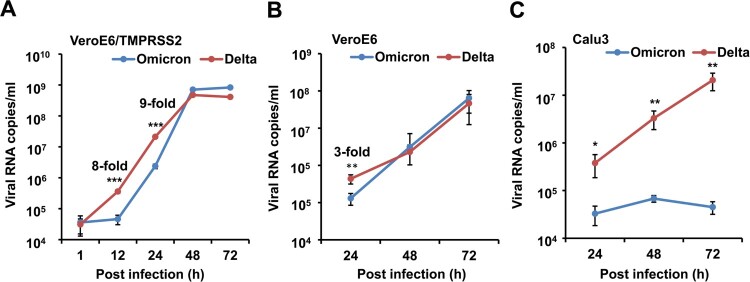
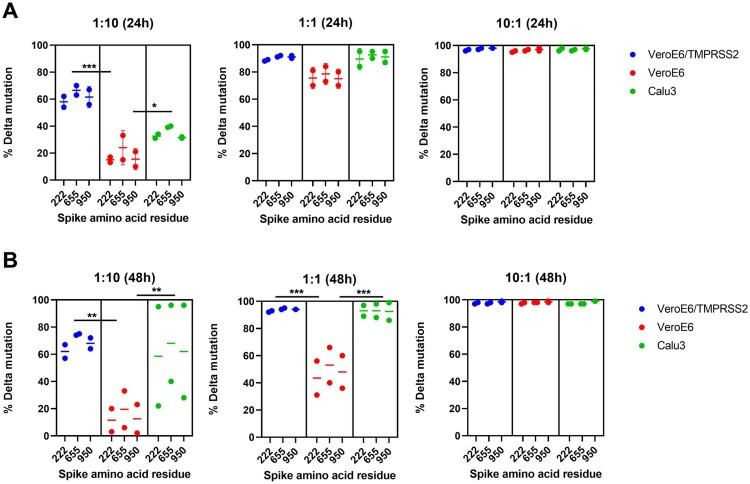
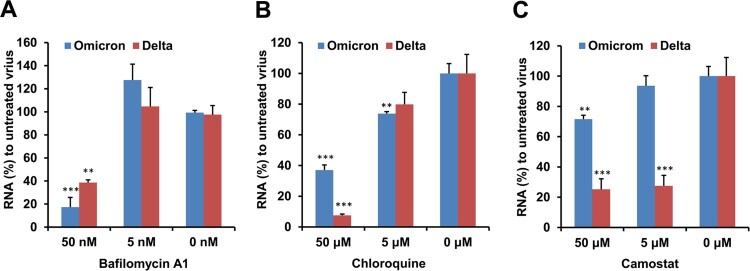
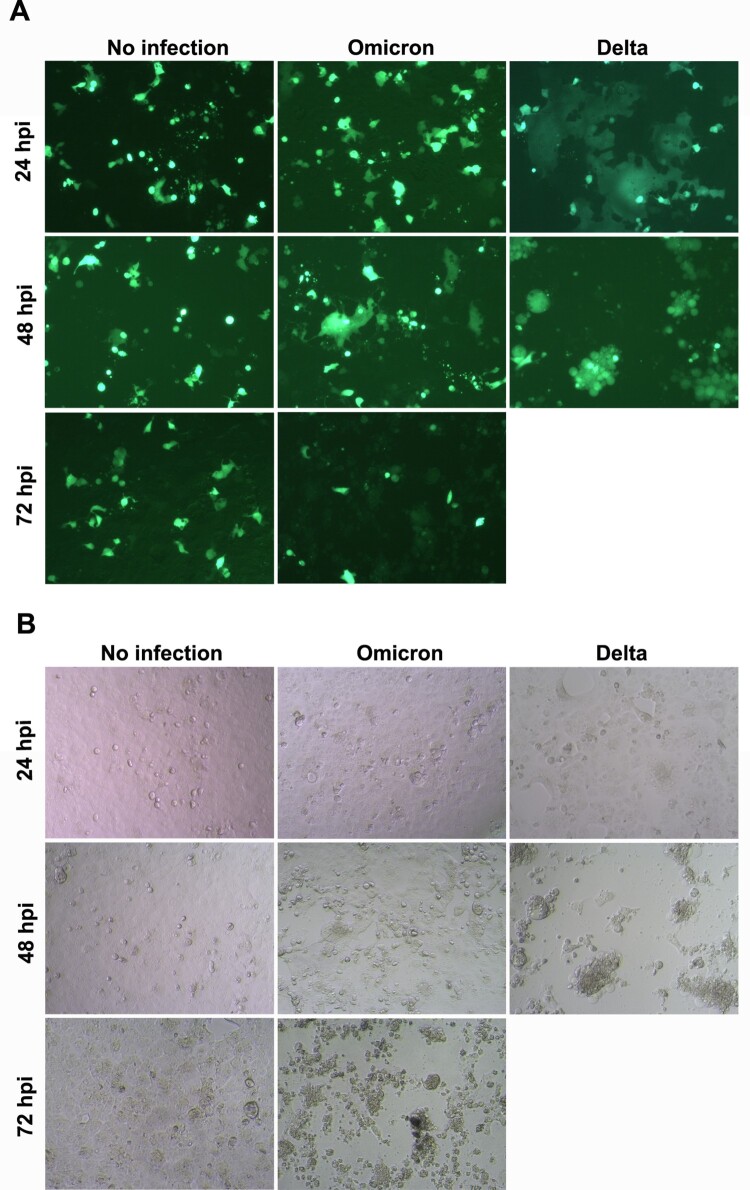
The novel SARS-CoV-2 Omicron variant (B.1.1.529), first found in early November 2021, has sparked considerable global concern and it has >50 mutations, many of which are known to affect transmissibility or cause immune escape. In this study, we sought to investigate the virological characteristics of the Omicron variant and compared it with the Delta variant which has dominated the world since mid-2021. Omicron variant replicated more slowly than the Delta variant in transmembrane serine protease 2 (TMPRSS2)-overexpressing VeroE6 (VeroE6/TMPRSS2) cells. Notably, the Delta variant replicated well in Calu3 cell line which has robust TMPRSS2 expression, while the Omicron variant replicated poorly in this cell line. Competition assay showed that Delta variant outcompeted Omicron variant in VeroE6/TMPRSS2 and Calu3 cells. To confirm the difference in entry pathway between the Omicron and Delta variants, we assessed the antiviral effect of bafilomycin A1, chloroquine (inhibiting endocytic pathway), and camostat (inhibiting TMPRSS2 pathway). Camostat potently inhibited the Delta variant but not the Omicron variant, while bafilomycin A1 and chloroquine could inhibit both Omicron and Delta variants. Moreover, the Omicron variant also showed weaker cell-cell fusion activity when compared with Delta variant in VeroE6/TMPRSS2 cells. Collectively, our results suggest that Omicron variant infection is not enhanced by TMPRSS2 but is largely mediated via the endocytic pathway. The difference in entry pathway between Omicron and Delta variants may have an implication on the clinical manifestations or disease severity.
Overview
The claims and statistics of this paper haven’t been checked yet.
Run the check — free, no account needed. It reads the open-access text and checks the sources it cites.
Integrity signals
Registry
Cites
Statistics
Figures
Verification
Claims the paper makes
The claims and statistics of this paper haven’t been checked yet.
Run the check — free, no account needed. It reads the open-access text and checks the sources it cites.
Claims other papers make about this one
Each is checked against this paper’s own text: does it say what the citing paper says it does?
The cited source says what the claim attributes to it.
In the citing paper
“suggesting entry selectivity of variants is associated with clinical manifestation [67].”
From Insights of Endocytosis Signaling in Health and Disease (2023) · cites this paper as [67]
The cited source says what the claim attributes to it.
In the citing paper
“Current evidence suggests that pharmacological inhibition of endocytic pathways potentially regressed replication of novel SARS-CoV-2 lineage B.1.1.529 (Omicron variant) in VeroE6/TMPRSS2 cell, suggesting entry selectivity of variants is associated with clinical manifestation [67].”
From Insights of Endocytosis Signaling in Health and Disease (2023) · cites this paper as [67]
Self-check
Percentages, sums and reported differences re-computed from the paper’s own numbers.
The self-check needs the paper’s full text.
Citations
Cites
Letko, M., Marzi, A., & Munster, V. (2020) · Nature Microbiology · doi:10.1038/s41564-020-0688-y · Cited by 3,109
HCA Lung Biological Network, Sungnak, W., Huang, N., Bécavin, C., Berg, M., Queen, R., Litvinukova, M., Talavera-López, C., Maatz, H., Reichart, D., et al. (2020) · Nature Medicine · doi:10.1038/s41591-020-0868-6 · Cited by 2,501
Increased risk of SARS-CoV-2 reinfection associated with emergence of Omicron in South Africa
Pulliam, J. R. C., van Schalkwyk, C., Govender, N., Gottberg, A. V., Cohen, C., Groome, M. J., Dushoff, J., Mlisana, K., & Moultrie, H. (2021) · doi:10.1101/2021.11.11.21266068 · Cited by 1,037
Research works printed but not linked: 23
- 10.1016/S1473-3099(20)30196-1 · DOI
- 10.1016/S0140-6736(20)30154-9 · DOI
- 10.1016/j.cell.2021.02.053 · DOI
- 10.1038/s41467-020-20457-w · DOI
- 10.1038/s41586-021-03925-1 · DOI
- 10.1016/j.cell.2020.02.052 · DOI · Paper page
- 10.1038/s41467-021-21825-w · DOI
- 10.1038/s42003-021-02640-x · DOI
- 10.1093/cid/ciaa1275 · DOI · Paper page
- 10.1016/j.ebiom.2021.103544 · DOI
- 10.1093/cid/ciab656 · DOI
- 10.1101/2021.11.11.21266068:2021.11.11.21266068 · DOI
- 10.1016/S0140-6736(21)02758-6 · DOI
- 10.1016/j.lanwpc.2021.100360 · DOI
- 10.1016/j.ebiom.2021.103643 · DOI
- 10.1038/s41580-021-00418-x · DOI · Paper page
- 10.1038/s41586-021-04266-9 · DOI
- 10.1038/s41564-021-00908-w · DOI
- 10.1016/j.celrep.2021.109825 · DOI
- 10.1126/science.abl9463 · DOI
- 10.1038/s41586-021-03491-6 · DOI
- 10.1371/journal.ppat.1009820 · DOI
- 10.1038/s41586-020-2575-3 · DOI
Cited by
Sorted by citations
Items 101–200 of 337
Nucleocapsid Specific Diagnostics for the Detection of Divergent SARS-CoV-2 Variants
Isaacs, A., Amarilla, A. A., Aguado, J., Modhiran, N., Albornoz, E. A., Baradar, A. A., McMillan, C. L. D., Choo, J. J. Y., Idris, A., Supramaniam, A., et al. (2022) · Frontiers in Immunology · doi:10.3389/fimmu.2022.926262 · Cited by 22
“We observed that the omicron strain yielded lower viral titers in comparison to delta or the ancestral strains, which is consistent with previous reports of slower replication of omicron in Vero cell lines (27).”
ResultStrobelt, R., Broennimann, K., Adler, J., & Shaul, Y. (2023) · Viruses · doi:10.3390/v15051129 · Cited by 20
“Unexpectedly, Omicron, despite being rapidly spread, is poorly infectious in laboratory conditions compared to VOC Delta [23,25,26].”
ResultZhang, H., Hua, Q., Xu, N., Zhang, X., Chen, B., Xi-jun, M., Hu, J., Chen, Z., Yu, P., Lei, H., et al. (2023) · eLife · doi:10.7554/elife.84056 · Cited by 17
“The Delta variant has eight mutations of the S protein, two of which are within the RBD, while there are 30 spike mutations in Omicron variant BA.1 ( Kumar et al., 2022 ; Zhao et al., 2022 ).”
Rabaan, A. A., Al-Ahmed, S. H., Albayat, H., Alwarthan, S. M., Alhajri, M. M., Najim, M. A., Alshehail, B. M., Al-Adsani, W., Alghadeer, A., Abduljabbar, W. A., et al. (2023) · Medicina · doi:10.3390/medicina59030507 · Cited by 26
“Infection by the Omicron spike pseudotyped virus was likewise shown to be restricted in cells that express the transcription factor TMPRSS2 but increased in cells that support an endosomal route for entry [7,40].”
BackgroundAdvances of CRISPR-Cas13 system in COVID-19 diagnosis and treatment
Zhou, Q., Chen, Y., Wang, R., Jia, F., He, F., & Yuan, F. (2022) · Genes & Diseases · doi:10.1016/j.gendis.2022.11.016 · Cited by 22
Essential oils block cellular entry of SARS-CoV-2 delta variant
Neto, L. T., Monteiro, M. L. G., Fernández-Romero, J. A., Teleshova, N., Sailer, J., & Conte‐Júnior, C. A. (2022) · Scientific Reports · doi:10.1038/s41598-022-25342-8 · Cited by 25
Karimian, A., Behjati, M., & Karimian, M. (2022) · Archives of Virology · doi:10.1007/s00705-022-05545-0 · Cited by 18
Zhu, Y., Dong, X., Liu, N., Wu, T. T., Chong, H., Lei, X., Ren, L., Wang, J., & He, Y. (2022) · Emerging Microbes & Infections · doi:10.1080/22221751.2022.2098060 · Cited by 20
“Different from the Delta and other variants that showed enhanced fusogenicity and infectivity [24,25], the Omicron variant exhibited decreased cell fusion activity in different experimental systems and conditions [5,20,26].”
BackgroundKumar, P., Mathayan, M., Smieszek, S., Przychodzen, B., Koprivica, V., Birznieks, G., Polymeropoulos, M., & Prabhakar, B. S. (2022) · Virology · doi:10.1016/j.virol.2022.05.004 · Cited by 18
Maurya, R., Mishra, P., Swaminathan, A., Ravi, V., Saifi, S., Kanakan, A., Mehta, P., Devi, P., Praveen, S., Budhiraja, S., et al. (2022) · Frontiers in Cellular and Infection Microbiology · doi:10.3389/fcimb.2022.868414 · Cited by 18
Molecular variants of SARS-CoV-2: antigenic properties and current vaccine efficacy
Damavandi, A. R., Dowran, R., Sharif, S. A., Kashanchi, F., & Jafari, R. (2022) · Medical Microbiology and Immunology · doi:10.1007/s00430-022-00729-6 · Cited by 21
“Omicron’s milder clinical manifestations versus the Delta might be related to its less efficient intracellular replication in TMPRSS2-rich cells, including lung cells [92].”
BackgroundQu, B., Miskey, C., Gömer, A., Kleinert, R. D. V., Ibanez, S. C., Eberle, R., Ebenig, A., Postmus, D., Nocke, M. K., Herrmann, M., et al. (2024) · Proceedings of the National Academy of Sciences · doi:10.1073/pnas.2407437121 · Cited by 19
Fang, L., Xu, J., Zhao, Y., Fan, J., Shen, J., Liu, W., & Cao, G. (2023) · Frontiers in Microbiology · doi:10.3389/fmicb.2023.1228128 · Cited by 26
Berbamine suppresses intestinal SARS-CoV-2 infection via a BNIP3-dependent autophagy blockade
Cloherty, A. P. M., Rader, A. G., Patel, K. S., Pérez‐Vargas, J., Thompson, C. A. H., Ennis, S., Niikura, M., Wildenberg, M. E., Muncan, V., Schreurs, R., et al. (2023) · Emerging Microbes & Infections · doi:10.1080/22221751.2023.2195020 · Cited by 20
“In the case of coronavirus replication cycles, the intimate interplay between autophagy and the endolysosomal system is particularly interesting [6,29].”
BackgroundInfluentialThe importance of booster vaccination in the context of Omicron wave
Wei, Z., He, J., Wang, C., Bao, J., Leng, T., & Chen, F. (2022) · Frontiers in Immunology · doi:10.3389/fimmu.2022.977972 · Cited by 23
Li, Y., Li, M., Xiao, H., Liao, F., Shen, M., Ge, W.-W., Ou, J., Liu, Y., Chen, L.-M., Zhao, Y., et al. (2025) · PLoS Pathogens · doi:10.1371/journal.ppat.1012886 · Cited by 16
Self-citationPen, J. L., Paniccia, G., Kinast, V., Moncada‐Vélez, M., Ashbrook, A. W., Bauer, M., Hoffmann, H.-H., Pinharanda, A., Ricardo-Lax, I., Stenzel, A. F., et al. (2024) · PLoS Biology · doi:10.1371/journal.pbio.3002767 · Cited by 19
Scott, A., Ansari, W., Khan, F. L., Chambers, R. B., Benigno, M., Fusco, M. D., McGrath, L. J., Malhotra, D., Draica, F., Nguyen, J. L., et al. (2024) · BMC Medicine · doi:10.1186/s12916-023-03234-6 · Cited by 24
“The potential for post-COVID conditions to develop in patients with mild or moderate illness is particularly relevant as new variants emerge, such as the highly transmissible Omicron variant, which is associated with milder illness compared with earlier strains [18–21].”
BackgroundSensitivity of rapid antigen tests against SARS-CoV-2 Omicron and Delta variants
Rao, A., Westbrook, A., Bassit, L., Parsons, R., Fitts, E., Greenleaf, M. N., McLendon, K. B., Sullivan, J., O’Sick, W., Baugh, T., et al. (2023) · Journal of Clinical Microbiology · doi:10.1128/jcm.00138-23 · Cited by 16
A study on the effect of natural products against the transmission of B.1.1.529 Omicron
Alkafaas, S. S., Abdallah, A. M., Hussien, A. M., Bedair, H., Abdo, M., Ghosh, S. B., Elkafas, S. S., Apollon, W., Saki, M., Loutfy, S. A., et al. (2023) · Virology Journal · doi:10.1186/s12985-023-02160-6 · Cited by 20
“The WHO clarified that there are a high number of mutations as more than 60 substitutions, deletions, and insertions including spike containing 30 mutations [3].”
BackgroundAutophagy and SARS-CoV-2-Old Players in New Games
Ivanova, T., Mariienko, Y., Mehterov, N. H., Kazakova, M., Sbirkov, Y., Todorova, K. O., Hayrabedyan, S., & Sarafian, V. S. (2023) · International Journal of Molecular Sciences · doi:10.3390/ijms24097734 · Cited by 18
“The host factors involved in the internalization of endocytic cargo and endosomal trafficking/recycling are essential for the entry of SARS-CoV-2 [34,35].”
BackgroundReview of therapeutic mechanisms and applications based on SARS-CoV-2 neutralizing antibodies
Liu, M., Gan, H., Liang, Z., Liu, L., Liu, Q., Mai, Y., Chen, H., Lei, B., Yu, S., Chen, H., et al. (2023) · Frontiers in Microbiology · doi:10.3389/fmicb.2023.1122868 · Cited by 21
Self-citationMore or less deadly? A mathematical model that predicts SARS-CoV-2 evolutionary direction
Xu, Z., Wei, D., Zeng, Q.-C., Zhang, H.-M., Sun, Y.-H., & Demongeot, J. (2023) · Comput. Biol. Medicine · doi:10.1016/j.compbiomed.2022.106510 · Cited by 16
The role of influenza-A virus and coronavirus viral glycoprotein cleavage in host adaptation
Heindl, M. R., & Böttcher‐Friebertshäuser, E. (2023) · Current Opinion in Virology · doi:10.1016/j.coviro.2023.101303 · Cited by 16
Neerukonda, S. N., Wang, R., Vassell, R. A., Baha, H., Lusvarghi, S., Liu, S., Wang, T. T., Weiss, C. D., & Wang, W. (2022) · Journal of Virology · doi:10.1128/jvi.01140-22 · Cited by 16
SARS-CoV-2 Permissive glioblastoma cell line for high throughput antiviral screening
Vanhulle, E., Stroobants, J., Provinciael, B., Camps, A., Noppen, S., Maes, P., & Vermeire, K. (2022) · Antiviral Research · doi:10.1016/j.antiviral.2022.105342 · Cited by 18
“Notably, reports on current 69 circulating SARS-CoV-2 variants of concern demonstrate that Omicron infection is not 70 enhanced by TMPRSS2 but is largely mediated via the endocytic pathway (12, 13).”
BackgroundHost factors of SARS-CoV-2 in infection, pathogenesis, and long-term effects
Zhang, Y., Chen, S., Tian, Y., & Fu, X. (2024) · Frontiers in Cellular and Infection Microbiology · doi:10.3389/fcimb.2024.1407261 · Cited by 16
Li, J., Liu, F., Wu, F., Su, X., Zhang, L., Zhao, X., Shang, C., Han, L., Zhang, Y., Xiao, Z., et al. (2024) · International Journal of Biological Macromolecules · doi:10.1016/j.ijbiomac.2024.129785 · Cited by 13
Cathepsin inhibitors nitroxoline and its derivatives inhibit SARS-CoV-2 infection
Bonotto, R. M., Mitrović, A., Sosič, I., Martínez-Orellana, P., Dattola, F., Gobec, S., Kos, J., & Marcello, A. (2023) · Antiviral Research · doi:10.1016/j.antiviral.2023.105655 · Cited by 15
Essalmani, R., Andréo, U., Evagelidis, A., Dévéhat, M. L., Ramos, O. H. P., Fruchart‐Gaillard, C., Susan‐Resiga, D., Cohen, É. A., & Seidah, N. G. (2023) · Viruses · doi:10.3390/v15020360 · Cited by 17
Potent inhibition of diverse Omicron sublineages by SARS-CoV-2 fusion-inhibitory lipopeptides
Zhu, Y., Hu, Y., Liu, N., Chong, H., & He, Y. (2022) · Antiviral Research · doi:10.1016/j.antiviral.2022.105445 · Cited by 16
“teins of Delta and other variants had enhanced fusogenicity and infectivity, the S protein of Omicron exhibited significantly reduced fusion activity (He et al., 2020; Zhu et al., 2022; Saito et al., 2022; Zhang et al., 2021; Zhao et al., 2022; Zeng et al., 2022).”
SARS-CoV-2 Variants, Current Vaccines and Therapeutic Implications for COVID-19
Liang, H., Wu, Y., Yau, V., Yin, H.-X., Lowe, S., Bentley, R., Ahmed, M. A., Zhao, W., & Sun, C. (2022) · Vaccines · doi:10.3390/vaccines10091538 · Cited by 16
Anti-human ACE2 antibody neutralizes and inhibits virus production of SARS-CoV-2 variants of concern
Chaouat, A. E., Brizić, I., Brlić, P. K., Atari, N., Kliker, L., Alfi, O., Mandelboim, M., Wolf, D. G., Tafish, L., Kol, I., et al. (2022) · iScience · doi:10.1016/j.isci.2022.104935 · Cited by 17
Barre, A., Klonjkowski, B., Benoist, H., & Rougé, P. (2022) · Viruses · doi:10.3390/v14040783 · Cited by 14
“In this respect, variations that have been reported across VOCs in the remodeling of the binding site [6], the cleavage at the S1/S2 cleavage site [34], the fusion with the host cell membrane [26,35] and the endocytotic pathways [36] could also interfere with their spreading and infectivity capacities.”
BackgroundDobrynin, D., Polishchuk, I., Portal, L., Zlotver, I., Sosnik, A., & Pokroy, B. (2022) · Materials Today Bio · doi:10.1016/j.mtbio.2022.100265 · Cited by 15
“Current mutations in the S1-ο subunit probably lead to a 3D structural change and, consequently, in a less effective interaction than that of the original S subunit with the TMPRSS2 (which is abundant in the lungs), and therefore causes a less severe disease [80].”
Young, B. E., Fong, S., Chang, Z. W., Tan, K. S., Rouers, A., Goh, Y. S., Tay, D. J. W., Ong, S. W. X., Hao, Y., Chua, S. L., et al. (2022) · Research Square · doi:10.21203/rs.3.rs-1281925/v1 · Cited by 13
Mahdi, M., Kiarie, I. W., Mótyán, J. A., Hoffka, G., Al-Muffti, A. S., Tóth, A., & Tőzsér, J. (2025) · Viruses · doi:10.3390/v17050691 · Cited by 16
“…S protein by the furin and TMPRSS2, indicating the primarily utilization of TMPRSS2-independent pathway, characterized by attenuated replication and pathogenicity [100,101], others were not able to detect a difference in cleavage of the S protein between the Omicron and earlier variants [94,102].”
The S2 subunit of spike encodes diverse targets for functional antibody responses to SARS-CoV-2
Guenthoer, J., Garrett, M. E., Lilly, M., Depierreux, D., Ruiz, F., Chi, M., Stoddard, C. I., Chohan, V., Yaffe, Z. A., Sung, K., et al. (2024) · PLoS Pathogens · doi:10.1371/journal.ppat.1012383 · Cited by 27
Pérez‐Vargas, J., Lemieux, G., Thompson, C. A. H., Désilets, A., Ennis, S., Gao, G., Gordon, D. G., Schulz, A. L., Niikura, M., Nabi, I. R., et al. (2024) · Antiviral Research · doi:10.1016/j.antiviral.2024.105869 · Cited by 14
Scott, A., Ansari, W., Chambers, R. B., Reimbaeva, M., Mikolajczyk, T. P., Benigno, M., Draica, F., & Atkinson, J. (2024) · BMC Medicine · doi:10.1186/s12916-023-03235-5 · Cited by 15
Padmanabhan, P., & Dixit, N. M. (2023) · Journal of Theoretical Biology · doi:10.1016/j.jtbi.2023.111568 · Cited by 27
Umbelliferone and eriodictyol suppress the cellular entry of SARS-CoV-2
Cheng, F., Ho, C., Li, T., Chen, Y., Yeh, Y., Wei, Y.-L., Huynh, T. K., Chen, B., Ko, H.-Y., Hsueh, C.-S., et al. (2023) · Cell & Bioscience · doi:10.1186/s13578-023-01070-y · Cited by 21
Evolutionary characteristics of SARS-CoV-2 Omicron subvariants adapted to the host
Tang, H., Shao, Y., Huang, Y., Qiao, S., An, J.-Z., Yan, R.-H., Zhao, X., Meng, F., Du, X.-H., & Qin, X.-F. (2023) · Signal Transduction and Targeted Therapy · doi:10.1038/s41392-023-01449-w · Cited by 14
Vu, M., Alvarado, R. E., Morris, D. R., Lokugamage, K. G., Zhou, Y.-Y., Morgan, A. L., Estes, L. K., McLeland, A. M., Schindewolf, C., Plante, J. A., et al. (2023) · bioRxiv · doi:10.1101/2023.04.17.536926 · Cited by 14
“102 These differences in plaque size and stock titers are consistent with other observations of most 103 of the Omicron strains (17-20).”
SARS-CoV-2 Spike-Mediated Entry and Its Regulation by Host Innate Immunity
Yu, S., Hu, H., Ai, Q., Bai, R., Ma, K., Zhou, M., & Wang, S. (2023) · Viruses · doi:10.3390/v15030639 · Cited by 20
“However, newly emerged spike Omicron subvariants became less dependent on TMPRSS2-mediated spike activation at the plasma membrane and are insensitive to original inhibitors such as camostat mesylate [97,99,118].”
BackgroundSingh, J., Anantharaj, A., Panwar, A., Rani, C., Bhardwaj, M., Kumar, P., Chattopadhyay, P., Devi, P., Maurya, R., Mishra, P., et al. (2023) · PLoS Pathogens · doi:10.1371/journal.ppat.1011196 · Cited by 14
Role of spike in the pathogenic and antigenic behavior of SARS-CoV-2 BA.1 OmicronPreprint
Chen, D.-Y., Kenney, D., Chin, C., Tavares, A. H., Khan, N., Conway, H. L., Liu, G., Choudhary, M., Gertje, H., O'Connell, A., et al. (2022) · bioRxiv · doi:10.1101/2022.10.13.512134 · Cited by 14
Evolutionary dynamics of the severe acute respiratory syndrome coronavirus 2 genomes
Qian, Z., Li, P., Tang, X., & Lü, J. (2022) · Medical Review · doi:10.1515/mr-2021-0035 · Cited by 14
Pan, B., Mountford, S. J., Kiso, M., Anderson, D. E., Papadakis, G., Jarman, K. E., Tilmanis, D., Maher, B. M., Tran, T., Shortt, J., et al. (2025) · Communications Medicine · doi:10.1038/s43856-025-00863-1 · Cited by 19
Yuan, L., Zhu, H., Chen, P., Zhou, M., Ma, J., Liu, X. E., Wu, K., Chen, R., Liu, Q., Yu, H., et al. (2022) · Cellular and Molecular Immunology · doi:10.1038/s41423-022-00923-9 · Cited by 14
“After the emergence of Omicron, its virological characteristics, such as its varied hACE2 binding affinity compared with that of the Delta strain [22], insufficient usage of TMPRSS2 [23], immune escape and shifted tropism to upper respiratory tract tissues [24], were shown in cell models.”
BackgroundValyaeva, A. A., Zharikova, A. A., & Sheval, E. V. (2022) · Cell Biology International · doi:10.1002/cbin.11928 · Cited by 30
“…of SARS‐CoV‐2 enters cells in a TMPRSS2‐ independent manner via the endosomal route (Meng et al., 2022; Peacock et al., 2022; Willett et al., 2022; H. Zhao et al., 2022), which is in good correlation with the reduced cell entry efficiency into TMPRSS2‐ expressing cells for Omicron in comparison…”
BackgroundResultStevaert, A., Berwaer, R. V., Mestdagh, C., Vandeput, J., Vanstreels, E., Raeymaekers, V., Laporte, M., & Naesens, L. M. J. (2022) · mBio · doi:10.1128/mbio.01376-22 · Cited by 12
“Transduction was performed in the presence of E64d to shut off the endosomal route in which S is activated by cathepsin B/L instead of cell surface proteases (27).”
BackgroundCysteamine exerts in vitro antiviral activity against the SARS-CoV-2 Delta and Omicron variants
Alonzi, T., Aiello, A., Repele, F., Falasca, L., Francalancia, M., Garbuglia, A. R., Delogu, G., Nicastri, E., Piacentini, M., & Goletti, D. (2022) · Cell Death Discovery · doi:10.1038/s41420-022-01080-8 · Cited by 15
“2 panel E) as expected [18], thus confirming that Omicron has a decreased replicative fitness, at least in Vero E6 cells.”
BackgroundPeña-Hernández, M. A., Alfajaro, M. M., Filler, R. B., Moriyama, M., Keeler, E. L., Ranglin, Z. E., Kong, Y., Mao, T., Menasché, B. L., Mankowski, M. C., et al. (2024) · Nature Microbiology · doi:10.1038/s41564-024-01765-z · Cited by 15
Strobelt, R., Adler, J., & Shaul, Y. (2023) · Viruses · doi:10.3390/v15102124 · Cited by 12
Sokhansanj, B. A., Zhao, Z., & ROSEN, G. L. (2022) · Biology · doi:10.3390/biology11121786 · Cited by 27
“The reduced severity of Omicron as compared to Delta is consistent with early laboratory evidence that there is a reduction in lower lung infectivity, deficient cell entry, and syncytium formation likely due to diminished mediation of plasma membrane fusion by the modified spike protein [97,98].”
ResultLi, X., Li, W., Liu, Z., Kang, Y., Zhang, X., Xu, Z., Gao, Y., & Qi, Y. (2022) · Scientific Reports · doi:10.1038/s41598-022-21690-7 · Cited by 12
Haupert, S. R., Shi, X., Chen, C., Fritsche, L. G., & Mukherjee, B. (2022) · Journal of Biomedical Informatics · doi:10.1016/j.jbi.2022.104237 · Cited by 10
Vanhulle, E., D’huys, T., Provinciael, B., Stroobants, J., Camps, A., Noppen, S., Schols, D., Damme, E. J. M. V., Maes, P., Stevaert, A., et al. (2022) · Frontiers in Cellular and Infection Microbiology · doi:10.3389/fcimb.2022.989534 · Cited by 16
Volle, R., Murer, L., Petkidis, A., Andriasyan, V., Savi, A., Bircher, C., Meili, N., Fischer, L., Sequeira, D. P., Mark, D. K., et al. (2022) · Current Research in Microbial Sciences · doi:10.1016/j.crmicr.2022.100158 · Cited by 12
Harnessing traditional Chinese medicine polysaccharides for combatting COVID-19
Xiao, Z., Guo, Y., Li, J., Jiang, X., Wu, F., Wang, Y., Zhang, Y., & Zhou, W. (2024) · Carbohydrate Polymers · doi:10.1016/j.carbpol.2024.122605 · Cited by 12
Russell, T., Gangotia, D., & Barry, G. (2022) · Biomedicine & Pharmacotherapy · doi:10.1016/j.biopha.2022.113850 · Cited by 10
Shin, D., Smith, D. M., & Choi, J. Y. (2022) · Yonsei Medical Journal · doi:10.3349/ymj.2022.0383 · Cited by 13
“One in vitro study from Hong Kong found that the omicron variant replication was lower and had weak fusion activity in VeroE6/TMPRSS2 cells compared to delta variants, indicating that the omicron variant is less dependent on the TMPRSS2 pathway.(16) Furthermore, Hui, et al.”
BackgroundKim, T., Kim, J.-Y., Kwon, H., Jeon, S., Lee, S. J., Jung, H.-S., Kim, S.-H., Jang, D., & Lee, C. J. (2022) · Antiviral Research · doi:10.1016/j.antiviral.2022.105428 · Cited by 11
“Of note, chloroquine showed relatively poor inhibitory activity against Omicron, which was consistent with a previous report (Zhao et al., 2022).”
Mutation T9I in Envelope confers autophagy resistance to SARS-CoV-2 Omicron
Klute, S., Nchioua, R., Cordsmeier, A., Vishwakarma, J., Koepke, L., Alshammary, H., Jung, C., Hirschenberger, M., Hoenigsperger, H., Fischer, J.-R., et al. (2025) · iScience · doi:10.1016/j.isci.2025.112974 · Cited by 9
SARS-CoV-2 variants divergently infect and damage cardiomyocytes in vitro and in vivo
Mok, B. W.-Y., Kwok, M., Li, H. S., Ling, L., Lai, A., Yan, B., Law, C. T., Yeung, C. H., Zhang, J., Tam, R. C.-Y., et al. (2024) · Cell & Bioscience · doi:10.1186/s13578-024-01280-y · Cited by 9
“While earlier variants such as Delta require the transmembrane serine protease 2 (TMPRSS2) for activation, Omicron infection can occur independently of this protein, allowing Omicron to infect cells that lack TMPRSS2 [4–6, 8, 9].”
BackgroundInfluentialSelf-citationSARS-CoV-2 genomics and impact on clinical care for COVID-19
Lorenzo-Redondo, R., Carvalho, A. M. D. S., Hultquist, J. F., & Ozer, E. A. (2023) · Journal of Antimicrobial Chemotherapy · doi:10.1093/jac/dkad309 · Cited by 12
Mahajan, N., Kesarwani, S., Salunke, C., Kumbhar, P., Yenkure, P., Shaikh, J., Shikhare, S., Mahale, S., Sachdeva, G., & Gajbhiye, R. (2022) · International journal of gynaecology and obstetrics: the official organ of the International Federation of Gynaecology and Obstetrics · doi:10.1002/ijgo.14348 · Cited by 10
Keeping up with the COVID's—Could siRNA‐based antivirals be a part of the answer?
Forgham, H., Käkinen, A., Qiao, R., & Davis, T. P. (2022) · Exploration · doi:10.1002/exp.20220012 · Cited by 18
Yang, S., Tong, Y., Chen, L., & Yu, W. (2022) · Molecular Biomedicine · doi:10.1186/s43556-022-00077-0 · Cited by 10
Self-citationKinoshita, H., Yamamoto, T., Kuroda, Y., Inoue, Y., Miyazaki, K., Ohmagari, N., Tokita, D., Nguyen, P. H. A., Yamada, S., Harada, S., et al. (2024) · Scientific Reports · doi:10.1038/s41598-024-75038-4 · Cited by 9
“However, the omicron variant replicates more slowly than the Delta variant (B.1.617.2 lineage first identified in October 2020) in these cells 14 , suggesting that this line is less effective as a means of isolating omicron variants.”
BackgroundInfluentialKongsomros, S., Boonyarattanasoonthorn, T., Phongphaew, W., Kasorndorkbua, C., Sunyakumthorn, P., Im‐Erbsin, R., Lugo‐Roman, L. A., Kongratanapasert, T., Paha, J., Manopwisedjaroen, S., et al. (2024) · Journal of Traditional and Complementary Medicine · doi:10.1016/j.jtcme.2024.05.004 · Cited by 10
Purwono, P. B., Vacharathit, V., Manopwisedjaroen, S., Ludowyke, N., Suksatu, A., & Thitithanyanont, A. (2024) · PLoS ONE · doi:10.1371/journal.pone.0301330 · Cited by 12
What makes SARS‐CoV‐2 unique? Focusing on the spike protein
Qian, J., Zhang, S.-C., Wang, F., Li, J., & Zhang, J. (2024) · Cell Biology International · doi:10.1002/cbin.12130 · Cited by 16
“For example, the replication rate of Omicron in TMPRSS2 ‐ overexpressing cells is significantly slower than that of Delta because Omicron infection of host cells is mainly mediated through the endocytic pathway (H. Zhao et al., 2022).”
BackgroundBose, T., Wasimuddin, Acharya, V., Pinna, N. K., Kaur, H., Ranjan, M., Saikrishna, J., Nagabandi, T., Varma, B., Tallapaka, K. B., et al. (2023) · Frontiers in Microbiology · doi:10.3389/fmicb.2023.1238829 · Cited by 9
“The delta and omicron variants have been observed to utilize different entry pathways for infection (Menni et al., 2022; Zhao et al., 2022), and it is likely that during this migration, the resident microbiota can get altered and any inclusion of the pathobionts may aggravate the disease outcome.”
BackgroundEvaluation of Nafamostat as Chemoprophylaxis for SARS-CoV-2 Infection in Hamsters
Neary, M., Sharp, J., Gallardo-Toledo, E., Herriott, J., Kijak, E., Bramwell, C., Cox, H., Tatham, L. M., Box, H., Curley, P., et al. (2023) · Viruses · doi:10.3390/v15081744 · Cited by 9
Use of remdesivir for COVID-19 in patients with hematologic cancer
Martin‐Onraët, A., Barrientos-Flores, C. D. J., Vilar‐Compte, D., Pérez‐Jimenez, C., & Alatorre-Fernández, P. (2022) · Clinical and Experimental Medicine · doi:10.1007/s10238-022-00964-4 · Cited by 9
Zhao, H., Zhang, C., Lam, H., Meng, X., Peng, Z., Yeung, M. L., Chan, J. F., To, K. K., & Yuen, K. (2022) · Signal Transduction and Targeted Therapy · doi:10.1038/s41392-022-01138-0 · Cited by 8
Self-citationOtaki, J., Nakasone, W., & Nakamura, M. (2022) · bioRxiv · doi:10.1101/2021.12.30.474613 · Cited by 9
“Several studies have pointed out slow replication and cellular infection processes for less virulence [29,30].”
BackgroundDu, Q., Liang, R., Wu, M., Yang, M., Xie, Y., Liu, Q., Tang, K., Lin, X., Yuan, S., & Shen, J. (2023) · Journal of Advanced Research · doi:10.1016/j.jare.2023.10.002 · Cited by 10
“Cellular serine protease TMPRSS2 is also an essential mediator for S protein priming [63–65].”
BackgroundPoniedziałek, B., Rzymski, P., Zarębska‐Michaluk, D., Rogalska, M., Rorat, M., Czupryna, P., Kozielewicz, D., Hawro, M., Kowalska, J. D., Jaroszewicz, J., et al. (2023) · Journal of Medical Virology · doi:10.1002/jmv.28962 · Cited by 9
Hu, C. (2023) · Clinical Complementary Medicine and Pharmacology · doi:10.1016/j.ccmp.2023.100089 · Cited by 11
“In addition, follow-up after hospital discharge (Luo, 2020) is still important to those cases who are asymptomatic (Zhao et al., 2021; Brandal et al., 2021; Kumar et al., 2021).”
BackgroundDo SARS-CoV-2 Variants Differ in Their Neuropathogenicity?
Bauer, L., & van Riel, D. A. J. (2023) · mBio · doi:10.1128/mbio.02920-22 · Cited by 9
Attenuation and Degeneration of SARS-CoV-2 Despite Adaptive Evolution
Liu, Y. (2023) · Cureus · doi:10.7759/cureus.33316 · Cited by 5
“The difference between the Delta variant and the Omicron variant was greater when they were compared in Vero E6 cells expressing TMPRSS2 and it was found that Omicron lost its ability to use TMPRSS2 for cell entry [40].”
BackgroundMurillo-Zamora, E., Guzmán-Esquivel, J., Bricio-Barrios, J. A., & Mendoza-Cano, O. (2022) · Public Health · doi:10.1016/j.puhe.2022.10.014 · Cited by 8
“This latter results from 97 the specific entry pathway of the Omicron variant, which is endocytic rather than through the 98 transmembrane serine protease 2 (TMPRSS2) [7].”
BackgroundMurari, T. B., Fonseca, L. M. D. S., Pereira, H. B. D. B., Filho, A. S. N., Saba, H. C., Scorza, F. A., de Almeida, A.-C. G., Maciel, E. L. N., Mendes, J. F. F., Filho, T. M. R., et al. (2022) · Vaccines · doi:10.3390/vaccines10091504 · Cited by 8
“This can be attributed to the fact that the various mutations in the viral genome potentially attenuated its virulence by affecting its replication and fusion efficiency with the host cell, which may partially explain these findings [48].”
BackgroundCharacteristics of replication and pathogenicity of SARS-CoV-2 Alpha and Delta isolates
Feng, X., Yu, D., Zhang, M., Li, X., Zou, Q., Ma, W., Han, J.-B., Xu, L., Yang, C., Qu, W., et al. (2022) · Virologica Sinica · doi:10.1016/j.virs.2022.09.007 · Cited by 7
Palladino, R., Mercogliano, M., Fiorilla, C., Frangiosa, A., Iodice, S., Zamparelli, S. S., Montella, E., Triassi, M., & Sanduzzi, A. (2022) · International Journal of Environmental Research and Public Health · doi:10.3390/ijerph19159670 · Cited by 9
“may have poorer replication in the lungs when compared with the Delta variant [11] and attenuated replication in lower respiratory tissues [12].”
BackgroundYe, Z., Fan, Y., Tang, K., Ong, C. P., Luo, C., Chung, H.-L., Leong, T.-L., Liang, R., Lui, W., Zhou, R., et al. (2022) · International Journal of Biological Sciences · doi:10.7150/ijbs.72109 · Cited by 8
“Emerging evidence suggests that the Omicron variant is highly transmissible, highly immuneevasive but less pathogenic [12], resulting in a high rate of generally mild reinfection and breakthrough infection [11-18].”
BackgroundSelf-citationTahsin, A., Ahmed, R., Bhattacharjee, P., Adiba, M., Saba, A. A., Yasmin, T., Chakraborty, S., Hasan, A. K. M. M., & Nabi, A. N. (2022) · Computers in Biology and Medicine · doi:10.1016/j.compbiomed.2022.105903 · Cited by 9
“An earlier report has suggested the Delta variant outcompetes the Omicron BA.1 variant in infecting TMPRSS2 overexpressing VeroE6 cells in culture [78].”
Zheng, Y., & Wang, Y. (2022) · International Journal of Environmental Research and Public Health · doi:10.3390/ijerph19116404 · Cited by 8
de Souza, A. S., Amorim, V. M. D. F., de Souza, R. F., & Guzzo, C. R. (2022) · Journal of Biomolecular Structure and Dynamics · doi:10.1080/07391102.2022.2142296 · Cited by 9
“SARS-CoV-2 BA.1 is mainly dependent on the endocytic pathway but not TMPRSS2 pathway for viral replication (Zhao et al., 2022).”
BackgroundAlenquer, M., Silva, T. M., Akpogheneta, O., Ferreira, F., Vale-Costa, S., Medina-Lopes, M., Batista, F., Garcia, A. M., Barreto, V. M., Paulino, C., et al. (2021) · medRxiv · doi:10.1371/journal.pone.0268388 · Cited by 8
Evolution and viral properties of the SARS-CoV-2 BA.3.2 subvariant
Jule, Z., Roemer, C., Hossen, T., Sviridchik, V., Reedoy, K., Ganga, Y., Silangwe, S., Jackson, L., Norman, A., Karim, F., et al. (2026) · Virus Evolution · doi:10.1093/ve/veag011 · Cited by 10
“BA.3.2 and LP.8.1 showed similar replication, which was higher than that of D614G, as expected in cells that are predominantly infected through the endocytic pathway (Meng et al. 2022, Willett et al. 2022, Zhao et al. 2022).”
InfluentialImmune evasion, infectivity, and membrane fusion of the SARS-CoV-2 JN.1 variant
Tang, H., Zhuo, Y., Chen, J., Zhang, R., Zheng, M., Huang, X., Chen, Y., Huang, M., Zeng, Z., Huang, X., et al. (2025) · Virology Journal · doi:10.1186/s12985-025-02737-3 · Cited by 7
“Previous studies have shown that SARS-CoV-2 spike protein-mediated fusogenicity is closely related to viral infectivity [4, 37, 38].”
Pathak, R., Eliscovich, C., Mena, I., Cupic, A., Rutkowska, M., Chandran, K., Jangra, R., García-Sastre, A., Singer, R., & Kalpana, G. (2024) · Viruses · doi:10.3390/v16020262 · Cited by 7
“It has been reported that Omicron variants exhibit slower replication kinetics at early time points (12 and 24 h p.i.) [33–35].”
BackgroundXu, J., Song, J., Xie, Z., Yang, J. W., Wu, D., Liu, F., Zhao, Y., Zang, H., & Zhao, Y. (2023) · Medicine · doi:10.1097/md.0000000000036714 · Cited by 30
“[29] TMPRSS2 mediated the activation of spike protein to induce ACE2-mediated endocytosis, and then initiated fusion pore formation.”
BackgroundHaars, J., Palanisamy, N., Wallin, F., Mölling, P., Lindh, J., Sundqvist, M., Ellström, P., Kaden, R., & Lennerstrand, J. (2023) · Microorganisms · doi:10.3390/microorganisms11102417 · Cited by 7
“Further, the Delta and Omicron variants differ in entry pathways [36].”
BackgroundKe, Y., Zhang, E., Guo, J., Zhang, X., Wang, L., Chen, D., Fang, X., Zhu, J., Li, F., Sun, T., et al. (2023) · Acta Pharmaceutica Sinica B · doi:10.1016/j.apsb.2023.08.023 · Cited by 7
Kuzmina, A., Korovin, D., Cohen-Lass, I., Atari, N., Ottolenghi, A., Hu, P., Mandelboim, M., Rosental, B., Rosenberg, E., Diaz‐Griffero, F., et al. (2023) · Heliyon · doi:10.1016/j.heliyon.2023.e16750 · Cited by 8
Metadata
- Authors
- Zhao, H., Lu, L., Peng, Z., Chen, L.-L., Meng, X., Zhang, C., Ip, J. D., Chan, W.-M., Chu, A. W.-H., Chan, K.-H., Jin, D.-Y., Chen, H., Yuen, K.-Y., & To, K. K.-W.
- Affiliations
- University of Hong Kong (HK)
- Queen Mary Hospital (CN)
- Corresponding author
- Zhao, Hanjun
- To, Kelvin Kai-Wang
- ORCID
- Venue
- Emerging Microbes & Infections
- Publisher
- Informa UK Limited
- Published
- 2022-01-19
- Volume
- 11
- Issue
- 1
- Pages
- 277-283
- ISSN
- 2222-1751 (ISSN-L)
- PMC
- PMC8774049
- OpenAlex
- W4200625712
- Cited by
- 413
- References
- 25
- Citations by year
- 2026: 12 · 2025: 29 · 2024: 68 · 2023: 104 · 2022: 197
- FWCI
- 29.38
- Type
- journal article
- Language
- en
- Open access
- gold
- doi.org
- Licence
- Locations
- Emerging Microbes & Infections (publishedVersion, cc-by)
- PubMed Central (publishedVersion, cc-by)
- PubMed (publishedVersion)
- DOAJ (DOAJ: Directory of Open Access Journals) (submittedVersion, cc-by-sa)
- Funders
- Theme-Based Research Scheme (T11-709/21-N)
- Topics
- Health Sciences › Medicine › Infectious Diseases › SARS-CoV-2 and COVID-19 Research
- Health Sciences › Medicine › Infectious Diseases › COVID-19 Clinical Research Studies
- Physical Sciences › Mathematics › Modeling and Simulation › COVID-19 epidemiological studies
- Keywords
- Omicron variant, Delta variant, viral entry pathways, TMPRSS2, endocytic pathway, viral replication, cell-cell fusion, camostat, bafilomycin A1, chloroquine, competition assay
- MeSH terms
- Whole Genome Sequencing, COVID-19, SARS-CoV-2, Animals, Carcinoma, Non-Small-Cell Lung, Chlorocebus aethiops, Chloroquine, Endocytosis, Esters, Guanidines, Humans, Lung Neoplasms, Recombinant Proteins, Serine Endopeptidases, Vero Cells, Virus Cultivation, Virus Replication, Macrolides, Cell Line, Tumor, Virus Internalization, Immune Evasion
About these checks
Registry, retraction, Cites and statistics results are computed, not judged, with one exception: a printed reference that no index lists is read once by a model before it counts as a citation error. Claims are extracted by a model and kept only when their quote appears verbatim in the text; each cited source is then checked, with a model’s help, for whether it says what the claim relies on. Those verdicts can be wrong — read the claim’s quote and the cited source before relying on one.
Statistics and arithmetic are recomputed, not judged.
Confidence bands are shown only for fields calibrated on our annotated test set. None is calibrated yet, so no band is shown.
What counts as a claim ›How we measure confidence ›How we check this ›
Are you an author, or do you see a problem with this page? Request a review
