

The DOI matches its Crossref record; 191 of the 191 references it cites were found in a registry or an index.
Body temperature regulation in diabetes
Open accessAbstract
The effects of type 1 and type 2 diabetes on the body's physiological response to thermal stress is a relatively new topic in research. Diabetes tends to place individuals at greater risk for heat-related illness during heat waves and physical activity due to an impaired capacity to dissipate heat. Specifically, individuals with diabetes have been reported to have lower skin blood flow and sweating responses during heat exposure and this can have important consequences on cardiovascular regulation and glycemic control. Those who are particularly vulnerable include individuals with poor glycemic control and who are affected by diabetes-related complications. On the other hand, good glycemic control and maintenance of aerobic fitness can often delay the diabetes-related complications and possibly the impairments in heat loss. Despite this, it is alarming to note the lack of information regarding diabetes and heat stress given the vulnerability of this population. In contrast, few studies have examined the effects of cold exposure on individuals with diabetes with the exception of its therapeutic potential, particularly for type 2 diabetes. This review summarizes the current state of knowledge regarding the impact of diabetes on heat and cold exposure with respect to the core temperature regulation, cardiovascular adjustments and glycemic control while also considering the beneficial effects of maintaining aerobic fitness.
Overview
The claims and statistics of this paper haven’t been checked yet.
Run the check — free, no account needed. It reads the open-access text and checks the sources it cites.
Integrity signals
Registry
Cites
Statistics
Figures
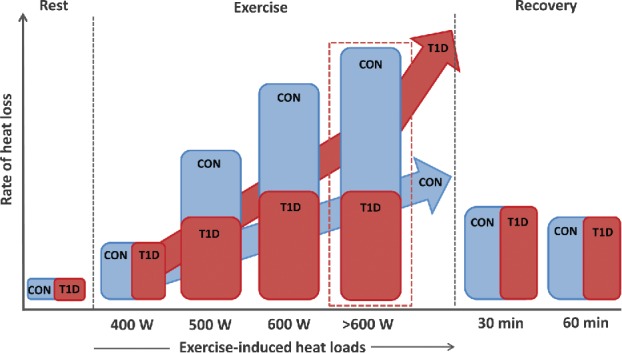
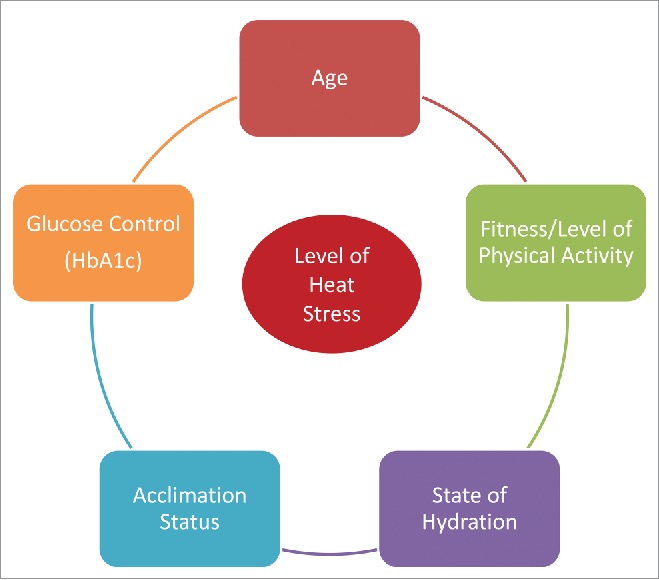
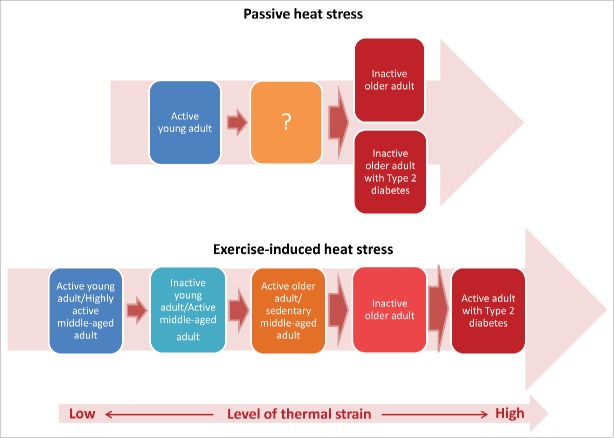
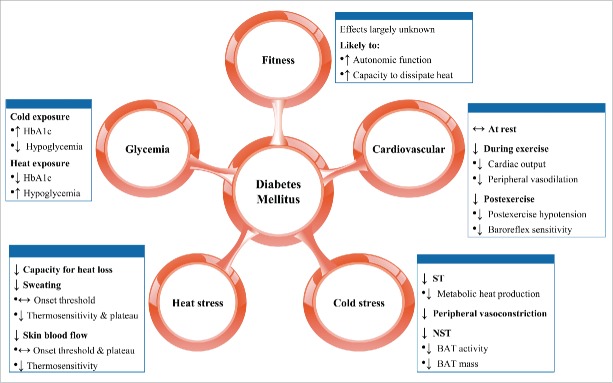



Verification
Claims the paper makes
The claims and statistics of this paper haven’t been checked yet.
Run the check — free, no account needed. It reads the open-access text and checks the sources it cites.
Claims other papers make about this one
Each is checked against this paper’s own text: does it say what the citing paper says it does?
The source backs part of the claim, not all of it — or backs it for a different population, condition or comparison.
In the citing paper
“For example, hypoglycemia is known to qualitatively increase sweating rates as the body seeks to lower core temperature to conserve energy52.”
From A wearable patch for continuous analysis of thermoregulatory sweat at rest (2021) · cites this paper as [52]
Experimental — accuracy not yet measuredThe cited source says what the claim attributes to it.
In the citing paper
“Furthermore, people with DM have been reported to have lower skin blood flow and dysregulated thermoregulatory responses during heat exposure, which is associated with dysregulated thermal, cardiovascular, and glycemic control6–8.”
From Sleep and temperature data from wearable devices support noninvasive detection of diabetes mellitus in a large-scale, retrospective analysis (2026) · cites this paper as [6]
The check wasn’t confident either way, so it gives no verdict — never disputed.
In the citing paper
“Similarly, features of sleep-wake time series can directly capture insomnia-like patterns in sleep related to DM6,34,43,44.”
From Sleep and temperature data from wearable devices support noninvasive detection of diabetes mellitus in a large-scale, retrospective analysis (2026) · cites this paper as [6]
Experimental — accuracy not yet measuredThe check wasn’t confident either way, so it gives no verdict — never disputed.
In the citing paper
“Within a night, the complexity of the distal body temperature time series has been related to the autonomic nervous system’s (ANS) health during sleep6,34.”
From Sleep and temperature data from wearable devices support noninvasive detection of diabetes mellitus in a large-scale, retrospective analysis (2026) · cites this paper as [6]
Experimental — accuracy not yet measured
Self-check
Percentages, sums and reported differences re-computed from the paper’s own numbers.
The self-check needs the paper’s full text.
Citations
Cites
International Diabetes Federation 2017
Carracher, A. M., Marathe, P. H., & Close, K. L. (2018) · Journal of Diabetes · doi:10.1111/1753-0407.12644 · Cited by 13,379
Atkinson, M. A., Eisenbarth, G. S., & Michels, A. W. (2014) · The Lancet · doi:10.1016/s0140-6736(13)60591-7 · Cited by 2,931
Bouchama, A., & Knochel, J. P. (2002) · New England Journal of Medicine · doi:10.1056/nejmra011089 · Cited by 1,898
Pathophysiology and treatment of type 2 diabetes: perspectives on the past, present, and future
Kahn, S. E., Cooper, M. E., & Del Prato, S. (2014) · The Lancet · doi:10.1016/s0140-6736(13)62154-6 · Cited by 1,743
The Effects of Climate Change on Cardiac Health
De Blois, J., Kjellstrom, T., Agewall, S., Ezekowitz, J. A., Armstrong, P. W., & Atar, D. (2015) · Cardiology · doi:10.1159/000398787 · Cited by 1,697
Umpierre, D. (2011) · JAMA · doi:10.1001/jama.2011.576 · Cited by 1,358 · cited 2×
“A recent meta-analysis by Umpierre et al.181 reported a mean decrease in HbA1c following a structured exercise intervention >12 weeks of ~0.7%.”
MethodInfluentialFeldmann, H. M., Golozoubova, V., Cannon, B., & Nedergaard, J. (2009) · Cell Metabolism · doi:10.1016/j.cmet.2008.12.014 · Cited by 1,318 · cited 1×
“The activity of brown adipose tissue has been shown to be characterized by uncoupling protein-1, a mitochondrial protein, and has been reported to have a pronounced role inwhole-body thermogenesis even under resting conditions.(155) While brown adipose tissue activity is reported to be relatively lower in individuals…”
BackgroundBoyle, J. P., Thompson, T. J., Gregg, E. W., Barker, L. E., & Williamson, D. F. (2010) · Population Health Metrics · doi:10.1186/1478-7954-8-29 · Cited by 1,309 · cited 1×
“Advanced age is a particularly important risk factor for type 2 diabetes, with diabetes prevalence rate reaching as high as 33% in older adults who are obese.(190) Given that the mean age of the workforce is increasing rapidly, employers are faced increasingly with the challenge of accommodating individuals with chron…”
BackgroundGenetics, pathogenesis and clinical interventions in type 1 diabetes
Bluestone, J. A., Herold, K., & Eisenbarth, G. (2010) · Nature · doi:10.1038/nature08933 · Cited by 1,265 · cited 1×
“Type 1 diabetes was formerly known as juvenile diabetes due to its common presentation in children and adolescents, and is characterized by the endocrine pancreas ceasing to produce insulin following the immune-mediated destruction of b-islet cells.(2)”
BackgroundInfluentialType 2 diabetes and incidence of cardiovascular diseases: a cohort study in 1.9 million people
Shah, A. D., Langenberg, C., Rapsomaniki, E., Denaxas, S., Pujades-Rodriguez, M., Gale, C. P., Deanfield, J., Smeeth, L., Timmis, A., & Hemingway, H. (2015) · The Lancet Diabetes & Endocrinology · doi:10.1016/s2213-8587(14)70219-0 · Cited by 1,225
Research works printed but not linked: 12
- World Health Organization, 2014, Page 150-154. Geneva
- Public Health Agency of Canada, 2011, Government of Canada, 27
- American Diabetes Association, 2014, National Diabetes Statistics Report
- Centers for Disease Control and Prevention, 2014, Division of Diabetes Translation,, 1
- IPCC. Intergovernmental Panel on Climate Change. 5th Assessment Report of the Intergovernmental Panel on Climate Change. Cambridge, UK. 2013.
- Yardley JE, 2013, Curr Diabetes Rev, 9, 126
- Gagge AP, 1996, New York: Oxford University Press, 45
- Petrofsky JS, 2005, Med Sci Monit, 11, CR515
- Rand S, 2008, J Appl Res, 8, 48
- Kenney WL, 1984, J Appl Physiol Respir Environ Exerc Physiol, 56, 930
- Vroman NB, 1983, J Appl Physiol Respir Environ Exerc Physiol, 55, 69
- Baron AD, 1994, Am J Physiol, 266, E248
Cited by
Sorted by citations
Items 201–295 of 295
Fabrication of Flexible and Transferable RTDs via Fused Deposition Modelling 3D Printing
Tan, D. K., Nokhodchi, A., & Munzenrieder, N. S. (2021) · IEEE International Conference on Flexible and Printable Sensors and Systems (FLEPS) · doi:10.1109/fleps51544.2021.9469801 · Cited by 2
“Body temperature can help detect abnormal metabolic function, elevated glucose levels or side effect of some medications [6]–[8].”
BackgroundWang, Z., Ma, P., Xu, C., Xu, T., Zhang, L., He, P., Hou, B., Yang, X., Du, G., Ji, T., et al. (2024) · Biomedicine & Pharmacotherapy · doi:10.1016/j.biopha.2024.116760 · Cited by 1
Dehghani, F., Dehghan, H., & Pourabdian, S. (2025) · International Journal of Preventive Medicine · doi:10.4103/ijpvm.ijpvm_208_22 · Cited by 1
“[15] While in type 1 diabetes mellitus (T1DM) there is insufficient insulin production, in type 2 (T2DM) there is tolerance to insulin and glucose uptake.”
Gkiata, P., Vliora, M., Bargiota, Α., & Flouris, A. D. (2025) · Systematic Reviews · doi:10.1186/s13643-025-02991-0 · Cited by 1
“T2D contributes to an impaired thermoregulatory system, resulting in patients storing more heat when they rest or are physically active in a hot environment, resulting in a higher core body temperature (CBT) [8, 9].”
The Interconnectedness of Climate Change and Diabetes: Shared Global Vectors
Padilla, B. I., & Sabol, V. K. (2025) · The Journal for Nurse Practitioners · doi:10.1016/j.nurpra.2025.105522 · Cited by 1
Luo, H., Yu, T., Gao, Y., Zhu, Y., Zhou, L., Li, A., Yin, P., Kan, H., Zhou, M., Zhang, X., et al. (2025) · The Lancet Planetary Health · doi:10.1016/j.lanplh.2025.101384 · Cited by 1
Explainable reinforcement learning for glucose monitoring based on shapley value analysis
ADJEVI, A., Abdirashid, A. M., Aktaş, F., Uçar, M. H. B., & Solak, S. B. (2026) · Computer Methods and Programs in Biomedicine · doi:10.1016/j.cmpb.2026.109266 · Cited by 1
Lemos, E. C., Stewart, I. B., Rodrigues, P., Morrison, S. A., Wharton, L., Tyler, C. J., Cheung, S. S., Racinais, S., Gordon, R. J. F. H., Lloyd, A. B., et al. (2026) · European Journal of Applied Physiology · doi:10.1007/s00421-026-06295-6 · Cited by 1
“In people with diabetes, complications such as autonomic neuropathy and vascular dysfunction impair sweat gland function and skin blood flow, reducing heat dissipation and increasing the risk of heat-related illness (Kenny et al. 2016 ).”
Tikhonova, I. V., Tankanag, A. V., Guseva, I. E., & Grinevich, A. A. (2023) · BIOPHYSICS · doi:10.1134/s0006350923060180 · Cited by 1
Climate Change and Heat Stress
Fiamingo, M. E., & Hazari, M. S. (2024) · Elsevier eBooks · doi:10.1016/b978-0-323-95488-4.00141-8 · Cited by 1
Gao, D., Friedman, S., Hosler, A. S., Sheridan, S. C., Zhang, W., Yu, F., Luo, G., & Lin, S. (2025) · Hygiene and Environmental Health Advances · doi:10.1016/j.heha.2025.100140 · Cited by 1
US Army Soldiers With Type 1 Diabetes Mellitus
Choi, Y. S., & Cucura, J. (2018) · Journal of Diabetes Science and Technology · doi:10.1177/1932296818767700 · Cited by 1
Smail, H. O., Kareem, S. S., & Abdulkareem, N. M. (2019) · Cited by 1
THE CORRELATION BETWEEN TEMPERATURE AND HUMIDITY AND DEHYDRATION IN FISH-TASTING WORKERS
Ningsih, N. K. (2019) · The Indonesian Journal of Public Health · doi:10.20473/ijph.v14i1.2019.71-82 · Cited by 1
Freitas, B. D. S., da Silva, T. A., dos Reis, M. A. G., Lima, L. D. S., & Gomes, A. C. D. S. (2022) · Revista Brasileira de Climatologia · doi:10.55761/abclima.v30i18.15482 · Cited by 1
Policy Focus: How can our understanding of physiology help us mitigate and adapt to climate change?
Pande, S. (2022) · Physiology News · doi:10.36866/pn.127.9 · Cited by 1
Jay, O. (2022) · Physiology News · doi:10.36866/pn.127.29 · Cited by 1
Rahat, S. T., Miinalainen, I., Nieminen, A. I., Vainio, S. J., & Ali, N. (2024) · Preprints.org · doi:10.20944/preprints202406.0063.v1 · Cited by 1
Viswanath, V. K., Navaneethan, S., Burks, J. H., Soltani, S., Kasl, P., Hartogensis, W., Dilchert, S., Hecht, F. M., Mason, A. E., Wang, E. J., et al. (2026) · Communications Medicine · doi:10.1038/s43856-026-01501-0
Coombs, G. B. (2016) · uO Research (University of Ottawa) · doi:10.20381/ruor-5880
“Skin temperature (Tsk) was measured at four sites (40) using thermistors integrated into heat flow sensors (2252 Ohms, Concept Engineering, Old Saybrook, CT, USA).”
MethodGestational Diabetes and Cold Stress Trigger Protein Oxidation in Discrete Brain Regions
Sharief, R., & Mahaboob Basha, P. (2020) · International Journal of Innovative Science and Research Technology (IJISRT) · doi:10.38124/ijisrt20jul472
Liu, H., Ren, W., Duan, Y., Ye, W., Jan, Y., Pu, F., & Fan, Y. (2020) · doi:10.21203/rs.3.rs-76719/v1
“However, the regulation of temperature related to central and peripheral blood ow is mainly regulated by dry heat exchange [31, 32].”
BackgroundGemanam, S. J., Suardi, N., Ikyo, B. A., Samson, D. O., Daniel, T., & Kungur, S. T. (2021) · Journal of the Nigerian Society of Physical Sciences · doi:10.46481/jnsps.2021.182
Perspiration During Exercise in Patients With Stable Chronic Obstructive Pulmonary DiseasePreprint
Li, Z., Zhang, Y., Wang, J., Xu, D., Jing, J., Jiang, M., & Li, F. (2020) · Research Square · doi:10.21203/rs.3.rs-49970/v1
“While perspiration rate has been found to be correlated with age and BMI [29], we did not here observe such a correlation.”
BackgroundInfluentialMoolrajani, K., Gupta, A., Mittal, C., Choudhary, S., & Vij, A. (2021) · Journal of Mahatma Gandhi University of Medical Sciences and Technology · doi:10.5005/jp-journals-10057-0156
(2019) · Temperature · doi:10.1080/23328940.2019.1586294
Symonds, M. E. (2019) · Faculty Opinions – Post-Publication Peer Review of the Biomedical Literature · doi:10.3410/f.735896006.793560964
Reference Intervals for Normal Oral TemperaturePreprint
Ley, C., Heath, F., Hastie, T. J., Gao, Z., Protsiv, M., & Parsonnet, J. (2022) · SSRN Electronic Journal · doi:10.2139/ssrn.4103146
Paterson, D. J. (2022) · Physiology News · doi:10.36866/pn.127.6
Zakrzewski-Fruer, J. K. (2022) · Physiology News · doi:10.36866/pn.127.23
Tipton, M., & Milligan, G. S. (2022) · Physiology News · doi:10.36866/pn.127.40
Meeting Report: Processing and Modulation of Sensory Signals: From the Periphery to the Cortex
Oates, C. (2022) · Physiology News · doi:10.36866/pn.127.36
Book Review: Life Before Birth: Challenges of Fetal Development by Peter Nathanielsz
Torrens, C. (2022) · Physiology News · doi:10.36866/pn.127.14
Koehle, M. S. (2022) · Physiology News · doi:10.36866/pn.127.26
Nathanielsz, P. W. (2022) · Physiology News · doi:10.36866/pn.127.38
Meeting Report: Climate Change: Research Gaps and Policy Priorities
Pande, S. (2022) · Physiology News · doi:10.36866/pn.127.37
New appointments, awards and honours
Staff members The Physiological Society (2022) · Physiology News · doi:10.36866/pn.127.41
Montgomery, H. (2022) · Physiology News · doi:10.36866/pn.127.16
Bonell, A. (2022) · Physiology News · doi:10.36866/pn.127.19
How sustainable can your laboratory be?
Farley, M. (2022) · Physiology News · doi:10.36866/pn.127.13
Bundock, S. (2022) · Physiology News · doi:10.36866/pn.127.34
Chief Executive’s View: Climate change and how it has made me reflect on my running
Burdass, D. (2022) · Physiology News · doi:10.36866/pn.127.7
Newton, E. (2022) · Physiology News · doi:10.36866/pn127.39
Obituary: Professor Colin Blakemore (1944-2022)
Paterson, D. J. (2022) · Physiology News · doi:10.36866/pn.127.45
Kohl, P. (2022) · Physiology News · doi:10.36866/pn.127.10
Kadi, H. O., Mohamed, H. K., & Taha, H. K. (2023) · Yemen University Journal · doi:10.57117/j.v8i1.12022
Gomes, J. L. D. B., Barbosa, R. R., & Costa, M. D. C. (2022) · Revista Brasileira de Ciência e Movimento · doi:10.31501/rbcm.v29i3.11683
Österreichischer Special Report Gesundheit, Demographie und Klimawandel - Supplement
Haas, W., Moshammer, H. M., Muttarak, R., & Koland, O. (2019) · doi:10.1553/asr18_supplement
Haritsatama, S., Nurullita, U., & Harahap, Z. A. (2023) · International journal of research and scientific innovation · doi:10.51244/ijrsi.2023.10517
Effect of airway masks on physiological parameters of healthcare workers: a clinical trial
Rahmad, R., Nugroho, M. B., Ridwan, M., Narasati, S., Tjahjono, C. T., Holipah, H., & Rohman, M. S. (2023) · F1000Research · doi:10.12688/f1000research.130052.1
“Physical exercise can trigger vasodilation which causes blood vessels to dilate to allow greater blood flow to the skin and ultimately increases skin temperature.(19) In this study, body temperature was described by skin temperature measured using an infrared thermometer placed on the forehead.”
Effects of gruel feeding and oral dextrose on the survivability of pigs after weaning
Wensley, M. R., Boschert, A. W., Kim, T. H., Tokach, M. D., Woodworth, J. C., Goodband, R. D., DeRouchey, J. M., Gebhardt, J. T., & Stephenson, E. W. (2023) · Translational Animal Science · doi:10.1093/tas/txad082 · Cited by 1
“Within this glycemic range, glucose uptake is maximized to provide fuel for the immune system and brain, while also preventing hyperosmolarity (Marik and Bellomo, 2013; Kenny et al., 2016).”
BackgroundRamadona, A. L., Qaimamunazzala, H., Kusnanto, H., Lazuardi, L., Danawati, C. W., Fuad, A., & Dewi, F. S. T. (2023) · medRxiv · doi:10.1101/2023.08.16.23291838
Adaptation behaviors modify the effects of body fat on heat-related symptoms among Taiwanese elderly
Chen, C., Lin, W., Lee, K., Sun, W., Huang, L.-Y., & Guo, Y. L. (2023) · International Journal of Hygiene and Environmental Health · doi:10.1016/j.ijheh.2023.114296
Haerani, H., Amiruddin, R., Ansariadi, A., Arsin, A. A., Suriah, S., Seweng, A., & Zaenab, Z. (2023) · International Journal of Statistics in Medical Research · doi:10.6000/1929-6029.2023.12.32
Körperliche Aktivität und Trainingstherapie bei Typ-2-Diabetes – ein Update
Niess, A. M., & Thiel, A. (2024) · Diabetologie und Stoffwechsel · doi:10.1055/a-1797-4949
Negative impact of climate crisis on diabetic patients
Gautam, S. K., Kumar, B., & Porwal, O. (2024) · AIP conference proceedings · doi:10.1063/5.0192541
Relationship Between Bedroom Air Temperature and Blood Sugar Levels in Diabetes Mellitus Sufferers
Muslim, M. R. M., Hasneli, Y., & Tampubolon, N. R. (2024) · JETISH Journal of Education Technology Information Social Sciences and Health · doi:10.57235/jetish.v3i1.1812
Tikhonova, I. V., Tankanag, A. V., Guseva, I. E., & Grinevich, A. A. (2023) · Биофизика · doi:10.31857/s0006302923060200
Übersicht über die Komorbidität zwischen medizinischen Erkrankungen und Übergewicht/Fettleibigkeit
Nolan, C. J. (2024) · Springer eBooks · doi:10.1007/978-3-031-55637-1_4
Rosas, R. R., Silveira, F. T. M., Quintela, R. V. C., da Costa, R. M., Streit, I. A., Dellagrana, R. A., & Rossato, M. F. (2024) · Journal of Thermal Biology · doi:10.1016/j.jtherbio.2024.103956
Stahl, V. (2025) · Die Diabetologie · doi:10.1007/s11428-025-01298-x
Hitze und Diabetes: klinische Perspektive
Lacner, B. (2025) · Die Diabetologie · doi:10.1007/s11428-025-01306-0
Extreme Temperature And Other Environmental Factors On Diabetes Admissions
Gao, D. (2024) · Scholars Archive - University at Albany (University at Albany, State University of New York) · doi:10.54014/6wcy-bh0v
Brodeur, N., Longtin, A., Kenny, G. P., & SEELY, A. J. E. (2025) · Annals of the New York Academy of Sciences · doi:10.1111/nyas.15385
“However, a lower skin temperature can also be a sign of pathological thermoregulation (such as occurs with individuals with type 2 diabetes 17,34 If it originates from the inability to increase blood flow to the skin, then in that case heat is ineffectively transferred from the core to the skin and…”
Self-citationPhysiological responses to heat stress in groundskeepers: an observational field study
Yoder, H. A., Mulholland, A. M., Johnson, E. C., Winchester, L. J., & Wingo, J. E. (2025) · Applied Physiology Nutrition and Metabolism · doi:10.1139/apnm-2025-0106
Burks, J. H., Hartogensis, W., Dilchert, S., Mason, A. E., & Smarr, B. L. (2025) · Algorithms · doi:10.3390/a18090577
“The absence (No DM Dx) or reporting of diabetes mellitus (DM Dx) were chosen as categorical test cases for MSAAD applied to temperature due to previously reported associations between diabetes mellitus and thermoregulation [53] caused by comorbid vascular disease [54] and peripheral neuropathy [55].”
Salmaso, L., Amidei, C. B., Fedeli, U., Saïa, M., & Sera, F. (2025) · Environmental Epidemiology · doi:10.1097/ee9.0000000000000415
“60 Moreover, common comorbidities and diabetes medications may increase the risk of illnesses associated with heat.”
Stahl, V. (2025) · Die Diabetologie · doi:10.1007/s11428-025-01407-w
Blanchard, F., Charbit, J., Meersch, G. V. D., Popoff, B., Picod, A., Cohen, R., Chemouni, F., Gaudry, S., Bihan, H., & Cohen, Y. (2020) · Figshare · doi:10.6084/m9.figshare.12331718
Blanchard, F., Charbit, J., Meersch, G. V. D., Popoff, B., Picod, A., Cohen, R., Chemouni, F., Gaudry, S., Bihan, H., & Cohen, Y. (2020) · Figshare · doi:10.6084/m9.figshare.12413516
Environmental challenges for athletes
Stone, J. A., Tollefson, L. V., Shoemaker, E. P., LaPrade, R. F., Hutchinson, M. R., Muñiz-Pardos, B., Casajús, J. A., James, C., & Migliorini, S. (2025) · Elsevier eBooks · doi:10.1016/b978-0-443-31638-8.00012-3
Lack of guidelines for cold exposure among vulnerable outdoor workers
Rafieian, M., Höper, A. C., Stjernbrandt, A., Tapper, R., & Ikäheimo, T. M. (2026) · International Journal of Circumpolar Health · doi:10.1080/22423982.2026.2619359 · Cited by 1
“These issues can limit circulation, raise blood pressure, and strain the heart, increasing the risk of cold-related complications [21,33,45,46].”
Tönnies, T., Wirth, M., Piedboeuf-Potyka, K., & Kuss, O. (2026) · The Lancet Regional Health - Europe · doi:10.1016/j.lanepe.2026.101591
High fat diet remodels the gene regulatory networks in the preoptic area
Lazaro, O., Beimfohr, C., App, B., Basu, R., Johnson, T. S., & Flak, J. N. (2026) · Scientific Reports · doi:10.1038/s41598-026-37692-8
Xiang, Q., Wang, S., Miao, Y., Zd, F., Duan, H., Xu, X., Cao, L., Ren, Q., Yan, X., & Yang, X. (2026) · Diabetic Medicine · doi:10.1111/dme.70217
“35 These findings highlight the need to implement public health strategies that address heat-related risks in people with diabetes, such as issuing heat warnings, promoting hydration, ensuring access to cooling centres and educating patients on medication adjustments during hot weather.”
Protecting Children from Extreme Heat and Cold
Ikäheimo, T. M. (2026) · Educating the young child · doi:10.1007/978-3-032-13683-1_10
Immediate Impact of Hepatic Douche on Glycemic Control in Type 2 Diabetic Patients: A Pilot Study
Selvameenakshi, T., Kuppusamy, M., Ahalya, P. G., Singh, C. P., Venkatesan, C., & Rajarathinam, S. V. K. (2025) · INDIAN JOURNAL OF AYURVEDA & INTEGRATIVE MEDICINE KLEU · doi:10.4103/ijaim.ijaim_29_25
Mahendarkar, S. C., Basavegowda, M., Manjunath, S. B., Mallaiah, C., Manivasagan, M. S., Chakrashali, S. B., & Chikkapapanna, M. M. (2026) · Discover Public Health · doi:10.1186/s12982-026-01500-5
Rotbei, S., Soler, P. M., Barbancho, B. M., Lopez-Perez, L., Anchuelo, A. C., García, L. P., Forés, R. M., Matus, L. M., Albert, R. M., Andicoechea, A. O., et al. (2026) · BMC Medical Informatics and Decision Making · doi:10.1186/s12911-026-03420-5
“In summary, recent studies have established a connection between diabetes and deficits in temperature regulation in response to thermal stress Kenny et al. [37].”
Burks, J. H., Hartogensis, W., Dilchert, S., Mason, A. E., & Smarr, B. L. (2026) · npj Digital Medicine · doi:10.1038/s41746-026-02633-2
Dynamic Temperature Modeling Predicts Mortality in Murine Sepsis
Xiao, Z., Wang, L., Carpenter, S. L., Gutierrez, M. B., Hayashi, Y., Jalaja, P. P., Straub, E., Lee, V. K., Liang, Z., Ford, M. L., et al. (2026) · Shock · doi:10.1097/shk.0000000000002901
Nasserinejad, M., Huilaja, L., Sinikumpu, S., Vainio, S., Röning, J., Ali, N., & Sebert, S. P. (2026) · BMJ Open · doi:10.1136/bmjopen-2025-109709
Shin, S., Ham, D., Bae, S., & Song, M. (2026) · Journal of Korean Medical Science · doi:10.3346/jkms.2026.41.e294
Tuo, Y., Cui, S., Sun, M., Xia, W., Han, S., Zhen, M., Zhang, M., & Nan, K. (2026) · Building and Environment · doi:10.1016/j.buildenv.2026.115077
Li, Y., Shu, Q., Luo, Y., Yang, L., Lü, X., Tang, M., Tian, M., Liu, C., Lyu, G., & Jia, X. (2026) · ACS Applied Bio Materials · doi:10.1021/acsabm.6c00725
Soltani, S., Hartogensis, W., Dilchert, S., Flores, K., Lowry, C. A., Raison, C. L., Hecht, F. M., Smarr, B. L., & Mason, A. E. (2026) · Frontiers in Psychiatry · doi:10.3389/fpsyt.2026.1846398
“Additionally, medical conditions, such as diabetes (15) and hypertension (16), may independently affect thermoregulation by reducing blood fl ow to the skin, which may inhibit heat dissipation from the body ’ s core.”
Heat and diabetes: clinical perspective
Lacner, B. (2026) · Die Diabetologie · doi:10.1007/s11428-026-01506-2
Cionżyńska, W., Brzózka, K., Pyrka, Z., Krupska, A., Piełuć, A., & Ledwożyw, K. (2026) · International Journal of Innovative Technologies in Social Science · doi:10.31435/ijitss.3(51).2026.6112
Reducing the burden of heat-related impacts on cardiovascular health
Chaseling, G. K., Jay, O., Uchmanowicz, I., Miró, Ò., Tokmakova, M. P., Ljungman, P. L. S., Laukkanen, J. A., Bruno, R. M., Ntaios, G., Rocca, B., et al. (2026) · European Heart Journal · doi:10.1093/eurheartj/ehag657
Schinasi, L., Williams, A., Simeone, J., Moore, C., & Schnake-Mahl, A. (2026) · Frontiers in Public Health · doi:10.3389/fpubh.2026.1923152
Zheng, Q., Chen, S., Liu, S., Madden, L. E., Fan, S., Liang, L., Nai, M. H., Lin, B., Wu, Z., Li, Z., et al. (2026) · Proceedings of the National Academy of Sciences · doi:10.1073/pnas.2611528123
Metadata
- Authors
- Kenny, G. P., Sigal, R. J., & McGinn, R.
- Affiliations
- University of Ottawa (CA)
- University of Calgary (CA)
- Corresponding author
- Kenny, Glen P.
- Venue
- Temperature
- Publisher
- Informa UK Limited
- Published
- 2016-01-02
- Volume
- 3
- Issue
- 1
- Pages
- 119-145
- ISSN
- 2332-8940 (ISSN-L)
- 2332-8959
- PMC
- PMC4861190
- OpenAlex
- W2231185364
- Cited by
- 297
- References
- 190
- Citations by year
- 2026: 26 · 2025: 37 · 2024: 40 · 2023: 29 · 2022: 55 · 2021: 24 · 2020: 18 · 2019: 24 · 2018: 17 · 2017: 20 · 2016: 7
- FWCI
- 2.66
- Type
- journal article
- Language
- en
- Open access
- hybrid
- doi.org
- Licence
- Locations
- Temperature (publishedVersion, cc-by-nc)
- Europe PMC (PubMed Central) (publishedVersion, cc-by-nc)
- PubMed Central (publishedVersion, cc-by-nc)
- PubMed (publishedVersion)
- Topics
- Health Sciences › Medicine › Physiology (medical) › Thermoregulation and physiological responses
- Health Sciences › Medicine › Physiology (medical) › Cardiovascular and exercise physiology
- Life Sciences › Agricultural and Biological Sciences › Animal Science and Zoology › Effects of Environmental Stressors on Livestock
- Keywords
- diabetes mellitus, type 1 diabetes, type 2 diabetes, thermoregulation, heat stress, cold exposure, heat-related illness, heat dissipation, skin blood flow, sweating, glycemic control, cardiovascular regulation, core body temperature, cardiorespiratory fitness, diabetes complications
About these checks
Registry, retraction, Cites and statistics results are computed, not judged, with one exception: a printed reference that no index lists is read once by a model before it counts as a citation error. Claims are extracted by a model and kept only when their quote appears verbatim in the text; each cited source is then checked, with a model’s help, for whether it says what the claim relies on. Those verdicts can be wrong — read the claim’s quote and the cited source before relying on one.
Statistics and arithmetic are recomputed, not judged.
Confidence bands are shown only for fields calibrated on our annotated test set. None is calibrated yet, so no band is shown.
What counts as a claim ›How we measure confidence ›How we check this ›
Are you an author, or do you see a problem with this page? Request a review
