

The DOI matches its Crossref record; 40 of the 41 references it cites were found in a registry or an index.
Differentiation and Death of Premyelinating Oligodendrocytes in Developing Rodent Brain
Open accessAbstract
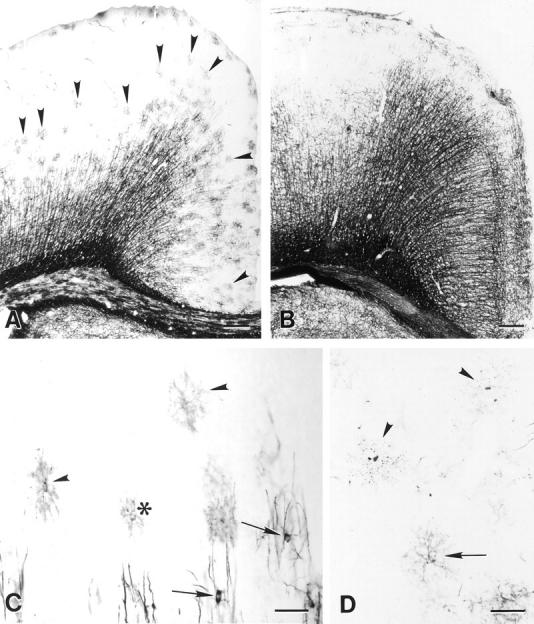
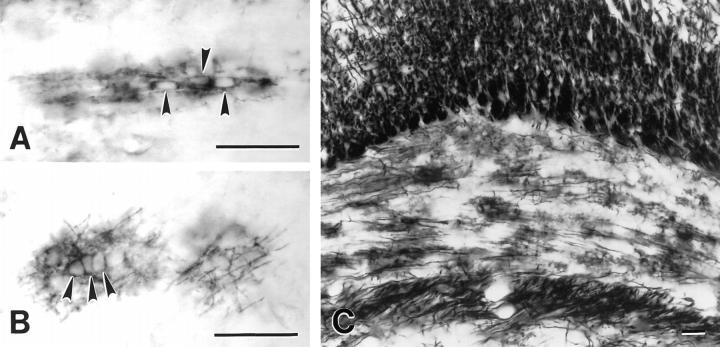
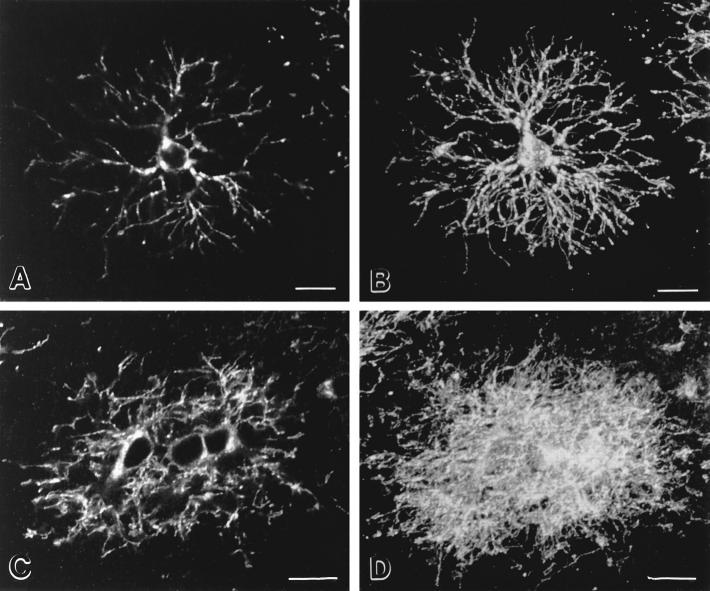
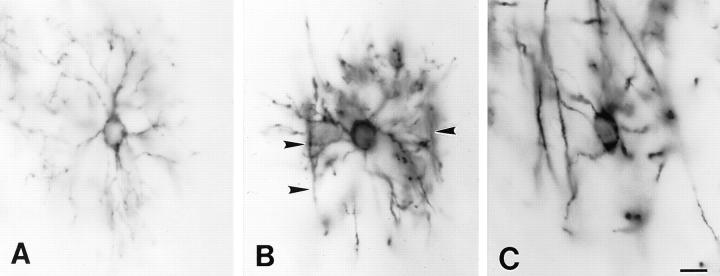
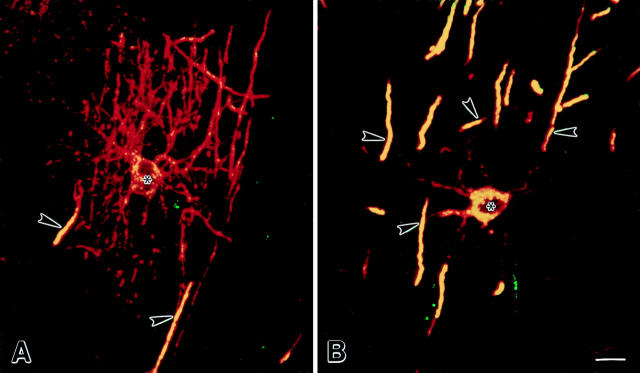
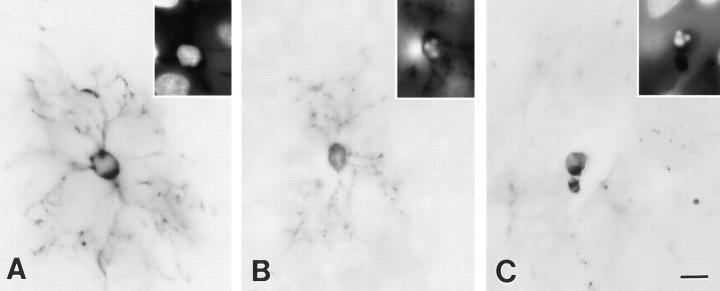
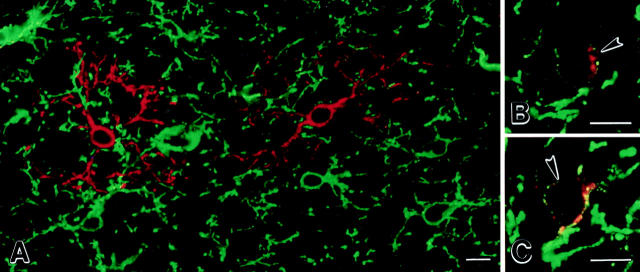
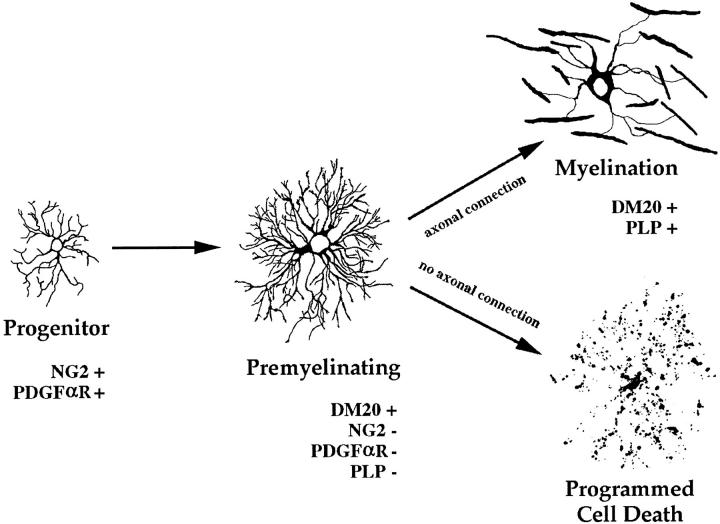
Previous studies have indicated that newly formed oligodendrocytes are dynamic cells whose production, survival, and differentiation depend upon axonal influences. This study has characterized the appearance and fate of newly formed oligodendrocytes in developing rat brain. Oligodendrocytes appear in predictable locations and radially extend DM-20-positive processes that cover 80-microm domains in the cortex and 40-microm domains in the corpus callosum. These premyelinating oligodendrocytes have one of two fates: they myelinate axons or degenerate. Between 7 and 21 d after birth, approximately 20% of premyelinating oligodendrocytes identified in the cerebral cortex were degenerating. Oligodendrocytes that ensheathed axons expressed and selectively targeted proteolipid protein to compact myelin and did not degenerate. These observations support the hypothesis that axonal influences affect oligodendrocyte survival, differentiation, and expression of proteolipid protein gene products.
Overview
The claims and statistics of this paper haven’t been checked yet.
Run the check — free, no account needed. It reads the open-access text and checks the sources it cites.
Integrity signals
Registry
Cites
Statistics
Figures
Verification
Claims the paper makes
The claims and statistics of this paper haven’t been checked yet.
Run the check — free, no account needed. It reads the open-access text and checks the sources it cites.
Claims other papers make about this one
Each is checked against this paper’s own text: does it say what the citing paper says it does?
The source backs part of the claim, not all of it — or backs it for a different population, condition or comparison.
In the citing paper
“In the developing neocortex, ∼20% of premyelinating OLs die between P7 and P11 (Trapp et al., 1997).”
From Oligodendrocyte Dynamics in the Healthy Adult CNS: Evidence for Myelin Remodeling (2013) · cites this paper as Trapp et al., 1997
Experimental — accuracy not yet measuredIn the citing paper
“The timing of their appearance coincides with the onset of myelination, during which large numbers of newly formed oligodendrocytes die (Barres et al., 1992; Trapp et al., 1997).”
From Developmental Heterogeneity of Microglia and Brain Myeloid Cells Revealed by Deep Single-Cell RNA Sequencing (2019) · cites this paper as Trapp et al., 1997
Self-check
Percentages, sums and reported differences re-computed from the paper’s own numbers.
The self-check needs the paper’s full text.
Citations
Cites
RAFF, M. C., Miller, R. H., & Noble, M. (1983) · Nature · doi:10.1038/303390a0 · Cited by 2,030
Programmed Cell Death and the Control of Cell Survival: Lessons from the Nervous System
RAFF, M. C., Barres, B. A., Burne, J. F., Coles, H., Ishizaki, Y., & Jacobson, M. D. (1993) · Science · doi:10.1126/science.8235590 · Cited by 1,450
Cell death and control of cell survival in the oligodendrocyte lineage
Barres, B. A., Hart, I. K., Coles, H. S. R., Burne, J. F., Voyvodic, J. T., Richardson, W. D., & Raff, M. C. (1992) · Cell · doi:10.1016/0092-8674(92)90531-g · Cited by 1,345
A role for platelet-derived growth factor in normal gliogenesis in the central nervous system
Richardson, W. D., Pringle, N. P., Mosley, M. J., Westermark, B., & Dubois-Dalcg, M. (1988) · Cell · doi:10.1016/0092-8674(88)90392-3 · Cited by 774
The oligodendrocyte and its many cellular processes
PFEIFFER, S., WARRINGTON, A., & BANSAL, R. (1993) · Trends in Cell Biology · doi:10.1016/0962-8924(93)90213-k · Cited by 737
Levison, S. W., & Goldman, J. E. (1993) · Neuron · doi:10.1016/0896-6273(93)90311-e · Cited by 725
Proliferation of oligodendrocyte precursor cells depends on electrical activity in axons
Barres, B. A., & Raff, M. C. (1993) · Nature · doi:10.1038/361258a0 · Cited by 673
Pringle, N. P., & Richardson, W. D. (1993) · Development · doi:10.1242/dev.117.2.525 · Cited by 510
Pringle, N. P., Mudhar, H. S., Collarini, E. J., & Richardson, W. D. (1992) · Development · doi:10.1242/dev.115.2.535 · Cited by 443
Polarity of Epithelial and Neuronal Cells
Rodriguez-Boulan, E. J., & Powell, S. K. (1992) · Annual Review of Cell Biology · doi:10.1146/annurev.cb.08.110192.002143 · Cited by 430
Research works printed but not linked: 1
- Nishiyama, 1996, Interaction between NG2 proteoglycan and PDGF α receptor on 02A progenitor cells is required for optimal response to PDGF, J Neurosci Res, 43, 315, 10.1002/(SICI)1097-4547(19960201)43:3<315::AID-JNR6>3.0.CO;2-M · DOI
Cited by
Sorted by citations
Axonal transection in the lesions of multiple sclerosis
Trapp, B. D., Peterson, J., Ransohoff, R. M., Rudick, R., Mörk, S., & Bö, L. (1998) · New England Journal of Medicine · doi:10.1056/nejm199801293380502 · Cited by 4,029
Self-citationBiology of Oligodendrocyte and Myelin in the Mammalian Central Nervous System
Baumann, N., & Pham-Dinh, D. (2001) · Physiological Reviews · doi:10.1152/physrev.2001.81.2.871 · Cited by 1,828
Li, Q., Cheng, Z., Zhou, L., Darmanis, S., Neff, N. F., Okamoto, J., Gulati, G., Bennett, M. L., Sun, L. O., Clarke, L. E., et al. (2019) · Neuron · doi:10.1016/j.neuron.2018.12.006 · Cited by 1,129
Premyelinating Oligodendrocytes in Chronic Lesions of Multiple Sclerosis
Chang, A., Tourtellotte, W. W., Rudick, R., & Trapp, B. D. (2002) · New England Journal of Medicine · doi:10.1056/nejmoa010994 · Cited by 991
Self-citationOligodendrocyte Dynamics in the Healthy Adult CNS: Evidence for Myelin Remodeling
Young, K. M., Psachoulia, K., Tripathi, R. B., Dunn, S.-J., Cossell, L., Attwell, D., Tohyama, K., & Richardson, W. D. (2013) · Neuron · doi:10.1016/j.neuron.2013.01.006 · Cited by 919
“Therefore, if the main function of adult-born OLs is to myelinate previously unmyelinated axons, then we should not expect much OL genesis in the optic nerve after P112 because there should be almost no naked axons available to myelinate.”
Background
Metadata
- Authors
- Trapp, B. D., Nishiyama, A., Cheng, D., & Macklin, W.
- Affiliations
- Cleveland Clinic (US)
- Venue
- The Journal of Cell Biology
- Publisher
- Rockefeller University Press
- Published
- 1997-04-21
- Volume
- 137
- Issue
- 2
- Pages
- 459-468
- ISSN
- 0021-9525 (ISSN-L)
- 1540-8140
- PMC
- PMC2139778
- OpenAlex
- W2097849969
- Cited by
- 395
- References
- 41
- Citations by year
- 2026: 7 · 2025: 10 · 2024: 9 · 2023: 16 · 2022: 14 · 2021: 23 · 2020: 26 · 2019: 16 · 2018: 13 · 2017: 15 · 2016: 12 · 2015: 13 · 2014: 13 · 2013: 10 · 2012: 7
- FWCI
- 4.80
- Type
- journal article
- Language
- en
- Open access
- bronze
- doi.org
- Locations
- The Journal of Cell Biology (publishedVersion)
- Europe PMC (PubMed Central) (publishedVersion, cc-by-nc-sa)
- PubMed Central (publishedVersion, cc-by-nc-sa)
- PubMed (publishedVersion)
- Funders
- National Multiple Sclerosis Society
- Multiple Sclerosis Society
- National Institutes of Health
- National Institute of Neurological Disorders and Stroke (NS25304, R01NS029818, R01NS025304, NS 29818)
- Topics
- Life Sciences › Neuroscience › Developmental Neuroscience › Neurogenesis and neuroplasticity mechanisms
- Health Sciences › Medicine › Pediatrics, Perinatology and Child Health › Neonatal and fetal brain pathology
- Health Sciences › Medicine › Clinical Neurology › Multiple Sclerosis Research Studies
- Keywords
- oligodendrocyte differentiation, oligodendrocyte death, myelination, proteolipid protein, DM20, oligodendrocyte survival, cerebral cortex, corpus callosum, postnatal brain development
- MeSH terms
- Animals, Axons, Brain, Cell Differentiation, Cerebral Cortex, Chromatin, Corpus Callosum, Nerve Tissue Proteins, Oligodendroglia, Cell Death, Rats, Sprague-Dawley, Myelin Proteolipid Protein, Rats
About these checks
Registry, retraction, Cites and statistics results are computed, not judged, with one exception: a printed reference that no index lists is read once by a model before it counts as a citation error. Claims are extracted by a model and kept only when their quote appears verbatim in the text; each cited source is then checked, with a model’s help, for whether it says what the claim relies on. Those verdicts can be wrong — read the claim’s quote and the cited source before relying on one.
Statistics and arithmetic are recomputed, not judged.
Confidence bands are shown only for fields calibrated on our annotated test set. None is calibrated yet, so no band is shown.
What counts as a claim ›How we measure confidence ›How we check this ›
Are you an author, or do you see a problem with this page? Request a review
