

Regulated splicing of the fibronectin EDA exon is essential for proper skin wound healing and normal lifespan
Open accessThe DOI matches its Crossref record; 60 of the 60 references it cites were found in a registry or an index.
Abstract
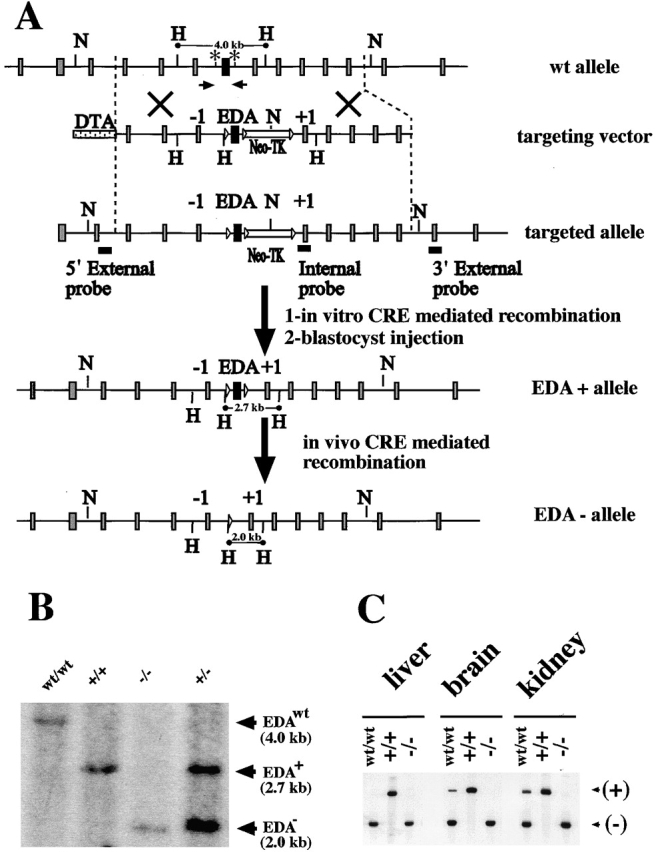
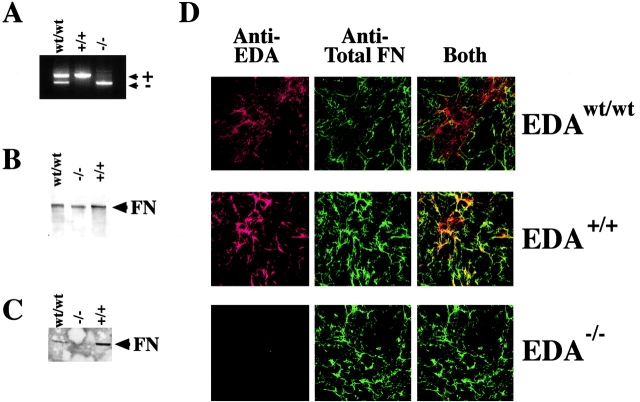
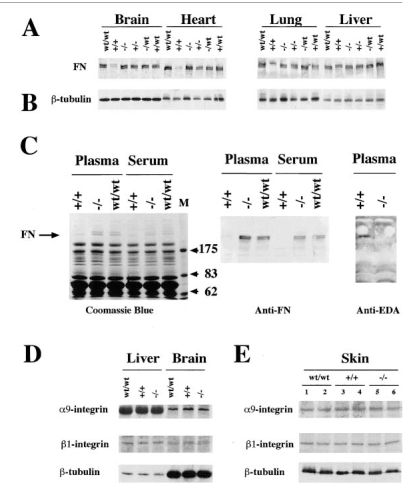
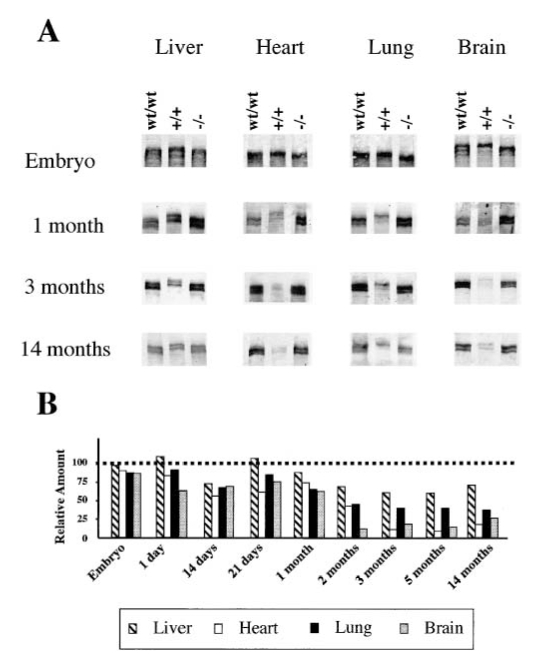
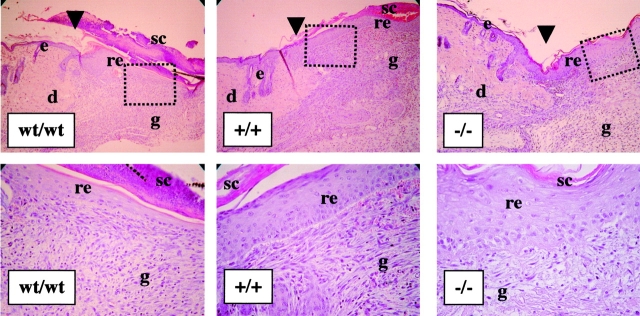
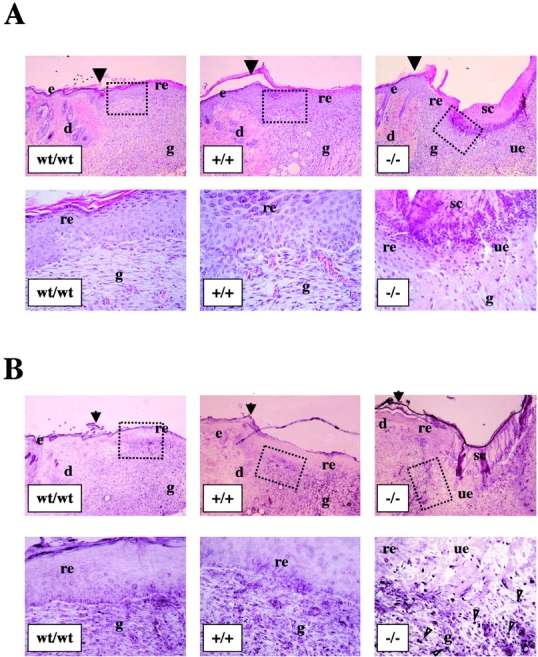
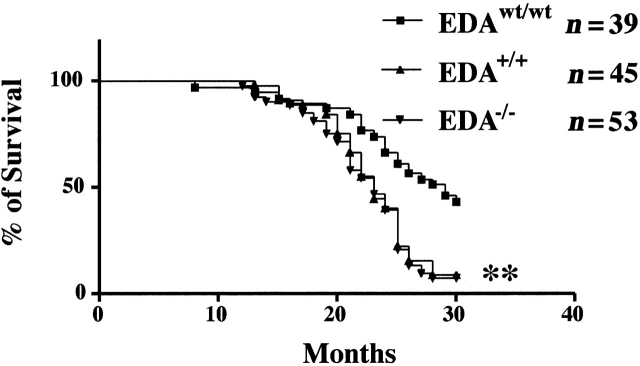
Fibronectins (FNs) are multifunctional high molecular weight glycoproteins present in the blood plasma and in the ECMs of tissues. The FN primary transcript undergoes alternative splicing in three regions generating up to 20 main different variants in humans. However, the precise role of the FN isoforms is poorly understood. One of the alternatively spliced exons is the extra domain A (EDA) or extra type III homology that is regulated spatially and temporally during development and aging. To study its in vivo function, we generated mice devoid of EDA exon-regulated splicing. Constitutive exon inclusion was obtained by optimizing the splice sites, whereas complete exclusion was obtained after in vivo CRE-loxP-mediated deletion of the exon. Homozygous mouse strains with complete exclusion or inclusion of the EDA exon were viable and developed normally, indicating that the alternative splicing at the EDA exon is not necessary during embryonic development. Conversely, mice without the EDA exon in the FN protein displayed abnormal skin wound healing, whereas mice having constitutive inclusion of the EDA exon showed a major decrease in the FN levels in all tissues. Moreover, both mutant mouse strains have a significantly shorter lifespan than the control mice, suggesting that EDA splicing regulation is necessary for efficient long-term maintenance of biological functions.
Overview
The claims and statistics of this paper haven’t been checked yet.
Free: it reads the open-access text and checks the first 5 claims that cite a source we can check. Create a free account to check every claim.
Integrity signals
Registry
Cites
Statistics
Figures
Verification
Claims the paper makes
The claims and statistics of this paper haven’t been checked yet.
Free: it reads the open-access text and checks the first 5 claims that cite a source we can check. Create a free account to check every claim.
Claims other papers make about this one
Each is checked against this paper’s own text: does it say what the citing paper says it does?
The cited source says what the claim attributes to it.
In the citing paper
“Mammalian fibronectin consists of various isoforms, created through alternative splicing (Muro et al., 2003).”
From Notch signaling functions in lymphatic valve formation (2014) · cites this paper as Muro et al., 2003
Self-check
Percentages, sums and reported differences re-computed from the paper’s own numbers.
The self-check needs the paper’s full text.
Citations
Cites
Single-step method of RNA isolation by acid guanidinium thiocyanate-phenol-chloroform extraction
Chomczynski, P., & Sacchi, N. (1987) · Analytical Biochemistry · doi:10.1016/0003-2697(87)90021-2 · Cited by 46,426 · cited 1×
“Total cellular RNA from various tissues was prepared by the guanidinium thiocyanate method (Chomczynski and Sacchi, 1987), quantitated by measuring absorbance at 260 and 280 nm, and RNA integrity was confirmed by running the samples on 1% agarose formaldehyde gels.”
MethodHow Matrix Metalloproteinases Regulate Cell Behavior
Sternlicht, M. D., & Werb, Z. (2001) · Annual Review of Cell and Developmental Biology · doi:10.1146/annurev.cellbio.17.1.463 · Cited by 3,959 · cited 1×
“In an attempt to determine alterations in the FN-degradative mechanisms, we performed gelatin zymography and observed no variations in plasma and other tissues (brain and heart) in the levels of matrix metalloproteinases (MMPs), enzymes known to degrade FN (Sternlicht and Werb, 2001).”
MethodDefects in mesoderm, neural tube and vascular development in mouse embryos lacking fibronectin
George, E. L., Georges-Labouesse, E. N., Patel-King, R. S., Rayburn, H., & Hynes, R. O. (1993) · Development · doi:10.1242/dev.119.4.1079 · Cited by 1,305
The Extra Domain A of Fibronectin Activates Toll-like Receptor 4
Okamura, Y., Watari, M., Jerud, E. S., Young, D. W., Ishizaka, S. T., Rose, J., Chow, J. C., & Strauss, J. F. (2001) · Journal of Biological Chemistry · doi:10.1074/jbc.m100099200 · Cited by 1,216 · cited 2×
“…(Peters et al., 1990); secretion (Wang et al., 1991); cell adhesion (Xia and Culp, 1995); cell differentiation (Jarnagin et al., 1994); tissue injury and inflammation (Satoi et al., 1999; Okamura et al., 2001); and cell cycle progression and mitogenic signal transduction (Manabe et al., 1999).”
BackgroundConditional control of gene expression in the mouse
Lewandoski, M. (2001) · Nature Reviews Genetics · doi:10.1038/35093537 · Cited by 781 · cited 1×
“A similar phenomenon has recently been observed in other genes (Lewandoski, 2001).”
Distinct functions of the two isoforms of dopamine D2 receptors
Usiello, A., Baik, J.-H., Rougé-Pont, F., Picetti, R., Dierich, A., LeMeur, M., Piazza, P. V., & Borrelli, E. (2000) · Nature · doi:10.1038/35041572 · Cited by 717 · cited 3×
“…of alternatively spliced exons in different protein systems such as 6 integrin, -aminobutyrate receptor, dopamine D2 receptor, FN, Pax6, and Stat3 (Gimond et al., 1998; Homanics et al., 1999; Usiello et al., 2000; Wang et al., 2000; Fukuda et al., 2002; Singh et al., 2002; Yoo et al., 2002).”
BackgroundThree different fibronectin mRNAs arise by alternative splicing within the coding region
Schwarzbauer, J. E., Tamkun, J. W., Lemischka, I. R., & Hynes, R. O. (1983) · Cell · doi:10.1016/0092-8674(83)90175-7 · Cited by 706 · cited 2×
“The IIICS region undergoes a more complex pattern of splicing which is species dependent (Schwarzbauer et al., 1983).”
BackgroundClark, R. A. F., Lanigan, J. M., DellaPelle, P., Manseau, E., Dvorak, H. F., & Colvin, R. B. (1982) · Journal of Investigative Dermatology · doi:10.1111/1523-1747.ep12500075 · Cited by 695 · cited 2×
“Previous studies have also shown that FN appears in the provisional matrix beneath the migrating epidermis coordinating with the FN-receptor expression on migrating epidermal cells ( Clark et al., 1982, 1983; Grinnell, 1984).”
ResultHelgason, C. D., Damen, J. E., Rosten, P., Grewal, R., Sorensen, P., Chappel, S. M., Borowski, A., Jirik, F., Krystal, G., & Humphries, R. K. (1998) · Genes & Development · doi:10.1101/gad.12.11.1610 · Cited by 556 · cited 2×
“…have a shorter lifespan It has been shown that deficiency of SH2-containing inositol-5-phosphatase, lysosomal acid lipase, and DNA topoisomerase III had no consequences in embryonic development, but shortens the lifespan of the animals (Helgason et al., 1998; Du et al., 2001; Kwan and Wang, 2001).”
BackgroundReappearance of an embryonic pattern of fibronectin splicing during wound healing in the adult rat.
Ffrench-Constant, C., Van de Water, L., Dvorak, H. F., & Hynes, R. O. (1989) · The Journal of cell biology · doi:10.1083/jcb.109.2.903 · Cited by 486 · cited 8×
“Expression of cFN by the cells found at the base and edges of the wound just beneath the epidermis was observed, and the presence of cFN preceded the migration of epithelial cells that eventually covered the wound (ffrench-Constant et al., 1989).”
BackgroundInfluential
Research works printed but not linked: 1
- Hynes, R.O. 1990. Fibronectins. Springer-Verlag New York Inc., New York. 544 pp.
Cited by
Items 201–300 of 323
Zhang, L., Yan, H., Tai, Y., Xue, Y., Wei, Y., Wang, K., Zhao, Q., Wang, S., Kong, D., & Midgley, A. C. (2021) · International Journal of Molecular Sciences · doi:10.3390/ijms22041575 · Cited by 17
“Removal of EDA-FN from the genome or proteome has been shown to be detrimental to tissue remodeling during wound healing [18].”
BackgroundAge-Dependent Differential Expression of Fibronectin Variants in Skin and Airway Mucosal Wounds
Li‐Korotky, H., Hebda, P. A., Lo, C., & Dohar, J. E. (2007) · Archives of Otolaryngology - Head and Neck Surgery · doi:10.1001/archotol.133.9.919 · Cited by 14
“Conversely, mice without the EDA exon in the Fn1 protein displayed abnormal skin wound healing, whereas mice having constitutive inclusion of the EDA exon showed a major decrease in Fn1 levels in all tissues.(51) Indeed, a deletion of the alternatively spliced EDA domain in mice with atherosclerotic lesions reduced at…”
TLR4 Ligands Selectively Synergize to Induce Expression of IL-8
Valenty, L. M., Longo, C. M., Horzempa, C., Ambesi, A., & McKeown‐Longo, P. J. (2017) · Advances in Wound Care · doi:10.1089/wound.2017.0735 · Cited by 14
“After injury, stromal fibroblasts synthesize an alternatively spliced isoform of fibronectin, which includes an additional Type III domain, extra domain A (EDA).(6,7) EDAfibronectin is not expressed in normal adult tissue but is upregulated during wound healing and highly expressed in exudates from chronic wounds.”
BackgroundMechanisms of liver fibrosis: New insights into an old problem
Wells, R. G. (2006) · Drug Discovery Today Disease Mechanisms · doi:10.1016/j.ddmec.2006.10.003 · Cited by 15
Peters, J. H., Grote, M. N., Lane, N. E., & Maunder, R. J. (2011) · Biomarker Insights · doi:10.4137/bmi.s7204 · Cited by 13
Attallah, A. M., Zahran, F. M., Ismail, H., Omran, M. M., El‐Dosoky, I., & Shiha, G. E.-S. (2007) · Journal of Immunoassay and Immunochemistry · doi:10.1080/15321810701603476 · Cited by 13
“As a major component of the extracellular matrix, it is considered to have an important role in chronic inflammatory periodontal disease.([11]) Fibronectin also plays important roles in the development and pathogenesis of many disorders, including cancer.”
BackgroundO’Toole, E. A., & Mellerio, J. E. (2010) · Wiley eBooks · doi:10.1002/9781444317633.ch14 · Cited by 23
Franco‐Valls, H., Tusquets-Uxó, E., Sala, L., Val-Casals, M., Peña, R., Iaconcig, A., Villarino, Á., Jiménez-Arriola, M., Massó, P., Trincado, J. L., et al. (2023) · Breast Cancer Research · doi:10.1186/s13058-023-01736-y · Cited by 12
“Therefore, we analyzed the contribution of the EDA + fibronectin on the extracellular topology using TGFβ-activated MEFs derived from two genetically engineered mouse strains that exclusively expressed either EDA-including (EDA + ) or -excluding (EDA–) fibronectin isoforms [19].”
BackgroundMethodSelf-citationPèrié, L., Houël, C., Zambon, A., Guéré, C., Vié, K., Leroy‐Dudal, J., Vendrely, C., Agniel, R., Carreiras, F., & Picot, C. R. (2024) · Experimental Cell Research · doi:10.1016/j.yexcr.2024.114251 · Cited by 13
Role of fibronectin in chronic venous diseases: A review
Kanta, J., & Zavaďáková, A. (2020) · Vascular Medicine · doi:10.1177/1358863x20947789 · Cited by 13
Bozó, R., Flink, L. B., Belső, N., Gubán, B., Széll, M., Kemény, L. V., & Bata‐Csörgõ, Z. (2021) · Experimental Dermatology · doi:10.1111/exd.14267 · Cited by 14
Baldassarro, V. A., Giraldi, V., Giuliani, A., Moretti, M., Pagnotta, G., Flagelli, A., Clavenzani, P., Lorenzini, L., Giardino, L., Focarete, M. L., et al. (2022) · ACS Applied Bio Materials · doi:10.1021/acsabm.2c00890 · Cited by 13
Founds, S. A. (2011) · Journal of Perinatal Medicine · doi:10.1515/jpm.2011.045 · Cited by 14
Malara, A., Gruppi, C., Celesti, G., Romano, B., Laghi, L., Marco, L. D., Muro, A. F., & Balduini, A. (2016) · Stem Cells · doi:10.1002/stem.2381 · Cited by 12
Self-citationCellular Fibronectin Containing Extra Domain A Causes Insulin Resistance via Toll-like Receptor 4
Rajak, S., Hussain, Y., Singh, K., Tiwari, S., Ahmad, B., Bharti, S., & Prakash, P. (2020) · Scientific Reports · doi:10.1038/s41598-020-65970-6 · Cited by 13
Targeting the myofibroblast to improve wound healing
Hinz, B. (2016) · Elsevier eBooks · doi:10.1016/b978-1-78242-455-0.00003-3 · Cited by 13
Spatial expressions of fibronectin and integrins by human and rodent dermal fibroblasts
Yasuda, M., Miyachi, Y., Ishikawa, O., & Takahashi, K. (2006) · British Journal of Dermatology · doi:10.1111/j.1365-2133.2006.07399.x · Cited by 12
Framing Heartaches: The Cardiac ECM and the Effects of Age
Ringström, N., Edling, C. E., Nalesso, G., & Jeevaratnam, K. (2023) · International Journal of Molecular Sciences · doi:10.3390/ijms24054713 · Cited by 12
“Fibronectin is a sizeable protein of 440–450 kDa, with several glycosylation sites and isomers and is produced by cardiofibroblasts, myofibroblasts and endothelial cells [30,31].”
BackgroundDu, H., Wang, Y., Zhang, Z., Yang, J., Zhang, J., & Zhang, Y. (2015) · Cellular Physiology and Biochemistry · doi:10.1159/000430153 · Cited by 11
Maleki, S., Björck, H. M., Paloschi, V., Kjellqvist, S., Folkersen, L., Jackson, V., Franco‐Cereceda, A., & Eriksson, P. O. (2013) · Aorta · doi:10.12945/j.aorta.2013.12.011 · Cited by 11
“showed that the aortic mRNA and protein expression of EDA splice variant of fibronectin, which is associated with wound healing [54], was up-regulated during aneurysm formation in TAV but not BAV patients [55].”
BackgroundGreenwell, J. C., Torres-González, E., Ritzenthaler, J. D., & Roman, J. (2020) · Cancer Biology & Therapy · doi:10.1080/15384047.2020.1831372 · Cited by 11
“More recently, animals with knockout mutations targeting fibronectin EDA were generated and their investigation suggests a role for this molecule in wound healing and aging.(25) Moreover, fibronectin EDA has been linked to lung inflammation and remodeling since its deletion is protective in the bleomycin model of lung…”
BackgroundMethodFibronectin Extra Domain A Promotes Liver Sinusoid Repair following Hepatectomy
Sackey-Aboagye, B., Olsen, A. L., Mukherjee, S., Ventriglia, A., Yokosaki, Y., Greenbaum, L. E., Lee, G. Y., Naga, H. I., & Wells, R. G. (2016) · PLoS ONE · doi:10.1371/journal.pone.0163737 · Cited by 11
Przybysz, M., Borysewicz, K., & Kątnik‐Prastowska, I. (2009) · Rheumatology International · doi:10.1007/s00296-009-0866-y · Cited by 11
“Overexpression of EDA-FN in adult tissue occurs under speciWc pathological conditions, such as cancer and tumor-induced angiogenesis [14–16], renal and skin diseases [12, 17, 18 ], and Wbrotic diseases [8].”
BackgroundEDA Fibronectin Microarchitecture and YAP Translocation during Wound Closure
Patten, J., Halligan, P., Bashiri, G., Kegel, M., Bonadio, J. D., & Wang, K. (2025) · ACS Biomaterials Science & Engineering · doi:10.1021/acsbiomaterials.4c02019 · Cited by 10
The Fibro-Inflammatory Response in the Glaucomatous Optic Nerve Head
Geiduschek, E. K., & McDowell, C. M. (2023) · International Journal of Molecular Sciences · doi:10.3390/ijms241713240 · Cited by 11
Variations in Discovery‐Based Preeclampsia Candidate Genes
Founds, S. A., Shi, H., Conley, Y. P., Jeyabalan, A., Roberts, J. M., & Lyons‐Weiler, J. (2012) · Clinical and Translational Science · doi:10.1111/j.1752-8062.2012.00413.x · Cited by 10
Autologous and Allogenous Antibodies in Lung and Islet Cell Transplantation
Nayak, D. K., Saravanan, P. B., Bansal, S., Naziruddin, B., & Mohanakumar, T. (2016) · Frontiers in Immunology · doi:10.3389/fimmu.2016.00650 · Cited by 11
“Biochemically, ECM is a complex adduct of glycoproteins, collagens, and polysaccharides and is responsible for homeostatic maintenance of the lungs, including their development, maturation, and post-injury tissue repair (52, 53).”
BackgroundMadne, T. H., & Dockrell, M. E. C. (2018) · Cellular and Molecular Biology · doi:10.14715/cmb/2018.64.5.22 · Cited by 12
Wang, X., Wang, F., Iyer, A. S., Knight, H., Duggan, L. J., Yang, Y., Jin, L., Cui, B., He, Y., Schejbal, J., et al. (2025) · Proteomes · doi:10.3390/proteomes13020017 · Cited by 10
“FnEDA is expressed in growing tumors, fibrotic pathologies, and autoimmune diseases such as rheumatoid arthritis and inflammatory bowel disease [59,60].”
Re‐Epithelialization of Wounds
Larjava, H., Häkkinen, L., & Koivisto, L. (2012) · Wiley eBooks · doi:10.1002/9781118704509.ch5 · Cited by 9
Otten, A. B. C., Amarbayar, O., Cai, P., Cheng, B., Qu, K., & Sun, B. K. (2023) · Journal of Investigative Dermatology · doi:10.1016/j.jid.2023.01.038 · Cited by 8
A novel FN1 variant associated with familial hematuria: TBMN?
Yuan, L., Xu, H., Yuan, J., Deng, X., Xiong, W., Yang, Z., Huang, Y., & Deng, H. (2016) · Clinical Biochemistry · doi:10.1016/j.clinbiochem.2016.01.026 · Cited by 8
Fibronectin EIIIA splicing variant: A useful contribution to forensic wounding interval estimation
Liu, N.-G., Chen, Y., & Huang, X. (2006) · Forensic Science International · doi:10.1016/j.forsciint.2006.06.040 · Cited by 8
The implications of alternative splicing regulation for maximum lifespan
Jiang, W., Zheng, S., & Chen, L. (2025) · Nature Communications · doi:10.1038/s41467-025-65339-1 · Cited by 8
A20 Attenuates the Fibrotic Response in the Trabecular Meshwork
Mzyk, P., Zalog, E. G., & McDowell, C. M. (2022) · International Journal of Molecular Sciences · doi:10.3390/ijms23041928 · Cited by 7
“EDA+/+ mice has previously been described [24].”
Akbari, A., Li, Y., Kilani, R. T., & Ghahary, A. (2012) · Molecular and Cellular Biochemistry · doi:10.1007/s11010-012-1400-1 · Cited by 8
Lu, F., Ma, F.-F., Zhang, W., Li, Y., Wei, F.-Y., & Zhou, L. (2015) · PubMed · doi:10.3978/j.issn.2072-1439.2015.12.36 · Cited by 7
“EIIIA-null or EIIIB-null mice are vital and fertile, and embryonic vascular development and retinal angiogenesis after birth proceeded apparently normal in these mice (11,12).”
BackgroundMaternal adaptations for fetal growth in young malnourished rats.
de Mello, M. A., & Cury, L. (1988) · PubMed · Cited by 8
Le, P. M., Pal‐Ghosh, S., Stepp, M. A., & Menko, A. S. (2025) · American Journal Of Pathology · doi:10.1016/j.ajpath.2025.01.006 · Cited by 7
Role of the Extracellular Matrix in Tumor Stroma: Barrier or Support?
Zeltz, C., Navab, R., Kusche‐Gullberg, M., Tsao, M., & Gullberg, D. (2017) · Springer eBooks · doi:10.1007/978-3-319-39147-2_4 · Cited by 6
Streptococcal Collagen-like Protein 1 Binds Wound Fibronectin: Implications in Pathogen Targeting
McNitt, D. H., Water, L. V. D., Marasco, D., Berisio, R., & Łukomski, S. (2018) · Current Medicinal Chemistry · doi:10.2174/0929867325666180831165704 · Cited by 7
Hensel, J. A., Heineman, B. D., Kimble, A. L., Jellison, E. R., Reese, B., & Murphy, P. A. (2021) · Scientific Reports · doi:10.1038/s41598-021-99079-1 · Cited by 7
“Genetic deletion of the EIIIA exon alone reduces clot formation [13, 14] and fibrotic responses in the skin [6, 15], liver [16], lung, [17] and in heart attack [18] and stroke models [14].”
Zhang, X., Yu, X., Yu, Z., Fan, C., Li, Y., Li, H., Shen, Y., Sun, Z., & Zhang, S. (2023) · Medicine · doi:10.1097/md.0000000000033576 · Cited by 6
“[63] Lukens et al found a critical role for IL1A in tissue damage and wound inflammation in the severe inflammatory syndrome of neutrophilic skin disease.[50] Some of these proteins regulate the damage caused by the virus from the perspective of inflammation and immunity to reduce viral replication, and some others di…”
BackgroundGobbato, N. B., de Souza, F. C. R., Fumagalli, S. B. N., Lopes, F. D. T. Q. D. S., Prado, C. M., Martins, M. A., Tibério, I. D. F. L. C., & Leick, E. A. (2013) · BioMed Research International · doi:10.1155/2013/523761 · Cited by 6
“These domains are known to play an important role in the contribution of EDAcFN to fibroblast activation [65] and wound healing process [66].”
BackgroundUSP10 Promotes Fibronectin Recycling, Secretion, and Organization
Phillips, A. T., Boumil, E. F., Castro, N., Venkatesan, A., Gallo, E., Adams, J., Sidhu, S. S., & Bernstein, A. M. (2021) · Investigative Ophthalmology & Visual Science · doi:10.1167/iovs.62.13.15 · Cited by 6
“58,62,63 66 Because of the importance of matrix to disease and pathologies, it is thought that standard therapies are in part effective because of their secondary effect on ECM.”
BackgroundMalara, A., Gruppi, C., Massa, M., Tira, M. E., Rosti, V., Balduini, A., & Barosi, G. (2022) · Frontiers in Oncology · doi:10.3389/fonc.2022.987643 · Cited by 6
“Fibronectin (FN) mRNA in humans has three alternative splicing sites termed Extra Domain A (EDA), Extra Domain B (EDB) and Type III Homologies Connecting Segment (IIICS), that allow the generation of several FN glycoprotein isoforms (1, 2).”
BackgroundScher, B. M., Mistry, S. J., Haque, N. S., & Scher, W. (2010) · Experimental Cell Research · doi:10.1016/j.yexcr.2010.05.034 · Cited by 5
Hirshoren, N., Kohan, M., Assayag, M., Neuman, T., Vernea, F., Muro, A. F., Eliashar, R., & Berkman, N. (2013) · Annals of Allergy Asthma & Immunology · doi:10.1016/j.anai.2013.03.002 · Cited by 6
Self-citationDecreased outflow facility and Schlemm's canal defects in a mouse model of glaucoma
Mavlyutov, T. A., Kuhn, M. S., Bilal, S. E., Ieso, M. L. D., Chauhan, A. K., Stamer, W. D., & McDowell, C. M. (2022) · Experimental Eye Research · doi:10.1016/j.exer.2022.109249 · Cited by 5
Self-citationMeyer, K. J., Fingert, J. H., & Anderson, M. G. (2024) · Human Molecular Genetics · doi:10.1093/hmg/ddae088 · Cited by 5
“One of the main challenges is that both intergenic and intragenic SNPs can influence the transcript levels of genes other than the nearest one—sometimes at Mb distances [64–69].”
de Miranda, C. T. C. B. C., Fagundes, D. J., de Miranda, E., Simões, R. S., & Taha, M. O. (2018) · Acta Cirúrgica Brasileira · doi:10.1590/s0102-865020180120000007 · Cited by 4
Singerer, I., Tempel, L., Gruen, K., Heiß, J., Gutte, C., Matasci, M., Schrepper, A., Bauer, R., Berndt, A., Jung, C., et al. (2024) · Cardiovascular Research · doi:10.1093/cvr/cvae146 · Cited by 3
DAMPs Drive Fibroinflammatory Changes in the Glaucomatous ONH
Geiduschek, E. K., Bricco, E. K., & McDowell, C. M. (2024) · Investigative Ophthalmology & Visual Science · doi:10.1167/iovs.65.12.13 · Cited by 3
Alli-Oke, O., & Brosseau, J. (2024) · BBA Advances · doi:10.1016/j.bbadva.2024.100132 · Cited by 3
The anti-aging potential of antihypertensive peptides of Pariset, a dataset of algal peptides
Karimi, I., Olfati, P., Mohammed, L. J., Tarrad, J. K., Amshawee, A. M., Hussain, M. A., & Schiöth, H. B. (2025) · Frontiers in Aging · doi:10.3389/fragi.2025.1618082 · Cited by 3
Fibronectin extra domain a limits liver dysfunction and protects mice during acute inflammation
Venu, V. K. P., Moregola, A., Dalt, L. D., Uboldi, P., Bonacina, F., Muro, A. F., & Norata, G. D. (2023) · Atherosclerosis Plus · doi:10.1016/j.athplu.2023.05.002 · Cited by 8
“The mouse models were generated as described previously [51,52].”
MethodSelf-citationBreisnes, H. W., Hansen, A. H., Karsdal, M. A., & White, E. S. (2024) · Elsevier eBooks · doi:10.1016/b978-0-443-15617-5.00008-1 · Cited by 3
Therapeutic Approaches to Radiation-Induced Fibrosis
Rosenbloom, J. (2018) · Journal of Cancer Treatment and Diagnosis · doi:10.29245/2578-2967/2018/4.1144 · Cited by 3
Otten, A. B. C., Amarbayar, O., Cai, P., Cheng, B., Qu, K., & Sun, B. K. (2021) · bioRxiv (Cold Spring Harbor Laboratory) · doi:10.1101/2021.06.22.449364 · Cited by 3
“FN1-EDA-deficient mice show delayed reepithelization (Muro et al, 2003).”
BackgroundInfluentialFibronectin Is a Likely Therapeutic Target Shared by Oral and Breast Carcinomas
Pomella, S., Bei, R., Melaiu, O., & Barillari, G. (2026) · International Journal of Molecular Sciences · doi:10.3390/ijms27031148 · Cited by 2
“In this context, one should consider that the ECM molecule FN participates in a variety of cellular processes including adhesion, migration, proliferation, and differentiation [110,111].”
Uzair, M., Singhal, C., Ali, A., Rajak, S., Kapoor, A., Agarwal, S. K., Tiwari, S., Pande, S., & Prakash, P. (2024) · Thrombosis Research · doi:10.1016/j.thromres.2024.04.026 · Cited by 2
Hepatic Fibrosis and Cirrhosis
Wells, R. G. (2010) · Molecular pathology library · doi:10.1007/978-1-4419-7107-4_30 · Cited by 3
Remodeling of the Extracellular Matrix in the Aging Lung
Roman, J. (2014) · Wiley eBooks · doi:10.1002/9781118396292.ch11 · Cited by 4
Evaluation of Methods for the Isolation of High Quality RNA from Bovine and Cervine Hide Biopsies
Brannan, J. L., Holman, P. J., Olafson, P. U., Pruett, J. H., & Riggs, P. K. (2013) · Journal of Parasitology · doi:10.1645/ge-3132.1 · Cited by 3
Is Understanding Fetal Wound Repair the Holy Grail to Preventing Scarring?
Branford, O. A., & Rolfe, K. J. (2017) · Wiley eBooks · doi:10.1002/9781119282518.ch17 · Cited by 3
Actinomycin D for fibrosis management in ophthalmic implant surgery
Brietzke, A., Eickner, T., Grabow, N., Reske, T., Matschegewski, C., Guthoff, R. F., & Stahnke, T. (2019) · Current Directions in Biomedical Engineering · doi:10.1515/cdbme-2019-0121 · Cited by 2
“Fibronectins are cell surface glycoproteins interacting with diverse ECM proteins like collagen, fibrin and integrin [11].”
Adding Complexity to Fibronectin-Platelet Interactions
Mosher, D. F. (2008) · Arteriosclerosis Thrombosis and Vascular Biology · doi:10.1161/atvbaha.107.159798 · Cited by 2
Tucker, R. P. (2018) · Springer eBooks · doi:10.1007/978-3-319-67199-4_101621 · Cited by 2
Le, P. M., DeDreu, J., Mattapallil, M. J., Caspi, R. R., Tomlinson, R. E., Stepp, M. A., & Menko, A. S. (2025) · Experimental Eye Research · doi:10.1016/j.exer.2025.110529 · Cited by 1
“Normally expressed during development, fibronectin-EDA is induced in the adult to mediate tissue regeneration in the response to wounding (Muro et al., 2003), where it also has the potential to promote fibrosis (Cooper et al., 2018).”
Evolutionary Connections between Coding and Splicing Regulatory Regions in the Fibronectin EDA Exon
Zago, P., Buratti, E., Stuani, C., & Baralle, F. E. (2011) · Journal of Molecular Biology · doi:10.1016/j.jmb.2011.05.031 · Cited by 1
Self-citationNeutrophil elastase in pressure ulcer fluid degrades fibronectin in the exudates
Ai, S., Kuzuya, M., & Iguchi, A. (2004) · Geriatrics and gerontology international/Geriatrics & gerontology international · doi:10.1111/j.1447-0594.2004.00243.x · Cited by 1
Wang, S., Yang, J., Macarak, E. J., Wermuth, P. J., Rosenbloom, J., & Uitto, J. (2020) · International Journal of Dermatology and Venereology · doi:10.1097/jd9.0000000000000080 · Cited by 1
Role of the Extracellular Matrix in Tumor Stroma: Barrier or Support?
Zeltz, C., Navab, R., Lü, N., Kusche‐Gullberg, M., Tsao, M., & Gullberg, D. (2022) · Springer eBooks · doi:10.1007/978-3-030-98950-7_5 · Cited by 2
Alternative Splicing of Pre-mRNA Matters in Oral Diseases
Yue, M., & Jia, R. (2024) · Current Gene Therapy · doi:10.2174/0115665232302948240718050212 · Cited by 1
Katz, S. (2007) · Helda - University of Helsinki Institutional Repository · Cited by 1
Development of a Cancer Vaccine Targeting Tumor Blood Vessels
Huijbers, E. J. M. (2012) · DiVA (Digitala Vetenskapliga Arkivet) · Cited by 2
Kragstrup, T. W., Sohn, D., Lepus, C. M., Onuma, K., Wang, Q., Robinson, W. H., & Sokolove, J. B. (2018) · bioRxiv (Cold Spring Harbor Laboratory) · doi:10.1101/335562 · Cited by 1
Leibnitz, A. (2014) · eDiss (Georg-August-Universität Göttingen) · doi:10.53846/goediss-4492
Gobbato, N. B. (2012) · Digital Library of Theses and Dissertations (Universidade de São Paulo) · doi:10.11606/d.5.2012.tde-30082012-161523
Cellular signaling in human cholesteatoma
Huisman, M. A. (2007) · Leiden Repository (Leiden University)
Therapeutic Cancer Vaccines Targeting Molecules Associated with Tumor Angiogenesis
Femel, J. (2014) · Uppsala University Publications (Uppsala University)
Stem Cells and Cell–Matrix Interactions in Lung
Sueblinvong, V., & Roman, J. (2010) · Humana Press eBooks · doi:10.1007/978-1-60761-775-4_5
“broblast differentiation [25], and by facilitating the excessive deposition of other matrix components such as collagens [26].”
Backgroundvan Keulen, J. K. (2009) · Utrecht University Repository (Utrecht University)
Julier, Z. (2015) · Infoscience (Ecole Polytechnique Fédérale de Lausanne) · doi:10.5075/epfl-thesis-6804
Respuesta al daño al ADN: un ejemplo de acoplamiento entre transcripción y splicing alternativo
Muñoz, M. J. (2009) · Repositorio Digital Institucional de la Universidad de Buenos Aires (Universidad de Buenos Aires)
Losino, N. (2013) · Repositorio Digital Institucional de la Universidad de Buenos Aires (Universidad de Buenos Aires)
(2010) · American Journal of Physiology-Lung Cellular and Molecular Physiology · doi:10.1152/ajplung.00039.2010
RetractedWhat have we learned about non-involved psoriatic skin from large-scale gene expression studies?
Szlávicz, E. (2014) · World Journal of Dermatology · doi:10.5314/wjd.v3.i3.50
Elucidating the Mechanosensitive Properties of Fibronectin Using Surface-Initiated Assembly
Szymanski, J. M. (2015) · KiltHub Repository · doi:10.1184/r1/6716216
Development an engineered human enzyme for anti-vasculature immunotherapy
Johdi, N. A. (2011) · Spiral (Imperial College London) · doi:10.25560/7120
Investigations on mRNA maturation disturbancies in the pathogenesis of psoriasis
Szlávicz, E. (2017) · SZTE Repository of Dissertations (University of Szeged) · doi:10.14232/phd.4101
Exocyst Dysfunction Impairs Urothelial Development Resulting in Congenital Ureter Obstruction
Napoli, J. A. (2016) · ScholarSpace (University of Hawaii at Manoa)
Cutaneous Response to Injury and Wound Healing
O’Toole, E. A. (2016) · Wiley eBooks · doi:10.1002/9781118441213.rtd0010 · Cited by 3
Age-related host factors regulate lung cancer progression.
Greenwell, J. C. (2017) · ThinkIR: The University of Louisville's Institutional Repository (University of Louisville) · doi:10.18297/etd/2846
“More recently, animals with knockout mutations targeting fibronectin EDA were generated and their investigation suggests a role for this molecule in wound healing and aging [72].”
BackgroundHemodynamic Mechanisms Regulating Inflammatory Vascular Remodeling
Givens, C. (2017) · Carolina Digital Repository (University of North Carolina at Chapel Hill) · doi:10.17615/n53q-5552
Pathogenesis and Treatment of Keloids
Tosa, M., & Ogawa, R. (2020) · Nihon Ika Daigaku Igakkai Zasshi · doi:10.1272/manms.16.8
McNitt, D. H. (2019) · The Research Repository @ WVU (West Virginia University) · doi:10.33915/etd.3862
“EDA has been shown to play important roles in wound healing (34,35).”
Background
Metadata
- Authors
- Muro, A. F., Chauhan, A. K., Gajovic, S., Iaconcig, A., Porro, F., Stanta, G., & Baralle, F. E.
- Affiliations
- 1International Centre for Genetic Engineering and Biotechnology, 34012 Trieste, Italy
- International Centre for Genetic Engineering and Biotechnology (IT)
- 2Croatian Institute for Brain Research, School of Medicine, University of Zagreb, 10000 Zagreb, Croatia
- University of Trieste (IT)
- Venue
- The Journal of Cell Biology
- Publisher
- Rockefeller University Press
- Published
- 2003-07-07
- Volume
- 162
- Issue
- 1
- Pages
- 149-160
- ISSN
- 0021-9525 (ISSN-L)
- 1540-8140
- PMC
- PMC2172721
- OpenAlex
- W2112541119
- Cited by
- 319
- References
- 59
- Citations by year
- 2026: 6 · 2025: 6 · 2024: 14 · 2023: 11 · 2022: 13 · 2021: 12 · 2020: 21 · 2019: 13 · 2018: 18 · 2017: 13 · 2016: 19 · 2015: 14 · 2014: 16 · 2013: 12 · 2012: 19
- FWCI
- 4.02
- Type
- journal article
- Language
- en
- Open access
- bronze
- doi.org
- Locations
- The Journal of Cell Biology (publishedVersion)
- Europe PMC (PubMed Central) (publishedVersion, cc-by-nc-sa)
- PubMed Central (publishedVersion, cc-by-nc-sa)
- PubMed (publishedVersion)
- Funders
- Institute of Genetics
- Topics
- Life Sciences › Biochemistry, Genetics and Molecular Biology › Molecular Biology › RNA Research and Splicing
- Health Sciences › Medicine › Immunology and Allergy › Cell Adhesion Molecules Research
- Health Sciences › Medicine › Surgery › Wound Healing and Treatments
- Keywords
- fibronectin, alternative splicing, skin wound healing, lifespan, fibronectin isoforms, extracellular matrix
- MeSH terms
- Aging, Animals, Cells, Cultured, Exons, Fetus, Fibroblasts, Fibronectins, Male, Mice, Inbred C57BL, Mutation, RNA, Messenger, Skin, Wound Healing, Down-Regulation, Survival Rate, Gene Deletion, Alternative Splicing, Protein Structure, Tertiary, Mice, Knockout, Gene Expression Regulation, Developmental, Protein Isoforms, Mice
About these checks
Registry, retraction, Cites and statistics results are computed, not judged, with one exception: a printed reference that no index lists is read once by a model before it counts as a citation error. Claims are extracted by a model and kept only when their quote appears verbatim in the text; each cited source is then checked, with a model’s help, for whether it says what the claim relies on. Those verdicts can be wrong — read the claim’s quote and the cited source before relying on one.
Statistics and arithmetic are recomputed, not judged.
Confidence bands are shown only for fields calibrated on our annotated test set. None is calibrated yet, so no band is shown.
What counts as a claim ›How we measure confidence ›How we check this ›
Are you an author, or do you see a problem with this page? Request a review
Data sources
Bibliographic data: Semantic Scholar, OpenAlex, Crossref.
Contains information from the Semantic Scholar Academic Graph Datasets, made available under the ODC Attribution License (ODC-BY 1.0).
Semantic Scholar’s data is described in: Kinney, R., et al. (2023). The Semantic Scholar Open Data Platform. arXiv:2301.10140.
