

Regulated splicing of the fibronectin EDA exon is essential for proper skin wound healing and normal lifespan
Open accessThe DOI matches its Crossref record; 60 of the 60 references it cites were found in a registry or an index.
Abstract
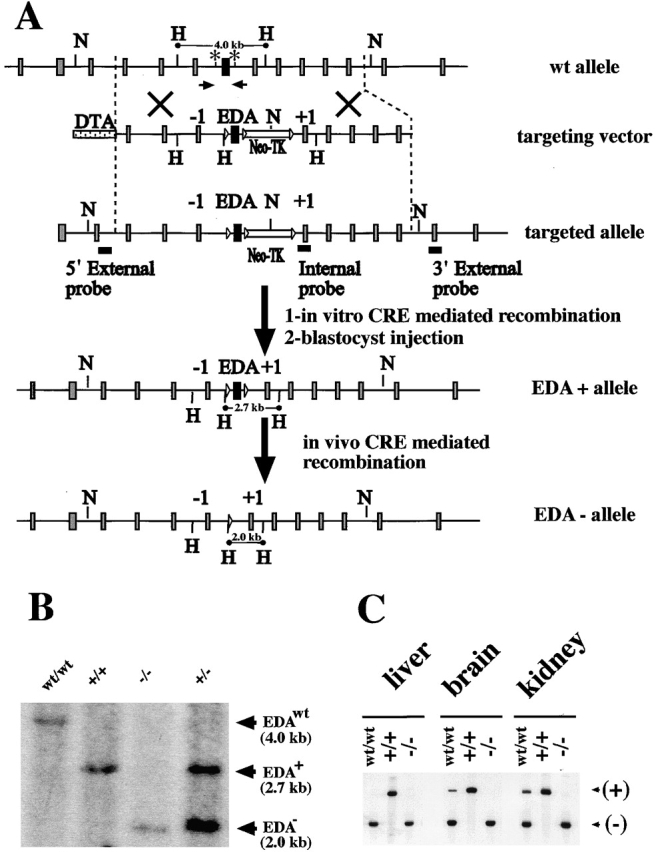
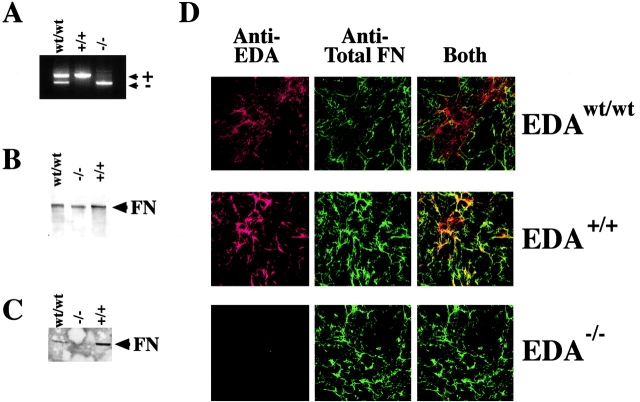
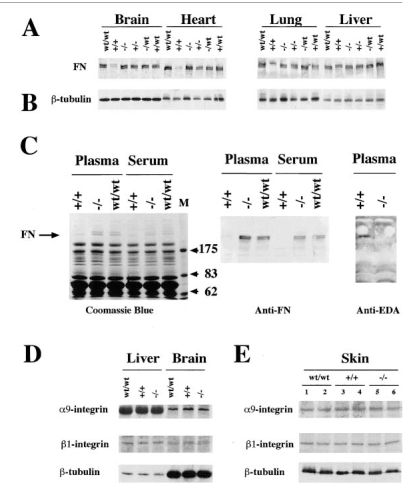
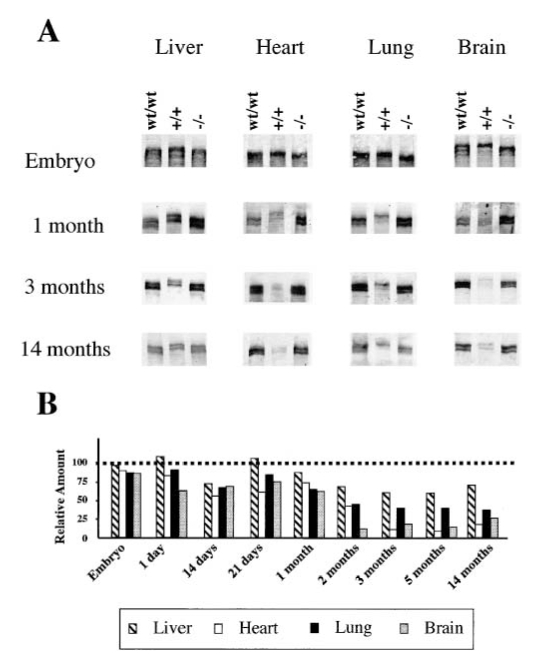
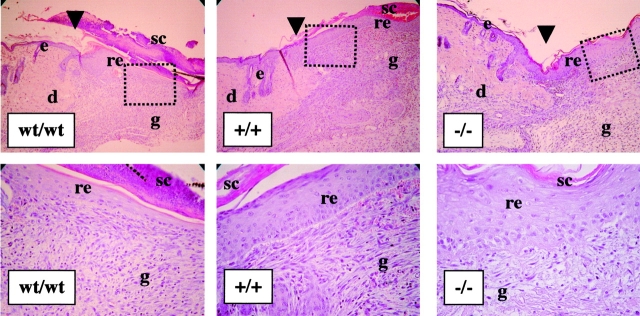
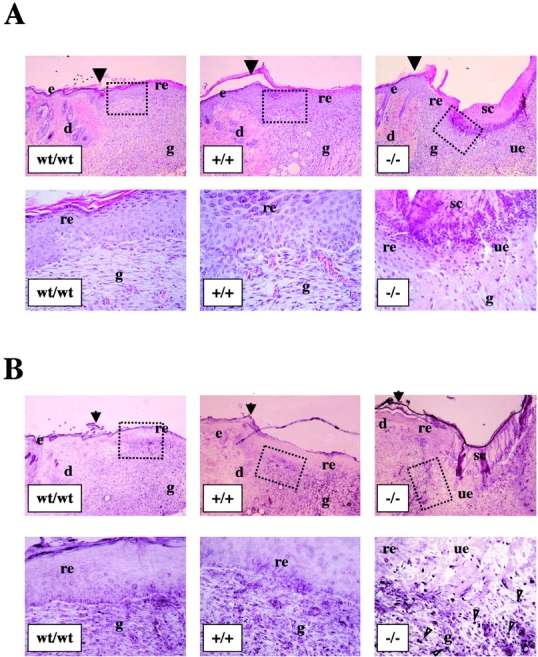
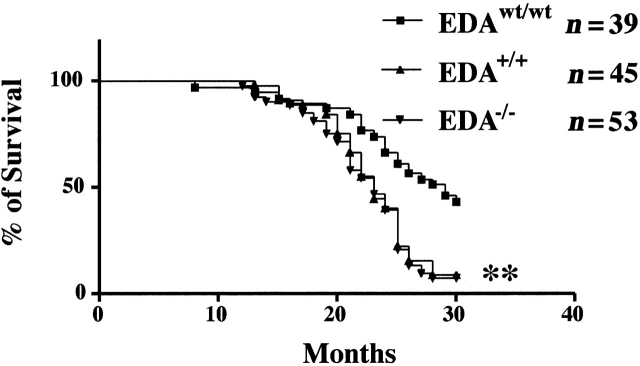
Fibronectins (FNs) are multifunctional high molecular weight glycoproteins present in the blood plasma and in the ECMs of tissues. The FN primary transcript undergoes alternative splicing in three regions generating up to 20 main different variants in humans. However, the precise role of the FN isoforms is poorly understood. One of the alternatively spliced exons is the extra domain A (EDA) or extra type III homology that is regulated spatially and temporally during development and aging. To study its in vivo function, we generated mice devoid of EDA exon-regulated splicing. Constitutive exon inclusion was obtained by optimizing the splice sites, whereas complete exclusion was obtained after in vivo CRE-loxP-mediated deletion of the exon. Homozygous mouse strains with complete exclusion or inclusion of the EDA exon were viable and developed normally, indicating that the alternative splicing at the EDA exon is not necessary during embryonic development. Conversely, mice without the EDA exon in the FN protein displayed abnormal skin wound healing, whereas mice having constitutive inclusion of the EDA exon showed a major decrease in the FN levels in all tissues. Moreover, both mutant mouse strains have a significantly shorter lifespan than the control mice, suggesting that EDA splicing regulation is necessary for efficient long-term maintenance of biological functions.
Overview
The claims and statistics of this paper haven’t been checked yet.
Free: it reads the open-access text and checks the first 5 claims that cite a source we can check. Create a free account to check every claim.
Integrity signals
Registry
Cites
Statistics
Figures
Verification
Claims the paper makes
The claims and statistics of this paper haven’t been checked yet.
Free: it reads the open-access text and checks the first 5 claims that cite a source we can check. Create a free account to check every claim.
Claims other papers make about this one
Each is checked against this paper’s own text: does it say what the citing paper says it does?
The cited source says what the claim attributes to it.
In the citing paper
“Mammalian fibronectin consists of various isoforms, created through alternative splicing (Muro et al., 2003).”
From Notch signaling functions in lymphatic valve formation (2014) · cites this paper as Muro et al., 2003
Self-check
Percentages, sums and reported differences re-computed from the paper’s own numbers.
The self-check needs the paper’s full text.
Citations
Cites
Single-step method of RNA isolation by acid guanidinium thiocyanate-phenol-chloroform extraction
Chomczynski, P., & Sacchi, N. (1987) · Analytical Biochemistry · doi:10.1016/0003-2697(87)90021-2 · Cited by 46,426 · cited 1×
“Total cellular RNA from various tissues was prepared by the guanidinium thiocyanate method (Chomczynski and Sacchi, 1987), quantitated by measuring absorbance at 260 and 280 nm, and RNA integrity was confirmed by running the samples on 1% agarose formaldehyde gels.”
MethodHow Matrix Metalloproteinases Regulate Cell Behavior
Sternlicht, M. D., & Werb, Z. (2001) · Annual Review of Cell and Developmental Biology · doi:10.1146/annurev.cellbio.17.1.463 · Cited by 3,959 · cited 1×
“In an attempt to determine alterations in the FN-degradative mechanisms, we performed gelatin zymography and observed no variations in plasma and other tissues (brain and heart) in the levels of matrix metalloproteinases (MMPs), enzymes known to degrade FN (Sternlicht and Werb, 2001).”
MethodDefects in mesoderm, neural tube and vascular development in mouse embryos lacking fibronectin
George, E. L., Georges-Labouesse, E. N., Patel-King, R. S., Rayburn, H., & Hynes, R. O. (1993) · Development · doi:10.1242/dev.119.4.1079 · Cited by 1,305
The Extra Domain A of Fibronectin Activates Toll-like Receptor 4
Okamura, Y., Watari, M., Jerud, E. S., Young, D. W., Ishizaka, S. T., Rose, J., Chow, J. C., & Strauss, J. F. (2001) · Journal of Biological Chemistry · doi:10.1074/jbc.m100099200 · Cited by 1,216 · cited 2×
“…(Peters et al., 1990); secretion (Wang et al., 1991); cell adhesion (Xia and Culp, 1995); cell differentiation (Jarnagin et al., 1994); tissue injury and inflammation (Satoi et al., 1999; Okamura et al., 2001); and cell cycle progression and mitogenic signal transduction (Manabe et al., 1999).”
BackgroundConditional control of gene expression in the mouse
Lewandoski, M. (2001) · Nature Reviews Genetics · doi:10.1038/35093537 · Cited by 781 · cited 1×
“A similar phenomenon has recently been observed in other genes (Lewandoski, 2001).”
Distinct functions of the two isoforms of dopamine D2 receptors
Usiello, A., Baik, J.-H., Rougé-Pont, F., Picetti, R., Dierich, A., LeMeur, M., Piazza, P. V., & Borrelli, E. (2000) · Nature · doi:10.1038/35041572 · Cited by 717 · cited 3×
“…of alternatively spliced exons in different protein systems such as 6 integrin, -aminobutyrate receptor, dopamine D2 receptor, FN, Pax6, and Stat3 (Gimond et al., 1998; Homanics et al., 1999; Usiello et al., 2000; Wang et al., 2000; Fukuda et al., 2002; Singh et al., 2002; Yoo et al., 2002).”
BackgroundThree different fibronectin mRNAs arise by alternative splicing within the coding region
Schwarzbauer, J. E., Tamkun, J. W., Lemischka, I. R., & Hynes, R. O. (1983) · Cell · doi:10.1016/0092-8674(83)90175-7 · Cited by 706 · cited 2×
“The IIICS region undergoes a more complex pattern of splicing which is species dependent (Schwarzbauer et al., 1983).”
BackgroundClark, R. A. F., Lanigan, J. M., DellaPelle, P., Manseau, E., Dvorak, H. F., & Colvin, R. B. (1982) · Journal of Investigative Dermatology · doi:10.1111/1523-1747.ep12500075 · Cited by 695 · cited 2×
“Previous studies have also shown that FN appears in the provisional matrix beneath the migrating epidermis coordinating with the FN-receptor expression on migrating epidermal cells ( Clark et al., 1982, 1983; Grinnell, 1984).”
ResultHelgason, C. D., Damen, J. E., Rosten, P., Grewal, R., Sorensen, P., Chappel, S. M., Borowski, A., Jirik, F., Krystal, G., & Humphries, R. K. (1998) · Genes & Development · doi:10.1101/gad.12.11.1610 · Cited by 556 · cited 2×
“…have a shorter lifespan It has been shown that deficiency of SH2-containing inositol-5-phosphatase, lysosomal acid lipase, and DNA topoisomerase III had no consequences in embryonic development, but shortens the lifespan of the animals (Helgason et al., 1998; Du et al., 2001; Kwan and Wang, 2001).”
BackgroundReappearance of an embryonic pattern of fibronectin splicing during wound healing in the adult rat.
Ffrench-Constant, C., Van de Water, L., Dvorak, H. F., & Hynes, R. O. (1989) · The Journal of cell biology · doi:10.1083/jcb.109.2.903 · Cited by 486 · cited 8×
“Expression of cFN by the cells found at the base and edges of the wound just beneath the epidermis was observed, and the presence of cFN preceded the migration of epithelial cells that eventually covered the wound (ffrench-Constant et al., 1989).”
BackgroundInfluentialJarnagin, W. R., Rockey, D. C., Koteliansky, V. E., Wang, S. S., & Bissell, D. M. (1994) · The Journal of cell biology · doi:10.1083/jcb.127.6.2037 · Cited by 452 · cited 2×
“…(Guan et al., 1990); dimer formation (Peters et al., 1990); secretion (Wang et al., 1991); cell adhesion (Xia and Culp, 1995); cell differentiation (Jarnagin et al., 1994); tissue injury and inflammation (Satoi et al., 1999; Okamura et al., 2001); and cell cycle progression and mitogenic signal…”
BackgroundPartial primary structure of bovine plasma fibronectin: Three types of internal homology
Petersen, T. E., Thøgersen, H. C., Skorstengaard, K., Vibe-Pedersen, K., Sahl, P., Sottrup-Jensen, L., & Magnusson, S. (1983) · Proceedings of the National Academy of Sciences · doi:10.1073/pnas.80.1.137 · Cited by 398 · cited 1×
“Despite the fact that both FN primary structure and FN alternative splicing were described almost two decades ago (Kornblihtt et al., 1983; Petersen et al., 1983; Schwarzbauer et al., 1983; Kornblihtt et al., 1984; Zardi et al., 1987), many aspects of the function of FN isoforms remain elusive.”
BackgroundGrinnell, F. (1984) · Journal of Cellular Biochemistry · doi:10.1002/jcb.240260206 · Cited by 384
Sakai, T., Johnson, K. J., Murozono, M., Sakai, K., Magnuson, M. A., Wieloch, T., Cronberg, T., Isshiki, A., Erickson, H. P., & Fässler, R. (2001) · Nature Medicine · doi:10.1038/85471 · Cited by 359 · cited 9×
“cFN is produced in situ 3 d after wounding (Clark et al., 1983; ffrench-Constant et al., 1989; Sakai et al., 2001) and a thin layer of cFN deposited on the surface of the wound immediately after injury in pFN-null mice ( Sakai et al., 2001 ).”
BackgroundInfluentialZardi, L., Carnemolla, B., Siri, A., Petersen, T. E., Paolella, G., Sebastio, G., & Baralle, F. E. (1987) · The EMBO Journal · doi:10.1002/j.1460-2075.1987.tb02509.x · Cited by 338 · cited 2×
“The EDA and EDB are single exons coding for single type III repeats that are included or excluded from the FN mRNA by exon skipping (Kornblihtt et al., 1984; Gutman and Kornblihtt, 1987; Schwarzbauer et al., 1987; Zardi et al., 1987).”
BackgroundSelf-citationPlasma fibronectin is synthesized and secreted by hepatocytes.
Tamkun, J. W., & Hynes, R. O. (1983) · Journal of Biological Chemistry · doi:10.1016/s0021-9258(18)32672-3 · Cited by 316 · cited 1×
“The most dramatic example is seen in liver, where pFN is synthesized and the EDA exon is completely excluded from the mRNA in the adult (Tamkun and Hynes, 1983; Kornblihtt et al., 1984).”
BackgroundLavigueur, A., La Branche, H., Kornblihtt, A. R., & Chabot, B. (1993) · Genes & Development · doi:10.1101/gad.7.12a.2405 · Cited by 304 · cited 2×
“The molecular mechanisms involved in processing the FN transcript are well understood for both the EDA and EDB exons (Mardon et al., 1987; Lavigueur et al., 1993; Caputi et al., 1994; Du et al., 1997; Lim and Sharp, 1998; Muro et al., 1999).”
BackgroundMultiple sites of alternative splicing of the rat fibronectin gene transcript.
Schwarzbauer, J. E., Patel, R. S., Fonda, D., & Hynes, R. O. (1987) · The EMBO Journal · doi:10.1002/j.1460-2075.1987.tb02547.x · Cited by 299 · cited 1×
“The EDA and EDB are single exons coding for single type III repeats that are included or excluded from the FN mRNA by exon skipping (Kornblihtt et al., 1984; Gutman and Kornblihtt, 1987; Schwarzbauer et al., 1987; Zardi et al., 1987).”
BackgroundKornblihtt, A. R., Vibe-Pedersen, K., & Baralle, F. E. (1984) · The EMBO Journal · doi:10.1002/j.1460-2075.1984.tb01787.x · Cited by 224 · cited 4×
“S2, B and C, lanes 1 and 2) showed 98–99% of the 187 bases protected fragment, indicating almost complete EDA exon exclusion, in complete agreement with previous studies (Tamkun and Hynes, 1983; Kornblihtt et al., 1984).”
BackgroundResultInfluentialSelf-citationAlternative splicing of fibronectin is temporally and spatially regulated in the chicken embryo
Ffrench-Constant, C., & Hynes, R. O. (1989) · Development · doi:10.1242/dev.106.2.375 · Cited by 216
Liao, Y.-F., Gotwals, P. J., Koteliansky, V. E., Sheppard, D., & Van De Water, L. (2002) · Journal of Biological Chemistry · doi:10.1074/jbc.m201100200 · Cited by 214
Alternative Splicing of Fibronectin—Many Different Proteins but Few Different Functions
Ffrench-Constant, C. (1995) · Experimental Cell Research · doi:10.1006/excr.1995.1374 · Cited by 208
The fibronectin gene as a model for splicing and transcription studies
Kornblihtt, A. R., Pesce, C. G., Alonso, C. R., Cramer, P., Srebrow, A., Werbajh, S., & Muro, A. F. (1996) · The FASEB Journal · doi:10.1096/fasebj.10.2.8641558 · Cited by 204 · cited 12×
“FNs play key roles in the adhesive and migratory behavior of cells related to fundamental processes such as embryogenesis, malignancy, hemostasis, wound healing, host defense, and maintenance of tissue integrity (Hynes, 1990; ffrench-Constant, 1995; Kornblihtt et al., 1996).”
BackgroundInfluentialSelf-citationMesodermal development in mouse embryos mutant for fibronectin
Georges‐Labouesse, E., George, E. L., Rayburn, H., & Hynes, R. O. (1996) · Developmental Dynamics · doi:10.1002/(sici)1097-0177(199610)207:2<145::aid-aja3>3.0.co;2-h · Cited by 197 · cited 2×
“This novel approach avoided the difficulties found in a previous attempt to produce animals devoid of alternative splicing of the EDB exon in the FN gene where the modification of the gene structure through the introduction of a selection cassette within the introns produced an FNnull allele (Georges-Labouesse et al.,…”
BackgroundMethodDopamine D2 Long Receptor-Deficient Mice Display Alterations in Striatum-Dependent Functions
Wang, Y., Xu, R., Sasaoka, T., Tonegawa, S., Kung, M.-P., & Sankoorikal, E.-B. (2000) · The Journal of Neuroscience · doi:10.1523/jneurosci.20-22-08305.2000 · Cited by 195 · cited 3×
“…of alternatively spliced exons in different protein systems such as 6 integrin, -aminobutyrate receptor, dopamine D2 receptor, FN, Pax6, and Stat3 (Gimond et al., 1998; Homanics et al., 1999; Usiello et al., 2000; Wang et al., 2000; Fukuda et al., 2002; Singh et al., 2002; Yoo et al., 2002).”
BackgroundModulation of Cell-adhesive Activity of Fibronectin by the Alternatively Spliced EDA Segment
Manabe, R.-I., Oh-e, N., Maeda, T., Fukuda, T., & Sekiguchi, K. (1997) · The Journal of Cell Biology · doi:10.1083/jcb.139.1.295 · Cited by 195 · cited 2×
“It has been postulated that the inclusion of the spliced regions could alter the conformation of the RGD sequence, which is the main cell-binding site, via modification of its neighboring modules (ffrench-Constant, 1995) or by the alteration of the global conformation of the FN molecule (Manabe et al., 1997).”
BackgroundDu, H., Heur, M., Duanmu, M., Grabowski, G. A., Hui, D. Y., Witte, D. P., & Mishra, J. (2001) · Journal of Lipid Research · doi:10.1016/s0022-2275(20)31157-3 · Cited by 189
Isolation and characterization of cDNA clones for human and bovine fibronectins.
Kornblihtt, A. R., Vibe-Pedersen, K., & Baralle, F. E. (1983) · Proceedings of the National Academy of Sciences · doi:10.1073/pnas.80.11.3218 · Cited by 183 · cited 1×
“Despite the fact that both FN primary structure and FN alternative splicing were described almost two decades ago (Kornblihtt et al., 1983; Petersen et al., 1983; Schwarzbauer et al., 1983; Kornblihtt et al., 1984; Zardi et al., 1987), many aspects of the function of FN isoforms remain elusive.”
BackgroundSelf-citationSmith, G. S., Walford, R. L., & Mickey, M. R. (1973) · JNCI: Journal of the National Cancer Institute · doi:10.1093/jnci/50.5.1195 · Cited by 172 · cited 6×
“Although no significant differences have been reported on the lifespan of c129 and C57BL/6 (Smith et al., 1973; Goodrick, 1975; Kunstyr and Leuenberger, 1975), we cannot formally rule out that the differences in chromosome background at the FN EDA locus (C57BL/6 for the EDAwt/wt and c129 with one…”
BackgroundInfluentialMagnuson, V. L., Young, M., Schattenberg, D. G., Mancini, M. A., Chen, D. L., Steffensen, B., & Klebe, R. J. (1991) · Journal of Biological Chemistry · doi:10.1016/s0021-9258(18)98735-1 · Cited by 154 · cited 3×
“In normal animals, a dramatic change in the EDA /EDA ratio is observed after birth and a gradual decrease of EDA inclusion is observed in the tissues that increases with the age of the animal (Magnuson et al., 1991; Pagani et al., 1991).”
BackgroundLife-Span and the Inheritance of Longevity of Inbred Mice
Goodrick, C. L. (1975) · Journal of Gerontology · doi:10.1093/geronj/30.3.257 · Cited by 148 · cited 7×
“Although no significant differences have been reported on the lifespan of c129 and C57BL/6 (Smith et al., 1973; Goodrick, 1975; Kunstyr and Leuenberger, 1975), we cannot formally rule out that the differences in chromosome background at the FN EDA locus (C57BL/6 for the EDAwt/wt and c129 with one…”
BackgroundInfluentialPagani, F., Zagato, L., Vergani, C., Casari, G., Sidoli, A., & Baralle, F. E. (1991) · The Journal of cell biology · doi:10.1083/jcb.113.5.1223 · Cited by 146 · cited 8×
“In normal animals, a dramatic change in the EDA /EDA ratio is observed after birth and a gradual decrease of EDA inclusion is observed in the tissues that increases with the age of the animal (Magnuson et al., 1991; Pagani et al., 1991).”
BackgroundInfluentialSelf-citationTing-Berreth, S. A., & Chuong, C.-M. (1996) · Developmental Dynamics · doi:10.1002/(sici)1097-0177(199610)207:2<157::aid-aja4>3.0.co;2-g · Cited by 145
Gerontological Data of C57BL/6J Mice. I. Sex Differences in Survival Curves
Kunstyr, I., & Leuenberger, H.-G. W. (1975) · Journal of Gerontology · doi:10.1093/geronj/30.2.157 · Cited by 143 · cited 1×
“Although no significant differences have been reported on the lifespan of c129 and C57BL/6 (Smith et al., 1973; Goodrick, 1975; Kunstyr and Leuenberger, 1975), we cannot formally rule out that the differences in chromosome background at the FN EDA locus (C57BL/6 for the EDAwt/wt and c129 with one…”
BackgroundCaputi, M., Casari, G., Guenzi, S., Tagliabue, R., Sidoli, A., Melo, C. A., & Baralle, F. E. (1994) · Nucleic Acids Research · doi:10.1093/nar/22.6.1018 · Cited by 143 · cited 4×
“Taking advantage of our detailed knowledge of the elements involved in EDA splicing regulation (Mardon et al., 1987; Caputi et al., 1994; Muro et al., 1998, 1999), we have designed a novel approach to study the in vivo function of protein isoforms coded by genes that undergo alternative splicing without modifying the…”
BackgroundMethodInfluentialSelf-citationYoo, J.-Y., Huso, D. L., Nathans, D., & Desiderio, S. (2002) · Cell · doi:10.1016/s0092-8674(02)00636-0 · Cited by 139 · cited 2×
“Gene targeting in mice has allowed the specific deletion of alternatively spliced exons in different protein systems such as � 6 integrin, � -aminobutyrate receptor, dopamine D2 receptor, FN, Pax6, and Stat3 (Gimond et al., 1998; Homanics et al., 1999; Usiello et al., 2000; Wang et al., 2000; Fukuda et al., 2002; Sing…”
BackgroundMuro, A. F., Caputi, M., Pariyarath, R., Pagani, F., Buratti, E., & Baralle, F. E. (1999) · Molecular and Cellular Biology · doi:10.1128/mcb.19.4.2657 · Cited by 134 · cited 3×
“The molecular mechanisms involved in processing the FN transcript are well understood for both the EDA and EDB exons (Mardon et al., 1987; Lavigueur et al., 1993; Caputi et al., 1994; Du et al., 1997; Lim and Sharp, 1998; Muro et al., 1999).”
BackgroundMethodSelf-citationA role for exon sequences in alternative splicing of the human fibronection gene
Mardon, H. J., Sebastio, G., & Baralle, F. E. (1987) · Nucleic Acids Research · doi:10.1093/nar/15.19.7725 · Cited by 132 · cited 6×
“Taking advantage of our detailed knowledge of the elements involved in EDA splicing regulation (Mardon et al., 1987; Caputi et al., 1994; Muro et al., 1998, 1999), we have designed a novel approach to study the in vivo function of protein isoforms coded by genes that undergo alternative splicing…”
BackgroundMethodInfluentialSelf-citationIdentification of a third region of cell-specific alternative splicing in human fibronectin mRNA.
Gutman, A., & Kornblihtt, A. R. (1987) · Proceedings of the National Academy of Sciences · doi:10.1073/pnas.84.20.7179 · Cited by 130 · cited 1×
“The EDA and EDB are single exons coding for single type III repeats that are included or excluded from the FN mRNA by exon skipping (Kornblihtt et al., 1984; Gutman and Kornblihtt, 1987; Schwarzbauer et al., 1987; Zardi et al., 1987).”
BackgroundFukuda, T., Yoshida, N., Kataoka, Y., Manabe, R., Mizuno-Horikawa, Y., Sato, M., Kuriyama, K., Yasui, N., & Sekiguchi, K. (2002) · PubMed · Cited by 127
Manabe, R.-I., Oh-e, N., & Sekiguchi, K. (1999) · Journal of Biological Chemistry · doi:10.1074/jbc.274.9.5919 · Cited by 115 · cited 2×
“…(Peters et al., 1990); secretion (Wang et al., 1991); cell adhesion (Xia and Culp, 1995); cell differentiation (Jarnagin et al., 1994); tissue injury and inflammation (Satoi et al., 1999; Okamura et al., 2001); and cell cycle progression and mitogenic signal transduction (Manabe et al., 1999).”
BackgroundMice lacking DNA topoisomerase IIIβ develop to maturity but show a reduced mean lifespan
Kwan, K. Y., & Wang, J. C. (2001) · Proceedings of the National Academy of Sciences · doi:10.1073/pnas.101132498 · Cited by 111 · cited 2×
“It has been shown that deficiency of SH2-containing inositol-5-phosphatase, lysosomal acid lipase, and DNA topoisomerase III� had no consequences in embryonic development, but shortens the lifespan of the animals (Helgason et al., 1998; Du et al., 2001; Kwan and Wang, 2001 ).”
BackgroundHomanics, G. E., Harrison, N. L., Quinlan, J. J., Krasowski, M. D., Rick, C., Blas, A. L. D., Mehta, A. K., Kist, F., Mihalek, R., Aul, J. J., et al. (1999) · Neuropharmacology · doi:10.1016/s0028-3908(98)00177-4 · Cited by 106 · cited 1×
“…of alternatively spliced exons in different protein systems such as 6 integrin, -aminobutyrate receptor, dopamine D2 receptor, FN, Pax6, and Stat3 (Gimond et al., 1998; Homanics et al., 1999; Usiello et al., 2000; Wang et al., 2000; Fukuda et al., 2002; Singh et al., 2002; Yoo et al., 2002).”
BackgroundAlternative Splicing of the Fibronectin EIIIB Exon Depends on Specific TGCATG Repeats
Lim, L. P., & Sharp, P. A. (1998) · Molecular and Cellular Biology · doi:10.1128/mcb.18.7.3900 · Cited by 106 · cited 1×
“The molecular mechanisms involved in processing the FN transcript are well understood for both the EDA and EDB exons (Mardon et al., 1987; Lavigueur et al., 1993; Caputi et al., 1994; Du et al., 1997; Lim and Sharp, 1998; Muro et al., 1999).”
BackgroundSelective secretion of alternatively spliced fibronectin variants.
Schwarzbauer, J. E., Spencer, C. S., & Wilson, C. L. (1989) · The Journal of Cell Biology · doi:10.1083/jcb.109.6.3445 · Cited by 106 · cited 2×
“It is interesting to note that Schwarzbauer et al (1989) have shown that the IIICS-0/ IIICS-0 dimers were not secreted.”
BackgroundFibronectin Beneath Reepithelializing Epidermis in Vivo: Sources and Significance
Clark, R. A. F., Winn, H. J., Dvorak, H. F., & Colvin, R. B. (1983) · Journal of Investigative Dermatology · doi:10.1038/jid.1983.7 · Cited by 97
Co-assembly of plasma and cellular fibronectins into fibrils in human fibroblast cultures.
Peters, D. M. P., Portz, L. M., Fullenwider, J., & Mosher, D. F. (1990) · The Journal of Cell Biology · doi:10.1083/jcb.111.1.249 · Cited by 90 · cited 2×
“…EDA segment are as follows: wound healing (Clark et al., 1983; ffrench-Constant et al., 1989); matrix assembly (Guan et al., 1990); dimer formation (Peters et al., 1990); secretion (Wang et al., 1991); cell adhesion (Xia and Culp, 1995); cell differentiation (Jarnagin et al., 1994); tissue injury…”
BackgroundRetroviral expression of alternatively spliced forms of rat fibronectin.
Guan, J. L., Trevithick, J. E., & Hynes, R. O. (1990) · The Journal of cell biology · doi:10.1083/jcb.110.3.833 · Cited by 86 · cited 2×
“Other functions proposed for the EDA segment are as follows: wound healing (Clark et al., 1983; ffrench-Constant et al., 1989); matrix assembly (Guan et al., 1990); dimer formation (Peters et al., 1990); secretion (Wang et al., 1991); cell adhesion (Xia and Culp, 1995); cell differentiation…”
BackgroundIris hypoplasia in mice that lack the alternatively spliced Pax6(5a) isoform
Singh, S., Mishra, R., Arango, N. A., Deng, J. M., Behringer, R. R., & Saunders, G. F. (2002) · Proceedings of the National Academy of Sciences · doi:10.1073/pnas.102691299 · Cited by 85 · cited 3×
“…of alternatively spliced exons in different protein systems such as 6 integrin, -aminobutyrate receptor, dopamine D2 receptor, FN, Pax6, and Stat3 (Gimond et al., 1998; Homanics et al., 1999; Usiello et al., 2000; Wang et al., 2000; Fukuda et al., 2002; Singh et al., 2002; Yoo et al., 2002).”
BackgroundPatterns of alternative splicing of fibronectin pre-mRNA in human adult and fetal tissues
Oyama, F., Murata, Y., Suganuma, N., Kimura, T., Titani, K., & Sekiguchi, K. (1989) · Biochemistry · doi:10.1021/bi00429a072 · Cited by 80 · cited 2×
“In vivo studies in chicken, rat, and Xenopus showed the increased inclusion of EDA and EDB exons in the FN mRNA derived from embryos during development (ffrench-Constant and Hynes, 1989; Oyama et al., 1989; Pagani et al., 1991; DeSimone et al., 1992).”
BackgroundDu, K., Peng, Y., Greenbaum, L. E., Haber, B. A., & Taub, R. A. (1997) · Molecular and Cellular Biology · doi:10.1128/mcb.17.7.4096 · Cited by 76 · cited 2×
“The molecular mechanisms involved in processing the FN transcript are well understood for both the EDA and EDB exons (Mardon et al., 1987; Lavigueur et al., 1993; Caputi et al., 1994; Du et al., 1997; Lim and Sharp, 1998; Muro et al., 1999).”
BackgroundDeSimone, D. W., Norton, P. A., & Hynes, R. O. (1992) · Developmental Biology · doi:10.1016/0012-1606(92)90291-n · Cited by 67 · cited 2×
“In vivo studies in chicken, rat, and Xenopus showed the increased inclusion of EDA and EDB exons in the FN mRNA derived from embryos during development (ffrench-Constant and Hynes, 1989; Oyama et al., 1989; Pagani et al., 1991; DeSimone et al., 1992).”
BackgroundPolarized regulation of fibronectin secretion and alternative splicing by transforming growth factor
Wang, A., Cohen, D. S., Palmer, E., & Sheppard, D. (1991) · Journal of Biological Chemistry · doi:10.1016/s0021-9258(18)98447-4 · Cited by 62 · cited 3×
“, 1990); secretion (Wang et al., 1991); cell adhesion (Xia and Culp, 1995); cell differentiation (Jarnagin et al.”
BackgroundInfluentialMOLECULAR BIOLOGY OF THE EXTRACELLULAR MATRIX PROTEINS
Kornblihtt, A. R., & Gutman, A. (1988) · Biological reviews/Biological reviews of the Cambridge Philosophical Society · doi:10.1111/j.1469-185x.1988.tb00668.x · Cited by 58 · cited 1×
“They interact with other ECM proteins and cellular ligands, such as glycosaminoglycans, collagen, fibrin, and integrins (Kornblihtt and Gutman, 1988; Hynes, 1990).”
BackgroundGimond, C., Baudoin, C., van der Neut, R., Kramer, D., Calafat, J., & Sonnenberg, A. (1998) · The Journal of Cell Biology · doi:10.1083/jcb.143.1.253 · Cited by 56 · cited 3×
“…of alternatively spliced exons in different protein systems such as 6 integrin, -aminobutyrate receptor, dopamine D2 receptor, FN, Pax6, and Stat3 (Gimond et al., 1998; Homanics et al., 1999; Usiello et al., 2000; Wang et al., 2000; Fukuda et al., 2002; Singh et al., 2002; Yoo et al., 2002).”
BackgroundMuro, A. F., Iaconcig, A., & Baralle, F. E. (1998) · FEBS Letters · doi:10.1016/s0014-5793(98)01201-0 · Cited by 47 · cited 6×
“Taking advantage of our detailed knowledge of the elements involved in EDA splicing regulation (Mardon et al., 1987; Caputi et al., 1994; Muro et al., 1998, 1999), we have designed a novel approach to study the in vivo function of protein isoforms coded by genes that undergo alternative splicing…”
BackgroundMethodInfluentialSelf-citationXia, P., & Culp, L. A. (1995) · Experimental Cell Research · doi:10.1006/excr.1995.1117 · Cited by 43 · cited 1×
“, 1991); cell adhesion (Xia and Culp, 1995); cell differentiation (Jarnagin et al.”
BackgroundRegulation of CS1 Fibronectin Expression and Function by IL-1 in Endothelial Cells
Boyle, D. L., Shi, Y., Gay, S., & Firestein, G. S. (2000) · Cellular Immunology · doi:10.1006/cimm.2000.1610 · Cited by 16 · cited 2×
“Alternative splicing of FN is regulated at both the extracellular (ffrench-Constant, 1995; Kornblihtt et al., 1996; Boyle et al., 2000) and the molecular levels (Mardon et al.”
BackgroundAnalysis of the linkage between fibronectin alternative spliced sites during ageing in rat tissues
Caputi, M., Baralle, F. E., & Melo, C. A. (1995) · Biochimica et Biophysica Acta (BBA) - Gene Structure and Expression · doi:10.1016/0167-4781(95)00067-q · Cited by 13 · cited 1×
“Quantitative mRNA studies in these tissues showed that the EDB exon is excluded more often than the EDA exon from the FN mRNA (ffrench-Constant and Hynes, 1989; Pagani et al., 1991; Caputi et al., 1995).”
BackgroundSelf-citationDIFFERENT RESPONSES TO SURGICAL STRESS BETWEEN EXTRA DOMAIN A+ AND PLASMA FIBRONECTINS
Satoi, S., 平松, 義., Kitade, H., Kwon, A., Matsui, K., Miyashita, K., Sakashita, E., Sekiguchi, K., Takahashi, H., & Kamiyama, Y. (1999) · Clinical and Experimental Pharmacology and Physiology · doi:10.1046/j.1440-1681.1999.03019.x · Cited by 9 · cited 1×
“…(Peters et al., 1990); secretion (Wang et al., 1991); cell adhesion (Xia and Culp, 1995); cell differentiation (Jarnagin et al., 1994); tissue injury and inflammation (Satoi et al., 1999; Okamura et al., 2001); and cell cycle progression and mitogenic signal transduction (Manabe et al., 1999).”
Background
Research works printed but not linked: 1
- Hynes, R.O. 1990. Fibronectins. Springer-Verlag New York Inc., New York. 544 pp.
Cited by
Interactions between extracellular matrix and growth factors in wound healing
Schultz, G. S., & Wysocki, A. (2009) · Wound Repair and Regeneration · doi:10.1111/j.1524-475x.2009.00466.x · Cited by 1,126
“Similar to elastin, there is a normal developmentally related secretion of specific fibronectin isoforms that can be induced during wound repair.(20) In acute wound repair, fibronectin is initially deposited from blood plasma, whereas in chronic wound repair, it is deposited from plasma leaking across/ through porous…”
BackgroundAssembly of Fibronectin Extracellular Matrix
Singh, P., Carraher, C., & Schwarzbauer, J. E. (2010) · Annual Review of Cell and Developmental Biology · doi:10.1146/annurev-cellbio-100109-104020 · Cited by 960
“EIIIA and EIIIB functions have been difficult to decipher using in vitro systems, and mice expressing EIIIA− or EIIIB−FN are viable and fertile (Muro et al. 2003, Tan et al. 2004).”
BackgroundFibronectin fibrillogenesis, a cell-mediated matrix assembly process
Mao, Y., & Schwarzbauer, J. E. (2005) · Matrix Biology · doi:10.1016/j.matbio.2005.06.008 · Cited by 816
The myofibroblast matrix: implications for tissue repair and fibrosis
Klingberg, F., Hinz, B., & White, E. S. (2013) · The Journal of Pathology · doi:10.1002/path.4104 · Cited by 776
“In this regard, the EDA domain of FN is more attractive as a potential therapeutic target for the treatment of fibrotic diseases because it is a specific and crucial component of the myofibroblast ECM that is highly upregulated in a variety of fibrotic diseases but virtually absent from most normal connective tissues…”
Promoting tissue regeneration by modulating the immune system
Julier, Z., Park, A. J., Briquez, P. S., & Martino, M. M. (2017) · Acta Biomaterialia · doi:10.1016/j.actbio.2017.01.056 · Cited by 766
Metadata
- Authors
- Muro, A. F., Chauhan, A. K., Gajovic, S., Iaconcig, A., Porro, F., Stanta, G., & Baralle, F. E.
- Affiliations
- 1International Centre for Genetic Engineering and Biotechnology, 34012 Trieste, Italy
- International Centre for Genetic Engineering and Biotechnology (IT)
- 2Croatian Institute for Brain Research, School of Medicine, University of Zagreb, 10000 Zagreb, Croatia
- University of Trieste (IT)
- Venue
- The Journal of Cell Biology
- Publisher
- Rockefeller University Press
- Published
- 2003-07-07
- Volume
- 162
- Issue
- 1
- Pages
- 149-160
- ISSN
- 0021-9525 (ISSN-L)
- 1540-8140
- PMC
- PMC2172721
- OpenAlex
- W2112541119
- Cited by
- 319
- References
- 59
- Citations by year
- 2026: 6 · 2025: 6 · 2024: 14 · 2023: 11 · 2022: 13 · 2021: 12 · 2020: 21 · 2019: 13 · 2018: 18 · 2017: 13 · 2016: 19 · 2015: 14 · 2014: 16 · 2013: 12 · 2012: 19
- FWCI
- 4.02
- Type
- journal article
- Language
- en
- Open access
- bronze
- doi.org
- Locations
- The Journal of Cell Biology (publishedVersion)
- Europe PMC (PubMed Central) (publishedVersion, cc-by-nc-sa)
- PubMed Central (publishedVersion, cc-by-nc-sa)
- PubMed (publishedVersion)
- Funders
- Institute of Genetics
- Topics
- Life Sciences › Biochemistry, Genetics and Molecular Biology › Molecular Biology › RNA Research and Splicing
- Health Sciences › Medicine › Immunology and Allergy › Cell Adhesion Molecules Research
- Health Sciences › Medicine › Surgery › Wound Healing and Treatments
- Keywords
- fibronectin, alternative splicing, skin wound healing, lifespan, fibronectin isoforms, extracellular matrix
- MeSH terms
- Aging, Animals, Cells, Cultured, Exons, Fetus, Fibroblasts, Fibronectins, Male, Mice, Inbred C57BL, Mutation, RNA, Messenger, Skin, Wound Healing, Down-Regulation, Survival Rate, Gene Deletion, Alternative Splicing, Protein Structure, Tertiary, Mice, Knockout, Gene Expression Regulation, Developmental, Protein Isoforms, Mice
About these checks
Registry, retraction, Cites and statistics results are computed, not judged, with one exception: a printed reference that no index lists is read once by a model before it counts as a citation error. Claims are extracted by a model and kept only when their quote appears verbatim in the text; each cited source is then checked, with a model’s help, for whether it says what the claim relies on. Those verdicts can be wrong — read the claim’s quote and the cited source before relying on one.
Statistics and arithmetic are recomputed, not judged.
Confidence bands are shown only for fields calibrated on our annotated test set. None is calibrated yet, so no band is shown.
What counts as a claim ›How we measure confidence ›How we check this ›
Are you an author, or do you see a problem with this page? Request a review
Data sources
Bibliographic data: Semantic Scholar, OpenAlex, Crossref.
Contains information from the Semantic Scholar Academic Graph Datasets, made available under the ODC Attribution License (ODC-BY 1.0).
Semantic Scholar’s data is described in: Kinney, R., et al. (2023). The Semantic Scholar Open Data Platform. arXiv:2301.10140.
