

Regulated splicing of the fibronectin EDA exon is essential for proper skin wound healing and normal lifespan
Open accessThe DOI matches its Crossref record; 60 of the 60 references it cites were found in a registry or an index.
Abstract
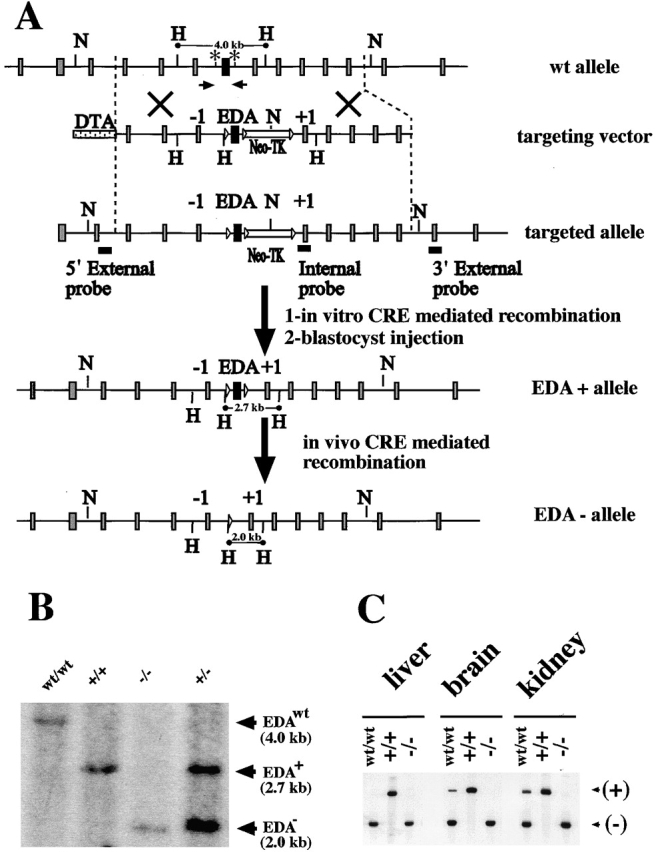
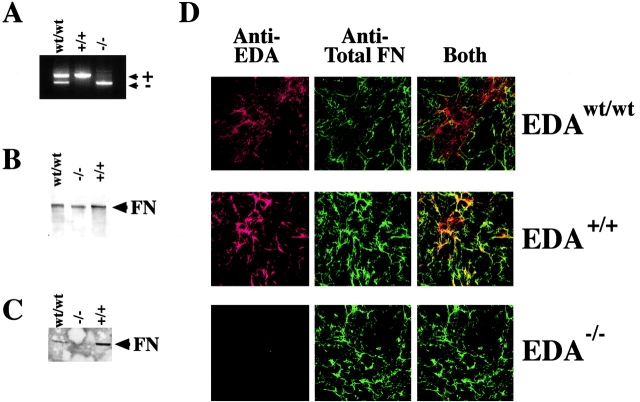
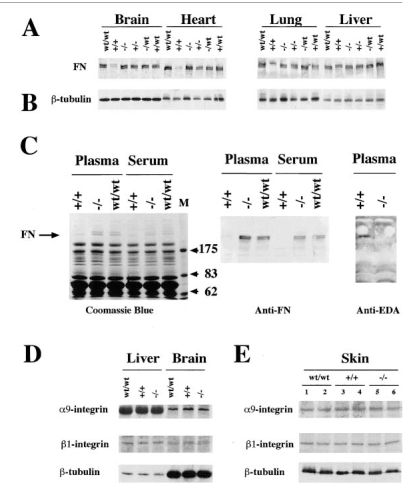
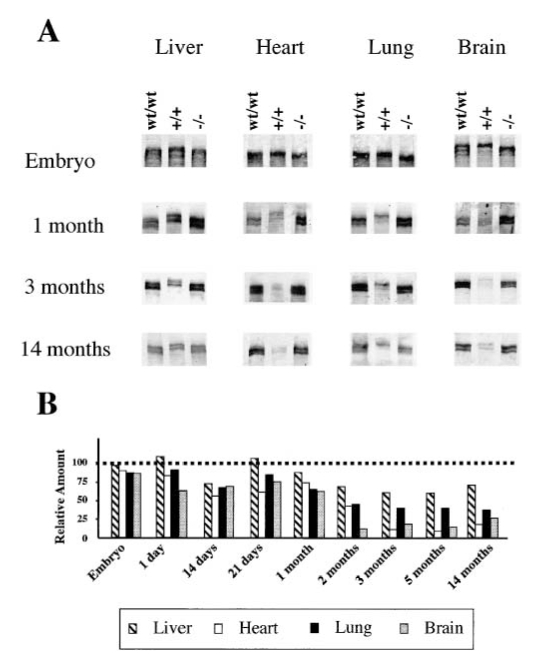
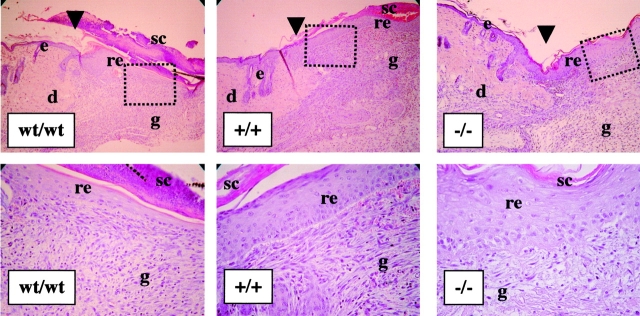
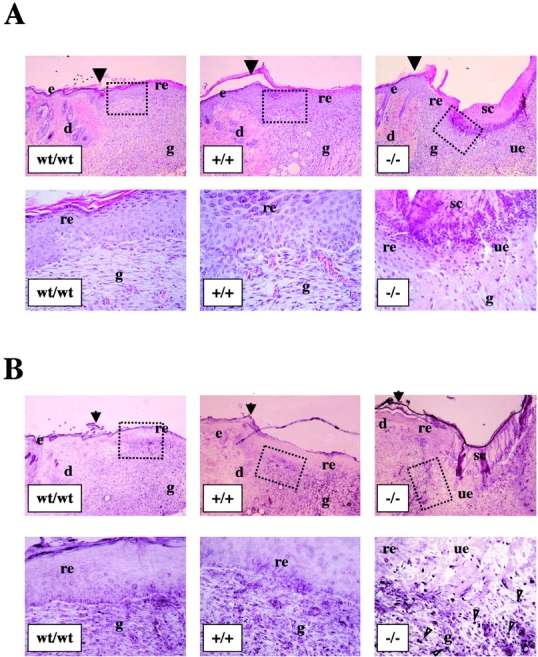
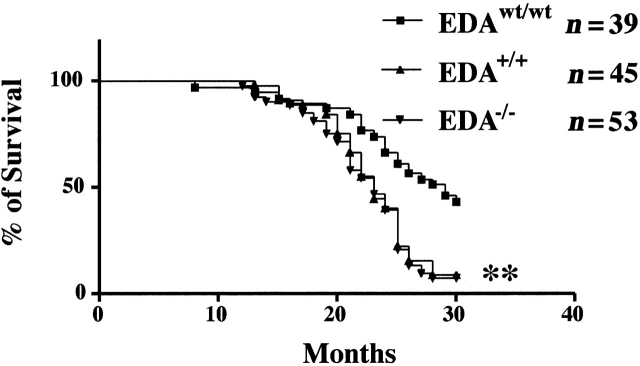
Fibronectins (FNs) are multifunctional high molecular weight glycoproteins present in the blood plasma and in the ECMs of tissues. The FN primary transcript undergoes alternative splicing in three regions generating up to 20 main different variants in humans. However, the precise role of the FN isoforms is poorly understood. One of the alternatively spliced exons is the extra domain A (EDA) or extra type III homology that is regulated spatially and temporally during development and aging. To study its in vivo function, we generated mice devoid of EDA exon-regulated splicing. Constitutive exon inclusion was obtained by optimizing the splice sites, whereas complete exclusion was obtained after in vivo CRE-loxP-mediated deletion of the exon. Homozygous mouse strains with complete exclusion or inclusion of the EDA exon were viable and developed normally, indicating that the alternative splicing at the EDA exon is not necessary during embryonic development. Conversely, mice without the EDA exon in the FN protein displayed abnormal skin wound healing, whereas mice having constitutive inclusion of the EDA exon showed a major decrease in the FN levels in all tissues. Moreover, both mutant mouse strains have a significantly shorter lifespan than the control mice, suggesting that EDA splicing regulation is necessary for efficient long-term maintenance of biological functions.
Overview
The claims and statistics of this paper haven’t been checked yet.
Free: it reads the open-access text and checks the first 5 claims that cite a source we can check. Create a free account to check every claim.
Integrity signals
Registry
Cites
Statistics
Figures
Verification
Claims the paper makes
The claims and statistics of this paper haven’t been checked yet.
Free: it reads the open-access text and checks the first 5 claims that cite a source we can check. Create a free account to check every claim.
Claims other papers make about this one
Each is checked against this paper’s own text: does it say what the citing paper says it does?
The cited source says what the claim attributes to it.
In the citing paper
“Mammalian fibronectin consists of various isoforms, created through alternative splicing (Muro et al., 2003).”
From Notch signaling functions in lymphatic valve formation (2014) · cites this paper as Muro et al., 2003
Self-check
Percentages, sums and reported differences re-computed from the paper’s own numbers.
The self-check needs the paper’s full text.
Citations
Cites
Single-step method of RNA isolation by acid guanidinium thiocyanate-phenol-chloroform extraction
Chomczynski, P., & Sacchi, N. (1987) · Analytical Biochemistry · doi:10.1016/0003-2697(87)90021-2 · Cited by 46,426 · cited 1×
“Total cellular RNA from various tissues was prepared by the guanidinium thiocyanate method (Chomczynski and Sacchi, 1987), quantitated by measuring absorbance at 260 and 280 nm, and RNA integrity was confirmed by running the samples on 1% agarose formaldehyde gels.”
MethodHow Matrix Metalloproteinases Regulate Cell Behavior
Sternlicht, M. D., & Werb, Z. (2001) · Annual Review of Cell and Developmental Biology · doi:10.1146/annurev.cellbio.17.1.463 · Cited by 3,959 · cited 1×
“In an attempt to determine alterations in the FN-degradative mechanisms, we performed gelatin zymography and observed no variations in plasma and other tissues (brain and heart) in the levels of matrix metalloproteinases (MMPs), enzymes known to degrade FN (Sternlicht and Werb, 2001).”
MethodDefects in mesoderm, neural tube and vascular development in mouse embryos lacking fibronectin
George, E. L., Georges-Labouesse, E. N., Patel-King, R. S., Rayburn, H., & Hynes, R. O. (1993) · Development · doi:10.1242/dev.119.4.1079 · Cited by 1,305
The Extra Domain A of Fibronectin Activates Toll-like Receptor 4
Okamura, Y., Watari, M., Jerud, E. S., Young, D. W., Ishizaka, S. T., Rose, J., Chow, J. C., & Strauss, J. F. (2001) · Journal of Biological Chemistry · doi:10.1074/jbc.m100099200 · Cited by 1,216 · cited 2×
“…(Peters et al., 1990); secretion (Wang et al., 1991); cell adhesion (Xia and Culp, 1995); cell differentiation (Jarnagin et al., 1994); tissue injury and inflammation (Satoi et al., 1999; Okamura et al., 2001); and cell cycle progression and mitogenic signal transduction (Manabe et al., 1999).”
BackgroundConditional control of gene expression in the mouse
Lewandoski, M. (2001) · Nature Reviews Genetics · doi:10.1038/35093537 · Cited by 781 · cited 1×
“A similar phenomenon has recently been observed in other genes (Lewandoski, 2001).”
Distinct functions of the two isoforms of dopamine D2 receptors
Usiello, A., Baik, J.-H., Rougé-Pont, F., Picetti, R., Dierich, A., LeMeur, M., Piazza, P. V., & Borrelli, E. (2000) · Nature · doi:10.1038/35041572 · Cited by 717 · cited 3×
“…of alternatively spliced exons in different protein systems such as 6 integrin, -aminobutyrate receptor, dopamine D2 receptor, FN, Pax6, and Stat3 (Gimond et al., 1998; Homanics et al., 1999; Usiello et al., 2000; Wang et al., 2000; Fukuda et al., 2002; Singh et al., 2002; Yoo et al., 2002).”
BackgroundThree different fibronectin mRNAs arise by alternative splicing within the coding region
Schwarzbauer, J. E., Tamkun, J. W., Lemischka, I. R., & Hynes, R. O. (1983) · Cell · doi:10.1016/0092-8674(83)90175-7 · Cited by 706 · cited 2×
“The IIICS region undergoes a more complex pattern of splicing which is species dependent (Schwarzbauer et al., 1983).”
BackgroundClark, R. A. F., Lanigan, J. M., DellaPelle, P., Manseau, E., Dvorak, H. F., & Colvin, R. B. (1982) · Journal of Investigative Dermatology · doi:10.1111/1523-1747.ep12500075 · Cited by 695 · cited 2×
“Previous studies have also shown that FN appears in the provisional matrix beneath the migrating epidermis coordinating with the FN-receptor expression on migrating epidermal cells ( Clark et al., 1982, 1983; Grinnell, 1984).”
ResultHelgason, C. D., Damen, J. E., Rosten, P., Grewal, R., Sorensen, P., Chappel, S. M., Borowski, A., Jirik, F., Krystal, G., & Humphries, R. K. (1998) · Genes & Development · doi:10.1101/gad.12.11.1610 · Cited by 556 · cited 2×
“…have a shorter lifespan It has been shown that deficiency of SH2-containing inositol-5-phosphatase, lysosomal acid lipase, and DNA topoisomerase III had no consequences in embryonic development, but shortens the lifespan of the animals (Helgason et al., 1998; Du et al., 2001; Kwan and Wang, 2001).”
BackgroundReappearance of an embryonic pattern of fibronectin splicing during wound healing in the adult rat.
Ffrench-Constant, C., Van de Water, L., Dvorak, H. F., & Hynes, R. O. (1989) · The Journal of cell biology · doi:10.1083/jcb.109.2.903 · Cited by 486 · cited 8×
“Expression of cFN by the cells found at the base and edges of the wound just beneath the epidermis was observed, and the presence of cFN preceded the migration of epithelial cells that eventually covered the wound (ffrench-Constant et al., 1989).”
BackgroundInfluential
Research works printed but not linked: 1
- Hynes, R.O. 1990. Fibronectins. Springer-Verlag New York Inc., New York. 544 pp.
Cited by
Interactions between extracellular matrix and growth factors in wound healing
Schultz, G. S., & Wysocki, A. (2009) · Wound Repair and Regeneration · doi:10.1111/j.1524-475x.2009.00466.x · Cited by 1,126
“Similar to elastin, there is a normal developmentally related secretion of specific fibronectin isoforms that can be induced during wound repair.(20) In acute wound repair, fibronectin is initially deposited from blood plasma, whereas in chronic wound repair, it is deposited from plasma leaking across/ through porous…”
BackgroundAssembly of Fibronectin Extracellular Matrix
Singh, P., Carraher, C., & Schwarzbauer, J. E. (2010) · Annual Review of Cell and Developmental Biology · doi:10.1146/annurev-cellbio-100109-104020 · Cited by 960
“EIIIA and EIIIB functions have been difficult to decipher using in vitro systems, and mice expressing EIIIA− or EIIIB−FN are viable and fertile (Muro et al. 2003, Tan et al. 2004).”
BackgroundFibronectin fibrillogenesis, a cell-mediated matrix assembly process
Mao, Y., & Schwarzbauer, J. E. (2005) · Matrix Biology · doi:10.1016/j.matbio.2005.06.008 · Cited by 816
The myofibroblast matrix: implications for tissue repair and fibrosis
Klingberg, F., Hinz, B., & White, E. S. (2013) · The Journal of Pathology · doi:10.1002/path.4104 · Cited by 776
“In this regard, the EDA domain of FN is more attractive as a potential therapeutic target for the treatment of fibrotic diseases because it is a specific and crucial component of the myofibroblast ECM that is highly upregulated in a variety of fibrotic diseases but virtually absent from most normal connective tissues…”
Promoting tissue regeneration by modulating the immune system
Julier, Z., Park, A. J., Briquez, P. S., & Martino, M. M. (2017) · Acta Biomaterialia · doi:10.1016/j.actbio.2017.01.056 · Cited by 766
Myocardial remodeling after infarction: the role of myofibroblasts
van den Borne, S. W. M., Diez, J., Blankesteijn, W. M., Verjans, J., Hofstra, L., & Narula, J. (2010) · Nature Reviews Cardiology · doi:10.1038/nrcardio.2009.199 · Cited by 739
“Indeed, mice lacking the ED-A exon of the gene encoding fibronectin have been shown to display abnormal skin wound healing”
BackgroundPlasma and cellular fibronectin: distinct and independent functions during tissue repair
To, W. S., & Midwood, K. S. (2011) · Fibrogenesis & Tissue Repair · doi:10.1186/1755-1536-4-21 · Cited by 618
TDP‐43 regulates its mRNA levels through a negative feedback loop
Ayala, Y. M., De Conti, L., Avendaño‐Vázquez, S. E., Dhir, A., Romano, M., D'Ambrogio, A., Tollervey, J., Ule, J., Baralle, M., Buratti, E., et al. (2011) · The EMBO Journal · doi:10.1038/emboj.2010.310 · Cited by 637
“The probe to detect GAPDH was generated as described in (Muro et al, 2003).”
MethodSelf-citationFibronectins, Their Fibrillogenesis, and In Vivo Functions
Schwarzbauer, J. E., & DeSimone, D. W. (2011) · Cold Spring Harbor Perspectives in Biology · doi:10.1101/cshperspect.a005041 · Cited by 445
“EIIIA-null mice are reported to have defects in wound repair (Muro et al. 2003) and are less prone to develop atherosclerotic plaques (Tan et al.”
BackgroundKeloids: The paradigm of skin fibrosis — Pathomechanisms and treatment
Andrews, J. P., Marttala, J., Macarak, E., Rosenbloom, J., & Uitto, J. (2016) · Matrix Biology · doi:10.1016/j.matbio.2016.01.013 · Cited by 433
Mechanisms of force generation and transmission by myofibroblasts
Hinz, B., & Gabbiani, G. (2003) · Current Opinion in Biotechnology · doi:10.1016/j.copbio.2003.08.006 · Cited by 408
Xu, X., Yang, D., Ding, J.-H., Wang, W., Chu, P.-H., Dalton, N. D., Wang, H.-Y., Bermingham, J. R., Ye, Z., Liu, F., et al. (2005) · Cell · doi:10.1016/j.cell.2004.11.036 · Cited by 394
Extracellular matrix contribution to skin wound re-epithelialization
Rousselle, P., Montmasson, M., & Garnier, C. (2019) · Matrix Biology · doi:10.1016/j.matbio.2018.01.002 · Cited by 332
Fibronectin: Molecular Structure, Fibrillar Structure and Mechanochemical Signaling
Dalton, C. J., & Lemmon, C. A. (2021) · Cells · doi:10.3390/cells10092443 · Cited by 319
“Murine studies have shown differential expression of EDA+ FN across injuries, from the wound site through the surrounding muscle into the dermis [30].”
BackgroundIntegrin-α9 Is Required for Fibronectin Matrix Assembly during Lymphatic Valve Morphogenesis
Bazigou, E., Xie, S., Chen, C., Weston, A., Miura, N., Sorokin, L., Adams, R., Muro, A. F., Sheppard, D., & Makinen, T. (2009) · Developmental Cell · doi:10.1016/j.devcel.2009.06.017 · Cited by 347
“…normal development of lymphatic valve leaflets To test directly if FN-EIIIA, or the other integrin-α9 binding ECM molecules, has a function in valve formation, we analyzed the lymphatic vessels in Tnc, Opn and Fn-EIIIA deficient mice (Forsberg et al., 1996; Liaw et al., 1998; Muro et al., 2003).”
BackgroundResultInfluentialSelf-citationAyuk, S. M., Abrahamse, H., & Houreld, N. N. (2016) · Journal of Photochemistry and Photobiology B: Biology · doi:10.1016/j.jphotobiol.2016.05.027 · Cited by 346
“Most of these genes, especially CD44 and FN1, are associated with cell adhesion and migration, thus enhancing wound healing [67,68].”
BackgroundNew insights into form and function of fibronectin splice variants
White, E., Baralle, F., & Muro, A. (2008) · The Journal of Pathology · doi:10.1002/path.2388 · Cited by 323
“Indeed, the importance of the EDA domain in cutaneous healing in vivo was shown in mice lacking the EDA domain (EDA−/−), which demonstrated abnormal healing, ulceration and inflammation at the sites of wounding [78].”
BackgroundInfluentialSelf-citationFibronectin in development and wound healing
Patten, J., & Wang, K. (2021) · Advanced Drug Delivery Reviews · doi:10.1016/j.addr.2020.09.005 · Cited by 295
The role of integrin binding sites in fibronectin matrix assembly in vivo
Leiss, M., Beckmann, K., Girós, A., Costell, M., & Fässler, R. (2008) · Current Opinion in Cell Biology · doi:10.1016/j.ceb.2008.06.001 · Cited by 296
“While the in vivo role of the integrin binding site in EDA has not been determined yet, ablation of either the entire EDA or EDB allows normal development, while ablation of both extra domains (EDA and EDB) leads to embryonic lethality with multiple cardiovascular defects [63 ,64,65].”
BackgroundAn essential role for fibronectin extra type III domain A in pulmonary fibrosis
Muro, A. F., Moretti, F. A., Moore, B. B., Yan, M., Atrasz, R. G., Wilke, C. A., Flaherty, K. R., Martinez, F. J., Tsui, J. L., Sheppard, D., et al. (2008) · American Journal of Respiratory and Critical Care Medicine · doi:10.1164/rccm.200708-1291oc · Cited by 297
“We have previously shown that EDA2/2 mice are incapable of adequately healing cutaneous wounds (7) due to ulceration of the newly formed epidermis, abnormal reepithelialization, and ongoing proliferation of infiltrating inflammatory cells.”
BackgroundInfluentialSelf-citationInnate immune system activation in osteoarthritis: is osteoarthritis a chronic wound?
Scanzello, C. R., Plaas, A., & Crow, M. K. (2008) · Current Opinion in Rheumatology · doi:10.1097/bor.0b013e32830aba34 · Cited by 268
Cell–matrix adhesion in vascular development
HYNES, R. O. (2007) · Journal of Thrombosis and Haemostasis · doi:10.1111/j.1538-7836.2007.02569.x · Cited by 261
Cell-matrix and cell-cell contacts of myofibroblasts: role in connective tissue remodeling
Gabbiani, G., & Hinz, B. (2003) · Thrombosis and Haemostasis · doi:10.1160/th03-05-0328 · Cited by 258
“At present, supermature FAs are most reliably identified by the specific expression of α-SMA and ED-A FN and the combined expression of vinculin and tensin.”
BackgroundInfluentialGenes regulating lymphangiogenesis control venous valve formation and maintenance in mice
Bazigou, E., Lyons, O. T. A., Smith, A., Venn, G. E., Cope, C., Brown, N. A., & Makinen, T. (2011) · Journal of Clinical Investigation · doi:10.1172/jci58050 · Cited by 269
Myofibroblasts: Function, Formation, and Scope of Molecular Therapies for Skin Fibrosis
Tai, Y., Woods, E. L., Dally, J., Kong, D., Steadman, R., Moseley, R., & Midgley, A. C. (2021) · Biomolecules · doi:10.3390/biom11081095 · Cited by 240
“The EDA–FN splice variant can only be detected during tissue repair [98,99], fibrosis [100], tumour development [101–103], and transiently during embryogenesis [104].”
BackgroundRayment, E. A., Upton, Z., & Shooter, G. K. (2008) · British Journal of Dermatology · doi:10.1111/j.1365-2133.2008.08462.x · Cited by 252
Concerted regulation of nuclear and cytoplasmic activities of SR proteins by AKT
Blaustein, M., Pelisch, F., Tanos, T., Muñoz, M. J., Wengier, D., Quadrana, L., Sanford, J. R., Muschietti, J. P., Kornblihtt, A. R., Cáceres, J. F., et al. (2005) · Nature Structural & Molecular Biology · doi:10.1038/nsmb1020 · Cited by 246
“, and its splicing regulation has been shown to be required for proper skin-wound healing and normal life spa”
BackgroundFibronectin EDA Promotes Chronic Cutaneous Fibrosis Through Toll-Like Receptor Signaling
Bhattacharyya, S., Tamaki, Z., Wang, W., Hinchcliff, M., Hoover, P., Getsios, S., White, E. S., & Varga, J. (2014) · Science Translational Medicine · doi:10.1126/scitranslmed.3008264 · Cited by 234
Unraveling the Mechanobiology of Extracellular Matrix
Vogel, V. (2018) · Annual Review of Physiology · doi:10.1146/annurev-physiol-021317-121312 · Cited by 211
Defective splicing, disease and therapy: searching for master checkpoints in exon definition
Buratti, E. (2006) · Nucleic Acids Research · doi:10.1093/nar/gkl498 · Cited by 213
“Furthermore, existence of such a phenomenon has also been described in vivo in a mouse knock-in model (100) between two different alternatively spliced regions of the fibronectin gene (the EDA exon and the V region) (16).”
BackgroundAmini-Nik, S., Kraemer, D., Cowan, M. L., Gunaratne, K., Nadesan, P., Alman, B. A., & Miller, R. J. D. (2010) · PLoS ONE · doi:10.1371/journal.pone.0013053 · Cited by 215
“These differences in the damage zone influence cell behaviour in a way that results in a smaller sized scar [15].”
BackgroundCell-matrix interactions in dermal repair and scarring
Eckes, B., Nischt, R., & Krieg, T. (2010) · Fibrogenesis & Tissue Repair · doi:10.1186/1755-1536-3-4 · Cited by 205
“In humans, alternative splicing generates close to 20 fibronectin variants with different functions, of which the ED-A variant is an important regulator of fibroblast to myofibroblast differentiation [18].”
BackgroundDetrimental dermal wound healing: What can we learn from the oral mucosa?
Glim, J. E., van Egmond, M., Niessen, F. B., Everts, V., & Beelen, R. H. J. (2013) · Wound Repair and Regeneration · doi:10.1111/wrr.12072 · Cited by 192
“FN ED-A has been suggested to play a role in the development of fibrosis, as FN ED-A knockout mice fail to develop fibrosis.(37,38) In addition, fibroblasts obtained from fibrotic lungs produce more FN ED-A than normal fibroblasts.”
BackgroundWound-Healing Studies in Transgenic and Knockout Mice
Grose, R., & Werner, S. (2004) · Molecular Biotechnology · doi:10.1385/mb:28:2:147 · Cited by 197
Fibronectin and stem cell differentiation – lessons from chondrogenesis
Singh, P., & Schwarzbauer, J. E. (2012) · Journal of Cell Science · doi:10.1242/jcs.095786 · Cited by 191
Spada, S., Tocci, A., Di Modugno, F., & Nisticò, P. (2021) · Journal of Experimental & Clinical Cancer Research · doi:10.1186/s13046-021-01908-8 · Cited by 172
“The EDA domain is involved in the regulation of multiple biological functions [38–42] as shown in mice lacking EDA regulated splicing, which present abnormal skin wound healing and a shorter life compared to control mice [43].”
BackgroundThe bright side of fibroblasts: molecular signature and regenerative cues in major organs
Gomes, R. N., Manuel, F., & Nascimento, D. S. (2021) · npj Regenerative Medicine · doi:10.1038/s41536-021-00153-z · Cited by 156
Deletion of the alternatively spliced fibronectin EIIIA domain in mice reduces atherosclerosis
Tan, M. H., Sun, Z., Opitz, S. L., Schmidt, T. E., Peters, J. H., & George, E. L. (2004) · Blood · doi:10.1182/blood-2003-09-3363 · Cited by 178
Tissue transglutaminase in normal and abnormal wound healing: Review article
Verderio, E. A. M., Johnson, T., & Griffin, M. (2004) · Amino Acids · doi:10.1007/s00726-004-0094-4 · Cited by 171
“…the FN gene is lethal in mice, animals devoid of EDA exon (extra domain A) display abnormal skin wound healing and both mice with complete exclusion or constitutive inclusion of the EDA exon have a shorter lifespan than wild-type mice, possibly because of defective wound repair (Muro et al., 2003).”
BackgroundWhite, E. S., & Muro, A. F. (2011) · IUBMB Life · doi:10.1002/iub.493 · Cited by 174
“However, homozygous mutant mice constitutively lacking the EDA or EDB domains (individually), or constitutively expressing the EDA domain do not show any degree of embryonic lethality, grow up without any obvious defect and reproduce normally (6, 9, 12).”
BackgroundResultSelf-citationPapasaikas, P., Tejedor, J. R., Vigevani, L., & Valcárcel, J. (2015) · Molecular Cell · doi:10.1016/j.molcel.2014.10.030 · Cited by 164
“That the connectivity between components derived from assessing the effects on AS of depletion of these factors correlates with topological features of the organization of the snRNP further argues that the functions in splice site selection are tightly linked to the structure and function of this…”
BackgroundKlingberg, F., Chau, G., Walraven, M., Boo, S., Koehler, A., Chow, M. L., Olsen, A. L., Im, M., Lodyga, M., Wells, R. G., et al. (2018) · Journal of Cell Science · doi:10.1242/jcs.201293 · Cited by 169
“Consistent with this, ED-A FN-null (ED-A FN−/−) mice display abnormal healing of skin wounds (Muro et al., 2003) and are protected against Received 4 January 2017; Accepted 9 January 2018 1Laboratory of Tissue Repair and Regeneration, Matrix Dynamics Group, Faculty of Dentistry, University of Toronto, Toronto, 150 Col…”
BackgroundExtracellular matrix-mediated cellular communication in the heart
Valiente-Alandi, I., Schafer, A. E., & Blaxall, B. C. (2016) · Journal of Molecular and Cellular Cardiology · doi:10.1016/j.yjmcc.2016.01.011 · Cited by 165
Johnson, A. A., Shokhirev, M. N., Wyss-Coray, T., & Lehallier, B. (2020) · Ageing Research Reviews · doi:10.1016/j.arr.2020.101070 · Cited by 166
Kohan, M., Muro, A. F., White, E. S., & Berkman, N. (2010) · The FASEB Journal · doi:10.1096/fj.10-154435 · Cited by 160
Self-citationShaping Up the Tumor Microenvironment With Cellular Fibronectin
Efthymiou, G., Saint, A., Ruff, M., Rekad, Z., Ciais, D., & Obberghen‐Schilling, E. V. (2020) · Frontiers in Oncology · doi:10.3389/fonc.2020.00641 · Cited by 164
“However, mice lacking EDA displayed abnormal and delayed skin wound healing, and decreased motor coordination abilities, while mice constitutively expressing EDA showed a pronounced decrease in the level of FN in all tissues and decreased locomotory activity (126, 127).”
BackgroundKeloid disorder: Fibroblast differentiation and gene expression profile in fibrotic skin diseases
Macarak, E. J., Wermuth, P. J., Rosenbloom, J., & Uitto, J. (2021) · Experimental Dermatology · doi:10.1111/exd.14243 · Cited by 139
Fibronectin-targeted drug delivery in cancer
Kumra, H., & Reinhardt, D. P. (2015) · Advanced Drug Delivery Reviews · doi:10.1016/j.addr.2015.11.014 · Cited by 157
Astrof, S., Crowley, D., & Hynes, R. O. (2007) · Developmental Biology · doi:10.1016/j.ydbio.2007.07.005 · Cited by 136
“In one study, a delay in cutaneous wound healing in EIIIA-null mice was noted (Muro et al., 2003), but this effect was not replicated in another study (Tan et al., 2004).”
BackgroundResultInfluentialPredisposition for Disrepair in the Aged Lung
Sueblinvong, V., Neujahr, D. C., Todd Mills, S., Roser-Page, S., Guidot, D., Rojas, M., Ritzenthaler, J. D., & Roman, J. (2012) · The American Journal of the Medical Sciences · doi:10.1097/maj.0b013e318234c132 · Cited by 129
Matrix Remodeling in Pulmonary Fibrosis and Emphysema
Kulkarni, T., O’Reilly, P., Antony, V. B., Gaggar, A., & Thannickal, V. J. (2016) · American Journal of Respiratory Cell and Molecular Biology · doi:10.1165/rcmb.2015-0166ps · Cited by 127
“essential for wound healing (70) and fibrogenesis (41, 42).”
BackgroundBuratti, E., Muro, A. F., Giombi, M., Gherbassi, D., Iaconcig, A., & Baralle, F. E. (2004) · Molecular and Cellular Biology · doi:10.1128/mcb.24.3.1387-1400.2004 · Cited by 124
“Furthermore, the functional relevance of these alternative splicing events has been recently shown in a genetically engineered mouse model devoid of regulated EDA splicing (53).”
BackgroundSelf-citationEpithelial Integrins with Special Reference to Oral Epithelia
Larjava, H., Koivisto, L., Häkkinen, L., & Heino, J. (2011) · Journal of Dental Research · doi:10.1177/0022034511402207 · Cited by 150
Ontsuka, K., Kotobuki, Y., Shiraishi, H., Serada, S., Ohta, S., Tanemura, A., Yang, L., Fujimoto, M., Arima, K., Suzuki, S., et al. (2012) · Experimental Dermatology · doi:10.1111/j.1600-0625.2012.01454.x · Cited by 125
A Major Fraction of Fibronectin Present in the Extracellular Matrix of Tissues Is Plasma-derived
Moretti, F. A., Chauhan, A. K., Iaconcig, A., Porro, F., Baralle, F. E., & Muro, A. F. (2007) · Journal of Biological Chemistry · doi:10.1074/jbc.m611315200 · Cited by 119
Self-citationGay, D. L., Ghinatti, G., Guerrero‐Juarez, C. F., Ferrer, R. A., Ferri, F., Lim, C. H., Murakami, S., Gault, N., Barroca, V., Rombeau, I., et al. (2020) · Science Advances · doi:10.1126/sciadv.aay3704 · Cited by 133
Astrof, S., Crowley, D., George, E. L., Fukuda, T., Sekiguchi, K., Hanahan, D., & Hynes, R. O. (2004) · Molecular and Cellular Biology · doi:10.1128/mcb.24.19.8662-8670.2004 · Cited by 108
“life span have been reported for the EIIIA-null mice (38, 57).”
BackgroundSingh, P., Reimer, C., Peters, J. H., Stepp, M. A., Hynes, R. O., & Water, L. V. D. (2004) · Journal of Investigative Dermatology · doi:10.1111/j.0022-202x.2004.23485.x · Cited by 112
Shinde, A. V., Bystroff, C., Wang, C., Vogelezang, M. G., Vincent, P. A., Hynes, R. O., & Van De Water, L. (2008) · Journal of Biological Chemistry · doi:10.1074/jbc.m708306200 · Cited by 97
Stoffels, J. M. J., Zhao, C., & Baron, W. (2013) · Cellular and Molecular Life Sciences · doi:10.1007/s00018-013-1350-0 · Cited by 110
“In fact, eIIIA is essential for normal wound contraction in mice as shown via eIIIA knockout [32], although in mice from a different genetic background, eIIIA knockout did not impair wound heal-”
Signals, pathways and splicing regulation
Blaustein, M., Pelisch, F., & Srebrow, A. (2007) · The International Journal of Biochemistry & Cell Biology · doi:10.1016/j.biocel.2007.04.004 · Cited by 112
A Review of Fetal Scarless Healing
Rolfe, K. J., & Grobbelaar, A. O. (2012) · ISRN Dermatology · doi:10.5402/2012/698034 · Cited by 107
“The levels of immune cells are reduced which include macrophages, which are also less activated, and, in addition, the presence of inflammatory cells is short lived in fetal wound healing compared to the adult [5–7].”
BackgroundGenome wide identification and classification of alternative splicing based on EST data
Gupta, S., Zink, D., Korn, B., Vingron, M., & Haas, S. A. (2004) · Bioinformatics · doi:10.1093/bioinformatics/bth288 · Cited by 92
“Both computational and experimental studies are underway to understand the mechanism and regulation of alternative splicing (Muro et al., 2003; Munch et al., 2003).”
BackgroundSpatial-omics: Novel approaches to probe cell heterogeneity and extracellular matrix biology
Bingham, G. C., Lee, F., Naba, A., & Barker, T. H. (2020) · Matrix Biology · doi:10.1016/j.matbio.2020.04.004 · Cited by 91
Cheon, S. S., Poon, R. W. M., Yu, C., Khoury, M., Shenker, R., Fish, J. S., & Alman, B. A. (2005) · Laboratory Investigation · doi:10.1038/labinvest.3700237 · Cited by 94
Molecular composition and function of integrin-based collagen glues—Introducing COLINBRIs
Zeltz, C., Orgel, J., & Gullberg, D. (2014) · Biochimica et Biophysica Acta (BBA) - General Subjects · doi:10.1016/j.bbagen.2013.12.022 · Cited by 82
“In adult tissues, these FN splice variants are only expressed at low levels but are upregulated during wound healing, where the FN-EDA variant is important in the organization of the granulation tissue [46].”
BackgroundBeurden, H. E. V., den Hoff, J. W. V., Torensma, R., Maltha, J. C., & Kuijpers‐Jagtman, A. M. (2005) · Journal of Dental Research · doi:10.1177/154405910508401002 · Cited by 90
“Myofibroblasts preferentially bind to ED-A FN via the integrins 9 1 and 4 1 (Liao et al., 2002; Muro et al., 2003).”
BackgroundCseh, B., Fernandez-Sauze, S., Grall, D., Schaub, S., Doma, E., & Obberghen‐Schilling, E. V. (2010) · Journal of Cell Science · doi:10.1242/jcs.073346 · Cited by 85
“Individually, EDB- and EDA-null mice are viable, fertile and have no apparent defects in physiological or tumor angiogenesis (Astrof et al., 2004; Fukuda et al., 2002; Muro et al., 2003; Tan et al., 2004).”
BackgroundThe impact of alternative splicing in vivo: Mouse models show the way
Möröy, T., & Heyd, F. (2007) · RNA · doi:10.1261/rna.554607 · Cited by 83
“In addition, mice lacking the EDA showed impaired wound healing, reduced atherosclerotic lesions, and reduced motor coordination abilities, which is consistent with a role of EDA including isoforms in tissue remodeling and probably also in the nervous system (Muro et al. 2003; Tan et al. 2004; Chauhan et al. 2005).”
BackgroundInfluentialEMILIN1/α9β1 Integrin Interaction Is Crucial in Lymphatic Valve Formation and Maintenance
Danussi, C., Del Bel Belluz, L., Pivetta, E., Modica, T. M. E., Muro, A., Wassermann, B., Doliana, R., Sabatelli, P., Colombatti, A., & Spessotto, P. (2013) · Molecular and Cellular Biology · doi:10.1128/mcb.00872-13 · Cited by 78
“Emilin1 / mice (CD1 and C57BL/6 strains) and Fn-EIIIA / mice were generated as previously described (13, 19).”
MethodSelf-citationMolecular mechanisms of lymphangiogenesis in development and cancer
Albrecht, I., & Christofori, G. (2011) · The International Journal of Developmental Biology · doi:10.1387/ijdb.103226ia · Cited by 79
“Loss of a9-integrin results in abnormal valve formation similar to that seen in fibronectin-EIIIA knockout mice (Bazigou et al., 2009; Muro et al., 2003).”
BackgroundUd‐Din, S., Volk, S. W., & Bayat, A. (2014) · Experimental Dermatology · doi:10.1111/exd.12457 · Cited by 84
Cell–Matrix interactions, the role of fibronectin and integrins. A survey
Labat‐Robert, J. (2012) · Pathologie Biologie · doi:10.1016/j.patbio.2011.10.003 · Cited by 88
Prakash, P., Kulkarni, P. P., Lentz, S. R., & Chauhan, A. K. (2015) · Blood · doi:10.1182/blood-2014-10-608653 · Cited by 77
Self-citationBortolussi, G., Zentilin, L., Baj, G., Giraudi, P. J., Bellarosa, C., Giacca, M., Tiribelli, C., & Muro, A. F. (2011) · The FASEB Journal · doi:10.1096/fj.11-195461 · Cited by 80
“Total RNA from liver was prepared as described previously (7).”
MethodSelf-citationKhan, M. M., Gandhi, C., Chauhan, N., Stevens, J. W., Motto, D. G., Lentz, S. R., & Chauhan, A. K. (2012) · Stroke · doi:10.1161/strokeaha.111.635516 · Cited by 74
Self-citationSmooth muscle cell–specific fibronectin-EDA mediates phenotypic switching and neointimal hyperplasia
Jain, M. K., Dhanesha, N., Doddapattar, P., Chorawala, M. R., Nayak, M. K., Cornelissen, A., Guo, L., Finn, A. V., Lentz, S. R., & Chauhan, A. K. (2019) · Journal of Clinical Investigation · doi:10.1172/jci124708 · Cited by 74
“Jackson laboratory and as described before (49).”
Self-citationFibronectin and Other Adhesive Glycoproteins
Xu, J., & Mosher, D. F. (2010) · Springer eBooks · doi:10.1007/978-3-642-16555-9_2 · Cited by 94
“Genetically manipulated mice that lacked EDA developed normally, but with a shorter life span, abnormal wound healing, and edematous granulation tissue (Muro et al. 2003), suggesting that EDA is not required for embryonic development but is important for a normal life span and emphasizing the role of fibronectin in or…”
BackgroundBielefeld, K. A., Amini-Nik, S., Whetstone, H., Poon, R., Youn, A., Wang, J., & Alman, B. A. (2011) · Journal of Biological Chemistry · doi:10.1074/jbc.m111.261677 · Cited by 70
Insights into the key roles of epigenetics in matrix macromolecules-associated wound healing
Piperigkou, Z., Götte, M., Theocharis, A. D., & Karamanos, N. K. (2017) · Advanced Drug Delivery Reviews · doi:10.1016/j.addr.2017.10.008 · Cited by 77
“The role of Fn-EDA in normal and pathologic wound healing has been demonstrated in Fn-EDA mice that show a lack of scar formation and re-epithelialization [59].”
BackgroundEvaluation of the prognostic value of CD44 in glioblastoma multiforme.
Wei, K., Huang, C. Y., Chen, P. Y., Feng, L. Y., Wu, T.-W. E., Chen, S.-M., Tsai, H., Lin, Y.-J., Tsang, N., Tseng, C. K., et al. (2010) · PubMed · Cited by 85
Extracellular matrix components of oral mucosa differ from skin and resemble that of foetal skin
Glim, J. E., Everts, V. E., Niessen, F. B., Ulrich, M. M. W., & Beelen, R. H. J. (2014) · Archives of Oral Biology · doi:10.1016/j.archoralbio.2014.05.019 · Cited by 71
Lung extracellular matrix and redox regulation
Watson, W. H., Ritzenthaler, J. D., & Roman, J. (2016) · Redox Biology · doi:10.1016/j.redox.2016.02.005 · Cited by 77
“In lung, ECM proteins have been implicated in lung branching morphogenesis, vasculogenesis, and alveolar maturation during development, as well as in tissue repair after injury [14,15].”
BackgroundDomain Unfolding Plays a Role in Superfibronectin Formation
Ohashi, T., & Erickson, H. (2005) · Journal of Biological Chemistry · doi:10.1074/jbc.m509082200 · Cited by 69
Fibronectin maintains the balance between hemostasis and thrombosis
Wang, Y., & Ni, H. (2016) · Cellular and Molecular Life Sciences · doi:10.1007/s00018-016-2225-y · Cited by 72
“wound healing, and impaired motor coordination [27, 71].”
Kato, A., Okamoto, O., Ishikawa, K., Sumiyoshi, H., Matsuo, N., Yoshioka, H., Nomizu, M., Shimada, T., & Fujiwara, S. (2011) · Journal of Biological Chemistry · doi:10.1074/jbc.m110.179762 · Cited by 66
Innate Immunity in Systemic Sclerosis
Dowson, C., Simpson, N. D., Duffy, L., & O’Reilly, S. (2017) · Current Rheumatology Reports · doi:10.1007/s11926-017-0630-3 · Cited by 72
Shinde, A. V., Kelsh, R., Peters, J. H., Sekiguchi, K., Water, L. V. D., & McKeown‐Longo, P. J. (2014) · Matrix Biology · doi:10.1016/j.matbio.2014.11.004 · Cited by 77
“EDA null mice exhibit abnormal wound healing (Muro et al., 2003); however, the specific mechanisms by which EDA+-fibronectin promotes wound repair are not well understood.”
BackgroundInfluentialA Polar Mechanism Coordinates Different Regions of Alternative Splicing within a Single Gene
Fededa, J. P., Petrillo, E., Gelfand, M. S., Neverov, A. D., Kadener, S., Nogués, G., Pelisch, F., Baralle, F. E., Muro, A. F., & Kornblihtt, A. R. (2005) · Molecular Cell · doi:10.1016/j.molcel.2005.06.035 · Cited by 72
“Using gene targeting, Muro et al. (2003) developed mouse strains with either constitutive (EDA+/+) or null (EDA−/−) EDI expression.”
BackgroundResultSelf-citationIdentification of novel AP-1 target genes in fibroblasts regulated during cutaneous wound healing
Florin, L., Hummerich, L., Dittrich, B. T., Kokocinski, F., Wrobel, G., Gack, S., Schorpp‐Kistner, M., Werner, S., Hahn, M., Lichter, P., et al. (2004) · Oncogene · doi:10.1038/sj.onc.1207938 · Cited by 77
Doddapattar, P., Gandhi, C., Prakash, P., Dhanesha, N., Grumbach, I. M., Dailey, M. E., Lentz, S. R., & Chauhan, A. K. (2015) · Arteriosclerosis Thrombosis and Vascular Biology · doi:10.1161/atvbaha.115.306474 · Cited by 67
Self-citationExtracellular Matrix is an Important Component of Limbal Stem Cell Niche
Mei, H., González, S., & Deng, S. X. (2012) · Journal of Functional Biomaterials · doi:10.3390/jfb3040879 · Cited by 72
“The FN protein is produced from a single gene but alternative slicing leads to 20 isoforms in human [20].”
BackgroundModeling the human aging transcriptome across tissues, health status, and sex
Shokhirev, M. N., & Johnson, A. A. (2020) · Aging Cell · doi:10.1111/acel.13280 · Cited by 71
“…Variable Top 1000 Differential FN1 Fibronectin Mice lacking the EDA exon of Fn1 have a shorter life span and exhibit irregular skin wound healing (Muro et al., 2003) Top 1000 Variable GDF15 Growth/differentiation factor 15 Mice overexpressing human GDF15 live longer, weigh less, and exhibit…”
BackgroundEDA fibronectin–TLR4 axis sustains megakaryocyte expansion and inflammation in bone marrow fibrosis
Malara, A., Gruppi, C., Abbonante, V., Cattaneo, D., Marco, L. D., Massa, M., Iurlo, A., Gianelli, U., Balduini, C. L., Tira, M. E., et al. (2019) · The Journal of Experimental Medicine · doi:10.1084/jem.20181074 · Cited by 65
Self-citationGPR56 and TG2: Possible Roles in Suppression of Tumor Growth by the Microenvironment
Xu, L., & Hynes, R. O. (2007) · Cell Cycle · doi:10.4161/cc.6.2.3760 · Cited by 70
Therapeutic vaccination against fibronectin ED-A attenuates progression of metastatic breast cancer
Femel, J., Huijbers, E. J. M., Saupe, F., Cedervall, J., Zhang, L., Roswall, P., Larsson, E., Olofsson, H., Pietras, K., Dimberg, A., et al. (2014) · Oncotarget · doi:10.18632/oncotarget.2628 · Cited by 62
“While it has been reported that mice lacking ED-A displayed defective skin wound healing [27], others have not found this effect [28].”
BackgroundDecreased Plasma Fibronectin Leads to Delayed Thrombus Growth in Injured Arterioles
Matuskova, J., Chauhan, A. K., Cambien, B., Astrof, S., Dole, V. S., Piffath, C. L., Hynes, R. O., & Wagner, D. D. (2006) · Arteriosclerosis Thrombosis and Vascular Biology · doi:10.1161/01.atv.0000216282.58291.c6 · Cited by 62
Self-citationIwasaki, A., Sakai, K., Moriya, K., Sasaki, T., Keene, D. R., Akhtar, R., Miyazono, T., Yasumura, S., Watanabe, M., MORISHITA, S., et al. (2015) · Journal of Biological Chemistry · doi:10.1074/jbc.m115.691519 · Cited by 68
“Fn matrix networks promote parenchymal cell survival such as hepatocytes following liver damage (23), and the elimination of Fn extra domain A splicing domain results in a shorter life span (73).”
BackgroundBlaustein, M., Pelisch, F., Coso, O. A., Bissell, M. J., Kornblihtt, A. R., & Srebrow, A. (2004) · Journal of Biological Chemistry · doi:10.1074/jbc.m314260200 · Cited by 60
Fibronectin: Functional character and role in alcoholic liver disease
Aziz-Seible, R. S. (2011) · World Journal of Gastroenterology · doi:10.3748/wjg.v17.i20.2482 · Cited by 57
Metadata
- Authors
- Muro, A. F., Chauhan, A. K., Gajovic, S., Iaconcig, A., Porro, F., Stanta, G., & Baralle, F. E.
- Affiliations
- 1International Centre for Genetic Engineering and Biotechnology, 34012 Trieste, Italy
- International Centre for Genetic Engineering and Biotechnology (IT)
- 2Croatian Institute for Brain Research, School of Medicine, University of Zagreb, 10000 Zagreb, Croatia
- University of Trieste (IT)
- Venue
- The Journal of Cell Biology
- Publisher
- Rockefeller University Press
- Published
- 2003-07-07
- Volume
- 162
- Issue
- 1
- Pages
- 149-160
- ISSN
- 0021-9525 (ISSN-L)
- 1540-8140
- PMC
- PMC2172721
- OpenAlex
- W2112541119
- Cited by
- 319
- References
- 59
- Citations by year
- 2026: 6 · 2025: 6 · 2024: 14 · 2023: 11 · 2022: 13 · 2021: 12 · 2020: 21 · 2019: 13 · 2018: 18 · 2017: 13 · 2016: 19 · 2015: 14 · 2014: 16 · 2013: 12 · 2012: 19
- FWCI
- 4.02
- Type
- journal article
- Language
- en
- Open access
- bronze
- doi.org
- Locations
- The Journal of Cell Biology (publishedVersion)
- Europe PMC (PubMed Central) (publishedVersion, cc-by-nc-sa)
- PubMed Central (publishedVersion, cc-by-nc-sa)
- PubMed (publishedVersion)
- Funders
- Institute of Genetics
- Topics
- Life Sciences › Biochemistry, Genetics and Molecular Biology › Molecular Biology › RNA Research and Splicing
- Health Sciences › Medicine › Immunology and Allergy › Cell Adhesion Molecules Research
- Health Sciences › Medicine › Surgery › Wound Healing and Treatments
- Keywords
- fibronectin, alternative splicing, skin wound healing, lifespan, fibronectin isoforms, extracellular matrix
- MeSH terms
- Aging, Animals, Cells, Cultured, Exons, Fetus, Fibroblasts, Fibronectins, Male, Mice, Inbred C57BL, Mutation, RNA, Messenger, Skin, Wound Healing, Down-Regulation, Survival Rate, Gene Deletion, Alternative Splicing, Protein Structure, Tertiary, Mice, Knockout, Gene Expression Regulation, Developmental, Protein Isoforms, Mice
About these checks
Registry, retraction, Cites and statistics results are computed, not judged, with one exception: a printed reference that no index lists is read once by a model before it counts as a citation error. Claims are extracted by a model and kept only when their quote appears verbatim in the text; each cited source is then checked, with a model’s help, for whether it says what the claim relies on. Those verdicts can be wrong — read the claim’s quote and the cited source before relying on one.
Statistics and arithmetic are recomputed, not judged.
Confidence bands are shown only for fields calibrated on our annotated test set. None is calibrated yet, so no band is shown.
What counts as a claim ›How we measure confidence ›How we check this ›
Are you an author, or do you see a problem with this page? Request a review
Data sources
Bibliographic data: Semantic Scholar, OpenAlex, Crossref.
Contains information from the Semantic Scholar Academic Graph Datasets, made available under the ODC Attribution License (ODC-BY 1.0).
Semantic Scholar’s data is described in: Kinney, R., et al. (2023). The Semantic Scholar Open Data Platform. arXiv:2301.10140.
