

Regulated splicing of the fibronectin EDA exon is essential for proper skin wound healing and normal lifespan
Open accessThe DOI matches its Crossref record; 60 of the 60 references it cites were found in a registry or an index.
Abstract
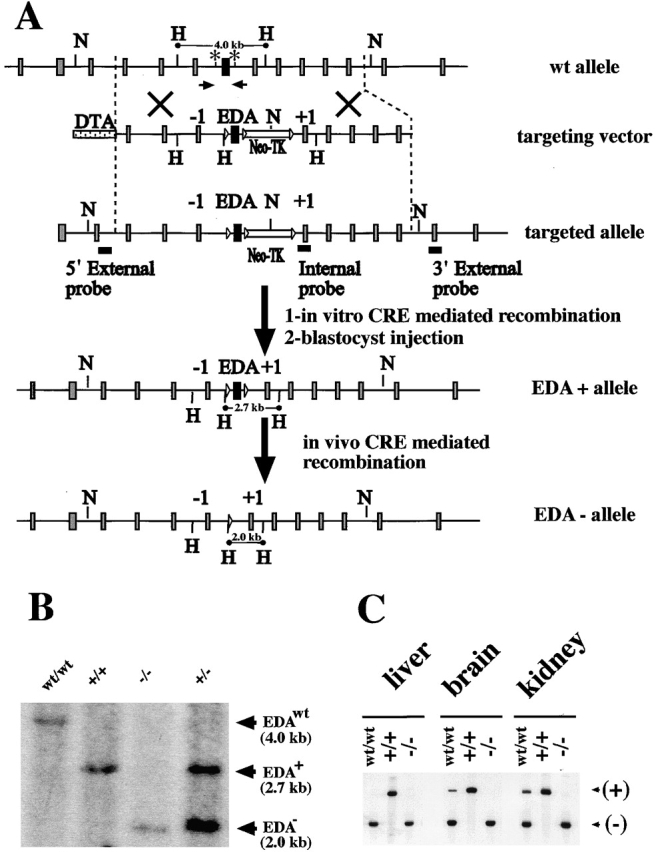
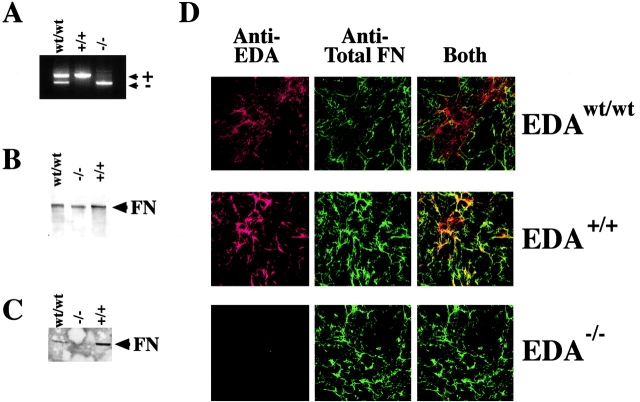
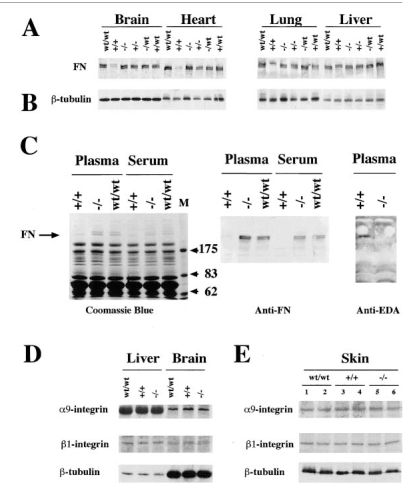
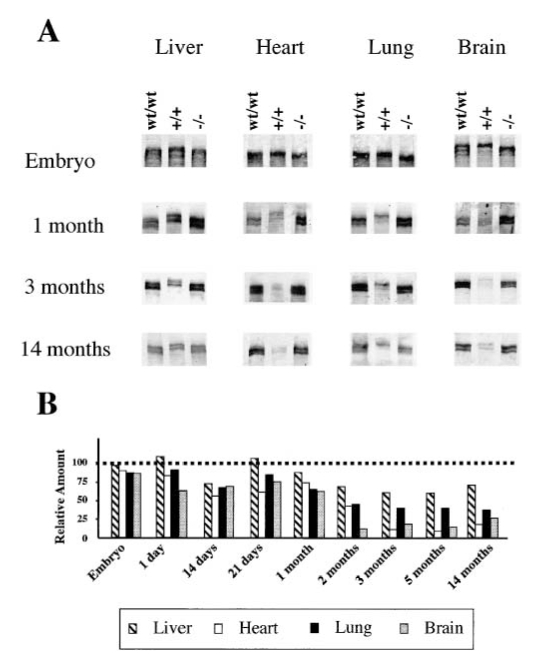
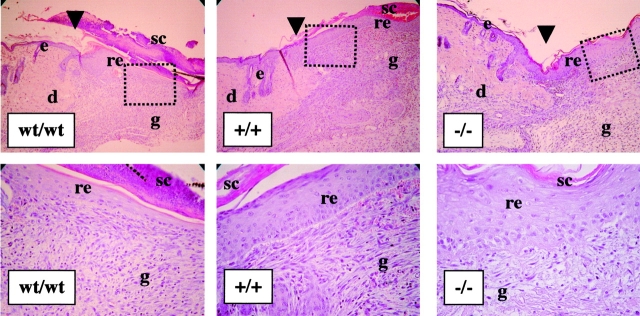
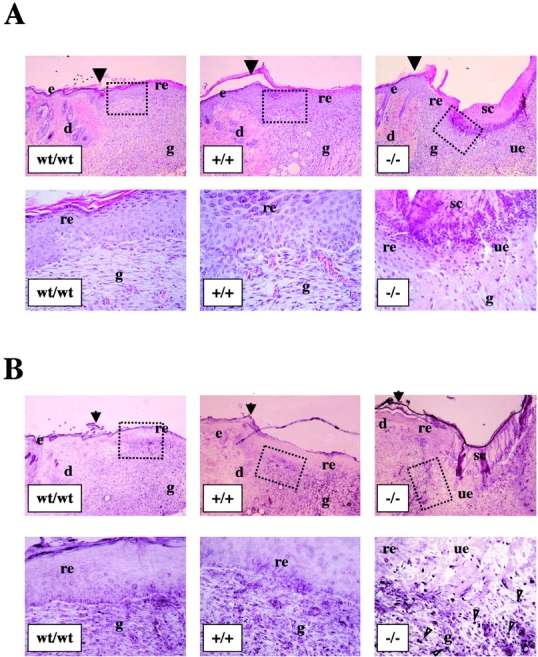
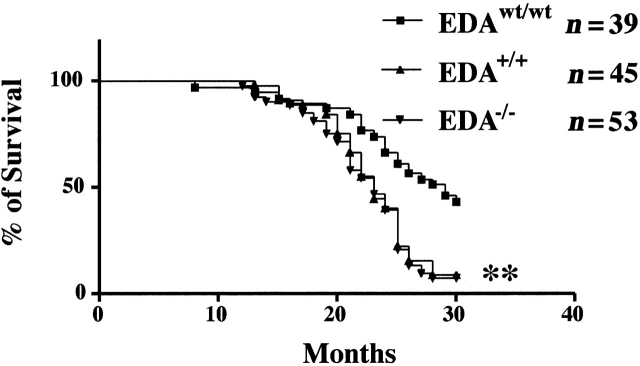
Fibronectins (FNs) are multifunctional high molecular weight glycoproteins present in the blood plasma and in the ECMs of tissues. The FN primary transcript undergoes alternative splicing in three regions generating up to 20 main different variants in humans. However, the precise role of the FN isoforms is poorly understood. One of the alternatively spliced exons is the extra domain A (EDA) or extra type III homology that is regulated spatially and temporally during development and aging. To study its in vivo function, we generated mice devoid of EDA exon-regulated splicing. Constitutive exon inclusion was obtained by optimizing the splice sites, whereas complete exclusion was obtained after in vivo CRE-loxP-mediated deletion of the exon. Homozygous mouse strains with complete exclusion or inclusion of the EDA exon were viable and developed normally, indicating that the alternative splicing at the EDA exon is not necessary during embryonic development. Conversely, mice without the EDA exon in the FN protein displayed abnormal skin wound healing, whereas mice having constitutive inclusion of the EDA exon showed a major decrease in the FN levels in all tissues. Moreover, both mutant mouse strains have a significantly shorter lifespan than the control mice, suggesting that EDA splicing regulation is necessary for efficient long-term maintenance of biological functions.
Overview
The claims and statistics of this paper haven’t been checked yet.
Free: it reads the open-access text and checks the first 5 claims that cite a source we can check. Create a free account to check every claim.
Integrity signals
Registry
Cites
Statistics
Figures
Verification
Claims the paper makes
The claims and statistics of this paper haven’t been checked yet.
Free: it reads the open-access text and checks the first 5 claims that cite a source we can check. Create a free account to check every claim.
Claims other papers make about this one
Each is checked against this paper’s own text: does it say what the citing paper says it does?
The cited source says what the claim attributes to it.
In the citing paper
“Mammalian fibronectin consists of various isoforms, created through alternative splicing (Muro et al., 2003).”
From Notch signaling functions in lymphatic valve formation (2014) · cites this paper as Muro et al., 2003
Self-check
Percentages, sums and reported differences re-computed from the paper’s own numbers.
The self-check needs the paper’s full text.
Citations
Cites
Single-step method of RNA isolation by acid guanidinium thiocyanate-phenol-chloroform extraction
Chomczynski, P., & Sacchi, N. (1987) · Analytical Biochemistry · doi:10.1016/0003-2697(87)90021-2 · Cited by 46,426 · cited 1×
“Total cellular RNA from various tissues was prepared by the guanidinium thiocyanate method (Chomczynski and Sacchi, 1987), quantitated by measuring absorbance at 260 and 280 nm, and RNA integrity was confirmed by running the samples on 1% agarose formaldehyde gels.”
MethodHow Matrix Metalloproteinases Regulate Cell Behavior
Sternlicht, M. D., & Werb, Z. (2001) · Annual Review of Cell and Developmental Biology · doi:10.1146/annurev.cellbio.17.1.463 · Cited by 3,959 · cited 1×
“In an attempt to determine alterations in the FN-degradative mechanisms, we performed gelatin zymography and observed no variations in plasma and other tissues (brain and heart) in the levels of matrix metalloproteinases (MMPs), enzymes known to degrade FN (Sternlicht and Werb, 2001).”
MethodDefects in mesoderm, neural tube and vascular development in mouse embryos lacking fibronectin
George, E. L., Georges-Labouesse, E. N., Patel-King, R. S., Rayburn, H., & Hynes, R. O. (1993) · Development · doi:10.1242/dev.119.4.1079 · Cited by 1,305
The Extra Domain A of Fibronectin Activates Toll-like Receptor 4
Okamura, Y., Watari, M., Jerud, E. S., Young, D. W., Ishizaka, S. T., Rose, J., Chow, J. C., & Strauss, J. F. (2001) · Journal of Biological Chemistry · doi:10.1074/jbc.m100099200 · Cited by 1,216 · cited 2×
“…(Peters et al., 1990); secretion (Wang et al., 1991); cell adhesion (Xia and Culp, 1995); cell differentiation (Jarnagin et al., 1994); tissue injury and inflammation (Satoi et al., 1999; Okamura et al., 2001); and cell cycle progression and mitogenic signal transduction (Manabe et al., 1999).”
BackgroundConditional control of gene expression in the mouse
Lewandoski, M. (2001) · Nature Reviews Genetics · doi:10.1038/35093537 · Cited by 781 · cited 1×
“A similar phenomenon has recently been observed in other genes (Lewandoski, 2001).”
Distinct functions of the two isoforms of dopamine D2 receptors
Usiello, A., Baik, J.-H., Rougé-Pont, F., Picetti, R., Dierich, A., LeMeur, M., Piazza, P. V., & Borrelli, E. (2000) · Nature · doi:10.1038/35041572 · Cited by 717 · cited 3×
“…of alternatively spliced exons in different protein systems such as 6 integrin, -aminobutyrate receptor, dopamine D2 receptor, FN, Pax6, and Stat3 (Gimond et al., 1998; Homanics et al., 1999; Usiello et al., 2000; Wang et al., 2000; Fukuda et al., 2002; Singh et al., 2002; Yoo et al., 2002).”
BackgroundThree different fibronectin mRNAs arise by alternative splicing within the coding region
Schwarzbauer, J. E., Tamkun, J. W., Lemischka, I. R., & Hynes, R. O. (1983) · Cell · doi:10.1016/0092-8674(83)90175-7 · Cited by 706 · cited 2×
“The IIICS region undergoes a more complex pattern of splicing which is species dependent (Schwarzbauer et al., 1983).”
BackgroundClark, R. A. F., Lanigan, J. M., DellaPelle, P., Manseau, E., Dvorak, H. F., & Colvin, R. B. (1982) · Journal of Investigative Dermatology · doi:10.1111/1523-1747.ep12500075 · Cited by 695 · cited 2×
“Previous studies have also shown that FN appears in the provisional matrix beneath the migrating epidermis coordinating with the FN-receptor expression on migrating epidermal cells ( Clark et al., 1982, 1983; Grinnell, 1984).”
ResultHelgason, C. D., Damen, J. E., Rosten, P., Grewal, R., Sorensen, P., Chappel, S. M., Borowski, A., Jirik, F., Krystal, G., & Humphries, R. K. (1998) · Genes & Development · doi:10.1101/gad.12.11.1610 · Cited by 556 · cited 2×
“…have a shorter lifespan It has been shown that deficiency of SH2-containing inositol-5-phosphatase, lysosomal acid lipase, and DNA topoisomerase III had no consequences in embryonic development, but shortens the lifespan of the animals (Helgason et al., 1998; Du et al., 2001; Kwan and Wang, 2001).”
BackgroundReappearance of an embryonic pattern of fibronectin splicing during wound healing in the adult rat.
Ffrench-Constant, C., Van de Water, L., Dvorak, H. F., & Hynes, R. O. (1989) · The Journal of cell biology · doi:10.1083/jcb.109.2.903 · Cited by 486 · cited 8×
“Expression of cFN by the cells found at the base and edges of the wound just beneath the epidermis was observed, and the presence of cFN preceded the migration of epithelial cells that eventually covered the wound (ffrench-Constant et al., 1989).”
BackgroundInfluential
Research works printed but not linked: 1
- Hynes, R.O. 1990. Fibronectins. Springer-Verlag New York Inc., New York. 544 pp.
Cited by
Items 101–200 of 323
A Comparative Study of Fibronectin Cleavage by MMP-1, -3, -13, and -14
Zhang, X., Chen, C. T., Bhargava, M. M., & Torzilli, P. A. (2012) · Cartilage · doi:10.1177/1947603511435273 · Cited by 58
Paloschi, V., Kurtovic, S., Folkersen, L., Gomez, D., Wågsäter, D., Roy, J., Petrini, J., Eriksson, M. J., Caidahl, K., Hamsten, A., et al. (2011) · Arteriosclerosis, Thrombosis, and Vascular Biology · doi:10.1161/atvbaha.110.218461 · Cited by 54
Notch signaling functions in lymphatic valve formation
Murtomaki, A., Uh, M. K., Kitajewski, C., Zhao, J., Nagasaki, T., Shawber, C. J., & Kitajewski, J. (2014) · Development · doi:10.1242/dev.101188 · Cited by 55
“Mammalian fibronectin consists of various isoforms, created through alternative splicing (Muro et al., 2003).”
BackgroundForte, A., Corte, A. D., Grossi, M., Bancone, C., Provenzano, R., Finicelli, M., FEO, M. D., Santo, L. S. D., Nappi, G., Cotrufo, M. F., et al. (2012) · Clinical Science · doi:10.1042/cs20120324 · Cited by 55
Heinrich, M., Oberbach, A., Schlichting, N. S., Stolzenburg, J., & Neuhaus, J. (2011) · PLoS ONE · doi:10.1371/journal.pone.0020792 · Cited by 60
“S3F), the extracellular fibronectin isoform, which has been described to be characteristic for myofibroblasts [29] and component of the fibronectin fibril of the fibronexus [30,31].”
BackgroundIdentification of fibronectin neoepitopes present in human osteoarthritic cartilage
Zack, M. D., Arner, E. C., Anglin, C. P., Alston, J. T., Malfait, A., & Tortorella, M. D. (2006) · Arthritis & Rheumatism · doi:10.1002/art.22045 · Cited by 55
Recipient‐derived EDA fibronectin promotes cardiac allograft fibrosis
Booth, A. J., Wood, S. C., Cornett, A. M., Dreffs, A. A., Lu, G., Muro, A. F., White, E. S., & Bishop, D. K. (2011) · The Journal of Pathology · doi:10.1002/path.3010 · Cited by 57
Self-citationAbsence of regulated splicing of fibronectin EDA exon reduces atherosclerosis in mice
Babaev, V. R., Porro, F., Linton, M. F., Fazio, S., Baralle, F. E., & Muro, A. F. (2007) · Atherosclerosis · doi:10.1016/j.atherosclerosis.2007.08.015 · Cited by 60
“One strain contains optimized spliced sites at both splicing junctions of the EDA exon and constitutively includes the exon (EDA+/+), whereas the other strain contains an EDAnull allele of the EDA exon (EDA−/−) [9].”
BackgroundSelf-citationFibronectin has multifunctional roles in posterior capsular opacification (PCO)
Shihan, M. H., Kanwar, M., Wang, Y., Jackson, E., Faranda, A. P., & Duncan, M. K. (2020) · Matrix Biology · doi:10.1016/j.matbio.2020.02.004 · Cited by 60
Yates, C. C., Bodnar, R., & Wells, A. (2011) · Cellular and Molecular Life Sciences · doi:10.1007/s00018-011-0663-0 · Cited by 51
“Fibronectin exists as a soluble dimer in the blood plasma as well as a fixed component of fibrous ECM and basement membrane [75, 76].”
BackgroundProthrombotic Effects of Fibronectin Isoforms Containing the EDA Domain
Chauhan, A. K., Kisucka, J., Cozzi, M. R., Walsh, M. T., Moretti, F. A., Battiston, M., Mazzucato, M., Marco, L. D., Baralle, F. E., Wagner, D. D., et al. (2007) · Arteriosclerosis Thrombosis and Vascular Biology · doi:10.1161/atvbaha.107.149146 · Cited by 52
“parameters were evaluated: ( 1 ) single platelet-vessel wall interaction, determined as the”
MethodSelf-citationOlsen, A. L., Sackey, B. K., Marcinkiewicz, C., Boettiger, D., & Wells, R. G. (2012) · Gastroenterology · doi:10.1053/j.gastro.2011.12.038 · Cited by 50
R e‐epithelialization of wounds
Koivisto, L., Häkkinen, L., & Larjava, H. (2011) · Endodontic Topics · doi:10.1111/etp.12007 · Cited by 56
Sueblinvong, V., Neveu, W. A., Neujahr, D. C., Mills, S. T., Rojas, M., Roman, J., & Guidot, D. M. (2014) · Advances in Bioscience and Biotechnology · doi:10.4236/abb.2014.51004 · Cited by 45
“Several factors have been shown to induce or promote lung fibrogenesis; these include TGFβ1, the EDA variant of fibronectin (Fn-EDA), and the relative shift toward a Thy-1(−) phenotype in lung fibroblasts [12,22,30].”
Fibronectin EDA forms the chronic fibrotic scar after contusive spinal cord injury
Cooper, J. G., Jeong, S. J., McGuire, T. L., Sharma, S. B., Wang, W., Bhattacharyya, S., Varga, J., & Kessler, J. A. (2018) · Neurobiology of Disease · doi:10.1016/j.nbd.2018.04.014 · Cited by 48
Roberts, A. L., Mavlyutov, T. A., Perlmutter, T. E., Curry, S., Harris, S. L., Chauhan, A. K., & McDowell, C. M. (2020) · Scientific Reports · doi:10.1038/s41598-020-66756-6 · Cited by 47
Self-citationPsoriasis and extra domain A fibronectin loops
McFadden, J. P., Baker, B. S., Powles, A. V., & Fry, L. (2010) · British Journal of Dermatology · doi:10.1111/j.1365-2133.2010.09737.x · Cited by 45
Siani, A., & Tirelli, N. (2014) · Antioxidants and Redox Signaling · doi:10.1089/ars.2013.5724 · Cited by 50
“…fibronectin (ED-A FN) is important in the regulation of integrin-mediated cell adhesion (129) and activates leukocytes by binding toll-like receptor 4 (TLR-4) (125, 157); these two features are probably the basis of its necessary role in natural wound healing (148) and probably in angiogenesis (8).”
Pericytes: Problems and Promises for CNS Repair
Laredo, F., Plebanski, J., & Tedeschi, A. (2019) · Frontiers in Cellular Neuroscience · doi:10.3389/fncel.2019.00546 · Cited by 44
“The fibronectin isoform containing the extra domain A has been implicated in pathological fibrosis in experimental models of wound healing (Muro et al., 2003).”
BackgroundHyaluronan, Transforming Growth Factor β, and Extra Domain A-Fibronectin: A Fibrotic Triad
McKeown‐Longo, P. J., & Higgins, P. J. (2021) · Advances in Wound Care · doi:10.1089/wound.2020.1192 · Cited by 43
Dhanesha, N., Ahmad, A., Prakash, P., Doddapattar, P., Lentz, S. R., & Chauhan, A. K. (2015) · Circulation · doi:10.1161/circulationaha.115.016540 · Cited by 42
“Similar to healthy humans, Fn-EDA is present at only negligible levels in the plasma of WT mice.(4,11) However, Fn-EDA reappears in the plasma and becomes deposited in the arteries of adult hypercholesterolemic Apoe mice, a response that is similar to that seen in patients with atherosclerosis.”
BackgroundMethodSelf-citationAmin, A., Chikan, N. A., Mokhdomi, T. A., Bukhari, S., Koul, A. M., Shah, B. A., Gharemirshamlu, F. R., Wafai, A. H., Qadri, A., & Qadri, R. A. (2016) · Scientific Reports · doi:10.1038/srep37151 · Cited by 44
Chauhan, A. K., Iaconcig, A., Baralle, F. E., & Muro, A. F. (2003) · Gene · doi:10.1016/j.gene.2003.09.026 · Cited by 40
Self-citationAssembly of Exogenous Fibronectin by Fibronectin-null Cells Is Dependent on the Adhesive Substrate
Bae, E., Sakai, T., & Mosher, D. F. (2004) · Journal of Biological Chemistry · doi:10.1074/jbc.m406283200 · Cited by 42
Fibronectin is a TH1-specific molecule in human subjects
Sandig, H., McDonald, J., Gilmour, J., Arno, M. J., Lee, T. H., & Cousins, D. J. (2009) · Journal of Allergy and Clinical Immunology · doi:10.1016/j.jaci.2009.04.036 · Cited by 41
Age and gender-dependent alternative splicing of P/Q-type calcium channel EF-hand
Chang, S. Y., Yong, T. F., Yu, C. Y., Liang, M. C., Pletniková, O., Troncoso, J. C., Burgunder, J., & Soong, T. W. (2007) · Neuroscience · doi:10.1016/j.neuroscience.2006.12.054 · Cited by 46
“From a developmental point of view, splice variant regulation is important in the tissue/ organ development and normal physiological processes (Brocke et al., 1995,Kuppers et al., 2000,Muro et al., 2003,Thakur and Mani, 2005).”
BackgroundDuarte, S. M., Shen, X., Fondevila, C., Busuttil, R. W., & Coito, A. J. (2012) · American Journal of Transplantation · doi:10.1111/j.1600-6143.2012.04161.x · Cited by 39
“While EDA+ FN expression by sinusoidal endothelial cells mediates TGF-b induced wound repair (33), its absence results in abnormal wound healing (34).”
BackgroundPaloschi, V., Gådin, J. R., Khan, S. A., Björck, H. M., Du, L., Maleki, S., Roy, J., Lindeman, J. H. N., Mohamed, S. A., Tsuda, T., et al. (2015) · Arteriosclerosis Thrombosis and Vascular Biology · doi:10.1161/atvbaha.114.304996 · Cited by 40
Hernandez, H., Roberts, A. L., & McDowell, C. M. (2020) · Experimental Eye Research · doi:10.1016/j.exer.2020.107920 · Cited by 39
“One such DAMP, known as fibronectin extra domain A (FN-EDA), is an isoform of FN which is upregulated as a response to tissue injury, repair, or remodeling, and during disease states (Ffrench-Constant et al., 1989; Hino et al., 1995; Kuhn et al., 1989; Muro et al., 2003).”
BackgroundTong, L. H. T., Chew, J., Yang, H. H., Ang, L. P. K., Tan, D. T. H., & Beuerman, R. W. (2009) · BMC Medical Genomics · doi:10.1186/1755-8794-2-14 · Cited by 38
“Fibronectin alternatively splice transcript with EDA, upregulated in our pterygial specimens, was shown to be upregulated in wound healing.[30] In order to further validate this finding, semi-quantitative PCR was performed on paired pterygial and conjunctival tissue specimens from 3 patients to examine the level of fi…”
Han, F., Adams, C. S., Tao, Z., Williams, C. J., Zaka, R., Tuan, R. S., Norton, P. A., & Hickok, N. J. (2005) · Journal of Cellular Biochemistry · doi:10.1002/jcb.20427 · Cited by 38
“Animals in which splicing of the EDA exon was ablated appeared normal except for deficits in wound healing and a decreased life span [Muro et al., 2003; Tan et al., 2004].”
BackgroundZoppi, N., Chiarelli, N., Ritelli, M., & Colombi, M. (2018) · International Journal of Molecular Sciences · doi:10.3390/ijms19040982 · Cited by 37
Mammary Gland Involution Provides a Unique Model to Study the TGF-β Cancer Paradox
Guo, Q., Betts, C. B., Pennock, N. D., Mitchell, E., & Schedin, P. S. (2017) · Journal of Clinical Medicine · doi:10.3390/jcm6010010 · Cited by 43
“Myofibroblasts under the guide of TGF-β, also deposit tenascin-C and the fibronectin (FN) splice variant ED-A FN, which are both specialized ECM proteins associated with adult tissue repair and embryonic development [102,104].”
BackgroundZhu, L., Liu, L., Wang, A., Liu, J., Huang, X., & Zan, T. (2023) · Matrix Biology · doi:10.1016/j.matbio.2023.05.001 · Cited by 42
van Schaik, P. E. M., Zuhorn, I. S., & Baron, W. (2022) · International Journal of Molecular Sciences · doi:10.3390/ijms23158418 · Cited by 37
Keloid Pathogenesis: Potential Role of Cellular Fibronectin with the EDA Domain
Andrews, J. P., Marttala, J., Macarak, E. J., Rosenbloom, J., & Uitto, J. (2015) · Journal of Investigative Dermatology · doi:10.1038/jid.2015.50 · Cited by 36
“The in vivo role of the EDA variant has been studied by constructing mouse strains either constitutively expressing (FN-EDA+/+) or excluding it (FN-EDA−/−) (Muro et al., 2003).”
BackgroundCrucial role of vinexin for keratinocyte migration in vitro and epidermal wound healing in vivo
Kioka, N., Ito, T., Yamashita, H., Uekawa, N., Umemoto, T., Motoyoshi, S., Imai, H., Takahashi, K., Watanabe, H., Yamada, M., et al. (2010) · Experimental Cell Research · doi:10.1016/j.yexcr.2010.03.019 · Cited by 38
“For example, disruption of alternatively spliced exons of fibronectin induces abnormal skin wound healing and delays re-epithelialization [10].”
BackgroundDhanesha, N., Chorawala, M. R., Jain, M. K., Bhalla, A., Thedens, D. R., Nayak, M. K., Doddapattar, P., & Chauhan, A. K. (2019) · Stroke · doi:10.1161/strokeaha.118.023697 · Cited by 36
Self-citationCross-talk between Signaling Pathways Regulates AlternativeSplicing
Pelisch, F., Blaustein, M., Kornblihtt, A. R., & Srebrow, A. (2005) · Journal of Biological Chemistry · doi:10.1074/jbc.m412007200 · Cited by 45
Ożegowska, K., Brązert, M., Ciesiółka, S., Nawrocki, M. J., Kranc, W., Celichowski, P., Jankowski, M., Bryja, A., Ješeta, M., Antosik, P., et al. (2019) · DNA and Cell Biology · doi:10.1089/dna.2018.4467 · Cited by 34
“It influences adhesion and migration of the cells (Muro et al. , 2003).”
Integrin α9 regulates smooth muscle cell phenotype switching and vascular remodeling
Jain, M. K., Dev, R., Doddapattar, P., Kon, S., Dhanesha, N., & Chauhan, A. K. (2021) · JCI Insight · doi:10.1172/jci.insight.147134 · Cited by 35
“Fn-EDA–/– Apoe–/– mice (generated in-house) have been described previously (38) (Fn-EDA–/– mice provided by Andrés F.”
Self-citationTransforming Growth Factor β and Wound Healing in Human Cholesteatoma
Huisman, M. A., de Heer, E., ten Dijke, P., & Grote, J. J. (2008) · The Laryngoscope · doi:10.1097/mlg.0b013e31814faafa · Cited by 34
Pulmonary immunity and extracellular matrix interactions
O’Dwyer, D. N., Gurczynski, S. J., & Moore, B. B. (2018) · Matrix Biology · doi:10.1016/j.matbio.2018.04.003 · Cited by 37
“As a result of alternative splicing of its transcript, there are some 20 different variants of fibronectin in humans [70].”
BackgroundMaldonado, H., Savage, B., Barker, H. R., May, U., Vähätupa, M., Badiani, R. K., Wolanska, K. I., Turner, C. M. J., Pemmari, T., Ketomäki, T., et al. (2023) · Nature Communications · doi:10.1038/s41467-023-43848-1 · Cited by 36
Tossetta, G., Avellini, C., Licini, C., Giannubilo, S. R., Castellucci, M., & Marzioni, D. (2016) · European Journal of Histochemistry · doi:10.4081/ejh.2016.2724 · Cited by 33
Venu, V. K. P., Uboldi, P., Dhyani, A., Patrini, A., Baetta, R., Ferri, N., Corsini, A., Muro, A. F., Catapano, A. L., & Norata, G. D. (2015) · Thrombosis and Haemostasis · doi:10.1160/th14-09-0790 · Cited by 33
“Liver-specific deletion of the EDA exon is possible due to the presence of loxP sites flanking the EDA exon(9).”
BackgroundSelf-citationGouignard, N., Maccarana, M., Strate, I., von Stedingk, K., Malmström, A., & Pera, E. M. (2016) · Disease Models & Mechanisms · doi:10.1242/dmm.024661 · Cited by 35
“, 2015) and fibronectin (Muro et al., 2003; Castelletti et al., 2008), such as skin wound healing and kidney function.”
Kohan, M., Muro, A. F., Bader, R., & Berkman, N. (2010) · Journal of Allergy and Clinical Immunology · doi:10.1016/j.jaci.2010.10.021 · Cited by 39
Self-citationBudna, J., Chachuła, A., Kaźmierczak, D., Rybska, M., Ciesiółka, S., Bryja, A., Kranc, W., Borys, S., Żok, A., Bukowska, D., et al. (2017) · Zygote · doi:10.1017/s096719941700020x · Cited by 31
“described the role of fibronectin 1 (FN1), also known as the large-external-transformation sensitive protein (LETS), as the glycoprotein present on cell surfaces, basement membranes, and extracellular fluids of connective tissues (Muro et al., 2003).”
BackgroundKragstrup, T. W., Sohn, D. H., Lepus, C. M., Onuma, K., Wang, Q., Robinson, W. H., & Sokolove, J. B. (2019) · BMC Rheumatology · doi:10.1186/s41927-019-0093-4 · Cited by 33
Rekad, Z., Izzi, V., Lamba, R., Ciais, D., & Obberghen‐Schilling, E. V. (2022) · Matrix Biology · doi:10.1016/j.matbio.2022.05.003 · Cited by 31
Chorawala, M. R., Prakash, P., Doddapattar, P., Jain, M. K., Dhanesha, N., & Chauhan, A. K. (2018) · Thrombosis and Haemostasis · doi:10.1055/s-0038-1661353 · Cited by 30
“Just as in healthy humans, Fn-EDA is absent in the circulation and healthy arteries of wildtype (WT) mice.(20, 22) However, Fn-EDA reappears in the plasma and arteries of hyperlipidemic Apoe−/− mice, a response that is similar to that seen in human patients with atherosclerosis (Figure SII).”
BackgroundMethodSelf-citationAttallah, A. M., El-Far, M., Malak, C. A. A., Omran, M. M., Farid, K., Yahya, R. S., Saad, E. A., Albannan, M. S., Attallah, A. A., Basuni, M. A. E., et al. (2015) · Annals of Hepatology · doi:10.5604/16652681.1171774 · Cited by 30
Morgan, M., Iaconcig, A., & Muro, A. F. (2010) · Nucleic Acids Research · doi:10.1093/nar/gkq635 · Cited by 29
“We separated 20 mg of RNA in agarose–formaldehyde gels and proceeded as described earlier (20,21).”
MethodSelf-citationKurtovic, S., Paloschi, V., Folkersen, L., Gottfries, J., Franco‐Cereceda, A., & Eriksson, P. O. (2011) · Molecular Medicine · doi:10.2119/molmed.2011.00018 · Cited by 33
Doddapattar, P., Jain, M. K., Dhanesha, N., Lentz, S. R., & Chauhan, A. K. (2018) · Arteriosclerosis Thrombosis and Vascular Biology · doi:10.1161/atvbaha.117.310345 · Cited by 29
Self-citationImpaired motor coordination in mice lacking the EDA exon of the fibronectin gene
Chauhan, A. K., Moretti, F. A., Iaconcig, A., Baralle, F. E., & Muro, A. F. (2005) · Behavioural Brain Research · doi:10.1016/j.bbr.2005.02.020 · Cited by 29
Self-citationDoddapattar, P., Dev, R., Jain, M. K., Dhanesha, N., & Chauhan, A. K. (2020) · Arteriosclerosis Thrombosis and Vascular Biology · doi:10.1161/atvbaha.120.314459 · Cited by 28
Self-citationMeyer‐ter‐Vehn, T., Grehn, F. J., & Schlunck, G. (2008) · PubMed Central · Cited by 28
Costessi, L., Devescovi, G., Baralle, F., & Muro, A. F. (2006) · Nucleic Acids Research · doi:10.1093/nar/gkj425 · Cited by 31
“The RNase protection assay was performed essentially as described (15,16).”
MethodSłoniecka, M., & Danielson, P. (2019) · Journal of Molecular Medicine · doi:10.1007/s00109-019-01827-4 · Cited by 29
Aguilar, C. A., Shcherbina, A., Ricke, D. O., Pop, R., Carrigan, C. T., Gifford, C. A., Urso, M. L., Kottke, M. A., & Meissner, A. (2015) · Scientific Reports · doi:10.1038/srep13885 · Cited by 27
Tomasini-Johansson, B. R., Zbyszynski, P., Toraason, I., Peters, D. M. P., & Kwon, G. S. (2018) · PLoS ONE · doi:10.1371/journal.pone.0205360 · Cited by 26
Werkman, I. L., Sikkema, A. H., Versluijs, J. B., Qin, J., de Boer, P., & Baron, W. (2020) · Scientific Reports · doi:10.1038/s41598-019-57069-4 · Cited by 26
Walraven, M., Akershoek, J. J., Beelen, R. H. J., & Ulrich, M. M. W. (2016) · Archives of Dermatological Research · doi:10.1007/s00403-016-1710-3 · Cited by 27
Efthymiou, G., Radwańska, A., Grapa, A.-I., Divonne, S. B.-D. L. F., Grall, D., Schaub, S., Hattab, M., Pisano, S., Poët, M., Pisani, D. F., et al. (2021) · Journal of Cell Science · doi:10.1242/jcs.252957 · Cited by 25
“In an in vivo context, FN containing the EDA domain has been identified as an important protagonist in the TGF-β-mediated conversion of precursor cells into myofibroblasts in several fibrotic disorders (Arslan et al., 2011; Booth et al., 2012; Hirshoren et al., 2013; Kohan et al., 2011; Muro et al., 2003; Serini et al…”
BackgroundAlternative splicing and liver disease
Baralle, M., & Baralle, F. E. (2021) · Annals of Hepatology · doi:10.1016/j.aohep.2021.100534 · Cited by 27
Self-citationNakayama, Y., Kon, S., Kurotaki, D., Morimoto, J. O., Matsui, Y., & Uede, T. (2010) · Laboratory Investigation · doi:10.1038/labinvest.2010.69 · Cited by 28
“18 It has also been reported that EDAsEIIIA segment of fibronectin is expressed during the granulation tissue phase of wound healing and that it is also a ligand for α 9 β 1 integrin”
BackgroundNorambuena‐Soto, I., Núñez-Soto, C., Sanhueza‐Olivares, F., Cancino-Arenas, N., Mondaca‐Ruff, D., Vivar, R., Díaz-Araya, G., Mellado, R., & Chiong, M. (2017) · BioScience Trends · doi:10.5582/bst.2017.01017 · Cited by 24
“Also, during wound healing, fibroblasts express the ED-A fibronectin, which is crucial for fibroblast to myofibroblast differentiation and for a normal scar formation (43,44).”
FN-EDA mediates angiogenesis of hepatic fibrosis via integrin-VEGFR2 in a CD63 synergetic manner
Su, X., Ma, X., Xie, X., Wu, H., Wang, L., Feng, Y., Yu, Z., Liu, C., Qi, J., & Zhu, Q. (2020) · Cell Death Discovery · doi:10.1038/s41420-020-00378-9 · Cited by 24
EDA-Containing Fibronectin Increases Proliferation of Embryonic Stem Cells
Losino, N., Waisman, A., Solari, C., Luzzani, C., Espinosa, D. F., Sassone, A. G., Muro, A. F., Miriuka, S., Sevlever, G. E., Barañao, L., et al. (2013) · PLoS ONE · doi:10.1371/journal.pone.0080681 · Cited by 24
“MEF were prepared from EDAwt/wt, EDA+/+, and EDA-/animals, described previously [23].”
BackgroundMethodInfluentialSelf-citationCellular diversity of human placental stem villi: An ultrastructural and immunohistochemical study
Satı, L., Seval, Y., Demir, A. Y., Kosanke, G., Kohnen, G., & Demir, R. (2007) · Acta Histochemica · doi:10.1016/j.acthis.2007.04.006 · Cited by 25
Is rate of skin wound healing associated with aging or longevity phenotype?
Yanai, H., Budovsky, A., Tacutu, R., & Fraifeld, V. E. (2011) · Biogerontology · doi:10.1007/s10522-011-9343-6 · Cited by 23
“unpublished data). In all other mouse models, the full thickness back excision punch was utilized b The effects on WH and on aging/longevity were explored in the same studies (Bub1b, Baker et al. 2004; Fn1, Muro et al. 2003;”
Lewis, R. M., Ravindran, S., Wirthlin, L., Traeger, G. R., Fernandes, R. J., & McAlinden, A. (2012) · Matrix Biology · doi:10.1016/j.matbio.2011.12.004 · Cited by 23
Cell and Molecular Biology of Wound Healing
Häkkinen, L., Koivisto, L., Heino, J., & Larjava, H. (2014) · Elsevier eBooks · doi:10.1016/b978-0-12-397157-9.00054-0 · Cited by 26
Xenopus embryos lacking specific isoforms of the corepressor SMRT develop abnormal heads
Malartre, M., Short, S., & Sharpe, C. R. (2006) · Developmental Biology · doi:10.1016/j.ydbio.2006.01.007 · Cited by 23
López‐Mejía, I. C., de Toledo, M., Seta, F. D., Fafet, P., Rebouissou, C., Deleuze, V., Blanchard, J. M., Jørgensen, C., Tazi, J., & Vignais, M. (2013) · Molecular Biology of the Cell · doi:10.1091/mbc.e13-03-0142 · Cited by 25
“In addition, the expression of the EDA+ FN splicing isoform in endometrium, a tissue that undergoes cyclical regeneration, is consistent with the documented expression of EDA+ FN in adult tissues in response to injury (Ffrench-Constant et al., 1989; Muro et al., 2003).”
ResultKanta, J., Zavaďáková, A., Sticová, E., & Dubský, M. (2022) · International Wound Journal · doi:10.1111/iwj.13997 · Cited by 24
“Mice without the EDA exon in FN protein display abnormal skin healing; the granulation tissue shows edematous regions and wound re-epithelialization is impaired.(36) Keratinocyte migration and proliferation are crucial for the re-epithelialization of wounds.”
BackgroundHall, R. C., Vaidya, A. M., Schiemann, W. P., Pan, Q., & Lu, Z. (2023) · Cells · doi:10.3390/cells12050685 · Cited by 23
Zoppi, N., Ritelli, M., & Colombi, M. (2012) · Biochimica et Biophysica Acta (BBA) - General Subjects · doi:10.1016/j.bbagen.2012.06.004 · Cited by 21
“EDA-FN is overexpressed in fibroblasts and epithelial cells during tissue remodelling and cell migration occurring in developing embryos [23–26], during wound healing [21,22,27], liver fibrosis, myofibroblast differentiation [28,29] and in some tumours [20,30,31].”
BackgroundCellular fibronectin promotes deep vein thrombosis in diet‐induced obese mice
Dhanesha, N., Jain, M. K., Doddapattar, P., Undas, A., & Chauhan, A. K. (2020) · Journal of Thrombosis and Haemostasis · doi:10.1111/jth.15206 · Cited by 22
Self-citationMavlyutov, T. A., Myrah, J. J., Chauhan, A. K., Liu, Y., & McDowell, C. M. (2022) · Cell & Bioscience · doi:10.1186/s13578-022-00800-y · Cited by 21
“EDA+/+ mice has previously been described [89].”
Self-citationCappellari, G. G., Barazzoni, R., Cattin, L., Muro, A. F., & Zanetti, M. (2016) · Scientific Reports · doi:10.1038/srep37965 · Cited by 22
Self-citationKwon, A., Chae, I. H., You, E., Kim, S., Ahn, S., Lee, O., Park, Z., Rhee, S., Huh, Y. H., & Song, W. K. (2019) · Journal of Cellular Physiology · doi:10.1002/jcp.29326 · Cited by 21
Fibronectin isoforms in skeletal development and associated disorders
Dinesh, N. E. H., Campeau, P. M., & Reinhardt, D. P. (2022) · American Journal of Physiology-Cell Physiology · doi:10.1152/ajpcell.00226.2022 · Cited by 21
Tervaniemi, M. H., Katayama, S., Skoog, T., Siitonen, H. A., Vuola, J., Nuutila, K., Tammimies, K., Suomela, S., Kankuri, E. M., Kere, J., et al. (2018) · BMC Genomics · doi:10.1186/s12864-018-4810-y · Cited by 23
“and they both play a role in adhesion, spreading, and migration of cells [28, 29].”
Conditional knockout mice to study alternative splicing in vivo
Xu, X., & Fu, X. (2005) · Methods · doi:10.1016/j.ymeth.2005.07.019 · Cited by 22
Toll-Like Receptor 4 Signaling in the Trabecular Meshwork
Mzyk, P., Hernandez, H., Le, T., Ramirez, J. R., & McDowell, C. M. (2022) · Frontiers in Cell and Developmental Biology · doi:10.3389/fcell.2022.936115 · Cited by 20
“The expression of FN-EDA is upregulated as a response to tissue injury, repair, or remodeling, and during disease states (Kuhn et al., 1989; Muro et al., 2003).”
BackgroundMcNitt, D. H., Choi, S. J., Allen, J. L., Hames, R. A., Weed, S. A., Water, L. V. D., Berisio, R., & Łukomski, S. (2019) · Molecular Microbiology · doi:10.1111/mmi.14317 · Cited by 23
“EDA has been shown to play important roles in wound healing (Muro et al., 2003; Longmate et al., 2017).”
BackgroundNam, Y., Lee, S. K., Sammut, D., Davies, D. E., & Howarth, P. H. (2012) · PubMed · Cited by 20
Shielding and nurturing: Fibronectin as a modulator of cancer drug resistance
Farooq, F., Amin, A., Wani, U. M., Lone, A., & Qadri, R. A. (2023) · Journal of Cellular Physiology · doi:10.1002/jcp.31048 · Cited by 21
“ablation of both extra domains led to embryonic lethality as a result of decreased motor coordination and cardiovascular defects suggesting that both domains are necessary for normal body functions during embryonic development (Anil K Chauhan et al., 2004; Anil Kumar Chauhan et al., 2005; Muro et al., 2003).”
BackgroundJia, L., Wang, W., Liang, J., Niu, S., Wang, Y., Yang, J., Li, L., Wang, G., Xu, X., Mu, L., et al. (2023) · Science China Life Sciences · doi:10.1007/s11427-022-2335-6 · Cited by 19
“…(de Magalhães et al., 2009) revealed significant downregulation of anti-senescence genes, including the extracellular matrix-related genes Fn1 (Muro et al., 2003) and Col1a1 (Vafaie et al., 2014), antioxidant defense genes Jund (Laurent et al., 2008) and Slc25a4 (McManus et al., 2019), and…”
BackgroundPhanish, M. K., Heidebrecht, F., Nabi, M. E., Shah, N., Niculescu‐Duvaz, I., & Dockrell, M. E. C. (2014) · Journal of Cellular Physiology · doi:10.1002/jcp.24703 · Cited by 18
“…this variant is the predominant isoform expressed in developing embryos, wound healing, liver fibrosis, renal fibrosis (Van Vliet et al., 2001; Eismann et al., 2002), lung fibrosis, skin fibrosis, and somemalignant tumours (Muro et al., 2003; van der Straaten et al., 2004; Rybak et al., 2007).”
BackgroundScanzello, C. R., Markova, D., Chee, A., Xiu, Y., ADAMS, S. L., Anderson, G., Zgonis, M. H., Qin, L., An, H. S., & Zhang, Y. (2014) · Journal of Orthopaedic Research® · doi:10.1002/jor.22787 · Cited by 19
Kalkreuth, R. H., Krüger, J. P., Lau, S., Niemeyer, P., Endres, M., Kreuz, P., & Kaps, C. (2014) · Regenerative Medicine · doi:10.2217/rme.14.40 · Cited by 18
Bočkor, L., Bortolussi, G., Vodret, S., Iaconcig, A., Jašprová, J., Zelenka, J., Vítek, L., Tiribelli, C., & Muro, A. F. (2016) · Human Molecular Genetics · doi:10.1093/hmg/ddw375 · Cited by 18
“MEF were prepared from WT, Abcb1a/b, Abcc1 and Abcb1a/ b/Abcc1 animals as described previously (67).”
MethodSelf-citationExtra domain A and type III connecting segment of fibronectin in assembly and cleavage
Abe, Y., Bui‐Thanh, N., Ballantyne, C. M., & Burns, A. R. (2005) · Biochemical and Biophysical Research Communications · doi:10.1016/j.bbrc.2005.10.134 · Cited by 18
A Reassessment of Genes Modulating Aging in Mice Using Demographic Measurements of the Rate of Aging
de Magalhães, J. P., Thompson, L. M., de Lima, I., Gaskill, D., Li, X., Thornton, D., Yang, C., & Palmer, D. H. (2018) · Genetics · doi:10.1534/genetics.118.300821 · Cited by 17
Matrikines in the skin: Origin, effects, and therapeutic potential
Sirois, J. P., & Heinz, A. (2024) · Pharmacology & Therapeutics · doi:10.1016/j.pharmthera.2024.108682 · Cited by 17
Beier, U. H., Holtmeier, C., Weise, J. B., & Görögh, T. (2007) · International Journal of Oncology · doi:10.3892/ijo.30.3.621 · Cited by 15
Metadata
- Authors
- Muro, A. F., Chauhan, A. K., Gajovic, S., Iaconcig, A., Porro, F., Stanta, G., & Baralle, F. E.
- Affiliations
- 1International Centre for Genetic Engineering and Biotechnology, 34012 Trieste, Italy
- International Centre for Genetic Engineering and Biotechnology (IT)
- 2Croatian Institute for Brain Research, School of Medicine, University of Zagreb, 10000 Zagreb, Croatia
- University of Trieste (IT)
- Venue
- The Journal of Cell Biology
- Publisher
- Rockefeller University Press
- Published
- 2003-07-07
- Volume
- 162
- Issue
- 1
- Pages
- 149-160
- ISSN
- 0021-9525 (ISSN-L)
- 1540-8140
- PMC
- PMC2172721
- OpenAlex
- W2112541119
- Cited by
- 319
- References
- 59
- Citations by year
- 2026: 6 · 2025: 6 · 2024: 14 · 2023: 11 · 2022: 13 · 2021: 12 · 2020: 21 · 2019: 13 · 2018: 18 · 2017: 13 · 2016: 19 · 2015: 14 · 2014: 16 · 2013: 12 · 2012: 19
- FWCI
- 4.02
- Type
- journal article
- Language
- en
- Open access
- bronze
- doi.org
- Locations
- The Journal of Cell Biology (publishedVersion)
- Europe PMC (PubMed Central) (publishedVersion, cc-by-nc-sa)
- PubMed Central (publishedVersion, cc-by-nc-sa)
- PubMed (publishedVersion)
- Funders
- Institute of Genetics
- Topics
- Life Sciences › Biochemistry, Genetics and Molecular Biology › Molecular Biology › RNA Research and Splicing
- Health Sciences › Medicine › Immunology and Allergy › Cell Adhesion Molecules Research
- Health Sciences › Medicine › Surgery › Wound Healing and Treatments
- Keywords
- fibronectin, alternative splicing, skin wound healing, lifespan, fibronectin isoforms, extracellular matrix
- MeSH terms
- Aging, Animals, Cells, Cultured, Exons, Fetus, Fibroblasts, Fibronectins, Male, Mice, Inbred C57BL, Mutation, RNA, Messenger, Skin, Wound Healing, Down-Regulation, Survival Rate, Gene Deletion, Alternative Splicing, Protein Structure, Tertiary, Mice, Knockout, Gene Expression Regulation, Developmental, Protein Isoforms, Mice
About these checks
Registry, retraction, Cites and statistics results are computed, not judged, with one exception: a printed reference that no index lists is read once by a model before it counts as a citation error. Claims are extracted by a model and kept only when their quote appears verbatim in the text; each cited source is then checked, with a model’s help, for whether it says what the claim relies on. Those verdicts can be wrong — read the claim’s quote and the cited source before relying on one.
Statistics and arithmetic are recomputed, not judged.
Confidence bands are shown only for fields calibrated on our annotated test set. None is calibrated yet, so no band is shown.
What counts as a claim ›How we measure confidence ›How we check this ›
Are you an author, or do you see a problem with this page? Request a review
Data sources
Bibliographic data: Semantic Scholar, OpenAlex, Crossref.
Contains information from the Semantic Scholar Academic Graph Datasets, made available under the ODC Attribution License (ODC-BY 1.0).
Semantic Scholar’s data is described in: Kinney, R., et al. (2023). The Semantic Scholar Open Data Platform. arXiv:2301.10140.
