

The DOI matches its Crossref record; 44 of the 44 references it cites were found in a registry or an index.
The positioning and segregation of apical cues during epithelial polarity establishment in Drosophila
Open accessAbstract
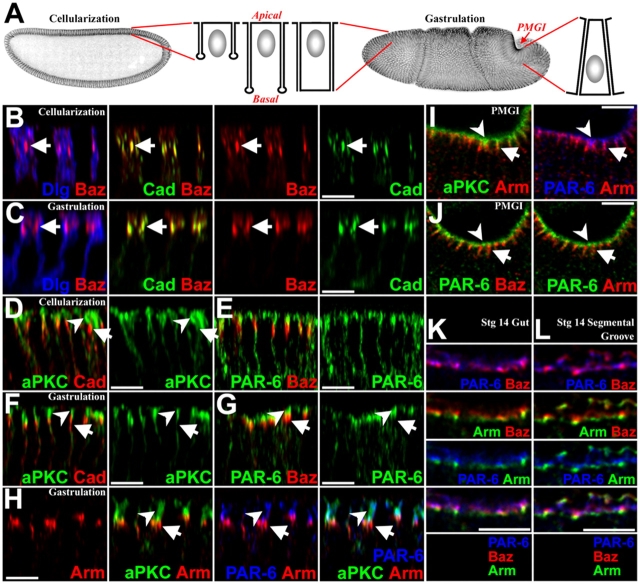
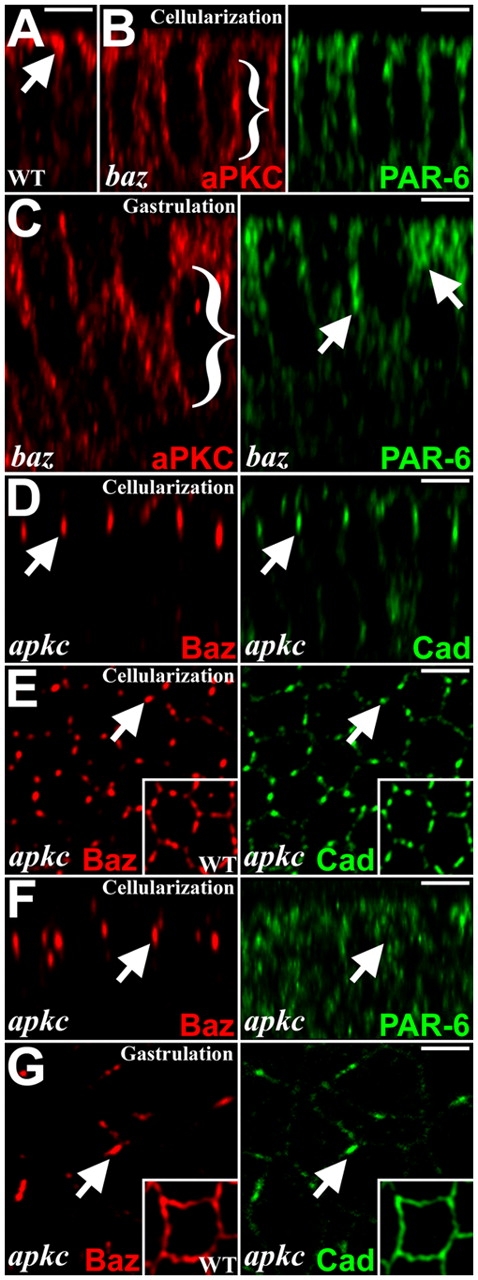
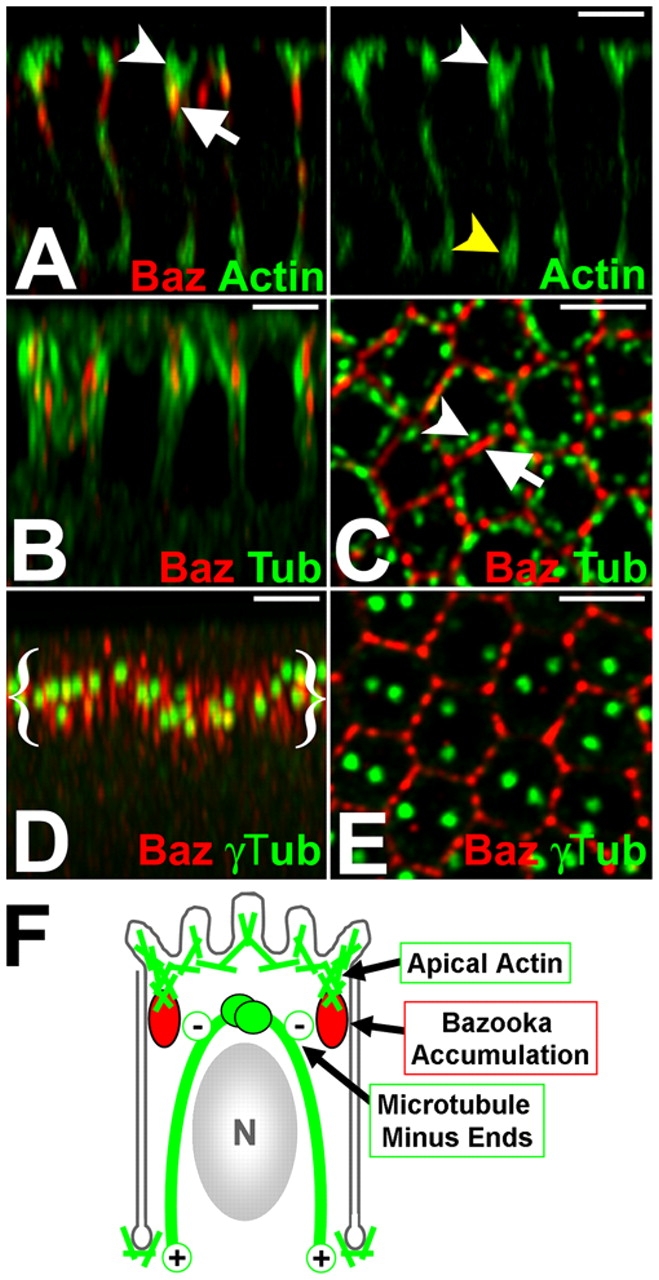
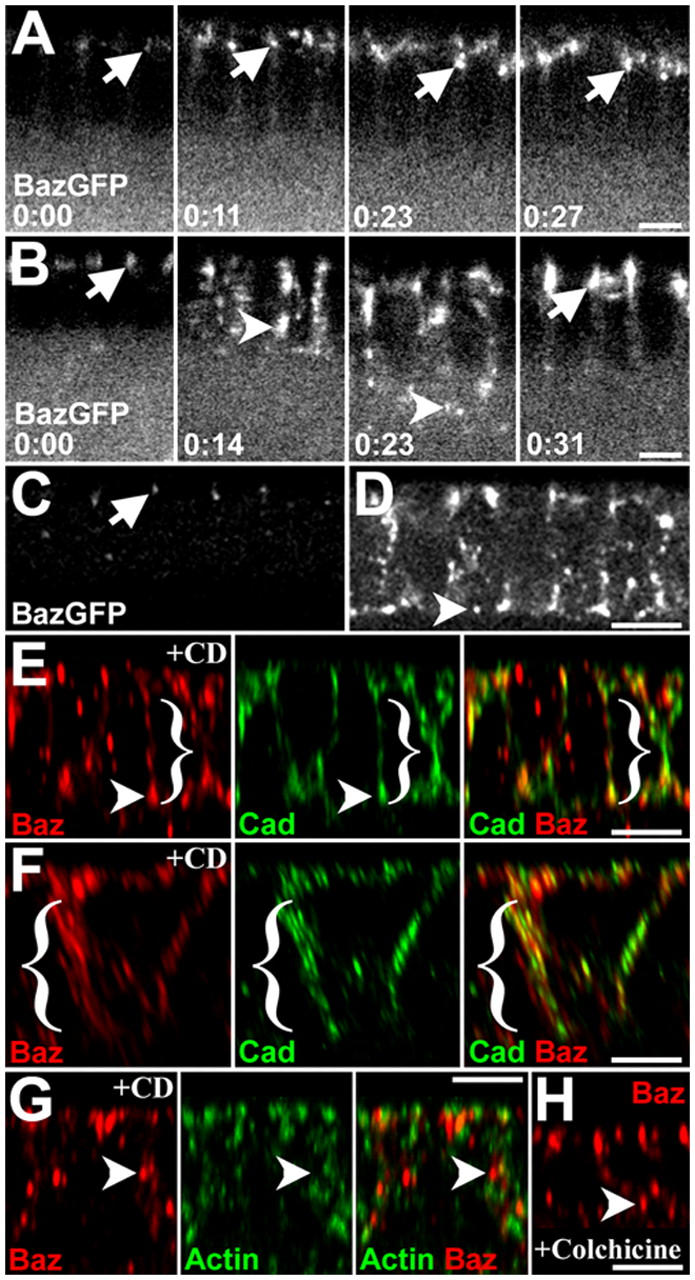
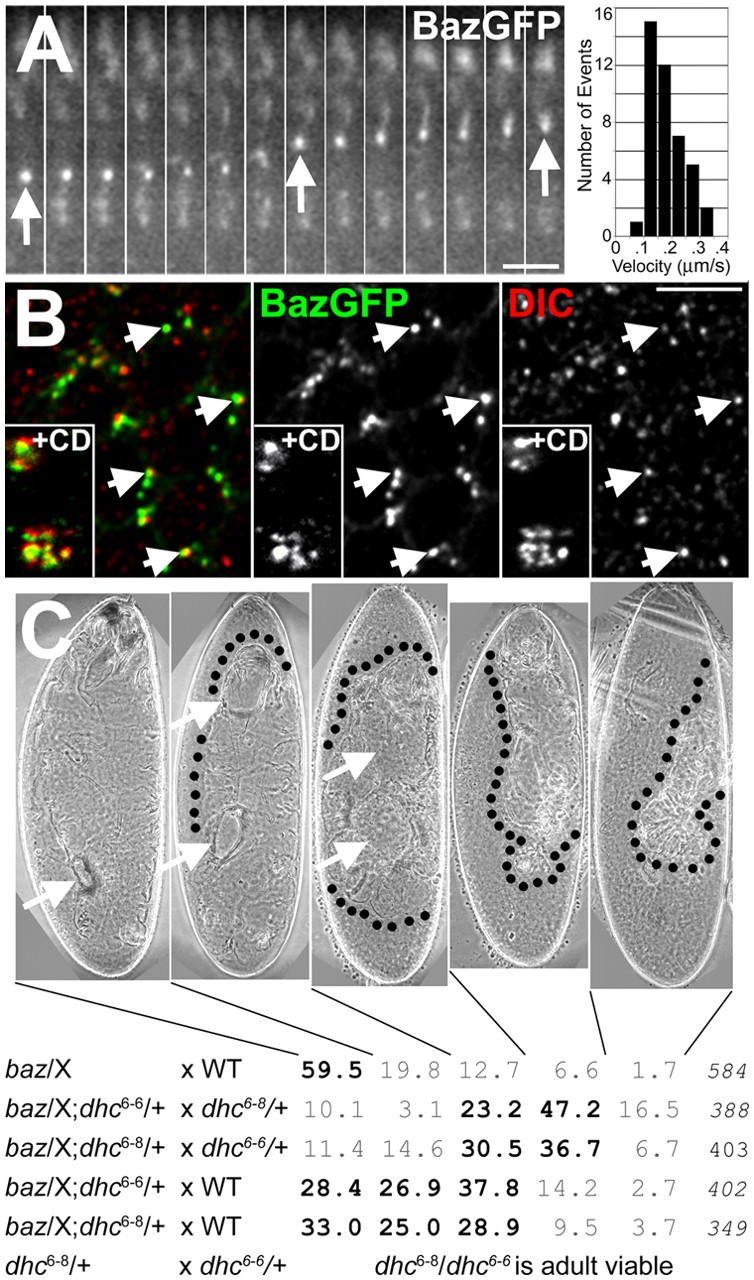
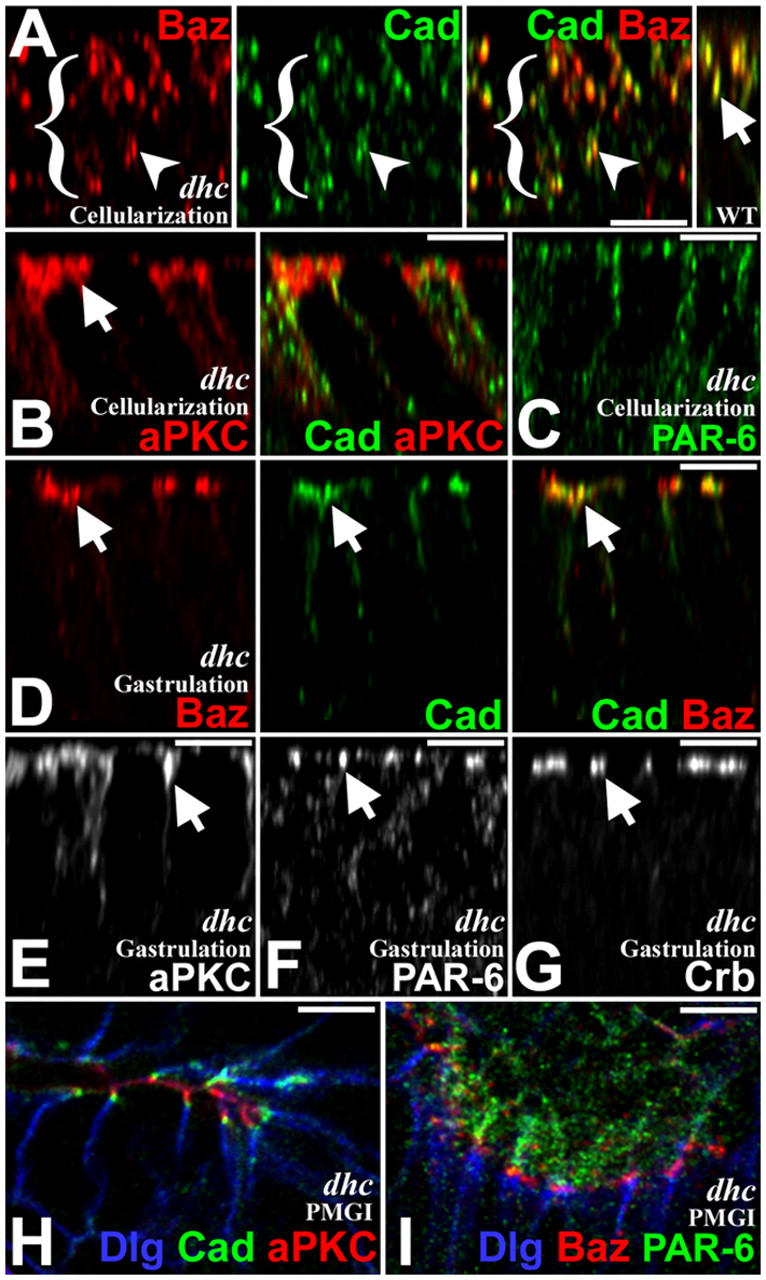
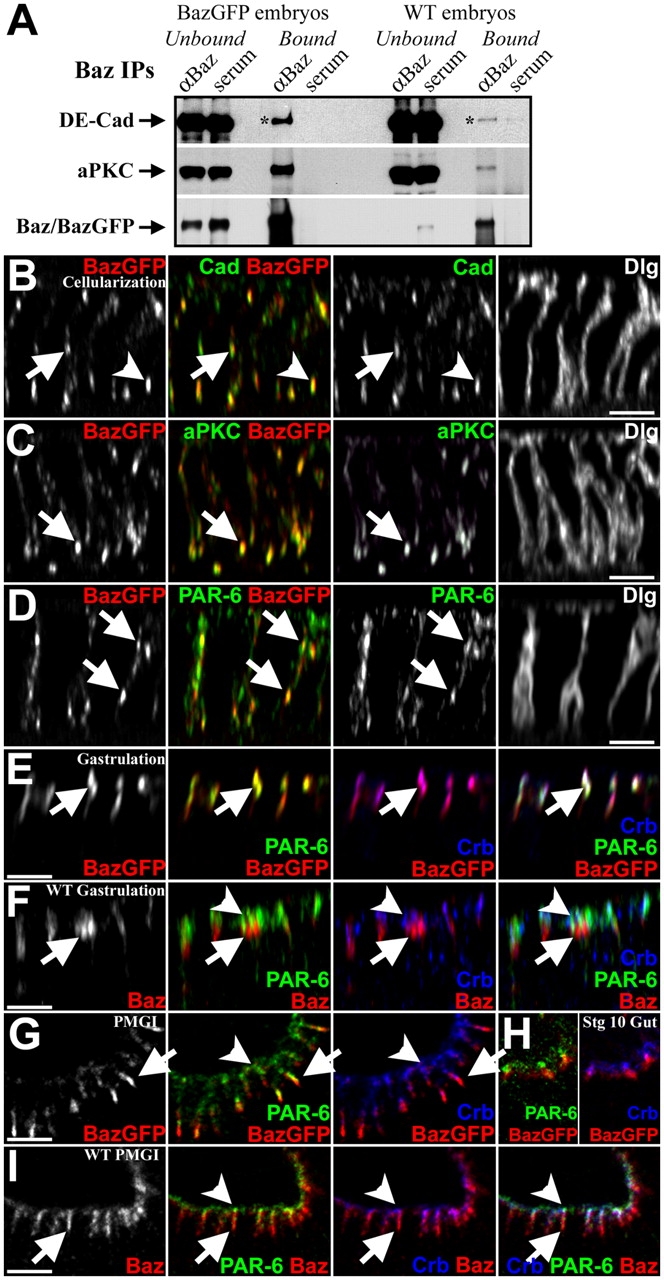
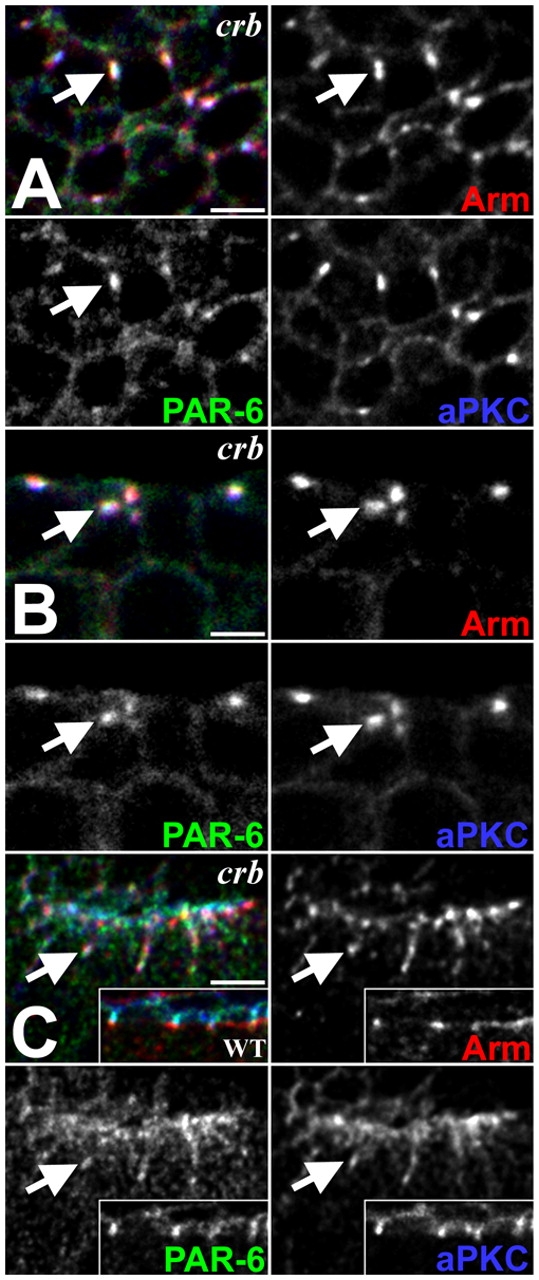
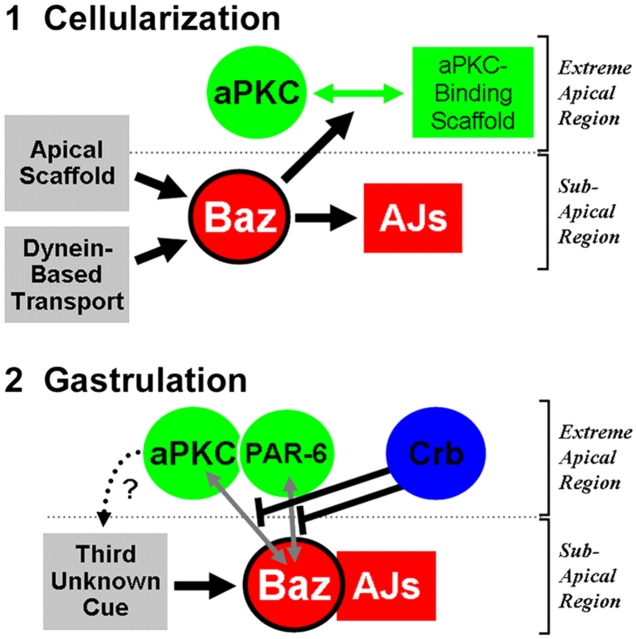
Cell polarity is critical for epithelial structure and function. Adherens junctions (AJs) often direct this polarity, but we previously found that Bazooka (Baz) acts upstream of AJs as epithelial polarity is first established in Drosophila. This prompted us to ask how Baz is positioned and how downstream polarity is elaborated. Surprisingly, we found that Baz localizes to an apical domain below its typical binding partners atypical protein kinase C (aPKC) and partitioning defective (PAR)-6 as the Drosophila epithelium first forms. In fact, Baz positioning is independent of aPKC and PAR-6 relying instead on cytoskeletal cues, including an apical scaffold and dynein-mediated basal-to-apical transport. AJ assembly is closely coupled to Baz positioning, whereas aPKC and PAR-6 are positioned separately. This forms a stratified apical domain with Baz and AJs localizing basal to aPKC and PAR-6, and we identify specific mechanisms that keep these proteins apart. These results reveal key steps in the assembly of the apical domain in Drosophila.
Overview
The claims and statistics of this paper haven’t been checked yet.
Run the check — free, no account needed. It reads the open-access text and checks the sources it cites.
Integrity signals
Registry
Cites
Statistics
Figures
Verification
Claims the paper makes
The claims and statistics of this paper haven’t been checked yet.
Run the check — free, no account needed. It reads the open-access text and checks the sources it cites.
Claims other papers make about this one
Each is checked against this paper’s own text: does it say what the citing paper says it does?
The cited source doesn’t support the claim as written.
In the citing paper
“The dynein-dependent transport of the Drosophila Par3 homolog Bazooka is required for the segregation of apically localized proteins during the establishment of epithelial polarity (Harris and Peifer, 2005).”
From Rassf5 and Ndr kinases act in a novel pathway regulating neuronal polarity through Par3 phosphorylation (2014) · cites this paper as Harris and Peifer, 2005
Checked by a reasoning model — may be wrong.
Experimental — accuracy not yet measured
Self-check
Percentages, sums and reported differences re-computed from the paper’s own numbers.
The self-check needs the paper’s full text.
Citations
Cites
Mutations affecting the pattern of the larval cuticle inDrosophila melanogaster
N�sslein-Volhard, C., Wieschaus, E. F., & Kluding, H. (1984) · Development Genes and Evolution · doi:10.1007/bf00848156 · Cited by 1,552
Etienne-Manneville, S., & Hall, A. (2001) · Cell · doi:10.1016/s0092-8674(01)00471-8 · Cited by 941
A mammalian PAR-3–PAR-6 complex implicated in Cdc42/Rac1 and aPKC signalling and cell polarity
Lin, D., Edwards, A. S., Fawcett, J. P., Mbamalu, G., Scott, J. D., & Pawson, T. (2000) · Nature Cell Biology · doi:10.1038/35019582 · Cited by 743
Adaptation of core mechanisms to generate cell polarity
Nelson, W. J. (2003) · Nature · doi:10.1038/nature01602 · Cited by 716
Munro, E., Nance, J., & Priess, J. (2004) · Developmental Cell · doi:10.1016/j.devcel.2004.08.001 · Cited by 696
Complete polarization of single intestinal epithelial cells upon activation of LKB1 by STRAD.
Baas, A., Kuipers, J., van der Wel, N. N., Batlle, E., Koerten, H., Peters, P., & Clevers, H. (2004) · Cell · doi:10.1016/s0092-8674(04)00114-x · Cited by 562
Mutations affecting the pattern of the larval cuticle inDrosophila melanogaster
Wieschaus, E. F., N�sslein-Volhard, C., & J�rgens, G. (1984) · Development Genes and Evolution · doi:10.1007/bf00848158 · Cited by 556
Epithelial Cell Polarity and Cell Junctions inDrosophila
Tepaß, U., Tanentzapf, G., Ward, R., & Fehon, R. G. (2001) · Annual Review of Genetics · doi:10.1146/annurev.genet.35.102401.091415 · Cited by 549
Par-3 controls tight junction assembly through the Rac exchange factor Tiam1
Chen, X., & Macara, I. G. (2005) · Nature Cell Biology · doi:10.1038/ncb1226 · Cited by 474
Wodarz, A., Ramrath, A., Grimm, A., & Knust, E. (2000) · The Journal of Cell Biology · doi:10.1083/jcb.150.6.1361 · Cited by 472
Cited by
Sorted by citations
Adherens junctions: from molecules to morphogenesis
Harris, T., & Tepass, U. (2010) · Nature reviews. Molecular cell biology · doi:10.1038/nrm2927 · Cited by 983
Self-citationThe PAR Proteins: Fundamental Players in Animal Cell Polarization
Goldstein, B., & Macara, I. G. (2007) · Developmental Cell · doi:10.1016/j.devcel.2007.10.007 · Cited by 783
Tight Junctions and Cell Polarity
Shin, K., Fogg, V. C., & Margolis, B. L. (2006) · Annual Review of Cell and Developmental Biology · doi:10.1146/annurev.cellbio.22.010305.104219 · Cited by 774
Multicellular Rosette Formation Links Planar Cell Polarity to Tissue Morphogenesis
Blankenship, J. T., Backovic, S. T., Sanny, J., Weitz, O., & Zallen, J. A. (2006) · Developmental Cell · doi:10.1016/j.devcel.2006.09.007 · Cited by 693
Martín‐Belmonte, F., Gassama‐Diagne, A., Datta, A., Yu, W., Rescher, U., Gerke, V., & Mostov, K. E. (2007) · Cell · doi:10.1016/j.cell.2006.11.051 · Cited by 720
The PAR-aPKC system: lessons in polarity
Suzuki, A., & Ohno, S. (2006) · Journal of Cell Science · doi:10.1242/jcs.02898 · Cited by 711
Adherens Junction: Molecular Architecture and RegulationPreprint
Meng, W., & Takeichi, M. (2009) · Cold Spring Harbor Perspectives in Biology · doi:10.1101/cshperspect.a002899 · Cited by 635
Dynamics of adherens junctions in epithelial establishment, maintenance, and remodeling
Baum, B., & Γεωργίου, Μ. (2011) · The Journal of Cell Biology · doi:10.1083/jcb.201009141 · Cited by 538
Cell Polarity in Eggs and Epithelia: Parallels and Diversity
Johnston, D. S., & Ahringer, J. (2010) · Cell · doi:10.1016/j.cell.2010.05.011 · Cited by 505
A two-tiered mechanism for stabilization and immobilization of E-cadherin
Cavey, M., Rauzi, M., Lenne, P., & Lecuit, T. (2008) · Nature · doi:10.1038/nature06953 · Cited by 420
Tepaß, U. (2011) · Annual Review of Cell and Developmental Biology · doi:10.1146/annurev-cellbio-092910-154033 · Cited by 350
Apical–basal polarity and the control of epithelial form and function
Buckley, C. E., & St Johnston, D. (2022) · Nature Reviews Molecular Cell Biology · doi:10.1038/s41580-022-00465-y · Cited by 295
Γεωργίου, Μ., Marinari, E., Burden, J. J., & Baum, B. (2008) · Current Biology · doi:10.1016/j.cub.2008.09.029 · Cited by 285
aPKC Phosphorylation of Bazooka Defines the Apical/Lateral Border in Drosophila Epithelial Cells
Morais-de-Sá, E., Mirouse, V., & Johnston, D. S. (2010) · Cell · doi:10.1016/j.cell.2010.02.040 · Cited by 316
Epithelial cell polarity: a major gatekeeper against cancer?
Royer, C., & Lu, X. (2011) · Cell Death and Differentiation · doi:10.1038/cdd.2011.60 · Cited by 287
Pagnussat, G. C., Yu, H., & Sundaresan, V. (2007) · The Plant Cell · doi:10.1105/tpc.107.054890 · Cited by 280
Remodeling Epithelial Cell Organization: Transitions Between Front-Rear and Apical-Basal PolarityPreprint
Nelson, W. J. (2009) · Cold Spring Harbor Perspectives in Biology · doi:10.1101/cshperspect.a000513 · Cited by 286
Sawyer, J. K., Harris, N. J., Slep, K., Gaul, U., & Peifer, M. (2009) · Journal of Cell Biology · doi:10.1083/jcb.200904001 · Cited by 269
Self-citationMolecular Bases of Cell-Cell Junctions Stability and DynamicsPreprint
Cavey, M., & Lecuit, T. (2009) · Cold Spring Harbor Perspectives in Biology · doi:10.1101/cshperspect.a002998 · Cited by 274
Regulation of cell polarity during epithelial morphogenesis
Martín‐Belmonte, F., & Mostov, K. E. (2008) · Current Opinion in Cell Biology · doi:10.1016/j.ceb.2008.01.001 · Cited by 266
Apical domain polarization localizes actin-myosin activity to drive ratchet-like apical constriction
Mason, F., Tworoger, M., & Martin, A. C. (2013) · Nature Cell Biology · doi:10.1038/ncb2796 · Cited by 242
Loss of the Par3 Polarity Protein Promotes Breast Tumorigenesis and Metastasis
McCaffrey, L. M., Montalbano, J., Mihai, C., & Macara, I. G. (2012) · Cancer Cell · doi:10.1016/j.ccr.2012.10.003 · Cited by 225
Development and dynamics of cell polarity at a glance
Campanale, J. P., Sun, T. Y., & Montell, D. J. (2017) · Journal of Cell Science · doi:10.1242/jcs.188599 · Cited by 198
Cell Signaling and Function Organized by PB1 Domain Interactions
Moscat, J., Díaz-Meco, M. T., Albert, A., & Campuzano, S. (2006) · Molecular Cell · doi:10.1016/j.molcel.2006.08.002 · Cited by 199
Sawyer, J. K., Choi, W., Jung, K.-C., He, L., Harris, N. J., & Peifer, M. A. (2011) · Molecular Biology of the Cell · doi:10.1091/mbc.e11-05-0411 · Cited by 196
Self-citationSchmoranzer, J., Fawcett, J. P., Segura, M., Tan, S., Vallee, R. B., Pawson, T., & Gundersen, G. G. (2009) · Current Biology · doi:10.1016/j.cub.2009.05.065 · Cited by 192
RETRACTED: LKB1 and AMPK maintain epithelial cell polarity under energetic stress
Mirouse, V., Swick, L. L., Kazgan, N., Johnston, D. S., & Brenman, J. E. (2007) · The Journal of Cell Biology · doi:10.1083/jcb.200702053 · Cited by 190
RetractedPDZ Domains of Par-3 as Potential Phosphoinositide Signaling Integrators
Wu, H., Feng, W., Chen, J., Chan, L.-N., Huang, S., & Zhang, M. (2007) · Molecular Cell · doi:10.1016/j.molcel.2007.10.028 · Cited by 183
Phosphoinositides in Cell ArchitecturePreprint
Shewan, A. M., Eastburn, D. J., & Mostov, K. E. (2011) · Cold Spring Harbor Perspectives in Biology · doi:10.1101/cshperspect.a004796 · Cited by 195
Horikoshi, Y., Suzuki, A., Yamanaka, T., Sasaki, K., Mizuno, K., Sawada, H., Yonemura, S., & Ohno, S. (2009) · Journal of Cell Science · doi:10.1242/jcs.043174 · Cited by 187
Adherens Junction and E-Cadherin complex regulation by epithelial polarity
Coopman, P. J., & Djiane, A. (2016) · Cellular and Molecular Life Sciences · doi:10.1007/s00018-016-2260-8 · Cited by 198
Differential positioning of adherens junctions is associated with initiation of epithelial folding
Wang, Y., Khan, Z., Kaschube, M., & Wieschaus, E. F. (2012) · Nature · doi:10.1038/nature10938 · Cited by 174
Dynein Light Chain LC8 Is a Dimerization Hub Essential in Diverse Protein Networks
Barbar, E. J. (2007) · Biochemistry · doi:10.1021/bi701995m · Cited by 174
Gladden, A. B., Hebert, A. M., Schneeberger, E. E., & McClatchey, A. I. (2010) · Developmental Cell · doi:10.1016/j.devcel.2010.10.008 · Cited by 172
Epithelial cell–cell junctions and plasma membrane domains
Giepmans, B. N. G., & van IJzendoorn, S. C. D. (2009) · Biochimica et Biophysica Acta (BBA) - Biomembranes · doi:10.1016/j.bbamem.2008.07.015 · Cited by 170
The Hippo pathway and apico–basal cell polarity
Genevet, A., & Tapon, N. (2011) · Biochemical Journal · doi:10.1042/bj20110217 · Cited by 172
Zhang, H., & Macara, I. G. (2008) · Developmental Cell · doi:10.1016/j.devcel.2007.11.020 · Cited by 159
Elaborating polarity: PAR proteins and the cytoskeleton
Nance, J., & Zallen, J. A. (2011) · Development · doi:10.1242/dev.053538 · Cited by 168
Cdc42 acts downstream of Bazooka to regulate neuroblast polarity through Par-6–aPKC
Atwood, S. X., Chabu, C., Penkert, R., Doe, C., & Prehoda, K. (2007) · Journal of Cell Science · doi:10.1242/jcs.014902 · Cited by 170
Pinal, N., Goberdhan, D. C. I., Collinson, L., Fujita, Y., Cox, I. M., WILSON, C. G., & Franck Pichaud, N. (2006) · Current Biology · doi:10.1016/j.cub.2005.11.068 · Cited by 155
The Scribble and Par complexes in polarity and migration: friends or foes?
Humbert, P. O., Dow, L. E., & Russell, S. M. (2006) · Trends in Cell Biology · doi:10.1016/j.tcb.2006.10.005 · Cited by 160
aPKC Cycles between Functionally Distinct PAR Protein Assemblies to Drive Cell Polarity
Rodriguez, J., Peglion, F., Martin, J., Hubatsch, L., Reich, J. D., Hirani, N., Gubieda, A. G., Roffey, J., Fernandes, A. R., Johnston, D. S., et al. (2017) · Developmental Cell · doi:10.1016/j.devcel.2017.07.007 · Cited by 152
Tight junction and polarity interaction in the transporting epithelial phenotype
Cereijido, M., Contreras, R. G., Shoshani, L., Flores-Benítez, D., & Larré, I. (2007) · Biochimica et Biophysica Acta (BBA) - Biomembranes · doi:10.1016/j.bbamem.2007.09.001 · Cited by 153
McCaffrey, L. M., & Macara, I. G. (2009) · Genes & Development · doi:10.1101/gad.1795909 · Cited by 143
Membrane Targeting of Bazooka/PAR-3 Is Mediated by Direct Binding to Phosphoinositide Lipids
Krahn, M. P., Klopfenstein, D. R., Fischer, N., & Wodarz, A. (2010) · Current Biology · doi:10.1016/j.cub.2010.01.065 · Cited by 148
Apical junctional complexes and cell polarity
Wang, Q., & Margolis, B. L. (2007) · Kidney International · doi:10.1038/sj.ki.5002579 · Cited by 143
Abelson kinase (Abl) and RhoGEF2 regulate actin organization during cell constriction in Drosophila
Fox, D. T., & Peifer, M. A. (2007) · Development · doi:10.1242/dev.02748 · Cited by 139
Self-citationThe PAR proteins: from molecular circuits to dynamic self-stabilizing cell polarity
Lang, C. F., & Munro, E. (2017) · Development · doi:10.1242/dev.139063 · Cited by 138
Crumbs/DaPKC-dependent apical exclusion of Bazooka promotes photoreceptor polarity remodeling.
Walther, R. F., & Pichaud, F. (2010) · Current Biology · doi:10.1016/j.cub.2010.04.049 · Cited by 143
Polarity Regulators and the Control of Epithelial Architecture, Cell Migration, and Tumorigenesis
Dow, L. E., & Humbert, P. O. (2007) · International review of cytology · doi:10.1016/s0074-7696(07)62006-3 · Cited by 123
Sakisaka, T., Ikeda, W., Ogita, H., Fujita, N., & Takai, Y. (2007) · Current Opinion in Cell Biology · doi:10.1016/j.ceb.2007.09.007 · Cited by 119
An alternative mode of epithelial polarity in the Drosophila midgut
Chen, J., Sayadian, A.-C., Lowe, N., Lovegrove, H. E., & St Johnston, D. (2018) · PLOS Biology · doi:10.1371/journal.pbio.3000041 · Cited by 118
PAR proteins diffuse freely across the anterior–posterior boundary in polarized C. elegans embryos
Goehring, N. W., Hoege, C., Grill, S., & Hyman, A. (2011) · Journal of Cell Biology · doi:10.1083/jcb.201011094 · Cited by 119
Harris, T., & Peifer, M. A. (2007) · Developmental Cell · doi:10.1016/j.devcel.2007.02.011 · Cited by 123
Self-citationBuilding it up and taking it down: The regulation of vertebrate ciliogenesis
Santos, N., & Reiter, J. F. (2008) · Developmental Dynamics · doi:10.1002/dvdy.21540 · Cited by 125
Independent cadherin–catenin and Bazooka clusters interact to assemble adherens junctions
McGill, M. A., McKinley, R. F. A., & Harris, T. (2009) · The Journal of Cell Biology · doi:10.1083/jcb.200812146 · Cited by 114
Self-citationAchilleos, A., Wehman, A. M., & Nance, J. (2010) · Development · doi:10.1242/dev.047647 · Cited by 128
Santiago-Martínez, E., Soplop, N. H., Patel, R. D., & Kramer, S. G. (2008) · The Journal of Cell Biology · doi:10.1083/jcb.200804120 · Cited by 113
Cell polarity: models and mechanisms from yeast, worms and flies
Thompson, B. J. (2012) · Development · doi:10.1242/dev.083634 · Cited by 115
Formation of a Bazooka–Stardust complex is essential for plasma membrane polarity in epithelia
Krahn, M. P., Bückers, J., Kastrup, L., & Wodarz, A. (2010) · The Journal of Cell Biology · doi:10.1083/jcb.201006029 · Cited by 110
PAR proteins and the cytoskeleton: a marriage of equals
Munro, E. (2005) · Current Opinion in Cell Biology · doi:10.1016/j.ceb.2005.12.007 · Cited by 108
Rab11 Helps Maintain Apical Crumbs and Adherens Junctions in the Drosophila Embryonic Ectoderm
Roeth, J., Sawyer, J. K., Wilner, D., & Peifer, M. (2009) · PLoS ONE · doi:10.1371/journal.pone.0007634 · Cited by 116
Self-citationDynein Regulates Epithelial Polarity and the Apical Localization of stardust A mRNA
Horne‐Badovinac, S., & Bilder, D. H. (2008) · PLoS Genetics · doi:10.1371/journal.pgen.0040008 · Cited by 105
Forces directing germ-band extension in Drosophila embryos
Kong, D., Wolf, F., & Großhans, J. (2016) · Mechanisms of Development · doi:10.1016/j.mod.2016.12.001 · Cited by 101
Novel insights into epithelial polarity proteins in Drosophila
Laprise, P., & Tepaß, U. (2011) · Trends in Cell Biology · doi:10.1016/j.tcb.2011.03.005 · Cited by 114
The Mammalian Crumbs Complex Defines a Distinct Polarity Domain Apical of Epithelial Tight Junctions
Tan, B., Yatim, S. M. J. M., Peng, S., Gunaratne, J., Hunziker, W., & Ludwig, A. (2020) · Current Biology · doi:10.1016/j.cub.2020.05.032 · Cited by 98
Widely Conserved Signaling Pathways in the Establishment of Cell PolarityPreprint
McCaffrey, L. M., & Macara, I. G. (2009) · Cold Spring Harbor Perspectives in Biology · doi:10.1101/cshperspect.a001370 · Cited by 100
The CRB1 and adherens junction complex proteins in retinal development and maintenance
Alves, C. H., Pellissier, L. P., & Wijnholds, J. (2014) · Progress in Retinal and Eye Research · doi:10.1016/j.preteyeres.2014.01.001 · Cited by 96
Establishment of Par-Polarized Cortical Domains via Phosphoregulated Membrane Motifs
Bailey, M. J., & Prehoda, K. E. (2015) · Developmental Cell · doi:10.1016/j.devcel.2015.09.016 · Cited by 94
Totong, R., Achilleos, A., & Nance, J. (2007) · Development · doi:10.1242/dev.02833 · Cited by 101
Madan, S., Uttekar, B., Chowdhary, S., & Rikhy, R. (2022) · Frontiers in Cell and Developmental Biology · doi:10.3389/fcell.2021.781933 · Cited by 100
Epithelial machines that shape the embryo
Davidson, L. A. (2011) · Trends in Cell Biology · doi:10.1016/j.tcb.2011.10.005 · Cited by 91
Cell-Cell Adhesion in the Cnidaria: Insights Into the Evolution of Tissue Morphogenesis
Magie, C. R., & Martindale, M. Q. (2008) · Biological Bulletin · doi:10.2307/25470665 · Cited by 91
Signaling Pathways in Cell PolarityPreprint
McCaffrey, L. M., & Macara, I. G. (2012) · Cold Spring Harbor Perspectives in Biology · doi:10.1101/cshperspect.a009654 · Cited by 91
Khanal, I., Elbediwy, A., de la Loza, M. D. C. D., Fletcher, G., & Thompson, B. J. (2016) · Journal of Cell Science · doi:10.1242/jcs.189076 · Cited by 85
Pope, K., & Harris, T. (2008) · Development · doi:10.1242/dev.019802 · Cited by 88
Self-citationChen, X., & Macara, I. (2006) · Journal of Cell Biology · doi:10.1083/jcb.200510061 · Cited by 90
Complex Polarity: Building Multicellular Tissues Through Apical Membrane Traffic
Román-Fernández, Á., & Bryant, D. M. (2016) · Traffic : the International Journal of Intracellular Transport · doi:10.1111/tra.12417 · Cited by 75
PAR3 acts as a molecular organizer to define the apical domain of chick neuroepithelial cells
Afonso, C., & Henrique, D. (2006) · Journal of Cell Science · doi:10.1242/jcs.03170 · Cited by 86
Choi, W.-S., Harris, N. J., Sumigray, K. D., & Peifer, M. (2013) · Molecular Biology of the Cell · doi:10.1091/mbc.e12-10-0736 · Cited by 79
Self-citationGödde, N., Galea, R. C., Elsum, I. A., & Humbert, P. O. (2010) · Journal of Mammary Gland Biology and Neoplasia · doi:10.1007/s10911-010-9180-2 · Cited by 85
ROCK1-directed basement membrane positioning coordinates epithelial tissue polarity
Daley, W. P., Gervais, E. M., Centanni, S. W., Gulfo, K. M., Nelson, D. A., & Larsen, M. (2011) · Development · doi:10.1242/dev.075366 · Cited by 80
Dynamic microtubules produce an asymmetric E-cadherin–Bazooka complex to maintain segment boundaries
Bulgakova, N. A., Grigoriev, I., Yap, A. S., Akhmanova, A. S., & Brown, N. H. (2013) · The Journal of Cell Biology · doi:10.1083/jcb.201211159 · Cited by 75
Takeda, M., Sami, M. M., & Wang, Y. (2017) · Nature Cell Biology · doi:10.1038/s41556-017-0001-3 · Cited by 77
Crumbs stabilises epithelial polarity during tissue remodelling
Campbell, K., Knust, E., & Skaer, H. (2009) · Journal of Cell Science · doi:10.1242/jcs.047183 · Cited by 76
Membrane prewetting by condensates promotes tight-junction belt formation
García, K. P., Adame-Arana, O., Martin-Lemaitre, C., Jülicher, F., & Honigmann, A. (2024) · Nature · doi:10.1038/s41586-024-07726-0 · Cited by 75
Li, Z., Wang, L., Hays, T. S., & Cai, Y. (2008) · The Journal of Cell Biology · doi:10.1083/jcb.200707007 · Cited by 76
Théard, D., Steiner, M., Kalicharan, D., Hoekstra, D., & van IJzendoorn, S. C. D. (2007) · Molecular Biology of the Cell · doi:10.1091/mbc.e06-11-1040 · Cited by 71
Roles of Cadherins and Catenins in Cell−Cell Adhesion and Epithelial Cell Polarity
Nelson, W. J., Dickinson, D. J., & Weis, W. I. (2013) · Progress in molecular biology and translational science · doi:10.1016/b978-0-12-394311-8.00001-7 · Cited by 76
Development and Patterning of the Cochlea: From Convergent Extension to Planar PolarityPreprint
Montcouquiol, M., & Kelley, M. W. (2019) · Cold Spring Harbor Perspectives in Medicine · doi:10.1101/cshperspect.a033266 · Cited by 62
Bonello, T. T., Perez-Vale, K. Z., Sumigray, K. D., & Peifer, M. (2017) · Development · doi:10.1242/dev.157941 · Cited by 62
Self-citationNew insights into apical-basal polarization in epithelia
Riga, A., Castiglioni, V. G., & Boxem, M. (2019) · Current Opinion in Cell Biology · doi:10.1016/j.ceb.2019.07.017 · Cited by 68
Local Actin-Dependent Endocytosis Is Zygotically Controlled to Initiate Drosophila Cellularization
Sokac, A. M., & Wieschaus, E. F. (2008) · Developmental Cell · doi:10.1016/j.devcel.2008.02.014 · Cited by 72
Kinase-activity-independent functions of atypical protein kinase C inDrosophila
Kim, S., Gailite, I., Moussian, B., Luschnig, S., Goette, M., Fricke, K., Honemann‐Capito, M., Grubmüller, H., & Wodarz, A. (2009) · Journal of Cell Science · doi:10.1242/jcs.052514 · Cited by 68
Guilgur, L. G., Prudêncio, P., Ferreira, T., Pimenta-Marques, A., & Martinho, R. (2012) · Development · doi:10.1242/dev.071027 · Cited by 65
aPKC: the Kinase that Phosphorylates Cell Polarity
Hong, Y. (2018) · F1000Research · doi:10.12688/f1000research.14427.1 · Cited by 63
Martin, E. R., Girardello, R., Dittmar, G., & Ludwig, A. (2021) · FEBS Journal · doi:10.1111/febs.15710 · Cited by 62
Chapter 3 How the Cytoskeleton Helps Build the Embryonic Body Plan
Harris, T., Sawyer, J. K., & Peifer, M. A. (2009) · Current topics in developmental biology/Current Topics in Developmental Biology · doi:10.1016/s0070-2153(09)89003-0 · Cited by 64
Self-citationThe polarity protein Pard3 is required for centrosome positioning during neurulation
Hong, E., Jayachandran, P., & Brewster, R. M. (2010) · Developmental Biology · doi:10.1016/j.ydbio.2010.01.034 · Cited by 61
Berger-Müller, S., Bulgakova, N. A., Grawe, F., Johnson, K., & Knust, E. (2007) · Genetics · doi:10.1534/genetics.107.071449 · Cited by 61
Metadata
- Authors
- Harris, T. J. C., & Peifer, M.
- Affiliations
- University of North Carolina at Chapel Hill (US)
- Corresponding author
- Peifer, Mark
- Venue
- The Journal of Cell Biology
- Publisher
- Rockefeller University Press
- Published
- 2005-08-29
- Volume
- 170
- Issue
- 5
- Pages
- 813-823
- ISSN
- 0021-9525 (ISSN-L)
- 1540-8140
- PMC
- PMC2171335
- OpenAlex
- W2089839677
- Cited by
- 295
- References
- 44
- Citations by year
- 2026: 5 · 2025: 5 · 2024: 5 · 2023: 5 · 2022: 13 · 2021: 12 · 2020: 13 · 2019: 16 · 2018: 12 · 2017: 20 · 2016: 13 · 2015: 16 · 2014: 10 · 2013: 13 · 2012: 24
- FWCI
- 6.80
- Type
- journal article
- Language
- en
- Open access
- green
- www.ncbi.nlm.nih.gov
- Licence
- cc-by-nc-sa
- Locations
- The Journal of Cell Biology (publishedVersion)
- PubMed Central (publishedVersion, cc-by-nc-sa)
- PubMed (publishedVersion)
- OSTI OAI (U.S. Department of Energy Office of Scientific and Technical Information) (submittedVersion)
- Carolina Digital Repository (University of North Carolina at Chapel Hill) (submittedVersion)
- UNC Libraries
- Funders
- National Institutes of Health
- Canadian Institutes of Health Research
- Natural Sciences and Engineering Research Council of Canada
- National Institute of General Medical Sciences (GM-47857, R01GM047857)
- Topics
- Life Sciences › Biochemistry, Genetics and Molecular Biology › Molecular Biology › Developmental Biology and Gene Regulation
- Life Sciences › Biochemistry, Genetics and Molecular Biology › Cell Biology › Cellular Mechanics and Interactions
- Life Sciences › Biochemistry, Genetics and Molecular Biology › Cell Biology › Hippo pathway signaling and YAP/TAZ
- Keywords
- epithelial polarity, Bazooka, adherens junctions, apical domain, atypical protein kinase C, Par6, protein segregation
- MeSH terms
- Actins, Animals, Cytoskeleton, Drosophila melanogaster, Dyneins, Epithelial Cells, Membrane Proteins, Microtubules, Protein Kinase C, Proteins, Recombinant Fusion Proteins, Body Patterning, Protein Transport, Adherens Junctions, Drosophila Proteins, Intracellular Signaling Peptides and Proteins
About these checks
Registry, retraction, Cites and statistics results are computed, not judged, with one exception: a printed reference that no index lists is read once by a model before it counts as a citation error. Claims are extracted by a model and kept only when their quote appears verbatim in the text; each cited source is then checked, with a model’s help, for whether it says what the claim relies on. Those verdicts can be wrong — read the claim’s quote and the cited source before relying on one.
Statistics and arithmetic are recomputed, not judged.
Confidence bands are shown only for fields calibrated on our annotated test set. None is calibrated yet, so no band is shown.
What counts as a claim ›How we measure confidence ›How we check this ›
Are you an author, or do you see a problem with this page? Request a review
