

The DOI matches its Crossref record; 70 of the 70 references it cites were found in a registry or an index.
Epidermal ADAM17 maintains the skin barrier by regulating EGFR ligand–dependent terminal keratinocyte differentiation
Open accessAbstract
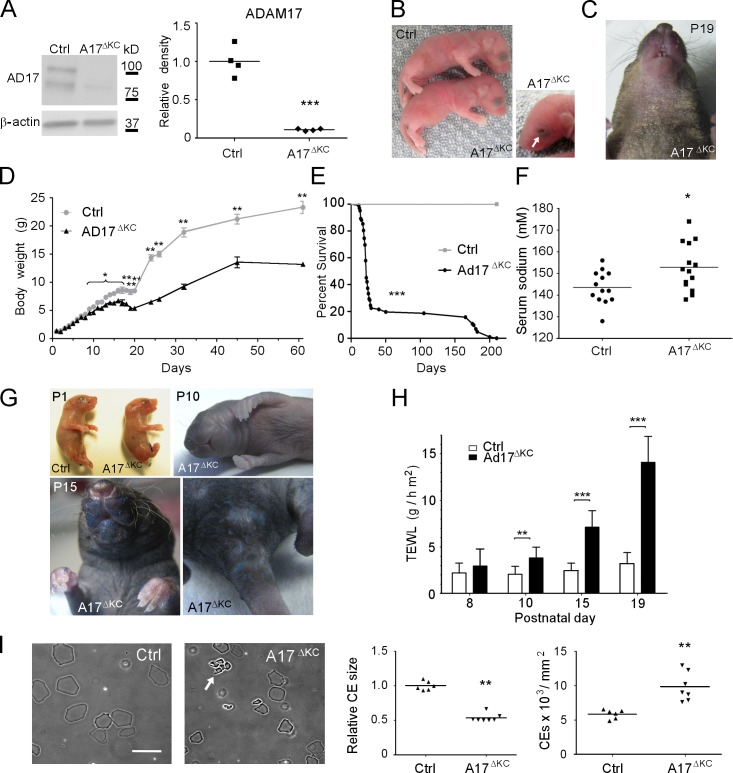
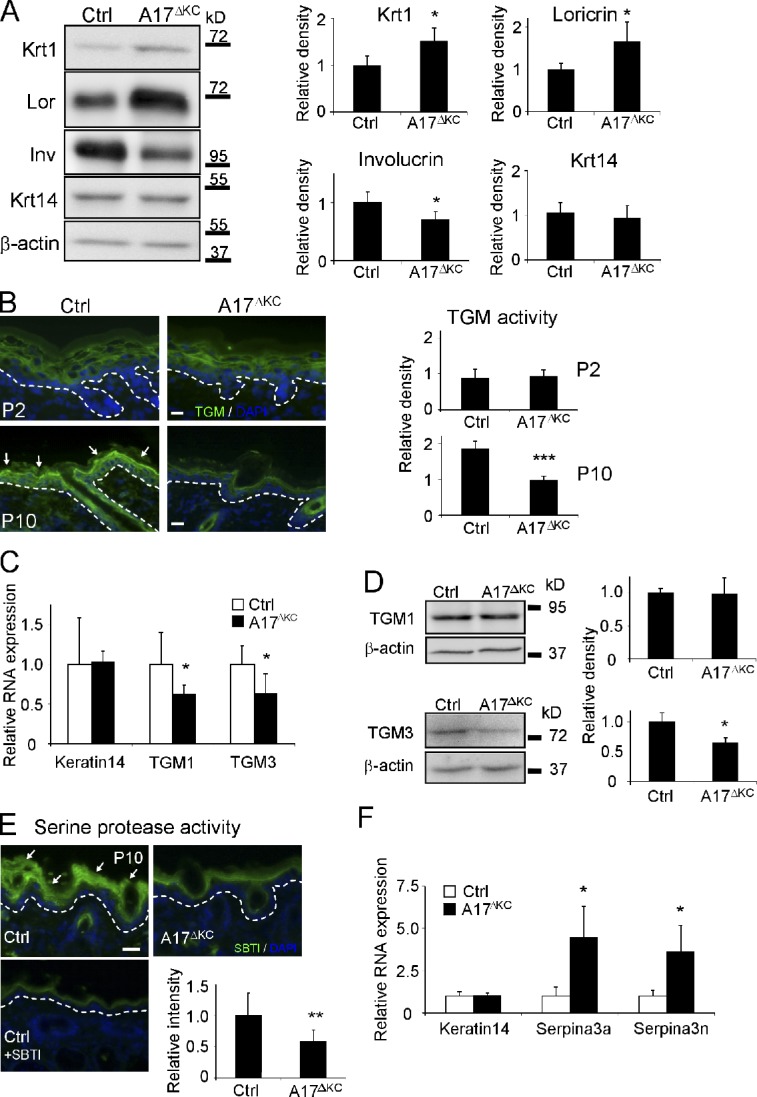
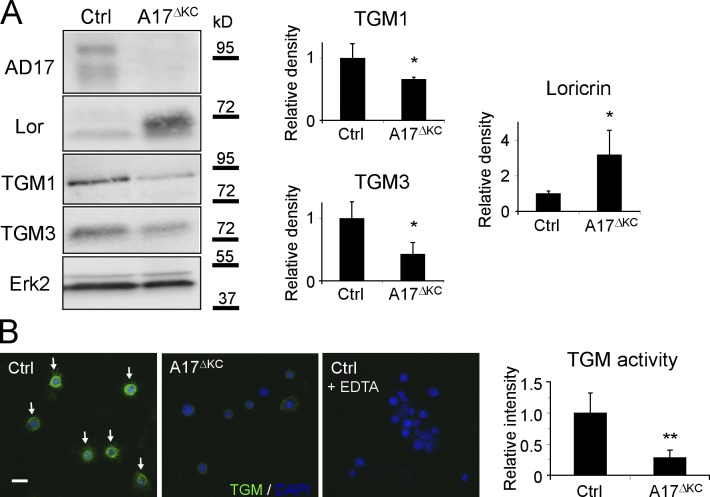
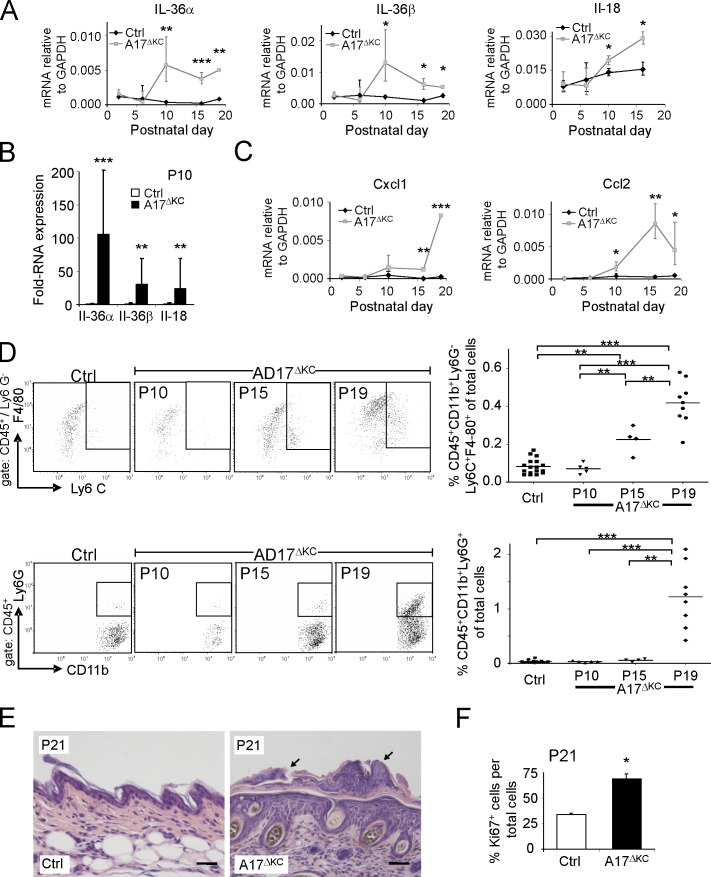
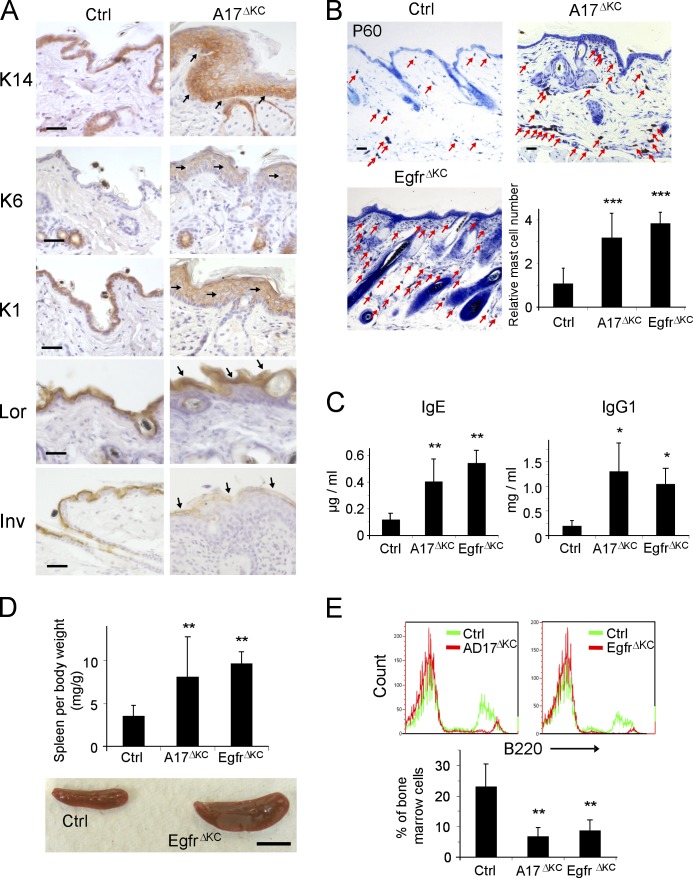
ADAM17 (a disintegrin and metalloproteinase 17) is ubiquitously expressed and cleaves membrane proteins, such as epidermal growth factor receptor (EGFR) ligands, l-selectin, and TNF, from the cell surface, thus regulating responses to tissue injury and inflammation. However, little is currently known about its role in skin homeostasis. We show that mice lacking ADAM17 in keratinocytes (A17ΔKC) have a normal epidermal barrier and skin architecture at birth but develop pronounced defects in epidermal barrier integrity soon after birth and develop chronic dermatitis as adults. The dysregulated expression of epidermal differentiation proteins becomes evident 2 d after birth, followed by reduced transglutaminase (TGM) activity, transepidermal water loss, up-regulation of the proinflammatory cytokine IL-36α, and inflammatory immune cell infiltration. Activation of the EGFR was strongly reduced in A17ΔKC skin, and topical treatment of A17ΔKC mice with recombinant TGF-α significantly improved TGM activity and decreased skin inflammation. Finally, we show that mice lacking the EGFR in keratinocytes (EgfrΔKC) closely resembled A17ΔKC mice. Collectively, these results identify a previously unappreciated critical role of the ADAM17–EGFR signaling axis in maintaining the homeostasis of the postnatal epidermal barrier and suggest that this pathway could represent a good target for treatment of epidermal barrier defects.
Overview
The claims and statistics of this paper haven’t been checked yet.
Run the check — free, no account needed. It reads the open-access text and checks the sources it cites.
Integrity signals
Registry
Cites
Statistics
Figures
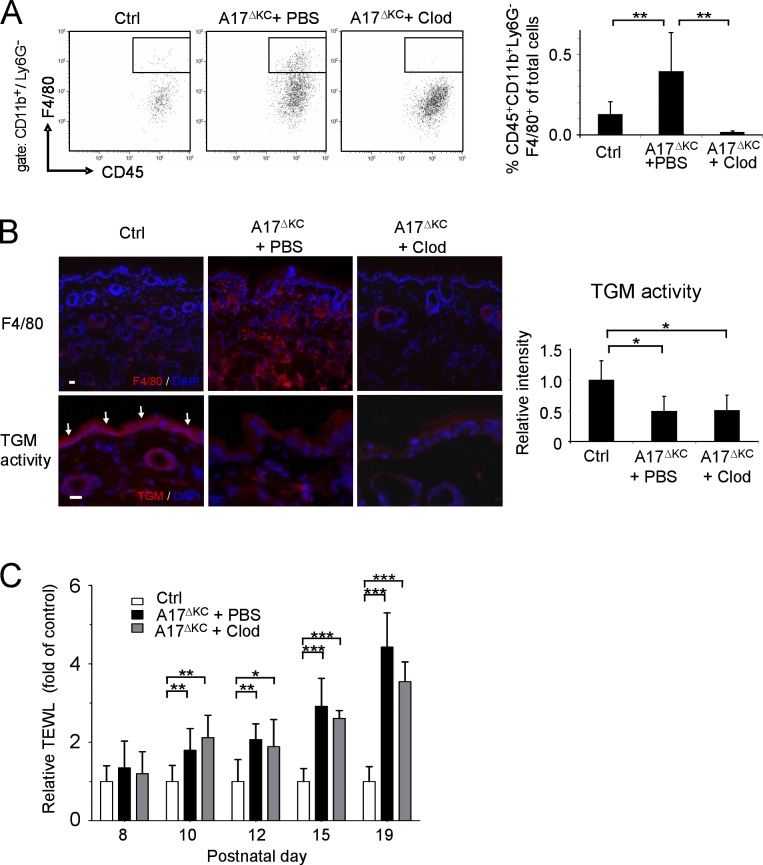
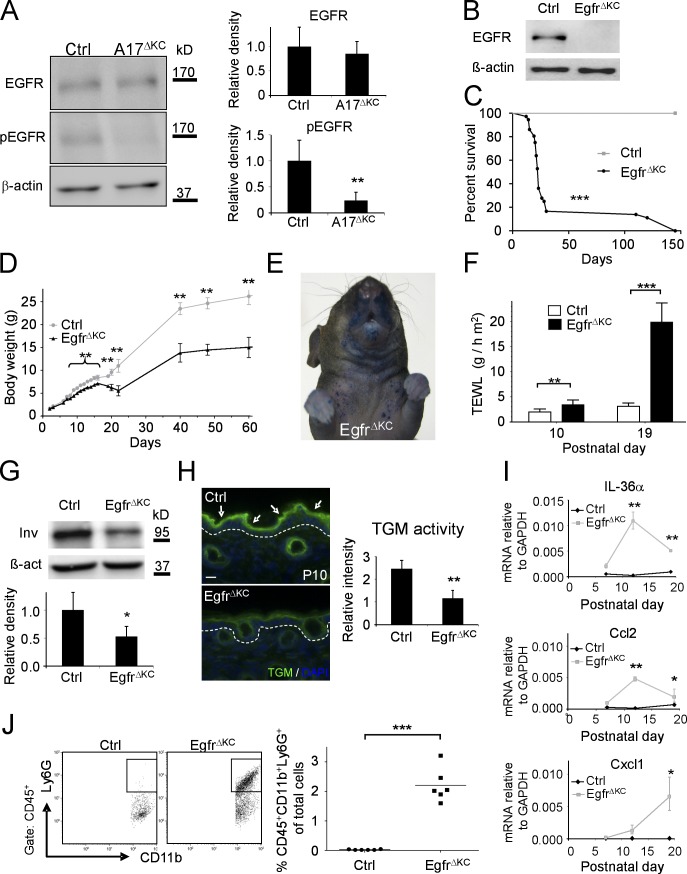
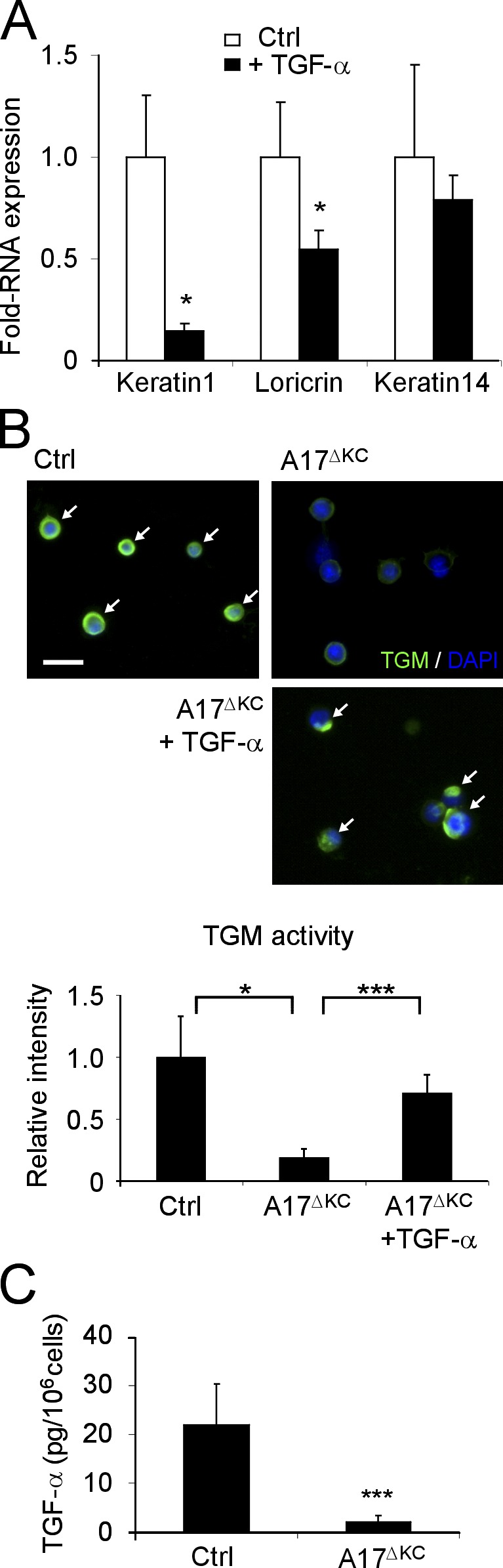
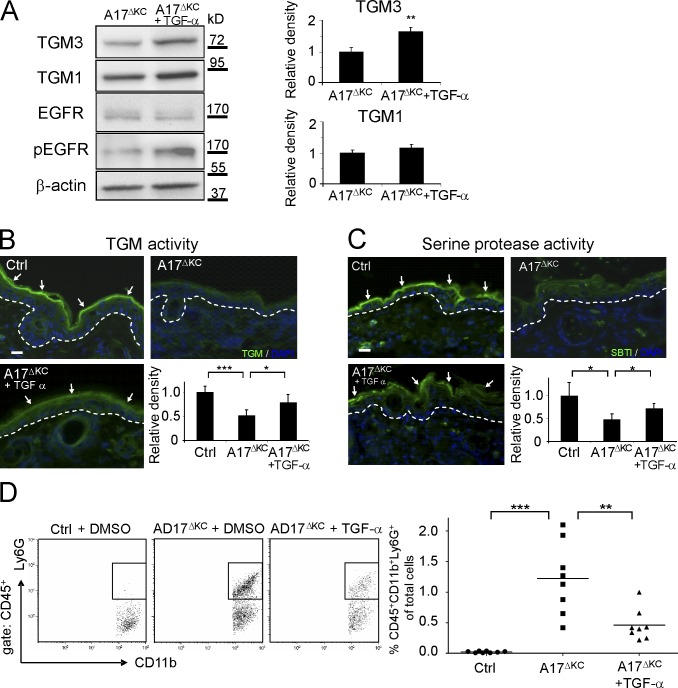
Verification
Claims the paper makes
The claims and statistics of this paper haven’t been checked yet.
Run the check — free, no account needed. It reads the open-access text and checks the sources it cites.
Claims other papers make about this one
Each is checked against this paper’s own text: does it say what the citing paper says it does?
The source backs part of the claim, not all of it — or backs it for a different population, condition or comparison.
In the citing paper
“Epidermal inactivation of EGFR in mice showed that these rashes were a direct consequence of epidermal EGFR, which was attributed to chemokine-driven inflammation51–53.”
From E-cadherin integrates mechanotransduction and EGFR signaling to control junctional tissue polarization and tight junction positioning (2017) · cites this paper as [51]
Experimental — accuracy not yet measured
Self-check
Percentages, sums and reported differences re-computed from the paper’s own numbers.
The self-check needs the paper’s full text.
Citations
Cites
ERBB receptors and cancer: the complexity of targeted inhibitors
Hynes, N. E., & Lane, H. A. (2005) · Nature reviews. Cancer · doi:10.1038/nrc1609 · Cited by 3,379
A metalloproteinase disintegrin that releases tumour-necrosis factor-α from cells
Black, R. A., Rauch, C. T., Kozlosky, C. J., Peschon, J. J., Slack, J. L., Wolfson, M. F., Castner, B. J., Stocking, K. L., Reddy, P., Srinivasan, S., et al. (1997) · Nature · doi:10.1038/385729a0 · Cited by 3,149
The cornified envelope: a model of cell death in the skin
Candi, E., Schmidt, R., & Melino, G. (2005) · Nature Reviews Molecular Cell Biology · doi:10.1038/nrm1619 · Cited by 1,776
An Essential Role for Ectodomain Shedding in Mammalian Development
Peschon, J. J., Slack, J. L., Reddy, P., Stocking, K. L., Sunnarborg, S. W., Lee, D. C., Russell, W. E., Castner, B. J., Johnson, R. S., Fitzner, J. N., et al. (1998) · Science · doi:10.1126/science.282.5392.1281 · Cited by 1,622
The IL-1 family: regulators of immunity
Sims, J. E., & Smith, D. E. (2010) · Nature reviews. Immunology · doi:10.1038/nri2691 · Cited by 1,459
Cloning of a disintegrin metalloproteinase that processes precursor tumour-necrosis factor-α
Moss, M. L., Jin, S.-L. C., Milla, M. E., Burkhart, W., Carter, H. L., Chen, W.-J., Clay, W. C., Didsbury, J. R., Hassler, D., Hoffman, C. R., et al. (1997) · Nature · doi:10.1038/385733a0 · Cited by 1,378
Epidermal homeostasis: a balancing act of stem cells in the skin
Blanpain, C., & Fuchs, E. (2009) · Nature Reviews Molecular Cell Biology · doi:10.1038/nrm2636 · Cited by 1,270
Targeted Disruption of Mouse EGF receptor: Effect of Genetic Background on Mutant Phenotype
Threadgill, D. W., Dlugosz, A. A., Hansen, L. A., Tennenbaum, T., Lichti, U., Yee, D., LaMantia, C., Mourton, T., Herrup, K., Harris, R. C., et al. (1995) · Science · doi:10.1126/science.7618084 · Cited by 1,179
Self-citationADAMs: key components in EGFR signalling and development
Blobel, C. (2005) · Nature Reviews Molecular Cell Biology · doi:10.1038/nrm1548 · Cited by 1,112
Self-citationEpithelial immaturity and multiorgan failure in mice lacking epidermal growth factor receptor
Miettinen, P. J., Berger, J. E., Meneses, J. J., Phung, Y. T., Pedersen, R. A., Werb, Z., & Derynck, R. (1995) · Nature · doi:10.1038/376337a0 · Cited by 1,038
Distinct roles for ADAM10 and ADAM17 in ectodomain shedding of six EGFR ligands
Şahin, U., Weskamp, G., Kelly, K., Zhou, H., Higashiyama, S., Peschon, J. J., Hartmann, D., Säftig, P., & Blobel, C. (2004) · The Journal of Cell Biology · doi:10.1083/jcb.200307137 · Cited by 1,013
Self-citationStrain-Dependent Epithelial Defects in Mice Lacking the EGF Receptor
Sibilia, M., & Wagner, E. F. (1995) · Science · doi:10.1126/science.7618085 · Cited by 1,002
Interleukin-36–Receptor Antagonist Deficiency and Generalized Pustular Psoriasis
Marrakchi, S., Guigue, P., Renshaw, B. R., Puel, A., Pei, X.-Y., Fraitag, S., Zribi, J., Bal, É., Cluzeau, C. V. M., Chrabieh, M., et al. (2011) · New England Journal of Medicine · doi:10.1056/nejmoa1013068 · Cited by 996
Mechanisms of cutaneous toxicities to EGFR inhibitors
Lacouture, M. E. (2006) · Nature reviews. Cancer · doi:10.1038/nrc1970 · Cited by 795
TGFα deficiency results in hair follicle and eye abnormalities in targeted and waved-1 mice
Luetteke, N., Qiu, T. H., Peiffer, R. L., Oliver, P. M., Smithies, O., & Lee, D. C. (1993) · Cell · doi:10.1016/0092-8674(93)90228-i · Cited by 658
Mann, G. B., Fowler, K. J., Gabriel, A., Nice, E. C., Williams, R. L., & Dunn, A. R. (1993) · Cell · doi:10.1016/0092-8674(93)90227-h · Cited by 583
Caubet, C., Jonca, N., Brattsand, M., Guerrin, M., Bernard, D., Schmidt, R., Egelrud, T., Simon, M., & Serre, G. (2004) · Journal of Investigative Dermatology · doi:10.1111/j.0022-202x.2004.22512.x · Cited by 518
Notch and EGFR pathway interaction regulates neural stem cell number and self-renewal
Aguirre, A. A., Rubio, M. E., & Gallo, V. (2010) · Nature · doi:10.1038/nature09347 · Cited by 482
Cutaneous barrier perturbation stimulates cytokine production in the epidermis of mice.
Wood, L. C., Jackson, S. M., Elias, P. M., Grünfeld, C., & Feingold, K. R. (1992) · Journal of Clinical Investigation · doi:10.1172/jci115884 · Cited by 454
The Epidermal Growth Factor Receptor System in Skin Repair and Inflammation
Pastore, S., Mascia, F., Mariani, V., & Girolomoni, G. (2007) · Journal of Investigative Dermatology · doi:10.1038/sj.jid.5701184 · Cited by 449
Lacouture, M. E., Anadkat, M. J., Bensadoun, R., Bryce, J., Chan, A., Epstein, J. B., Eaby‐Sandy, B., Murphy, B. A., & MASCC Skin Toxicity Study Group (2011) · Supportive Care in Cancer · doi:10.1007/s00520-011-1197-6 · Cited by 442
Defective valvulogenesis in HB‐EGF and TACE‐null mice is associated with aberrant BMP signaling
Jackson, L. F., Qiu, T. H., Sunnarborg, S. W., Chang, A., Zhang, C., Patterson, C., & Lee, D. C. (2003) · The EMBO Journal · doi:10.1093/emboj/cdg264 · Cited by 427
Intracellular maturation and localization of the tumour necrosis factor α convertase (TACE)
Schlöndorff, J. S., Becherer, J. D., & Blobel, C. (2000) · Biochemical Journal · doi:10.1042/bj3470131 · Cited by 357
Self-citationOpposing activities of two novel members of the IL-1 ligand family regulate skin inflammation
Blumberg, H., Dinh, H., Trueblood, E. S., Pretorius, J. K., Kugler, D. G., Weng, N., Kanaly, S. T., Towne, J. E., Willis, C. R., Kuechle, M. K., et al. (2007) · The Journal of Experimental Medicine · doi:10.1084/jem.20070157 · Cited by 348
TRP Channel Regulates EGFR Signaling in Hair Morphogenesis and Skin Barrier Formation
Cheng, X., Jin, J., Hu, L. J., Shen, D., Dong, X., Samie, M. A., Knoff, J. S., Eisinger, B. E., Liu, M.-L., Huang, S. M., et al. (2010) · Cell · doi:10.1016/j.cell.2010.03.013 · Cited by 334
Sternlicht, M. D., Sunnarborg, S. W., Kouros‐Mehr, H., Yu, Y., Lee, D. C., & Werb, Z. (2005) · Development · doi:10.1242/dev.01966 · Cited by 322
Inflammatory Skin and Bowel Disease Linked toADAM17Deletion
Blaydon, D. C., Biancheri, P., Di, W., Plagnol, V., Cabral, R. M., Brooke, M. A., van Heel, D. A., Rüschendorf, F., Toynbee, M., Walne, A. J., et al. (2011) · New England Journal of Medicine · doi:10.1056/nejmoa1100721 · Cited by 307
Horiuchi, K., Kimura, T., Miyamoto, T. K., Takaishi, H., Okada, Y., Toyama, Y., & Blobel, C. (2007) · The Journal of Immunology · doi:10.4049/jimmunol.179.5.2686 · Cited by 301
Self-citationChalaris, A., Adam, N., Sina, C., Rosenstiel, P. C., Lehmann‐Koch, J., Schirmacher, P., Hartmann, D., Cichy, J., Gavrilova, O., Schreiber, S., et al. (2010) · The Journal of Experimental Medicine · doi:10.1084/jem.20092366 · Cited by 269
Lessons from Loricrin-Deficient Mice
Koch, P. J., de Viragh, P. A., Scharer, E., Bundman, D. S., Longley, M. A., Bickenbach, J. R., Kawachi, Y., Suga, Y., Zhou, Z., Huber, M., et al. (2000) · The Journal of Cell Biology · doi:10.1083/jcb.151.2.389 · Cited by 267
Aurbach-Klipper, Y., Wasserman, M., Braunspiegel-Weintrob, N., Borstein, D., Peleg, S., ASSA, S., Karp, M., Benjamini, Y., Hochberg, Y., & Laron, Z. (1995) · Medical Hypotheses · doi:10.1016/0306-9877(95)90228-7 · Cited by 262
Crosstalk Between the EGFR and LIN-12/Notch Pathways in C. elegans Vulval Development
Yoo, A. S. J., Bais, C., & Greenwald, I. (2004) · Science · doi:10.1126/science.1091639 · Cited by 255
Breaking the (Un)Sound Barrier: Filaggrin Is a Major Gene for Atopic Dermatitis
Irvine, A. D., & McLean, W. H. I. (2006) · Journal of Investigative Dermatology · doi:10.1038/sj.jid.5700365 · Cited by 255
Murillas, R., Larcher, F., Conti, C. J., Santos, M., Ullrich, A., & Jorcano, J. L. (1995) · The EMBO Journal · doi:10.1002/j.1460-2075.1995.tb00206.x · Cited by 250
Stratis, A. (2006) · Journal of Clinical Investigation · doi:10.1172/jci27179 · Cited by 223
Demehri, S., Liu, Z., Lee, J., Lin, M., Crosby, S. D., Roberts, C. J., Grigsby, P. W., Miner, J. H., Farr, A. G., & Kopan, R. (2008) · PLoS Biology · doi:10.1371/journal.pbio.0060123 · Cited by 174
Péus, D., Hamacher, K. L., & Pittelkow, M. R. (1997) · Journal of Investigative Dermatology · doi:10.1111/1523-1747.ep12340759 · Cited by 171
Schneider, M. R., Werner, S., Paus, R., & Wolf, E. (2008) · American Journal Of Pathology · doi:10.2353/ajpath.2008.070942 · Cited by 168
“In Vivo” Depletion of Macrophages by Liposome-Mediated “Suicide”
van Rooijen, N., & van Kesteren-Hendrikx, E. M. L. (2003) · Methods in enzymology on CD-ROM/Methods in enzymology · doi:10.1016/s0076-6879(03)73001-8 · Cited by 164
Wang, X., Zinkel, S. S., Polonsky, K. S., & Fuchs, E. V. (1997) · Proceedings of the National Academy of Sciences · doi:10.1073/pnas.94.1.219 · Cited by 160
Maretzky, T., Evers, A., Zhou, W., Swendeman, S. L., Wong, P., Rafii, S., Reiß, K., & Blobel, C. (2011) · Nature Communications · doi:10.1038/ncomms1232 · Cited by 159
Self-citationKim, S., Jeitner, T. M., & Steinert, P. M. (2002) · Neurochemistry International · doi:10.1016/s0197-0186(01)00064-x · Cited by 156
SERPINA3 (aka alpha-1-antichymotrypsin)
Baker, C. (2007) · Frontiers in bioscience · doi:10.2741/2275 · Cited by 150
Mice deficient in involucrin, envoplakin, and periplakin have a defective epidermal barrier
Sevilla, L. M., Nachat, R., Groot, K. R., Klement, J. F., Uitto, J., Djian, P., Määttå, A., & Watt, F. M. (2007) · The Journal of Cell Biology · doi:10.1083/jcb.200706187 · Cited by 147
Pillai, S. G., & Bikle, D. D. (1991) · Journal of Cellular Physiology · doi:10.1002/jcp.1041460113 · Cited by 137
Yang, J., Meyer, M., Müller, A., Böhm, F., Grose, R. P., Dauwalder, T., Verrey, F., Köpf, M., Partanen, J. M., Bloch, W., et al. (2010) · The Journal of Cell Biology · doi:10.1083/jcb.200910126 · Cited by 136
Moniaga, C. S., Egawa, G., Kawasaki, H., Hara‐Chikuma, M., Honda, T., Tanizaki, H., Nakajima, S., Otsuka, A., Matsuoka, H., Kubo, A., et al. (2010) · American Journal Of Pathology · doi:10.2353/ajpath.2010.090957 · Cited by 134
Signal Integration During Development: Mechanisms of EGFR and Notch Pathway Function and Cross-Talk
Doroquez, D. B., & Rebay, I. (2006) · Critical Reviews in Biochemistry and Molecular Biology · doi:10.1080/10409230600914344 · Cited by 131
Transglutaminases in skin epidermis.
Hitomi, K. (2005) · PubMed · Cited by 131
Mice humanised for the EGF receptor display hypomorphic phenotypes in skin, bone and heart
Sibilia, M. C., Wagner, B., Hoebertz, A., Elliott, C., Marino, S., Jochum, W., & Wagner, E. F. (2003) · Development · doi:10.1242/dev.00664 · Cited by 130
Murthy, A., Shao, Y. W., Narala, S., Molyneux, S. D., Zúñiga‐Pflücker, J. C., & Khokha, R. (2012) · Immunity · doi:10.1016/j.immuni.2012.01.005 · Cited by 129
EGFR signaling attenuates Groucho-dependent repression to antagonize Notch transcriptional output
Hasson, P., Egoz, N., Winkler, C. J., Volohonsky, G., Jia, S., Dinur, T., Volk, T., Courey, A. J., & Paroush, Z. (2004) · Nature Genetics · doi:10.1038/ng1486 · Cited by 120
Antileukoprotease Inhibits Stratum Corneum Chymotryptic Enzyme
Franzke, C.-W., Baici, A., Bartels, J., Christophers, E., & Wiedow, O. (1996) · Journal of Biological Chemistry · doi:10.1074/jbc.271.36.21886 · Cited by 109
Self-citationShedding of Collagen XVII/BP180 in Skin Depends on Both ADAM10 and ADAM9
Franzke, C.-W., Bruckner‐Tuderman, L., & Blobel, C. (2009) · Journal of Biological Chemistry · doi:10.1074/jbc.m109.034090 · Cited by 105
Self-citationThe clinical spectrum of nonbullous congenital ichthyosiform erythroderma and lamellar ichthyosis
Akiyama, M., Sawamura, D., & Shimizu, H. (2003) · Clinical and Experimental Dermatology · doi:10.1046/j.1365-2230.2003.01295.x · Cited by 103
Kuramoto, N., Takizawa, T., Takizawa, T., Matsuki, M., Morioka, H., Robinson, J. M., & Yamanishi, K. (2002) · Journal of Clinical Investigation · doi:10.1172/jci13563 · Cited by 100
Kuramoto, N., Takizawa, T., Takizawa, T., Matsuki, M., Morioka, H., Robinson, J. M., & Yamanishi, K. (2002) · Journal of Clinical Investigation · doi:10.1172/jci0213563 · Cited by 98
Neonatal skin barrier: structure, function, and disorders
Shwayder, T., & Akland, T. (2005) · Dermatologic Therapy · doi:10.1111/j.1529-8019.2005.05011.x · Cited by 96
Lee, T., & Threadgill, D. W. (2008) · genesis · doi:10.1002/dvg.20464 · Cited by 94
Self-citationMurthy, A., Defamie, V., Smookler, D. S., Grappa, M. A. D., Horiuchi, K., Federici, M., Sibilia, M. C., Blobel, C., & Khokha, R. (2010) · Journal of Clinical Investigation · doi:10.1172/jci42686 · Cited by 93
Self-citationHuman tissue kallikreins as promiscuous modulators of homeostatic skin barrier functions
Eissa, A., & Diamandis, E. P. (2008) · Biological Chemistry · doi:10.1515/bc.2008.079 · Cited by 90
Ye, J., Garg, A., Calhoun, C. J., Feingold, K. R., Elias, P. M., & Ghadially, R. (2002) · Experimental Dermatology · doi:10.1034/j.1600-0625.2002.110303.x · Cited by 82
Dlugosz, A., Cheng, C., Denning, M. F., Dempsey, P. J., Coffey, R., & Yuspa, S. (1994) · PubMed · Cited by 78
A novel in situ method for the detection of deficient transglutaminase activity in the skin
Raghunath, M., Hennies, H. C., Velten, F., Wiebe, V., Steinert, P. M., Reis, A., & Traupe, H. (1998) · Archives of Dermatological Research · doi:10.1007/s004030050362 · Cited by 77
Wakita, H., & Takigawa, M. (1999) · Journal of Biological Chemistry · doi:10.1074/jbc.274.52.37285 · Cited by 57
Surguladze, D., Deevi, D. S., Claros, N., Corcoran, E., Wang, S., Plym, M. J., Wu, Y. L., Doody, J. F., Mauro, D. J., Witte, L., et al. (2009) · Cancer Research · doi:10.1158/0008-5472.can-09-0487 · Cited by 53
Ny, A., & Egelrud, T. (2003) · Acta Dermato Venereologica · doi:10.1080/00015550310005924 · Cited by 49
Aho, S., Li, K., Ryoo, Y. W., McGee, C., Ishida‐Yamamoto, A., Uitto, J., & Klement, J. F. (2004) · Molecular and Cellular Biology · doi:10.1128/mcb.24.14.6410-6418.2004 · Cited by 48
Kagehara, M., Tachi, M., Harii, K., & Iwamori, M. (1994) · Biochimica et Biophysica Acta (BBA) - Lipids and Lipid Metabolism · doi:10.1016/0005-2760(94)90109-0 · Cited by 22
Novel acquisitions on the immunoprotective roles of the EGF receptor in the skin
Pastore, S., & Mascia, F. (2008) · Expert Review of Dermatology · doi:10.1586/17469872.3.5.525 · Cited by 20
Cited by
Sorted by citations
Cellular and molecular immunologic mechanisms in patients with atopic dermatitis
Werfel, T., Allam, J., Biedermann, T., Eyerich, K., Gilles, S., Guttman‐Yassky, E., Hoetzenecker, W., Knol, E. F., Simon, H., Wollenberg, A., et al. (2016) · Journal of Allergy and Clinical Immunology · doi:10.1016/j.jaci.2016.06.010 · Cited by 603
Metalloproteinases and their natural inhibitors in inflammation and immunity
Khokha, R., Murthy, A., & Weiss, A. (2013) · Nature reviews. Immunology · doi:10.1038/nri3499 · Cited by 552
Dysbiosis and Staphylococcus aureus Colonization Drives Inflammation in Atopic Dermatitis
Kobayashi, T., Glatz, M., Horiuchi, K., Kawasaki, H., Akiyama, H., Kaplan, D. H., Kong, H. H., Amagai, M., & Nagao, K. (2015) · Immunity · doi:10.1016/j.immuni.2015.03.014 · Cited by 566
Self-citationThe epithelial immune microenvironment (EIME) in atopic dermatitis and psoriasis
Dainichi, T., Kitoh, A., Otsuka, A., Nakajima, S., Nomura, T., Kaplan, D. H., & Kabashima, K. (2018) · Nature Immunology · doi:10.1038/s41590-018-0256-2 · Cited by 393
Expression and Function of the Epidermal Growth Factor Receptor in Physiology and Disease
Chen, J., Zeng, F., Forrester, S. J., Eguchi, S., Zhang, M., & Harris, R. C. (2016) · Physiological Reviews · doi:10.1152/physrev.00030.2015 · Cited by 336
Metadata
- Authors
- Franzke, C.-W., Cobzaru, C., Triantafyllopoulou, A., Löffek, S., Horiuchi, K., Threadgill, D. W., Kurz, T., van Rooijen, N., Bruckner-Tuderman, L., & Blobel, C. P.
- Affiliations
- University of Freiburg (DE)
- Keio University (JP)
- North Carolina State University (US)
- Vrije Universiteit Amsterdam (NL)
- Department of Dermatology 1 and 2
- Hospital for Special Surgery (US)
- Corresponding author
- Franzke, Claus-Werner
- Blobel, Carl P.
- ORCID
- Venue
- Journal of Experimental Medicine
- Publisher
- Rockefeller University Press
- Published
- 2012-05-07
- Volume
- 209
- Issue
- 6
- Pages
- 1105-1119
- ISSN
- 0022-1007 (ISSN-L)
- 1540-9538
- PMC
- PMC3371728
- OpenAlex
- W2141275577
- Cited by
- 186
- References
- 70
- Citations by year
- 2026: 8 · 2025: 11 · 2024: 11 · 2023: 8 · 2022: 16 · 2021: 11 · 2020: 12 · 2019: 17 · 2018: 12 · 2017: 11 · 2016: 10 · 2015: 16 · 2014: 19 · 2013: 22 · 2012: 2
- FWCI
- 8.94
- Type
- journal article
- Language
- en
- Update notices
- correction (2012-11-26)
- Open access
- bronze
- doi.org
- Locations
- The Journal of Experimental Medicine (publishedVersion)
- Europe PMC (PubMed Central) (publishedVersion, cc-by-nc-sa)
- PubMed Central (publishedVersion, cc-by-nc-sa)
- PubMed (publishedVersion)
- Amsterdam UMC (VU Amsterdam) - Institutional Repository (publishedVersion, other-oa)
- Digital Academic REpository of VU University Amsterdam (Vrije Universiteit Amsterdam) (submittedVersion)
- Pure Amsterdam UMC (submittedVersion, other-oa)
- Data Archiving and Networked Services (DANS) (submittedVersion, other-oa)
- Funders
- European Commission (268390)
- Deutsche Forschungsgemeinschaft (SFB-850/B6, SFB850)
- Albert-Ludwigs-Universität Freiburg
- National Institutes of Health (NIH-R01)
- Medizinische Fakultät der Albert-Ludwigs-Universität Freiburg
- National Cancer Institute (R01CA092479)
- National Institute of General Medical Sciences (R01GM064750, GM-64750)
- Topics
- Life Sciences › Biochemistry, Genetics and Molecular Biology › Cell Biology › Skin and Cellular Biology Research
- Health Sciences › Medicine › Dermatology › Dermatology and Skin Diseases
- Health Sciences › Medicine › Dermatology › Genetic and rare skin diseases.
- Keywords
- ADAM17, epidermal growth factor receptor, skin barrier, keratinocyte differentiation, transglutaminase, transepidermal water loss, IL-36α, skin inflammation, chronic dermatitis, transforming growth factor-alpha
- MeSH terms
- ADAM17 Protein, Epidermal Cells, Administration, Topical, Animals, Animals, Newborn, Cell Differentiation, Dermatitis, Atopic, Epidermis, Interleukin-1, Macrophages, Mice, Mutant Strains, Transglutaminases, Skin, Keratinocytes, Transforming Growth Factor alpha, Gene Expression Regulation, Developmental, Mice, ADAM Proteins, ErbB Receptors
About these checks
Registry, retraction, Cites and statistics results are computed, not judged, with one exception: a printed reference that no index lists is read once by a model before it counts as a citation error. Claims are extracted by a model and kept only when their quote appears verbatim in the text; each cited source is then checked, with a model’s help, for whether it says what the claim relies on. Those verdicts can be wrong — read the claim’s quote and the cited source before relying on one.
Statistics and arithmetic are recomputed, not judged.
Confidence bands are shown only for fields calibrated on our annotated test set. None is calibrated yet, so no band is shown.
What counts as a claim ›How we measure confidence ›How we check this ›
Are you an author, or do you see a problem with this page? Request a review
