

The DOI matches its Crossref record; 9 of the 9 references it cites were found in a registry or an index.
The Human papillomavirus type 16 E7 oncoprotein induces a transcriptional repressor complex on the Toll-like receptor 9 promoter
Abstract
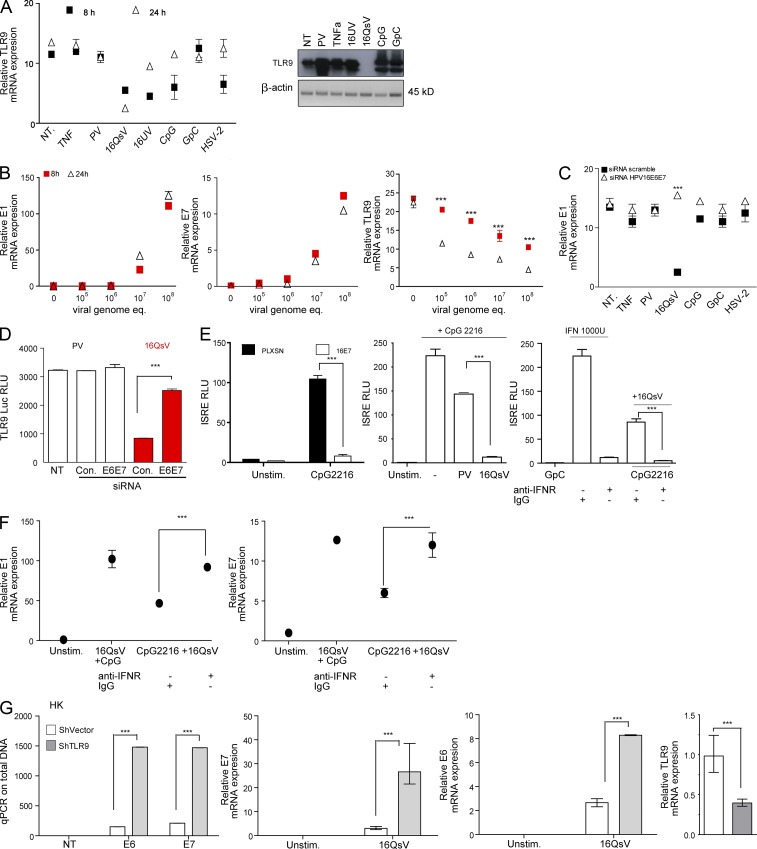
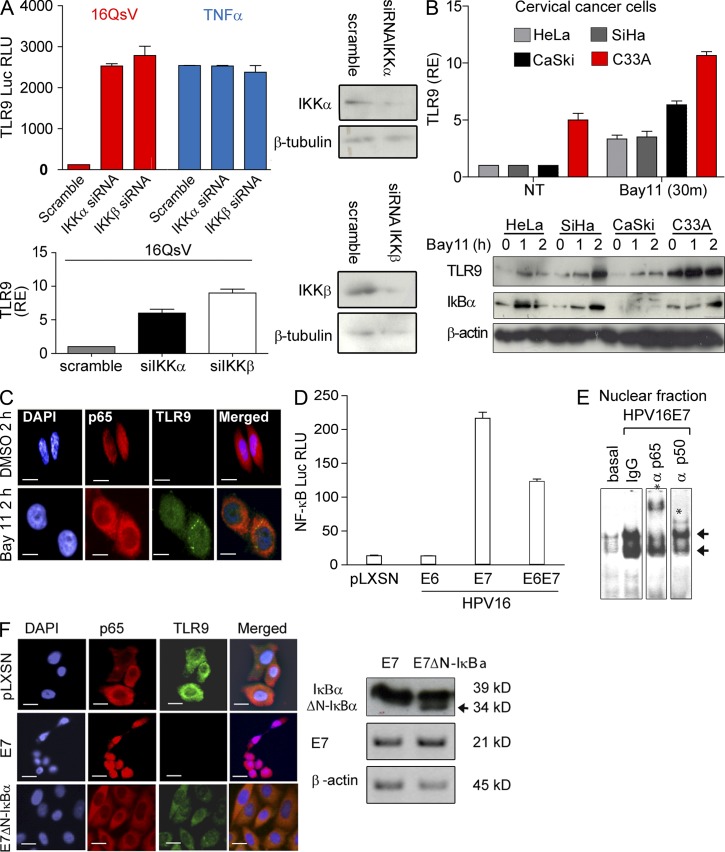
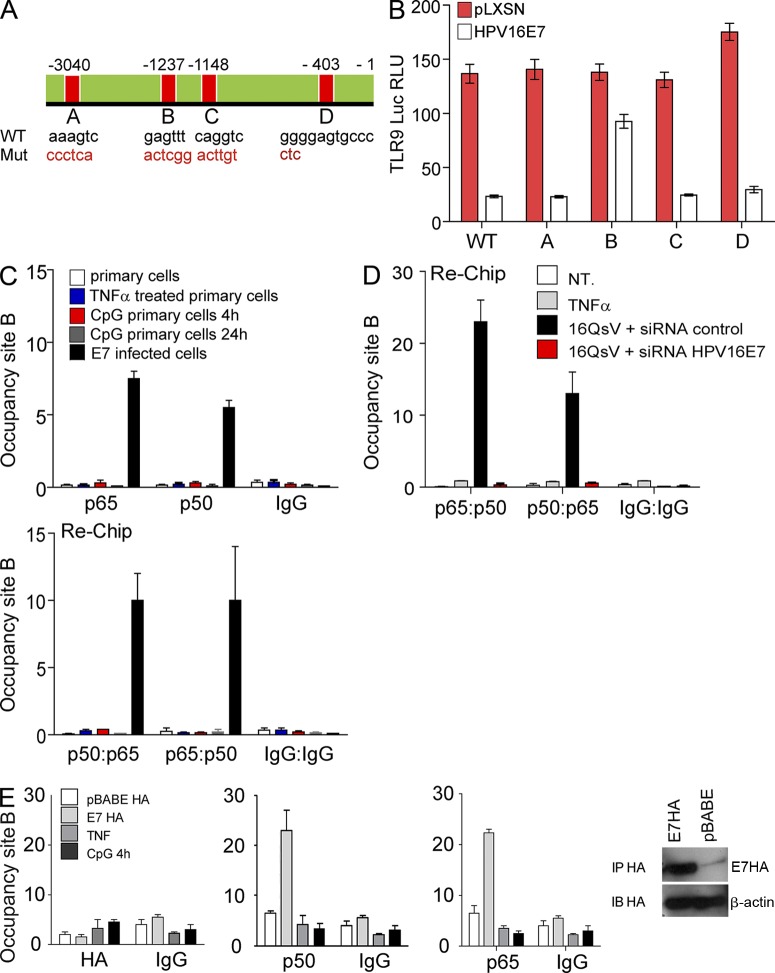
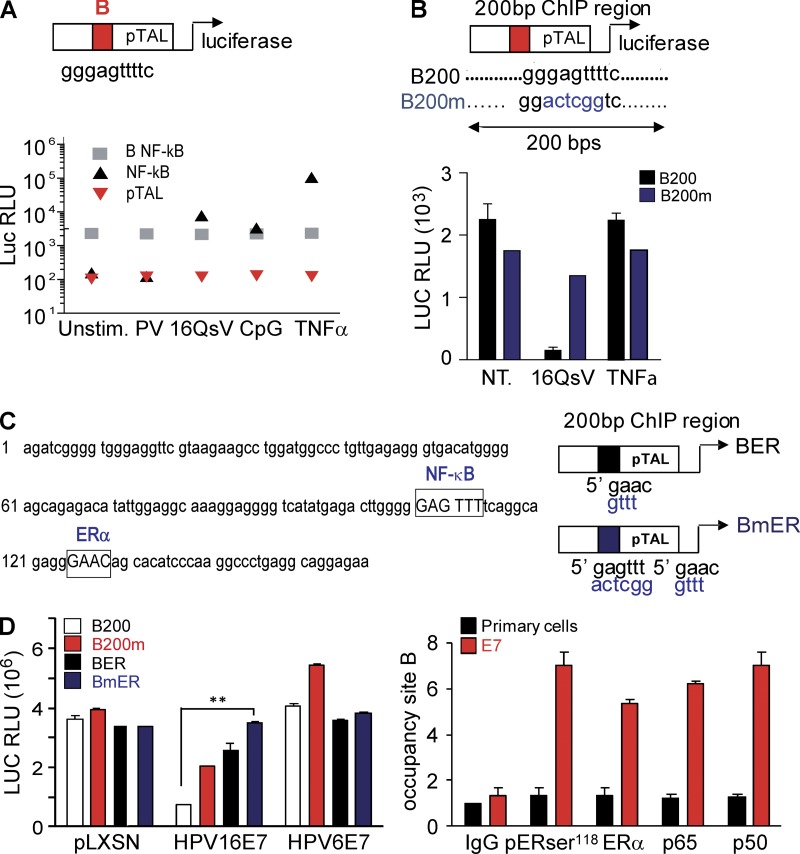
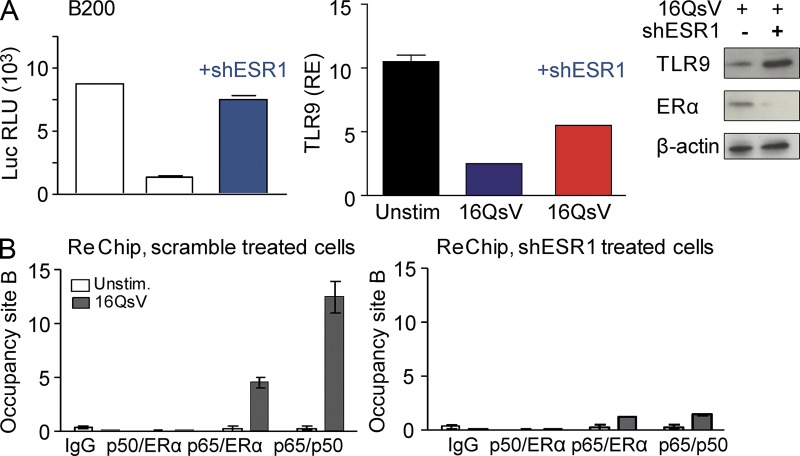
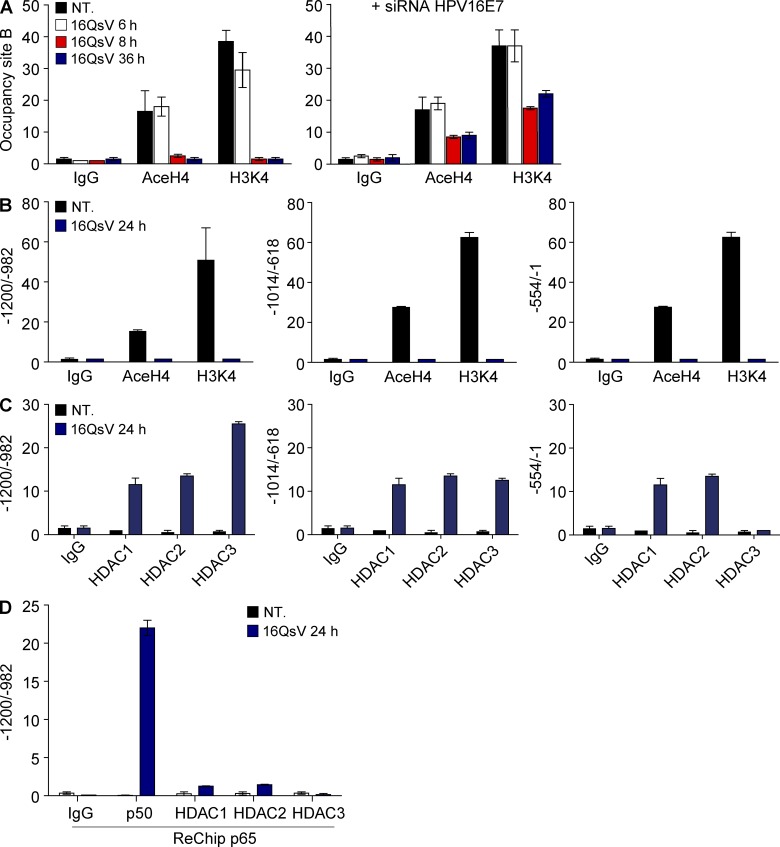
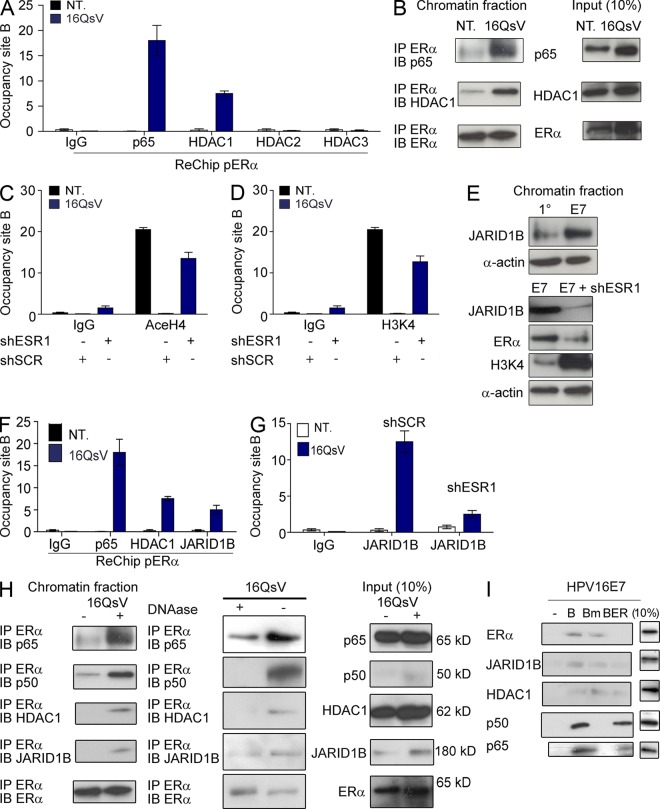
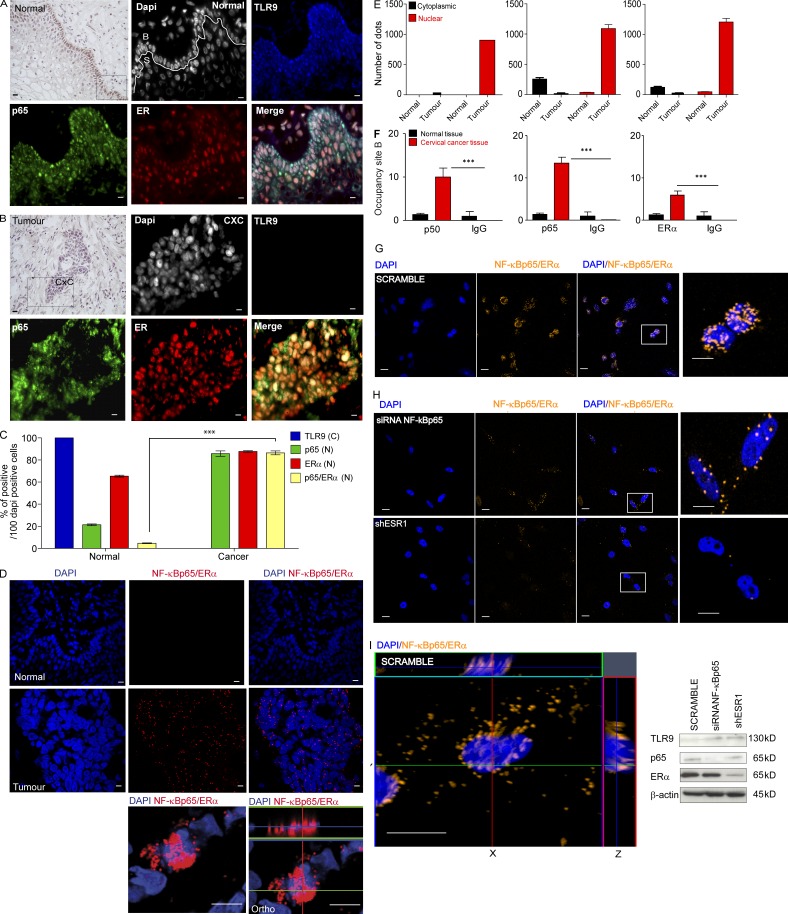
Human papillomavirus type 16 (HPV16) and other oncogenic viruses have been reported to deregulate immunity by suppressing the function of the double-stranded DNA innate sensor TLR9. However, the mechanisms leading to these events remain to be elucidated. We show that infection of human epithelial cells with HPV16 promotes the formation of an inhibitory transcriptional complex containing NF-κBp50–p65 and ERα induced by the E7 oncoprotein. The E7-mediated transcriptional complex also recruited the histone demethylase JARID1B and histone deacetylase HDAC1. The entire complex bound to a specific region on the TLR9 promoter, which resulted in decreased methylation and acetylation of histones upstream of the TLR9 transcriptional start site. The involvement of NF-κB and ERα in the TLR9 down-regulation by HPV16 E7 was fully confirmed in cervical tissues from human patients. Importantly, we present evidence that the HPV16-induced TLR9 down-regulation affects the interferon response which negatively regulates viral infection. Our studies highlight a novel HPV16-mediated mechanism that combines epigenetic and transcriptional events to suppress a key innate immune sensor.
Overview
The claims and statistics of this paper haven’t been checked yet.
Run the check — free, no account needed. It reads the open-access text and checks the sources it cites.
Integrity signals
Registry
Cites
Statistics
Figures
Verification
Claims the paper makes
The claims and statistics of this paper haven’t been checked yet.
Run the check — free, no account needed. It reads the open-access text and checks the sources it cites.
Claims other papers make about this one
Each is checked against this paper’s own text: does it say what the citing paper says it does?
In the citing paper
“Furthermore, double-stranded DNA sensor Toll-like receptor 9 is also efficiently silenced by recruitment of KDM5B and histone deacetylase HDAC1 to the TLR9 promoter, abrogating type-1 interferon secretions [359].”
From The Not-So-Good, the Bad and the Ugly: HPV E5, E6 and E7 Oncoproteins in the Orchestration of Carcinogenesis (2021) · cites this paper as [359]
Self-check
Percentages, sums and reported differences re-computed from the paper’s own numbers.
The self-check needs the paper’s full text.
Citations
Cites
A Toll-like receptor recognizes bacterial DNA
Hemmi, H., Takeuchi, O., Kawai, T., Kaisho, T., Sato, S., Sanjo, H., Matsumoto, M., Hoshino, K., Wagner, H., Takeda, K., et al. (2000) · Nature · doi:10.1038/35047123 · Cited by 6,491 · cited 1×
“TLR9 was one of the first innate immune receptors to be identified (Hemmi et al., 2000).”
BackgroundA review of human carcinogens—Part B: biological agents
Bouvard, V., Baan, R., Straif, K., Grosse, Y., Secretan, B., Ghissassi, F. E., Benbrahim-Tallaa, L., Guha, N., Freeman, C., Galichet, L., et al. (2009) · The Lancet Oncology · doi:10.1016/s1470-2045(09)70096-8 · Cited by 2,935
AIM2 activates the inflammasome and cell death in response to cytoplasmic DNA
Fernandes-Alnemri, T., Yu, J.-W., Datta, P., Wu, J., & Alnemri, E. S. (2009) · Nature · doi:10.1038/nature07710 · Cited by 1,831
Histone deacetylase inhibitors: molecular mechanisms of action
Xu, W. S., Parmigiani, R. B., & Marks, P. A. (2007) · Oncogene · doi:10.1038/sj.onc.1210620 · Cited by 1,542
Gene-specific control of inflammation by TLR-induced chromatin modifications
Foster, S. L., Hargreaves, D. C., & Medzhitov, R. (2007) · Nature · doi:10.1038/nature05836 · Cited by 1,344
Self-citationThe AIM2 inflammasome is essential for host defense against cytosolic bacteria and DNA viruses
Rathinam, V. A. K., Jiang, Z., Waggoner, S. N., Sharma, S., Cole, L. E., Waggoner, L., Vanaja, S. K., Monks, B. G., Ganesan, S., Latz, E., et al. (2010) · Nature Immunology · doi:10.1038/ni.1864 · Cited by 1,331
Gillet, E., Meys, J. F., Verstraelen, H., Bosire, C., De Sutter, P., Temmerman, M., & Broeck, D. V. (2011) · BMC Infectious Diseases · doi:10.1186/1471-2334-11-10 · Cited by 354
Weng, N.-P., Araki, Y., & Subedi, K. (2012) · Nature Reviews Immunology · doi:10.1038/nri3173 · Cited by 290
López-Rovira, T., Chalaux, E., Massagué, J., Rosa, J. L., & Ventura, F. (2002) · Journal of Biological Chemistry · doi:10.1074/jbc.m106826200 · Cited by 285
Research works printed but not linked: 76
- Accardi, 2011, IkappaB kinase beta promotes cell survival by antagonizing p53 functions through DeltaNp73alpha phosphorylation and stabilization, Mol. Cell. Biol., 31, 2210, 10.1128/MCB.00964-10 · DOI
- Adams, 2008, Immunization of malignant melanoma patients with full-length NY-ESO-1 protein using TLR7 agonist imiquimod as vaccine adjuvant, J. Immunol., 181, 776, 10.4049/jimmunol.181.1.776 · DOI
- Avalos, 2011, Competition by inhibitory oligonucleotides prevents binding of CpG to C-terminal TLR9, Eur. J. Immunol., 41, 2820, 10.1002/eji.201141563 · DOI
- Bangert, 2011, Immune functions of the skin, Clin. Dermatol., 29, 360, 10.1016/j.clindermatol.2011.01.006 · DOI
- Brake, 2005, Estrogen contributes to the onset, persistence, and malignant progression of cervical cancer in a human papillomavirus-transgenic mouse model, Proc. Natl. Acad. Sci. USA., 102, 2490, 10.1073/pnas.0409883102 · DOI
- Buck, 2005, Generation of HPV pseudovirions using transfection and their use in neutralization assays, Methods Mol. Med., 119, 445
- Catchpole, 2011, PLU-1/JARID1B/KDM5B is required for embryonic survival and contributes to cell proliferation in the mammary gland and in ER+ breast cancer cells, Int. J. Oncol., 38, 1267
- Chung, 2009, Prevention and treatment of cervical cancer in mice using estrogen receptor antagonists, Proc. Natl. Acad. Sci. USA., 106, 19467, 10.1073/pnas.0911436106 · DOI
- Chung, 2008, Requirement for estrogen receptor alpha in a mouse model for human papillomavirus-associated cervical cancer, Cancer Res., 68, 9928, 10.1158/0008-5472.CAN-08-2051 · DOI
- Chung, 2010, Estrogen and ERalpha: culprits in cervical cancer?, Trends Endocrinol. Metab., 21, 504, 10.1016/j.tem.2010.03.005 · DOI
- Coban, 2005, Toll-like receptor 9 mediates innate immune activation by the malaria pigment hemozoin, J. Exp. Med., 201, 19, 10.1084/jem.20041836 · DOI
- Daud, 2008, Validation of reference genes in cervical cell samples from human papillomavirus-infected and -uninfected women for quantitative reverse transcription-PCR assays, Clin. Vaccine Immunol., 15, 1369, 10.1128/CVI.00074-08 · DOI
- Daud, 2011, Association between toll-like receptor expression and human papillomavirus type 16 persistence, Int. J. Cancer., 128, 879, 10.1002/ijc.25400 · DOI
- Debenedictis, 2001, Immune functions of the skin, Clin. Dermatol., 19, 573, 10.1016/S0738-081X(00)00173-5 · DOI
- DeCarlo, 2012, Toll-like receptor transcriptome in the HPV-positive cervical cancer microenvironment, Clin. Dev. Immunol., 2012, 785825, 10.1155/2012/785825 · DOI
- Dey, 2008, The histone demethylase KDM5b/JARID1b plays a role in cell fate decisions by blocking terminal differentiation, Mol. Cell. Biol., 28, 5312, 10.1128/MCB.00128-08 · DOI
- Ewald, 2011, Nucleic acid recognition by Toll-like receptors is coupled to stepwise processing by cathepsins and asparagine endopeptidase, J. Exp. Med., 208, 643, 10.1084/jem.20100682 · DOI
- Fathallah, 2010, EBV latent membrane protein 1 is a negative regulator of TLR9, J. Immunol., 185, 6439, 10.4049/jimmunol.0903459 · DOI
- Feldman, 2007, Identification of proteins within the nuclear factor-kappa B transcriptional complex including estrogen receptor-alpha, Am. J. Obstet. Gynecol., 196, 10.1016/j.ajog.2006.12.033 · DOI
- Fiola, 2010, TLR9 contributes to the recognition of EBV by primary monocytes and plasmacytoid dendritic cells, J. Immunol., 185, 3620, 10.4049/jimmunol.0903736 · DOI
- Flores, 1999, Establishment of the human papillomavirus type 16 (HPV-16) life cycle in an immortalized human foreskin keratinocyte cell line, Virology., 262, 344, 10.1006/viro.1999.9868 · DOI
- Gibson, 2012, Estrogen dependent signaling in reproductive tissues - a role for estrogen receptors and estrogen related receptors, Mol. Cell. Endocrinol., 348, 361, 10.1016/j.mce.2011.09.026 · DOI · Paper page
- Gonda, 1996, The c-myb negative regulatory domain, Curr. Top. Microbiol. Immunol., 211, 99
- Gondois-Rey, 2009, Hepatitis C virus is a weak inducer of interferon alpha in plasmacytoid dendritic cells in comparison with influenza and human herpesvirus type-1, PLoS ONE., 4, e4319, 10.1371/journal.pone.0004319 · DOI
- Häcker, 2006, Regulation and function of IKK and IKK-related kinases, Sci. STKE., 2006, re13, 10.1126/stke.3572006re13 · DOI
- Hasan, 2004, Differential induction of gene promoter constructs by constitutively active human TLRs, Biochem. Biophys. Res. Commun., 321, 124, 10.1016/j.bbrc.2004.06.134 · DOI
- Hasan, 2005, Human TLR10 is a functional receptor, expressed by B cells and plasmacytoid dendritic cells, which activates gene transcription through MyD88, J. Immunol., 174, 2942, 10.4049/jimmunol.174.5.2942 · DOI
- Hasan, 2007, TLR9 expression and function is abolished by the cervical cancer-associated human papillomavirus type 16, J. Immunol., 178, 3186, 10.4049/jimmunol.178.5.3186 · DOI
- Hasan, 2007, Cell proliferation and survival induced by Toll-like receptors is antagonized by type I IFNs, Proc. Natl. Acad. Sci. USA., 104, 8047, 10.1073/pnas.0700664104 · DOI
- Hirsch, 2010, Impaired Toll-like receptor 7 and 9 signaling: from chronic viral infections to cancer, Trends Immunol., 31, 391, 10.1016/j.it.2010.07.004 · DOI
- Hudak, 2002, Immune surveillance and effector functions of CCR10(+) skin homing T cells, J. Immunol., 169, 1189, 10.4049/jimmunol.169.3.1189 · DOI
- Ito, 2003, Alterations of immune functions in barrier disrupted skin by UVB irradiation, J. Dermatol. Sci., 33, 151, 10.1016/S0923-1811(03)00177-4 · DOI
- Joel, 1998, pp90rsk1 regulates estrogen receptor-mediated transcription through phosphorylation of Ser-167, Mol. Cell. Biol., 18, 1978, 10.1128/MCB.18.4.1978 · DOI
- Kaplan, 2012, Early immune events in the induction of allergic contact dermatitis, Nat. Rev. Immunol., 12, 114, 10.1038/nri3150 · DOI
- Karim, 2011, Human papillomavirus deregulates the response of a cellular network comprising of chemotactic and proinflammatory genes, PLoS ONE., 6, e17848, 10.1371/journal.pone.0017848 · DOI
- Kim, 2010, Histone demethylase JARID1B/KDM5B is a corepressor of TIEG1/KLF10, Biochem. Biophys. Res. Commun., 401, 412, 10.1016/j.bbrc.2010.09.068 · DOI
- Kim, 2003, Methylation patterns of papillomavirus DNA, its influence on E2 function, and implications in viral infection, J. Virol., 77, 12450, 10.1128/JVI.77.23.12450-12459.2003 · DOI
- Lebre, 2007, Human keratinocytes express functional Toll-like receptor 3, 4, 5, and 9, J. Invest. Dermatol., 127, 331, 10.1038/sj.jid.5700530 · DOI
- Lin, 2009, Combination of proteasome and HDAC inhibitors for uterine cervical cancer treatment, Clin. Cancer Res., 15, 570, 10.1158/1078-0432.CCR-08-1813 · DOI
- Lund, 2003, Toll-like receptor 9–mediated recognition of Herpes simplex virus-2 by plasmacytoid dendritic cells, J. Exp. Med., 198, 513, 10.1084/jem.20030162 · DOI
- Malanchi, 2004, Human papillomavirus type 16 E6 promotes retinoblastoma protein phosphorylation and cell cycle progression, J. Virol., 78, 13769, 10.1128/JVI.78.24.13769-13778.2004 · DOI
- Mansour, 2007, E7 properties of mucosal human papillomavirus types 26, 53 and 66 correlate with their intermediate risk for cervical cancer development, Virology., 367, 1, 10.1016/j.virol.2007.05.005 · DOI
- Marur, 2010, HPV-associated head and neck cancer: a virus-related cancer epidemic, Lancet Oncol., 11, 781, 10.1016/S1470-2045(10)70017-6 · DOI
- McCloskey, 2010, Human papillomavirus type 16 E6/E7 upregulation of nucleophosmin is important for proliferation and inhibition of differentiation, J. Virol., 84, 5131, 10.1128/JVI.01965-09 · DOI
- Méndez, 2000, Chromatin association of human origin recognition complex, cdc6, and minichromosome maintenance proteins during the cell cycle: assembly of prereplication complexes in late mitosis, Mol. Cell. Biol., 20, 8602, 10.1128/MCB.20.22.8602-8612.2000 · DOI
- Metz, 2008, Mast cell functions in the innate skin immune system, Immunobiology., 213, 251, 10.1016/j.imbio.2007.10.017 · DOI
- Moore, 2010, Why do viruses cause cancer? Highlights of the first century of human tumour virology, Nat. Rev. Cancer., 10, 878, 10.1038/nrc2961 · DOI
- Morizane, 2012, Cathelicidin antimicrobial peptide LL-37 in psoriasis enables keratinocyte reactivity against TLR9 ligands, J. Invest. Dermatol., 132, 135, 10.1038/jid.2011.259 · DOI
- Nelson, 2011, Some highlights of the first century of immunotherapy, Ann. Allergy Asthma Immunol., 107, 417, 10.1016/j.anai.2011.05.013 · DOI
- Nijwening, 2011, The histone demethylase Jarid1b (Kdm5b) is a novel component of the Rb pathway and associates with E2f-target genes in MEFs during senescence, PLoS ONE., 6, e25235, 10.1371/journal.pone.0025235 · DOI
- Nusinzon, 2006, Positive and negative regulation of the innate antiviral response and beta interferon gene expression by deacetylation, Mol. Cell. Biol., 26, 3106, 10.1128/MCB.26.8.3106-3113.2006 · DOI
- Pedersen, 2010, Histone demethylases in development and disease, Trends Cell Biol., 20, 662, 10.1016/j.tcb.2010.08.011 · DOI
- Pivarcsi, 2007, Tumor immune escape by the loss of homeostatic chemokine expression, Proc. Natl. Acad. Sci. USA., 104, 19055, 10.1073/pnas.0705673104 · DOI
- Pyeon, 2005, Production of infectious human papillomavirus independently of viral replication and epithelial cell differentiation, Proc. Natl. Acad. Sci. USA., 102, 9311, 10.1073/pnas.0504020102 · DOI
- Rampias, 2009, E6 and e7 gene silencing and transformed phenotype of human papillomavirus 16-positive oropharyngeal cancer cells, J. Natl. Cancer Inst., 101, 412, 10.1093/jnci/djp017 · DOI
- Reiser, 2011, High-risk human papillomaviruses repress constitutive kappa interferon transcription via E6 to prevent pathogen recognition receptor and antiviral-gene expression, J. Virol., 85, 11372, 10.1128/JVI.05279-11 · DOI · Paper page
- Rincon-Orozco, 2009, Epigenetic silencing of interferon-kappa in human papillomavirus type 16-positive cells, Cancer Res., 69, 8718, 10.1158/0008-5472.CAN-09-0550 · DOI
- Ronco, 1998, Human papillomavirus 16 E6 oncoprotein binds to interferon regulatory factor-3 and inhibits its transcriptional activity, Genes Dev., 12, 2061, 10.1101/gad.12.13.2061 · DOI · Paper page
- Roszak, 2012, Involvement of Toll-like Receptor 9 polymorphism in cervical cancer development, Mol. Biol. Rep., 39, 8425, 10.1007/s11033-012-1695-8 · DOI
- Ryerson, 2008, Burden of potentially human papillomavirus-associated cancers of the oropharynx and oral cavity in the US, 1998-2003, Cancer., 113, 2901, 10.1002/cncr.23745 · DOI
- Sasai, 2010, Bifurcation of Toll-like receptor 9 signaling by adaptor protein 3, Science., 329, 1530, 10.1126/science.1187029 · DOI
- Scibetta, 2007, Functional analysis of the transcription repressor PLU-1/JARID1B, Mol. Cell. Biol., 27, 7220, 10.1128/MCB.00274-07 · DOI
- Sepulveda, 2009, Critical role for asparagine endopeptidase in endocytic Toll-like receptor signaling in dendritic cells, Immunity., 31, 737, 10.1016/j.immuni.2009.09.013 · DOI
- Shai, 2008, p53 Loss synergizes with estrogen and papillomaviral oncogenes to induce cervical and breast cancers, Cancer Res., 68, 2622, 10.1158/0008-5472.CAN-07-5266 · DOI
- Takai, 2011, Novel chemotherapy using histone deacetylase inhibitors in cervical cancer, Asian Pac. J. Cancer Prev., 12, 575
- Takeshita, 2004, Transcriptional regulation of the human TLR9 gene, J. Immunol., 173, 2552, 10.4049/jimmunol.173.4.2552 · DOI
- Tang, 2006, Short-term induction and long-term suppression of HPV16 oncogene silencing by RNA interference in cervical cancer cells, Oncogene., 25, 2094, 10.1038/sj.onc.1209244 · DOI
- Tay, 2012, Cervical cancer in the human papillomavirus vaccination era, Curr. Opin. Obstet. Gynecol., 24, 3, 10.1097/GCO.0b013e32834daed9 · DOI
- Tommasino, 2003, The role of TP53 in Cervical carcinogenesis, Hum. Mutat., 21, 307, 10.1002/humu.10178 · DOI
- van Gent, 2011, EBV lytic-phase protein BGLF5 contributes to TLR9 downregulation during productive infection, J. Immunol., 186, 1694, 10.4049/jimmunol.0903120 · DOI
- Vincent, 2011, Hepatitis B virus impairs TLR9 expression and function in plasmacytoid dendritic cells, PLoS ONE., 6, e26315, 10.1371/journal.pone.0026315 · DOI
- Woltman, 2011, Hepatitis B virus lacks immune activating capacity, but actively inhibits plasmacytoid dendritic cell function, PLoS ONE., 6, e15324, 10.1371/journal.pone.0015324 · DOI
- Xu, 2009, HBsAg inhibits TLR9-mediated activation and IFN-alpha production in plasmacytoid dendritic cells, Mol. Immunol., 46, 2640, 10.1016/j.molimm.2009.04.031 · DOI
- Yu, 2010, Expression of toll-like receptor 4 is down-regulated during progression of cervical neoplasia, Cancer Immunol. Immunother., 59, 1021, 10.1007/s00262-010-0825-1 · DOI
- Zauner, 2010, TLR9 triggering in Burkitt’s lymphoma cell lines suppresses the EBV BZLF1 transcription via histone modification, Oncogene., 29, 4588, 10.1038/onc.2010.203 · DOI
- Zhang, 2004, Human papillomavirus type 16 E7 protein increases acetylation of histone H3 in human foreskin keratinocytes, Virology., 329, 189, 10.1016/j.virol.2004.08.009 · DOI
Cited by
Basukala, O., & Banks, L. (2021) · Viruses · doi:10.3390/v13101892 · Cited by 137
Metadata
- Authors
- Hasan, U. A., Zannetti, C., Parroche, P., Goutagny, N., Malfroy, M., Roblot, G., Carreira, C., Hussain, I., Müller, M., Taylor-Papadimitriou, J., Picard, D., Sylla, B. S., Trinchieri, G., Medzhitov, R., & Tommasino, M.
- Affiliations
- Infections and Cancer Biology Group, International Agency for Research on Cancer, Lyon 69008, France 1
- CIRI, Oncoviruses and Innate Immunity, INSERM U1111, Ecole Normale Supérieure, Université de Lyon, CNRS-UMR5308, Hospices Civils de Lyon, Lyon 69000, France 2
- CRCL, UMR INSERM 1052 - CNRS 5286, Centre Léon Bérard, Lyon 69008, France 3
- Division of Veterinary Biochemistry FVSc & AH, SK Alusteng, Kashmir 190006, India 4
- Programme of Infection & Cancer, DKFZ, Heidelberg 69120, Germany 5
- Breast Cancer Biology Group, King’s College London School of Medicine, Thomas Guy House, Guy’s Hospital, London SE1 9RT, England, UK 6
- University of Geneva, 1211 Genève 4, Switzerland 7
- Cancer and Inflammation Program, Center for Cancer Research, National Cancer Institute, Frederick, MD 21702 8
- Yale University School of Medicine, New Haven, CT 06510 9
- Venue
- Journal of Experimental Medicine
- Publisher
- Rockefeller University Press
- Published
- 2013-06-10
- Volume
- 210
- Issue
- 7
- Pages
- 1369-1387
- ISSN
- 1540-9538
- 0022-1007
- PMC
- PMC3698525
- Cited by
- 191
- References
- 9
- Language
- en
About these checks
Registry, retraction, Cites and statistics results are computed, not judged, with one exception: a printed reference that no index lists is read once by a model before it counts as a citation error. Claims are extracted by a model and kept only when their quote appears verbatim in the text; each cited source is then checked, with a model’s help, for whether it says what the claim relies on. Those verdicts can be wrong — read the claim’s quote and the cited source before relying on one.
Statistics and arithmetic are recomputed, not judged.
Confidence bands are shown only for fields calibrated on our annotated test set. None is calibrated yet, so no band is shown.
What counts as a claim ›How we measure confidence ›How we check this ›
Are you an author, or do you see a problem with this page? Request a review
How to cite
Cite CoChat for the checks on this page, and the paper for its own findings.
- This page
- CoChat. (2026). Citation check: The Human papillomavirus type 16 E7 oncoprotein induces a transcriptional repressor complex on the Toll-like receptor 9 promoter. https://app.cochat.ai/papers/10.1084/jem.20122394
- The paper
- Hasan, U. A., Zannetti, C., Parroche, P., Goutagny, N., Malfroy, M., Roblot, G., Carreira, C., Hussain, I., Müller, M., Taylor-Papadimitriou, J., Picard, D., Sylla, B. S., Trinchieri, G., Medzhitov, R., & Tommasino, M. (2013). The Human papillomavirus type 16 E7 oncoprotein induces a transcriptional repressor complex on the Toll-like receptor 9 promoter. Journal of Experimental Medicine. https://doi.org/10.1084/jem.20122394
