

The DOI matches its Crossref record; 11 of the 11 references it cites were found in a registry or an index.
Pten loss in the bone marrow leads to G-CSF–mediated HSC mobilization
Abstract
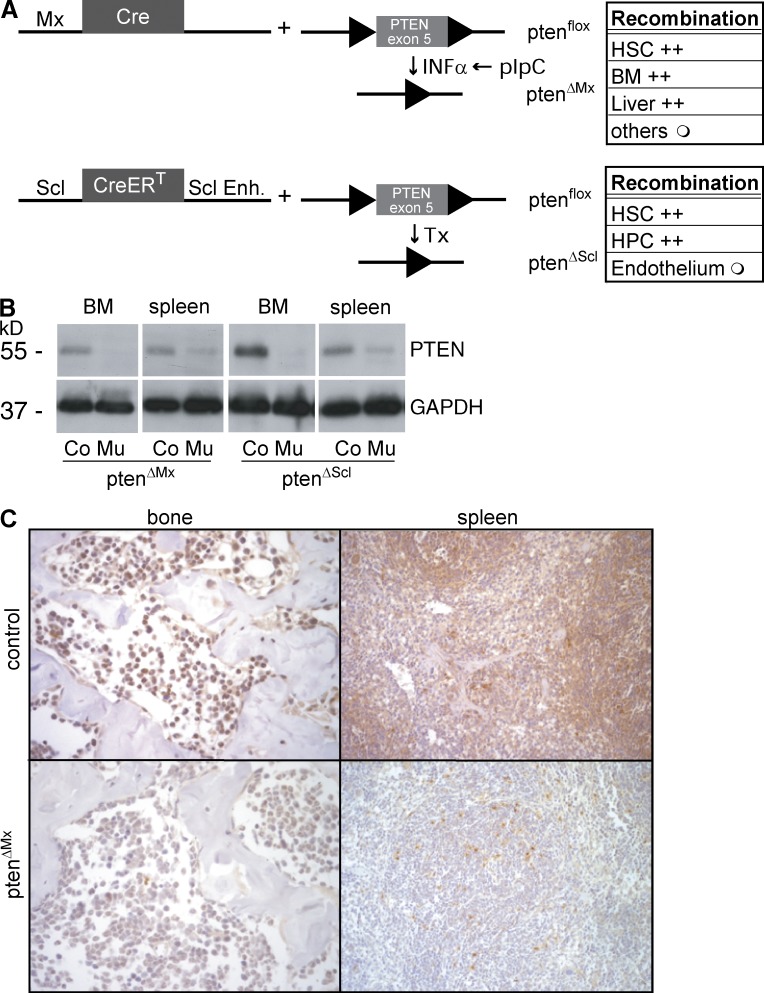
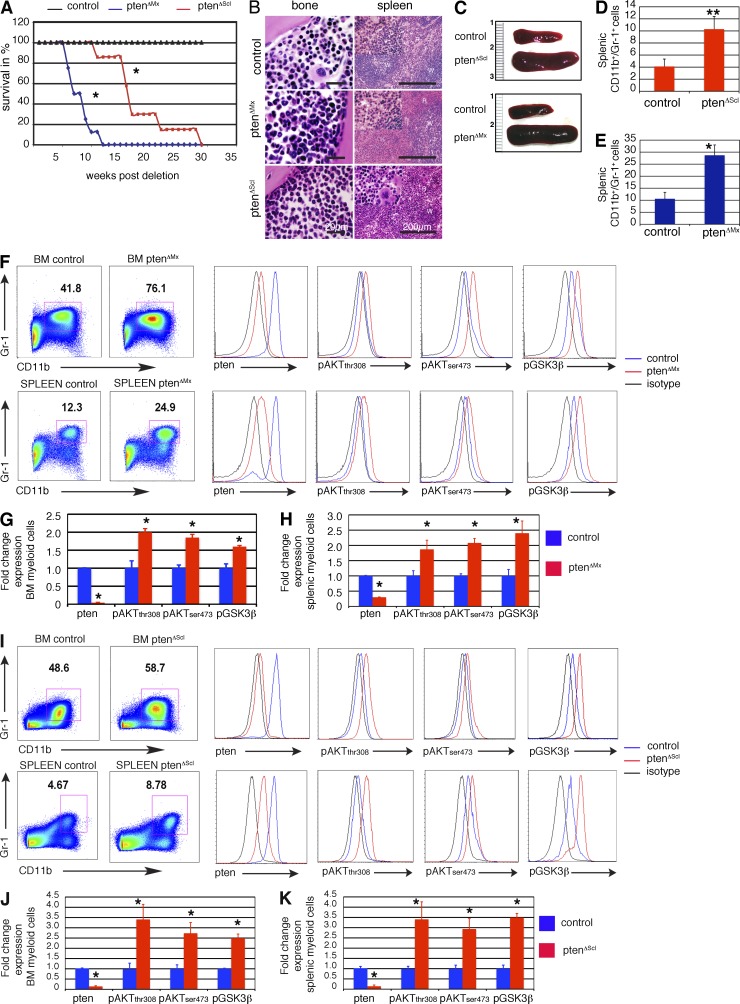
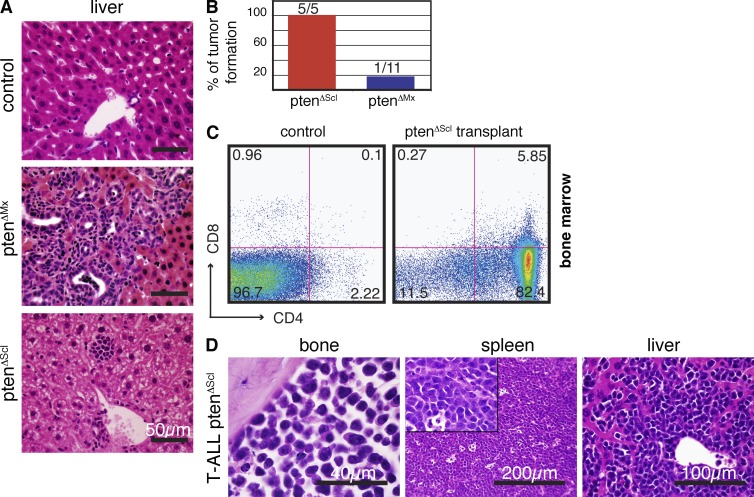
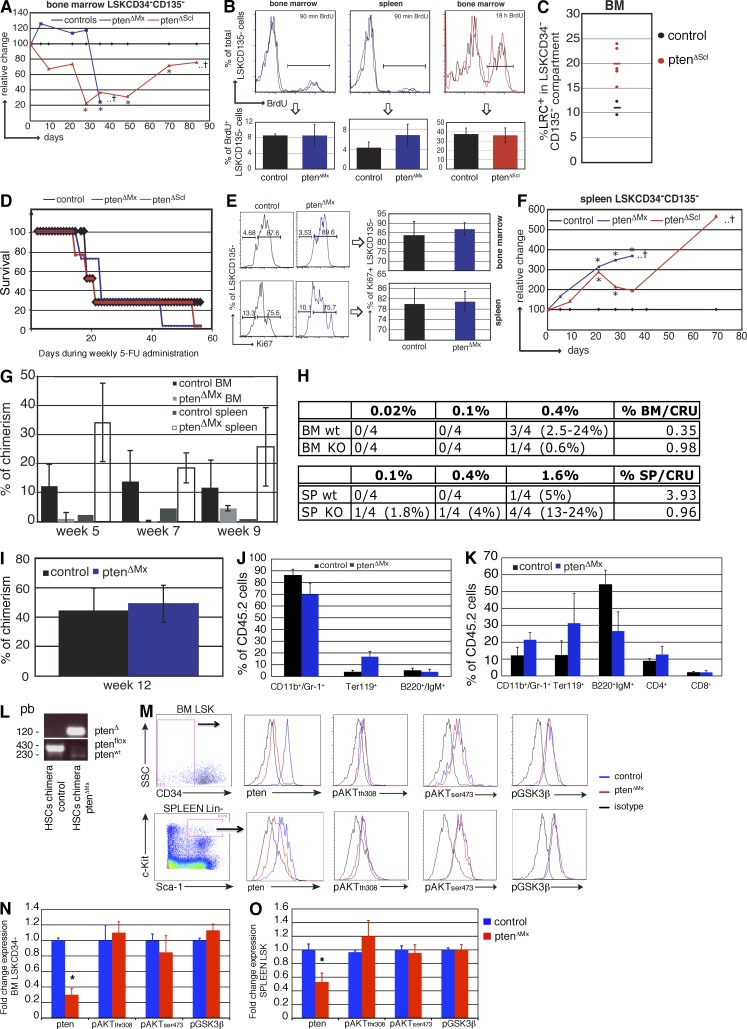
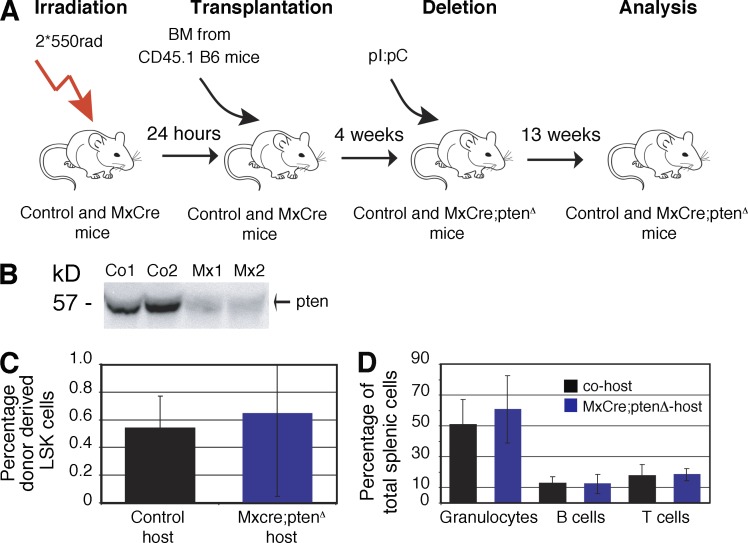
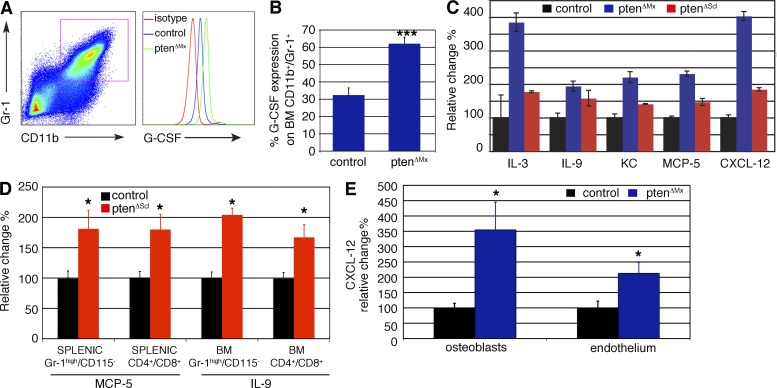
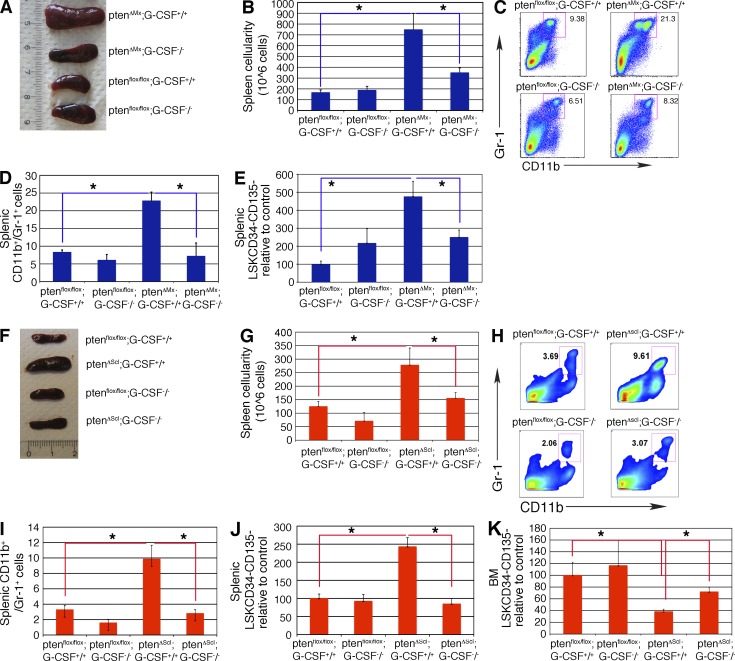
The phosphatase and tumor suppressor PTEN inhibits the phosphoinositol-3-kinase (PI3K) signaling pathway and plays a key role in cell growth, proliferation, survival, and migration. Pten conditional deletion using MxCre or Scl-CreERT leads to splenomegaly and leukemia formation, which occurs after the relocation of normal hematopoietic stem cells (HSCs) from the bone marrow to the spleen. Unexpectedly, dormant HSCs in the bone marrow do not enter the cell cycle upon Pten loss, they do not lose self-renewal activity, and they are not exhausted. Instead, Pten deficiency causes an up-regulation of the PI3K pathway in myeloid cells, but not in HSCs. Strikingly, myeloid cells secrete high levels of G-CSF upon Pten loss, leading to the mobilization of HSCs from the bone marrow and accumulation in the spleen. After deletion of Pten in mice lacking G-CSF, the splenomegaly, myeloproliferative disease, and splenic HSC accumulation are rescued. Our data show that although PTEN has little if any role in normal HSCs, it is essential to prevent overt G-CSF production by myeloid and stromal cells which otherwise causes HSCs to relocate to the spleen followed by lethal leukemia initiation.
Overview
The claims and statistics of this paper haven’t been checked yet.
Run the check — free, no account needed. It reads the open-access text and checks the sources it cites.
Integrity signals
Registry
Cites
Statistics
Figures
Verification
Claims the paper makes
The claims and statistics of this paper haven’t been checked yet.
Run the check — free, no account needed. It reads the open-access text and checks the sources it cites.
Claims other papers make about this one
Each is checked against this paper’s own text: does it say what the citing paper says it does?
In the citing paper
“Pten negatively regulates PI3K pathway and is required to maintain quiescence in HSCs; however, PTEN loss results in HSC expansion, mobilization, and impaired BM retention via RAC signaling (37, 38).”
From Loss of Dnmt3a impairs hematopoietic homeostasis and myeloid cell skewing via the PI3Kinase pathway (2023) · cites this paper as [37]
Self-check
Percentages, sums and reported differences re-computed from the paper’s own numbers.
The self-check needs the paper’s full text.
Citations
Cites
The functions and regulation of the PTEN tumour suppressor
Song, M. S., Salmena, L., & Pandolfi, P. P. (2012) · Nature Reviews Molecular Cell Biology · doi:10.1038/nrm3330 · Cited by 1,926
Wilson, A., Laurenti, E., Oser, G., van der Wath, R. C., Blanco-Bose, W., Jaworski, M., Offner, S., Dunant, C. F., Eshkind, L., Bockamp, E., et al. (2008) · Cell · doi:10.1016/j.cell.2008.10.048 · Cited by 1,908
Self-citationIFNα activates dormant haematopoietic stem cells in vivo
Essers, M. A. G., Offner, S., Blanco-Bose, W. E., Waibler, Z., Kalinke, U., Duchosal, M. A., & Trumpp, A. (2009) · Nature · doi:10.1038/nature07815 · Cited by 1,368
Self-citationQuiescent haematopoietic stem cells are activated by IFN-γ in response to chronic infection
Baldridge, M. T., King, K. Y., Boles, N. C., Weksberg, D. C., & Goodell, M. A. (2010) · Nature · doi:10.1038/nature09135 · Cited by 877
Deconstructing stem cell self-renewal: genetic insights into cell-cycle regulation
Orford, K. W., & Scadden, D. T. (2008) · Nature Reviews Genetics · doi:10.1038/nrg2269 · Cited by 851
PTEN maintains haematopoietic stem cells and acts in lineage choice and leukaemia prevention
Zhang, J., Grindley, J. C., Yin, T., Jayasinghe, S., He, X. C., Ross, J. T., Haug, J. S., Rupp, D., Porter-Westpfahl, K. S., Wiedemann, L. M., et al. (2006) · Nature · doi:10.1038/nature04747 · Cited by 817
Self-citationFoxO Transcription Factors and Stem Cell Homeostasis: Insights from the Hematopoietic System
Tothova, Z., & Gilliland, D. G. (2007) · Cell Stem Cell · doi:10.1016/j.stem.2007.07.017 · Cited by 331
p57 is required for quiescence and maintenance of adult hematopoietic stem cells
Matsumoto, A., Takeishi, S., Kanie, T., Susaki, E., Onoyama, I., Tateishi, Y., Nakayama, K., & Nakayama, K. I. (2011) · Cell stem cell · doi:10.1016/j.stem.2011.06.014 · Cited by 329
Zou, P., Yoshihara, H., Hosokawa, K., Tai, I., Shinmyozu, K., Tsukahara, F., Maru, Y., Nakayama, K., Nakayama, K. I., & Suda, T. (2011) · Cell stem cell · doi:10.1016/j.stem.2011.07.003 · Cited by 289
Yamazaki, S., Iwama, A., Takayanagi, S., Morita, Y., Eto, K., Ema, H., & Nakauchi, H. (2006) · The EMBO Journal · doi:10.1038/sj.emboj.7601236 · Cited by 270
Intrinsic and extrinsic control of hemopoietic stem cell numbers: mapping of a stem cell gene
Haan, G. D., & Zant, G. V. (1997) · The Journal of Experimental Medicine · doi:10.1084/jem.186.4.529 · Cited by 134 · cited 1×
“K; Cross et al., 1995).”
Research works printed but not linked: 53
- Arai, 2004, Tie2/angiopoietin-1 signaling regulates hematopoietic stem cell quiescence in the bone marrow niche, Cell., 118, 149, 10.1016/j.cell.2004.07.004 · DOI
- Avagyan, 2008, A quantitative trait locus on chromosome 4 affects cycling of hematopoietic stem and progenitor cells through regulation of TGF-beta 2 responsiveness, J. Immunol., 181, 5904, 10.4049/jimmunol.181.9.5904 · DOI
- Baccelli, 2012, The evolving concept of cancer and metastasis stem cells, J. Cell Biol., 198, 281, 10.1083/jcb.201202014 · DOI
- Basu, 2007, Protein phosphatase 2A plays an important role in stromal cell-derived factor-1/CXC chemokine ligand 12-mediated migration and adhesion of CD34+ cells, J. Immunol., 179, 3075, 10.4049/jimmunol.179.5.3075 · DOI
- Bonnet, 2011, Posttranscriptional deregulation of MYC via PTEN constitutes a major alternative pathway of MYC activation in T-cell acute lymphoblastic leukemia, Blood., 117, 6650, 10.1182/blood-2011-02-336842 · DOI
- Brognard, 2007, PHLPP and a second isoform, PHLPP2, differentially attenuate the amplitude of Akt signaling by regulating distinct Akt isoforms, Mol. Cell., 25, 917, 10.1016/j.molcel.2007.02.017 · DOI · Paper page
- Chen, 2006, The deficiency of Akt1 is sufficient to suppress tumor development in Pten+/- mice, Genes Dev., 20, 1569, 10.1101/gad.1395006 · DOI
- Chow, 2011, Bone marrow CD169+ macrophages promote the retention of hematopoietic stem and progenitor cells in the mesenchymal stem cell niche, J. Exp. Med., 208, 261, 10.1084/jem.20101688 · DOI
- Christopher, 2011, Expression of the G-CSF receptor in monocytic cells is sufficient to mediate hematopoietic progenitor mobilization by G-CSF in mice, J. Exp. Med., 208, 251, 10.1084/jem.20101700 · DOI
- Cross, 1995, Inhibition of glycogen synthase kinase-3 by insulin mediated by protein kinase B, Nature., 378, 785, 10.1038/378785a0 · DOI · Paper page
- Ding, 2012, Endothelial and perivascular cells maintain haematopoietic stem cells, Nature., 481, 457, 10.1038/nature10783 · DOI
- Doulatov, 2012, Hematopoiesis: a human perspective, Cell Stem Cell., 10, 120, 10.1016/j.stem.2012.01.006 · DOI · Paper page
- Ehninger, 2011, The bone marrow stem cell niche grows up: mesenchymal stem cells and macrophages move in, J. Exp. Med., 208, 421, 10.1084/jem.20110132 · DOI
- Essers, 2010, Targeting leukemic stem cells by breaking their dormancy, Mol. Oncol., 4, 443, 10.1016/j.molonc.2010.06.001 · DOI
- Freeman, 2006, Genetic background controls tumor development in PTEN-deficient mice, Cancer Res., 66, 6492, 10.1158/0008-5472.CAN-05-4143 · DOI
- Göthert, 2005, In vivo fate-tracing studies using the Scl stem cell enhancer: embryonic hematopoietic stem cells significantly contribute to adult hematopoiesis, Blood., 105, 2724, 10.1182/blood-2004-08-3037 · DOI · Paper page
- Groszer, 2001, Negative regulation of neural stem/progenitor cell proliferation by the Pten tumor suppressor gene in vivo, Science., 294, 2186, 10.1126/science.1065518 · DOI · Paper page
- Gu, 2011, CREB is a novel nuclear target of PTEN phosphatase, Cancer Res., 71, 2821, 10.1158/0008-5472.CAN-10-3399 · DOI
- Guo, 2008, Multi-genetic events collaboratively contribute to Pten-null leukaemia stem-cell formation, Nature., 453, 529, 10.1038/nature06933 · DOI
- Hasegawa, 2000, Progenitor cell mobilization by granulocyte colony-stimulating factor controlled by loci on chromosomes 2 and 11, Blood., 95, 1872, 10.1182/blood.V95.5.1872.005k26_1872_1874 · DOI
- Henckaerts, 2002, Genetically determined variation in the number of phenotypically defined hematopoietic progenitor and stem cells and in their response to early-acting cytokines, Blood., 99, 3947, 10.1182/blood.V99.11.3947 · DOI
- Henckaerts, 2004, The positive regulatory effect of TGF-beta2 on primitive murine hemopoietic stem and progenitor cells is dependent on age, genetic background, and serum factors, J. Immunol., 173, 2486, 10.4049/jimmunol.173.4.2486 · DOI
- Juntilla, 2010, AKT1 and AKT2 maintain hematopoietic stem cell function by regulating reactive oxygen species, Blood., 115, 4030, 10.1182/blood-2009-09-241000 · DOI · Paper page
- Kalaitzidis, 2012, mTOR complex 1 plays critical roles in hematopoiesis and Pten-loss-evoked leukemogenesis, Cell Stem Cell., 11, 429, 10.1016/j.stem.2012.06.009 · DOI
- Kharas, 2010, Constitutively active AKT depletes hematopoietic stem cells and induces leukemia in mice, Blood., 115, 1406, 10.1182/blood-2009-06-229443 · DOI
- Knobbe, 2008, The roles of PTEN in development, physiology and tumorigenesis in mouse models: a tissue-by-tissue survey, Oncogene., 27, 5398, 10.1038/onc.2008.238 · DOI
- Krutzik, 2011, Phospho flow cytometry methods for the analysis of kinase signaling in cell lines and primary human blood samples, Methods Mol. Biol., 699, 179, 10.1007/978-1-61737-950-5_9 · DOI
- Kühn, 1995, Inducible gene targeting in mice, Science., 269, 1427, 10.1126/science.7660125 · DOI · Paper page
- Lander, 2012, What does the concept of the stem cell niche really mean today?, BMC Biol., 10, 19, 10.1186/1741-7007-10-19 · DOI
- Lapidot, 2002, Current understanding of stem cell mobilization: the roles of chemokines, proteolytic enzymes, adhesion molecules, cytokines, and stromal cells, Exp. Hematol., 30, 973, 10.1016/S0301-472X(02)00883-4 · DOI
- Laterveer, 1995, Interleukin-8 induces rapid mobilization of hematopoietic stem cells with radioprotective capacity and long-term myelolymphoid repopulating ability, Blood., 85, 2269, 10.1182/blood.V85.8.2269.bloodjournal8582269 · DOI
- Lee, 2010, mTOR activation induces tumor suppressors that inhibit leukemogenesis and deplete hematopoietic stem cells after Pten deletion, Cell Stem Cell., 7, 593, 10.1016/j.stem.2010.09.015 · DOI
- Magee, 2012, Temporal changes in PTEN and mTORC2 regulation of hematopoietic stem cell self-renewal and leukemia suppression, Cell Stem Cell., 11, 415, 10.1016/j.stem.2012.05.026 · DOI
- Mei, 2012, Cxcr2 and Cxcl5 regulate the IL-17/G-CSF axis and neutrophil homeostasis in mice, J. Clin. Invest., 122, 974, 10.1172/JCI60588 · DOI
- Miletic, 2010, Coordinate suppression of B cell lymphoma by PTEN and SHIP phosphatases, J. Exp. Med., 207, 2407, 10.1084/jem.20091962 · DOI
- Nervi, 2006, Cytokines and hematopoietic stem cell mobilization, J. Cell. Biochem., 99, 690, 10.1002/jcb.21043 · DOI
- Palomero, 2007, Mutational loss of PTEN induces resistance to NOTCH1 inhibition in T-cell leukemia, Nat. Med., 13, 1203, 10.1038/nm1636 · DOI
- Park, 2012, The hematopoietic stem cell niche, Front Biosci (Landmark Ed)., 17, 30, 10.2741/3913 · DOI
- Qian, 2007, Critical role of thrombopoietin in maintaining adult quiescent hematopoietic stem cells, Cell Stem Cell., 1, 671, 10.1016/j.stem.2007.10.008 · DOI
- Sugiyama, 2006, Maintenance of the hematopoietic stem cell pool by CXCL12-CXCR4 chemokine signaling in bone marrow stromal cell niches, Immunity., 25, 977, 10.1016/j.immuni.2006.10.016 · DOI
- Svensson, 2011, Slow disease progression in a C57BL/6 pten-deficient mouse model of prostate cancer, Am. J. Pathol., 179, 502, 10.1016/j.ajpath.2011.03.014 · DOI
- Szilvassy, 1990, Quantitative assay for totipotent reconstituting hematopoietic stem cells by a competitive repopulation strategy, Proc. Natl. Acad. Sci. USA., 87, 8736, 10.1073/pnas.87.22.8736 · DOI
- Tesio, 2011, Breaking the cell cycle of HSCs by p57 and friends, Cell Stem Cell., 9, 187, 10.1016/j.stem.2011.08.005 · DOI
- Tesio, 2011, Enhanced c-Met activity promotes G-CSF-induced mobilization of hematopoietic progenitor cells via ROS signaling, Blood., 117, 419, 10.1182/blood-2009-06-230359 · DOI
- Van Zant, 1983, Genetic control of hematopoietic kinetics revealed by analyses of allophenic mice and stem cell suicide, Cell., 35, 639, 10.1016/0092-8674(83)90096-X · DOI
- Vivanco, 2007, Identification of the JNK signaling pathway as a functional target of the tumor suppressor PTEN, Cancer Cell., 11, 555, 10.1016/j.ccr.2007.04.021 · DOI
- Wilson, 2004, c-Myc controls the balance between hematopoietic stem cell self-renewal and differentiation, Genes Dev., 18, 2747, 10.1101/gad.313104 · DOI · Paper page
- Winkler, 2010, Bone marrow macrophages maintain hematopoietic stem cell (HSC) niches and their depletion mobilizes HSCs, Blood., 116, 4815, 10.1182/blood-2009-11-253534 · DOI · Paper page
- Xu, 2012, The effect Akt2 deletion on tumor development in Pten(+/-) mice, Oncogene., 31, 518, 10.1038/onc.2011.243 · DOI
- Yamazaki, 2011, Nonmyelinating Schwann cells maintain hematopoietic stem cell hibernation in the bone marrow niche, Cell., 147, 1146, 10.1016/j.cell.2011.09.053 · DOI
- Yilmaz, 2006, Pten dependence distinguishes haematopoietic stem cells from leukaemia-initiating cells, Nature., 441, 475, 10.1038/nature04703 · DOI · Paper page
- Yoshihara, 2007, Thrombopoietin/MPL signaling regulates hematopoietic stem cell quiescence and interaction with the osteoblastic niche, Cell Stem Cell., 1, 685, 10.1016/j.stem.2007.10.020 · DOI
- Yu, 2006, Hematopoietic stem cell exhaustion impacted by p18 INK4C and p21 Cip1/Waf1 in opposite manners, Blood., 107, 1200, 10.1182/blood-2005-02-0685 · DOI · Paper page
Cited by
PTEN in Regulating Hematopoiesis and Leukemogenesis
Wu, Y., Zhu, H., & Wu, H. (2020) · Cold Spring Harbor Perspectives in Medicine · doi:10.1101/cshperspect.a036244 · Cited by 22
Self-citationLoss of Dnmt3a impairs hematopoietic homeostasis and myeloid cell skewing via the PI3Kinase pathway
Palam, L. R., Ramdas, B., Pickerell, K., Pasupuleti, S. K., Kanumuri, R., Cesarano, A., Szymanski, M., Selman, B., Dave, U. P., Sandusky, G., et al. (2023) · JCI Insight · doi:10.1172/jci.insight.163864 · Cited by 13
Metadata
- Authors
- Tesio, M., Oser, G. M., Baccelli, I., Blanco-Bose, W., Wu, H., Göthert, J. R., Kogan, S. C., & Trumpp, A.
- Venue
- Journal of Experimental Medicine
- Publisher
- Rockefeller University Press
- Published
- 2013-10-14
- Volume
- 210
- Issue
- 11
- Pages
- 2337-2349
- ISSN
- 1540-9538
- 0022-1007
- PMC
- PMC3804947
- Cited by
- 35
- References
- 11
- Language
- en
About these checks
Registry, retraction, Cites and statistics results are computed, not judged, with one exception: a printed reference that no index lists is read once by a model before it counts as a citation error. Claims are extracted by a model and kept only when their quote appears verbatim in the text; each cited source is then checked, with a model’s help, for whether it says what the claim relies on. Those verdicts can be wrong — read the claim’s quote and the cited source before relying on one.
Statistics and arithmetic are recomputed, not judged.
Confidence bands are shown only for fields calibrated on our annotated test set. None is calibrated yet, so no band is shown.
What counts as a claim ›How we measure confidence ›How we check this ›
Are you an author, or do you see a problem with this page? Request a review
