

Highly functional virus-specific cellular immune response in asymptomatic SARS-CoV-2 infection
Open accessPublished version of a preprint
The DOI matches its Crossref record; 42 of the 42 references it cites were found in a registry or an index.
Abstract
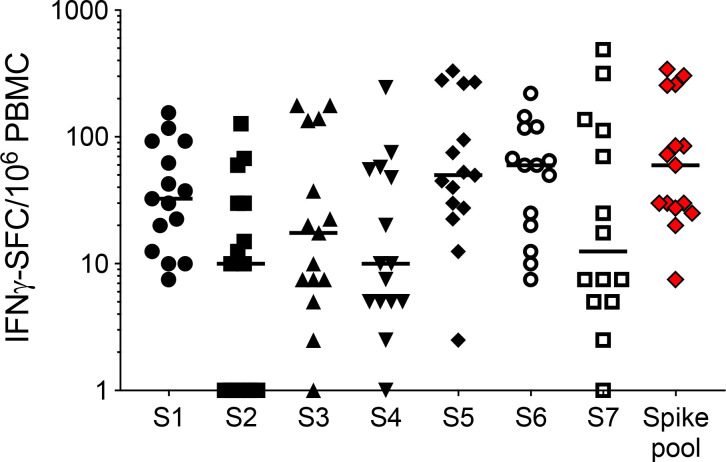
The efficacy of virus-specific T cells in clearing pathogens involves a fine balance between antiviral and inflammatory features. SARS-CoV-2–specific T cells in individuals who clear SARS-CoV-2 without symptoms could reveal nonpathological yet protective characteristics. We longitudinally studied SARS-CoV-2–specific T cells in a cohort of asymptomatic (n = 85) and symptomatic (n = 75) COVID-19 patients after seroconversion. We quantified T cells reactive to structural proteins (M, NP, and Spike) using ELISpot and cytokine secretion in whole blood. Frequencies of SARS-CoV-2–specific T cells were similar between asymptomatic and symptomatic individuals, but the former showed an increased IFN-γ and IL-2 production. This was associated with a proportional secretion of IL-10 and proinflammatory cytokines (IL-6, TNF-α, and IL-1β) only in asymptomatic infection, while a disproportionate secretion of inflammatory cytokines was triggered by SARS-CoV-2–specific T cell activation in symptomatic individuals. Thus, asymptomatic SARS-CoV-2–infected individuals are not characterized by weak antiviral immunity; on the contrary, they mount a highly functional virus-specific cellular immune response.
Overview
The claims and statistics of this paper haven’t been checked yet.
Free: it reads the open-access text and checks the first 5 claims that cite a source we can check. Create a free account to check every claim.
Integrity signals
Registry
Cites
Statistics
Figures




Verification
Claims the paper makes
The claims and statistics of this paper haven’t been checked yet.
Free: it reads the open-access text and checks the first 5 claims that cite a source we can check. Create a free account to check every claim.
Claims other papers make about this one
Each is checked against this paper’s own text: does it say what the citing paper says it does?
The source backs part of the claim, not all of it — or backs it for a different population, condition or comparison.
In the citing paper
“Using HLA class I and II predicted peptide “megapools,” circulating SARS-CoV-2-specific CD8+ and CD4+ T cells were identified in COVID-19 acute, mild and convalescent patients [110, 118-125].”
From Guidelines for the use of flow cytometry and cell sorting in immunological studies (third edition) (2021) · cites this paper as [125]
Experimental — accuracy not yet measured
Self-check
Percentages, sums and reported differences re-computed from the paper’s own numbers.
The self-check needs the paper’s full text.
Citations
Cites
Dimensionality reduction for visualizing single-cell data using UMAP
Becht, E., McInnes, L., Healy, J., Dutertre, C.-A., Kwok, I. W. H., Ng, L. G., Ginhoux, F., & Newell, E. W. (2019) · Nature Biotechnology · doi:10.1038/nbt.4314 · Cited by 5,358
Self-citationGrifoni, A., Weiskopf, D., Ramirez, S. I., Mateus, J., Dan, J. M., Moderbacher, C. R., Rawlings, S. A., Sutherland, A., Premkumar, L., Jadi, R. S., et al. (2020) · Cell · doi:10.1016/j.cell.2020.05.015 · Cited by 3,595
Antibody responses to SARS-CoV-2 in patients with COVID-19
Long, Q.-X., Liu, B.-Z., Deng, H.-J., Wu, G.-C., Deng, K., Chen, Y.-K., Liao, P., Qiu, J.-F., Lin, Y., Cai, X.-F., et al. (2020) · Nature Medicine · doi:10.1038/s41591-020-0897-1 · Cited by 2,876
Self-citationClinical and immunological assessment of asymptomatic SARS-CoV-2 infections
Long, Q.-X., Tang, X.-J., Shi, Q.-L., Li, Q., Deng, H.-J., Yuan, J., Hu, J.-L., Xu, W., Zhang, Y., Lv, F.-J., et al. (2020) · Nature Medicine · doi:10.1038/s41591-020-0965-6 · Cited by 2,686
IL-10: The Master Regulator of Immunity to Infection
Couper, K. N., Blount, D. G., & Riley, E. M. (2008) · The Journal of Immunology · doi:10.4049/jimmunol.180.9.5771 · Cited by 2,223
Longitudinal analyses reveal immunological misfiring in severe COVID-19
Lucas, C., Wong, P., Klein, J., Castro, T. B. R., Silva, J., Sundaram, M., Ellingson, M. K., Mao, T., Oh, J. E., Israelow, B., et al. (2020) · Nature · doi:10.1038/s41586-020-2588-y · Cited by 2,074
Self-citationSARS-CoV-2-specific T cell immunity in cases of COVID-19 and SARS, and uninfected controls
Le Bert, N., Tan, A. T., Kunasegaran, K., Tham, C. Y. L., Hafezi, M., Chia, A., Chng, M. H. Y., Lin, M., Tan, N., Linster, M., et al. (2020) · Nature · doi:10.1038/s41586-020-2550-z · Cited by 1,887
Self-citationRydyznski Moderbacher, C., Ramirez, S. I., Dan, J. M., Grifoni, A., Hastie, K. M., Weiskopf, D., Belanger, S., Abbott, R. K., Kim, C., Choi, J., et al. (2020) · Cell · doi:10.1016/j.cell.2020.09.038 · Cited by 1,790
Robust T Cell Immunity in Convalescent Individuals with Asymptomatic or Mild COVID-19
Sekine, T., Perez-Potti, A., Rivera-Ballesteros, O., Strålin, K., Gorin, J.-B., Olsson, A., Llewellyn-Lacey, S., Kamal, H., Bogdanovic, G., Muschiol, S., et al. (2020) · Cell · doi:10.1016/j.cell.2020.08.017 · Cited by 1,788
Evolution of antibody immunity to SARS-CoV-2
Gaebler, C., Wang, Z., Lorenzi, J. C. C., Muecksch, F., Finkin, S., Tokuyama, M., Cho, A., Jankovic, M., Schaefer-Babajew, D., Oliveira, T. Y., et al. (2021) · Nature · doi:10.1038/s41586-021-03207-w · Cited by 1,674 · cited 1×
“specific B cells progressively evolved after COVID-19 recovery due to the presence of SARS8 CoV-2 antigen in the small bowel (27), makes such hypothesis even more plausible.”
Background
Cited by
Items 201–300 of 326
Meira, D. D., Zetum, A. S. S., Casotti, M. C., da Silva, D. R. C., de Araújo, B. C., Vicente, C. R., Duque, D. D. A., Campanharo, B. P., Garcia, F. M., Campanharo, C. V., et al. (2024) · Heliyon · doi:10.1016/j.heliyon.2024.e34393 · Cited by 8
Act Early and at the Right Location: SARS-CoV-2 T Cell Kinetics and Tissue Localization
Bertoletti, A., Bert, N. L., & Tan, A. T. (2022) · International Journal of Molecular Sciences · doi:10.3390/ijms231810679 · Cited by 6
“Furthermore, the detection of robust and functionally efficient virusspecific T cell responses in SARS-CoV-2-infected but asymptomatic individuals [25,26] started to introduce the concept that virus-specific T cells are an important component of the defense mechanisms of the host against developing COVID-19, something…”
BackgroundSelf-citationImmune system disturbances after a new coronavirus infection COVID-19
Tv, G., & Shilova, E. R. (2022) · Journal Infectology · doi:10.22625/2072-6732-2022-14-4-26-37 · Cited by 6
T cell responses to adenoviral vectors expressing the SARS-CoV-2 nucleoprotein.
Hasanpourghadi, M., Novikov, M., Ambrose, R., Chekaoui, A., Newman, D., Zhou, X., & Ertl, H. C. J. (2021) · PubMed · Cited by 6
Mavridis, C., Aidonidis, G., Evangelou, M., & Kalogeridis, A. (2022) · History & Philosophy of the Life Sciences · doi:10.1007/s40656-022-00548-1 · Cited by 8
Quest for immunological biomarkers in the management of CHB patients
Bertoletti, A., & Bert, N. L. (2023) · Gut · doi:10.1136/gutjnl-2023-329437 · Cited by 6
Self-citationCell immunity to SARS-CoV-2 after natural infection and/or different vaccination regimens
Culebras, E., Martínez, M., Novella, C., León, J. M., Marcos, E., Delgado‐Iribarren, A., & Ríos, E. (2024) · Frontiers in Cellular and Infection Microbiology · doi:10.3389/fcimb.2024.1370859 · Cited by 6
Wimalawansa, S. J. (2024) · International Journal of Frontiers in Science and Technology Research · doi:10.53294/ijfstr.2024.6.2.0031 · Cited by 7
Olea, B., Albert, E., Giménez, E., Torres, I., Amat, P., Remigia, M. J., Alberola, J., Carbonell, N., Ferreres, J., Blasco, M. L., et al. (2022) · Scientific Reports · doi:10.1038/s41598-022-18659-x · Cited by 7
Assessment of formation and durability of adaptive immunity in COVID-19 convasescents
Ia, I., Filippenko, A. V., Trufanova, A. A., Omelchenko, N. D., Чемисова, О. С., Vodopyanov, A. S., Березняк, Е. А., Sokolova, E. P., Носков, А. К., & Totolyan, A. A. (2023) · Russian Journal of Infection and Immunity · doi:10.15789/2220-7619-aof-2107 · Cited by 5
Greer, O., Saeed, Z., Woon, E. V., Singh, N., Johnson, M. R., & Shah, N. M. (2025) · The Obstetrician & Gynaecologist · doi:10.1111/tog.12960 · Cited by 7
Cao, S., Zhang, Q., Song, L., Xiao, M., Chen, Y., Wang, D., Li, M., Hu, J., Lin, L., Zheng, Y. Y., et al. (2022) · International Journal of Biological Sciences · doi:10.7150/ijbs.72963 · Cited by 5
“Recently, several studies have provided evidence of the activation of a response from both the innate and the adaptive arms of the host immune system in asymptomatic infection [15-17].”
BackgroundWang, S., Li, J., Wang, S., Ye, Y., Li, M., Liu, Y., Chen, B., Lai, Y., Li, L., Zhuang, L., et al. (2023) · Clinical and Translational Medicine · doi:10.1002/ctm2.1171 · Cited by 6
Rives, B. T., Rosales, Y. Z., Valdés, M. M., Balbuena, H. R., Téllez, G. M., Pérez, J. R., Padrón, L. C. M., Pelier, C. V. R., Lugo, F. S., Valdés-Zayas, A., et al. (2022) · Immunobiology · doi:10.1016/j.imbio.2022.152216 · Cited by 7
Dowell, A. C., Powell, A. A., Davis, C., Scott, S., Logan, N. A., Willett, B. J., Bruton, R. K., Ayodele, M., Jinks, E., Gunn, J., et al. (2022) · Frontiers in Immunology · doi:10.3389/fimmu.2022.882515 · Cited by 5
“Spike-specific T-cells displayed a predominant Type-I cytokine profile, but high IL-10 concentrations were also observed and is noteworthy as this combination has been reported previously as a feature of mild or asymptomatic infection (10, 15, 26).”
BackgroundSсherbak, S. G., Vologzhanin, D. A., Голота, А. С., Kamilova, Т. A., & Макаренко, С. В. (2022) · Journal of clinical practice · doi:10.17816/clinpract106239 · Cited by 5
Boytz, R., Seitz, S., Gaudiano, E. F., Patten, J. J., Keiser, P. T., Connor, J. H., Sharpe, A. H., & Davey, R. A. (2022) · Viruses · doi:10.3390/v15010043 · Cited by 5
Florian, D. M., Bauer, M. W., Popovitsch, A., Faé, I., Springer, D. N., Graninger, M., Traugott, M. T., Weseslindtner, L., Aberle, S. W., Fischer, G., et al. (2025) · Frontiers in Immunology · doi:10.3389/fimmu.2025.1501704 · Cited by 4
Lu, T., Man, Q., Yu, X., Xia, S., Lu, L., Jiang, S., & Xiong, L. (2023) · Frontiers in Immunology · doi:10.3389/fimmu.2023.1157892 · Cited by 4
“02 viral-specific IgA, IgM, IgG, or memory B-cell levels (13, 14).”
Altered COVID-19 immunity in children with asthma by atopic status
Tong, S., Scott, J. C., Eyoh, E., Werthmann, D., Stone, A. E., Murrell, A. E., Sabino‐Santos, G., Trinh, I. V., Chandra, S., Elliott, D. H., et al. (2024) · Journal of Allergy and Clinical Immunology Global · doi:10.1016/j.jacig.2024.100236 · Cited by 4
“…we observed the atopic status, specifically dust mite–specific IgE, negatively related to levels of SARS-CoV-2–specific antibodies to infection (N IgG) or infection/vaccination (neutralization)—and even correlated with altered T-cell measures to infection (eg, NME-specific IL-2, MIP-1 a…”
BackgroundZhou, K., Raoul, J., Blanc-Lapierre, A., Seegers, V., Boisdron‐Celle, M., Bourdon, M., Mahammedi, H., Lambert, A., Moreau-Bachelard, C., Campone, M., et al. (2022) · Clinical Medicine Insights Oncology · doi:10.1177/11795549221090187 · Cited by 4
Sedegah, M., Porter, C. K., Hollingdale, M. R., Ganeshan, H. D., Huang, J., Goforth, C. W., Belmonte, M., Belmonte, A. D., Weir, D. L., Lizewski, R. A., et al. (2022) · PLoS ONE · doi:10.1371/journal.pone.0266691 · Cited by 4
“Early induction of IFN-γ SARS-CoV-2-specific T cell responses to the S protein has been previously associated with mild disease and accelerated viral clearance [28, 30] and the magnitude of responses were more robust in patients with mild disease, whereas those responses were less pronounced in one patient with fatal…”
BackgroundBahgat, M. M., Nadeem, R., Nasraa, M. H., Amer, K., Hassan, W. A., Elgarhy, F. M., Reda, S., & Abd‐Elshafy, D. N. (2023) · Viral Immunology · doi:10.1089/vim.2023.0060 · Cited by 5
Masiá, M., de la Rica, A., Fernández‐González, M., García, J. A., Padilla, S., García‐Abellán, J., Botella, Á., Mascarell, P., & Gutiérrez, F. (2023) · Microbiology Spectrum · doi:10.1128/spectrum.02419-23 · Cited by 4
Coulon, P.-G. A., Prakash, S., Dhanushkodi, N. R., Srivastava, R., Zayou, L., Tifrea, D. F., Edwards, R. A., Cesar, J. F., Schubl, S. D., Hsieh, L. L., et al. (2022) · bioRxiv (Cold Spring Harbor Laboratory) · doi:10.1101/2022.01.30.478343 · Cited by 5
Identification of biomarkers for COVID-19 associated secondary hemophagocytic lymphohistiocytosisPreprint
Canny, S., Stanaway, I. B., Holton, S. E., Mitchem, M. A., O’Rourke, A. R., Pribitzer, S., Baxter, S. K., Wurfel, M. M., Malhotra, U., Buckner, J. H., et al. (2024) · bioRxiv (Cold Spring Harbor Laboratory) · doi:10.1101/2024.08.13.607855 · Cited by 4
“…the role of IFNγ in SARS-CoV-2 infection is less clear as higher IFN γ levels have been reported in deceased subjects compared to those that survived but also in patients with moderate disease compared to severe disease and in patients with asymptomatic compared to symptomatic infections (10-12).”
Stimulation of PSTPIP1 to trigger proinflammatory responses in asymptomatic SARS-CoV-2 infections
Ji, R., Wu, Y., Ye, Y., Li, Y., Li, Y., Zhong, G., Fan, W., Feng, C., Chen, H., Teng, X., et al. (2024) · Heliyon · doi:10.1016/j.heliyon.2024.e26886 · Cited by 3
“On the contrary, some reports also provided evidence that asymptomatic SARS-CoV-2 infected individuals do not exhibit weakened antiviral immunity, but develop effective virus-specific immune responses instead [16].”
ResultRapid diagnostic test for assessment of cellular immune response in a viral infection as a model
Bernuz, M., Porras, J. C., Egri, N., González‐Navarro, E. A., Juan, M., Pividori, M. I., & Martí, M. (2024) · Sensors and Actuators B Chemical · doi:10.1016/j.snb.2024.136185 · Cited by 3
C > U mutations generate immunogenic peptides in SARS-CoV-2
Balogh, G. M., Koncz, B., Asztalos, L., Ari, E. E., Gémes, N., Szebeni, G. J., Papp, B. T., Tóth, F., Papp, B., Pál, C., et al. (2025) · Nature Communications · doi:10.1038/s41467-025-65251-8 · Cited by 3
“Asymptomaticcarriers — who typicallymount strong virus-speci fi c immune responses 56 — play a key role in transmission 57 – 60 , suggesting that the virus may, paradoxically, bene fi t from enhanced immune recognition.”
Down but far from out: The durability of SARS-CoV-2 immunity after asymptomatic infection
Kedl, R. M. (2021) · The Journal of Experimental Medicine · doi:10.1084/jem.20210359 · Cited by 3
Cheung, A. K. L., Lü, Y., Zhu, Y., Fung, T. Y., Zheng, Y., Zheng, Z., & Peng, H. (2023) · Journal of Medical Virology · doi:10.1002/jmv.28694 · Cited by 3
“Nonetheless, due to changing virological characteristics, whether asymptomatic or mild infections always lead to weaker and less durable immune response is debatable.(14) Furthermore, various studies of heterologous booster vaccination have shown that total anti‐spike antibodies or neutralizing antibody levels after b…”
BackgroundTaus, E., Shino, M. Y., Ibarrondo, F. J., Hausner, M. A., Hofmann, C., & Yang, O. O. (2023) · Journal of Translational Medicine · doi:10.1186/s12967-023-04234-z · Cited by 3
COVID-19-ASSOCIATED CHANGES IN IMMUNITY AND LUNG LESIONS
Rekalova, О. M. (2023) · Ukrainian Pulmonology Journal · doi:10.31215/2306-4927-2023-31-2-13-23 · Cited by 4
A T-Cell-Derived 3-Gene Signature Distinguishes SARS-CoV-2 from Common Respiratory Viruses
Yang, L., Tao, X., Ye, S., Tai, Q., You, Y.-A., Huang, X., Liang, M., Wang, K., Wen, H., You, C., et al. (2024) · Viruses · doi:10.3390/v16071029 · Cited by 4
“It has been reported that asymptomatic SARS-CoV-2-infected individuals might develop an efficient antiviral cellular immunity to protect the host without causing any apparent symptoms [51,52].”
BackgroundExplanation, representation and information
Karadimas, P. (2024) · Philosophical Problems in Science (Zagadnienia Filozoficzne w Nauce) · doi:10.59203/zfn.74.636 · Cited by 2
Nakama, T., Wall, A., Dolton, G. M., Tan, L. R., Thomas, H. L., Hamana, H., Aritsu, Y., Tan, T. S., Toyoda, M., Goto, Y., et al. (2026) · JCI Insight · doi:10.1172/jci.insight.202235 · Cited by 2
“Indeed, individuals can control infection in the absence of detectable antibodies, indicating that cellular immunity alone can confer protection (3–5).”
Self-citationTanaka, S., Umezawa, J., Yamaji, T., Abe, S. K., Hamada, A., Kobayashi, O., Ushijima, T., & Inoue, M. (2022) · Japanese Journal of Infectious Diseases · doi:10.7883/yoken.jjid.2022.093 · Cited by 2
Boretti, A. A. (2022) · Indian Journal of Otolaryngology and Head & Neck Surgery · doi:10.1007/s12070-022-03202-1 · Cited by 2
Goh, Y. S., Fong, S., Hor, P. X., Amrun, S. N., Lee, C. Y., Young, B. E., Chia, P. Y., Tambyah, P. A., Kalimuddin, S., Pada, S., et al. (2022) · Frontiers in Microbiology · doi:10.3389/fmicb.2022.1043049 · Cited by 3
Self-citationEmploying T-Cell Memory to Effectively Target SARS-CoV-2
Tun, Z. H., Htike, N. T. T., Kyi‐Tha‐Thu, C., & Lee, W. (2023) · Pathogens · doi:10.3390/pathogens12020301 · Cited by 2
Self-citationMontalbano, M., Piccolo, P., Lionetti, R., Comandini, U. V., Agrati, C., Grassi, G., Meschi, S., Matusali, G., Conte, F., Angelone, F., et al. (2023) · Liver International · doi:10.1111/liv.15557 · Cited by 2
Wei, D., Xie, Y., Liu, X., Chen, R., Zhou, M., Zhang, X., & Qu, J. (2023) · Frontiers of Medicine · doi:10.1007/s11684-023-1043-5 · Cited by 2
Cellular Immunity of SARS-CoV-2 in the Borriana COVID-19 Cohort: A Nested Case–Control Study
Domènech-Montoliu, S., Puig‐Barberà, J., Pac-Sa, M. R., Orrico‐Sánchez, A., Gómez-Lanas, L., Sala-Trull, D., Domènech-León, C., Rio-González, A. D., Sanchéz-Urbano, M., Satorres-Martinez, P., et al. (2024) · Epidemiologia · doi:10.3390/epidemiologia5020012 · Cited by 2
Evaluation of SARS-CoV-2 interferon gamma release assay in BNT162b2 vaccinated healthcare workers
Ramos, A., Martins, S., Marinho, A. S., Norton, P. M. P. N. S., Cardoso, M. J., & Guimarães, J. T. (2024) · PLoS ONE · doi:10.1371/journal.pone.0303244 · Cited by 2
Çetinkaya, P. G., Abras, I., Evcili, İ., Yildirim, T. C., Ceylan, Y., Eroğlu, F. K., Kayaoğlu, B., İpekoğlu, E. M., Akarsu, A., Yıldırım, M., et al. (2024) · Immunological Investigations · doi:10.1080/08820139.2024.2385992 · Cited by 2
“Notably, a study found that T lymphocytes from asymptomatic COVID-19 patients exhibited higher levels of IFNγ and other proinflammatory cytokines during the early phase compared to symptomatic cases (Le Bert et al., 2021).”
Santi, T., Jo, J., Harahap, A. R., Werdhani, R. A., Hadinegoro, S. R., SahBandar, I. N., Prayitno, A., Munasir, Z., Vandenplas, Y., & Hegar, B. (2024) · Vaccines · doi:10.3390/vaccines12091032 · Cited by 3
Madhavan, R., Gupta, D., Paul, J. S., Babji, S., Syed, C., Saravanan, P., Kumar, A., Immanuel, S., Gandhi, V., Eswaran, A., et al. (2025) · Scientific Reports · doi:10.1038/s41598-025-10447-7 · Cited by 2
“Similarly, previous studies have reported strong CD4 T-cell responses despite poor humoral immunity in primary infections and enhanced CD8 T-cell responses following secondary infections 30,33,34 .”
Sim, M., Yoon, J. M., Kim, S., Kim, K., & Han, Y. T. (2021) · Bulletin of the Korean Chemical Society · doi:10.1002/bkcs.12392 · Cited by 2
COVID 19 in a family with rare genetic disease of the nervous system
Martynov, M. Y., Куташов, В. А., & Ulyanova, O. V. (2022) · Neurology neuropsychiatry Psychosomatics · doi:10.14412/2074-2711-2022-1-108-114 · Cited by 2
Seo, Y. B., Ko, A. I., Shin, D., Kim, J., Suh, Y. S., Na, J., Ryu, J. I., Lee, S., Oh, M. J., & Sung, Y. C. (2023) · International Journal of Molecular Sciences · doi:10.3390/ijms24119753 · Cited by 2
Hopkins, G. V., Gomez, N., Tucis, D., Bartlett, L. G., Steers, G., Burns, E., Brown, M., Harvey-Cowlishaw, T., dos Santos, R. I. D. G., Lauder, S. N., et al. (2024) · Journal of Clinical Immunology · doi:10.1007/s10875-024-01739-0 · Cited by 3
Kapten, K., Orczyk, K., & Smolewska, E. B. (2024) · Children · doi:10.3390/children11060736 · Cited by 2
Townsend, L., Dunne, J., Sui, J., Perez, C. S., McElheron, M., Reid, C., McCormack, W. J., Bergin, C. J., Fleming, C., O’Farrelly, C., et al. (2024) · Clinical Immunology · doi:10.1016/j.clim.2024.110371 · Cited by 2
Meyer, S., Blaas, I., Bollineni, R. C., Delić-Šarac, M., Tran, T. T., Knetter, C. F., Dai, K., Madssen, T. S., Vaage, J. T., Gustavsen, A., et al. (2021) · bioRxiv (Cold Spring Harbor Laboratory) · doi:10.1101/2021.10.13.463911 · Cited by 2
“18 sampling time points were included (on average 56 [38-81] days between sampling).”
BackgroundA balance between innovation and biosafety
Perlman, S. M. (2024) · Proceedings of the National Academy of Sciences · doi:10.1073/pnas.2410451121 · Cited by 2
T cell responses to SARS-COV-2
Khadri, L., Ziraksaz, M. H., Barekzai, A. B., & Ghauri, B. (2023) · Progress in molecular biology and translational science · doi:10.1016/bs.pmbts.2023.06.001 · Cited by 1
Wang, C., Yang, M., Zhu, G., Hu, Y., Shen, L., Qiu, J., Huang, Y., & Wang, L. (2024) · International Journal of General Medicine · doi:10.2147/ijgm.s451393 · Cited by 1
Self-citationClinical and immune evolution in neurological/psychiatric patients during the COVID-19 pandemic
Toledo, A., Gaona, M. A., Delgadillo, T., Arellano, C. T., Padilla, A., Bravo, S., Alipi, H., Toledo, V., Río‐Quiñones, M. A. D., de la Cruz-Aguilera, D. L., et al. (2025) · Neurology Perspectives · doi:10.1016/j.neurop.2025.100189 · Cited by 1
Impact of the bivalent COVID-19 booster on spike-specific t cell responses
Martínez-Pérez, A., Gálvez, R. I., Grifoni, A., Sette, A., Gregersen, P. K., & Weiskopf, D. (2025) · Vaccine · doi:10.1016/j.vaccine.2025.127995 · Cited by 1
Gabaldó-Barrios, X., Iftimie, S. M., Hernández‐Aguilera, A., Pujol, I., Ballester, F., Fernández, L., Cladellas, S., Castro, A., Joven, J., Camps, J., et al. (2021) · Annals of Clinical Biochemistry International Journal of Laboratory Medicine · doi:10.1177/00045632211038038 · Cited by 1
“It might also be possible that active immune responses are less strong in these patients, suggesting that uncontrolled adaptive responses are involved in secondary phase immunopathology.(26,27) In our case, none of the patients was immunocompromised.”
BackgroundResultAdoptive T-cell therapies to overcome T cell-dependent immune dysregulations in COVID-19
Taş, S. K., Uzunoğlu, M. S., Uzunoğlu, A. S., Kırkık, D., Altunkanat, D., & Kalkanli, N. (2021) · TURKISH JOURNAL OF BIOLOGY · doi:10.3906/biy-2109-85 · Cited by 1
Antigen-Specific T Cells and SARS-CoV-2 Infection: Current Approaches and Future Possibilities
Nová, Z., Zemánek, T., & Botek, N. (2022) · International Journal of Molecular Sciences · doi:10.3390/ijms232315122 · Cited by 1
Viral Mitigation: Weak Theoretical Underpinnings
Karadimas, P. (2023) · Studies in Public Choice · doi:10.1007/978-3-031-24967-9_2 · Cited by 1
Different immunological responses following immunization with two mRNA vaccines
Nakayama, T., Takai‐Todaka, R., Sawada, A., Ito, T., Fujino, M., Haga, K., & Katayama, K. (2023) · Journal of Infection and Chemotherapy · doi:10.1016/j.jiac.2023.11.020 · Cited by 1
Saito, T., Couzinet, A., Murakami, T., Shimomura, M., Suzuki, T., Katayama, Y., & Nakatsura, T. (2023) · Biochemical and Biophysical Research Communications · doi:10.1016/j.bbrc.2023.149398 · Cited by 1
Current Progress in Genomic and Genetic Research on Human Viral Diseases
(2024) · Frontiers research topics · doi:10.3389/978-2-8325-4833-2 · Cited by 1
Rohera, H. K. (2022) · Journal of Population Therapeutics and Clinical Pharmacology · doi:10.53555/6pxabh32 · Cited by 1
Antibody Responses In Non-Severe SARS-CoV-2 Infections Are Driven By CD4+ T cells and AgePreprint
Murrell, A. E., Eyoh, E., Shaffer, J. G., Dietrich, M. L., Trinh, I. V., Yockachonis, T. J., Bai, S., Zheng, C. Y., Mayne, C. V., Cabrera, S. E., et al. (2022) · medRxiv · doi:10.1101/2022.04.22.22274032 · Cited by 1
“Kit types included Bio-plex Pro Human 839 Cytokine 17-plex (Biorad) or custom human (Biorad Bio-plex IFN-y, IL-2, IL-5, IL-6, TNFα; 840 Biolegend Legendplex Perforin, and Granzyme B, BAFF, MIP-1β, IL-4, IL-10, IL-13, IL-15, IL-841 17A).”
BackgroundResultInfluentialDifferential association of SARS-CoV-2 IgG responses with anti-OC43 IgG in a Senegalese cohortPreprint
Faye, R., Mbow, A. A., Tall, B., Gaye, A., Ndoye, A. M., Gueye, R., Diallo, D., Faye, F. N., Talla, C., Dia, N., et al. (2025) · bioRxiv (Cold Spring Harbor Laboratory) · doi:10.1101/2025.04.07.647508 · Cited by 1
Goh, Y. S., Fong, S., Amrun, S. N., Lee, C. Y., Hor, P. X., Young, B. E., Chia, P. Y., Tambyah, P. A., Kalimuddin, S., Pada, S., et al. (2021) · Research Square · doi:10.21203/rs.3.rs-432867/v1
Self-citationBraun, J., Westhoff, T. H., Baraliakos, X., & Babel, N. (2021) · Zeitschrift für Rheumatologie · doi:10.1007/s00393-021-01083-3 · Cited by 1
Characterization of Specific Humoral Immunity in Asymptomatic SARS-CoV-2 Infection
Deng, Y., Zheng, J., Lin, Y., & Huang, A. (2021) · Infectious Diseases & Immunity · doi:10.1097/id9.0000000000000024
Antibodies: A Double Leg Takedown Against COVID-19
Mondelli, M. U. (2022) · The Journal of Infectious Diseases · doi:10.1093/infdis/jiac061
“Of note, mildly symptomatic individuals develop highly functional virus-specific CD4 and CD8 T cells, suggesting that robust and coordinated T-cell responses provide protection against progression to severe disease [6, 7].”
BackgroundMavridis, C., Aidonidis, G., & Kalogeridis, A. (2022) · Qeios · doi:10.32388/h4xgp2.7
Mavridis, C., Aidonidis, G., Arapoglou, D., & Kalogeridis, A. (2022) · Qeios · doi:10.32388/h4xgp2.3
Mavridis, C., Aidonidis, G., Arapoglou, D., & Kalogeridis, A. (2022) · doi:10.32388/h4xgp2.2
Mavridis, C., Aidonidis, G., & Kalogeridis, A. (2022) · Qeios · doi:10.32388/h4xgp2.5
Vaccination and Covid 19 Infections
Mihaltan, F. D., & Constantin, A. (2022) · Internal Medicine · doi:10.2478/inmed-2022-0201
Mavridis, C., Aidonidis, G., & Kalogeridis, A. (2022) · Qeios · doi:10.32388/h4xgp2.6
Mavridis, C., Aidonidis, G., & Kalogeridis, A. (2022) · Qeios · doi:10.32388/h4xgp2.8
Mavridis, C., Aidonidis, G., & Kalogeridis, A. (2022) · Qeios · doi:10.32388/h4xgp2.4
Mavridis, C., Aidonidis, G., & Kalogeridis, A. (2022) · Qeios · doi:10.32388/h4xgp2.9
Cancer Therapy and Immunogenicity of COVID Vaccine – CANINE StudyPreprint
Khan, Q. J., Bivona, C. R., Martin, G. A., Zhang, J., Liu, B., He, J., Li, K. H., Nelson, M., Williamson, S. K., Doolittle, G. C., et al. (2021) · SSRN Electronic Journal · doi:10.2139/ssrn.3936503
Clapham, H., Chia, W., Zhang, J., Wang, L., & Tam, C. C. (2022) · medRxiv · doi:10.1101/2022.05.29.22275748
“durable cell-mediated responses,[10] and early induction of SARS-CoV-2 specific T cells 238 appears to be associated with faster viral clearance.”
BackgroundSelf-citationFevery, J., & Dallmeier, K. (2022) · Tijdschrift voor Geneeskunde · doi:10.47671/tvg.78.22.112
Witczak, P. (2022) · Wydawnictwo Naukowe Instytutu na rzecz Kultury Prawnej Ordo Iuris eBooks · doi:10.37873/oipress.37.43
T Cell Immune Responses against SARS-CoV-2 in the With Corona Era
Oh, J.-E. (2022) · Journal of Experimental & Biomedical Sciences/Biomedical Science Letters · doi:10.15616/bsl.2022.28.4.211
A Cognitive Analysis of Covid-19 on the Africa Economy Using Linear Regression
Bolarinwa, J. D., Vincent, O. R., Ojo, O. E., Omeike, M. O., Abayomi, O. V., & Oyedeji, O. D. (2022) · Information Technology for Education and Development (ITED) · doi:10.1109/ited56637.2022.10051365
Covid-19: Natural Immunity Versus Vaccine Immunity Abstract
Banoun, H. (2021) · Annals of Immunology & Immunotherapy · doi:10.23880/aii-16000153
"The Crosstalk between Covid-19 and Autoimmune Diseases: An Overview"
Pucca, M. B. (2023) · Biomedical Journal of Scientific & Technical Research · doi:10.26717/bjstr.2023.51.008036
The Importance of Qualitative/Quantitative Analytical Tools in COVID-19 Vaccine Development
Seyfinejad, B., Molavi, O., & Jouyban, A. (2023) · ImmunoAnalysis · doi:10.34172/ia.2023.08
Comparison of different techniques for evaluation of cellular immunity to SARS-CoV-2 virus
Afridonova, Z. E., Топтыгина, А. П., Васильевна, Б. А., & Semikina, E. L. (2023) · Medical Immunology (Russia) · doi:10.15789/1563-0625-cod-2640
Effects of the induction of humoral and cellular immunity by third vaccination for SARS-CoV-2
Murayama, G., Kusaoi, M., Horiuchi, Y., Tabe, Y., Naito, T., Ito, S., Yamaji, K., & Tamura, N. (2024) · Journal of Infection and Chemotherapy · doi:10.1016/j.jiac.2024.03.021
Игнатенко, М. Ю., Кочкарова, Е. В., Мартыненко, М. Н., & Свентицкая, И. М. (2024) · International journal of medicine and psychology. · doi:10.58224/2658-3313-2024-7-3-58-65
Qui, M., & Salazar, E. (2024) · Vaccines · doi:10.3390/vaccines12111280 · Cited by 1
Laboratory tests for diagnostics of cell immunity against SARS-CoV-2 (review of literature)
Ivanova, P. I., Lobov, A. V., Pogodina, E. A., Sorokina, E. V., & Shubina, I. Z. (2024) · Laboratory Service · doi:10.17116/labs20241303131
Virus-specific T cell response in SARS-CoV-2 infection and vaccinations
Bertoletti, A., Qui, M., & Lim, J. M. E. (2025) · Elsevier eBooks · doi:10.1016/b978-0-443-19170-1.00038-3
Self-citation
Metadata
- Authors
- Le Bert, N., Clapham, H. E., Tan, A. T., Chia, W. N., Tham, C. Y. L., Lim, J. M., Kunasegaran, K., Tan, L. W. L., Dutertre, C.-A., Shankar, N., Lim, J. M. E., Sun, L. J., Zahari, M., Tun, Z. M., Kumar, V., Lim, B. L., Lim, S. H., Chia, A., Tan, Y.-J., Tambyah, P. A., Kalimuddin, S., Lye, D., Low, J. G. H., Wang, L.-F., Wan, W. Y., Hsu, L. Y., Bertoletti, A., & Tam, C. C.
- Affiliations
- Programme in Emerging Infectious Diseases, Duke-NUS Medical School, Singapore 1
- National University of Singapore (SG)
- Inserm (FR)
- Alexandra Hospital (SG)
- Singapore General Hospital (SG)
- Agency for Science, Technology and Research (SG)
- National University Hospital (SG)
- Corresponding author
- Bertoletti, Antonio
- ORCID
- Le Bert, Nina
- Clapham, Hannah E.
- Tan, Anthony T.
- Chia, Wan Ni
- Tham, Christine Y.L.
- Lim, Jane M.
- Kunasegaran, Kamini
- Tan, Linda Wei Lin
- Dutertre, Charles-Antoine
- Shankar, Nivedita
- Lim, Joey M.E.
- Sun, Louisa Jin
- Zahari, Marina
- Tun, Zaw Myo
- Kumar, Vishakha
- Lim, Beng Lee
- Lim, Siew Hoon
- Chia, Adeline
- Tan, Yee-Joo
- Tambyah, Paul Anantharajah
- Kalimuddin, Shirin
- Lye, David
- Low, Jenny G.H.
- Wang, Lin-Fa
- Wan, Wei Yee
- Hsu, Li Yang
- Bertoletti, Antonio
- Tam, Clarence C.
- Venue
- Journal of Experimental Medicine
- Publisher
- Rockefeller University Press
- Published
- 2021-03-01
- Volume
- 218
- Issue
- 5
- ISSN
- 0022-1007 (ISSN-L)
- 1540-9538
- PMC
- PMC7927662
- OpenAlex
- W3134489892
- Cited by
- 330
- References
- 38
- Citations by year
- 2026: 11 · 2025: 22 · 2024: 45 · 2023: 68 · 2022: 110 · 2021: 74
- FWCI
- 23.60
- Type
- journal article
- Language
- en
- Open access
- hybrid
- doi.org
- Licence
- Locations
- The Journal of Experimental Medicine (publishedVersion, cc-by-nc-sa)
- bioRxiv (Cold Spring Harbor Laboratory) (acceptedVersion, cc-by-nc-nd)
- PubMed Central (publishedVersion, cc-by-nc-sa)
- PubMed (publishedVersion)
- National University of Singapore (submittedVersion)
- Funders
- National University Health System (NUHSRO/2020/052/RO5+5/NUHS-COVID/6)
- Saw Swee Hock School of Public Health
- National University of Singapore
- National Research Foundation Singapore (NRF2016NRF-NSFC002-013)
- National Medical Research Council
- Ministry of Health - Singapore (STPRG-FY19-001, COVID19RF-003, COVID19RF3-0060)
- Topics
- Health Sciences › Medicine › Infectious Diseases › SARS-CoV-2 and COVID-19 Research
- Health Sciences › Medicine › Infectious Diseases › COVID-19 Clinical Research Studies
- Life Sciences › Immunology and Microbiology › Immunology › T-cell and B-cell Immunology
- Keywords
- SARS-CoV-2, COVID-19 pandemic, asymptomatic infection, virus-specific T cells, cell-mediated immunity, interferon-gamma, interleukin-2, IL-10, inflammatory cytokines, cytokine production, spike protein, nucleocapsid protein, matrix protein, T cell activation, seroconversion
- MeSH terms
- COVID-19, SARS-CoV-2, Adult, Humans, Lymphocyte Activation, Male, Middle Aged, T-Lymphocytes, Cytokines, Asymptomatic Infections
About these checks
Registry, retraction, Cites and statistics results are computed, not judged, with one exception: a printed reference that no index lists is read once by a model before it counts as a citation error. Claims are extracted by a model and kept only when their quote appears verbatim in the text; each cited source is then checked, with a model’s help, for whether it says what the claim relies on. Those verdicts can be wrong — read the claim’s quote and the cited source before relying on one.
Statistics and arithmetic are recomputed, not judged.
Confidence bands are shown only for fields calibrated on our annotated test set. None is calibrated yet, so no band is shown.
What counts as a claim ›How we measure confidence ›How we check this ›
Are you an author, or do you see a problem with this page? Request a review
Data sources
Bibliographic data: Semantic Scholar, OpenAlex, Crossref.
Contains information from the Semantic Scholar Academic Graph Datasets, made available under the ODC Attribution License (ODC-BY 1.0).
Semantic Scholar’s data is described in: Kinney, R., et al. (2023). The Semantic Scholar Open Data Platform. arXiv:2301.10140.
