

Highly functional virus-specific cellular immune response in asymptomatic SARS-CoV-2 infection
Open accessPublished version of a preprint
The DOI matches its Crossref record; 42 of the 42 references it cites were found in a registry or an index.
Abstract
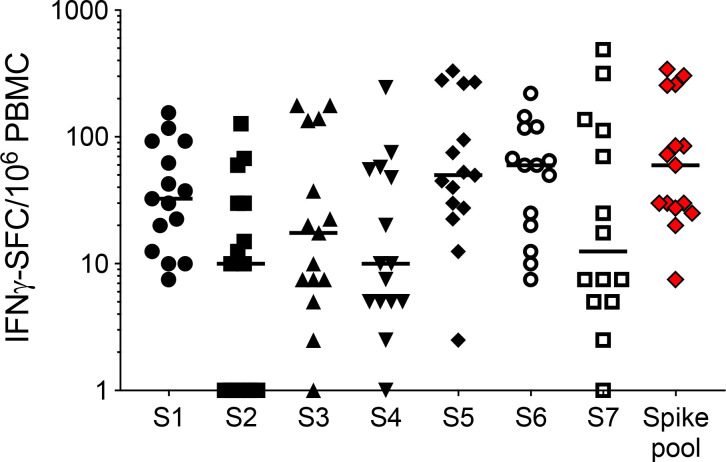
The efficacy of virus-specific T cells in clearing pathogens involves a fine balance between antiviral and inflammatory features. SARS-CoV-2–specific T cells in individuals who clear SARS-CoV-2 without symptoms could reveal nonpathological yet protective characteristics. We longitudinally studied SARS-CoV-2–specific T cells in a cohort of asymptomatic (n = 85) and symptomatic (n = 75) COVID-19 patients after seroconversion. We quantified T cells reactive to structural proteins (M, NP, and Spike) using ELISpot and cytokine secretion in whole blood. Frequencies of SARS-CoV-2–specific T cells were similar between asymptomatic and symptomatic individuals, but the former showed an increased IFN-γ and IL-2 production. This was associated with a proportional secretion of IL-10 and proinflammatory cytokines (IL-6, TNF-α, and IL-1β) only in asymptomatic infection, while a disproportionate secretion of inflammatory cytokines was triggered by SARS-CoV-2–specific T cell activation in symptomatic individuals. Thus, asymptomatic SARS-CoV-2–infected individuals are not characterized by weak antiviral immunity; on the contrary, they mount a highly functional virus-specific cellular immune response.
Overview
The claims and statistics of this paper haven’t been checked yet.
Free: it reads the open-access text and checks the first 5 claims that cite a source we can check. Create a free account to check every claim.
Integrity signals
Registry
Cites
Statistics
Figures




Verification
Claims the paper makes
The claims and statistics of this paper haven’t been checked yet.
Free: it reads the open-access text and checks the first 5 claims that cite a source we can check. Create a free account to check every claim.
Claims other papers make about this one
Each is checked against this paper’s own text: does it say what the citing paper says it does?
The source backs part of the claim, not all of it — or backs it for a different population, condition or comparison.
In the citing paper
“Using HLA class I and II predicted peptide “megapools,” circulating SARS-CoV-2-specific CD8+ and CD4+ T cells were identified in COVID-19 acute, mild and convalescent patients [110, 118-125].”
From Guidelines for the use of flow cytometry and cell sorting in immunological studies (third edition) (2021) · cites this paper as [125]
Experimental — accuracy not yet measured
Self-check
Percentages, sums and reported differences re-computed from the paper’s own numbers.
The self-check needs the paper’s full text.
Citations
Cites
Dimensionality reduction for visualizing single-cell data using UMAP
Becht, E., McInnes, L., Healy, J., Dutertre, C.-A., Kwok, I. W. H., Ng, L. G., Ginhoux, F., & Newell, E. W. (2019) · Nature Biotechnology · doi:10.1038/nbt.4314 · Cited by 5,358
Self-citationGrifoni, A., Weiskopf, D., Ramirez, S. I., Mateus, J., Dan, J. M., Moderbacher, C. R., Rawlings, S. A., Sutherland, A., Premkumar, L., Jadi, R. S., et al. (2020) · Cell · doi:10.1016/j.cell.2020.05.015 · Cited by 3,595
Antibody responses to SARS-CoV-2 in patients with COVID-19
Long, Q.-X., Liu, B.-Z., Deng, H.-J., Wu, G.-C., Deng, K., Chen, Y.-K., Liao, P., Qiu, J.-F., Lin, Y., Cai, X.-F., et al. (2020) · Nature Medicine · doi:10.1038/s41591-020-0897-1 · Cited by 2,876
Self-citationClinical and immunological assessment of asymptomatic SARS-CoV-2 infections
Long, Q.-X., Tang, X.-J., Shi, Q.-L., Li, Q., Deng, H.-J., Yuan, J., Hu, J.-L., Xu, W., Zhang, Y., Lv, F.-J., et al. (2020) · Nature Medicine · doi:10.1038/s41591-020-0965-6 · Cited by 2,686
IL-10: The Master Regulator of Immunity to Infection
Couper, K. N., Blount, D. G., & Riley, E. M. (2008) · The Journal of Immunology · doi:10.4049/jimmunol.180.9.5771 · Cited by 2,223
Longitudinal analyses reveal immunological misfiring in severe COVID-19
Lucas, C., Wong, P., Klein, J., Castro, T. B. R., Silva, J., Sundaram, M., Ellingson, M. K., Mao, T., Oh, J. E., Israelow, B., et al. (2020) · Nature · doi:10.1038/s41586-020-2588-y · Cited by 2,074
Self-citationSARS-CoV-2-specific T cell immunity in cases of COVID-19 and SARS, and uninfected controls
Le Bert, N., Tan, A. T., Kunasegaran, K., Tham, C. Y. L., Hafezi, M., Chia, A., Chng, M. H. Y., Lin, M., Tan, N., Linster, M., et al. (2020) · Nature · doi:10.1038/s41586-020-2550-z · Cited by 1,887
Self-citationRydyznski Moderbacher, C., Ramirez, S. I., Dan, J. M., Grifoni, A., Hastie, K. M., Weiskopf, D., Belanger, S., Abbott, R. K., Kim, C., Choi, J., et al. (2020) · Cell · doi:10.1016/j.cell.2020.09.038 · Cited by 1,790
Robust T Cell Immunity in Convalescent Individuals with Asymptomatic or Mild COVID-19
Sekine, T., Perez-Potti, A., Rivera-Ballesteros, O., Strålin, K., Gorin, J.-B., Olsson, A., Llewellyn-Lacey, S., Kamal, H., Bogdanovic, G., Muschiol, S., et al. (2020) · Cell · doi:10.1016/j.cell.2020.08.017 · Cited by 1,788
Evolution of antibody immunity to SARS-CoV-2
Gaebler, C., Wang, Z., Lorenzi, J. C. C., Muecksch, F., Finkin, S., Tokuyama, M., Cho, A., Jankovic, M., Schaefer-Babajew, D., Oliveira, T. Y., et al. (2021) · Nature · doi:10.1038/s41586-021-03207-w · Cited by 1,674 · cited 1×
“specific B cells progressively evolved after COVID-19 recovery due to the presence of SARS8 CoV-2 antigen in the small bowel (27), makes such hypothesis even more plausible.”
Background
Cited by
Items 101–200 of 326
Bai, J., Chiba, A., Murayama, G., Kuga, T., Tamura, N., & Miyake, S. (2022) · Frontiers in Immunology · doi:10.3389/fimmu.2022.786586 · Cited by 29
Fu, M. X., Simmonds, P., Andersson, M. I., & Harvala, H. (2024) · Reviews in Medical Virology · doi:10.1002/rmv.2525 · Cited by 28
“96 Simple cytokine stimulation and IFN ‐ release assays have been utilised for SARS ‐ CoV ‐ 2 97 and tuberculosis 98 detection, respectively.”
MethodLiao, Y., Zhang, Y., Zhao, H., Pu, J., Zhao, Z., Li, D., Fan, S., Yu, L., Xu, X., Wang, L., et al. (2021) · Emerging Microbes & Infections · doi:10.1080/22221751.2021.1937328 · Cited by 27
“However, previous studies on the antigenicity of the N protein in the coronavirus 229E strain suggested that the anti-N antibody of CoV-2 would be involved in promoting a protective CTL cell response [11], and clinical immunological detection of COVID-19 patients also identified the existence of N antibodies in sera o…”
ResultSelf-citationPetruccioli, E., Fard, S. N., Navarra, A., Petrone, L., Vanini, V., Cuzzi, G., Gualano, G., Pierelli, L., Bertoletti, A., Nicastri, E., et al. (2021) · Journal of Translational Medicine · doi:10.1186/s12967-021-02938-8 · Cited by 29
Self-citationFang, L., Xu, J., Zhao, Y., Fan, J., Shen, J., Liu, W., & Cao, G. (2023) · Frontiers in Microbiology · doi:10.3389/fmicb.2023.1228128 · Cited by 27
Immunogenic epitope panel for accurate detection of non-cross-reactive T cell response to SARS-CoV-2
Titov, A., Shaikhutdinova, R., Shcherbakova, O. V., Serdyuk, Y. V., Sheetikov, S. A., Zornikova, K. V., Maleeva, A. V., Khmelevskaya, A. A., Dianov, D. V., Shakirova, N. T., et al. (2022) · JCI Insight · doi:10.1172/jci.insight.157699 · Cited by 28
Scurr, M. J., Zelek, W. M., Lippiatt, G., Somerville, M. S., Burnell, S. E. A., Capitani, L., Davies, K., Lawton, H., Tozer, T., Rees, T., et al. (2021) · Immunology · doi:10.1111/imm.13433 · Cited by 26
“However, a recent longitudinal analysis of asymptomatic SARS- CoV2 infection identified an increased, highly functional IFNγ and IL2 response within 3 months of infection that declined faster than in symptomatic individuals [10].”
Inducing broad-based immunity against viruses with pandemic potential
Sette, A., & Saphire, E. O. (2022) · Immunity · doi:10.1016/j.immuni.2022.04.010 · Cited by 26
Yang, G., Wang, J., Sun, P., Qin, J., Yang, X., Chen, D., Zhang, Y., Zhong, N. S., & Wang, Z. (2023) · Frontiers in Immunology · doi:10.3389/fimmu.2023.1146196 · Cited by 29
“Recent evidence demonstrated that asymptomatic COVID-19 individuals have highly multifunctional SARS-CoV-2-specific T cell responses (6, 7), and coordinated and robust CD4+ and CD8+ T cell immunity are associated with milder disease (8).”
BackgroundPrevalence and functional profile of SARS-CoV-2 T cells in asymptomatic Kenyan adults
Samandari, T., Ongalo, J., McCarthy, K. D., Biegon, R., Madiega, P. A., Mithika, A., Orinda, J., Mboya, G., Mwaura, P., Anzala, O. A., et al. (2023) · Journal of Clinical Investigation · doi:10.1172/jci170011 · Cited by 24
“In this case, the asymptomatic individuals were all young guest laborers who had recently arrived from Bangladesh (12).”
Self-citationHeterogeneous magnitude of immunological memory to SARS‐CoV‐2 in recovered individuals
Mazzoni, A., Maggi, L., Capone, M., Vanni, A., Spinicci, M., Salvati, L., Kiros, S. T., Semeraro, R., Pengue, L., Colao, M. G., et al. (2021) · Clinical & Translational Immunology · doi:10.1002/cti2.1281 · Cited by 25
“have also shown that asymptomatic individuals mount a highly functional virus-specific cellular immune response.(21) Nevertheless, 20% of the subjects seem to display a weak immunological memory, but we do not know whether this feature will lead to an increased chance of reinfection.”
BackgroundSARS-CoV-2 variants of concern and vaccine escape, from Alpha to Omicron and beyond
Ong, S. W. X., Chia, T. R. T., & Young, B. E. (2022) · Expert Review of Respiratory Medicine · doi:10.1080/17476348.2022.2057299 · Cited by 25
“Resolution of infection and clearance of virus is generally considered to rely on the cellular rather than humoral immune response [14].”
BackgroundT-Cell Immune Responses to SARS-CoV-2 Infection and Vaccination
Notarbartolo, S. (2024) · Vaccines · doi:10.3390/vaccines12101126 · Cited by 23
“…T cells are detectable up to 12–15 months after infection or vaccination and predicted to SARS-CoV-2-speci fi c CD4 + T cells are detected in nearly 100% of infected people and mainly produce T H 1-associated cytokines, such as IFN-γ and TNF-α , although T H 17-associated cytokines have also been…”
BackgroundBert, N. L., Chia, W. N., Wan, W. Y., Teo, A. K. J., Chong, S. Z. R., Tan, N., Tan, D. S. C., Chia, A., Tan, I. B., Kunasegaran, K., et al. (2021) · Emerging Microbes & Infections · doi:10.1080/22221751.2021.1999777 · Cited by 25
“strated that SARS-CoV-2 infected asymptomatic individuals mount a more functional SARS-CoV-2specific T cell response than symptomatic ones [18].”
BackgroundResultInfluentialSelf-citationThe HLA-II immunopeptidome of SARS-CoV-2
Weingarten-Gabbay, S., Chen, D.-Y., Sarkizova, S., Taylor, H. B., Gentili, M., Hernandez, G. M., Pearlman, L. R., Bauer, M. R., Rice, C. M., Clauser, K. R., et al. (2024) · Cell Reports · doi:10.1016/j.celrep.2023.113596 · Cited by 17
Persistence of T Cell and Antibody Responses to SARS-CoV-2 Up to 9 Months after Symptom Onset
Law, J. C., Girard, M., Chao, G. Y. C., Ward, L. A., Isho, B., Rathod, B., Colwill, K., Li, Z., Rini, J. M., Yue, F. Y., et al. (2022) · The Journal of Immunology · doi:10.4049/jimmunol.2100727 · Cited by 23
“Spike (S), nucleocapsid (N), membrane (M), and open reading frame 3 (Orf3) are all major sources of CD4(1) and CD8(1) T cell epitopes (8, 11, 16, 18, 20, 21, 26).”
BackgroundT cell–mediated response to SARS-CoV-2 in liver transplant recipients with prior COVID-19
Fernández‐Ruiz, M., Olea, B., Almendro-Vázquez, P., Giménez, E., Marcacuzco, A., Juan, R. S., Justo, I., Calvo, J., García‐Sesma, Á., Manrique, A., et al. (2021) · American Journal of Transplantation · doi:10.1111/ajt.16708 · Cited by 22
“In line with studies performed in the general population [22], we observed a significant decline over time in the S glycoprotein-specific T-cell response assessed by the IFN-γ FluoroSpot assay (which was not mirrored by the results obtained for other antigens or with the ICS method).”
ResultLong-Term Elevated Inflammatory Protein Levels in Asymptomatic SARS-CoV-2 Infected Individuals
Tserel, L., Jõgi, P., Naaber, P., Maslovskaja, J., Häling, A., Salumets, A., Žusinaite, E., Soeorg, H., Lättekivi, F., Ingerainen, D., et al. (2021) · Frontiers in Immunology · doi:10.3389/fimmu.2021.709759 · Cited by 22
“The SARS-CoV-2–specific T cell immune responses in asymptomatic are similar or even more efficient than in symptomatic individuals (11), and they appear to have functionally complete memory T cell responses.”
BackgroundImmune responses to SARS-CoV-2 in dialysis and kidney transplantation
Cantarelli, C., Angeletti, A., Perin, L., Russo, L. S., Sabiu, G., Podestà, M. A., & Cravedi, P. (2022) · Clinical Kidney Journal · doi:10.1093/ckj/sfac174 · Cited by 23
“IFN-γ -producing T helper 1 (Th1) cells when compared with milder disease [35, 36].”
BackgroundThe immune response as a double‐edged sword: The lesson learnt during the COVID ‐19 pandemic
Agrati, C., Carsetti, R., Bordoni, V., Sacchi, A., Quintarelli, C., Locatelli, F., Ippolito, G., & Capobianchi, M. R. (2022) · Immunology · doi:10.1111/imm.13564 · Cited by 24
“Accordingly, an association of optimal and polyfunctional T-cell responses with asymptomatic/mild disease following primary infection has been proposed and was supported by more recent evidence of protection conferred by SARS-CoV-2-specific memory T cells on secondary exposure [83].”
BackgroundResultRobust Virus-Specific Adaptive Immunity in COVID-19 Patients with SARS-CoV-2 Δ382 Variant Infection
Fong, S., Yeo, N. K., Chan, Y., Goh, Y. S., Amrun, S. N., Ang, N., Rajapakse, M. P., Lum, J., Foo, S., Lee, C. Y., et al. (2021) · Journal of Clinical Immunology · doi:10.1007/s10875-021-01142-z · Cited by 24
Self-citationSARS-CoV-2 infection and immune responses
Harne, R., Williams, B., Abdelaal, H. F. M., Baldwin, S. L., & Coler, R. N. (2023) · AIMS Microbiology · doi:10.3934/microbiol.2023015 · Cited by 24
Fahrner, J., Lahmar, I., Goubet, A., Haddad, Y., Carrier, A., Mazzenga, M., Drubay, D., Silva, C. A. C., Lyon COVID Study Group, de Sousa, E., et al. (2022) · Cancer Discovery · doi:10.1158/2159-8290.cd-21-1441 · Cited by 22
Tormo, N., Giménez, E., Martínez-Navarro, M., Albert, E., Navalpotro, D., Torres, I., Gimeno, C., & Navarro, D. (2022) · European Journal of Clinical Microbiology & Infectious Diseases · doi:10.1007/s10096-022-04422-7 · Cited by 20
Iavarone, M. A., Tosetti, G., Facchetti, F., Topa, M., Lim, J. M. E., Hang, S. K., Licari, D., Lombardi, A., D’Ambrosio, R., Degasperi, E., et al. (2022) · Digestive and Liver Disease · doi:10.1016/j.dld.2022.09.010 · Cited by 20
Self-citationNogimori, T., Suzuki, K., Masuta, Y., Yagoto, M., Ikeda, M., Katayama, Y., Washizaki, A., Kanda, H., Takada, M., Minami, S., et al. (2023) · Frontiers in Immunology · doi:10.3389/fimmu.2022.1081047 · Cited by 21
“While antigen-specific T-cell IFN-g production and IL-10 and pro-inflammatory cytokine (IL-6, TNF-a and IL1b) production were proportionate in asymptomatic individuals, their secretion was disproportionate in symptomatic individuals (27).”
BackgroundTesting for SARS-CoV-2: lessons learned and current use cases
Theel, E. S., Kirby, J. E., & Pollock, N. R. (2024) · Clinical Microbiology Reviews · doi:10.1128/cmr.00072-23 · Cited by 21
“In contrast, patients with severe COVID-19 often have significant inflammation as a result of SARS-CoV-2-specific T cell proliferation, and thus the difference between asymptomatic/mild and severe COVID-19 appears to involve balanced inflammatory cytokine production in the former group (250).”
ResultBean, D. J., Monroe, J., Liang, Y. M., Borberg, E., Senussi, Y., Swank, Z., Chalise, S., Walt, D. R., Weinberg, J., & Sagar, M. (2024) · Science Translational Medicine · doi:10.1126/scitranslmed.ado7588 · Cited by 20
Johnson, S. A., Phillips, E., Adele, S., Longet, S., Malone, T., Mason, C. J., Stafford, L., Jämsén, A., Gardiner, S., Deeks, A. S., et al. (2023) · Clinical & Experimental Immunology · doi:10.1093/cei/uxad027 · Cited by 19
“A larger dynamic range of IFN-γ responses post vaccination or infection has been observed in another whole blood ELISA-based assay [9, 10], although some of these samplings were taken closer to the time of vaccination which may explain their greater sensitivity for SARS-CoV-2 T-cell responses than in the present study.”
BackgroundComparison of plasma mitochondrial DNA copy number in asymptomatic and symptomatic COVID-19 patients
Shoraka, S., Mohebbi, S. R., Hosseini, S. M., & Zali, M. R. (2023) · Frontiers in Microbiology · doi:10.3389/fmicb.2023.1256042 · Cited by 19
Tapela, K., Prah, D. A., Tetteh, B. E., Nuokpem, F. Y., Dosoo, D., Coker, A., Kumi-Ansah, F., Amoako, E. F., Assah, K. O., Kilba, C., et al. (2024) · Cell Reports · doi:10.1016/j.celrep.2024.114533 · Cited by 22
Markov, N. S., Ren, Z., Senkow, K. J., Grant, R. A., Gao, C. A., Malsin, E. S., Sichizya, L., Kihshen, H., Helmin, K. A., Jovisic, M., et al. (2024) · Nature Immunology · doi:10.1038/s41590-024-01914-w · Cited by 22
Long-Lasting Immunity Against SARS-CoV-2: Dream or Reality?
Gussarow, D., Bonifacius, A., Cossmann, A., Stankov, M. V., Mausberg, P., Tischer‐Zimmermann, S., Gödecke, N., Kalinke, U., Behrens, G. M. N., Blasczyk, R., et al. (2021) · Frontiers in Medicine · doi:10.3389/fmed.2021.770381 · Cited by 21
“For shorter time periods, responses to SARS-CoV-2 proteins M, N, and S reveal comparable levels whereas other epitopes generally elicited weaker T cell responses (26, 28, 29).”
ResultBai, J., Chiba, A., Murayama, G., Kuga, T., Yahagi, Y., Tabe, Y., Tamura, N., & Miyake, S. (2022) · Scientific Reports · doi:10.1038/s41598-022-24938-4 · Cited by 18
A systemic review of T-cell epitopes defined from the proteome of SARS-CoV-2
Jin, X., Liu, X. K., & Shen, C. (2022) · Virus Research · doi:10.1016/j.virusres.2022.199024 · Cited by 18
“…188 DRB1*04:01 multimer staining (Johansson et al., 2021) KKPRQKRTATKAYNV N 256 270 HLA class II ICS/AIM (Tarke et al., 2021; Heide et al., 2021; Le Bert et al., 2021) KPRQKRTATKAYNVT N 257 271 DPA1*02:01/DPB1*14:01 ELISPOT (Keller et al., 2020) KPRQKRTATKAYNVTQAFGR N 257 276 DRB1*07:01/DRB5*01:01…”
BackgroundInfluentialPeluso, M. J., Donatelli, J. L., & Henrich, T. J. (2021) · Translational research · doi:10.1016/j.trsl.2021.11.006 · Cited by 20
Jing, L., Wu, X., Krist, M. P., Hsiang, T.-Y., Campbell, V. L., McClurkan, C. L., Favors, S. M., Hemingway, L. A., Godornes, C., Tong, D. Q., et al. (2022) · JCI Insight · doi:10.1172/jci.insight.158126 · Cited by 22
“Studies have correlated T cell kinetics, magnitude, or phenotypes with disease in apparently immunocompetent individuals with delayed or discoordinated immunity and poor clinical outcome (8, 32).”
COVID-19 and earlier pandemics, sepsis, and vaccines: A historical perspective
Cavaillon, J.-M., & Osuchowski, M. F. (2021) · Journal of Intensive Medicine · doi:10.1016/j.jointm.2021.04.003 · Cited by 17
“9 nd in fact, mounted a highly functional virus-specific T-cell imune response [78] .”
Analysis of immune responses in patients with CLL after heterologous COVID-19 vaccination
Lee, H., Hoechstetter, M. A., Buchner, M., Pham, T. T., Huh, J. W., Müller, K., Zange, S., von Buttlar, H., Girl, P., Wölfel, R., et al. (2023) · Blood Advances · doi:10.1182/bloodadvances.2022008445 · Cited by 17
“However, in a mixed group of 83 cancer patients, they were documented more commonly in combination with a humoral 84 response.(24) 85”
Mouton, W., Compagnon, C., Saker, K., Daniel, S., Djebali, S., Lacoux, X., Pozzetto, B., Oriol, G., Laubreton, D., Prieux, M., et al. (2021) · European Journal of Immunology · doi:10.1002/eji.202149296 · Cited by 17
Cellular therapies for the treatment and prevention of SARS-CoV-2 infection
Conway, S. R., Keller, M. D., & Bollard, C. M. (2022) · Blood · doi:10.1182/blood.2021012249 · Cited by 19
“70%, and the presence of CSTs is associated with recovery and decreased severity of illness.(40-44) Lymphopenia is associated with poorer outcomes in COVID-19, and analysis of bronchoalveolar lavage (BAL) fluid from patients with varying illness severity indicates decreased clonal T-cell expansion, suggesting a subopt…”
Augello, M., Bono, V., Rovito, R., Tincati, C., Bianchi, S., Taramasso, L., Biagio, A. D., Callegaro, A., Maggiolo, F., Borghi, E., et al. (2023) · iScience · doi:10.1016/j.isci.2023.108673 · Cited by 16
Silent battles: immune responses in asymptomatic SARS-CoV-2 infection
Bert, N. L., & Samandari, T. (2024) · Cellular and Molecular Immunology · doi:10.1038/s41423-024-01127-z · Cited by 18
Udaondo, C., Cámara, C., Miguel‐Berenguel, L., Alcobendas, R., Muñoz-Gómez, C., Longo, C. M., Delgado, B. D. –., Falces‐Romero, I., Almirón, M. D., Ochando, J., et al. (2022) · Pediatric Rheumatology · doi:10.1186/s12969-022-00724-4 · Cited by 16
“To assess the specific T cell response, we measured IFN-γ and IL-2 present in whole blood stimulated with SARS-CoV-2 proteins: M protein and pools of proteins S/S1/S + as recently described [10, 11].”
BackgroundMethodReder, A. T., Stüve, O., Tankou, S. K., & Leist, T. P. (2022) · Multiple Sclerosis Journal · doi:10.1177/13524585221134216 · Cited by 17
Lim, F. Y., Lea, H. G., Dostie, A. M., Kim, S.-Y., van Neel, T. L., Hassan, G. W., Takezawa, M. G., Starita, L. M., Adams, K. N., Boeckh, M., et al. (2025) · EBioMedicine · doi:10.1016/j.ebiom.2024.105531 · Cited by 15
“As in-person venipuncture still presents a significant logistical barrier to longitudinal studies requiring early and frequent samples, most longitudinal studies of natural ARVIs to date have focused on post-symptomatic infection, typically when viral load is already in decline (3-6).”
Beliakova‐Bethell, N., Maruthai, K., Xu, R., Salvador, L. C. M., & Garg, A. (2022) · Frontiers in Immunology · doi:10.3389/fimmu.2022.894543 · Cited by 16
SARS-CoV-2-specific CD4+ T cell longevity correlates with Th17-like phenotype
Terahara, K., Sato, T., Adachi, Y., Tonouchi, K., Onodera, T., Moriyama, S., Sun, L., Takano, T., Nishiyama, A., Kawana‐Tachikawa, A., et al. (2022) · iScience · doi:10.1016/j.isci.2022.104959 · Cited by 16
Self-citationTaus, E., Hofmann, C., Ibarrondo, F. J., Gong, L. S., Hausner, M. A., Fulcher, J. A., Krogstad, P. A., Kitchen, S. G., Ferbas, K. G., Tobin, N. H., et al. (2023) · Frontiers in Immunology · doi:10.3389/fimmu.2023.1100594 · Cited by 17
Immune landscape and redox imbalance during neurological disorders in COVID-19
Thakur, A., Sharma, V., Averbek, S., Liang, L., Pandya, N., Kumar, G., Cili, A., & Zhang, K. (2023) · Cell Death and Disease · doi:10.1038/s41419-023-06102-6 · Cited by 15
Pereira, R. D. D., Rabelo, R. A. N., Oliveira, N. F. D. M., Porto, S. L. T., Andrade, A. C. D. S. P., Queiroz‐Junior, C. M., Barbosa, C. L. N., Souza‐Costa, L. P., Santos, F. R. D. S., Oliveira, F. B. R., et al. (2023) · Viruses · doi:10.3390/v15102049 · Cited by 15
Mendoza‐Ramírez, N. J., García‐Cordero, J., Shrivastava, G., & Cedillo‐Barrón, L. (2024) · Journal of Immunology Research · doi:10.1155/2024/9313267 · Cited by 19
Ma, X., Liao, Z., Tan, H., Wang, K., Feng, C., Xing, P., Zhang, X., Hua, J., Jiang, P., Peng, S., et al. (2024) · EClinicalMedicine · doi:10.1016/j.eclinm.2024.102757 · Cited by 14
“23 – 25 Innate immunity has traditionally been viewed as a no-adaptive, fi rst-line defense against invading micro-organisms without immune memory.”
BackgroundMurugesan, K., Jagannathan, P., Altamirano, J., Maldonado, Y., Bonilla, H. F., Jacobson, K. B., Parsonnet, J., Andrews, J. R., Shi, R., Boyd, S. D., et al. (2022) · Clinical Infectious Diseases · doi:10.1093/cid/ciac045 · Cited by 16
Paolini, A., Borella, R., Neroni, A., Tartaro, D. L., Mattioli, M., Fidanza, L., Nella, A. D., Santacroce, E., Gozzi, L., Busani, S., et al. (2022) · International Journal of Molecular Sciences · doi:10.3390/ijms23148004 · Cited by 15
Impaired SARS-CoV-2 specific T-cell response in patients with severe COVID-19
Rümke, L. W., Smit, W. L., Bossink, A. W. J., Limonard, G. J. M., Muilwijk, D., Haas, L. E. M., Reusken, C. B. E. M., van der Wal, S., Thio, B. J., van Os, Y. M. G., et al. (2023) · Frontiers in Immunology · doi:10.3389/fimmu.2023.1046639 · Cited by 14
Immunological memory to vaccines
Crotty, S. (2026) · Immunity · doi:10.1016/j.immuni.2026.02.019 · Cited by 16
Bert, N. L., Koffas, A., Kumar, R., Facchetti, F., Tan, A. T., Gill, U. S., Mak, L., Stretch, S., Miao, T., Hariharaputran, S., et al. (2025) · Journal of Hepatology · doi:10.1016/j.jhep.2025.06.012 · Cited by 13
Self-citationMele, D., Calastri, A., Maiorano, E., Cerino, A., Sachs, M., Oliviero, B., Mantovani, S., Baldanti, F., Bruno, R., Benazzo, M., et al. (2021) · Frontiers in Immunology · doi:10.3389/fimmu.2021.748881 · Cited by 14
“Increased levels of IL-6, IL-10 and IFNg were observed only in severe patients compared with the two OTD groups, while IL-17A, TNFa, IL-4 and IL-2 concentrations were similar in the three groups (Figure 5).”
ResultInfluentialBonifacius, A., Tischer‐Zimmermann, S., Santamorena, M. M., Mausberg, P., Schenk, J., Koch, S., Barnstorf-Brandes, J., Gödecke, N., Martens, J., Goudeva, L., et al. (2022) · Frontiers in Bioengineering and Biotechnology · doi:10.3389/fbioe.2022.867042 · Cited by 13
T cell responses to SARS-CoV-2 in humans and animals
Mattoo, S.-U.-S., & Myoung, J. (2022) · The Journal of Microbiology · doi:10.1007/s12275-022-1624-z · Cited by 14
“However, after an initial contraction phase (Tan et al., 2021), polyfunctional (IFN-γ, IL-2, and/or TNF-α-secreting) T cells remained detectable for at least 6–12 months PSO (Breton et al., 2021; Cohen et al., 2021; Dan et al., 2021; Le Bert et al., 2021; Lu et al., 2021).”
BackgroundResultPritam, M., Dutta, S., Medicherla, K. M., Kumar, R., & Singh, S. P. (2023) · Journal of Biomolecular Structure and Dynamics · doi:10.1080/07391102.2023.2239932 · Cited by 12
“In case of COVID-19, the cytokines IFN-c , IL-4, IL-6 and IL-10 play important roles in immune induction and clearance (de Lang et al., 2006; Merza et al., 2021).”
InfluentialQudus, M. S., Afaq, U., Liu, S., Wu, K., Yu, C., Tian, M., & Wu, J. (2025) · International Journal of Molecular Sciences · doi:10.3390/ijms26041575 · Cited by 12
“Asymptomatic SARS-CoV-2 carriers develop a defense mechanism via balanced antiviral cellular immunity [5].”
Agallou, M., Koutsoni, O. S., Michail, M., Zisimopoulou, P., Tsitsilonis, O., & Karagouni, E. (2022) · The Journal of Infectious Diseases · doi:10.1093/infdis/jiac421 · Cited by 13
Papanikolaou, C., Rapti, V., Stellas, D., Stefanou, D. T., Syrigos, K., Pavlakis, G. N., & Souliotis, V. L. (2022) · Vaccines · doi:10.3390/vaccines10101764 · Cited by 13
“A highly functional SARS-CoV-2-specific cellular immune response accompanied by potent expression of T cell effector molecules IL-2 and IFNγ was identified in asymptomatic COVID-19 [60], whilst mild cases were characterized by early induction, the emergence of functional virus-specific T cells that target multiple epi…”
BackgroundKapten, K., Orczyk, K., & Smolewska, E. B. (2023) · Archivum Immunologiae et Therapiae Experimentalis · doi:10.1007/s00005-023-00673-0 · Cited by 14
“Individuals with the asymptomatic disease were found to have a highly balanced secretion of IFN-γ, IL-2, IL-10, and other inflammatory mediators, while a disproportionate secretion of pro-inflammatory cytokines was typical for symptomatic patients (Le Bert et al. 2021; Mathew et al. 2020).”
BackgroundT cell control of SARS-CoV-2: When, which, and where?
Diniz, M. O., Maini, M. K., & Swadling, L. (2023) · Seminars in Immunology · doi:10.1016/j.smim.2023.101828 · Cited by 12
“…was comparable between asymptomatic and mild symptomatic infections, with the enrichment of polyfunctional T cells co-producing IFN γ and IL2, suggesting a robust memory response is generated that is likely to be as effective on re-exposure as the memory generated by symptomatic infection[20].”
BackgroundResultInfluentialSoni, M., Migliori, E., Fu, J., Assal, A., Chan, H. T., Pan, J., Khatiwada, P., Ciubotariu, R., May, M. S., Pereira, M. R., et al. (2023) · Frontiers in Immunology · doi:10.3389/fimmu.2023.1212203 · Cited by 12
O’Neill, A., Mantri, C. K., Tan, C. W., Saron, W. A. A., Nagaraj, S. K., Kala, M. P., Joy, C. M., Rathore, A. P. S., Tripathi, S., Wang, L., et al. (2023) · EBioMedicine · doi:10.1016/j.ebiom.2023.104924 · Cited by 12
Self-citationXu, A. M., Li, D., Ebinger, J. E., Mengesha, E., Elyanow, R., Gittelman, R., Chapman, H., Joung, S. Y., Botwin, G. J., Pozdnyakova, V., et al. (2022) · Frontiers in Immunology · doi:10.3389/fimmu.2022.880190 · Cited by 12
Dynamics of Gene Expression Profiling and Identification of High-Risk Patients for Severe COVID-19
Rombauts, A., Bódalo‐Torruella, M., Abelenda-Alonso, G., Perera‐Bel, J., Ferrer-Salvador, A., Acedo-Terrades, A., Gabarrós-Subirà, M., Oriol, I., Gudiol, C., Nonell, L., et al. (2023) · Biomedicines · doi:10.3390/biomedicines11051348 · Cited by 11
Chiu, C.-H., Chang, Y.-H., Chang, F., Hung, Y., Liao, C., Chiu, K., Tsai, P.-L., Chang, T.-W., & Yen, L.-C. (2022) · Frontiers in Cellular and Infection Microbiology · doi:10.3389/fcimb.2022.862656 · Cited by 14
“T cells can activate other immune cells during infection and kill infected cells to control disease progression (Sattler et al., 2020; Le Bert et al., 2021; Moss, 2022).”
BackgroundDifferential regulatory T cell signature after recovery from mild COVID-19
Palmeira, P. H. D. S., Peixoto, R. F., Csordas, B. G., de Medeiros, I. A., de Azevedo, F. D. L. A. A., Veras, R. C., Janebro, D. I., do Amaral, I. P. G., & Keesen, T. S. L. (2023) · Frontiers in Immunology · doi:10.3389/fimmu.2023.1078922 · Cited by 11
“Considering the highly functional and balanced T cell responsiveness in asymptomatic individuals (62), our data suggest that immunomodulation at Treg levels aids in better infection resolution.”
BackgroundHumoral and cellular immunity against diverse SARS-CoV-2 variants
Chen, C., Wang, X., & Zhang, Z. (2023) · Journal of genetics and genomics/Journal of Genetics and Genomics · doi:10.1016/j.jgg.2023.10.003 · Cited by 10
Carolin, A., Yan, K., Bishop, C., Tang, B., Nguyen, W., Rawle, D. J., & Suhrbier, A. (2024) · PLoS ONE · doi:10.1371/journal.pone.0302344 · Cited by 10
“Clearly, prompt clearance of virus [45, 49] (rather than viral persistence [136, 152]) and development of protective adaptive immune responses [48] are also likely to be”
Vitiello, L., Gatta, L., Ilari, S., Bonassi, S., Cristina, M., Ciatti, F., Fini, M., Proietti, S., Russo, P., Tomino, C., et al. (2022) · Frontiers in Immunology · doi:10.3389/fimmu.2022.836495 · Cited by 13
“Previous results showed a greater difference in the amount of IFNg produced by CD4+ and CD8+ T cells (22, 23).”
ResultIs IFN expression by NK cells a hallmark of severe COVID-19?
Csordas, B. G., Palmeira, P. H. D. S., Peixoto, R. F., Comberlang, F. C., de Medeiros, I. A., de Azevedo, F. D. L. A. A., Veras, R. C., Janebro, D. I., do Amaral, I. P. G., Barbosa‐Filho, J. M., et al. (2022) · Cytokine · doi:10.1016/j.cyto.2022.155971 · Cited by 11
Brunk, F., Moritz, A., Nelde, A., Bilich, T., Casadei, N., Fraschka, S. A. K., Heitmann, J. S., Hörber, S., Peter, A., Rammensee, H., et al. (2021) · European Journal of Immunology · doi:10.1002/eji.202149290 · Cited by 12
Prakash, S., Dhanushkodi, N. R., Singer, M., Quadiri, A., Zayou, L., Vahed, H., Coulon, P.-G. A., Ibraim, I. C., Tafoya, C., Hitchcock, L., et al. (2024) · bioRxiv (Cold Spring Harbor Laboratory) · doi:10.1101/2024.02.14.580225 · Cited by 10
Sakano, T., Urashima, M., Takao, H., Takeshita, K., Kobashi, H., & Fujiwara, T. (2021) · International Journal of Environmental Research and Public Health · doi:10.3390/ijerph18158181 · Cited by 10
“produced higher levels of interferon gamma and interleukin 2 than those from symptomatic patients, whereas such T cells from severe patients secreted more pro-inflammatory cytokines, such as interleukin-6, than those from asymptomatic patients, suggesting that asymptomatic patients are not characterized by weak antivi…”
BackgroundPervakova, M. Y., Потапенко, В. Г., Tkachenko, O. Y., Volchkova, E. V., Titova, O. N., Lapin, S. V., Суркова, Е. А., Blinova, T. V., Kholopova, I. V., Kuznetsova, D. A., et al. (2022) · Immunologiya · doi:10.33029/0206-4952-2022-43-2-174-187 · Cited by 9
Adaptive immune responses to SARS-CoV-2 in recovered severe COVID-19 patients
Olea, B., Albert, E., Torres, I., Amat, P., Remigia, M. J., Gozalbo‐Rovira, R., Rodríguez‐Díaz, J., Buesa, J., Blasco, M. L., Redón, J., et al. (2021) · Journal of Clinical Virology · doi:10.1016/j.jcv.2021.104943 · Cited by 11
Culinary spices and herbs in managing early and long‐COVID‐19 complications: A comprehensive review
Maurya, D. K., & Sharma, D. (2023) · Phytotherapy Research · doi:10.1002/ptr.7957 · Cited by 10
“A balanced, coordinated, and simultaneous production of interleukin-2 and interferon-gamma linked to interleukin-10 production offers better protection against SARS-CoV-2 (Le Bert et al., 2021).”
BackgroundT cell hybrid immunity against SARS-CoV-2 in children: a longitudinal study
Qui, M., Hariharaputran, S., Hang, S. K., Zhang, J., Tan, C. W., Chong, C. Y., Low, J. G. H., Wang, L., Bertoletti, A., Yung, C. F., et al. (2024) · EBioMedicine · doi:10.1016/j.ebiom.2024.105203 · Cited by 9
Self-citationFenn, J. R., Koycheva, A., Kundu, R., Tolosa-Wright, M., Wang, L., Narean, J. S., Conibear, E., Hakki, S., Jonnerby, J., Baldwin, S., et al. (2025) · EBioMedicine · doi:10.1016/j.ebiom.2025.105795 · Cited by 8
Self-citationPrimorac, D., Brlek, P., Pavelić, E., Mešić, J., Weinberger, D. G., Matišić, V., Molnar, V., Srića, S., & Zadro, R. (2023) · Viruses · doi:10.3390/v15030792 · Cited by 11
“Our results showed a significantly higher level of cellular immunity in individuals who were not infected or reinfected with the SARS-CoV-2 virus after vaccination and/or previous COVID-19 infection.”
BackgroundInfluentialGil-Manso, S., Carbonell, D., Pérez-Fernández, V. A., López-Esteban, R., Alonso, R., Muñóz, P., Ochando, J., Sánchez-Arcilla, I., Bellón, J. M., Correa‐Rocha, R., et al. (2022) · Biomedicines · doi:10.3390/biomedicines10071676 · Cited by 8
Nanomaterials to combat SARS-CoV-2: Strategies to prevent, diagnose and treat COVID-19
Valenzuela-Fernández, A., Cabrera-Rodríguez, R., Ciuffreda, L., Pérez-Yanes, S., Estévez‐Herrera, J., González‐Montelongo, R., Alcoba-Flórez, J., Trujillo‐González, R., de Artola, D. G.-M., Gil-Campesino, H., et al. (2022) · Frontiers in Bioengineering and Biotechnology · doi:10.3389/fbioe.2022.1052436 · Cited by 10
Akhtar, M., Basher, S. R., Nizam, N. N., Kamruzzaman, M., Khaton, F., Banna, H. A., Kaisar, M. H., Karmakar, P. C., Hakim, A., Akter, A., et al. (2022) · Frontiers in Immunology · doi:10.3389/fimmu.2022.1052374 · Cited by 12
“Age (years) 42 (31,50) 35 (31,44) 45 (32,53) 50 (38,59) 55 (50,65)”
BackgroundGarofalo, E., Biamonte, F., Palmieri, C., Battaglia, A. M., Sacco, A., Biamonte, E., Neri, G., Antico, G. C., Mancuso, S., Foti, G., et al. (2023) · PLoS ONE · doi:10.1371/journal.pone.0281444 · Cited by 8
“Since the T cell response might be multi-antigenic and it may play a role in understanding different disease severity [9, 25], further studies specifically designed are required.”
BackgroundResultPostinfectious Immunity After COVID-19 and Vaccination Against SARS-CoV-2
Kršák, M., Harry, B. L., Palmer, B. E., & Franco‐Paredes, C. (2021) · Viral Immunology · doi:10.1089/vim.2021.0054 · Cited by 9
“Recent studies reported that SARS-CoV-2-specific CD4 and CD8 T cell-coordinated activity was strongly associated with milder disease but the presence of neutralizing antibodies at various levels was not (31,46).”
Dhawan, M. K., Thakur, N., Sharma, M. K., & Rabaan, A. A. (2025) · Biomedicine & Pharmacotherapy · doi:10.1016/j.biopha.2025.117936 · Cited by 7
González-Pérez, M., Montes‐Casado, M., Conde, P., Cervera, I., Baranda, J., Berges-Buxeda, M. J., Pérez‐Olmeda, M., Sánchez-Tarjuelo, R., Utrero‐Rico, A., Lozano‐Ojalvo, D., et al. (2022) · Frontiers in Immunology · doi:10.3389/fimmu.2022.845882 · Cited by 7
“After 16-20 hours of culture, supernatant (plasma) was collected and stored at -20°C for further cytokine quantification (19, 20).”
MethodAjlan, A. A., Ali, T. Z., Aleid, H. A., AlMeshari, K. A., Devol, E. B., Alkaff, M. A., Fajji, L., Alali, A., Halabi, D., Althuwaidi, S., et al. (2022) · BMC Infectious Diseases · doi:10.1186/s12879-022-07764-x · Cited by 7
“The surrogate virus neutralization test measures the total quantity of neutralizing antibodies in the sera [17].”
BackgroundAltered pre-existing SARS-CoV-2-specific T cell responses in elderly individuals
Taira, N., Toguchi, S., Miyagi, M., Mori, T., Tomori, H., Oshiro, K., Tamai, O., Kina, M., Miyagi, M., Tamaki, K., et al. (2021) · Clinical Immunology Communications · doi:10.1016/j.clicom.2021.12.001 · Cited by 7
Mai, F., Volzke, J., Reisinger, E. C., & Müller‐Hilke, B. (2022) · Vaccines · doi:10.3390/vaccines10091563 · Cited by 8
“These results confirm Th1 immunity, as well as CD8 memory, and indicate successful vaccination, as Th1 responses are crucial for the efficient control of SARSCoV-2 [23,24].”
ResultInfluentialSun, P., Ramos, I., Coelho, C. H., Grifoni, A., Balinsky, C. A., Vangeti, S., Tarke, A., Bloom, N. I., Jani, V., Jakubski, S., et al. (2022) · iScience · doi:10.1016/j.isci.2022.105202 · Cited by 7
Study of the Effects of Several SARS-CoV-2 Structural Proteins on Antiviral Immunity
Yue, R., Zeng, F., Ma, D., Meng, Z., Li, X., Zhang, Z., Zhang, H., Li, Q., Xu, L., Niu, Z., et al. (2023) · Vaccines · doi:10.3390/vaccines11030524 · Cited by 7
“The immunological observation of COVID-19 patients and individuals immunized with an inactivated vaccine has also indicated ubiquitous specific T-cell responses, especially against the N protein [13,38].”
BackgroundNatural and hybrid immunity: A comparative study of T cell response against SARS-CoV-2
de Andrade, A. G., Comberlang, F. C., Peixoto, R. F., Palmeira, P. H. D. S., Aureliano, F. S., Csordas, B. G., Silva, L. H. A. C., & Keesen, T. S. L. (2025) · Clinical Immunology Communications · doi:10.1016/j.clicom.2025.07.001 · Cited by 6
Mai, F., Kordt, M., Bergmann‐Ewert, W., Reisinger, E. C., & Müller‐Hilke, B. (2024) · Frontiers in Immunology · doi:10.3389/fimmu.2024.1359475 · Cited by 7
Metadata
- Authors
- Le Bert, N., Clapham, H. E., Tan, A. T., Chia, W. N., Tham, C. Y. L., Lim, J. M., Kunasegaran, K., Tan, L. W. L., Dutertre, C.-A., Shankar, N., Lim, J. M. E., Sun, L. J., Zahari, M., Tun, Z. M., Kumar, V., Lim, B. L., Lim, S. H., Chia, A., Tan, Y.-J., Tambyah, P. A., Kalimuddin, S., Lye, D., Low, J. G. H., Wang, L.-F., Wan, W. Y., Hsu, L. Y., Bertoletti, A., & Tam, C. C.
- Affiliations
- Programme in Emerging Infectious Diseases, Duke-NUS Medical School, Singapore 1
- National University of Singapore (SG)
- Inserm (FR)
- Alexandra Hospital (SG)
- Singapore General Hospital (SG)
- Agency for Science, Technology and Research (SG)
- National University Hospital (SG)
- Corresponding author
- Bertoletti, Antonio
- ORCID
- Le Bert, Nina
- Clapham, Hannah E.
- Tan, Anthony T.
- Chia, Wan Ni
- Tham, Christine Y.L.
- Lim, Jane M.
- Kunasegaran, Kamini
- Tan, Linda Wei Lin
- Dutertre, Charles-Antoine
- Shankar, Nivedita
- Lim, Joey M.E.
- Sun, Louisa Jin
- Zahari, Marina
- Tun, Zaw Myo
- Kumar, Vishakha
- Lim, Beng Lee
- Lim, Siew Hoon
- Chia, Adeline
- Tan, Yee-Joo
- Tambyah, Paul Anantharajah
- Kalimuddin, Shirin
- Lye, David
- Low, Jenny G.H.
- Wang, Lin-Fa
- Wan, Wei Yee
- Hsu, Li Yang
- Bertoletti, Antonio
- Tam, Clarence C.
- Venue
- Journal of Experimental Medicine
- Publisher
- Rockefeller University Press
- Published
- 2021-03-01
- Volume
- 218
- Issue
- 5
- ISSN
- 0022-1007 (ISSN-L)
- 1540-9538
- PMC
- PMC7927662
- OpenAlex
- W3134489892
- Cited by
- 330
- References
- 38
- Citations by year
- 2026: 11 · 2025: 22 · 2024: 45 · 2023: 68 · 2022: 110 · 2021: 74
- FWCI
- 23.60
- Type
- journal article
- Language
- en
- Open access
- hybrid
- doi.org
- Licence
- Locations
- The Journal of Experimental Medicine (publishedVersion, cc-by-nc-sa)
- bioRxiv (Cold Spring Harbor Laboratory) (acceptedVersion, cc-by-nc-nd)
- PubMed Central (publishedVersion, cc-by-nc-sa)
- PubMed (publishedVersion)
- National University of Singapore (submittedVersion)
- Funders
- National University Health System (NUHSRO/2020/052/RO5+5/NUHS-COVID/6)
- Saw Swee Hock School of Public Health
- National University of Singapore
- National Research Foundation Singapore (NRF2016NRF-NSFC002-013)
- National Medical Research Council
- Ministry of Health - Singapore (STPRG-FY19-001, COVID19RF-003, COVID19RF3-0060)
- Topics
- Health Sciences › Medicine › Infectious Diseases › SARS-CoV-2 and COVID-19 Research
- Health Sciences › Medicine › Infectious Diseases › COVID-19 Clinical Research Studies
- Life Sciences › Immunology and Microbiology › Immunology › T-cell and B-cell Immunology
- Keywords
- SARS-CoV-2, COVID-19 pandemic, asymptomatic infection, virus-specific T cells, cell-mediated immunity, interferon-gamma, interleukin-2, IL-10, inflammatory cytokines, cytokine production, spike protein, nucleocapsid protein, matrix protein, T cell activation, seroconversion
- MeSH terms
- COVID-19, SARS-CoV-2, Adult, Humans, Lymphocyte Activation, Male, Middle Aged, T-Lymphocytes, Cytokines, Asymptomatic Infections
About these checks
Registry, retraction, Cites and statistics results are computed, not judged, with one exception: a printed reference that no index lists is read once by a model before it counts as a citation error. Claims are extracted by a model and kept only when their quote appears verbatim in the text; each cited source is then checked, with a model’s help, for whether it says what the claim relies on. Those verdicts can be wrong — read the claim’s quote and the cited source before relying on one.
Statistics and arithmetic are recomputed, not judged.
Confidence bands are shown only for fields calibrated on our annotated test set. None is calibrated yet, so no band is shown.
What counts as a claim ›How we measure confidence ›How we check this ›
Are you an author, or do you see a problem with this page? Request a review
Data sources
Bibliographic data: Semantic Scholar, OpenAlex, Crossref.
Contains information from the Semantic Scholar Academic Graph Datasets, made available under the ODC Attribution License (ODC-BY 1.0).
Semantic Scholar’s data is described in: Kinney, R., et al. (2023). The Semantic Scholar Open Data Platform. arXiv:2301.10140.
